

I wish I could tell you I had any idea what the heck I was doing when I started engineering the Jeep Wrangler JL’s cooling system back in 2013. But I was 22 years old, the company had just risen from the DaimlerChrysler ashes thanks to Fiat, and the new Sergio Marchionne-led “Fiat Chrysler” was on a hiring offensive because it needed bodies to replace the ones who took buyouts. I was one of those bodies, and boy was I thrown into the deep end.
As an enthusiastic recent engineering graduate who had wanted to work for Chrysler his entire life, I was welcomed into the Advanced AeroThermal team and assigned the Systems Integration Responsible for any program I wanted. The rest of my team didn’t seem to care what car they worked on — something that blew my mind since I assumed everyone working for a car company was an enthusiast — so I jumped on the Wrangler and Viper (the latter program of which was terminated).


AeroThermal was a group that encompassed all thermal and aerodynamic design, since the two are so related, especially in the area of powertrain cool. That’s what my primary focus was: Make sure the 2.0-liter turbo inline-four, 3.6-liter naturally aspirated V6, and 3.0-liter turbodiesel could handle Davis Dam and our other barrage of challenging on and off drive cycles without overheating.
I had to make sure transmissions weren’t burning up, that exhaust components weren’t posing any sort of fire risk, and my most difficult task was handling cooling system design for all of the company’s mild hybrid systems. The systems were being developed my Magnetti Marelli and Samsung. I worked with them to develop the cooling system for the under-rear-seat-mounted lithium ion battery pack, and I had to make sure the air and liquid cooled MGUs (basically, the big motor/generator that replaces the alternator) wouldn’t overheat in the Wrangler’s and Gladiator’s harshest driving cycles.
What’s crazy about all of this is that, while I was learning about cooling system design, I was also being tasked with writing the standard processes for powertrain cooling. Yes, you read that right; a new-hire wasn’t learning from the standard-process documents, he was creating them. Those were some very strange times, and definitely a transition period for Chrysler.
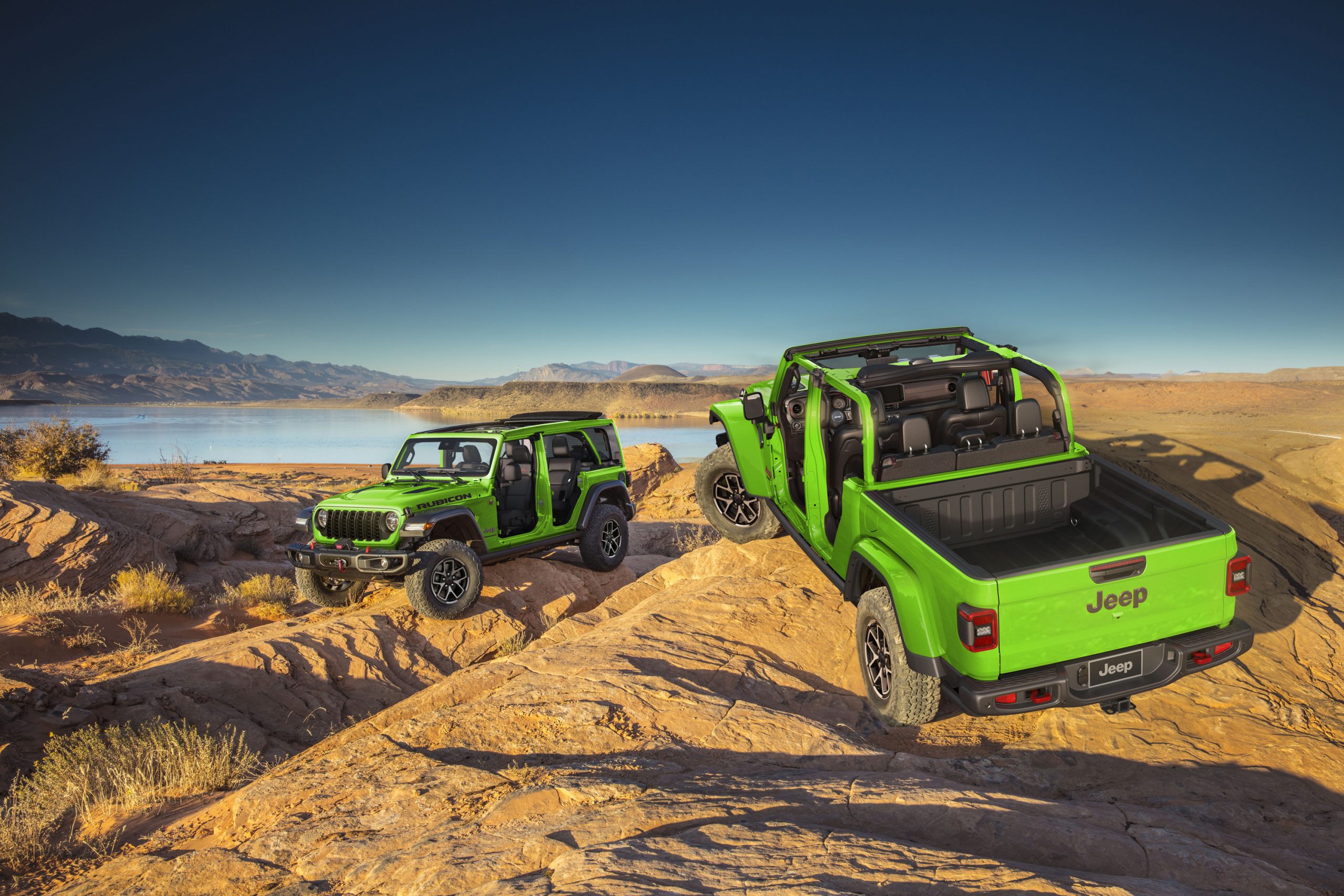
Even years after I left Chrysler I’d find myself waking up in a sweat, grabbing my laptop, and searching for other hybrid battery systems that were purely passively liquid-cooled like the JL I had designed (there was a thermoelectric device built into the packs, too). There wasn’t much out there, and in general, when that’s the case, I like to wonder why the hell we were doing something different than the rest. But I’d made sure our derate strategy made sense, so even if the cells did get too hot in certain conditions, the contactors would open and all would be safe.
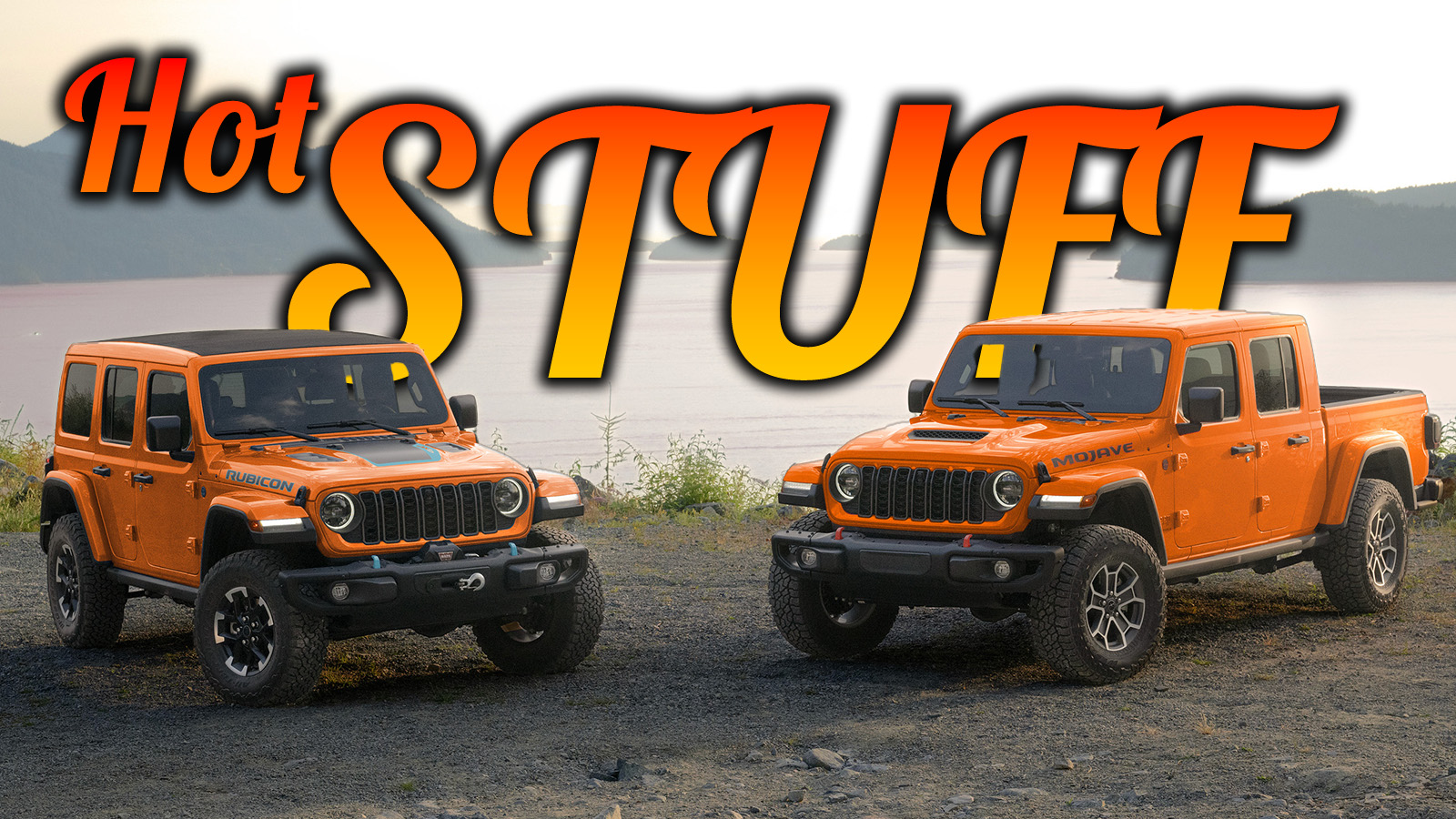
Anyway, this is a weirdly long run-up to say: When my colleague Matt sent me a Detroit News story about 1 million Jeep Wranglers being recalled due to fire risk, a shot of adrenaline surged through my body. I was relieved to learn that the vehicles —787,887 2021 to 2025 Jeep Wrangler “JLs” and 289,112 2021 to 2025 Jeep Gladiator “JTs” — were being recalled for an electrical fault and nothing powertrain related.
[Ed note: Oops. DT has been up all night working on the Rivian review and I jokingly said “Is this your fault” in Slack knowing that it probably wasn’t based on the description. Maybe a poorly-timed joke. Sorry DT! – MH]
In fact, it’s not just a recall, it’s a “Park Outside” notification telling owners of affected vehicles to stay away from buildings, lest the Jeep fire cause a building fire. From NHTSA:
Some 2021-2025MY Jeep Wrangler vehicles may have an Electric Hydraulic Power Steering Pump (“EHPSP”) electrical connection susceptible to high resistance.
The suspect vehicle population began on June 24, 2020, when production of Jeep Wrangler vehicles with suspect EHPSP electrical connections began, and concluded on December 2, 2024, when suspect vehicle production ended. The suspect period was determined using vehicle production records. Similar vehicles not included in this recall were built before or after the suspect vehicle production range.
The same recall applies to Gladiators; from NHTSA:
Some 2021-2025MY Jeep Gladiator vehicles may have an EHPSP electrical connection susceptible to high resistance. The suspect vehicle population began on August 18, 2020, when production of Jeep Gladiator vehicles with suspect EHPSP electrical connections began, and concluded on December 2, 2024, when suspect vehicle production ended. The suspect period was determined using vehicle production records. Similar vehicles not included in this recall were built before or after the suspect vehicle production range.
This is not good, with the June 4, 2026 Recall Report reading:
In some circumstances, high resistance electrical activity may take place in the area of the EHPSP connection causing overheating of combustible materials.
Overheating of combustible materials in the vehicle or surrounding area may potentially lead to a fire. A fire can result in increased risk of occupant injury and injury to persons outside the vehicle.
The part in question is the Eletro-Hydraulic power steering system. I was in the “Chunk Team” meeting when the chief engineer decided to add this to the program. There were really only two power steering options since an electric power steering rack wasn’t going to package with a solid axle and since the team had decided to keep the old-school worm-gear style steering box.
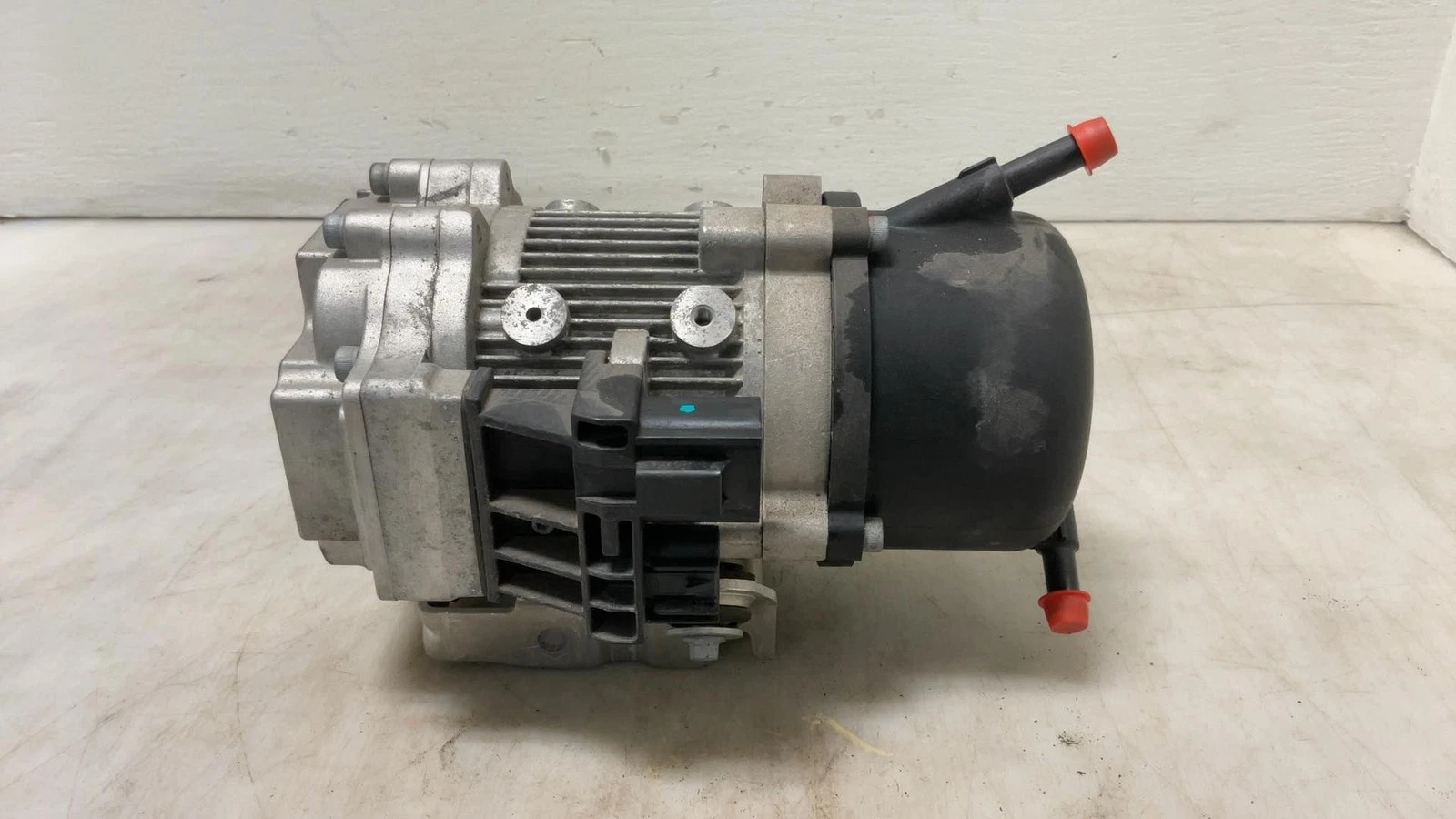
One option was a column-mounted power steering unit, and the other involved keeping the hydraulic assist everyone was used to, but the hydraulic fluid would be pumped not by the engine’s accessory drive but by an electric motor driven by the Jeep’s 12-volt battery. Engineers chose to go with the later electrohydraulic power steering system for reasons I cannot remember — a system that could still offer benefits including reducing the parasitic draw when the driver wasn’t applying steering input (a traditional system would spin the pump impeller anytime the engine was on).
Anyway, something is going on with the wiring of these electrohydraulic power steering pumps, and it can happen even when the car is off, as NHTSA writes:
The electric hydraulic power steering pump wiring may overheat and cause a vehicle fire, even when the vehicle is parked with the ignition in the “Off” position
Dealers will replace faulty parts, but until then, Stellantis and NHTSA advise owners of these Jeeps to stay parked away from buildings. Per NHTSA:
Owners are advised to park outside and away from structures, until their vehicle is repaired. Dealers will inspect and replace affected parts, as necessary, free of charge.
As relieved as I am that I wasn’t the cause of this, I am bummed for the owners of these 1 million Jeeps — owners who now have to stay out of parking structures and personal garages.
Top Image: Jeep


We bought a house, and my wife said “I dont care how many cars you buy or what they are, I want my wrangler and one garage spot.” She has had a whole 2 months of that spot because of jeep constantly issuing these warnings.
Flentibus te salutamus. Or something like that.
Be honest DT, were you the author/owner of those quality controlled process documents or were you simply tasked with typing the words of the authors (management) and formatting the documents?
Gladiator owners, are you not entertained!?
Heard about this a couple weeks ago at an event where two Wrangler 4XE owners were talking about having to park their Jeeps outside. I thought it was a different fault, though. Maybe this has happened for multiple failures? Anyway, I definitely don’t understand the Jeep thing.
Jokes about traditional Chrysler quality aside, I am floored that they didn’t already long have a procedure in place and that they had a fresh new hire write it! Even amending an older one would be a bit much, IMO, but write from scratch?!
The more lore DT drops about the development cycle at Chrysler the more convinced I am to NEVER own anything made by Chrysler or Stellantis. Not to say DT did a bad job, but that corporate structure is laughably bad, and the reliability of their products shows it.
MINI used this system till they did the refresh in 2007, when they went to all electric power steering. They had to use a cooling fan just to cool the power steering pump.
Stellantis PR wins the understatement of the day.
A fire can result in increased risk of occupant injury and injury to persons outside the vehicle.
Remember kids, fire only increases your risk of injury, not the cause of it. Fire is a Jeep feature, not a bug.
A non-automotive company a friend did tech support for insisted that anytime the agent would otherwise use the word “fire”, they must instead use “thermal event.”
I still think about this.
No disrespect intended DT, but you being in charge of process creation at the tender age of 22 was a gross failure of management. That’s a lot of responsibility to throw upon someone still so wet behind the ears. Millions if not billions of dollars at stake.
It sounds like you did a great job with it though. Much better than those DOGE hacks that had no idea what they were doing.
I was going to say something to the same effect. A fresh college grad new hire being thrown directly into managing a higher level project like this and writing the SOPs with no actual experience is insane.
That said, we have all seen the reliability track record of the various outputs that Chrysler and it’s affiliate companies have made over the past decades, so this sort of thing makes perfect sense.
DT is known for doing insane things, and doing them well!
Curious–does this relieve them of liability if someone ignores the guidance and burns down their house?
Also, in the real world, this seems impossible. You’d have to avoid dense parking lots, pretty much almost everywhere people actually drive.
How sad that Chrysler’s memo didn’t warn people to bring in their ducks. Think of the ducks, people.
I always wonder do those jeep duck people glue/velcro them to the dash? If not it would be funny seeing one of them slam on the brakes or hit a big bump (I was going to say off road but we know the duck people dont do that hah) and the ducks fly everywhere.
Now just imagine the workout that pump gets, when they get loaded down with oversized wheels and all the weight of the off-road gear some people stack on them
Fess up, David. You knew that someday you would want to buy a charred husk of a Jeep and get it ready for MOAB in 6 weeks.
At least now Jeep owners have an excuse to park their Jeeps on top of mounded landscaping.
Puts down clubs and slinks away in the rain.
If this was in 2013, the engineering presumably would have been for a 6th generation car that never saw the light of day?
I wish I could say more since I am on the supplier side of this particular issue. Its one of those weird issues that you cannot replicate.
I always enjoy your mysterious lore drops. Autopian should have a weekly blind item gossip article where insiders can spill the beans anonymously.
Once again we are reminded, making cars is hard. Like, VERY hard.
And where I work they make it seem like making a working semi truck is even harder.
Had a university engineering professor who I found out worked on the Second Narrows Bridge- before it became the Ironworkers Memorial Bridge for reasons obvious – he never elaborated on that part of his career
Loot Designs should make a new badge for this. I’m sure the impacted 4xe crowd will buy them. They finally have one that can be shared with the non-hybrid Jeeps.
There used to be a Jeep CJ monster truck called Hot Stuff. Super short wheelbase thing, had probably the most nonfunctional rollcage in existence, as I believe that was the truck where the cage pancaked during a rollover and the driver had to be resuscitated
I can’t remember the steering catching fire, though. That’s a new one. At least it wasn’t DT’s fault.
So, the conclusion to this story is:
David Tracy isn’t responsible for this particular recall, nor the untimely FIREY DEATH that may result.
Dammit Tibor!
It is the goal of every engineer to retire without having been responsible for some sort of horrible safety incident.
That’s been my Fathering lodestar, as well.
Nothing good ever happens when an engineer appears in the front page of The New York Times.
Yes.
I mean we can’t all be Thomas Midgley Jr.
Cool story.
Not quite chilling, but cool nonetheless.