


The Toyota RAV4 was the world’s best-selling car last year, so it’s safe to say it’s pretty important. In America, it was the best-selling non-truck vehicle, coming just behind the Ford F-150 and the Chevy Silverado. My colleague Thomas Hundal got to drive it last month and found it still checks all the right boxes, despite the shift to standard hybrid power.
But for cars like this, where people are more concerned about the numbers, pricing, fuel economy, and dependability are more important. We’ve known about fuel economy for a while now; the base, front-wheel drive RAV4’s naturally aspirated four-cylinder and twin-electric-motor setup gets 44 mpg combined, a huge step up from the previous base model, which got just 30 mpg combined.


We’ll likely have to wait years to see how reliability shakes out, but today we learned another valuable piece of the puzzle: Pricing.
Here’s How The Numbers Shake Out
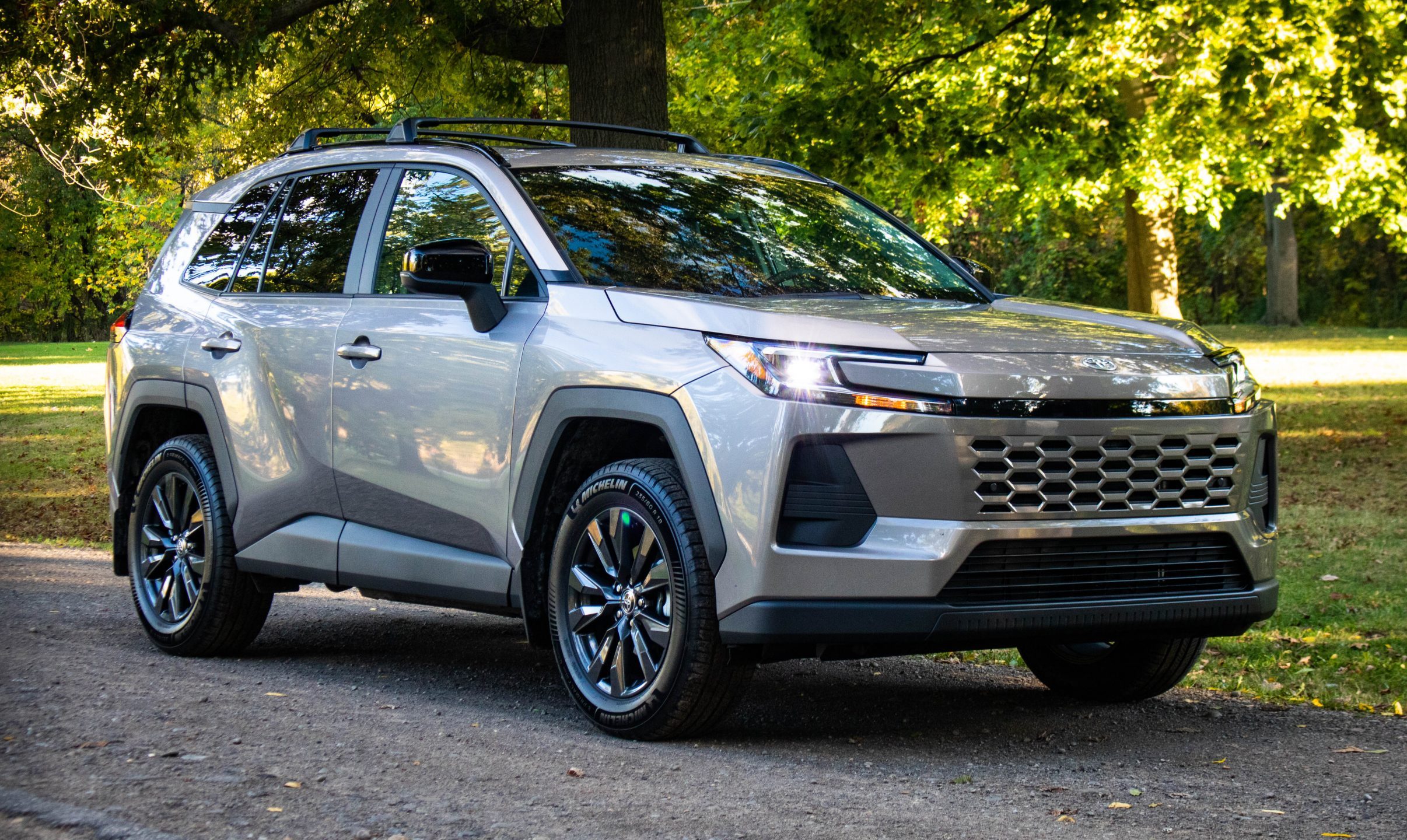
The 2026 Toyota RAV4 will start at $33,350, including a $1,450 destination fee. For that, you get the base model with front-wheel drive, cloth seats, and the smaller 10.9-inch touchscreen. Jump up to the sportier SE trim for $36,150, and you get stuff like black-trimmed exterior bits, 18-inch alloy wheels, heated front seats, and a bunch of blue stitching throughout the interior.
Moving up to the $37,550 XLE Premium model adds stuff like a leather shift knob, a power driver’s seat with lumbar support, a heated steering wheel, a power tailgate, and a wireless phone charger. Want all-wheel drive for any of these three models? That’ll be an extra $1,400.

If you’re the type who loves taking your RAV4 to trailheads, it’s the Woodland you want, with its higher ground clearance, standard AWD, and off-road-oriented tires. That trim comes in at $41,350. Even further up the line is the XSE, which gets a suede interior, the bigger 12.9-inch display, and a nine-speaker JBL stereo system. At the top of the line is the $44,750 Limited trim.
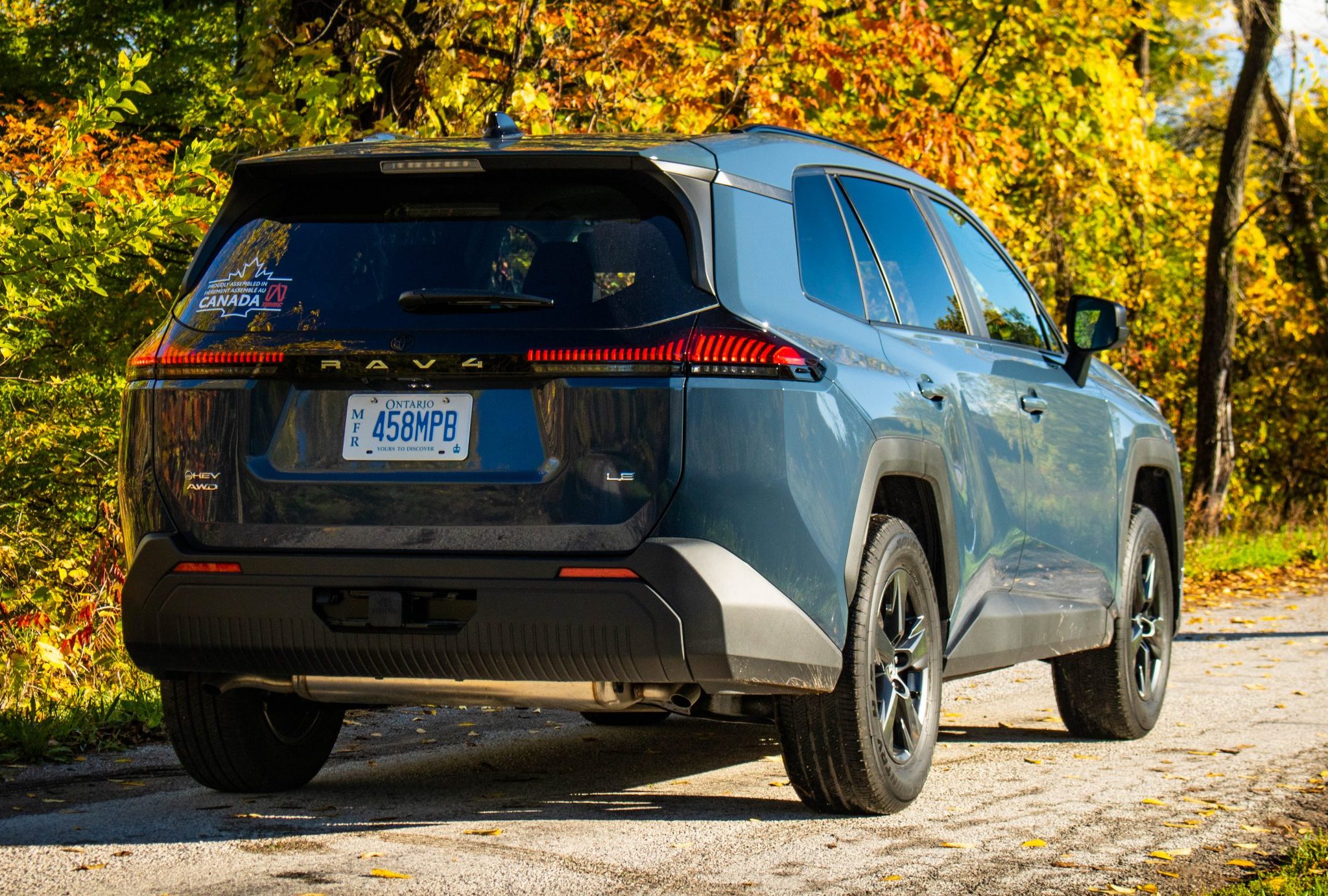
Pricing for the plug-in models like the highly anticipated GR Sport trim isn’t out just yet—that’ll come later, shortly before those cars go on sale.
Here’s Why It’s Still A Great Deal

The RAV4 is $2100 more expensive than last year’s model, which is a not-insignificant increase year-to-year. But considering how many more miles per gallon you’re getting from the standard hybrid system (a nearly 50% jump in combined mpg), I’d say it’s definitely worth the extra coin.
It’s also worth pointing out that the base 2026 RAV4 is still way cheaper than the average new car. According to Cox Automotive, the average car transaction price last month was $49,766. That means the RAV4 is about 32% cheaper than a standard new car. Even the most expensive limited trim is five grand lower than the average.

The plug-in hybrid models should be pricier still, but you’re also getting a lot of car for that money. I’m most excited for the GR model I mentioned earlier, with its 326 horsepower, specific body kit, retuned suspension, and cool seats. Thomas says it’s the best of the lineup, and I don’t doubt him.
Top graphic image: Toyota





Why does that grill remind me of crotchless underwear.
I dunno. Doesn’t remind me of any I ever saw or bought. But we usually ditched the undies and went straight to it. And that was a while ago.
Am I the only person who thinks that the front ends of many recent cars are starting to look like cheap plastic kitchen tools? Audi and Toyota (including Lexus and even Century) seem to be the worst offenders.
No, we are many.
Toyotas in the base trim or one level up trim have usually been a GREAT buy. $32,000 vs $44k fully loaded, that is a rip off.
Its not like a pickup truck or Dodge Charger where your extra money buys you more cylinders, more power, different suspension, fatter tires, knobbier tires, IE real mechanical differences that are immediately noticable in how it drives.
It turns out that adding all those superfluous extra creases and plastic inserts to the body really increases the production cost.
I’m not super jazzed about the butchier look of this gen, but I do like it having a hybrid drivetrain standard like the Camry. If I’m spending my own money (as opposed to what?) I’ll take a base model with the all wheel drive option in Army Green. If they let you order the fancy sound system as a stand-alone option, I’d pay for that too, but it doesn’t seem like many mainstream auto makers do stand-alone options much anymore. 🙁
If I’m spending someone else’s money, I’ll take the GR Rav4 instead.
How does it compare price and mileage-wise to the old hybrid though?
This might be interesting to me if two things were not true:
Valid point? Other reviews say tall drivers knees will knock against the tunnel and door.
The 2026 Hybrid is $500 more than the 2025 Hybrid.
2025 = 39mpg
2026 = 44 mpg
My parents bought one last year – got exactly what they wanted, paid less than MSRP, waited 4 weeks for delivery.
Weird take, but please hear me out.
The RAV4 is the spiritual successor to the 1965 Chevrolet Impala. If you need a car, and don’t care much about cars, you go with the safe and reasonably-priced choice. In their respective periods, the RAV4 is the same as an Impala. Maybe there are better vehicles you could chose, but selecting something different requires time, effort, and critical thinking skills. Picking the RAV4 is the easy button.
You’re not wrong. I tell people that they’re good to acceptable at everything you’d want a car to do and will likely last a long time. It may not be the best or most interesting choice, but there are definitely worse options on the market…
All my friends know the New Hybrid
The m-p-g is a little higher
Pick up all the kids, pick up all the kids and see..
Nailed it. This will be a great family wagon. There’s nothing really new here save for the styling. Toyota 4 cylinder hybrids are anvil reliable.
I wonder what the median car transaction price was. A few high-dollar supercars can really drive up the average, and the median price would give a better picture of what most middle-class families are actually paying.
Cars.com provided some data on median prices by segment (as of January 2025):
Obviously these numbers are almost a year out of date, but it does imply that the average sale price is massively skewed upwards (presumably by sales of EVs, luxury SUVs, sports cars/exotics, etc.
Interesting that even when you remove super cars and isolate the segment full size trucks are still way more expensive than they should be. Maybe they should divide it further so that the six figure luxury trucks don’t skew the results that include more modest work trucks.
Thanks – it has been about a decade since I’ve seen median car prices and back then it was about $10K less than the mean
For reference the mean price by segment from Cox Automotive in April 2025 was:
Some big differences and some odd numbers – likely because Cox Automotive and Cars are using different size categories.
Thank you for digging this up! The RAV4 falls in the compact SUV category, so $36,164 is a better price comparison than the overall average of $49,766.
I’ve always wondered what percentage of buyers for vehicles like this spring for the top of the line model. There’s nearly a $10k price gap between the base model and the top trim! I guess if you really like Toyotas but don’t want to spring for a Lexus it could be appealing.
Probably those that can only find the top of the line models available. It’s pretty hard to find the lesser models, as the dealerships tend not to order them, or order a couple to use for advertising purposes of a “fantastic” low price.
The NX hybrid starts right about where the Rav4 tops out ($45K). There isn’t a ton of overlap.
We bought a loaded RAV4 XSE a couple years ago. It’s technically not the top of the line, but I think the RAV4 is oversprung and insisted on the XSE over the Limited for its better suspension.
In short, we needed a sensible family car. I wanted memory seats, because there is a huge height difference between me and my wife. My wife wanted … uh … all the other features. All of them.
But an equivalent Lexus would have been far more expensive by the time you added the features my wife wanted. Besides, we’re really not luxury car people.
A couple weeks ago they briefly talked about this on TheSmokingTire Podcast. The consensus was that it’s almost always better to get the fully loaded version of a “lower” brand car vs. the basic version of the luxury brand.
We have a RAV4 XLE Premium and I honestly can’t think of a feature that I’d actually want the Lexus would have that ours doesn’t.
I haven’t listened to that episode yet, but one thing that has always struck me about this debate is how even on the luxury cars, you still get nickeled and dimed for the same features. Something like wireless apple car play or heated seats will be part of the higher trim on the Toyota and also part of the higher trim for BMW. It’s not like Mercedes and BMW’s base models start where Toyota left off, some features reset and are options on both vehicles. Kinda like Ferrari making apple car play optional.
I’m pretty sure it was a response to a listener email. Ironically it was also in response to a question about a RAV4 and NX. It struck me because my wife and I had been mulling a similar thing.
We’ve always ended up getting top trims on our cars. It’s usually because there’s one or two key features we want (like a 360 degree camera system for example) that are locked at the top trim along with a bunch of other stuff.
I know that’s how they get you, plus economies of scale in having fewer trim packages and such, but if hypothetically, ala carte individual options were more common, we’ve probably have picked only a couple fancy things to add to a mid-tier car.
A cousin does this. They do very well for themselves but don’t want to flash it because they need to cater to a wide market. So they buy loaded mass market cars near the end of the refresh cycle for that car. Works for them.
Considering the new RAV4’s interior was found kind of lacking in material quality and details (like the driver’s knee bumping center console), it makes the CR-V hybrid more appealing in my opinion. The Mazda CX-50 remains the best of the cars with a Toyota hybrid in the class.
I’ve heard complaints of an usually stiff ride on the CX-50, can anyone speak to that?
Forester.
IMO this is an insane take. I have a few coworkers shopping in this segment and if you match options these things are like $5k more than the competition. Plus at least locally you can’t negotiate with Toyota dealers much.
CX70 is like the same price optioned similarly and it’s a much nicer car.
Did you mean the CX-50? The CX-70 gets much worse fuel economy with its lack of hybrid option.
No, I’m saying that in the real world, with what you can actually buy, this Z axis stretch Corolla is price competitive with the Japanese version of a BMW X5.
My parents bought a RAV4 Hybrid XLE last year for less than MSRP and waited 4 weeks to get it.
The 5th and 6th generation of RAV are actually built on a shortened Camry platform (or I guess you could also describe it as a shortened Highlander).
It’s really not. For Mid-$30’s you’re getting almost 50mpg out of a crossover. And the SE trim is still undercutting the base price of a CR-V hybrid.
You’re at about $37k for a 2025 XLE hybrid with the heated seats option. There is a brand new twin turbo inline six longitudinally mounted engine AWD CX70 at a local dealer for 37K right now.
And that’s the cheapest (current) Rav4 hybrid with heated seats. Sounds like optioned with AWD the new one will be about equivalently priced.
It’s NUTS that this is even a comparison.
Manufacturers are just reaming people right now. The Maverick started at 20k, apparently it costs 1400 to add awd… Now that’s like a 38k vehicle.
We can’t normalize selling the crossover versions of economy cars at these prices.
While I agree with you these prices are pretty silly for a NPC crossover, not all Rav4s sell at sticker, you can easily get $2-3k off list on brand new 2025 Rav4 Hybrids today. Sure, these new 2026 will command sticker at first but these will eventually have decent money on the hood.
I will also say for all the people I know that own these cars, they all seem to keep it for a long long time. For $35k, these will give you a realistic 10-15 years of good reliable solid fuel sipping service. Break it down by year, it’s not that bad. Also when you go trade it in, you’ll still somehow probably get $7-8k back even with a ton of miles.
I think it probably depends on the market. I have to imagine that for example Vermont/PNW have higher demand for Toyotas and Subarus and are therefore more difficult to get a discount on.
A 2026 Maverick Hybrid AWD is a $32,000 vehicle including destination.
I get what you’re saying but you’re comparing apples to oranges.
The CX-70 can’t be a hybrid at that price and the batteries add a lot of cost to a vehicle. The CX-70 PHEV starts at $54k. The ICE CX-70 will cost more to operate over the life of the vehicle because it gets an estimated 25 mpg combined to the RAV4’s 39 mpg combined.
If you’re just looking for the nicest car for the lowest amount of money the CX-70 is a great choice but if you care about the overall cost of ownership that RAV4 will be cheaper longterm and will retain its value better.
Having spent a lot of time looking at used cars for a friend lately, it seems that any extra you spend on a Honda and Toyota when new, you get that back when you go to sell it used. Used Hondas and Toyotas seem to exist in a fairy tale land where they only lose a few grand after being driven for 5 years and 80k+ miles.
100%
Doesn’t make real sense.
At the same time, what do you tell someone who just wants basic used transportation? Nissans and Subarus are out because lousy CVT. Ford and GM is out because even after 10 decades, their stuff still doesn’t hold up long term. Hyundai/Kias gets stolen. And Honda/Toyotas go for double everything else.
~$35k for an AWD crossover that gets 44 mpg is a deal
This was a car I was semi-waiting on, but the more I looked at new hybrid compact crossovers, the harder it was to justify the price AND the wait (to say nothing of the almost inevitable shortage of higher-demand models)
We ended up spending sub-$30 on a 4yo X3, something that most major publications would never even mention in the same article, but they really should. The reality of carbuying today is that new cars are so pricey, used is a serious contender. The market knows this, but the media seems to ignore it in favor of sticking to a very conservative “This car is in this class, and here are its 4 competitors”
I know I ranted about this yesterday in the Pilot/Passport threads, but it’s true. People want deals and value, and my rationalization is that saving $15k, even on a used BMW, can pay for a lot of repairs. Maybe even two or three of them!
There could certainly be a series of articles written about this, but I don’t think it can always be mentioned when talking about new car classes. That’s because the compromise of used can look so different from one person to the next. People start cross shopping all sorts of crazy things once you add 4 years, 50k miles, and tens of thousands off MSRP
I understand why used cars aren’t really mentioned. There’s just so many more options and pricing can vary wildly and requires a lot of investigation compared to listing teh MSRP. Plus, there’s a lot of people in this price class that are splurging to buy new specifically because they want a warranty don’t want to deal with maintenance and repairs for a while.
Yeah, from a practical POV it’s much easier to just showcase the current new car competition and not the 50-100 other alternatives.
I just found in a lot of my car research that I was waiting for the better journalists to say something like “Also consider:” and list some used options that I might not have thought of.
The way most comparisons are done now feels like AI could easily take it over. We need more of a human touch, including helping buyers make a more 360-degree decisions instead of just a small crop of brand new rides.
It’s part and parcel with how “Compact SUV” and “Compact Luxury SUV” are considered completely separate groupings, which seems silly — there’s more overlap in car brands and models now than ever before. One person’s loaded Toyota could be another person’s base model Mercedes.
My mom went through pretty much the exact same calculus a couple years ago. Coming out of a Volvo V60 (and a BMW 328i before that), she looked at CR-V and RAV4 hybrids, found them depressingly joyless and expensive, and ended up with a pre-owned X3, with a pretty generous warranty, at a similar/lower price point for a more premium-feeling and -driving experience.
I still have an irrational dislike of that black line on the D pillar. I understand its function, and I can see that it somewhat integrates with the rear window spoiler, but I hate the way it looks in profile.
“If you’re the type who loves taking your RAV4 to trailheads, it’s the Woodland you want”
At those prices it’s the Lexus I want.
The only Lexus under $44k is the UX hatchback though, which is really a fancy CorollaCross.
Fine, I’ll buy the badges and stick them on myself just like I did with my “Lexus” Tercel. The 24k gold plate really made the car pop.
“It’s also worth pointing out that the base 2026 RAV4 is still way cheaper than the average new car. According to Cox Automotive, the average car transaction price last month was $49,766. That means the RAV4 is about 32% cheaper than a standard new car”
With that logic you could increase the base price of a Nissan Versa to $40,000 and imply it’s a great deal since it’s still 20% less than a standard new car.
How it compares to the rest of the class or whatever people are cross shopping it against is what’s important, not to the rest of the entire market. It’s simply not competing against an F350 Limited nor a Porsche 911. Nor a Porsche Macan for that matter, even though it’s sized similarly.
The Versa is dead. It was also a crap car – just had one as a rental with only 40K km on the ODO and the suspension was SHOT. Also the worst seats I’ve sat in – ever.
Comparing the Rav4’s price to the average car in the US is a somewhat useless metric since that figure rolls in larger trucks and SUVs and luxury products. Comparing it to segment rivals like the CRV Hybrid, CX-50, and the like is a much more worthwhile way to determine actual value.
Yet all of those expensive vehicles don’t roll down the road any better than this. Sure, they pump up those with insecurities, but they don’t accomplish the task at hand (transportation) any faster or more efficiently.
All vehicles, regardless of price, are subject to the realities of everyday driving. It only makes sense to compare the price in this way.
Why buy a tailored suit jacket when a hoodie will accomplish the task at hand (covering ones body with clothing) no faster nor more efficiently?
Why eat a steak dinner when rice and beans will accomplish the task at hand (consuming calories) no faster nor more efficiently?
Look at fancy man here, with his hoodie.
Real clothing enthusiasts will simply reuse a potato sack!
Rice and beans is a step up from peanut butter and ramen noodles too; maybe I shot too high.
Peanut butter in your ramen noodles is the new-new. Seriously.
Ah, but I can afford a nice jacket and a steak dinner. I can’t afford a jacket made of eagle beaks and platinum threads with diamond buttons. I also can’t afford a meal comprised of mammoth ribs, dodo eggs, and Baluga caviar from whales that were massaged every day by professionals with 40 years of experience.
Would you say that buying the nice jacket and steak dinner “pump up your insecurities”?
Or is that only and issue for truck and luxury car drivers?
No, because we’re talking about moderate spending here. A $200 jacket is better than a $25 hoodie, but it’s still a reasonable price for a quality item.
Now, a jacket that costs $1,000 or more, yeah, that’s pure vanity. And spending $80k or more on a personal vehicle is probably vanity too.
Honestly, can’t be argued.
Most of us only need a 20-year old Corolla or Camry.
Bangle said it best though, “Cars are avatars.” His designs are divisive, but he summed up the entire automotive market in a mere three words.
The Disney Cars / Avatar crossover movie I didn’t know I needed.
Yep. Typically for a lot of distributions, an average will be more around 65th percentile which can be a much higher figure than the median (50th percentile).
Yo dawg, I heard if you like taking your RAV4 to the trailheads, it’s the Woodland you want.
I am really not a fan of Toyota’s current design language. It looks good on the Prius and OK on the Prelude.
Ok, but what if I like taking my Rav4 to trailheads? Maybe look at the Woodland?
You reminded me of how irrationally annoyed I got yesterday sitting behind a 2026 Honda Prologue 3 or 4 different character styles on the rear hatch badging (all caps, caps/lower case, italics, and possibly something else). I’m really not a fan of the capital/lower case naming Honda and Toyota have decided to go with on the backs of their cars, it just looks like a hastily copy/pasted email…