

Ford deleted all of its social content across some of its accounts yesterday, and many were wondering what that meant. The answer is a little boring on the surface. It’s Ford’s first new global ad campaign in more than a decade, replacing the anonymous and meaningless “Go Further” with a tagline that, at the very least, has the name of the company inside of it.
But what’s interesting about the “Ready, Set, Ford” global campaign to me isn’t the aesthetic. I’m fascinated by the strategy behind it, which seems to be rooted in fear and uncertainty. Specifically, it’s at least partially inspired by the uncertainty around artificial intelligence.


This is important! Volkswagen is spending a billion dollars, for instance, in hopes of saving months of development time for new vehicles. If it’s successful, that could save the company many billions. For Software-Defined Vehicles (SDVs), the prospect of AI could make your car more like “connected devices” than static machines.
According to the new-old-new CEO of Volvo, all of this is not just important, it’s existential. I’d say everything feels existential now. It sucks! I’m going to do The Morning Dump in reverse this morning, with the lead story at the bottom.
Ready, Seat, TMD!
‘AI Is Our Key To Greater Speed, Quality, And Competitiveness’ Says VW Group Board Member
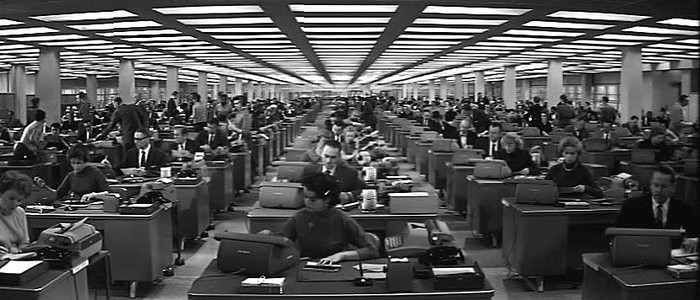
One of my favorite films is the Billy Wilder-directed dark comedy The Apartment from 1960. It’s also probably one of the most overlooked films of the 21st century, lacking the awareness of Wilder’s other projects like Sunset Boulevard or Some Like It Hot.
Go watch it tonight.
I mention The Apartment because there’s a scene early on in the film that I think about all the time. It shows Jack Lemmon as an insurance clerk for the fictional Consolidated Life Insurance Company of New York. What strikes me here is that none of the people on this massive office floor (pictured above) represent a job that exists anymore. Take this huge scene of people, and leave two, and that’s what the present is.
Most of these jobs were replaced by computers, and not even particularly smart ones. Microsoft Office knocked out at least 75% of them, and most of that was probably Excel. That’s to say nothing of the people in the mailroom killed by Outlook.
This made Microsoft an extremely valuable company until Google made all of that stuff essentially free. This is the price of progress, and in economic terms, these represent huge gains in productivity. Filling in a bunch of spreadsheets by hand and typing them up is inefficient and not a particularly rewarding job.
Volkswagen started its slow march towards engineering prowess and capability around the same time that The Apartment was in theaters, but it was an approach built on hiring a ton of engineers. It wasn’t fast, and it was labor-intensive. As a company, VW is on its back foot. It needs to do something to catch up.
The plan, according to Volkswagen, is to leverage AI to make developing cars faster:
“With artificial intelligence, we are igniting the next stage on our path to becoming the global automotive tech driver”, says Hauke Stars, Member of the Board of Management for IT at the Volkswagen Group. “AI is our key to greater speed, quality, and competitiveness – across the entire value chain, from vehicle development to production. Our ambition is to accelerate our development of attractive, innovative vehicles and bring them to our customers faster than ever before. To achieve this, we deploy AI with purpose: scalable, responsible, and with clear industrial benefits. Our ambition: No process without AI.”
The company claims that it’s using 1,200 AI applications already, and that the more than $1 billion it’s spending now will save it about $4-5 billion by 2035. In particular, the company thinks it’ll speed up the process of designing and building cars:
In vehicle development, for example, the Volkswagen Group is building an AI-powered engineering environment together with its partner Dassault Systèmes – for all Group brands and across all regions. It is designed to support engineers through virtual testing and component simulations, significantly accelerating development processes. Alongside other initiatives, this collaboration aims to helping to shorten the product development cycle for Group brands to 36 months – or less – making it at least 25 percent (around 12 months) faster compared to today.
AI integration is also advancing in production: Leveraging the Volkswagen Group’s proprietary Digital Production Platform (DPP) – a “factory cloud” now connecting more than 40 sites – Volkswagen is continuously introducing new AI applications into its manufacturing processes. These help optimize the interaction of complex processes in vehicle assembly, contribute to more efficient use of energy and materials, reduce costs, and lower CO₂ emissions.
I have to be that guy and point out that Volkswagen tried to do this with software, creating a company initially called Car.Software, which became Cariad, which became such a failure that Volkswagen had to promise Rivian about $5 billion to help solve the problem it created for itself.
There’s the money you save by making the building of cars faster, but AI also has a role to play in the cars once built, at least according to the people who are supposed to know better.
Do People Think Of Cars As ‘Static Machines’?
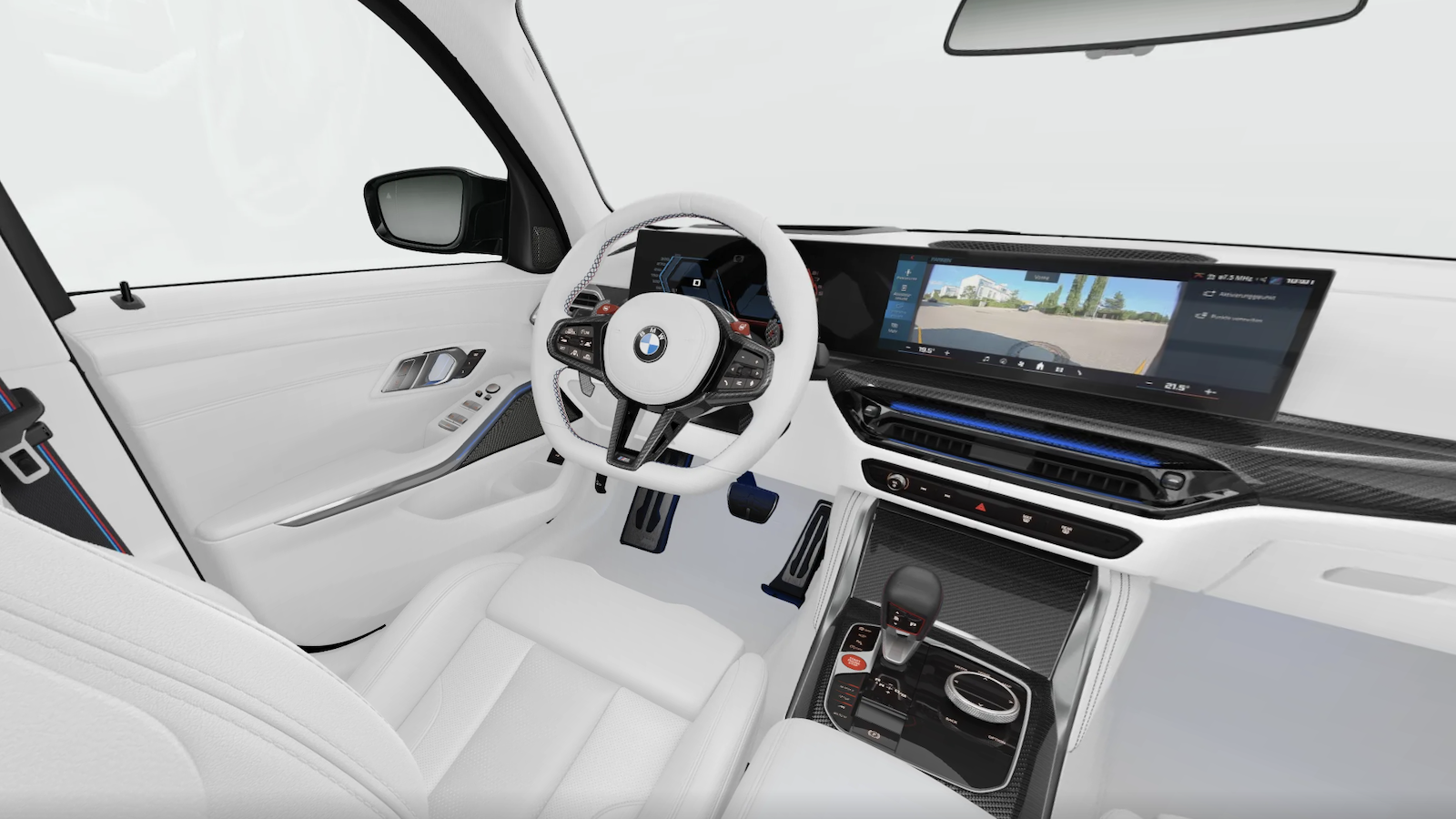
There’s an S&P Global Mobility report out about the future of SDVs, and a lot of that has to do with developing a common software platform (as Rivian and Tesla have done) in order to run a vehicle, as opposed to trying to cobble together a bunch of systems from various suppliers.
AI, according to this report, has a role to play on the consumer level and not just the production level:
Christoph Grote explained how BMW is embedding intelligent lighting systems that respond to conditions in real time and digital key technology that lets drivers use smartphones instead of traditional fobs. These features show how AI makes vehicles more context-aware, enhancing both safety and personalization.
Furthermore, AI can analyze vast amounts of data from vehicle sensors to improve predictive maintenance, ensuring that vehicles are serviced before issues arise.
By weaving AI into SDV architecture, vehicles can stay updated and responsive for years after purchase, helping them feel less like static machines and more like connected devices that learn and adapt to the owner.
That static machine line is interesting. Obviously, cars move, and are not static in that sense. But they have historically been stuck in place technologically. Your car stops becoming more advanced the day it rolls out of the factory. With OTA updates and a more SDV approach, that may not be as true anymore.
Volvo CEO: ‘Some Companies Will Adapt To New Circumstances And Survive. Others Will Not’

I don’t know if I’ll be entirely retired when I’m 74, but I plan to at least be semi-retired. That’s not the case for Hakan Samuelsson. He’d left Volvo as CEO of the company, but an uncertain future brought Samuellson back to the company he used to run.
He did a long interview with Bloomberg and he touches on the moment we are in:
Q: How do you see the car industry evolving from here?
A: The industry will be electric — there’s no turning back. It may take a bit longer in some regions, but the direction is clear. In (about) 10 years, cars will all be electric and they will be lower cost.There will be new dominant players, exactly as Ford, GM, Toyota and Volkswagen were in the old world. In the new world, there will be two or three very strong Chinese brands. That makes the room for the old ones tougher. So this will trigger a (wave of) restructuring. Some companies will adapt to new circumstances and survive. Others will not.
I think that is largely true. Who will the old, tougher brands be? Ford is making a play for the future.
‘Ready Set Ford’ Has Roots In Everyone’s Insecurity
Everything is changing. I can feel it. I know it. To some degree, I want the change to come.
As a website, The Autopian is disadvantaged in the short term by its membership model. There are competitors who are able to fill their pages with AI slop or, somehow worse, human-written articles that are designed to appeal to specific Google products. While we don’t ignore the traffic that can be gained from various platforms, we aren’t going to do it at the cost of posting articles from paid consulting firms that make the site worse.
The uncertainty of when and how and how much weighs on me, as it should given that that’s my job.
Ford killed all of its social media content yesterday, and people noticed. What was happening? Was there new product coming?
Nope. The company is still there. There’s no immediate new product. There’s just a new global branding strategy that replaces “Go Further.”
I think this is an improvement and, also, I don’t think I’m going to think about a catchphrase all that much. There is an explanation of it from Ford’s marketing chief Lisa Materazzo in The Detroit News that I am thinking about:
“Ford is a very optimistic and resilient brand, and that’s reflected in this idea of Ready Set Ford,” she said during a briefing. “We really tapped into some universal global trends that we were seeing. And one of those trends that is probably 24 months or more in the making has been this idea that consumers can really feel overwhelmed. The term that kept popping up is called polycrisis. … People are a bit overwhelmed, probably starting right around the time of COVID: So, health concerns, financial concerns, technology concerns — AI, what does AI mean for me?
“There are so many things that people feel angst about,” she continued. “However, the really interesting insight in all of that is people are actually very optimistic and very resilient when you give them the tools and the capability to feel empowered. And that was one of our big insights, because we think that we do that better than anybody else through our products, services and experiences.”
What the uncertainty around AI means for me is that I still want a Maverick Hybrid.
What I’m Listening To While Writing TMD
As noted by Styx in their song “Mr. Roboto,” we all need control. I want control.
The Big Question
How do you feel about AI?
Top photo: Honda


Of course I’m super late, but finally a Morning Dump Song I recognize and love!
“Furthermore, AI can analyze vast amounts of data from vehicle sensors to improve predictive maintenance, ensuring that vehicles are serviced before issues arise.”
Quarterly profits down? Push notification CEL for everyone!
AI=Artificial Stupidity
Watch Terminator again…Skynet is coming for us all!
SDV=Stupid Damn Vehicle
> Christoph Grote explained how BMW is embedding intelligent lighting systems that respond to conditions in real time and digital key technology that lets drivers use smartphones instead of traditional fobs. These features show how AI makes vehicles more context-aware, enhancing both safety and personalization
That’s not AI, nor do you need AI to achieve very good results.
Yes, kinda like DRL lighting is now causing a lot of drivers to blissfully drive around with no taillights on? I mean how should they know? Headlights are on, dashboard is illuminated, what do all those buttons do? Letting AI control stuff so we don’t have to worry about anything leads to atrophy.
The AI bubble is losing air already, and GPT5 publicly exposed the emperor’s clothes and all the hanging bits. VW being VW, they are still shoveling yesterday’s tech, like lying about Diesel when they shoulda developed Hybrids. Godspeed to them, bless their heart.
Also I have an issue with the idea that cars should be tech centric. Tech is perishable, cars are (should) not. Software has brought great progress in some instances but I still think a car is not a phone, no matter what Xiaomi does.
AI is autocorrect on steroids. No thanks, keep The Autopian human, as it should be. The best writers and wrenchers live here.
Let me introduce the idea of “scientific management”; rather terrible as applied to people, since it indeed treats them as machines. But what does it ask of those “machine-people”?
Frederick W. Taylor had a story about a man named Schmidt.
To make an industrial business more efficient, Taylor began by picking Schmidt out of a group of workers as being both capable and highly-motivated by money. Taylor wanted to maximize his productivity in a consistent way, and asked Schmidt, “are you a high-priced man?”
“What do you mean?”
“I want to find out if you are a high-priced man, or one of these cheap follows here. Whether you want to earn $1.85 a day, or are satisfied with the same $1.15 they get?”
Obviously, Schmidt wanted to be a “high-priced man”.
So Taylor leads him on, and says a high-priced man would listen to a manager, who oversees him with a stopwatch. When he is told to carry iron, he carries iron. When he is told to rest, he rests. No talking back.
Through this system, he is worked to carry 47 tons of iron per day, when before he had carried 12. He was paid 60% more for this quadrupled productivity.
Again, this is a horrible way to treat a person. But it should be expected of any machine.
When I tell a machine to do something, I expect it to do it. When I tell it to stop, I expect it to stop. No talking back.
Now, tell me, automakers. Do you make a high-price car, or another one of those cheap fellows?
God, I hate “connected devices that learn from me”. If losing vertical task bars in 11 didn’t send me running to Linux, Copilot would’ve. Never regretted it once.
If Slate doesn’t happen, and I need to buy a new car? I’m an American, and I would rather WALK.
Sites like this are the future of the free internet. Run by people, powered by people, for those people. It’s the only way. Everything else is spiraling.
I suppose for the QOTD, my actual answer does have some nuance.
The technology is interesting and powerful. The centralized controllers of that technology are one of the greatest nightmares faced by human civilization in ways many people don’t seem to even consider.
An obvious one is powerful centralized control of information, a fantasy of the worst tech companies and authoritarian governments. It’s also a new stage in the horrors of “surveillance capitalism”.
Some people ask, “why can’t they use AI to cure cancer instead of just stealing art?”
Ah, they actually did. Or at least, to treat cancer, by dramatically cutting the time needed for skilled radiotherapists to perform a treatment.
The British government cut the funding, while Starmer was going on about how the future of their economy would be AI (AKA, “we don’t know what an economy is, so we’re investing in the current tech trend”).
I think architectures like RISC-V (open source hardware) allow for efficient individual use of AI. I expect the wastefulness of AI datacenters to mostly relate to their over-application. They want it in every part of society. Every web search, instead of a hyper-efficient indexing (check out the EU’s Open Web Index!), needs an LLM to find sources and synthesize some non-deterministic (slightly different every time) answer. Then add AI art.
They wouldn’t invest so 500 billion dollars into a project like Stargate if they didn’t see a way to gain even more money (and secure market control). How much of society will they need to insert themselves into to return half a trillion dollars plus running costs, then profits?
“Sites like this are the future of the free internet. Run by people, powered by people, for those people. It’s the only way. Everything else is spiraling.”
Your posts read as thoughtful and articulate. Thank you for contributing.
If you’re able, and simply choosing not to when you can, I challenge you to become a paying member of this community of people.
I appreciate the positive feedback, and I intend to!
I’m not making money at the moment, so I’m reluctant to start any new recurring payments even if their impact would be very small in practice.
All of my priorities are also backed up behind one project that’s been two days from completion for weeks, which I will get back to instead of spending more time writing this comment.
Happy to provide the nudge….
Know you’ll conquer the project.
Cheers
I think AI is going to make the average persons life 1% better, make a lot of people’s lives worse when it takes their jobs, and make the 1% richer and richer…
Should not use future tense. Already happening.
I would love for my car to be a static machine. I would like my car to be the same every time I get in it, and respond the same way to given control inputs no matter what. In fact the times I’m least pleased with my cars are when they change unexpectedly.
Dave; Open the pod bay door Hal.
Hal; Dave’s not here MAN!
How do you feel about AI?
No great love for it. But I’m glad your font choice in the articles has serifs so I can tell AI from Al.
I am no expert but I do remember when you had to use punch cards to program a computer. Now it seems every 6 months a new thing comes out and old tech becomes outdated. That is fine if the hardware can match with the new software but hey my flip phone couldn’t keep up now I need a phone with a constantly breaking screen. If EV vehicles that cost so much need constant replacement of hardware to keep up with software that becomes unsupported EVs will never become as cheap as ICE vehicles. In fact I think if you had the money you could buy out an old vehicle factory and equipment from Toyota and make 1 or 2 outdated sedans for cheap and out sell SUVs until they realize their mistakes and undercut your price or buy you.
My dad took the very first programming course at Illinois Tech. He did the original spaghetti code, with jacks and sockets. He’d be anti-AI if he were still alive.
They shoulda just changed it to “Go Fordther.”
As for AI, I don’t get why we are rushing headlong into the AI tunnel, it’s like no one watched T2: Judgement Day. Seemed like a pretty big movie at the time, but maybe I’m the only one that actually watched it? Seriously though, if the stated objective of all this AI stuff was to create a TNG-like post scarcity society where we just explore and write books and shit, that would be great. The objective seems to be profit though, and the target at the moment to achieve said profit is jobs. That makes me pretty uneasy. I think right now AI could do my job. It would suck at it, but it could do it. Next year, maybe it will be good at it. Then what do I do?
Actrually, they should have just updated the acronym to “Fix Or Recall Daily” and done a meta truth in marketing campaign.