I love the phrase “nauseously optimistic,” because that’s how I feel most of the time when something is going well. While I’m a generally positive person, I cannot entirely silence the voice in the back of my head that enumerates all the things that could go wrong. It’s how I would describe every Mariners fan going into the bottom of the 7th inning last night.
Are automakers happy about losing billions of dollars to tariffs and having to shift a bunch of their production? Probably not. Is it as bad as it could have been? Also, probably not. The temptation I always have when writing The Morning Dump is to give in to either doomerism or unqualified exuberance. To get lost in the sound of battle and not see the larger map.
This was the case when I started writing TMD, and it simultaneously seemed like the industry would never pull itself out of the chip shortage and somehow also sell 10 trillion EVs in the United States by the end of the decade. I like to think I resisted both, although I’m sure you can find examples of me giving in to temptation just a little bit.
With tariffs, it’s been easy to assume that everything would go wrong and automakers wouldn’t absorb any of the costs. That’s not quite what happened. Instead, GM thinks it’ll do ok, and most analysts are saying the sky hasn’t entirely fallen.
You want some doomerism? Here’s some doomerism: Toyota’s reasoning for not selling the Baby FJ is super bleak and makes me sad. It’s also the inverse of why some Europeans really don’t want our cars.
And optimism? Here’s some optimism: Dacia Duster. That’s it. Dacia Duster.
GM Slightly Revises Up Earnings Estimates For 2025
Source: GM
Going into the year, most automakers had rosy predictions for how much money they’d all make. For some reason, they didn’t take the threat of a global trade war seriously. And then it happened, and it was a mess, and none of it made any kind of sense.
The good news for automakers, depending on your perspective, is either that President Trump always “chickens out” (the TACO trade) or that the President is willing to listen and to adjust policy as necessary. You can imprint your views on the news that the White House is considering importing beef from Argentina to help bail out that country and lower costs, and what it means for a White House that’s trying to make the case that we should do the opposite for seemingly every other product sold from any other place.
Either way, GM sees things as not so bad. The company’s Q3 earnings data isn’t great, as earnings and net income both declined significantly. The market expected worse, and CEO Mary Barra, in her letter to shareholders, acknowledged that the company is in a position to slightly raise its lowered revenue guidance for the year:
Thanks to the collective efforts of our team, and our compelling vehicle portfolio, GM delivered another very good quarter of earnings and free cash flow. In the U.S., we achieved our highest third-quarter market share since 2017 with strong margins, and our restructured China business was profitable once again. Based on our performance, we are raising our full-year guidance, underscoring our confidence in the company’s trajectory.
One of the big changes, she notes, is the MSRP offset announced last week. Now that automakers can deduct a huge portion of tariffs if the cars are assembled in the United States, there’s going to be less of an impact going forward. This applies not only to American automakers, but also to any company that builds a lot of cars here (Honda, Toyota, et cetera).
This does make me wonder if the White House isn’t inadvertently encouraging companies to raise the MSRPs of their cars and then discount on the back end, thus giving themselves more tariff relief.
American Car Execs Are Less Freaked Out, But That Doesn’t Mean Things Are Perfect
Source: Ford
As much as I’d like to enjoy the moment of blissful optimism, carmakers and CEOs are mostly saying it’s not going to be as bad as they thought, not that it’s going to be immediately great.
There’s a good CNBC article today that goes through a lot of what analysts and carmakers are saying, and it’s mostly: It could have been worse. Here’s a nice summation:
“There’s some positives for next year, but there could also be some really bad negatives if there’s a freak out on tariffs or the consumer finally breaks down or whatnot,” Morningstar analyst David Whiston told CNBC. “But no one’s calling for a complete crash.”
Whiston — who covers GM, Ford and several auto retailers and suppliers — characterized his outlook as “cautiously optimistic,” saying the significant industry concerns are countered by other bullish circumstances.
UBS analyst Joseph Spak agreed, noting a lot of challenges for automakers such as tariffs and losses on electric vehicles “have already been incorporated into 2025/2026 estimates,” he said in an investor note last month.
Again, some of this is premised on nothing bad ever happening. If there’s a drop in consumer confidence, a run on the banks, or whatever, this tenuous peace we have could break.
Toyota Says The Baby FJ Is Too Small For Us
Photo credit: Toyota
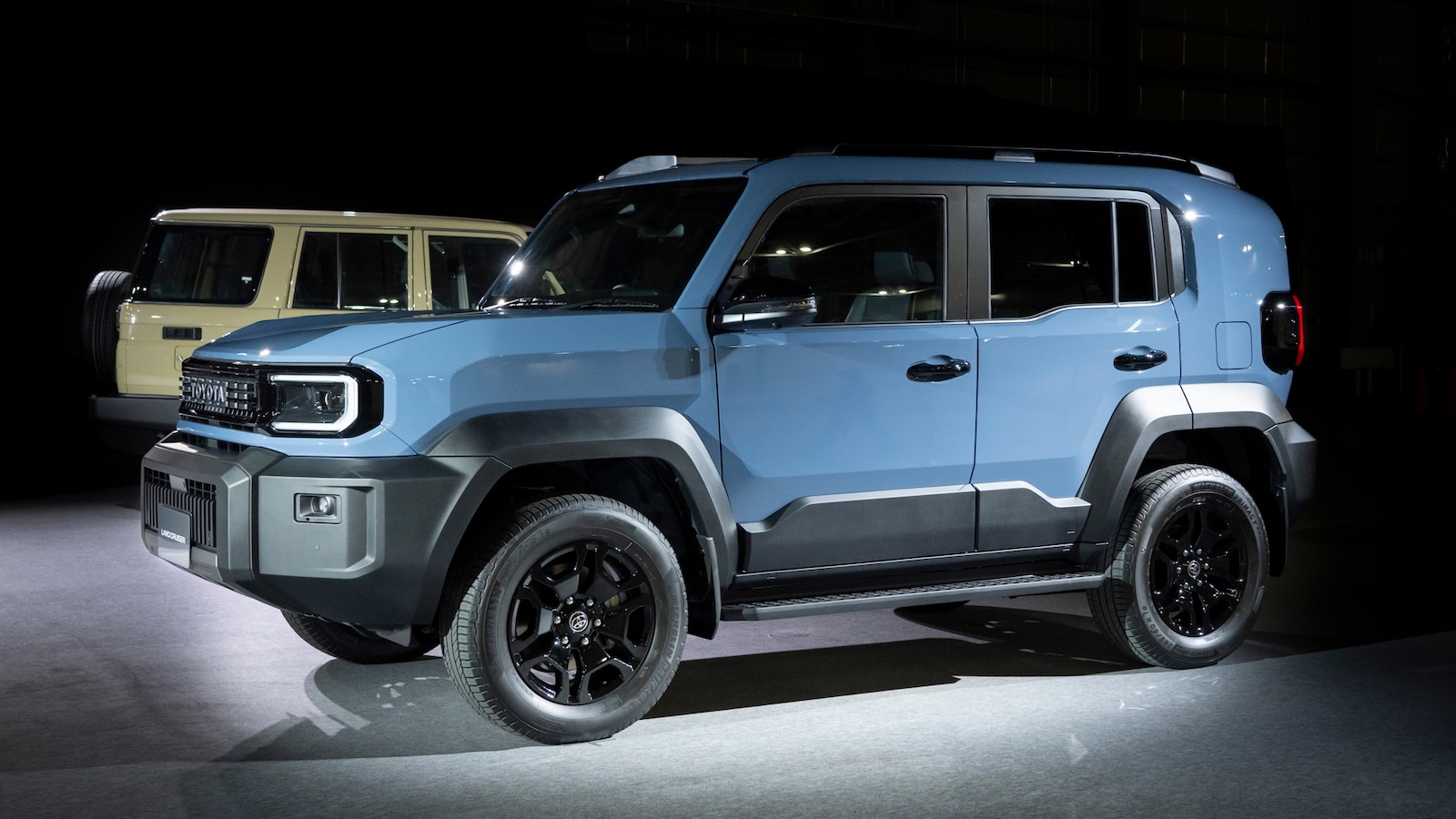
We finally got to see the Baby Land Cruiser FJ, and I love it. At the same time that it was announced, it also became clear that we’re not getting it. Ugh! Why?
The FJ will be built in Thailand and target emerging markets in Southeast Asia, Africa, the Middle East and Latin America, Uchiyama said. It will also be offered in Japan.
Uchiyama, who oversees the entire Land Cruiser family, said the FJ is too small for the U.S.
“There are no plans for America or Europe,” Uchiyama told Automotive News during an Oct. 20 preview at Toyota’s Higashi-Fuji technical center. “The start point for this is the global South.”
You sonofabiiiiiiish!
American Cars Are Too Big For Europe, Says Some Europeans
Source: GM
I love going to the UK and counting how many Mustangs I see. The Brits love a Mustang. Actually, all good people love a Mustang.
That being said, the environmental policy group Transport and Environment is not super pleased about the US and EU harmonizing standards as a way to get the Trump admin to lower tariffs. Why? Our cars are not built for European roads:
The deal agreed over summer states that “with respect to automobiles, the United States and the European Union intend to accept and provide mutual recognition to each other’s standards.” Yet, EU vehicle safety regulations have supported a 36% reduction in European road deaths since 2010. By contrast, road deaths in the US over the same period increased 30%, with pedestrian deaths up 80% and cyclist deaths up 50%.
Europe currently has mandatory requirements for life-saving technologies, such as pedestrian protection, automated emergency braking and lane-keeping assistance. Some of the most basic pedestrian protection requirements which have long been in place in the EU, such as deformation zones in the front of vehicles to reduce crash severity and the prohibition of sharp edges have made cars like the Tesla Cybertruck illegal to sell in Europe.
“Europe built its reputation on pioneering robust vehicle standards.To accept lower US standards would undo decades of EU progress,” say the signatories. According to the letter “the consequences of such a move for European road safety would be profound.”
Look, I don’t care about your facts; I only care about my feelings. And my feeling is that it would be a lot of fun to roll around Barcelona in a Bronco Raptor.
Also, yeah, many of our cars are not really built for European roads, which is why I think this is somewhat overblown. While a few people might import some interesting cars, I think generally American HD trucks aren’t going to be that appealing to Europeans.
You know what Europeans buy a lot of? The same sort of mid-size and smaller crossovers that Americans are buying in huge numbers.
Dacia Duster
Source: Dacia
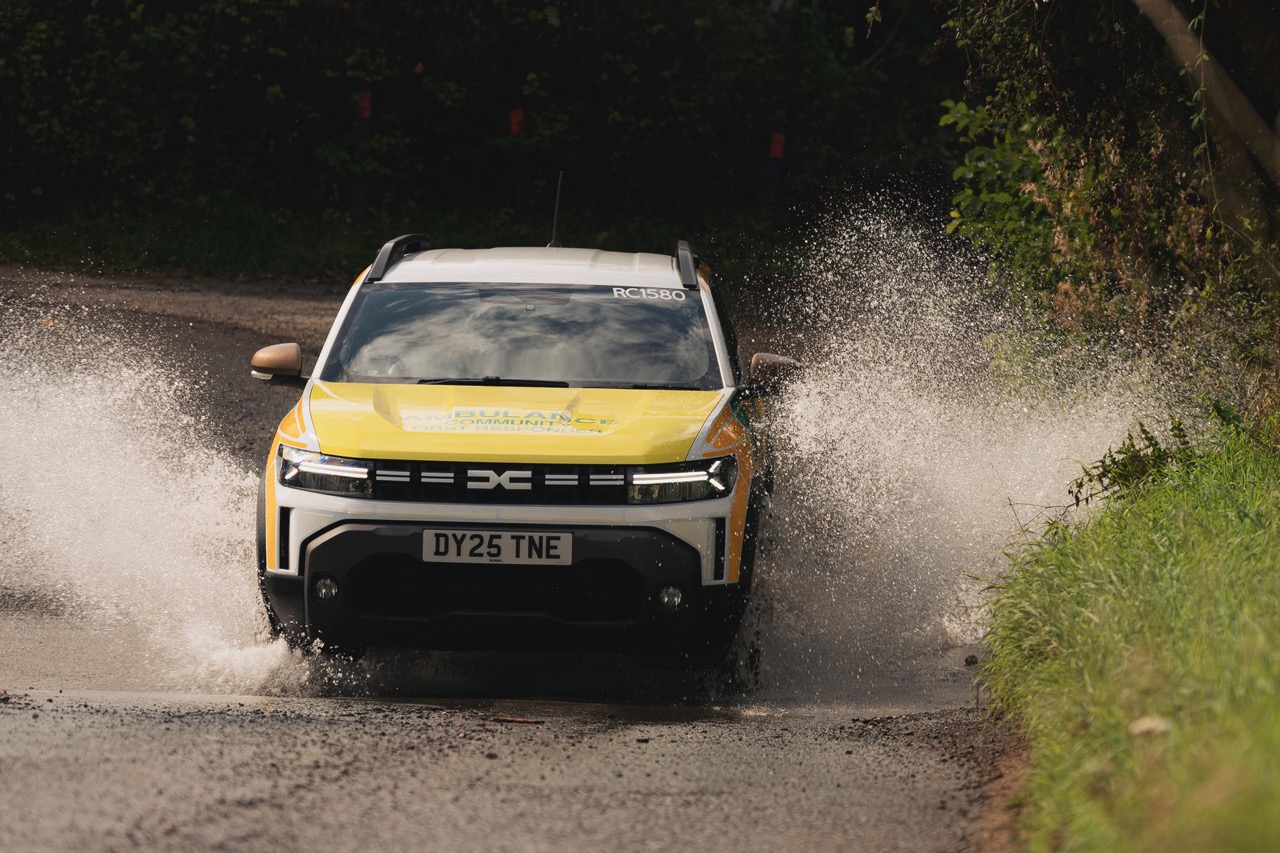
You know what’s a small SUV I’d love to see here rebadged as a Nissan? The super cheap Dacia Duster. Here’s a Dacia Duster Extreme 4×4 being used by the Bridgnorth Community First Responders.
The volunteer-led organisation, which began in 2001 as part of an initiative to support ambulance services in remote areas, has grown into a vital lifeline for the local community. Trained by West Midlands Ambulance Service in advanced first aid, the eleven-strong team of volunteers respond to 999 emergencies across Bridgnorth and the surrounding villages, providing critical care in the vital minutes before an ambulance arrives.
Source: Dacia
To mark their upcoming 20th anniversary and keep pace with increasing demand, the group has invested in a new Dacia Duster Extreme 4×4, replacing their decade-old vehicle. It was a choice driven by both necessity and pragmatism.
I’m a fan of both necessity and pragmatism.
What I’m Listening To While Writing TMD
Have I really never done “Big in Japan” by Tom Waits off the excellent Mule Variations? That seems unlikely. Apologies if I’ve done this one before; it just fit today.
A long-time writer and editor in the car space, you may have read my work in Wired, Jalopnik, and the newsletter for my local Ultimate Frisbee team. I love writing about the car industry, driving minivans, and dreaming about owning various European Fast Fords. I drive an E39 530i Sport (with the stick) and a CR-V Hybrid. You can email me at matt@theautopian.com or follow me on Instagram. Oh, I'm also the Publisher of The Autopian. That seems less interesting than the European Fords thing, though.
Here in Norway, which isn’t a part of the EU, I have seen more American trucks than for example VW Amaroks. Ford even directly advertises the F150 Lightning in the radio, which is a first. Several new Broncos are for sale (for around $170 000) and Dodge pickups are more common than I would have thought. It’s not like you see American cars wherever you look, but it’s an interesting trend.
Member
Bbm_ro
4 months ago
The Duster and its one-size-larger sibling, Bigster, are some of the best SUVs available in Europe, at least for budget-minded people who don’t want to spend money to impress others. They’re not expensive, maintenance and parts are cheap, plus they have some decent ground clearance (20-21 cm / 7.8 – 8.2 inches) so you don’t have to watch every pothole and tramway line crossing (we have plenty of cities with trams here in Europe). The short overhangs make them easy to park, and they can easily handle 3-4 people (Europeans ???? ) going on vacation with some luggage.
The Renault group (who Dacia belongs to) just announced some better-than-expected numbers for last quarter, based on very good sales of the Bigster (which was launched earlier this year).
I currently have 2 Dusters: a 2021 and a 2024 (one of the last ones built before switching the manufacturing lines for the new generation), both being gas models (1.33 liters, 150 HP and 4×4). I also had a 2016 (1.5 liter diesel) that I sold last year. Being rather light for the size (1400 kg / ~3000 lb) and having around 110 CP / ton, I usually pass a lot of “better” cars on the 2-lane roads (one lane each way) in my area, since the others have to be careful of road imperfections. On the Autobahn I reached 170-175 km/h (105-108 mph), so it’s good enough for higher speeds as well. It accelerates quite decently until 140 km/h, after which it takes a bit more to get to the maximum. Of course, being a brick doesn’t help at high speed.
My 2021 got better shock absorbers at ~70k km (44k miles), which increased ride height (+ 3.5 cm / 1.37 inches) and improved the handling (they’re 25% stiffer than the factory ones), similar to what I did to the 2016 one a few years ago. I regularly take some gravel roads over the hills to go around gridlocks in my area, and at 50-60 km/h it doesn’t break a sweat.
Most likely at the end of next year or in early 2027 I will sell the 2021 and get a newer generation Duster, or maybe even a Bigster (it’s the only one with a panoramic roof). They just announced a new 4×4 version with a hybrid engine: 1.2 l mild-hybrid 48V (140 HP / 230 Nm) and a 31 HP / 87 Nm electric engine on the back axle, with a 0.84 kWh battery (it has 154 HP total). It will also be bi-fuel (gas and LPG) and will come with a 6-speed dual-clutch automatic gearbox with paddle-shifters behind the steering wheel.
I think they would sell well in the US, too. Federalizing them shouldn’t be too hard, but you guys will probably scoff at “just” 140-150 HP and small 1.2 l engines, so probably Renault will have to find some bigger engines for you.
If you have any questions about these cars, let me know and I will do my best to answer them.
Last edited 4 months ago by Bbm_ro
Member
Myk El
4 months ago
Cadillac Escalade
Peel P50
2002 MINI
Member
67 Oldsmobile
4 months ago
First: Hummer EV
Second: Suzuki Jimny
Third: Volkswagen T5 Kombi
Guillaume Maurice
4 months ago
Answer the following:
First, name a car too big for Europe.
Any RAM, the Cyberbrick, the latest itteration of the civilian HMMVV.
Name a car too small for the United States
You could use a few small cars…
but to name some : Citröen Ami, Fiat Topolino, Renault Twizy,
Now I’m not even sure they would quallify as cars since you have golf carts that are bigger than them
Name a car that’s the perfect size for everywhere
VW Golf, Opel Astra, Citroen C4/DS4/C4 Aircross, Peugeot 508/5008, Renault Mégane/Kadjar. (I put the base car and it’s SUV/CUV declination)
Splieble Morph
4 months ago
That new FJ would sell like hotcakes in Europe/UK, just like the Jimny!
Member
Strangek
4 months ago
I can understand a car being “too big” for a place, but “too small?” I don’t understand that, for America anyway. Since nothing is too big here, I can commute in a Bronco Raptor. That doesn’t mean I couldn’t also commute in a Smart or a minitruck just fine.
Member
It's Pronounced Porch-ah
4 months ago
I would say the half ton or larger trucks and SUV variants are generally too large for Europe especially the city centers. While you can get around in most US cities in a 1500, I don’t consider it particularily fun, and I scraped the roof of my old suburban in a couple parking ramps.
Too small for the US, would probably be most city cars, but honestly they are good in the city, so if they are cheap it could make sense to go with the two car solution.
Just right sized would be the Opel Astra Estate, the new ones look pretty good, and I really wish we could get them as a Buick again. Since the future demands CUVs instead of wagons, I would say the Rav4 or baby FJ are probably also Goldilocks-sized.
Toyota is doing just fine without listening to me, but I think it is a miss to not sell the baby FJ here. The US buys midsize and small Toyota SUVs and CUVs like crazy, this could be a step down from the 4Runner platform, its proportions and demeanor seem like a great car for your avg 20-30yr old with dreams of getting out and seeing the country. What better car for that than a Land Cruiser? Remember the current LC Prado is nearly as big as a J200, and the Prado was on the big end of Goldilocks-sized vehicles until recently. We NEED a new Prado replacement.
Looking at sales, there is a one size difference between the Goldilocks zone for US and EU vehicles.
The best selling vehicle (Dacia Sandreo) in the EU is basically the same size as a CorollaCross, while the best selling non-pickup vehicle in the US is the Rav4.
I like the idea of harmonization of standards, but understand a major challenge to face.
The advantage of harmonization is that EU vehicles would be cheaper to bring to America. Like it wouldn’t take much more than a rebadge to bring the Astra Estate you want to the US
The challenge is the US Trucks. I don’t see how to get a full sized Pickup to pass the EU safety requirements. From a practical point of view, I don’t think it matters, there aren’t many Europeans interested in F-150s to drive huge sales.
HOWEVER…
Look at the top 10 US vehicle sales. Ford F series. Chevy Silverado, Toyota Rav4 Telsa Model Y, Honda CR-V, Ram Pickup, GMC Sierra, Toyota Camry, Nissan Rogue, Honda Civic.
If the Harmonization is such that the US can keep the pickups, but they are still banned in the EU, this bans every top selling Big 3 vehicle from the EU, but opens the US market to lots more of the “Foreign Nameplate” vehicles. The only non-foreign nameplate that might gain from selling the same exact spec vehicle in Europe and the US is Telsa. Politically, that doesn’t play well.
Does it really matter if the trucks will still be banned in the EU, since they wouldn’t be attractive to purchase anyway? It will still open up the EU market to the big three for their CUVs and smaller SUVs and cars/sedans, and similarly there will be more foreign nameplate vehicles after “Harmonization”, but that probably won’t have a significant impact on full-size truck sales locally. Ford for example will be able to standardize their product lines, and might actually be able to make world cars. Ford might still choose not to compete with a sedan in the US market, but they could streamline their CUV product line, and can offer vehicles in both markets without meeting different safety standards. The Ford F series isn’t going to see new competition but the Edge and Escape get cheaper to sell in two markets.
I think it offers a balance of advantages to both European and American manufacturers.
The problem is that the big three have put all their eggs by into the massively popular big trucks.
The Big 3 don’t have big sellers in the US market of vehicles that would sell well on both sides of pond. As a result, harmonization would be talked about as a give away to Toyota with no benefit to GM.
I think it makes a ton of sense, but I don’t see a political will to make it happen.
Ben Eldeson
4 months ago
American automakers will go the way that American consumer electronics did in the 70’s and 80’s if they do not change. Insisting that the entire fleet be made of huge full sized trucks with a sprinkling of sort of lame re-bagded GM Korea cars isn’t a way forward. GM, Ford, and Stellantis seem totally not interested in making either very interesting or very good cars. Meanwhile Toyota keeps hitting it out of the park.
Ford announced they no longer make economical cars. They only make “exciting” trucks
Member
Cars? I've owned a few
4 months ago
I had a friend in Sweden who drove a massive 60s era Chrysler there despite having so many cooler, safer 80s era (Saab, Volvo) options. I didn’t really understand it, but the heart wants what it wants. She was a commercial photographer who shot for Volvo’s truck division. Long since passed away. RIP Marie-Louise. We met in Helsinki on simultaneous layovers. But kept in touch until she passed.
Member
Harveydersehen
4 months ago
* First, name a car too big for Europe.
The Yukon Denali. The new Hummer.
* Name a car too small for the United States
The Smarts, Scion IQ, OG Mini and Cinquecento, most Autobianchis. The new Amis from Citroen.
* Name a car that’s the perfect size for everywhere













Here in Norway, which isn’t a part of the EU, I have seen more American trucks than for example VW Amaroks. Ford even directly advertises the F150 Lightning in the radio, which is a first. Several new Broncos are for sale (for around $170 000) and Dodge pickups are more common than I would have thought. It’s not like you see American cars wherever you look, but it’s an interesting trend.
The Duster and its one-size-larger sibling, Bigster, are some of the best SUVs available in Europe, at least for budget-minded people who don’t want to spend money to impress others. They’re not expensive, maintenance and parts are cheap, plus they have some decent ground clearance (20-21 cm / 7.8 – 8.2 inches) so you don’t have to watch every pothole and tramway line crossing (we have plenty of cities with trams here in Europe). The short overhangs make them easy to park, and they can easily handle 3-4 people (Europeans ???? ) going on vacation with some luggage.
The Renault group (who Dacia belongs to) just announced some better-than-expected numbers for last quarter, based on very good sales of the Bigster (which was launched earlier this year).
I currently have 2 Dusters: a 2021 and a 2024 (one of the last ones built before switching the manufacturing lines for the new generation), both being gas models (1.33 liters, 150 HP and 4×4). I also had a 2016 (1.5 liter diesel) that I sold last year. Being rather light for the size (1400 kg / ~3000 lb) and having around 110 CP / ton, I usually pass a lot of “better” cars on the 2-lane roads (one lane each way) in my area, since the others have to be careful of road imperfections. On the Autobahn I reached 170-175 km/h (105-108 mph), so it’s good enough for higher speeds as well. It accelerates quite decently until 140 km/h, after which it takes a bit more to get to the maximum. Of course, being a brick doesn’t help at high speed.
My 2021 got better shock absorbers at ~70k km (44k miles), which increased ride height (+ 3.5 cm / 1.37 inches) and improved the handling (they’re 25% stiffer than the factory ones), similar to what I did to the 2016 one a few years ago. I regularly take some gravel roads over the hills to go around gridlocks in my area, and at 50-60 km/h it doesn’t break a sweat.
Most likely at the end of next year or in early 2027 I will sell the 2021 and get a newer generation Duster, or maybe even a Bigster (it’s the only one with a panoramic roof). They just announced a new 4×4 version with a hybrid engine: 1.2 l mild-hybrid 48V (140 HP / 230 Nm) and a 31 HP / 87 Nm electric engine on the back axle, with a 0.84 kWh battery (it has 154 HP total). It will also be bi-fuel (gas and LPG) and will come with a 6-speed dual-clutch automatic gearbox with paddle-shifters behind the steering wheel.
I think they would sell well in the US, too. Federalizing them shouldn’t be too hard, but you guys will probably scoff at “just” 140-150 HP and small 1.2 l engines, so probably Renault will have to find some bigger engines for you.
If you have any questions about these cars, let me know and I will do my best to answer them.
First: Hummer EV
Second: Suzuki Jimny
Third: Volkswagen T5 Kombi
Answer the following:
Any RAM, the Cyberbrick, the latest itteration of the civilian HMMVV.
You could use a few small cars…
but to name some : Citröen Ami, Fiat Topolino, Renault Twizy,
Now I’m not even sure they would quallify as cars since you have golf carts that are bigger than them
VW Golf, Opel Astra, Citroen C4/DS4/C4 Aircross, Peugeot 508/5008, Renault Mégane/Kadjar. (I put the base car and it’s SUV/CUV declination)
That new FJ would sell like hotcakes in Europe/UK, just like the Jimny!
I can understand a car being “too big” for a place, but “too small?” I don’t understand that, for America anyway. Since nothing is too big here, I can commute in a Bronco Raptor. That doesn’t mean I couldn’t also commute in a Smart or a minitruck just fine.
I would say the half ton or larger trucks and SUV variants are generally too large for Europe especially the city centers. While you can get around in most US cities in a 1500, I don’t consider it particularily fun, and I scraped the roof of my old suburban in a couple parking ramps.
Too small for the US, would probably be most city cars, but honestly they are good in the city, so if they are cheap it could make sense to go with the two car solution.
Just right sized would be the Opel Astra Estate, the new ones look pretty good, and I really wish we could get them as a Buick again. Since the future demands CUVs instead of wagons, I would say the Rav4 or baby FJ are probably also Goldilocks-sized.
Toyota is doing just fine without listening to me, but I think it is a miss to not sell the baby FJ here. The US buys midsize and small Toyota SUVs and CUVs like crazy, this could be a step down from the 4Runner platform, its proportions and demeanor seem like a great car for your avg 20-30yr old with dreams of getting out and seeing the country. What better car for that than a Land Cruiser? Remember the current LC Prado is nearly as big as a J200, and the Prado was on the big end of Goldilocks-sized vehicles until recently. We NEED a new Prado replacement.
Looking at sales, there is a one size difference between the Goldilocks zone for US and EU vehicles.
The best selling vehicle (Dacia Sandreo) in the EU is basically the same size as a CorollaCross, while the best selling non-pickup vehicle in the US is the Rav4.
I like the idea of harmonization of standards, but understand a major challenge to face.
The advantage of harmonization is that EU vehicles would be cheaper to bring to America. Like it wouldn’t take much more than a rebadge to bring the Astra Estate you want to the US
The challenge is the US Trucks. I don’t see how to get a full sized Pickup to pass the EU safety requirements. From a practical point of view, I don’t think it matters, there aren’t many Europeans interested in F-150s to drive huge sales.
HOWEVER…
Look at the top 10 US vehicle sales. Ford F series. Chevy Silverado, Toyota Rav4 Telsa Model Y, Honda CR-V, Ram Pickup, GMC Sierra, Toyota Camry, Nissan Rogue, Honda Civic.
If the Harmonization is such that the US can keep the pickups, but they are still banned in the EU, this bans every top selling Big 3 vehicle from the EU, but opens the US market to lots more of the “Foreign Nameplate” vehicles. The only non-foreign nameplate that might gain from selling the same exact spec vehicle in Europe and the US is Telsa. Politically, that doesn’t play well.
.
Does it really matter if the trucks will still be banned in the EU, since they wouldn’t be attractive to purchase anyway? It will still open up the EU market to the big three for their CUVs and smaller SUVs and cars/sedans, and similarly there will be more foreign nameplate vehicles after “Harmonization”, but that probably won’t have a significant impact on full-size truck sales locally. Ford for example will be able to standardize their product lines, and might actually be able to make world cars. Ford might still choose not to compete with a sedan in the US market, but they could streamline their CUV product line, and can offer vehicles in both markets without meeting different safety standards. The Ford F series isn’t going to see new competition but the Edge and Escape get cheaper to sell in two markets.
I think it offers a balance of advantages to both European and American manufacturers.
The problem is that the big three have put all their eggs by into the massively popular big trucks.
The Big 3 don’t have big sellers in the US market of vehicles that would sell well on both sides of pond. As a result, harmonization would be talked about as a give away to Toyota with no benefit to GM.
I think it makes a ton of sense, but I don’t see a political will to make it happen.
American automakers will go the way that American consumer electronics did in the 70’s and 80’s if they do not change. Insisting that the entire fleet be made of huge full sized trucks with a sprinkling of sort of lame re-bagded GM Korea cars isn’t a way forward. GM, Ford, and Stellantis seem totally not interested in making either very interesting or very good cars. Meanwhile Toyota keeps hitting it out of the park.
Ford announced they no longer make economical cars. They only make “exciting” trucks
I had a friend in Sweden who drove a massive 60s era Chrysler there despite having so many cooler, safer 80s era (Saab, Volvo) options. I didn’t really understand it, but the heart wants what it wants. She was a commercial photographer who shot for Volvo’s truck division. Long since passed away. RIP Marie-Louise. We met in Helsinki on simultaneous layovers. But kept in touch until she passed.
* First, name a car too big for Europe.
The Yukon Denali. The new Hummer.
* Name a car too small for the United States
The Smarts, Scion IQ, OG Mini and Cinquecento, most Autobianchis. The new Amis from Citroen.
* Name a car that’s the perfect size for everywhere
Volvo V60. VW Golf. Citroen SM, DS, XM, CX. Mercedes 190. So many!