

The total amount of automotive debt in the United States is now at a level that exceeds the Gross Domestic Product of Turkey. That’s a lot of automotive debt, although it’s not necessarily a bad thing. Don’t let it scare you. It’s not the end of the world, yet.
Will that number rise next year? Yeah, probably. I have no crystal ball, nor does The Morning Dump ever achieve perfect foresight. Honestly, sometimes my hindsight is suspect. Here’s a prognostication: Incentives for gasoline-powered cars will likely increase, but not enough to offset the price increases next year.


Aston Martin isn’t waiting to find out and is therefore going to cut its workforce by about 20% as it tries to survive the downturn. Nissan, on the other hand, is going to double the number of Pathfinders. I wonder if that’ll work.
Debt Isn’t Bad Until It Is
I did not watch the State of the Union last night. It was clear it was going to be long, and I thought the time would be better spent sleeping rather than seeing if some White House staffer’s Kalshi prop bet pays off.
The full transcript is available over at the AP, and my general view is: I ain’t reading all that. I’m happy for you, though, or sorry that happened. Don’t tell Robert Caro, but I didn’t turn every page. I just did a Ctrl+F for the word “auto” and came up with this:
The cost of chicken, butter, fruit, hotels, automobiles, rent is lower today than when I took office by a lot. And even beef, which was very high, is starting to come down significantly. Just hold on a little while. We’ll get that down. And soon you will see numbers that few people would think were possible to achieve just a short time ago.
I will only speak to the automotive part of it; that’s maybe true if you compare January of this year to January of last year and look, specifically, at affordability. Here’s Cox Automotive on the costs:
New-vehicle affordability in January was better than a year ago, when prices were 1.9% lower but interest rates were higher. Incomes were also lower a year ago. January incentives were 6.4% lower than a year ago, yet affordability still improved – a sign that macro tailwinds from lower rates and higher incomes continue to outweigh reduced manufacturer support. The new-vehicle affordability index fell by 1.8% year over year, indicating affordability improved last month. A year earlier, it required 36.2 weeks of median income to purchase the average new vehicle.
The cost of cars built outside of the U.S. (and thus the overall average) has gone up a lot, though, and terms have gotten longer, which means that the total amount people have spent financing cars has risen to new heights. According to Equifax, the total amount of automotive loan debt reached about $1.589 trillion in December of 2025, which is up by about 0.6% year-over-year. Add in leases, and that number grows to $1.685 trillion.
What you have to worry about with auto loans is not specifically the size, although it’s a fun number to put in the headline. It’s who is getting those loans and for what. Are subprime buyers taking a bunch of loans on wildly depreciating cars? Are delinquencies getting out of control? Equifax’s analysts don’t seem to think so:
Severe auto delinquency (share of balance 60+ DPD increased to 1.61%, up three basis points year-over-year, while auto write-offs decreased to 25.9 basis points. Delinquency trends have remained largely stable since late 2023, including within the subprime segment, where auto loans continue to rank as the top payment priority for borrowers.
There’s nothing about this that seems extreme. We’re now on year three of me writing about the bad loan vintages from the pandemic, and those haven’t all been paid off yet.
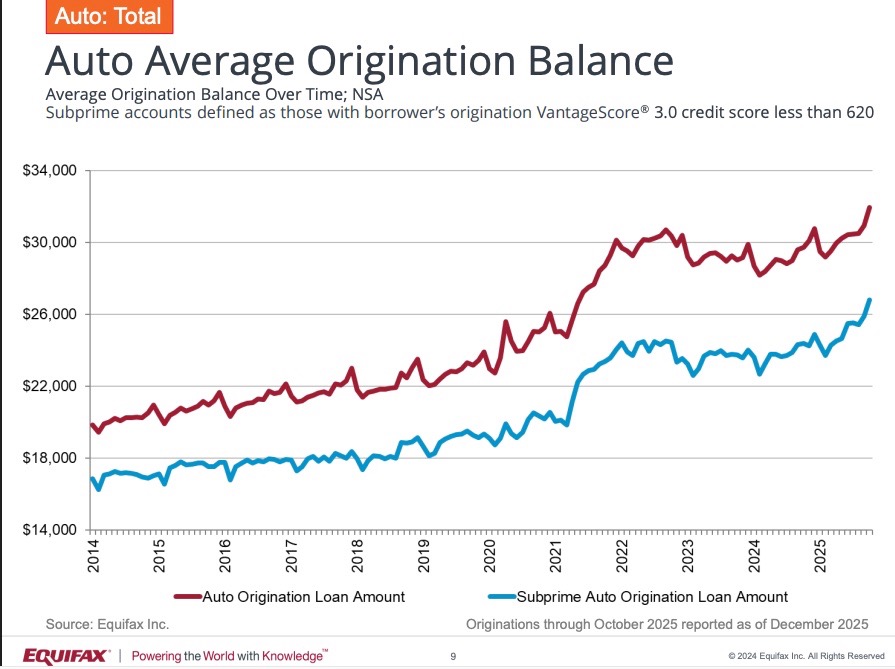
Here’s what stands out to me, though:
The average origination balance for all auto loans and leases issued in October 2025 was $31,962. This is a 7.6% increase from October 2024. The average subprime loan amount was $26,813. This is a 10.0% increase compared to October 2024.
This is the reality of today. Car prices have slightly improved, and the slow lowering of interest rates is, finally, starting to positively impact car buyers. To meet monthly payments, though, consumers are stretching further and further out into the future.
Again, it’s one of those situations where it’s not bad until it is. If unemployment stays low and the economy grows, then those loans are probably fine. President Trump said many times last night that the economy is strong and “roaring like never before.”
If the economy does stumble, though, and car values drop, then the underlying value of these cars will go down, and buyers will find themselves even more upside down as the loan term extends off into 60, 70, or even 80 months.
Cars Are Probably Not Going To Get Cheaper, Even If They Become More Affordable
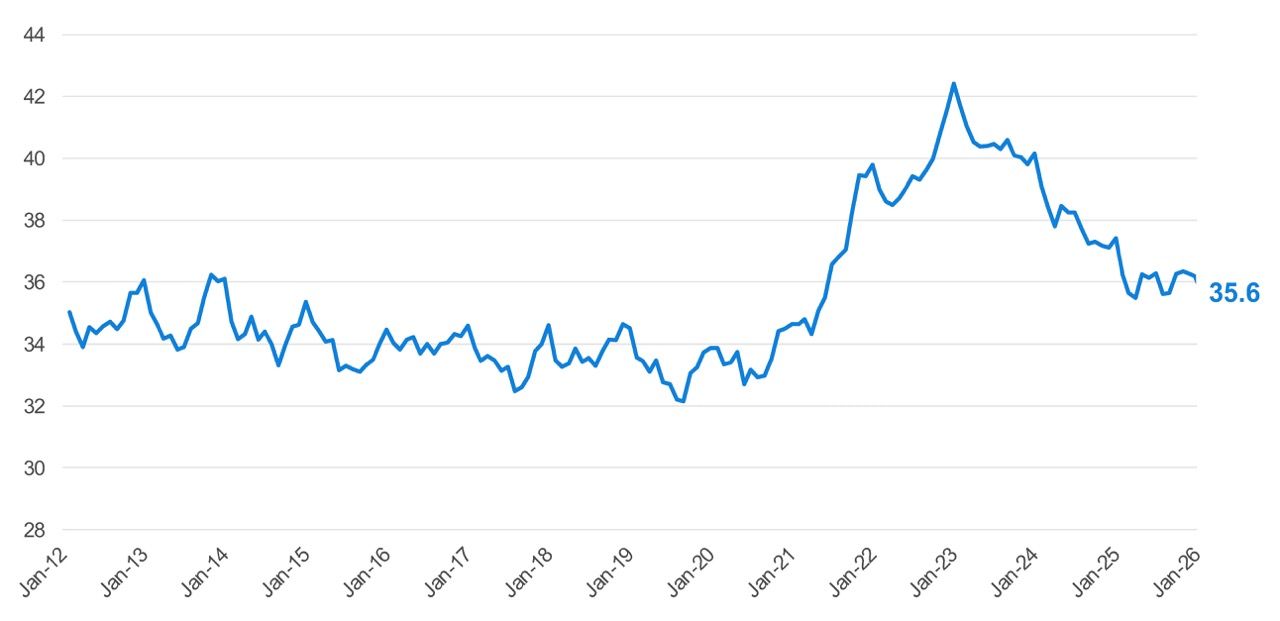
Affordability is not that complex a metric, which is why it amuses me that it’s often misunderstood. When it comes to things you buy directly, affordability is a measure of the price of that object relative to your income. When it comes to things you finance, there’s the added dimension of the cost of borrowing.
The chart above is the Cox Automotive/Moody’s Analytics Vehicle Affordability Index referenced in the first story, which looks at how many weeks of income the average household needs in order to buy the average new car. This number spiked during the pandemic and has sort of flatlined this year as financing got easier, but cars really didn’t get cheaper.
With flat sales this year, it’s likely that some incentives will be out there in the market. Will this make cars cheaper? Probably not, as pointed out in this Detroit Free Press article on incentives and car sales:
“Our full year 2026 forecast is that incentives will increase $400 to $3,500, but given that last year had such a substantial electric vehicle incentive spend in the baseline, the true change is over $500 for (gasoline) powered cars,” Tyson Jominy, vice president of data and analytics at J.D. Power, told the Detroit Free Press.
How each automaker spends that extra $500 or more in incentive money will vary depending on their inventory and cost pressures, he said, and the competition for sales might not mean car buyers walk away paying less.
“Consumers will see higher transaction prices net of incentives on average, because automakers continue to increase (Manufacturer Suggested Retail Prices),” Jominy said. “Final transaction prices (for the full year) are expected to average $46,600, an increase of $800 versus 2025.”
With refunds coming, many buyers might have a slightly higher household income this year. If interest rates come down, then borrowing money gets cheaper. At the same time, if loans get longer, the total cost of a car then goes up.
Ultimately, it depends a lot on the car you want and the buyer you are. If you’ve got cash and you want something from a brand that’s trying to grow this year, then you might get a deal. If you’re financing a Tacoma, it might be a bit tougher.
Aston Martin Cuts 20% Of Staff
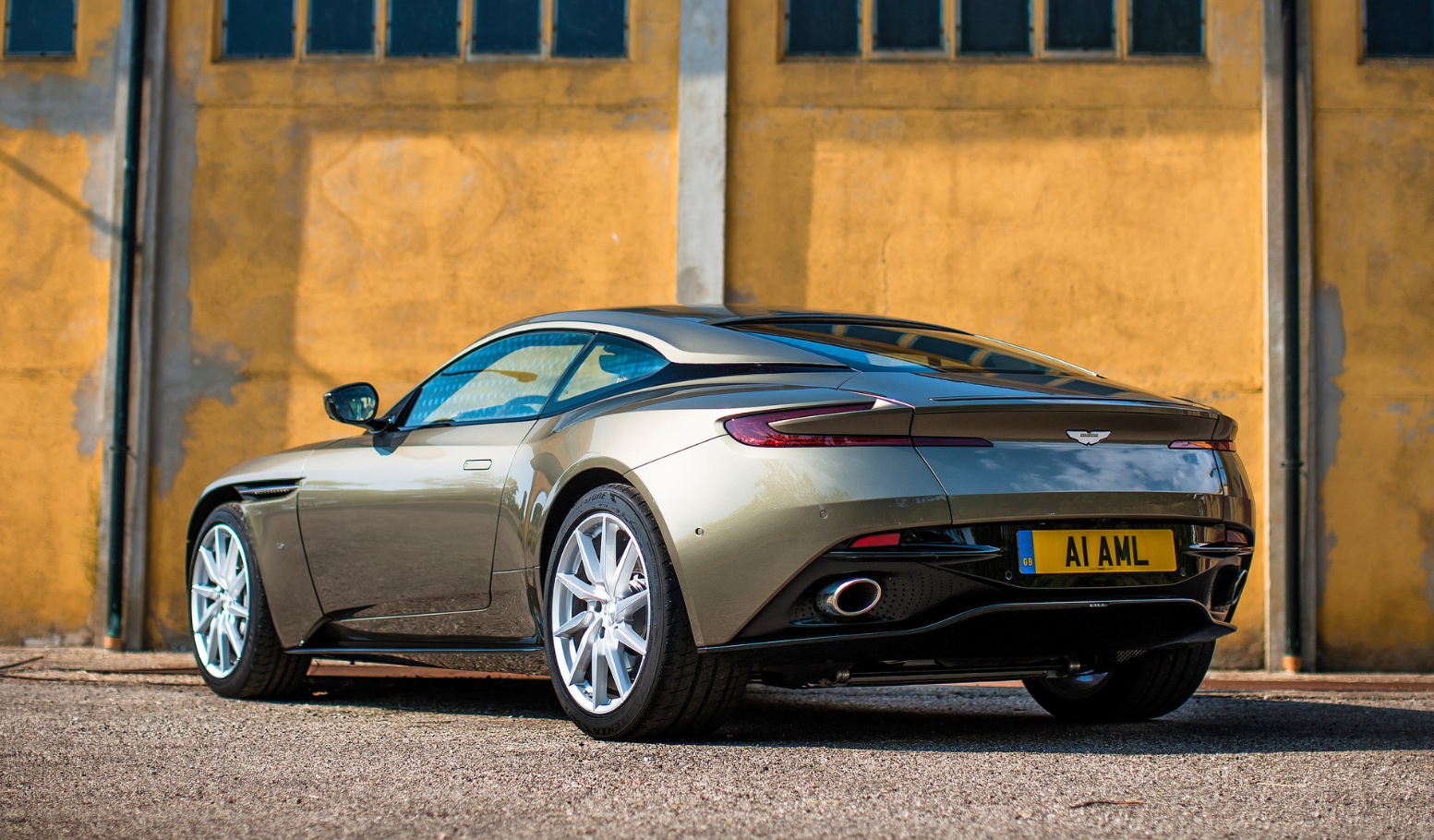
It’s been a while since I’ve driven an Aston Martin. I should fix that. Unfortunately for Aston Martin, the company sells many of its cars in the United States but does not build them here. Perhaps an Alabama Aston plant next year?
Blaming tariffs, the company is cutting.
Aston Martin, which has its headquarters in Gaydon, Warwickshire, employs about 3,000 people, meaning job losses will total around 600.
The firm said the job cuts should deliver annual savings of around £40m and did not specify when the job cuts would be implemented, but said most of the savings would be made this year.
A spokesperson for Aston Martin said US tariffs had been “extremely disruptive” and demand had also been “extremely subdued” in China, the world’s biggest auto market.
It has also trimmed its five-year capital spending plan to £1.7bn from £2bn by delaying investment in electric vehicle technology.
Clearly, the answer is to bring back the Cygnet.
Inside You, Are Two Nissan Pathfinders

The Nissan Pathfinder was once a stout body-on-frame SUV. Then it became a unibody blob. Now it’s a unibody car that looks like it could be a body-on-frame SUV.
Why can’t we have both?
According to Automotive News, that’s exactly what’s happening.
According to a person with knowledge of the plan, Nissan will continue selling an updated version of the unibody Pathfinder alongside a new body-on-frame model as soon as mid-2029.
This expanded Pathfinder lineup aims to target different buyer preferences: the unibody entry for those seeking affordability, car-like comfort and family practicality, and the truck-based variant for customers who demand a rugged aesthetic and greater capability.
The duration of the models overlapping in the market remains flexible and would depend on sales performance.
Will… will they both be called Pathfinder? That’s wild.
What I’m Listening To While Writing TMD
Have I really never done Paramore’s “Misery Business” for my TMD song? Hayley Williams remains undefeated in my book.
The Big Question
What’s the best example of a car or truck completely abandoning its customers from one generation to the next?
Top photo: Subaru/DepositPhotos.com


Imagine if we had real, functional, funded public transportation in this country, that debt load would be not nearly as bad.
But Capitalists can’t make money off public transport.
Won’t someone think of the Billionaires?
Oh I do and then I mumble something about aristocracy and 1789.
I hear Amazon is putting guillotines on sale this weekend.
I have my pre-order in already.
*Chop-Chop*
I had some caltrops on my wishlist on amazon and when the hell went down in Minneapolis Amazon disappeared them. I doubt amazon would sell guillotines if crap started to go belly up for billionaires.
There’s always Ebay and Etsy.
Huh I thought caltrops were illegal
Not everywhere, check your local laws. If so Don’t forget to write to your state legislator to make it legal again more weapons in the hands of the people are always a good thing.
We’ve already had one carspiracy on the decline of trams & trains, but that led to the rise of busses.
Nice thing about trams and trains is that you can, as a city or business, do some long-term planning. Harder to do with busses.
In Australia a good chunk of public transport is outsourced to private entities (mainly buses and ferries), with the government paying for any difference between fares and contract cost.
Having dealt with government I can understand the argument that private entities might be more efficient.
Having dealt with private entities I know there’s a huge difference between the well and poorly run and I have doubts that even a well run one would reduce costs by more than government once you factor in their profit margin.
That sounds like Liberal Communism.
If you can’t pull yourself up by your own bootstraps to afford your McMansion and Canyonero, you don’t deserve even basic transportation.
/s
or basic medical care, or a roof over your head.
So get goin’, those bootstraps ain’t gonna pull themselves!
I don’t agree that it would make a big difference. I’m sitting on a train now on my way home from work and at the station my car is waiting for me to drive the last bit home.
Catching the train to work is quicker, more pleasant and cheaper than driving, but I still have the same number of cars I would have if I drove to work.
Public transport is great but it doesn’t meet all my use cases, so I’ll always have a car.
I think the number of people who would have no car if there was excellent public transport (like I have access to) is very small.
I know, work with, and live near a lot of poor people that have no public transportation option and would not need a car if there was good public transportation. I am talking about at the bottom of the economy.
Mitsubishi Eclipse. Was a sportscar, is now a CUV.
Honda Insight Gen 1 to the next ones, it went from a weird 2 seater hybrid car to a Temu Prius to follow what looked like a Honda Civic but hybrid.
Tesla. The earlier ones were fine if blobby. The new ones have harder edges but are worse overall vehicles. The lack of actual physical controls is a turnoff. Plus nerfing autosteer to force buyers into a subscription. Something about the CEO alienating a large chunk of the potential buyers by playing politics while running the company as well.
I had hopes that Elroy’s antics would have got him forced out of Tesla (I mean, would it be that different to Steve Jobs and Apple in the 80’s?), but no dice. Unfortunately their stock is going to continue being grossly overvalued, until it isn’t…
Early Hayley Williams is good. But Hayley Williams from now is even better.
Dodge Challenger.
In 1974 it was V8 American Ponycar.
When it returned in 1978 it was a 4 cylinder Japanese PLC.
Charger too. Though I have a soft spot for those 80s weirdos.
Similar situation: the 1988 return of the Pontiac LeMans… by Daewoo.
Oh, that’s a very good one indeed:
American Midsizer —> Korean-built crapcan based on a European subcompact.
Early Hayley Williams is good, no denial. But she is no Amy Lee or early Maria Brink.
Best example of a car abandoning it’s customers from one generation to the next?
Subaru Outback. I’m sure the new generation is selling (because Subaru) but they are beyond fugly, and will never grow on me. The death of that wagon body is truly sad to me.
The Outback has been pretty ugly for a while now, but in kind of a good/goofy/functional way? Now I’m not sure what I’m looking at when I see a new Outback, it doesn’t even seem to occupy it’s own space in their lineup anymore.
It sticks out like a sore thumb for sure. The rest of their cars share a similar design language (minus the Solterrible) but this thing doesn’t fit in at all. Also, I HATE SPLIT HEADLIGHTS. Please make this trend end.
This happened in 2009 with the launch of the fourth generation Legacy/Outback and there has been no coming back.
Exactly this. I loved the 3rd gen (particularly the XT) and then the 4th gen fell off a cliff. They turned it into a big sloppy boat. I remember the first time driving one I was so disappointed in what it had become.
I would agree that the 4th gens are not great looking by any stretch, but they were still at least a wagon. These new ones look like a rejected Kia Tellride design study.
Even with the production gap, I’ve got to say that the Chevy Blazer is the first thing that popped into my head.
Given how many people think the Bronco Sport equals the BOF Bronco… Nissan should just call the CUV the “Pathfinder Sport” or “Pathfinder Classic”
Subaru did it first with the Outback, which was a jacked-up legacy, then the outback sport which was a jacked-up impreza, that later became the crosstrek.
Nissan should sell the international Navara-based Xterra they already make for the Middle East.
The Scion XB is an example. Everyone loves the first gen, but the second gen gets lots of hate because it became a corn-fed fattened-up muscle car with the big block 2.4 LOL
There’s also the Supra which went from being a Toyota to being a BMW
Pathfinder went back to BOF for the 3rd gen and then back to unibody after. yikes.
Chevy Blazer to Chevy Blazer.
Body-on-frame with a removable top, to EV crossover.
There were nearly 50 years and several generations in between those two models though.
Mild correction, From a BOF rear-driver SUV to a unibody front-driver crossover
Last year of the original k-5 blazer with removable top was 91.
The square body ran until ’91 but the last full removable roof was in 1975.
No, the last removable roof was in 91. I owned one.
That’s the half top over the rear seats only.
The full removable top, including the cab, ended in 75.
But it’s still a removable top. And I would argue better than the earlier ones. The ones with the full top ended because GM couldn’t keep them from leaking.
If the question what brand abandoned its customers that would be Mitsubishi.
Cherokee for an individual car? I know there are better examples but most are old.
The historical arc of the Ford Thunderbird comes to mind.
Ah. That Youtube screengrab band shot is peak Paramore, and that hair is unmatched. Thank you Matt.
TBQ: I hardly see old guys with C8 Corvettes. Most C8s are driven by the youth. The old guys seemed to prefer C5s, C6s, and C7s for the most part.
Gawt dangit, Bobby! I TOLD you to stop playing with those artsy mid-engined kids!
Get yourself a car with the engine in the FRONT, with a PHALLICLY long hood.
Like Jesus intended when he wrote the constitution.
C8 is a sneaky good answer to this question because you’re absolutely right on the demographics, marketing etc.
True. They didn’t stop selling, they just significantly shifted consumer base.
I thought so. It’s something different from a model getting worse, since it was an entire demographic shift. To a less dramatic extent you could also point to Cadillac post CTS, though that was a slow burn, and more a demographic expansion than outright replacement. Who thought in the ’90s that Cadillac would have an F1 team?
Which is exactly what GM was trying to do. Boomers ain’t gonna be around forever, they need some younger blood to fill those New Balance shoes.
White belts and golf pants for everyone.
The New Balance with white socks and those shorts look is exactly what you see if you go to a Corvette event.
I think I’m about ready to be one of those people. I could afford a used Corvette and I like being comfortable, seems like a win!
Sure, there’s $1.59 trillion in outstanding automotive debt, but most of it is on seven Nissan Altimas (the eight got repossessed) and that guy who works at the gym who really had to have a Raptor.
We must go to the same gym. Your comment is dead-on. How can a personal trainer, even a good one, make that payment?
There’s a security guard at work that has a Cyber truck. Nice guy, I had no idea that security guards made that much!
What do you mean? I was told the Cybrtrukkk started at $40k? Did Elon not keep his promise?
Hey now lord Elon keeps all his promises, just not when he says he’ll keep them by…
Maybe he got it used for a big discount?
Mercury has done it twice:
The 1974 Mercury Cougar abandoned all pretense of being a luxurious pony car in favor of being an overwrought PLC.
Then in 1979, Mercury abandoned the cool, small, European Capri II in favor of a Fox Mustang clone which didn’t fool anyone.
This x1000
The Capri is a great answer. Yeah, that Euro Capri is fucking awesome
And then the Capri yet again in the 90s to an also-ran Miata knockoff.
You’re absolutely right.
I completely forgot about the Australian Mazda 323-derived econo-roadster.
And now the Capri is a Polestar 2 knockoff?
(So I guess that’s four times for Mercury now…)
Make it make sense!
Then there was that 2 door Mercury Cougar in 1999 based on the Ford Contour platform. Test drove one…it was disappointing. Not as spunky as my 95 Mercury Mystique V6, 5spd.
Don’t forget the 1977 Cougar could be had as a 4 door sedan or wagon as well.
“With refunds coming, many buyers might have a slightly higher household income this year.”
What? From who? Magical money raining down from the air? Can someone let me in on what is being referred to here?
I believe he means typical annual tax returns. Which may be a little higher for you this year (but certainly not higher enough too compensate for the extra costs related to tariffs you paid all year)
I know that people like to give the government a free loan, and then get excited when they get it back, but this Return shouldn’t impact the household income numbers. I don’t think there have been any significant tax law changes between last year and this year. Have there?
Yes there have. No tax on tips, reduced tax on overtime, senior income deduction, car interest deduction, and higher child tax credit. And your thinking is absolutely correct about giving the government a free loan, but unfortunately that’s not how most people think, and they see their refund as free money to blow.
Also raising the SALT deduction limit originally imposed in Trump’s 1st term.
Right. Thanks, I had forgotten.
We got $3.5k back instead of owing $2k like we normally seem to.
The new (for this year) SALT deduction drove most of that.
Don’t worry, he who shall not be named has already forgotten about his promise of tariff refunds.
Most people will probably experience a net loss of household income when you factor in increases in insurance premiums, cost of goods and services, utilities rates.
The affordability fairy hasn’t pleased me and my family so we aren’t buying the myth the administration is peddling.
No, they are probably holding off on the rebates until right before the mid-terms this Fall.
Yeah, there is exactly ZERO tariff money (refunds, whatever) going back to regular consumers.
With the SCOTUS ruling, the US companies (who are the ones who actually paid the import tariffs to US Customs) are the ones who have standing to sue to get money back. If you as a regular consumer want a share of tariff money back, you’ll have to sue Amazon, GM, whoever, to get your share. Good luck with that.
Logically no, there will not be any direct to consumer rebates on tariffs.
Politically – I would not be surprised if Tim is right and about October Trump sends out some checks with his signature on them like he did in his first term.
Perhaps more roaring is needed.
Did you try roaring?
“What’s the best example of a car or truck completely abandoning its customers from one generation to the next?”
How can it be anything other than Jaguar?
Failing to build any vehicles is definitely the peak of abandoning your customers.
Maybe they’ll use Pathfinder and Pathfinder Sport to distinguish the two completely different models. Nissan is morphing into Mitsubishi.
I was contemplating purchasing a new truck, but had to think twice when thinking about the cost. So instead, I ended up with a 22 year old 2500 with 160,000 miles. WWAAD- What would an autopian do?
You have chosen correctly.
This is the way
The Mitsubishi Eclipse.
Came here to say the same. 1G and 2G were amazing cars, 3G was…well it was an OK car but it wasn’t a DSM anymore after it lost the 4G63T and AWD. The 4th gen just looked like a 3G that got stung by a bee.
Started as an amazing turbo AWD platform, then became, checks notes; a Chrysler Sebring…
Yea that one hurts. But actually, wasnt it the 2G chassis that got used for the Sebring? the 2G was still a solid turbo AWD platform, it would have been kinda fun to have an R/T sebring with the 4g63T and AWD instead of the FWD and 420A Neon engine…..
I was mostly guessing, but went and looked this up. The 3rd Gen Eclipse was on the Chrysler ST-22 platform, which was shared with also the Galant, Sebring, and Stratus. The previous platforms were not shared with any other cars, just the Talon/Eclipse/Laser.
Srouce: https://en.wikipedia.org/wiki/Chrysler_D_platform#ST-22
Braking news! The Sebring Coupe WAS built on the 2G Eclipse platform, the Convertibles were on the larger platform.:
The Chrysler Sebring was introduced as a coupe for 1995, and as a convertible in 1996, both models replacing the Chrysler LeBaron convertible and coupe. The convertible was built off the Chrysler JA platform also used for the Cirrus sedan, while the coupe was based on the Mitsubishi Eclipse.
Ah yes I mixed them up a bit. Thanks!
I owned a ’91 and a ’97. Of the two I preferred the ’91. I liked the styling better but it also felt lighter and more nimble. The 2G made some improvements, like a better exhaust manifold, but those improved parts could mostly be installed on the 1G. Maybe I’m just a sucker for popup headlights and automatic seatbelts.
Gotta go for the pop-up-up-and-down headlights!
That vid is magical and I am so glad I grew up in the pop-up headlight era.
I owned too many of both 1st and 2nd gen cars of just about all configs (FWD N/a, AWD turbo, FWD turbo), I agree the first gen was more fun to drive, more durable drivetrains and I was a sucker for the pop ups! The 2g had a nicer interior for daily duty though.
Yeah the 2G was a little better laid out and both had their benefits but I find myself missing my ’91 Talon from time to time and have never missed my ’97 GSX.
Is the BOF Pathfinder something distinct from the Xterra that dealers previewed?
That’s my question, too. Sounds like this BOF Pathfinder is just the Xterra
It didn’t even occur to me, but yees, that makes sense.