

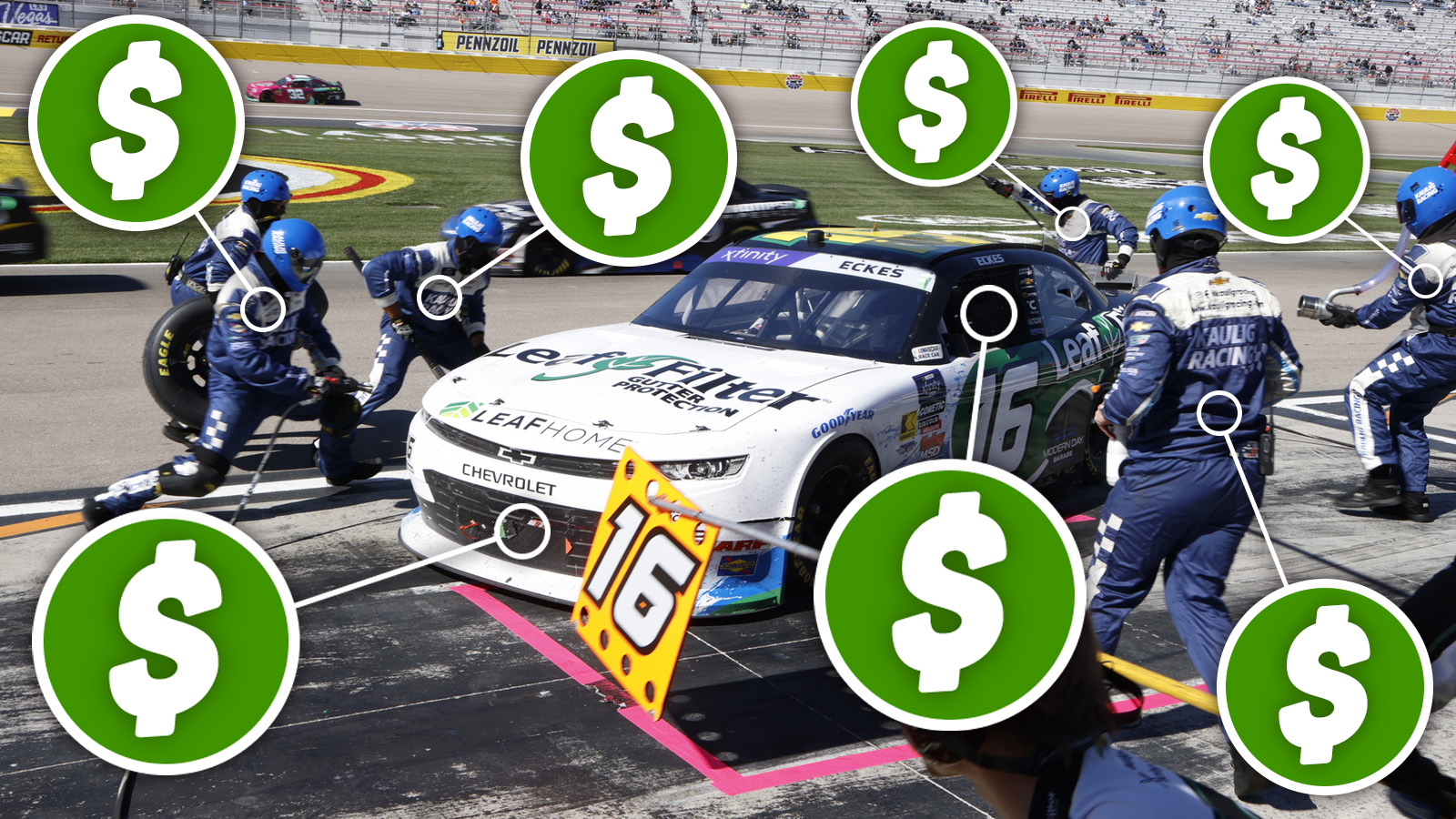
There’s been a lot of discussion online lately about the cost of racing, especially with two teams currently suing NASCAR, claiming it’s a monopoly that suppresses earnings. To better understand how the financials of NASCAR’s second-tier series look, follow me on a deep dive into what it actually costs to run a team based on my experience as a crew chief in the NASCAR Xfinity Series.
To give a better look at what it would take you to operate a team, I’m not going to be looking at the powerhouse teams like JR Motorsports or Joe Gibbs Racing, both of which have manufacturer support and large sponsors. In this piece, I’m going to be examining the economics of the mid-pack. These are the teams that run 15th to 25th on a weekly basis and celebrate when they bring home a Top 10 finish. The teams that put the average in average finish. What exactly is the bare minimum cost of bringing a car to the race track week in and week out that is capable of finishing inside the Top 20?


The standard 2025 purse for the NASCAR Xfinity series is $1,651,939. For Mexico City and Championship weekend, the purse is slightly higher at $2,151,939. The season opener in Daytona pays even more with a purse of $3,762,952. In total, the posted race awards for the 2025 Xfinity Series season are $57,625,000, not including the end-of-year points fund.
With 38 spots available in every race, this would equate to $1,516,447 per team if it were shared evenly. Dividing this by 33 races provides $45,952 per team per race. Obviously, teams up front earn more and teams in back earn less, but this is good enough to make a rough ballpark estimate for the average weekly take-home prize money of an average-performing team.
(Note: This purse estimate is a bit on the high side as the race prize money is not scaled linearly. Race purses are not public information, but keep in mind that the per-race figure above would put a team very securely into the Top 20 in owner points.)
We can begin by breaking down costs into three categories: fixed, semi-fixed, and variable. In the fixed column, we have things like payroll and engines. Semi-fixed costs are slightly less predictable items, like travel and consumables. Variable costs are things like repair bills that can swing wildly from year to year.
The Fixed Costs Of Running A NASCAR Team
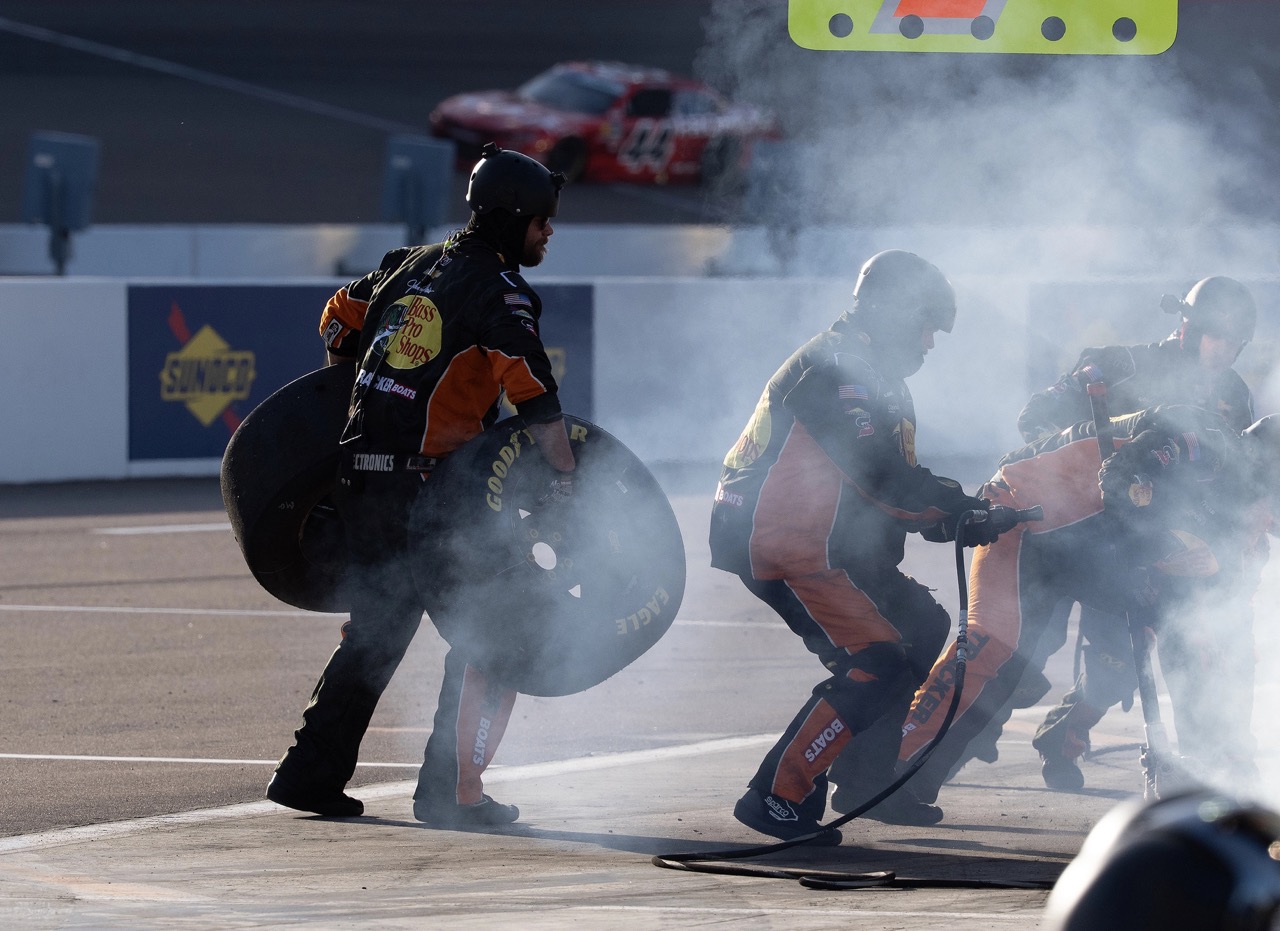
A racecar won’t go anywhere without an engine, which can be leased from a variety of engine suppliers. Chevy teams can choose between Earnhardt-Childress (ECR) or Hendrick; Roush Yates builds the Ford engines; and Toyota’s Xfinity engines are supplied by Joe Gibbs Racing. Costs vary between providers, but on average, one of these lease agreements is in the range of $800,000 for the season, or $24,242 per race.
The engine suppliers will drop off a motor for the teams the week before each race and pick it back up on Monday after the race. All that the team has to do is install the engine and remove it from the car. The engine suppliers will handle all chassis dyno testing and also send a group of engine tuners and specialists to the racetrack each weekend. In the event of an engine failure in practice or qualifying, spares are available to teams at the track.
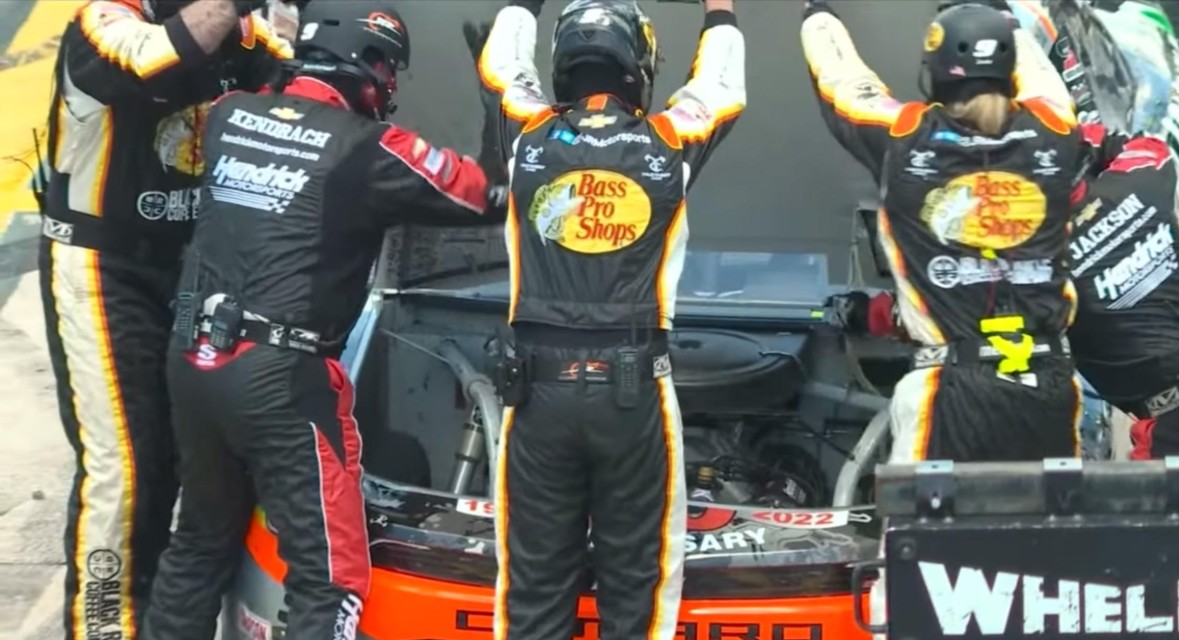
If you ever see a team open the hood during a race, you will likely notice one or more people in firesuits that don’t match the rest of the team. These people are engine specialists employed by the engine manufacturer, and they are responsible for rectifying whatever issue the team is suffering from.
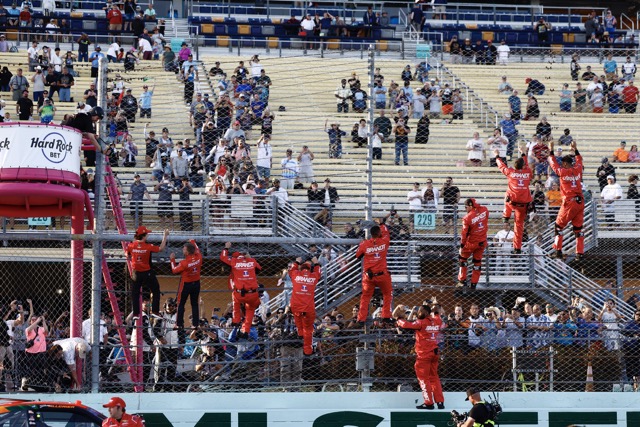
During the 2022 Xfinity Series race at Charlotte Motor Speedway, Noah Gragson’s engine lost a cylinder at the end of Stage 1. Below you can see John Kendrach and Jereme Jackson in Hendrick Motorsports firesuits assisting the rest of the team in Bass Pro Shops firesuits. Gragson’s engine was repaired, and the team finished 4th in the race.
As a rule, small teams also rent their transmissions and rear-end gears through one of a multitude of suppliers. A weekend rental for a transmission and rear gear (with spares) costs about $425 for the gears and $1,500 for the transmission. An oval transmission will usually be raced twice per service, whereas a road course transmission is serviced every race. This brings the season cost to $14,025 for gears and $30,000 for transmissions, for a total of $44,025 or $1,335 per race.
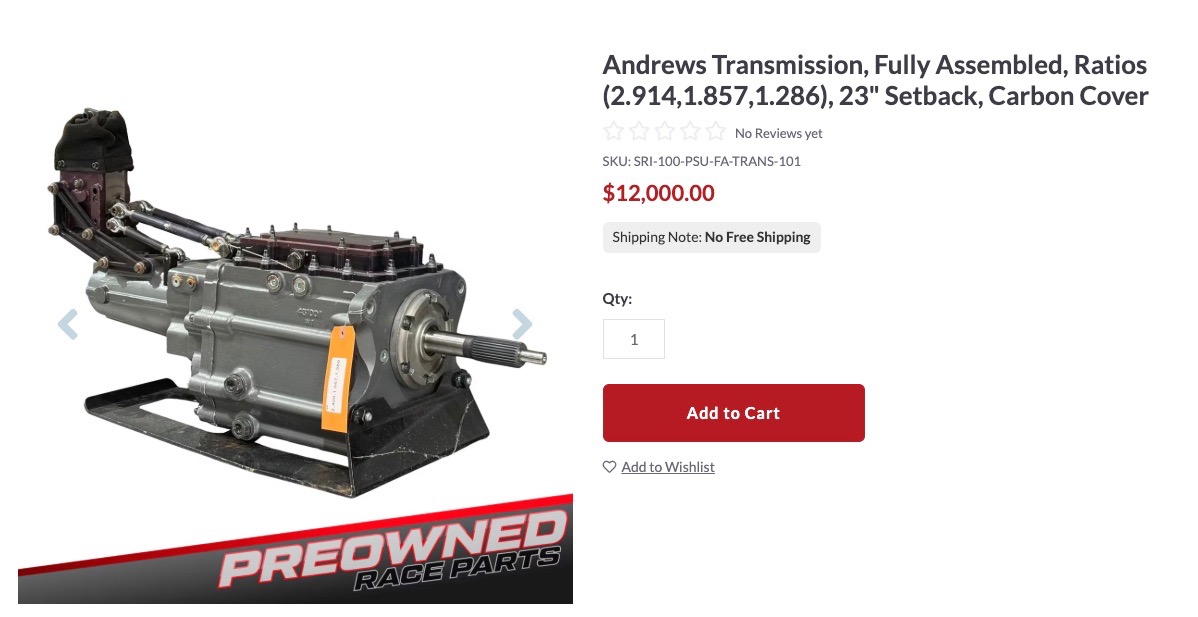
Note: A new transmission costs around $12,000 new and a team will need to own at least five if they want to go the ownership route, in addition to servicing the transmissions themselves. This transmission from SRI Performance could be utilized by an Xfinity Series team at any intermediate racetrack.
Like the engine and driveline, a racecar won’t go anywhere without tires. A set of Goodyear Racing Eagles costs roughly $2,500. The weekly allotment varies between 4 and 7 sets per weekend, depending on race length and tire degradation. For the entire season, teams will be allotted 188 sets of tires for a total cost of $470,000 or $14,242 per race.
(Funny side note: In the pre–Next Gen era, Xfinity teams could recoup some of this cost by selling tires to backmarker Cup teams. Unused tires would resell for about $1,000 a set, and scuffs would go for between $200 and $500 per set.)
Getting those tires and wheels to the track is no easy task either. Teams contract this service out to Champion Tire and Wheel. They will haul your pit box, tires, and wheels to each of the 33 races for a cost of about $95,000, or $2,875 per race. This may sound like a lot, but considering that the pit boxes weigh in at 3,000 to 4,000 pounds, it seems a lot more reasonable. Tires and wheels are much lighter at “only” 140 pounds per set, but they take up a significant amount of space at 24 cubic feet per set or 144 cubic feet for all of your sets on an average weekend. When you consider that they’re hauling 4,500 pounds of stuff over 50,000 miles, as well as loading and unloading it for you 33 times, the rate doesn’t seem that bad.
Smaller teams normally don’t have their own shock tuner on payroll. There are a number of shock service providers in the Mooresville, NC area that will either lease the team shocks or service the ones that the team owns.
The ownership route starts out around $400 per shock, or $1,600 per set, for initial purchase, and then $50-75 per shock for service. At a minimum, a team would need to own at least six sets of shocks for an initial cost of $9,600 and then $200 to $300 per race for maintenance, which works out to $8,250 for the season.
Leasing shocks costs around $800 per race and comes with one set of primary and one set of spare shocks. For the sake of simple math, let’s assume our hypothetical team leases its shocks and put the season cost at $26,400. The advantage of the lease route, besides having spares every week, is that it allows more customization. The shock builder typically has an array of shocks in inventory and will give you one that matches whatever shock curve you want, instead of charging you for a full rebuild.
Having all these parts is great, but you’re also going to need people to put your racecars together. Below is a list of the general pay scale for Xfinity series team members.
The industry standard for smaller teams is to hire crew members as 1099 independent contractors instead of W2 employees; therefore, the team does not have to worry about benefits and payroll taxes.
- Crew chief $100,000-$150,000
- Car chief $80,000-$100,000
- Mechanic $50,000-$70,000
- Hauler driver $60,000-$80,000
- Spotter $26,000-$33,000
Taking the average of these ranges and assembling a road crew consisting of a crew chief, car chief, hauler driver, three mechanics, and a spotter brings the yearly payroll to $494,500 or $14,984 per race plus per diem. Adding in three mechanics that only work in the shop would bump payroll costs up by $180,000. The total cost for the road and shop crew will be around $674,500, or $20,439 per race.
Generally speaking, crew members don’t work very well unless you feed them. There are a number of catering services that provide buffet-style meals for team members at the racetrack. They typically charge in the neighborhood of $40 per person per day. For a road crew of six people, that works out to $15,840 for the season or $480 per race. This service includes two meals per day for the crew members, either breakfast and lunch or lunch and dinner.
Per diem rates are typically $25 per day for a total season cost of $10,500. Some of the bigger teams go as high as $60 per day, which brings the cost up to $25,200. That’s not a lot of money, but it’s usually only to cover one meal and snacks. A Martinsville hot dog is only $2, so that $25 can go farther than you’d think.
Due to DOT regulations, hauler drivers can only drive for 10 consecutive hours before they must either rest or swap out with a co-driver. In 2025, there was a minimum of 13 races where having a co-driver was necessary due to logistical constraints. Co-drivers typically charge about $300/day, putting the bare minimum cost of hiring a co-driver in the neighborhood of $20,000 for the season.
Over-the-wall pit crew members are contracted out through a number of development firms. Pit crew rental costs generally about $260,000 for the season, including travel, or $8,125 per race.
All in, the cost for your human beings can be budgeted at $954,500 for the year, or $28,924 per race, less benefits and bonuses.
Your crew members will be required to hold a NASCAR license. The price of a license varies depending on the crew member’s position, but they are about $2,000 apiece. For a road crew of five employees, that would bring the cost to $10,000 for the season or $303 per race.
You will often hear broadcasters making reference to SMT data over the course of a race weekend. The SMT data provides real-time speed and line traces for each car on the track and is used to compare where your driver is gaining or losing time to the competition. A subscription to this data costs $16,500 for the year, or $500 per race.
Your racecar will need to be presented for inspection every week with a new splitter installed. These are sold by Piedmont Plastics for $277.40. Over the course of a season, you will spend $9,154 on splitters. Side skirts are also not reusable. A set of plastic skirts with a metal exhaust skirt costs $75, which adds up to a season cost $2,475.
Last but not least, after doing all of this work, your car will still need to be entered into the race. The Xfinity series entry fee is $2,229 per race or $73,557 for the season.
So far, we can calculate that our fixed costs add up to $2,527,951 for the season or $76,604 per race. Subtracting the $1,516,447 of income from the race purses leaves us with a $1,011,504 deficit for the year, or $30,651 per race, that needs to be filled by either sponsors or the driver.
It’s worth noting here that this hypothetical budget is relying on an extremely low headcount. We did not add any budget for PR reps or marketing staff. Those salaries are typically in the $60,000 per year range, or $1,818 per race, and would also need to be factored into the travel budget. Additionally, we only have eight employees who work directly on the racecars. Your crew members will be working very long days more often than not.
The premier small teams–think of the Sam Hunt Racing or Jordan Anderson Racing types– have around twelve to sixteen people per car, including marketing staff. This would increase the overall budget by around $240,000 to $480,000. Bigger teams like Joe Gibbs Racing and JR Motorsports have as many as thirty people per car.
Anyway, let’s go spend more money.
Here Are All Your Semi-Fixed Costs To Run A NASCAR Team
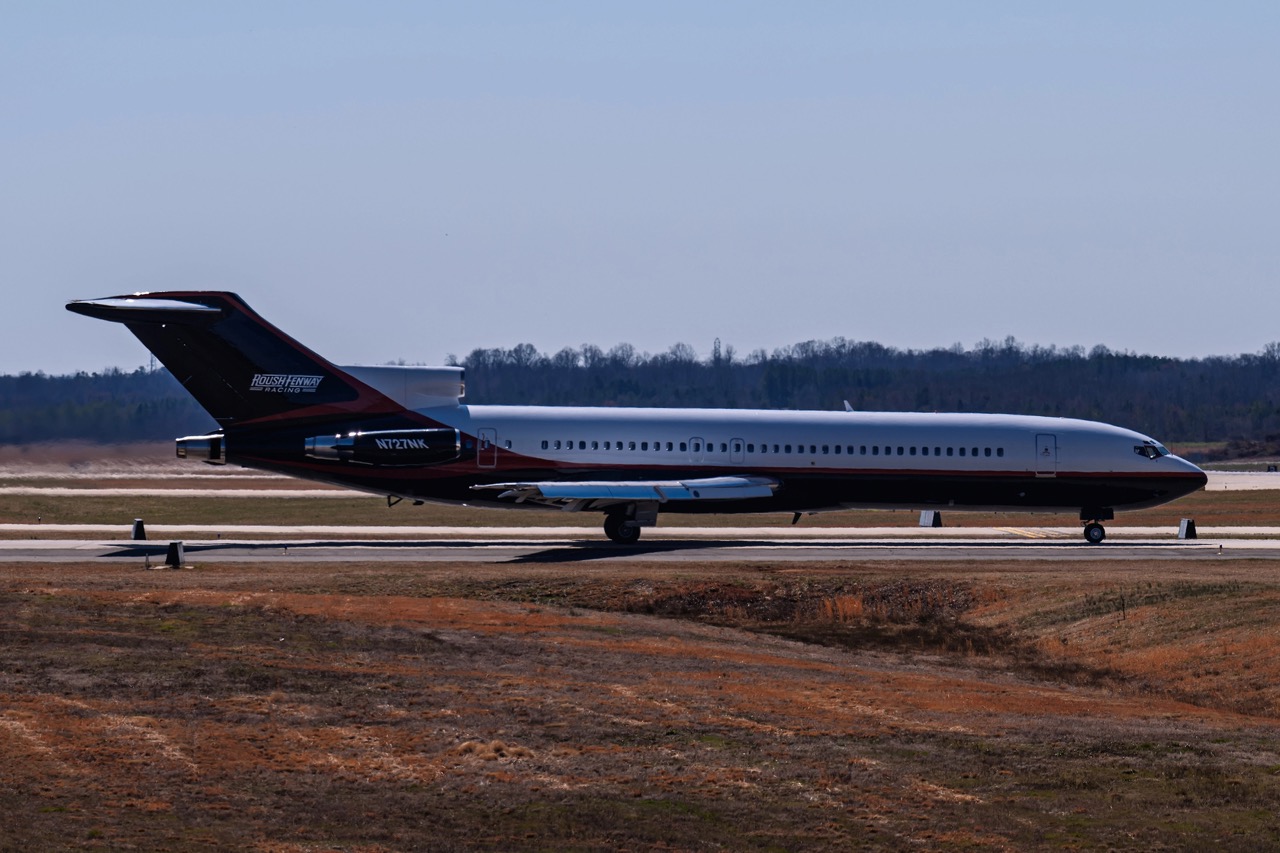
Once you’ve assembled your team, you have to get them on the track. Excluding Martinsville (x2), Darlington, Bristol (x2), Rockingham, and Charlotte (x2) the 2025 Xfinity Series schedule features 25 fly-away races. Some teams may drive to Atlanta, Daytona, and Talladega, but that’s only for the most extreme budgeters.
The majority of teams fly private at a cost of roughly $1,100/person/weekend. For a driver, crew chief, car chief, and three mechanics, that represents about $6,600 per race or $165,000 per season. Rather than book a lot of private airplanes, smaller teams often share a charter service like Victory Air (if you were curious. Spotters usually work all three series, and their travel is covered by their Cup team).
This may seem like a luxury, but let’s look at the other travel costs involved. At a minimum, you can expect the team to require four hotel rooms and two rental cars. A team that flies private will, except for West Coast races, arrive Friday morning and leave Saturday evening. That means the team will book the hotel rooms for a single night and the rental cars for two days. Assuming $300/night for hotels and $75/day for rental cars, that puts the weekend cost at $1,350.
A team that flies commercially will need to arrive on Thursday evening and leave on Sunday morning, meaning that they have three nights in the hotel and four days with their rental cars, putting the weekend cost at $4,200, or $2,850 more than the team that flew private. With a traveling crew of six people, the commercial flights would have to be $475 cheaper than the private ones to break even, not including the intangible factor of giving your team an extra two days at home. It’s also a significant headache to try and rearrange your entire team’s travel at the last minute in the event of a rainout.
We can roughly assume that the team’s travel bill for a race weekend averages out to around $8,100 for flyaway races, bringing the season total to roughly $202,500. Hotels for the drive-to races add $4,800, for a grand total of $207,300.
The racecar also has to make it to the track. During the 2025 Xfinity series season, team haulers will travel roughly 52,000 miles and spend about 800 hours going up and down the road. Assuming six mpg and an average diesel cost of $3.61, we can calculate that the annual fuel bill for the hauler will be about $31,000, or $940 per race. This, of course, does not include any routine maintenance or repairs on the hauler itself.
Consumables are going to be the next significant chunk of the budget that you need to contend with.
A set of brake rotors will cost you about $600. Brake rotors are typically a single-use item for short tracks and road courses and can run two races at intermediates. In 2025, there were sixteen high-braking races and seventeen low-braking races, which works out to about twenty-four sets of brake rotors for a season, at a cost of $14,400 or $436 per race. Brake pads follow roughly the same mileage guidelines at $1,250 per set for a season total of $30,000 or $910 per race.
Flushing the brake system with fresh fluid every race will cost another $120. All said and done, you can expect to spend around $48,360 on brakes for the season (not including spares), or $1,465 per race. That budget figure comes with the caveat that you are rebuilding your calipers in-house and not sending them out for service.
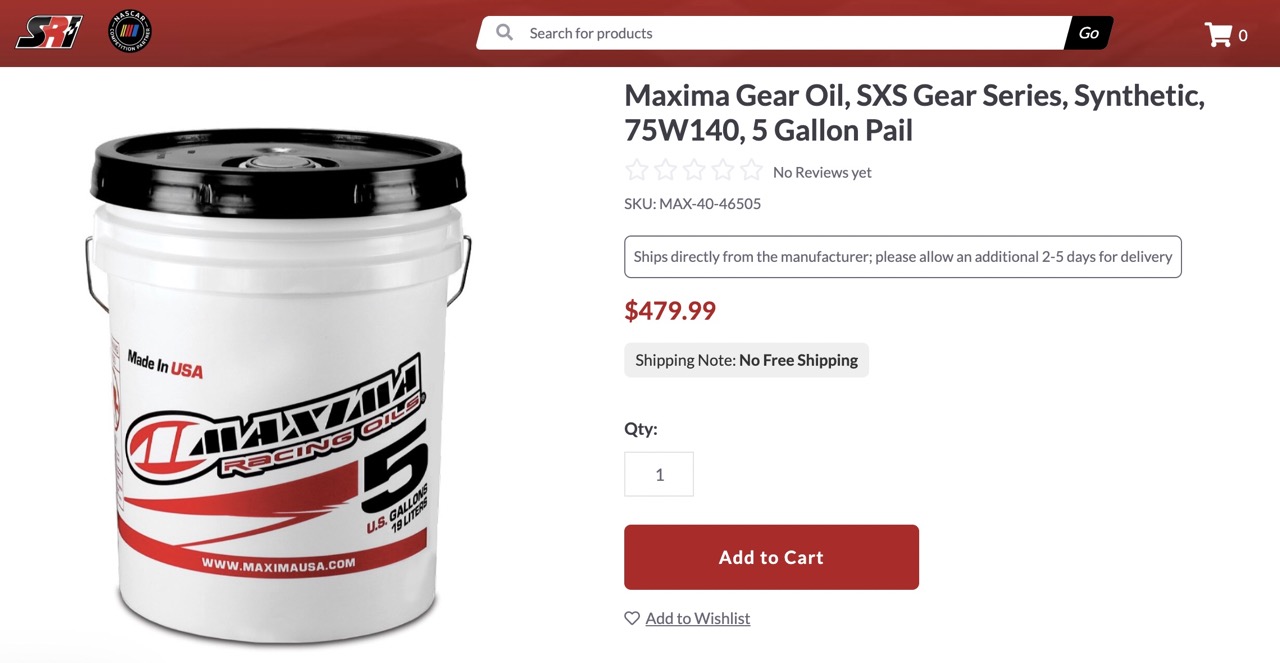
Gear oil and transmission fluid costs $96 per gallon, and the driveline will take just under one gallon per race, bringing your season budget to $3,168
Lug nuts cost about $1 apiece, and teams will use 3,760 of them during the season if they buy the full allotment of tires. Factoring in some spares, reglued sets, and ones that get used at the shop, you’re looking at about $4,000 per year or $120 per race in lug nuts.
You’ll also have to factor in a small chunk for simple consumables. Budgeting for 60 cases of rags, 25 cases of Brakleen, and 10 cases of SD-20 will cost you $3,300. The 50 rolls of assorted types and colors of tape will cost another $600. The list goes on and on. By the time you add up everything from paint pens to razor blades, you’ll be looking at about $6,000 for a year’s worth of miscellaneous consumables. Nuts, bolts, washers, rivets, silicone, and zip ties will run you out of another $12,000. All in, you’re looking at a total of around $18,000, which breaks down to $545 per race.
Adding up our semi-fixed costs comes to $311,828, which breaks down to $9,450 per race. Combining this with our fixed costs brings the new season total to $2,839,779 or $86,054 per race. Our deficit is now $1,323,332 for the season, or $40,101 per race.
The Variable Costs Of Running In NASCAR, Or How Your Team Goes Bankrupt

If you’ve managed to land some sponsorship, you’ll need to make sure that their logos get onto the racecar. A full car wrap retails for around $1,800, not including install, which is usually an additional $600. If the team runs a consistent paint scheme week to week, most races will not necessitate a full wrap, as non-damaged panels can be cleaned and used again.
Let’s pretend our hypothetical team runs the same scheme every week. We would need roughly twenty full wraps, which puts our season cost in the neighborhood of $36,000. Including installation, this would work out to $48,000. You could save some money by wrapping the cars yourself, but keep in mind that this will take two or three of your employees almost three hours to wrap the car, when they could be doing other, more mission-critical tasks. (I did not include the cost of paying a designer for the work of creating the scheme(s)). A front-running team will rewrap a car for every race, which costs around $79,200 for the season, but our hypothetical team is a bit thriftier.
A complete Xfinity Series body, not including windows, costs $10,600. The bigger teams will have an in-house fabrication department to hang bodies, and smaller teams will utilize one of several body shops in the Mooresville, NC area. The cost to hang a body, with all finish fab (paint, crush panels, ductwork, etc) is between $20,000 and $30,000, not including the body panels, depending on which shop the team goes to.
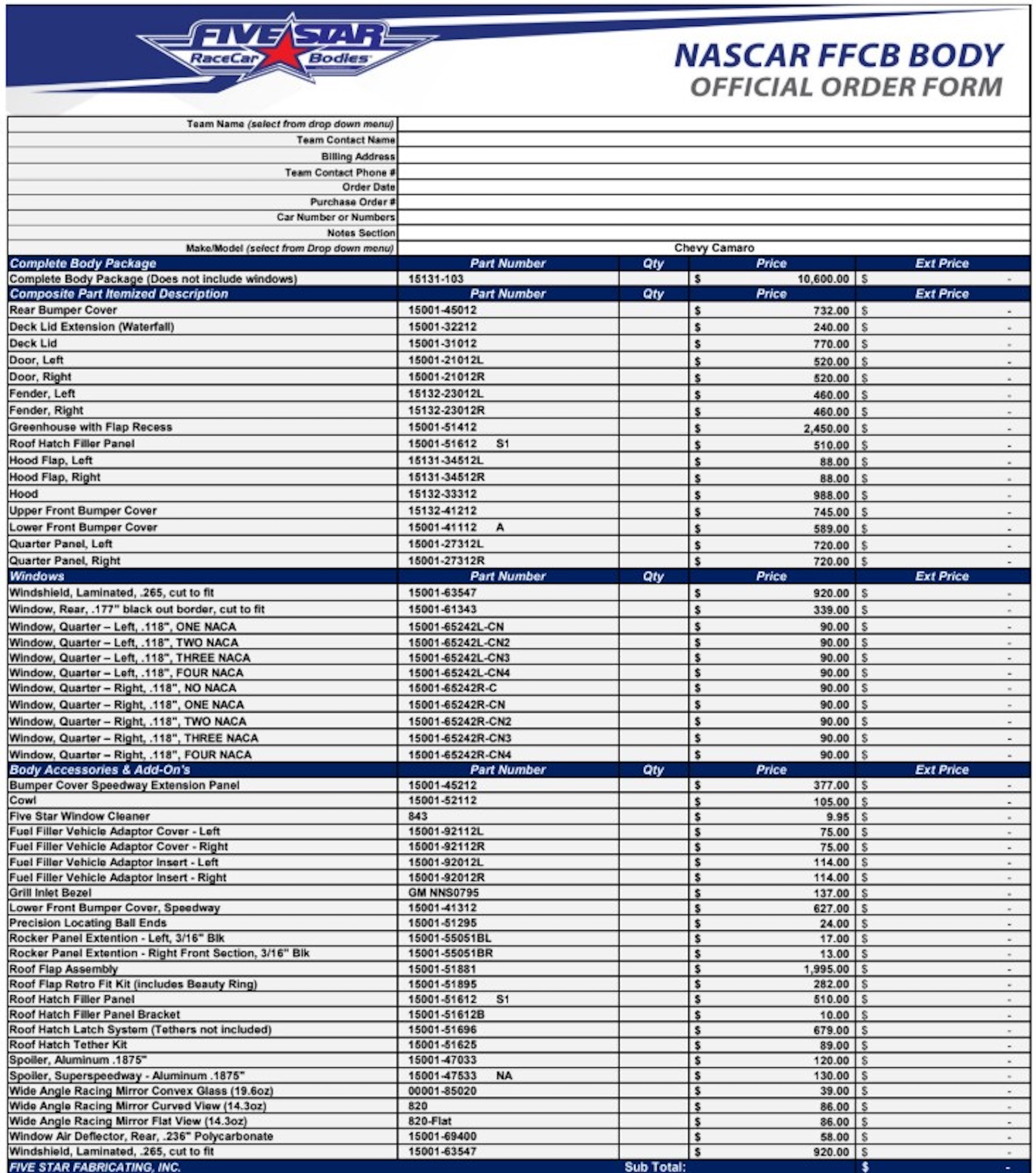
That may seem like a lot, but hanging a body is typically billed at about 125 labor hours. To do this in four eight-hour working days, a team would need to employ four full-time fabricators. A skilled fabricator will earn around $75,000, which would increase payroll by $300,000 for the year or $9,090 per race. The team would also need to invest in a surface plate that would be dedicated solely to body hanging, as well as numerous expensive pieces of measurement equipment.
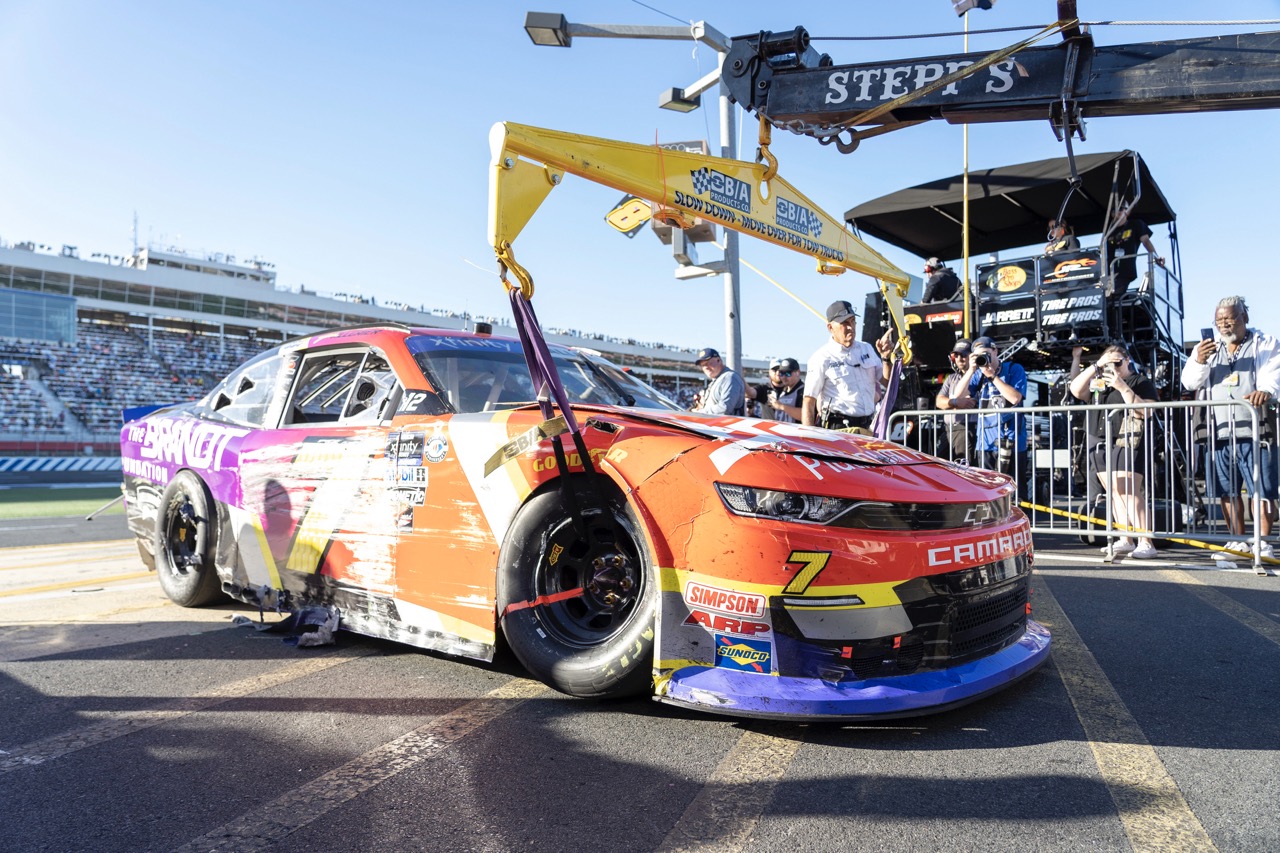
Now, obviously, you don’t tear up a full body every week, but routine in-race damage (nose, tail, splitter/bumper bars, and crush panels) will typically cost $7,500 to repair. If by some miracle you managed to run a whole season without crashing, your body bill would be around $288,750. A moderate crash, or rough race, is colloquially referred to as a “doortops down” repair. Basically, everything below the windows needs to be replaced. These are fairly common after a road course or short track, even if the team manages to finish the race, and will easily cost in the $30-40,000 range for the body panels and their installation. If we factor in five of those over the season, we can roughly budget for our body bill to be about $463,750 for the year, or $14,053 per race if divided up over the year.
I’m excluding from our variable costs any wrecks that are severe enough to damage the chassis itself. Getting a clip replaced costs in the $10,000 to $15,000 range and takes the vehicle out of rotation for at least a month by the time it gets repaired and recertified.
Our variable costs will hopefully only add up to around $511,750 for the season, or $15,508 per race.
All in, our hypothetical Xfinity series team with nine employees is looking at spending $3,351,529 to go racing for the season, or roughly $101,561 per race. Subtracting income from race purses leaves us with a total deficit of $1,835,082, or $55,608 per race, that needs to be filled by either sponsors or the driver.
There are, however, three notable exceptions to this hypothetical budget that you may have noticed. The first is the cost of your building and the utilities to go along with it. This can vary wildly depending on whether or not the team purchases an existing building, builds a new one, or rents space from someone else with a shop. I didn’t feel like I would be able to accurately represent that number, so I have left this out, but it will not be an insignificant cost.

The old Cope Family Racing shop is on the smaller side at 8,750 square feet, and is listed for rent at $122,500 per year. This translates to $10,208 per month or $3,712 per race not including utilities. A larger shop at 20,000 square feet, perfect for a two-car team, is currently listed for sale at a price of $3,400,000.
The second one is parts. For most of its history, the Xfinity Series was sustained by used parts from the Cup Series. Since the inception of the Next Gen car, this market has been drying up quickly. The majority of anything worth buying has been auctioned off already and is currently in circulation amongst Xfinity Series teams. As these parts get crashed or worn out, there is no more steady supply of cheap used parts. Once they’re gone, the only option will be to race brand new parts that teams either purchase from outside suppliers or manufacture themselves.
All of these numbers also assume that your equipment is owned outright. If any debt was taken on to start the team, those payments will also be quite significant. Without getting too far into the minutia, we can ballpark the startup costs by looking at a few of the heavy-hitter items.
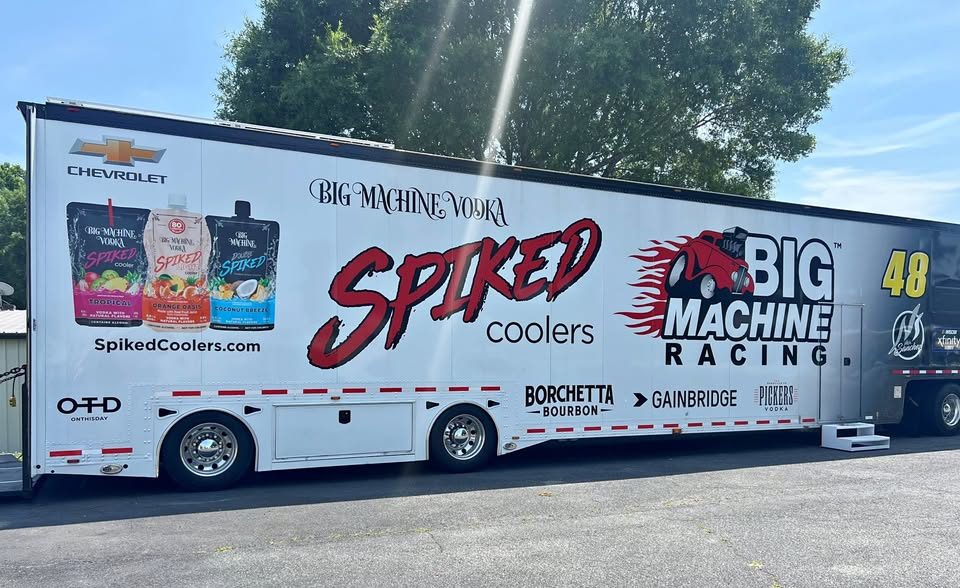
The biggest single item will be the hauler. Big Machine Racing recently listed its 2001 trailer with a 2016 Kenworth tractor for $300,000. Wood Brother Racing also has its (much newer) trailer listed by itself for $350,000.
It’s a safe bet that your hauler will be in the $300,000 to $500,000 range.
Next, you’ll need racecars. A properly equipped mid-pack team would have a minimum of seven chassis in its rotation: two short track, two intermediate track, two road course, and one superspeedway. The bigger teams will have around twelve cars, and they will be brand new. If you buy your cars as rollers, complete with body and suspension, less a driveline and seat, a 2015 to 2020 Xfinity chassis should cost around $35,000. Newer chassis will be sold for closer to $50,000, but may not come with any suspension components.
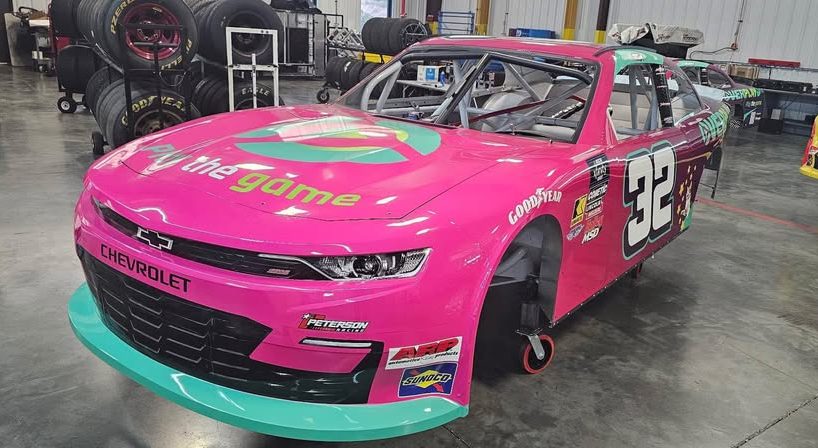
Somewhere in the $250,000 range should be reasonable to obtain enough cars to get you going. Your team will also need a pull-down rig to be able to properly set up the racecars. A new Mittler Bros pull-down rig retails for $97,500, but even a used one would set you back somewhere around $50,000.
A spending spree in the range of $800,000 to $1,000,000 should be enough to get you off the ground with most of the equipment and spare parts that you need.
In Conclusion
All said and done, an operating budget of $4,000,000 per year, $121,212 per race, should be considered as the bare minimum to run a sustainable mid-pack Xfinity Series race team.
A budget in that range leaves enough money to cover our fixed, semi-fixed, and variable costs discussed earlier, while also allotting $648,471 for rent or mortgage costs, utilities, parts, and covering the startup investment.
Even on this bare bones budget, our hypothetical race team will need to find at an absolute minimum $2,500,000 per season, $75,757 per race, in either sponsorship or driver funding, to keep the lights on.
There still is not a lot of wiggle room in this budget, and the team will be run extremely lean on the personnel side. A few too many crashes or mechanical issues, and our team will be out of money faster than Xfinity’s eponymous high-speed internet.
Top graphic image: DepositPhotos.com





It doesn’t have to be like this. The series chose to make it this expensive and exclusive. As recently as the 80’s a guy with a car he built himself, an engine he built himself, a dually and single car hauler with a volunteer crew could run mid pack in the lower levels and even a few cup races. Personally I liked that era better.
Agreed.
Even drag racing used to be grass roots like that. My grandfather was a regular guy, and was extremely competitive in Top Fuel in the 1970’s. He towed his car around with his big F350 with a 460, and scraped together funds and small sponsorships for his engines.
Here is my grandfather catching fire at the 1970 Summer nationals (He’s fine, I just texted him the other day)
https://www.nhra.com/sites/default/files/Insider/2011/dm6.jpg
Fantastic! I used to go to NASCAR races regularly 15-ish years ago when my wife worked for a company that sponsored a car. Team owner was very frank about the economics of NASCAR with us. Said some teams employed the “start and park” strategy in the Busch series (as the 2nd tier was called back then) because they’d have to finish in the top five just to cover the costs of tires for a whole race (not to mention the possibility of wrecking an entire car) and the math just made it smarter to “start and park” if you didn’t think you’d have a chance to crack that top five.
Great read! Now I need a deep dive on Nascar suspension from Huibert because I couldn’t believe how cheap the shocks were!
Thanks for a really well done article Aedan.
A lot to absorb, and I appreciate your efforts.
Glad to see more from you here again.
Fascinating.
I don’t really watch NASCAR, but I love reading the details and the breakouts from Aedan.
Keep writing! Thanks.
I didn’t realize how much of the mechanicals of the car were leases – engine especially. It makes sense in one way, but I’m curious, how much latitude does each team have in the tuning of the car? I know in Formula 1, half of the race is in the engineering, is it still the same in NASCAR?
The lease deals are just for the smaller teams that don’t have the head count to service everything
Where’s the race fuel bill?
I’m surprised how cheap the rolling chassis are.
This also puts in to perspective why people liked spec racing series like the Micra cup up here in Canada:
-Estimated cost for an entire race season for a new team (8 races if I remember), including the cost of the car, was pegged at $50k CAD, or $35.6k in Eagle Bucks.
Love this kind of article. This is the epitome of educational and entertaining. Thanks Aedan!
The industry standard for smaller teams is to hire crew members as 1099 independent contractors instead of W2 employees; therefore, the team does not have to worry about benefits and payroll taxes.
That got me all angry.
Why? Pay is pay whether someone is paid in cash or benefits. The more benefits the lower the cash wage will be.
1099 contracts are a very simple and straightforward way to get paid that leaves the employee flexibility. Both my wife and I have been paid on 1099 contracts and know plenty of other people prefer it.
You know plenty of people who prefer having no benefits, like health insurance, paid time off, sick leave, or potential unemployment benefits?
Do they also prefer the added tax burdens? /s
I smell gaslight
Again – pay is pay. Every dollar an employer pays towards benefits is a dollar you are not getting in wages. There is no extra tax burden – an employer doesn’t pay 1/2 of FICA for free – they deduct that from your hourly wage. 1099 wages should be at least double W2 wages and are often triple (Been there done that)
Time off is nice – that hasn’t been a problem for me on a 1099. If I was sick or just wanted a day off – I stayed home and didn’t get paid. Which was fine because – again – I was getting paid much more than on a W2.
Then there is the reality of two income households. Both partners getting health benefits is a waste as you can’t use them both. The partner not utilizing their company health plan is just taking a pay cut and health insurance is $20,000 or more of a W2 job’s annual pay.
Then there is retirement. With a company plan you are stuck with whatever the company decides. Many have poor fund option and you are limited to only putting away $24,500 per year plus what the company matches or pays in direct. If you are self employed on a 1099 you can do a self-employed 401K and the cap is $70,000 per year.
Same with health insurance. With a company plan you are stuck with whatever the company choses. Self-employed – you pick your own plan that meets your needs. The ACA has made that easier and cheaper but ACA plan options are not the only options.
“ Every dollar an employer pays towards benefits is a dollar you are not getting in wages.”
Not exactly, as the employers have economies of scale in purchasing benefits that you individually do not.
Most benefits have no economy of scale.
Taxes – nope – FICA is FICA.
401K – nope – most company run 401ks have higher fees than Vanguard charges an individual for a SEP-IRA.
Vacation days / sick days. Nothing there.
Really the only benefit that has the potential for employer economy of scale is health insurance. Here the ACA has done a lot to equalize things.
For example the company I work for has 18,000 employees in the USA. My 2026 Blue Cross Blue Shield high deductible plan with a $5,000 family deductible is $19,611 per year. I can buy a 2026 BCBS high deductible plan on the ACA exchange with a $4,600 family deductible for $1,610.52 a month or $19,326 a year. So basically a wash. (We will be buying insurance on the ACA next year so I have been shopping for a few years)
That was the goal of the ACA – to give individuals and small businesses a large enough pool to bring down costs to the level that companies pay.
My wife works for a company with less than 50 employees. Her employee provided medical insurance is thousands more than what we could buy on the exchange.
However, all of the above doesn’t change my point. Employers look at total labor cost (wages + benefits) and those benefits aren’t free even if many employees take them for granted and only focus on the wages that end up in their paycheck.
I have worked as a contractor and an employer, so I know the benefits and detriments of each way. I don’t think it is accurate to suggest “every dollar an employer pays towards benefits is a dollar you are not getting in wages”. If that was true companies would not hire anyone as anything other than contractors.
I have no doubt you are paying more buying insurance yourself and paying 100% of the premium than when your employer was paying the majority of the premium.
In my case my employer pays $16,052 and I pay $3,559
I in fact did mention employer matches – Those are benefits – which are pay – which are deducted from your wages. The more your health insurance costs your employer the less they are going to pay you in wages.
Neither employees nor employers pay income taxes on health insurance premiums – that is true. However, people that are self-employed can deduct 100% of their health insurance premiums on federal income taxes. FICA is still owed – if the income is subject to FICA.
Then there are the ACA subsidies. If I structure my income to be $84,600 next year the Feds will pay $606 of that $1610 insurance premium. Make $1 more and they pay $0.
Sweet Christmas that is bonkers…
I’m actually surprised how low these costs are.
Mooresville was the fasting growing suburb in the US in 2024; having spent some time there around then, one of the most striking thing is the income disparity.
Considering how much Nascar brings in for those at the top, it’s interesting to see that the majority of teams work on shoestring budgets, and no one in the industry (other then the top drivers and owners) are getting rich off it.
I visit Mooresville quite a bit and it is interesting. From mansions on lake Norman with helipads vs thousands of single wides in the surrounding rural areas.
That’s an amazing deep dive into how expensive mid level racing is. Just consider $3 million is pocket change for F1, or LMP
I think the Le Mans prototypes are in the 8 to 10 million range per year, with far fewer viewers.
Alan Kulwicki rolling over in his grave
Can’t get enough of these deep dives for a sport I no longer watch. Will read every damn time.
Amazing look behind the scenes, thank you! The most eye-opening part for me is the secondhand chassis for around $35,000. I had expected another 1 or 2 in front of that price tag. A real race car chassis! Sure, it probably wasn’t running towards the front of the pack, there’s no driveline, it’ll never be street legal, blah blah blah.
But it’s still the core of a race car that’s been out running NASCAR laps. For around the price of a new Miata Grand Touring, I can goof around with one of these.
It is a disturbingly attainable and tempting idea.
That “Add to cart” button on the transmission page is mighty tempting.
I’ve heard this, that if you’re serious about track days, don’t buy a street car, buy an ex NASCAR race car. You’ll have more fun and worry less.
If you shop surplus parts auctions you could get a running and driving track day xfinity car for probably $60-80k
Aedan – I’m only through fixed costs and it’s about bedtime (big interview tomorrow!) – but I love this and I’m grateful for it. It’s kind of funny to me how the shock costs aren’t terribly different from what we charge in the shop for whatever 2010 Hyundai is rolling through with a busted suspension.
Having worked for bologna sandwiches and handshakes down in the Arca series some years ago. I cant say much for the finances. But I do know that trickle down equipment really made all the difference in being able to keep 6 national touring car economics in check. Our cars were penske, our pit box was roush, engines from yates, petty fire suits, tools came from anyone who was selling. Making money wasnt the aim but there was meat on the bone thanks to that savings.
I will say though, if you go for a hired gun crew, make sure they have a license for the right series. The team hired an xfinity crew and they had yet to pay for Arca credentials. Because of this, the kind arca official lady took it upon herself to crawl up our ass and set up residence until someone went to pay that bill.
Really curious about driver contributions and sponsor contributions. What’s a lead sponsorship cost? What about a tiny sticker on the quarter panel?
I remember reading an article somewhere years ago about teams that simply ran qualifiers and that’s it. The business model was to get the car to the track, get to the starting line, run a lap to not qualify, collect small purse, go home and do it again. Is that still something that happens?
Found it: https://www.caranddriver.com/features/a15148944/the-quitting-game/
Start and Park racing
Its not as common of a practice as it once was. The charter system cut down on a lot of the pot available to part time teams. But it does still happen.
Big races like daytona have elevated payouts across the field and you definitely see it there. For lower series it looks good for prime time races if they can fill the field, but thats less opportunistic teams trying to make a buck and more series putting on lipstick for tv
Wow, I knew it was expensive but I didn’t know it was this bad.
The best way to become a millionaire in racing is to start as a billionaire.
I had no idea that so many parts were leased. Fascinating read! Great to read your stuff again.
For small teams yeah. It reduces the up front cost of buying everything for one but then it also reduces the workload not having to service and maintain everything. Installing a transmission is a lot less work than rebuilding one
Very good review. Be interesting to know how the drivers fit into the equation. Both in Xfiniti and the Cup series.
i have been impressed at how Front Row has been able to slowly climb from a low end to a “borderline” competitive team.
This is very interesting even for non-race fans like myself, thanks for laying it out!
I can’t believe that we as a society let Comquack foist “Xfinity” upon us. I want to spit on the ground every time I hear it, even in circumstances unrelated to how much time I have spent trying to get a problem resolved. (But I don’t, because that’s what they WANT me to do.)
This. Every time I hear that, I think of a conference room full of 60-70 year old white guys, getting excited because they want to rebrand with something “edgy” and “hip” and the best solution they could think of was spelling “infinity” with an “X.” Stupid comcast knows this was an insanely idiotic concept because the exact same non-consumer product is, “Comcast Business.” Everyone knows “xfinity” is a stupid name, except for these jackasses. You could not pay me to be a comcast customer.
I don’t worry about what an internet provider calls their company. Xfinity or Ziply – either provides reliable internet for $30 per month.
I had an in-depth behind the scenes tour of Hendrick’s machine shop, engineering, setup and assembly area about 10 years ago. The deep pocketed teams clearly have an engineering advantage (Hendrick hand assembles all the engines, for instance. They know which ones are the best ones). The winning margin comes from raceday talent, strategy and luck.
My younger brother works for Penske… an unlimited budget helps.
From the opposite end of the spectrum, here’s what it generally costs to run a relatively cheap 94 Civic Lemons car:
6 tires per race if they’re Ventus V4’s or Federal 595Pro’s, otherwise 10 tires at about 200 each.
2 front brake pads, 1 rear set of pads, and 4 rotors per race at about 500 / race
2 sets of front knuckles with wheel bearings replaced and 2 sets of CV axles for a split day race, otherwise you MUST buy and rebuild CV’s made before 96 for a true 24 hour race and rebuild them as anything made afterwards used a different metal for the cup that expands slower than the lobes inside due to heat and causes failure or steering lockup.
~150 gallons of fuel in the civic, 300 in the LS powered Volvo, 200 in the RX8, 50 in the TDi Jetta, and the XT/WRX never made it more than one pit stop in 8 race attempts.
All fluids replaced each race by Amsoil except engine oil where we found Valvoline to be essentially just as good but half the cost, and whatever brake fluid that exceeds 510F is cheapest
Exhaust flex joints need to be replaced roughly every 10 hours
Recurring or unpredictable costs:
Before getting a B18 with an LSD trans and very obsessively rebuilding it we’d average 2.5 races per D series engine, and 1.5 races per transmission. The B series engine is finally worn out after 20+ races but it’s been detuned by about 40hp to keep oil temps below 250F and probably about 50 hours of work went into it (can’t guarantee it was quality work though as we did it). The LS’s seems to average about 2-3 races, a T56 is eternal, the RX8 engines are also eternal (we’re actually on our third chassis with the original engine because Miatas seem to love t-boning us right behind the driver so I have spares now I guess) however the RX8 transmission is made of glass, and our 8th Subaru engine managed to last 2 hours before grenading!
Harnesses every 2 years $300
Fire suppression system every 2 years $300
Lexan windshield generally lasts 3 years, but that’s longer than we’ve managed to not break a glass one so I guess that’s a win?
Assuming nothing breaks and your car magically arrives at the track for free you’re still looking at 1200+500+300+600+150+50 or $2800 per race not counting things like the engine, trans, windshield, harnesses, etc. that might survive to the next race. This is also only after you’ve spent a lot of time and money in figuring out what works and just plain building the car to be safe enough to race.
Thanks for the details. You mentioned driver funding several times. Are they not considered team employees? How much is the typical small team driver paying to drive the car, and what is their method of recouping that cost?
This seems most pertinent in feeder series—they are paying to get a paid drive sometime later. They are recouping it through personal sponsors, or super shady investors, or they are just burning family assets.
Granted, this is my understanding from the euro open wheel series, NASCAR might be different but I bet not. An F2 drive will cost you around €2 million.
And these numbers are chicken-feed compared to what the Cup teams spend.
Now, calculate how much it costs to run an IndyCar, and please tell me how exactly they can afford it without a massive subsidy from R.P.?
Do you mean above the winners circle payments for the season?
I think that is what it’s called.
I’d also love a comparo with IMSA, esp the GTD class. Though the GTP class might be interesting in comparison with IndyCar.
This this this, IMSA is my most best favorite. I’d love to see this.
From the “It’s Not the Car” podcast with Ross Bentley, Jeff Braun, and Sam Smith, in the episode “What the 2025 IMSA Season Taught Our Pro Engineer” they state $3 million to $4 million for a full-season IMSA GTD team. They point out that the new torque sensors are $250,000 for the season.
Thank you – that’s fascinating! And jeeze, even one of the closest things to actual stock cars is still ridiculous.