

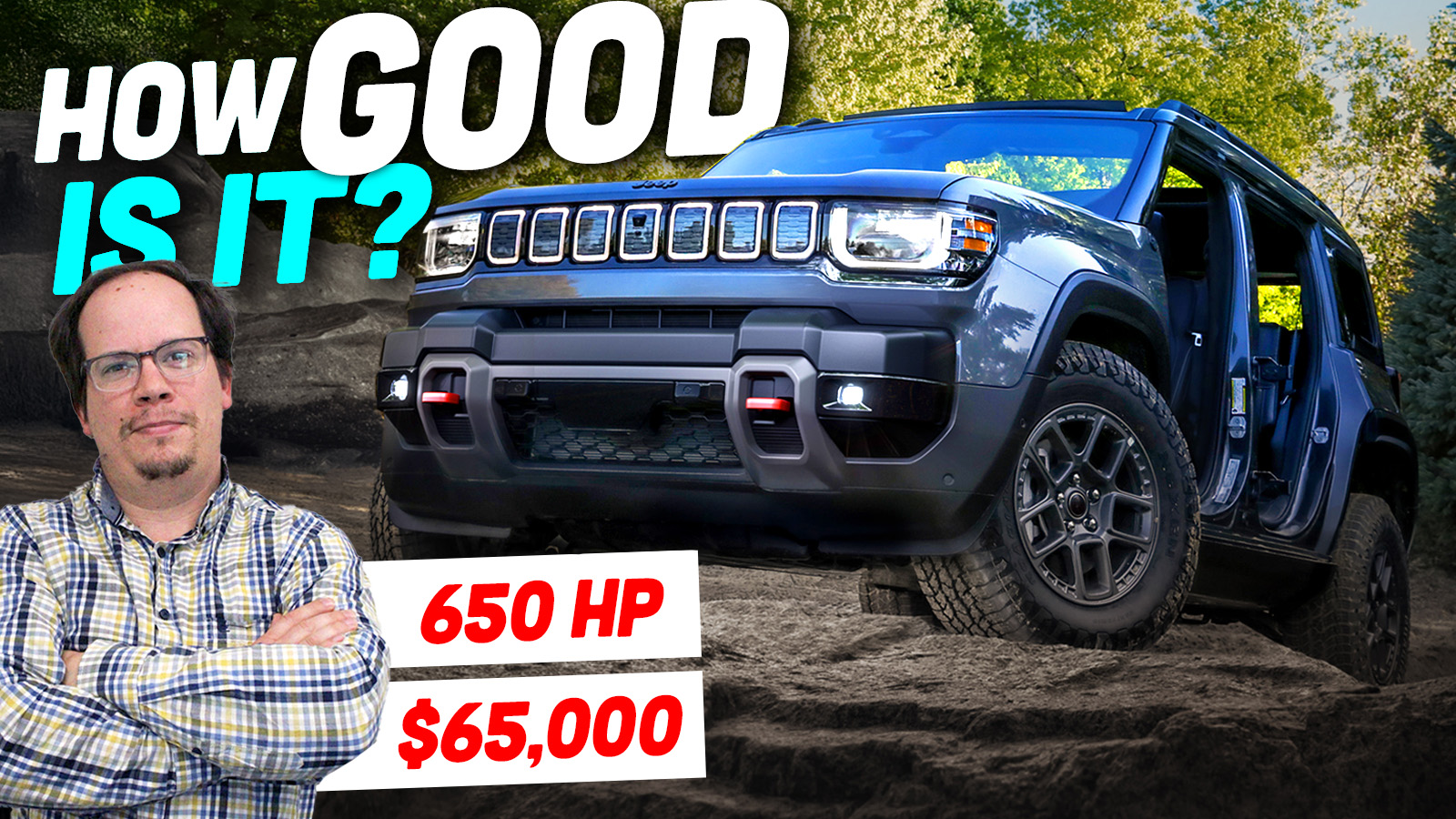
Some people are calling the 2026 Jeep Recon the “Electric Wrangler,” and with press photos showing a doorless Jeep bashing through tough off-road trails, I understand why. The reality is that the new Jeep Recon will not be as good off-road as the Wrangler, but that doesn’t mean it’s going to suck. In fact, I think the 650 HP EV is going to be a formidable off-road machine. Here’s why.
“The Wrangler stays the Wrangler — the icon of the brand…. the best of the best of the best is the Wrangler. Most capable” said Jeep brand CEO Christian Meunier at a press conference three years ago, in response to my question of whether the new Recon would be replacing the Wrangler. The STLA platform-based Recon, Meunier told me, would be inspired by the Wrangler, with a squared-off “tophat,” a rear-mounted spare, and removable doors, but it wouldn’t replace it.


In my 2022 piece, I mentioned that I was skeptical that an all-electric vehicle like the Recon could fill the Wrangler’s shoes, namely because its independent suspension would limit it severely. Still, Jeep claims the vehicle can cross the Rubicon Trail, and while I think it would almost certainly be beaten to a pulp by the end of it, I think it could pull it off. Here’s why.
The New Jeep Recon Is Going To Be Good Off-Road, Not Amazing
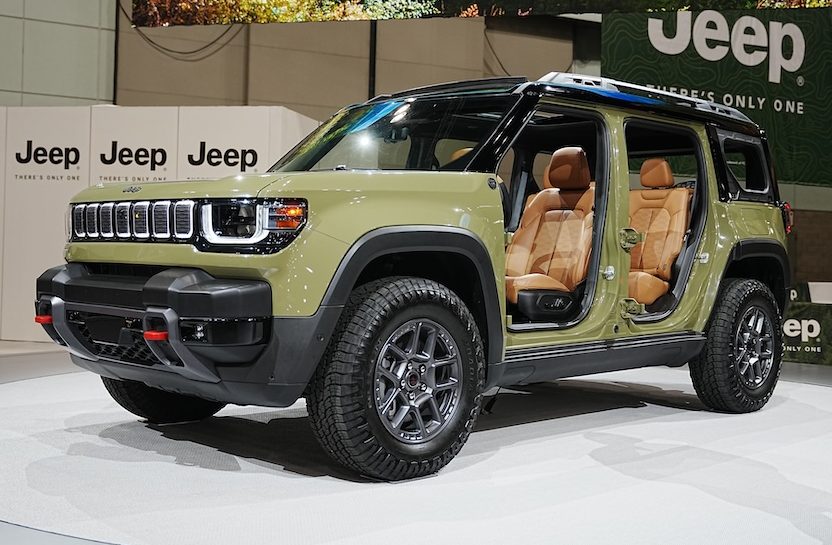
As a general rule, I don’t like to make claims like the above until I’ve driven a vehicle, but with many years of recreational off-roading, engineering, and off-road evaluating under my belt, there are some things I can glean by just looking at pictures and a spec sheet.
And now that the LA Auto Show is here, Jeep released the 400V, 650 horsepower EV’s production specs, and though the $65,000 price tag and 230 mile range spec (from a 100.5 kWh battery) don’t look particularly good, the off-road specs do.
Let’s start by talking geometry.
The Jeep Recon Has Favorable Geometry

I start pretty much every off-road evaluation the same way: by reminding everyone that the single most important attribute a good off-road vehicle needs is favorable geometry. This means more than just ground clearance, it means short overhangs and small overall dimensions. It doesn’t matter how much fancy gadgetry a vehicle has onboard if it can’t get its front tires onto an obstacle because its long front bumper gets in the way.
As you can see in the image above, the Jeep Recon’s approach angle and departure angles are 33.8 degrees and 33.1 degrees, respectively. These are fantastic, and the 23.3 degree breakover angle isn’t bad, either.
For context, the Ford Bronco, Jeep Wrangler, Land Rover Defender 90, and Suzuki Jimny offer approach and departure angles in the 40-degree range, but nobody thought the new Recon would be among the top-dogs of the off-road world. Go down half a tier, though, and the Recon is right there, geometry wise, with the likes of the Mercedes G-Class, Toyota Land Cruiser, and Rivian R1S.
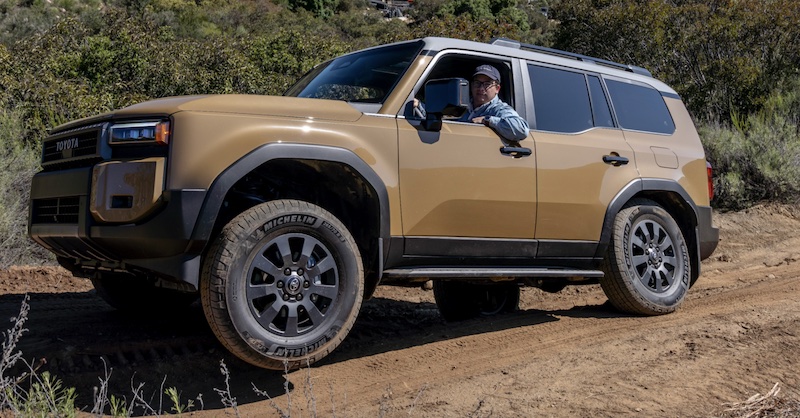
The Toyota Land Cruiser’s approach angle is 31 degrees, its departure angle is a downright weak 22 degrees, and the breakover angle is 25 degrees. The Recon may drag its belly a bit more than the Land Cruiser, but those extra two degrees of approach angle and the extra 11 degrees of departure angle will definitely outweigh the breakover angle deficiency.

The Mercedes G-Wagon, historically an absolute off-road monster, isn’t what it used to be on the rocks, but it’s still no slouch, with an approach angle of 30.9 degrees, a departure angle of 29.9 degrees, and a breakover angle of 23.5 degrees. The new Jeep Recon has it beat by a few degrees at the front and rear end, but overall, these two are fairly evenly matched.
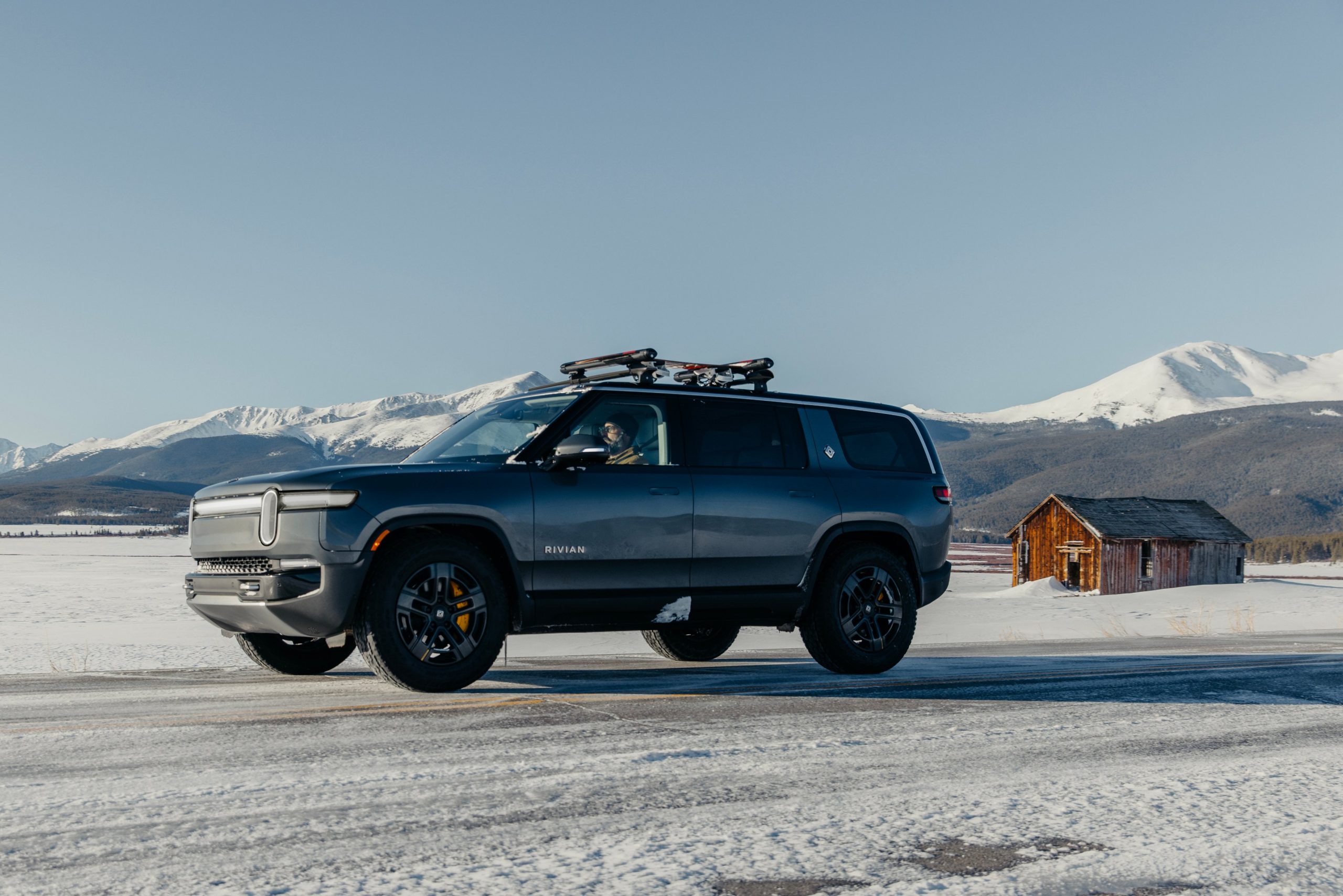
The Rivian R1S’s short front overhang gives it an approach angle of 35.8 degrees, the rear end yields a good 34.4 degree departure angle, and the breakover angle is a great 29.7 degrees. Rivian is leveraging air suspension to pull this off, jacking the car up to 14.9 inches of ground clearance. The Recon, by comparison, uses fixed-height coil springs, which offer a decent 9.1 inches of clearance.
Let’s Talk Ground Clearance
Let’s talk about that ground clearance a bit, because not all ground clearance is created equal. If a vehicle has components that sit low between the wheels on the same axle (for example, a differential pumpkin on a solid axle), that’s usually not a huge deal, as off-roading typical involves placing tires on top of obstacles and not straddling them (though sometimes that is necessary). 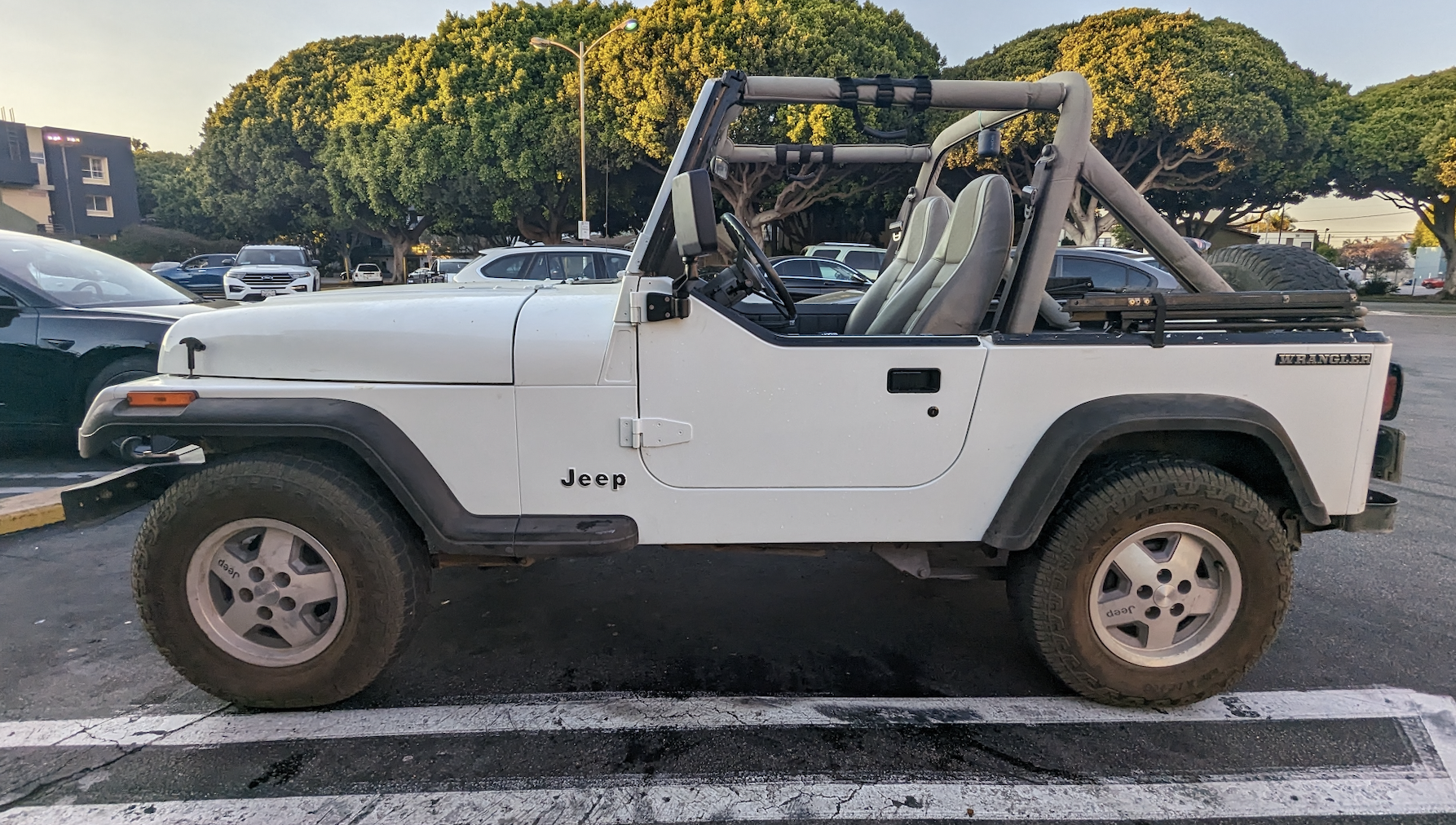
For example, my Jeep Wrangler YJ (above) has less than 9.1 inches of ground clearance at the differentials, but it just doesn’t matter, because the differentials are always pulled way up high by the tires, which are climbing the rocks that pose the biggest risk to the diffs. Notice how the rest of the body — the front and rear overhangs, and especially the rocker panels that are just aft of the front tires that will be coming down off rocks or logs or whatever — is way up high.
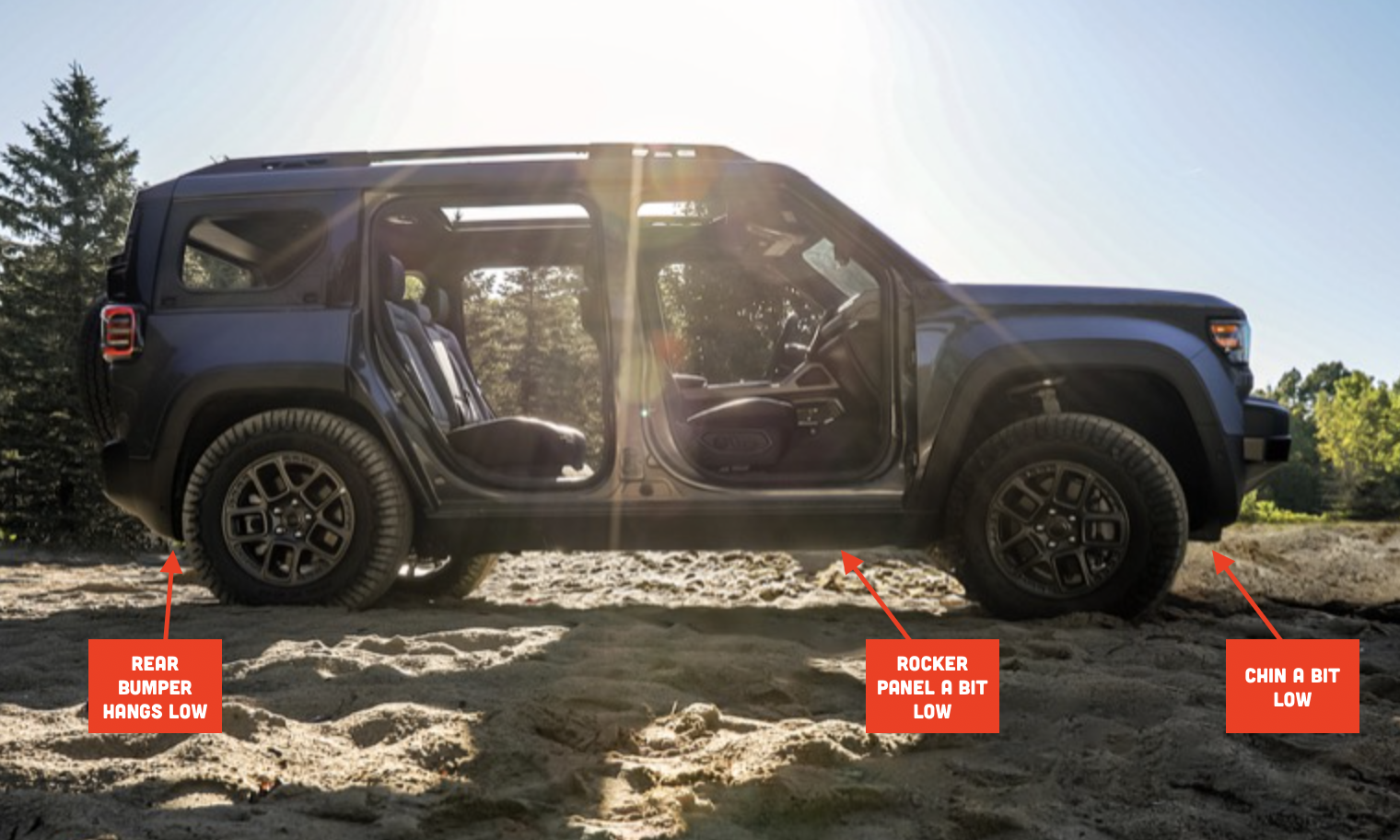
The Recon’s ground clearance doesn’t appear as well optimized as my YJ’s (or the current Bronco’s or Wranglers), with rocker panels, a front chin, and a rear overhang that look very much like rock-bait. The clearance is still decent compared to many modern 4x4s (which have to meet stricter aerodynamic targets than my YJ ever did), but without air suspension, there’s absolutely zero chance that this vehicle could get through the Rubicon trail without a ton of scraped black plastic.
Traction & Articulation
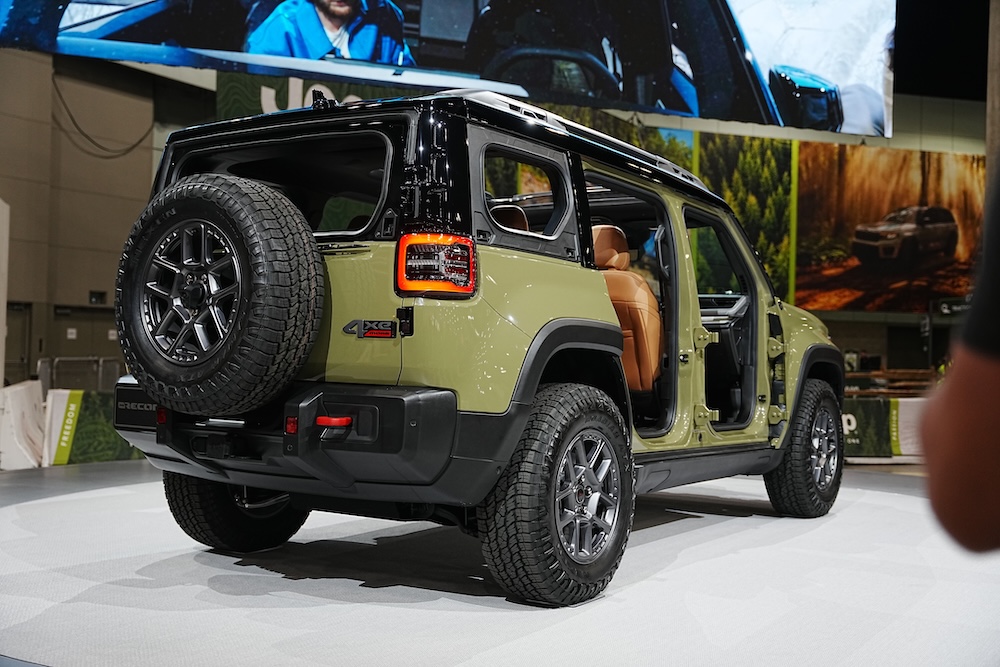
Another important attribute of a good off-road vehicle is traction, which is related to articulation (the ability to keep all four tires on the ground on uneven terrain).
The Jeep Recon comes with 33-inch (265 70R18 — so just under 33″) Nexen Roadian ATX all-terrain tires, which are generally regarded as great overall on-road/off-road tires — not too loud or knobby like mud-terrain, but not going to leave you stuck in a moist front yard like a low-rolling resistance street tire.
Those tires are connected to spindles that bolt to a Short-Long Arm independent front suspension and an multi-link independent rear suspension. This is the same type of suspension you’d find in, say, a Dodge Charger, and not some of history’s biggest off-road icons, though, to be fair, a number of modern off-road vehicles have fully independent designs.
There are plenty of benefits to such a suspension, with better steering precision (a solid front axle pretty much requires a steering box, which is a lot less precise than a rack) and improved ride (thanks in part to reduced unsprung weight) being chief among them (see our deep-dive into solid-axle vs independent suspension off-road). On high-speed terrain, independent suspension reigns supreme, though on technical off-road courses, they usually result in significant tire-lifting, which is a huge traction issue and can be a safety/tipping concern.
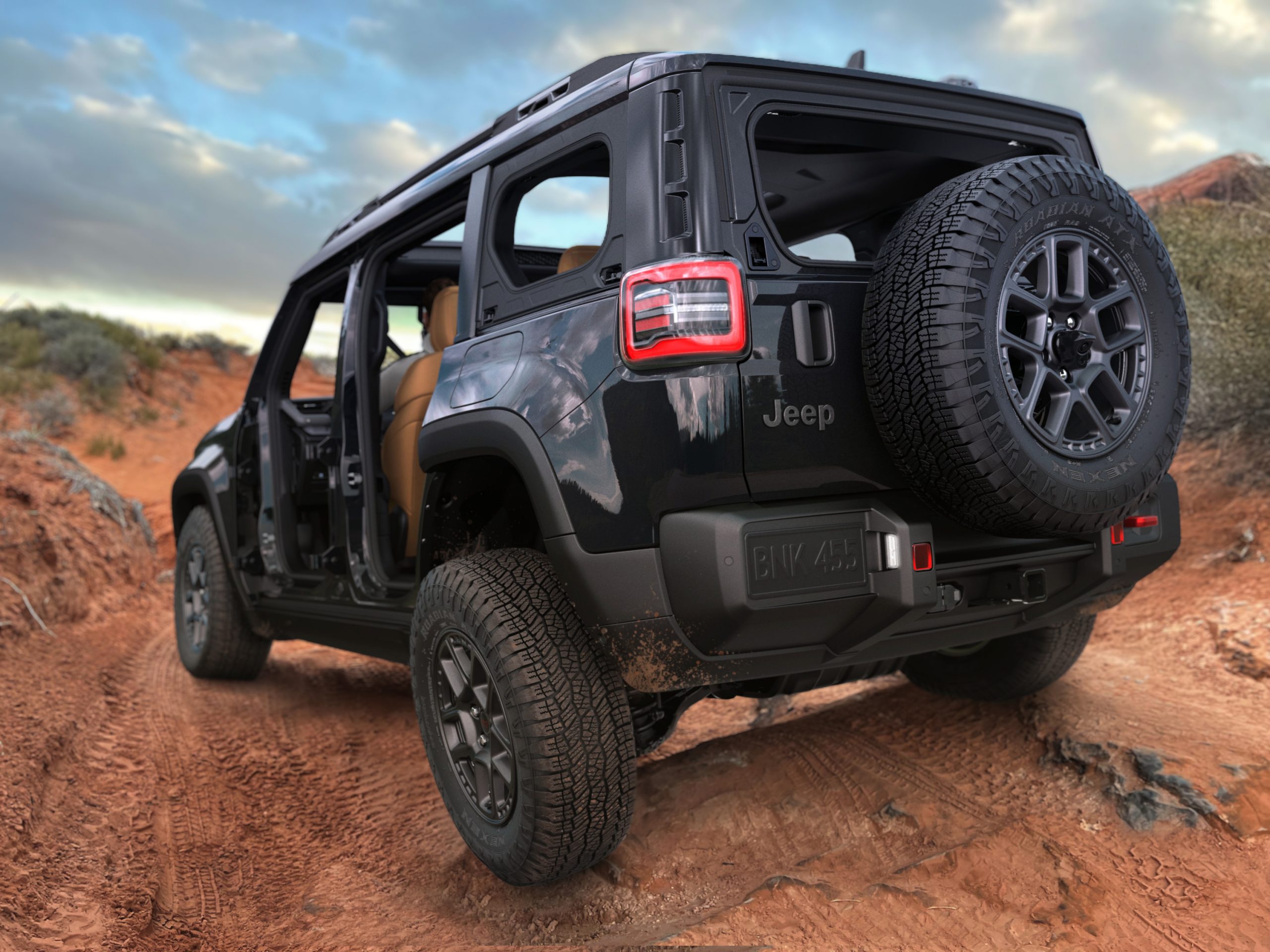
The image above shows what looks like fairly decent flex for an independent suspension setup. But it’s no comparison to a solid axle like this:
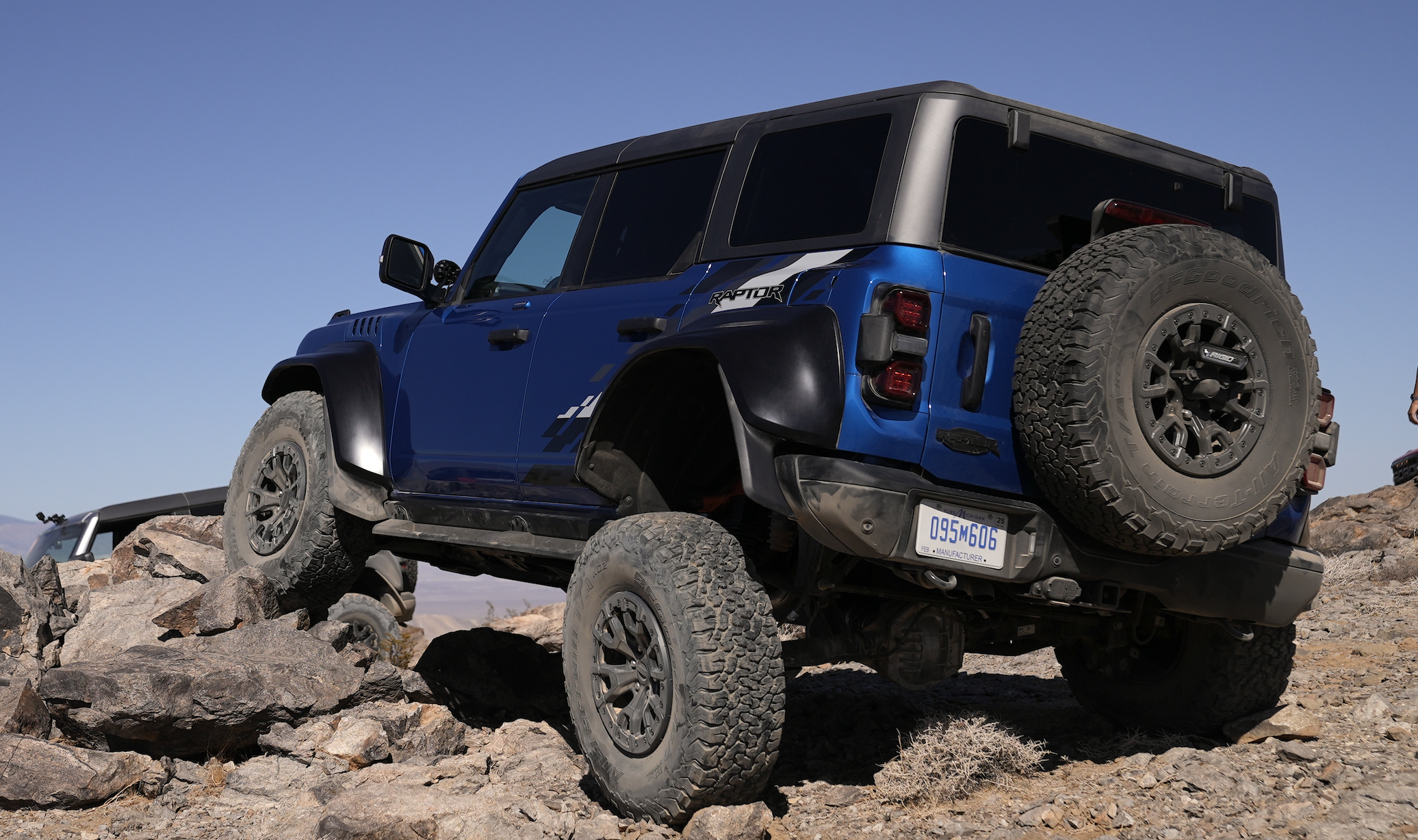
Still, when articulation is limited, the (rather effective) bandaid to the problem is a traction-aide, and the new Jeep Recon has the ultimate: a locking differential.
No, it’s not two locking diffs like some of the most hard-core off-roaders out there, but a rear locker goes a long way, and the Recon’s is a legitimate electronic locking differential integrated into the Stellantis-developed rear Electric Drive Module. It’s there to keep both rear wheels spinning at the same rate by mechanically connecting their angular velocities; this means that, if one rear wheel lifts off the ground, the other can keep the vehicle moving forward, whereas with an open differential, lifting one wheel off the ground will render the other wheel on that same axle useless (at least in terms of propulsion).
I still have some concerns about the off-road traction capabilities of EVs in general. Since the front and rear axles are not mechanically connected, Jeep is going to have to use software to figure out how much current to send each Electric Drive Module’s motor (there’s one on each axle) to ensure the vehicle moves ahead smoothly despite traction conditions under each tire that can very second-by-second. I mentioned this concern back when I reviewed the Rivian R1T years ago and noticed quite a bit of “flaring” (i.e. wheelspin) happening as the computer tried to figure out what was going on at each wheel.

But a mechanically locked rear axle goes a long way, and the Recon’s 15:1 rear axle ratio (and 11:1 up front) should help, too. This is a shorter ratio than most EV, and as our resident EV enginerd, Zero Entropy, wrote recently in his excellent article How The Electric Motor Killed The Transmission, shorter gearing could help even a torquey EV when it comes to off-roading. From Zero Entropy:
We’ve established that EVs make tons of torque at zero or low speeds, so shouldn’t they be perfect for an off-road adventure through Moab? Yes, but the extreme cases still pose a challenge.
Imagine you are trekking over some boulders at an extremely steep angle. You’re inching over an obstacle, and the electric drive motors (presumably two or even four motors) are effectively twisting against gravity in a stall condition. They can make this torque, but heat can build quickly.
[…]
Back to the EV; This is a case where a special crawl gear could be handy. Not because the motor isn’t capable of making the required wheel torque without it, but because it would run a lot cooler if it was geared down more. A greater reduction means the motor can be at a lower torque to make the same wheel torque. Lower torque means less current and less heat.
Underbody Protection
The last thing I’ll mention is underbody protection. Jeep hasn’t provided any photos of the Recon’s belly, but as it’s an EV, I bet the battery between the axles is just a big flat surface with a nice metal shield that will make it easy to slide over boulders when that moderate breakover angle gets tested.
I’ll see if I can get a closer look at the LA Auto Show.
The Jeep Recon Will Be Good Off-Road, Just As The KL Cherokee Was
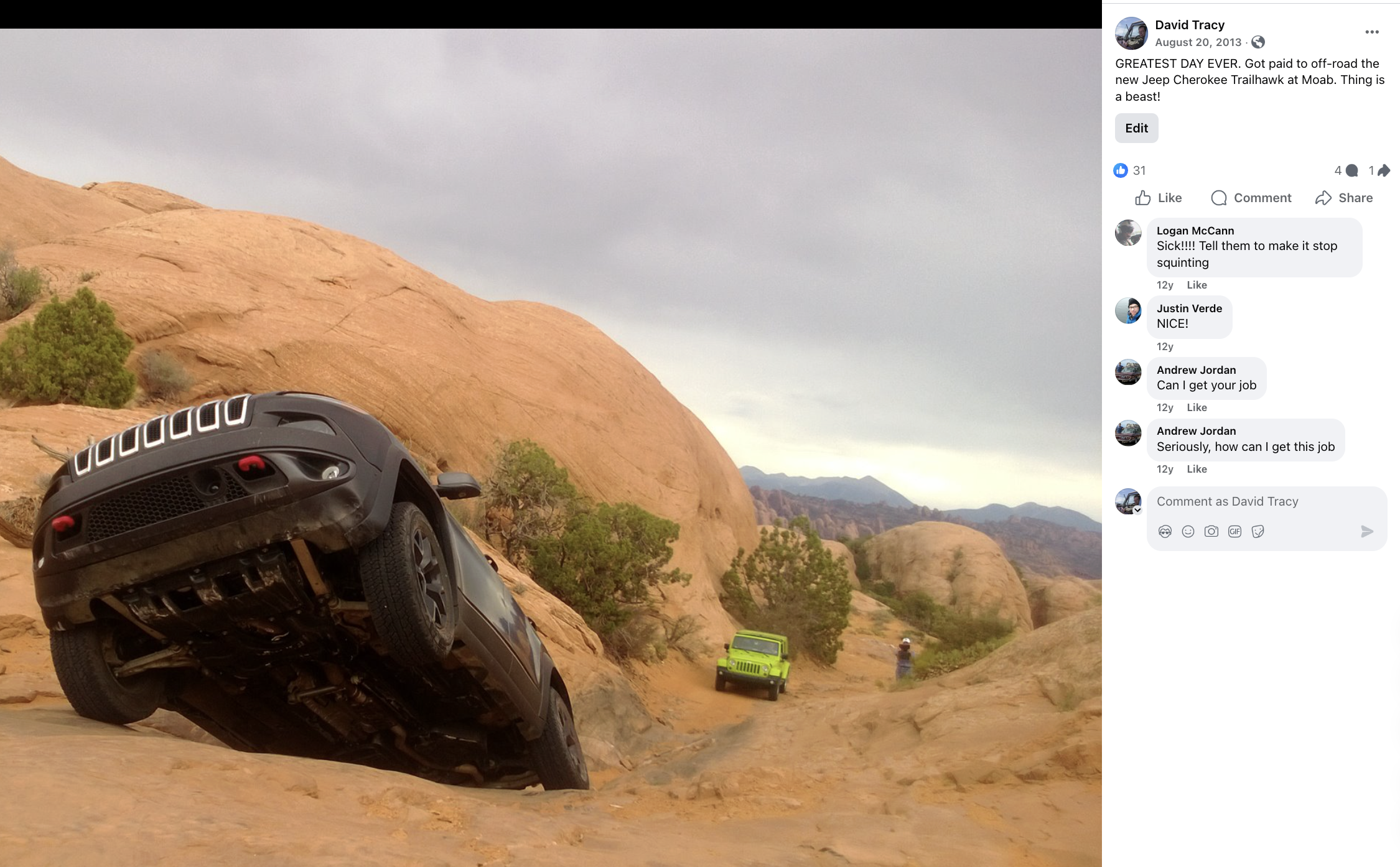
The very first vehicle I ever off-road tested back when I was a Jeep engineer was the Jeep Cherokee KL. As a diehard Jeep XJ guy, I thought the KL would be hot garbage. It looked hideous, the fully independent suspension couldn’t flex, and though the geometry looked good on paper, in reality the rockers and fascias were too low to the ground.
But when I went out west on a “hot trip” to see how the KL could do on the rocks of Moab, I was legitimately impressed. Thanks to that rear locker, that decent geometry, and the underbody skid plates, the thing was an absolute billygoat on even the steepest grades.
Sure, by the time we were done testing, the plastic on the rockers and front/rear fascias had loads of gouges in them, just as I’m sure the Recon will if I get a chance to off-road it, but the KL got the job done, and to this day I respect it. It’s not nearly the off-road platform that the XJ was, but especially compared to the other modern crossovers out there, the thing took care of business.
I have no doubt the Recon will, too. Though I am a bit concerned about the 6,100 pound curb weight — literally a ton more than the KL. Gulp.




I don’t want to kick Jeep while it’s down, but this is an example of why Savage Geese did a video about the problems with Stellantis recently. This Recon BEV is not what the market is seeking, and it’s too expensive for a large group of consumers if it doesn’t also contain a range extending engine.
The corporations that have owned Jeep, Dodge and Chrysler from FCA through present day have simply used the brands as cash cows and have not returned the funds generated back into the companies for development. It’s the new capitalism work ethos but applied to entire companies: Work with what you’ve got, work harder with fewer resources, for ever decreasing benefits and wages that do not rise in relation to inflation.
Stellantis is just the latest vampire to suck off the cash flow of Wranglers and Ram trucks. The engineers are left with very little funds to work with for R&D and it shows. The brands are selling things that struggle to be competitive, reliable and desirable (outside of the above listed models).
There is nothing in those brand portfolios that would be desirable or competitive if we have another crisis, whether it be economic, viral, environmental or political. If gas prices spiked, they would have a very hard time selling inefficient and expensive vehicles.
I know it was completely irrational, but I was really hoping this would be affordable for me. Oh well, time to buy more used shitboxes.
Inline 4 and 6-cylinder engines, along with a possible hybrid version, would make this the “Cherokee” that we’re all looking for.
My son and I went to Moab in 2018. Just hiking the trails in Arches and Canyonlands were enough. We had a VW Tiguan as a rental, but it never ventured beyond the parking lot.
But much like when I see TV commercials of people (almost always guys) abusing $70K+ pickup trucks, I just don’t get the appeal of beating up stuff that works day to day. Unless I’m trying to rescue someone, I just wouldn’t do it.
Right, they need to be cheap and rough enough not to worry too hard.
This thing is too late to the EV party. It’s too expensive, too little range, and famous Jeep build quality. I predict this will be a dismal failure.
I was more excited for this before getting into the second “park your 4xe 50′ away from everything” recall. Still, I hope it’s awesome and I’m looking forward to seeing them around.
I’ve been saying for years that EVs with independent wheel motors are comparable off road to a gas engine with traction control braking wheels individually. I’m wondering if they lowered the ratio as an adjustment to compensate for the lack of torque or if they started with it low.
Most of these wont see much beyond hitting the beach, or the campsite/trailhead.
Rear locker, automatic front brake trickery, descent control and some good software in the inverters will go a long way in giving this goat-like traction management, but that 100kWH battery is gonna be HEAVY.
It’s DOA along with the development costs.
“$65,000 price tag and 230 mile range” Big Yikes
As someone who daily drove a 20yr old TJ for years before having kids, I want to like this so badly. It would be a perfect “compromise” for something fun but also safe/reliable/efficient. Unfortunately, it is not efficient and certainly will not be reliable.
Cheaper than a VW Buzz and the mileage is equivalent. So the takeaway is 65,000 isn’t what it used to be, but WTabsoluteF, that is still crazy money for either toy.
Please let’s all not forget that the Cybertruck also made* it through the Rubicon!
*Bent four inner tie rods up front, and two rear tie rods (one bent, one with a sheared M14 bolt.
Steering rack cracked.
Rear CV axle failed.
Required charging support via portable generators to continue.
Front end / driver-side structural damage.
Yup, stack enough rocks and be willing to handle enough damage, and you can get many crossovers through.
My employer didn’t like when I said something similar to that when I dragged their company Taurus down various access and BLM roads to different oil rigs for a few weeks when a proper work truck wasn’t available.
For comparison, the Cybertruck is 6100-6900 lbs. The one that went through the ‘con was likely on the higher end. This is 6100 lbs. Wild. I thought the CT was going to be way heavier.
This may be a bit more nimble on the trail but I fail to see how it would fare any better overall with a shorter range and similar weight.
https://bangshift.com/bangshiftxl/watch-this-old-cop-spec-crown-vic-handle-moab-off-roading-and-freak-jeepers-out/
Just get a crown vic 😉