

Our brains like to compress large portions of history into small, bite-sized descriptions that allow us to understand a time in the past without fully immersing ourselves in it. The Gilded Age. Thje Roaring ’20s. The Great Depression. The Global Financial Crisis. It’s always a vast oversimplification, but it works in a pinch. What will we say about the 2020s? If they’re roaring, they’re roaring like a lion and not like a hot jazz and bathtub gin-fueled speakeasy rager.
While I’ve been happy to call it the Decade of the Hybrid™ in The Morning Dump, that’s also a little glib. Right? This morning, I’m becoming worried that the shorthand for the 2020s will be the collapse of the EV dream, setting us up for a Return of the Jedi-style comeback in the 2030s. Instead of Ewoks we’ll have EREVs. Don’t think too much about it. Just trust me.


Looking at the news today, I think the automotive industry is just caught in a bigger story, which is the larger reconsideration of the efficiencies of global economies. First up, there’s finally a good estimate of what tariffs have cost automakers up to this point, and it’s a lot. If there’s one company that represents the failure and possibility of the ’20s thus far, it’s Honda. If there’s a sport that’s benefited from, and then suffered under the same, it’s F1.
Perhaps this is too Western-centric a view? If you’re looking at it from China’s automotive industry, the world might look like your oyster.
Tariffs Took More Than $34 Billion From Automakers So Far
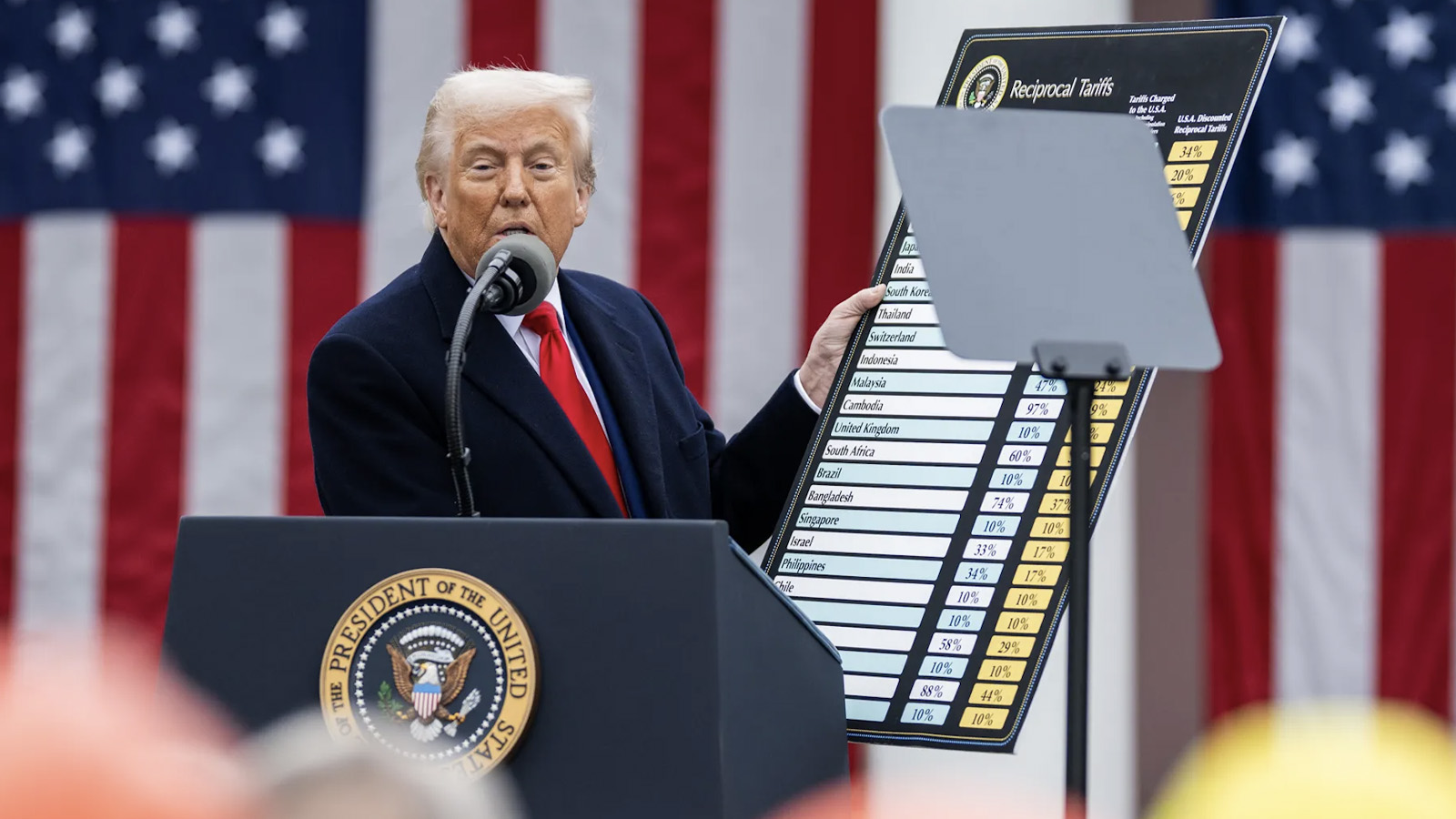
Most of the tariffs levied against automakers didn’t fall under the same guidelines overturned by the Supreme Court, meaning that they are still being enforced. The one year anniversary of “Liberation Day” is coming up, and Automotive News went through all of the public financial reports to put together a first estimate of what it’s all cost. So far, the total is around $35.4 billion.
Remarkably, and unlike the Pandemic, not all of this is being passed onto the consumer. The Trump Administration’s policy of strong-arming private companies and institutions has some obvious drawbacks, but it does seem to have at least temporarily delayed a huge raising of prices. That being said, automakers have found ways to sneak price increases into the total price.
Perhaps it’s not the hardball that’s behind automakers outwardly trying to avoid announcing price hikes. Maybe it’s just the uncertainty. These tariffs were supposed to lead to a rush of new projects in the United States, although it’s been a little slow-going. From that Automotive News report, there’s an explanation as to why:
The Trump administration has framed tariffs as an incentive for automakers and suppliers to build vehicles and parts in the U.S.
Yet a year after Trump implemented new duties on vehicle and parts imports, automakers are still trying to decipher which tariffs might stick and which might be negotiated down or go away, said Dan Hearsch, global co-leader of the automotive and industrial practice at AlixPartners. Greater clarity will allow them to make more decisions on resourcing parts or changing where and how they build vehicles to avoid tariffs, he said.
“That’s still pretty hard to do because the administration has just not been very clear or consistent in application and what stays and what goes up and what goes down and what gets added,” Hearsch said.
Any increase in production here is also an offset against all the canceled or lowered factory output related to electric cars. It’s impossible to know what would have happened if CAFE limits and the Inflation Reduction Act had stuck around in some form, but my guess is that not everything would have been shut down.
The lack of clarity has a deeper cost than just tariffs. This $34 billion (and counting) is on top of the more than $70 billion automakers took in restructuring write-offs related to electrification. How you view the impact of electrification is, of course, its own sort of litmus test. It’s obviously not just governments pulling back, infrastructure being too slow, automakers starting with expensive cars, or consumers not wanting electric cars. It’s all of the above.
How did automakers find themselves in all these traps? I think nearly every major problem facing automakers was an inability to accept that the conventional corporate wisdom that unrestrained free trade would last forever and that a calmer global environment that formed after the collapse of the Soviet Union would go on forever.
What makes electrification the weird sort of exception is that it seems like a demand problem and not a supply problem. The Pandemic wasn’t a demand problem, it was a supply issue (the lack of semiconductors). Tariffs aren’t a demand problem, but they can be viewed as a supply challenge as automakers looked to squeeze a few extra cents out of cheaper local production around the world and stretched supply chains so far that they were at risk of governments deciding to change the rules. The populist snapback in response to a loss of jobs was, in a way, probably inevitable.
I think there’s a way to see the electrification as an upstream issue that fits into this larger narrative. For the mass adoption of electric cars to be feasible, automakers have to fundamentally alter the way they source and build cars. Not all the old ways work when it comes to building an EV supply chain. China spent years building up battery technology, charging infrastructure, and access to the rare earth minerals necessary for mass electrification. The West didn’t. It’s possible this all would have been a waste of time given where demand is, but after the success of Tesla it suddenly seemed important and most big OEMs and suppliers spent a lot of money trying to play catch up.
In the absence of a mature supply chain, the Inflation Reduction Act (and other investment programs from the Biden administration) basically had to promise automakers both money (to build plants) and offsets from consumers (to stoke demand). If the United States viewed China the way it viewed the EU, this would have been a fairly solvable problem. We could have just imported a bunch of cheap Chinese EVs and batteries. Obviously, that wasn’t going to happen.
What’s happened instead is a nightmare for automakers . Even Toyota, the automaker that’s felt the smartest lately, ended up with the largest tariff hit at over $9 billion so far (there’s an argument that GM might actually be the best-positioned automaker for the second half of the decade, but I’ll leave that for another day).
I’ve tended to focus on German automakers, which have found themselves stuck between China and the United States. The struggle is real in Germany. Honda may end up being the best/worst face of the mass loss of bearings in the 2020s.
Honda’s EV Troubles Are Just The Latest Trauma

There’s been a lot of Honda news lately, including the fourth consecutive quarter of losses from its automotive division and its decision to cancel all its electric cars. Honda has taken a lot of flack for it, and it’s mostly been fair.
Over at InsideEVs, our buddy Mack Hogan takes on his displeasure with the company in post headlined “I’ve Watched Honda Fail At EVs For Five Years. After Today, I’m Out Of Patience,” in which he laments:
From the decade-long saga of teasing a new NSX, to a decade-long saga of saying “this time, we’re really serious about EVs,” the company has a terrible habit of building hype for nonexistent products. Three years ago they heavily implied to me that an electric S2000 and an electric NSX were both in the works. Now we can’t even get a replacement-level electric crossover. I am exhausted. I am out of hope. I feel lied to.
We did get the Honda Prelude, and that’s not nothing, but it’s a little too expensive and maybe a little too weird for the market. Bloomberg has a story about how Honda’s troubles are way beyond letting its EVs die, and have more to do with a lack of focus and consistent vision. Honda beat Toyota to market with hybrids in the United States by a few months, but today we get the Prelude and yet there’s no hybrid minivan, truck, or large crossover.
As often happens with big car companies, a pursuit of volume is probably to blame:
In 2012, then-CEO Takanobu Ito set an audacious goal of doubling annual sales to 6 million vehicles within five years. To do that, it built factories in China, Indonesia and Thailand, and accelerated production development to meet the target, which in turn placed pressure on its engineers and led to a series of recalls and botched vehicle launches.
While Hachigo, who succeeded Ito as CEO, shifted the focus away from chasing sales targets, Honda never recovered its mojo even as rivals such as Hyundai Motor Co. and BYD began taking away market share. The Tokyo-based company’s global sales volume peaked in 2019 at 5.32 million vehicles; it expects to sell 3.3 million in the fiscal year ending this month, down from last year’s 3.7 million.
That has left Honda in a weaker position to absorb other blows, ranging from President Donald Trump’s tariffs on cars imported into the US to a glut of vehicles and price deflation in China. Bernstein notes Honda’s Chinese sales have declined for 24 consecutive months.
Honda is a global brand, and pursuing more sales isn’t prima facie a terrible idea. However, the first step of building more cars needs to be building great cars that fit the needs of specific markets. That’s where Honda got lost, and then found itself stretched too thin to deal with the sudden onslaught of challenges all automakers are facing.
One of the biggest tells is that Honda separated its advanced R&D from vehicle development a few years ago. That’s giving into the fantasy that automakers could ever stop being automakers and start being technology companies. Now, it was just announced, Honda is reversing that decision.
F1 Cancels Middle East Races

There is no true cultural monoculture because of the Internet, right? I felt that way up until I found my daughter rushing into our living room way past her bedtime to watch the excellent performance of “Golden” by the cast of Netflix’s K-Pop Demon Hunters during last night’s Oscars broadcast. In a way, the rise of Korean pop music is perhaps a reminder that industries that aren’t so reliant on global supply chains are still globalizing.
Formula 1 is probably the biggest beneficiary of a re-flattening of entertainment, with Drive to Survive finding audiences in places that mostly overlooked the series in recent years. It’s been a huge boon for the sport, which has expanded to 24 races.
Well, maybe 22 this year, as ESPN reports:
Formula 1 confirmed on Saturday that April’s races in Bahrain and Saudi Arabia have been canceled due to the war in Iran.
The conflict had already placed the rounds on April 12 and April 19 in major doubt, and they were both officially canceled ahead of Sunday’s Chinese Grand Prix.
It leaves F1 with a five-week void between the third round of the new season in Japan on March 29 and the Miami Grand Prix on May 3, and looks likely to reduce the number of races this season from 24 to 22 — although it was not entirely ruled out that the Bahrain and Saudi Arabia events could be run at another stage this year.
“While this was a difficult decision to take, it is unfortunately the right one at this stage considering the current situation in the Middle East,” Stefano Domenicali, president and CEO of Formula 1, said in a statement.
The races in Abu Dhabi and Qatar are still set for later this year and one would have to assume that things will have cooled down by then. Right? Right…
BYD Shares Jump As Exports Rise

And while we’re talking about globalization, there are many ways to view China’s electrification strategy. If you’re willing to give the government too much credit, this was all a plan to help the environment. If you’re feeling cynical, China predicted a world that would be over reliant on Chinese green energy products it could then sell to other countries.
Some of the above is true, but what’s happening in Iran and shutting down F1 races is probably the bigger reason. If China needs oil, it’s going to have to get most of it from somewhere else. That somewhere else is the Middle East, Russia, South America, or the United States. All of those places, have, historically, been a problem.
Obviously, China cannot be reliant on the United States for anything existential. Venezuela has been a source of oil for China, but now the United States is helping call the shots there. China and Russia have an uneasy alliance. This week was a reminder that the Middle East isn’t always going to be a safe source, even though China has huge oil reserves and only gets a small portion of its oil via the Strait of Hormuz.
Electric cars have turned out to be a great hedge and, though the country is now dealing with overcapacity, BYD has found a global audience for its cars as Bloomberg reports:
The Chinese EV leader’s Hong Kong-listed stock jumped 7.8%, the most in 13 months. It was the top performer on the Hang Seng Tech Index, followed by peers Nio Inc. and Xiaomi Corp., which climbed around 5%.
Sentiment is getting a lift from local Chinese news reports that BYD’s Brazil plant received an export order for about 100,000 units from Argentina and Mexico, said Eugene Hsiao, a strategist at Macquarie Capital Limited.
“This is positive for the broader BYD thesis, which is that overseas sales will become the core growth and profit driver over time,” he said.
This is the potential upside of an energy crisis for China. If you’re in the United States there’s enough domestic oil production to make it through anything, and if you’re in Europe you’ll be able to pay the higher rate for crude. If you’re in South America, Africa, and parts of Asia that might be harder. China’s move towards EVs has both partially inoculated it against higher gas prices and given it a way to reach deeper into other markets.
What I’m Listening To While Writing TMD
I’m not sure why The Man From U.N.C.L.E. reboot wasn’t more of a hit? I enjoyed it and would like to have seen a sequel. “Compared To What” by Roberta Flack was an excellent pull for the soundtrack, and the lyrics really hold up.
The Big Question
You have $100 billion to spend on cars, but they all have to be the same car. This is potentially enough money to buy every Ford Escort ever built, for example. What do you buy?
Top photo: DepositPhotos.com



i don’t doubt that the math behind the automotive EV costs is correct, but please remember that although it took years to ramp up EV design and production, somebody decided to write it all off in one quarter.
“If you’re in the United States there’s enough domestic oil production to make it through anything” – except perhaps the 2030s? Wonder why Venezuela was recently invaded to increase oil production?
US oil consumption, ~7 billion barrels a year- https://www.eia.gov/tools/faqs/faq.php?id=33&t=6
US proven oil reserves, ~46 billion barrels- https://www.eia.gov/naturalgas/crudeoilreserves/
Seems to parallel the Social Security trust running out in the 2030’s…
I’m sure we could speed run this if we just roll back some EPA rules, dial back the EVs, and bring back the HEMI.
In a nutshell, I think it’s something about US drilling production being light, sweet crude oil but all of our refineries being set up for heavy, sour crude oil.
This ^^^^ – we have to import the heavy stuff and Venezuela has the largest reserves of the heavy stuff. We produce so much WTI that we can export millions of barrels of it each day.
You’d think changing refineries to process different oil is an impossible thing or something, Especially in an era where environmental regs are being rolled back. It just costs money, and they oil industry is swimming in the stuff as prices go up.
The industry is setup the way it is because it was CHEAPER to do it that way, not because we HAVE to do it that way. Same with our tendency, IIRC for years to export diesel and import gasoline. We had a surplus of diesel, Europe had a surplus of gasoline, let’s trade! You get a fixed percentage of each product per barrel, and if the local market doesn’t align with that, the stuff is pretty cheap to pump into a big-ass boat and ship elsewhere. ditto the various flavors of oil. The more oil costs, the more there is of it, and the more things like rebuilding refineries to process different flavors of oil will happen.
Not really economically feasible at this point. You don’t see new refineries being built for a reason globally. Why? China reached peak oil use for transportation in 2024. The EU did it last year. The writing is on the wall. No overcapacity is needed.
It isn’t just China – the USA’s gasoline consumption peaked in 2018.
Sure it is – oil just has to be expensive enough (i.e. the “right” flavor of oil being hard enough to get) for long enough. Doubt it will happen this time though – but it certainly could. And they wouldn’t have to be *new* refineries anyway, just reconfiguring some of the existing ones.
People freaking out over $120/bbl oil need to stop and recall that thanks to inflation dollars are quite a bit smaller than the last time oil hit $120/bbl. And ditto the price of gas. Adjusted for inflation neither are actually all that high – yet. And while I think Trump is a complete moron for kicking this particular hornet’s nest, he at least does seem to be letting our military do what it does best, and Iran’s ability to blow shit up around the Middle East and close the Straits of Hormuz is being reduced by the day.
Almost like the oil companies like making as much money as possible. But they aren’t stupid, and won’t invest in things that won’t increase their profits. Why would they?
I saw a presentation by an Exxon executive a couple years ago where he basically said they were planning to taper investment in the US, and focus on other parts of the world. Things might have changed since then, but if oil company execs are/were talking about mostly just coasting off their current infrastructure, I wouldn’t expect things to change much.
Sure, they are for-profit corporations, not charities, that is literally their reason for being. And how the US oil industry is configured has worked great for decades, because we had unfettered access to Middle Eastern oil, which is the nice stuff that is easy to refine. US oil tends to not be so nice and easy to refine (we used up most of the stuff comparable to Middle Eastern oil). But with a changing status quo, assuming that change is permanent (it likely won’t be) the industry would have to re-configure itself. I doubt it’s going to come to that, but if it did, it would happen. The US has plenty of both production and refining capacity, but we don’t necessarily have capacity for refining the oil we produce – oil is not a single thing, and varies widely in composition. It has been cheaper to export our oil to elsewhere while importing oil from elsewhere and refining it here, as bulk liquids are cheap and easy to transport (normally). But again, if it had to happen, oil companies absolutely can reconfigure to refine our own oil here in the US. It just costs money. And the more expensive oil is, the more money there is to do that while maintaining profit margins to make Wall Street and exec bonuses happy.
As I have said on here many times over the years, the magical thing about oil is that the more it costs, the more of it there is, as you can produce more difficult to get at oil while still making profits. The whole reason the Middle East is so rich is that not only are they sitting on a ton of oil, the stuff is SUPER cheap to produce – basically drill a relatively shallow hole in the ground and it all but bubbles up by itself cheap, and it’s the nice easy to refine stuff too. Taken to the absurd extreme, if oil was expensive enough the atmosphere of Jupiter could be mined for the stuff, or for that matter, a couple of Jupiter’s moons are basically covered in it. Heck, if Musk gets his super rockets cheap enough, it might even be practical at some point.
Nothing about this industry is carved in bedrock other than the oil wells themselves.
We get light crude out of the ground here. US refineries are made for heavy crude, an oil type with which we made foreign agreements years ago, mainly in the Middle East, for the purposes of acquisition. See our CIA overthrow of Iran year ago and the Shah.
I’m glad the CIA overthrew Iran last year, gave them something to do. It was annoying when they were spying on me and taking all my left socks.
To be fair proven oil reserves and possible oil reserves can be vastly different. I remember reading a publication from the 80’s or 90’s talking about peak oil production in the U. S. And it graphed how production would have dropped every year after about 2000. They failed to account for the twin revolution of horizontal drilling and hydraulic fracturing.
Could there be another breakthrough in technology that unlocks more oil? Maybe, maybe not. Maybe fusion power becomes viable in 8 years.
I can safely say we will not run out of oil in the 2030’s. Social security, that is much more likely, you can’t invent your way out of government incompetence.
2034 is only when there slight of hand ends. The Social Security Trust Fund is only an accounting gimmick. From day one extra SS taxes were used to buy treasuries, the money from those sales then went to the general fund. When it came time to pay off the treasuries that money also comes from the general fund. Moving money from one pocket to another with some IOU’s to ourselves.
Today FICA taxes cover 90% of Social Security benefits. When the Trust Fund “runs out” it will they will cover 80%
The short version – we have alway been paying Social Security benefits out of current revenues.
So no matter what the social security taxes of today are used to pay the benefits of workers from yesteryear.
Maybe they should have made the law correctly from the start.
Yes, from day one Social Security taxes collected paid for the benefits of retired workers. That was the design.
It was also highly unlikely that Congress in 1935 before birth control was invented thought about the possibility of the fertility rate falling below replacement rate or that we would greatly cut back on immigration.
The problem of Social Security is that our population and economy has not grown at a rate to support those retire workers
When Honda changed their slogan to “The Power of Dreams” they really weren’t kidding. The most powerful thing they keep doing is dreaming about things they never produce.
The Great Zap.
I owned a Zap for a while. It… wasn’t that great:
https://live.staticflickr.com/65535/52472757796_099584eeb2_c.jpg
Nobody asked me, but the cost of the tariffs figure Matt cites above reminded me that I heard on the radio this morning that the One Billion Dollars per Day figure for our current war in Iran costs American taxpayers is actually very conservative: it only covers the cost of the munitions, and not all of the fuel, supplies, transport, personnel, and other logistics, etc… And by the Pentagon’s own admission, during the first week of the war, the daily cost was two or three times higher. All of which all almost makes the $34 billion that auto manufacturers lost due to the Trump admin’s tarrifs seem like chicken feed.
Incidentally, I’m curious about which admin people (or admin adjacent) bought into oil futures right before Israel and the US started dropping bombs on Tehran in the middle of negotiations. OK, enough of that for now.
Personally, I think that Honda abandoning the pursuit/sale of EVs in America will be a mistake in the long-term, but nobody at Big Red calls me to ask for my input on the subject. Over time, it’s pretty much undeniable that the use of fossil fuels will decrease and alternative/sustainable energy sources will increase (in all areas: power generation, housing, transportation, etc…). This reality ought to offset shorter-term worries about EV profitibility due to the lately changing regulations in the US market. What’s happening now in America is a political anomaly (unless God actually hates us) and 10, 20, 30 years from now even America will be using more EVs and sustainable energy infrastructure. There’s really no realistic alternative.
Big Red is a Honda nickname, right? Or am I just imagining that?
It’s the Big Red One.
Ah! Thanks Matt!
I thought Big Red was Verizon.
I grew up thinking Big Red was chewing gum, but what do I know?
I knew it as a soft drink before anything else.
https://youtu.be/eHqgY2XfY-Q?si=F4LCwkToH8zs5Hoo
This is MY big red
As they say in the stock market: being early is the same as being wrong. And Honda doesn’t want to be early. In fact they are late to EVERY market segment: minivans, SUVs, crossovers, trucks. Being last to a market segment is practically their trademark
They tend to lead with their technology though – 1st to have variable valve timing, 1st hybrid in the US, 1st to break 100hp / L NA, 4 wheel steering, fuel cell vehicle, side airbags, in-car nav system, etc. (Granted those were all in the Golden / bubble era when Japan was swimming in cash, so I’m not sure it still applies)
Edit: Nevermind. I think I proved your point. To keep with the stock market analogy, since no one can time the market, you have to stay fully invested. Eventually, EV demand will be there and Honda needs to keep a model around, even as a money loser, so that when the market demand does shift they have the technology and production know how to expand. If they can sell fuel cell cars at a loss for decades, surely they can afford to invest in EV tech.
Except that it seems they can’t afford to invest in these money losing projects anymore as they aren’t in the same financial position as the 90s. And if you are pinching pennies when it comes to technology development you become GM. If your management guess right (EVs are the future) you win the jackpot, but when they guess wrong (because they aren’t Lee Iacocca) you take enormous losses. You need to be Toyota and have a finger in every pot, but that takes discipline to not chase trends and good cash flow from the established car business.
I generally agree with everything you said 99. I’m a big fan of Honda even though I’ve yet to own one. I want them to thrive, and to avoid bad decisions wherever possible.
In the brilliant words of Slayer: God Hates Us All
Fun fact: This album was released on 9/11/01
I loved The Man From U.N.C.L.E.! It was so much fun. And an oddly good car movie I guess if you love spotting old WWII era cars and the hot rod building woman who was a great character. I also don’t know why it didn’t do as well. Henry Cavil just can’t get recognition outside of Superman.
The entire soundtrack is one of my favorites but I spend a lot of time listening to old jazz from the era.
I’d argue he’s more wildly known as the Witcher these days.
Which is a bummer; he clearly hated the role, especially his last season. Honestly, I think that’s why Cavill can’t break through more broadly: he always looks unhappy to be wherever he is.
Except in Man From Uncle he was super fun!
That’s good to know! The movie looked bad to me, but maybe I’ll throw it on in the background for a Fun Cavill experience.
Can you blame him when they give him a role in a show that is completely unfaithful to the source material.
He looked good in Elona Homes.
“You have $100 billion to spend on cars, but they all have to be the same car.”
Rivian R3. That’s the vehicle I want. I’m also a Rivian shareholder. So I would use that money to help Rivian get the R3 to market and then flood the market with them… and my Rivian stock would do well at the same time.
ALL the Saabs. Since I have to pick one I’m picking the 900 series. $100 billion should be enough, and for all the parts as well.
I can warehouse everything in Jasonia, right?
Shelby’s literally all of them, yes even the convertible Dakota.
You had it right there at the intro.
The modern auto markets are again splitting apart. Manufacturers tried for decades to perfect the ‘world car’, but few examples held appeal across oceans.
Now it’s a new bifurcation – markets moving forward with EV adoption (Europe, China) and those clinging to oil for as long as possible (North America, Global South).
I think we need some perspective on EVs.
Big picture: Humans cannot burn all the fossil fuels because we will cook the planet.
Energy: We will need to make energy from things that don’t release carbon dioxide and methane. This is the only problem that needs solving. It is a big one.
Solutions: Energy: Transition energy production away from oil and coal and toward cleaner fuels (including natural gas) and zero emitting sources (solar, wind, nuclear, hydro). This solution has been going OKAY.
Solutions: Transportation: transition moving things from gasoline, diesel and coal to more efficient and low emission technology like EVs, PHEVs, hybrids and get the power to do that from cleaner sources. This solution has been going OKAY.
Globally, this long emergency is getting solved. Faster in some places and back wards sometimes, but we are moving in the right direction. The US car industry has been given some help and was moving in the right direction. The decisions to dump subsidies, abandon the long term planning that was done, reverse the regulatory regime and disrupt the markets with tariffs were collectively very bad and very dumb and very hard on the car makers and the market, sure. But this is a blip. Other markets that have not had the same shocks have continued to move forward on the right side of history. Because the US has such a large and powerful fossil fuel sector, its progress will be harder to come by but we will get there. Were EV’s never going to save us? Stupid question. The problem that really does need to be solved is much bigger than EVs. EVs are a part of the solution though, and something like an EV, that being a transportation device that does emits little or no CO2, has to displace vehicles that do emit CO2. If we burn it all, we will cook the planet.
This is a good take. One of the stumbling blocks is the cost to switch power generation and distribution infrastructure. Another is convincing corporations that own “dirty” infrastructure to switch and give up profits when a switch is viable.
Actually, I would argue that it was going OK until AI (and data centers). We’ve collectively decided to abdicate responsibility for doing the right thing in the name of AI solving all these problems for us at some point in the future. This allows us to NOT solve the problems at hand, while at the same time creating new problems. If/when AI reaches the point that it COULD solve all of our problems, it will be smart enough to realize that we already had the tools to solve our problems and we chose not to do so. If I was that AI, I would probably ground the kids, take away their toys, and make them do some kind of community service. That’s probably best case scenario and assumes that AI finds any value in the type of life-form that causes these kinds of problems. Absolutely no upside on any of this unless you are one of the few people getting rich.
Glorified autofill is not going to solve our problems at any point in time. The idea that AI expansion is for any purpose but drone war is a good one to sell a weary population, but that doesn’t mean it’s true. War profiteers are just getting better tech to hide their crimes.
There is a story in Le Monde that the UK auto industry has just realised that it will be locked out of the EU’s electric company car market (60% of EV sales) by the new EU clamp down on foreign electric whole cars, batteries and parts from non EU countries.
They boasted before Brexit that it would not affect them — steering wheel on the other side and all…
Plonkers.
As an American, I appreciated how Brexit took some of the embarrassing attention away from us during the first Trump administration.
So, you’re saying the US is going to start fussing about GB needing to rejoin the EU?
Trump will create his own EU – with Blackjack, and underage Hookers!
Epstein’s Utopia?
Brexit undoubtedly has an impact, but, if you were an EU fleet manager, how much confidence would you have in electric vehicles with any amount of UK content?
Nope. The only bad bets were centered around really bad decisions. Those EV investments are their future. They’re going to end up using that equipment and knowledge gained in the very near future when they reverse their disastrous decision.
I also was thinking that the work put into electric vehicles will come back to relevance.
Yep, I know short-sightedness has been SOP for decades but it’s crazy to me just seeing say, GM, make a brilliant 1.0 car, maybe give it a 1.5 iteration and then scrap it for whatever next thing it is.
If Toyota did that – even despite their feet-dragging – they would’ve dumped it all after the bZ4X and be scrambling right now. Iteration and persistence have paid off and now they have a solid hybrid lineup and upcoming electric lineup.
GM tends to make an okay 1.0 car that could/should have been better, then get it to where it ought to have been when it first rolled out, and THEN cancel it.
“GM” and “brilliant” aren’t words typically grouped together when talking about new GM vehicles, for as long back as I can remember.
Yeh agreed, GM has been doing this since at least the ’60s (Corvair comes to mind). They also do this with innovative features, just learned the other day that they launched a small subset of early ’70s Impalas to specific fleet markets with an early version of a driver side airbag as a trial run then quietly discontinued it a few years later and wouldn’t offer an airbag again until the late ’80s.
It sure doesn’t seem to have much, uh, Impact on the company, though. They never seem to learn.
Like the other american car companies I think they’ve mostly been kept afloat by truck and large SUV sales since at least the ’90s.
Maybe GM realizes making a cheap unexciting patriot labeled appliance while investing in the competition to ruin them is their most profitable path.
Perhaps, somehow they’ve stayed afloat, 2008 bailout notwithstanding
Wait, if this is about US tariffs, why is the top shot CLEARLY a Canadian factory?
Needs more bags of all dressed chips flowing out.
You know, I hate to admit this but I’m not crazy about all dressed up chips. If that means I have to forfeit my honorary Canadianinity, I’ll be sad but I’ll understand.
Dill Pickle is my default go to as a Canadian.
But I LOVE hunkering down in a winter storm with Covered Bridge’s Storm Chips (which also have dill pickle in them).
Those look amazing.
Wouldve definitely crushed a bag if i was back in mass during the snows this year
Ketchup. It’s ketchup. It’s all in the chips act if you read it.
Ketchup isnt far behind in my opinon. Also a fan of the paprika chips when i was living in Germany.
but all dressed has such a chaotic flavor going on that its hard to beat
When we were kids we used to make ketchup and potato chip sandwiches as a snack.
All dressed ain’t the hotness. That’s like saying Australians love Fosters.
Fair, but i do like them. Old dutch when i can get them.
Good thing i am planning a trip up to Vancouver soon for work
The OG VW Beetle. I’d use the remainder of the funds to make an updated modern version of the platform, including gasoline, TDI and EV options, as well as RWD, FWD, and AWD variants, as well as hatchbacks, sedans, sports cars, mini-trucks, mini-CUVs, and micro-cargo vans, all available on the same platform.
The goal would be to make a modern “peoples’ car” in whatever variation, drive layout, and form factor they could want that is possible on the platform. And the platform would still be compatible with body panels and parts from the OG VW Beetle if you want to go classic.
As a geologist I must ask that you stop giving away our trade secrets.
Economists and historians do it for decades, geologists for millennia, I think you still win.
I like to remind my kid that the history of WW2 isn’t as neat and compact as referenced in the history books. It really started more than a decade earlier as a compounding set of seemingly unrelated and increasingly sketchy decisions. Will be interesting to see how this portion of history gets summarized.
I understand that CEOs and PR folks have/want to repeat ad nauseam that “rest assured we will absorb the impact of the tariffs” but pro journalists should take it with a grain of salt.
Margins aren’t that high in most industries, and the increased costs will absolutely result in higher prices or less product for the money. If it really could “be absorbed” then why on earth did supply chains move to countries where labor is cheaper in the first place?
Well, if we’re gonna Monkey’s paw it, I choose the F150, it has enough variants that I could probably have a truck for every type of motorsport. Hell, I even get an EV daily for commuting!
Toyota Corolla, including Corolla Cross. I would essentially make it a value oriented sub-brand of Toyota. Hatchback, Wagon, Sedan, Crossover; all hybrid, all AWD.
That’s a logical strategy.
Congrats, you just remade Scion!
The best xB was Yaris-based, not Corolla-based.
Not a bad idea, however I was more thinking Dacia or Skoda the whole time. I definitely wouldn’t be marketing these to “the youths” as much as emphasizing being pragmatic
works for me.
I think I’d buy up all the Duesenberg Model J’s. They’d be wickedly expensive, but that aren’t that many of them, and that gives you more than enough money to actually remake the tooling and components and keep ’em running forever on practically “factory new” parts
I think we all know that the writedowns on EVs enable automakers to write down Everything-Everywhere-All-At-Once and avoid backlash for other decisions made through the year under the guise of EVs.
I have to wonder, however, if the tariff costs gets buried to show a smaller one, in hopes that they can curry favor.
Exactly, and know this. They will be using that currently written down equipment, and all knowledge gleaned, in the very near future. Tax law needs to be rewritten. No one should be able to do this, putting the financial burden of lost tax revenues on the taxpayer in a true trickle down fashion.
I feel like the EV writedowns are infinitely more of a “the tax code allows us to reduce our profit by many billions of dollars to pay way less tax, so of course we’re going to writedown anything we can” and not so much “we just wasted billions of dollars developing technology we will never use”
Maybe if Honda hadn’t used all the good tracks from “Play” already…
Because Armie Hammer, probably
McLaren F1’s would probably the smart investment, so if I could buy them all, I could really control the market
No way OEMs won’t pass these massive losses on at some point, most likely through options packages putting what should be basic features behind $4k+ packages.
The Stellantis employees will see it passed to them.
“Sorry, no bonus this year.
You can blame X*”
*Illegal Tariffs, no tariff refunds, new tariffs, US war against Iran, China, Russia, Ukrane, “Not saying please”, being on a list, straight of Hormuz effective closure, low water in Gatun Lake in Panama, high corn prices, low corn prices, EVs, Hemi, no Hemi, no EVs.
There’s a plan in place to make sure it happens.
I also believe the OEMs do not intend to eat the tarriffs long term, but they will work those costs into future pricing. They’re trying to figure out how to stay competitive, not piss off the customers and run afoul of the current Administration while keeping their profit margins.
Mine is the Escort!
Have the day you voted for.
I could see myself spending $100M on Escorts.
Matt specified you had to spend it on cars, not companionship.
I guess I should have said Ford’s Escorts…
…and I don’t mean Doug Ford.
Sir, this is a family establishment.
Aww, don’t kink shame.