

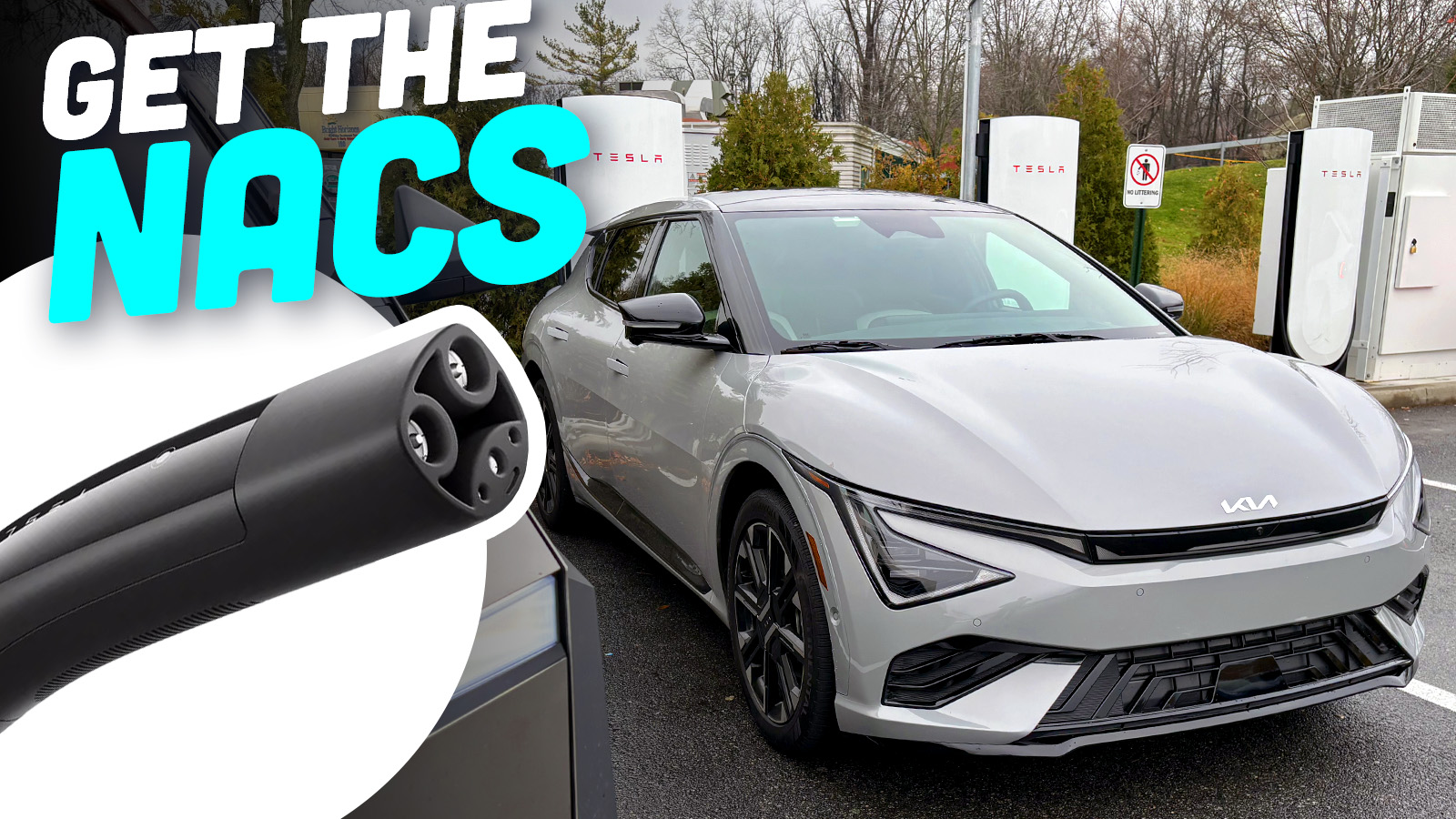
My experience driving non-Tesla EVs has come truly full circle. The last Kia EV6 I had featured the CCS port that all non-Teslas came with as recently as two years ago. Then, Kia announced, access to Tesla’s vaunted Supercharger network was here… with an adapter so the CCS cars could access the NACS-standard charger. I went to pick up the latest Kia EV6 GT-Line last week, and it now features a Tesla-style NACS port. In the center console? An NACS-to-CCS (Level 2) adapter.
This is important. There are two factors to consider when thinking about range. The first, and most obvious, is the battery size and efficiency. That’s the one everyone focuses on and causes anxiety (I am sometimes guilty of this, too), but an equally important factor if you want to travel away from your home is how close you are to a fast charger. It doesn’t really matter if you’ve got 400 miles of range if the nearest charger is 401 miles away.


Depending on the trim, a Kia EV6 can get anywhere from 270 to 319 miles on a charge, making it largely competitive with the other vehicles in its immediate class. Being limited to the CCS chargers, however, was kind of a bummer. There are many stations, and, thankfully, not all of them are Electrify America-level unreliable. However, the Tesla Supercharger network not only performs better in my experience, its chargers are also generally in more convenient areas.
View this post on Instagram
The opening of Tesla’s NACS standard and Superchargers to other automakers, starting with Ford, was a huge win for them and a curious move for Tesla. As automakers build cars that are increasingly competitive (or better than) Tesla’s own cars, the Superchargers were somewhat of a moat around the business. No matter how good a competitive EV was, I couldn’t argue with Tesla owners who said they liked the convenience of the network.
Now that argument is gone.
Using The Tesla Supercharger Was Stupidly Easy
Can a charging port be elegant? The Model S was a bit of a revelation when it was revealed, offering a simpler but no less alluring version of luxury that made the S-Class somehow seem old and stodgy. As that same aesthetic has been applied to other vehicles, I think it’s lost a little bit of its punch. That’s the price of success, I suppose.
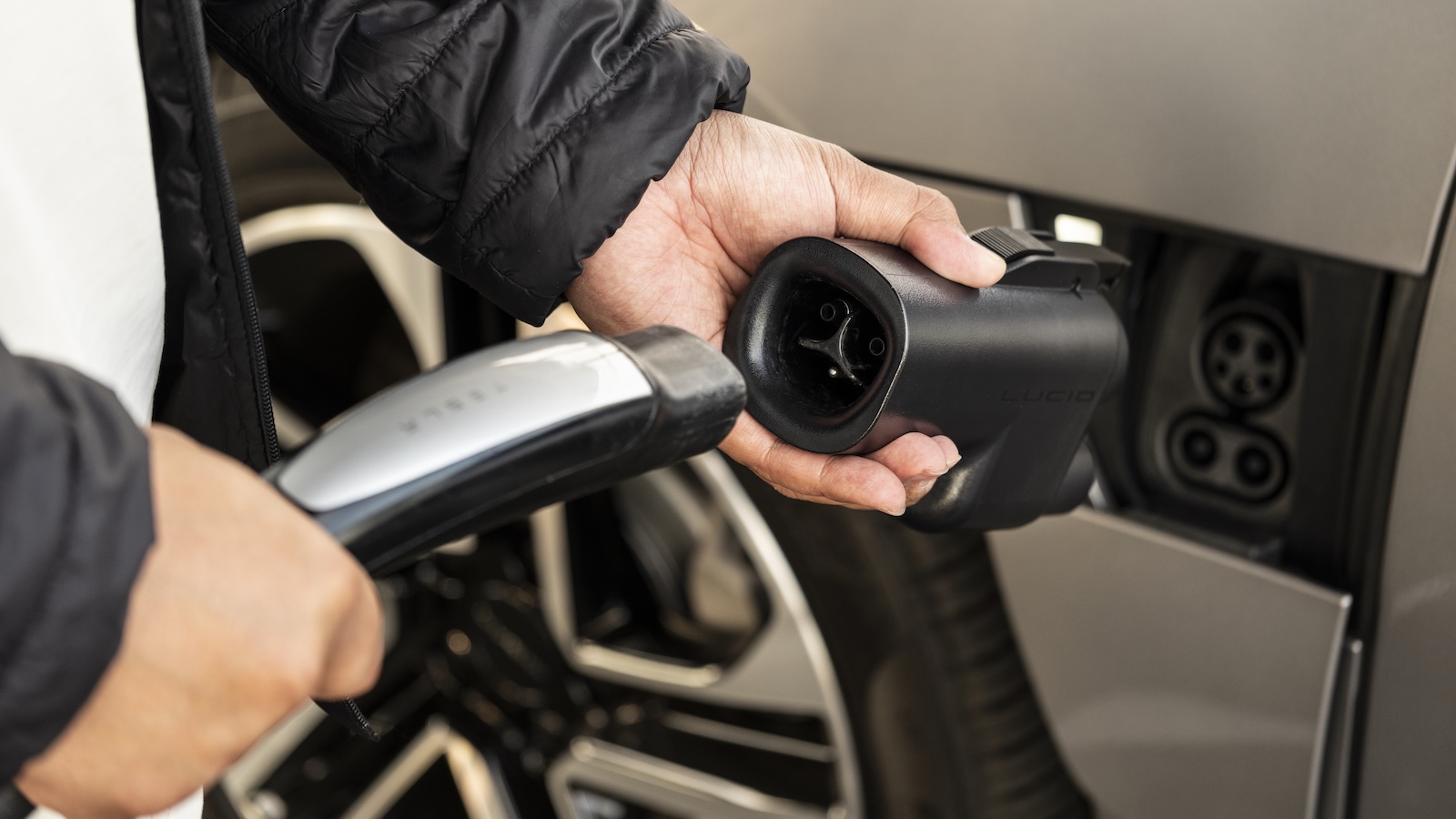
Still, the actual charger itself is cleaner and less bulky than the industrial-feeling CCS port and cable (see the above photo of a Tesla charger plugging into a CCS adapter for a Lucid). Some of this is also cabinet design, but your average CCS fast charger looks like it’s trying to imitate a gas station. The Tesla Superchargers feels like you’re plugging in your spaceship.
I mean, look at this:
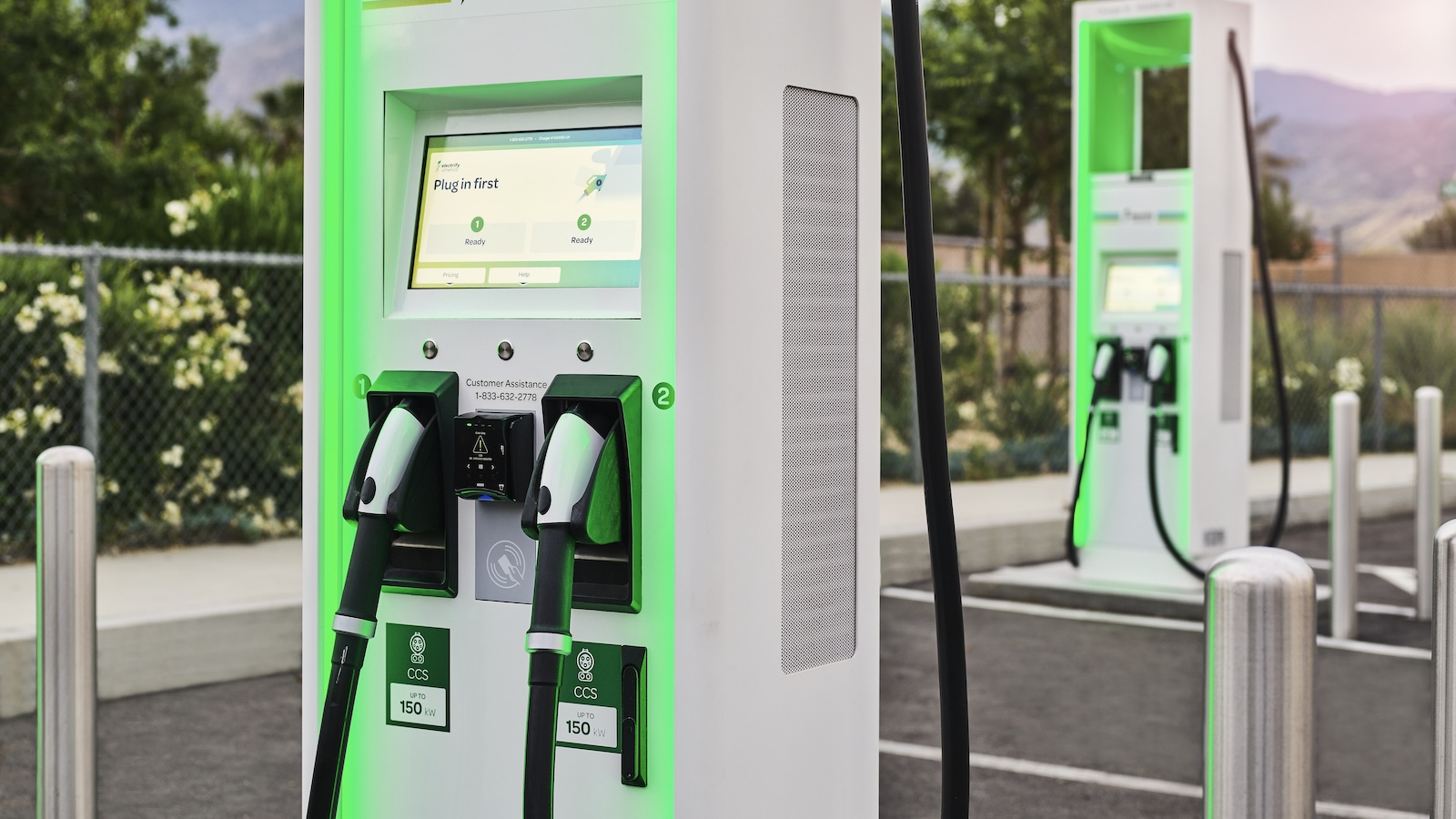
It’s attractive, and I like the lights, but it’s not as clean as this:

The designs have evolved over time, but one key is the lack of screens. Instead, you either charge directly using charge-and-go (charge-and-go is available on many CCS chargers using many different apps, though many are now being consolidated under various automaker-offered apps) or, in my case, I just activated the charger using my Tesla app. No screens necessary.
While this wasn’t as quick as charge-and-go (which Hyundai-Kia calls Plug & Charge and, as noted in the comments below, is live on most vehicles but not our press car), it’s not that onerous either. There’s even a QR code on the side if you need help.

Once I had the app open (and updated my payment method, it’s been a minute), I selected the appropriate cabinet number and plugged in. Admittedly, my experience with EV charging instinctively prepared me for some shenanigans, but none appeared.
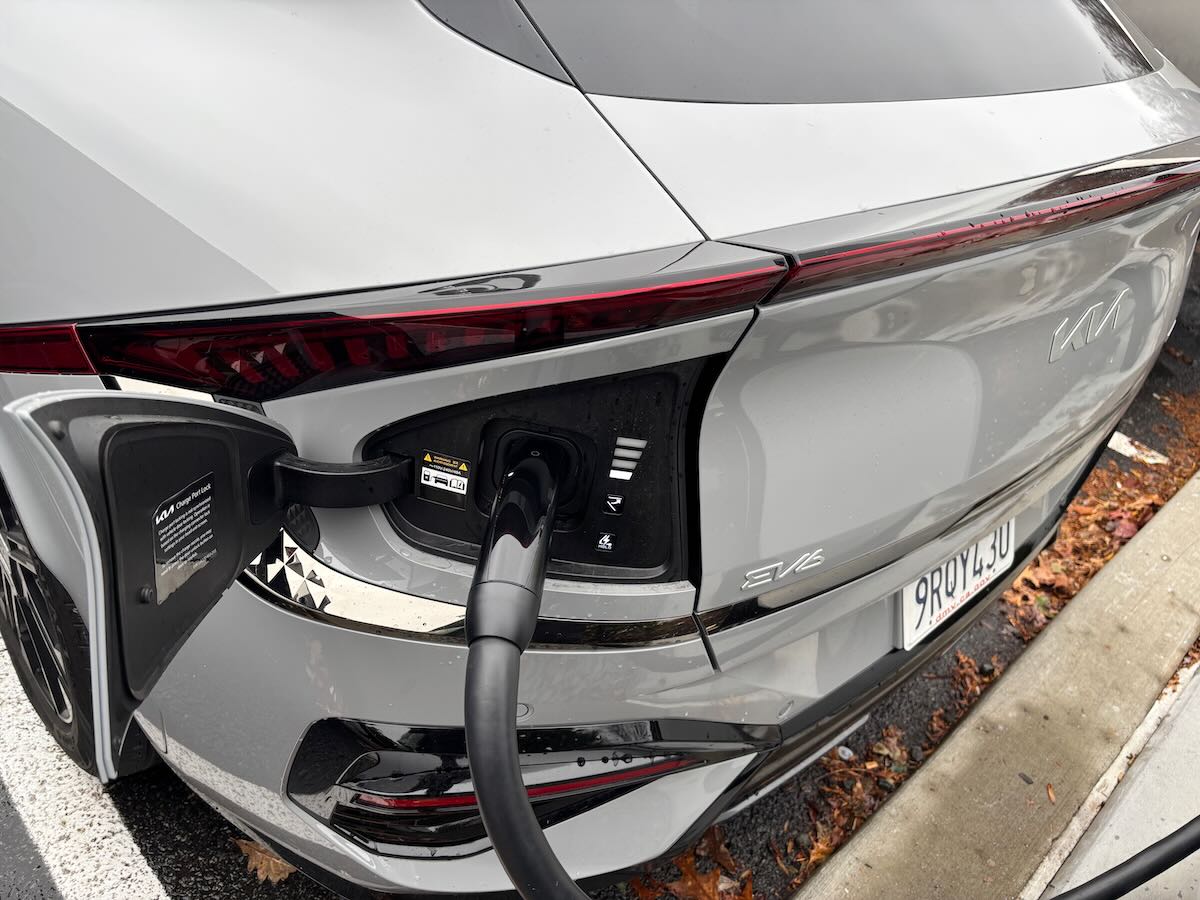
The, uh, insertion process is also much nicer on any NACS charger. There’s no risk of bending pins like Mercedes did with her motorcycle, or arc welding your car to a charger by accident. This isn’t to say that Superchargers have 100% up-time, but when I see a technician at a competitive charger, they’re usually fixing something, whereas here there was a technician in a Cybertruck doing routine maintenance.
My charge state was at about 19% when I pulled in, meaning I had about 50 miles left to go, depending on how heavy I was with my foot. It was also the day before Thanksgiving, which meant I had to make one more trip to the grocery store for the most important ingredient: Beer. Again, this is where Tesla’s Supercharger thrives, as this particular charging station is in the parking lot of a Wegmans grocery store (which has recently added a Shell charging station). By comparison, I once pulled into a charging station I found online only to discover it was the parking lot of a local prison, which I suppose is a win for equitable access, but not a place you just want to hang out.
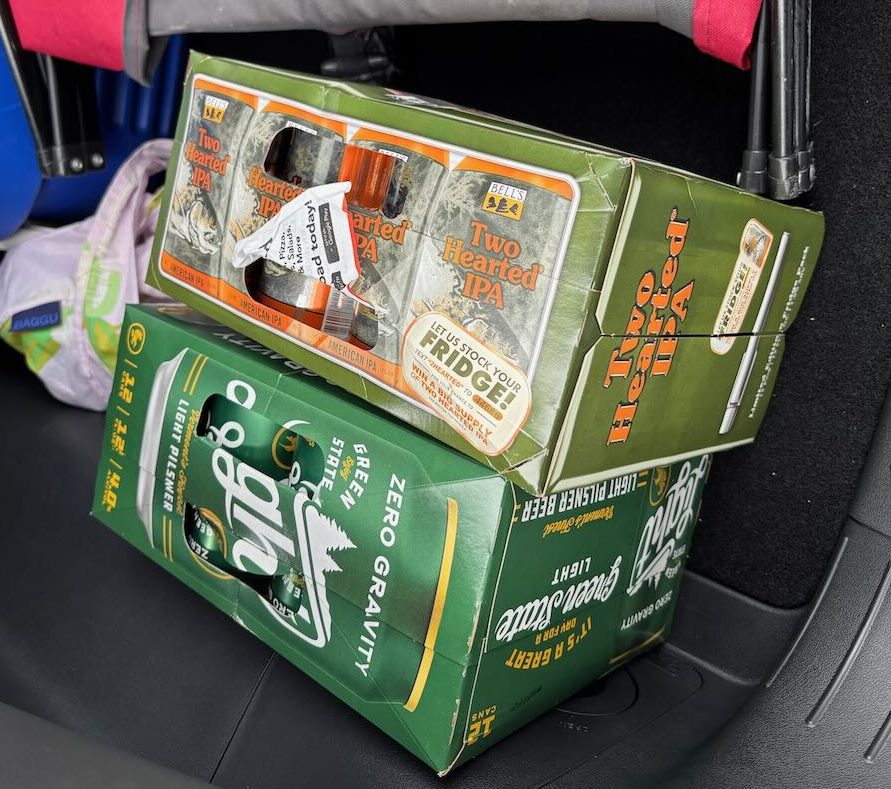
So, off I went to get beer. Because I was returning the car, and because there are chargers at the press fleet, I didn’t need to fill up the car all the way. Whatever I added would be enough to get me there.
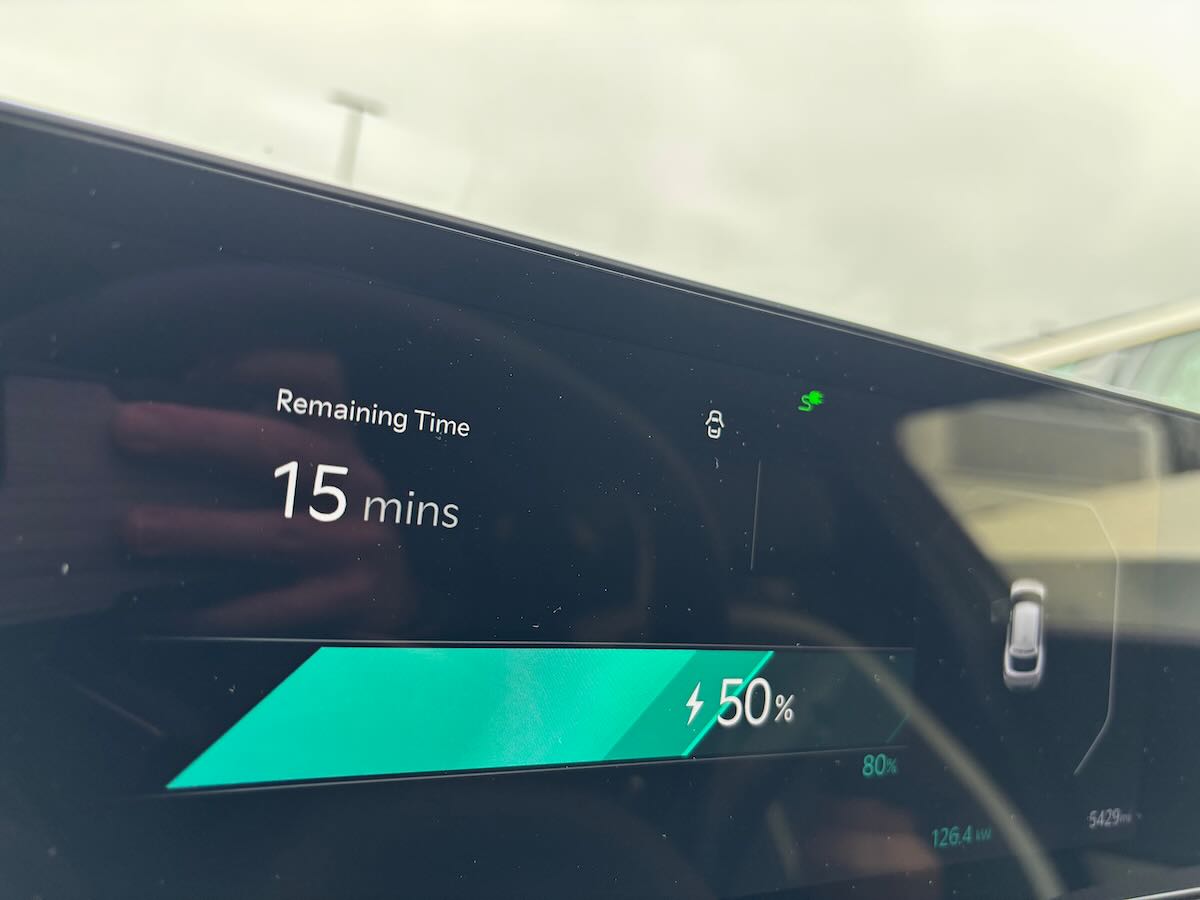
The Kia EV6 added a big chunk of range in the 18 minutes it took me to fight my way through last-minute home chefs trying to get cranberries, baking soda, and the like. In that time, the car added 37.3099 kWh of energy, for a rate of around 124 kWh. According to the car, I could get up to 80% if I waited another 15 minutes, but this was moot, and I’d already spent $18.28 (@ $0.49/kWh) and wasn’t inclined to spend any more (the financial logic of an EV makes a lot less sense if you can’t charge it home).
As noted in the comments below, there are older Tesla Superchargers that will not charge non-Teslas, just as there are newer Tesla Superchargers (V4) that will charge non-Teslas even faster.
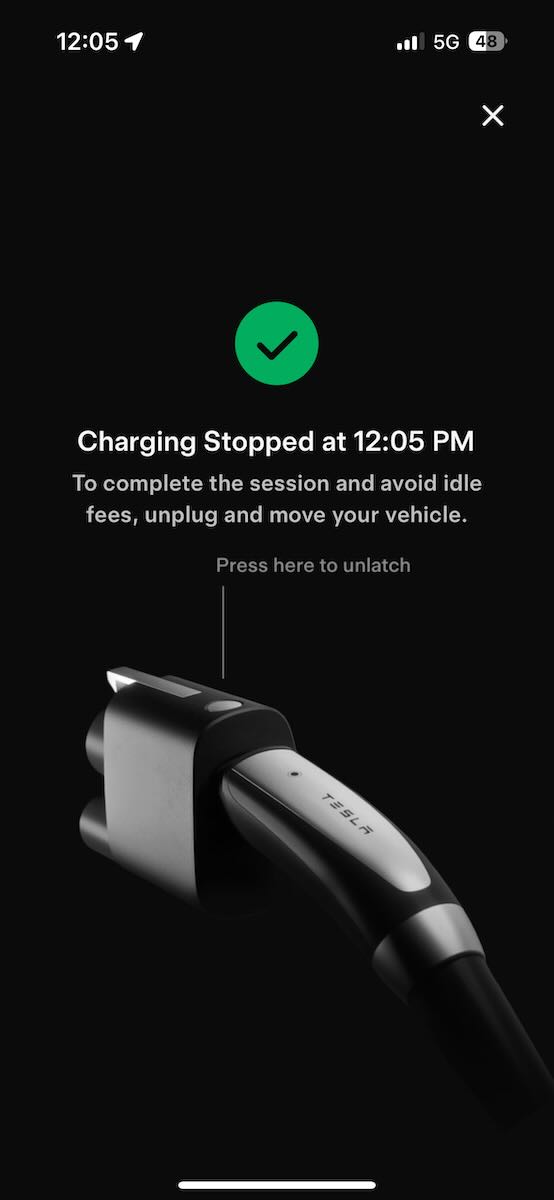
Again, this was all remarkably seamless. For some reason, one of our colleagues at InsideEVs did the same test with an EV9 at the exact same charger (must have needed beer, too) and did have a fumble, so seams do exist.
You No Longer Have To Buy A Tesla, Thanks To Tesla
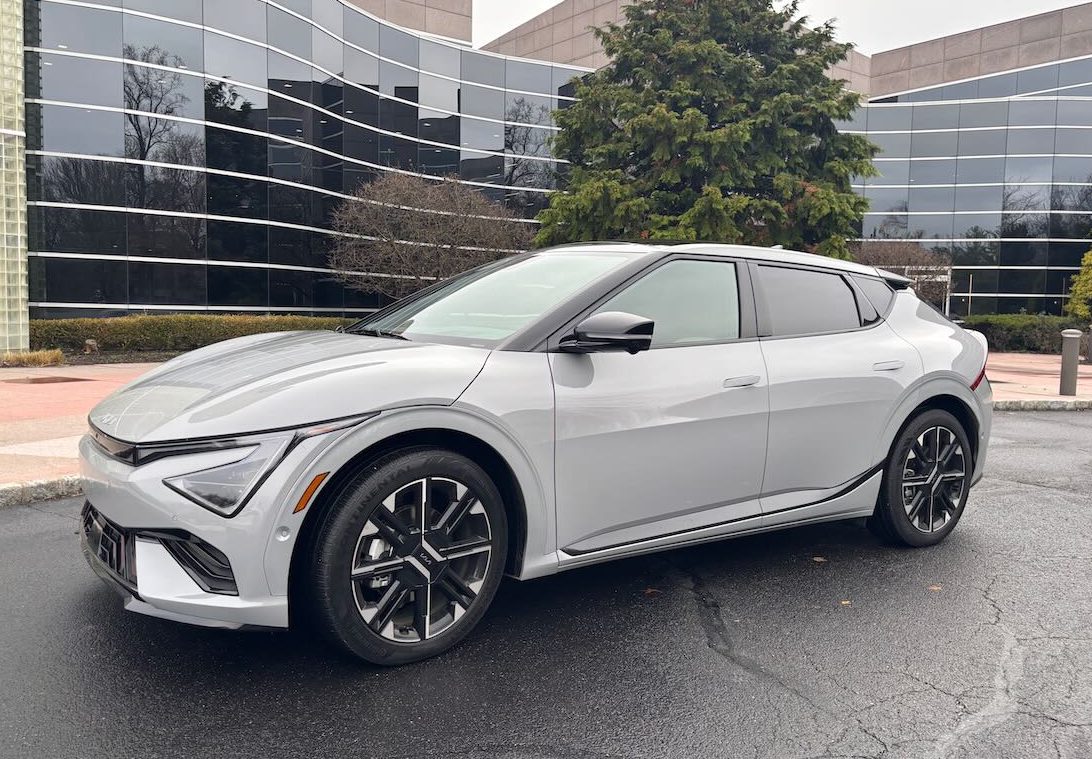
Somewhat counterintuitively, this test exposed how much less necessary it is to buy a Tesla if you’re just looking for something Model Y-sized. More and more electric cars are adopting the NACS standard and gaining access to the network, which suddenly makes them more competitive with… Tesla.
However, Tesla generates profits from its Supercharger network and, lately, it’s reportedly one of the few areas of the business that’s growing. I suspect that when Tesla started making these moves a few years ago, it wasn’t clear that car sales would take such a hit from the CEO’s foray into politics.
When you compare something like the GT-Line with the Model Y Performance, the Tesla’s longer range (307 miles vs. 270 miles) and faster acceleration (3.0 seconds to 60 vs. 5.0 seconds for the Kia) do make for a compelling argument. Additionally, my tested Kia has a higher price of $60,740 compared to $57,490 for the Tesla.
In reality, I don’t love the hyper-minimalism of Tesla’s interiors, and Kia has enough regular incentives that the average buyer has paid a lot less for an EV6. If you’re a believer in FSD, then the Kia isn’t really in the conversation, as HDA 2 is just a good advanced cruise control as opposed to something that, in theory, can drive you wherever you want.
While the outgoing Kia EV6 GT was the superior performer, the EV6 GT-Line is more about aesthetics. It’s also faster than almost any hot hatch from any era, and if performance is your main interest, then the Ioniq 5 N is what you actually want to buy. Between all the vehicles named, I think I’d just get the longest-range, smallest-wheel Hyundai Ioniq 5 I could buy and call it a day.
The key thing is you have choices. NACS is superior to CCS. The Supercharger network is better than any other network I’ve ever tried. Neither of these things is now a barrier to buying a Kia, or any number of other EVs that come with Supercharger access and, soon, will come with an NACS port.
Top graphic image: Matt Hardigree


I miss Wegmans.
Nice choice there Matt! Bells 2 Hearted IPA is a good one.
Reminds me of the local Meijer supercenter in my neighborhood. One side of the parking lot has a 10 stall Tesla charging station. I generally park a couple rows away from that to hopefully avoid door dings etc..
A few times now I’ve walked out of the store behind others that also bought beer. Loading my cart into my truck, I’ve witnessed guys crack open a beer & casually drink it while the EV charges, just scrolling through their phone! Surely a bit risky but IDK, if its just 1 over 10-20 minutes, probably not a big deal.
Location: Wisconsin
I’m pretty sure the first dui isn’t a criminal offense in WI
Correct sir
Still waiting on BMW to get their act together… supposed to be in 2025…
BMW will get their act together sometime between flying cars and viable cold fusion.
So you’re saying there’s a chance?? Yay!
They’re trying to figure out how to make it a subscription.
Yes, it couldn’t have happened to a nicer company /s
I’m all for standardization, but they’re not getting any of my money.
I’m glad the author’s experience is good. My experience charging a non-Tesla on the Tesla network is very mixed and about as reliable as EA. First, I have to use an app. An app requires an internet connection. Where might you have trouble with an internet connection? Roaming in Canada. I haven’t been successful (2 of 2) charging at a Supercharger in Canada. Second, you have to know where you are. You get to a Supercharger but the app doesn’t use location, it starts you off in Africa and you have to navigate the app to the charger you’re using. Third, while the cable is easier to handle than CSS, it is much more likely to overheat.
I really, really hate needing to use an app to charge.
And I hate how everyone praises plug-n-go. Sure, it’s fine when it’s a walled garden operating exclusively for and by a software company who happens to make cars, but I have had nothing but trouble with apps and connectivity with my vehicle-first-software-second legacy automaker products. I haven’t been able to log in to my Chevrolet app in years, due to some screwyness where the dealer attempted to re-create my account when I bought my Bolt, and my Maverick is constantly having issues with the app.
I would argue that the Model S interior design was more a concept-level implementation of tech integration for cars that should have been iterated on a few more times to get it right. Instead, they shipped it as-is and have not meaningfully modified the design in the 15 years since, while everyone else has moved forward and introduced better designs.
I’m also not sure the Model S was ever a true luxury car either. Even back when it launched a lot of people argued with it being compared to a Merc or BMW. Price-wise sure, but features and quality? Eh.
I bet both systems get to true level 5 self-driving at the same time. Which is to say: never.
I am glad my Polestar 2 and other Polestar’s and Volvos can use superchargers now. I had to drive Chicagoland to Indianapolis for a wedding about a month ago and being able to use super chargers were nice they charge fairly quick and seemed reliable. We are most likely taking a road trip down to Florida in it later this month so we will see how that goes.