

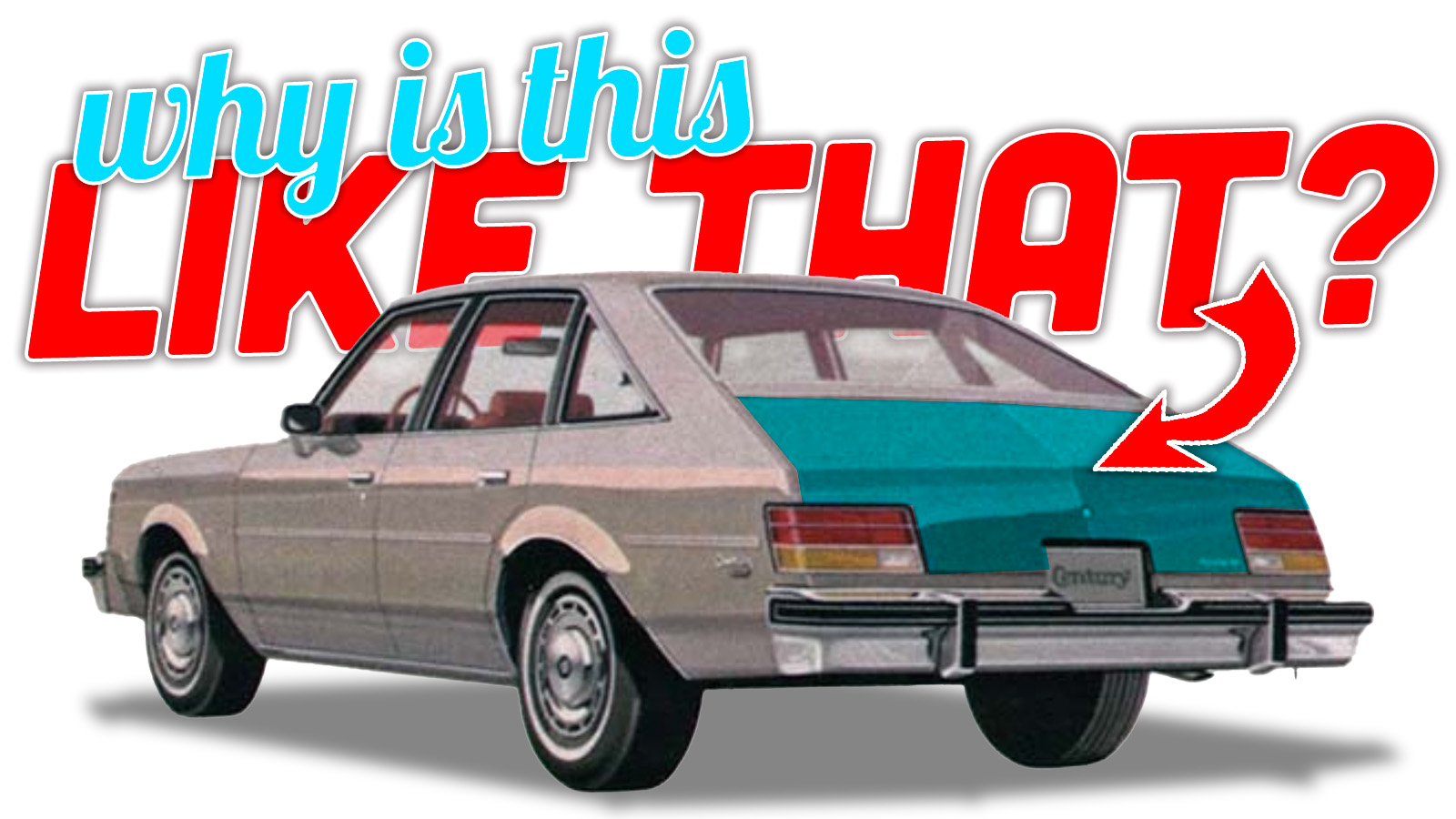
There is something I’ve wondered about for an awful long time. I suspect that any human with the capacity to reason has; it is, as I’ve said many times before, a question a child might ask, but not a childish question. c
This isn’t a problem of the past, though there are certainly many past examples. It’s a question for today, too, as we have popular cars like the Tesla Model 3 with a fastback design, yet with a trunk-like opening instead of a full hatchback. We need to consider why this may be, and see about either making peace with it or giving ourselves unto the unending fight to make this right. There is no in between.


Actually, maybe there is. Maybe there’s a lot of in between. Still, this is worth exploring. I suppose to start we should define what I mean about the difference between a hatch and trunk. Essentially, it’s like this: a hatch opens with the rear window, creating a very large rear door that opens into the overall cabin space of the car, allowing for a very large cargo carrying capacity, especially if the rear seats are folded down.
A trunk, on the other hand, is an opening that does not include the rear window; it provides a smaller opening to the cargo area, and is more of a separate compartment from the overall passenger space of the car. A folding rear seat may allow access from the trunk into the passenger area, though.
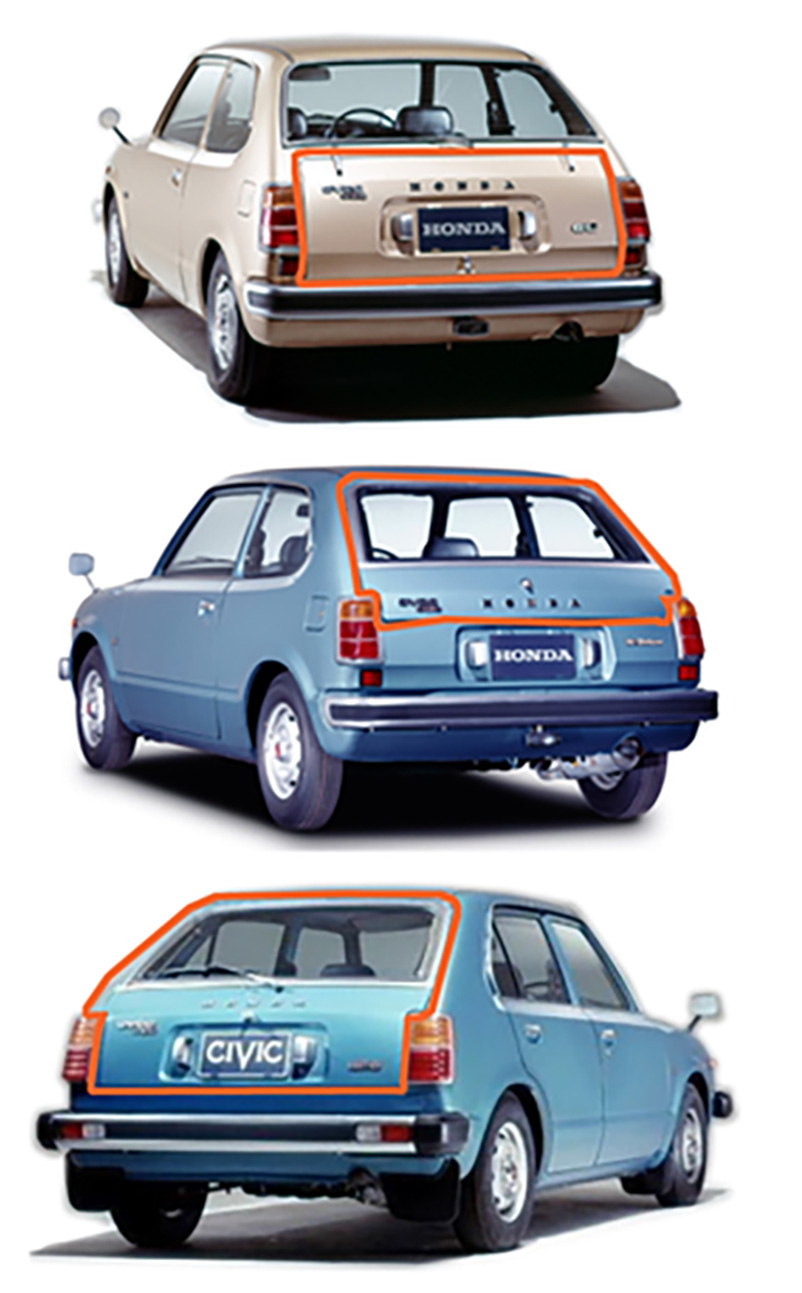
You can see the differences well in these early Honda Civic, which, for reasons that have never been entirely clear to me, was made in trunked format, and two types of hatchback, one that opened down further than the other. All on the same fastback-like body style! These Civics are an example where I really cannot understand the desire or benefit of that little trunk opening; you have a more restricted access to your cargo, you have to bend down awkwardly, and you can’t hold large objects that a hatch would allow. What’s the point?
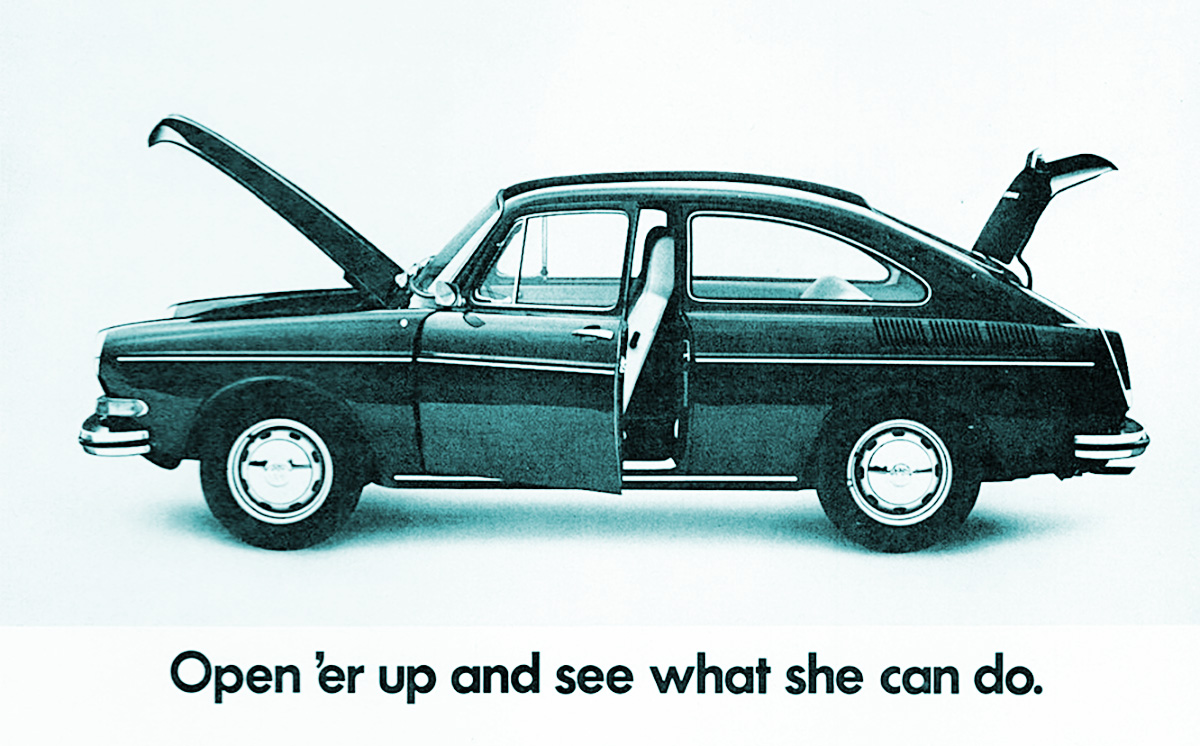
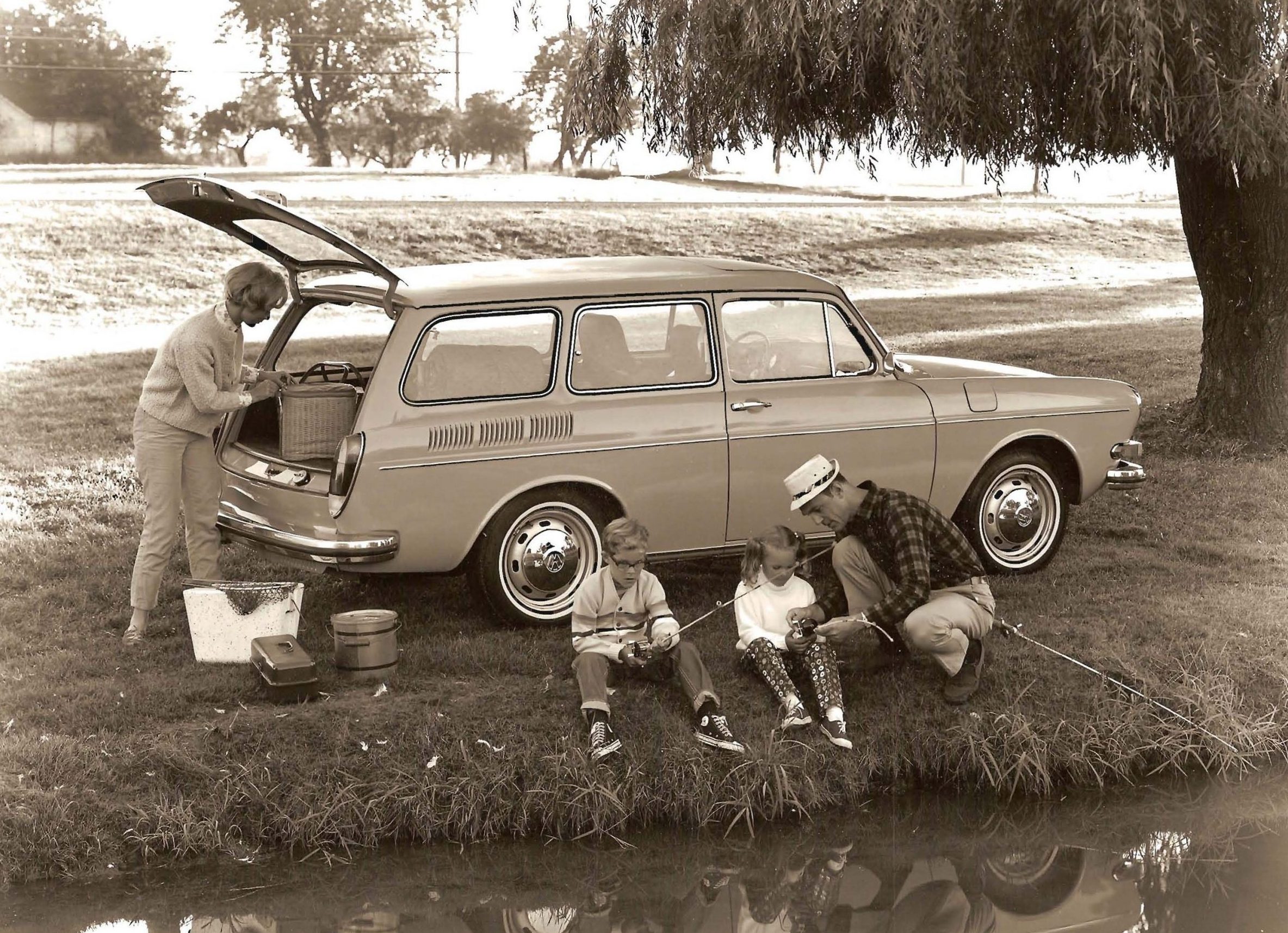
That’s my fundamental issue with all trunk’d fastbacks. They just seem like they’re hamstringing the car’s utility for no real reason. Take Volkswagen’s Type 3 Fastback: the car is already a packaging triumph with trunks front and rear, so didn’t they let the rear window open with the rear decklid? The rear trunk could have been substantially more useful if it were a real hatch. Was this to differentiate it more from the Squareback?
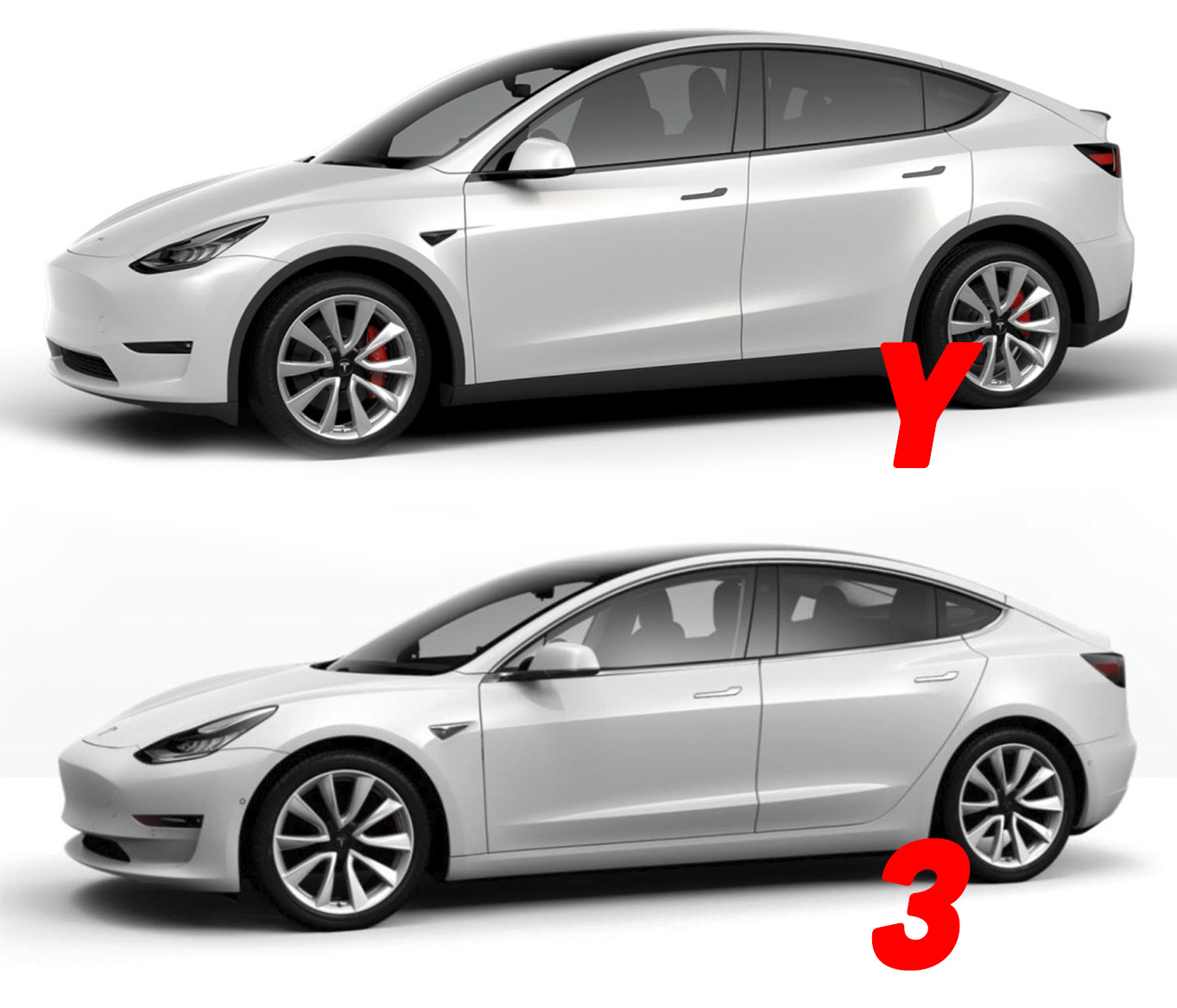
Maybe. I suspect this sort of reasoning is to blame for a lot of fastback-trunk designs. Like the Teslas Y and 3; both share an almost identical rear body slope, but only the Y has a hatch:
The trunk of the 3 opens quite high, essentially as high as a hatch, but the rear window remains in place, so you still have a more restricted opening for cargo:
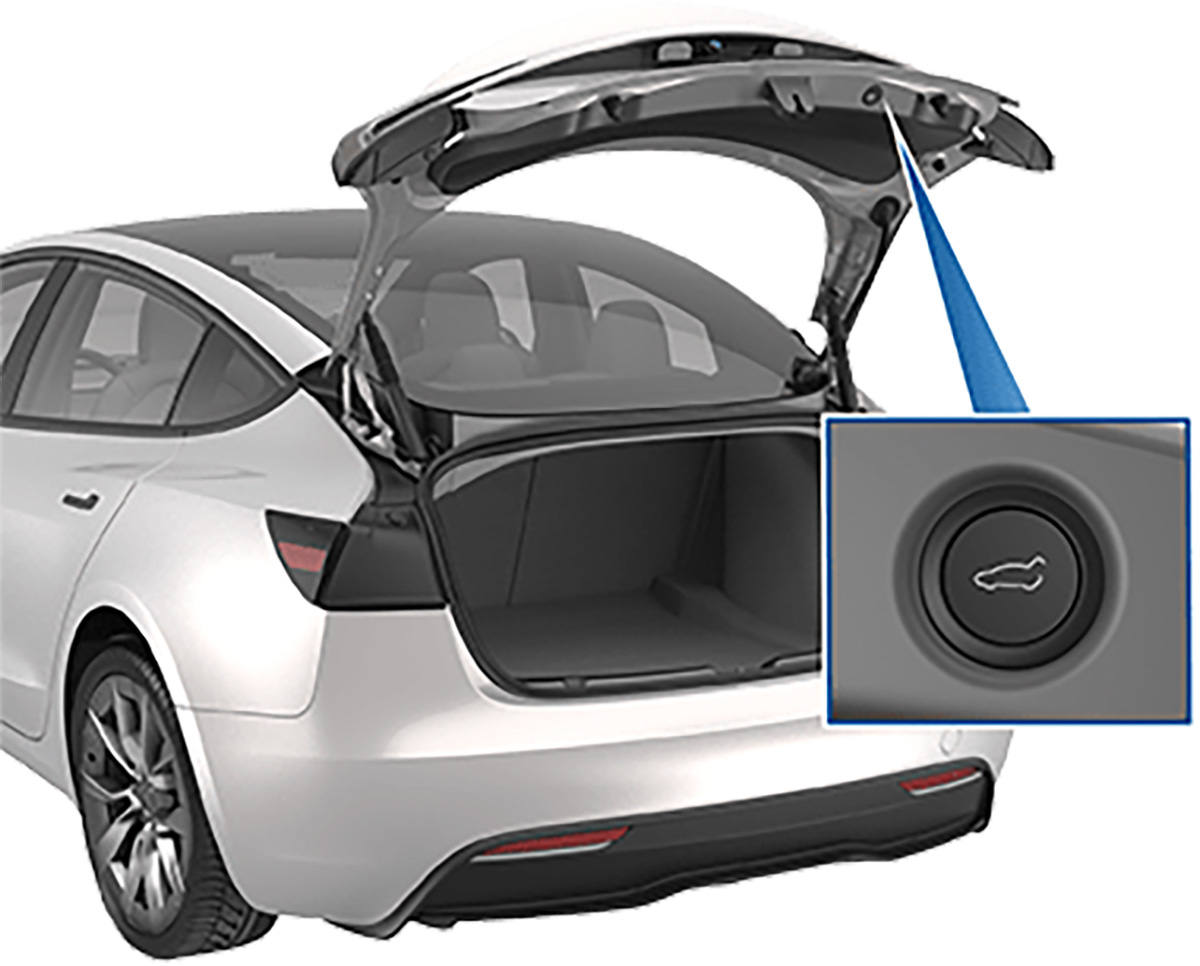
It’s not terrible by any means, but it could have been so much more with a hatch! So much more flexible and useful! So why wasn’t it a hatch to begin with?
Cost-savings could be a reason; it’s more expensive to design a lifting hatch than a simpler trunk lid, and I think that has to be what explains cars like GM’s poorly-received Aeroback cars of the late 1970s:
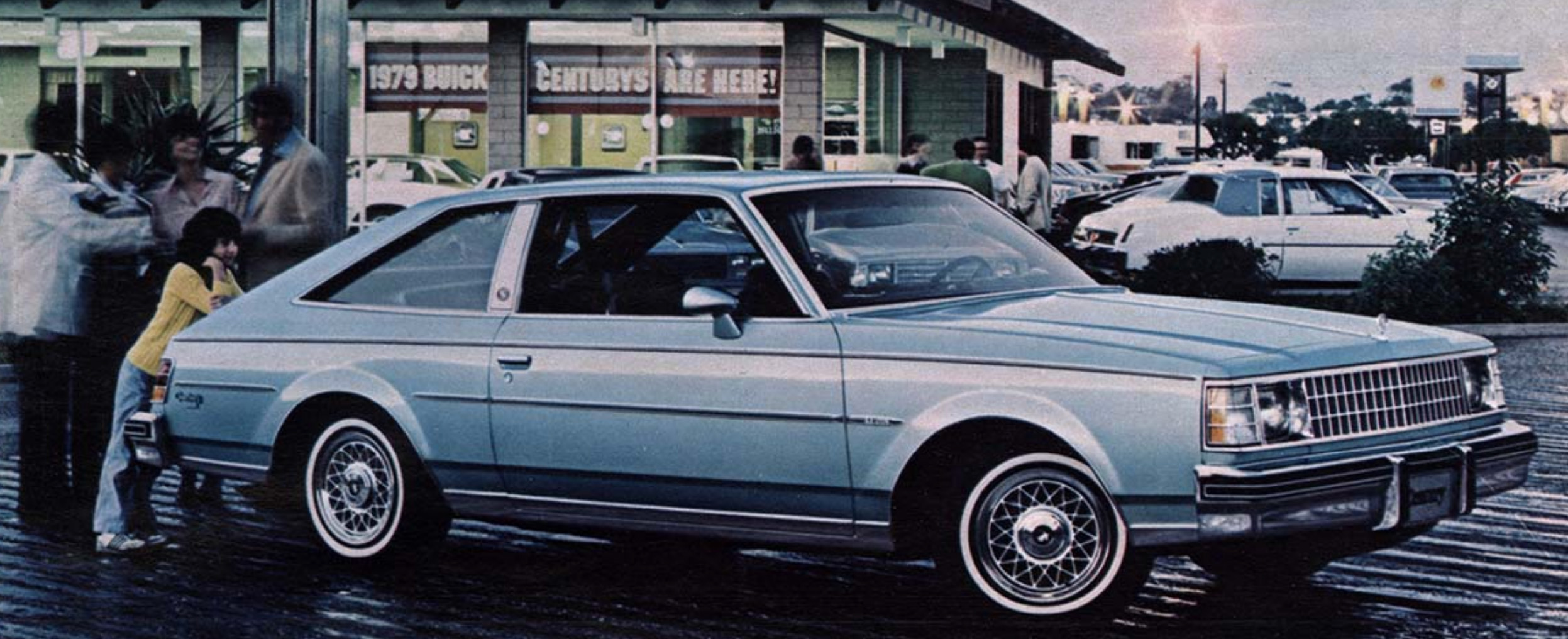
There were Buick Century versions and Oldsmobile Cutlass versions, in two and four-door configurations, and they all had trunk lids that hinged at the beltline, just below the rear window, making loading awkward with this sharp-cornered lid right at face level. Awkward loading, limited space, and for what? A deceptive design? These should have been big hatches!
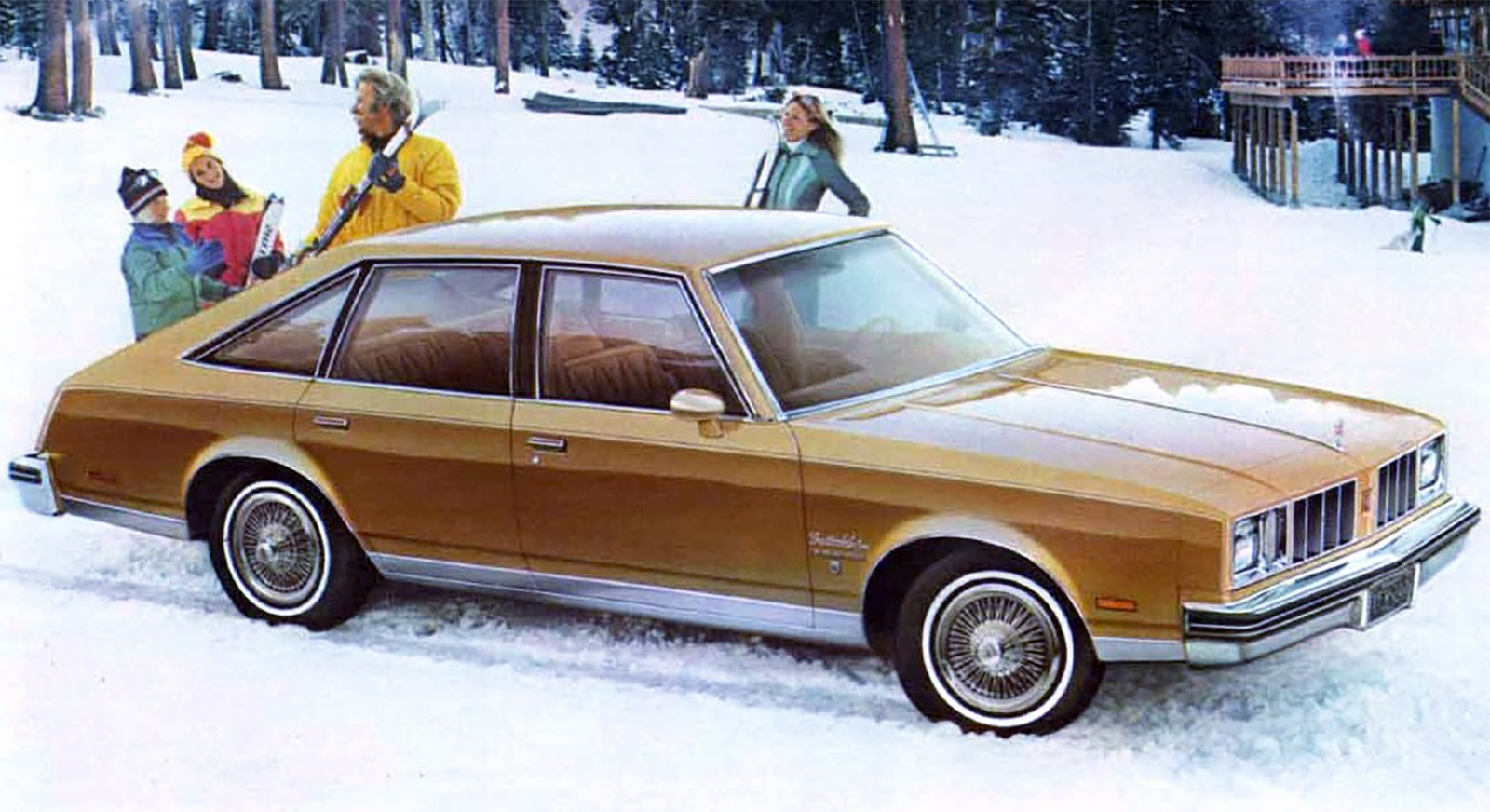
Those people could cram their skis in there way easier if that were a hatchback. Just saying. Oh, and it’s not like GM didn’t know how to make hatchbacks; they had compact ones like the Chevette and slightly bigger ones like the Citation:
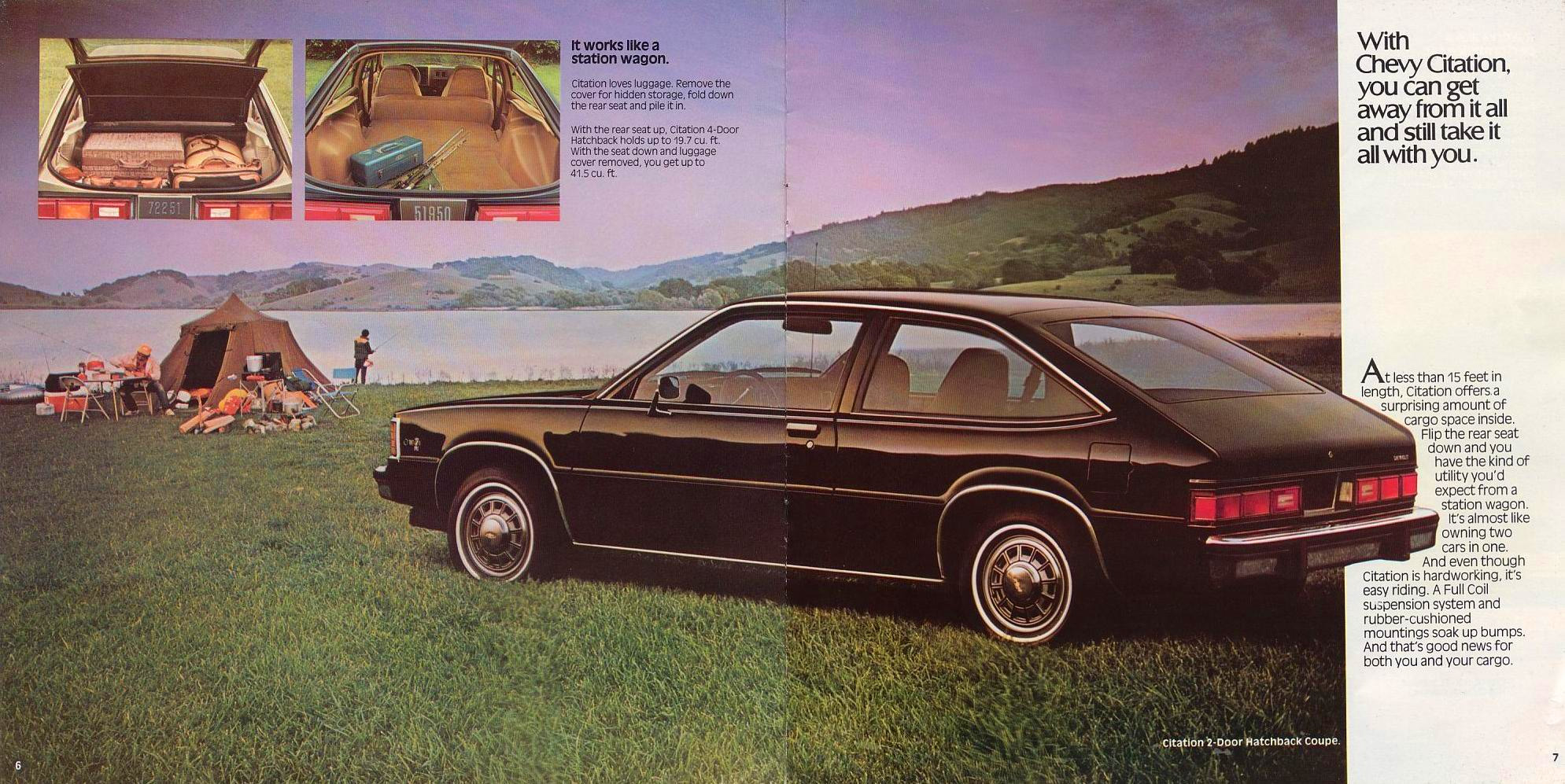
I’ve heard the reason these A-body GMs had no rear hatch was because of GM’s legendary penny-pinching, but that doesn’t explain why the downmarket Citation and Chevette were able to pull it off?
A surprising number of fastback-style cars had options for both hatch or trunk configurations, like the infamous Ford Pinto:
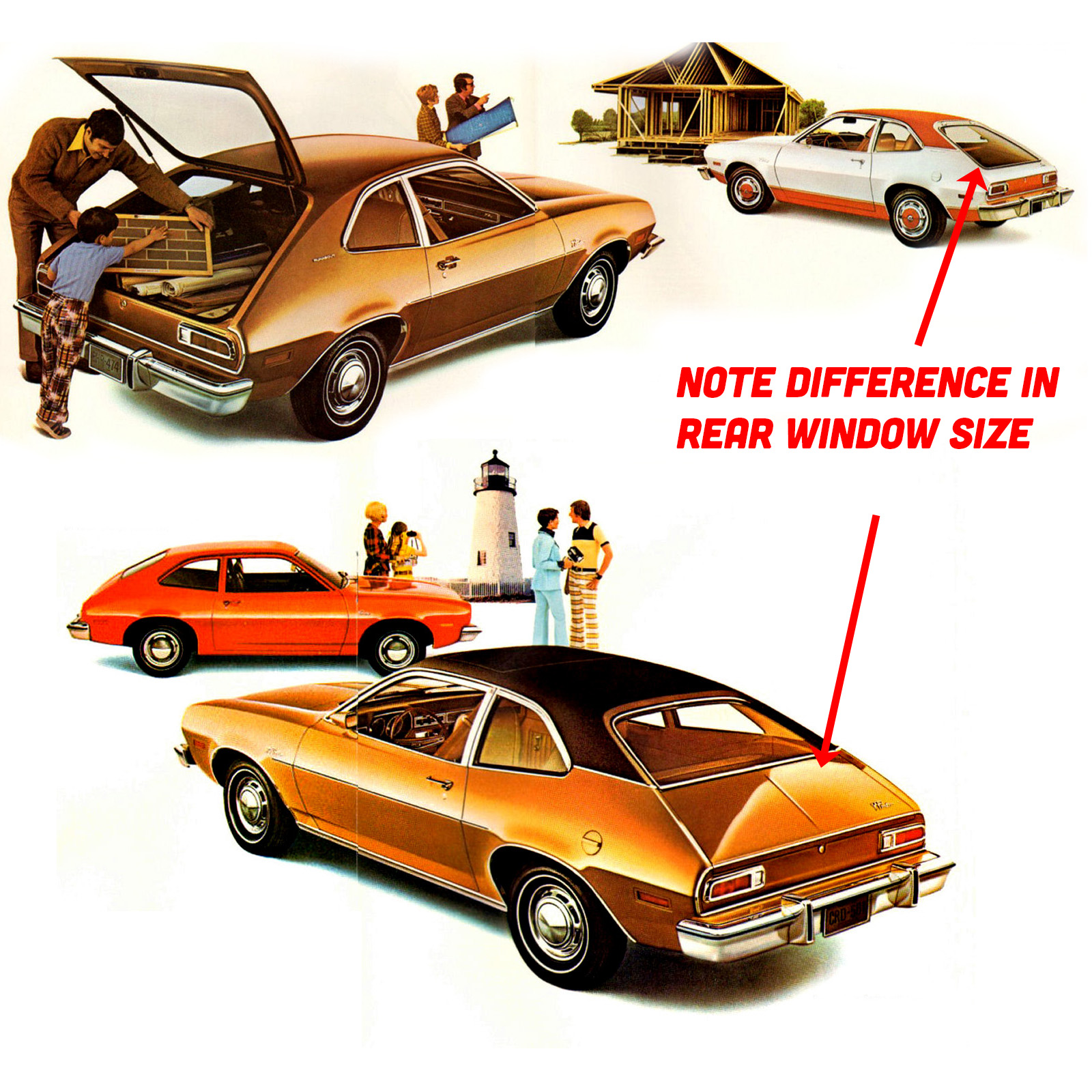
In the case of the Pinto, perhaps the justification for the trunk was that the very large rear window of the hatch left all your stuff on display, and perhaps would entice ne’er-do-wells to try a little smash-and-grab. Maybe, but plenty of hatchbacks avoid this with smaller windows and hinged package shelves, so this still feels like a self-imposed limitation. Why didn’t Ford just offer a rear hatch door with the smaller window? Hinge locations could have remained the same, cargo would still be hidden, but all of the advantages of a hatch could have been retained? And it’d have been cheaper, as the second trunk’d body style wouldn’t have been needed! I just don’t get the point of the trunked design.
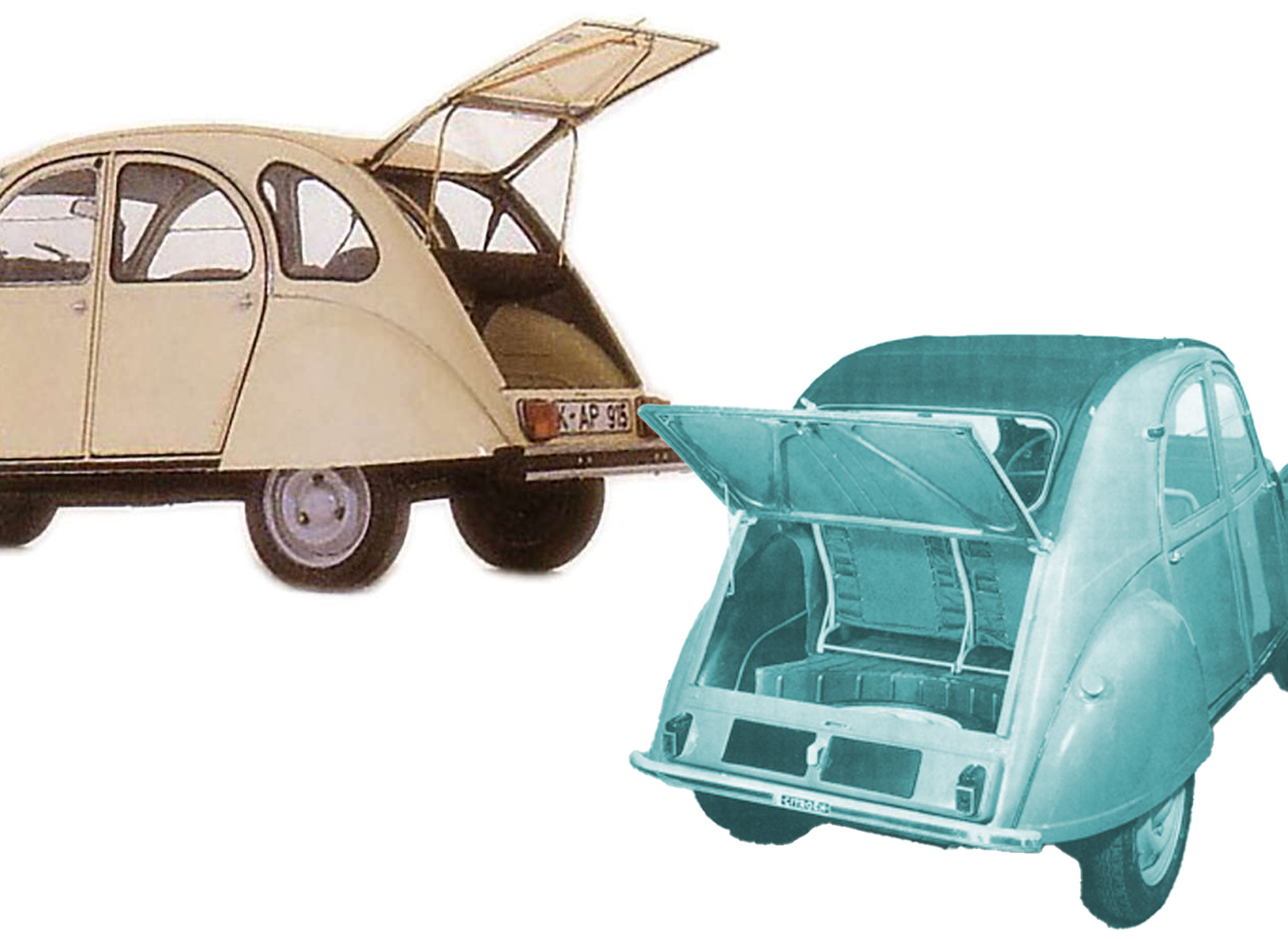
Citröen even had a version of the 2CV that offered a full hatch, called the Mixte, which resembled how the shorter-lived re-bodied, updated and upmarket 2CV-based car, the Dayne, handled its cargo entry. There’s no question the hatchback offered even greater utility than the traditional 2CV trunk, yet it never became standardized. Maybe on a 2CV, with its rear window set into the fabric of the roof, the change was too costly? Again, I don’t really get it.
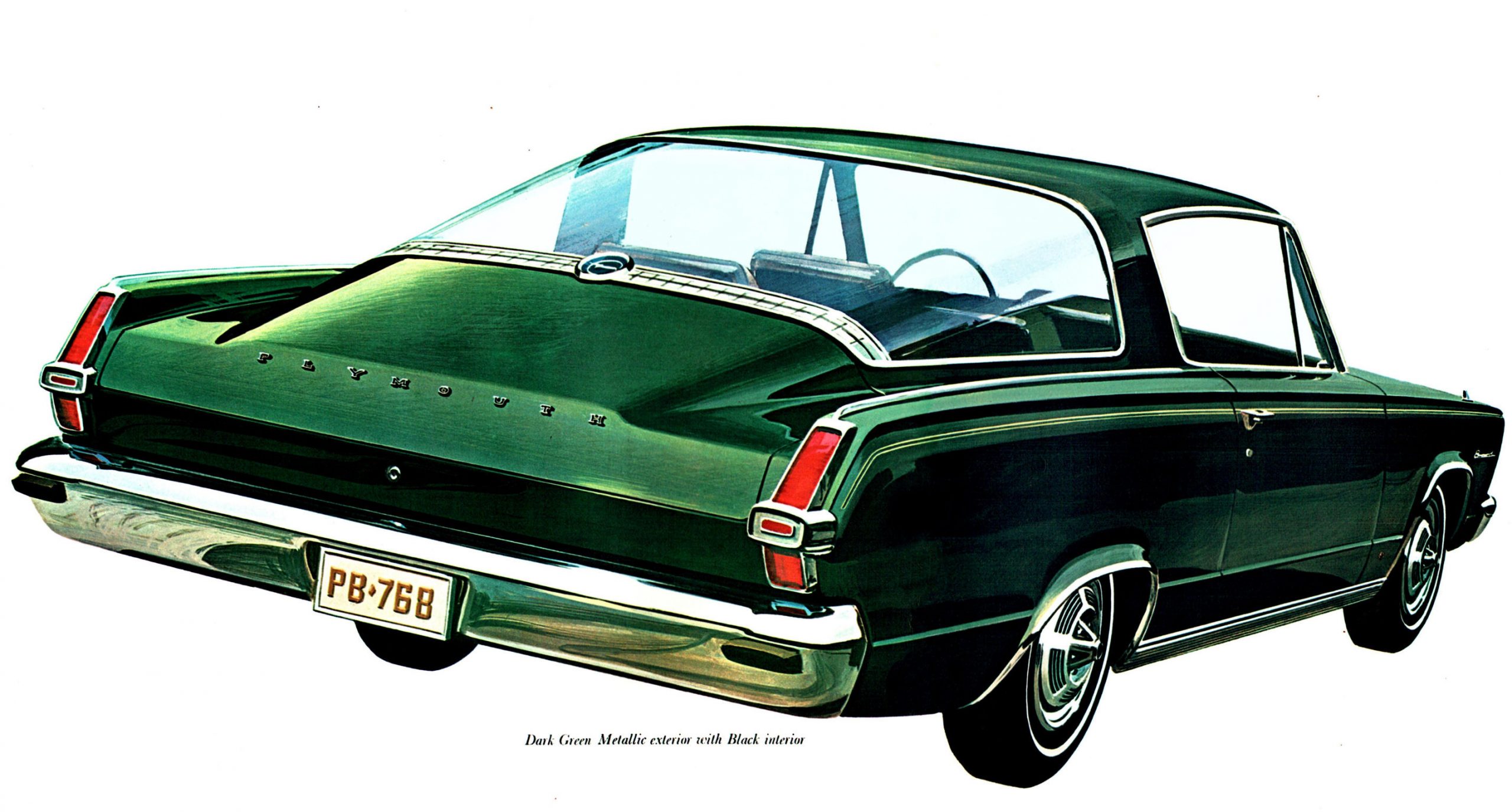
Maybe the only trunked-fastback examples that make sense to me are sporty fastbacks like the Plymouth Barracuda or a Ford Mustang Mach I or similar. In the case of the Barracuda, I can see how getting that huge curved rear window to lift could be a difficult undertaking, and maybe wouldn’t be worth it for a car like this, whose focus really isn’t on flexibility or utility. Even so, a rear-seat pass-through was available, which did allow these to haul some surprisingly big stuff.
Still, overall, I just can’t see the point of a hatchback-shaped car not having a real, window-opens-and-everything hatch. Hatches are just so damn useful! Is this a stigma thing? I wouldn’t be surprised, knowing human nature, but maybe hatches are seen as too down-market, and people would rather sacrifice genuine utility for some inane idea about status? It’d hardly be the first time, I suppose, but still: it’s inane.
Someone help me make sense of why these exist. I need peace.
Top graphic image: GM




In the picture of the light blue Buick Century fastback coupe that kid leaning against the back is disconcertingly (alarmingly, even) reminiscent of those horrid time-out dolls so popular with boomers at American fifties-themed car shows, egad.
I’ll go as far as to say the opposite, that some 3 box sedans/coupes should be hatches as well. Mitsubishi Eclipse was, I think Mazda 6 at some point could be had with a trunk or a hatch with basically the same profile. The car that definitely should have done this is the Gen 5 and Gen 6 Camaros. This would have resolved the small trunk opening problem they had.
I’ve had water drip into the car with a hatchback, never with a trunk lid. They’re also inherently noisier (suspension noise, and all the stuff sliding around in the back). Speakers also don’t sound as good, without that trunk that functions as box for base.
Torch, what are your thoughts on notchback hatchbacks? This was quite a thing for Chrysler in the 80s… The Dodge Lancer and Shadow spring immediately to mind.
Hatches are far superior, but trunks do indeed offer better protection against thieves.
Also, in some intemperate climates, hatches used to be somewhat disliked because opening the hatch exposes the rear seat occupants to the elements. See, for instance, the lengths that Citroën went to with the XM in order to prevent this: a second rear glass was used.
And lastly, as some have already mentioned, rigidity. Both the flagship Tesla Model S and the equivalent Model X have hatches. I am inclined to believe that the Model 3 does not have one for some structural requirement, rather than just market differentiation.
My two cents 🙂
I think there was, at one time, a good reason. Before computer modeling, removing the rear bulkhead and parcel shelf would have had negative effects on structural rigidity. With modern CAD, automakers can put those problems behind them and make rigid hatchbacks.
If they want to. In the US (I can’t speak to other regions) liftback sedans are considered by some to be downmarket. “Real sedans have trunks”, or something like that. Rear bulkheads also reduce cabin noise, and a quiet interior is a sign of luxury.
I think it was the Jaguar XK-E 2+2 that had a side-opening hatchback. It was pretty neat.
I think this is the #1 reason. The extra flexibility comes at the cost of additional flexibility.
On a smaller car, the bigger opening may not be as detrimental to rigidity since the cars are smaller and have less rear overhang, i.e., the distance from where the crossmember would be on the trunked version is only a couple of feet from the rear end of the car. Also, on smaller lighter cars, the need (perceived or real) for a more rigid structure may be lower than on the bigger, more upmarket cars. A buyer of a Chevette or Pinto may be more tolerant to the additional body flex and accompanying squeeks than a buyer of a T-Bird or Monte Carlo.
As a Mustang owner, I like fastbacks just fine. It’s arguably one of things that the SN95 did really well – its design nicely splits the difference between a classical trunk and an extreme fastback; you can actually fairly easily get stuff in and out but still have an appropriately sporty raked rear window.
But I do confess I did like the fox body hatchbacks of the 80s too. Definitely channeled the European design ethos that Jack Telnack was after. And in a practical way, unlike say metric wheels.
As a former Mustang owner, a hatch would have helped a lot in moving lawn mowers and air conditioning units. I mean, I always got them to fit though the door, but a hatch would have made it a lot easier
No.
No they do not make any sense.
Conversely the C4 Corvette has a hatchback but doesn’t have a normal trunk opening, so that’s not very practical either due to the liftover height and distance.
How does this article not include the Grand Prix 2+2? The trunk is a mail slot. Although now that I think about it, racing homologation specials get a pass on anything that reduces practicality.
Agree on the Grand Prix…esp. as the Mustang Mach 1 Torch references is clearly the ’71-’73 edition.
Corvette reference to the C2 and C3 – which had no exterior trunk access at all!
My Triumph GT6 is a fastback with a hatchback. I love it.
My only complaint about the design is that the curvature of the rear roof area is too steep and it hurts the car’s ultimate aerodynamic capability. Still, a 0.32 Cd value for the ADU1B LeMans racecar that helped inspire it is not bad given the small frontal area(the CdA value overall isn’t much more than a GM EV1), and a stock GT6 can be made to achieve the same as the race car when removing the trim pieces and rain gutters while adding a LeMans style bonnet from Jigsaw Racing.
Which reminds me of the Jaguar E-Type coupe hatch, which was hinged on the side like a door rather than on the roof.
I recently realized the original BMC Mini’s had trunks. The new MINI’s are hatchbacks.
I always thought it was sort of a nice touch that the newer MINI Convertibles have the style fold-down boot lid as the classic Minis
Some specialists such as Hooper and Radford retrofitted Minis with hatchbacks with the most famous example being one commissioned by Ringo Starr so he could transport his drum kit: https://blogger.googleusercontent.com/img/b/R29vZ2xl/AVvXsEjd5HlciiOkZwswzmP67Lhhf4V8QUdfvvU8YPU3ykxsObpAD7EH3wan-BItlAfa9dflvCwrwi4hHUfYp-RYcznglCH7WleHRcYwsXmVlEOmhMtBNsVPtqeyGau7Dm2STC-n6rga7VnSbQyh/w393-h418/LLO+836D+Ringo+Starr+Mini+3.png
Fun fact: at one point that Mini was owned by Geri Halliwell of the Spice Girls (she may actually still own it.)
I am surprised, shocked and dismayed that Torch seems to take the position in this post that not making sense is a bad thing.
I believe the applicable standard is whether it makes sense to him.
As the owner of a fastback-without-hatchback Austin Allegro I’ll note that in this case it was apparently to avoid competition with the Austin Maxi. I guess that… worked?
Torsional rigidity.
In the case of the Pinto and Civic, the trunk model was the cheapskate option. If you wanted a hatch, it cost extra.
Apparently the Pinto hatchback’s big back window wasn’t a problem, the original version had a smaller one that lasted half a model year before being embiggened for ’73 and never brought back, but starting in ’77 you could have an all-glass hatch.
Sort of, depending on how you spin it – they do generally look sleeker and more stylish than a notchback, so you can say for appearance sake, some people do still like having their cargo separated from the passenger area, and maybe there’s some advantages in structural rigidity to not having such a big opening.
But, in general, no, I’m of the opinion that anything shaped like a hatchback should just be a hatchback, because hatches are useful and getting a car so close to having one and not doing it is just a missed opportunity. Ultimately, the other issues are obviously solvable and have been addressed on many, many cars over the decades
The GM Aerobacks were not inspired by hatchbacks in the first place.
They were a stylistic reference to the GM Fastback sedans of 1941-1952 – none of which were hatchbacks either.
Unlike Kaiser, which produced cars which looked like sedans, but were hatchbacks (1949-1953 Traveler and Vagabond)
Because in the 80s, hatchbacks were considered utilitarian, and therefore for cheaper/downscale cars.
Meanwhile you omitted reference to a car which has both: 2008-2015 2nd Gen Skoda Superb sedan was equipped with the “Twin Door” which could function as both a trunklid or as a hatchback.
Yeah, and the Kaisers were just because the company couldn’t afford to develop another body besides their existing sedan, so they were trying to squeeze as many variations out of the same body shell as they could, the Traveler/Vagabond was really an attempt to grab some of the station wagon market share by at least having a big rear tailgate opening if they couldn’t have the other wagon features.
Yeah, history is important here. While there were a few scattered precursors, the modern idea of a “hatchback” didn’t really exist until the 1965 Renault 16. So the VW Type 3, for example, which originated earlier, didn’t have a precedent to follow, and, well, I guess VW wasn’t imaginative enough.
There is a class-consciousness at play, too, with larger or more expensive cars like the GM Aerobacks or the Lancia Beta. They might have made more sense with hatches, but it would have put them on a competitive footing with cars with a more utilitarian or downscale image. Look at the success rate of large, expensive hatchbacks, especially in the US, but even to some extent in Europe: The Rover SD1, the Ford/Merkur Scorpio, the Saab 9000, even the last Buick Regal. To weirdos like us, the hatch utility might add to their appeal, but all of these cars faced varying degrees of headwinds in the marketplace, and eventually reverted to more conservative forms, if they survived at all.
No
I have actually asked some of my friends who work at Tesla about the 3. Apparently it was supposed to be a hatch, but it limited rear visibility – not a strong point of the car to start with. Basically, it was packaging. With the Y’s taller roof, it became possible. I’m paraphrasing, I can get better info if necessary.
Also, we had a four door Olds Cutlass just like the one pictured in the article, other than different wheels. Rear windows didn’t roll down. No AC. And I never did understand as a kid why it wasn’t a hatch like the Citation.
I thought about a model 3 but didn’t even drive it because I hate a trunk that you have to push your stuff in, instead of dropping it in. Unfortunately, that’s most trunks now
Spoken like a man who doesn’t have a bad back.
I thought the issue was headroom – The crossmember for a hatch landed where a rear-occupants head would be, so…..