


Remember when Dodge said the Durango was going all-Hemi? It turns out that was short-lived. For 2026, the 3.6-liter Pentastar V6 makes a return on the Durango GT, a move that simply makes sense. Sure, it might be an engine that basically dates back to the Great Recession, and yes, a replacement for the V6 has already been unveiled in the updated Grand Cherokee, but you know what? It’s not time for the Pentastar to die. It’s simply too good at what it does, and nobody acknowledges it for that.
While the 5.7-liter V8 is great for towing, it’s not so great at the pumps. Opting for the Pentastar in a Durango boosts its combined fuel economy by four miles per gallon, or 23.5 percent. That’s a lot of money kept in drivers’ pockets over the life of a vehicle, and that’s before we get into the lower starting price of the V6 model. The all-wheel-drive V6 is two grand cheaper than the all-wheel-drive V8, while the rear-wheel-drive V6 Durango is another $2,000 cheaper still at $40,990 including freight. Plus, the Pentastar is an engine with history. It was a huge reset for Chrysler and has proven itself to be a total success, even if some of the online discourse doesn’t make that obvious.


Back in the late 2000s, Chrysler’s lineup of V6 engines was a mess. There was the 2.7-liter quad-cam LH engine, the 3.3-liter V6, the 3.5-liter single-overhead-cam V6, the 3.7-liter PowerTech V6, the 3.8-liter V6, and the four-liter single-overhead-cam V6. That’s too many V6s, especially since power outputs were fairly tightly grouped. The solution? Rationalization. A single V6 engine would replace all six, and would have to be compact enough for the minivans yet durable enough for half-ton pickup trucks. At the 2009 Detroit Auto Show, Chrysler unveiled its all-in-one solution: The Pentastar.
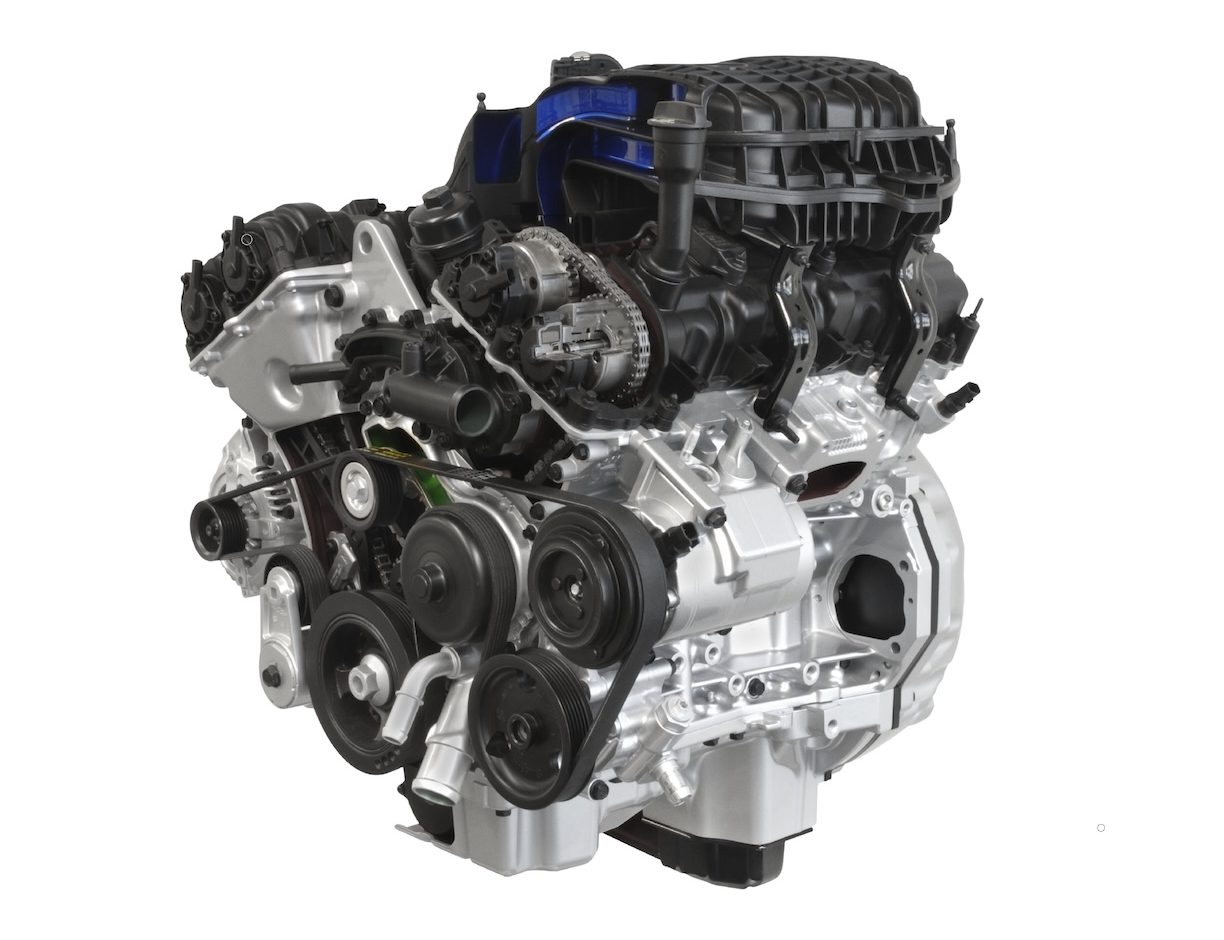
Right off the rip, it was an all-aluminum oversquare 60-degree V6 with 3.6 liters of displacement. It got quad cams, variable valve timing, 24 valves, and 10.2:1 compression, and was designed to run on regular 87-octane gasoline or an E85 ethanol blend. First installed in 2011 model year sedans, minivans, and large SUVs, it kicked out between 283 and 305 horsepower, one of the first Domestic V6s to cross the 300-horsepower barrier.
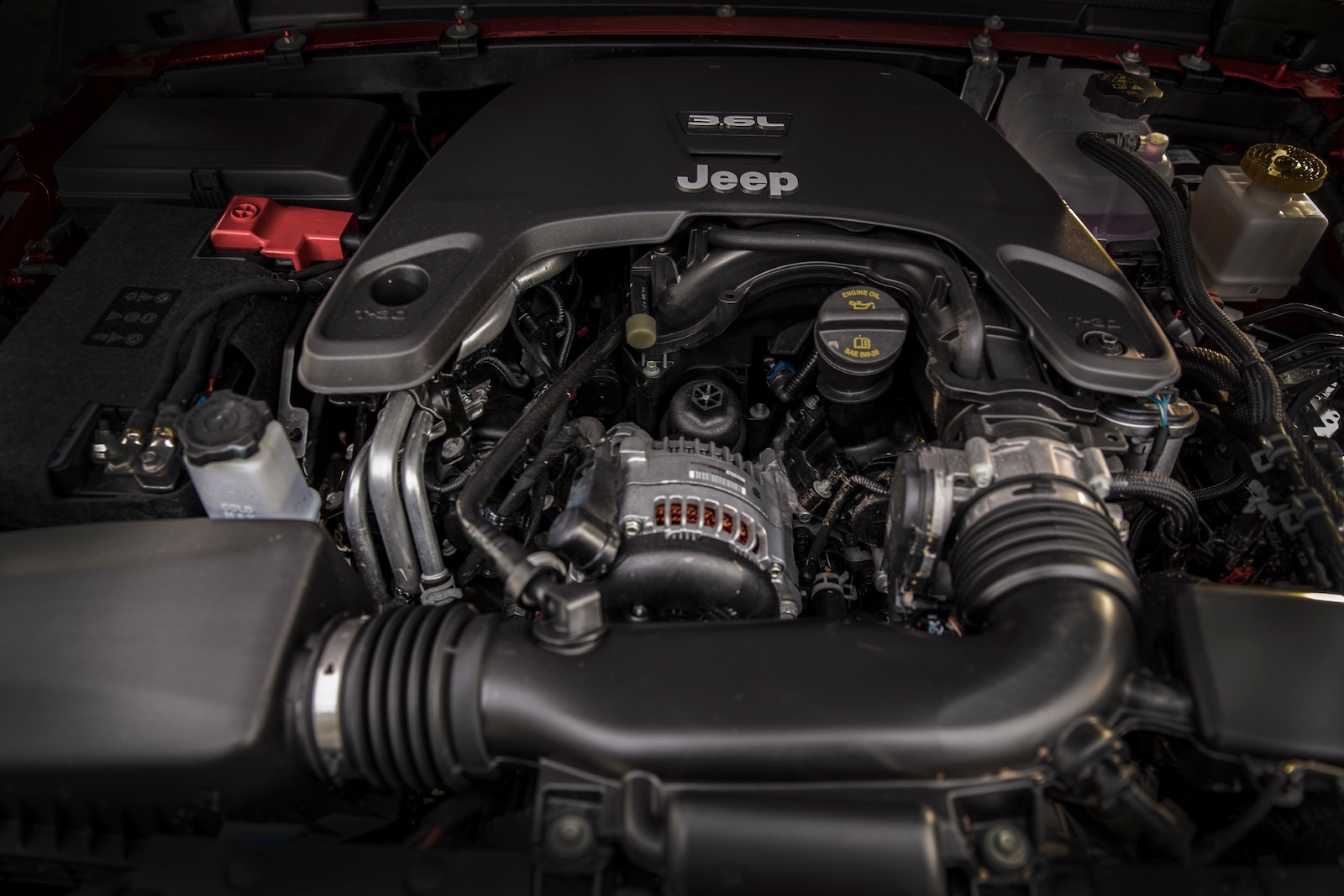
The Pentastar quickly found its way into just about everything with a V6, and although promised forced induction variants never materialized, Chrysler didn’t stop tweaking it. A 3.2-liter version with 10.7:1 compression and 271 horsepower found its way into the KL Jeep Cherokee and only the KL Jeep Cherokee, but the big upgrade came in 2016. Chrysler’s engineers bumped the compression ratio up to 11.3:1, added two-stage variable valve lift and new valve springs, reworked the variable valve timing and exhaust gas recirculation systems, and revised the fuel injectors and ignition coils.

This revised Pentastar is still in use to this day, and thanks to the upcoming Ram 1500 REV range-extender hybrid pickup truck, it should continue to see use for a while – even with the advent of the new Hurricane 4 two-liter turbocharged four-banger. Why? Because it’s proven technology. You know what you’re going to get.
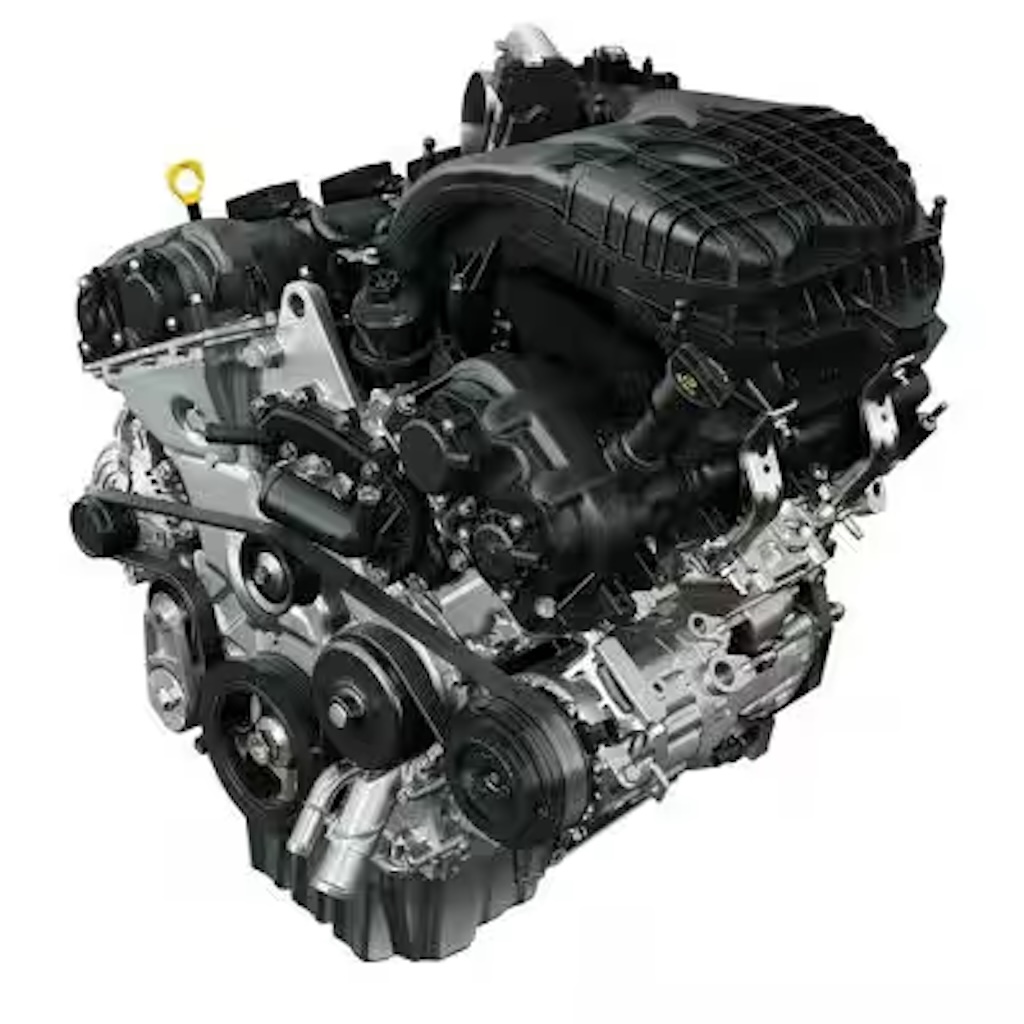
Good as it is, the Pentastar hasn’t been flawless. Early examples had some issues with residual sand in castings gumming up cooling and oiling systems, and it took Chrysler a few years to figure out the left bank cylinder heads. In addition, some folks have experienced oil cooler leaks which are a pain given the cooler’s location in the valley of the engine, and a number of owners report accelerated valvetrain wear making itself known by starting a top-end tick. If that sounds like a lot of complaints about the Pentastar, keep in mind the production numbers of this engine are simply astronomical. In February of 2019, Chrysler built its 10 millionth Pentastar. Let that sink in.
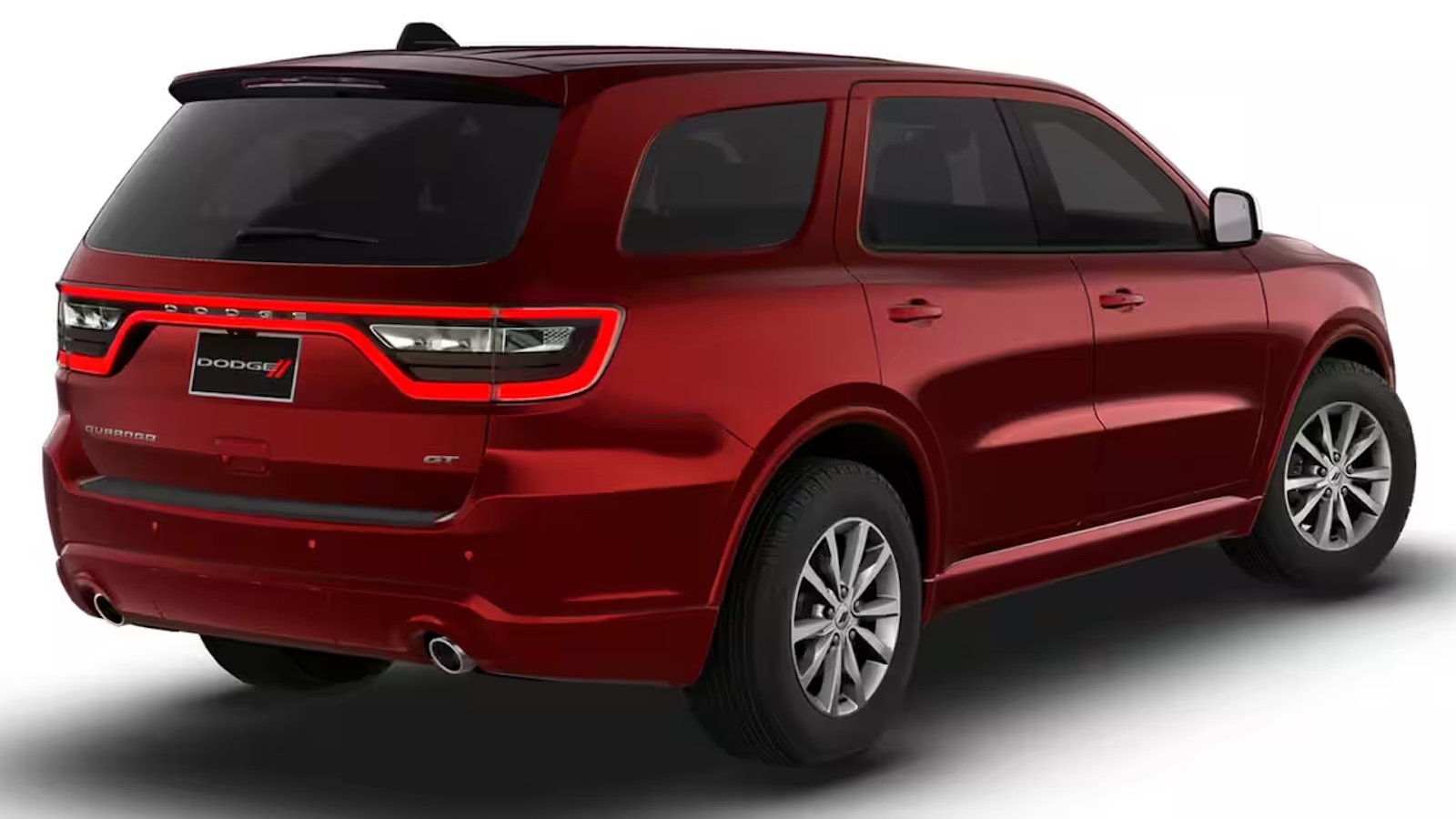
What we have here is a powerful-enough, stout-enough V6 that makes good power; replaced a whole roster of largely mediocre engines; and is still competitive roughly 15 years after it first went on sale. It’s done moon mileage in Grand Caravan taxi cabs, provided reasonable economy in half-ton Rams, and made the Dodge Journey at least 72.5 percent better. The Pentastar might not win drag races, and it might not get a whole lot of respect, but it’s generally a workhorse, a relatively unsung engine getting millions of drivers to work every morning.
Top graphic image: Dodge


My wife’s Grand Cherokee has the 3.6 PSU and it has been good to us. It won’t set your hair on fire but has plenty of power to move her Jeep even when towing our boat. I towed my Miata on a U haul trailer 330 miles and averaged 17mpg on the interstate (don’t tell uhaul but I was going much faster than the 55mph speed limit sticker on the fender). I was pleasantly surprised it didn’t constantly hunt gears but basically stayed in 8th until I finally hit a big enough hill and then would downshift. No screaming engine the whole trip.
The city fuel economy is pretty accurate to the sticker, but we have no trouble beating the interstate number. We did a 1000 mile road trip a couple years ago and averaged 29.5mpg for the whole trip (epa rates it at 26 highway). I fully expect to have to replace the oil cooler at some point since they all seem to leak eventually. But have been on top of oil changes with nice full synthetic so hopefully everything else stays happy in the engine.
Just completed a 2000 mile roadtrip in a ‘25 Winnebago Solis 59PX based on a ‘24 Ram Promaster with the 3.6 Pentastar. The engine has no trouble at all pulling a 9000lb camper van up a tall grade. No trouble staying with traffic on the highway, and while not the most refined engine, there are no annoying valve train shakes or rattles that some V6’s are known for.
Even with me being known to trash talk Mopar products, this combination of drivetrain, serviceability, and packaging fits my needs better than a comparable MB or Ford van.
Apparently, this generation of Durango is never going to die either.
An engine that performs well enough is an incredible out-of-character achievement for one of the shittiest carmakers in the universe, so they get an attaboy from me.
I wouldn’t say “well enough.” A minivan engine should just need air filters and oil changes. The Pentastar will require a few 4 figure repairs, and your spouse will be super impressed at the side of the highway with the kids in back.
*puts on firefighting gear*
Ahem.
LFX/LGX >>>> Pentastar.
I’ll see myself out.
By about 44 pounds.
But yeah.
I was comparing them for a fantasy MGB GT swap
The GM engine dubbed the “chain thrower” by many mechanics?
LLT and LY7, yes. The LFX/LGX are a little better. The three I’ve owned have had zero problems collectively in 300k+ miles. My LF3 is doing OK too so far. (Key phrase being ‘so far’ lol)
We rented one of these in a Chrysler van for a week in Florida a few years ago and it was perfectly adequate at hauling four adults and luggage down to Key West and back and got remarkably good fuel economy. While the highway from Miami to the Keys is not at all challenging for any engine, it’s nice to read that these are durable as well. My guess is that the Charger I rented on Kauai earlier this year had one as well.
I’m going to say it again: These things last, even in the face of careless and neglectful owners.
Search any used car site.
Sort by mileage, highest to lowest.
You’ll find a shockingly large number of Pentastar engines at the top of that list.
The Pentastar is the only non-Japanese V6 engine that matches the durability of a Toyota or Honda V6.
My ONLY experience with a Pentastar? A rental Charger leaking ALL of its coolant outside of Gatlinburg, TN and subsequently overheating/stranding us on the side of the road – where neither Verizon nor AT&T had any phone service. Fun! And Enterprise’s roadside assistance said basically that they’d get to us when they felt like it. Hours at the least.
I filled the coolant reservoir with a case of bottled water from the gas station we parked at, limped the Charger to the nearest Enterprise about 45 minutes away, and exchanged it for a Camry that didn’t give us any issues but did have some of the loudest Chinese tires ever.
Apparently, there’s a coolant hose elbow that’s made of plastic on those and likes to crack. Or that’s what a local Mopar guy told me later. Otherwise, I enjoyed the car.
I preach and preach this on these engines: change the antifreeze every 5 years or 100k, run GOOD full synthetic, change it every 5k, do not over tighten the oil filter cap, and every once in a while, run it HARD. It has a secondary oil pump that doesn’t even start working until 3500rpm, and it has a 6600 rpm redline that it actually likes to hit. These things like to be run hard. Do all this and I’m telling you they are 300k plus mile engines.
The one in my mail Jeep has somewhere around 25,000 hours on it at the minimum, and that’s just counting route hours of mostly stop and go. For a Toyota, that may be expected, but for something made by Chrysler, it’s a damn triumph.
I could have used the information about the oil filter cap a couple of years ago. I cracked one by over-tightening it. Bought a new one and about a year and a half later it slipped out of my hands, because…oil, and took a 3 foot tumble to the driveway and broke. Other than all the plastic bits, it was solid.
Ughhhh. Yup. I have no idea what the torque spec is, but with a standard size ratchet and your hand about halfway down, tighten till you get some resistance, and just one good snug-up with one hand is all you need. There’s that temptation to keep tightening that’s SO hard to fight lol
“the big upgrade came in 2016. Chrysler’s engineers bumped the compression ratio up to 11.3:1”
Is that on regular gas with port injection?
Yup!
Makes one wonder what is the point of premium gas.
These days it’s mainly used by engines with expected high heat exposure. Hemi’s require 89+ and you can tell the engine bays are roasting by how much infrared heat pours out of them at idle. I believe the PUG upgraded Pentastar has EGR to keep temps manageable and thus omitting the need for premium.
Side note, Hyundai/Kia’s with the infamous Theta II are rated for 87+ but buried in archived Hyundai/Mobis press releases the powertrain engineer at the time admitted the turbo Theta II prefers 91+. Anything turbocharged does very well with 91+ AKI especially if you hustle your vehicles daily but otherwise the ECU will severely cut timing to keep heat manageable.
Sounds like lazy engineering. These are heat engines after all so they should be able to deal with heat without resorting to passing on the costs of more expensive, less explosive fuel to the customer.
Hyundai really liked to do that. I had an Elantra GT with 2.0 Nu GDI that ran on 87. But in the manual, it said that it preferred 91 octane. it ran so much better on 91 it’s not even funny.
Many moons ago, my mother had bought a new santa fe when they hit our shores, and that 2.7, called for 87, but gawd it pinged like a bucket full of bird shot unless it had 89 in it.
Even if an engine runs adequately on 87, retuning for 91 will generally provide better power and economy. Tuning for 87 is obviously favored by the consumer though.
Also, premium is said to generally contain little or no alcohol, so it may be favorable for seasonal engines as the fuel will have a longer shelf life.
Generally not true unless the engine is designed by lazy engineers to use premium in the first place but to get by on regular.
“Sometimes—but only if your engine is designed to take advantage of it. Many turbocharged or high-compression engines adjust timing and boost when running premium, improving efficiency. But for most cars, it’s a waste. Car and Driver found a Ford F-150 EcoBoost gained 0.6 mpg on premium, while a Honda CR-V saw no difference.
Premium gas better withstands pressure. What does this mean? It is less likely to pre combust or “backfire” (creating a knocking noise). For an engine with high compression it’s mandatory.”
https://www.motorbiscuit.com/premium-vs-regular-gas-extra-cost/
I very much question the latter point since engines like this one run fine on regular even with an 11:3 ratio. Mazda took it even further on regular with their Skyactiv at 14:1. Premium used to be mandatory in the days of carburetors but clearly that is no longer the case.
I imagine a properly designed, modern multi pulse direct injection system can take advantage of the higher explosively of regular to yield even better results than on premium.
Yes you’re right about DI allowing higher compression ratios without detonation.
But yes, it’s absolutely true that engines can be retuned to take advantage of higher octane fuel. In the pre OBD II days, it was common for tuners to burn ecu chips with more aggressive fuel and ignition curves to take advantage of higher octane fuel. This is where most of the gains came from, the higher octane allowing for a higher state of tune.
My old Swift GTi was factory tuned for 87 octane woth a 10:1 comp ratio. I installed a rally ECU which retuned the engine for 95 octane and I can attest there was significant power gained.
It was a racing program though, so definitely not tuned for economy.
I think building the engine for higher octane but tuning for regular can have some different advantages, especially when you’re selling it in multiple international markets where fuel octane differs.
That was with port injection though which had to add all the fuel prior to compression.
Direct injection OTOH can add fuel throughout compression and expansion.
Yes, also modern engines have a knock sensor along with better processing, so they can retune on the fly.
We have a 2011 Town and Country, a 2015 Wrangler, and a 2025 Gladiator. All three have a version of this engine. The 2011 was purchased with 110,000 miles. We’ve put 40,000 miles on it in three years with the serpentine belt giving us the only trouble. The 2015 has had the oil cooler replaced, and a bad fuel injector caused a misfire at 95,000 miles. The Gladiator has only been with us a month. We’ve also owned 2017 and 2020 Ram 1500’s with the 3.6. Neither had any engine issues during our ownership.
Overall, I think it is a great engine. The ’15 Wrangler has given us the most problems, but it has also been used the hardest.
That’s incredible dedication to Stellantis/CDJR products. You must like to live dangerously.
Danger is my middle name.
If you wanted a full size truck when we had ours, the interior was far beyond what Ford or Chevy offered at the time. And the Rams leased out really well.
We’re Jeep people. It is a cult. And a curse.
A former coworker had a Jeep that required two engines, and then her interior was flooded when she got caught in a major surprise rain storm with the top off.
$8k later, she still loved that Jeep.
I don’t like paying $1000 for spark plugs (2020 Grand Cherokee – entire intake manifold has to come off to change plugs)
Ouch!
Between this and Mercedes recent saga about replacing the plugs in her iQ I think an Autopian deep dive on the best modern materials for super long life spark plugs would be a good idea.
100k-120k miles with iridium seems plenty long to me…
1000k would be better.
Unfortunately, most V6s these days require the intake manifold removed. It’s why I keep delaying doing them on my Sorento with the 3.3L
I just did the change on my ’16 T&C. It’s a relatively long job, to be sure, but it’s only needed a couple times in the engine’s life. It also identified a small gap in the intake gasket that had to be changed at the same time anyway.
And I’d say it’s no worse than the change on the Outback I had before; with the plugs nestled up close to the subframe.
I ended up paying like $3k for it, maybe more, I don’t remember exactly.
Tried to replace the plugs myself at 90k, one of them was seized in the head and the threaded bottom part of the plug broke off. I could not get it out, according to the mechanic he’s seen some Pentastars with cross-threaded plugs from the factory.
In the end, the cylinder head had to come off, only to reveal the timing chain was stretched so that had to be replaced too.
The oil filter housing also broke at some point.
It never left me stranded but I don’t exactly have the fondest memories of the 3.6
Maybe the 2016 and later is a bit better.
What a nightmare!
I too hope it never dies, it’s been good for us. I keep 12 of the Dorman 926-959 oil filter housings in stock.
Wow that is some volume, I’m betting at this point you don’t even need to look it up, just go back to the shelf and grab one.
Have this motor in my GC. Didn’t realize it put out that much hp but makes sense. It’s well matched for the GC imo. Although I would never turn down an older GC with the 4.0 straight six (had a 2000 and liked it a lot more than the 14 I have now), the power from the Pentastar is much needed on that size vehicle.
That’s why they also had the 4.7 and 4.7HO available in that generation (WJ). I have an 04 with the HO and I love it.
Six different V6s is a lot but when you take into account that the 3.8 & 4.0, were bored out variants of the 3.3 & 3.5 respectively, that makes it a little less absurd. I enjoy my 3.5L, it makes about 80% of its torque at 2000rpm with peak torque coming at 4000rpm. Combined with the gearing it’ll spin at just 1500rpm around 60mph.
The Pentastar version of the Pacifica Hybrid runs Atkinson cycle and I don’t know if because how it works and having the HV battery helping but the engine is very reliable in the Hybrid, you don’t hear complaints about it. The issues are related to the HV components of the vehicle.
The regular engine had some coolant issues at first with the head gaskets but not the Hybrid.
I specifically opted for a hybrid with a NA engine (Mazda 6e) for simplicity and (hopefully) reliability. So many extended-range Chinese EVs are going with 1.5 or 2-litre turbo 4s, as if they weren’t already complex beyond comprehension. Think of all the cold starts at full load, that certainly won’t help with oil life and turbo longevity
A lot of that can be addressed I think by electrically pre circulating warm oil through the engine before each start. Since its only purpose is to recharge the battery (and maybe to heat the cabin) it should be easy enough for the system to predict when and for how long the REX will need to be used and to prepare it accordingly.
Pre-heating the oil does sound like a reasonable measure, most EVs are already equipped with PTC heaters if not heat pumps, wouldn’t be too complex to add one for the oil. Surprisingly my car does cabin heat with the PTC heater instead of the engine, I suspect the Atkinson-cycle engine is too efficient (or weak) to provide heat and also maintain operating temps in harsh winters, or Changan-Mazda were simply too cheap to add a heater core to their EV platform 🙁
“I suspect the Atkinson-cycle engine is too efficient (or weak) to provide heat and also maintain operating temps in harsh winters, or Changan-Mazda were simply too cheap to add a heater core to their EV platform”
If anything the latter. Atkinson engines are at their peak 40% efficient which leaves plenty of waste heat available. The waste heat of a Prius engine is about what is needed to heat a 1600 sqft home during a Minnesota winter* so I’m pretty sure if it were harnessed properly just the waste heat to the water jacket could keep a car cabin and engine block happy. If not, there’s exhaust heat too.
* which could be an interesting project for folks who live in harsh winter climates, have expensive and/or unreliable electrical power but access to cheap, reliable natural gas, propane or other ICE friendly fuels.
Lots of apartment buildings in New York City use cogeneration plants.
I suppose that Minnesota has figured out how to make natural gas work during cold weather, unlike Texas.
I also find it weird that Texans with their independent grid, self reliant identity, wide open spaces, abundant FF reserves and history of bomb cyclones knocking out winter power, sometimes for many days don’t have an industry of such Atkinson cycle single family cogen units.
Texans seem to only prepare for average. conditions. Floods, measles, and snowstorms seem to leave them flummoxed
Weird since Texas seems like the kind of place that would be prepper central. Especially when it comes to having enough guns, ammo, hats and booze to see through the apocalypse.
Now it certainly depends on the MFG and their particular programing but in general no there shouldn’t be a lot of cold starts and none at full load, if done right.
In our PHEV when the battery’s “EV” portion of the battery is depleted the engine starts up and basically idles for a little bit and slowly the engine output increases and the contribution from the battery tapers off as the temp gauge rises. If left in auto mode and the engine gets called to join in again the engine doesn’t immediately go to full load and once started it will continue to cycle on to maintain minimum temps.
Plus at least for Ford/Toyota hybrids they don’t start squirting fuel until the engine has spun up to idle speed and oil pressure is present.
Sure it can be done bad and slam full load on the engine immediately on start up, but it doesn’t have to be that way.
The engine in mine pretty much roars to life and reaches steady state RPMs almost immediately after start-up. But you might be right about spinning up the engine, perhaps that’s whats happening in my car too. Sound insulation is a bit too good to differentiate the sounds the engine makes under different loads.
My VW TDI would take a long time to get the temperature needle to move and start producing any warm air from the heater. Fortunately, it had fantastic seat heaters.
Might be the iron. If so it should also release more heat than aluminum after shutdown.
Perhaps the remedy to slow warmups might be to share cooling with the battery. The waste heat from charging/discharging dumped into the ICE or into the cabin instead of outside ambient air.
I rented the non hybrid version of this van last year. I was mightily impressed at the smoothness of the drive train but even more so at the fuel efficiency. I managed almost 32 mpg highway doing the speed limit in a minivan full of people and cargo across the southwest. And I never felt deprived of power either.
I can’t speak to it’s city efficiency but that’s what the hybrid is for.
Just recently stepped away from a 2015 Cherokee 3.2L @ 170K miles. Replaced oil cooler around 110K, one bad injector at 130K. No other issues, and was (still) getting north of 32 mpg highway when I traded it. 100% anecdotal I know, but it was a solid ride for me for ~10 years…
So does EREV duty mitigate some of these issues? Atkinson cycle with steady RPMs so no need for VVT or optimizing cams for a wide RPM range, just pick a couple speeds with good NVH and optimize for those.
I suspect my EREV only has two throttle settings, maximum efficiency and maximum power. If the battery’s charged up and I’m cruising at highway speeds in hybrid mode, the engine provides power at it’s most efficient state, and any deficiency in power is provided by the battery, so it drains to empty over 200-300 miles. Once it’s completely drained the engine’s forced to provide all power, so RPMs and fuel consumption climb up as well.
At least it doesn’t have to run at low-RPM and low loads, though I can force it to idle in diagnostic mode.
Oh, interesting!
This is Dodge realize many people want a SUV Buick Century or any other apocalypse survival vehicles.
I’m a fan of the Pentastar. I’ve owned a Challenger R/T and an SXT. The R/T was faster, but not $10,000 faster. I never felt like I was slumming in the SXT.