


Remember when Dodge said the Durango was going all-Hemi? It turns out that was short-lived. For 2026, the 3.6-liter Pentastar V6 makes a return on the Durango GT, a move that simply makes sense. Sure, it might be an engine that basically dates back to the Great Recession, and yes, a replacement for the V6 has already been unveiled in the updated Grand Cherokee, but you know what? It’s not time for the Pentastar to die. It’s simply too good at what it does, and nobody acknowledges it for that.
While the 5.7-liter V8 is great for towing, it’s not so great at the pumps. Opting for the Pentastar in a Durango boosts its combined fuel economy by four miles per gallon, or 23.5 percent. That’s a lot of money kept in drivers’ pockets over the life of a vehicle, and that’s before we get into the lower starting price of the V6 model. The all-wheel-drive V6 is two grand cheaper than the all-wheel-drive V8, while the rear-wheel-drive V6 Durango is another $2,000 cheaper still at $40,990 including freight. Plus, the Pentastar is an engine with history. It was a huge reset for Chrysler and has proven itself to be a total success, even if some of the online discourse doesn’t make that obvious.


Back in the late 2000s, Chrysler’s lineup of V6 engines was a mess. There was the 2.7-liter quad-cam LH engine, the 3.3-liter V6, the 3.5-liter single-overhead-cam V6, the 3.7-liter PowerTech V6, the 3.8-liter V6, and the four-liter single-overhead-cam V6. That’s too many V6s, especially since power outputs were fairly tightly grouped. The solution? Rationalization. A single V6 engine would replace all six, and would have to be compact enough for the minivans yet durable enough for half-ton pickup trucks. At the 2009 Detroit Auto Show, Chrysler unveiled its all-in-one solution: The Pentastar.
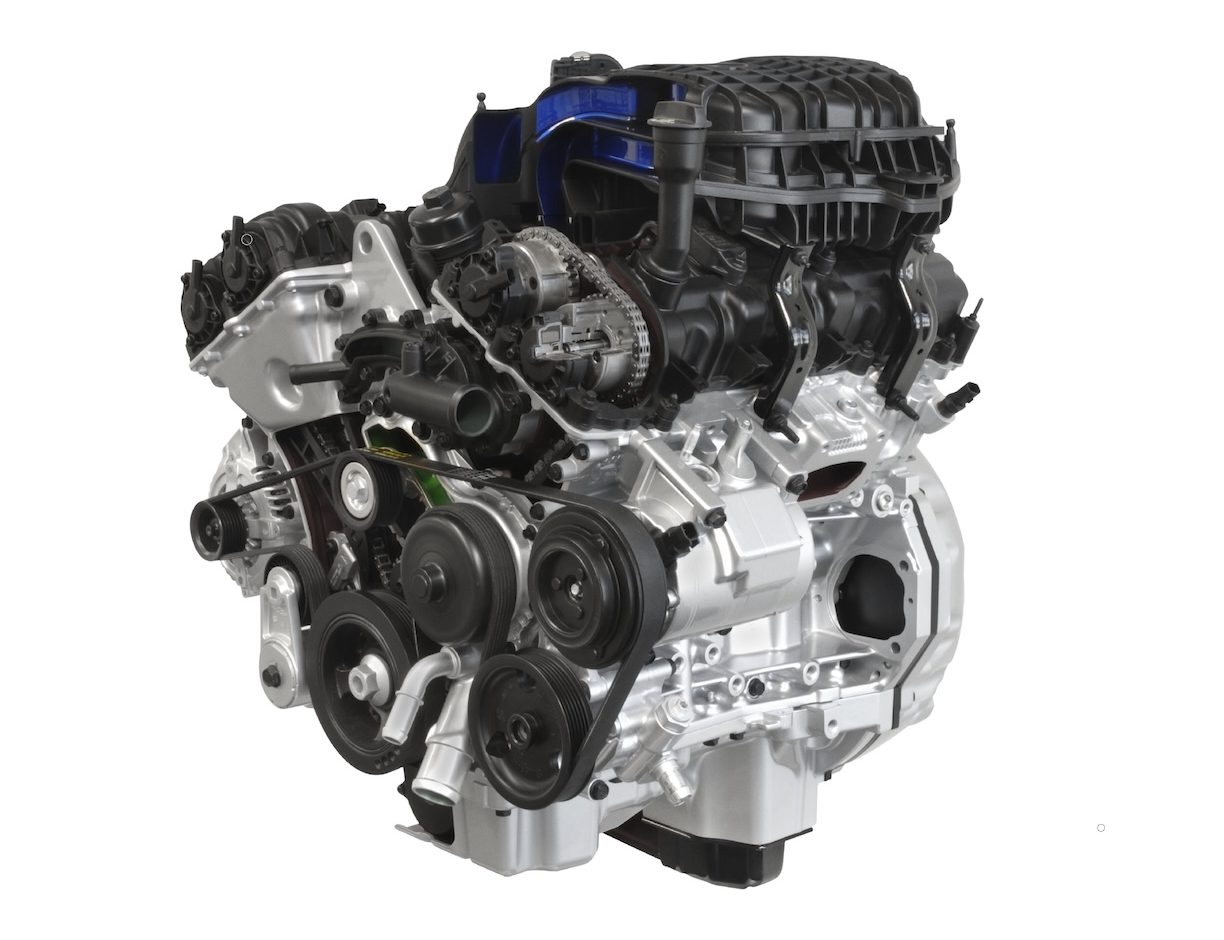
Right off the rip, it was an all-aluminum oversquare 60-degree V6 with 3.6 liters of displacement. It got quad cams, variable valve timing, 24 valves, and 10.2:1 compression, and was designed to run on regular 87-octane gasoline or an E85 ethanol blend. First installed in 2011 model year sedans, minivans, and large SUVs, it kicked out between 283 and 305 horsepower, one of the first Domestic V6s to cross the 300-horsepower barrier.
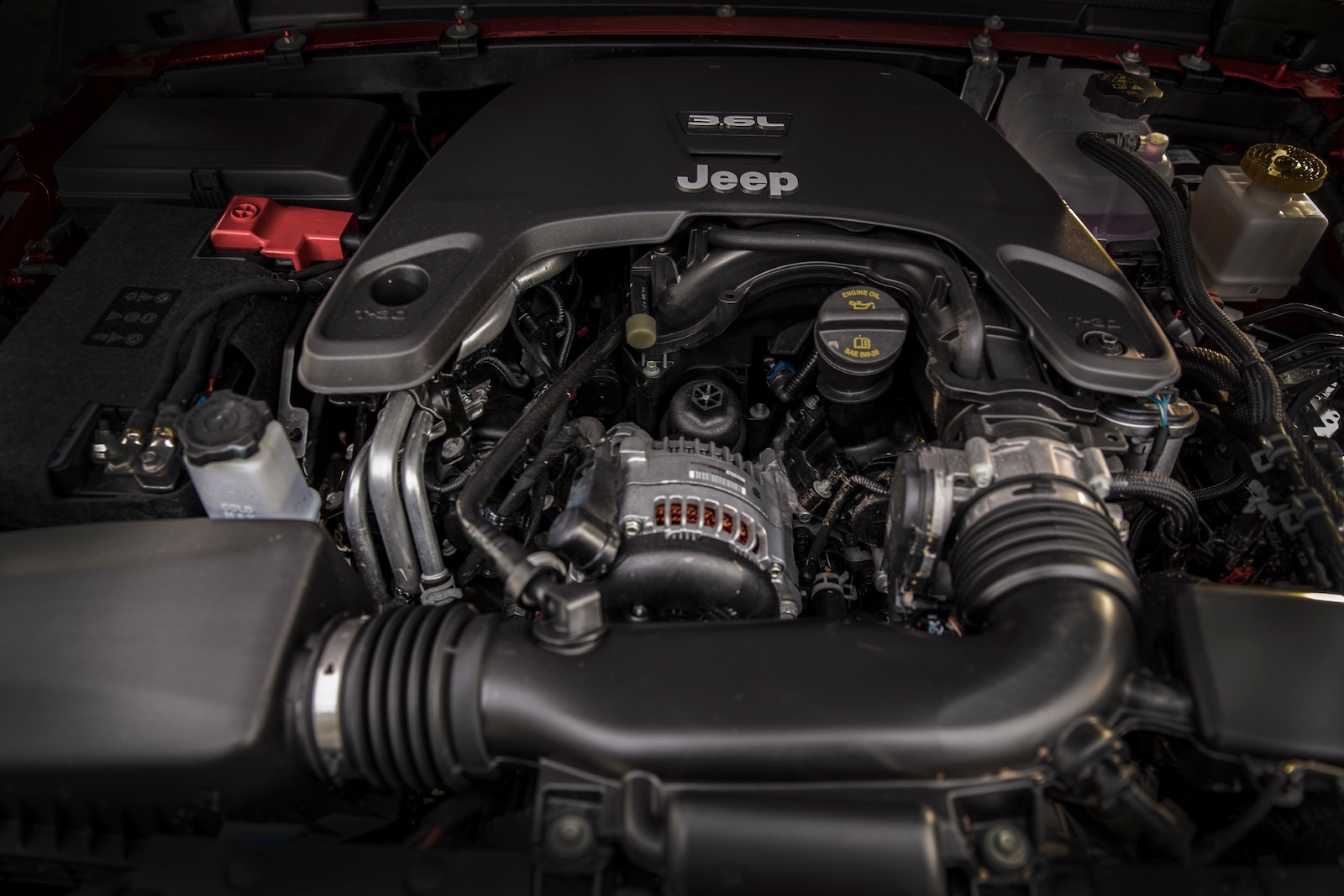
The Pentastar quickly found its way into just about everything with a V6, and although promised forced induction variants never materialized, Chrysler didn’t stop tweaking it. A 3.2-liter version with 10.7:1 compression and 271 horsepower found its way into the KL Jeep Cherokee and only the KL Jeep Cherokee, but the big upgrade came in 2016. Chrysler’s engineers bumped the compression ratio up to 11.3:1, added two-stage variable valve lift and new valve springs, reworked the variable valve timing and exhaust gas recirculation systems, and revised the fuel injectors and ignition coils.

This revised Pentastar is still in use to this day, and thanks to the upcoming Ram 1500 REV range-extender hybrid pickup truck, it should continue to see use for a while – even with the advent of the new Hurricane 4 two-liter turbocharged four-banger. Why? Because it’s proven technology. You know what you’re going to get.
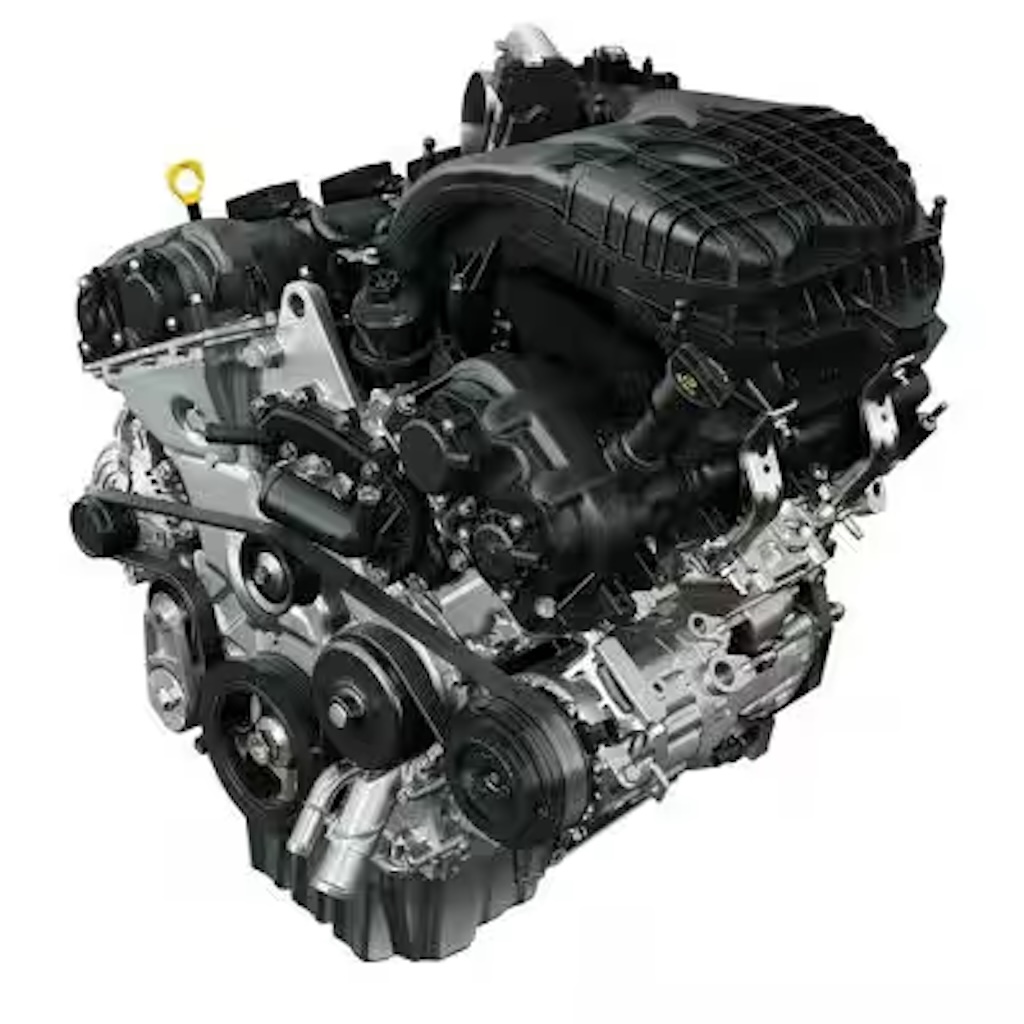
Good as it is, the Pentastar hasn’t been flawless. Early examples had some issues with residual sand in castings gumming up cooling and oiling systems, and it took Chrysler a few years to figure out the left bank cylinder heads. In addition, some folks have experienced oil cooler leaks which are a pain given the cooler’s location in the valley of the engine, and a number of owners report accelerated valvetrain wear making itself known by starting a top-end tick. If that sounds like a lot of complaints about the Pentastar, keep in mind the production numbers of this engine are simply astronomical. In February of 2019, Chrysler built its 10 millionth Pentastar. Let that sink in.
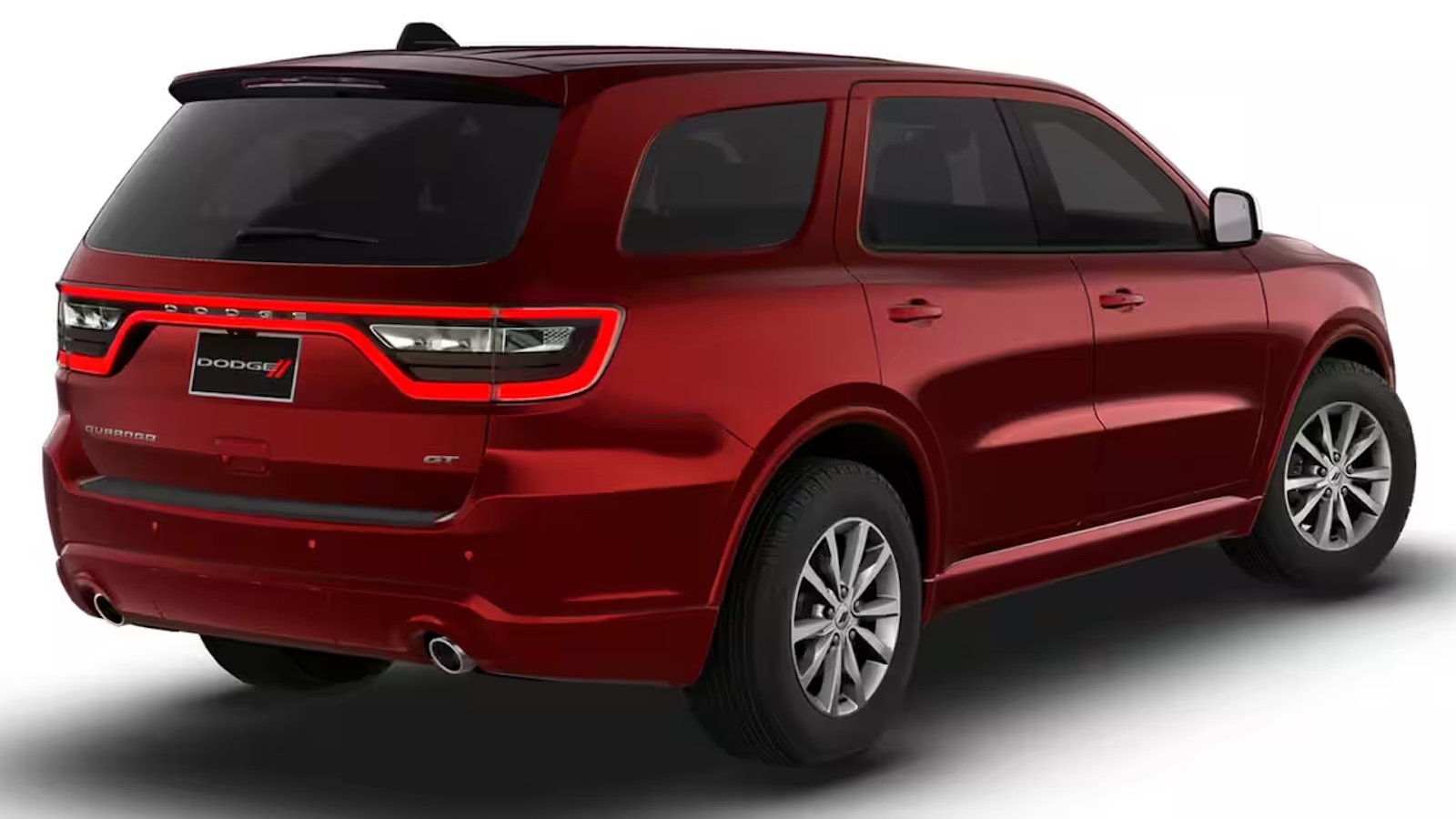
What we have here is a powerful-enough, stout-enough V6 that makes good power; replaced a whole roster of largely mediocre engines; and is still competitive roughly 15 years after it first went on sale. It’s done moon mileage in Grand Caravan taxi cabs, provided reasonable economy in half-ton Rams, and made the Dodge Journey at least 72.5 percent better. The Pentastar might not win drag races, and it might not get a whole lot of respect, but it’s generally a workhorse, a relatively unsung engine getting millions of drivers to work every morning.
Top graphic image: Dodge


I’ve had two of these, one in a Grand Caravan that went back to fleet at 90k miles and another in a Voyager that’s just over 20k miles currently.
Honestly, I think it’s a great engine. My Caravan had an oil leak in the valley which took a few days to repair at the dealer. Otherwise…just oil changes. Plenty of power, decent economy, and the sound it makes isn’t half bad. For a van, anyway
Also not sure how it contributes (or doesn’t) to reliability but I always wondered how the extra thermal cycling of Auto Stop Start might impact engines like this, that were designed earlier and had the feature foisted upon them. Especially when there are so many plastic components under the hood these days. I just turn ASS off every time I drive.
There is no thermal-cycling from start-stop. They have to keep the engine warm for emissions purposes. If the catalyst (or engine) cool down too much, the engine will restart.
I’m most impressed by its installation in 1-ton, LWB, high-roof ProMasters. Used and abused by delivery drivers and expediters and RVers.
My work has two low roof Promasters with the 3.6L. Overall pretty reliable will decent power and above average fuel economy. My problem with this engine is the stupid oil filter design flaw that could have been easily fixed in production. To be fair, other modern reliable engines seem to have other issues due to cost cutting
Two folks here at work have the 3.6L. One has it in a Ram 1500 and he had the oil cooler failure which was not easy to fix and sidelined the truck for a couple of weeks.
The other has it in a Durango and is currently faced with replacing all the rockers to fix the upper end tick.
They are not happy about these situations, to say the least.
Since the Durango is becoming a budget play on account of its age, the Pentastar instead of the Hurricane 4 makes sense. I think it’s really impressive that both the car and the engine stuck around for 15 years with limited changes. Do keep in mind that pentastar haters are more motivated to come comment than pentastar accepters.
I feel like these comments are mainly accepting that is one of the engines to ever exist
Used to have a Pacifica. Can confirm the Pentastar is both an engine and exists.
The Pentastar is one of the better modern American V6 engines. As Bishop and others have mentioned though, it is not without its flaws.
It’s a bit long in the tooth, despite going through many refinements over the years.
I’m also honestly surprised that the Durango didn’t get the Hurricane. My guess is that there might have been some packaging constraints that precluded that from being a possibility.
I don’t think its underrated at all. This engine was supposed to be Chrysler’s magnum opus. The finest V6 to ever come out of an American company. It delivered in terms of power and fuel economy, but it’s been a reliability nightmare.
Porous heads, cracked oil cooler housings and failing lifters that’d eat camshafts plagued the first gens. Then they added the variable lift technology, and THOSE heads wipe cams out in a completely different way and added new fun problems like blowing headgaskets and timing system bolts that back themselves out.
The amount of pentastar vehicles you hear clacking away with blatantly failed lifters is insane.
IF the motor had been reliable and relatively problem free, I think it would have been legendary. Instead it’s completely average and forgettable.
The 2011 and 2012 model years of Pentastars tended to burn oil from what I hear. The fact that nearly every minivan from those years that I’ve seen for sale have included that fact in the ad description seems to back that up.
lol absolutely not a reliability nightmare, but feel free to come in here and comment on this
This engine has had countless very public and very serious design flaws and issues. To the point where Dorman of all companies developed parts to fix Chrysler’s inept engineering. Mehcanics, both independent and dealer brag about how these engines keep them employed. Countless upon countless wiped camshafts, broken followers and cracked oil filter housings.
In the vehicles owned by my immediate family, I believe there are….6? 7? Pentastar V6’s. They’ve provided reliable service, several for over ten years.
The last V6 that was so ubiquitous across ChryCo products was the old Mitsubishi 6G72 3-liter that powered everything from the Shadow ES to the Voyager to the Ram 50 from the late ’80s to the mid-’90s.
Pentastars don’t have nearly the voracious appetite for headgaskets that those did.
I think this V6 is just “rated”. It’s not underrated, it’s not overrated, it’s just a entirely adeqate engine. Doesn’t do anything amazing, doesn’t do anything badly, it just is.
And having rented a few, the Pentastar Durango is the same. It just does the job with neither excitement nor fuss. I’d never bother with a V8 in one, what would be the point?
Its no slant six or flathead six or 4.0
What is?
In an era when even some Toyota motors are catastrophically explodey, it’s “fine”. And compared to the ubiquitous DI-turbo, relatively simple.
I have heard of the Pentastar tick. Is that an actual problem that really needs to be fixed, or just an annoyance? Seems to not be a catastrophe.
It is an actual problem that has to be fixed. Lifters fail and eat the cam. Have personal experience. If not addressed you’ll entirely lose power to each of the affected cylinders because the valve won’t open. Also you’ll keep pumping iron shavings into your motor.
But I like the Pentastar overall, and IMO it is just getting started, or should be!
Good to know. But I will say I know a bunch of people with minivans and Jeeps with it, and don’t know anyone who has personally been affected by this. Sounds like as long as you pay attention and get it fixed when it starts happening, it’s fine.
Its fine, but it isn’t going to be one of the legendary Chrysler six cylinders that people wax nostalgic about decades after it goes out of production
Maybe not, I don’t know, it can be somewhat hard to predict these things. I’d probably still prefer a Pentastar over a Hurricane Six, which seems like asking for a whole mess of problems
That’s what I figure it’s “rated” it’s fine. Nothing awesome, nothing horrid. Just an OK engine. Exactly that – mostly gets the job done but nobody should be putting it on a pedestal.
that’s mainly because of the Jeep weirdos that have whined about this engine the second it was fitted to their little rigs
My work has many Promaster delivery vans with this engine. One van, known as Old Tick Tick, has been ticking for the last 50k miles. Its currently at 330k miles, so isn’t worth putting any money into, but it still drives. Due to all the metal fragments from the cams that have been getting sent around the engine for so long, the oil pump is on its way out though.
Can’t complain about getting 330K and climbing out of an engine. Especially in something that was probably beaten like a rented mule it’s entire life.
V8 is nice for towing, and having a slightly different lifter tick… Lots more lower end torque — the V6 works but the hemi makes it rather effortless. I agree with the Pentastar being middle-pack in terms of its reputation. Overall its pretty damn reliable and has very well documented issues. I do find that the “upgrade” for the oil cooler is from Dorman. How bad does the original have to be, that Dorman makes a superior replacement?
Very few Americans tow much of anything. If they do, they inevitably buy some monster truck, not a midsize SUV. The 300hp V6 Durango would tow just fine for what weekend warriors actually do. I towed a 7000lb boat with my 185hp Disco I for years and never once wished it had more grunt.
The Autopian had an entire article specifically about the Dorman replacement, lol. Honestly, I think the original Pentastar design, before the 2016 “PSU” update, was the one to beat. Once they got over the cylinder head issues, it seemed like all the problems were ironed out — just in time for them to introduce a new design with new problems.
(To be clear, I think the Pentastar overall has done pretty damn well for a modern engine, regardless of version. God bless them for never adding direct injection.)
Looking at some data I have access to, for model years 2013 and newer, spread over 22,000 vehicles, just shy 500 of them have had repairs due to internally lubricated parts (the lifter tick would fall under that heading). Interpret that as you will.
Uhhhh maybe that is warranty claims?
But the used market cars it is not at all uncommon…
Mileage is good point. I went and checked that.
The average mileage on a vehicle at the time we gained access to its data, for this pool of pentastar, is 68K. So average mileage at time of actual failure higher than that. There are very few vehicles in the data with fewer than 50K miles at the time we start seeing data.
see, shame on you for bringing data to conversation where it’s nothing but feels
Out of all the engines in the world the Pentastar is definitely one of them
I have a 2015 Promaster van with the 3.6 Pentastar, 126,xxxx miles.
Engine issues I’ve had:
a) Persistent smell of coolant from coolant weeping from the gasket under the plastic coolant crossover. FIxed when the gasket and crossover were replaced with a new gasket and an aftermarket aluminum coolant crossover.
b) Failed seals under the oil/coolant heat exchanger (OEM is plastic bodied). Fixed when replaced with aftermarket die cast aluminum version.
c) Piss poor design that allows rain water to pool in the depressions where the screw heads are located that connect the upper intake manifold to the lower intake manifold rusting the screw head beyond use… need to drill the screw heads off to remove the upper intake to access the plugs.
Many other issues with the van, but no other issues with the motor.
My van is generally lightly loaded and drive conservatively; the motor powers the van quite well in my opinion.
I’m waiting for the Penta-star tick to arrive. From my research the tick comes from the failure of needle bearings in the roller rockers. Not all engines see this failure.
I think it is a good engine, just ditch the plastic components that see high thermal gradients and are required to seal against metal.
I’ve heard it repeated countless times that the Pentastar would be almost bulletproof if they hadn’t cheaped-out by using plastic parts instead of metal. But then I’ve heard the same thing said about a LOT of different modern engines.
260,000k on my 2013 grand Caravan, and the only engine issue I have had was the stupid plastic thermostat cover grenading on a 105 degree day. Luckily it is easy to get to, and with a 10mm ratchet I was able to replace it on the side of the road. It still blows me away that this little V6 makes more HP than my 95 Z-28.
Your 10mm ratchet wasn’t abducted by aliens? Inconceivable!
I got a 10-pack of sockets from the jungle site. 🙂
Buying in bulk, smart. 😀
YUP. And if they have any sense they’ll copy Honda’s homework and make an Atkinson-cycle high efficiency genset version of it for their EREV products. Stellantis really needs to lean in to anything they’ve got in the parts book that has proven generally reliable, since they have been striking out a lot on that front, and that’s got to stop if the company is going to live out the decade.
Atkinson cycle version has been in the Pacifica Hybrid since the start. And presumably what’s going in the Ram EREV.
I didn’t know they had a specific version of that engine for the hybrid – thanks, I’ll do some research into that! I wonder how it stacks up against the recently announced Honda in terms of power and efficiency?
It makes about 260 horse, don’t know about the mileage.
As an owner of a product powered by a Pentastar V6, so far I am very pleased with it. It performs well, is very smooth, even sounds pretty good, especially for an engine in a minivan. Should hit 100k next week, and I’ve had no issues with it *aggressively knocks on wood all over the office*
I’ve pushed my chips in an have more or less decided to keep the van for as long as it doesn’t explode. Therefore, much of my future is in the Pentastar’s metaphorical hands.
You’ll all know if it craps out on me.
I remember looking at Jeep Wranglers in the 2010-2012 timeframe. Everyone I talked to was excited about the 3.6L replacing the 3.8L turd in the Wrangler. The Wrangler forums, however, started calling the Pentastar the “Jesustar” because it was so hyped up.
I ended up buying a 2012 Wrangler Sport in April 2012. It was a stripper model; the only options were air-conditioning and Uconnect. I bought it from dealer stock as the color I wanted was at another dealer at the other end of the state and they wouldn’t sell it to my dealer. But Black Forest Green was my second color choice. It was exactly what I wanted; a green, manual, base Wrangler.
I owned that Wrangler for almost 7 years and the only issues I had with it was an idler pulley died an early death (covered under the factory warranty) and the left cylinder head issue (also covered by Jeep). That’s it. I didn’t even have any water leaks.
I felt that the 3.6L was a huge upgrade. My base six speed Wrangler was pretty spry for what it was.
Same here. Sold a 2007 3.8 Wrangler for a 2013 and it was a huge, huge upgrade in power and smoothness. It was so much better than the 3.8. Put 80,000 miles on it in 6 years, never had an issue. This was a manual-trans model. I wonder if it would have kept going problem-free into the 100k mark.
In a world of downsized boosted DI engines, this not-so-tiny naturally aspirated V6 has stayed relevant, putting up solid fuel economy numbers and not having to deal an expensive fuel system or high PM emissions. Really an impressive piece of engineering to have such a “dated” design that’s still competitive. Durability issues sound like another can of worms though.
The fuel economy is quite impressive, the LX cars aren’t all that small or all that light, and with the Pentastar can very easily exceed 30mpg in highway cruising with no difficulty. That’s like better than Subaru H4 numbers
Underrated? No. The Pentastar is, and has been junk since its release in late 2011.
Yes, it’s powerful, and the torque curve is truly impressive. It just keeps delivering power throughout the rev range. However, it is also a horrendously flawed motor. Clearly, Chrysler cannot make a DOHC motor. All Pentastars are at risk of the famous Pentastar tick. Even new Jeeps are having their heads and timing systems replaced due to failure.
The guys I wheel with mostly have Pentastar-powered Jeeps. They tick raucously like a sewing machine, so much so that you’d think someone was running a garment sweatshop in the middle of the woods. Many of them have dumped the thousands of dollars into the motor needed to replace their wiped cams and failing lifters, while others have had the motors outright fail and were left having to replace them.
Beyond their ever-awful timing system, most of these Pentastars have plastic oil cooler housings which crack – a very involved job to fix. About as involved as replacing the spark plugs, really, which requires pulling the intake manifold and everything else in its way.
You’d think that about fifteen years later, especially with the allegedly revamped PUG motors, Chrysler would have sorted all of the kinks out, but no. These engines continue to be problematic, presenting with the exact same issues as they did shortly after the Pentastar’s launch.
While there are Pentastars out their that have endured hundreds of thousands of miles, I’d be more confident betting on the longevity of Mitch McConnel than a Chrysler 3.6.
lol remove your account from this site with this nonsense post
The only thing criminal about the Pentastar was Chrysler’s decision to drop planned production in Kenosha and close the plant. Instead, they build a new plant in Mexico to build the engine.
I held out for one in a Wrangler JKU because it was worlds better than the 3.8L minivan anchor. I have beaten the crap out of my pentastar, it has all the power I ever need. We have one in our awd pacifica and it is also plenty fast.
I mean it’s an engine. Of the three domestic V6s it’s definitely not the underrepresented peach that the LGX in the Camaro and ATS was (which is a screamer of an engine that also had more torque and also ran on 87); but compared to the typical midsized sedan V6 of the time it was… fine?
I had the GM 3.6 DI engine in my Buick, and it was cold-blooded like an over-carbed big block. They should have gone to port+direct injection like Toyota did, but didn’t, so cold starts and intake port fouling continued to devil them. Which is a shame, because performance wise they do run like a scalded dog; I test-drove a V6 Camaro and it was silly-fast, and even my big AWD Buick Enclave would about jump out of its own paint from a dig if you matted it from a green light. The transmission was too light-duty for that big car, though.
That’s exactly why I can trust that motor. 10 million is just freaking nuts for a 9-year production run. If they said 15 million this year, I’d believe it.
To put that in perspective, a (penta)star has been born at the rate of one every 28 seconds since 2014
Now put it in a RWD version of the new Charger
“Remember when Dodge said the Durango was going all-Hemi?”
Yeah I remember thinking that was stupid.
” It turns out that was short-lived. For 2026, the 3.6-liter Pentastar V6 makes a return on the Durango GT”
Good.
“and was designed to run on regular 87-octane gasoline”
That’s one of the other big benefits the Pentastar has over the Hemi… along with the better fuel economy.
Now hopefully the Durango also gets a variant of the V6 hybrid powertrain the Ram is getting.
My favorite rental car motor.
And nothing is faster than a rental
Yup. A Pacifica is surprisingly *spirited.” Especially if it isn’t yours.
No, the Pentastar V6 is very much rated. Not underrated, nor overrated, it simply exists, well until they fail that is.