

It’s always fraught when I talk about Chinese vehicles here at The Morning Dump or, really, anywhere. There’s an impossibility to divorcing all that comes with where the product is built from what the product is, and I’m generally ok with not divorcing it. However, today, I want to talk about a product I think would do well here and, yet, a product no one can sell me.
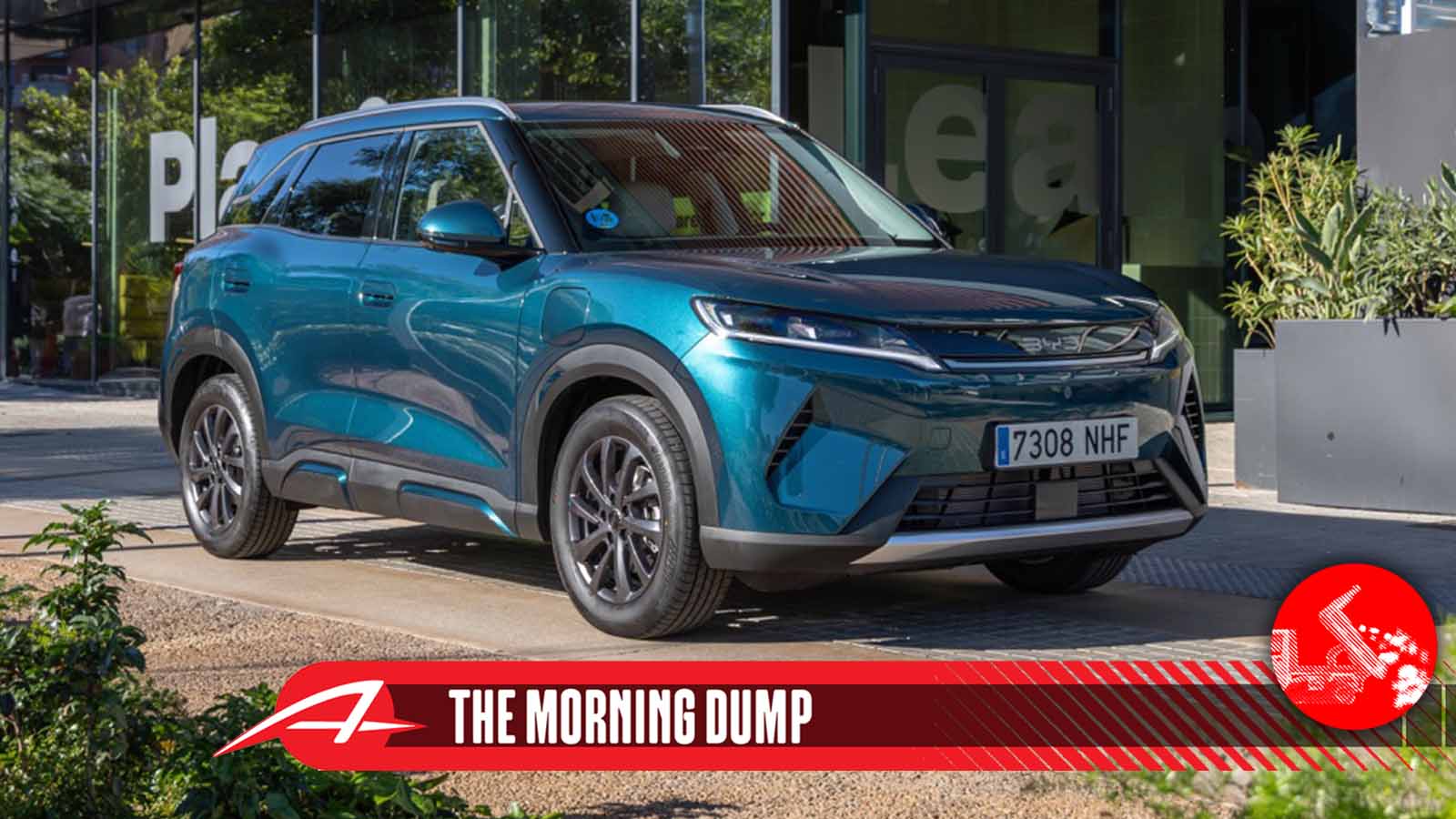
Just this week, Chinese automaker BYD launched its Super Hybrid ATTO 2 DM-i in Europe with a flashy drive in Barcelona, Spain. The reviews of it seem generally positive, but what I am missing is the fact that this is a PHEV with actual range, which is something that few companies seem interested in building.


Ford is very interested in continuing to build its F-150 because that’s how it makes money, but the plant that helps process aluminium for its trucks caught fire. Again. No one was hurt, which is a blessing. The same can’t be said for pedestrians, who are being killed at an alarming rate. At least the Department of Transportation is starting to roll out female test dummies, which is as overdue as my copy of Northinger Abbey.
Check Out The BYD Super Hybrid ATTO 2 DM-i

I think we’re fairly clear on our belief that plug-in hybrids are a good thing, as are EREVs (the difference being that a PHEV can power the vehicle with the engine and, in an EREV, the engine only acts as a generator). The shift in interest toward EREVs seems to come from the fact that most of America’s PHEVs kinda suck.
The reason is the battery. There’s just not enough range for most PHEVs, with the new RAV4 finally sneaking above 50 miles of range to provide enough distance for day-to-day commuting. Most are like the Outlander, with under 40 miles from a small battery. That’s not enough!
Again, the new RAV4 PHEV and Prius PHEV are a step in the right direction, but the RAV4 is a bit on the pricier side as it’s a larger vehicle. What I’d love to see is something more Corolla Cross/Honda HR-V-sized with a PHEV option and a larger battery.
Europe is about to get this in the form of the Atto 2 DM-i, which is a boring name for a crossover with a boring derivative design, from not-so-boring Chinese automaker BYD. The company is quickly supplanting Tesla in European markets as an automaker by offering cheaper EVs and cars with engines, which Tesla is unlikely to ever do.
The specs (WLTP) on the Atto 2 are great, with the vehicle offering 56 miles of EV-only range from an 18.3kWH blade battery. [Update: Just to address the WLTP of it all, it’s not possible to know the EPA range of this product exactly, but if you look at the Outlander PHEV in Europe, it gets around 80 km/50 miles WLTP range compared to 38 miles EPA. By comparison, the Atto gets 89 km/56 miles of range. At the same exchange, that’s 43 miles for the BYD. The Outlander PHEV seems to perform worse than the average, so my guess is the BYD would be closer to 44-45 miles. -MH]
Total weighted fuel economy, if you keep it plugged in, is 156 miles. This means a total range of about 620 miles under ideal conditions. Like the Honda system, the motor is mostly acting in series, providing power to the batteries. As necessary, the 1.5-liter gas engine can power the wheels in parallel.
What’s it like? Here’s what Autocar had to say:
Take these numbers with a pinch of salt, considering my test conditions weren’t totally representative of day-to-day suburban drudgery, but over the course of a demanding 90-minute loop comprising busy motorways, tight mountain passes and stop-start inner-city arteries in Spain, I drained around half the battery (circa 9kWh of energy) and took no more than a few sips out of the fuel tank.
That equated to electricity consumption of 9.12mpkWh and fuel economy of 157mpg, which the car told me represented combined consumption in traditional terms of 76.3mpg. But that’s contingent on having a full battery to start with. We will need a few days on UK roads to really crunch the numbers.
Pricing is also competitive, with the larger-batteries Boost model coming in around £28,000 in the UK, compared to a starting price of £32,250 for an HR-V Hybrid.
For many obvious reasons, it’s unlikely a BYD Atto or any other Chinese brand will come to the United States in the near future. Instead of PHEVs with big batteries, we’re probably just going to get hybrids.
Ford Really Needs To Find More Aluminum Suppliers
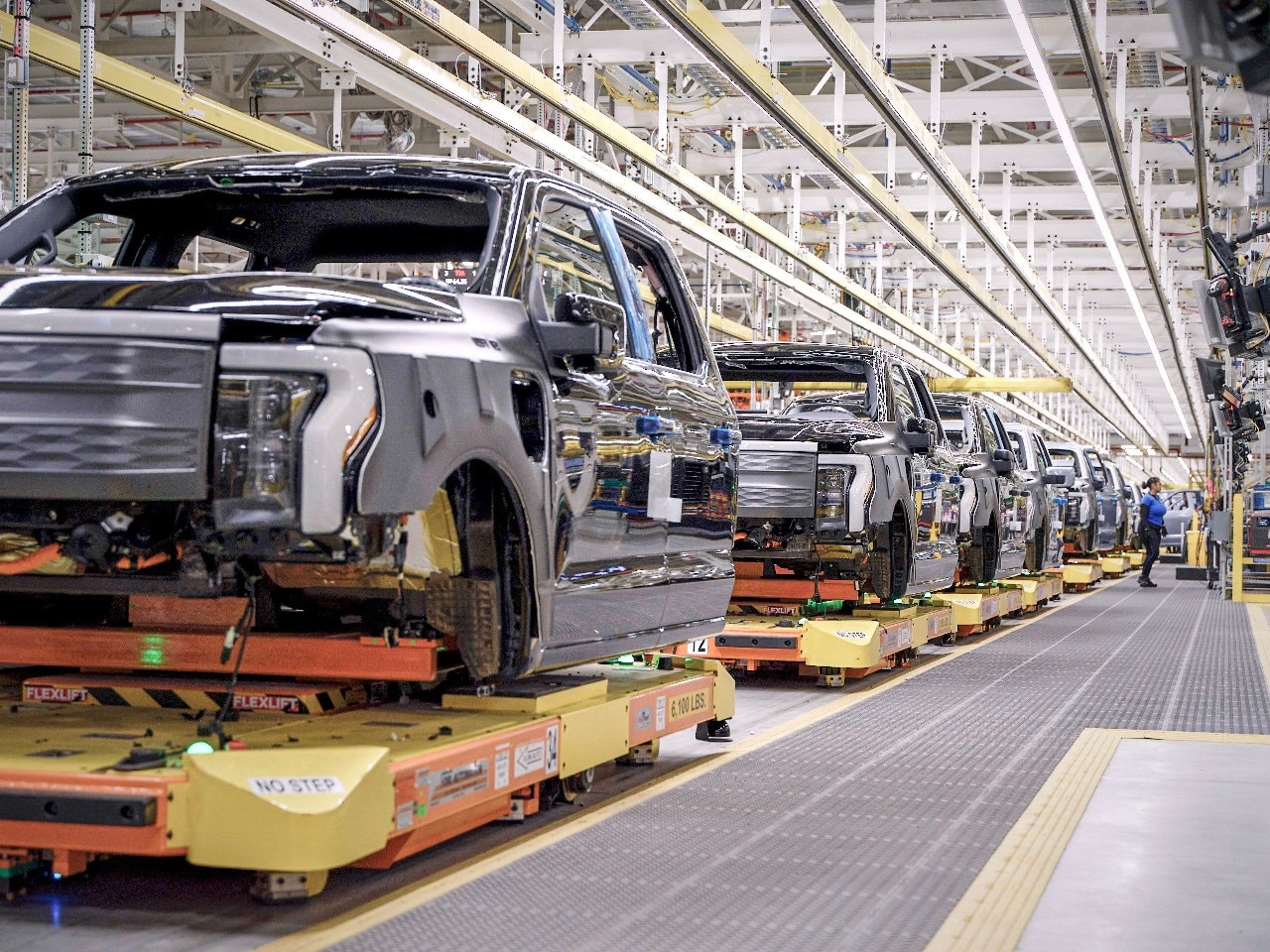
If you were curious, yes, we did just write about how a big fire at the Novelis plant in lovely Oswego, New York, was so bad that it might have prematurely killed the F-150 Lightning, and was otherwise making life hard for an automaker that is seriously reliant on F-150 sales.
It happened again, according to CNBC:
Novelis in October said it planned to restart operations at the affected part of the plant by the end of December, an acceleration from its previous projection of resuming by the first quarter of 2026. A Novelis spokesperson said it was too soon to say if Thursday’s fire would delay that timeline.
“A fire started at Novelis’ Oswego, New York, plant this morning. Everyone working at the plant was safely evacuated. Multiple local fire departments responded, and the fire is now under control. Crews are still on site to ensure it is fully extinguished,” the spokesperson said.
Maybe, uh, look into making sure that part of the plant isn’t catching on fire all the time? Just a thought. With huge tariffs on imported aluminum, it’s not exactly a fun time to be trying to source automotive-grade aluminum from anywhere else.
The Most Dangerous Roads In America Feel Very Familiar To Me
View this post on Instagram
There’s a kind of terrifying article in The Washington Post this week that calls out the deadliest roads in America for pedestrians, and I used to live by two of them.
This is always a much-debated position, and there’s always a lot of fingers pointed at big SUVs with low standards for pedestrians. That’s a real thing, as is distracted driving, but as a person who studied some of this in college a million years ago, my belief is that road design and transit accessibility are way bigger factors. And it’s personal to me, because Houston sure comes off as one of the worst places for this.
The Instagram post above has a graphic, and it shows Houston’s Westheimer Road as the road with the most deaths in America between 2021 and 2023. Not far off is Houston’s FM 1960, which is a road I spent a lot of my youth along. Both are terrible places to be pedestrians.
From the WaPo:
Wide roads and fast-moving vehicles — especially when combined with signs of poverty, homelessness, drug and alcohol abuse, and a lack of pedestrian-focused roadway improvements — produced a pattern of death-by-vehicle that is uniquely American, according to the investigation.
The national data shows how the design of such roads is closely linked to the fatality rate: Those with three lanes or more are by far the most dangerous, because they enable higher speeds. Above 30 mph, fatality risk increases sharply. At 50 mph, someone’s chance of survival when struck is less than 1 in 5.
More people in these areas lack cars and are forced to walk, while many of those killed tended to be impaired and were taking risks trying to cross, the review found.
Most of that conforms to my memories of both Westheimer and FM 1960. While making cars more pedestrian-friendly in accidents and lowering speeds are obvious solutions, the road design of both corridors has always been terrible.
NHTSA Endorses A Female Test Dummy
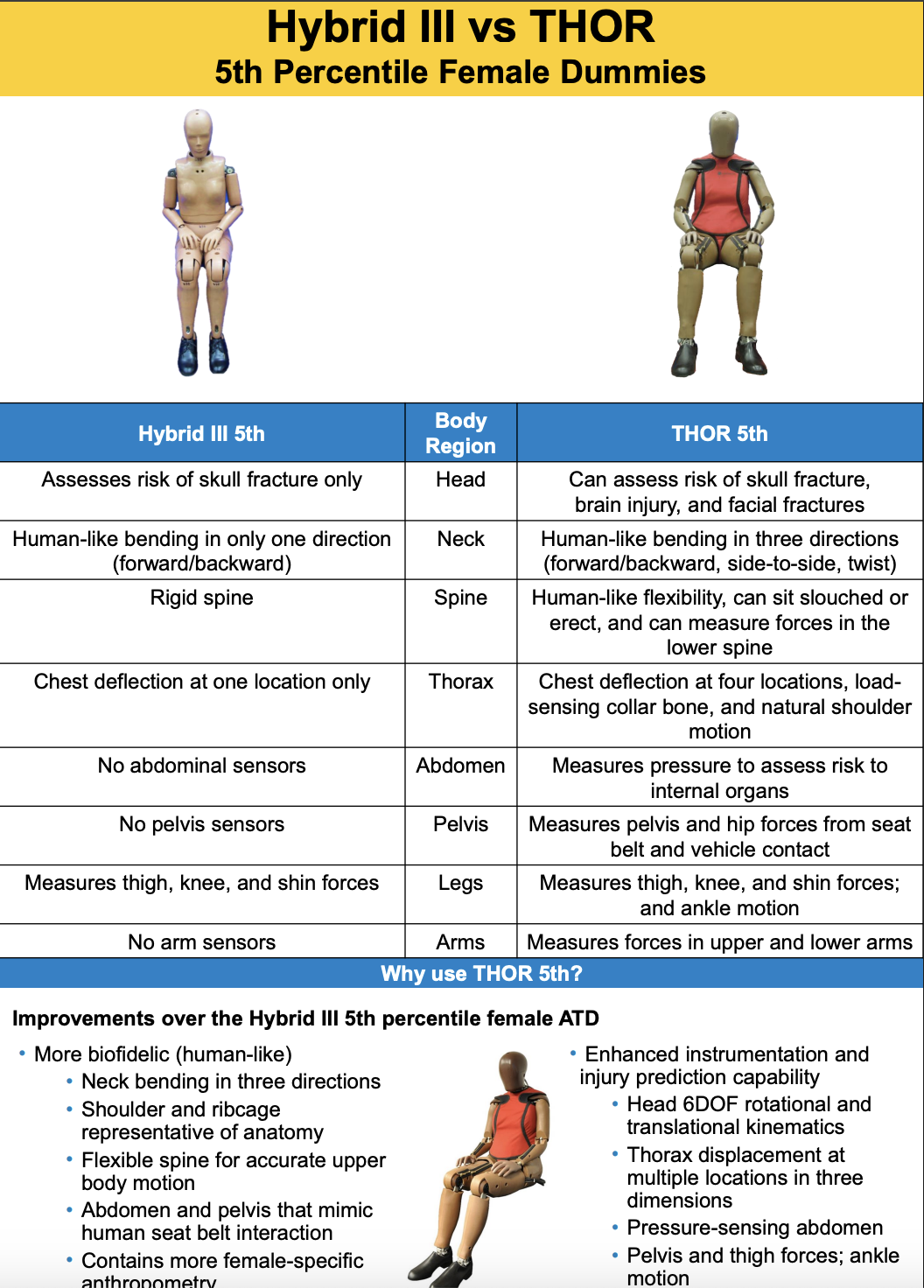
Here’s some good old bipartisan government action, which is missing these days. Both Republicans and Democrats have come out in support of female test dummies. Why? Women are 73% more likely to be injured in a head-on collision and have higher fatality rates, yet not all dummies reflect that.
U.S. Sens. Deb Fischer, a Republican from Nebraska, and Tammy Duckworth, a Democrat from Illinois, both released statements welcoming the female crash test dummy announcement.
“Any progress here is good because there’s simply no good reason why women are more likely to be injured or die in car crashes,” Duckworth said.
Fischer introduced legislation, the She Drives Act, that would require the most advanced testing devices available, including a female crash test dummy. Duckworth is a co-sponsor.
“It’s far past time to make these testing standards permanent, which will help save thousands of lives and make America’s roads safer for all drivers,” Fischer said.
The goal here is to get automakers to start using these dummies, which conform more to how actual human beings are built (versus the existing “Hybrid III,” a smaller dummy based on the male). I’m sure former Real World: Boston co-star and current Secretary of Transportation Sean Duffy will embrace this moment of bipartisanship in a professional way in the DOT’s press release on the subject:
“The Left doesn’t want to hear it, but the science is clear: there are only two sexes – male and female. That biological fact isn’t just a talking point – it’s an important safety consideration when designing cars,” said U.S. Transportation Secretary Sean P. Duffy.
This is a strange statement from the DOT, which serves all Americans — even weirder than Duffy’s recent statement that the way to make travel better this Thanksgiving is to dress nicer at the airport. (I’m not averse to the idea of people dressing up at the airport if they like, as it does add some romance to traveling, but if you look at the math, planes have gotten safer as flyers have gotten more casual…).
What I’m Listening To While Writing TMD
Here’s Willie Nelson, in the best t-shirt you’ve ever seen in your whole life, doing “To All The Girls I’ve Loved Before” featuring Julio Iglesias, performing at the CMAs in 1983.
[Ed Note: Last month, a celebration of the 40th Anniversary of Back To The Future happened at a mall that was featured in the movie, located in the city of Industry. Friend-of-the-site Tiziano Niero went out and shot this, which I figured I’d share:
Man I lave a DeLorean DMC-12! -DT]
The Big Question
Are we wrong about PHEVs?
Top photo: BYD




Houston totally gasted my flabber when I visited two years ago. It certainly was a fun place to be, but it felt less like a city than a rather comprehensive collection of things to avoid in cityplanning.
Ford has that great PHEV Bronco!
But it’s only sold in China.
Still it sounds great. Why can’t we have it here?
A PHEV would be perfect for my use case. Relatively cheap electricity and fairly expensive gasoline in the PNW. Lots of short trips and the occasional 700+ mile trip.
As far as females go, my ex-wife was the one who would drive 80-90+ mph. We had a rule. If we were on time, I’d drive. If we were late, she’d drive. We’re still both alive.
I always thought that the economic equation is solidly against a PHEV with enough range that makes sense, and it’s simple: you essentially would have two powertrains and the cost has to reflect that. The Chinese brands are in the best position to win this round at the moment because of their much-discussed “unique national market conditions” ie essentially a lot of subsidies. But they are facing headwinds too, such as you know, becoming profitable at some point.
So I ultimately think something’s gotta be either ICE or BEV to be feasible, with the EREV seemingly the cheapest, best of both worlds. Mild hybrids and their plugin cousins work well for a city commute but the added cost for a meagre 40mi of range makes little economic sense to amortize in gas for most of American drivers. It sure doesn’t help that the current US govt wants to squeeze every ounce of oil from the planet while killing the EV industry.
I am EREV until fusion becomes a little cheaper.
Yeah I don’t follow your math. It gets 56 total EV and 156 with the generator and that makes 600+ range? What did I miss? And that’s before we take into account this is untested range and untested meets safety.
You are a bit behind the other markets with phev’s that are not Toyota. So some comments, as there is a lot of enthuasism… There will be problems, at least in the cold jurisdictions:
First, the phev battery gets LOT of charge cycles, if you max the electric miles. Unlike a full EV, which you typically don’t drive empty every day. You just don’t. So the EV battery will be fine over many years, unless you are taxi driver, rapid charging it full every day. The phev…. Yes, there are 5-10 year old German phev’s with less than 100k km and batteries with 7-80% SOH or less, and of course also totally failing batteries. New batteries can be manufacturer-only unobtainium sealed units with 10000 price tag or some such nonsense. Depends on the manufacturer, so have fun trading in that c350e. With incomplete service history from the lease period. Used batteries exist, but they are also worn out.
Second, the gas engine does not like running cold and for short periods of time, which many people do, as they want to save gas. So first 30 km in EV mode, then 10 km with gas, charge at office, drive home. Rinse and repeat, day in, day out. Result: ALL the normal problems with modern engines + extra dose of gas and moisture in the oil (never evaporating, because the engine never gets hot), so you have rusting camshafts and excess wear etc. Not every manufacturer, but…
Yes, phev’s are cool, but the whole drivetrain must be extra robust, with programming that takes into account the way they are used. For example: you drive 70 miles every day. With an EV, you need to charge it maybe twice a week. Or more often, but not full every time, which is better for the battery, unless it is LFP. So, you get 100+ charge/discharge cycles per year. With a PHEV? 500 cycles/year? Many people say the batteries are built for 3000 cycles… now, why on earth are so many 5-10 year old PHEV’s failing?
Yes, you can and will build the phev battery with more unused reserve, but that costs money. The first C350e had a 6.2 KWh battery, wonder how much extra there is hidden… for reference, the range when new was something like 20 miles. Can’t you drive with gas if the battery fails? Nope. It is a brick. And the battery warranty? 100 km or 5-6 years.
“there’s simply no good reason why women are more likely to be injured or die in car crashes,” Duckworth said.
I welcome additional research and the use of dummies that mimic the female body. However, there could be biological reasons women are more likely to be injured or killed in accidents such as bone density and muscle mass. Also, as an anecdote, my wife is the passenger more often than driver and tends to have her legs crossed more often than not which I don’t think would bode well in an accident.
The average daily commute in the US is something less than 20 miles. 40 miles of EV range is more than adequate, and ensures the gas engine gets run some.
I’d be perfectly happy with 20-30 miles. That would cover 90% of my trips, and 100% of the really terribly inefficient short ones where the engine barely comes up to temperature. Anything over that and give me an ICE.
Pure EREVs are stupid to me other than as some sort of political statement. There are definitely speed ranges where it is going to be most efficient to couple the engine directly to the wheels rather than do two energy transformations to turn hydrocarbons into motion. I believe some Honda hybrids worked that way. No real transmission, just the ability to directly couple the engine the wheels at the right speeds, otherwise, charge the battery.
While distracted driving and the deadliness of modern Canyoneros that weigh 12 tons and have the outward visibility of a Sherman tank is a MASSIVE problem, I think we also need to talk about distracted pedestrians staring at their devices, headphones on, paying not the slightest bit of attention to anything happening around them. Same goes for maniac cyclists. And the menace that is hopped up illegal e-bikes. Which thankfully the cops around me are hugely cracking down on.
The closest I have ever come to seeing a human splattered like a bug was the last time I was in NYC. College age girl, staring at phone, headphones on, was just about to step off the curb at full NY marching speed against the crossing signal right in front of a city bus. She would be dead as Elvis if a guy standing there hadn’t grabbed her by the hoodie and yanked her dumb ass backwards. The closest I have ever come to splattering one myself was a similar girl, dressed head to toe in black, on a pitch-black rainy night in Maine in an unlit crosswalk with a ton of glare from oncoming traffic. The ONLY reasons she is still alive is that due to the miserable conditions I was under the speed limit, a Mercedes wagon has EXCELLENT brakes, and she was wearing white sneakers which I caught a glimmer of at the last second. Literally all of her I could see under those conditions. It doesn’t matter if you have the right of way and are in a marked crosswalk, if you don’t LOOK and make damned sure the drivers can and have seen you and are slowing down, you will end up “dead right” very easily. I really don’t think people realize how invisible they can be at night. And don’t forget that down here in God’s Waiting Room, FL, half the drivers have cataracts and can’t see shit on a bright sunny day! Another whole topic of conversation…
Our neighborhood has Orthodox Jews that walk to and from synagogues dressed in black at Shabbat. We have no street lights or sidewalks. Since it is now dark at 4:30 you can imagine how you can scare the crap out of yourself coming around a corner and greeting a walking family. Since I am a reform Jew (drive to services) I know to travel in the hood at about 15mph. Lots of others don’t. So far nobody has been run over, thank dog, but I’m going to invent headlights d as if taillights for their unusual garb
Are they not allowed to carry flashlights? Or wear reflective vests?
Flashlight no. Reflective vests yes and a few, very few, do that.
Yikes. Probably should be warning signs…
People in Japan wear all black to funerals, usually made of material with the minimum level of gloss. I once turned from a brightly lit main road into a dark side street just as a party of people returning from a funeral were crossing the road, back in the days when few people dyed their black hair. I didn’t exactly see them, I think I braked just because something seemed to have absorbed all the available light.
“There are definitely speed ranges where it is going to be most efficient to couple the engine directly to the wheels rather than do two energy transformations to turn hydrocarbons into motion.”
That however limits the potential locations of the ICE whereas if there is no direct link the ICE can be anywhere on the vehicle in whatever orientation works best.
Looking at the history of automobiles, there are myriad places one can put an ICE, and they all seem to work reasonably well.
Still plenty of places and orientations left to try.
Don’t bring your bedroom activities into engineering. 😉
Sometimes bedroom activities cross into my engineering. Like the time my company bought a cheap, used injection molding machine.
Why was it cheap you ask?
Because it had been purchased from a sex toy manufacturer where it had been used to make “Manly Stanlys”.
ROFL!
How is an EREV a political statement?
Ask Big Oil.
Oh and “average commute” is a misleading way to look at this point. First off there are lots of surveys, from 12 to 25 mi each way. Then the average is pretty useless to look at, because lots of city folk will skew the average lower – while they may not even drive to work. (I am one of those people at 5mi each way via public transportation)
The anecdotal + sales evidence shows clearly that 40mi of plugin range is just not very useful, few people will bother to charge.
To date the price premium for PHEVs has been artificially high, which also skews the sales numbers. That is changing.
There is no getting around that the average commute just isn’t that long, and even if you can only do 3/4 of your daily commute on electrons, so what? That is still 3/4 of your commute that you aren’t using gas for. And any other usage of the car is just as convenient as any other car, while the car itself should not have much of a price premium over a non-plugin hybrid.
About 69% of workers drive themselves to their jobs, 13.3% WFH and only 3.7% use public transit:
https://www.census.gov/topics/employment/commuting/guidance/acs-1yr.html
Duffy continues to show what an idiot he is with each statement he makes.
And he remains proud of that.
At times it feels like the entire administration is in a contest with each other to win the stupid statement or comment prize.
On another note, glad to see the female crash dummies progress.
“Women are 73% more likely to be injured in a head-on collision”
Well I have a solution for this, but a 100% of that 73% are not going to like it.
Just jokes people, calm down.
Yes. Bigger EV range = bigger batteries, which makes them more expensive, heavier, and reduces the number of cars we can build from a given amount of battery raw materials. Any EV range will cut down on emissions from the most inefficient drives, which are all the short ones where the engine never warms up. If you’re going more than 20 or 30 miles it’s okay to fire up the gas engine.
Also, from what I can find the average commute in the US is 30 or 40 miles roundtrip (it’s surprisingly hard to find good numbers on this, everyone wants to talk about time instead of distance and the numbers I’m finding don’t agree with each other, but none are above ~40). That means minimal to no gas usage in a PHEV with a 30 or 40 mile EV range. And if you’re above average and have to go, say, 60 miles round trip, at worst you’re burning gas for maybe 20 or 30 of those miles. Less if you can plug in at work.
We don’t need PHEVs that never burn gas, we need PHEVs that burn substantially less gas than a regular hybrid or plain ICE. The biggest problem with PHEVs today is the unfair demonization of PHEVs that dates back to the original Volt.
The Volt was demonized?
Abandoned, sure.
The Right hated it because it was Green, the Left hated it because it wasn’t a pure EV (and wasn’t even a pure series hybrid, which is the stupidest nit pick in automotive history). Everyone who actually drove one loved it, but it got a ridiculous amount of negative press for as good as it was.
See, I’ve heard this a few times recently, but I honestly never heard anyone say anything negative about it. The problem is I never really heard anyone say ANYTHING about it, other than owners who loved it. I didn’t even know it existed until after it was discontinued.
Same. I don’t remember hearing anything about the car. I only stumbled upon my 2019 Volt because my brother decided to sell his to me. Knew nothing of it before I test drove it.
I think EREVs with purpose-built ice generators is the best approach coupled with efficient designs and a large enough battery to go at least 60 miles all EV even in winter. Add a large enough gas tank to allow 500 miles between fillups and you’re golden.
I dream of a rotary/generator combo in the skin of the Mazda Vison ( the silver 4 door model is maybe the best looking vehicle I’ve ever seen).
We just picked up a brand new 25 Ford Escape plug-in. Found great deals around, ours listed over $42k and we walked out paying below $26k!!!
We’re seeing 35-40 miles all EV range in back road driving, a bit less if it’s all high speed highway. It’s enough range to get into mid town or to get groceries and back, but on longer trips around town (costcos!) it runs out of ev juice. Still 10 miles on gas for the trip to costcos is much better than 50! Also kudos to Ford/toyota on the ev management. You can pick auto select, ev now (ev until the battery is depleted ) or ev later (gas until you opt to go EV). Even with the depleted ev battery, the escape gets mid 40s mpg operating like a hybrid similar to our hybrid maverick.
My only wish would be for a battery with maybe an extra 20 or so mile range, so I think you’re exactly right. A little more range and still being able to top it off every night using just a 120v level 1 charger is the way to go if you can’t support a full ev in your stable .
Filling it up every night off a common 120v outlet is a BIG deal for PHEVs/EREVS. That should be noted at the top of every discussion ( vs having a 40 or 50 amp dedicated 220 outlet at your parking space for a level 2 charger for a full EV). Level 1 is Easy!
My dream car…
https://www.google.com/search?q=mazda+vison+coupe&rlz=1C9BKJA_enUS878US878&hl=en-US&sourceid=chrome-mobile&ie=UTF-8#vhid=GYPmxJCV2bS3ZM&vssid=_4MQgaaTlHaOzmtkPmJWh2QY_77
I feel like you’re little wrong on differentiating PHEV and EREV. The Outlander has a bigger battery than the RAV4(just not as efficient/small), and can reach highway speeds on pure electric.
To me that’s an EREV, it can run in pure ev mode to highway speeds, and do an average commute all electric. My 2013 Volt did that, and my Outlander can also do that.
When you start getting in to needing 100 miles of range to qualify, will then why not 150? Why not 200? Why not just a pure EV at that point? A Scout EREV to get 100 miles of range will need about as much battery as a Renault 5 that gets around 200, seems a bit much.
I’m not sure where you’re getting that Matt is defining PHEV vs EREV by battery size. It’s strictly about whether you can use combustion power to directly drive the wheels or if the combustion power is only used to generate electricity.
You can have a PHEV that has 500 miles of electric range if you use a huge battery and still have a clutched driveshaft from the engine to the wheels, or you could have an EREV that only has 5 miles of electric range with a tiny battery and then relies on the engine as a generator. It’s just that neither of those make sense and you tend to get PHEVs with ~40 mile range and EREVs seem to be targeting 100-150 miles of EV range.
I just don’t like that rigid EREV definition it discounts good PHEVs that can run in EREV mode like the Volt/RAV4/Outlander, compared to the mild PHEVs that can’t like Wrangler/Kia. Maybe there needs to be more granularity in the categories but that would probably just confuse consumers more, heck most probably don’t know what an EREV is, and most just know ‘hybrid’.
Yeah from a consumer perspective it might actually help to call any hybrid that can run at highway speeds for extended periods an EREV, since that makes it clearer that you get all the benefits of an EV drivetrain but can use gas for roadtrips. There’s functionally no difference between the two technologies when running in EV mode, and most consumers don’t care about the distinction of series vs parallel hybrid operation.
That distinction does somewhat matter to me, but I’m enough of a car nerd that I’ll be digging into the specifics anyway and see the granularity between a Toyota PHEV vs the BMW i3 Rex vs the 4xe PHEVs. It’s tough since this is an enthusiast site where not everybody is versed in the series vs parallel hybrid technologies but is still likely more informed and interested than your standard consumer.
Our new 25 ford escape with the same hybrid power train of the maverick hybrid but with plug in larger battery. It has no trouble going interstate speed on EV only. Around town we see 35-40 miles all EV, but highway driving will knock than down quite a bit. Still , when the all- EV mode, it feels like any ev as long as you don’t have a heavy foot.
Scout is currently advertising 350mi EV range and 500mi with the ICE generator so that’s pretty BYD-ish.
A PHEV with about 50 miles of EV range would cover about 90 percent of my use cases. When I’m driving beyond that range generally it’s to places I’m unfamiliar with , and tracking down a charger in whatever weird place they stuck it, which usually isn’t convenient to travelers, and longer trips are often at night which makes finding stuff generally more difficult. Anyway, you could have a quarter of the batteries, it would probably weigh less etc. I’m trying to avoid needing a practical transportation appliance to replace my 2010 Prius for as long as it will last, but if I had to replace it, it would be a PHEV.
Or this https://www.electrogenic.co.uk/bespoke/car-conversions/electric-citroen-ds/
That’s how I feel about my PHEV, I commute full electric but if we want to go to the apple festival 2 hours away or hot air balloon festival or my family 3 hours away or a week trip to Florida or New England and not worry about having to plan where to fuel up we’re set, pull off anywhere and gas up.
I feel like that part of it is still early adopter phase, even before gps anyone could get in their car and drive hundreds of miles without worrying about where to fill up, but with an EV if you’re going past your halfway charge you have to use some map or app to figure out where to charge.
My family drove diesel Mercedeses starting in about 1963, and until the 70s a cross country trip involved lots of maps and lists of diesel stations. The worst was in the Midwest where the stations weren’t open on nights or weekends. The stations that only could dispense diesel fuel into a 3 inch opening facing up were fun too. Nobody had ever seen a diesel sedan.
Not sure what we are “wrong” about them.
But focusing only on E range seems a bit wrong.
One should expect the ICE to be generating some wattage for the batteries nearly all the time that the ICE is running. And it’s not as if the car will simply stop when the battery runs out, unlike range anxiety in a EV.
PHEVs are for increasing fuel (gas) efficiency. People who want to spend less on gasoline are looking at how much less they will be spending on gasoline — and they should also be checking how much the electricity costs to “fill up” the batteries and how frequent that will be. (Where I am (per SCE), charging the battery is allegedly equivalent to $2/gallon gas, assumptions unsaid.)
The math is far more complex than “EV range is X.”
But, really, the math starts with how big the battery is. That is the simple part. Bigger battery = more EV-only range, all things equal.
I feel maximum ranges past 400-500 miles are a shoulder shrug, as journeys that distance or longer are the exception, not the norm. The sweet spot for PHEVs is does it cover 95% of your common trips.
I recommended a RAV4 Prime to someone years ago. Sure, sometimes they have the big trips to takes kids to see grandparents, and that’s when they actually have to fuel up. Yet most of the time they’re on battery only and stay within 175-190mpg because most trips are done on battery.
I’ll now leave before someone comes in to tell us about their daily commute where they must tow a load of eighteen logs 1400 miles in the snow, uphill both ways.
Eh. Most vehicles cannot do one or more of those things. Based on one’s needs, one narrows down the vehicles that can satisfy those needs.
Real question is if the added cost for PHEV vs hybrid vs ICE-only (once one’s needs narrows down the choices) is worth it.
Once someone is in the market for a RAV4, THEN this analysis should be done.
My travel is pretty bi-modal either a 25-50 miles round trip, or 2800 miles one way. With current technology (oh look a pun) PHEV is about perfect.
I’m hoping the used PHEV pipeline is well stocked when it’s time to shop.
Unless there’s an EV hot hatch here. Probably not, Toyota would not even sell the Gazoo Racing Yaris here. One third the size of today’s EVs at one third the cost, that’s what I want.
My wife just got a 2026 Mercedes GLC 350e. The electric only range is almost 60 miles. She loves it so far. She had previously had an Alfa Romeo Stelvio and a Lucid Air. Performance is not as good as those but it drives great, tech works well (Lucid was glitchy and Stelvio tech was outdated) and she only uses gas when we take it out of state.
I rented a C300e in France last Nov and ran it 90% of the time on battery. Charged at the hotel and got preferential parking at the destination charging stations. I was impressed with it. Obviously as they become more common the parking advantages slowly wane.