

Would you spend large sums of dollars on sheet metal tooling for a product that would only be produced for around six months? I certainly wouldn’t, and you’d think most large car companies aren’t interested in throwing away money in such a manner.
That’s why I’m so befuddled by Ford’s decision to release a stopgap car in 1970 that included a coupe with a unique body style. Also, this car was a low-end version of Ford’s mid-sized Torino, yet you could check the option boxes to include the Blue Oval’s most powerful motors, inadvertently allowing buyers to create a sleeper that was one of Ford’s fastest cars of the time.


Here’s the story of the strange, elusive 1970 ½ Falcon coupe.
Well, We Gotta Give ‘Em Something
We all know how projects go sometimes: you set a deadline, but for whatever reason, things work against you. Regardless, you have to come up with something – anything – to fill the bill. Ford seemed to find themselves in this position in the late sixties. Production of the dependable-but-boring Falcon was coming to an end in 1969. The staid Falcon made the Dodge Dart look exciting, and its aging design was reportedly not going to meet the new-for-1970 safety standards.

Ford did have a replacement ready with the much slicker-looking Maverick, which would add some style to Ford’s entry-level compact line when introduced at the end of 1969. There was only one problem: the four-door version of the Maverick wouldn’t be ready until the 1971 model year. What could Ford offer in the interim as an ultra-cheap, decent-sized four-door?
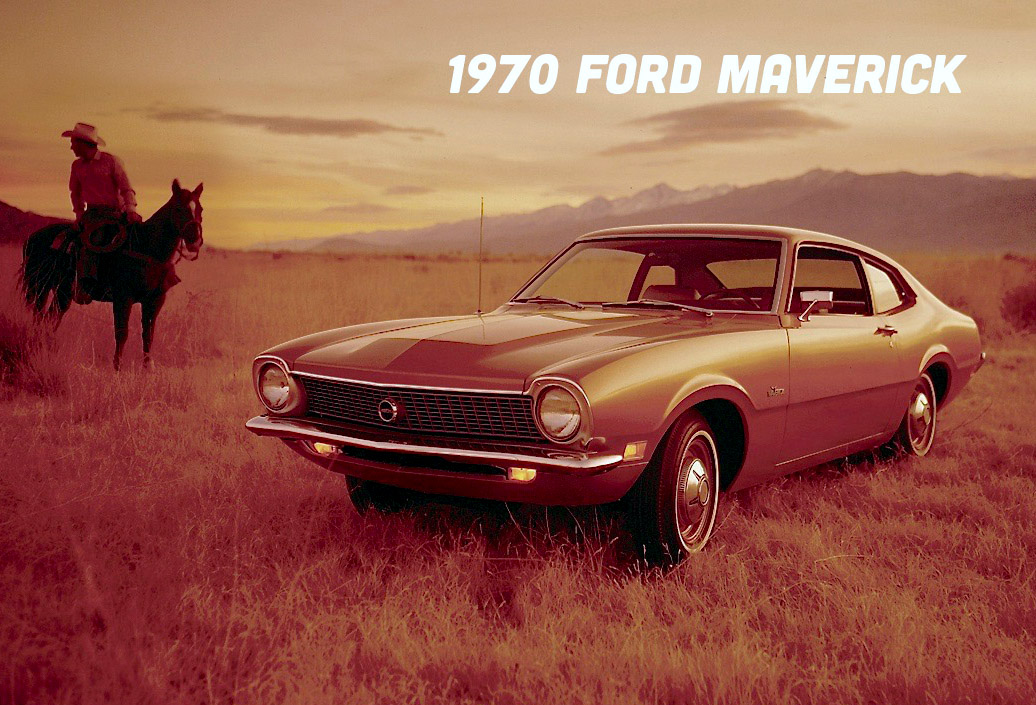
Ford’s solution was to first produce runout models of the old Falcon as 1970 models up until the end of 1969. Next, they made a new “Falcon” by rebadging a very stripped-out Torino, a model below even the budget “Fairline 500” version of Ford’s midsizer. With a taxicab-basic interior, this Falcon offered limited options and was made specifically for those wanting a decent-sized car for minimal cash, available as a sedan, wagon, and coupe. Growing up, one of my friend’s parents had the wagon version in stool-sample brown with what I’d assume was the “Thriftpower” six under the hood; it was the perfect kind of product for people who didn’t hate cars because they didn’t care enough about cars to feel anything towards them in the first place.


While the bodies of the 1970 1/2 sedan and wagon Falcon were virtually identical to their fancier Torino siblings, Ford made an investment for the two-door version that seemed rather short-sighted. You see, the top-of-the-line Torino got the “Sportsroof” treatment with an angular quarter window similar to the Mad Max Falcons in Australia:

Ford also gave buyers the less-expensive standard Torino hardtop (and the low-end Fairlane 500) with a gently curved C-pillar. So far, so good.


Here’s where it gets strange: For the ultra-penny-pincher Falcon version, Ford made a special “two-door sedan” body style with framed windows on the doors as well as on the quarter window with a B-pillar instead of the pillarless hardtop. I can see why Ford might do this if the production run was going to be half a decade or so, but to go to such lengths for a car that would only be made for around six months? Insane, and Ford likely knew that going in. Here’s the Falcon coupe with the framed windows and B-pillar design:
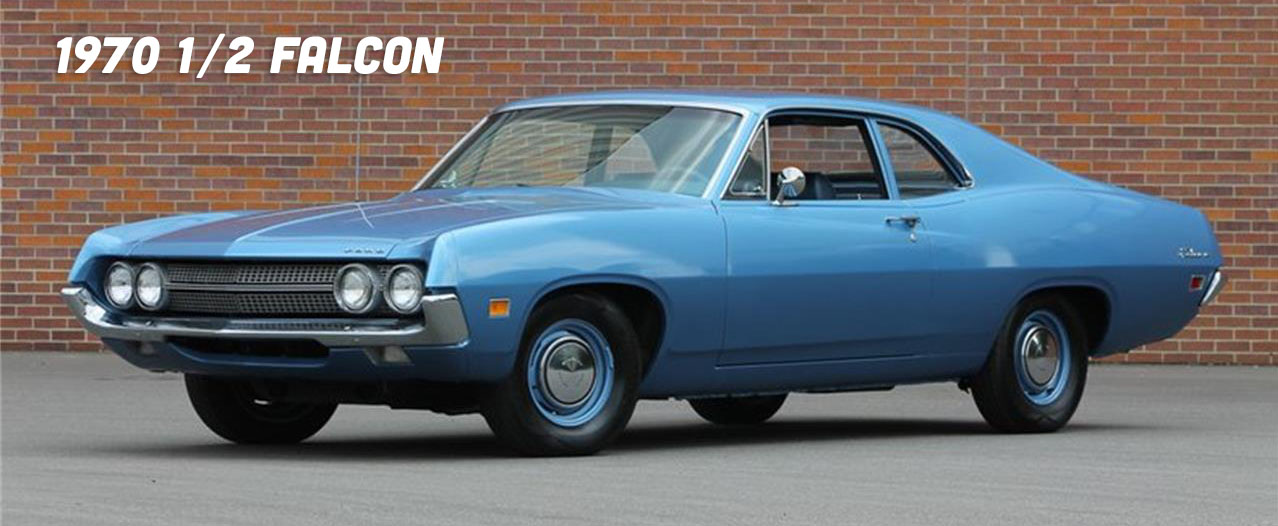

This is extremely odd; besides, if the Maverick was going to be the entry-level coupe, why have a Falcon two-door as well? Also, why go to the trouble of making a special pillared body style on a 180-day stopgap? They had to price it lower, so were they even recouping the added tooling and production costs? I don’t know, but as bizarre as this decision was, they made even more head-scratching options for this short-term Falcon.
This Is Called A “Factory Sleeper”
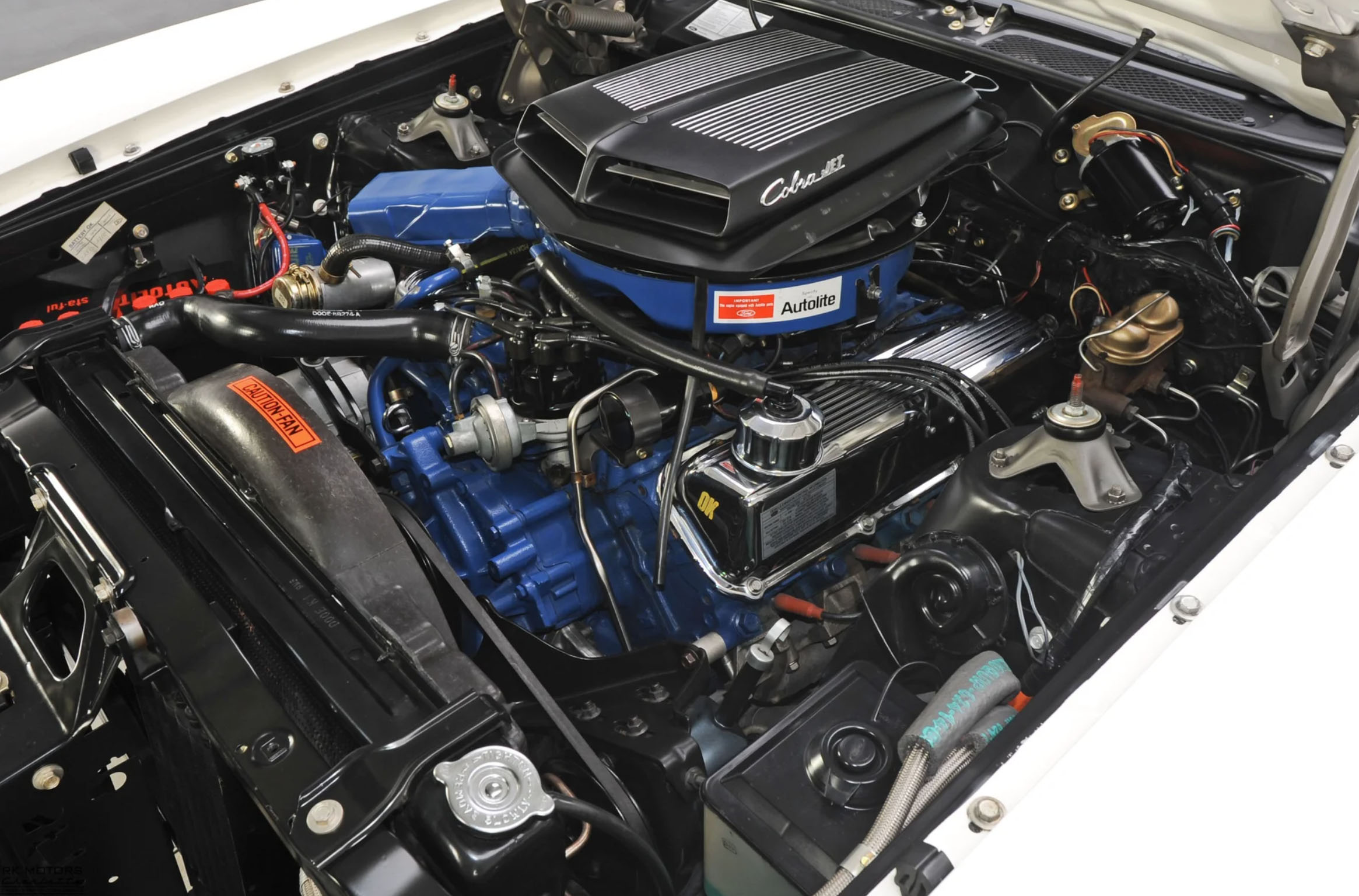
To help move buyers up the food chain, Ford was careful to limit the options you might be able to get on this bargain-basement Falcon. You could forget about checking a box for a fancy radio or power windows on most iterations. But for some reason, the folks in Dearborn did not reduce the number of powertrain choices available to Falcon buyers. You’d think a clunky straight six and the wheeziest two-barrel Windsor V8 would be the only engines you could have under your hood of this stripped-out budget mobile, but no. Even the mighty, top-of-the-heap 429 “Cobra Jet” Ram Air was just a tick-box away on the Falcon order sheet.

This is crazy for a number of reasons, but the biggest issue I can think of is the rather distorted pecking order that such availability created. I mean, the fearsome high-dollar Torino GT coupe (below) was marketed as the last word in performance Ford mid-sizers, right?

Well, if the top powertrain from that car was put into a stripped-out two-door of the same body style, you would imagine that lighter car would be faster. Sure, the weight difference might not have been enough to create an uproar, but at the very least, having the ability to buy a Cobra Jet-powered Falcon meant that you could go at least as fast in a similar car for minimal dollars.

You’ll notice in the Ford spec sheet above that the Ram Air Cobra Jet is listed with the same 370 horsepower as the “standard” Cobra Jet. That was supposedly an intentional factory misquote. In reality, the Ram Air pumped out at least 40 more horses, delivering closer to 400 horsepower in this budget muscle coupe.
Naturally, the Cobra Jet Falcon was quick; a quarter mile in the mid-13s and a zero to sixty in around six seconds were about as good as American cars were going to get before the malaise era truly set in.

With park-bench seats and few amenities, there weren’t a ton of buyers who would accept such austerity in exchange for speed. In fact, there were supposedly only around 90 customers chose a Falcon with the Cobra Jet option.

Even the trunk barely has any trim, just that old school Ford tartan plastic sheeting to cover up bare sheet metal:

The dash is the expected seventies Ford issue, but I do like the odd optional “band” tachometer below and to the left of the speedometer:

Still, if you think that slushbox Cobra Jet Falcon was scarce, you could get rarer still. Reportedly less than ten Cobra Jet Falcon buyers selected the four-speed manual transmission option, such as on this one:
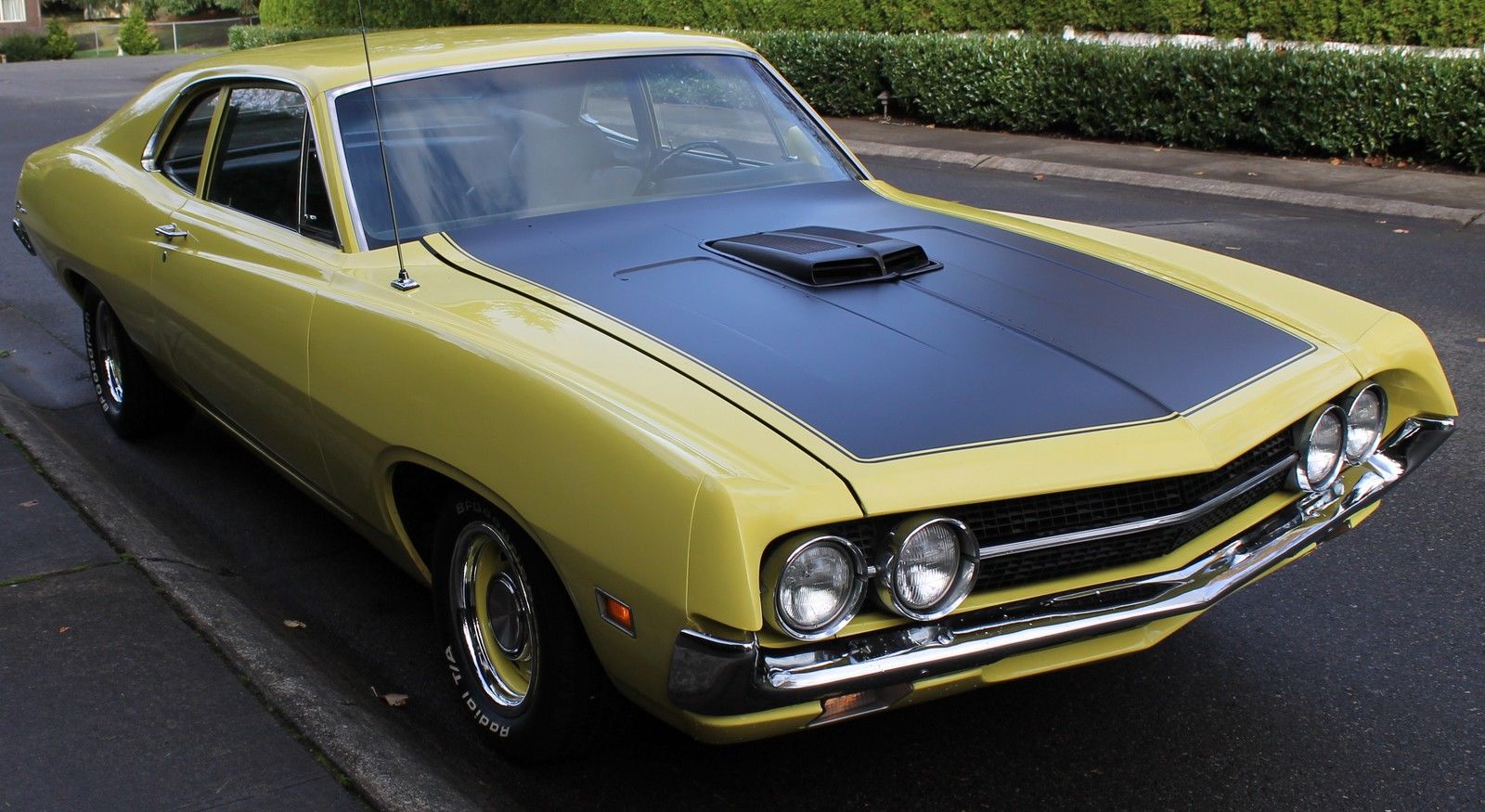
I love the look of the racy shifter poking up in front of that municipal bus bench seat. Talk about an interior where you simply know you’ve got the least expensive version:
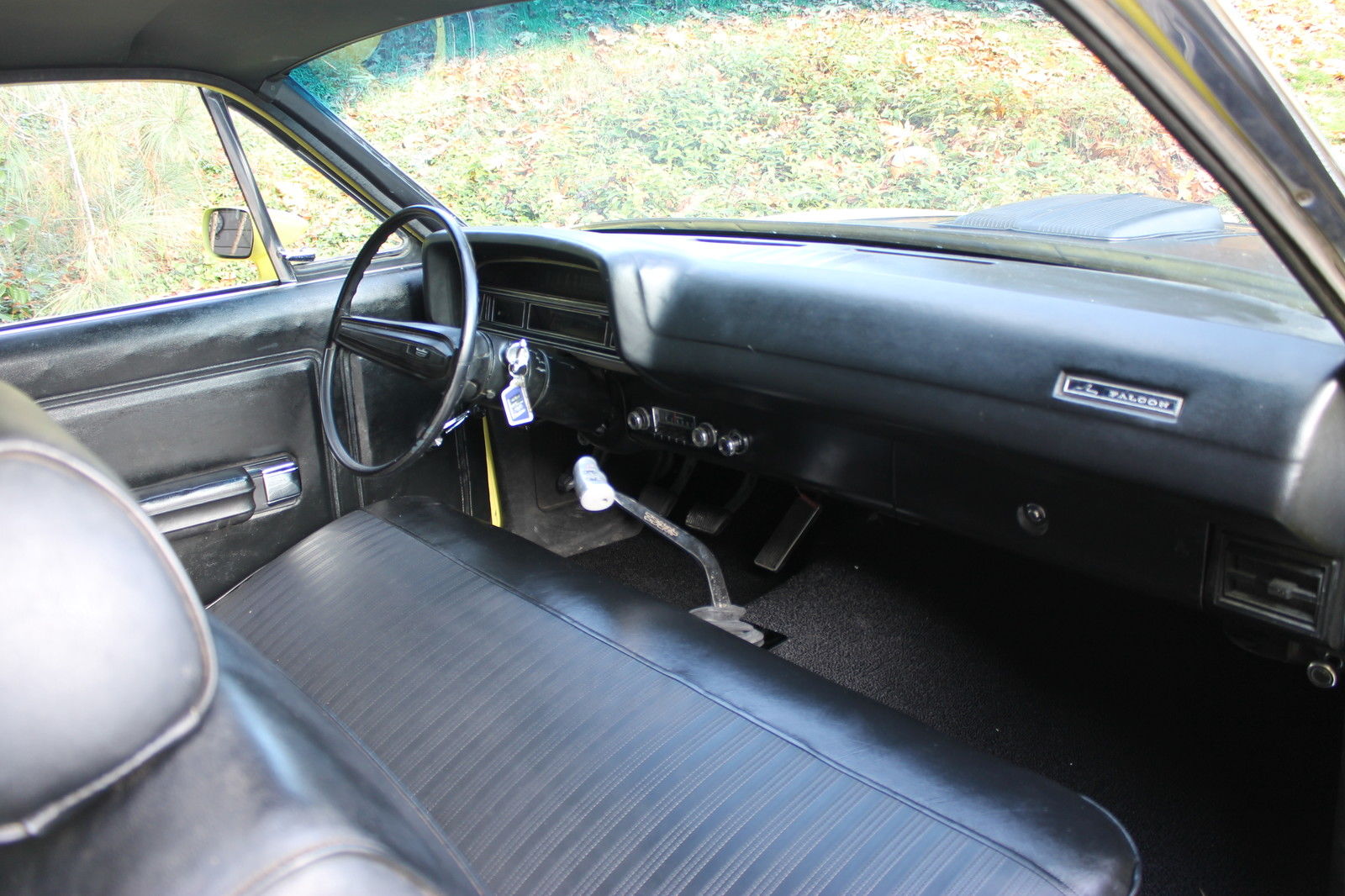
The number of existing stickshift CJ Falcons today must be so low as to almost not exist, and the entire ’70 ½ Falcon experiment barely existed as a whole. Total production of the six-month-only Falcon two-door totaled only around 26,000 cars before Ford ditched the Falcon name for good (in the US at least, mate) and offered only the lower-level “non-Gran” Torinos instead.
Bulls (Torinos) May Run, But Falcons Fly
Both the Falcon and Torino of these years are arguably some of the best-looking family Fords ever, and were reportedly some of Lee Iacocca’s favorite products from his time in Dearborn, despite his later love for T-square-designed cars.
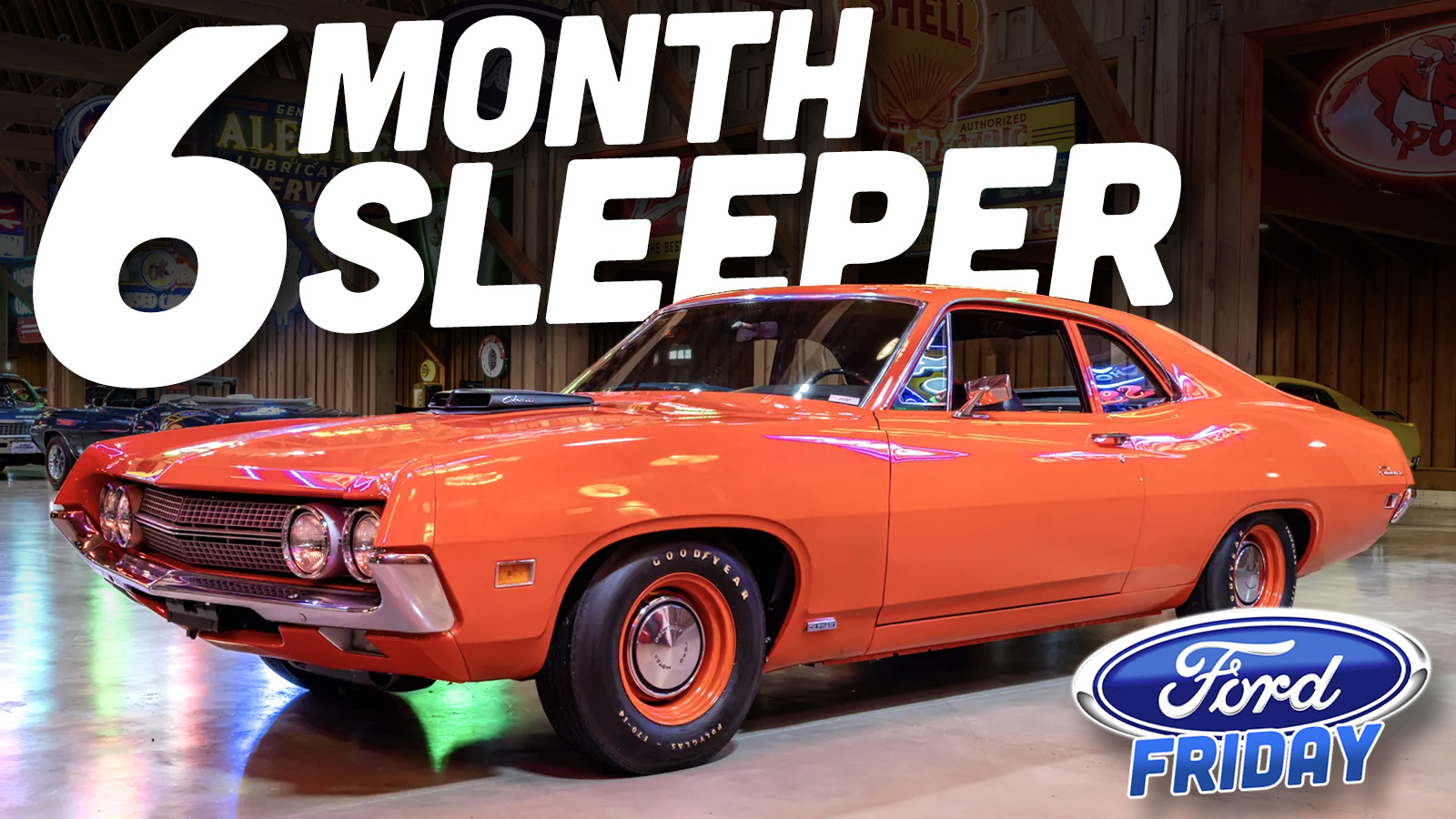
Today, any high-powered 1970 ½ Falcon coupe is worth a bundle, but the holy grail orange example in the topshot above with the drag pack and four speed sold for only $130,000 . You get the sense that a similar rare and special performance version of a more popular Mopar and GM muscle car would sell for far more, particularly if it’s an example like a stick Falcon Cobra Jet where the total number made could be counted with your fingers and still leave you with a free digit.
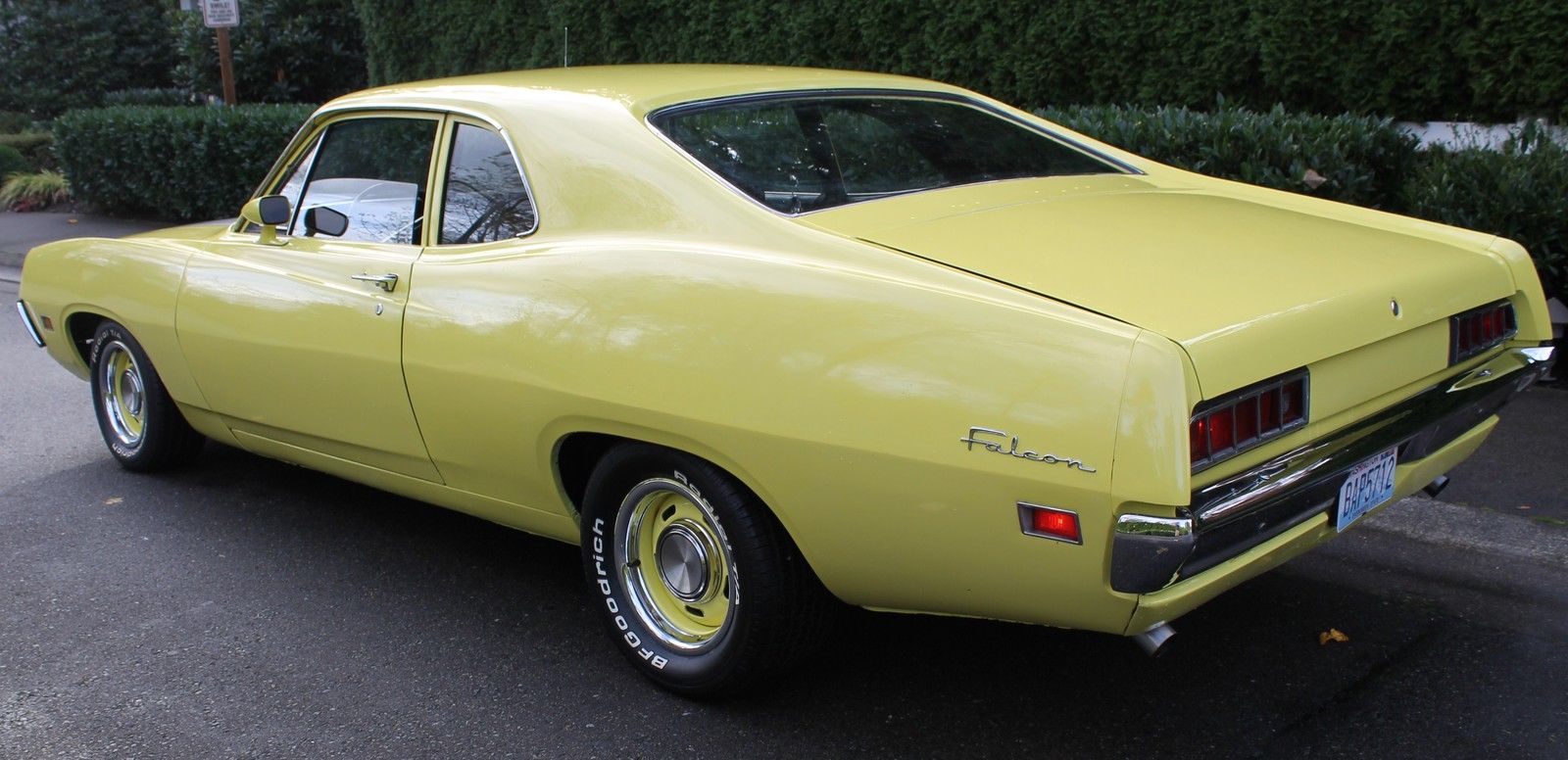
A Cobra Jet-powered Falcon is not for hedonists. Still, if you want no-nonsense frills-free performance, there’s one Ford coupe that came and went as quickly as it’s hot, enigmatic motor could take it on the street.
Top graphic image: Richmond Auctions



That’s all I know is that I saw
and I thought… so you’re saying there’s a chance?
This is like Vanilla Ice explaining the difference between his song and Queen’s “Under Pressure”.