

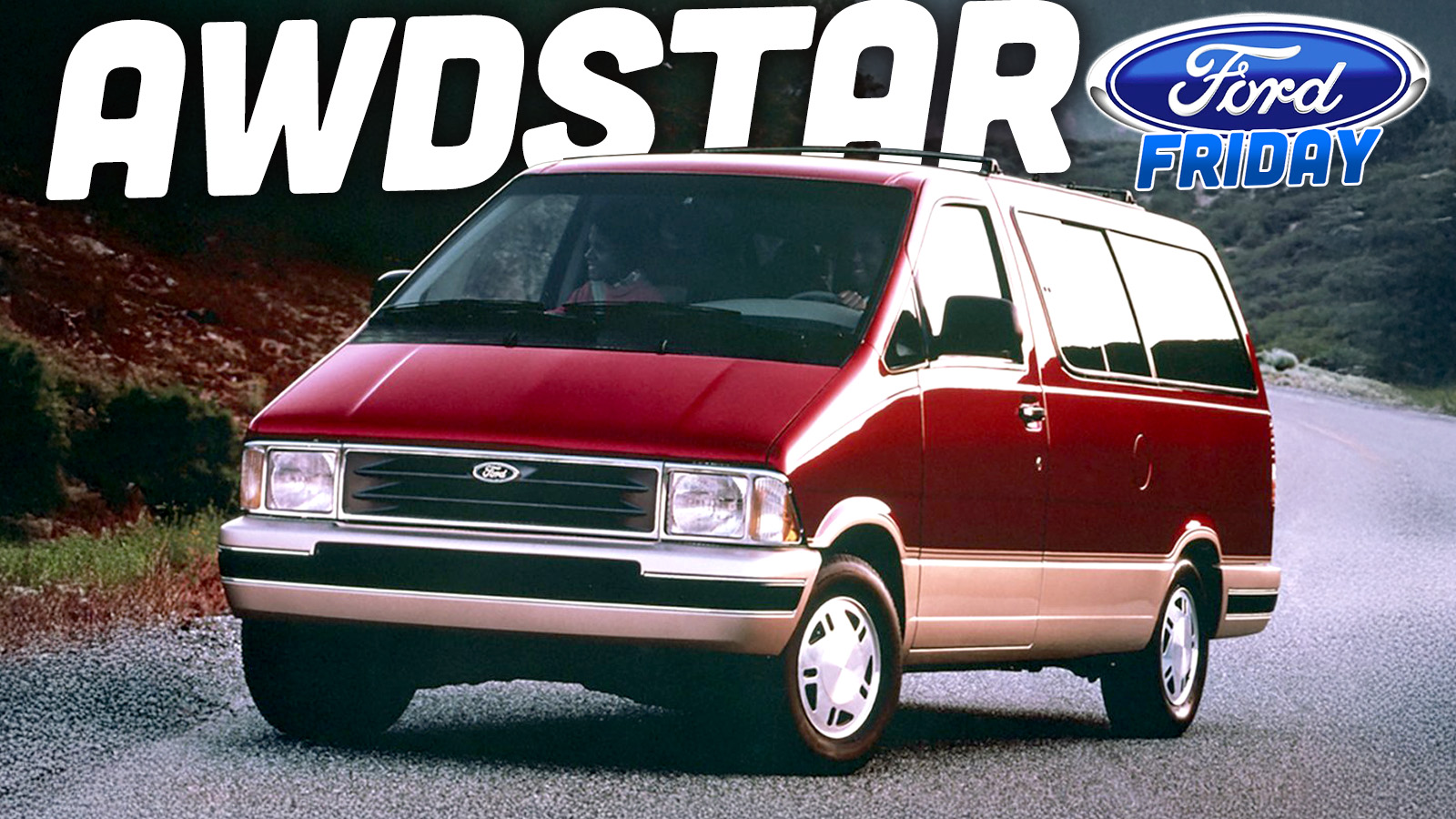
Make no mistake: in terms of overall sales, Chrysler won the minivan war. It wasn’t even close, and critics are quick to point out that Ford could have been in Chrysler’s all-conquering position if only Ford’s decision makers had realized the “garageable van” concept it tinkered with in the 1970s could become a category-defining hit. But they did not.
Though it lost the war, Ford did win one important battle, and fans of those who like their minivans more “van” than “mini” are forever grateful. That’s especially true for those who wanted a little chunk of SUV in their people carrier. It’s time to revisit the underappreciated workhorse that was the E-AWD Aerostar.


Just When You Thought You Couldn’t Get Less Cool Than A Station Wagon
The story has been told for years that, despite not being first to market, Ford really “invented” the minivan. That’s a broad statement, but there’s certainly evidence that Ford in the 1970s was indeed playing with at least two different variations on what a van-style future people carrier might look like.
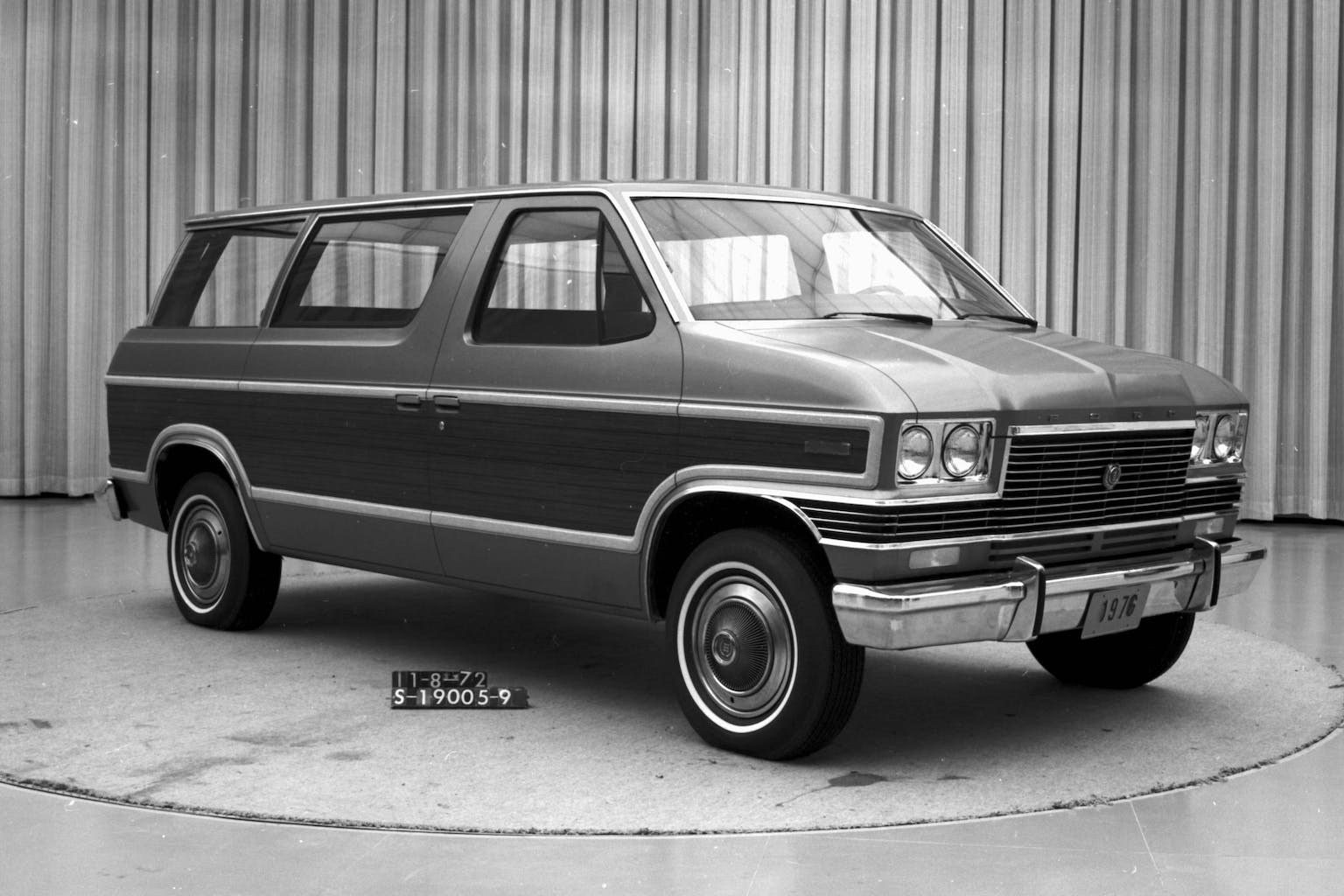
One of these concepts was the Carousel “garagable van,” essentially the same front engine and rear drive layout as an Econoline, but reduced in size to be more manageable for the average station wagon buyer.
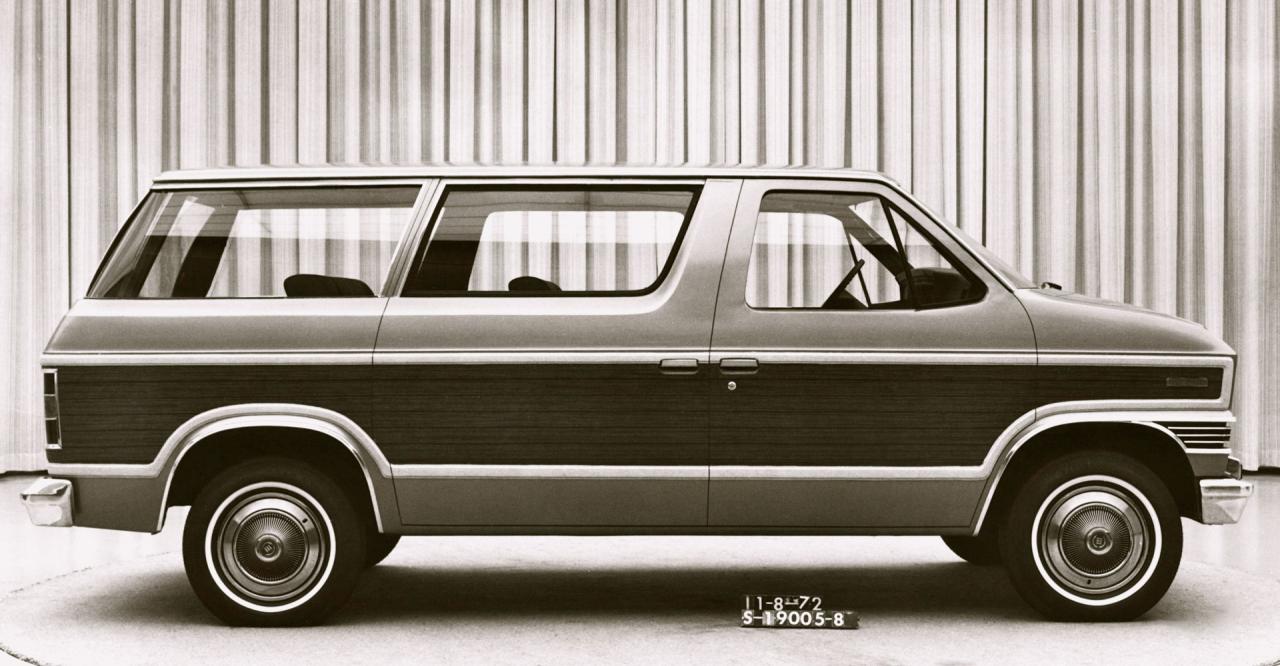
Inside, a more car-like feel was accomplished with three-row seating like that of the Country Squire wagon, and the 460 V8 driving the Carousel’s rear wheels was also very LTD-like. Historians might consider the Carousel to be a “minivan,” but it wasn’t particularly “mini” at all. It’s reported that Henry Ford II saw no benefit to the thing, since in his mind it would do nothing but steal sales away from the station wagons already on dealers’ lots.
The other minivan concept at Ford was reportedly one concocted by frequent Lee Iacocca collaborator Hal Sperlich. This super-compact, front-wheel-drive box called the “Mini-Max” was more about getting maximum cargo capacity in a small space rather than carrying seven people.

Unlike the Carousel, this one might have had the opposite problem: it was too small. If there’s one thing that Henry II really couldn’t stand, it was tiny cars. You can tell where this one was going, but nobody saw where it would end up.
In 1978, Henry II fired Lee Iacocca. Lee’s old partner Hal Sperlich lured him to lead the dying Chrysler Corporation, which Hal had joined after getting the boot the year before. Little did anyone know, this set the stage for the Van Wars of the Eighties.
The Lido Shuffle
Needless to say, the whole “compact front wheel drive” direction of car platforms that so irked Henry II was the main focus of Iacocca and Sperlich at the New Chrysler Corporation, with the K-platform Dodge Aries and Plymouth Reliant leading the way. The platform would spawn everything from luxury sedans to sport coupes, and of course, that compact “mini van” was one thing to which the ex-Ford men would apply all of the research that had been mothballed at Ford.
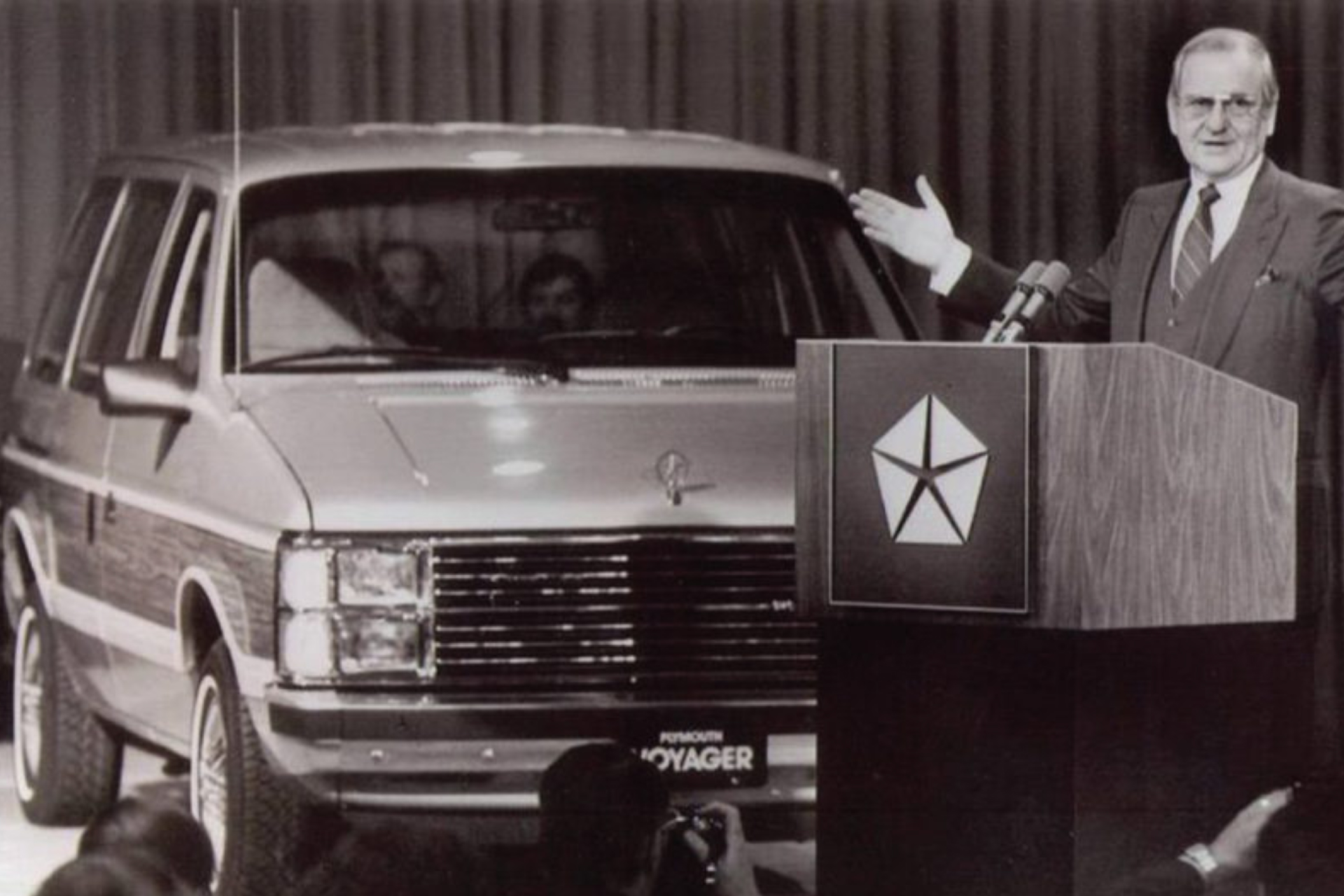
If nothing else, the now-Chrysler guys seemed to agree with Henry II about one thing: the Mini-Max concept in its initial form was too small to really be viable. The K-Car-based van they came up with was still compact but now able to hold up to eight people in a pinch, with three-wide benches front and rear (the middle row being shorter to gain access to the third row). Initially powered by Chrysler’s 2.2-liter four, it offered great fuel economy and was able to get out of its own way, just barely, but that was par for the course back in the malaise.

Chrysler really had nothing to lose at this point; the new Dodge Caravan and Plymouth Voyager were rather odd-looking to 1984 buyers and potentially could have been complete flops. Instead, they turned out to be Lido and Hal’s next 1964 ½ Mustang; exactly the right kind of never-seen-before product the market was looking for. Here was a car-like garageable van for people who would never have considered a van.
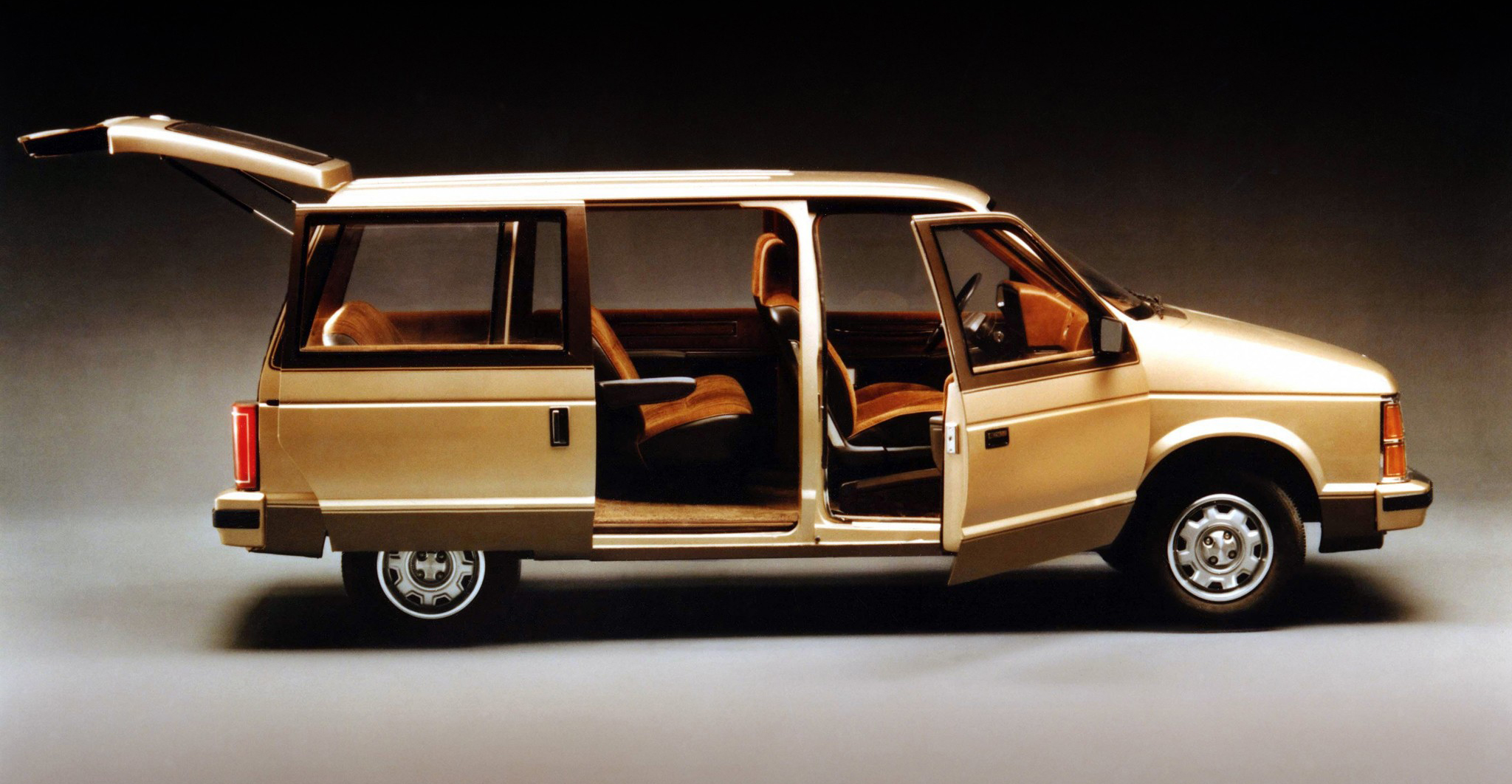
This is where many historians will wax eloquently about Ford’s oversight and hubris, blinding them to what the market wanted. The truth is not quite that simple.
Aerosmith Would Have Been A Cooler Name
While the Chrysler executives might have upscaled one of the concepts they championed before their exile from Ford, Ford itself appeared to be doing the opposite with the old Carousel: they shrunk it down. As with that concept, Ford’s new small van would be front-engine and rear-wheel drive with a body-on-frame layout similar to a traditional van. However, this was not just a scaled-down Econoline. While the Caravan and Voyager shared much of their underpinnings with the K-car, the new Ford van had a unique chassis that even included coil springs in the rear instead of the leaf springs of a full-sized van. In fact, one of the few changes the Chrysler minivans had from the K-platform sedans and wagons was “cart springs” on their beam axle in back.
Also, Chrysler chose to stick with very simple “one-and-a-half box” styling for the Caravan, but Ford presented a concept with a dramatic wedge-shaped nose dubbed the Aerostar.
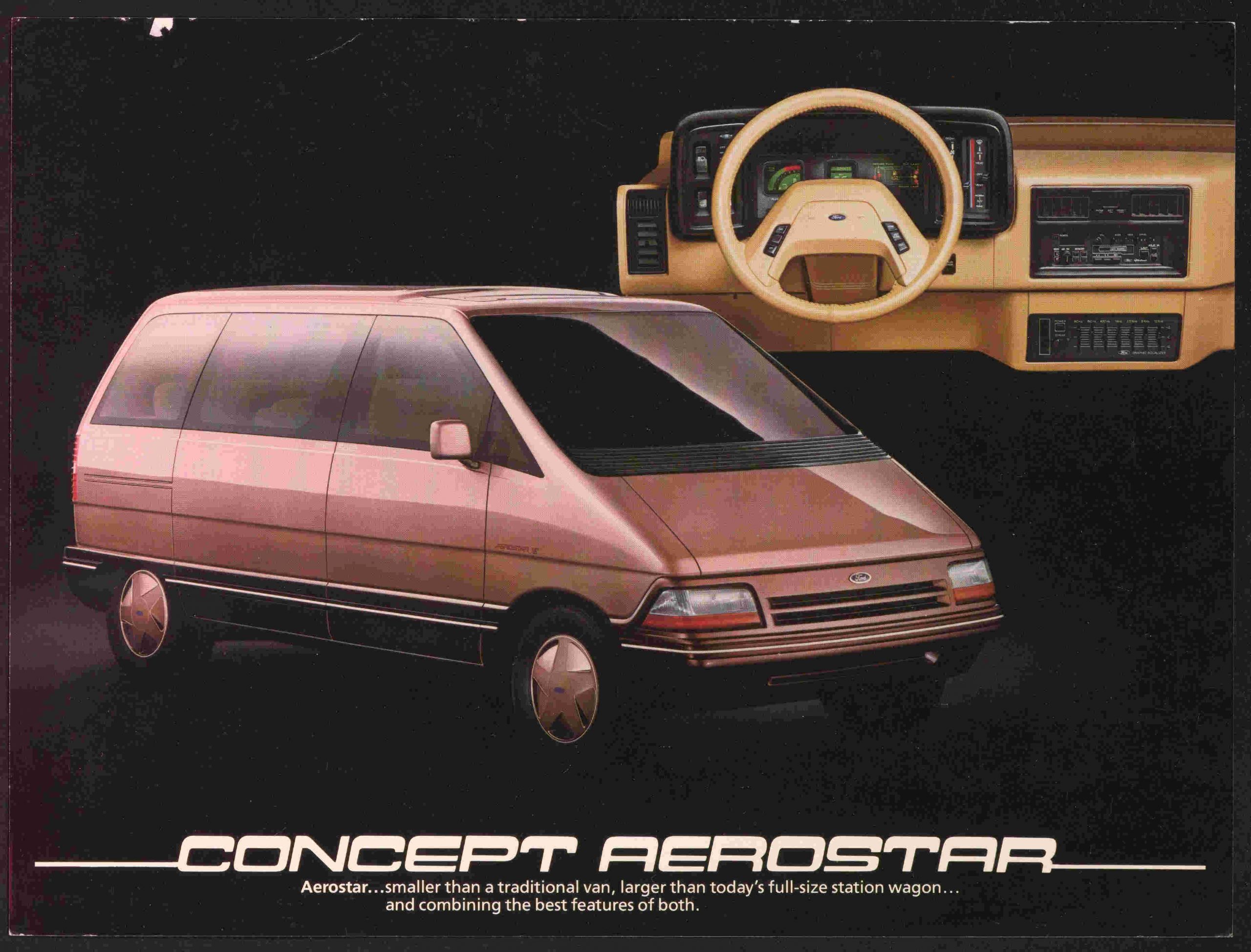
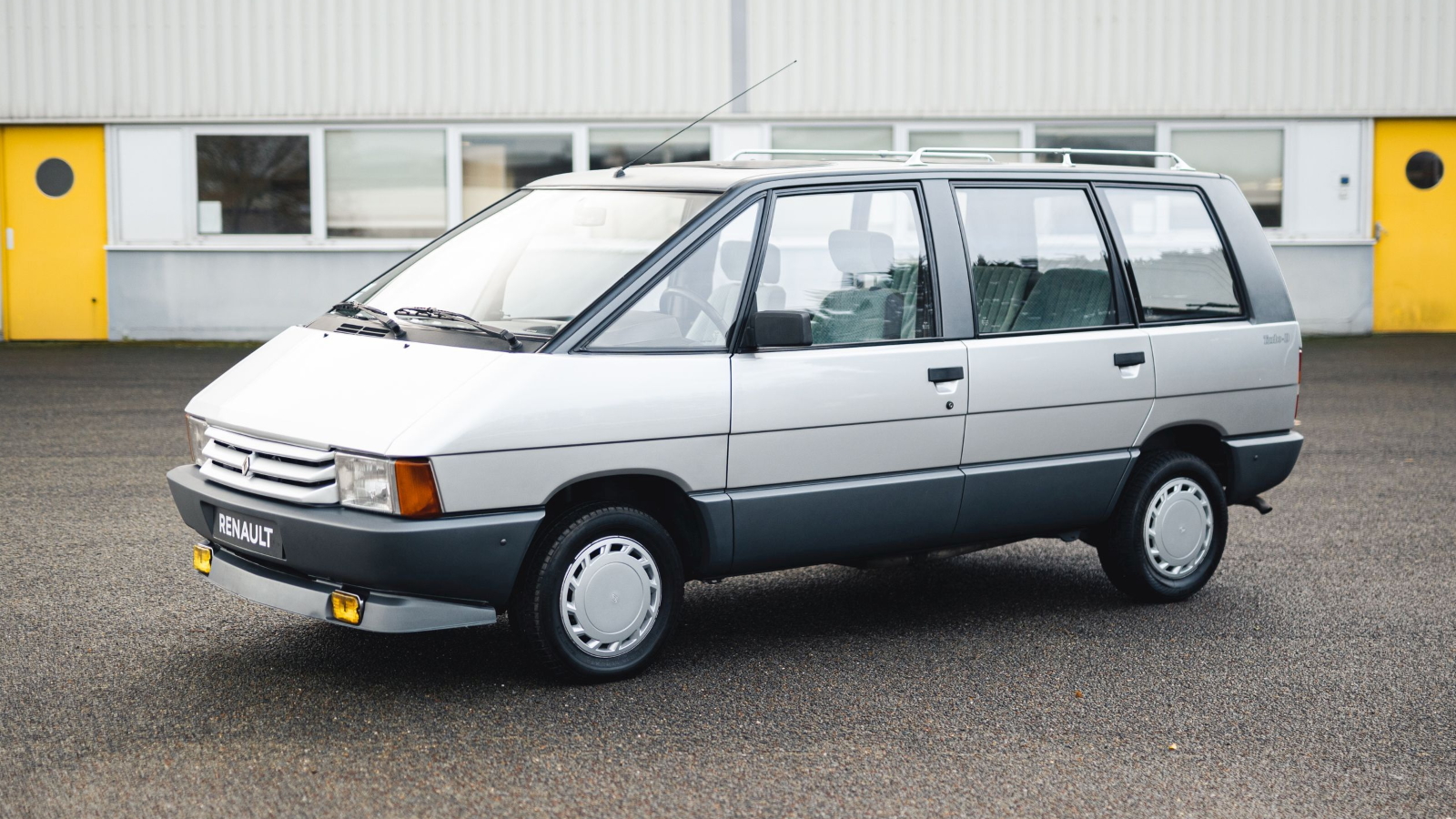
This radical style was not unlike Renault’s Espace van introduced in 1984. It’s one thing for the French to release such a cutting-edge design and quite another for often conservative Dearborn to throw something that looks like a monorail at the public.
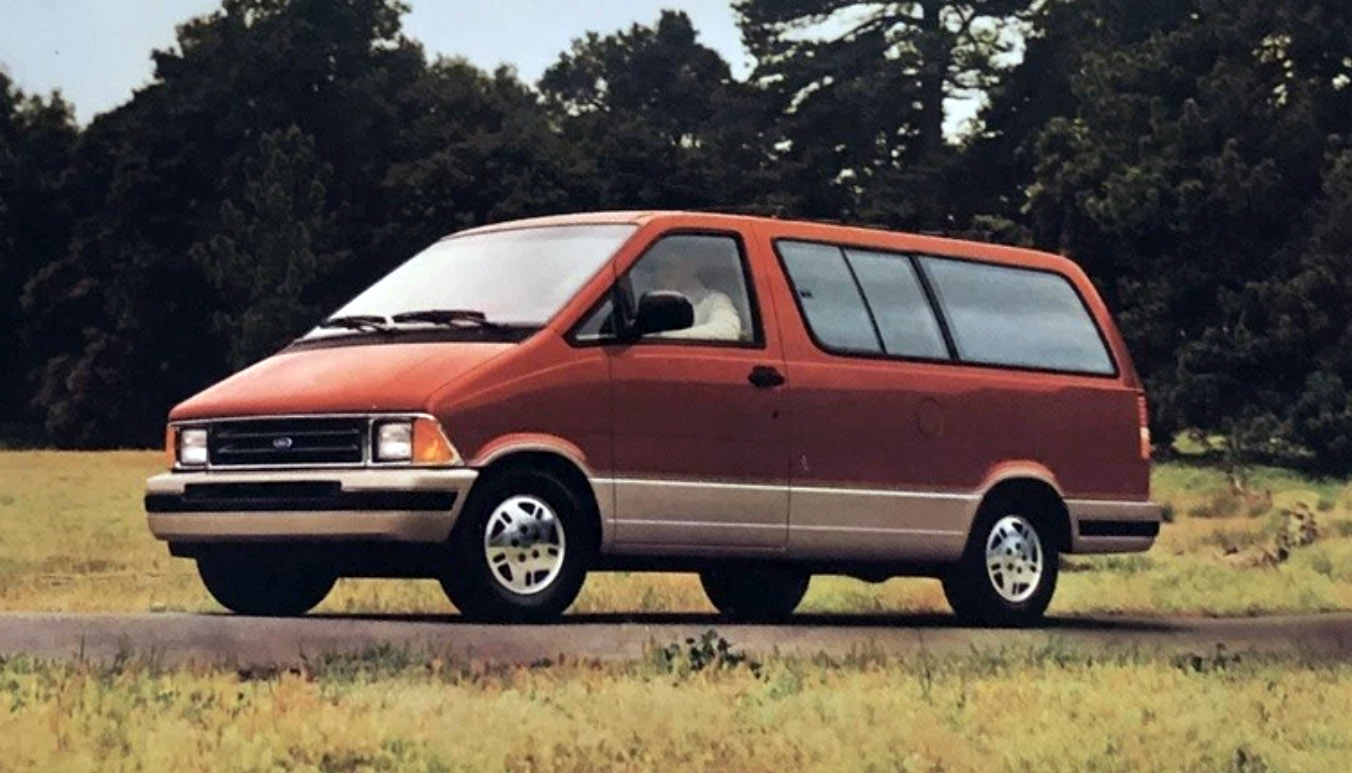
Surprisingly, that’s exactly what Ford did with the launch of the production Aerostar for the 1986 model year, barely changing much from the show vehicle.

With futuristic looks and a seemingly old-school rear-drive design chassis, you might wonder how many people would really choose such a vehicle over the Chrysler vans. As it turned out, there were plenty of buyers for Ford’s new rather low drag (.37 Cd) doorstop wedge. Ford soon offered a long version of the Aerostar as well, which possibly even scored a lower coefficient.
If you wanted to tow anything of significance with your minivan, you really had to choose Ford. Thanks to a V6 option and a “hybrid unibody” that utilized a partial box frame, the Aerostar’s 5000-pound towing capacity was about two and a half times more than the maximum allowed for the Chrysler K-based vans. Honestly, if you even wanted enough power to regularly haul any kind of weight in the van itself, the Csravan’s 2.2 four wasn’t a great choice. The standard 2.3-liter four-cylinder option for the Aerostar only lasted for the first two years, and Ford added a larger V6 just as Chrysler finally offered the Mitsubishi V6 for its minivans, which still couldn’t pull much.

While GM released their own also-traditional-layout minivans around the same time, the Chevy Astro and GMC Safari were styled and designed to be essentially scaled-down full-sized Chevy Vans; the Aerostar’s appeal was offering these old-school functional traits but in a more forward-looking product to appeal to new buyers.

Still, the slick exterior and heavy-duty underpinnings were just the start; step inside and take a look at where the Aerostar really shined.
You Had Me At Donut Hole Headrests
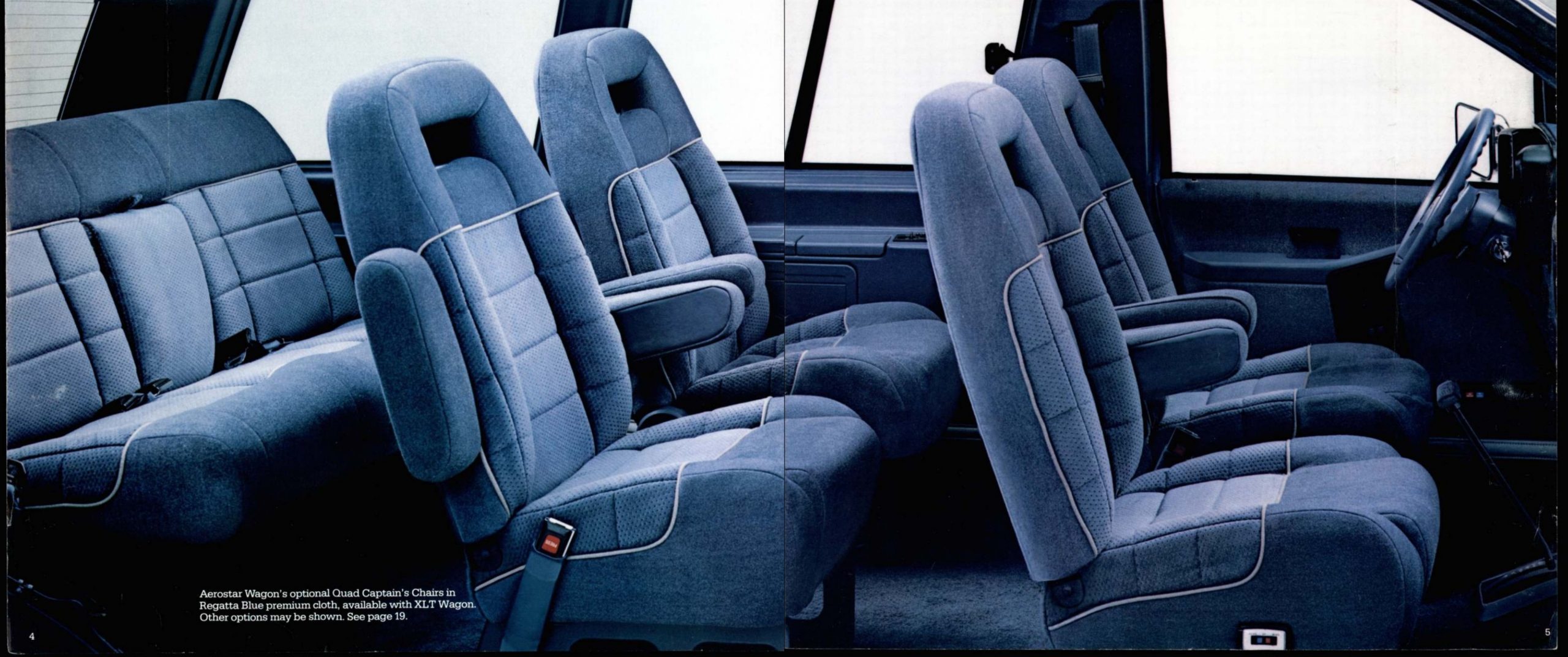
Ford Aerostar interiors always seemed so much fancier than the Chrysler and GM equivalent,s with fold-down armrests for everyone and sharp upholstery options.
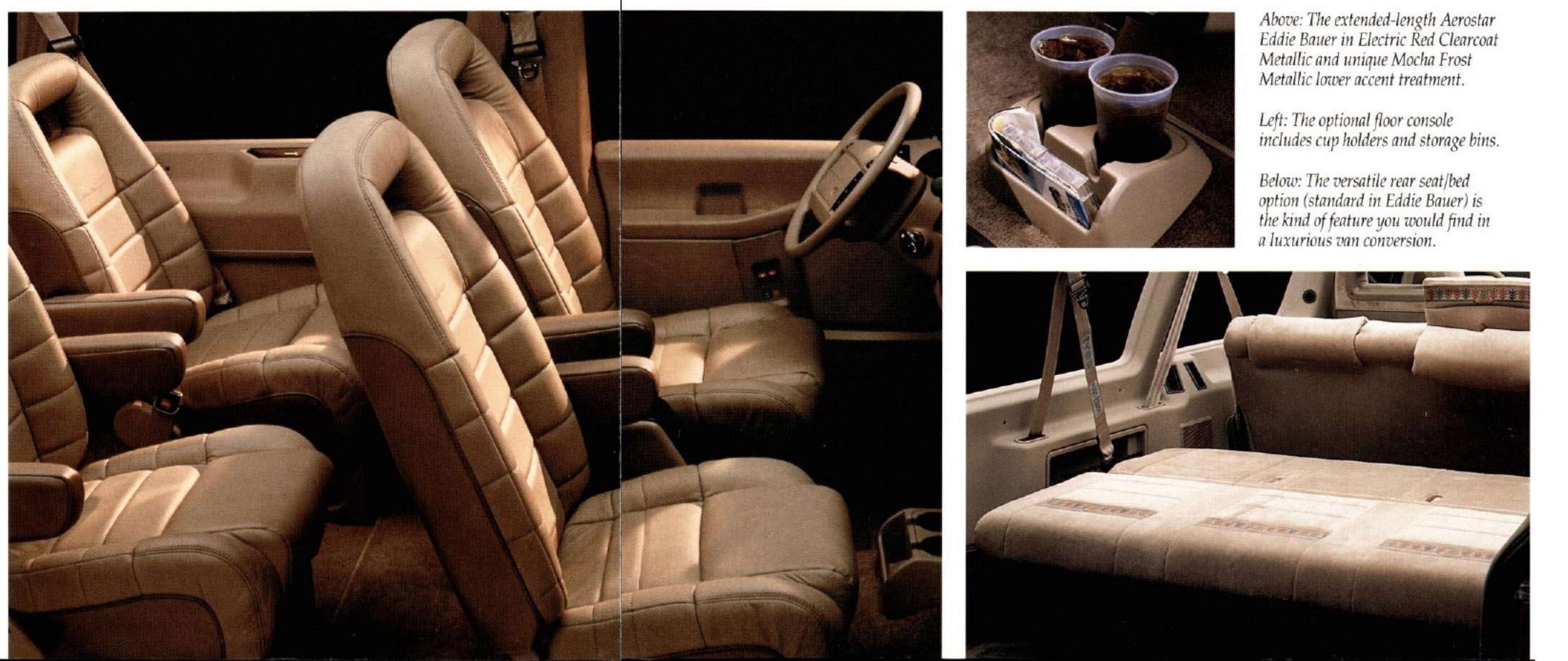
Ford even offered an upscale Eddie Bauer-branded version with even more lavish leather-covered seats. The seats could be configured in a variety of formats, including a bed or removed altogether to give you a mini-Econoline (thought there was a cargo version of the Aerostar as well).
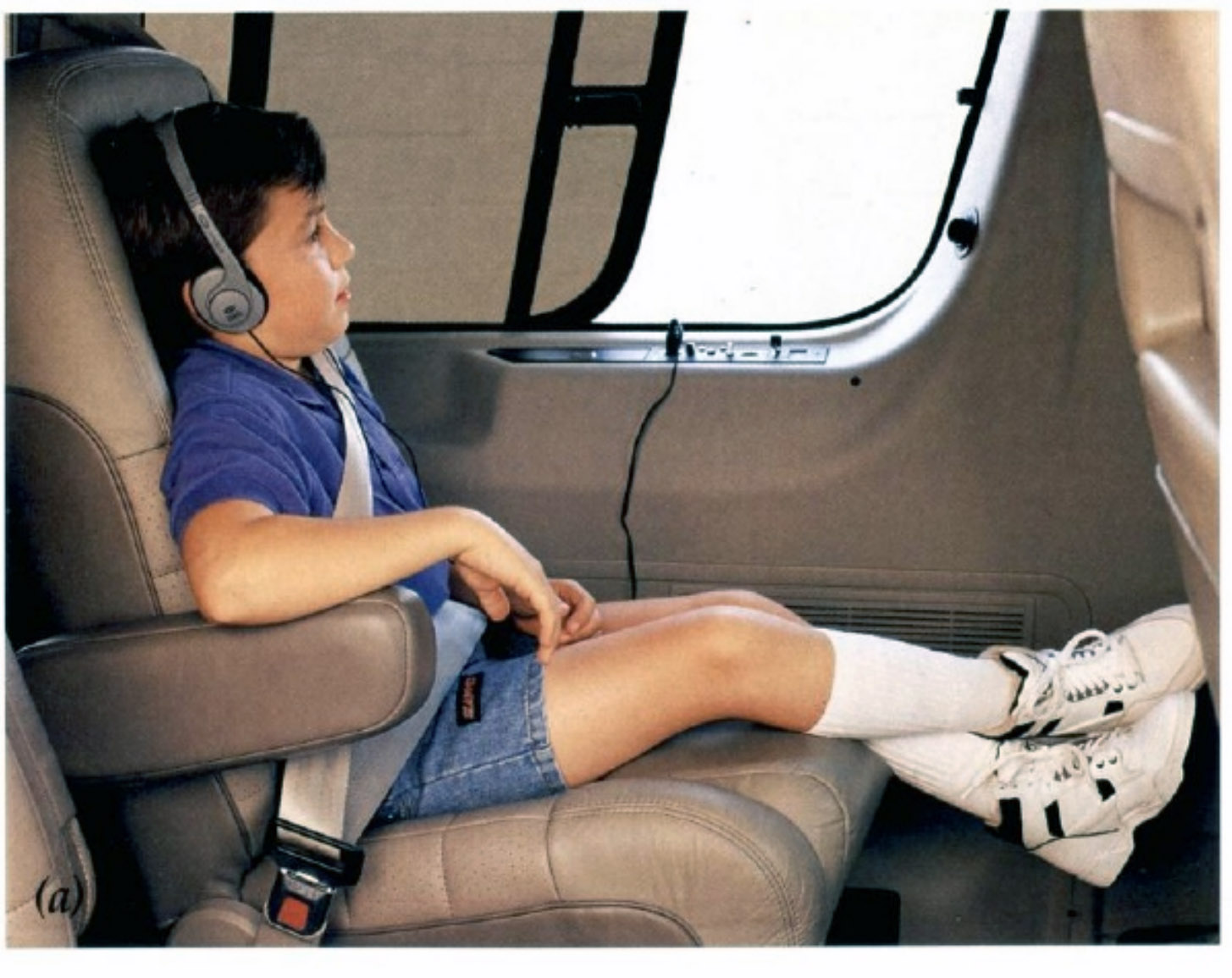
Hey, look! It’s you as a nineties kid luxuriating in the back of your mom’s Aerostar, enjoying not only the built-in private audio jacks but the fact that you could actually open your side window, something that a concurrent Caravan or Voyager wouldn’t let you do (they only flipped out for ventilation and you’d die back there on a hot day).
The dashboard is very Taurus-like and seems more fitting for a car than anything van-related.
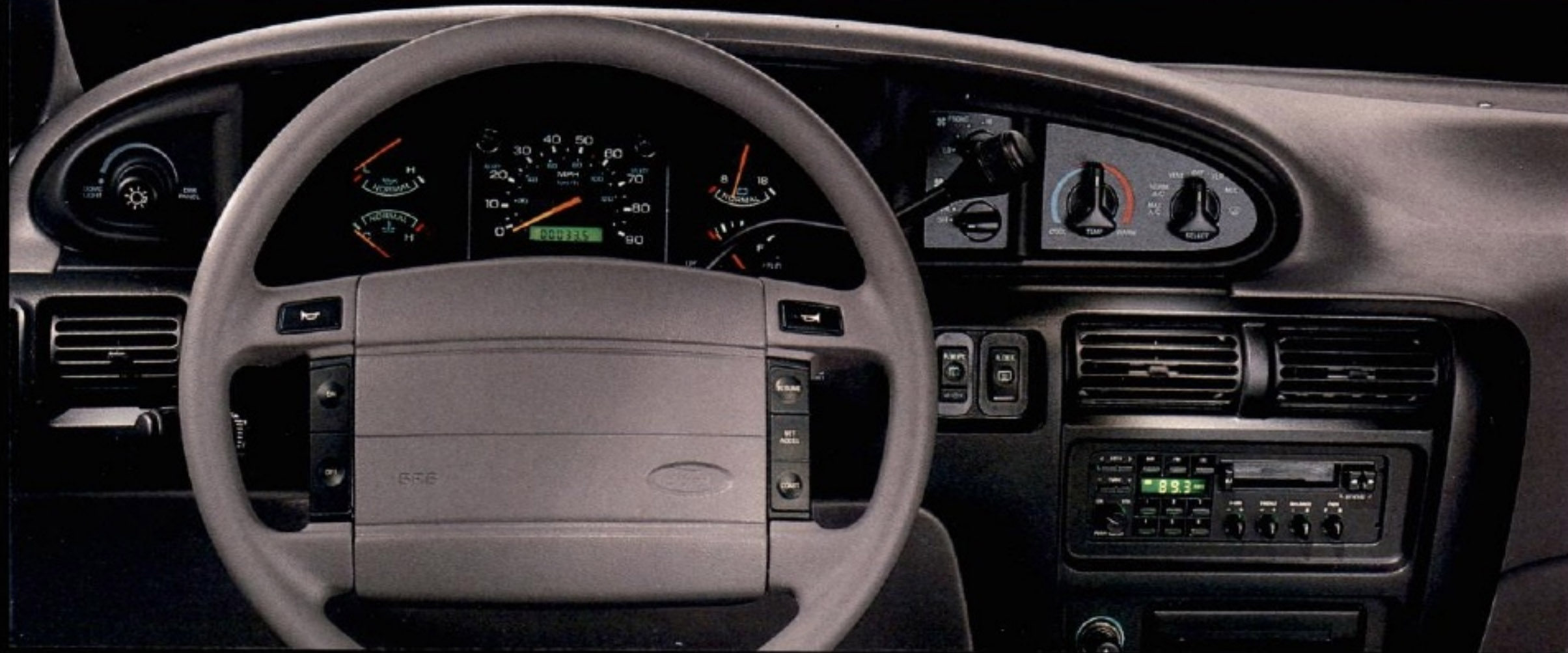
You could go even snazzier and pop for digital gauges and what looks like a graphic equalizer at the bottom of the dash. Damn, is this a Lincoln minivan?
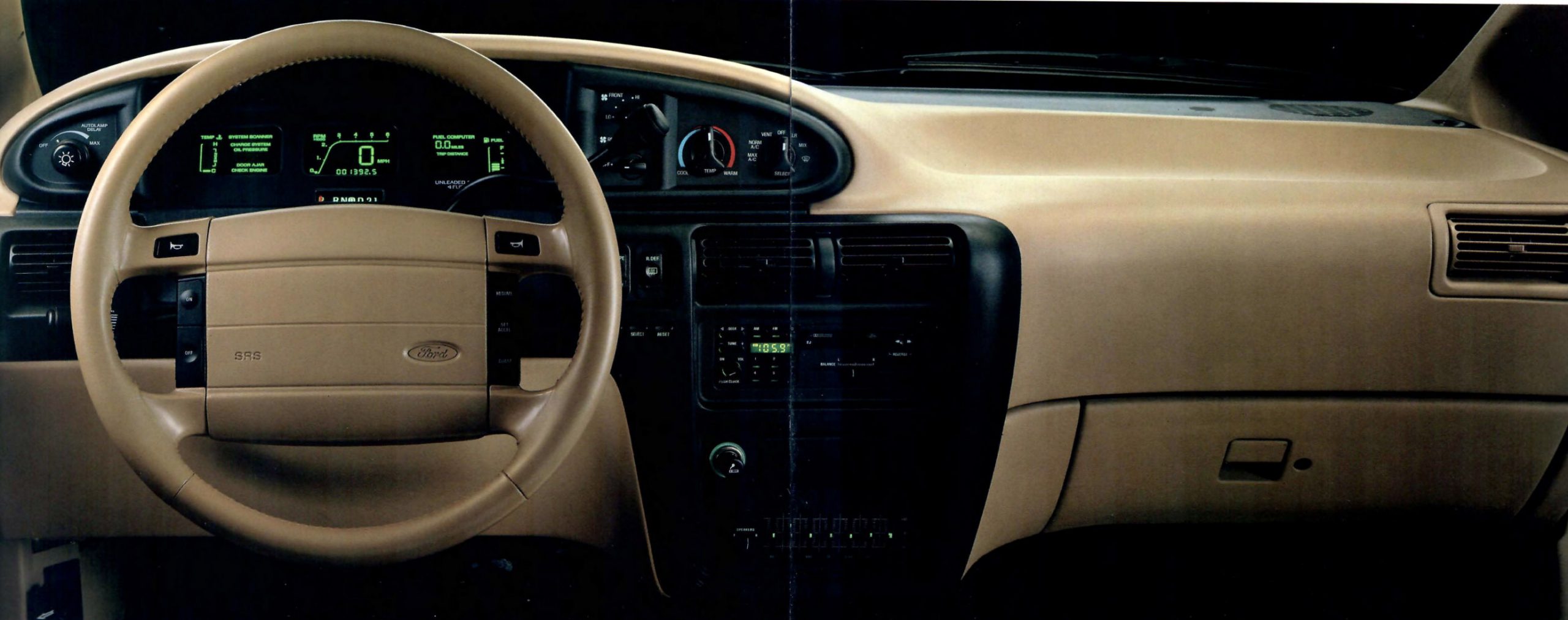
Of course, with rear-wheel drive, the Mopar naysayers were quick with a comeback: “I’d hate to see that thing trying to get through a blizzard.” The poor buggers were kind of correct, but Ford had a trick ready there as well.
You Want Traction? We’ll Give You Traction

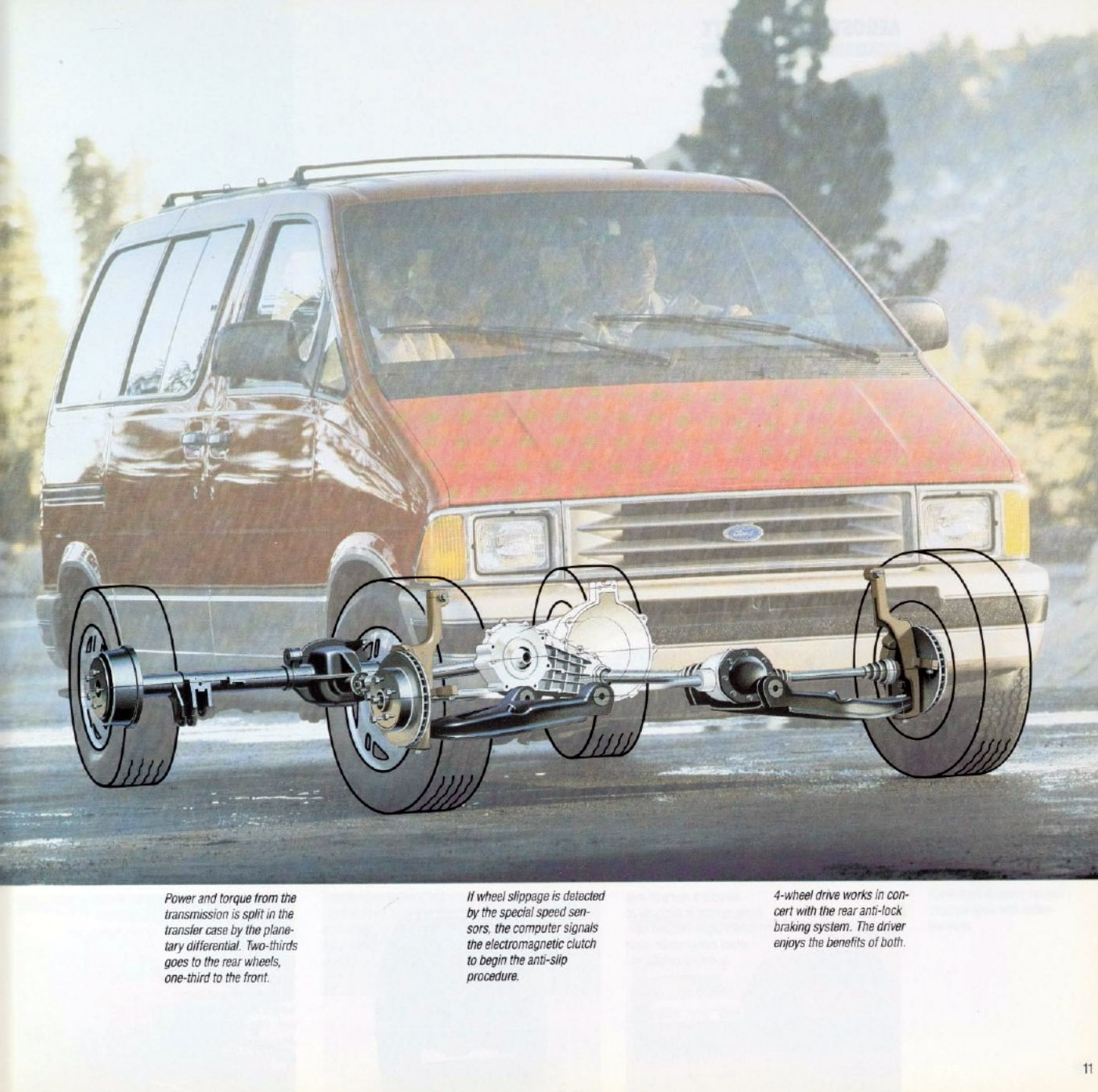
For 1990, the critics were answered with an all-wheel-drive Aerostar. Dubbed ‘E-AWD,” the Dana transfer case featured an electronically controlled electromagnetic clutch to regulate power to the front wheels, as the brochure below illustrates.

You can see that Ford was quick to point out that the system was absolutely not designed to be used for off-roading purposes, but it was likely far more capable than any owner would ever need anyway. A bored-out, 160-horsepower 4.0-liter Cologne V6 was required with the E-AWD system, which was only offered on XLT and Eddie Bauer trim models.
In 1992, the Aerostar was finally updated with composite headlights as on the original show vehicle, but few other major changes were implemented.

The truth is that the Aerostar was supposed to have been discontinued in 1994 with the introduction of the front-drive Windstar, but this plan met with the same kind of resistance that Ford met when planning to replace the Mustang with the Probe a few years before.
Dealers in particular liked the towing-capable little van on their lots, so Ford relented and kept the Aerostar around for three more years until impending regulation requiring a standard passenger side airbag forced its cancellation in 1997.
Not Ashamed To Be A Van
Ironically, the Taurus-based 1995 Windstar was aimed to directly battle with the Chrysler competitors; it was a battle they would lose badly. The Windstar performed reasonably well, but it received generally poor reliability scores from publications like Consumer Reports and was subject to numerous recalls, most alarmingly from the U-shaped rear axle filling with salt slush and rusting in half. If nothing else, that might have been proof that Ford was right about not going head-to-head with the Caravan and Voyager in the first place.

Also, Henry II had a point about not cannibalizing your own internal sales, and that’s where the unique personality of the Aerostar really made everyone in Dearborn happy. Don’t forget that Chrysler had no truly viable mid/full sized station wagon during the eighties, while Ford and Mercury introduced the slick Taurus and Sable long-roofs in 1986. These aero wagons sold well from the start, and if you needed something even larger, Ford and Mercury still offered big, when-will-you-ever-die Panther wagons that could muster over 20mpg on the highway (I never did with mine, but it was old by the time I owned it, and my lead foot didn’t help).
Aerostars like this were often used up and thrown out, but you’ll occasionally see good-condition examples like this one that popped up on Bring A Trailer a little while back.

It’s in unreal condition for a 1995 van; strange to see such a workhorse with only 56,000 miles on the clock, too. Not to mention glorious green. What a dream vehicle for your mom in the nineties!

Most minivan interiors didn’t look this clean three blocks from the dealership.

The selling price? Only $11,677; an absolute steal when you can’t even get a several-year-old minivan that couldn’t do half what the Aerostar can do for that money.
In many ways, especially with that upscale interior and “outdoorsy” trim the E-AWD Aerostar was more of an SUV or capable crossover than a minivan, a “tough” appeal that the more car-based front-drive products couldn’t match. Screw your hopped-up Raptor; look at this tough little sumbeech go!
The Aerostar might have never matched the Chrysler products for sales volume, but Ford moved well over 2 million of their anti-Caravan over its 11-year lifespan. Maybe history needs to cut this poor van a break.
Also, can I get big tires and a lift kit for one of these things? Please?
Top graphic image: Ford



Big Aerostar fan here. My FIL’s buddy had one with a 3.0/5spd and had over 500k miles on it when he retired. At roughly the same time, my FIL’s Windstar only lasted 120k miles, blew 2 transmissions and at least 1 head gasket. Big downgrade in terms of reliability.
A TV station I worked at in Cleveland had a 4WD version of one of these (XLT, SWB) and it was impressive to drive, especially in the snow. It handled the typical cratered pavement of a rust belt city with aplomb, and despite running on all-season tires, never got stuck.
How do we get through a whole article and two pages of comments about the Ford Aerostar and not ONCE mention Boogey Van? For shame.
https://static.wikia.nocookie.net/monstertruck/images/3/32/Boogeyvan31_t5h.jpg
Growing up my parents had an aerostar then a previa for max weirdness. I spent a lot of time like the kid in the picture. They later traded for a suburban but the previa is the one that still holds up in my mind
“Hey, look! It’s you as a nineties kid luxuriating in the back of your mom’s Aerostar”
Hey, look! It’s you as a seventies kid frying in the hot sun, freezing in the cold rain, and bouncing around unrestrained in the uncovered bed of your dad’s pickup truck.
Practically every fucking day, to and from school, shopping, camping, family visits and your favorite: long distance day trips, multiday vacations, cross country and international (Mexico and Canada, multiple times) road trips.
There, fixed it for some of us.
We really were raised different…
Sixties kid here. Put in a lot of time in the back of a shell-less Chevy C-10 Apache. Anytime there were more than three people on board, my brother and I were exiled out back.
My family had three different Aerostars; the first was a regular length van with the digital instrument package and a 3 liter motor, the second was extended length maybe with the 4 liter but I don’t remember for sure, and the last one was the all wheel drive extended length version with the 4 liter in that same green colour. They were all great vans but the last one was definitely the best. Of all the vehicles we took out into the bush on poorly maintained logging roads it was by far the fastest. It never had trouble with loose gravel or mud and could be made to drift gracefully through long sweeping corners. We would take one or both rear benches out depending on how many of us came along and had a ton of room for gear as well as a flat dry floor to sleep on if the rain became too much.
And fun fact, depending on configuration, it was as short as a Corolla Cross or as long as a Sorento!
I’ve really enjoyed minivan appreciation week. Might we be in store for an entire for an entire month? Like Truck Month, but better?
Welcome to March-vanness! Where the stakes are big but the cabin space is bigger. We’re already down to the final four. Odyssey. Sienna. Carnival. Pacifica/voyager. Who will take home the Owala that makes ya holla?!
I never really appreciated the aerostars interior it was better then the caravans of the era sure but beyond that not really. But those press photos make it look like a bit like a small private plane. The Windstar and the caravan answer to it had very comfortable seats. Those 96+ dodge seats are still some of the most soft and comfortable seats there ever were. Windstar seats were right up there with them. Still the AWD safari or astro van of that era had everything and then some. A sweet spot between a mini van and full size along with more capabilities and comfort.
I worked for Kinko’s in the early 90’s. When I started, we had a 1986 Escort Wagon with a 5-speed manual as our delivery vehicle. It was weirdly the same colorway as the 4-door Escort that was my personal car at the time. I had to remind myself sometimes not to beat on it too hard, even though there were no identifying graphics on it.
Around about ’92 or ’93 we got a brand new Aerostar cargo van with the 4-liter six and AWD. The flanks were emblazoned with graphics that made it a rolling billboard. Despite that, I wasn’t above having a little fun with the throttle when delivering jobs on snowy days. 😉
That one photo of the green Aerostar from the BaT ad makes it look like it shipped from the factory with the rare “gigantic rooftop satellite TV dish” option.
Aerostars are cool.
Those and windstars can also be cannabilised a bit to make mustangs faster. The Aerostar had an aluminum driveshaft, which could be easily cut down to fit into 79-04 mustangs. And the windstar had a composite intake for its essex V6 which was a vast improvement for the 99-04 mustangs 3.8, giving up to an extra 25hp.
I always preferred the Chevy Astro, but I do have a soft spot for these. Spent a lot of time riding around in one that a friend’s family owned when I was in high school.
My only Aerostar experience was a test drive of the rarest of the rare versions, a 4-cylinder, 5-speed cargo van with 2 seats, no rear glass at all, and no options on the sticker.
I was shopping for a base Ranger when the salesman decided that I *needed* to check out this van. I couldn’t prove it, but I suspected the Aerostar was complete lot poison and had been sitting on the lot forever, and the boss offered a big bonus to whichever salesman could get it sold. Needless to say, it was still sitting on the lot after my test drive.
This week has been a very cool “Minivan Appreciation Week” here at The Autopian. It’s been great to feel the minivan love from writers and commenters.
Thank you!
General Motors had a mini van concept that was based on X-Body platform in 1979 called Chevrolet Nomad II with V6 motor. That would predate Chrysler and Renault by four years.
Ford’s 4.0 V6: When you want to deliver less torque, with more noise, for the same fuel consumption as GM’s 305V8.