

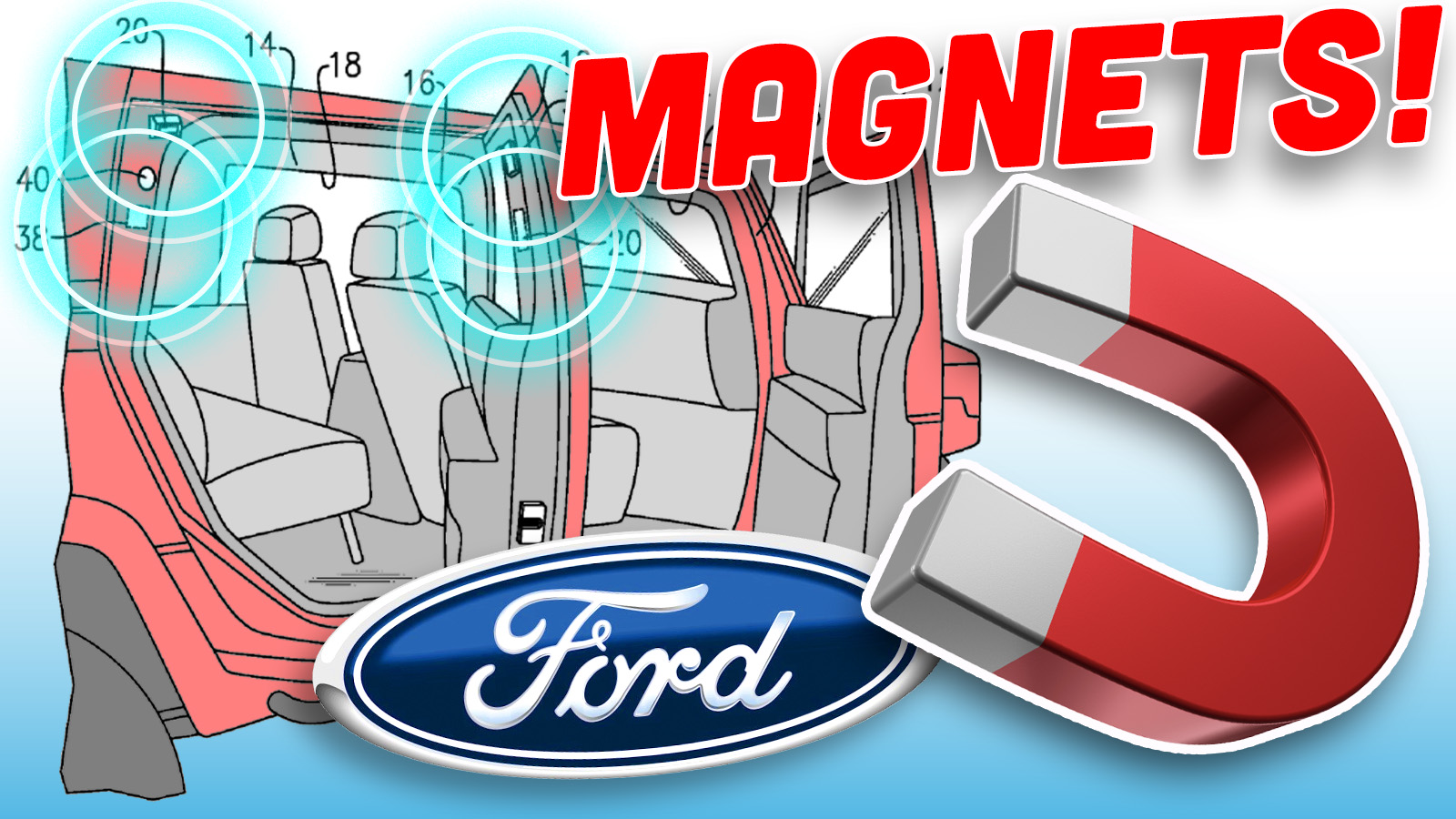
It’s cool how the car industry is always tinkering, always exploring ideas. New battery chemistries, new designs, new gadgets, some of which could appear in a future. Maybe not always the future, but certainly a future. The latest example? Ford has applied for a patent for magnets in doors that should work a bit differently to what you might expect.
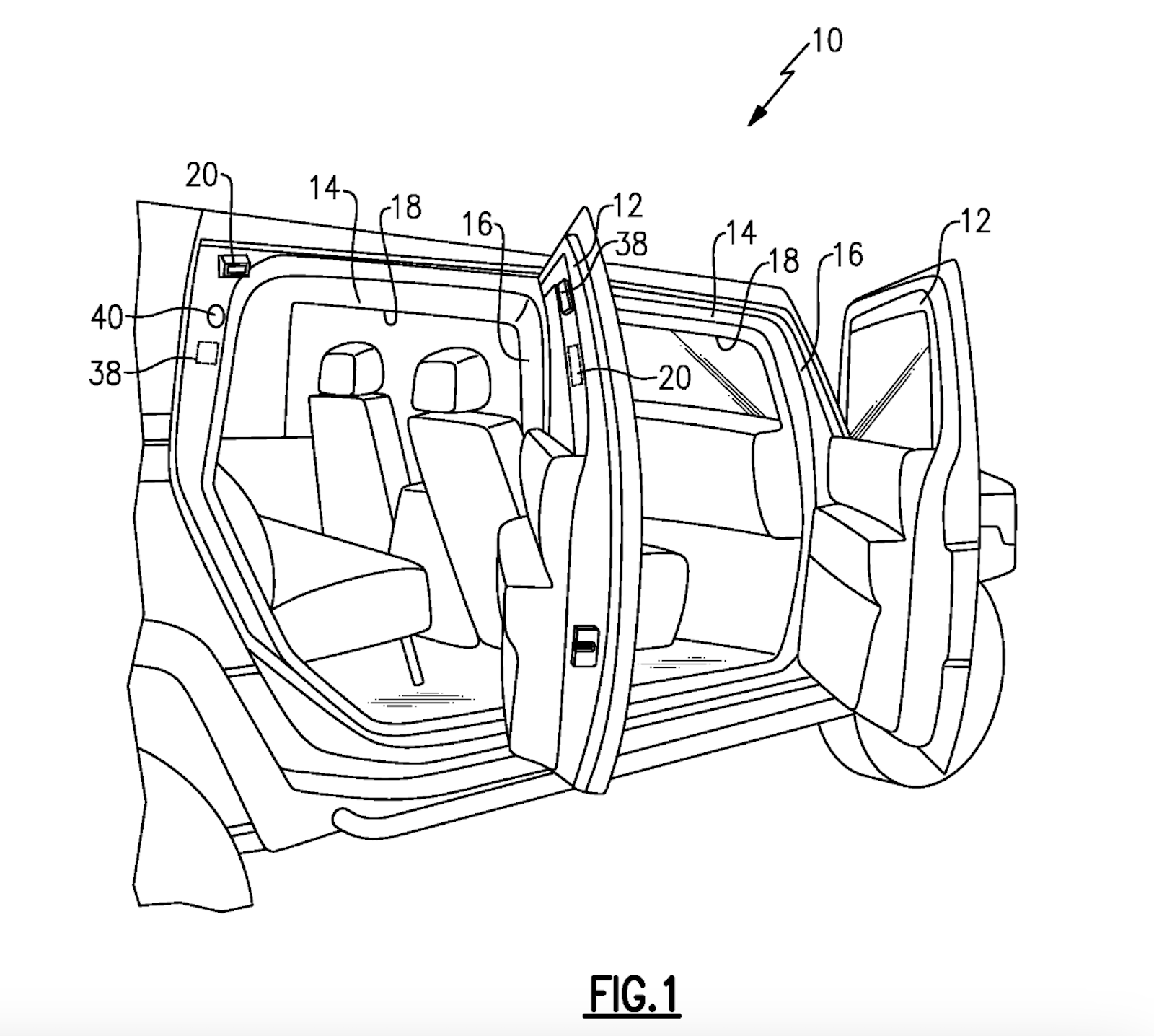
Unsurprisingly, what Ford’s proposing is a series of electromagnets either in the door jamb and acting upon a receiver in the door, or in the door and acting upon a receiver in the jamb. You know how magnets are, it should work either way. It’s officially called a “Vehicle Door With Multi-Purpose Magnetic Assembly,” because that’s exactly what we’re looking at.


Obviously, magnets aren’t replacing traditional door latches as the primary way of keeping a door closed because there are several roadblocks on that train of thought. If a crash were to affect electromagnets tasked with holding an entire door shut, the door could open and an occupant could go flying out the window Looney Tunes-style. Unfortunate. A latch just works better as a primary way of securing a door. However, latches and hinges only cover certain points of the door. The role Ford proposes for electromagnets is one of preventing areas of doors like the window frames from moving. As the patent application states:
Analysis shows that aero-loads can reach over 300N near an upper portion of the window area on certain vehicle doors. During these high wind speed conditions, a header region of the door may deflect in an outboard direction. If door deflection reaches a certain point, the seals on the body of door can lose contact with the opposing sheet metal surface, which can result in wind ingress, vibration, and other noise conditions/issues.
To address these issues, in one example the magnetic member, e.g., an electromagnet, is mounted on the fixed vehicle structure, e.g., the vehicle body, and a magnetic receiver is mounted on the door to hold the door in place and reduce deflection. The reverse mounting configuration could also be used. Aero-loads that reach over 300N can translate to over 3.5 mm of door deflection. An electromagnet can provide 500N or more of holding force to overcome this wind force. Additionally, the electromagnet can be scaled or calibrated for a variable force so that more or less force gets selectively applied to hold the door in place as needed.
Translating from metric to ‘Murican, 500 Newtons of force is equivalent to about 112.4 pound of force keeping the upper part of a door tight in the jamb. Beyond preventing high-speed deflection, I can see another benefit to this technology. Electromagnets are pretty simple, durable things, and as door seals age and sometimes lose their shape, a little extra force on them sounds like a way to keep cabins quieter for longer.
Of course, putting a lid on noise isn’t the only thing magnets in door assemblies or door frames can do, and the patent application also claims this tech can hinder unauthorized vehicle access. A lifesaver if AAA’s doing it, but a day-ruiner if a criminal is doing it. Ford claims that a car’s security system can crank up the force provided by the electromagnets to make a door much harder to open, even if someone’s picked the lock. It’s a neat concept, but I see two problems with it. Firstly, if you’ve called AAA because you’ve somehow locked yourself out of your car, having electromagnets hold the door shut sounds like a pain. Second, if a thief’s motivated enough to pick the lock, what are the odds they’d also be motivated enough to break the window?
I reckon electromagnets on door assemblies will likely be more effective at preventing wind noise, functioning as secondary latches for big doors, and providing a backup or even primary door-ajar signal than they would be at stopping thieves. Still, it’s worth giving magnets a shot. Wind whistle’s annoying, and I do like the idea of double-locking without the bulk of a second mechanical latch. Will we ever see this technology in a production car? Who knows? Manufacturers patent all sorts of stuff that never sees the light of day, but as cars continue to get faster and quieter, maybe magnets aren’t a bad idea.
Top graphic images: Ford/USPTO; DepositImages.com



The patent drawing looks like a previous model Hummer, which is hilarious considering Ford drew it.
Where’s all the power to run these coils coming from? This is a non-starter on EVs at least.
Images of Gillian’s Island when the Skipper’s belt buckle gets permanently stuck to magnetic ore from the Professors experiment. Ford today is like many other 70’s sit-coms…waiting to be cancelled.
It’s not a terrible idea, but with all of Ford’s QC issues right now, I don’t trust that this would be implemented properly.
Also, whoever does their patent drawings appears to have used a Hummer H2–from rival General Motors–as a basis for this one, which is quietly funny.