

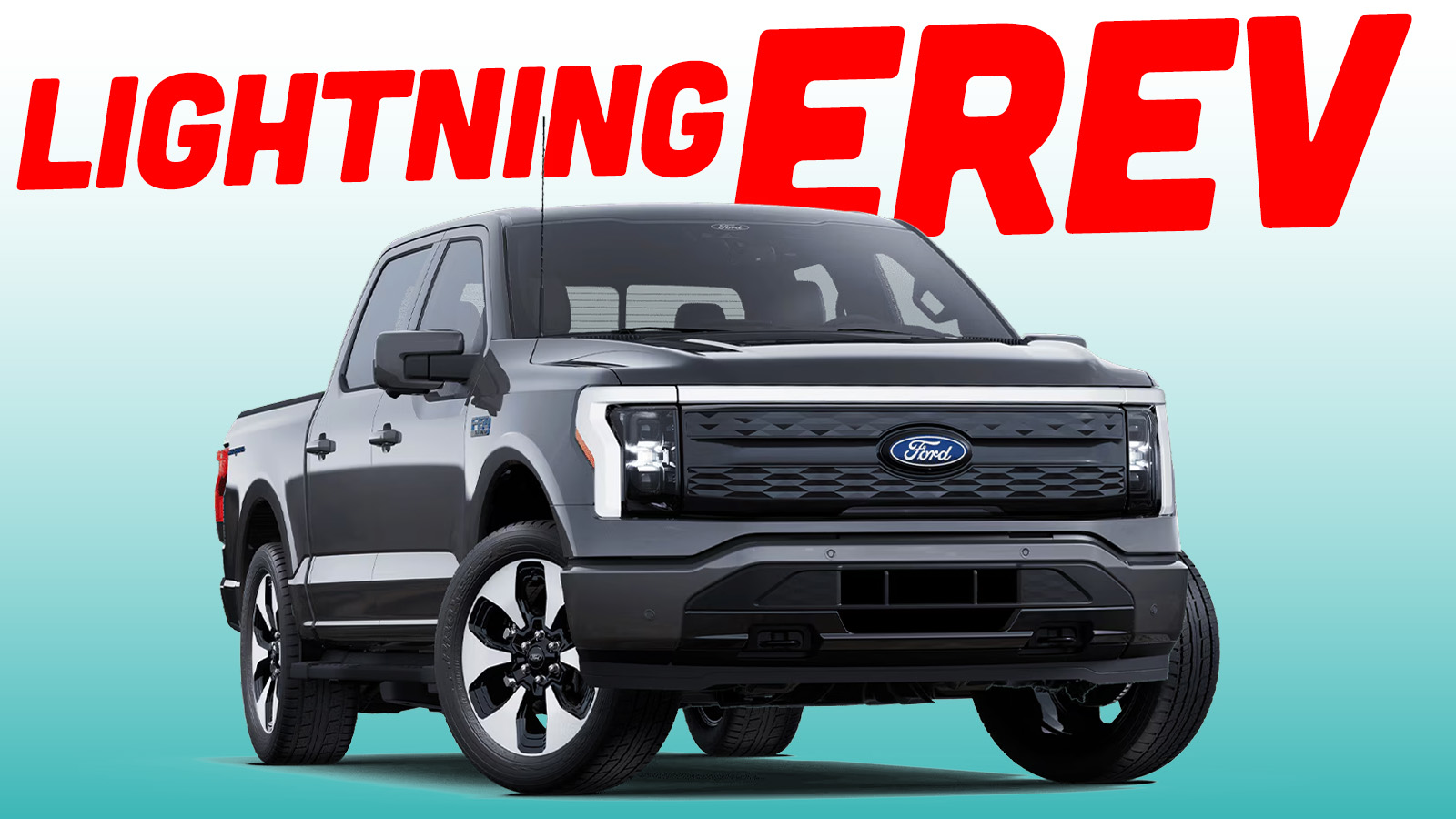
There’s two things that keep this world moving: trucks and compromises. It’s easy to see the value of the truck part, but the compromise part may be more subtle. But the truth is, compromises are just accepting reality and doing your best to make the most of what you have. That’s what an EREV (Extended Range Electric Vehicle) is: a great compromise. An EREV gives you all the benefits of electric drivetrains – high torque from takeoff, fewer moving parts, great acceleration, quiet, all that – but also you’re not tethered to an EV charging infrastructure that, let’s be honest, still isn’t really done. It’s the best of both worlds, and now Ford is building EREV F-150 Lightning trucks.
Ford is ending production of the battery-electric F-150 Lightning and replacing it with the F-150 Lightning EREV, which is something we’ve suspected would happen for a while. You know why we thought that? Because it makes a hell of a lot of sense, that’s why. You know how trying to tow with most battery-electric trucks means you can go, like 100 miles or so, and then you’re screwed? Or what about losing a full quarter of your range if you have a full payload? Who wants that? Nobody, that’s who.


Adding a combustion motor that can act as a generator for the electric motors and battery changes the game completely. Here’s what Ford’s press release has to say about it:
Leveraging advanced Extended Range Electric Vehicle (EREV) technology, the next-generation F-150 Lightning will offer the best of both worlds: the seamless, instant power of an electric powertrain and the freedom of a generator-backed estimated range of more than 700 miles.
Unlike a traditional hybrid, the F-150 Lightning EREV is propelled 100 percent by electric motors. This ensures owners get the pure EV driving experience they love – including rapid acceleration and quiet operation – while eliminating the need to stop and charge during long-distance towing. Like the current F-150 Lightning, the next-gen version will also offer exportable electricity that can power everything from work sites to camp sites to homes during a power outage.
The current battery-electric F-150 Lightning has a range between 240 and 320 miles. The EREV more than doubles that to 700 miles, and, even better, if you drive it somewhere out in the sticks, you don’t have to worry about trying to find some nonexistent charging station. You know you can find a gas station.
EREVs make so much damn sense; for most of the time, you can use this like a pure battery EV, but when you’re hauling or towing or on a long trip, you can free yourself from the restrictions of an EV. Sure, in a perfect world maybe we wouldn’t need the combustion motor, maybe we’d be running these things on fusion reactors that use pollution for fuel and the exhaust is giggles. But that’s not reality. For reality, an EREV makes a hell of a lot of sense.
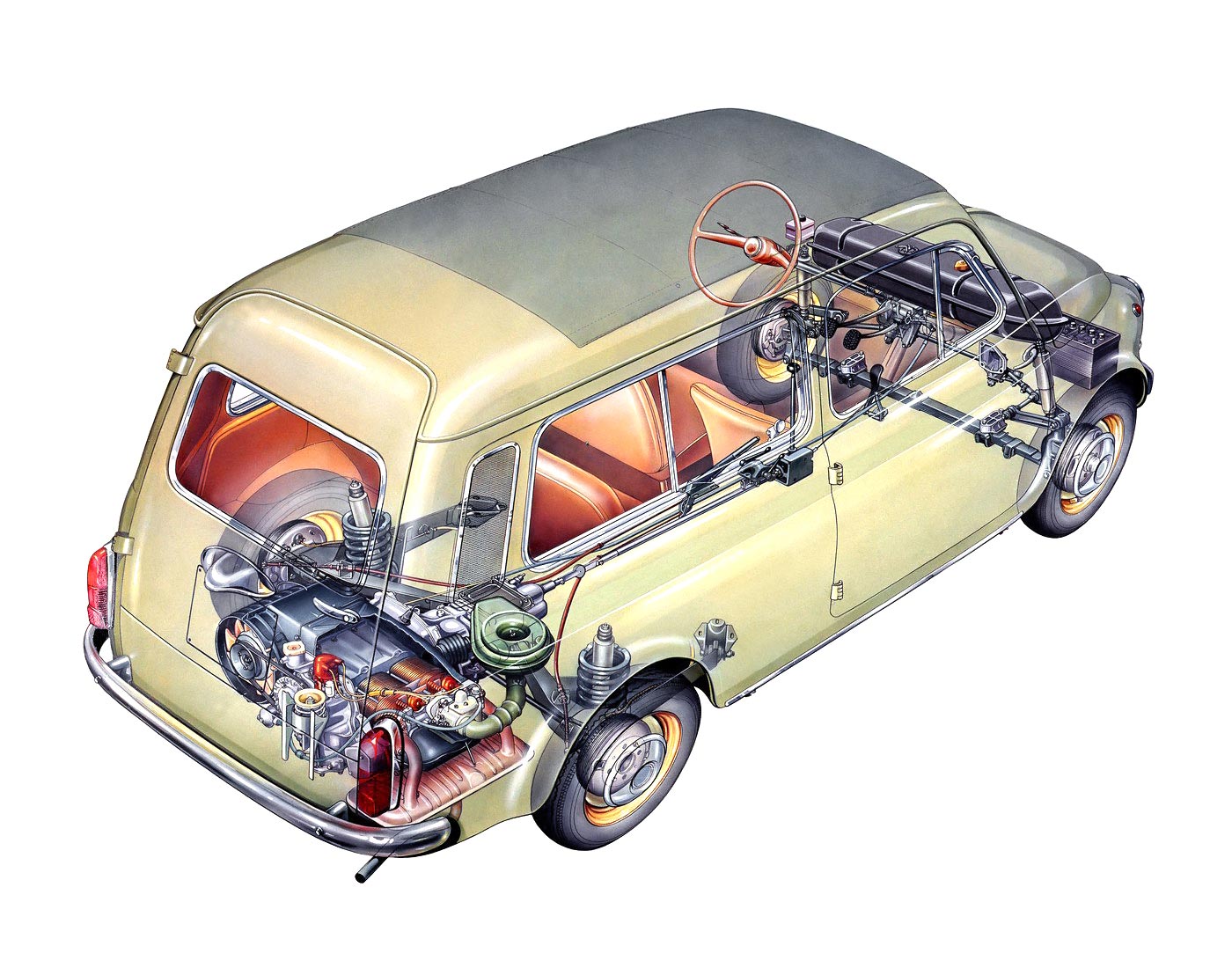
I’m curious to see where Ford will package the combustion engine, and what engine they’ll use. Will it consume the entire cavernous frunk of the F-150 Lightning? Just part of it? Will they cram it under the bed, somehow, an inline engine laid sideways, like a Fiat 500 Giardiniera? I’m very excited to see.
This is a good move on Ford’s part. About time.
The other announcement Ford made was that it would turn some of its planned battery production into commercial Energy Storage Systems (ESS), which is to say giant batteries for industrial use, which seems like another good compromise.





Dang! Had I not just moved to Europe, I’d be hard pressed not to buy one asap. Perfect solution for me.
I think the reality of EREV is going to be a cold bucket of water for lots of people. People are talking like it eliminates the need to charge. Without charging, it’s just a gas truck with a tiny gas tank.
That has not been bourne out in actual use. I know, I know… “anecdote not data”… sure. But having a range extender is a nothing burger. Have only ever had to use it for @200 miles – – over two full years of driving, @20k miles. When I have had to engage it, knowing I had at least 70 miles to either refill gas or find a charger has been far more distance than required.
All my ‘range anxiety’ has been proven false, here in CA where there are chargers everywhere. More and better ones keep appearing. (And, Regen Braking really does add meaningful range as well, don’t forget). Every other electric car owner I’ve talked to has told me similar stories; and most of us don’t even have NACS plugs yet. So I do not worry at all anymore. If anything, I worry the gas might go bad from sitting for months.
Outside of CA, maybe ‘range anxiety’ is a legit concern…?
It’s basically a non-issue now for a modern EV that’s sticking vaguely near an interstate, but for a truck towing an RV, it’s a legitimate concern. That 320 miles of extended range becomes something more like 150, which gets to be pretty inconvenient when you’re trying to go 300-400 miles a day. Especially since most charging stations today will require unhitching the trailer then reconnecting after. Plus RV destinations can be a bit further off the beaten path than typical.
Usually still doable with some hassle, but your odds of having to fall back on L1/L2 (and possibly even get creative there) get high. And travel times are gonna go up a fair bit.
This is my biggest concern with EREV being successful. If all you do is put gas in it and never plug it in, you’re missing the entire benefit and will likely have a bunch of periods where you’re limited to the power of a v6 or whatever. I foresee there being a bunch of reviews where people complain it’s gutless but they’ve never charged it.
Then again, selfishly maybe that will lead to the prices dropping and me getting a good deal on one lol.
If you have access to a common 120v ac plug you’ll probably be able to top off every night assuming the truck is driven no more than say ~50 miles on a daily commute AND you have about 12 hours of recharge time. Of course if you have a 220v outlet available you can fully recharge from 0 within a few hours.
Once you go EV (or PHEV, or EREV) and you start passing up your favorite gas station every day, you get an epiphany and no other motivation is needed to plug in whenever you can.
Unfortunately, based on the data from PHEVs about them not getting plugged in I’m still wary.
That’s the main advantage of calling these something other than PHEVs, even though that’s technically what they are. Buyers need to understand this is an EV first and should be treated like an EV in day-to-day use (i.e., charged regularly).
From my experience with the mainstream consumer public I won’t hold my breath lol.
I think a lot of the data that says PHEVs don’t get plugged in is from Europe where there have been a lot of short-range, limited capability PHEVs that are given out as company cars, rather than EREVs that are very much EV-first purchased by regular people because it’s the car they personally want.
But there certainly will need to be some education on this topic. I think, in many ways EREVs are actually MORE confusing than BEVs *unless* you overdesign the EREV to basically have a full-size EV drivetrain that can work for most use cases without the gas engine, AND a full-size gas drivetrain that can work for most use cases without the EV drivetrain so that people don’t need to understand when to turn on the gas drivetrain in advance so they don’t end up at the bottom of a mountain with a dead battery and a 10k lb trailer on the back.
That’s how RAM ended up with a full size battery almost the size of the Lightning’s base battery, and a full-size engine that they put in normal RAMs, resulting in a truck that weighs more than any Lightning, and probably not much, if any cheaper.
50 miles/day in a full-size truck is going to take 20+ hours of charging on 120V, but overall, I agree with your point that people will realize that they can do almost everything just by plugging in.
This is exactly why RAM’s EREV is basically two full-sized drivetrains.
Because some doofus is going to show up at the bottom of a mountain with a dead battery and complain he can’t drive 80mph up the mountain with a 10k lb Airstream and every other doofus on Facebook is going to think it won’t work for “truck stuff” that they think they will (but actually won’t) use their truck for.