

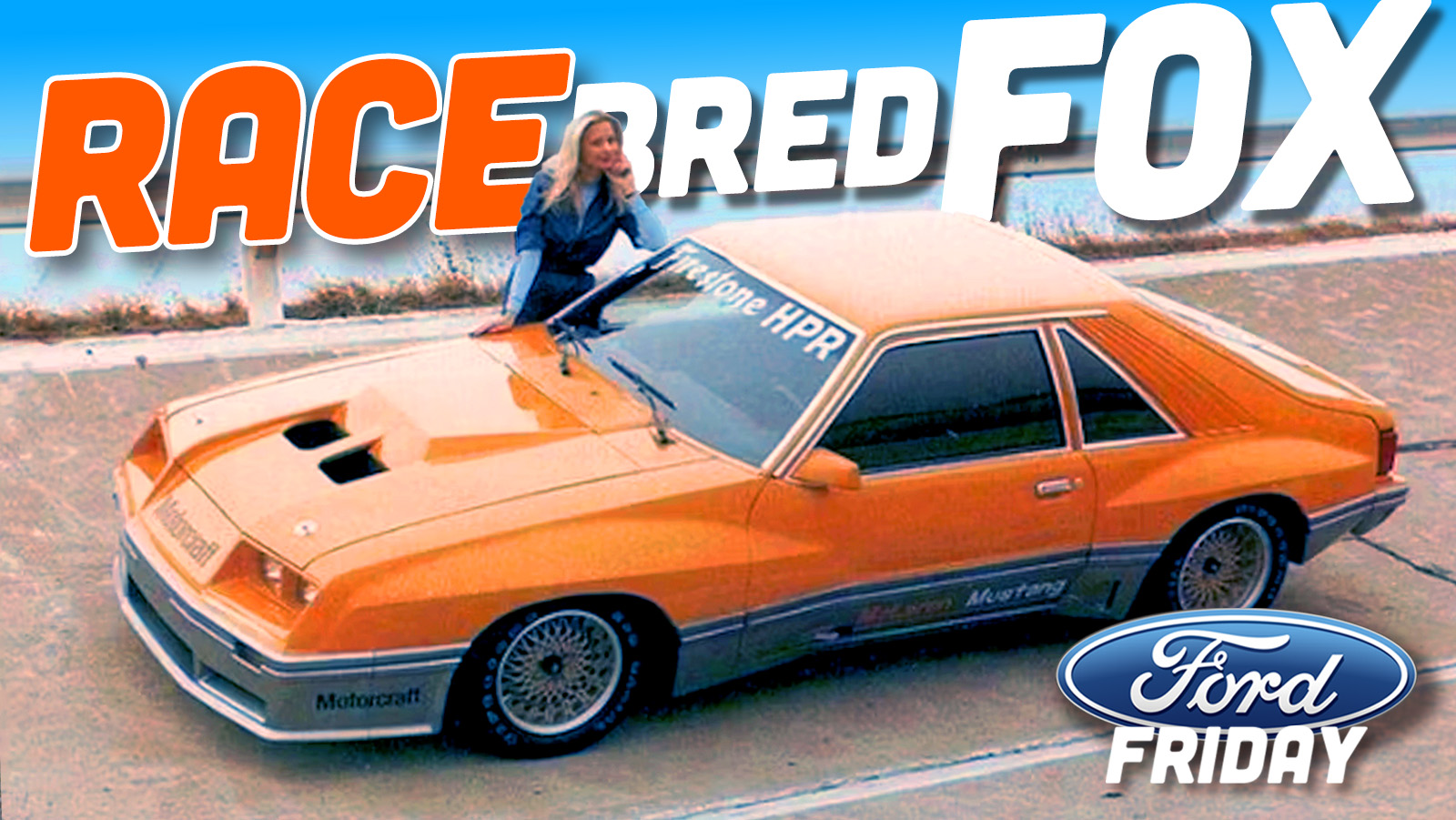
One of the rarest and most unique Fox-body Mustangs was planned from the start to be a very limited-production car, with only 250 cars slated to be built. Ultimately, only ten examples were made of this Holy Grail-grade machine, developed in part by a fabled competition car builder. But even with a production run some 240 units fewer than planned, Ford probably didn’t see it as a failure, since it did the job they wanted it to do. Let’s see if you agree.
At Least We Didn’t Get A Fittipaldi Mustang Cobra II
If I mention “McLaren road cars,” what’s the first thing you imagine? For many of us, it’s the famous 1994 carbon-fiber F1, which signaled McLaren’s entry into the supercar market. One of the first of the near-million-dollar supercar toys for the super-rich, McLaren made a mere 106 before going on a long hiatus from street vehicles.



For others, the name conjures up images of the current lineup of more affordable (in relative terms) mid-engined exotics that McLaren got back into building en masse (again, in relative terms) in 2012.

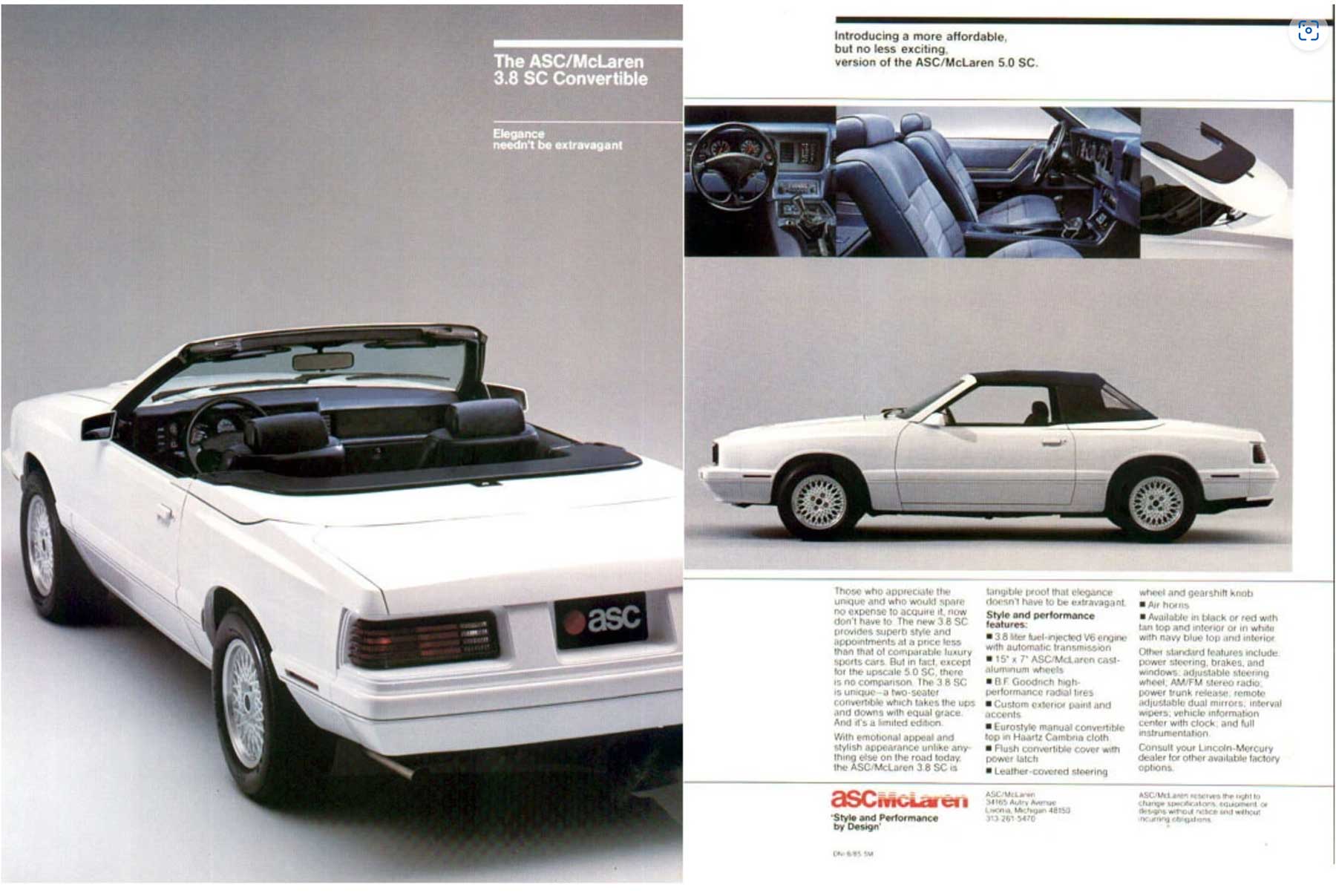
My guess is that the word “McLaren” would never make you think “Ford Mustang.” Even if it did, it’s quite likely that you’d think of the two-seater ASC McLaren version of Ford’s pony car. That particular car was built by American Specialty Corporation (the frequent outside convertible converter for the OEM), and was actually based on a modified Fox Mercury Capri hatchback. ASC even pushed the windshield down ten degrees!
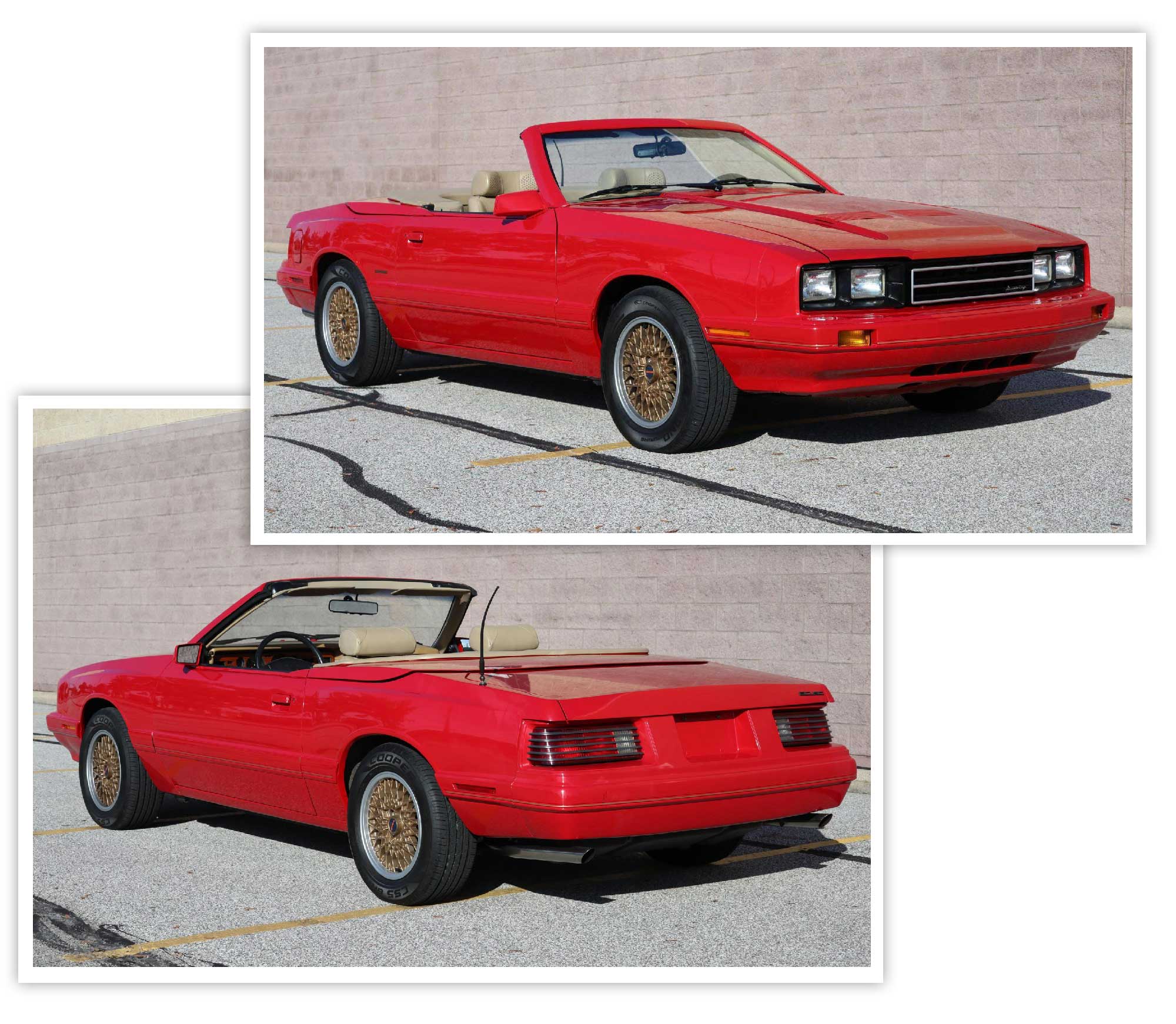
The “McLaren” part of the name was from a division of the famous race car builder’s company established in Michigan in 1969, primarily to develop motors for Indy and Can Am cars. It was this American arm of McLaren that licensed out its famous name to ASC for this Fox Body special and later for versions of the Pontiac Grand Prix. Oddly enough, McLaren’s race car engine affiliate in Michigan didn’t touch the five-liter V8 under the hood of the car that bore their name.
However, that particular McLaren Mustang isn’t the Fox Body I’m referring to. The McLaren Mustang I want to speak of was very much modified by the racing car engine builder into an actual race car, one that briefly hit the streets as the baddest ‘Stang in almost a decade. Or, at the very least, the baddest looking.
Lots Of Show, Not So Much Go
Ford has continually marketed the Mustang as an actual sports car, even though that’s often been a bit of a stretch. The legitimacy of this categorization was especially suspect after the 1974-79 Pinto-based Mustang II, so they were in desperate need of this new Fox Body ‘Stang to be seen as a sports machine in the eyes of the press and potential buyers.

There’s no better way to prove that a car is a sports vehicle than to fight it out on the track, and then offer that very machine to buyers for the street. This was the plan Ford outlined to Gary Kohs of Marketing Corporation of America, who worked to develop what would be called the “M81” program. Kohs reportedly explained the project to developers Harry Wykes and Todd Gerstenberger over dinner at a Mexican restaurant, who sketched the design out right there at the table. Kohs was well aware that the old pushrod V8s that Ford was trying to get away from in the post-gas-crunch era was not the image the Mustang needed, so the machine depicted in the likely salsa-stained drawing was imagined as having Ford’s newly available 140-horsepower turbo four on board.
Kohs knew a person named Roger Bailey at McLaren engines in Michigan who had done work with turbocharging the 2.3-liter “Pinto” motor. Bailey had the experience to make the right powertrain for the M81, and it also meant the vaunted McLaren name could be fairly applied to lend legitimacy to the Mustang project. At the 1981 24 Hours of Daytona, the racing version of this M81 Mustang held its own against the likes of Porsche 935s until it crashed and required yards of racer’s tape to hold it back together. Regardless, the Mustang finished in all its adhesive-covered glory; you can’t get better press than that.

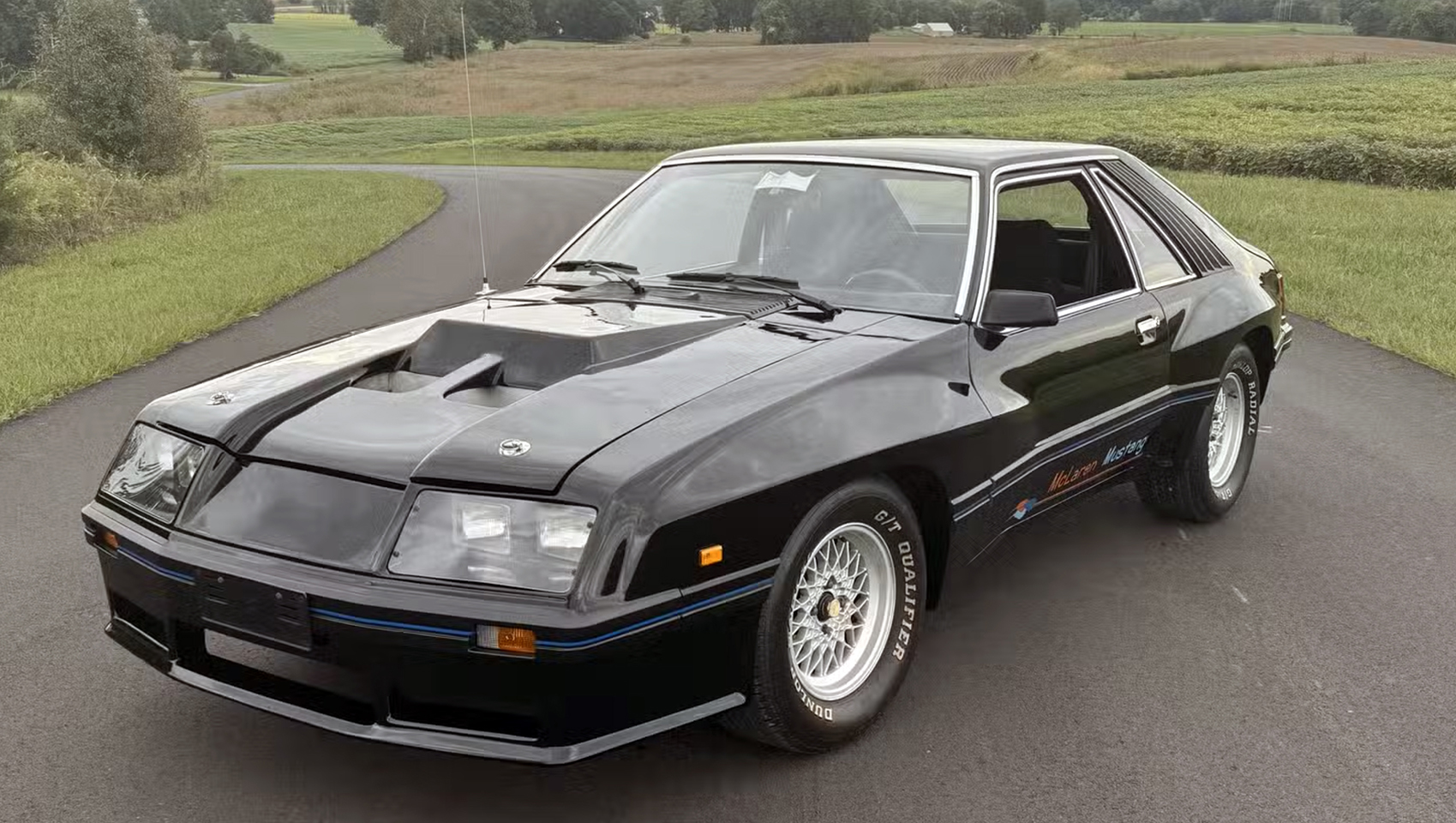
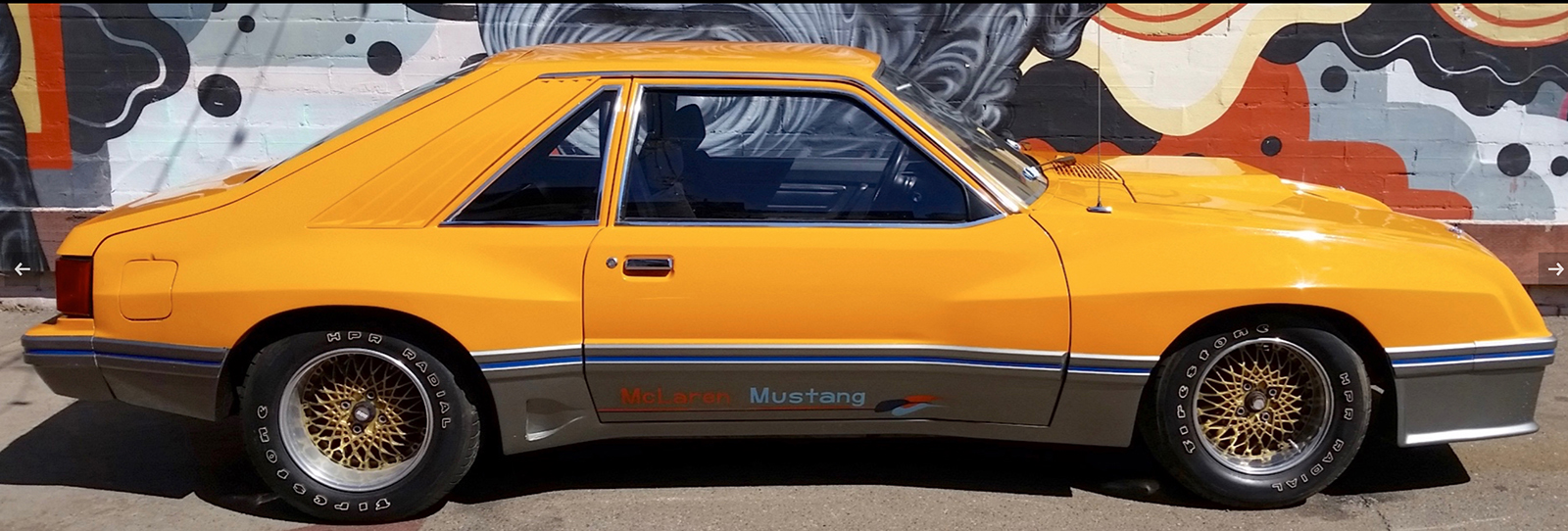
Well, until you make a street version, that is. In 1980, the Fox body Mustang still looked rather fresh a year after its celebrated debut. However, the roadgoing M81 made that nearly-new ‘Stang appear weak and old hat immediately by comparison. Styling is always subjective, but to me, the street M81 is just a fantastic-looking modification of the familiar Fox body.

Where the Fox Mercury Capri had wimpy bumps posing as flared fenders, the M81 gets beefy box flares, all the better to hide 255 rubber on BBS wheels that were like steamrollers at the time. In back, a heckblende with the MUSTANG name fills the license plate area. I can’t believe I’m saying this, but I think this is one car that really needed a big rear wing of some kind on the back, but didn’t get it.

The most radical change, however, might have been the grille-free nose. A massive intake under the bumper let air into a fabricated chamber with the radiator that exhausted hot air out through giant vents just ahead of a big hood bulge.

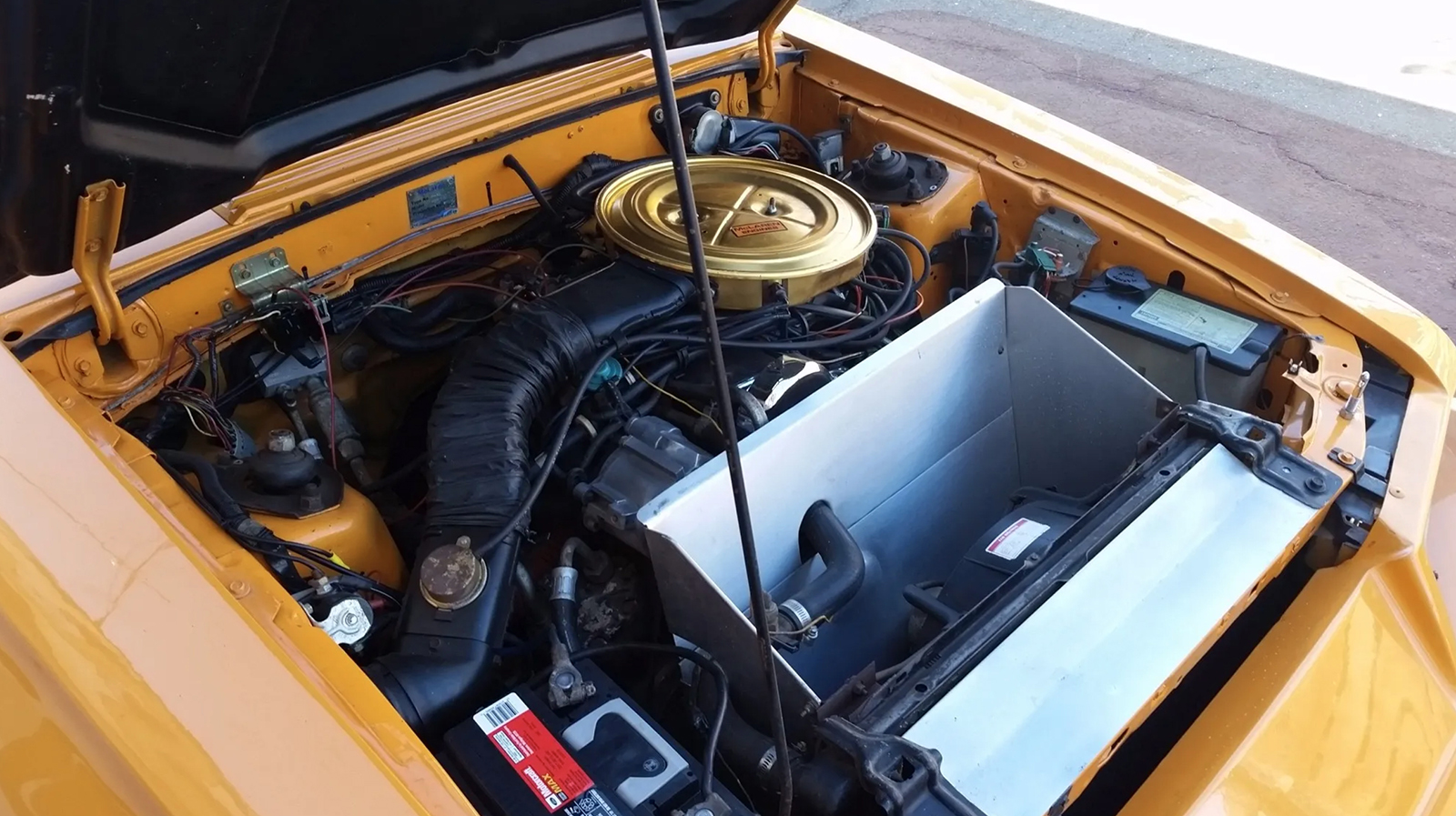
Behind that radiator box is the 2.3-liter turbocharged four, modified by McLaren for the street and pumping out 35 horsepower more than the factory engine thanks to blueprinting, porting, and other tricks. Still, that’s only 175 total; a bit underwhelming even for that era. A reported zero-to-sixty time of the mid-nine-second range was not totally embarrassing, but boy, it sure looked faster than that. As you can imagine, McLaren engineers claimed at the time that they could have easily have pulled well over 200 horsepower if Ford had released the reins a bit.

Koni shocks and beefy sway bars from a Fairmont “police package” tightened up the suspension, but you still got drum brakes in back.
The interior canned the Pinto-style buckets of the standard Foxstang for a nice set of Recaros; thankfully, the small rear seat was kept in place. Also welcome is the roll cage in back of the Mustang that offered the extra benefit of stiffening the chassis. As any Fox hatchback owner of this vintage will tell you, the car could use as much extra stiffening as possible.
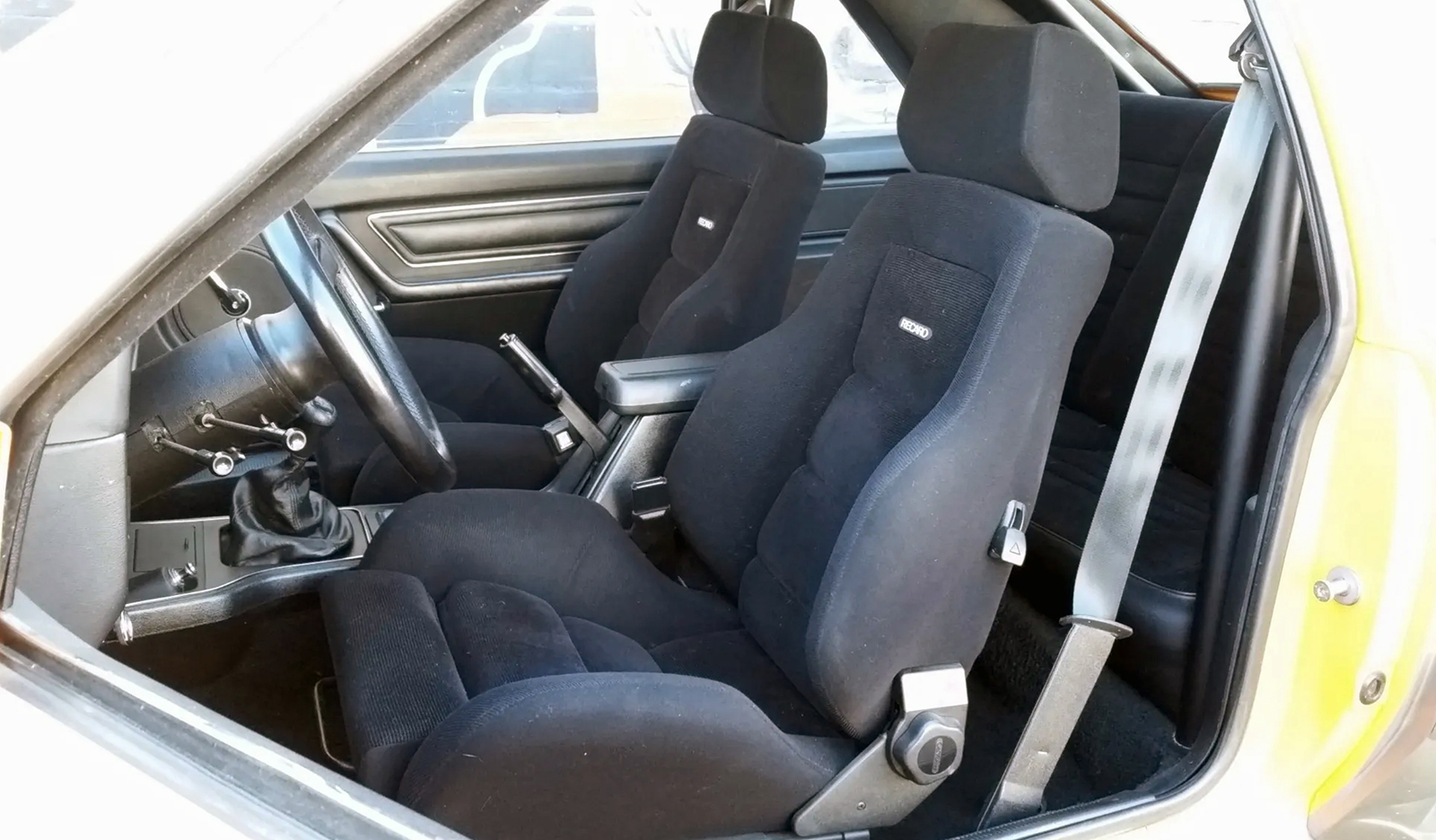
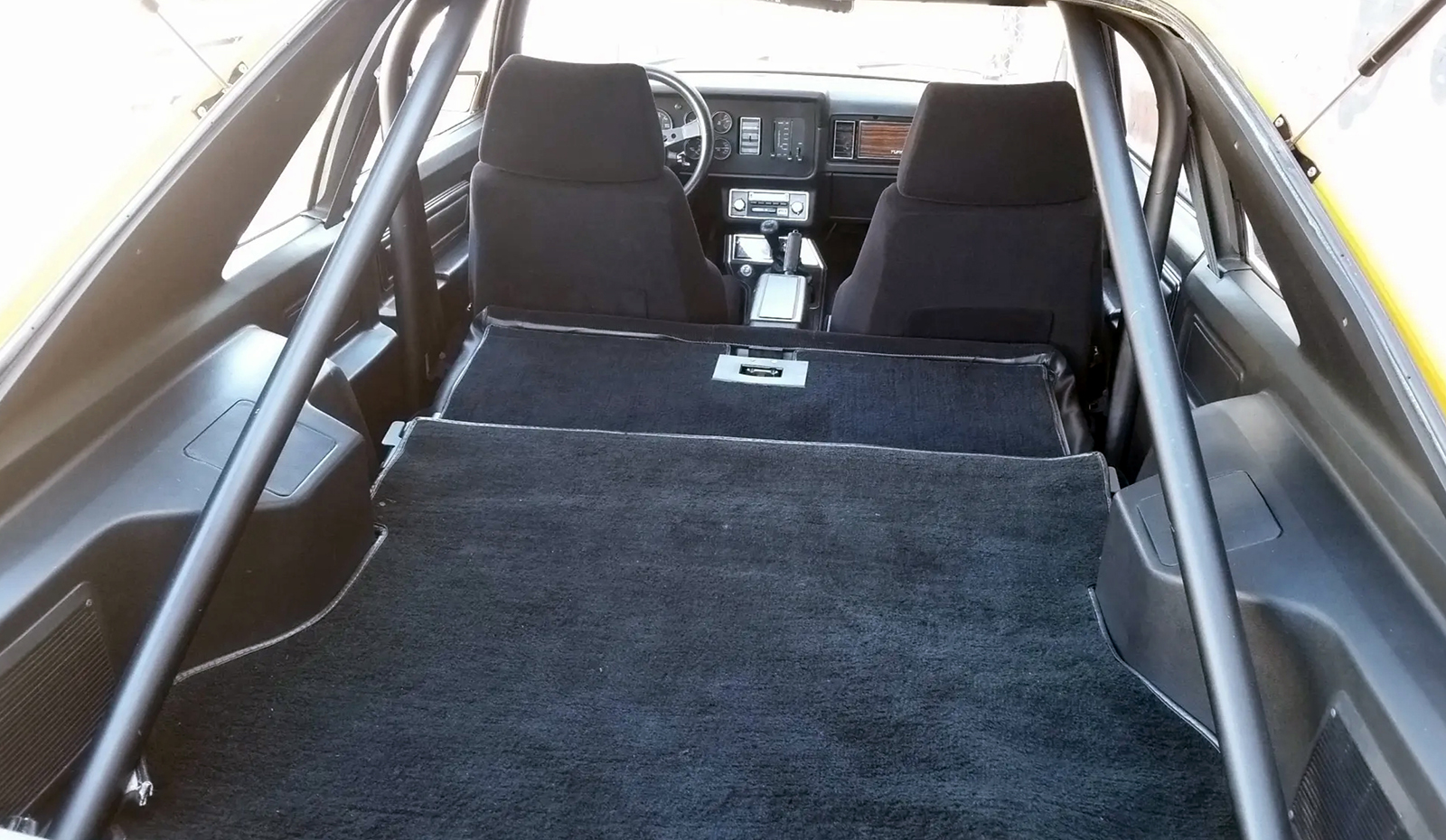
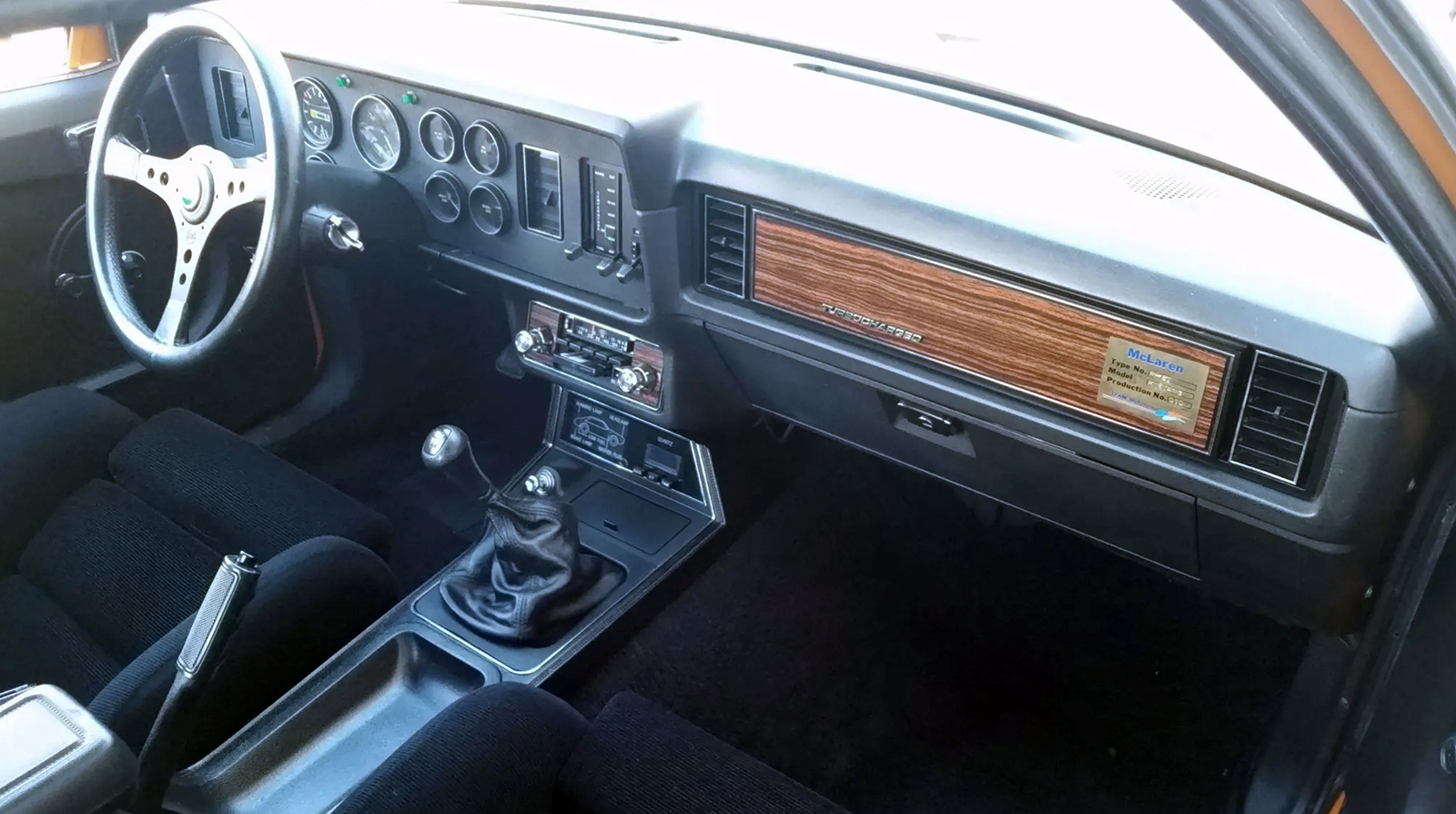
The dashboard had the factory gauges replaced by Stewart Warners in a black panel, but rather comically, the very-plastic-looking woodgrain section above the glovebox remains.


None of this work came cheap. The M81 priced out at around $25,000 in 1980 dollars, or slightly more than a new Porsche 911. Ford reportedly had planned to make a run of 250 cars, but in the end, only 10 were built.
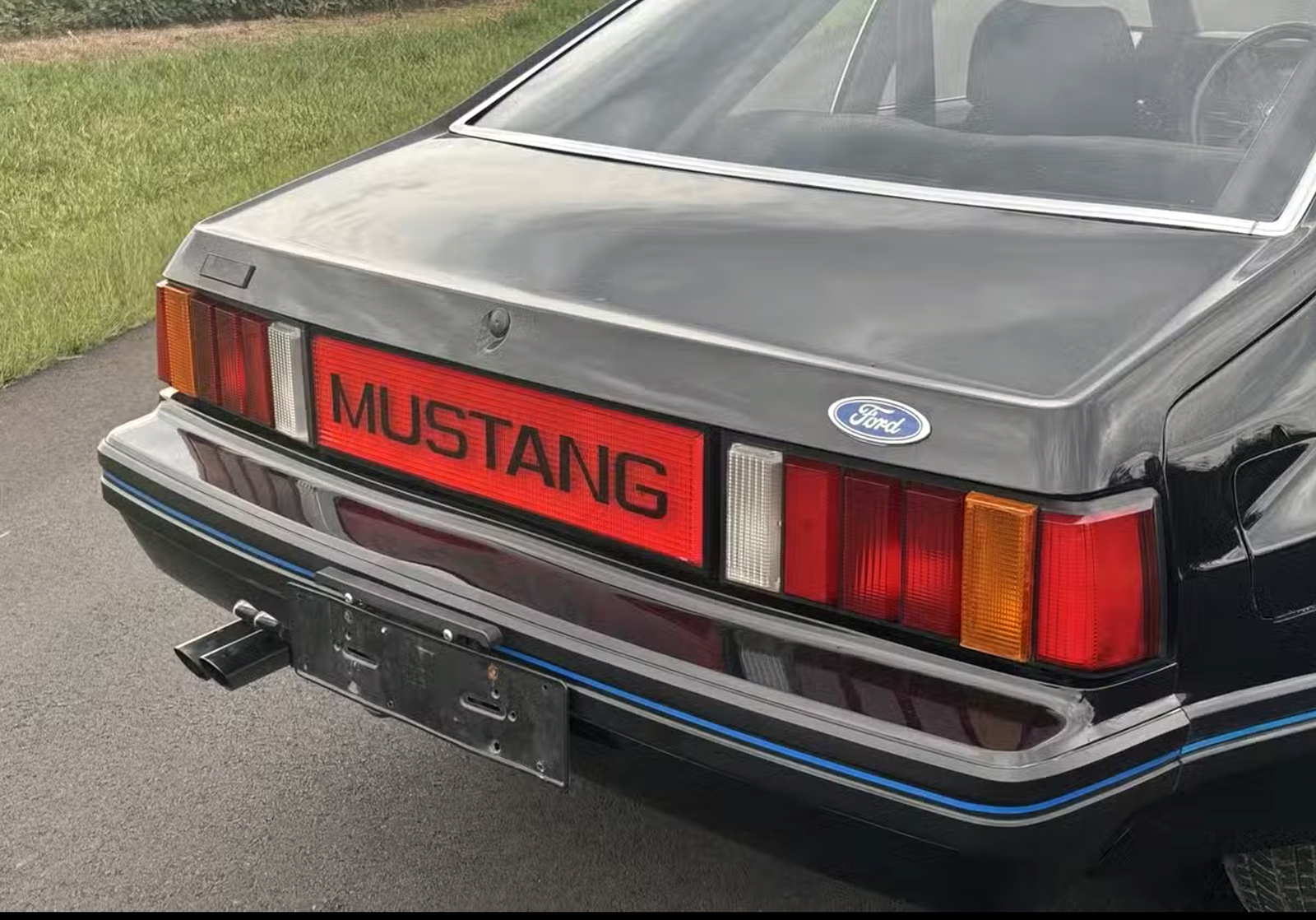
Seven of the ten cars were made in that spectacular Bittersweet Orange (the closest color match to McLaren’s famous Papaya Orange), but there were two painted white. One was finished in black, which looks a bit like the Interceptor from Mad Max. The covered lights, separate parking lamps, amber rear signals, and rectangular back plate all indicate that it’s a European-spec car, which makes it even cooler.
Wait! There’s more! After Ford pulled the plug on the M80 program, there were supposedly still a pile of parts left over. Some savvy individuals saved them to be used on a “continuation” car dubbed the DSO (Dealer Special Order) Enduro.
It’s believed three of these were built onto factory 1982 GT models with the four-barrel 302 V8; however, the surviving examples have had some contemporary “work” done on them to make the small block produce the kind of power you’d expect (and modern rubber to fill those flared arches). Truthfully, despite the low-tech engine, this Enduro is arguably the one with the motor you want.
You Can’t Keep The Turbo Down
Today, M81s don’t go for a tremendous amount of money. The highest sale price ever was $82,500 at a Mecum action in 2023, but since then, one only brought $56,100 in 2024, and another took in $67,000 earlier this year. With 175 horsepower on tap, the M81’s output is rather pathetic by modern standards, but it’s undeniably one of the rarest Fox Mustangs ever, and comes with the true pedigree of a famous car builder. And just look at it.
Was the M81 program a failure? From a strict bean-counting standpoint, it probably was. But when you think of where the Mustang name was at the beginning of the eighties, the press coverage of these less-than-two-dozen cars certainly helped revive the Mustang name and keep it relevant in the years before the GT version came back as a formidable Pony Car.
Here’s another thing: the M81 is often incorrectly attributed to Ford’s internal SVO skunkworks group that formed around the time of the McLaren Mustang’s launch. In reality, the SVO group apparently resented this outside interloper coming in and was instrumental in getting the M81 program cancelled after the handful of cars were made. True or not, the M81 project almost certainly paved the way for their own SVO Mustang with a turbocharged four that started to fulfill the promise of a force-fed Pinto motor.
Forty-five years later, the current Mustang is powered by a turbocharged four, a potent powerplant that nobody snickers at. See? The M81 might not have been a failure after all.





This is the first time I’ve ever seen this, and I love it. It looks phenomenal.
I agree it could use a wing, and it definitely needs some better performance, but I don’t think the 302 in the Enduro is quite the right fit. The turbo 4 is part of the appeal.
It’s a shame they’re so rare that you would want to keep them stock, because it would be really cool to figure out what the Mclaren guys had in mind and open the motor up as much as possible. I originally thought modern Ecoboost swap, but modern anything would ruin it.
One of my old bosses was a man named William “Bill” Smith, who owned a Ford Dealership in Norwich NY. From his Obit:
“He was a director of Team McLaren and Mayer Motor Racing, founder of McLaren Engines, president of McLaren North America, co-chairman of ASC-McLaren and founding member of Championship Automobile Racing Teams.”
Bill had an ASC McLaren and would tell me fascinating stories about its conception and production, but alas, my teenage self was too busy drooling over it to remember much. I truly wish i had discussed more of that interesting time in automotive history with him while he was still alive. Great Story that brought back good memories, Mr. The Bishop!
I agree, it would look great with a wing. Even a wing like the later 5.0 GTs would be good. Too bad about the engine, we’ve come a long way with the 315 HP 2.3 Ecoboost 4-cylinder in modern Mustangs. Still greatly prefer the V8 though.
Back in the 80’s ASC used to have a car show at their facility in Brighton MI. I remember seeing the orange car there. I still have a post card of it from the show.
This is the post that pushed me over the edge into full subscribershipness, so thanks, Bishop!
The early years of the Fox platform and for the Mustang specifically are some of my favorite times to read about, because yes, the cars really weren’t that great, but what a _weird_ time it was! Ford was really trying to make small turbo motors a thing in this era, and honestly, with just a few changes, they actually might’ve succeeded. Can you imagine if they’d gotten to the Mustang SVO in 1979 instead of 1985? What a _huge_ change that would’ve been?
Those early Turbo Lima cars were fine for the time, but really didn’t set anyone’s hair on fire. Of course, it’s also right around this time, ‘79-‘83 or so, that Ford and Zakspeed are setting tracks on fire with 550-600+ horsepower 1.6, 1.8, and 2.1-liter turbo four-bangers. So, if anyone was wondering “why was Ford trying so hard to make these shitty little turbo engines work,” well, that might’ve had something to do with it.
The promise of wild power in a tiny, lightweight package (I don’t know about the M81 McLaren effort, but the Zakspeed IMSA racers reportedly weighed about 900 kilograms, so they were featherweights) was always alluring. But, of course, you really can’t tame a high-boost turbo engine without electronic fuel injection, which was the Achilles heel of these street-going cars. The Lima’s draw-through carbureted turbo setup was severely limited, and I don’t think you can safely get one above 190-200 horses without some major re-engineering. Later 2.3 turbo Fords had a proper electronic injection system, and thus have much higher performance potential.
With a sorted-out EFI system, Ford and/or McLaren could have added an intercooler to help increase boost while sticking with premium gas and had a well-mannered street car, too. 200-220 horses was certainly in the cards with the right setup. I don’t know for sure, but I suspect that might’ve been what the McLaren engineers were referring to about Ford not letting the reins out more. A custom EFI in 1981 for a run of 250 cars was probably not in the cards for a few reasons, financial ones being chief among them.
Still, I love reading about this period; really, any time in automotive history where people are in a “throw shit at the wall to see what sticks” kind of space.
I had the Revell kit of this as part of the HotRod magazine 3-car set, that probably fuelled my love of Mustangs. It wasn’t until I was much older than I realised it was a kit of the McLaren Mustang – i just thought it was a cool custom at the time.
https://images.squarespace-cdn.com/content/v1/5f3544da2cf82c06af22f715/1619926737392-5A2YTOW57DJV1NGMJSRT/revell7459.jpg
There was a Saleen McLaren car built as a hardtop.
I don’t know how they parsed the parts.
The turbo Mustang was competitive with the V8 and the inspiration for Saleen conversions.
It drove quite well driven hard.
On the track the V8s were more powerful, of course, but the better braking and cornering of the turbo made them a match.
Man do I love those Group 5 cars….
The rigidity of the Fox chassis is rivaled only by moist balsa wood.
Ecoboost? Ecoboost.
This was 40 years ago?! Yes, of course it was. This immediately reminded me of the Revell 1/25 model kit, which I think I built.
It reminded me of the IMSA racers:
https://www.hemmings.com/stories/the-trickle-down-effect-a-fox-body-imsa-racer-for-the-street/
Well, very interesting. I had to think about why the flares looked familiar, and then I remembered: My high school auto shop had a wrecked Fox Mustang given to them, and they made fiberglass flares for it that look almost exactly like this car, which I now know were probably inspired by this car. Very cool!
I know it’s not the focus here, but I dig that pic of the largely forgotten ’79 or ’80 Mustang Cobra. The ridiculous hood decal and the hyper-modern three spoke wheels make for a wonderful contrast.
Thats a ’79. For ’80, the look changed a little bit – they adopted the body kit from the ’79 pace car and the decal was optional. My first car was an ’80 in that copper color (no decal). Pretty good car to get out of the gate – looked cool but didn’t really have enough power to get you into too much trouble.
Thank you! I couldn’t figure it out exactly, just knew it was one of the first two years of the Fox.
I miss the days of underpowered but fun cars.
Didn’t realize how much the Mustang looked like a third gen Camaro until the grille was replaced by a slant.
Odd takeaway question: Why did the Fairmont Police Package have a stiffer anti-sway bar than anything you could get stock on a Mustang??
Is it because the Fairmont was heavier, and needed the bigger bar but it was deemed too much for the Mustang? I honestly have no clue.
I’d also offer maybe to make the longer wheelbase more maneuverable for police work?
Always loved those flares! A SVO stang has long been high on my list of classics I’d love to have.
Wasn’t that Heinz Prechter’s American Sunroof Corporation?
Yes, eventually called American Specialty Corporation since they had their hands in the majority of the convertible conversions during the 80s, as well as many special edition cars.
Eventually, but not in the period of discussion. I feel that the man was important enough to be included in the story. He and his family were heavy contributors to any cause that helped those struggling from mental issues and he ended his own life in that struggle. While he was obviously not the subject at hand, it seems an omission on this end.
I have mentioned Prechter in many, many of my earlier posts and probably should have said more here. He was very much an entrepreneurial and creative genius and it’s doubly tragic when you think about what he could have be doing in today’s automotive landscape.
My old roommate had an ’87? ASC McLaren Mustang his Dad had originally bought. Was a 2 seater w/ Mercedes style convertible top w/ hard boot cover and just a shelf area behind front seats, unique wheels and plastic body parts w/ ASC McLaren molded into them (which were hard to find when he got rear ended later).
Originally had no drivetrain mods, but his Dad had added Paxton supercharger and Art Carr modified trans, so was fun to drive!
I didn’t know anything about these. Kind of cool, but the lack of performance is a complete mismatch to the looks and I feel like they’re too rare to screw with much. One of the Enduros would be a better buy, IMO. The front reminds me of an EXP, if not as bad.
McLaren almost hit the market with a road car much earlier than the F1, but the M6GT didn’t progress beyond prototype and some road-converted racers. I mention this in case anyone remembers the Coyote X from Hardcastle and McCormick, which was a replica of an M6GT and about the only thing I remember about that show. It was so ridiculous that hero characters then had cars that were both extremely noticeable and unique to them and often fragile for the inevitable chases and shootouts they’d get in, but they weren’t serious shows/movies, so who cares?
Smash Palace out of New Zealand had limited access to the finished road version McLaren, but it ended up appearing in a photo on the wall in the film.
Looks like a Consulier GTP from the front
When I was at the Peterson Museum this year, they had one of the Enduro models in the parking garage by the front entrance. Dang fine looking car, in an extremely 80s way. But I have a real weakness for box flares (C’mon, Rivian, put some box flares on the R3X!).