

There is definitely a gas price that makes electric cars appealing to a larger percentage of the buying public, but our slow march to $4.00 a gallon over the last few weeks hasn’t yet done it yet. At least that’s what the data shows. This makes sense to me. It’ll require a longer period of elevated fuel prices in order to change behavior.
Automakers seem to feel the same way, with General Motors temporarily laying off employees in one of its electric car manufacturing plants as it waits out demand. I think that’s a product issue as much as an overall market issue, though. That isn’t stopping Volvo from helping Polestar produce more of its cars in South Carolina. If there’s anyone poised to benefit it’s BYD, which again has upped the amount of cars it expects to export this year to an impressively large number.


Also, tomorrow’s Morning Dump should come to you live from the New York International Auto Show, so it may be very early or very late.
Electric Vehicle Market Share Stays Low At 5.2% In March
Here’s a chart:
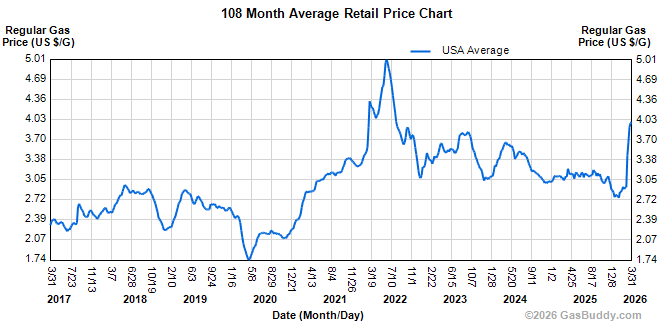
In the summer of 2022 I was out filming in California and I was shocked at the fuel prices, which were so high that my credit card hit its $100 limit before I could fully fill up the big tank on on my rented minivan. Gas prices have risen and fallen since, but mostly they’ve fallen. It’s been one of the areas of the economy that’s felt like it’s avoided inflation since late 2022.
Prices aren’t that bad yet but, according to GasBuddy.com, the national average gas price for the United States hit $4.00 per gallon yesterday. That’s the first time this has happened since the summer of 2022, and is a direct result of the conflict in the Middle East (the most recent one, at least). I’m not a fuel expert, though I did grow up in Houston, which is the next best thing. I don’t think people are quite prepared for how long the impacts could be and how unpredictable the various petroleum derivatives usually are. I hope I’m wrong.
I’ve already mentioned that consideration of “electrified vehicles” has gone up, but that also included hybrids. I don’t think the use case for hybrids has ever been stronger, though after a year of incredible growth in hybrid sales there’s probably only so much upside this year. Electric cars? That’s a harder sell, especially as automakers have cut back on production following the end of the Inflation Reduction Act tax credit and the ensuing pulling-forward of sales at the end of last year.
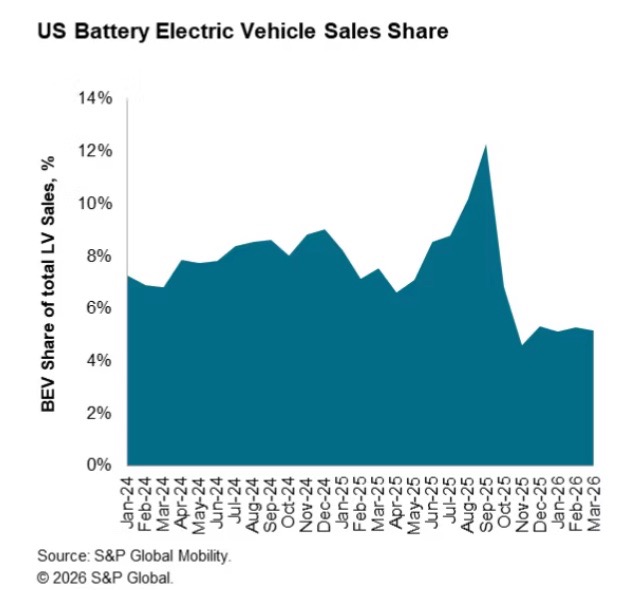
As you can see above in the chart from S&P Global Mobility, the share of EV car sales is down a lot from its peak above 12% in September, and off the pre-election climb towards 10%. Total sales for the market were down from nearly 1.6 million vehicles in March 2025 to an estimates 1.4 million this month. That is sticking with the expectation that this year’s car sales are going to be middling-to-bad given all the uncertainty. The EV market share barely stayed at 5% in March.
Viewed one way, this 5% market share is a sign that the overall appetite for electric cars is still rather small. Viewed another way, if you average out demand over the last couple of years, it ends up staying at a relatively consistent 7-8%.
The way I see it is that there’s probably more demand at a lower price point, and the vehicles suffering are going to be those priced at the higher end.
GM Temporarily Lays Off Factory Zero Workers, Because Who Really Wants An EV Hummer?
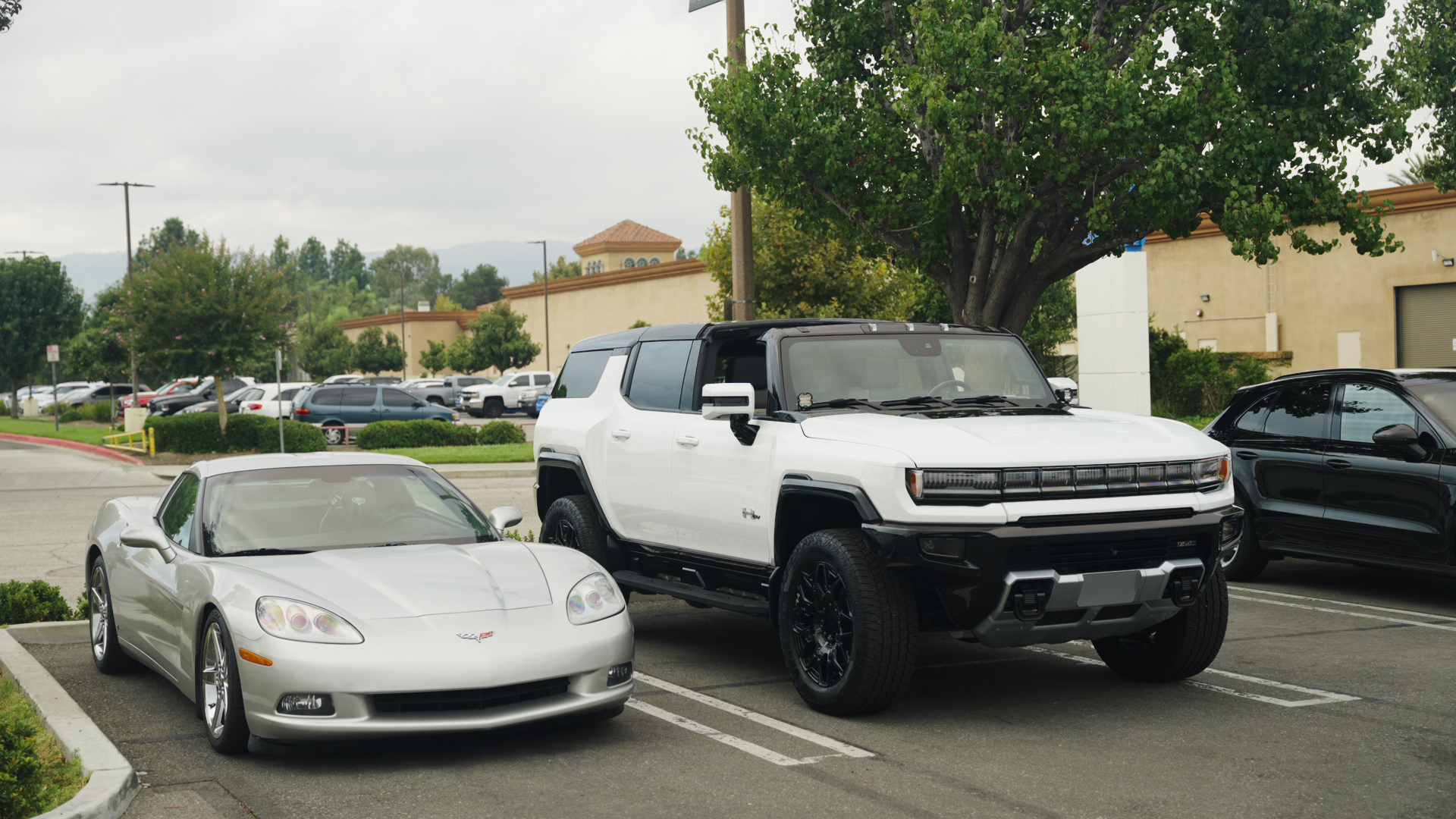
I’ve always liked the design of the Hummer, which appeals to a deeply East Texas part of me. Whenever I see the new Hummer EV I’m torn between appreciating the technology and the aesthetic, and remembering that it weighs 9,000 pounds. This is the maximalist approach to building an electric vehicle, and it hasn’t really worked for GM.
There are four vehicles that GM makes at its Factory Zero in Michigan on this basic platform (Silverado EV, Hummer EV, Sierra EV, Cadillac Escalade IQ), and I don’t think you could argue that any of them are particularly popular. So, the inevitable has happened. Per Reuters:
General Motors is idling its all-electric Factory Zero plant in Detroit until April 13, the company said, once again citing lower than anticipated demand for electric vehicles.
“Factory ZERO will temporarily adjust production to align EV production with market demand,” a GM spokesperson said on March 30. The temporary layoff affects 1,300 workers.
Employees were told March 13 that they would be placed on temporary layoff until April 13, GM confirmed to the Detroit Free Press.
It’s possible that prolonged gas prices will stoke demand for these trucks, though I think it’ll probably be better for vehicles like the Equinox EV and Blazer EV.
Volvo Will Reacquire Some Polestar To Pay For Production In The United States

The Polestar 3 is probably the best argument for Polestar continuing to exist in the United States, and a big reason is that it’s built in the United States. Volvo had been a major shareholder in Polestar, and then it gave its shares back to Geely (the Chinese parent company of both), and now it’s reacquiring shares. Why?
Again, from Reuters:
“Our strong operational collaboration with Volvo Cars continues through manufacturing, our commercial operations and offering our customers access to one of the most extensive service networks in the industry,” Polestar CEO Michael Lohscheller said in the release.
Polestar currently produces its Polestar 3 model in Charleston, South Carolina and in Chengdu, China. Following the deal, it will discontinue production in China, where demand for the automaker’s cars is weak.
China-made vehicles also face high tariffs when exported to the U.S. and Europe. The automaker faces a 28.8 percent EU duty on China-made EVs, prompting it to diversify manufacturing. It will also make its Polestar 7 at Volvo’s factory in Slovakia.
It’s not good enough for China, but maybe it’s good enough for America!
BYD Is Loving This
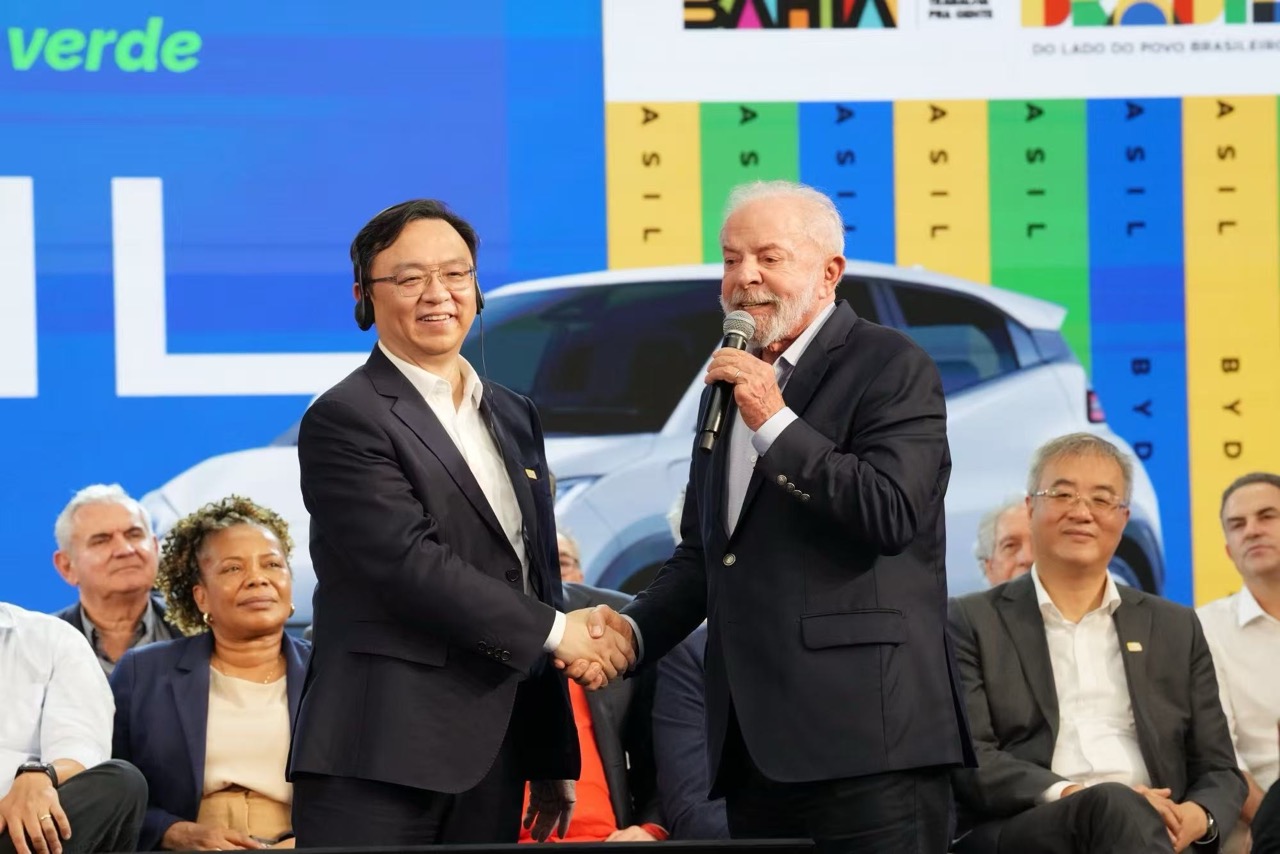
China is the biggest market for electric cars, but it’s also the most competitive. A drawing down of incentives by the Chinese government should start to help rationalize the massive overcapacity issues, eventually, though the best way to deal with a glut of domestic production is to export. BYD had already been at the forefront of this, expanding in Europe, Latin America, and now Canada.
The Iran War was already boosting the company’s share prices, so the company’s leadership sees even more exports, as reported by Nikkei Asia:
Founder and Chairman Wang Chuanfu told analysts at a closed-door briefing on Monday that skyrocketing oil prices are expected to push BYD’s overseas sales to “another level” this year, according to multiple people familiar with the session. Wang singled out markets such as Australia, New Zealand and the Philippines, where he said daily sales volumes are now as high as what the carmaker could previously sell in two weeks.
The automaker has raised its annual overseas sales target to 1.5 million cars, a 15% jump from a previous goal of 1.3 million units, Wang informed analysts last week and repeated at Monday’s event. The company did not immediately respond to Nikkei Asia’s request for comment.
The chairman’s remarks — which reflect a jump in oil from around $60 a barrel at the beginning of the year to over $100 due to the blockage of the Strait of Hormuz in the Iran war — will buoy hopes for a turnaround powered by overseas markets after a disappointing 2025.
Another quirk of energy markets is that producers will happily sell your petroleum product to someone else so fast that they’ll literally turn the boats around to divert to more profitable ports. While consumers in some places, like Europe, will pay the highest price, other consumers will see actual demand destruction. It’s a perfect opening for an EV exporter.
What I’m Listening To While Writing TMD
My favorite thing about A Tribe Called Quest playing “Check the Rhime” on The Late Show With David Letterman is that, contractually, the Late Show band has to also play on the song, so you get the live horns and drums. It’s actually kinda great.
The Big Question
How high does gas have to get, and for how long, to get EV share above 10%?
Top graphic images: DepositPhotos.com; Tesla


10% 100% bev in the us is a tough ask. Could be extremely high hybrid or various erev. This gas price hike when there is already a large economic squeeze doesn’t screem run out and buy a car. The Chinese have been going back to erev as well.
What’s interesting is the markets in south east Asia around China. Vietnam is going full into vinfast. They are everywhere and the Chinese haven’t really broken in to the market yet. Then Thailand you have byd and other Chinese cars doing really well and have been for some time. As they bring value. But they still love their their Toyotas.
The Philippines might be the most interesting as bev wasn’t all that popular but gas is something like $9 a gallon now and people are buying electric vehicles. Either from China or Vietnam. Two wheel electric market growing alot in all too.
All these counties have seen run on gas with 3x+ price hikes with shortages. But are also not a stranger to electricity blackouts. But new bev is cheaper or roughly the same cost as an ice vehicle. But the bev will probably have more tech and features. So maybe feels more of a value. My guess is thats is still big part of it. Along with mandates in some cities and not being tied directly to gas. The high prices might nudge them to act sooner then later.
I would contend that the larger factor affecting demand for EVs is the price of the EVs themselves. To me, it seems the pre-2025 growth was driven by early adopters and higher end buyers, within a mostly positive economy.
I am neither – I hold on to cars for a long time, and I can’t afford high-end vehicles. I still perceive there is an upfront price premium to be paid for EVs (perhaps I’m wrong) and it is this that keeps me away from them.
Offer me a $25k-$35k, Civic-equivalent, new EV and I would take the plunge.
(I am very hopeful the Slate makes it to market)
So, to the big question, and all things being equal w.r.t. EV pricing, I suspect you would need a big spike in gas prices to change my car purchase algebra: $10 per gallon gas, for at least 6 months (to let the despair set in, and eventually convince me to take action.)
This would make filling up my 2002 Protege5 cost $120+ per fill-up. Life would suck when things get that bad.
I’d rather see cheaper EV’s instead…
The $25k-$35k civic-equivalent vehicle exists now, the Chevrolet Bolt. Comes with native-NACS, 262 miles of range. Starts at about 29,000.
It depends on what you mean by civic-equivalent, as the Civic is a really nice car in its own right, but the price-parity ICE to BEV is just about there.
Price parity on a TCO was crossed in 2019.
You can find TCO cost comparisons between a 2019 Camry vs. Model3 both similarily equipped and both bought new and driven an average of 15k miles per year. Taking in all costs over 5 years it was cheaper to own the Model 3.
On a purely up front purchase price, in the US market you are correct in that you have Way more options with ice cars and ice cars are still cheaper.
That said the US is only 4% of the entire world’s population.
In other major markets where Chinese evs are available* thanks to Chinese EVs, price parity at purchase price is already here
*technically there are at least 2 Chinese owned brands foe sale in the US tks to Geeley owning Vilvo and Polestar
This has only been happening for a few weeks now. So much, much longer, and much much higher.
Most people do not panic right away. Especially if they have been driving for some years and have seen these spikes in the past. The late 00s financial crisis for example drove prices up more than they are now – before inflation adjustment.
Takes a long time to see the $ benefit, especially with EVs being so pricey. Perhaps once the market offers some $25-30k EVs with ‘charger installation included’ then more folks would jump on board. Maybe you hit 10%, but many don’t want to deal with charging and range issues in the 1st place.
For my 2022 migration to Maine immediately post-pandemic, gas prices were well over $5/gal, and premium was over $6. Yawn. This too shall pass, probably sooner than later with TACO. I have absolutely zero interest in dealing with charging a car anywhere. Even if there were any EVs I could stand to be in and enjoyed driving.
I just hope the short-memory populace remembers this in November. It has certainly served to distract from Epstein, which I imagine was a primary reason for this nonsense. The ability of the President to unilaterally attack other countries without the consent of Congress really needs to be curbed, but the Founder’s never contemplated a complete idiot getting elected (or certainly re-elected).
Summer of 2008 average US gas price was $4.11/gallon. That’s over $6 in 2026 money. Probably doesn’t matter anyway. Gas prices too high for too long are likely to drag the entire economy down before folks start buying EVs, then they won’t be able to.
Good point there. Makes me recall that same timeframe folks were getting canned from all sorts of middle manager and white collar jobs, with stories of ex-execs working fast food etc. Lots of people taking losses on cars & toys and more.
GM was nervous because they just rolled out the gas thirsty GMT900 trucks as well. History shows that things went back to normal so this will probably be similar. Hopefully
I would love to electrify some and a household outlet will work for what we do but I did the math up to $6-7/gallon when I purchased a couple years ago and it still maths considering the other features I wanted.
Those Escape PHEV’s sure look cool though at those prices. Haven’t looked at insurance but I’d definitely move a little down-market if I could next time.
Mostly been a Honda guy since everything is fixable at a generally reasonable cost. Been leasing BMWs for the wife so she can have her label. Would love to go BEV and fortunate enough to have a garage with 220v at the ready. But the only thing scarier to me than a European car out of warranty is a BEV from any maker out of warranty. Just too risky, unfortunately, at this point in the EV maturity cycle.
I don’t want to navigate a video game to drive, and I expect capacity and life cycle energy/fuel use to match my 2011 Golf TDI Sportwagen. That pretty much rules out any new vehicle.
The price of electricity in the Northeast keeps climbing which hurts the case for EVs. Unlike gas prices, I don’t see it going down with all of this demand for data centers, etc…
I’m looking forward to getting a used EV some day more for the novelty and hopeful lack of wrenching it’ll require.
Gas where I live in SoCal averages $6/gal. atm, so 50% above the national average, and three times the price that some guy is paying somewhere in Louisiana maybe. He’s probably wearing one of those red ballcaps. I’m sure there are some $8-9/gal. stations in strategic LA locations, in order to come up with that $6. average. I’ll try to avoid them. My current preferred daily averages 16MPG around town, but fortunately I don’t drive that much lately.
I’d buy a base Renault Twingo if such a car were for sale in America at around $22K. In that nice yellow/orange color please. Gas goes up and down, but mostly up over the long march of time. As does the cost of most everything else. Sad.
Inflation is a natural state of economic being, right back to the Romans (they complained about it too). The trick is ensuring your income goes up right along with it. And preferably faster.
I don’t know enough to argue the point Kevin, but if that’s true, it is, as I said, sad. To me. I do know enough to use a search engine, and this extracted bit from Wikipedia suggests that though common, inflation is neither inherently natural nor unavoidable:
“Inflation is not natural or unavoidable; historical examples show that economies can experience periods of price stability or even deflation. However, most modern economies aim for a low, stable inflation rate to promote economic growth and price stability.“
https://duckduckgo.com/assets/icons/favicons/wikipedia.white.2x.png Wikipediahttps://external-content.duckduckgo.com/ip3/4liberty.eu.ico 4liberty.eu
Of course it’s common and certainly seems unavoidable over the long term (from my subjective POV as a humble consumer for several decades) but the rate of inflation over the past several years has been bananas IMHO. Trickwise, I think it’s also worth remembering that not everyone in the world is on an upwards trajectory insofar as their income is concerned. In fact, I’d hazzard a guess that that situation applies only to a minority of people worldwide (and even just Americans) at any given moment. Please note that I haven’t googled this… it’s just a guess on my part.
Regardless, I’m more or less retired at this point, and like most retired people (except for maybe those 1%ers) my income most certainly does not go up year to year anymore.
Inflation is what it is (within reason). Prices have been going up over time ever since money was invented. And before that, people probably complained that what a goat bought in their grandfather’s time requires two goats today. <shrug> Certainly artificially capping prices has never worked out particularly well, ever.
And if you think inflation was bonkers the past few years, good thing you weren’t alive in the 70s and 80s. The problem for people who are relatively young today is we had a looong period of both unusually low inflation AND especially, unusually low interest rates. Neither was normal. And for various reasons, SOME things have gotten wildly more expensive that affect everyday lives, while an awful lot of other things have gotten much cheaper. It always depends on exactly what you are buying and when.
I’d suggest taking a few economics classes to get a better understanding of how this all works and interacts. Take them with a grain of salt, of course, there are competing theories, and it’s more art than science.
You make a good point. The 2022- current interest rates that people call ‘high’ these days is still fairly low from a historical standpoint and pales in comparison to the insane mid 70s – early 90s double digit rates.
The 2-4% rate was very short lived and historically low, similar to the few years immediately following WW2.
I remember my parents telling us about the 80s rates on the house and car loan. Yikes, no wonder everyone drank all the time.
My first car loan, with the Old Man cosigning, in ’88 was at 10%. My first mortgage in 2001 was 8.5%. Both for much lower amounts than typical of today, but I made $5/hr in 1988, and $36K a year in 2001…
My Mother and Stepfather’s first mortgage was at 18% circa 1978, and that was with a VA loan… Yeah, it was only $35K, but that was less than they made together combined WITH my Stepfather’s Air Force pension.
Things suck today – but they sucked in the past too. Life sucks, then you die. I find it hilarious that kids today think we older folks had it so easy. We didn’t, we just had it different, and we didn’t have such an easy soapbox to bitch about it from.
That’s all true. 🙂 Things suck, but they sucked before too.
What I’m really curious about is what happens to EV sales in places like SE Asia this year. Sales in places like Thailand were already ramping up quickly, and they are seeing the brunt of the Hormuz closure, so it’ll be interesting to see if some of these countries go from ~20-80% EV market share in the space of a couple of years. I find that far more interesting than the set-in-our-ways lollygagging in the US. I’m sure BYD would appreciate that.
The math really doesn’t matter if an ICE vehicle is a brick due to fuel shortages but the grid is still up (coal power plants are coming back online in SE Asia) to charge EVs.
Generally speaking, human beings are impulsive and are attracted to new things, but are able to counter most frivolous desires with rational thinking. For example, “I don’t like paying $6 for gas, but it would take me ten years of driving an EV for the purchase to make sense. Therefore I will keep my current car for now.” Fortunately for car makers, 30-40% of the population appear to be easily targeted by algorithms that inflame emotions to the extent that their rational voice is overwhelmed. This comment is not really about cars.
To go EV, several things need to happen:
So in summary, it’s much easier to just stay on gas and the cost savings isn’t as great switching to an EV as some articles suggest.
I think the gas has to be much higher for longer until people break out their pocket calculators and do the savings math. Right now the cost premium of an EV will not sway enough folks to affect the stats. And a slow frog-boiling pace could also impact / delay the a-ha moment when people will say it’s time for electric. For now the “no impact” tracks.
And yes, the E-Hummer is such a unicorn that no one is surprised how slow is selling.
For most people, PHEVs with a reasonable amount of range seem like the best option. if there was one I could stand being in, one would be the ideal solution for me. Even 25 miles of EV range would let me do 90%+ of my trips on electrons, and that small a battery requires nothing more than a 120V plug to charge the thing overnight. With no range anxiety ever. But alas, I am fussy about what I will drive, and have enough cars already to last a lifetime.
I am firmly of the belief that the best use of 300mi of battery is putting 30mi into 10 cars. If you are going to carry around something you only need 10% of the time, I figure a modest ICE powerplant is a more convenient thing than a massive battery, absent one of the battery breakthroughs that seem to always be “any day now”.
The E-Hummer is just pointlessly stupid. But douches do need canoes.
As a city dweller I agree with the 30mi radius. As an American city dweller, good luck charging your EV curbside. Maybe there are middle suburbia scenarios where the 30mi radius works but the number folks seem to agree on is north of 50.
I still think a PHEV is combining the worst of both worlds and to me EREV is as far as I would go in paying for and carrying around two propulsion systems.
I live very much in suburbia and 30 miles would actually be overkill. If you have that long of a daily commute, well, sucks to be you.
The Prius says you are wrong. No reason today for a simple low output Atkinson cycle n/a four cylinder to be anything but fantastically reliable. Unless you are Hyundai/KIA I suppose.
EREVs make no sense to me. It is always going to be more efficient to have only ONE energy transition rather than two. Use the battery for when the ICE is inefficient, use the ICE directly coupled when it makes sense to do that, and as a generator only when you absolutely have no alternative.
Hey, we warned you. Let’s see if talk of gas rationing, as it already being discussed in other 1st world economies, hits the US.
“How high does gas have to get, and for how long, to get EV share above 10%?”
It depends on the jurisdiction and whether the given area has anti-BEV policies like excessive annual BEV registration fees (even excessive when you consider the ‘have to pay for roads’ factor) and whether the area has insanely high electricity rates like California or Massachusetts
It’s already above 10% in California. And as far as actual billing is concerned in California, it’s not as bad as you were told to believe. California has high efficiency standards. Our homes simply don’t use a lot of power to get the same job done. The cost per KWh is high on paper, but what we actually pay is solidly mid-pack costs. PG&E is the simple exception, as they’re trying to recoup the manslaughter fines from the 88 people who were killed, by pushing that onto customers. The court should have insisted the money come out of shareholder and executive funds.
I bought a used Volt (PHEV) just last month (before the latest mid-east brouhaha), but only because my Mazda was totaled.
Not an EV, but why this PHEV? I found a good used Volt, with a new dealer battery, for LESS than what a similar used Mazda would cost. So I saved on the purchase and I am saving on gas.
Which will then be spent on expensive out-of-production parts to repair a complicated system. 🙂
Volts are great cars. Basically drives like an EV, but with the bonus range extender.
You can’t average EV market share and say it hasn’t changed “on average”.
Market share was at 8% with the full incentives, and then without those incentives it is 5%. This is a direct supply / demand curve. At a $7,500 higher price, there is lower demand.
The peak to 10-12% was likely people who might buy soon, accelerating their purchase, or who were waiting in Feb/March to see what would happen, and then moving forward, knowing the incentives were going away.
Averaging over all of that and calling it flat demand is missing alot of detail.
I would agree except that we’re only about six months out from the incentive ending. I think it’s reasonable to assume there were people making up part of that 12% spike that pulled ahead a purchase that otherwise would have happened in February or March, so I think the 5% value is still artificially low.
That 12% only goes so far, though, so we’ll find out pretty soon whether the “average demand” actually goes down below 8%.
I know the averages show differently but even during the pandemic when gas went up, I never saw/paid the price as high as it is at my local stations now.
I’ll consider an EV when I need a new car, but gas prices probably won’t be a big part of the equation.
Much, much higher and for much longer than we’ve seen.
I love my EV but if I’m honest the tech is simply not there yet for full EVs to actually replace budget/commuter ICE vehicles in the near term. The batteries, chargers, converters, inverters, and all the required ancillary systems needed to make everything work safely are simply too new (in automotive forms) and too expensive so EVs are relegated to the higher margin segments.
There are also notable reliability issues from pretty much every manufacturer. Some have battery degradation issues but those seem to be dwarfed by issues with all the ancillary components like BMS, ICCU/charging, inverters, HV isolation, etc. These often wind up being eye-wateringly expensive to fix – like on the order of a full engine or transmission replacement for an ICE car. They are overly publicized, for sure, but they still exist and alter buying decisions.
After all that, unless someone can actually charge at home the cost savings gets murky. Public charging (DCFC, mostly) is not exactly cheap and many areas (like mine) are throwing extra taxes at public charging in addition to extra registration taxes that can actually exceed the taxes many (like me) would pay for a similar ICE car.
Issues like range anxiety are more psychological or lifestyle issues than a practical problem but they influence buying decisions.
Yeah, the Mach Es and Ultium platform rides bricking themselves randomly plus the Hyundai/Kia ICCU issues do not inspire confidence especially on high priced new purchases. Depreciated used buys make that hurt a little less, but it’s still not fun to think about dealing with.
BEV is already 20% of new car sales in California. I went EV in 2022. It was like the 7th gas crisis of my life so I was done with my daily being a 14 mpg guzzler. My move was more political but the savings are nice. Gas in 2008 was equivalent to about $7.50 adjusted for inflation. We aren’t there yet but everything else is much more expensive as well this round.
For most people afraid of a BEV or where it legitimately would not work, which is a relatively small fraction of actual drivers, they can get a hybrid as a crutch which is also much cheaper as well.
Really the best financial sense is to keep your car and drive it until it does not make sense to repair. Even if fuel prices stay high, not having a car payment is a better value.
What’s worse is in major cities we generally have pretty bad public transit and that would be the way to truly alleviate the cost of high fuel prices for a lot of people in the US.
It’s so crazy to put that into context like that. Back when Excursions and H2 Hummers were still for sale
In no way am I trying to steer you away from an EV, but there are plenty of options between 14mpg and full EV…
True, but nothing that is as fast as that 14-mpg car and my EV in between. Sure, a Prius would have made more sense, but the performance was not acceptable.
I’m trying to remember the last time I put gas in my cars. I know I filled one near the end of January, but I think it was late December when I filled the Maverick. They’re both getting close to empty now though. I can pay $75 to fill one for a couple months, or I can get an EV for how much?! If I needed a new vehicle, I would consider an EV, but not because of gas prices.
Hybrids are going to dominate new car sales for the time being. The price delta between hybrid and non-hybrid models is negligible for most brands and models, and they can pay that difference in an observable way to the average car buyer.
The EV shift will happen when the models have price parity so their low cost of ownership truly comes into play. When people start getting cheap EVs as their 2nd commuter cars, that will be the singularity that begins the end of ICE cars
Here’s the hiccup on EVs. New ones are not cheap, even if you have rebates. If you get, say, $15K on your trade on a $50K EV, you’re paying alot of money to save on gas. That $35K buys a lot of regular unleaded, even at inflated prices.
That said, I saw on Legit Street Cars how he got a Hummer EV for the shop because, thanks to a program for businesses in Chicago (or perhaps state-wide, I don’t remember), it cost next to nothing to lease. That makes sense for his use case.
Hybrids are likely the answer for most folks, though, *if you need a new car.*
Yup. Just looked up new Corolla Hybrid is $25k, cheapest new EV (Nissan Leaf) is $32k. $7k buys a lot of gas
Not at these present prices.
Touché
Which will be but a memory (if that) before you know it. Do you remember what gas cost in 2008? Adjusted for inflation, half again the national average of today. How much did that affect car buying? A gazillion full-size pickups a year says it didn’t.
Wow, and they’re not discounting Leafs much off MSRP. Equinox EVs are on fire sale around me. $10000 off MSRP is not unusual and there are multiple options well under $30k near me. New Bolts are showing up under $30k as well.
I was going to list the Bolt but I wasn’t sure if they were available yet. It definitely cuts that $7k difference but still, hybrid corolla is no slouch on thriftiness
Definitely, and because they’re so fuel efficient a lot of the TCO benefits of the EV are minimized too.
And given the history of the Prius, I would much rather put a bet on owning a Corolla Hybrid for 15yrs 200K than anything full EV.
EVs are still very much science experiments, IMHO.
Nissan USA shows the 2026 Leaf S+ starting at $29,990 MSRP and $31,535 with shipping.
Toyota USA shows the 2026 Corolla Hybrid starting at $24,975 and is $26,170 with shipping
Nice! I didn’t think the S+ was out yet, I know the new Bolt is also going to be at a similar price point.
It was the cheaper Leaf S that got the axe. There are S+ models on dealer lots today.
Alex and the guys at Cannonball (among others) all got the lease deals for $15k upfront for three years. no brainer, even better they can write them as a business expense. Wish other areas would follow that offer.
family fleet of two cars and two motorcycles all require hi-octane, so i get to pay a premium on top of hormuz-increase. lucky me?
I got a Volvo last year and it takes 93. I hadn’t paid attention to the price of that gas in 20 years so I was thinking it was 20 to 30 cents more per gallon than 87. LOL.
Those were the days!
Depends on where you are. In my part of Florida, premium is typically $.20-30/gal more. But where I am in CA right now, I see $1+.
But also, if you aren’t tracking the thing and driving generally like an idiot, you are not going to harm any modern car by running 87 in it. My Mercedes and BMWs both specify premium, and don’t drive one bit different on the cheap stuff. I have no doubt that foot to the floor they will make slightly less power, but my butt-dyno is not so finely tuned as to be able to tell. The smarter companies are stating “premium required for maximum performance”, which was the case with my GTI Sport.
I’m no fortune-teller but I just knew that fuel prices were going to go up during this Administration. That immediately discounted any cars I was looking at last year that required premium fuel. I settled on a Mazda3 Turbo that runs well enough on regular fuel. A good “exit strategy” to have in an era where 93 octane costs a dollar more per gallon than 87.
I just added a Transit Connect to my fleet, it gets about the same 27MPG highway mileage as my Focus ST, but the Transit Connect can burn regular fuel while having a lot more cargo room.
My father was a Rambler man and it rubbed off on me. My 12 year old Fit averages 35 mpg. Plus I get bonus points for the 36 years I didn’t own a car in Manhattan.
Rambler man = Fit dude.
I never thought of it, but the two personalities line up pretty well.
Since we have a plug-in Rav4, I’m driving it instead of my Prius AWD simply because I don’t have to buy gas since 95% of my driving is local. I drive my two ~10 MPG trucks just to keep them running. I just smogged my ’92 F350 longbed dually and checking receipts to reveal that since the last smog 2 years ago, I have driving it 300 miles. Since we live in the flammable foothills of CA, it is our go-truck. Our go-bags are in the camper along with other supplies in case we have to vamoose, so it is used for storage rather than camping.