

I feel on this site we’ve talked a lot about GM, with both glowing, jubilant praise and with puzzled resignation over their weird, often bad, decisions. I’ve been accused of both being unfair to GM and sucking up to them, so I must be doing something right, or, maybe more likely, wrong. Who knows. What I do know is that sometimes GM does something genuinely interesting and unexpected, and when that happens, I want to call it out. And there is something that GM did back in the 1970s that I think deserves some special mention: they made the most interesting rear windows of the entire decade.
Yep, you heard me. I know that’s an extremely bold and wildly specific claim, but I think you’ll agree. If we look at the grand, transparent panoply of rear windows in the 1970s, you’re not going to find anything that comes as close to some rear windows GM was producing for a few coupés in that era. And it’s all thanks to one particular piece of equipment, some designer must have seen at a trade show or something and arranged to have bought and placed in a factory: a Hot Bent Wire machine.


Specifically, the Pittsburgh Plate Glass (PPG) Hot Bent Wire glass forming and folding process, which could fold automotive glass into some dramatic shapes. While maybe not origami-level, exactly, the process produced something quite different than the sort of curved glass that car design had been using for decades, and the look, with its crisp edges and folds, felt genuinely new and novel.
GM really only used this process on two cars, both late ’70s coupés: the Chevy Caprice (or Impala) coupé and the Oldsmobile Toronado XS:
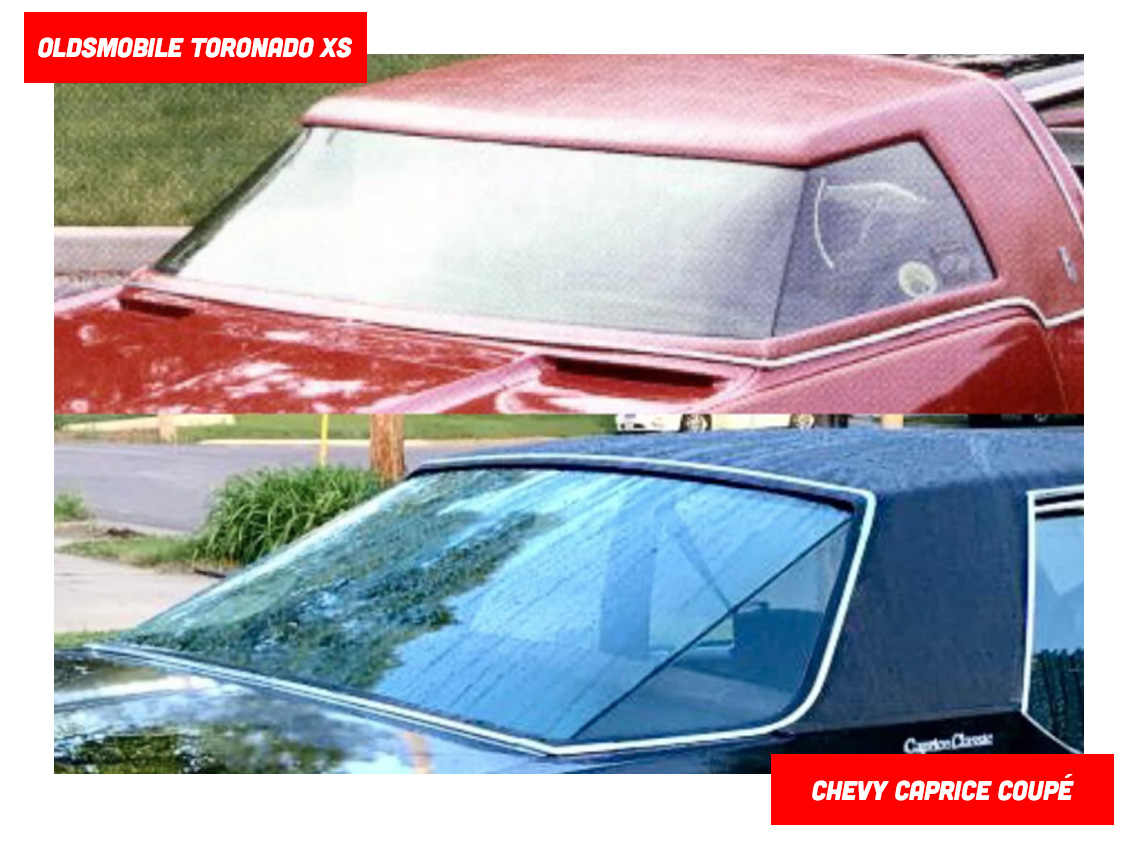
Of the two, the Chevy was by far the more common one. This was the coupé version of the 1977-1979 B-body Caprice, which was much more commonly seen in four-door sedan and wagon body styles. I grew up absolutely surrounded by these cars, and I generally found them pretty boring, if I’m honest. They were so rectilinear and staid, I just couldn’t get excited about them. But somehow, the coupé was different, and it was all because of that rear window.
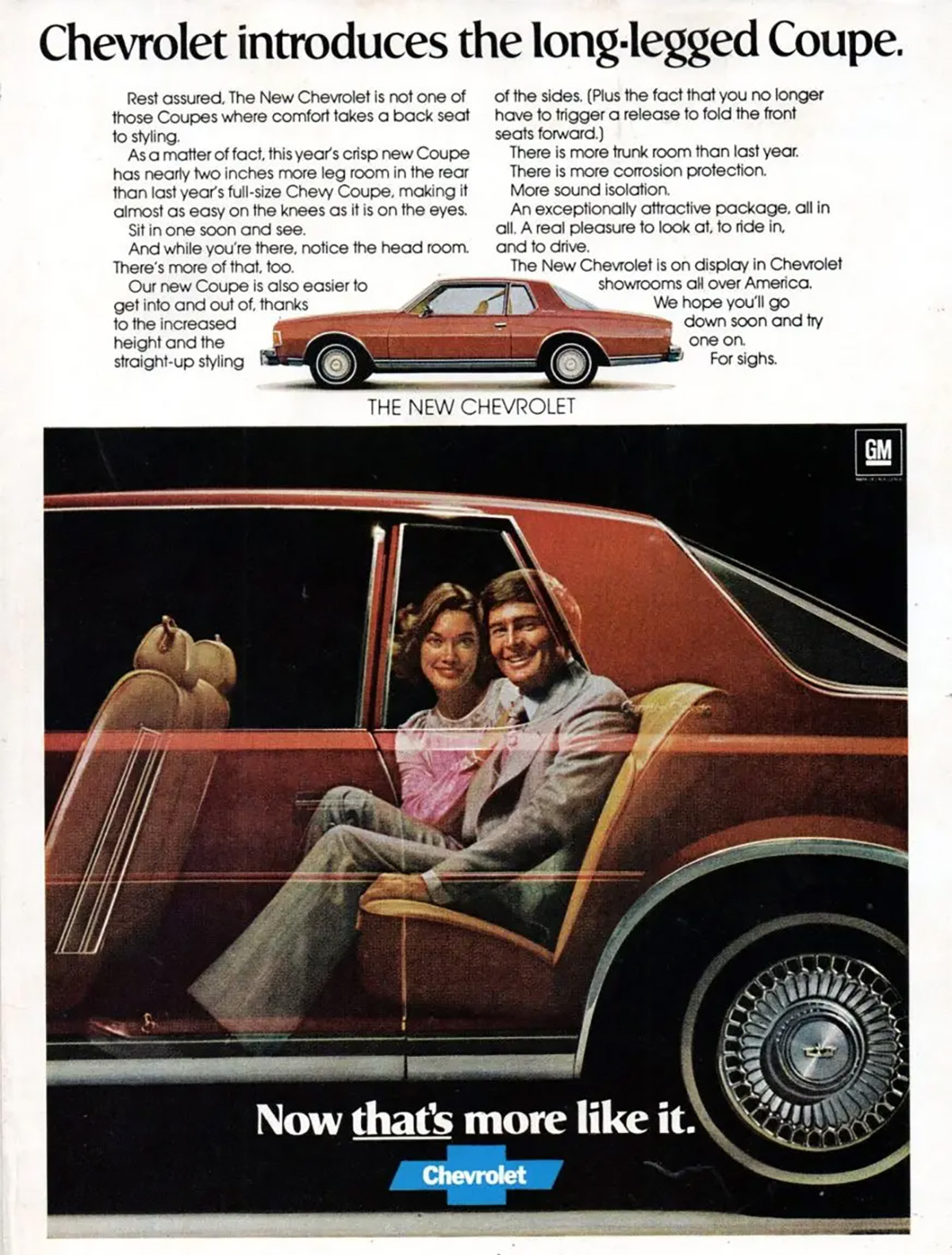
There was something about that rear window, with its sloping profile and prominent creases, that made the whole car much more interesting, somehow. That rear window just didn’t look like anything else on the road, and as a kid I remember seeing them and wondering how they were made. Were they composed of three pieces, somehow adhesive’d together? Melted? They absolutely caught my attention.
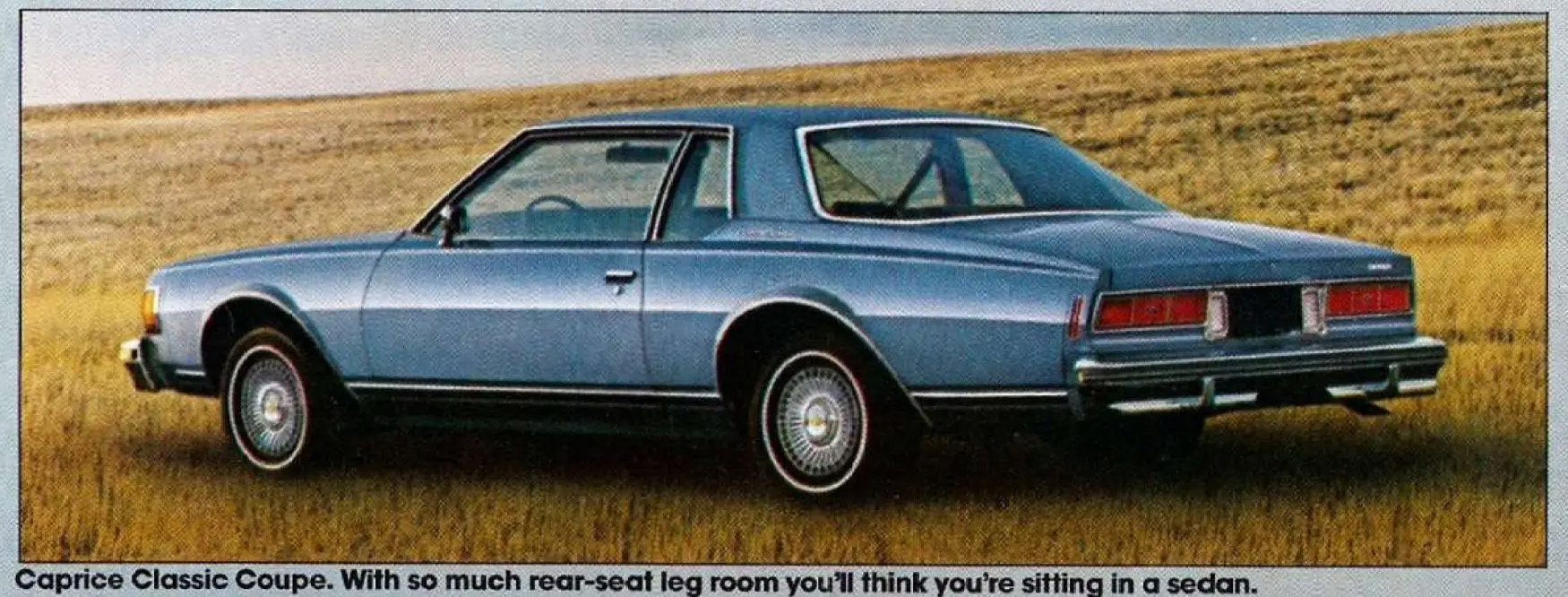
The slope of that window gave the profile of the caprice a lot more sleekness, and the prominent creases of the folded sides made the window fit in with the design vocabulary of the whole car. If you are skeptical of my claim that this window was the defining stylistic element of the car, just look at what happened when GM replaced it with a boring old flat window with the redesigned B-body of 1980:
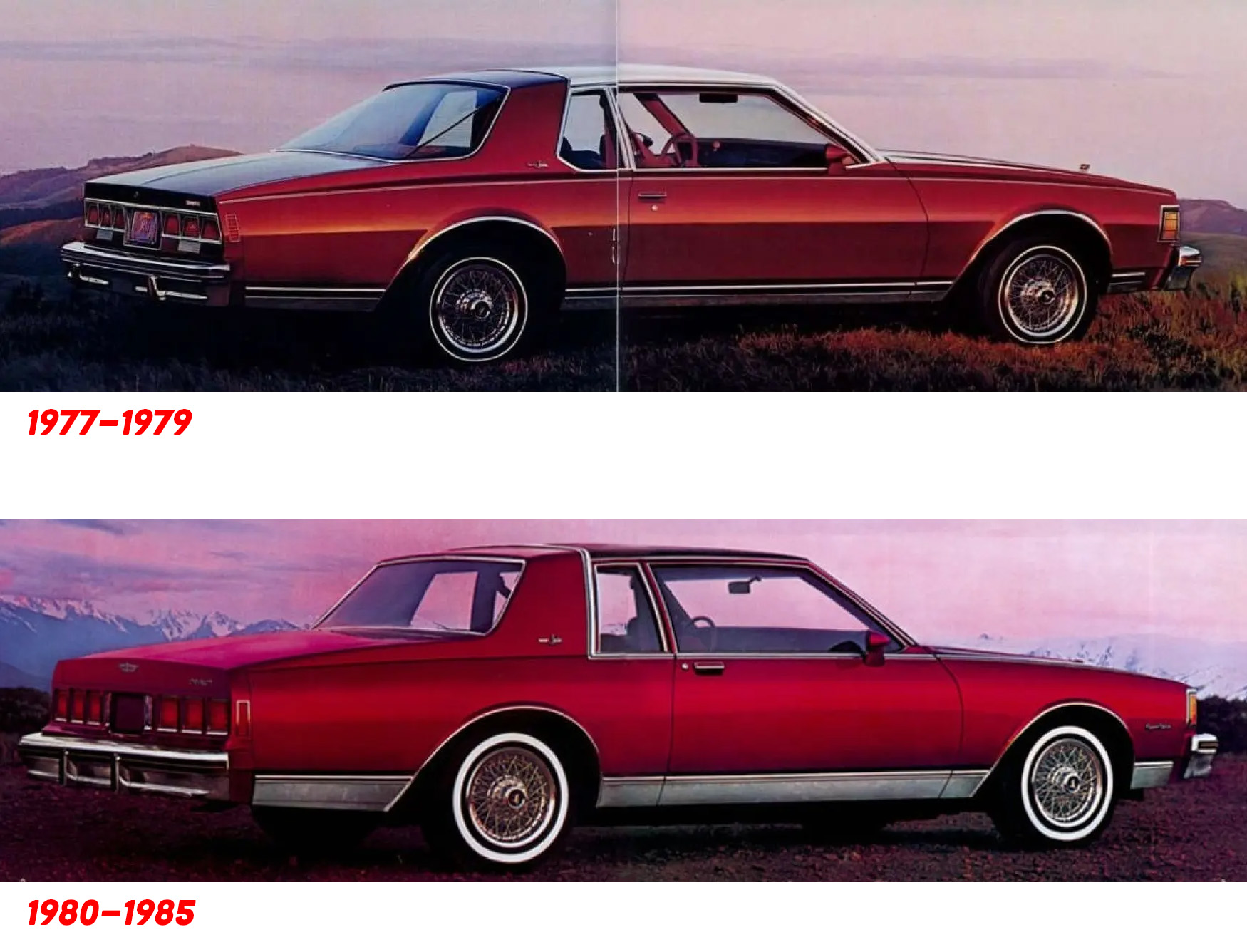
Tell me the car doesn’t lose something when they went to the flat window. That fastback glass adds so much to the car – sleekness, airiness, a visual element to focus on – and without it, that car is just difficult to really care about. Also, looking at these now I’m remembering how much GM loved those wire wheels. Oy.
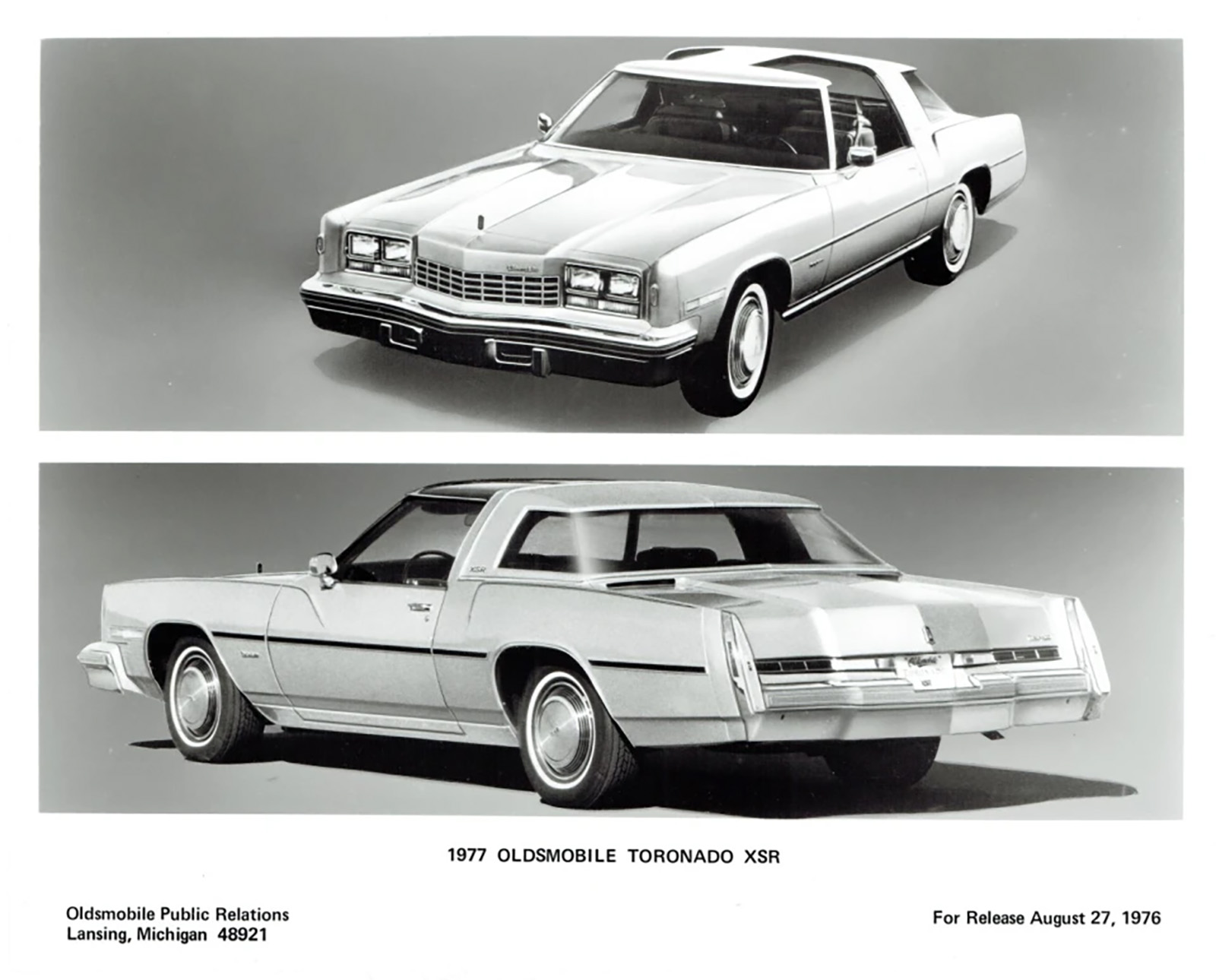
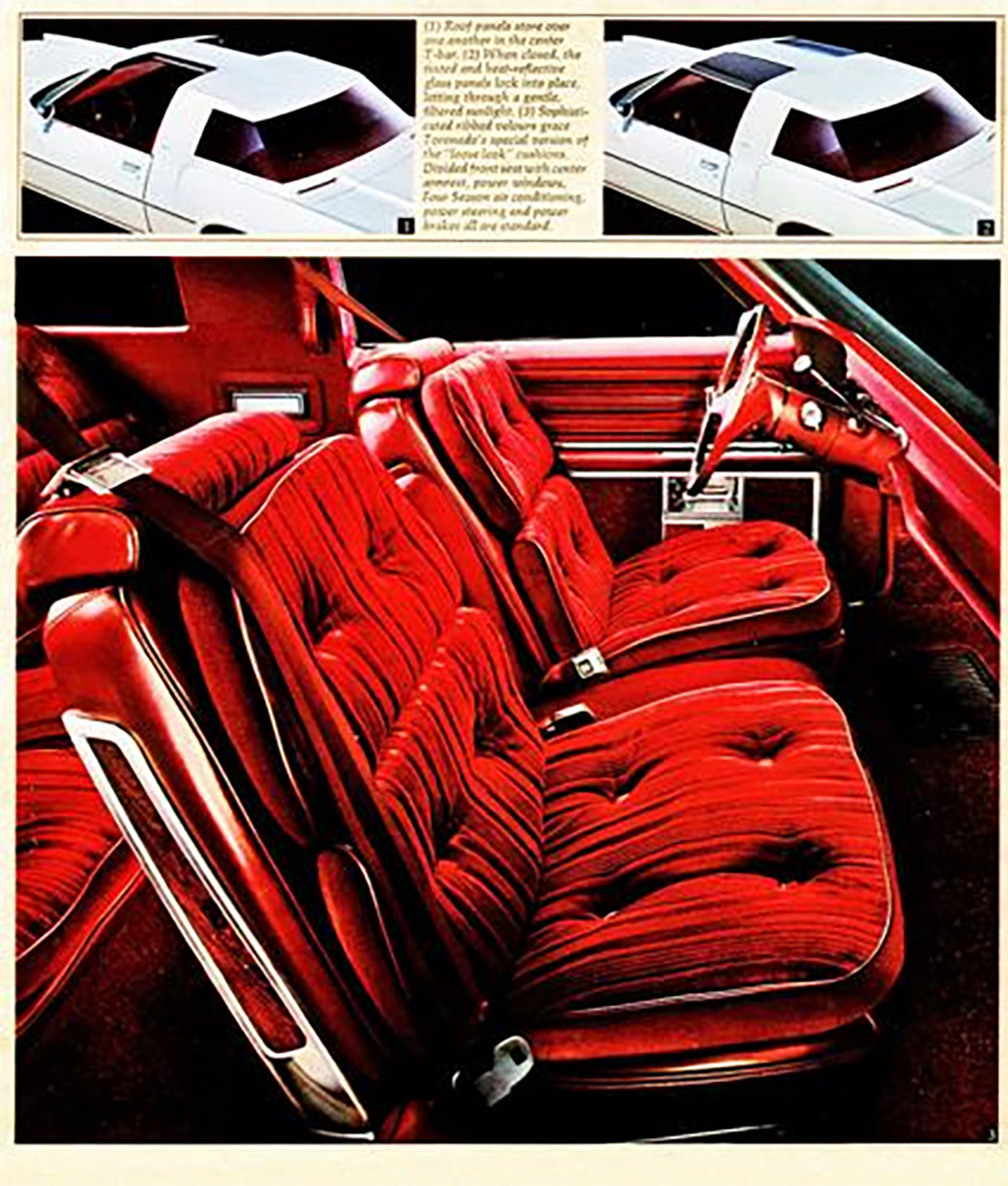
The PPG hot wire machine also got some use from Oldsmobile, who used it to bend the rear glass of their Toronado XS into a dramatic wraparound rear window. This idea first came around with an experimental concept, the Oldsmobile Toronado XSR, which also featured power-retractable T-tops. This car was modified by American Sunroof Company (ASC), and only a few were actually built, in numbers that range from three to 12, depending on your source.
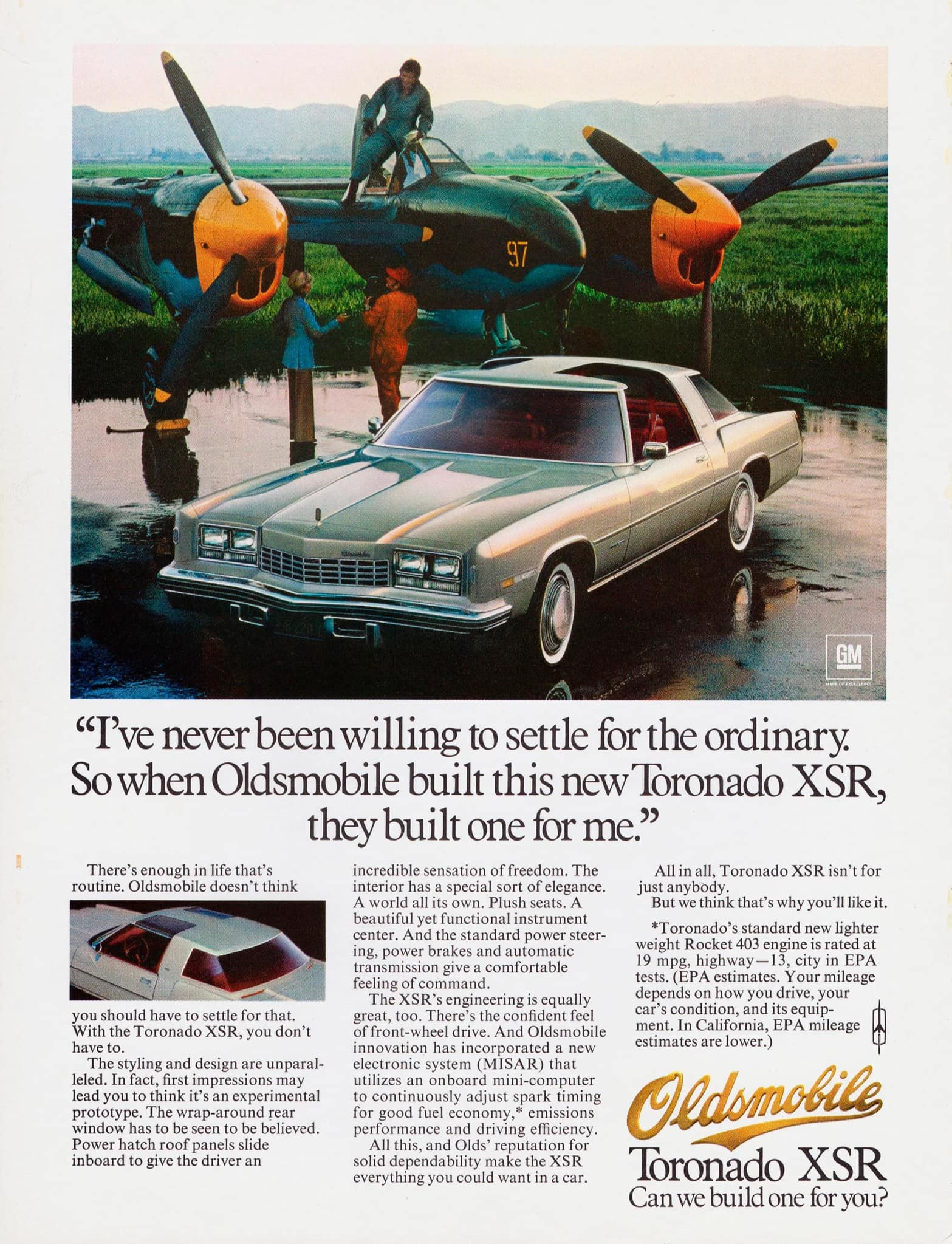
While the XSR with its powered T-tops never made it to market (those powered, retractable panels would have been complex, leaky nightmares, most likely), a version with a normal, solid hardtop (or a conventional sunroof) did make it to market, the Toronado XS. Of course, they only made about 2,100 of those.
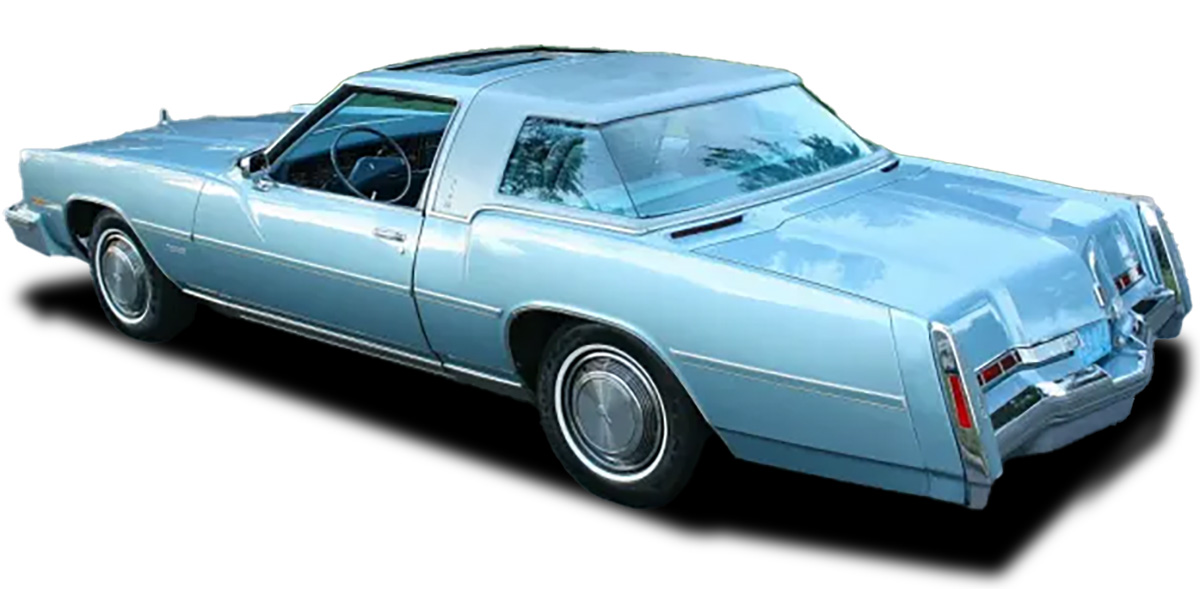
That’s a hell of a rear window, right? Oh, and it’s also worth noting the high-mount brake and turn signal lamps that were set into the bodywork just under the rear window, almost a decade before high-mount stop lights were legally required! That’s some taillight innovation there, too!
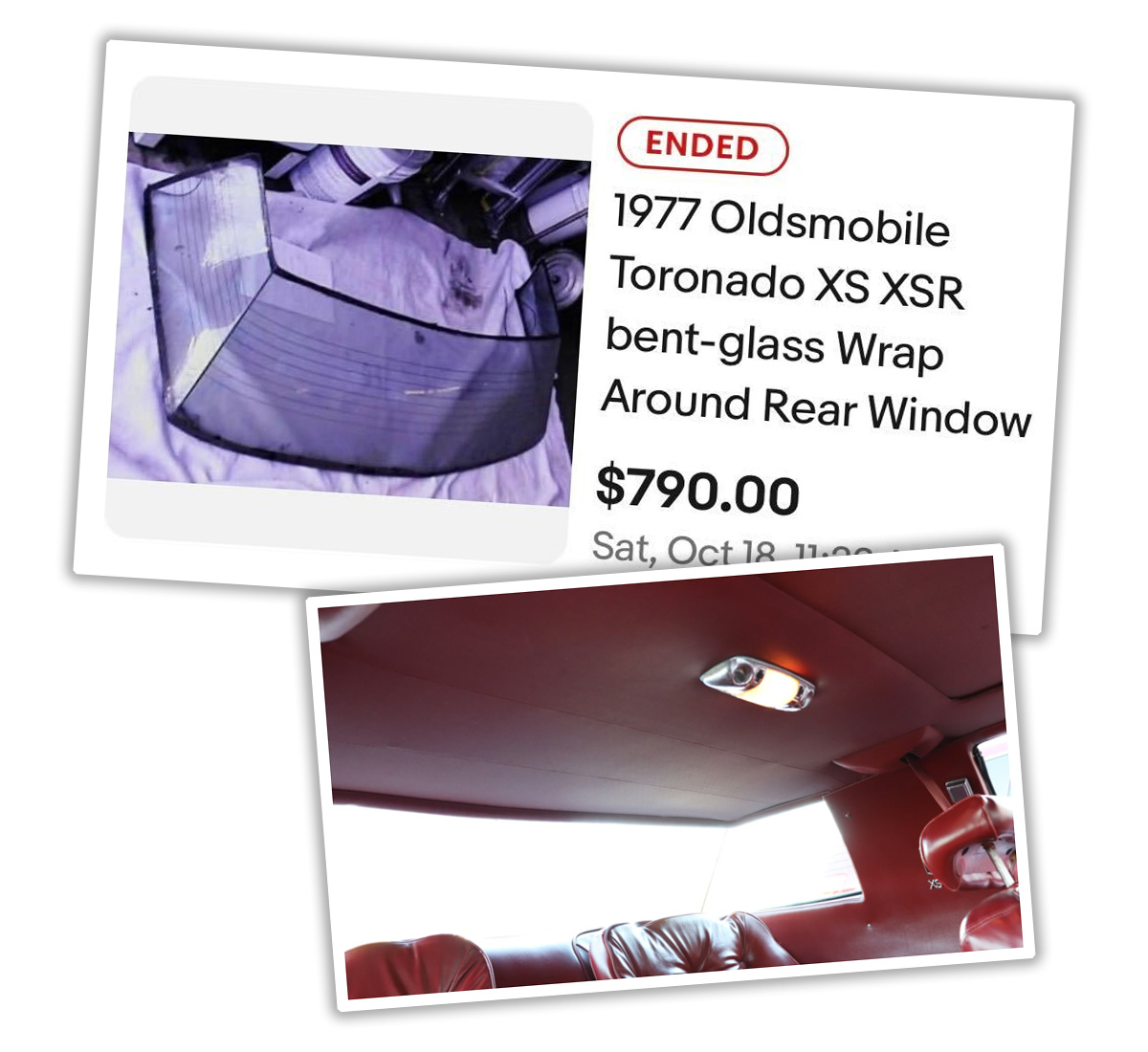
That panoramic rear window gave the interior a very open feeling, no small feat in a car whose interior color and upholstery choices made it feel like someone crammed a bordello into an office cubicle:
Here’s a nice video walkaround/through of an XS so you can get a better idea.
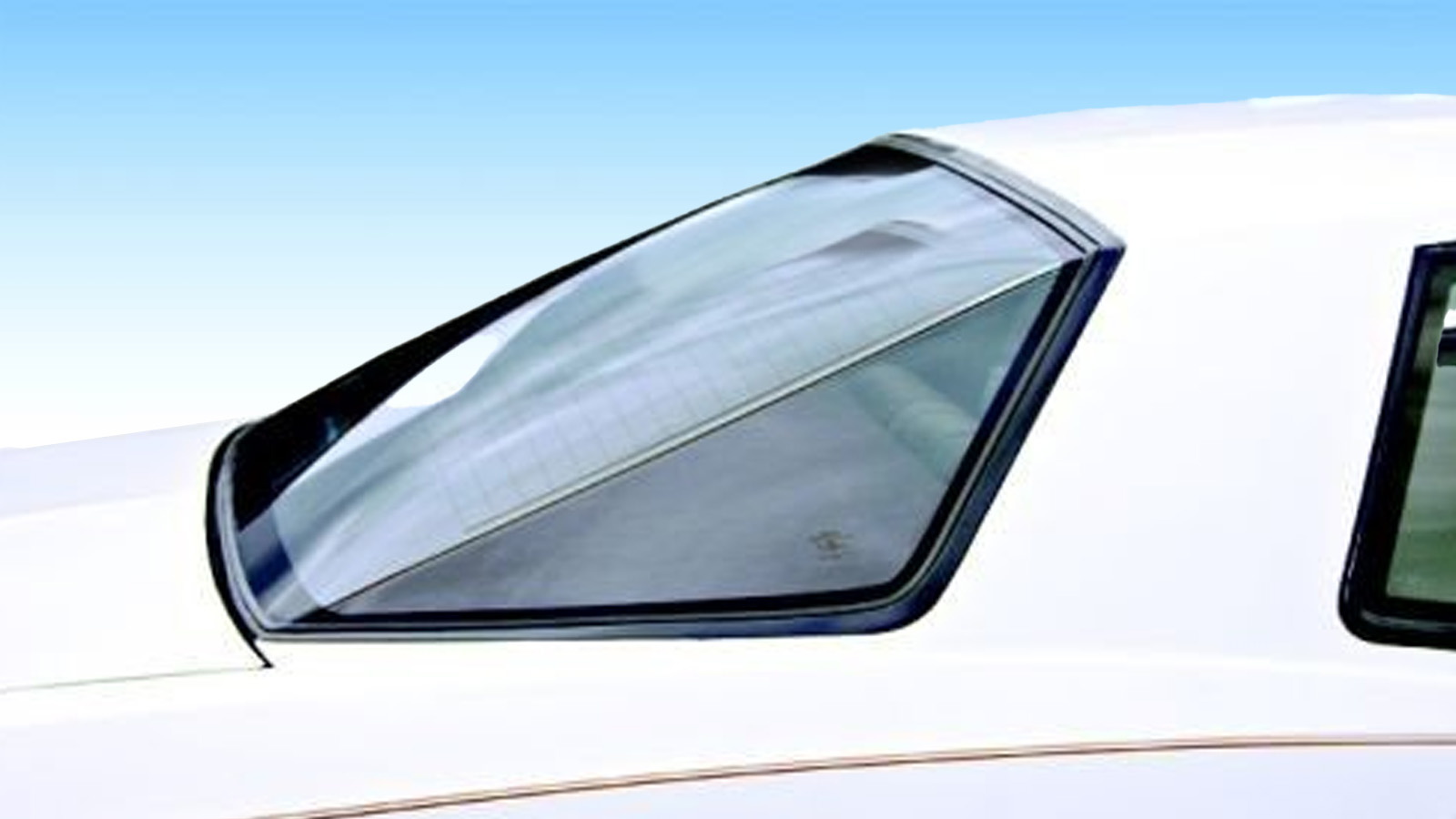
GM returned to the PPG bent glass party trick in 1986 with the Chevy Monte Carlo SS Aero Coupe, where the addition of a bent-glass fastback rear window let them quickly and cheaply improve the car’s drag coefficient from 0.375 to 0.365, which is pretty good for just replacing a window. Well, a window and rear trunk lid, but that’s still getting off really cheap. I can’t think of any modern cars that are using this method of folding glass; smooth, graceful curves are more the norm now, but I think there’s still a place for these kinds of crispily-creased windows in cars. Maybe GM will be bold once again and give it another go.
Top graphic image: Wikimedia Commons




Growing up as a Navy brat I remember “Torchuring” my dad to please buy in of these to get me and the family out of our Vega. Awesome looking window. But the two-door wasn’t practical because of the well, two doors. We got a Malibu Classic instead.
I never thought much about how they were made, I always assumed they were three pieces of glass joined with adhesive. Very cool to know that it’s one piece bent glass.
I’ve never seen the Olds, but being a kid in the 80’s I saw my fair share of Monte SS Aero coupes, and even a few of the Pontiac versions.
Also, when I was getting into hotrod and custom cars in the early 90’s, those fastback Impala’s were desirable. I remember reading about one in SuperChevy that the owner had bought from his grandfather and built in Pro-Street fashion that was so popular at the time. I actually looked around for one for my first car circa 1994, 1995, but never found a decent one.
THIS was effin’ fascinating. I recall being intrigued by these windows as a kid in the ’70s-80s and like Jason, wondering how they were made. I STILL like it when houses/buildings have those corner windows without a post in the corner/seam, even if sometimes it’s clearly there just for looks.
Totally unrelated: I took the hardtop off my NA Miata for the first time since I bought it several years ago because I was going to leave the car with a semi-retired mechanic out in the valley for a while and the hardtops are so stealable. With the hardtop off and the soft top up, the car was oddly quieter than with the hardtop, since when the hardtop’s on, the soft top is just folded behind the seats, where it tends to jounce and rattle. With the soft top up and latched tight, my 30+ year old Miata actually felt quiet and comfortable to some extent. Everything still felt good/tight: steering, sublime shifter (maybe someone installed a short-throw kit?), brakes, etc…
I hadn’t driven it in months… I forgot how good it feels.
This story is 1000% accurate. If there is one car my heart wants to restomod, it is one of those wrapped window Caprice models….
A solid candidate for an LS swap, no? They’re pretty comfy things.
Step 1 of many….
I’m hijacking this because you mentioned Caprice and restomod in the same sentence- If I had unlimited funds, I would LOVE to restomod a 1980s Chevy Caprice/Pontiac Safari station wagon.
The 3rd-gen Honda Odyssey had a REALLY subtle creasing in it’s rear window, although I am not certain the process for creating it. It’s such a shallow fold that I suspect that Hot Bent Wire process wasn’t necessary. I’ve always really appreciated this subtle styling detail on these vans. You can kind of see it (look at the lower areas just outside of the rear wiper sweep) in this image, if I manage to post it correctly… https://www.broadfeet.com/cdn/shop/files/RDHO-299-51.jpg?v=1712697930&width=4096
Nissan and Toyota had some great wraparound rear glass in the hardtop variants of their big sedans. The Y30 Cedric/Gloria Hardtop immediately comes to mind
The 1986-88 Sentra Sport Coupe had a pretty good piece of wraparound glass too!
Those are very neat cars. I don’t think I’ve ever seen one in person
You know, I think they were pretty rare even when new. I don’t recall seeing all that many even in the early 90s
GM also created the curvy rear hatch glass for the Camaro/Firebird pony cars as well, which I recall getting similar press regarding manufacturing innovation.
I was just going to comment they had a hell of a time figuring out those complex curves and almost did the bent trick but the designers held out for the curves.
If I remember the early models had a thing where you close the hatch up to the last inch or so, then it somehow finished closing. Keeping people from slamming the hatch & breaking glass. (I was very into my ’84 Camaro and read many books on them back then.)
The current C8 has soft-close trunk and frunk lids. Just set it down on the latch and give it a gentle nudge and it closes the rest of the way on its own.
Wouldn’t knee-knocker windshields from ~20 years prior have been the basis of it?
Certainly the knee-knockees were an achievement as well regarding small radius curves, but the F-bodies’ hatch glass was simultaneously convex and concave, which I think was an industry first
Id argue 1980s had better rear glass. The Aero Coupes was nice but the Pontiac Gran Prix 2+2 had a more unique rear glass
Third generation F-body rear window had both concave and convex curves which was an industry first.
So they could fold glass, but they could not manage to get the rear windows to roll down in the sedans of the same era. Fuck you, GM.
I wish I could find it in the Internet Era, but I definitely recall a magazine article in period that the non-rolldown rear windows were a choice to save weight, along with some other things like a smaller gas tank and other bibs and bobs. Such weight savings put the car in the next lower dyno class for fuel economy testing, which let GM advertise slightly better numbers. Zero impact in the real-world, of course. So indeed – Fuck you, GM!
It’s one of the most inconsiderate packaging/penny-pinching automotive design decisions ever made, that’s for sure!
Wow, that was 40 years ago…..get some meds and/or get over yourself.
Anyone who had to roast in clouds of ciggie smoke in the back seat of one of those things is permanently scarred, man. And lighten up, Francis. I’m just clowning around.
I have always thought that the spiritual inspiration for the Toronado XSR was the 1947-52 Studebaker Starlight Coupe.
Astute observation!
ya know, in an alternate universe… you’re probably right