

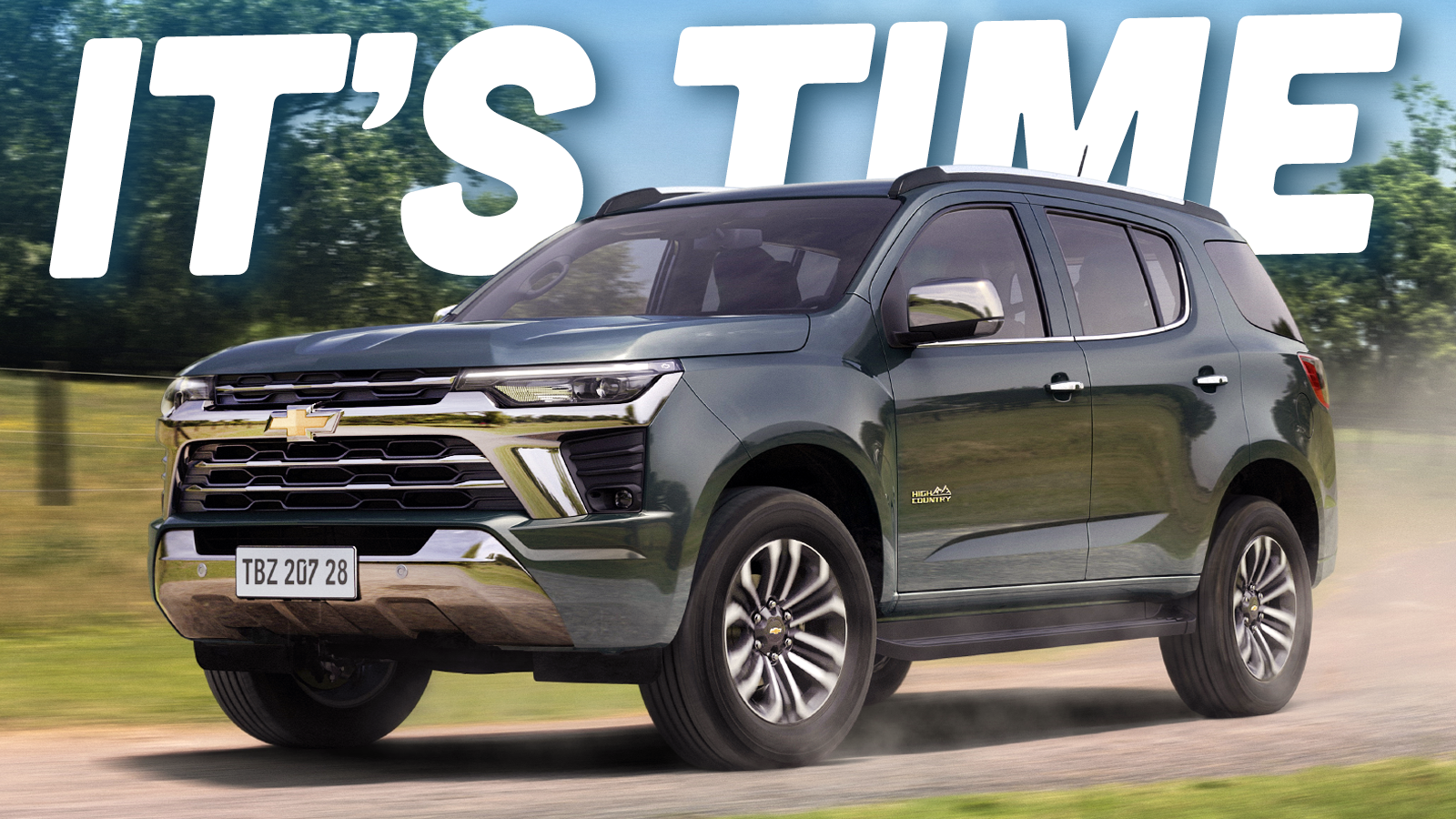
It seems like every time I write something about the Jeep Wrangler, the Toyota 4Runner, or the Ford Bronco (and the Bronco’s rumored Lincoln- badged cousin), there are a handful of readers in the comments section wishing that General Motors would make a mid-size body-on-frame SUV of its own. Well, it already does.
Anyone who follows GM’s product launches overseas will know that Chevrolet sells a Trailblazer in other parts of the world, for markets like South America, the Middle East, and East Asia. But it’s not the Trailblazer you or I are familiar with.


No, this Trailblazer is its own, specific SUV, inside and out. While the Trailblazer you see dozens of on the way to work every morning is a unibody crossover with barely any off-road chops, this truck is a proper body-on-frame vehicle with a true four-wheel-drive setup. Even cooler is that it comes with three rows and a standard turbodiesel engine.
The overseas Trailblazer is the GM body-on-frame SUV of America’s fantasies (well, maybe not the diesel part, but you get what I mean). If there’s any vehicle Chevy should introduce to its lineup in North America, it’s this SUV or something like it.
Picking Up Where The Old Trailblazer Left Off

Let me catch you up on some Trailblazer lore. The TrailBlazer name—Chevy originally capitalized the “B,” but stopped doing that later—was actually first used to identify a high-end trim level for the S-10 Blazer in 1999. The first-generation TrailBlazer first hit the scene as its own, distinct vehicle in 2001 as a way for Chevy to break further into the mid-size SUV space. This version used GM’s GMT360 platform, which was a body-on-frame design meant specifically for SUVs.
While it wasn’t as fancy as a Land Rover, as reliable as a Toyota or Lexus, or as capable as a Jeep, the Trailblazer’s body-on-frame setup and real, actual four-wheel drive with a low-speed transfer case meant it could hang with any of those cars through most off-road challenges, and deliver most of the comfort and reliability. And in the modern day, they’re far more affordable used. Don’t believe me? The great David Tracy picked one up as a rental a few years back to just see how it would do off-road, and came out deeply impressed. From that post:
It’s unlikely a Toyota Land Cruiser fan is going to fall in love with the Trailblazer. But I do think it’s an excellent low-cost alternative in that it offers a lot of the things a Land Cruiser does but at a fraction of the price. Is it as capable off-road? No, but it’s 80 percent there. Is it as comfortable on-road? I mean, almost — I’d say it’s 90 percent there. Is it as reliable as a Lexus LX or GX? No, but it’s probably 80 percent there. Multiply all those out and you’re at about 60 percent. Now consider that I sold my 265,000 mile Lexus LX470 for $7,200, and that you can buy a Trailblazer with half as many miles for half that price, and you see where I’m coming from.

The first-gen TrailBlazer could be had with three different engine choices, including two V8s and one of America’s last straight-sixes, the all-aluminum 4.2-liter Atlas unit with dual-overhead cams that, near the end of production, was making nearly 300 horsepower. Every engine was paired to GM’s just-fine 4L60 four-speed auto, which got the job done for around 200,000 miles before usually needing a rebuild.
Throughout its 2002 to 2009 production run, the TrailBlazer was also known for spawning a handful of badge-engineered siblings based on the GMT360 platform. There was the GMC Envoy, the Oldsmobile Bravada, and the Buick Rainier, plus cars like the Isuzu Ascender and the weird Saab 9-7X.

When the first-gen TrailBlazer ended production in 2009, that was the last North America would hear about the nameplate for over a decade, when Chevy revived it domestically as a more pedestrian, cheaper, more economical crossover, which is how the car still exists today. But elsewhere, the “real” Trailblazer lived on, getting a second generation with a body-on-frame construction.
The One Cool Chevy We Don’t Have

After a couple of years without a Trailblazer in the lineup, Chevrolet revived the name in 2011 for another mid-size, body-on-frame SUV, showing it off as a concept (above) at the Dubai Auto Show. This time, instead of getting its own platform, it borrowed the truck architecture found on the second-generation Colorado sold overseas.

The production version shared much of the concept’s looks, with the general shape of a tall, boxy-ish SUV, with a silhouette that reminds me of a Lexus GX470 from the mid-2000s. The fascia, meanwhile, looks like a cross between two Chevies: the second-generation Equinox and the Uplander minivan. Is it beautiful? No, not really. But it definitely got the job done.
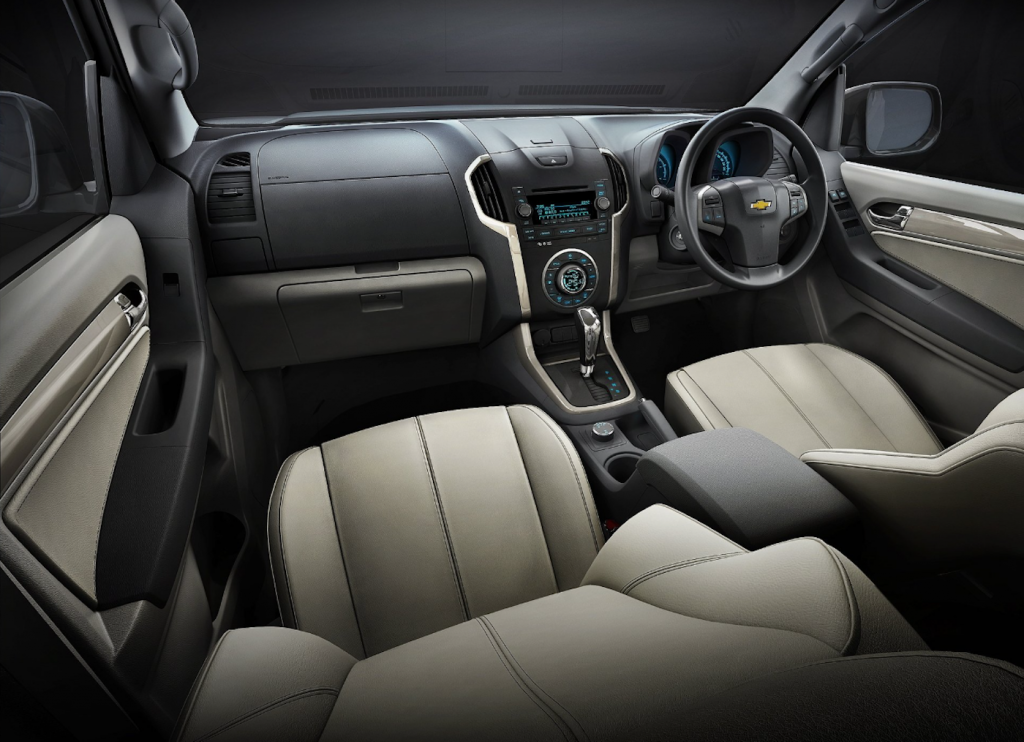
The inside is very much reminiscent of early 2010s Chevy products, with a plain steering wheel, vertical vents, and a standard GM center stack with lots of physical buttons and knobs, including a neat center button cluster for climate control. While it’s not as outwardly utilitarian inside as something like a Bronco, it’s straightforward enough to appreciate. Plus, there’s even a fold-out third row in the back, which adds to the appeal.

What’s most important is how the Trailblazer retained its ruggedness for this new generation. In addition to keeping the body-on-frame setup, it still used an old-fashioned four-wheel drive system with low range. Buyers could choose between a 2.5-liter or a 2.8-liter turbodiesel inline-four, or a gas-powered V6. Between the engine and the wheels was either a six-speed automatic or a six-speed manual (which was later dropped, sadly). This is just as much a truck underneath as the first-generation Trailblazer ever was, if not more so.
It’s worth noting that while it’s badged as a Duramax, the 2.8-liter turbodiesel is actually sourced from Italian engine manufacturer VM Motori, according to Australian site Drive. Thanks to stuff like a high-pressure common-rail fuel system and double-overhead cams, it makes 207 horsepower and a respectable 376 pound-feet of torque. Regardless of the source, Drive seemed to enjoy it. From their 2019 review of the Trailblazer, which was badged as a Holden for their market:
It’s a nice and composed engine, which brings on that big shunt of torque quickly after pedal depression. It’s managed well by the six-speed automatic gearbox, which is your one and only choice of transmission.
Although it reads like it’s only a low-rev lugger on paper, it does feel pliable through the rev range. There’s more rattle in the engine compared to more modern offerings from Ford and Toyota, but I reckon it’s still good nonetheless. Bonus points for a high-mounted alternator and a protected air intake as well.

Because this type of no-nonsense SUV is popular in so many parts of the world, GM has been building this Trailblazer for well over a decade now, with two big facelifts: One in 2016 and another in 2024. Overseas, the Trailblazer closely mimics the 4Runner-Tacoma approach, in that it shares most of its looks, interior design, and mechanical layout with its pickup truck sibling. In this case, the Trailblazer currently wears the same face as the second-generation Colorado (not the one we here in America get, but the one built for overseas markets).
To drive, the rest-of-world Trailblazer seems pretty pleasant, at least according to Drive:
Like most other ute-based wagons, the Trailblazer ditches leaf springs in favour of a five-link coil spring set-up for the rear live axle. Up front, it’s the same independent suspension as the Colorado. It’s a well-sorted set-up too. It rides pretty well and absorbs big bumps without too much fanfare. There is still a reminiscent jiggle that reminds you of its ute-based lineage, but it’s nothing overly bad.

Ford’s Everest is more refined, but the Trailblazer easily holds its own against the MU-X, Pajero Sport and Fortuner. Articulation is average for the class, and we didn’t come across any fading issues from our off-road driving – conditions weren’t really that tough in that regard.
The on-road driving experience improved with a big leap from the use of a new electric power steering set-up, which replaced the old hydraulic system. It feels sharper overall and gives variable weighting between low-speed and high-speed driving. It’s not just marketing talk either; it’s really tangible and beneficial.
I’m glad Drive brought up the Everest—like the Trailblazer, it’s another mid-size truck-based body-on-frame SUV that’s not sold in America. As cool as it is, I can sort of understand why Ford doesn’t sell it here: Because the Bronco already occupies much of that segment for the brand. GM, on the other hand, doesn’t have that conflict. There’s just a truck-based SUV hole in its lineup begging to be filled.
So, Why Doesn’t GM Bring It Here?

Back in 2023, GM President Mark Reuss was asked by The Drive why the company didn’t offer a mid-size off-roader to compete with the likes of Jeep and Ford. He told the publication, “I’m not gonna do a Bronco” for a couple of reasons:
The first is simple. Reuss explained that he doesn’t want to be “late to the party.” Doing a Bronco competitor now would put the brand plumb last in bringing a two-row, body-on-frame 4×4 to the market. The second has to do with emissions. Reuss claimed that Ford has to sell trucks like the Maverick as a hybrid because doing so many cars powered by internal combustion hurts Ford’s corporate average fuel economy. He doesn’t want to move backward in that regard.
So long as the Wrangler and the Bronco remain in production, there’s no fixing that first reason. But honestly, that doesn’t sound like a great reason anyway—Ford went years without selling a Bronco, but no one had any qualms about them reviving the nameplate for 2020 and putting it back on sale. Now, the Bronco is the second-best-selling SUV in the company’s lineup, behind only the Explorer. So being late to the game shouldn’t be an excuse not to capitalize on America’s ever-increasing demand for rugged off-roaders.

And the second reason, about corporate average fuel economy, isn’t a problem anymore, since the federal government announced back in July that it would no longer penalize manufacturers for not meeting those fleetwide standards. To pass safety regulations, an American-spec version of this truck would probably have to be based on the U.S.-market Colorado, but I wouldn’t mind if the looks and engine didn’t change. If Chevy doesn’t want to offer a diesel, the 2.7-liter inline-four found across its truck and SUV lineup would do nicely, too.
While the market feels ripe for something like the overseas-market Trailblazer to hit U.S. dealers, there is one problem remaining: What should it be called? Blazer feels like an obvious choice, but that name is already being used for an electric crossover. It’s also pretty close to Trailblazer, which, again, is already in use by a different, gas-powered unibody crossover. Perhaps it’s time to revive the name Tracker. It just feels right.
Top graphic image: Chevrolet




I definitely feel as if it was a missed opportunity to not have brought over here from the get-go when they introduced it in Thailand, has it probably would have done pretty well although definitely like the restyled versions over the Malibu equinox front end that it came with originally.
Perfect example of GM fumbling the ball, and not seeing the forest for the trees. This truck could easily compete in the segment and probably push out some of its competitors pretty easily. As we say here in Detroit.. GM is gonna GM.. and that’s not a compliment.
If they marketed it as more of a 4Runner competitor than a Bronco or Wrangler, that would be a smarter move.
Exactly! I had a 5th gen 4Runner which was great, but I want nothing to do with the 6th gen. I would have been very interested in a direct 4Runner competitor from GM.
Bronco and Wrangler are very cool, but I want a fixed roof vehicle for a daily.