

If you own an older car, chances are your factory speakers kinda suck now. They might’ve been fine back in the day, but heat, humidity, and ultraviolet light can all conspire to degrade foam speaker surrounds, compromise factory speaker cones, and generally make your music sound like it’s coming from a tin can on a string. But before you place an Amazon order for the cheapest speakers available, there are a few things you need to know to make sure you get awesome sound and an easy installation experience without breaking the bank. Here’s everything you need to know about replacing your factory speakers from someone who’s modified the audio system in almost every car he’s owned.
Sizing Things Up
When shopping for speakers, the first things to consider after setting a budget are speaker size and configuration. Generally, the holes the manufacturer cut into your car for speakers are only so big. Some cars use tiny four-inch speakers in the dashboard and door cards. Some use 6.5-inch speakers in the doors. Some use speakers that aren’t circular, mostly either 5×7″ or 6×9″ speakers, but old GM cars are infamous for their 4×10″ speakers. Crutchfield is a great resource for speaker sizes if you don’t know the dimensions of your speakers, and if you’re dealing with a more obscure car, chances are someone in a forum has already figured out speaker sizing.


Component or Coaxial?
There are two speaker configurations: component speakers, and coaxial speakers. Component speakers consist of a woofer for low-to-middle frequencies, a crossover unit, and a tweeter for high frequencies. If your car has separate locations for its tweeters and front speakers, these are probably the sort of speakers you’ll want to use, providing you have space to put the crossover somewhere.
Coaxial speakers, on the other hand, essentially put a tweeter in the middle of the woofer cone and build the crossover right into the unit itself. If it’s one tweeter, it’s marketed as a two-way speaker. If the manufacturer crammed two tweeters in that tiny area, it’s called a three-way speaker. These are a great option if your car doesn’t have factory tweeters, but they can also work well on some factory tweeter applications that are particularly close to the woofers.
Depth, Diameter, And Impedance
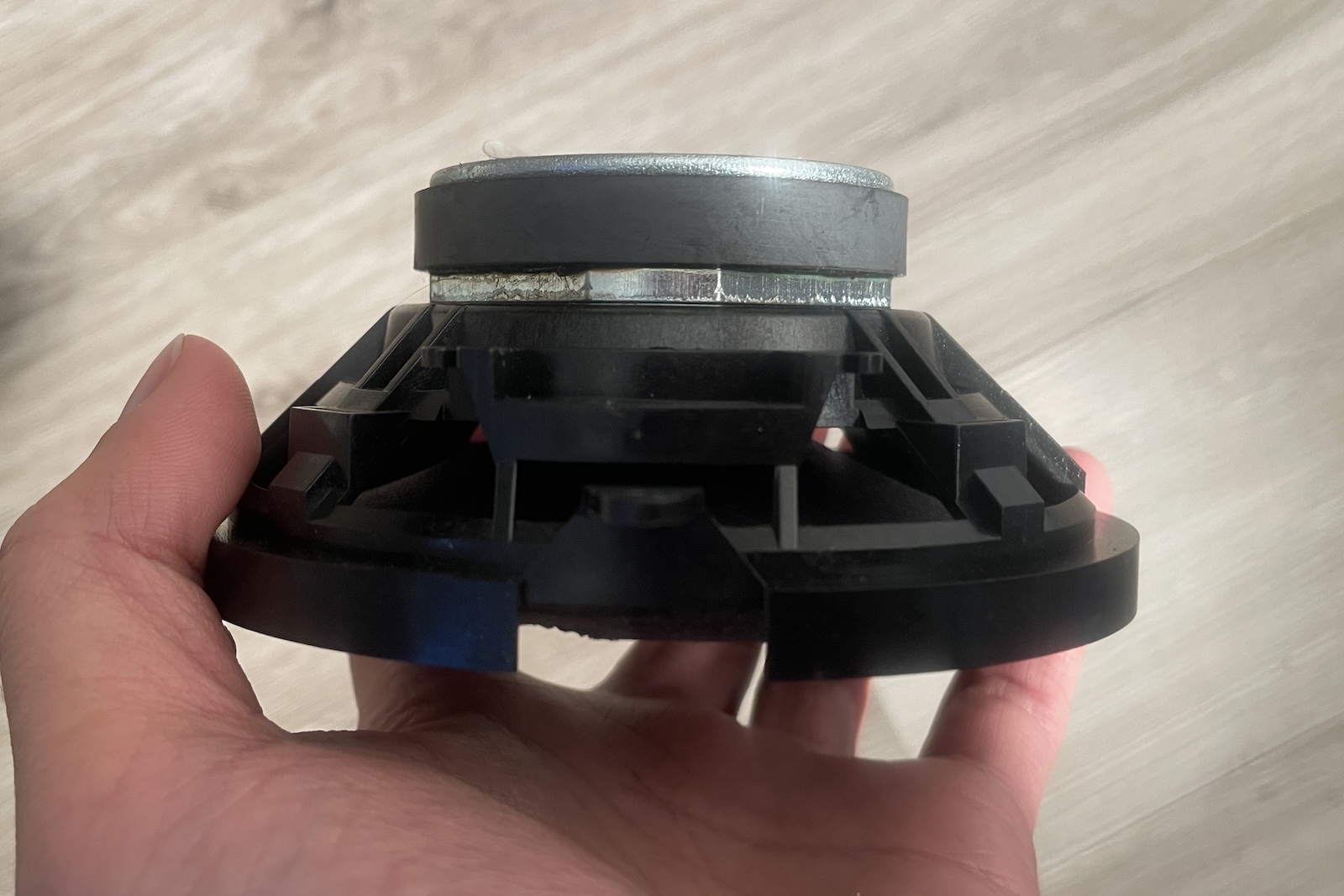
Speaker depth and magnet diameter can also matter for installation, depending on where the new speakers are going. If you’re putting new speakers in the parcel tray of a sedan and don’t care about taking a little bite out of trunk space, depth and magnet diameter don’t matter too much. If you’re replacing your door speakers, you’ll want to ensure that the depth and magnet diameter of the replacement speakers won’t interfere with anything in the door. Window travel, the window regulator, the door handle mechanism, that sort of stuff.
The next thing to look at will be impedance. Many car audio systems use four-ohm speakers, but that’s not always the case. An extreme example is the door woofer setup in 986 Porsche Boxsters and 996 Porsche 911s. Not only are they tiny 5.25-inch woofers, they’re two-ohm units. If you replace a two-ohm speaker with a four-ohm speaker, it will be much quieter as it requires twice the wattage to achieve the same loudness. If your car has an amplified factory audio system, it may use two-ohm or lower speakers in certain applications, so that’s something to watch out for.
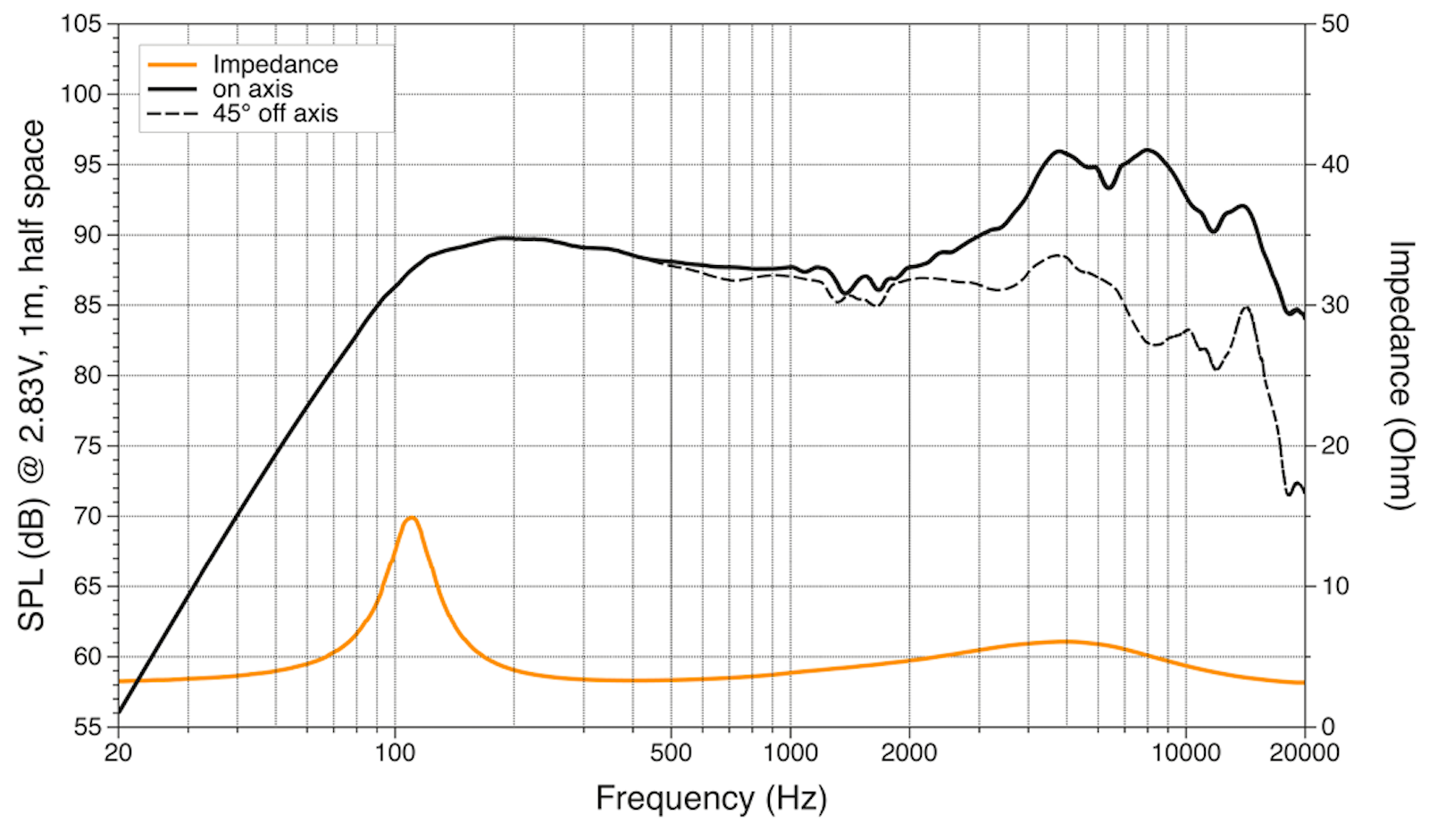
Speaking of loudness, it’s worth looking into frequency response, effectively the lowest and highest frequencies a speaker can produce without a huge drop-off in loudness. If you don’t have dedicated subwoofers, you’ll want speakers that can hit fairly low so you don’t miss a bunch of your music. The bottom end of this envelope is usually determined by speaker size more than construction, but even within a size class, some speakers hit lower than others. A bottom end of 70 Hz compared to 90 Hz can make a huge difference if you don’t have anything else to fill the low frequencies.
Powering Up
Finally, you need to consider power, and this is where things involve a bit of math. The wattage figure you see on the box of aftermarket speakers is the root mean square wattage, or RMS. Essentially, it’s the average continuous power a speaker can handle without blowing out or distorting and making all your songs sound terrible. In contrast, most factory audio systems are advertised using peak output. So, how do you figure out the root mean square of your factory amplifier? Well, that’s where things get a little complicated.
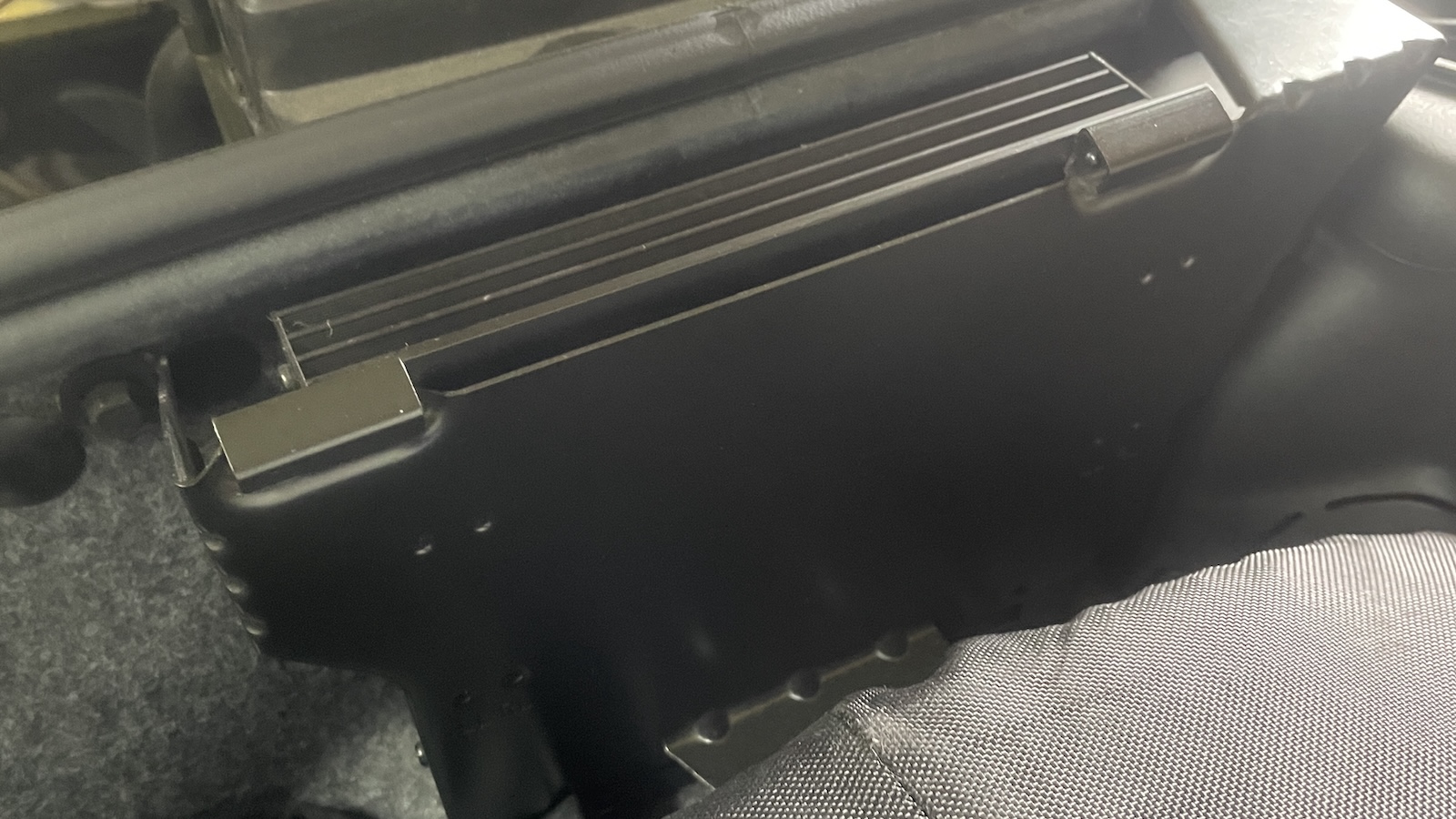
Ideally, you’ll want to know how much power it can send to the channel you’re replacing the speakers on, because you can’t always glean that from peak advertised wattage. Let’s use a 2005 Ford Mustang with the Shaker 500 audio system as an example. While it might be advertised as a 500-watt sound system, that’s peak wattage, and not all speakers are amplified. While each door-mounted subwoofer gets its own little Class D amplifier, the other door speakers and rear speakers are driven by the head unit, meaning they aren’t receiving much power at all. In this case, you don’t have to worry a ton about replacement speaker RMS, as the factory speakers are only rated at 25 watts, but you will want to calculate root mean squared power if dealing with replacement of factory amplified speakers. The easiest way of doing this is to take the peak channel wattage and divide by the square root of two, or roughly 1.414. Once you have that figure and narrow your search to speakers at or above that, you will want to consider sensitivity.
A speaker’s sensitivity is essentially its efficiency, how much sound it can pump out from a given level of power, rated in dB/W/m. That might be a lot of letters and slashes, but it boils down to decibels with one watt of power at one meter from the speaker. If you’re looking to go loud but are limited by the amount of power available to drive the speakers, an aftermarket speaker with a sensitivity of 90 dB will really let you crank the tunes compared to an aftermarket speaker with a sensitivity of 85 dB, provided their power handling capabilities are matched. Remember, the decibel is a logarithmic scale, meaning 90 dB is about three times more intense than 85 dB. When you’re only playing with, say, 15 watts RMS per head unit channel and a car that’s not especially well-insulated, sensitivity matters.
OK, But How Does It Sound?
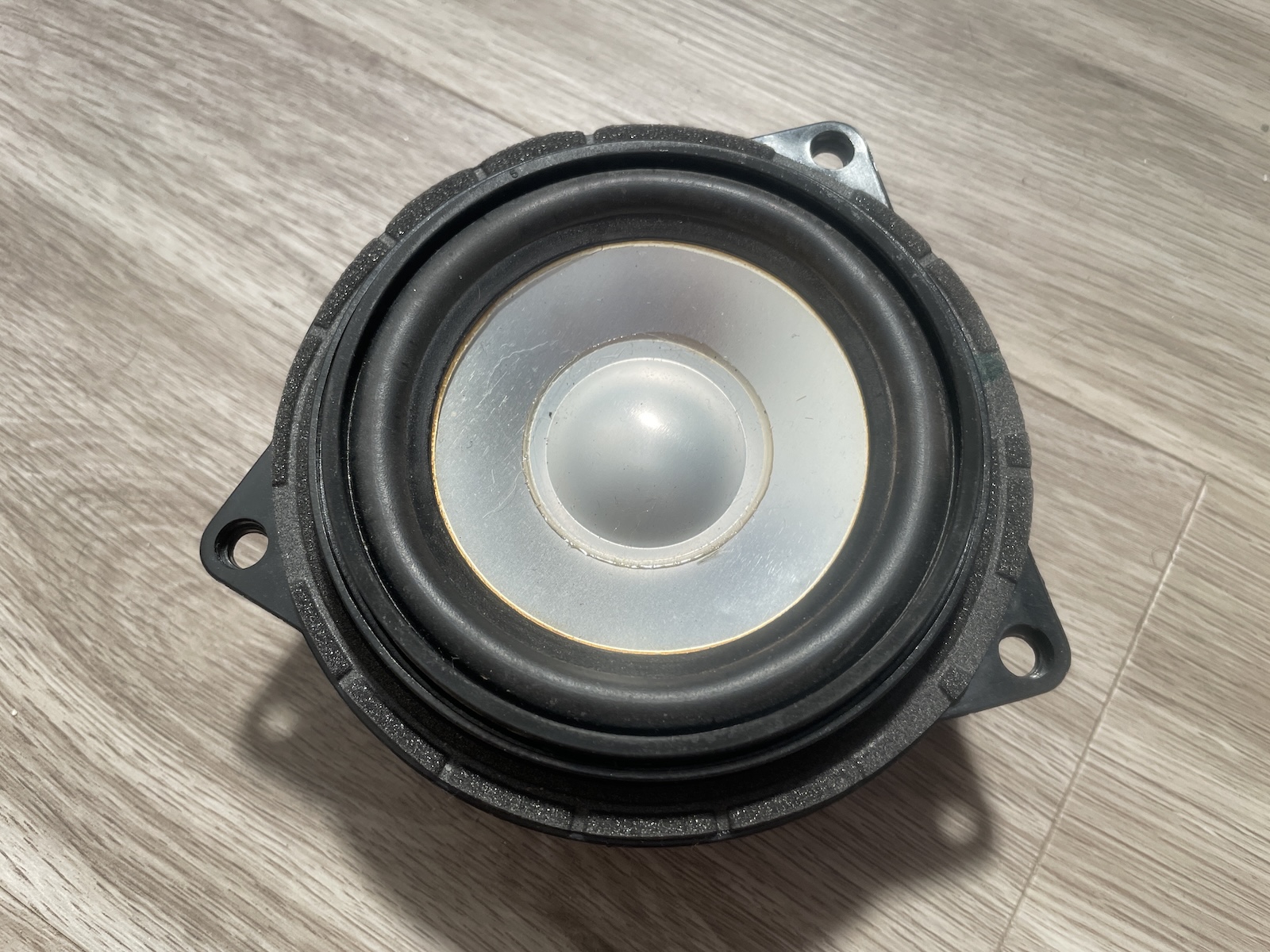
Once you have all these parameters worked out, it’s time to start thinking about tone, especially if you won’t be replacing the radio. Most factory head units offer notoriously poor sound adjustment, in that they often have broad-sweeping shelf adjustment for bass and treble, and that’s about it. We’re talking extremely coarse tuning that makes speaker selection extra important. A warm speaker will typically have stronger bass and richer midrange, while a bright speaker will excel in high-frequency sound. Granted, this advice largely applies to older vehicles. Modern sound systems use digital signal processing, including frequency boosts and cuts, and time alignment to get better sound out of cheap factory speakers. Swapping in aftermarket speakers could dramatically change the sound signature and induce unwanted sonic weirdness, so approach newer stereos with caution if you aren’t adding an aftermarket digital signal processing unit.
Unsurprisingly, speaker construction plays a role in tone. Metallic tweeter cones tend to sound harsher than reinforced silk cones, but they also cut through road noise better in noisy interiors. Mylar and polymer cones typically offer superior UV and weather resistance, at the expense of some sound quality because they aren’t that stiff. Paper speaker cones can sound wonderfully natural but often aren’t as resistant to humidity as polypropylene cones. Aluminum speaker cones are exceptionally rigid but can be more prone to resonance at certain frequencies. If you have an electronics store near you with one of those speaker walls, bring your music and do a little listening to find out what you like.
Installing Your New Speakers
Once you settle on a pair of speakers, you’re going to want to look at installation gear. Speaker harness adapters are a no-brainer, as they mean you won’t have to cut your factory speaker harnesses or do any crimping or soldering. Simply connect the spade terminals on the speaker, plug the other end of the adapter into your factory speaker harness, and enjoy. Likewise, some cars require speaker brackets for aftermarket speakers. These are typically cheap, and with the rise of 3D printing, you can even make them at home. Just don’t use PLA, it melts in hot car interiors. If you’re removing a door panel, you might want to look into sound deadening for a quieter ride and better sound, and if you’re replacing small speakers, you might want to look into bass blockers that deaden low frequencies better produced by other speakers in the vehicle. Oh, and if you’ll need to remove door panels, order replacement clips ahead of time. It’s not uncommon to break a few if they’re old, and being able to immediately reattach your door panel is a lot nicer than driving around with exposed bits of sharp metal next to you.
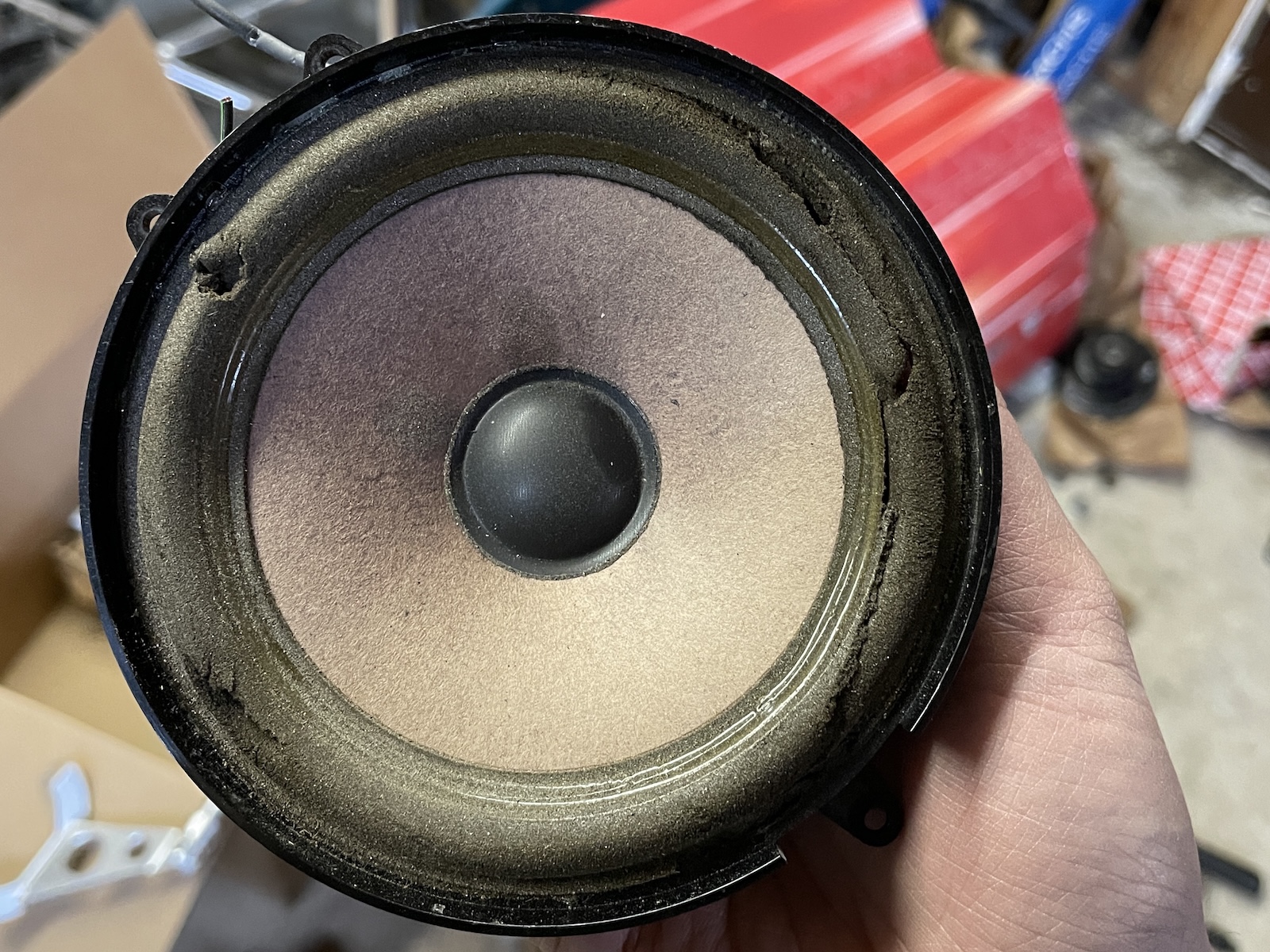
That’s a lot to digest, so let’s put it all into practice. Last summer, every song played in my 1999 Porsche Boxster started to sound like a 192 kbps MP3 ripped off of a music blog. Since the door drivers are weird two-ohm 5.25-inch woofers with a low-pass filter to give them nothing but bass, the 26-year-old dash speakers were the obvious culprit. Yep, that looks pretty crispy. My Boxster was specced from the factory with premium audio, which means a Haes 4x40w amplifier driving two four-ohm four-inch dashboard speakers with accompanying dome tweeters, along with the aforementioned funky door woofers. Since the factory tweeters are a thumb-width away from the mid-range speakers and there isn’t much room in the dashboard for separate crossover units, coaxial replacements would do just fine.

I ended up going with Hertz Cento CX 100 speakers for a couple of reasons. Firstly, their shallow construction, reasonable 3.04-inch magnet diameter, and low tweeter protrusion of less than half-an-inch gives me plenty of space to tuck a harness adapter below each speaker and avoid hitting the speaker grilles. Secondly, with a frequency response of 80 to 22,000 Hz, an RMS power rating of 40 watts, an impedance of four ohms, and a sensitivity of 92 dB, they offer a broad spectrum of sound and powerful output. Finally, since the factory placement in the Boxster means some degree of fighting windshield tweeter reflections, the Tetolon silk-blend tweeter cones should offer a nice balance. Since the Boxster requires speaker brackets to mate aftermarket speakers with the factory grilles, I had a set 3D printed, massaged them to fit the new speakers, and lopped off any mounting tabs on the speaker that interfered with fitment. From there, I applied some foam tape as insulation, connected up the speaker adapters, and bolted them into the car.
Once I received the speaker adapters, the whole installation process took an hour at most, with the hardest parts being removing the Torx screws without hitting the windshield and exercising care not to scratch the vinyl dash pad. Is it the visually-tidiest install ever underneath the speaker grilles? No, it’s not my best Dremel work ever, but the wiring’s safe, the speakers are secure, and the resulting sound is vastly better than what I had before. Best of all, I got everything but the speaker adapters on sale, so the whole setup cost me less than one new factory replacement speaker. So, before you press that order button, research is key. An extra few minutes of Googling can make speaker replacement go smoother and give you the sound you want at a price you can afford.
Top graphic image: Thomas Hundal





What’s a better option? …. buy a car ( trim level ) with the upgraded stereo ( Bose )? or pay someone to put in new speakers? ( i’m not going to attempt replacing them myself ).
I work in pro audio. Don’t be afraid to over-power speakers. The extra power is good for dampening, and generally gives a lot more headroom. In my world, you want to double the wattage of what the speakers are rated for. Underpowered speakers blow up much more easily as you can send distorted signal which makes closer to a square wave. A square wave means the driver stops moving during its excursion so it is not dissipating heat which can cook voice coils.
Not entirely correct about impedance, you are correct about the decrease in volume if you replace 2 ohm speakers with 4 ohm speakers, but not why. A speaker draws it’s power from the voltage the amp produces, and the impedance determine how much current it draws from the amp to do so. An amp will be limited in the amount of voltage it can supply, and also the amount of current it can produce.
So a lower impedance speaker will draw more current than a higher impedance. Specifically a 2 ohm speaker will draw twice the power that a 4 ohm speaker does. Since (Power = Voltage times Current), doubling the amount of current with the same voltage results in twice the power. So using the wrong impedance speaker can cause problems in both direction. Using a 4 ohm speaker with an amp designed for a 2 ohm load will result in 1/2 the wattage being delivered to the speaker than it’s designed for, which makes it quieter. If you use a 2 ohm speaker with an amp designed for a 4 ohm load, it will draw twice the current, and sound louder until something in the amp burns up due to the doubling of current draw.
Side note – ever wonder why so many car stereos have about 25 watts per channel? Power is also computed as Voltage squared divided by Impedance. So P=V^2/R. At 12V, this works out to 36W, however it’s a little less since audio is a AC load and cars are DC, so you have to do a RMS calculation (at 14V which is what most cars actually run on when the engine is on) which gives you an RMS voltage of ~10V – which when plugged into the power calculation gives you – 25W!
This also explains why car use 4 ohm speakers and home audio tends to use 8 ohm. Without more circuitry, a car audio is limited to 12 volts, and with a 8 ohm speaker they don’t produce enough volume to hear in cars. Home audio runs at 120V, and thus doesn’t need the boost in power from lowering the impedance. This is also why some higher end systems in cars use 2 ohm speakers – that way each channel can get up to 50 watts per channel while still using 12 volts to drive them. Amplifiers that achieve more power than 25 watts per channel step up the base voltage to higher than 12V.
Lesson #2 – why replacing the speakers in your newer car might not result better sound, or perhaps even worse.
So some newer cars will undergo digital signal processing to get rid of audio problems of the car or speakers. So it a stock speaker has lower bass output it’ll be boosted in the equalization, or if say the car has a resonance at a given frequency the sound will be reduced in the equalization. If you change the speakers, the wrong equalization will be applied, and may result in poorer audio performance.
An extreme example of this and Lesson #1 is Bose speakers. They run at 2ohm, and they are both tuned to the car, their amps, and their enclosures (Bose speakers get their surprising bass due to the design of the tuned ports.) So just removing them and slapping in regular speakers lowers the power going to the speakers and the equalization is wrong and the speakers aren’t a match for the enclosures.
no hi no lo if its Bose it blows. ha. That is why think graphic EQs need a smiley curve.
Yet another vote for Crutchfield! You can easily get, along with the car stereo bits you buy, all the dash bits, wiring harness/adapter, etc. Plus good instructions!
A fine place to spend money! It’s made my various commuter Civics much more livable for that Bay Bridge slog.
I don’t know all the ins and outs of this stuff, but when I got my FJ Cruiser in 2021, the first thing I did (aside from change the fluids) was get a new stereo and speakers all around. Funnily enough, the new stereo made the system sound better immediately but I also already had the speakers so I went along and installed them.
Funnily enough, the speakers in the doors were slightly off as far as the bracket placements so I’ve only got 3 out of 4 screws holding them in place. I just figured a “6×9 speaker” was a 6×9 speaker. Mistake on my part! Sounds good though, so I’m not complaining. But this is a great guide and bunch of detail to keep handy going forward.
Car audio…a road that once traveled, it’s hard to go back (to living with stock audio that is).
thanks, a good overview. I’ve always replaced speakers in all my cars so far with the exception of the MDX, which has a pretty good Bose system. Yes I know Bose is much derided, it sounds good to me in this car.
My Maverick Hybrid has the worst sound I’ve heard in any new car, sadly. It’s thin and missing the middle and the bottom, with unwanted vibrations when trying to turn the bass up. The CD player in the old Sport Trac sounds much better (with the speakers replaced by decent Alpines). First step is replacing the speakers.
Next might be to add a subwoofer behind the back seat, except it looks like a really fiddly install, lots of chopping and cutting to fit and then either finding a way to tap into the front speaker lines (as the bass to rear is cut off at 45khz) or screwing around with an app to finagle the default Ford sound settings.
Crutchfield is the only place I buy car stereo gear. Their install kits and instructions are unsurpassed.
Holy cow. It takes me an hour to remove the door panel and look at it.. not less than three hours on any install I’ve ever done.
Another vote for Crutchfield…I’ve purchased two head units with installation kits from them, and it couldn’t have been easier! Well, it could have been if the ’09 WK had screws holding the dash together instead of little plastic clips, but that’s not on Crutchfield. 😀 They even had a little adapter cable available so I could keep using the factory satellite radio antenna with the new receiver. And I loved how easy it was to customize the steering wheel controls! I was so pleased with the overall experience that I’ve purchased other small electronic goodies from them. And there will be at least one more head unit purchase, since the factory CD player finally quit working in Mom’s TJ.
I haven’t personally done a speaker replacement, but my ’97 ZJ is on its second set (Pioneer). I thought I was going to have to replace the factory speakers in the WK (Boston), but the sound quality with the new head unit has been unbelievably good.
When buying a new base level vehicle, swapping out the OEM tires for much better ones usual improves the vehicles performance. Would this be the same for swapping out the OEM speakers for aftermarket replacements? I have a base Impreza, swapped the tires for better ones right away, been kicking around doing a speaker swap this spring.
The short version is yes. I’ve done it many times. Crutchfield can help. They are great.
Thanks