

Hindsight is always 20/20. Maybe it’s even clearer than that, especially with cars.
The auto industry took forever and a day to accept and embrace the crossover concept that dominates the market today. In 1980, they pretty much dismissed the American Motors Eagle as a Hornet on stilts, a freakish half-car, half-Jeep. When Subaru revived the formula years later, the public finally took notice, but it took giants like General Motors far too long to adequately counter this onslaught.


What’s even sadder is that GM had just the product to go head-to-head with the new breed of what would be called “crossovers” sitting right in front of them, albeit thousands of miles from Detroit. Even more disappointing, this early crossover was dropped before it even had a chance to succeed in its home country. Worst of all, it just might have been the imported machine to save Pontiac from extinction. And did I mention it had a 5.7-liter V8?
What About Bob?
No matter how many years the Big Three carry on, it’s doubtful that we’ll see the likes of Bob Lutz ever again. Few auto executives will fly fighter jets and helicopters or take on the challenge of a car being called “roll proof” by promptly going out and putting one on its roof. However, there’s a big quandary in my mind about the legacy of “Maximum Bob.”
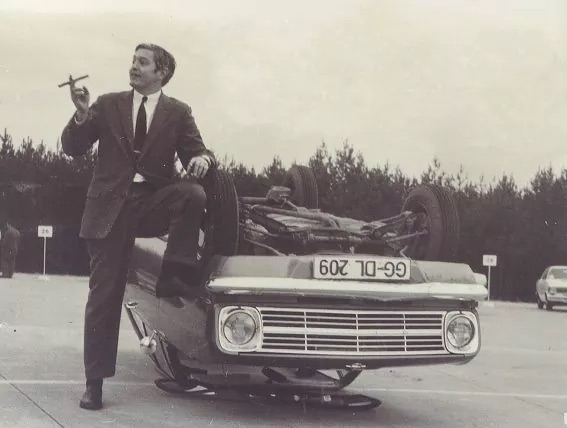
You see, on one hand, Lutz championed many iconic sporting machines over the years, from the Opel GT to the Merkur XR4Ti to the Saturn Sky and Cadillac V-series; all awesome products that almost certainly wouldn’t have existed without his support. On the other hand, the vast majority of these cars failed in the marketplace at anything other than “image building.” They were poor-selling niche products, inadvertently proving to the large automaker’s bean counters that sinking money into seriously enthusiast-oriented cars was a colossal waste of time.
The most egregious example of this might be Pontiac in the 2000s. Bob brought the fierce Australian Holden Monaro over to the US as a revived Pontiac GTO; with a 400-horsepower Corvette motor and a stick, this was the exceptional latter-day muscle machine that some believed “car people” had been waiting for.

Welp, it barely sold over 11,000 units in each of the two years it was available. Did Bob give up? No! Lutz’s seemingly unimaginable answer to save the profit-challenged Pontiac division was to double down and import the V8-powered, rear-drive Holden Commodore sedan to replace all of the division’s mid- and full-sized front-drive sedans. Called the G8, it could rightfully be called the best Pontiac-branded product in the history of the nameplate from an enthusiast’s standpoint – take a look at The Pontiac G8 Was Genuinely Too Good For Us for more.
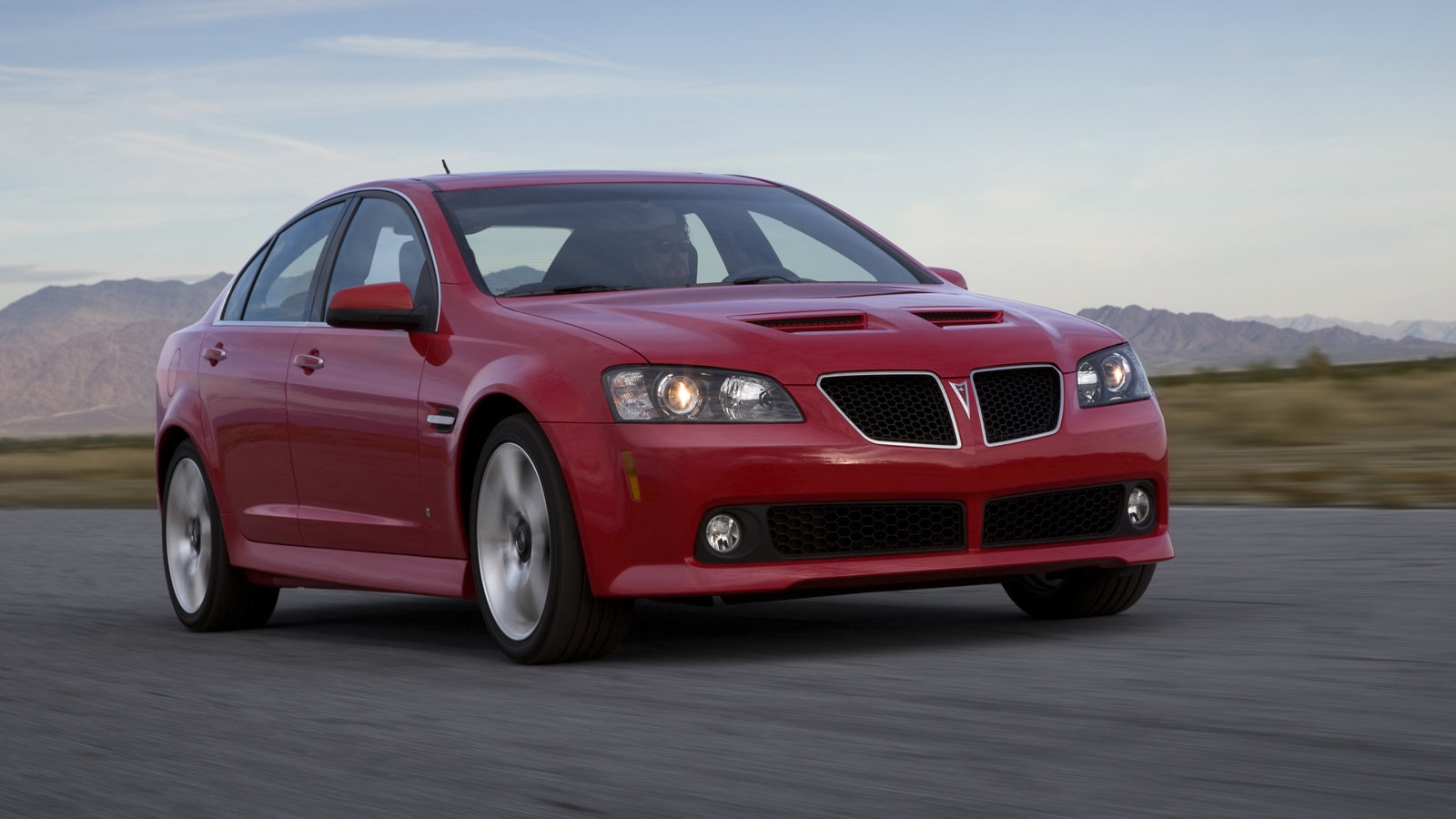
If that Holden-based GTO coupe failed to find buyers, would you think that a slightly bigger VE Holden Commodore four-door version of the same formula could work as a mainstream Pontiac product? Of course you wouldn’t, and it didn’t.
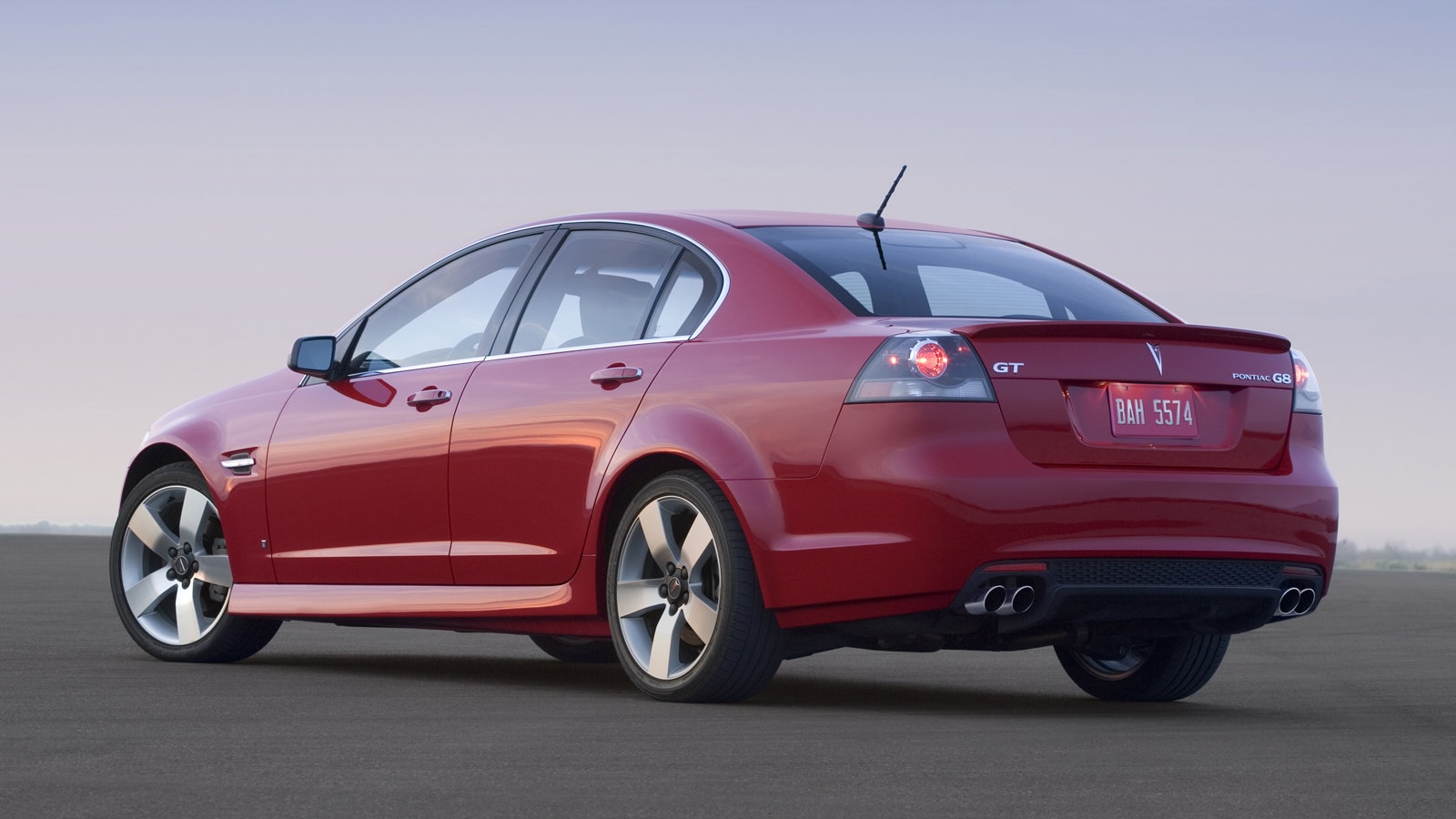
It pains me to say it, but the G8 also failed miserably, selling a mere 23,000 units in its best (and last) year; in the process, it took away any chance of Pontiac surviving when the financiapocolypse hit. Instead, The General saved a brand of redundant trucks (GMC) and one that my 86-year-old mom thinks is for “old people” (Buick), reportedly because they made money. Lutz’s plan for an all-rear-wheel-drive lineup of American BMWs was one of those car guy wet dreams that anyone could tell you wasn’t going to work. Again, you might be like me and love the products that Lutz gave us and despise much of the fodder which Lee Iacocca foisted on the American public, but I can tell you the ones that sold and which executive I’d trust my budget with. Bob once was quoted as saying, “… the G8 was a great car. I should have bought one when I had the chance.” Geez, Bob, you didn’t even buy one either!
Ironically, while this miscalculation was happening, Holden had a product in the lineup that was on the cutting edge of what American buyers were starting to gravitate towards, and it was also unquestionably an enthusiast’s vehicle. The trouble was, nobody seemed to be able to see the potential until it was too late.
Soobie Do Right
Here at the Autopian, we might have missed the thirtieth birthday of what might be considered one of the industry’s most influential vehicles. I’m not sure why we’ve ignored it, but maybe because it’s a car that a lot of enthusiasts act as if they’re too cool to like.


Many of us back in 1995 thought the idea of taking a Subaru Legacy wagon, raising the ride height, and putting a bunch of body cladding on it was a sort of silly way to make a mock “tough” soft-roader. Others thought it was just a rehash of the AMC Eagle idea a decade and a half later and resented the fact that Soobie’s granola reboot was getting the recognition that the Kenosha Kadillac deserved.

Regardless of our opinions, I bet even Subaru had no idea that the 1995 Outback was going to launch a booming “crossover” sector. By the early 2000s, it was clear that the trend was unstoppable, and while Ford and GM reaped the benefits with their truck-based sport utilities during this time, the more car-like options took longer to gel. Even worse, the brands that historically never really had an off-roader presence seemed doomed. Mercury and Oldsmobile had rebadged Ford or Chevy SUVs in their lineups, while Saturn eventually showed up with the Vue, but it wasn’t enough; they ran out of runway to evolve and adapt. Unfortunately, Pontiac was in the same situation.

GM’s first attempts at making crossovers included the all-wheel drive Montana van with an extended snout and, most infamously, the distorted-looking Aztek.
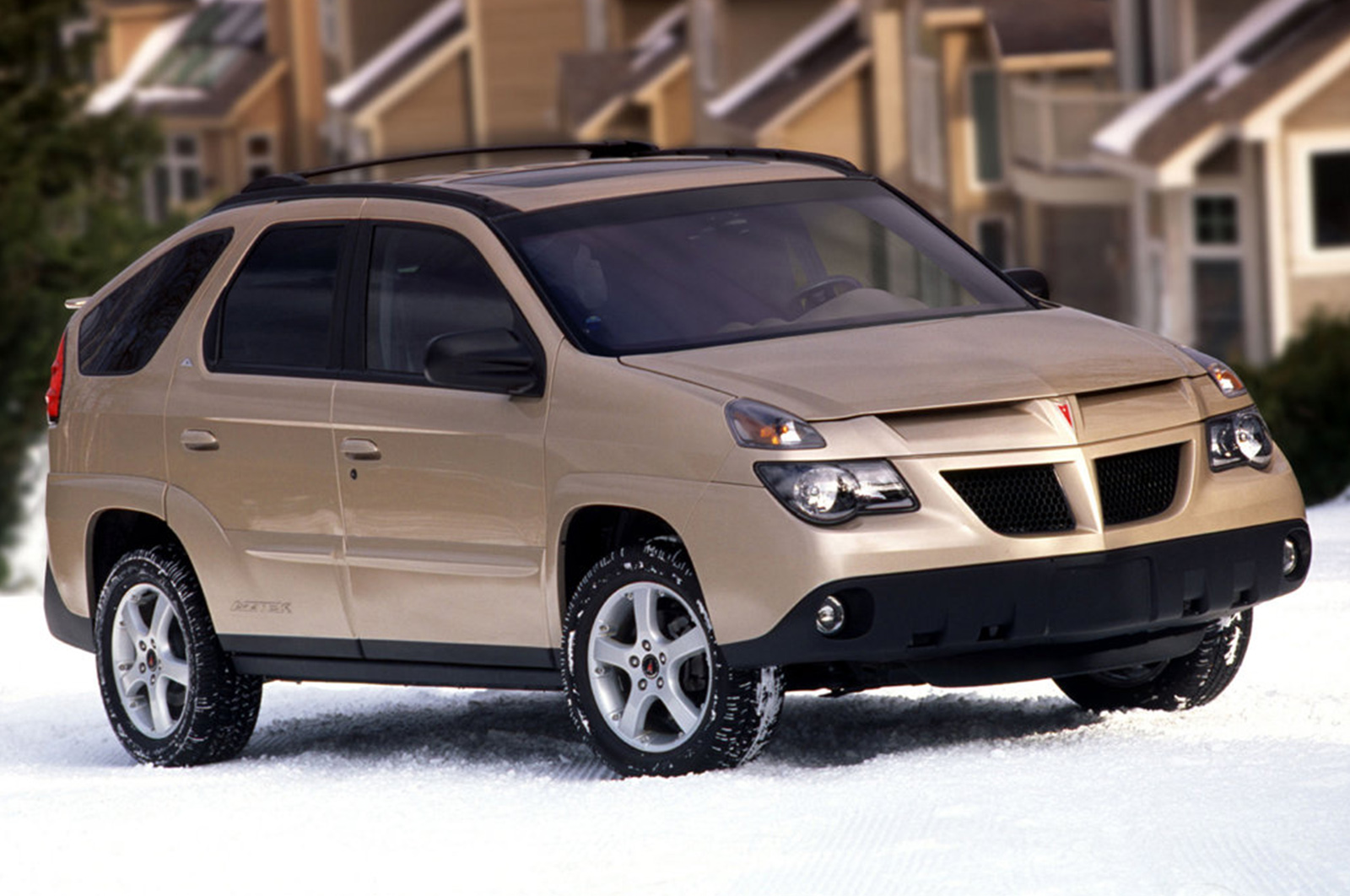
The Chevy Equinox with a Pontiac grille that replaced these was way too little too late – do you even remember the Pontiac Torrent? This was that aforementioned era when Lutz was decorating Pontiac showrooms with legendary Holden sedans which, in retrospect, the buying public didn’t want. Meanwhile, the Europeans were grabbing onto the Outback trend and introducing solid (and expensive) performance crossovers like the Audi Allroad, Volvo XC70, and Porsche Cayenne.

Could General Motors possibly have offered this kind of fast, low-profile, but still capable off-road machine through the “excitement” division when even other members of the Big Three and the Japanese still had few crossovers at all? Actually, thousands of miles away and literally on the other side of the globe, the General already had it.
Don’t Put So Much Vegamite On That Toast, Mate
Not all General Motors cars are created equal. We know that, over the years, the Americans might have gotten GM’s small-block-equipped muscle machines while the Europeans got the better-looking and handling products. What if you wanted all of those qualities in your GM car? Well, you’d have to head to the land of shrimp on the barbie and Tame Impala, where the Holden brand received the best of both worlds.
Most GM divisions were, at least on the surface, content with taking whatever platform Detroit gave them and working with it. Cadillac took the 1997 Opel Omega B and rebranded it as the doomed Cadillac Catera, a failure resulting from trying to sell German austerity to a pool of consumers that wanted a bit of glitz and performance.

Way Down Under, the Holden division refused to meekly accept the take-it-or-leave-it policy. For the new Commodore model that would debut in 1997, Holden began with the same rear-drive Omega B platform. The scrappy brand felt their cars needed to be attuned to “Australian driving conditions.” As an American, I would assume that meant guys with mohawk haircuts dressed in leather jumping onto your bonnet from rusty tanker trucks, but I’m told that’s just in movies. Regardless, Melbourne and Munich are about as different as can be, so I can’t blame them for wanting to make alterations. In addition to this beefing up of the suspension and the addition of more powerful motors, Holden also widened the body slightly to create what was called the “VT” Commodore, as Aussies tend to refer to variations of their home-grown cars in series of letters.
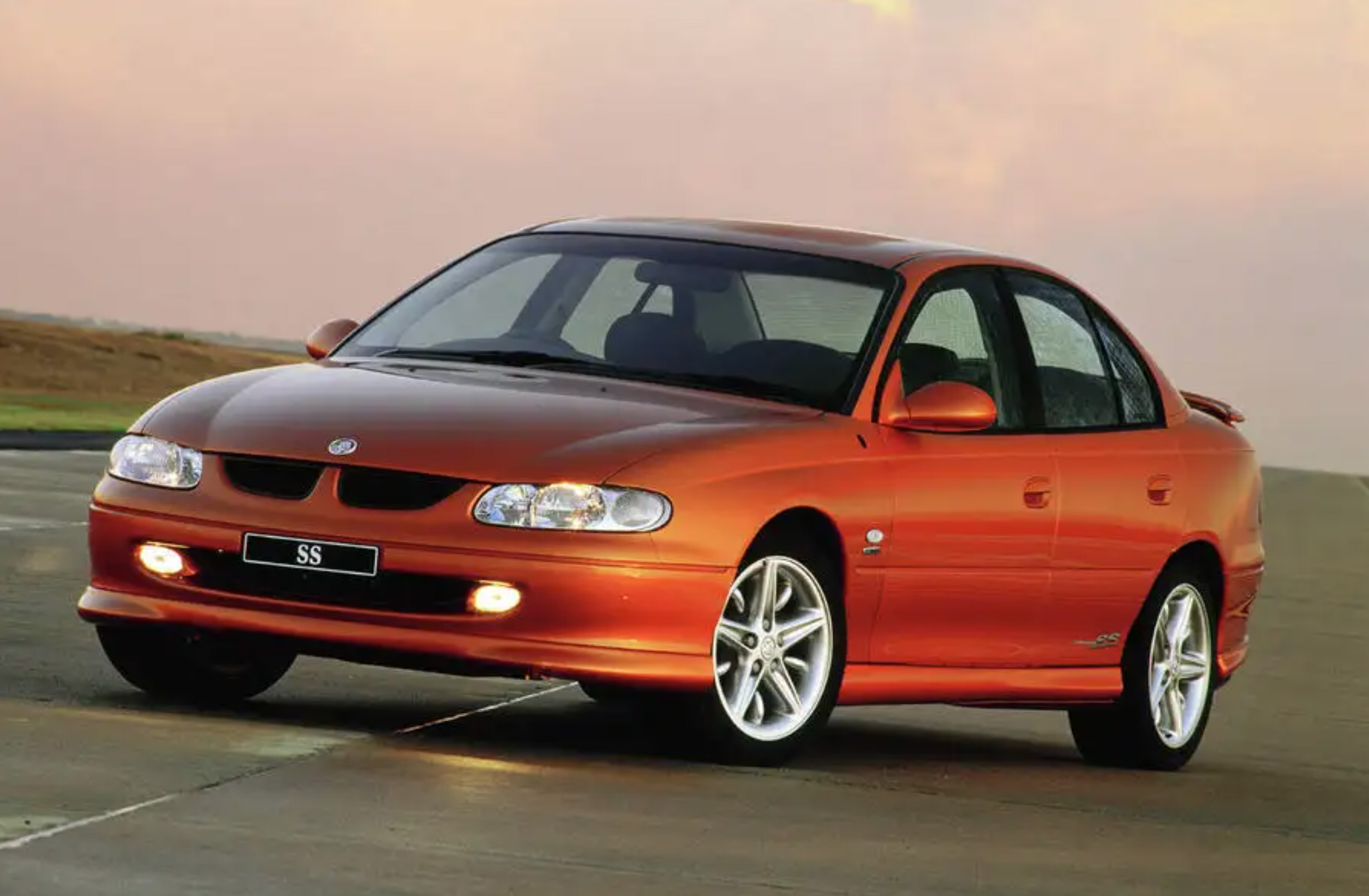

This generation of the Commodore line continued for the updated 2000 “VX” model and subsequent 2002 “VY” edition. It looks a lot like the related Omega/Catera, but the detailing is a bit nicer and more aggressive to match the stonking performance. A longer wheelbase station wagon was available as well.

About this same time, Subaru was introducing its Outback model Legacy. Could Aussies really let a Japanese company name a car for their home turf and not do their own?
You Call That An Outback? This Is An Outback
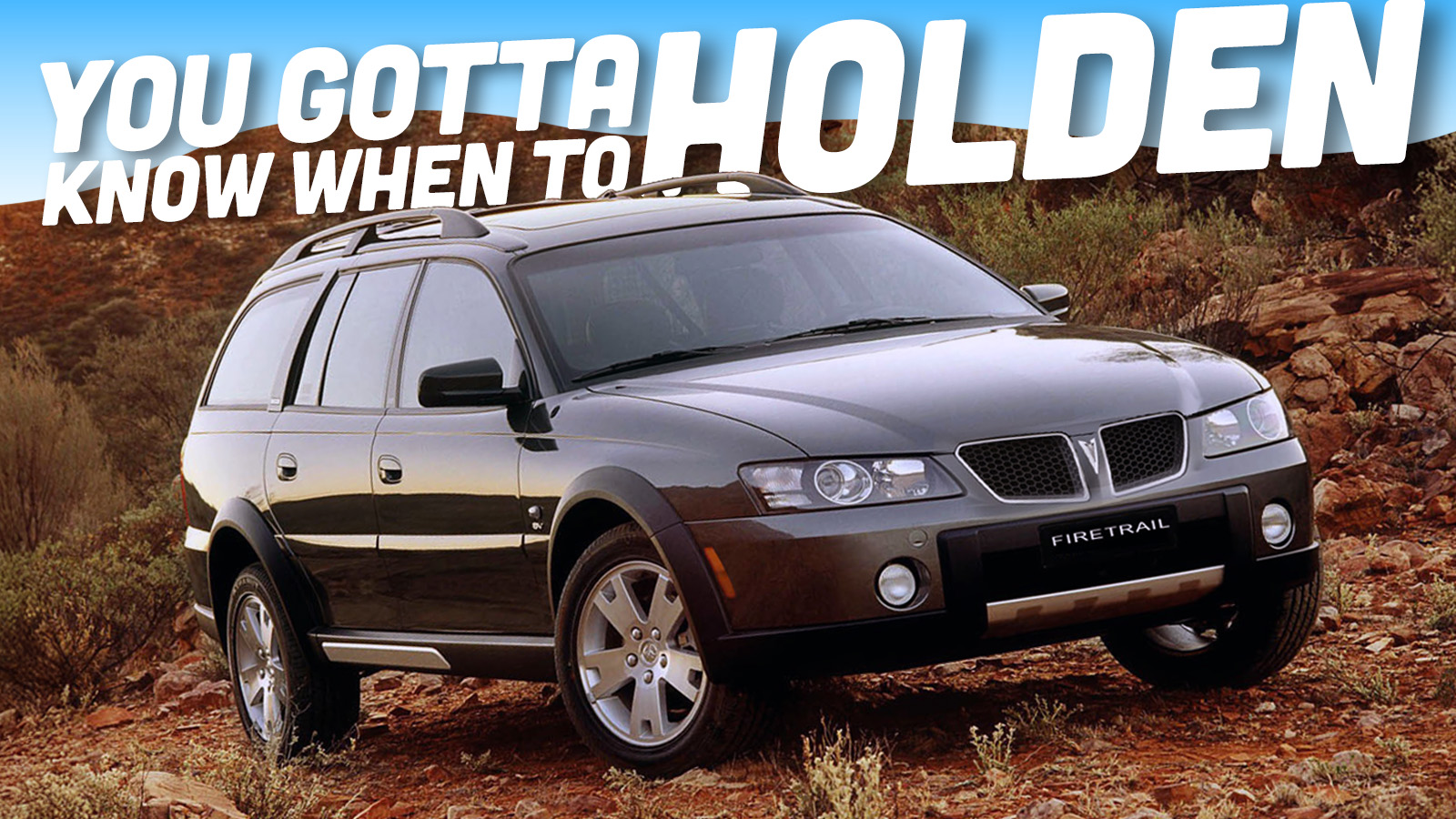
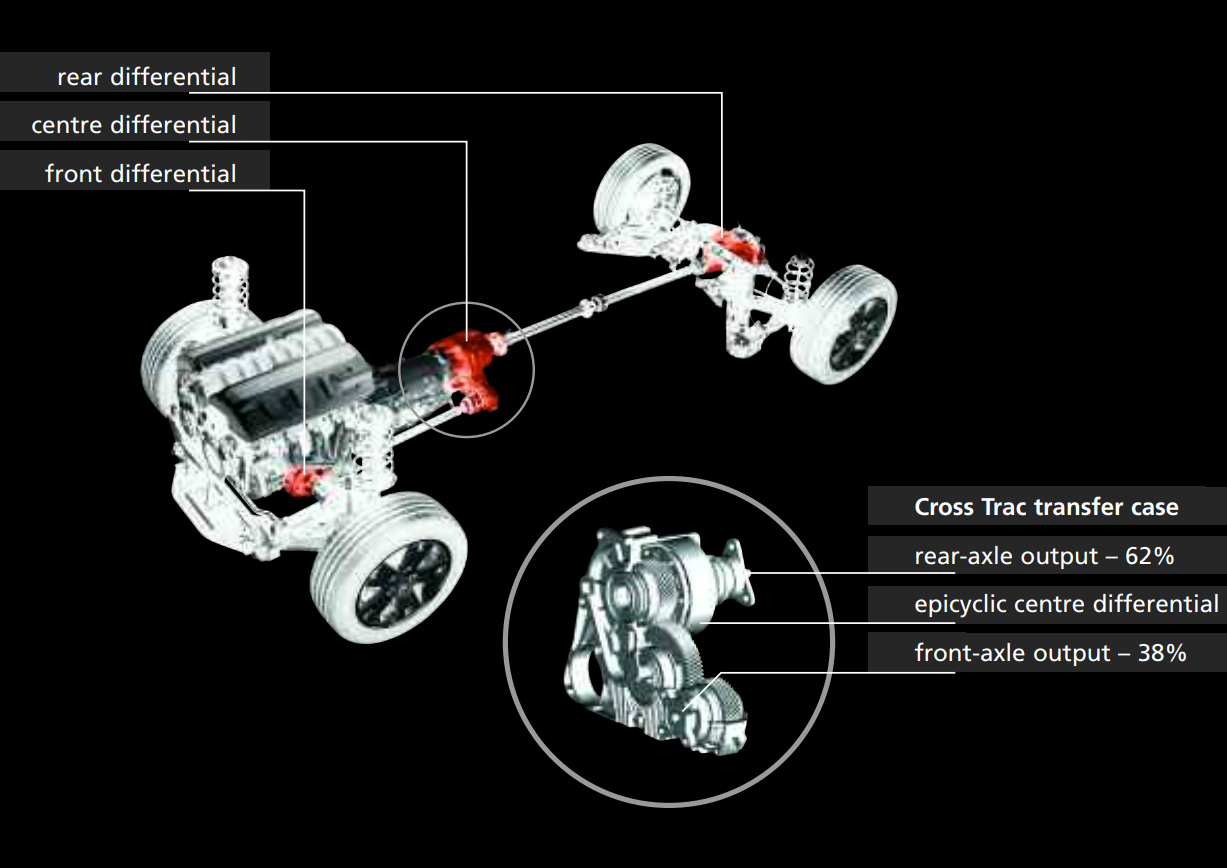
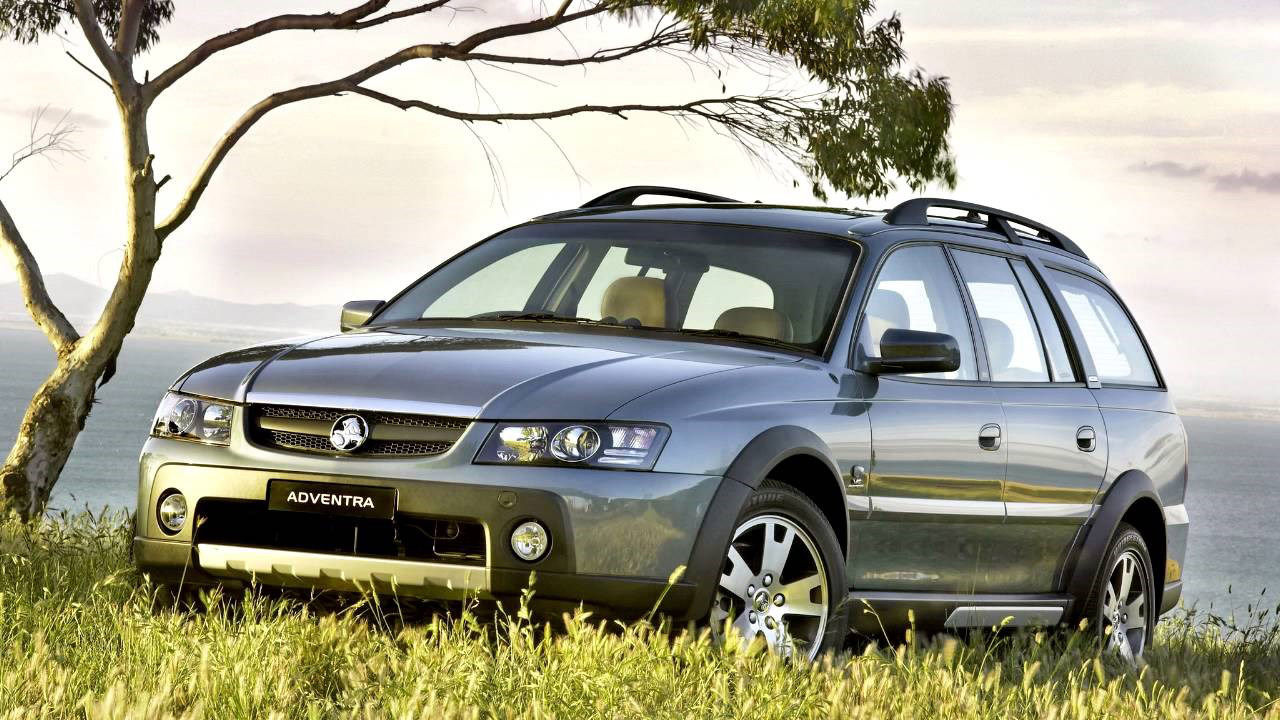
The Outback adjacent offering they came up with was the new-for-2003 Adventra, one of the more phonetically fabricated names you can imagine. Holden’s first all-wheel-drive car took a Commodore wagon and added a center differential to split 38 percent of the power to front drive axles and 62 to the rear; a rear drive bias that enthusiasts would embrace. On the outside, Holden did the same tricks that the Japanese company employed on their Legacy soft-roader by raising the ride height and installing more aggressive-looking bumpers and rocker trim (but not going all-in on the full grey lower body trim route).
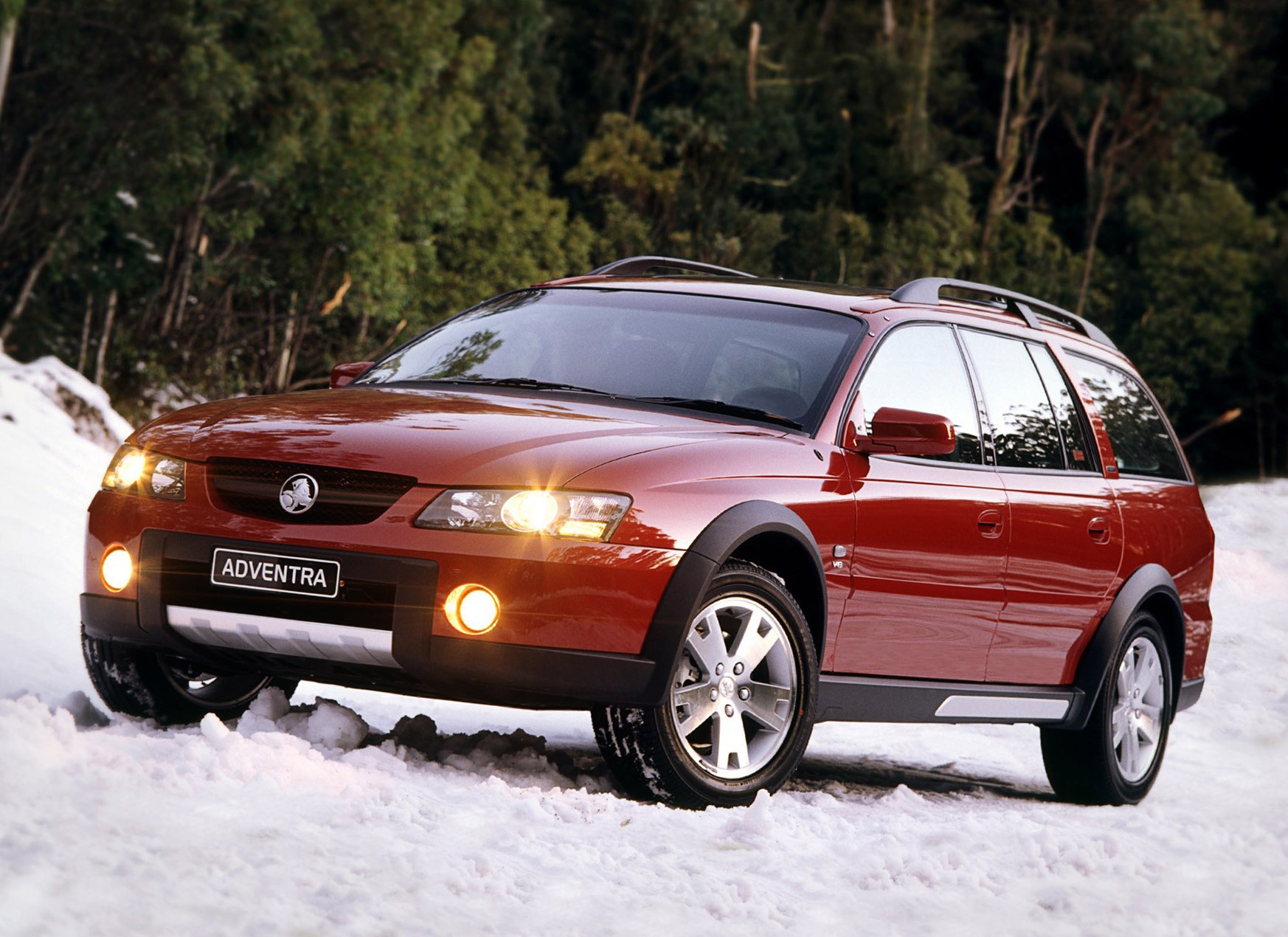
Listed as a “full sized” car, the Adventra was still not massive. It was about 14 inches longer than the 1995 Subaru Outback, though the current 2025 Outback model is now only a mere five to six inches shorter than that Holden. Note the trailer hitch, since I bet this would tow far more than that Outback:

Under the hood, the Adventra was about as un-Subaru as could be with an American-made Generation III 5.7-liter eight that pumped out 315 horsepower; a four-speed automatic was the only gearbox option. Four-wheel independent suspension included a self-leveling system in back. All of us Autopians dream of a V8-powered AMC Eagle restomod, but the transfer case and exhaust setup make that impossible (plus, you’d still have a live axle on cart springs in back). This Adventra was like that dream come true.
Naturally, the extra weight and higher center of gravity did the handling no favors, but reviewers were pleased with the road manners. Performance was not as neck-snapping as you’d hope, but it wasn’t a slouch either. Contemporary tests showed zero to sixty times of around 7.8 seconds; you’d be able to challenge at least several lower levels of Porsche Cayenne with those figures. Sadly, the Adventra liked to “hit the terps” as they might say down there with a sub-15 mpg thirst.
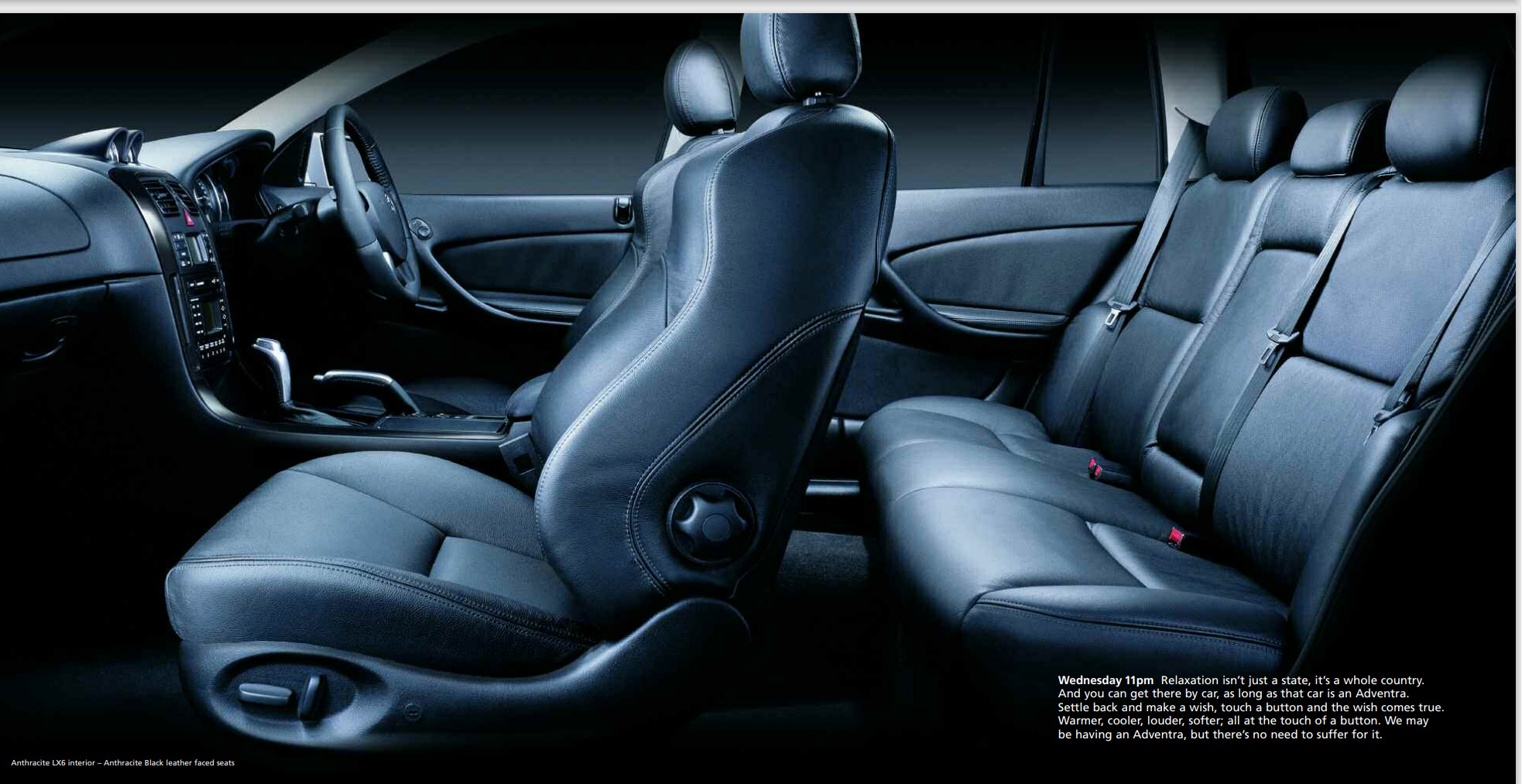
Inside, you found a rather spacious interior appointed with decent quality materials, and the Adventra had an added trick: a front-facing small third row. At the time, the Volvo XC70 was the only other crossover wagon with an available (pretty crappy) seat in the cargo area, and it faced rearward (the Mercedes E-Class 4MATIC also had rear-facing folding third row, but that wasn’t really a crossover and was far more expensive). Apologies, this was the highest-res image I could get:
When the barely facelifted “VZ” version of the Commodore and Adventra debuted for the 2005 model year, Holden made a welcome change for many potential buyers: a more efficient twin-cam 3.6-liter V6 became standard. Packing 222 horsepower, it still offered decent motivation without as much of the pain at the pump you’d get with the still-available V8.
Ah, but that’s not all. You might be aware that Holden had a performance division called HSV. If so, you’re probably wondering if these people got their hands on an Adventra. Wonder no more.
Here’s The GM Avalanche You Really Want
Holden Special Vehicles started in 1987 and effectively replaced the Holden Dealer Team range after controversies and strained relations with HDT manager and racing legend Peter Brock started to endorse the bizarre “energy polarizer” in his cars and adding things like an independent rear suspension without GM’s consent. With this crossover Adventra, HSV developed a more powerful model called the Avalanche with an uprated 360 horsepower 5.7-liter V8, different wheels, and reshaped front and rear fascias.
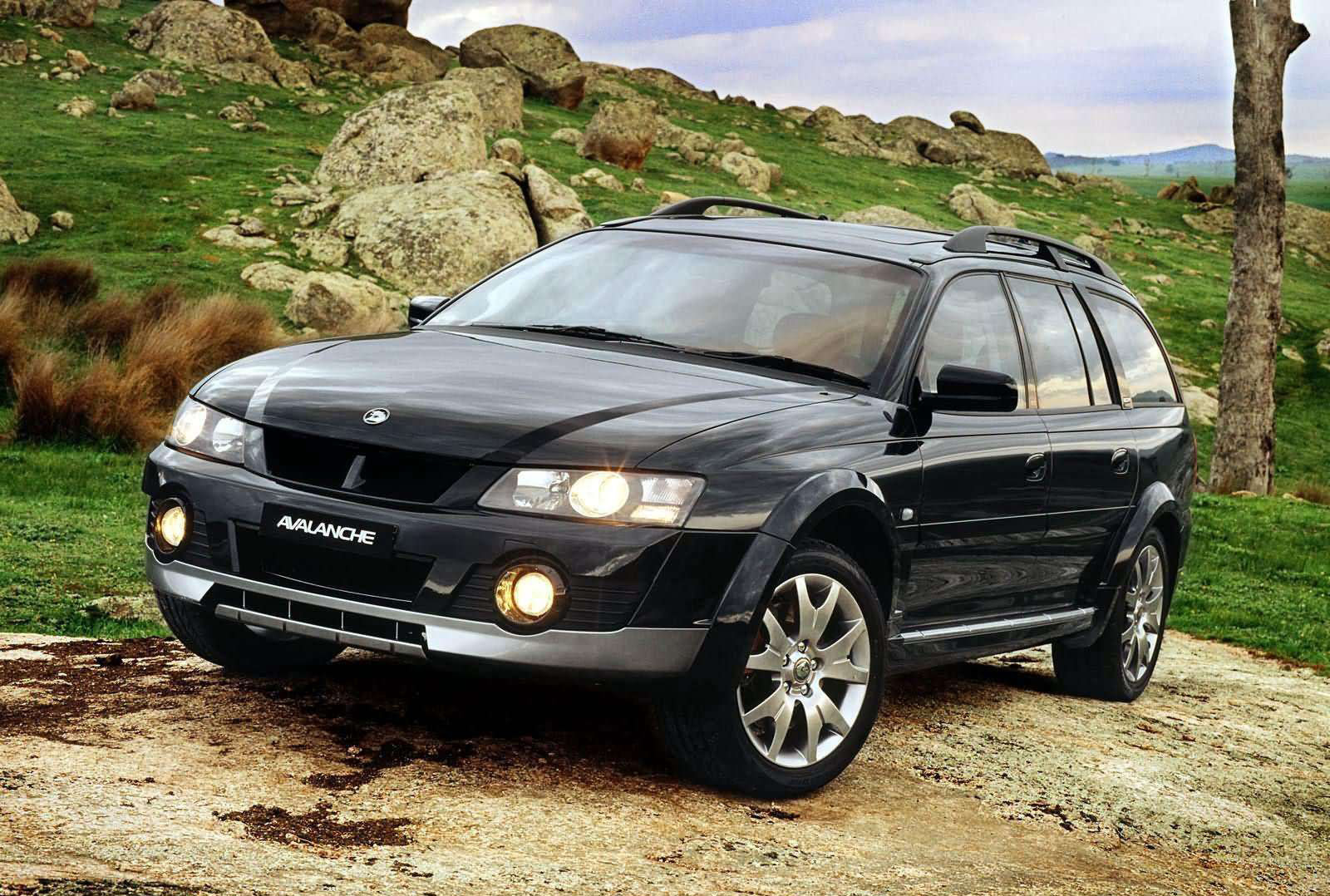
To be honest, the Avalanche was a bit of a paper tiger, offering only 26 horsepower more than the standard Adventra at a price that was around $8,000 to $12,000 more (in 2004 U.S. dollars). Zero to sixty time dropped to around seven seconds, so it wasn’t really that much faster.
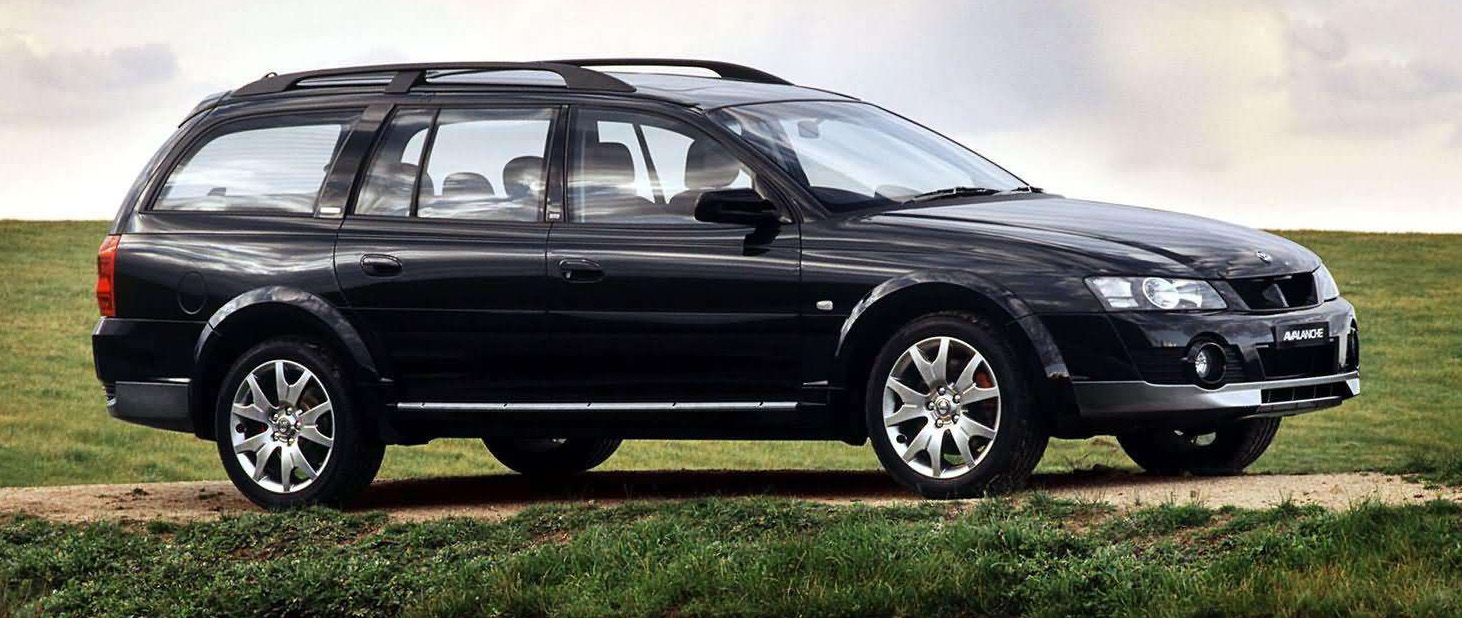
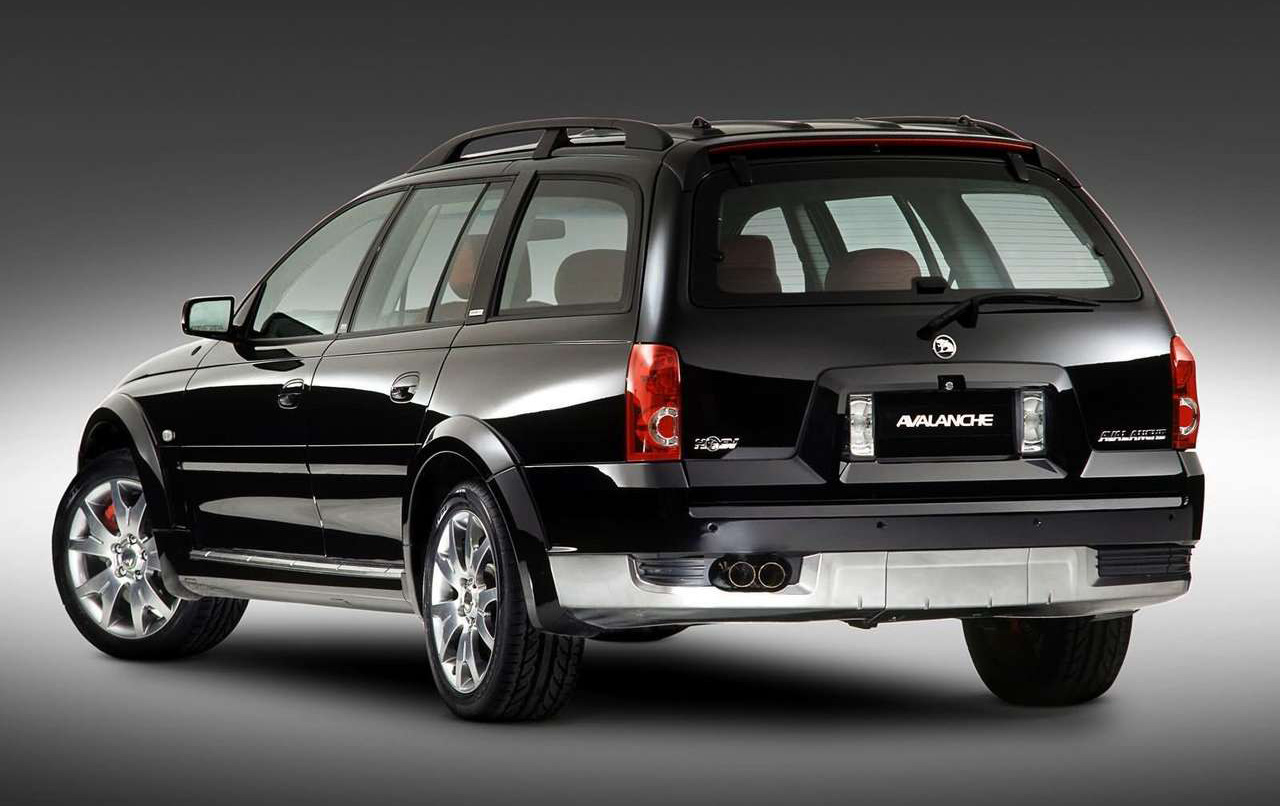
Sadly, the Adventra was never a strong seller in Australia. I’m honestly not too surprised by that. People down under seem to have very good taste and common sense when it comes to cars, and unlike Americans, they likely saw no need for a jacked-up station wagon to combat snow and ice that never existed, or sit higher to go head-to-head with giant SUVs that didn’t clog their urban roads at the time. You wanna go off-roading? Australia is the real Outback: better get a (Toyota Land) Croowsah, mate! Holden saw no need to upgrade the V8 to the next generation 6.0 liter, and the crossover wagon format wasn’t offered in the next generation new-for-2008 “VE” series of Commodore that, ironically, came to the United States as that doomed-to-failure Pontiac G8.
Ah, but just because Australians didn’t go nuts for crossovers didn’t mean that Americans, even in the sunbel,t weren’t eating them up. Let’s imagine bringing the Adventra over to the US instead and see if it could have helped give Pontiac a new lease on life.
You Need To Have “Fire” Or “Bird” In The Name
The conversion from a Holden Adventra to what I’d call the Pontiac Firetrail would be painfully easy in terms of appearance. All I had to do was flip the image of the right-hand drive car, add side marker lights, and a signature twin-nostril grille. It looks great and makes me miss my dear departed BMW E61 station wagon even more.
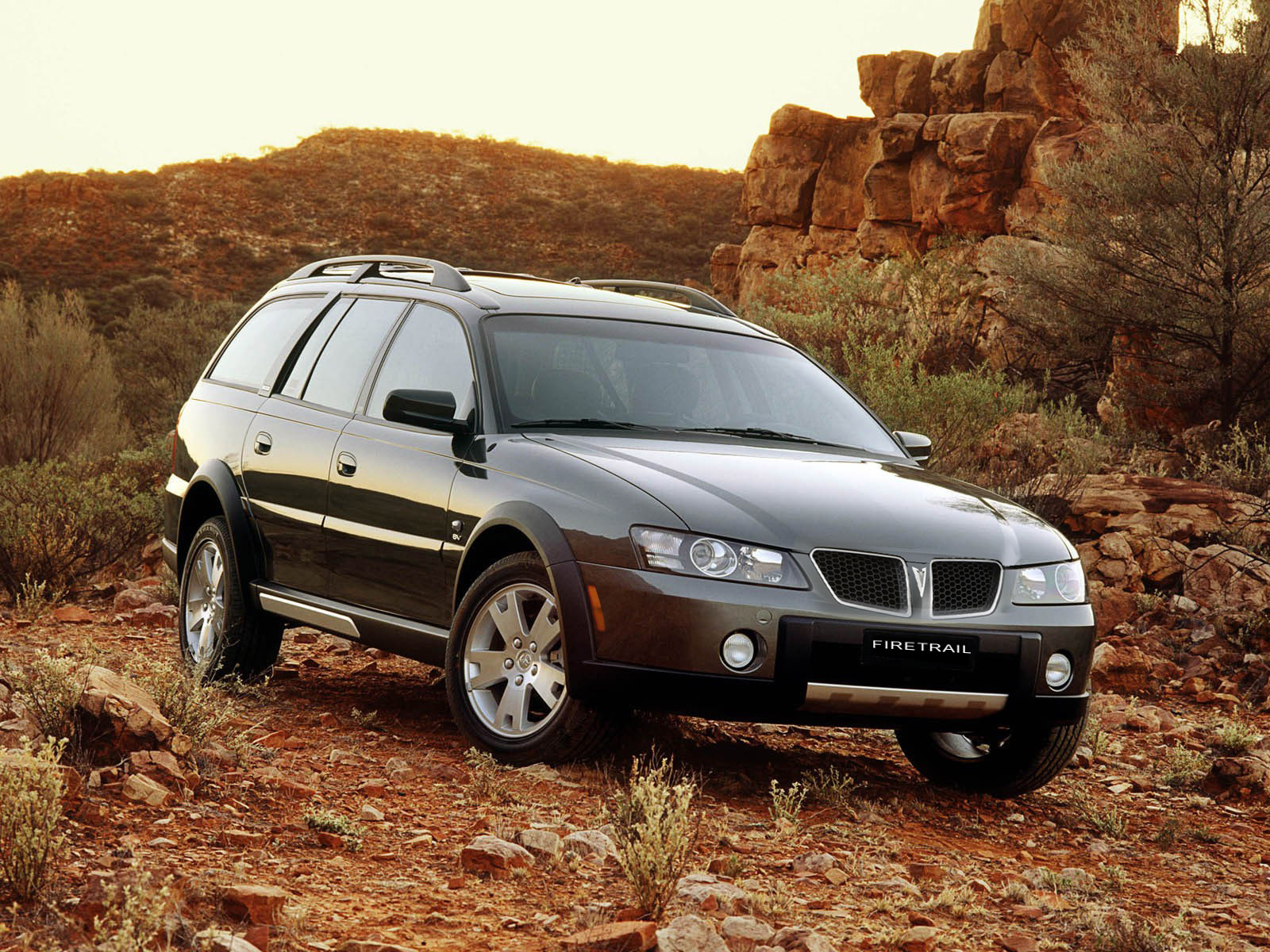
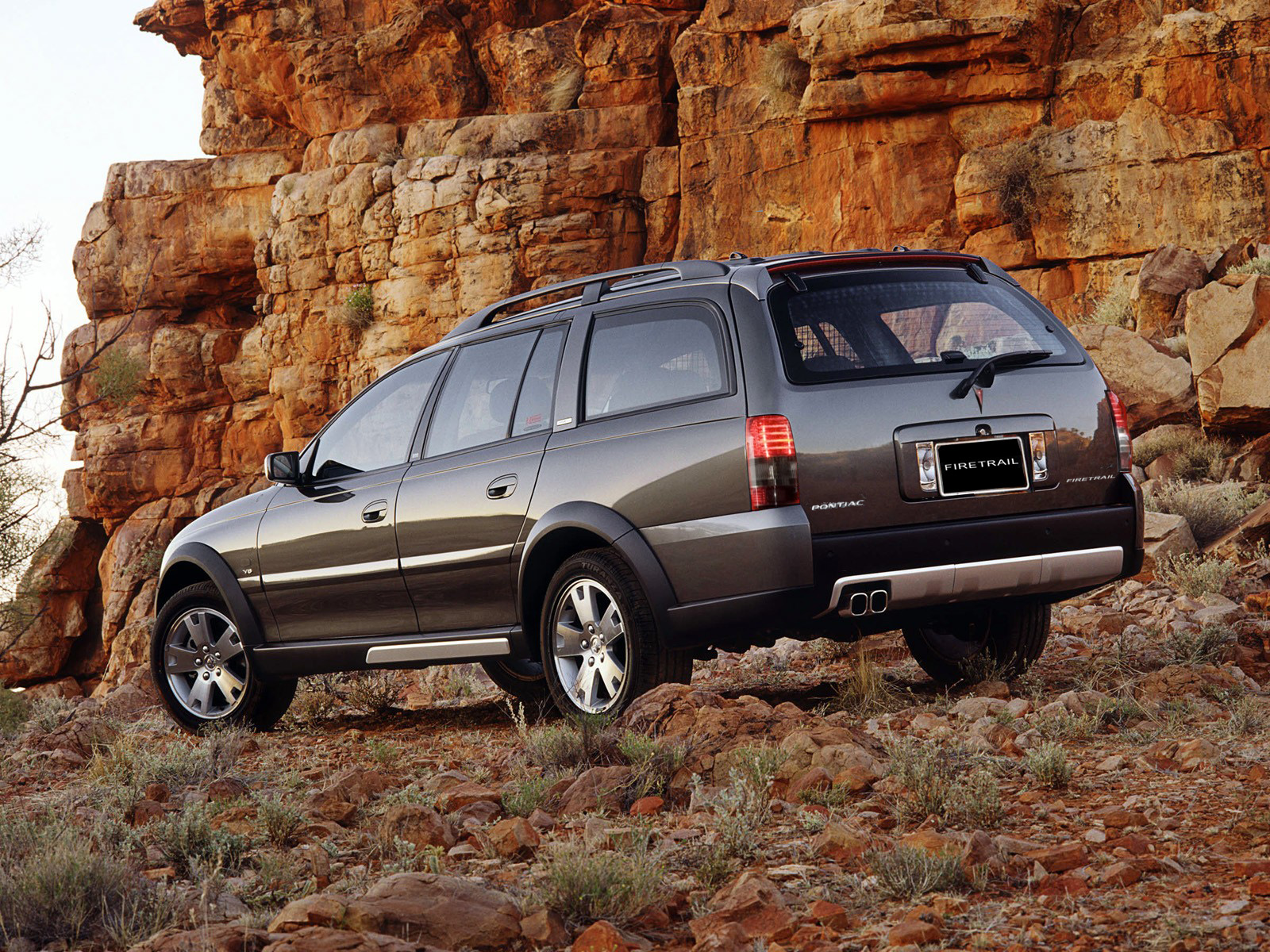
The back I’d keep essentially the same, save for badging and taillamps. Inside, one of the bigger issues with the GTO and the G8 was the relative lack of available equipment compared to what might be considered competitors in the US. The GTO didn’t even offer a sunroof option, and neither of these Holden transplants had any kind of screen for an optional navigation system; rather unheard of at the price (OnStar “turn by turn” audible navigation was available, but that isn’t close to the same thing).

For the Pontiac version of the Adventra, you can see that I’ve replaced the center stack with a more upscale-looking design, complete with a large screen to solve that issue and make the Australian car more competitive. The vents are relocated to the metal finished sides, and red Pontiac illumination is used in place of the odd Holden orange lighting.
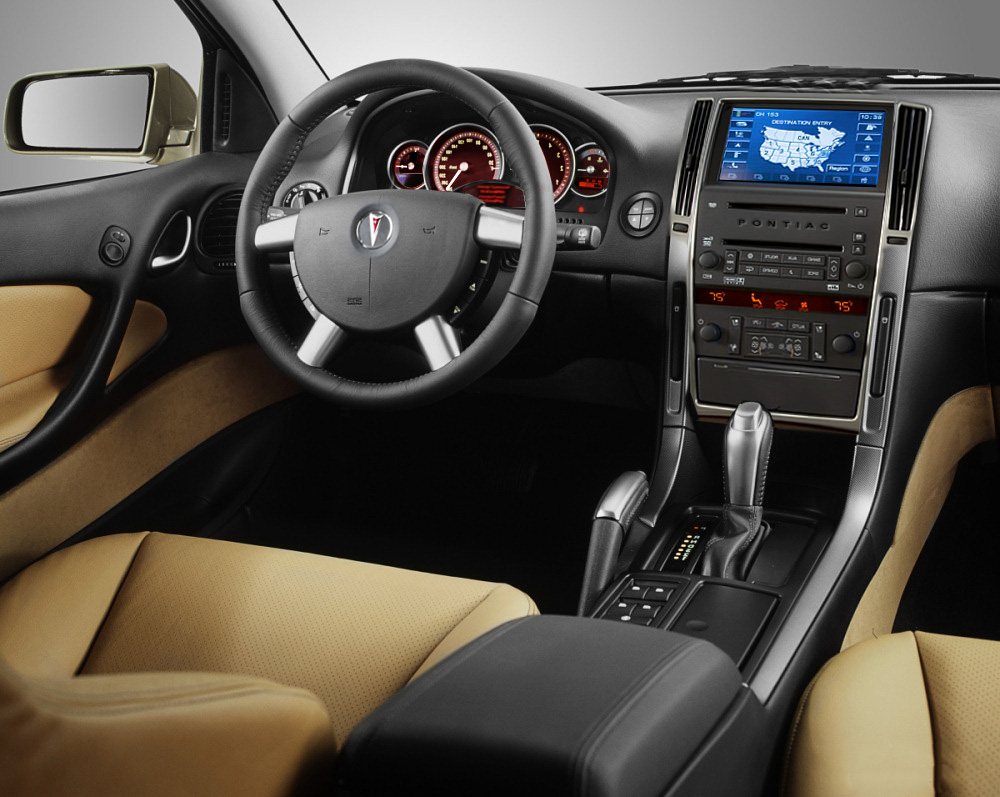
GM could have possibly offered a GXP version equivalent to the Avalanche model. I’d love to find a way to get that Generation IV 6.0-liter V8 into the thing, or maybe just a supercharger onto the existing Gen III motor.
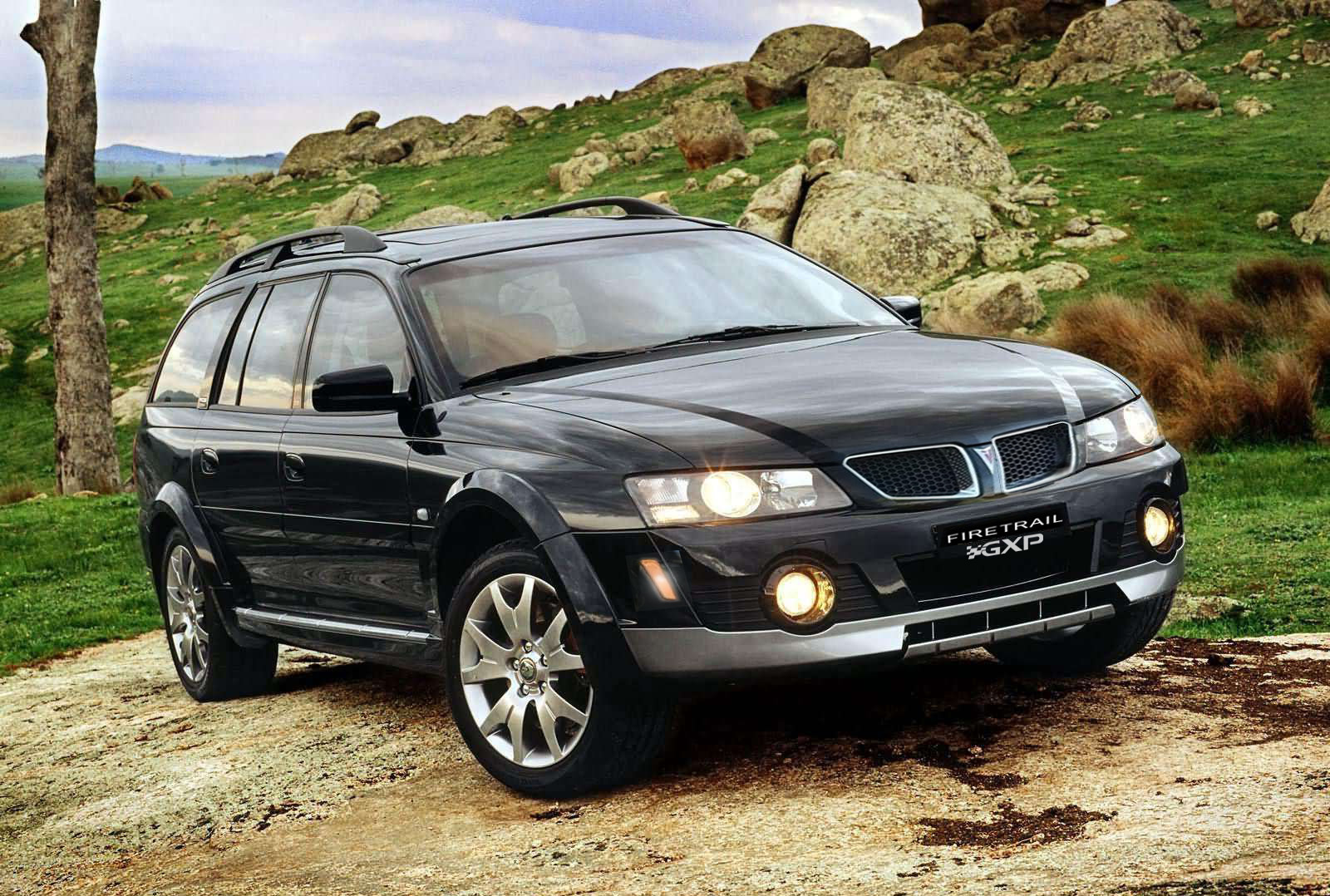
Regardless, we’re talking about an Outback with the cool factor turned way up, but even more practicality. If Subaru’s “LOVE” campaign and eco-loving-safe-car image turned your stomach, this would have been the crossover for you. Or me.
El Camino Los Baja
Ah, but there’s another twist to the story. You might remember that Mr. Lutz came this close to bringing the Commodore VE pickup truck to America, essentially giving us the first coupe-ute since the El Camino passed away in 1987. Performance would have been blistering in the horsepower GXE version that we were teased with.
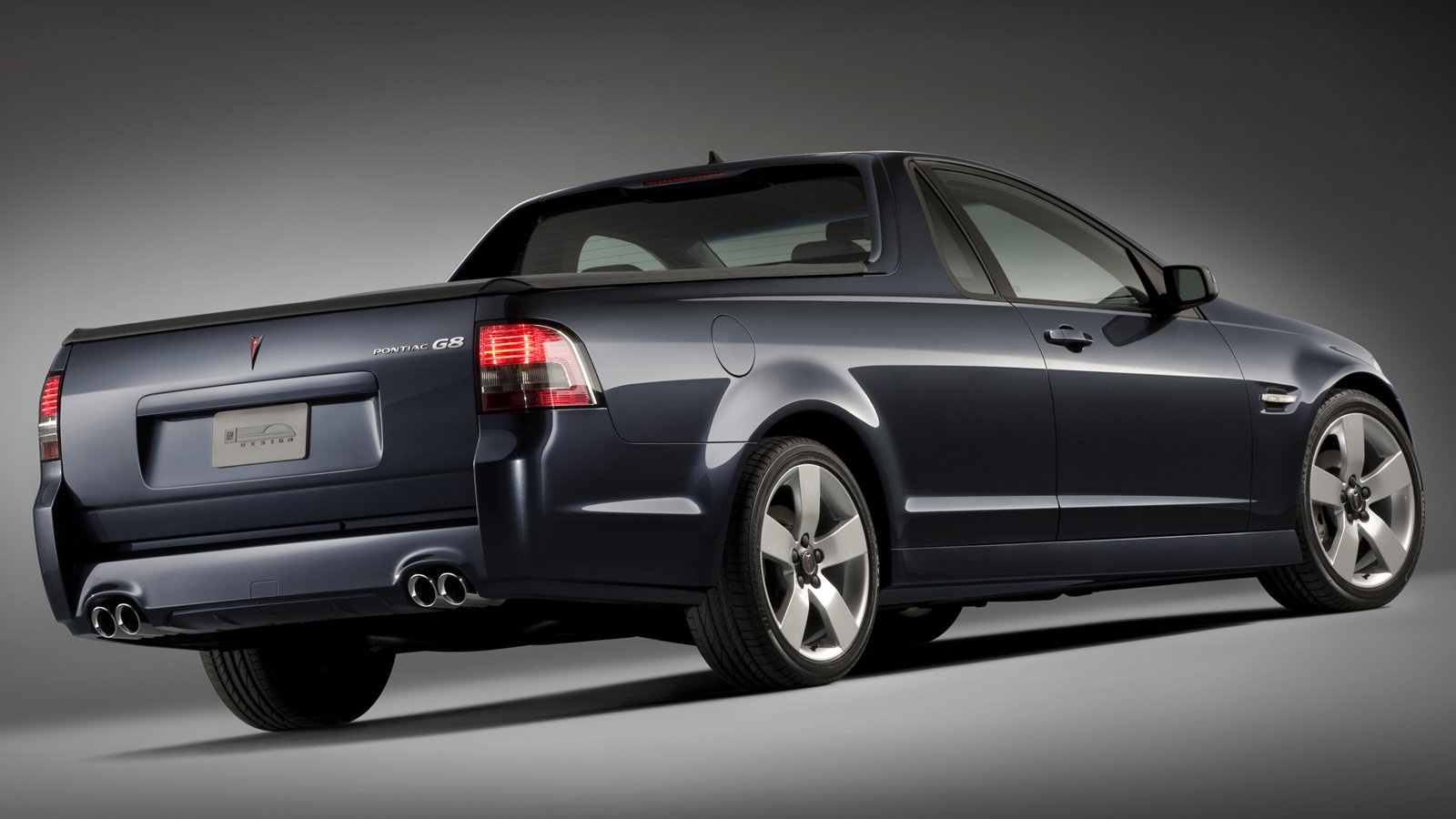
As poorly as the Pontiac G8 GXP sedan sold (only 1,600 over two years) and the limited appeal of the El Camino two decades before, I would imagine the sum total of pickup versions that found buyers here would have been in the dozens. As always, I’d never deny the cool factor of a Lutz product, but it’s easy to see where he failed.

However, just as Holden had a great alternative to the Outback with this Adventra, they also had a far cooler and more practical alternative to Subaru’s strange neo-BRAT, the Baja. Holden’s was called the Crewman. It’s got the same decent-sized cabin as the Adventra and a far more usable bed than the Baja’s pointlessly short cargo area. Dare I say it looked cooler than that funky Baja, too?

You think they made an HSV version of this odd sedan-pickup? You bet they did! Called the HSV Avalanche XUV, I can see it being a Subaru Baja with some serious beans.
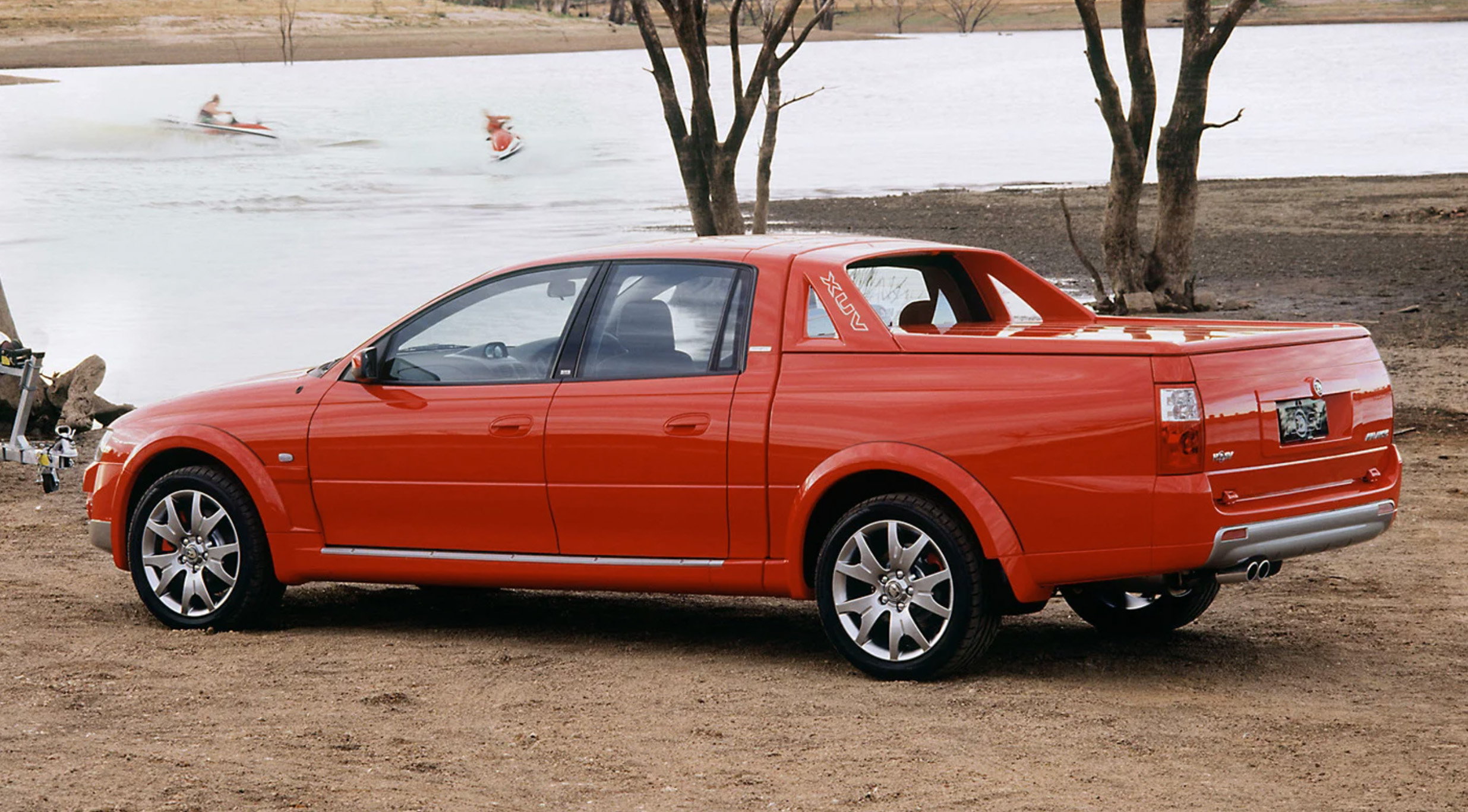
No, our Pontiac “El Catalina” would not have been a monster seller, but I can virtually guarantee it would have attracted more buyers than a two-seater G8 ute or that bizarre Baja. Again, four-door trucks were just coming into their own then, so why not a more car-like one? Sadly, we’ll never know.
Holden On To Pontiac?
Reportedly, the Adventra wasn’t perfect. Besides the fuel economy of the V8 dipping into the low teens, quality control issues were frequent, and the purchase price was rather steep at the equivalent of around $32,000 to $40,000 US dollars in the mid-2000s. Still, you would think that some, if not all of these problems could have been rectified; the important question is if a Pontiac Firetrail might have found an audience that the Bob Lutz-backed GTO and G8 didn’t.
To me, the answer would have been a resounding “yes.” Essentially what you’d have is a slightly larger Subaru Outback wagon with a V6 engine standard or optional bruising V8 power. You’d have performance to match far more expensive machines from the Black Forest or Gothenburg; I’d take one over an Audi Allroad or Volvo XC. For a large segment of the population before the financial crisis of the late 2000s, that was exactly what they were looking for, but obviously couldn’t find at the time. I’m not an automotive product planner from the early aughts, but doesn’t that sound like printing money?
At the very least, it might have allowed our man Bob Lutz to make a case for keeping The Excitement Brand alive for another day.
Top graphic image: GM/The Bishop





Regarding Bob Lutz… he’s one of many legacy auto executives whose mind was still stuck in the year 1970.
His solutions to Pontiac’s problems completely ignored what was going on in the market and the growing demand and desire for hybrids and EVs. By the end of 2004, given how Toyota couldn’t build the Prius fast enough, that a large part of the car-buying public wanted hybrids… way more so than there were people looking for a comparatively inefficient V8 performance vehicle.
Also at the time, fuel prices were hitting new highs. How could guys like him not notice… UNLESS THEY ARE WELL PAST THEIR BEST-BEFORE DATE.
And I watched an interview in the early to mid 2010s where Lutz was asked about hybrids and BEVs (and Teslas and the Model S)… and what he said basically told me he wasn’t with it at all, was completely out of touch with what a large segment of car buyers wanted and that he was well past his best-before date.
And even in the late 2010s, well past Tesla making money and having huge success, he was STILL under the belief that most car buyers wouldn’t want hybrids or BEVs.
So yeah, we won’t see another Bob Lutz in auto executive suites. But that’s not a bad thing.
You know what I think might have saved Pontiac?
Hybrids, CUVs and more trucks… with an electric flagship model.
A hybrid version of the Vibe made in partnership with Toyota.
A hybrid CUV.
And for an image-shifting flagship… sport coupe/sports sedan that would be based on a revival/update of the tech in the GM EV1, but with updated styling, updated batteries and RWD
Pontiac would have had to morph ‘excitement’ into ‘high-tech excitement’.
I get why old-timers like “car guys” like Lutz, but that crowd is very narrow and to me indicative of a lot of Detroit’s (the legacy auto establishment) insularity. Get out of the midwest once in awhile and talk to people who buy cars who aren’t like you FFS boomer. I used to watch Lutz in YouTubes and what not, fellating his cigar and “telling it like it is” but I just can’t stand that demo anymore.
Counterpoint. Nobody under 60 really cares about Pontiac anymore, and no badge-engineered vehicle from GM’s international operations ever really sold like hotcakes or made a serious dent in GM’s USDM sales. (Catera, Saturn LS, G8, Opelized Buickes, etc. etc.*) So no, nothing was saving anything. I still maintain however that Saturn should have evolved into GM’s primary EV brand. 1) Some people will never set foot in a Chevy dealer, 2) most Chevy dealers don’t want to sell anything that’s not a pickup or SUV anyway, and 3) most normies didn’t know Saturn was part of GM, so for most consumers that was a plus. (*Technically, Chevette is an exception)
Putting that grill on a Holden was just an insult. It’s simultaneously boring and ugly.
Plus, the ‘cache’ of Pontiac was not something that was going to improve an Australian legend. I believe they would have had better luck selling them as Holdens.
The mechanic joke from my brother was: Pontiac…We Build Excrement
The real gm crime is flushing Holden. They were coming up with neat stuff that worked for their markets. Plus there was brand loyalty in NZ and aus. I guess the demo changed enough in both the japanese imports were better liked plus got gm on quality. Pontiac could have existed as the north American Holden lineup. Buick seems to be the Chinese and gm Korea lineup in North America. The only reason they didn’t dump Buick too was popularity in China.
Holden was a shell of itself by the end, and there was no choice but to flush it. You can still blame GM for getting it to that point, but there really was no other way.
The only thing Holden knew how to make was big rear-drive sedans (and their ute/wagon derivatives). These were good, but all those segments were dying fast (even in AUS/NZ) and Holden didn’t adapt.
The rest of the lineup was rebadged garbage that most Australians had negative experiences with.
They made Holden just like the rest of gm. I’ve long held the option Gm should have sold Holden and Buick as well as Saturn to penske then flauhed itself.
I can’t remember the exact numbers, but the Oz government was subsidising Holden’s operations. Unfortunately, GM / Holden weren’t subtle about it; the annual “profit” repatriated to Detroit matched (to the thousands of dollars) that years subsidy.
I vaugly remember that. They don’t call GM government motors for nothing. They seem to follow to pattern of making bad decisions then getting government money. Or promising something for grants then bad decisions pull plug. I know several people that were die hard gm owners and after gm took the bail out money they wanted nothing to do with them.
As a rugged, unibody, RWD based SUV this predated the current Durango and Explorer. To succeed it would have had to be a Chevy and GM would have had to have enough faith in it to create production capacity in North America. Certainly part of the business case could have been having a better cop car than the Tahoe or FWD Impala. I don’t think it had three proper rows, which even back then probably was not great.
As much as I would have loved everything you suggested here, I doubt GM would have been able to market them correctly to move the needle.
Let’s crush all the EV-1’s, Cancel the Volt, and cancel the Bolt. “Oh wait let’s reenergize the Bolt cause it seems people want one.” (After destroying SAAB, Daewoo anyone?, and selling the leftovers of Opel as Saturns.) Let’s have an extra truck selling brand, reenergize that total shite Hummer, and 20 years later think about a Corvette SUV. I have never owned a GM vehicle and I’ve owned >30 cars. There are reasons…
They’re really good at stepping on their own schwance. I’ve never met a Volt owner, who didn’t love their car.
I’ve owned plenty of GM vehicles. The best purchase I’ve ever made was a new 2006 GMC Sierra that I’m still DDing to this day. It’s never let me down, and never stuck me with a repair bill over $600.
I’ve heard it said that nobody hates GM more than GM fans, and I can confirm this. Although if I was to buy a new truck now, it’d be a Ford. GM really shit the bed with their current generation of trucks. I’m glad I don’t have to do that, because I really can’t afford a new truck with how expensive they’ve gotten.
And I’m glad I don’t need a pickup truck given he insane prices they are getting for body on frame fully depreciated R/D and other costs. If needed I just rent one for a day.
Exactly. Exhibit A: TourX.
Such a good looking car, but yeah. I would never buy one, because parts are going to be a NIGHTMARE to find for that. I had an ’04 GTO while they were still in production, and even that was hard to get certain parts for then. Now body parts are impossible to find for them, and they made WAY more of those than the TourX.
Insurance companies are apparently totaling them for relatively minor body damage. I have been considering selling mine for this reason.
That doesn’t surprise me.
I’ve wondered if the G8 and GTO would have sold better without those names, instead staying with the Australian model names. Same for the Chevy SS.
Oh stop.
We both know if that if GM brought that over as a Pontiac, the same automotive journalists who sandbagged the GTO and G8 and eventually the Chevy SS would have done the same exact hatchet job on this vehicle. Every other paragraph would have been them giving backhanded compliments to the car, endlessly comparing it to the Aussie original, and commenting how it wasn’t a “true” Pontiac for whatever reason. The automotive press has it out for GM, even if this car had a manual with a V8 in a wagon, they would have found reasons to poo-poo it.
You’ve said something like this before, but it was only really true of the GTO, and that was in part because it was a retro nameplate arriving in the shadow of the very retro 5th gen Mustang.
Reviews of the G8 and SS were highly favorable, not backhanded. To every media outlet it was GM listening to exactly what they had been asking them to do for years. C/D picked them over the Dodge every time in comparison.
Not true. I used to subscribe to EVERY regular car magazine sold in the US – from MT to C&D to Automobile to R&T and there were probably a few other ones as well. I’d read them cover-to-cover. For all those cars, and many more, the automotive press would always sandbag American cars, but especially GM cars. Except for the rarest of examples, they would always find ways to paint them in the worst possible light they could. And they 100% would have done the same with some raised wagon Pontiac.
We are talking about the GTO/G8/SS specifically, not GM as a whole. The media didn’t sandbag the G8 or the SS, plenty of positive reviews are readily available, even for the V6. And they liked the GTO’s performance, it just looked tamer than a Grand Am.
It may well have happened with an Americanized Adventra, but more likely every review would have said it’s the most SUV people actually need rather than a big BOF unit, and then nobody would have actually bought them anyway.
You don’t have unbiased review by endlessly talking about a company’s past sales failures or how it is mere months from going bankrupt. That’s like the typical BS pulled by journalists whenever Cadillac released a new model and like clockwork they would bring up the Cimarron from 40 years ago. That’s like constantly bringing up VW’s Nazi origins at EVER. SINGLE. PRODUCT. LAUNCH. Oh that’s right, they never would do that to a German brand.
Not really, none of that is the same or has bearing on the US-bound Commodores that they loved, but if it makes you feel better thinking they’ve never said anything bad about an import brand and save it for GM alone, enjoy.
It absolutely does. If I started my reply by stating that GREATFALLSGREEN is [redacted], it almost doesn’t matter what I write after that, the conversation will already add a bias in reader’s minds.
I wasn’t exactly the target demo at the time but I always dismissed the Pontiac GTO as a pile of crap when it came out because my interaction with Pontiac in the late 90’s early 2000’s was with beat to h*ck Grand Ams that made up rental fleets. I wonder how many would be buyers shared that sentiment because the Grand Am was such a pile.
The GTO was a great vehicle, even after I owned a 1998 Grand Am that was a massive pile.
My GTO was a pile. I bought a CPO ’04 GTO with 5200 miles on it, in February of 2006. It spent 31 days out of the next 3-1/2 months in and out of the shop for various problems, before I gave up and traded the piece of shit in.
one thing I think is kinda unique to the Australian car scene is referring to cars by model codes (rather than models) almost exclusively – that is, dropping the code without the model and assuming you know what they’re talking about. You’d think there were tests at school with all this talk of VN, VR, VS, EA, EF, BA, or, God forbid… AU.
There are versions of this in the US – for example, I know people talk about certain versions of Mustang (S197) and especially the Corvette (C2, C3, C4 and so on) but I’ve heard Australians talk about even things like the Honda Jazz (Fit) or Subaru Forester purely by dropping “I’ve got an SG and me head gaskets are fucked!”
BMW fanboys use the codes wherever they live.
Good callout! Yes indeed, how can I forget the joy of the E30, the howl of the E60 and the whimpering of its owner when its VANOS fails
“AU” is practically a meme at this point.
Dang, I forget how miserable the early 2000s GM interiors were. Yikes.
i feel like you shoulda run this by Lewin Day first! the reason the Adventra failed so miserably isn’t because Aussies don’t love crossovers, but because the Adventra was overpriced and undersized compared to the Ford Territory. Like how the Adventra was developed from the Commodore wagon, the Territory was developed from the Falcon wagon. Ford spent more, and it showed, the Territory well and truly outsold the Adventra
Yep, and you still see a few original Territorys (Territories?) around. Moved to Aus 6 months ago and haven’t seen an Adventra yet.
How many big spiders have you seen?
Just my anecdotal experience, but the big spiders seem to prefer driving Subies. (Similar to here in SW FL, the brown recluses all seem to drive Nissan Altimas.)
they never made that many of them, and i’m sure most of them have been mechanically totalled by now. i had a territory until a few months ago, the diesel was great, for the time, it was a modern 3 row suv
GM’s official social media account posting a video calling out the constant comments they get about “bringing back Pontiac” this past week was the icing on the cake.
Yeah, there’s been informal rumors on social media that GM is bringing back Pontiac. If I had to guess though, it’s just hopium coming from the die-hard GM fanbois and fangirls.
I’ve had a few Pontiacs in my lifetime and every single one was an unreliable POS. I could care less if Pontiac makes a return or not. It’s not like I’d buy one now anyways.
And even if Pontiac were to ever return, it would likely be a bunch of subcompact CUV’s rocking puny three-cyls and are just lightly re-skinned Buick and Chevy crossovers. With most being relegated to the rental lots at airports.
They’d probably, if anything, make it a “performance EV” brand and piss off all of the boomer GTO owners. Either way, I don’t care.
hopium is my new favorite word
It gives the boomers hope before they finally kick off.
Pthuck I thought it was Pthursday!
I started the day as Monday and got the snow tires put on the Subaru and didn’t notice any signs of a time warp and tomorrow isn’t Halloween. So whatcha going to do on Thursday?
Oh, don’t worry. If you like Pontiacs, we have more.
Oh, the temptation to import a Holden Avalanche XUV… a product I didn’t even know existed but I desperately need!
That’s what I thought too!
Would it have saved Pontiac?
Probably not.
The novelty of shoving a 5.7V8 into things wears thin when you’re on a budget and the price of the vehicle, as well as running costs, continue to conspire against your pocketbook.
Not to mention that Pontiac didn’t have any bench strength to back this up even if it were considered a halo.
I really think the GTO and G8 also failed due to styling: I never bought that they were meant to be muscled cars (or even muscle-car inspired) because despite the light Pontiacification of the grille, they’re both just.. boring-looking.
I get it, the G8 had the goods to go like stink, but it didn’t even look as sporty as the old Grand Prix.
Boring on the outside, with an inside not really up to the price point AND boring. Fast only gets your so far outside of a small handful of people. Which is how you only sell 11K boring performance coupes.
It’s worth considering that much of the GTO’s styling dates back to the VT commodore of 1997, itself based on the Opel Omega B of 1994; the styling was largely a 9 year old design by the time it went on sale in the US.
The basic commodore design was not intended to be “sporty”; it was the normal volume selling car.
The Monaro’s restyling was intended to be viewed relative to the more common VT/VX, and while it was subtle, it was extensive.
The front end is neater, the whole roofline is lower (even the windscreen is a different shape, more laid back) and the top of the bootlid sits higher and has more rake to make the “coke bottle” side profile, and includes a slight ducktail compared to the jellybean butt of the normal commodore.
The bonnet with nostrils was added in 2004, to appease the American market, but many of the australian reviewers/buyers complained that it “spoiled the look of the car”.
Australian and american sensibilities are just different. Even in the 1950s GM US told Holden to prepare the FJ facelift with more chrome and a new “special” trim level, expecting to need to release it for 1951, but people were content buying the ‘plain’ and ‘dated looking’ FX, so it ended up being postponed all the way until late 1953.
That being said, with so many americans complaining about the GTO being “boring” I find it curious that they never just threw on the bodykit from the HSV Coupé GTO, at least as an option. It even already had vaguely pontiac-ish nostrils moulded into the front bumper.
Great detail on how it became what it was but… yeah. Still just bland.
The GTO was an ugly jellybean, lets just say it lol
CORRECT! Had no distinctive/daring visual traits at all and had pretty frumpy proportions front and back.
Or..
They could have just Pontiac-ized the first gen Cadillac SRX. It was a rear drive, 3 row SUV available with a V8. Boom. Done.
“guys with mohawk haircuts dressed in leather jumping onto your bonnet from rusty tanker trucks” is this what Uncle Adrian does on the weekends?
While not a fan of GM, I could have gotten on-board with a rebadged SRX. Gonna take more work than a badge swap though. The interiors and exteriors would need to be completely revamped to better fit the design language of Pontiac at that time.
No reason why they couldn’t have then offered a V8 in there. Even a detuned LS would have been wonderful.
Nah, he won’t jump. He’ll have one of his minions jump while he sits in the body of a Ferrari welded to the cab of the tanker.
I am always intrigued with why cars that are ahead of their time seem to be forgotten. There was a small bunch of “crossovers” before there were Crossovers that have been forgotten. Cars like the Stanza Wagon with sliding doors and 3rd row folding jumpseats, the Colt Vista wagon. Corolla and civic wagons, Axiom, and others.
Those old Stanza wagons were pretty awesome for their time.
I do wonder about the G8 success had it been offered in AWD with the V8 though. I distinctly recall looking past a new G8 and considering an AWD(5.7) 300 instead. the G8 was pretty slick at the time, but the price new kind of required a winter car to get around in for me. Sadly the AWD 300’s were at some point neutered to V6 only much like the challengers. That seemed wrong to me.
I first read the wagon name as Firetail.
Like me after Indian food.
Nicely done. I recognize the STS as the place you lifted that center stack from.
Yup. 2005 so you know that had the tech at the time to do it
We still have a 2008 that the kiddos drive. The infotainment is hilariously outdated, but still pretty neat to see. An 8″ touchscreen with DVD Nav in 2008 was pretty wild.
It’s also way better than what Pontiac was putting into those $40,000 Holden imports, which was nothing
You’re killing me Bishop – no bonus teaser sketch of an alpha platform Firebird?! I bet you could draw the decal from memory even.
I don’t think fast wagons or utes were or are the solution to selling cars to normies.
The Outback appeals because it’s relatively cheap and seen as responsible, reliable, and safe (whether or not this is actually true is mostly beside the point). An import, especially when exchange rates were unfavorable, would not have been cheap, and 2009 GM was not renowned for reliability.
Remember also that the key to crossovers taking over from truck-based SUVs was plausible capability (they have to *look* like they can conquer the Rubicon, even if they can’t). That Holden doesn’t look capable of doing anything tougher than a gravel road to a campsite. Again, forget what it can actually do, or what buyers will actually do, it’s the perception that mattered until car-based stuff became more normalized gradually.
Another attempt at bringing Holdens here in 2009-10 (with even less mainstream body types) would have delighted enthusiasts and failed miserably.
This is correct. the lifted wagon looks way to much like a station wagon for the soccer mom crowd and the UTE has way too much El Camino Vibe for most Americans back then. I kind of think that even with the Maverick and Santa Cruz gaining some forward momentum in that realm now, I still think that has more to do with Price and fuel economy over having a “truck”.
It would basically be the Regal TourX almost 2 decades prior. Which actually was the final Commodore too.
In a mid-2000s Pontiac-GMC showroom this would have been priced right on top of the Envoy and before long the Acadia, if it made it that long.
I am kind of a Wagon lover, specifically basic variants from regular coupes usually, The Regal was a handsome car, but from the wife I always hear the same thing, I will never drive a wagon or a minivan, so of course even a Flying boot would be out. That said I would kind of like the TourX for a daily.
I feel like it takes a certain size pocketbook to accept a wagon. Rich folks have no qualms about driving e300 wagons,5 series wagons, or Audi wagons, etc. If an everyday car brand makes an everyday normal priced wagon, it would be avoided like the plague so they just don’t bother building them. Everyone seems to be allergic to them even though its the ideal vehicle shape for all around daily use.
I think a lot of it is relative to what they were raised in. most mom’s see a van or wagon as a jail cell relative to having a large family, so they naturally get a bad rap once the gen raised in them grows up. surprisingly large SUV’s still happen to be around, like minivans, but the volume sold is drastically different these days.
My daughter will likely be hateful towards Crossovers, though we have never had one, so who knows.
My coworkers son HATES having to drive their Acura SUV, you would think he was made to drive an 85 Caravan
sadly with radwood and Youtubers suddenly into the old boxes, he might prefer a running 85 caravan. Kids are weird.
yeah that’s true lol
I’ve always felt that for both GM and Ford making their Australian platforms the underpinnings of their US domestic big cars was a missed opportunity. But I suppose at the end of the day, they cost too much to produce for a clientele that just wanted big, cheap, dumb cars by the pound (and that cost of production is exactly where there is no Australian car industry to speak of any more). And when GM did bring these cars here, they priced them nearly as high as the European competition that offered more refinement, if less power (that not that many people actually care about anyway). But if they had used these platforms domestically and in far larger volume, the prices might have been enough lower for these cars to be sales successes, rather than just enthusiast longing but not buying successes.
Well put. I’ve always thought (reminded by today’s Cold Start) that the Merkur project in the 80s could have led to any even better 90s for Ford. But US consumers just weren’t interested, at least not at the price level.
I think it is forgotten or not understood that the baseline price of cars in most other countries is MUCH higher than here – especially back then. It’s hard to sell something “nicer” when you are starting at dirt cheap. And then saddling them with a stupid name and making polyester-suited Lincoln-Mercury dealers try to sell them was the final nail in the coffin. They would have been far better off selling them beside Mustangs in the Ford stores as Ford Cosworths.
It would have made sense had they made the moves to do so at least a decade prior, like they explored with the Buick XP2000 concept in the 90s. The Commodore was sized close to the W-bodies and had a range of trims that would cover all the way down to fleet special trims. Financial concerns always played against it, but undoubtedly there was NIH syndrome at work too at both GM and Ford.
It did flow both ways though – Ford tried to bring the oval Taurus down under, but only loaded examples, so buyers just stuck with cheaper Falcons. Between Taurus, Scorpio, and Falcon, they did have 3 separate large family cars and made questionable design choices to all of them.
The ovalized Scorpio made the Taurus look like a beauty queen for sure – but at least it was a much better drive. There were some odd things in the water in Dearborn in those days.
Selling Big Dumb Cars by The Pound was the 5th album by Genesis (the band not the car)
ROFL!
I like the ideas – but IIRC, the issue GM decided was insurmountable was the labor and import costs. But there was no reason GM couldn’t have brought production to the US…
Cost was the reason there too. These platforms cost far more to produce than the domestic nearest equivalent, (Panther/whatever the GM Caprice thing was). And the average American actively didn’t care that they were “better”, they weren’t enough better for what they cost, and/or what makes them better was lost on them. Building them here as the only option MIGHT have made them enough cheaper, but I actually really doubt it when tastes were going to SUV/CUVs anyway. And jacked-up real station wagons are a pretty small niche. Even the Outback isn’t one anymore, even if it started out that way.