

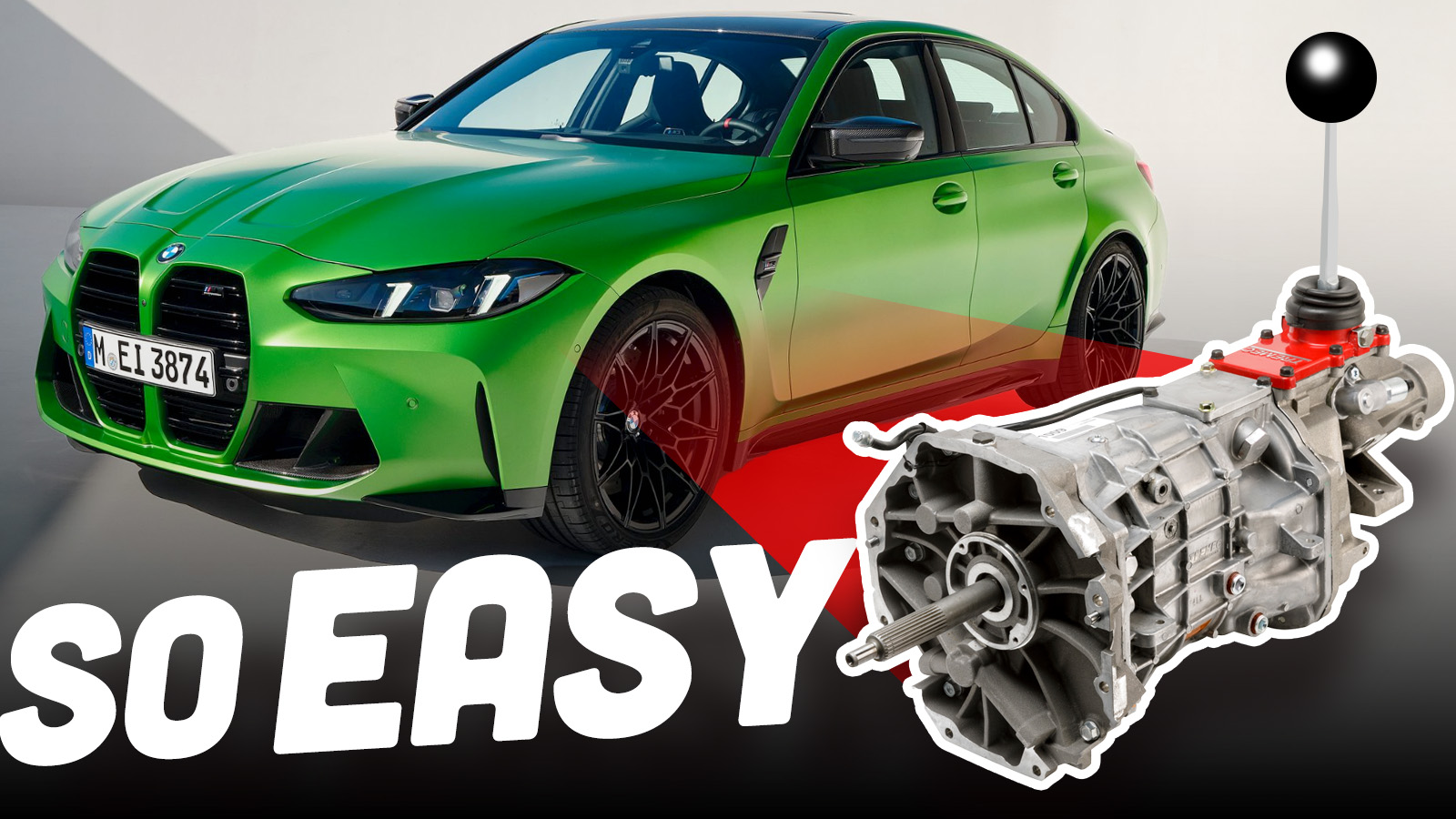
For a few years now, BMW has been warning the public that its manual transmission offerings will soon disappear. It feels like that, lately, whenever someone asks an M executive about the future of the stick shift, and they usually give the same answer: You’ve got until the end of the decade, then it’s gone for good.
Let me give you a few examples. Back in 2022, M boss Frank Van Meel told CarBuzz that BMW would keep the manual around until 2030. One year later, Dirk Hacker, M’s head of development, reiterated that timeline, telling Top Gear that the manual would be around for seven more years. Things got a bit more real in 2024, when Van Meel, in an interview with Italian magazine Quattroruote, warned buyers that if they wanted a manual M car, “you need to buy it now.”


It’s 2026, and Van Meel hasn’t changed his tone. Just yesterday, Australian site CarSales published an interview with the M boss, and in it, he spoke on the unlikeliness of the stick shift’s survival into the 2030s:
“It’s going to be quite difficult in the future to develop completely new gearboxes because the segment in the market is quite small, and the suppliers are not so keen on doing something like that.
“So we’re still happy with the manuals we have and we plan to keep them for the next couple of years, but in future, probably it’s going to be more difficult to keep the manuals alive, especially in the next decade.”
Going by M’s consistency when asked about the stick shift, it feels like the company made up its mind about the manual dying years ago, and plans to wind it down as production of its current cars ends, and new models take over. But the thing is, manual BMW buyers aren’t going away, at least in the United States. According to data obtained by Motor1, 50% of M3 buyers, 50% of Z4 buyers, 40% of M2 buyers, and 33% of M4 buyers in the U.S. opted for the manual transmission in 2025.

If BMW only sold cars in America, those figures might be enough to convince management to keep the manual alive. Alas, BMW is a global company that builds its cars for multiple markets, making it tougher to engineer a car to accept a manual just to appease a relatively small demographic in one country.
BMW’s Reasoning Isn’t Exactly Bulletproof
Aside from sales figures, BMW cites a couple of other reasons why the manual won’t make it past 2030. More from CarSales:
“From an engineering standpoint, the manual doesn’t really make sense because it limits you in torque and also in fuel consumption,” said Van Meel.
While I think he has a point regarding fuel consumption—it’s pretty tough for a six-speed gearbox to compete with a quicker-shifting eight-speed auto, all other things equal—I think Van Meel is forgetting recent history concerning how much power its existing gearbox designs can take.
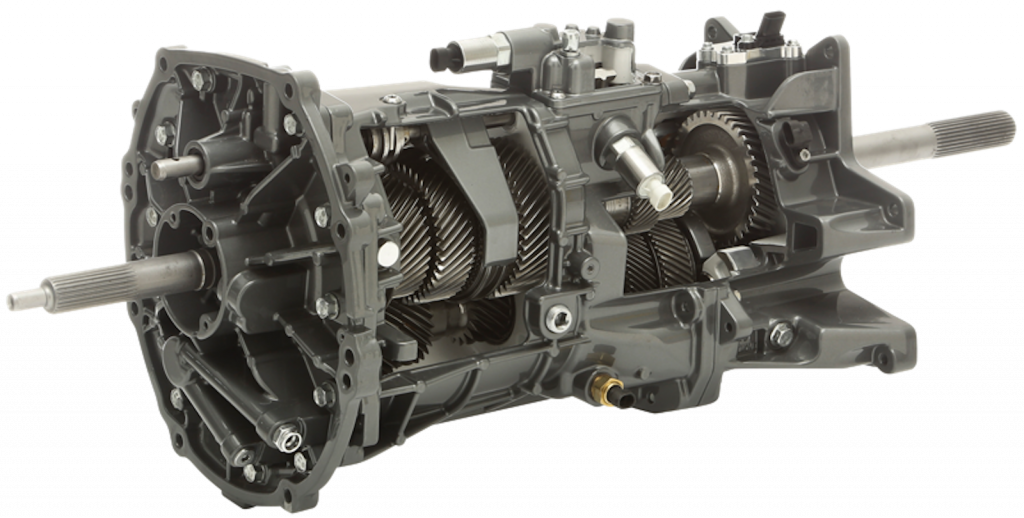
The cars I mentioned above all use the same six-speed manual, a ‘box built by German supplier ZF codenamed GS6-L55TZ. Hacker told BMW Blog last year at Le Mans that this gearbox can’t handle more than 473 horsepower and 406 pound-feet of torque and still meet the company’s durability requirements.

That explains why, on cars like the M3 and M4, BMW limits power and torque on the manual versions to 473 hp and 406 lb-ft, while the eight-speed auto-equipped cars are rated at 503 horsepower and 443 lb-ft. For the M2, power is the same 473 horses whether you go manual or auto, but torque is reduced on the six-speed, from 443 lb-ft to 406 lb-ft.
So far, this reasoning makes sense as to why BMW plans to drop the manual. As its cars get more powerful, the gearbox they have on hand simply won’t be able to handle the twist anymore. And because the market for stick shifts is so small, the company doesn’t want to pay a supplier to develop an entirely new gearbox to handle more torque. Except that BMW doesn’t need to develop a new gearbox, because it already has a design that can handle more torque.

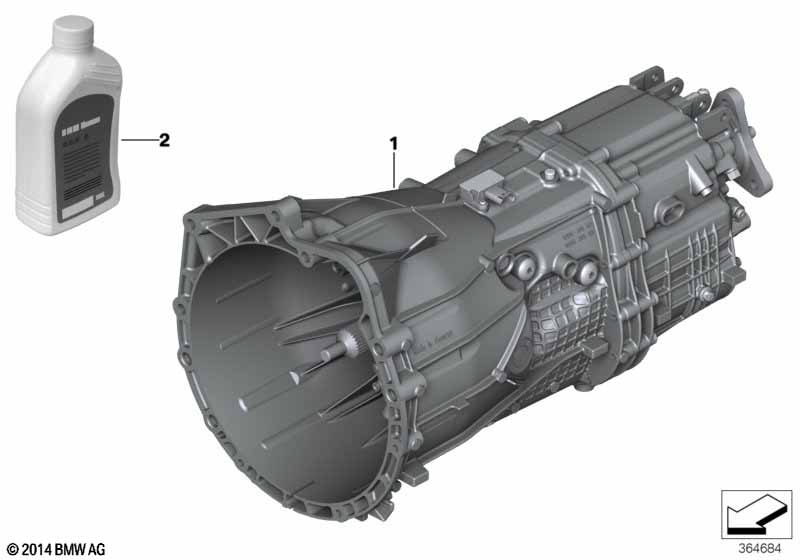
Those familiar with manual BMW lore will know that the most powerful production BMWs to be offered with a stick shift were the M5s and M6s built between 2012 and 2016 and equipped with the Competition package, which bumped output from the 4.4-liter twin-turbo V8 to 591 horsepower and 516 pound-feet of torque. These cars used a prior iteration of that ZF-built gearbox, codenamed GS6-53BZ. Going by these power ratings, this older ‘box can handle an extra 102 horsepower and 100 lb-ft of torque, but it does look quite a bit larger, going by company diagrams.
Here’s the modern ‘box:
And the old one from the M5 and M6:
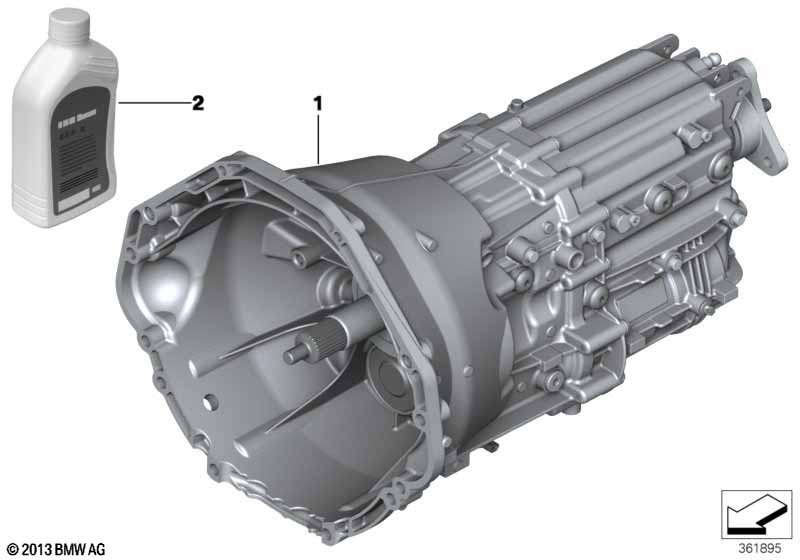
Despite the size differences, theoretically, if BMW wanted a gearbox that could take up to 516 lb-ft of torque, it wouldn’t have to pay to get a new one developed. It could just call up ZF and have them restart production of the design it already has on file, if it can make enough room in the firewall of its next-gen cars.
I Have Another Solution
In the world of modern German performance cars, 516 lb-ft of torque isn’t all that much. The current M5 makes 738 lb-ft thanks to its hybrid assistance, while extreme CS-badged versions of the M2, M3, and M4 are closing in on 500 lb-ft already. Because the graph always has to go up and to the right, it only makes sense that these cars will be pushing bigger numbers for the next generation. So even if BMW decides to put that old M5 gearbox back into production, it probably wouldn’t be enough to handle the power.
My recommendation? Simply look outside of Germany. Modern manual transmissions that pair to a front-engine, rear-drive configuration are pretty rare these days, but there’s one Mexico-based supplier that’s been cranking out amazing six-speeds that can handle big power numbers for years: Tremec.

General Motors’ only two manual-equipped cars, the Cadillac CT4-V Blackwing and the CT5-V Blackwing, use the latest version of Tremec’s long-standing TR6060 six-speed, which has been around in various forms since the late 2000s, when it replaced the iconic T56. The TR6060 has appeared in many of America’s most iconic sports cars of the past 15 or so years, like the Viper, the Corvette, the Camaro, the Mustang Shelby GT500, and Dodge’s Hellcats.
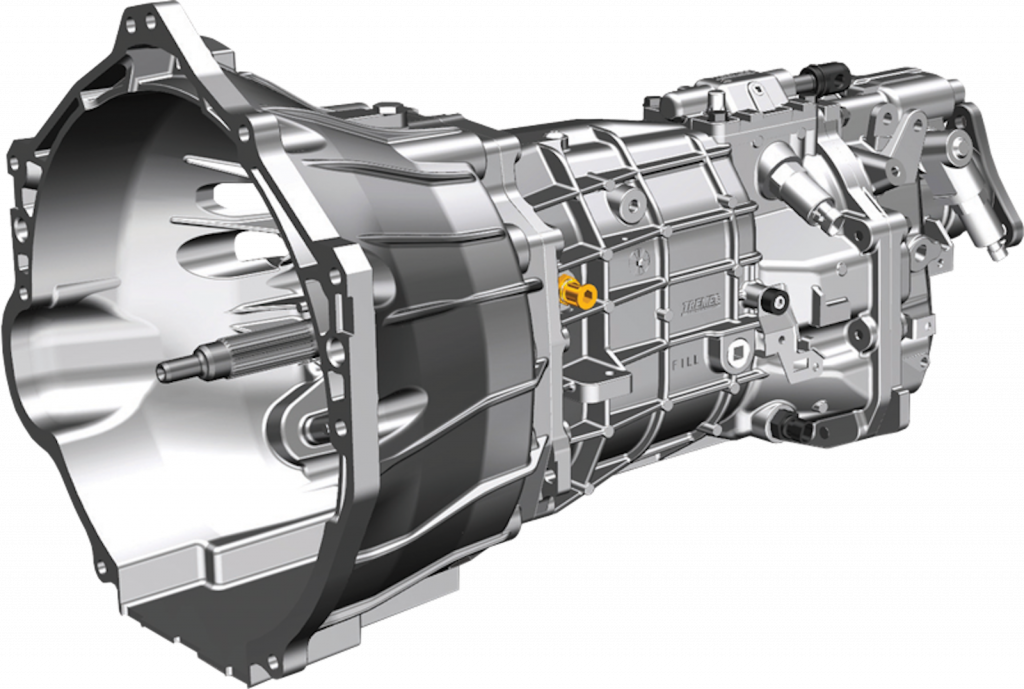
The CT5-V Blackwing is the torquiest of that bunch, rated at 659 pound-feet at the crank. That’s way more than the 500 pound-feet from that old ZF ‘box, and a far more appropriate number for a new German super saloon.
If you’re doubtful that a gearbox normally used by American brands can live up to the high standards of smoothness and shift satisfaction required by a German automaker like BMW, I can tell you from experience that it definitely can. The CT5-V Blackwing is phenomenal to drive for a lot of reasons, but one of the biggest is the silky-smooth action of its shifter. Among the few cars left on sale today with stick shifts, it’s one of the most satisfying to use.
If even that’s not enough, Tremec offers another version of the TR6060 called the Magnum, which can handle up to 700 lb-ft of torque.

And if fuel economy is imperative, Tremec still offers the TR6070, the seven-speed manual first seen on the C7-generation Corvette. Depending on the gear ratios you go for, that gearbox can withstand up to 635 lb-ft of torque.
This wouldn’t even be the first time BMW shared gearboxes with General Motors vehicles. Starting in 1991, BMW sourced automatic transmissions from GM for use in cars like the 3-Series, 5-Series, 7-Series, and 8-Series. This exchange remained for some cars, like the E90-generation 3-Series, into the 2010s. So there’s some precedent here.
I know I use the word “simple” in the headline, which feels far-fetched considering how much time and effort are required to develop a modern vehicle that can meet worldwide safety and emissions standards. But between paying to have a whole new gearbox developed and going across the pond to ask Tremec to supply one of its transmissions, the latter certainly feels more viable.
C’mon BMW. Don’t give up on the manual just yet. There are so many avenues you can take to keep enthusiasts happy.
Top graphic images: BMW; Tremec


I remember when Americans were the ones holding this back, as virtually every car you got in over in Europe was a manual.
Manuals can be just put in base model cars with less horse power.
Simple right? I’ll take a 400hp manual BMW.
Crazy alternative theory. Right now a variant like manual transmission needs a bunch of homologation and testing to meet domestic standards. Dump all the standards (who could do this?) and you get a flood of cheap Chinese EVs AND a few more European manuals.
I love BMW arguing fuel efficiency as a reason to drop manuals. The 2025 M3 is rated at 18-19Mpg combined. I don’t think fuel efficiency is the driving reason to buy a performance car Stuttgart.
I get that having 8 speeds can give marginal mpg gains over 6 (also Tremec can have 7 a la C7 corvette) but I as a driver am capable of shifting to a higher gear and cruising at lower RPM. I doubt real world driving actually yields a meaningful difference between manual and auto
“…Starting in 1991, BMW sourced automatic transmissions from GM…”
Details, details…
– BMW did indeed use GM transmissions, but those were made in the GM Hydramatic factory in Strasbourg, France. I used to commute through the area daily.
– This factory was making transmissions mostly for Euro GM (Opel) as well as for the few lost souls who’d spec a Citroën XM or a Peugeot 605 in Auto trim.
– The factory was sold to Punch Group in 2012. They’ve been working mostly for ZF since. So we’re back to square one.
So yes, while BMW did use GM transmissions, it was not collaborating with GM US nor with the “right” plants.
It may have been produced in Europe, but it was still a transmission used globally by GM. It’s a distinction without a difference.
Right. What a useless and weird distinction.