

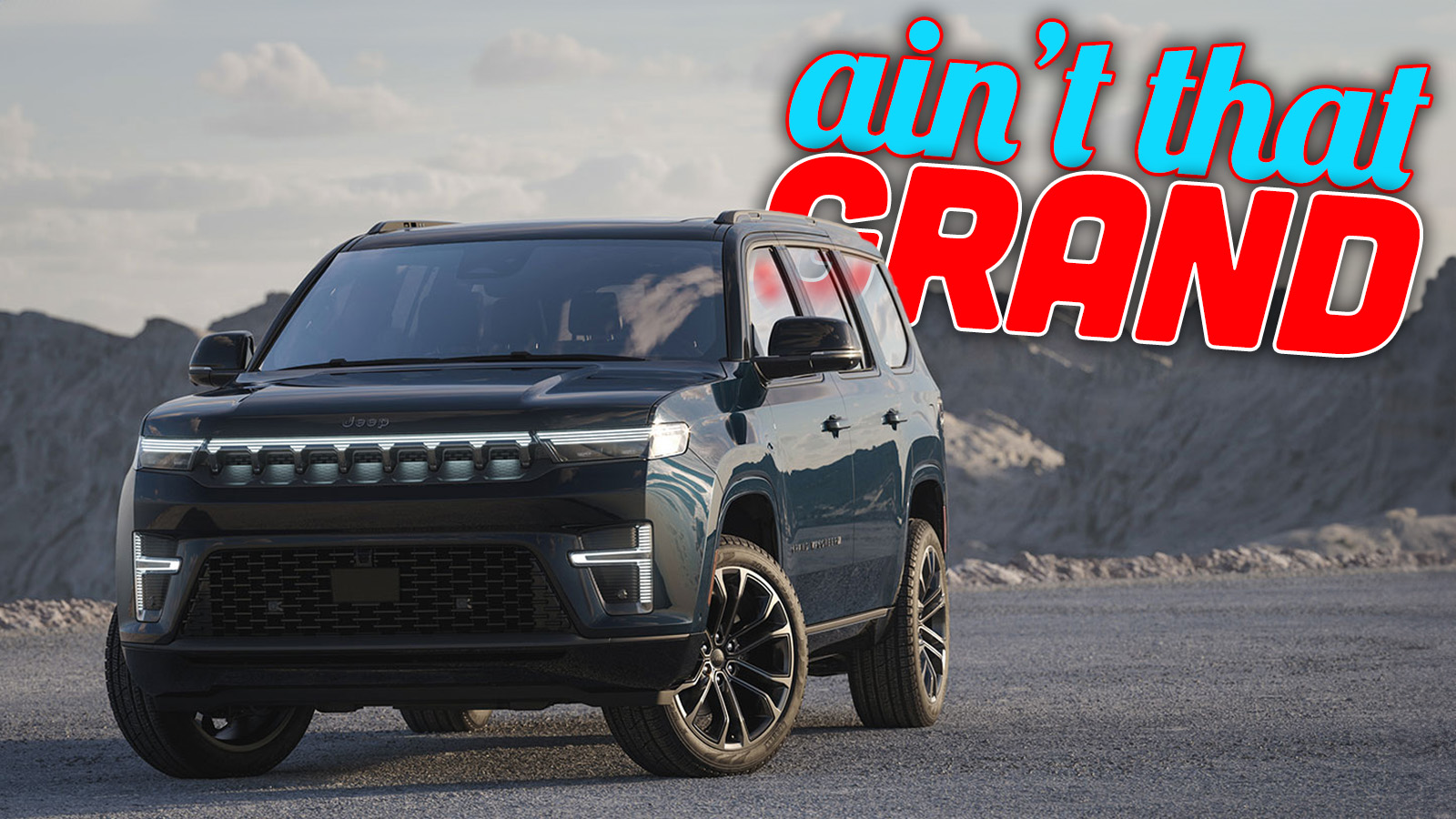
Remember how we told you that Jeep had finally decided that their naming conventions for the Wagoneer and Grand Wagoneer were too damn confusing, and all their fancy SUVs would be Grand Wagoneers from now on? That was a good choice. Now it also seems that Jeep will stop trying to make the Wagoneer brand name happen, and go back to badging them as Jeeps, just like everyone called them, anyway. Jeep has also revealed some pricing and other details of their refreshed Grand Wagoneers, and I suppose I may as well tell you all about it.
The most interesting development out of these refreshed Wagoneers, now so Grand, is that they will feature “America’s first range-extended electric vehicle (REEV or EREV) application,” which the press release also notes will be “late availability.” That will be a big deal, beating Scout to the range-extended EV game, and I think it is one of the most promising types of drivetrains for near-future cars. This must mean that it’ll slot in before the delayed Ram Ramcharger.


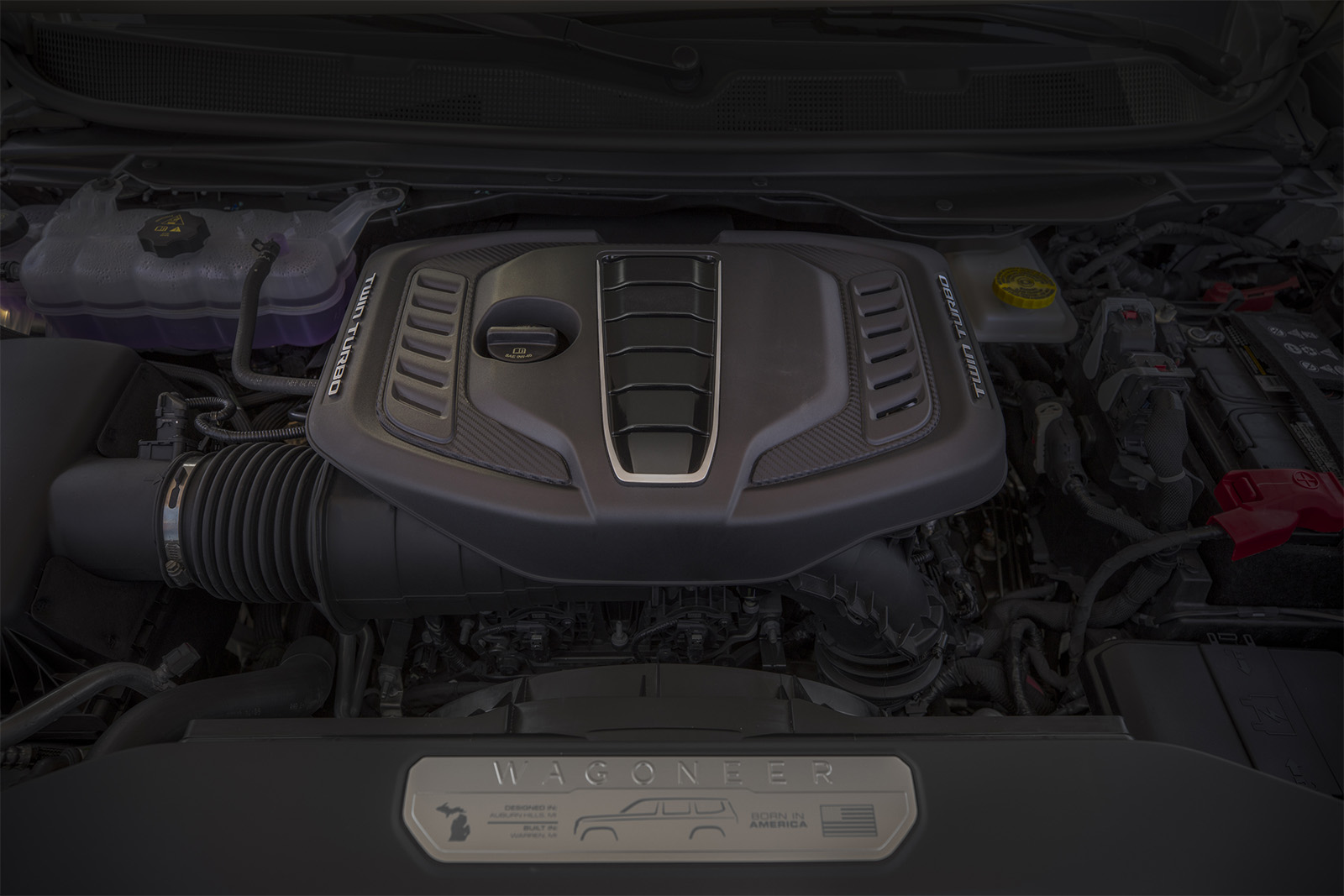
There will also be a twin-turbo 3-liter Hurricane inline-six engine available as well, making 420 horsepower at 5,200 RPM, and 468 pound-feet of torque at 3,500 RPM. Do you want to know the compression ratio? It’s 10.4:1. It’ll take 7.5 quarts of oil, too!
Oh, and here’s what the likely slightly squishy engine cover will look like:
More interesting is the EREV version, which will use a 3.6-liter V6 coupled to a 130 kW generator. Electric motors will drive the wheels, powered by the V6, batteries, or both; this combination will provide 647 hp and 620 lb-ft of torque, which can shove the Grand Wagoneer from parked to 60 mph in 5 seconds. The range for this setup is estimated at 500 miles, quite impressive for a vehicle of this size.
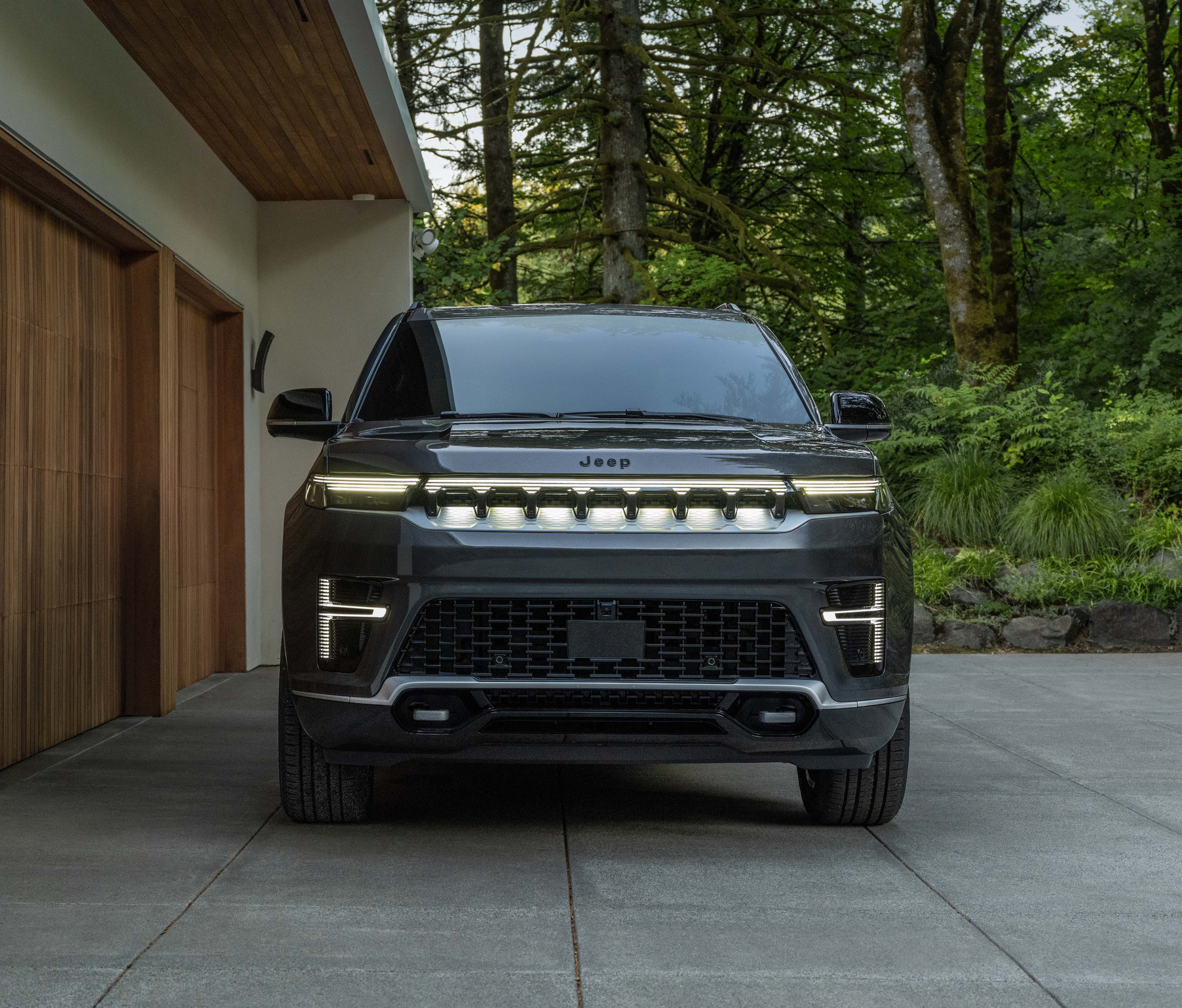
Design-wise, the big change is an all-new face, which is a bit taller and more squared-off, and now eliminates chrome. In place of chrome for bling is light, as the traditional Jeep seven-slot grille (which doesn’t actually seem to be a real grille; all the air intake looks to come from the actual, large trapezoidal grille below) is now illuminated. The upper part of the seven slots extends into some DRLs, which are combined with some rotated-T-shaped lamps below, which I suspect house the indicators as well.
The slots read more toothy than slots, really, but the overall look isn’t bad, and I suppose an improvement over the outgoing Wagoneer, which had a face like this:

Jeep seems to be really proud to get rid of chrome; the press release gives this absence a whole paragraph:
“One of the most significant design shifts is the introduction of a chrome-free exterior, a first for Grand Wagoneer. The new Grand Wagoneer embraces a more refined and modern palette. As the design team embraced more sustainable materials and processes, the shift to ”no chrome” marks a bold move toward a cleaner, more responsible and modern expression of luxury.”
There’s also no brass on the SUV, but I don’t see them making a big deal of that.
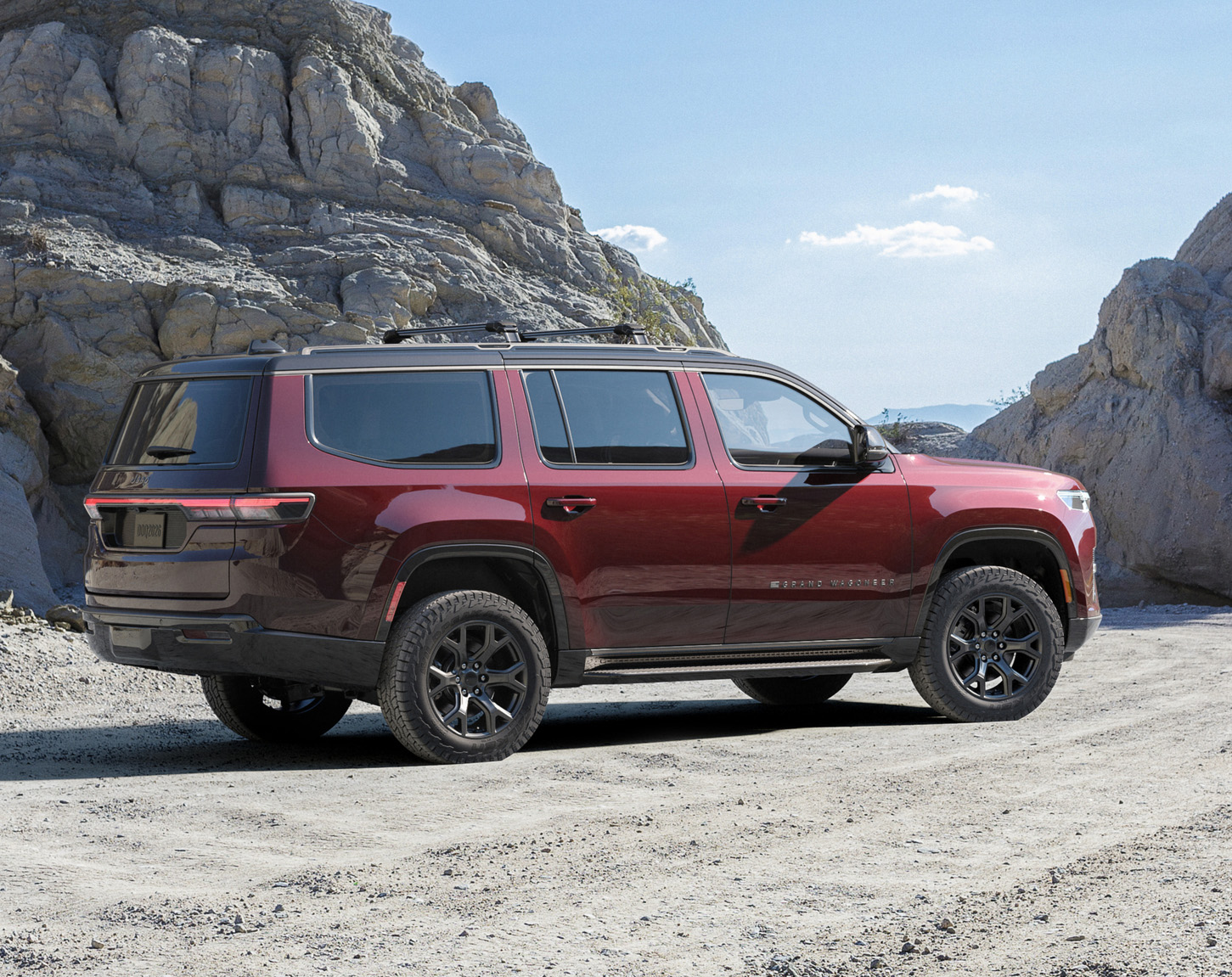
The rear now has full-width taillights as well, since we’re well into the Era of The Universal Heckblende, and the overall look does seem a bit cleaner and more refined. I think I like the contrasting color roof as well.

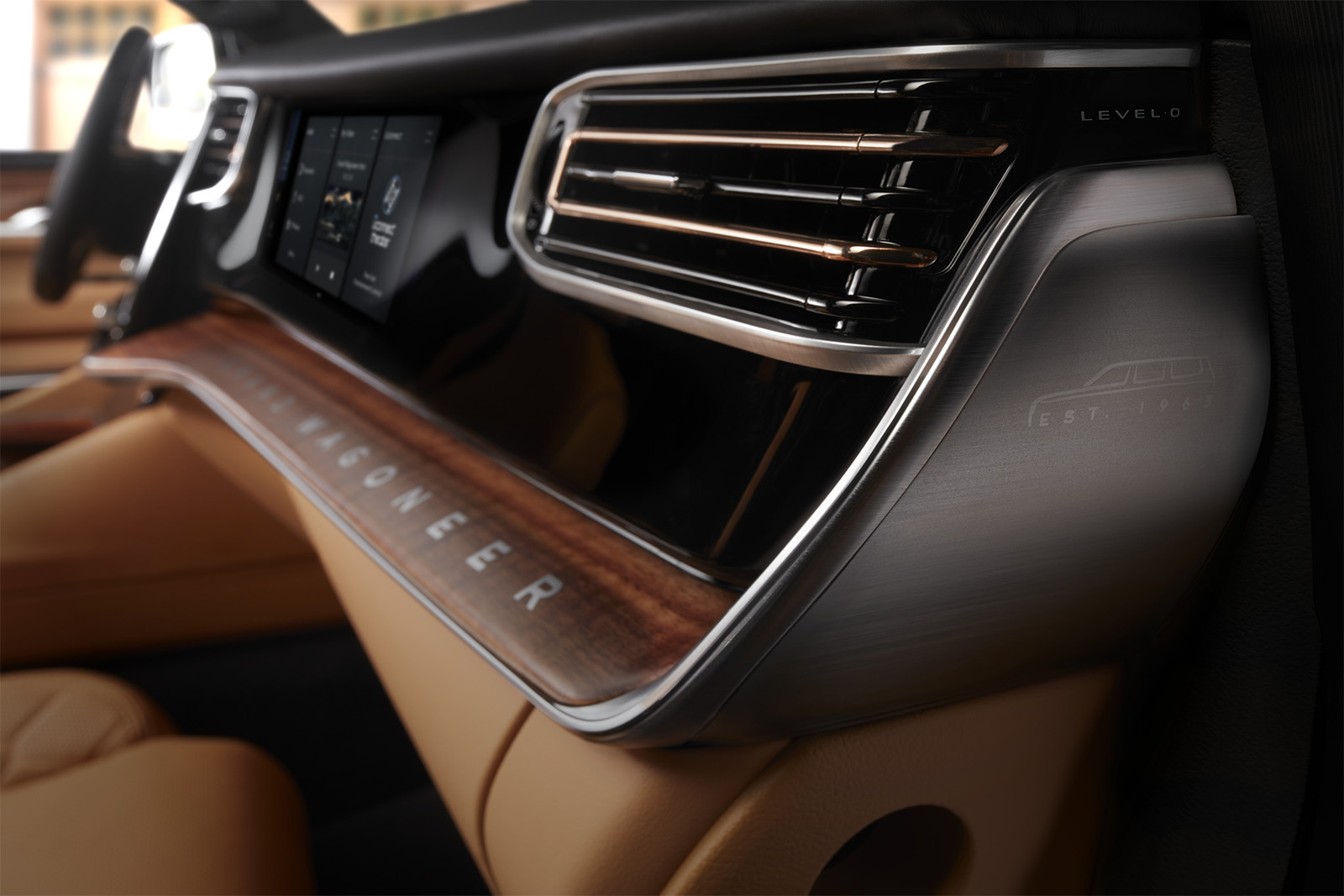
Interiors seem quite premium and well-appointed, with “Nappa leather with Axis II perforation,” whatever the hell that is. There are enhanced interior packages that include
“For those seeking elevated appointments, the Limited Reserve features more amenities, including a 19-speaker McIntosh audio system, tri-pane sunroof, power steps and HUD”
and, if 19 speakers just isn’t enough for your discerning ear-palates, then you want the Summit trim with
“a state-of-the-art 23-speaker McIntosh audio system, ventilated rear seating, an integrated front console cooler, a front passenger display and a sophisticated black appearance.”
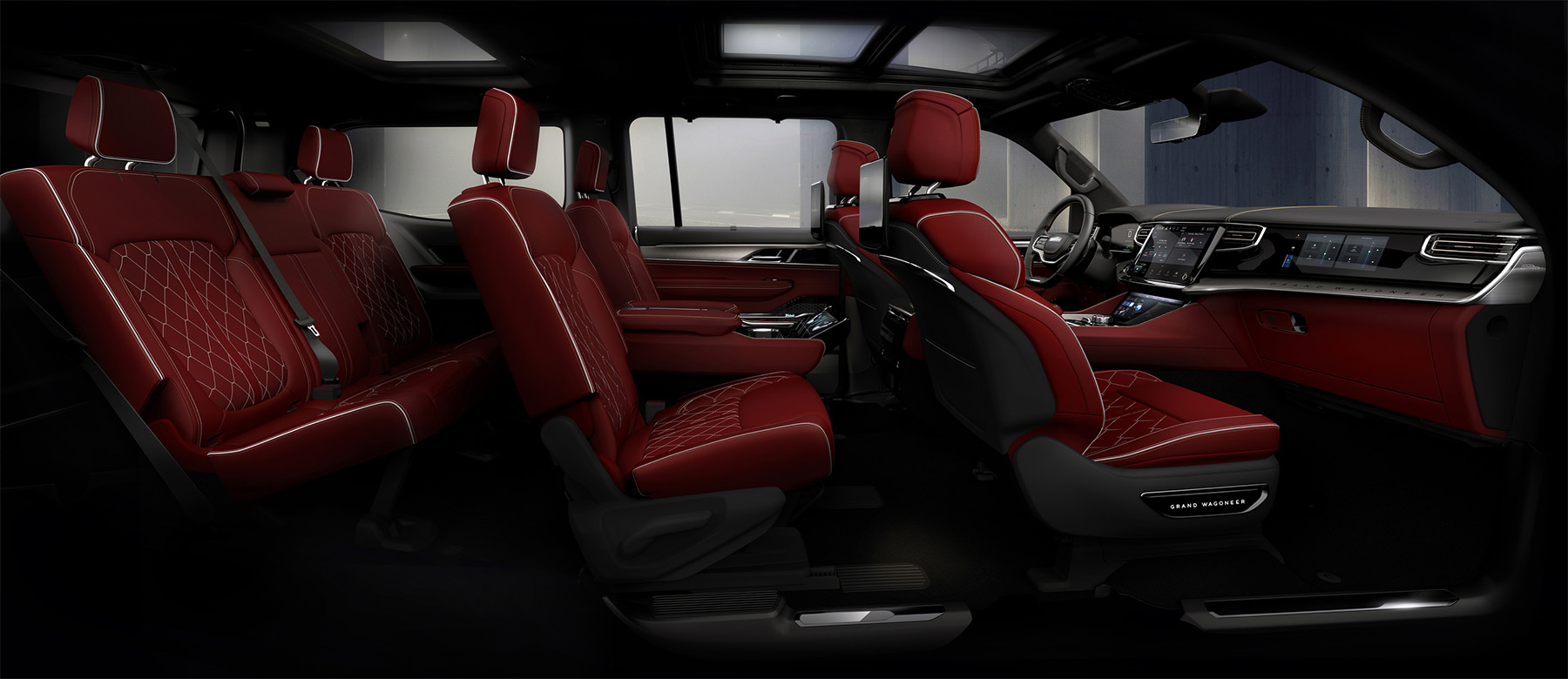
You can get three rows in the Grand Wagoneer, should you need to haul around seven or eight people, and cargo space looks pretty cavernous with all the seats folded down:
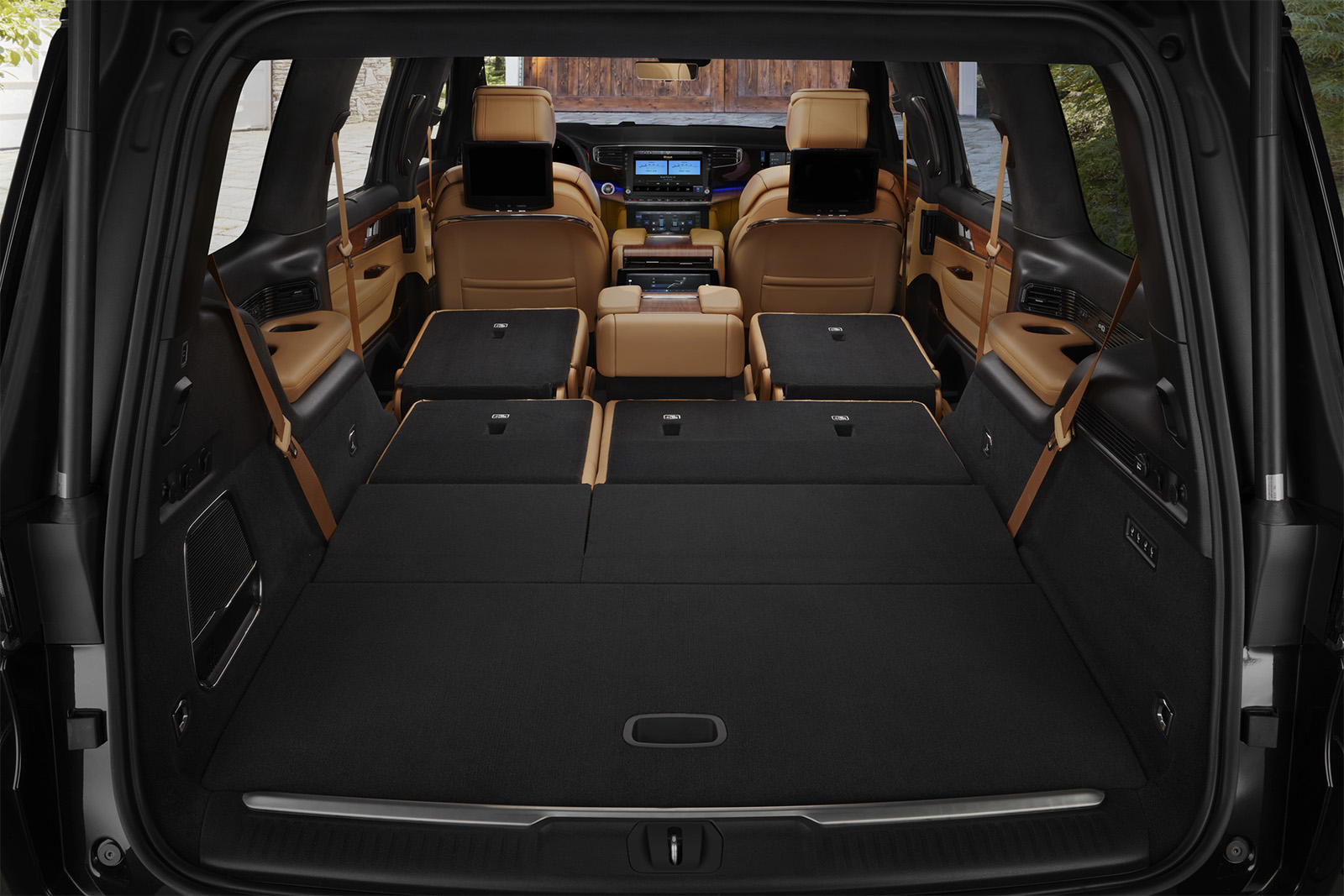
By the numbers, the cargo space breaks down like this:
Cargo volume behind first-row seats, cu. ft. (cu. m) 116.7 (3.3)
Cargo volume behind second-row seats cu. ft. (cu. m) 70.8 (2.0)
Cargo volume behind third-row seats cu. ft. (cu. m) 27.9 (0.8) Grand Wagoneer / 42.6 (1.2) Grand Wagoneer L
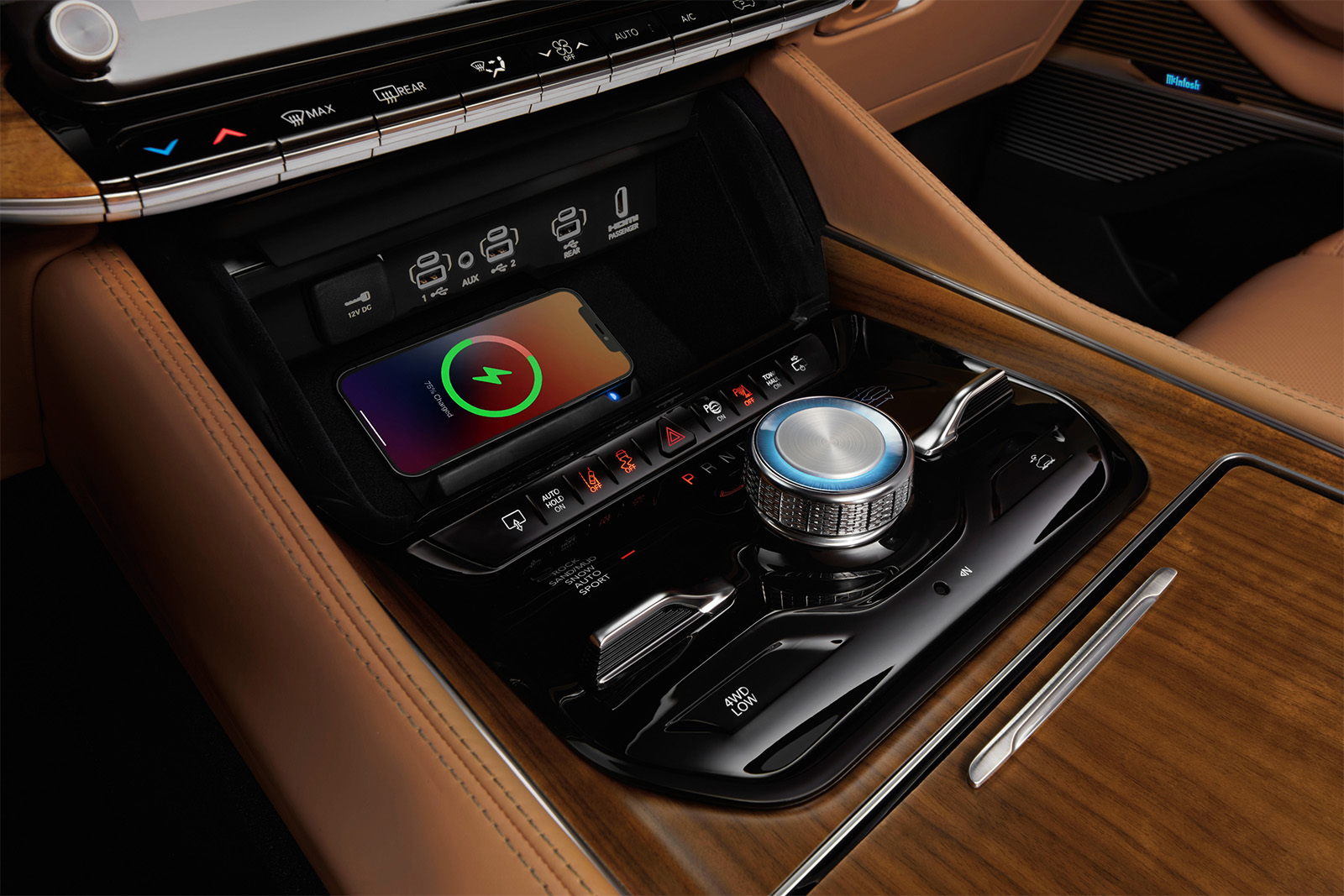
While there are plenty of screens (even one on the passenger side) and a nice big HUD and all that, there seems to be plenty of physical controls, which is nice. Also, there’s a generous number of USB ports (A and C) and even an HDMI port there? I guess to plug in your Wii U or Blu-Ray player?
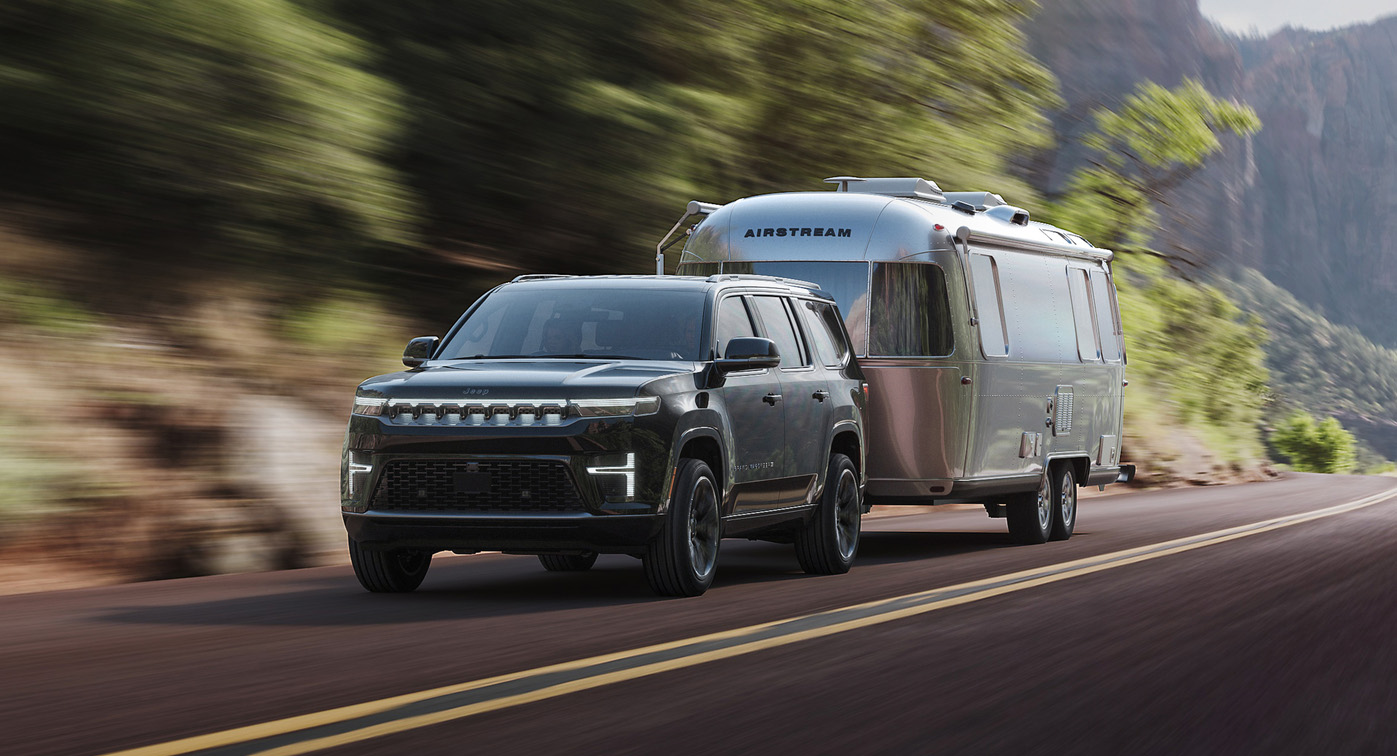
If you want to tow with a Grand Wagoneer, you’re in luck! These can pull pretty massive trailers: the shorter 123″ wheelbase ones with 2WD can tow 6,210 pounds, and 4WD ones can tow 6,030 pounds with the 3.55 axle ratio or a massive 10,000 pounds with the 3.92 ratio axle.
The 130″ wheelbase 2WD models can pull 5,960 pounds, and the 4WD ones can tow 5,770 pounds with the 3.55 axle ratio or 9,860 pounds with the 3.92 ratio axle.
Are you planning to off-road a Grand Wagoneer? Really? Okay, if you say so. Here’s some relevant information about that:
Approach Angle (degrees)
21.4 — standard suspension
25.2 — air suspension (Off Road 2)
Ramp Breakover Angle (degrees)
18.7 — standard suspension
22.1 — air suspension (Off Road 2)
Departure Angle (degrees)
21.2 — standard suspension
23.9 — air suspension (Off Road 2)
Be careful with the fancy paint and all that expensive-looking lighting if you do that, though.
These new Grand Wagoneers will start at $62,145 for the base 4×2, $65,145 for the 4×4, and the long wheelbase ones start at $65,145 and $68,145 for the 4×4.
The “Limited Altitude” trim is 4×4 only and is $71,140, $74,140 for the longer one. The Summit Obsidian trim is $93,390, and $96,390 if you want the extra length.
Top photo: Jeep





I like arriving at my destination, so I’m not a Jeep guy, but that red interior is hngngngnng
Glad they are doing away with the chrome. Every time I see a GRAND Wagoner I shudder from its gaudy over chromed windows.
The Jeep Grand Wagoneer is like voluntarily choosing to drive a short-bus. Ladies think they can’t drive a Sienna because they’ll look “like a mom,” and then drive a special ed car as though that’s less embarrassing. No offense to people who had to involuntarily ride the short-bus!
This seems like a more logical place to launch the REEV powertrain.
“There’s also no brass on the SUV, but I don’t see them making a big deal of that.”
Coffee snarfed into sinus on that one. Thanks a lot Jason. 😉
I really, really don’t like what they’ve been doing with Jeep grilles lately. Give it another design cycle, and the grilles will disappear entirely.
I do understand why Jeep is hyping the lack of chrome, given the concern about the health and environmental impacts of the chrome application process. I’ve encountered that in my line of work; it’s pretty much impossible to order chrome-plated parts from European manufacturers now.
I once had a jeep commander limited and if I remember most of the “chrome” was shiny plastic.
It seems like most automotive chrome from the last few decades was the same way. I’m not familiar with the process, but apparently actual chrome was used for part of it?
“America’s first range-extended electric vehicle (REEV or EREV) application,”
REEV or EREV are just new ways of saying “plug in hybrid”
Now having said that, I hope this new V6 plug in hybrid turns out to be a solid/reliable/durable powertrain and if it is, I hope they make it available in as many vehicles as possible… including the Charger and New Chrysler 300 (which they absolutely should make and they’re stupid if they don’t).
Close but not quite, PHEVs typically have relatively low EV range, I think it has to be under 75 to fit that category, whereas the EREV has to be over that. I could have the limit wrong, but there is a legal definition to each so this has to have more range than the Prius PHEV
They are different, and my understanding is that it’s mostly how the drivetrains are laid out.
A PHEV is basically a typical hybrid (like a Prius) with a larger battery that can be recharged by plugging it in. All-electric ranges can be from the teens to maybe 50ish miles, but the key difference is that the engine can put direct mechanical power to the wheels.
An EREV does not connect the engine to the wheels directly, it only provides electrical power that is then pushed to the battery and/or electric motor depending on need. The BMW i3 Rex and the Chevy Volt are both set up like this, so Jeep’s claim of ‘first’ is late by like a decade.
“An EREV does not connect the engine to the wheels directly,”
Which, I believe, would make my 2017 Ford C-Max Energi an EREV as well… which was advertised as a plug in hybrid.
The C-Max Energi uses the same eCVT transmission to connect the engine to the wheels as the standard hybrid version, so it is a PHEV but not an EREV.
You’ve angered the Voltians.
And the C-Maxians…
C-Max can’t really operate as a pure EV though.
Mine does… for 20 miles at least (until it’s plugged in again).
Yes it does. I drove mine in pure EV mode on my way to work just this morning. And I’ll have enough charge left to get most of the way home.
You’re mixing up the regular C-max with the C-max Energi (which is a plug in hybrid).
The Energi has 20 miles (EPA rated) of pure EV range.
Doesn’t the engine kick on when you give it full throttle?
Not when I have it in “EV now” mode. It will only do that if I put it in ‘regular hybrid’ or in ‘EV later’ model.
https://www.youtube.com/watch?v=67lVOHpoOkk
Interesting! Similar operation to a Volt then.
Yep… and I would have bought a Volt except for the fact that they have very small trunks… just 10.6 cu ft.
The C-Max has nearly double the space.
Also of note, the Prius Prime plug in hybrid has similar modes of operation… “EV mode” which is like “EV Now” on my C-max, HV which is regular hybrid mode and “EV Auto” which sounds like it differs from the ‘EV Later’ mode I have in terms of how it operates.
Only restriction with the trunk on the Volt is the slope of the roof, otherwise it’s enormous. I had two suzuki axles, 2 tool bags, a transmission and some other parts in mine the other day. Amazing what fits in there through the magic of hatchback.
Isn’t a 3.6L V6 overkill/wasteful if it’s only acting as a range extender? Why not a four, or even smaller? Is there an advantage to using a big motor in this application?
It has to be able to tow the rated load when the batteries are depleted. Engine/motor software prevents the worst case scenario most of the time, but they have to cover themselves.
The 130kW generator motor will probably put a cap on engine power contribution unless they allow for a temporary ~15 second boost or something. There’s other factors like engine load for towing (~60-70% in this case rather than 100%) and NVH.
No it is not overkill, it is undersized being so small and weak and that will be the downfall since they are trying to say it is the perfect solution for towing.
Think about that 130kw (175hp) generator when the batteries are close to empty. It’s got to lug that beast and anything it’s towing. It’ll be SLOW as is. Smaller would be out of the question.
It’s unlikely the battery will ever get ’empty’ – it’ll probably be programmed to turn the engine on ~20%. Hopefully, they’ll set the threshold higher than that in tow/haul mode (and make it user-selectable). That way, you dip into the reserve going uphill, but fill the battery back up going down. I’m sure someone will find a way to get a fully loaded trailer at the bottom of the Davis Dam with no battery buffer, but, it’s impossible to design out user error. As soon as you think you’ve done it, they go along and create an even stupider user.
“Isn’t a 3.6L V6 overkill/wasteful if it’s only acting as a range extender? “
Not necessarily.
I’ve seen more than a few cases where a bigger and lightly stressed engine can be more efficient than a smaller, higher stressed engine.
And essentially what they’ve done is taken the3.6 V6 and tuned it for max efficiency.
Also this has a side benefit of having a more pleasant sound when it runs compared to a 4 cyl.
Also when the battery is depleted, the ICE still needs enough power so it isn’t excessively slow.
Hopefully we can get to the point one day where the minimum acceptable standard isn’t ‘overkill’, but, it doesn’t look good. This needs a 300hp engine for the same reason 90% of people ‘need’ full sized trucks & SUVs in the first place – the ‘what ifs’. But, for optics and marketing, as a relatively new and unknown technology, it has to be as close as possible to idiot-proof. The people buying this are going to be spending lots of money on it, and probably won’t understand it that much. News getting around that the vehicles ‘failed’ on customers in practice could tank sales really quick. Plus, some people will actually need the extra capability.
It’d be nice if the technology catches on, and companies offer optional engine sizes, but, if I were Stellantis, I’d have made the same choice in this case.
They are using a 130kW generator on this thing. In China where there’s a maturing EREV segment, they use Atkinson/Miller cycle and run around 70% throttle (peak BSFC), and possibly around the same rpm as peak torque which is generally an engine’s most efficient speed. All of this juices the engine’s efficiency while also keeping NVH low, which saves cost and is a lot more noticeable when the car can also run with the engine off.
The Pentastar makes ~280hp (210kW) in normal Otto cycle form, so 130kW would be the engine running at ~62% load, probably matching up with Atkinson cycle and 70% throttle. A bonus is that this engine will be understressed even at a pretty high compression ratio.
Why can’t they use something smaller? Stellantis lacks an up-to-date large displacement 4 cylinder (like a 2.5L), though those usually make ~135kW (180hp) peak power so it’s a bit underpowered for towing uphill. The newer 2.0T I-4 used in several products makes enough power, but probably isn’t much cheaper if at all and has inferior NVH to a V6.
I’m REALLY hoping Stellantis sticks the landing on their EREV platform. I’d gladly take a 1500 with the setup.
Please let them do this one thing right.
I think the hardware will be ok, but the software will likely be a mess. This is something Ford messed up with their 2.5L hybrid in the Escape & Maverick, and Mazda did in the CX-70/90 PHEV. The upside is that early model year buyers will likely eventually get the fix for those problems for free after a couple years.
Excited for the EREV version to come out. There really aren’t any electrified jumbo-size SUVs in the heavy-towing category, unless you go back to the GMT900 hybrids. Inexplicably, Ford hasn’t gotten around to even adding PowerBoost to the Expedition, much less make a Lightning SUV; same for GM (the Hummer SUV is only 2-row, and is really only big on the outside).
Kudos to Stellantis for actually bringing this to market – hopefully they can stick the landing, and hopefully it’ll spur a manufacturer I’d actually buy a vehicle from to follow suit.
For the regular model – it’s somewhat embarrassing that they are marketing a model with a towing capacity that is eclipsed by a FWD, unibody Nissan Pathfinder. 8k should be the absolute floor for towing in this segment. It’s nice that they offer one that can tow 10k, but, I’m sure more than a few people have been caught off guard when they find out their full-size, BOF SUV has a midsize unibody tow rating.
Ford has been weirdly stingy when hybridizing their larger vehicles. I don’t understand why they haven’t brought back the Explorer 3.3L N/A V6 hybrid; it lasted one model year before they made it exclusive to the police fleet version due to high demand and constrained battery supply at the time. Now that battery supply is no longer constrained and demand for Ford’s EVs are falling, I don’t see why they can’t bring it back; it’s still up to date. Maybe it’s a relic of not trying to overlap with their now canceled 3-row EV?
I think the rear is the most clunky, awkward looking part of the current one and it looks like this update fixes that. I like the front too. Now if they can just build the thing properly, it might be a winner.
Still has the D pillar that looks like it came off a different car.
Boxy can look ok, but it looks like crap when the rest of the car isn’t boxy
I like a small d pillar. Sight lines vastly improved.
The chrome trim from the previous model years really accentuated how bad the D pillar looks, so removing the chrome has helped imo.