


Earlier this year, I bought a 2008 Land Rover Range Rover with 216,000 miles on the clock. I intended to use it solely as a beater in New York City, where I live. But then I got the bright idea to drive it all the way to Chicago and back for Thanksgiving.
Old Land Rovers don’t exactly have a reputation for reliability, and while mine ran just fine, I hadn’t done any real maintenance on it since I bought it, besides an oil change. Having only driven it about 1,500 miles in total before this trip, I was understandably a bit nervous about 13 hours of straight interstate travel.


While I don’t mind the occasional breakdown hundreds of miles from home, my girlfriend was also with me, and she’s not used to that kind of stuff. Inconveniencing her with a surprise plane trip to Chicago from the middle of Ohio after a malfunction I couldn’t fix would not have been very cool of me.
Now, after having arrived in Chicago and driven back to New York with essentially no issues to speak of, I’m wondering why I was ever worried at all. I’ve been buying high-mileage cars for years, and I’ve done dozens of trips like this before without encountering any problems. This trip is further proof that mileage is—for the most part—nothing to worry about.
The Best Conclusion Possible
Last time I wrote about this trip, it was from my girlfriend’s parents’ kitchen. The drive from New York to the suburbs north of Chicago went off without a hitch … mostly. I encountered two small issues: a headlight that briefly stopped working when it was still dark out one morning, and a piece of plastic cladding under the bumper that came loose and made unpleasant noises as it hung in the wind.

The headlight issue solved itself. I didn’t even have to smack the lens cover to get it to turn back on, it did it all on its own with a simple power cycle. And I didn’t so much as “fix” that hanging plastic as I just removed it and threw it away – it was broken into two pieces and I didn’t feel like doing a zip-tie dance to put it back together.
I put around 300 additional miles on the Range Rover the week I was in Chicago, which were all problem-free. Even after the big trip there and all those little journeys, the 4.4-liter Jaguar engine hadn’t burned much oil—I didn’t even need to top it off before setting off back east.
Leaving Chicago was a bit more eventful than getting there, as a big snowstorm was just beginning to arrive in the area that morning. By the time my girlfriend and I were in the car, a thin layer of snow was already on the ground. The highways weren’t much better, though, and thanks to a set of four-season Nokian tires (not all-seasons, four-seasons, there’s a difference), I wasn’t worried about traction. While I didn’t see any wrecks, I did witness an old Silverado briefly lose control and swerve across three lanes of traffic before the driver saved it. “Nice,” I whispered softly to myself as my girlfriend lay fast asleep in the passenger seat.

Once we got through Indiana, the weather cleared up, and it was smooth sailing from there. There were some patches of traffic in Pennsylvania and New Jersey, but otherwise, the trip was totally drama-free. The Range Rover gave me absolutely zero hassle, and it actually ended up being pretty good on gas (for an 18-year-old brick on wheels with a V8, anyway). The SUV managed 17.3 mpg over the course of the trip according to the onboard computer, which is nearly what it’s rated for from the EPA when new. Had I really stretched the 27.6-gallon tank, I probably could’ve made it on just one fill-up.
Don’t Be Afraid Of That Number On The Odometer
Mileage is one of the most important factors that determines the price of a used car. People will pay huge sums for low-mileage vehicles, banking on the fact that they haven’t been worn down. While I understand why someone would pay a premium for factory freshness, I don’t subscribe to that type of car-buying. I have a different way of looking at things.

The main reason I buy high-mileage cars is cost. All things being equal, a car with higher mileage will always be more affordable and less desirable to the market. This allows me access to vehicles I wouldn’t otherwise be able to afford. My Range Rover is a great example—Range Rovers with under 100,000 miles on the clock go for triple what I paid for mine. Another good example is my 2008 BMW M5, which I owned for three years and sold with 183,000 miles on the clock (not crazy by normal car standards, but a lot for V10 German sedan standards). Everyone warned me that the car would be a ticking time bomb, yet it proved to be mostly immune to those catastrophic problems, at least during my ownership. I even took it to a few track days without encountering any complications.
In owning several high-mile performance cars like my M5, I’ve realized that with these high-mileage cars, you’re getting 95% of the same driving experience for a fraction of the cost. Sure, it won’t be as spotless inside or out, and there might be a few tired bushings throughout the suspension, but for the most part, it’s the same experience.
The Maintenance Of It All
At this point, you’re probably screaming at your screen about how maintenance costs and impending breakdowns offset any benefit you get from the purchase price. Obviously, I’m not saying you should buy a shitty, high-mileage used car over one with fewer miles just because it’s cheaper. That’s not my point. My point is, you can have nearly the same experience at a lower price point if you know what to look for. Buying a high-mileage car that’s been well-maintained by its previous owner (or owners) will, most of the time, be as reliable and drive just as well as a low-mileage car of the same vintage.
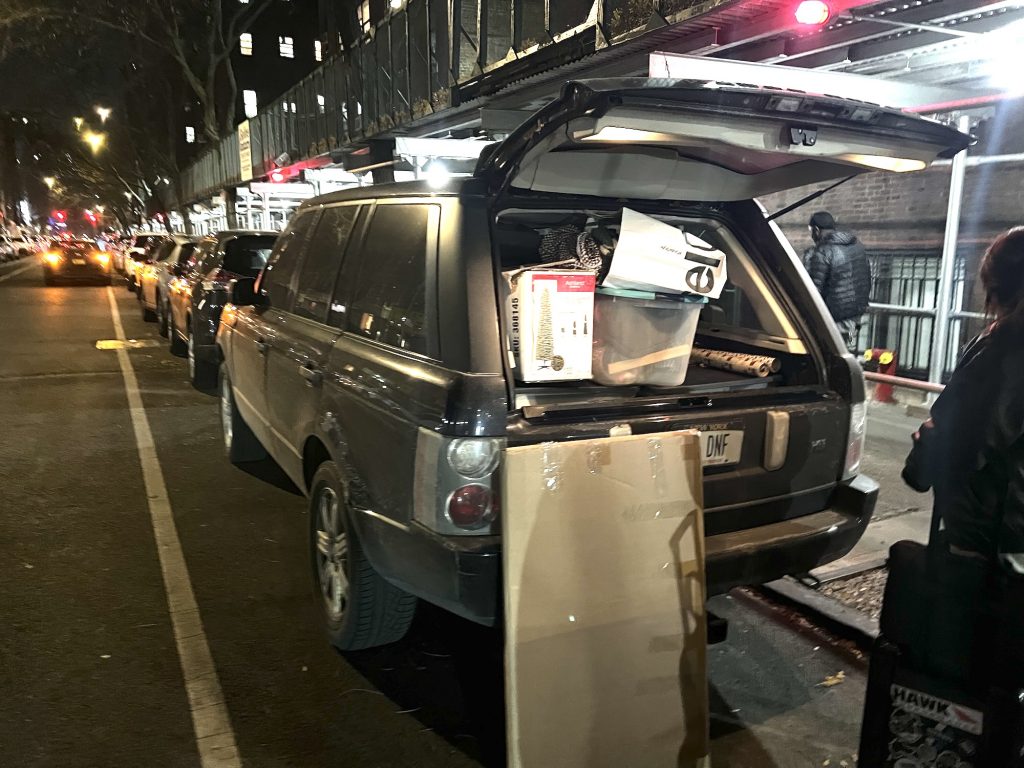
In almost every instance, I’d rather buy a cheaper, higher-mileage version of a car that’s been maintained than a lower-mileage version of that same car. The simple fact that the car is still running just fine after all those miles means that major problems have likely already been addressed, and, barring any obvious signs of poor running, that it’s been well-maintained. Service records are always a plus, obviously, but after buying enough cars, I sort of know what to look for and what to avoid. Low mileage isn’t always an indication that the car’s been taken care of.
My argument becomes stronger the older the car gets. As a vehicle ages, mileage begins to matter less and less. Age will inevitably wreak havoc on any car, whether it’s driven or not. Plastic clips, rubber seals, gaskets, and hoses will eventually succumb to age, no matter how they’re treated. At that point, it’s more important to analyze how well the car’s been maintained, rather than how many miles it’s driven.
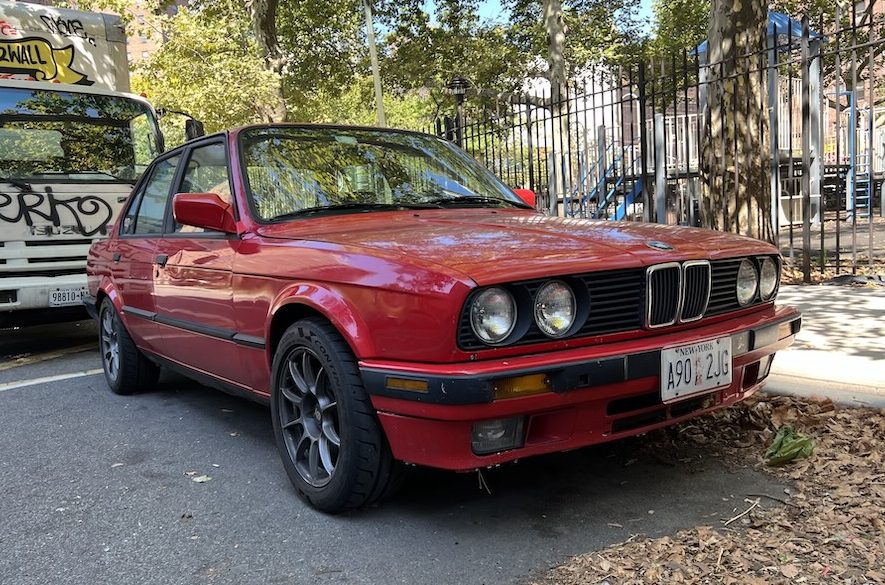
Cars like the E30-generation BMW 3-Series are a great example. I’ve owned a few of these cars, and I don’t think the odometer worked on any of them. When buying and selling these little sport sedans, mileage is the last thing people care about. Instead, they look for things like rust repair, the health of the suspension, and whether the valves have been adjusted. So long as stuff is maintained, E30s are like Legos, and they last forever. It’s the same story for most classics.
There will always be outliers, of course. Not every well-maintained, high-mileage car is worth the trouble, even if it’s cheaper. But for the most part, you shouldn’t be afraid of an inflated odometer. You should always be more concerned about the car’s actual history, because at the end of the day, a number is just a number.
Top graphic images: Brian Silvestro



I had an e28 that my parents, sisters and I drove for 350k. Only ever needed one clutch replacement and the blower motor for the hvac.
I bought both my kids Camrys with over 100k without any hesitation.A 2002 with 110k and a 2008 with 122k. I did replace the radiator,starter,and sway bar links on the 2002 but the parts were dirt cheap and easy to replace.They did have all the maintenance records and were taken care of.I have absolutely no regrets about buying them.
Camry’s are an altogether different category than Range Rovers.
I agree but I think it’s just a general discussion about all high mileage cars.Not just Range Rovers.
On the surface, I agree with you, but years since manufacture and miles driven are quantitative.
Buying used from individuals isn’t necessarily likely to get me maintenance records. Without those, taking someone’s word…it’s all iffy.
“Well, did it work for those people?”
“No, it never does. I mean, these people somehow delude themselves into thinking it might, but … But it might work for us.”
I am trying to explain that to Bonus Mom. She and Bonus Dad are considering buying a black 2022 or 2023 Escalade ESV Platinum or Platinum Sport for their new black-car business.
I told them they should instead consider two 2018-2020 versions of the same, with higher mileage, because:
bonus mom? buy two get a third for free?
It’s an interesting take I mostly agree with. Highest mileage vehicle I bought was a 99 XJ with 250k on it. I only planned to park it at my Mom’s and take it to the dump and beach when we visit but my son is now driving it everywhere.
One thing I realized fixing it up was that things wear out at such mileages that were probably never meant to be maintained or replaced. Example: both front brakes started seizing up when I first put it on the road. Turns out the calipers weren’t the problem but the caliper brackets had worn a notch where the brake pads slide and were getting hung up.
I just had the knuckles off for other work and didn’t feel like going back in there and replacing them. I saw folks had success welding the notch and grinding it smooth and that worked!
The fun thing about old high mileage beaters is that I’m willing to try all kinds of janky repairs. Also done on the XJ: JB weld fix for a cracked engine block and heater hoses routed to the AC evaporator for heat. I wouldn’t take my whole family in it further than we could walk home but for my son and I it becomes an adventure…
I would say you also need to listen to you to your car. if you hear suspicious sounds, investigate rather than turn up the radio. there is a point on Higher mileage vehicles where the repair cost don’t justify keeping the car and this is exacerbated by ignoring small issues until they become big issues.
I’ve never owned a new car – I’m not even sure I’ve ever owned anything newer than 10 years old. My current car’s the lowest mileage I’ve ever driven at 50k miles. I’m always baffled by people who insist on buying new – it’s not hard to find a used car in good condition, and it’s $40k cheaper on average. Don’t buy anything with rims or a stereo, and don’t buy anything that’s about to cross the 100k mi mark, but I can’t imagine the allure of buying a brand new blob-shaped crossover with a CVT really being worth the extra money.
Fun fact: 30-40% of Big Altima Energy is generated by “sub in the trunk”
I am similar, but when I was shopping for HD trucks last year the remaining 2024 new ones on the lot were selling for darn near the same price as used units with 30-90k on the clock. Also any vehicle built in the past 10 years seems to be more problematic above 100K due to the various things they are attempting to make them more efficient or pollute less. 2018 Cummins versus the 2019 with roller cam is a good example.
Most people aren’t car people, and the things we find endearing or educational about vehicles are suffering to them. A new car is a hedge against vehicle-related suffering because warranty protection. It’s worth the price to many.
Which is fine. I need them to buy new cars so that I can buy their used car.
I just don’t feel the need to be condescending about it, which is an undercurrent here that I don’t particularly like.
I’m with you mate.
Older cars are more fun, have features like actual buttons instead of screens, and most importantly, are cheaper.
But I guess I shouldn’t be too convincing. I rely on other people buying brand new cars, and dealing with the depreciation, so I don’t have to.
don’t be down on the new car buyers, someone has to do that or there would never be used cars to choose from.
I bought my ‘01 V70 T5 five-speed for $500 when it had 217,000 and finally parked it for good when it had 348,000.
Well done!
Brand and model specific stereotypes exist for reasons, they’re not just made up out of thin air.
Altima Drivers, Kia Dealerships, Toyota/Honda Buyers, the third owners of Escalades, Subaru head gaskets, Range Rover’s made of wet newspaper……
This hits on a conversation I was having with a buddy over Thanksgiving regarding what he should buy for his soon to be 16 year old son. He (we) are upper middle class & not overly handy with vehicles. He seems to think that he needs to buy something with around 60k miles & probably 4-6 years old which will cost him $18k+ to do so. He wants it to last 6-8 years as it cycles through both his kids. He’s thinking like a Chevy Equinox
I said that’s too much $ for a vehicle that is likely to be crashed at some point between the 2 young drivers. I suggested something like a 2010 Kia Soul for $10k with 100k miles. He thinks that is way too unreliable. Anyone who has been going through this recently have thoughts?
You’re correct. The first car is sacrificial – if it lives long enough to develop a mechanical problem, that’s a win.
Frankly, until the kid’s paying for it themselves, “beater” is always the answer.
this is the trick. Never gift a car to a kid, make them work part time and pay you or help them with a loan. also make them pay for their own insurance. this way they understand the work required to get the reward and appreciate it more.
The child should pay 1/2 or 1/3 of the purchase price and all or some of the insurance. This is magic. It teaches the value of a dollar and safe legal driving all at once. Mine drove like an angel after the 3rd ticket.
Father of four here. We told our kids early on that we would kick in $1500 toward whatever car they chose. Oldest daughter chose a $1500 car. The other three learned from her mistake.
lol, inflation and what not, but my first car was a 1500 dollar 71 Mach 1 mustang. I also learned some lessons at a young age, but also how to repair a car. If I had Youtube and did not have to go sit int he Chilton’s Aisle at the parts store I could have probably started flipping cars at 17.
A 15 year old Kia for 10k?????????????????????????????????????
I went your route a few years ago, with a 12 year old 120k Tucson, but it was closer to $6500 back then. We got a year and a half of trouble free operation until my son rearended a dodge totaling it out.
I generally prefer an older low milage vehicle (assuming cost and conditoin are simliar) to a new high milage, but my exception is as a kids first vehicle, I would get newest (and presumably) safest vehicle (I could afford), even if the milage is on the high side, for a kids first car.
he should probably google the equinox, I am not so sure they are considered more trouble free than a Hyundai at this point.
This is giving “I mean, it’s one banana, Michael; how much could it cost? Ten dollars?” energy.
A 2010 Kia Soul does not cost anything like $10K, even with 100K miles in The Year 2025. In fact, you’d struggle to get a few grand for it.
Your buddy should do what I did – buy himself a nice new car and give his (slightly worn out) old car to the child, especially when the trade-in value is way less than what one would pay for a similar used car. Then insure the old car as liability-only and make it super, super clear that at-fault accident = no more car. Daughter gets cheap wheels that she is careful with and I get a new car that I don’t have to share with the daughter. Wins all around.
Yeah he’s got a 2023 loaded Silverado worth 50k+ so thats a no go. Also his kid doesn’t like driving it due to its size, which I can understand
If you are in a cool-ish climate, I would suggest a Nissan Leaf 2015 and up. The range is nominally 84mils but a used one might have maybe low 70’s. Good enough for a teenage kid and not far enough to get him into any trouble. The good thing is you don’t have to give him gas money or a credit card to fill up. He can just charge up at home.
That’s where I have to differ. I don’t mind breaking down at home where I can deal with the problem with my full set of tools and a second car to go pick up any tools or parts I may need, but breaking down in the middle of nowhere suuuuuucks.
I say this after losing a family trip to a breakdown where I ended up stranded on the side of I90 for 4 hours in 95 degree heat and then spent another 3 or 4 hours sitting in a McDonalds after dropping my truck off at the nearest shop, and had to beg a friend to come pick me up because the “city” I got stuck in had no rental car services open on the weekend.
Admittedly, in retrospect the signs were there. This same truck had nearly cancelled that trip the year before (and would have, but for the local shop getting it fixed on short notice), and had been stuck in my barn for a month or two while I tracked down a wiring issue to the transmission. Major problems were happening on a regular basis, but I kept thinking, “Surely this is the last one.” I won’t be making that mistake again.
I do have 200k+ on my Prius, but those things are like cockroaches, and even the major failures that they are prone to usually don’t happen without any warning. And even that bit me once when the heat went out in February. Made for a very cold drive home, but at least I made it home.
Sure it sucks, but think of the story you’ll have to tell!
I’d much rather tell the story of how I got to play with my nieces and nephew for a week while we were camping in a beautiful spot. 😉
And that’s the biggest thing. The financial impact and general inconvenience are annoying, but losing out on an irreplaceable experience because of an unreliable POS is not worth it for any amount of money.
Counterpoint:
A high-mileage vehicle still has wear on it. Engines generally do give signs of catastrophic impending failure, but changing oil is an accepted maintenance item and likely the one item people stay up on, maintenance-wise.
It’s the transmission that worries me. Given that most automatic transmissions are generally ‘filled for life’ and not regular maintenance items, a 200,000 mile transmission is probably closer to its final days than its first miles. A Range Rover (or really, most vehicles) with a fried transmission is scrap.
Even a manual transmission vehicle with 200,000 on it probably is close to needing a clutch, and finding a manual these days is rare.
…and then there’s everything else that’s worn and will nickel and dime you.
Beater lifestyle can work in a pinch. I’ve been there, most of us have. But it turns out in the long run that it’s actually less suffering and somewhat cheaper to buy a newer (lower mile) decent car, maintain it, and drive it for years until the you’re on the wrong side of the reliability curve. Then dump it.
Drive the Range Rover like a commuter for a year or two, then perhaps I’ll give credence to the ‘mileage is just a number’ ethos. Or if it’s a second vehicle, sure, downtime isn’t crippling.
The writers here are great, but the advice they give for their use case is likely not applicable for most average people.
Agreed. High Mileage + Old = cheap, which is great if you are looking for something fun to work on or drive when you want to. Less so when you need to be at work in a half hour and the POS won’t start. Ask me how I know.
The nickel and dime stuff usually makes be crazy and often broke. There comes a point when I lose confidence in a car and it is time to move on. That point is usually about livability and reliability of the small stuff not the motor.
Yep. The average person does not work on their own car. I have a ’98 Ranger that I added to the hobby fleet 10 years ago and I’ve made it dead on reliable with about $4k worth of repairs, just in parts. I’ve pointed out to my neighbor, who gave this thing to me for free, that if he had kept it he would be in the hole for $10k-$15k to pay a shop to keep it running, and that is if he could have found anyone to actually work on it. When I did need a pro to torch out some exhaust bolts a few years ago I had a lot of trouble finding someone to even do that.
Even my ‘new’ car (which I did buy new) is turning 14, I do all my own work on that too. I recently fixed a cam girdle oil leak with about $500 in parts. A shop had just quoted me $4k to do the same work. That’s when most people would ignore that maintenance and drive the car until it exploded, or just trade it on something else.
Highest mileage car I’ve owned was an ’83 Mercedes-Benz W123 which will still be running long after we are all dead. I kept getting mailers from the local Mercedes dealer offering to service it, and on a lark I always wanted to take it to them and say “give me an estimate for everything” to see how far into the five figures it was.
The big difference is that an auto trans can suddenly fail on you, while a manual trans and clutch can wear out but there is no sudden failure mode.
The flip side of that coin is that breaking down many miles from home can cost you thousands and delay you days. Been there / done that more than once.
The risk does increase the old the vehicle and the more miles on the ODO. You can try to delude yourself but that does not change reality.
I’m old enough to remember when a car with 100,000 miles on the odometer was close to used up. The improvements with rust proofing, fuel injection, computer controls, and more – often made to hit emissions targets – mean that 200k is the new 100k. Big credit to improved modern fluids like oil, etc.
If a car built since 2000 shows evidence of good maintenance and has been regularly driven, I’ll buy it if it’s cheap enough and not worry too much about the odometer. If it’s older and low-mileage, and hasn’t been driven much, I’ll expect a raft of problems from aged components.
The cars I won’t buy are 1972 (advent of poorly-implemented emissions controls) through 1995. Once ODB2 became standard in 1996 the complexity of engine controls was effectively tamed.
Gaskets are not rope and cork as much anymore. That alone helped.
Now they are synthetics that turn to glass, crack, and leak. Or no gaskets at all, just sealant. That hardens, cracks, and leaks. I think I prefer a certain acceptable level of “normal” leakage. Oil is cheap. Sigh.
I’ve got two beaters (99 S10, 03 Vue) that have annoying leaky rear main seals that leave drips every time parked but seemingly don’t need additional oil in 3000 miles. So it’s all good.
Think of it as the automatic mid-chassis rust prevention system.
Well said, although my beaters are heavily coated in WoolWax underneath too.
The tinworm is a tough species – you really can’t ever do too much to avoid it’s ravaging!
Modern materials science for belts still amazes me. Manufacturers don’t even suggest replacement at 150k miles. Just an inspect and replace if needed. They are practically lifetime parts on modern cars.
It really depends on a lot of things. I have driven beaters for many years. None worse than the 20 year old Chevy Chevette. What a toad. But it was so annoyingly reliable.
Now, living in the lesser white north, I was buying new cars to get the few years before they rust away.
Then I needed a truck to haul stuff for a project. I bought a 2007 F350 with the 6.0 Power Stroke and 150k miles. Bought it in Oregon and drove it home, 1700 miles. Other than the noise, it was a great ride.
It has the ARP head studs and the oil cooler was replaced when they did the studs. So it is worth taking a risk. I mean, a new one is about $80k. For a truck that I am going to beat the crap out of?
Oh boy. Me and my buddy have a running joke about 6.0’s being on their third or fourth BULLETPROOFING.
Rubber bullets!
I’ve got myself a 2000 M Roadster in 2021. I bought it with 150k miles. It has 161k miles after owning it for 3 years. I had owned a 2002 model year before that. I did my research on the car and I would be the third owner. The two previous owners had the car for a decade each. Had done all the proper maintenance over that time. I have had very little issues with the cars. Biggest repairs were replacing a water pump and then the ABS sensors. Water pump was 75 bucks and the ABS sensors were 300 bucks. But I did the work myself. Now I am about to buy a rust free 2001 LX470 with 199k miles same story as the roadster with ownership. But that vehicle is known for long term reliability. The three things about ownership of high mileage cars is the history of maintenance, the reliability of the platform and if you can wrench. I would never buy a 7 owner vehicle or something that has a weird maintenance history. Also never would touch a high mileage British car but to each their own. If you enjoy it and can wrench it who cares.
Good points, I think like personal wealth and jobs, people discount luck more than the should. Some times you get lucky and get a good used car and sometimes luck is against you.
Very true, luck is always a factor. The high risk high reward mantra really comes into effect here.
But how do you know that the cars you’ve owned are not the outliers? Car repairs are a function of two things: time and mileage. You seem to be saying that this isn’t the case, and that car repairs are more a function of just time (obviously assuming good maintenance is a constant between the two scenarios).
If a number is just a number, then why does the entire automotive economy, including things like warranties, insurance, and financing, consider vehicle mileage as a core component? For example, why would a carmaker arbitrarily limit their drivetrain warranty to 70k miles, when you seem to be saying that a car with 200k miles has no more risk of failure than a car with 70k? By your logic, it seems like car makers should make drivetrain warranties for the life of the car as long as the owner provides documentation of consistent maintenance. Do you know more than OEMs and bean counters who are presumably setting these terms based on real data?
I think the premise that there are hidden bargains for cars in good condition apart from high mileage is not as true as it was (if it ever was).
Look at prices for Toyotas with 200,000 miles and tell me honestly that they are bargains. The market has figured this stuff out, apart from true Russian roulette type stuff (to pick a random example, a Range Rover with 200,000+ on it).
100% this. I’m a delivery driver, have been for decades. I used to be able to buy gems in the rough (under $500) drive them a year or two with and sell them for a profit, but they all required maintenance work. Then I started buying $2500 or so cars and noticed I was fixing them less often. I would try cheaper cars every now and then and got burned every time. So I moved up to a $6000 hybrid car about 6 years ago and it ran pretty much flawlessly from 100k to 265k miles when the transmission exploded. Even counting the price of the transmission it was the cheapest to operate car I’ve ever delivered in. The engine was still in great shape and it looked fine, so I put a used transmission in it (myself), only for it to be totaled in an accident almost exactly one year ago – where I barely broke even on the cost of the transmission due to the high mileage. So I replaced it with an even newer PHEV car that I gasp! financed. What I spend on gas + the payment is what I would spend on gas alone on an older car that gets 40% the gas mileage.
I can tell you why GM cut their drivetrain warranty from 100,000 miles to 60,000 miles back in 2016. It was costing them way too much money.
“why would a carmaker arbitrarily limit their drivetrain warranty to 70k miles, when you seem to be saying that a car with 200k miles has no more risk of failure than a car with 70k?”
Because -they- know the cars will last beyond that 70k warranty (if they didnt, they would have major reputational issues to deal with, warranty or not). That said, they’re in the business to sell cars. Going with a 12k/year mileage expectation, they know that after 5 years, a lot of people want the latest and greatest thing, not to mention they’ve been adding more features and stuff to the cars to entice people also. So 5 years later, warranty about to be up, something new and shiny in front of them…it all works out.
Also, they prey on the fear most people have that something -may- go wrong, and as a car is usually the second biggest investment people make, they don’t want to pay an additional large sum of money if something major goes kaput. Enter the warranty. “See, you won’t have to worry about ANYTHING except driving the car!” it says. And people buy into that.
FInally, hedging their bets, I think that if anything is gonna go, it will probably go after that 70k is up, and the dealer would be on the hook for that. One of the things I regret in hindsight about paying extra from the extended warranty on my car back then was that because it was super reliable, I didn’t have any issues until 12 years into ownership, which by then, that warrany expired. C’est la vie.
In my experience, the most catastrophic failures stem from that noise you keep putting off handling.
Or just, like, forgetting to check your oil level
Most recently for me it was the throwout bearing in my FR-S completely melting down and ruining everything between the crankshaft and transmission. Six weeks without that car, waiting on little wire clips for the most part…
Turned out the noise was from the belt tensioner and it was great that it ejected the belt in the middle of a several hundred mile road trip causing the car to overheat.
The graphic of the airplane with the bullet holes in it from WWII seems awfully appropriate here.
Also, this entire discussion is awfully predicated on whether you have the time, tools, and knowledge to do maintenance yourself. Or failing that, a backup plan for getting around.
God speed to those who enjoy the beater lifestyle, but one way or another, you pay. Even if not in dollars up front.
Agreed – but had a thought.
Aren’t the cars that have made it to 200k+ miles already shown themselves to be “survivors”?
I am sure there are thousands of Range Rovers in junkyards with less than 200k miles. So by survivorship logic, if you are buying one that has actually made it north of 200k, you are buying one that may have been built or maintained better than the others? I.e: one of the bombers that has already made it back to base, not those that were shot down due to improper armoring.
I could be coping – my most reliable vehicle is a motorcycle from ’89 with 108k miles on it lol
Survivorship bias will run smack into reality of ‘over a long enough time span, something catastrophic will fail’ with enough miles.
At 200k+, the question is what and how soon, less so if failure happens.
I forget from the past articles, but if you have not already done so, you should do a metal trans pan conversion and fluid change. Rover insisted the ZF was sealed for life, but we know that’s shite. The stock pan is a plastic one piece with the filter built in, the factory service wants you to disconnect the exhaust, drop the crossmember and lift a corner of the motor. Forget that. After you cut or break the neck on the plastic pan, you can get a metal pan kit for under $100, and it’ll fit without moving anything (barely). And you can use Valvoline Maxlife ATF for a fraction of the LR oem fluid. It notably cleaned up the shifting on my 180k mile LR3, and the little bit of rev surge you would get when partial throttle cruising in gear from clutch pack slip.
While Maxlife says on the label that it’s compatible with the magic, pricey ZF Lifeguard 6 (for the 6HP26/etc), I prefer Ford Motorcraft Mercon SP, which is used on the Ford-licensed versions of the ZF box (6R60, etc). I’m at about 100k miles of use of the Ford ATF on my Jag (still on the original transmission, at 240+k miles). Meets the ZF spec exactly, and reasonably priced.
I was going to buy that from Rock, but the on the shelf at Walmart of Maxlife won out. Although they also had the Valvoline Mercon LV on the shelf as well, but only in liters and not the big jugs. (hehe, he said big jugs)
LV is the wrong stuff for the 6HP26, so you chose wisely.
Isn’t LV the successor to SP and applicable to all previous fill specs?
“SSM 51909 Various Vehicles – 6R/TorqShift® (6HP26/6R60/6R75/5R110) Family Transmissions – MERCON® SP ATF Replaced By MERCON® LV ATF As A Service Fluid
When performing any transmission fluid changes or topoffs involving MERCON® SP, MERCON® LV has replaced all versions of MERCON® SP and can be used going forward. Mixing MERCON® LV and MERCON® SP in the same transmission is acceptable. After 30-Jun-2023, MERCON® SP ATF will no longer be manufactured and will only be available until inventory depletes.”
Didn’t realize that (and hadn’t seen that bulletin)… The more you know, and all that? I have nearly enough on the shelf for one more service, and chances are that one of the local Ford dealer parts counters will have it stocked for the next couple years (I’m going through ATF change intervals on mine about every three years).
Sharing is caring! I’m pretty sure my LR3 was on its original trans fluid at 180k miles, so anything was going to be an improvement.
Mileage is just a number to some extent. Condition and maintenance history count far more. I have had brand-new rental cars have to be hauled back to the airport on a flat bed with sub 4-digit mileages. BUT, it is very difficult and expensive to recreate the “feel” of new car that doesn’t have hundreds of thousands of miles on it, and certainly the more time and miles under a components belt, the more likely it is to fail.
I think where it’s driven and how contribute highly to how a vehicle ages, along with maintaining the suspension. My commute’s an easy one and I’m nice to my cars, and I change the shocks/struts before they start to wallow worse than a ’70s land barge.
I recently drove my former ’06 Altima with 240k miles on it and it’s still nice and tight, better than some new rentals I’ve had.
Of course. 200K in New England is not the same as 200K in the South. But ultimately, mileage is but one factor among many – and the owner is the biggest factor of all. My kid brother could kill a Corolla in 10K miles…
A couple of years ago I bought a 2004 Toyota Sequoia with over 250K miles on it. In the past I would have thought that was insane, but the 2UZ-FE and trans in them are legendary for reliability. I gave it a good service and replaced some worn out components and so far it has proven to be an excellent (if thirsty) Swiss Army knife of a vehicle which I’ve used for camping, off roading, and towing cars.
I plan to drive it from San Diego to Moab next month, with my wife, father in law, and dogs with us, so let’s hope I don’t eat my words!
There are a handful of vehicles that deservedly have a reputation for longevity.
If I was going to buy a used pickup truck, for instance, I’d buy one that was used by someone to commute to their office job.
An overbuilt vehicle doing the light-duty job of hauling one person to work? Yeah, sure, I’ll roll the dice on a higher mileage example.
I just find it amusing that people brag about ‘putting so many miles’ on them without issue. Well, yeah, it’s hugely overbuilt for the task, so it should last longer.
I say it all depends on the brand. A high mileage toyota is nothing to be afraid of if it was cared for properly, or really even if it wasn’t. A high mileage range rover is definitely something to be afraid of even if it was cared for properly. Having a problem free, high mileage range rover is definitely the exception and not the rule. Heck, even low mileage, well cared for range rovers are full of problems usually.
Honestly, I would have less fear of setting out on a long trip on a properly-maintained older Range Rover than a brand new one. A LOT of the bullshit with them is dumb factory stuff, and after a few years that all gets sorted out. For example, there is no reason for a P38a Range Rover to be “unreliable” today – the newest of them are now 25 years old, the problems are extremely well known, and more importantly, so are the fixes. Fix the issues BEFORE they strand you.
Also, unless you are Dougie DuhMuro and don’t know which end of a screwdriver is which, this generation really isn’t that bad when *correctly* maintained. Which of course, the average idiot owner who bought it because “cool luxury truck on the cheap” doesn’t do. Especially the ones with the Jag motors. BMW V8s do in fact suck. But even then, there is no reason for them to be unreliable, they are just very expensive to keep from being unreliable.
Not trying to hate on range rovers but they’re all unreliable. Having said that, some are MORE unreliable than others. The p38’s are more reliable than the new ones if the issues have been worked out. But you said it yourself “fix it before it stands you”. I would rather take literally anything made by toyota than a range rover. If I were going overlanding and going to be without phone service for an entire week I would take a 93 previa before I would take anything made by land rover.
That really depends on what “unreliable” means. And that differs for different people. I have a friend who traded in a Honda Accord because it needed new brakes, and to him that meant it was going to “nickel and dime” him.
You do you. I have found my Land Rovers to be more than adequately reliable, and the problems I had were relatively minor and not anything that couldn’t just as easily have happened to a Toyota at the same age and mileage.
I also find it amusing that the only major parts that have failed on my ’14 Mercedes are Japanese Denso parts shared with a billion Toyotas and Lexus.
I literally just googled reliable car. You know what popped up? Every Japanese brand. That’s what reliable and unreliable means to me. I’ve owned over 50 cars including mercedes and bmw. Never a land rover though. I actually had decent luck with them. I had a w163 that had absolutely no problems at all. It was a good vehicle. Also had an 01 e55 amg, 2010 gl450, 93 400e, several e30’s and two e39’s. Those are the ones I remember off the top of my head. They were all great cars. But they were german and required small maintenance items here and there and not a single one of them had over 150k miles. Over the course of the last few years I “saw the light” and went over to toyotas. My wife drives a 2012 sequoia with 240k and I have an 01 land cruiser with 460k. I can say with full confidence that not a single one of the bmw’s or mercedes I owned will ever make it to 460k miles without MAJOR repairs. I have also never heard of a land rover making it that far either. Last summer we drove my wife’s sequoia from MS to CA. I never had a second thought about whether or not it would make it. I honestly would do the same thing in my land cruiser. That’s what reliable means to me.
As I said, you do you. The only cars I have owned that “weren’t reliable (enough for my purposes) were cars that were too far gone when I bought them. And one Porsche that had evidently sat in a hot storage unit for a couple of decades. That too far gone Volvo was not worth saving, the Porsche I did not have the time for. It became a very good car for the friend I sold it to.
I own a pair of n51/n52-engine BMWs. They absolutely can make it to intergalactic mileages without “major repairs”. Many cases of it in the forums. Or people neglect them and kill them in 150K.
I have driven from Maine to Key West and back in a Volvo with 350K on it. <shrug> If a car breaks, I fix it. I don’t lose sleep over it.
Motors have gotten so so much better over the last 50+years. I am old enough to remember when 100K miles on a car and it was dead.
I have owned way over 25+ cars over the last 40 years and the mileage on the motors have not been the problem. Everything else that can go wrong does go wrong. Electrical, rust, suspension. transmissions, Differentials, Door latches, cooling systems, those are the problems and those are more often age and abuse than mileage. So I guess I agree, a well maintained car with high mileage is better than some low mileage beaten mess.
It also just depends on where you live and where you buy cars. To your point, in the northeast, the number one thing I care about when buying an older car is rust. Everything else can be addressed with relative ease
I live in the upper midwest and the metro I live in uses 250K tons of salt on average/winter. Cars rust long before the motor goes.
Exactly. In Arizona/Cali, you worry about the rubber wearing out from sun exposure. Each area has it’s thing, but I do hate the rust most of all.
This. In my experience things start going rapidly downhill about 200K miles / 20 years of age. That is in areas without salt. With salt – it is more like 10 years.
I remember at some point keeping track and interior lights/dash lights started going out around 11 years but LEDs have changed that.
A/C systems, window regulators, switches, wiring, interior latches and trim, EVAP hoses, weatherstripping and seals leading to leaks ……. The list goes on.
Now that you’re saying that, I just did a mental talley of the bulbs I had to replace on my 08 Escape I purchased in 11, which currently has 175k:
-two tail light bulbs (both were passenger side)
-one headlight bulb (of course the driver side…behind the battery)
-console shifter indicator bulb (had to watch a YouTube video for that)
…that’s it.