


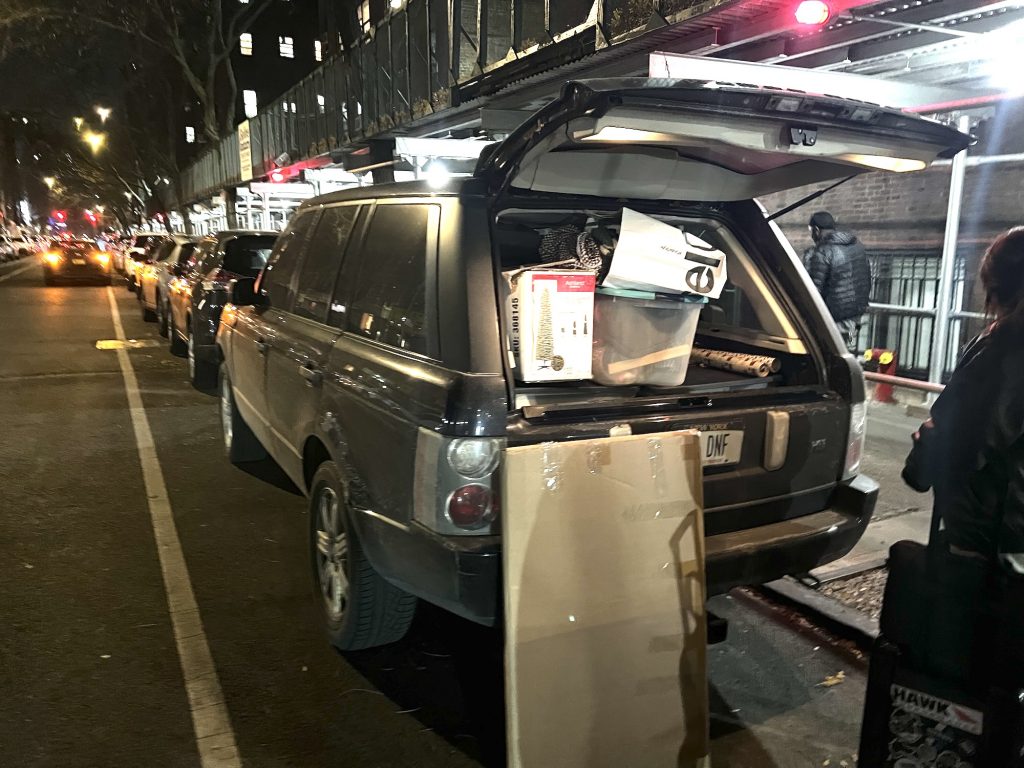
Earlier this year, I bought a 2008 Land Rover Range Rover with 216,000 miles on the clock. I intended to use it solely as a beater in New York City, where I live. But then I got the bright idea to drive it all the way to Chicago and back for Thanksgiving.
Old Land Rovers don’t exactly have a reputation for reliability, and while mine ran just fine, I hadn’t done any real maintenance on it since I bought it, besides an oil change. Having only driven it about 1,500 miles in total before this trip, I was understandably a bit nervous about 13 hours of straight interstate travel.


While I don’t mind the occasional breakdown hundreds of miles from home, my girlfriend was also with me, and she’s not used to that kind of stuff. Inconveniencing her with a surprise plane trip to Chicago from the middle of Ohio after a malfunction I couldn’t fix would not have been very cool of me.
Now, after having arrived in Chicago and driven back to New York with essentially no issues to speak of, I’m wondering why I was ever worried at all. I’ve been buying high-mileage cars for years, and I’ve done dozens of trips like this before without encountering any problems. This trip is further proof that mileage is—for the most part—nothing to worry about.
The Best Conclusion Possible
Last time I wrote about this trip, it was from my girlfriend’s parents’ kitchen. The drive from New York to the suburbs north of Chicago went off without a hitch … mostly. I encountered two small issues: a headlight that briefly stopped working when it was still dark out one morning, and a piece of plastic cladding under the bumper that came loose and made unpleasant noises as it hung in the wind.

The headlight issue solved itself. I didn’t even have to smack the lens cover to get it to turn back on, it did it all on its own with a simple power cycle. And I didn’t so much as “fix” that hanging plastic as I just removed it and threw it away – it was broken into two pieces and I didn’t feel like doing a zip-tie dance to put it back together.
I put around 300 additional miles on the Range Rover the week I was in Chicago, which were all problem-free. Even after the big trip there and all those little journeys, the 4.4-liter Jaguar engine hadn’t burned much oil—I didn’t even need to top it off before setting off back east.
Leaving Chicago was a bit more eventful than getting there, as a big snowstorm was just beginning to arrive in the area that morning. By the time my girlfriend and I were in the car, a thin layer of snow was already on the ground. The highways weren’t much better, though, and thanks to a set of four-season Nokian tires (not all-seasons, four-seasons, there’s a difference), I wasn’t worried about traction. While I didn’t see any wrecks, I did witness an old Silverado briefly lose control and swerve across three lanes of traffic before the driver saved it. “Nice,” I whispered softly to myself as my girlfriend lay fast asleep in the passenger seat.

Once we got through Indiana, the weather cleared up, and it was smooth sailing from there. There were some patches of traffic in Pennsylvania and New Jersey, but otherwise, the trip was totally drama-free. The Range Rover gave me absolutely zero hassle, and it actually ended up being pretty good on gas (for an 18-year-old brick on wheels with a V8, anyway). The SUV managed 17.3 mpg over the course of the trip according to the onboard computer, which is nearly what it’s rated for from the EPA when new. Had I really stretched the 27.6-gallon tank, I probably could’ve made it on just one fill-up.
Don’t Be Afraid Of That Number On The Odometer
Mileage is one of the most important factors that determines the price of a used car. People will pay huge sums for low-mileage vehicles, banking on the fact that they haven’t been worn down. While I understand why someone would pay a premium for factory freshness, I don’t subscribe to that type of car-buying. I have a different way of looking at things.

The main reason I buy high-mileage cars is cost. All things being equal, a car with higher mileage will always be more affordable and less desirable to the market. This allows me access to vehicles I wouldn’t otherwise be able to afford. My Range Rover is a great example—Range Rovers with under 100,000 miles on the clock go for triple what I paid for mine. Another good example is my 2008 BMW M5, which I owned for three years and sold with 183,000 miles on the clock (not crazy by normal car standards, but a lot for V10 German sedan standards). Everyone warned me that the car would be a ticking time bomb, yet it proved to be mostly immune to those catastrophic problems, at least during my ownership. I even took it to a few track days without encountering any complications.
In owning several high-mile performance cars like my M5, I’ve realized that with these high-mileage cars, you’re getting 95% of the same driving experience for a fraction of the cost. Sure, it won’t be as spotless inside or out, and there might be a few tired bushings throughout the suspension, but for the most part, it’s the same experience.
The Maintenance Of It All
At this point, you’re probably screaming at your screen about how maintenance costs and impending breakdowns offset any benefit you get from the purchase price. Obviously, I’m not saying you should buy a shitty, high-mileage used car over one with fewer miles just because it’s cheaper. That’s not my point. My point is, you can have nearly the same experience at a lower price point if you know what to look for. Buying a high-mileage car that’s been well-maintained by its previous owner (or owners) will, most of the time, be as reliable and drive just as well as a low-mileage car of the same vintage.
In almost every instance, I’d rather buy a cheaper, higher-mileage version of a car that’s been maintained than a lower-mileage version of that same car. The simple fact that the car is still running just fine after all those miles means that major problems have likely already been addressed, and, barring any obvious signs of poor running, that it’s been well-maintained. Service records are always a plus, obviously, but after buying enough cars, I sort of know what to look for and what to avoid. Low mileage isn’t always an indication that the car’s been taken care of.
My argument becomes stronger the older the car gets. As a vehicle ages, mileage begins to matter less and less. Age will inevitably wreak havoc on any car, whether it’s driven or not. Plastic clips, rubber seals, gaskets, and hoses will eventually succumb to age, no matter how they’re treated. At that point, it’s more important to analyze how well the car’s been maintained, rather than how many miles it’s driven.
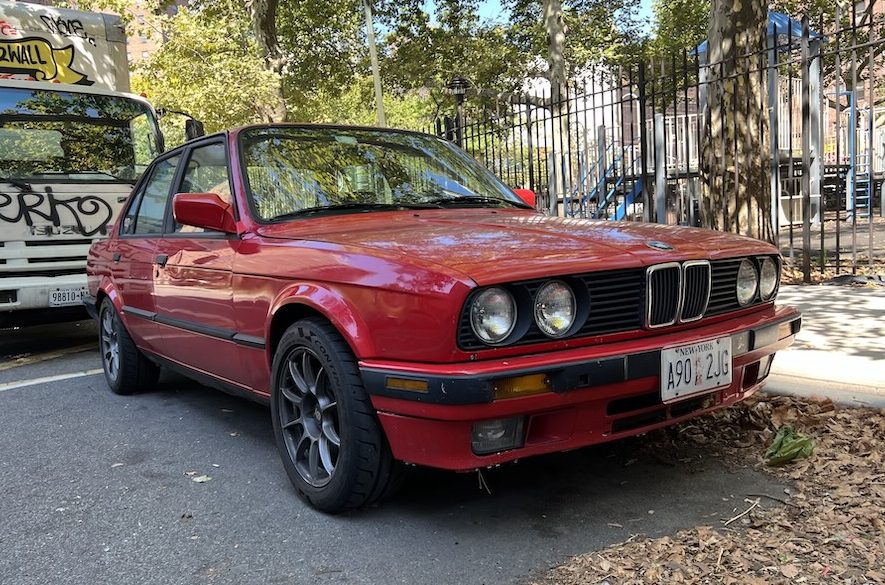
Cars like the E30-generation BMW 3-Series are a great example. I’ve owned a few of these cars, and I don’t think the odometer worked on any of them. When buying and selling these little sport sedans, mileage is the last thing people care about. Instead, they look for things like rust repair, the health of the suspension, and whether the valves have been adjusted. So long as stuff is maintained, E30s are like Legos, and they last forever. It’s the same story for most classics.
There will always be outliers, of course. Not every well-maintained, high-mileage car is worth the trouble, even if it’s cheaper. But for the most part, you shouldn’t be afraid of an inflated odometer. You should always be more concerned about the car’s actual history, because at the end of the day, a number is just a number.
Top graphic images: Brian Silvestro




Timely pic/comment about the E30s odometers not working…my Dad (86 yo) is trying to fix this issue with his ’87 325e so he can sell it with everything ‘fully functioning’. Or that’s his excuse for not putting it up for sale yet. It had been sitting for more than a decade in garage because couldn’t figure out why it would keep intermittently dying at stop lights. Replaced many things, including the computer and fuel pump, before being parked when he bought his wife a more ‘dependable’ car to drive.
Turns out it was ‘weak’ fuel pump relay that would not always work if voltage was tad low, such as idling in gear at light (automatic). $12 part at AutoZone later and runs fine!
For higher mileage cars, and used cars in general, I prefer ones that appear to have been continuously driven, not parked for extended periods of time. Cars get crabby if you dont drive them regularly.
I just bought a 2020 GTI with over 120k on the clock, BUT the service history for it was as thick as a phone book. The previous owners were definitely the type to bring it to the dealer any time a noise was made or an oil change was needed. It also seemed to be bouncing back and forward between Chicago and Phoenix so chances are this thing was a snowbird’s chariot.
That being said I’m starting to eyeball the Gen 1 Tundras because my beloved Tacoma is getting a little rustier on the frame than I’d like. And, while it can tow my camper, it’s not very fun to do so with that V6 Transmission combo. It seems all the Tundras I can afford have 250k+ miles on them which based on my experience with the Tacoma shouldn’t be a problem. Especially for a second vehicle.
My Gen 1 Tundra is pretty rusty on the underside. Be sure you aren’t jumping into the same problem.
Yeah that’s what I’m worried about. I’m big time in the rust belt so… Yay? Either way I’m not doing anything until the tacos odo starts with a 2 and I’m at 180k right now so I got a ways to go.
The load sensing proportioning valve in mine was so rusted it failed catastrophically and I lost all (no exaggeration) brakes. Luckily we were in town moving stuff between a park and a building. But it could have went sideways. I got it towed home and eventually put a manual valve in there. While there I took a needler to the rear underside to clean things up, then painted it with rust converter.
big woof
This brings up a conversation I want to have with Autopians. Would you buy a used rental car? I don’t hoon rentals. But I don’t know who many do.
If I was running a rental company, I would make some sort of transponder app and device in the car part of the rental process. Mess with our stuff, and we are going to upcharge you. Probably don’t even need the app. Just scan the tracking device and then charge accordingly.
Not with the way I treat rentals.
We had a 2 year old Mazda5 that was an Avis rental. Apart from a stain on the headliner it was fine until a twit in crew cab pickup ran a stop sign and totaled it. Granted a minivan isn’t likely to have been hooned but as always condition is important. Our daughter’s handed down family beater is a Buick LeSabre with dents all over, but it outlived its first two owners and survived her older brother. At 23 years and 215,000 miles it’s a little tired inside but everything works and it’s cheap to fix
Those GM midsize cars of that era were pretty durable. I have a ’17 Accord that I love. I just wish people would stop putting dents and scrapes in and on it in parking lots. But a paid-off car that runs well is something to be treasured.
The corollary to maintenance history is of course, how was the thing driven? – which is essentially unknowable, unless the original owner is a friend or relative. High mileage consisting of mostly steady highway cruising @ <2K rpm? With regular oil changes? No problem, I’m in. But if it was regularly hooned within an inch of its life, not so much…
But if it was regularly hooned, then it has little carbon on the valves and we know the components have held up so far!
“High-Mileage Cars Are Nothing To Be Afraid Of”
Depends on how hard and rusty those high miles were.
I understand about what you are saying about there being nothing to fear from a well maintained high mileage car, but this:
This is certainly less than reassuring. For sure this problem will come back again. Next time it might happen when you have a 10pm flight to catch, and it might not ‘fix itself’ like it did this time.