


This week at the 2025 Japan Mobility Show in Tokyo, Honda highlighted the breadth of its efforts across the spectrum of mobility, from scooters and motorcycles to its new rocket. I’ll be talking more about the rocket in the coming days, but there were two new battery electric vehicles that are indeed destined for production over the next two years, although at the moment neither are planned to come to North America, the Honda 0 α and the Super-ONE. We learned more about both from talking to Honda engineers at the show, and there are some intriguing hints about what we might actually get.
As I write this, there is only one Honda BEV sold in North America, the Prologue, which is basically a reskinned mashup of parts from the Chevrolet Blazer and Equinox EVs. The related Acura ZDX has already been discontinued, although there might still be some on dealer lots. Honda of America does have three (four if you count Afeela) new home-grown BEVs coming soon, although as has become the norm recently, those have been delayed about 4-6 months.


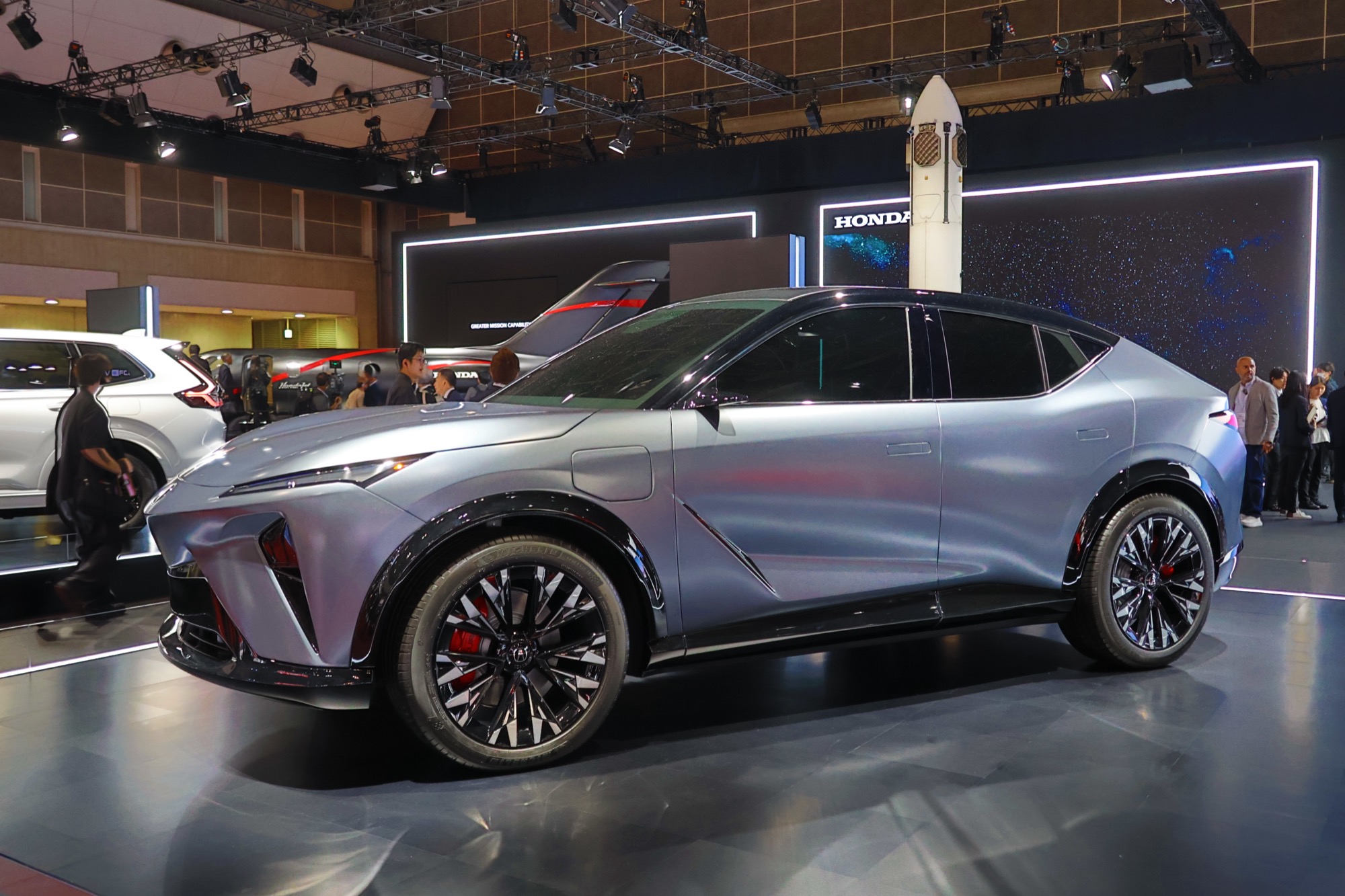
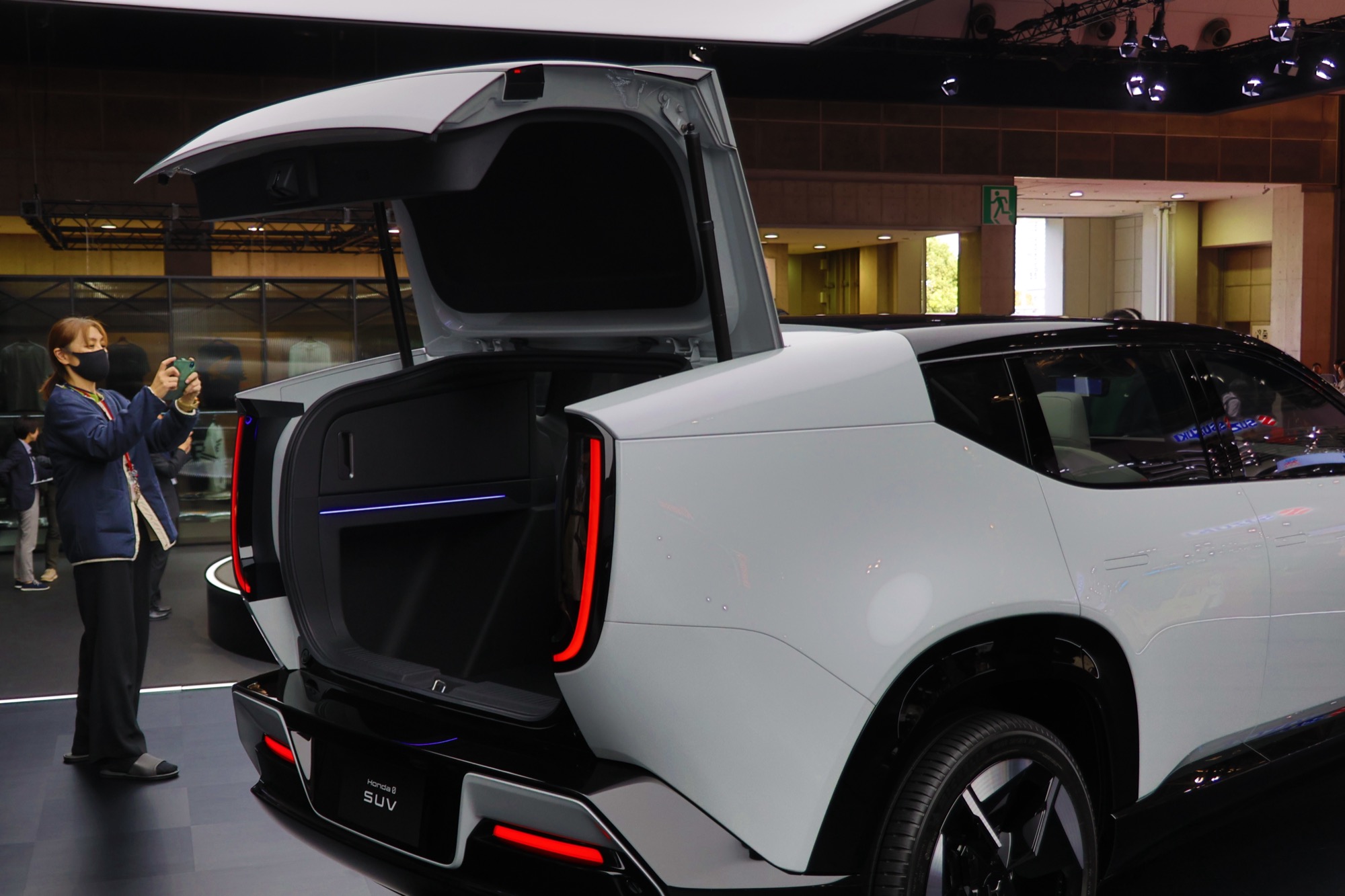
The three Honda and Acura-badged and developed BEVs will all be built in Marysville, Ohio and all were also on display in Tokyo this week. The first to launch is the Acura RSX, a fastback crossover that was due to launch production this quarter and hit dealers early in 2026, but that will now debut in the first half of the new year. The Honda 0 SUV was to start production in the first half of 2026 for mid-year sales but that is now coming in the second half, while the Honda 0 Saloon will now come in 2027.
All of these share a common platform with the same motors and batteries with nickel-manganese-cobalt (NMC) cells that will come from a joint venture with LG Energy Solution. They also utilize a new zonal electrical/electronic (E/E) architecture with centralized compute powered by a new custom system-on-chip (SoC) developed by Honda and Renesas. On top of this sits an all-new Honda-developed software platform called Asimo OS.
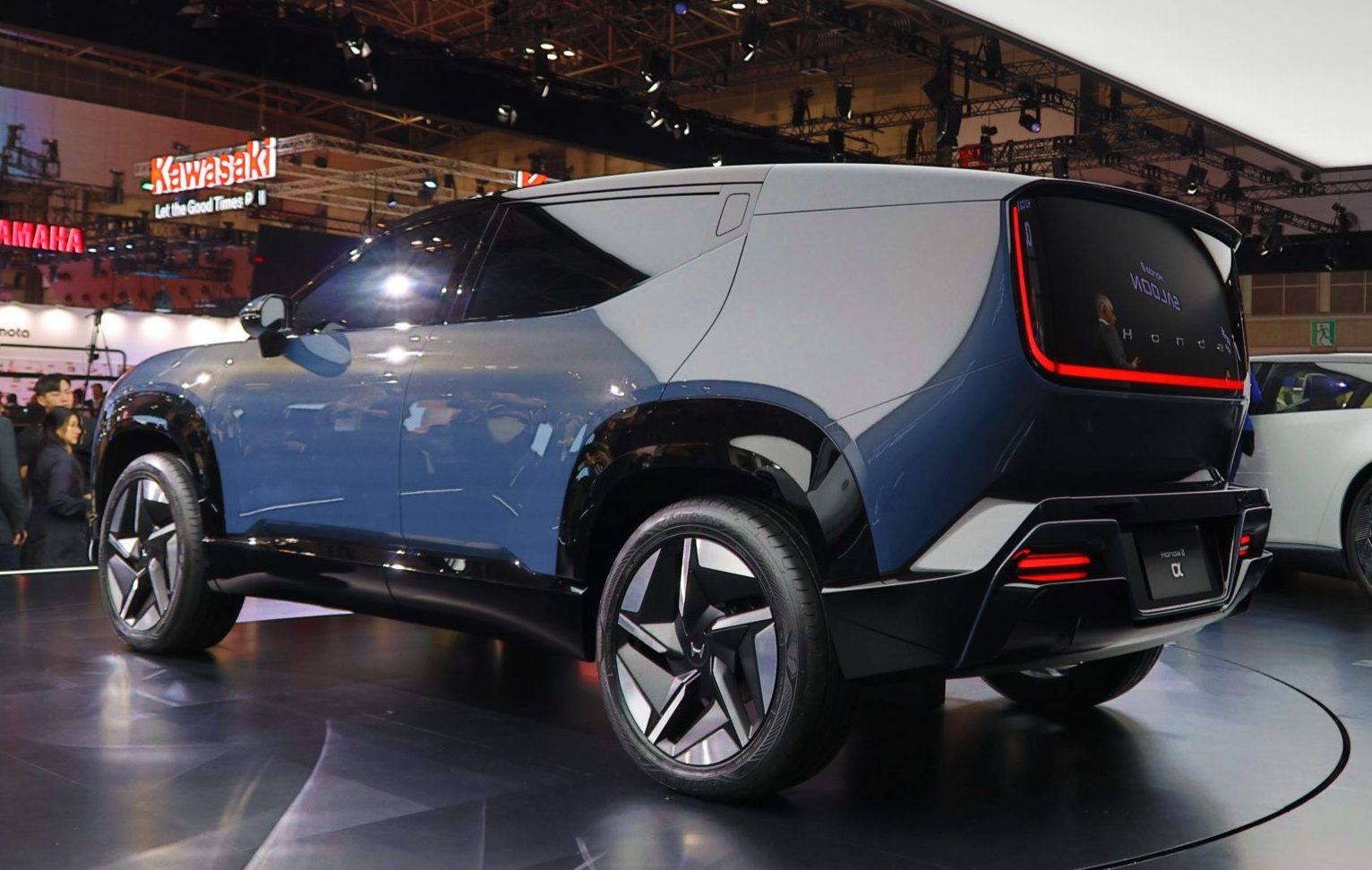
All of this brings us to the Honda 0 α. When we first saw images of the 0 α a few days ago, it looked like little more than a slightly tweaked version of the 0 SUV. But it is in fact more and in important ways less than the SUV despite the near identical styling. Honda hasn’t revealed any detailed specifications of any of these vehicles, including dimensions, range, or performance. But parked next to each other on the Tokyo stage, it becomes more clear that the α is smaller than the SUV, not a lot smaller, but enough to be noticeable when they are together. If the SUV is roughly the size of a CR-V, the α is closer to the North American market version of the HR-V (which itself is larger than the HR-V the rest of the world gets).

In fact, the HR-V comparison is probably apt here. When the second-generation HR-V was launched globally a few years ago, it was based on the Fit/Jazz platform. But that car didn’t come to America. Instead, we got a new, larger HR-V based on the Civic platform, which is a bit more sophisticated and more expensive to build. The α is the slightly smaller and somewhat less advanced cousin of the 0 SUV.
We had the opportunity for a Q&A with Toshikazu Hirose, large project leader (Honda’s term for chief engineer) on the 0 α. The α was specifically designed with the Indian market in mind, although it will be sold in some other countries, including Japan. It will be produced in India from 2027.
The α is still very much a work in progress, and Hirose-san told us a number of things are still very much undecided as of late October 2025. An indicator of this is that the α on display is a model with no interior yet, while the SUV does have a full interior that you can sit in. On the technical side, the battery chemistry is still being evaluated and the α may have either an NMC or lithium iron phosphate (LFP) battery, although the latter seems more likely given the cost considerations. However, it could also have both options.
We don’t yet know what the 0 SUV range will be, but for the US market, 300 miles is pretty much a given. Hirose-san acknowledged that for Asian markets, that range is not considered to be as essential, so a sub-200-mile LFP variant could be standard with a longer range NMC battery as a premium option. We don’t yet know the motor arrangement, but the α seems more likely to be available only with a single motor, perhaps with front wheel drive, while the SUV is likely to have all-wheel drive at least as an option if not standard.
Hirose-san also highlighted the difference in quality between the roads in North America and India (although perhaps he has not yet visited Michigan between the spring thaw and start of road construction season). Thus the α will have a different suspension setup, which includes more ground clearance and a softer ride (again, consider this as an option for customers in Michigan). The 0 SUV will apparently have a more performance-oriented arrangement.
Another missing element for the α is that fancy new zonal E/E architecture. It appears that it will instead use an evolution of the architecture from other current Honda models. That in turn also means that Asimo OS won’t be there, along with the ability to do OTA software updates, so it’s not a software-defined vehicle. The α also won’t get the hands-off/eyes-off level 3 automated driving system promised for the North American models for 2027.
We currently have no idea how much Honda’s new North American BEVs are going to cost, but given some of the advanced tech being promised, it seems a reasonable bet that the 0 SUV won’t be competing with the new Nissan Leaf and Chevy Bolt on price. Hirose-san declined to comment on whether any elements of the α would make it over to North America, but given the arrival of sub-$30.000 BEVs with a range of 255-300 miles, it would make sense for Honda to have a competitor in this space.
The 0 α, as we’ve seen it, is too visually close to the SUV to make a case for selling that specific vehicle alongside the SUV. Explaining to consumers why these near-identical vehicles are priced so differently would be a challenge for even the most wily car salesman. However, a different form factor with the α underpinnings could do a lot to bring new EV buyers into Honda stores or entice current owners of Civics, HR-Vs, and Fits to give it a look.
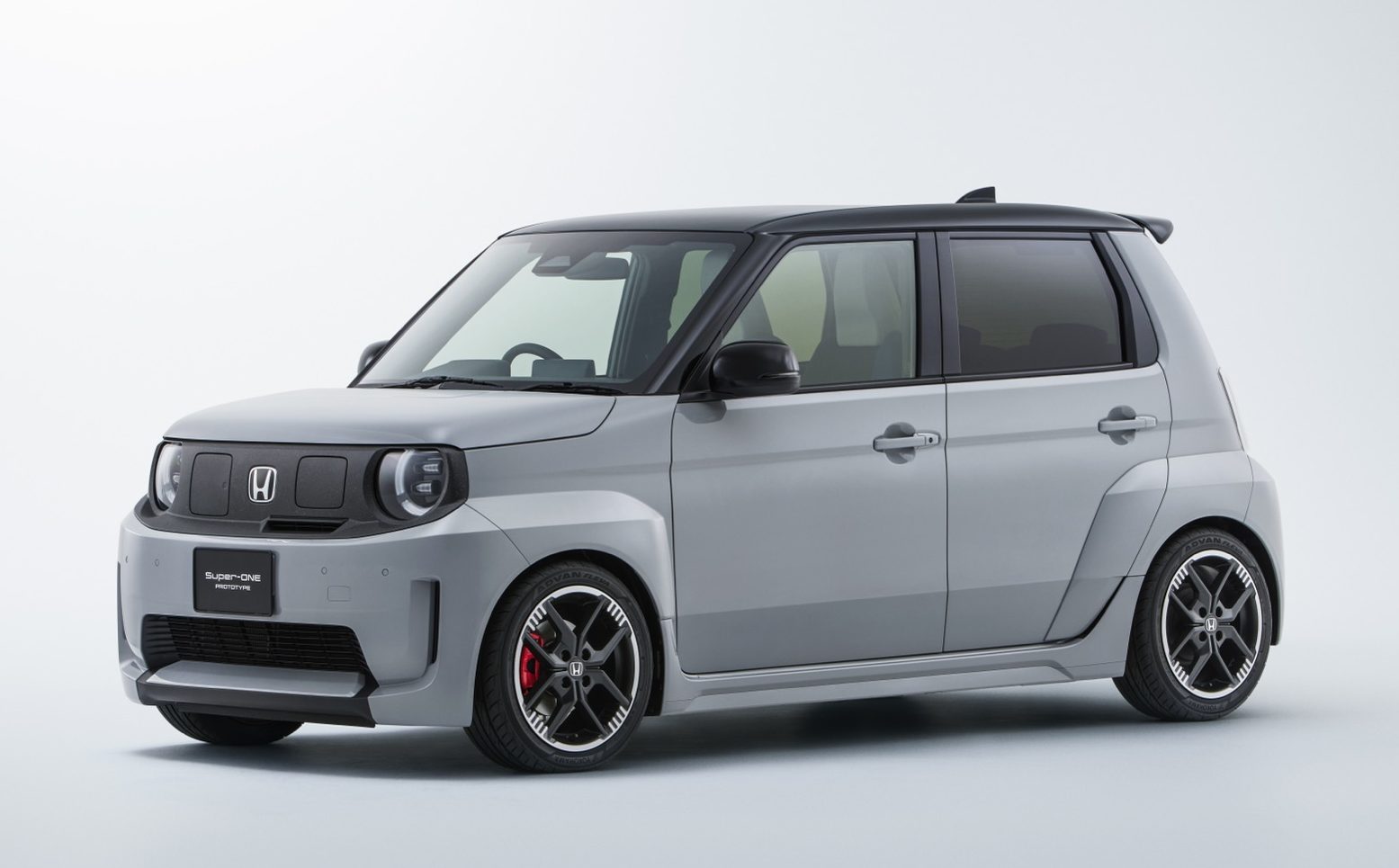
The other new Honda BEV in Tokyo is the Super-ONE hot hatch. A version of this car wrapped in camo appeared at the Goodwood Festival of Speed last June, and the production model is arriving in 2026. It’s based on the N-One e: (seriously, why the colon?), which is a BEV version of Honda’s N-One kei car. As readers of this site almost assuredly know, kei-cars are a unique segment of small cars built to a very specific set of regulations in Japan that allow them to be taxed and insured at a lower rate. Given the often narrow streets and alleyways in most Japanese cities and the challenges of parking, these machines are very popular and comprise half the market.

To qualify, a kei vehicle must be within a prescribed set of dimensions, which is why most of them are tall, narrow but yet amazingly roomy five-door hatchbacks. There are also tiny vans, pickup trucks, and even sports cars like the legendary Honda Beat and its modern successor, the S660. But those hatchbacks are the heart of this market. Kei vehicles with internal combustion engines are limited to 660cc displacement, and there is a gentleman’s agreement between regulators and manufacturers to limit all kei-vehicles to 63-hp, although it’s widely believed that many have exceeded that threshold over the years.
The Super-One differs from the N-One in having flared fenders and a more aggressive front fascia, which puts it just outside of that dimensional box for a kei car. That means it’s also not constrained to 63-hp. While the displacement limit for EVs doesn’t matter, the 63-hp cap does. Honda wouldn’t reveal the full performance specifications of the Super-ONE, but acknowledges that it does have a boost mode for extra acceleration. Like the Hyundai Ioniq 5 N, there is also a simulated manual shift mode through the steering wheel paddles that emulates a 7-speed gearbox with matching sound profiles.
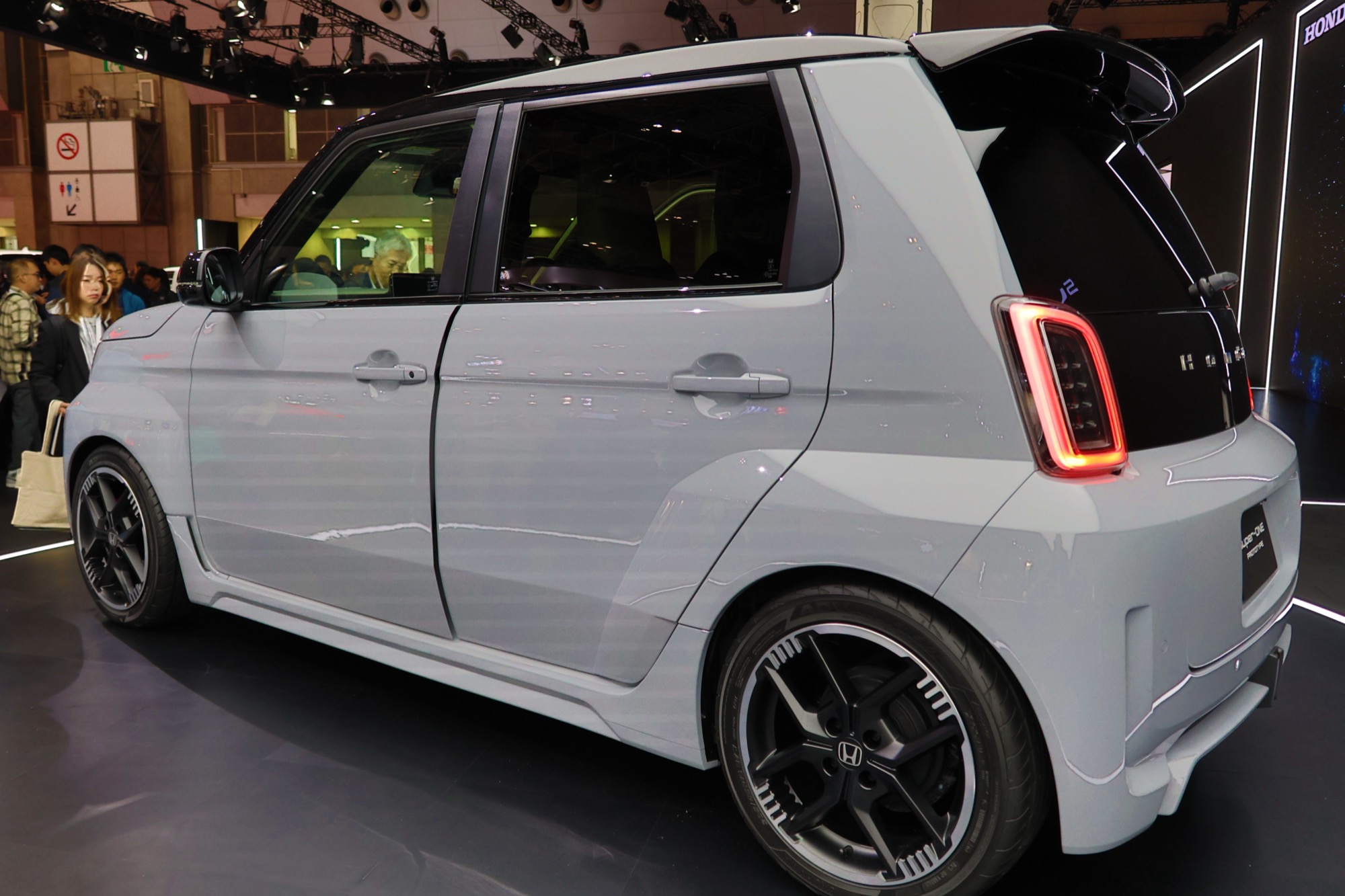
While this doesn’t qualify as a kei car, the platform has only been engineered for right-hand drive. The plan is to offer the Super-ONE in other markets that utilize RHD and purchase super-mines, such as the UK, as well as some Asian countries. The N-One e: has a 29.3-kWh battery and 183 miles of range on the WLTP test, which would probably be about 150 on the EPA cycles. A 100-hp Super-ONE with 150 miles of driving range would be an absolute hoot to drive. I’m not sure I’ll be around 25 years from now, so I’ll probably have to come back to Japan next year to sample this little beast.




Yawn…. All of the crossovers look the same….
I think roughly 10-15 years ago I heard a very prescient quote: “all cars are now turning into crossovers, and all new crossovers are turning into mazda cx-7’s”
Sometimes, it would be useful to have a caption below a photo to tell which vehicle is pictured, at least in articles where more than one is being discussed. I remain confuzzled re: 0 vs 0 a, etc… the white one is the 0 and the blue one is the lifted 0 a? The blue one has thicker wheel trim, right, and is thus the more butch version?
Despite what must be a huge c-pillar blind spot (I assume cameras will make up for it) I like the SUVish one with the laudibly flat roof and vertical tailgate: THAT is what I want in a SUV/crossover. All those coupish things with the raked backlights and sloping rooves… pretty, but useless if you’ve got to carry something that wouldn’t fit in a little ol’ hatchback. I’d rather have the version with the slight lift and softer suspension, but in base/2WD form: just for comfort and to deal with bad roads, not for off-roading that almost nobody does in electric grocery getters.
It’s nice to see it in blue as well… a pleasant change from all the black/white/grey/silver. The plastic fender trim seems a bit excessive ala Mazda CX-30, but at least it’s not raw black plastic.
Of course, I dig the kei car EV too, even in base form without the fender blisters, etc… but we’ll never get those in the states, so it’s hard to get excited about. I know it didn’t get great range, and was priced a little dearly, but I liked Honda’s E, which of course we didn’t get either.
Replying out of Caption Standards Request solidarity!
Peace be with you my brother. 😉
All I see are three jacked up pseudo-offroaders and a boxy Kei car.
Where are the fun EVs you promised?
I’m excited to see Honda’s in-house EVs hit the streets. The partnership with GM gave us the Prologue, which I hear is really solid, but I’ve got a Honda fanboy streak and want to see what they do on their own running their ASIMO OS.
Intriguingly, Autocar reports that the full size 0 SUV will also be sold in India as a low volume import. Honda has been neglecting the Indian market for years, so its quite interesting that they’re going dive right back in with an EV push like this.
Doesn’t help if none of these vehicles are coming our way. Honda needs to look past the hostility of the current administration towards EVs and just operate freely. Consumers want smaller, cheaper EVs.
I have driven EVs for the past 6 years, but I’m tired of big cars. Sad that the small EVs are usually kneecapped in some stupid way.
It’s kind of hard to make small EVs that are suitable for North America’s long range demands. Larger vehicles usually don’t really cost more to make but can easily be priced higher, and there’s little convenience gained from a smaller vehicle here than in India or Japan. EV range is aerodynamics limited, and boxy/stubby proportions inherent to very small vehicles makes aero worse; this is mostly a problem for city cars, as subcompact crossovers like the 3rd gen Leaf can sacrifice a bit of cargo height to mitigate the problem. The other major problem is battery packaging and capacity. Smaller cars have less space for batteries resulting in smaller capacities and worse range. You could increase capacity by making a taller pack, but if preserving cabin space that’d make the vehicle taller and less aerodynamic, partially negating the range gain. These are the fundamental problems the Fiat 500e and Smart ForTwo EV have in the US.
In other regions, travel distances are so much shorter and speeds so much slower that these limitations aren’t an issue. Even China with its relatively American-sized preferences has a burgeoning cheap EV minicar segment that accounts for roughly half of the BEV marketshare, because the urban planning and lower expectations makes them viable.
Edit: This turned into a kind of off-topic rant, oops. My overall take is that smaller EVs aren’t always kneecapped in a *stupid* way, but instead by fundamental physics limitations.
A majority of consumers want ICE. Any EV will be a low selling unique vehicle however a Hybrid might be what gets the non automotive gear head into an Electric car
As usual, you’re once again wrong on the subject matter. Global sales numbers say otherwise. Global automotive sector investment direction says otherwise. The economic principle of the ‘economies of scale’ tilt the future in one direction and one direction only. The only issue relating to EVs is recent and was artificially generated by direct attacks by the Trump administration and the uncertainty that it’s created on the global economy, which is reflected in recent actions by nervous CEOs. All of it, in its entirety, was avoidable and unnecessary.
Always willing to be corrected but according to the most recent data from Our World in Data in 2024 out of 79.55 million cars sold 17.5 million were electric and 62.05 million were non electric. Back when I went to school 62.05 million was a lot more than 17.5 million. Now is this the new math I’ve been hearing about where 17.5 million is now greater than 62.05 million? If so I think we can clearly state we have found the problem with kids not doing as well in math as they used to.
I certainly want smaller and cheaper EVs but IDK if the rest of people do. That said, the only person I know to have bought a new vehicle recently is my brother, but he tows a boat, so small EV is out of the question. But, everyone else I know hasn’t bought in a while. Maybe because everything is so expensive, but, who knows.
But then there is this problem the makers fell into:
Nothing ever starts huge. Rome wasn’t built in a day. Trying to usher in a new era, EVs, by building gigantic vehicles was stupid. Everything needs to start on a smaller scale, not the largest scale currently offered. THAT is the biggest issue with not offering small EVs. They’ve fucked how to develop new technology by trying to build trucks, hummers, and semi trucks.
People are going to hate me for this, but the (new) RSX is what the ZDX should have been.
I don’t mind the design, but the blind spots on the 0 a are atrocious.