


In the market for a car? You should probably buy one in about two months. That’ll be the sweet spot when finance rates are best, inventory needs to be cleared, and end-of-year sales events start. But if you want an EV, you should put down your phone and go buy one as soon as you can. Like, right now.
The $7,500 federal tax credit for new electric car purchases is going away on September 30, which means you have about two weeks until the EV market undergoes a massive shift. With 20 vehicles on sale today still eligible for the full discount, there are lots of deals to be had. But you have to act quickly.


CarsDirect put together a list of some enticing lease offers available at several dealers across the country. These dealers want to take advantage of the tax credit as much as buyers do before it goes away forever, so they’re pulling out all the stops to get people in the door. If you’re in the market for an EV, you likely won’t have a better chance at a deal than right now.
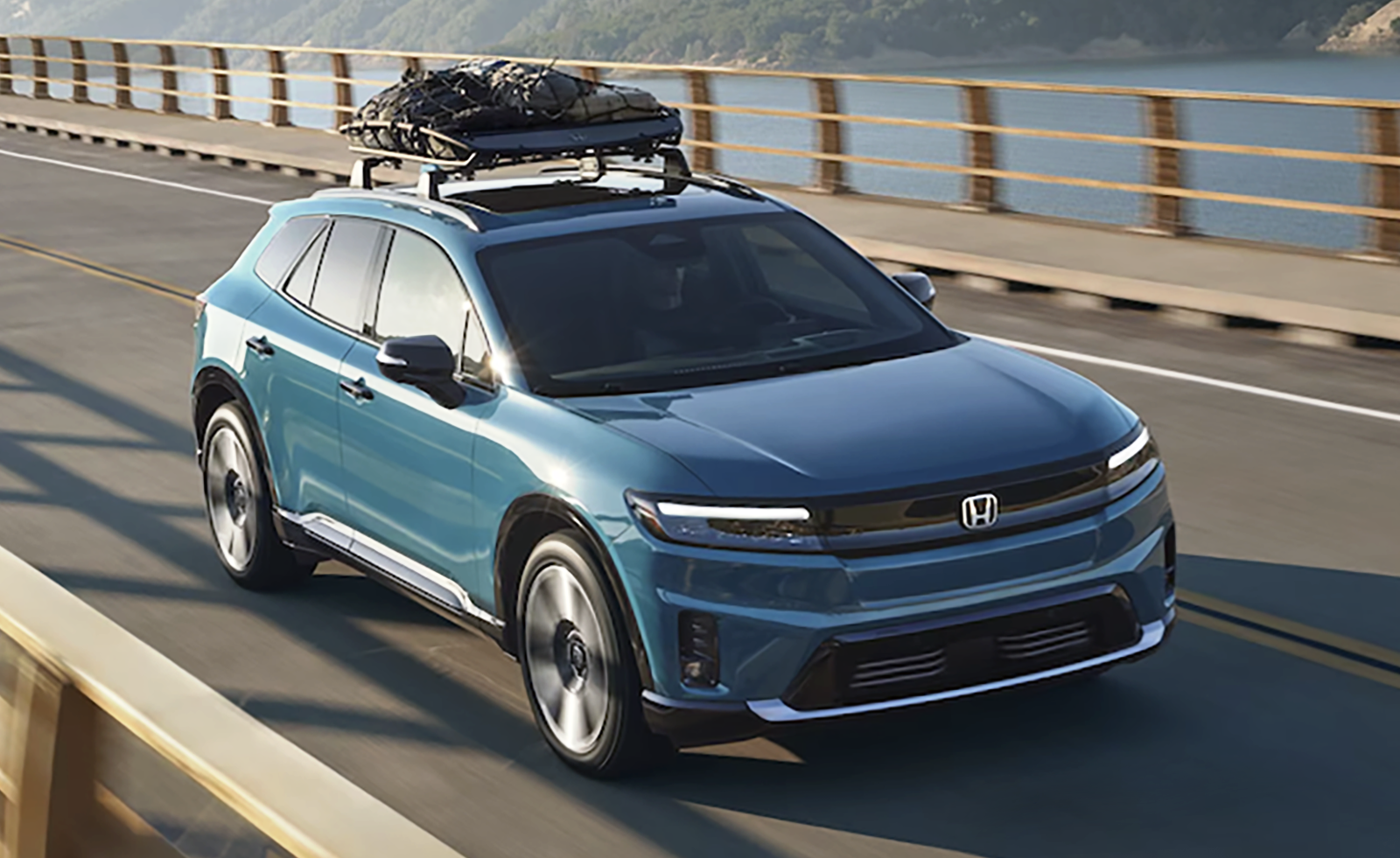
At the very top of the SUV list is what’s likely the best deal on a new Honda you’ll find anywhere for the foreseeable future. Dealers are currently pushing the Prologue SUV in some states with a $0 per month lease deal, and $3,799 due at signing. That means an effective rate of under $160 per month for the 24-month lease period before taxes. From CarsDirect:
The 2025 Honda Prologue has the deal of the year with a One Pay Lease that you probably won’t see advertised. The Prologue EX is now listed at $3,799 for 24 months. That’s a 20% price cut compared to last month’s offer of $4,800.
[…]
The offer includes $20,300 in lease cash and is by far the best lease on any SUV. It also translates to an effective cost of only $158 per month. Odds are that it won’t get better than this before EV incentives go away at the end of the month.
There are a couple of catches. The first is that the price includes a loyalty discount or a conquest bonus, so you either have to be coming from another Honda or a competitor brand. The deal is also only available in the following states: California, Colorado, Connecticut, Washington D.C., Delaware, Florida, Massachusetts, Maryland, Maine, Minnesota, New Hampshire, New Jersey, New Mexico, Nevada, New York, Oregon, Pennsylvania, Rhode Island, Virginia, Washington, and West Virginia.

Add in taxes and fees, and that one-time payment can eclipse $5,000 with ease. Still, for two years and 10,000 miles of driving in a shiny new Honda, that’s not bad. And while there are also some finance deals for the Prologue floating around, we’d recommend avoiding real ownership in this case. A short-ish lease is the absolute best way to experience this car.
CarsDirect doesn’t link to any Honda site or dealer specials page, so I decided to throw in my contact info into the website’s portal, which connects users to dealers. A representative for Metro Honda, a dealer in New Jersey, called me within two minutes (yes, that quickly) and confirmed the lease deal’s existence. They even told me the down payment was negotiable, even after saying I didn’t have a trade-in to offer. If I were in the market for a Prologue, I’d probably be over there right now.

The dealer also stressed this lease deal was only good until September 30, which makes a lot of sense considering all of the tax rebate stuff. It’s important to note that you don’t actually have to take delivery of the car before the 30th—you just need to have a contract in place and make at least one payment before the end of the month, according to the Internal Revenue Service. So if you have an extra month left on your current lease, it might be worth heading to your nearest Honda dealer anyway.
Support our mission of championing car culture by becoming an Official Autopian Member.
Top photo: Honda
hat tip to Motor1!




anybody buying EV today, just prepare yourself mentally to losing 30% of value first year and then 15% every year after until it bottoms out at about 20-30% of retail price few years later. especially luxury EVs.
Hence leasing. While you aren’t gaining any equity while leasing, you are protecting yourself from depreciation in a sense. The manufacturer in this case is taking a gigantic hit from basically getting a used, depreciated vehicle at the end of the term that likely is worth less than the residual value at set in the lease contract.
That is why my cousin is shopping 3 year old Mercedes EVs. 2022 EQS for $37000 vs $109,000 when it was new, $72000 (67%) cheaper in 3 years
“The first is that the price includes a loyalty discount or a conquest bonus, so you either have to be coming from another Honda or a competitor brand.”
Guess I can’t trade in my tricycle?
“Mr. Stutz, we recognize that your tricycle is technically a Honda, but those were so unsafe that three of our technicians have broken their spines just by looking at it. The fourth spontaneously combusted. Take whichever Prologue you want and please leave our dealership forever.”
It isn’t surprising, those old car dealer tropes are true, Honda can’t eat them so they have to sell them regardless of loss. Way back when people thought everyone was going to want an EV Honda felt like it was caught with its pants down due to a lack of any suitable EVs in their pipeline. So they made a deal with the devil to get in on some of that “Ultium” goodness. Part of that deal required them to buy a certain number per year. (which from previous sales reports seems to be about 40k per year). So yeah better to try and clear out as many as they can while they can still take advantage of the lease credit, because GM isn’t stopping the shipments of their most profitable EV.
Just got back from a Honda dealer yesterday after wanting to lease one for fun. It’s $179 before taxes and fees, but once tax/reg/fees are included the lease becomes $400. Turned it down since the taxes and fees are somehow higher than what i currently have on my lease for a luxury EV.
I still don’t really get why anyone would lease any automobile. Seems like too many strictures on use, mileage, etc., and too many snares resulting in extra costs along the way/when you turn it back in.
I also used to think that but now as I’ve aged I’ve taken some diffent views to it. Where I used to drive a ton, I really don’t as much. Close commute to work, extended family near by, mileage shared by wife’s car for trips and daily routes results in <10k miles a year. So these restrictions mean less for me than it used to and I'm sure same for many.
More importantly, I'm past the point where I can survive wrenching on cars all night long. Having a boring daily driver that I have the reasonable expectation to only need routine maintenance but will start every morning while the project car is waiting for that mystical time I have to work on it has a much higher value to me now.
Of course, it all has to be reasonable amounts. I'm not going to lease an $800/month car but getting in at $200? That's a compelling argument.
Well, but aside from things like this Prologue, there aren’t any $200/mo leases these days.
In many cases leasing a car is not the best financial decision but in the case of EVs it is often the best choice. The big one is the tax credit which allows cars and buyers to take advantage of the credit if they lease but not if they purchase. The other thing is that future values of EVs are such an unknown. So in limited cases it does allow for lower cost of “ownership” and if for some strange reason the future value is greater than the buyout when that time comes around you can buy it for under market value. If the value is lower than the residual then you get to walk away without taking a hit.
You are correct. It’s the least financially-sound way to pay for a car.
Slightly tempting.
I assume that a customer has to actually QUALIFY for the full, $7,500. federal tax credit to achieve this $200./month price, right? Like, the dealer is counting on getting that money from the government in order to provide that deal?
Or is this particular deal unrelated to the federal tax credit that’s about to go away?
Nope, there’s a lease loophole, so you don’t need to worry about qualification. Everyone gets the tax credit (because really Honda gets the tax credit)
Cripes! Thanks DOnut. The last thing I need is another car, let alone a new one, but I’ve been wanting to dip my toes into the EV waters for a while now (I’ve been test driving them since GM’s EV1). Maybe I’ll go over to Glendale and at least sit in a Prolouge. I do like that blue they use in their ads.
I used a lease on a Bolt in 2017 to test the EV waters. Glad I did, been a full EV family ever since.
When I bought my PHEV last year, you could transfer the credit to the selling dealer, enabling me to get the full credit. The dealer isn’t required to do it, but if they wanted the sale from me, then they were going to have to.
Found 2 similar CUVs I wanted, one dealer advertised they would do the credit. The other didn’t and when I asked about it said that it wasn’t possible, that the first dealer must be lying, and that the price advertised included the credit when in fact if you added the credit back it it make the car too expensive to qualify for the credit. Guess which dealer I went with?
Um, typo, twice. One in the headline, quite embarrassing if one cares, one in the body.
Knockoffs. That’s why these are so cheap.
That’s the Olympic sport where you’re basically face first on a toboggan, right?
An absolutely amazing car, especially with the 19″ wheels. Comfortable as a flying carpet, and turns on a dime.
I almost went to lease one with a buyout – the Elite was ending up being around $43k out the door. I was planning on getting an Elite and swap he 21″ for 19s.
The lease itself was around $14k total with 15k miles/yr.
Unfortunately I ended up seeing what they retail for used ($30k for a 6 months old one with 3500 miles on the clock), and realized no one really knows what this car costs because no one ever paid retail for it. Honda are selling it at loss to make an EV clientelle for their “real” EV three years from now. Same as the first Pilot being an Isuzu.
Also, I heard that a blown airbag automaticall totals it, as the battery’s pyrofuse blows as well, and is not serviceable, requiring replacing the whole pack.
But otherwise, an absolutely amazing vehicle.
Generally a blown airbag always totals a vehicle. That’s been my experience at least.
A blown airbag will make insurance want to total it, but you need to look at the actual numbers. I hit a deer a few years ago and blew both airbags in my car and the insurance guy told me they’d almost certainly total it. Which they tried to do, but I fought it both because I thought they fudged the repair number (they did) and they were undervaluing the car (also true). I took the payout and got it fixed at a local body shop and came out about $1500 ahead.
There’s likely a correlation between airbags and totalled vehicles because serious crashes will tend to blow airbags, but the airbags themselves are not expensive enough to total a reasonably new vehicle.
I got the comment specifically from a Prologue owner who had his totaled for nothing. His insurance totaled it just by the cabin photo of the airbag being blown – they didn’t asses any other damage.
This is in French, but discusses it more in detail. Apparently the whole Ultium platform uses a non-serviceable pyro-fuse for the battery pack. That one is enabled at the slightest crash event.
More here.
HIGH-VOLTAGE POWER CUT-OFF The supplemental inflatable restraint sensing and diagnostic module determines the severity of a collision with the assistance of impact sensors located at strategic points on the vehicle.
The battery energy control module will open the high-voltage contactor relays, placing the vehicle in a high-voltage lockout state and disabling the vehicle whenever a crash event of sufficient intensity has been detected.
In addition to the opening of the high-voltage contactor relays, a single-use pyro-fuse will be activated whenever the supplemental inflatable restraint system is deployed. An activated pyro-fuse will inhibit high-voltage current flow out of the battery pack to the under-hood components. Once activated, it cannot be reset and the high-voltage battery assembly must be replaced.
And apparently, it is linked to the lowest common denominator – the seatbelt pretensioners. The airbag doesn’t even have to activate.
It should be an amazing vehicle because GM makes some of the best mass-market EVs out there.
Lucky we got our lease in February, less than $3k down and less than $300 a month for 3 years.
We’re in NC so wouldn’t get the deal above anyways, but a guy at work was looking for something before end of month and said there’s no Prologues in stock for them to even test drive.
Ours is an EX too, which is fine, it’s got all the things we want, well maybe could’ve used a power liftgate but for now it does us great.
I’m just over the border in VA. Headed to a dealer for a test drive of a Blazer EV today in the hopes that the one Prologue they have on the way will be here in time for me to nab it.
Damn… and we have no sales tax in Oregon.
If my head math is correct that is 50 cents a mile. Considering low maintenance costs you could lease one use it as a company car write off the standard amount allowed and probably end up getting it for free or getting paid to lease it if you can get by on 27.39 miles a day.
Even cheaper. I leased an Ioniq 6 for a similar price to these Prologue deals ($5,500 for two years at 12k miles/year). The cost comes out to 25 cents/mile for the lease and under 2 cents/mile for electricity here in Colorado.
It’s 10,000 miles per year, or 20,000 miles for the $5000. That’s only $0.25/mile.
Didn’t see the per year but yes that makes it better
The lease includes very few miles, which is unfortunate. It’s so cheap it’s almost free, but that does not include insurance, which could easily kill the economics of it.
There may be some very depreciated used electric cars coming around before long. They don’t seem to age in the market the same as gasoline vehicles have, and will probably suffer in value as longer-range, quicker-charging new batteries make lithium ion obsolescent.
You can only write it off if you are the company buying it, wage earners can no longer deduct non-reimbursed business expenses, included cars. So you have to be self-employed in order to deduct the mileage.
Good to know but if you have a job where you use your own car and get paid mileage this looks like a 2nd paycheck.
I drive my own car for a living as an employee, and get paid mileage. So back when you could deduct mileage, you had to subtract mileage pay received from your tax deduction. So if you went 20k miles and your deduction was 12k, but you got 8k in mileage pay you could only deduct 4k from your taxes. Because of this I could never actually deduct my mileage because my mileage always reduced my net vehicle expense below the standard deduction. I needed additional deductions, and I finally purchased a house which meant I was finally going to surpass the standard deduction with the addition of mortgage interest. Then Trump changed the tax code so that (a) the standard deduction was doubled and (b) I could no longer deduct mileage since I am an employee.