


It’s late October during an odd-numbered year, so that means it’s time for the biennial Japan Mobility Show. Unlike in America where auto shows have largely receded in car shopping events for consumers, automakers still take part in the event formerly known as the Tokyo Motor Show and Honda invited us to come to Japan to see their latest wares including a couple of electric vehicles that go on sale in 2026 and 2027, the Honda 0 α (please don’t let that be the name of the production model!) and Super-One in prototype form along with a bunch of other interesting stuff. That Super-One electric hot hatch kei car might be the coolest thing to import to America in 25 years.
Of the two prototypes, the 0 α already looks a bit familiar but neither this or the Super-One are likely to appear on American roads anytime in the foreseeable future. The 0 α rides on Honda’s new 0 series architecture that will underpin three new EVs for North America over the next 18 months or so, the 0 SUV and Saloon as well as the Acura RSX.


Spacer
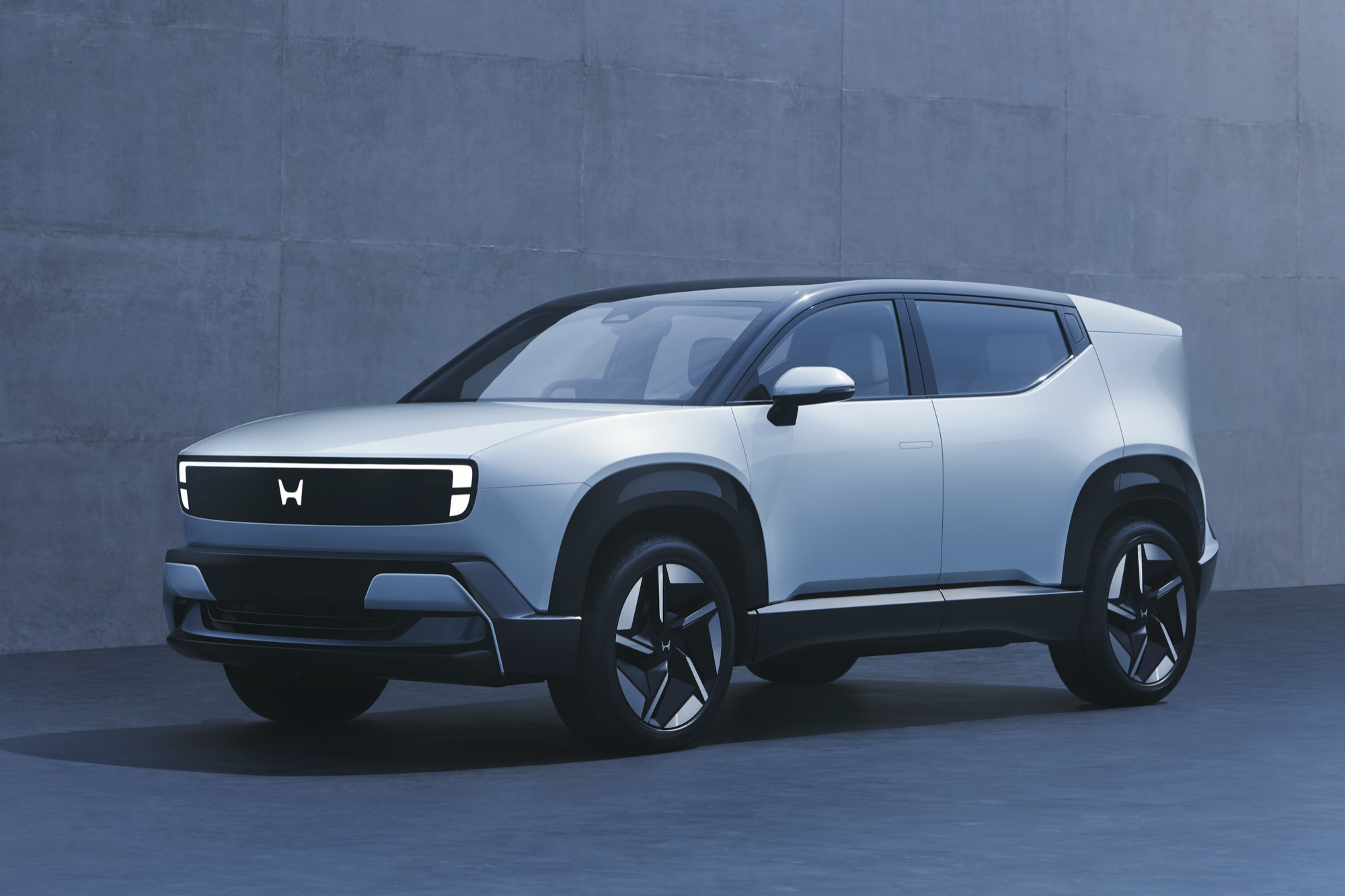
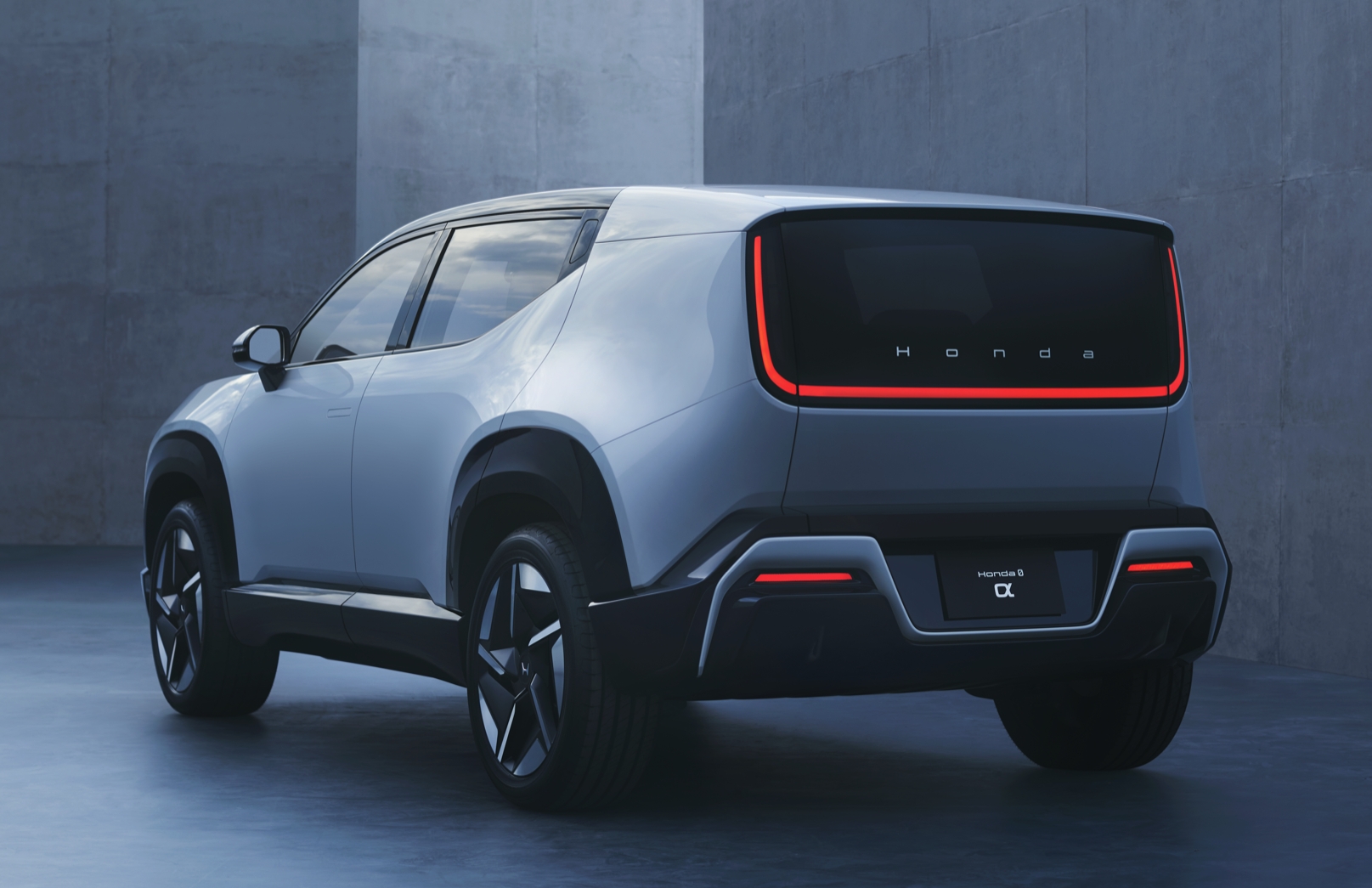
This is an all-new architecture that will underpin the three vehicles built in Marysville, Ohio. The key propulsion and battery components will also be utilized for the Afeela 1 coming from the Sony Honda Mobility joint-venture that will be assembled at another Honda factory in East Liberty, Ohio although that vehicle will also use a lot of components unique to it.
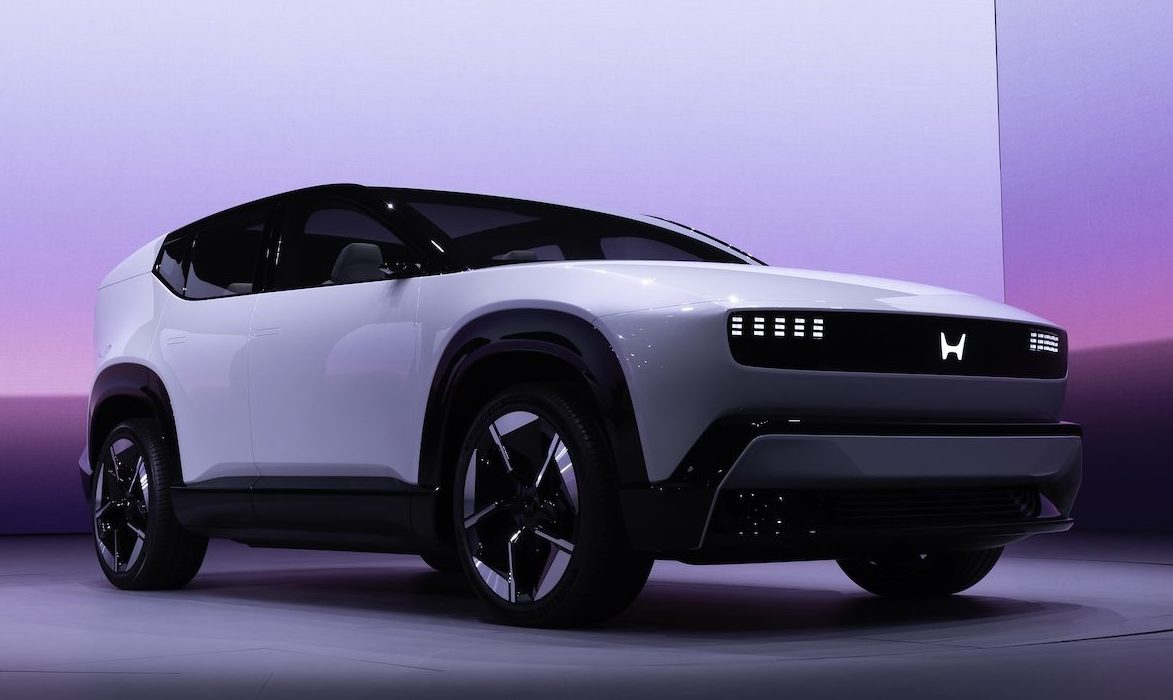
The 0 α bears a strong resemblance to the 0 SUV that was first shown in prototype form at CES 2025 in Las Vegas. The basic profile appears to be about the same with an upswept beltline leading back to an exceptionally thick C-pillar and a completely vertical rear surface. The 0 α appears to be slightly smaller than the SUV, lacking the rear quarter window of its American sibling.
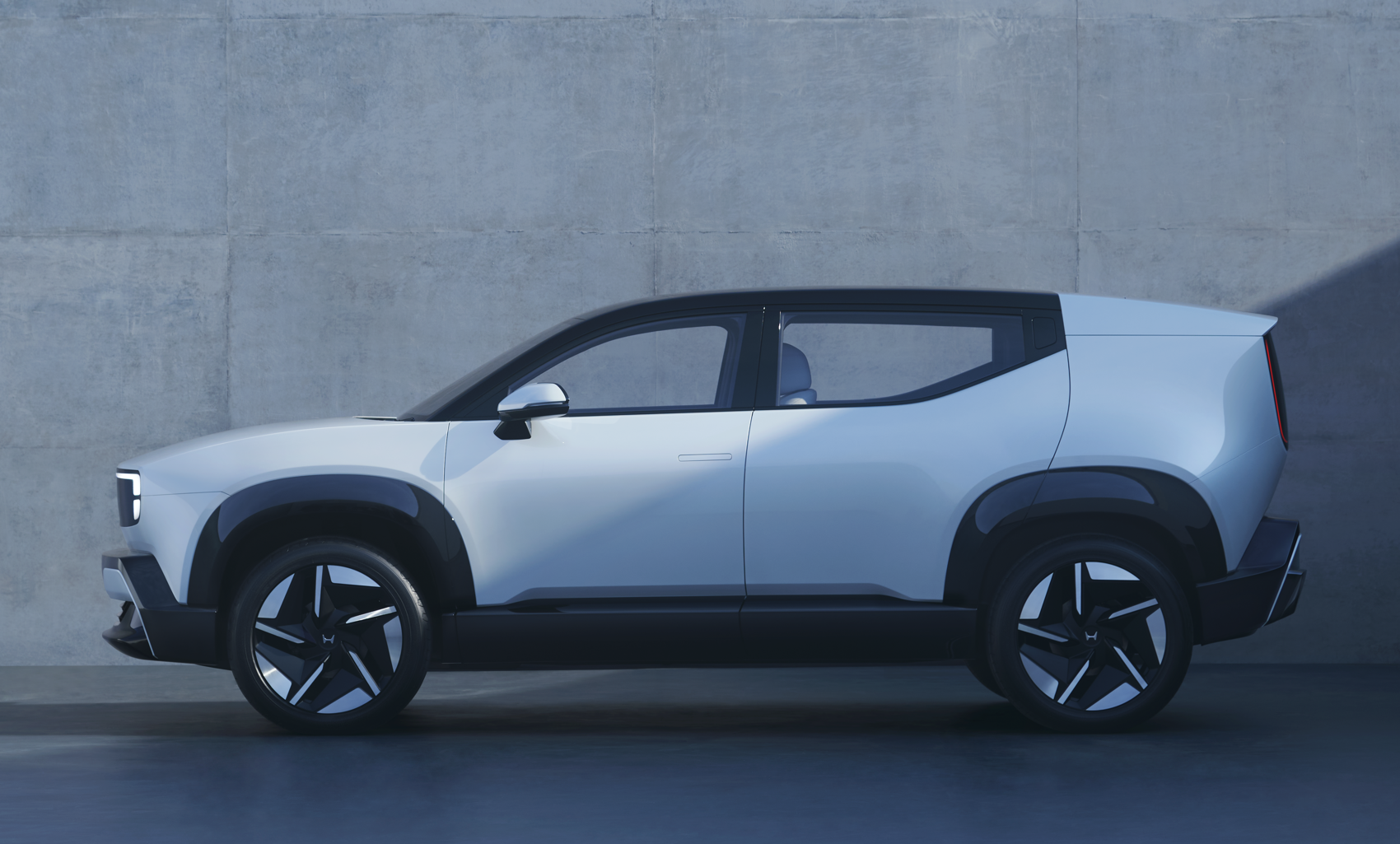
Compared to the SUV, the 0 α’s roofline is more upright including the windshield, taller side glass and the rear portion of the roof being flatter. The SUV has more of a chopped appearance than the 0 α with noticeably more rake to the windshield and some downward slope at the back of the roof. We don’t have dimensions for either one, but the SUV seems like it might slot in between the CR-V and Passport in length while the 0 α could be between the HR-V and CR-V.
Honda calls the 0 α a gateway model to the 0 series, much as the ADX is the gateway to the Acura lineup in North America. Unlike the ADX, it doesn’t look like Americans will get access to the 0 α. For now, Honda is calling this a global model with Japan and India as the main markets starting in 2027.
While the 0 α is the gateway to the 0 series, it’s not the entry point for all Honda EVs. That will be primarily the N series of Kei cars including the N-One. The N-One is offered in both gas and electric variants with the latter being called the N-One e: which went on sale in September of this year in Japan. At the Goodwood Festival of Speed last June, Honda showed off a camouflaged performance variant called the Super EV which featured flared out fenders and bigger wheels and tires.
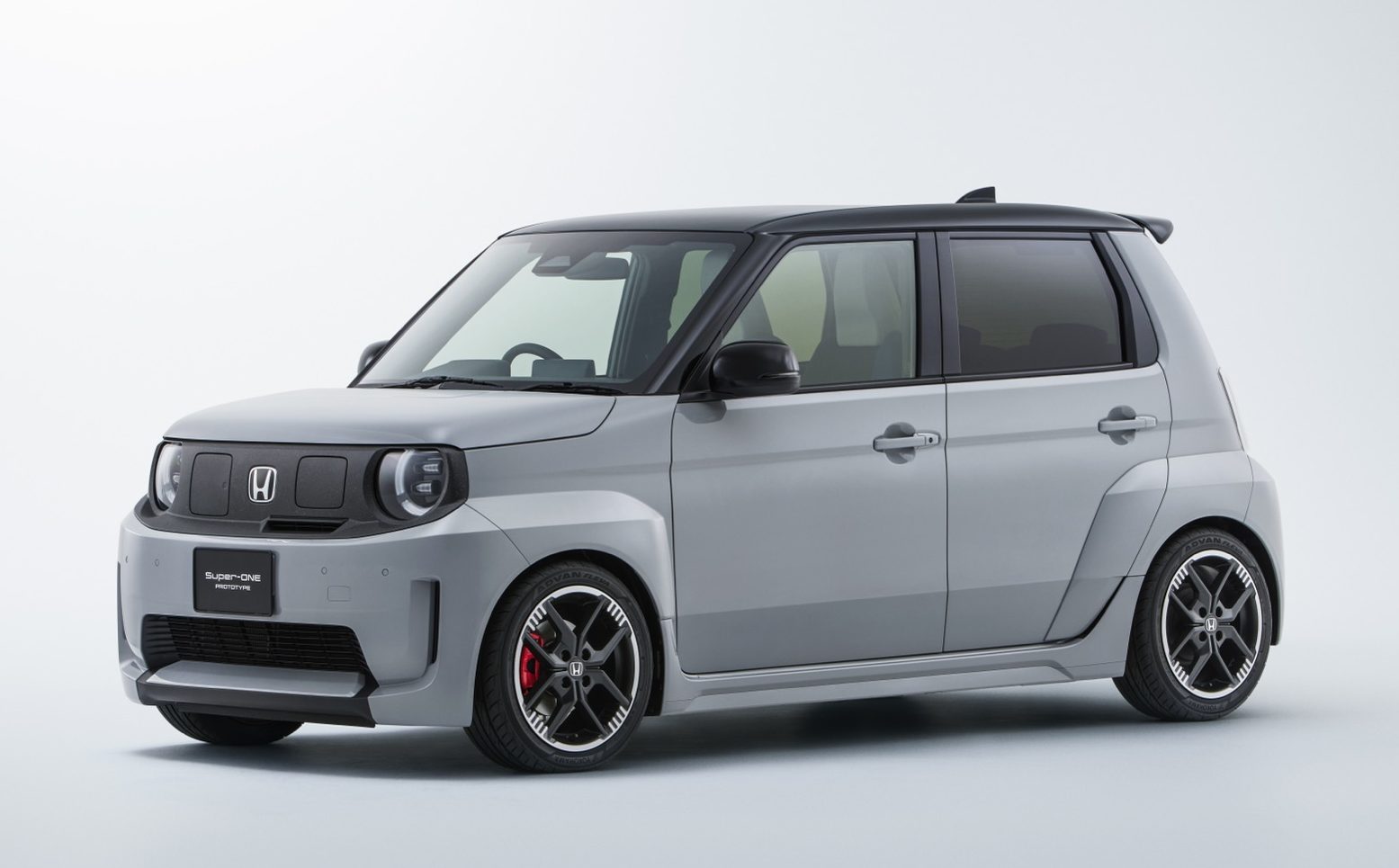
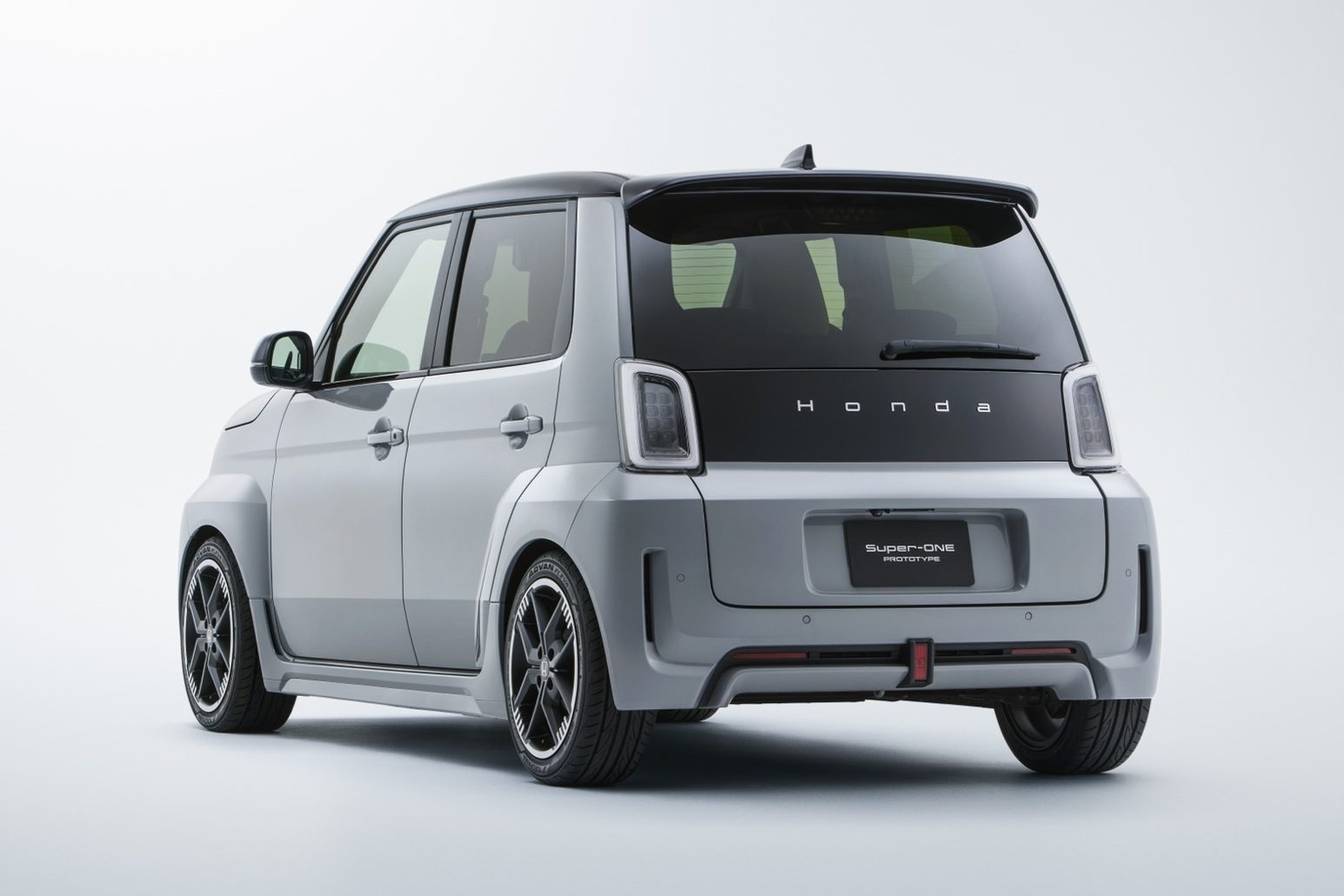
That car was a preview of the Super-One, which goes on sale in 2026 in Japan, followed by other markets where super minis are popular like the UK and a variety of Asian countries. The Super-One picks up some tricks from Hyundai’s Ioniq 5 N, including a simulated seven-speed gearbox with manual paddle shifting and synchronized sound in the cabin. There’s also a boost mode that provides some extra power, although exactly how much is unknown at this time. The base N-One e: is limited to the usual 64-hp limit for the Kei class.
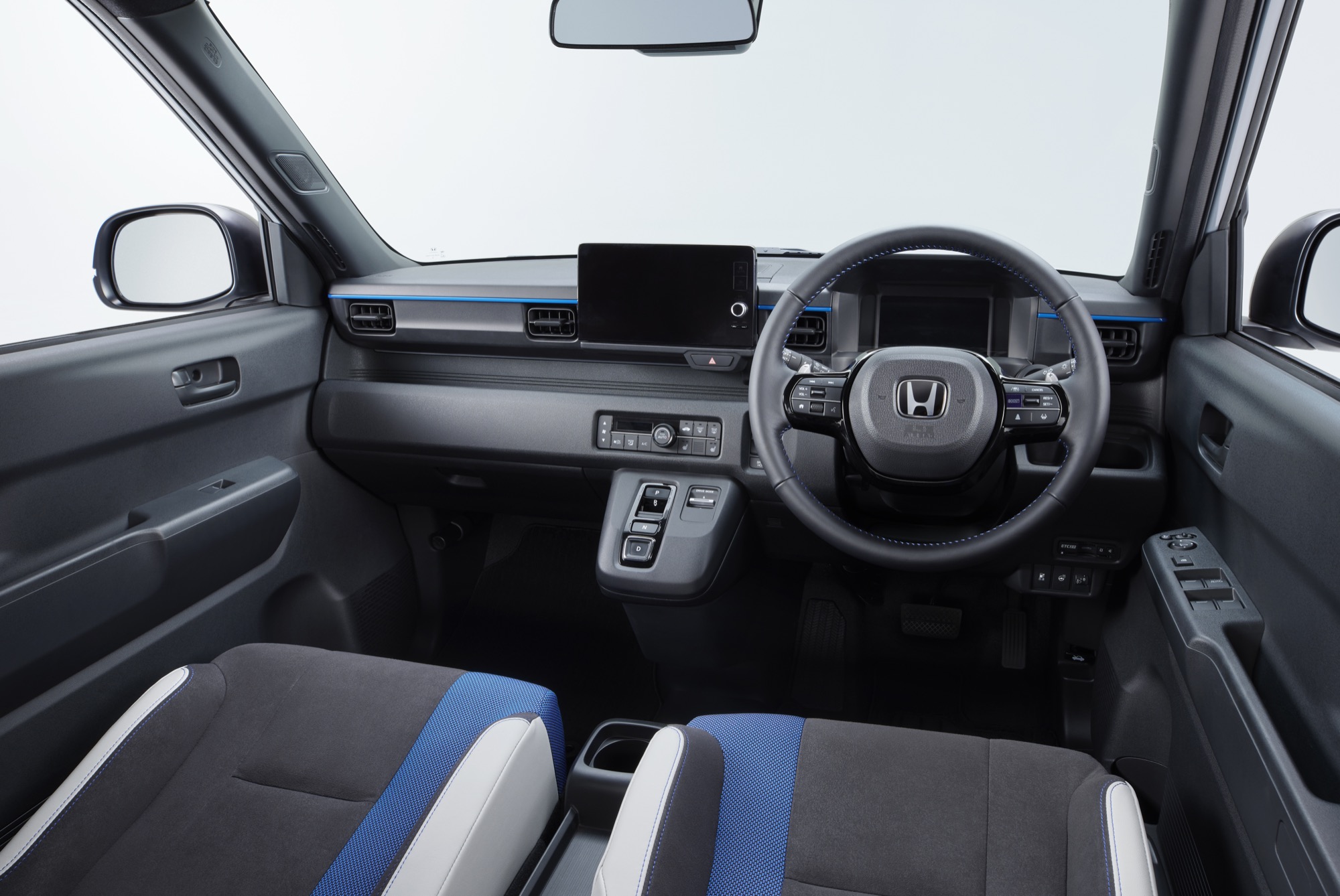
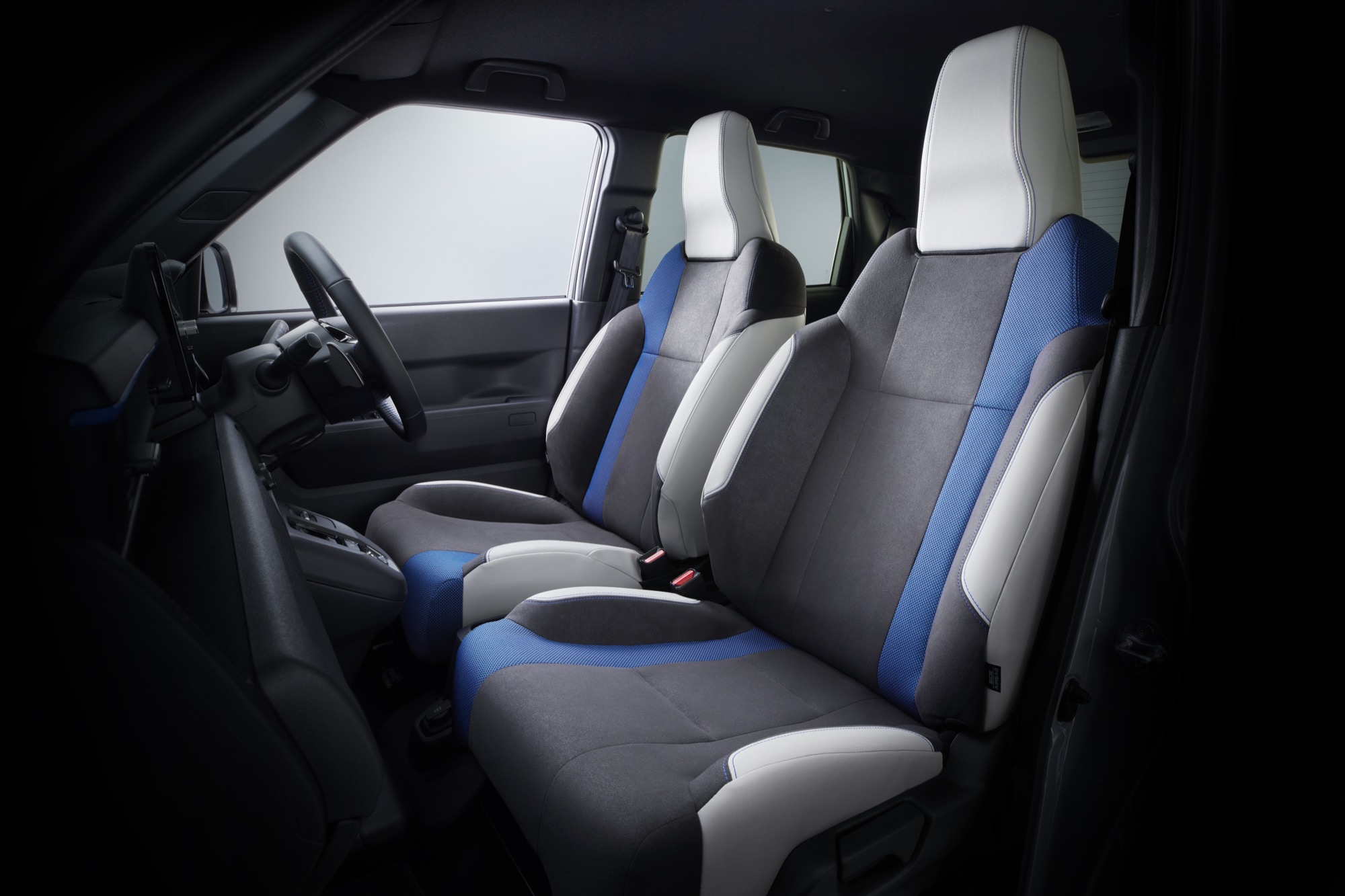
Sadly, we’ll probably have to wait until 2050 (when the 25-year import restriction expires) to get this little beastie in America.
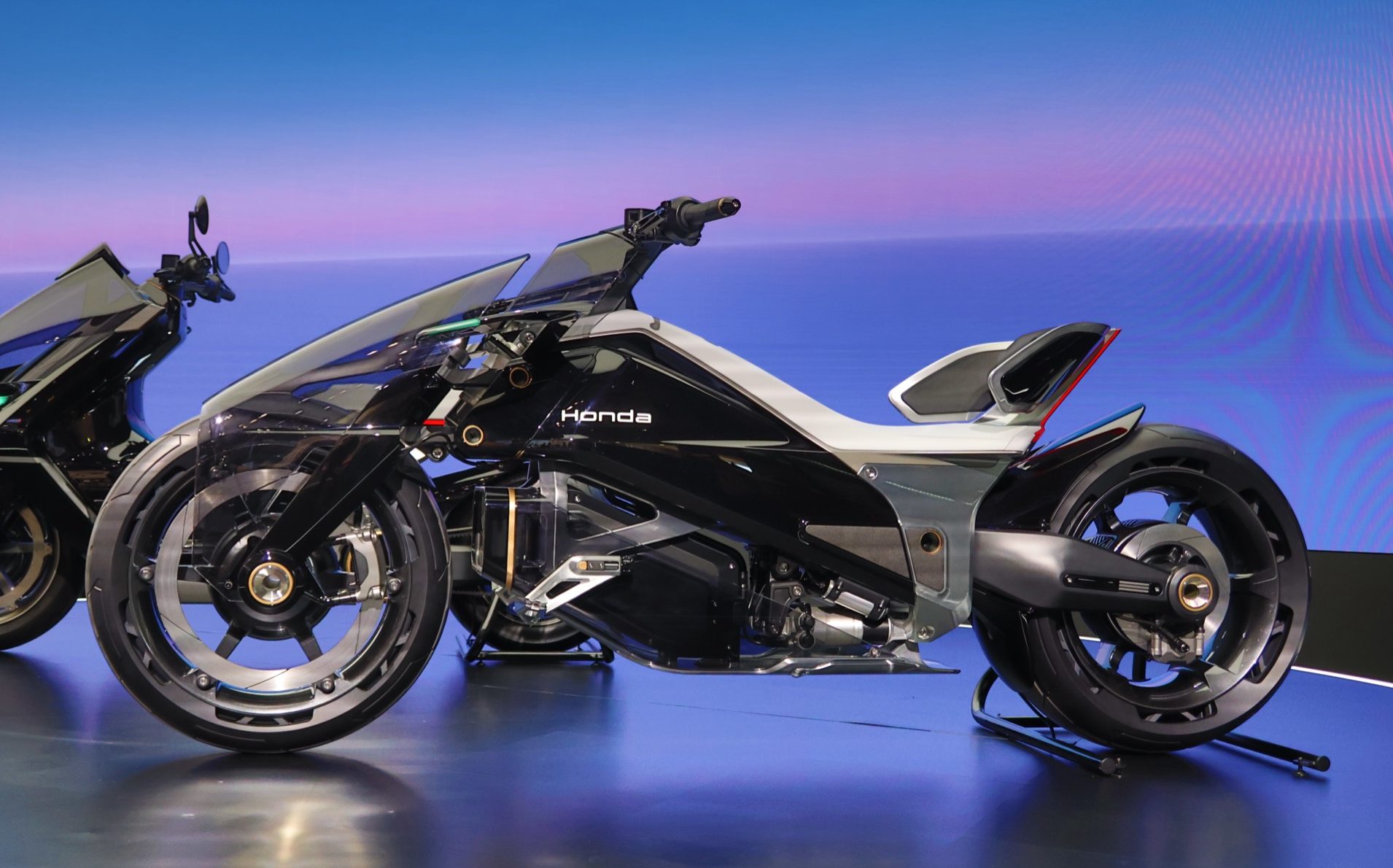
As a company that got started making two-wheeled conveyances, it would obviously be a missed opportunity if Honda didn’t have some motorcycles on its booth. Along with the usual array of production machines from the latest Super Cubs to CB1000Fs, there is a wild looking electric concept. We don’t have any details on the Outlire concept yet, but its styling is a mix of modern Superbike and classic 1960’s chopper with its laid back seating stance. It’s an interesting design, and hopefully something like this makes it to production.
Over its history, Honda has gotten into a wide range of vehicles to enable mobility, including motorcycles, scooters, all-terrain vehicles, cars, executive jets, and in June of this year, Honda showed off a rocket, designed to be sustainable. Like the machines from SpaceX, this one is fully reusable and was able to launch and successfully land on its first attempt (something that other company has never done). Also, unlike SpaceX rockets that run on methane, the Honda rocket is being developed to run on renewable fuels. We’ll be learning more about the Honda rocket program later this week, along with getting our first wheel time with the new Prelude and Honda’s next-generation hybrid system.




The Super One has been confirmed for Australia! As someone who seriously considered importing a regular n-One a couple of years ago, I’m quite excited for this. That’s assuming they keep the price low and don’t flow Hyundai’s lead with the Inster – great-looking little car, but too pricey.
“unlike SpaceX rockets that run on methane, the Honda rocket is being developed to run on renewable fuels”
Renewable methane is available at your nearest Taco Bell.
That bike looks like a nutcracker. As in testicles.
The front looks like it’s also designed to wash your testicles through your pants.
So much ridiculousness on display.
It looks like DLC for Cyberpunk 2077.
Think about how cool you’d look riding it though…
The N-One e: has a 29.6 kWh battery pack and costs the equivalent of $18,300. It is said to have a 183 mile range on the WLTC cycle, although I suspect that would be closer to 100 miles on a US highway at 70 mph. It weighs 2,271 lbs.
Boxy shapes are bad for aero, and even then, thanks to its low mass, even with a small battery pack, the Honda N-One e: still gets very respectable range at low speeds.
If you had that same battery pack, and a more powerful but comparably efficient electric drive system, in a long-wheelbased sedan or hatchback weighing closer to 3,000 lbs that gave all occupants ample room, which had a Cd value of around 0.16 and dimensions as low/wide as a Honda Civic, it would probably get close to 200 miles range at 70 mph on a US highway, AND it wouldn’t cost much more to make than the Honda N-One e: from a components standpoint.
Why aren’t the automakers making such a vehicle, when one of the largest complaints about EVs is their MSRP? EVs should really be the budget option by now, dammit! The Chinese have already proven this is possible in their domestic market, and it looks like the Japanese could, but just don’t want to.
It’s only possible in the Chinese Domestic Market due to price wars, inexpensive labor, and heavy subsidization. It’s not financially sustainable, especially with American or Japanese labor costs to build it.
11,300 yuan is 1,591.76 USD. For Japanese auto workers it’s closer to $2055.85, and American $5200 for monthly income.
China’s auto workers bear the brunt of price war as fallout widens | Reuters
But the battery will be toast in 25 years 🙁
They should just build it and sell it as the fit 0 or fit b0x or something in the US.
It’s very cute that you think disposable income for regular people will be a thing in 2050.
I’m wondering if the EV N-One will legally be a kei car when it goes on sale. AFAIK they have to adhere to a very rigid set of dimensions in terms of width, and I’m sure this goes way over that with the flares. It would ensure they’re able to give it more then 64hp, too.
Bro just bot the n-one e this week, got a tour of it, nifty little car
Despite having driven and ridden in countless Hondas over the years, I’ve somehow never owned one.
If we lived in a timeline where America got much the same sort of cars that Japan does, I’d happily be putting my finances in order so as to write a check (see? I’m old!) for that 0 a, or for the N-One/Super-One.
I don’t expect to be alive, let alone driving, 25 years from now.
So, Kei cars are limited to 64hp but to my knowledge, there is no real limit on torque (within the limits of how torque and hp relate to eachother). With the hefty advantage that electric motors can have in this department, could Honda build a car limited to the 64hp but tune it for very high torque? I’m not sure how much real world advantage it would be in a small car but it would probably be entertaining.
It’s true the torque on the n one e makes this the fastest k car driven
I think a 64 horsepower electric Kei car designed to fit one person or two people sitting in tandem, that was the size of a velomobile with a similar CdA value, with AWD, would be an amazing vehicle.
Imagine 64 electric peak horsepower, 1,000+ lb-ft torque, and AWD in something that weighs under 400 lbs. It could even be done with e-bike hub motors to save money. You’d have a 200+ mile highway range @ 70+ mph with a battery pack no larger than 10 kWh, possibly as small as 5 kWh, which could charge from 0-80% in seconds due to its small size. It would cost hardly anything to build in volume, and would not be at all difficult to make it perform well due to its low mass and drag.
I could easily imagine such a thing being mass produced to sell for under $10k, it could have all the convenience and utility plus most of the comfort of a normal car except intended for one person, and the selling point would be that you could troll cars costing 10-20x as much at stoplight drag races and run away from them in the twisties too. Built correctly, everything would be inexpensive to repair/replace and could be done with basic tools and minimal work space. The economics of a moped or motorcycle, without the exposure to the elements and safety risks, coupled with the performance of a high-end car and at least some basic storage space.
The question is, would people buy them? I think so. Although to sell them in the USA, they’d have to have 3 wheels instead of 4, to get around modern regulations on cars. In other countries, you’d be able to sell them with 4 wheels, and all of the advantages conferred by that.
The N-One looks like a normal car that happens to be powered by an electric motor. Every other company is out there trying to tell us it is impossible to make an electric car without loading the interior up with dystopian levels of tech.
There’s still at least two too many screens in there for my liking, but I’m old fashioned like that.
BEV batteries may not have the lifespan of a cell phone like the naysayers would have you think, but the odds of this thing being functional in 25 years are essentially zero.
*citation needed*
I’ve personally sat in the meetings and listened to the chief engineers and the cell suppliers lament how they only way they can hit the 80% SOH at 10 years requirement that (at least at the time) was on its way to being law would be to build in extra capacity and lock it away behind software to “give back” as the pack ages. Have you ever used a battery with 60% SOH? When your cell phone starts randomly shutting off under CPU load for voltage sag, it’s generally somewhere in the 70-80% range.
Some NAND SSDs have extra capacity over the stated amount so as it ages, suspicious sectors can be moved to new, previously unused ones. It’s kind of like having a real spare tire.
How long ago was that? I keep hearing car batteries are exceeding expectations for longevity:
https://theconversation.com/electric-vehicle-batteries-can-last-almost-40-longer-in-the-real-world-than-in-lab-tests-248557
Last year. There’s always a new study out claiming capacity or lifespan gains of 30, 40, 80, 200%. It’s good that researchers are working on this stuff, because it’s how progress is made, but the reality for the scalable commercialized product is never what the sensationalized headlines make it sound like. Despite these studies rolling out continuously every year for the last 20 years, we’ve yet to have an energy revolution. There’s a lot of noise in this conversation, and I don’t envy the average person trying to cut through it. It’s a lot easier when you have the opportunity to review what suppliers will and will not back warranty of mass-produced, low-margin products for.
For example, that study covers differences in cell aging characteristics driven by current profile during accelerated aging tests, but who said accelerated aging tests were ever 1:1 with the real world? These are tools used as indicators and correlated with real world performance data. The significance of that study is that we might be able to develop new test protocols with better real-world correlation. When manufacturers certify emissions with full useful life catalysts, they don’t drive them around for 150,000 miles (no time for that), they age them on an accelerated basis according to protocols that they have learned over time will be representative. Sometimes there are surprises and it causes huge problems.
Shortly before I left that company, I had heard that due to the length of the supply chain and calendar aging effects, even a brand new car on the showroom floor would probably only have 98-ish% of the label battery capacity, but would still be required to hit 80% after 10 years. Much freakout ensued.
The batteries are one thing that could probably be solved without too many issues with new cells. The power electronics and computers are another thing. But who knows maybe the after market will respond if it’s an issue and there is money to be made.
There might be some people that do cell replacements and get away with it, but there’s a reason this hasn’t been happening. You have to replace ALL of them, and they need to be binned by the manufacturer to match capacity. If you do just one bad cell, it will be different from the rest, and that’s a problem.
The reality of the situation is that when a BEV’s battery is done, it’s a parts car. That’s OK. the world needs parts cars.
In 25 years I’m sure you would have to replace all the cells and you would probably want to anyway with something maybe more energy dense. Even if somehow there was little degradation. Replacing just a cell or two with something similar would just be playing wakamole. Simular to recapping electronics. I’m skeptical it would be any thing more of a small hobbiest market. Like people repairing old computers and electronics now. Though there are companies making Bev retrofit kits for some vehicles plus that whole edison thing for pickups. Maybe something like that.
“Like people repairing old computers and electronics now.”
*glances anxiously at 60 yo HH Scott stereo reciever*
By 2050 I probably shouldn’t be allowed to drive hot hatches any more. I might still have the juice to thrash an S660 in *checks watch* 2040 though.
You’re not wrong. My 89-year-old mother wrecked her 13-year-old base model Accord a few months ago. An adequate, but not hot, vehicle. It was running fine up until then, but her mind is not.
And TBH, even if I lived in a market where these would be available when released, I don’t want one.
That’s cute – but I’d really rather have the new Mazda:
https://www.chasingcars.com.au/news/future-cars/is-this-the-mazda-cx-20-mazda-vision-x-compact-previews-electrified-cx-3-and-mazda-2-replacement/
https://www.thedrive.com/news/mazdas-new-tiny-hatchback-concept-just-wants-to-be-your-friend
My kids are probably taking the driver’s license away from me at that time
I’ll have to put that as a positive in the no kids column, I may die alone, but I’ll still have my car keys lol
I know they want me to pronounce it “Out Liar” but my first instinct was “Ootleeré”.
Either way it looks like something straight out of Neo-Tokyo, and I love it. Make it red, sticker bomb it, and I’ll bring the Good For Health / Bad For Education jacket.
Sam’s strengths as a writer include distilling down and presenting much detail in an organized, concise manner that flows logically, particularly in much longer pieces than this one such as with his new product first drive full reviews. So glad he’s on this team.
That N One with the fender flares makes me happy.