


It’s amazing how quickly a plan can go a little bit south. Maybe not “my life is completely ruined” south, but certainly southward enough to bring out the compound curse words. I mean, replacing ignition coil packs should be easy. A few bolts, a few connectors, and open sesame, yeah? Well, not always. I recently found myself in a bit of a pickle, and the thing that saved the day was a common household item not normally found anywhere near a garage. Oh yes, it’s coat hanger time.
The other week, I noticed my BMW 335i’s idle wasn’t as steady as it should be. Could it be an air leak? Obscenely expensive fuel injector failure? A physical timing issue? Not exactly. A little bit of datalogging revealed general ignition unhappiness, and given that the spark plugs were replaced less than 25,000 miles ago, my bet was on weak coil packs. Hey, it’s a turbocharged car with more than 146,000 miles on the clock. It’s probably time, right? Since Eldor coils were out of stock locally, I ordered a set of OEM Bosch units and got cracking pretty much as soon as they arrived.


You do have to pull the cowl plastics to access the rear coil packs on a six-cylinder E90 3 Series, but it’s not that bad. A couple of clips, a couple of rubber tabs, six eight-millimeter bolts for the cabin air filter housing, two more for the cowl tray, a couple of Allen bolts for the engine cover, and presto. Indeed, all was going well until cylinder three. Out of general caution, I wiggled the coil pack back and forth, then felt a slight but unusual jolt. Upon removing it from its home, I was treated to this lovely sight. Doesn’t this coil pack look a bit short?
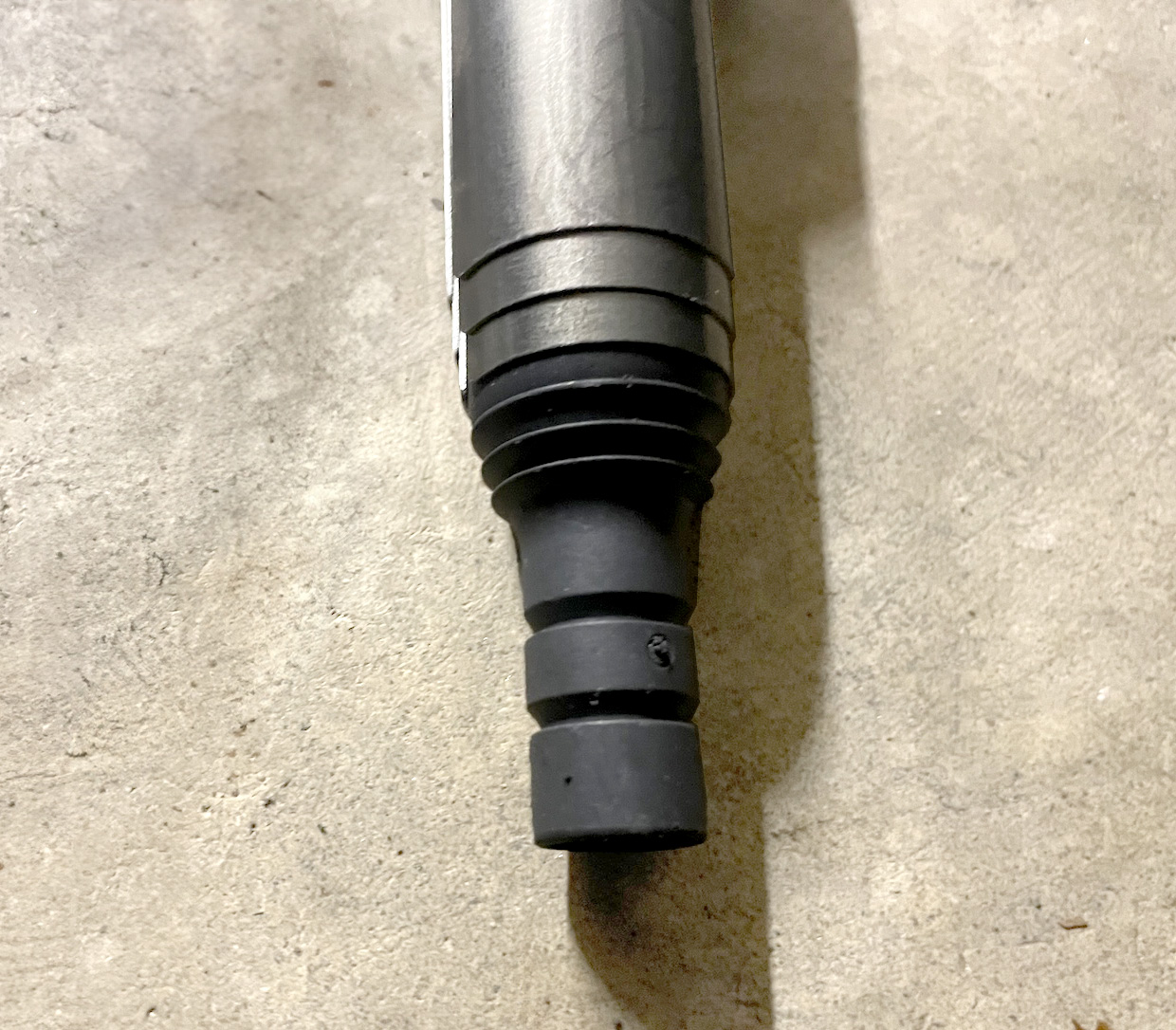
Indeed, the rubber boot that goes around the spark plug and keeps it insulated decided it didn’t want to stay attached to the coil pack itself. It was still down in the bowels of the spark plug well, and that presented a problem. With the boot remnant down there, I couldn’t install a new one. Cue the faffing about. Trying to stick a flathead screwdriver down there to free the boot didn’t quite work, neither did making a few strategic incisions nor gently threading a screw into the rubber boot and attempting to pull the whole thing out. The situation didn’t seem to be going well, until I remembered that I had a coat hanger.

The humble wire coat hanger is legendary for its contributions to bodgery. It can function as an exhaust hanger, Band-Aid together a wiper mechanism, even replace certain springs and cables in a fix that might essentially last the life of a vehicle, assuming the vehicle sucks enough. However, my 335i doesn’t suck, and I’m not thinking that out of arrogance. Any running, driving car with a heater, functional air conditioning, no undue play in the suspension, and no error lights on the dashboard is a good car, and good cars deserve better than bodges. I didn’t reach for a coat hanger as an emergency fix, I reached for one as an emergency tool.
Unsurprisingly, the spark plug wells on an N54 engine are deep. Deeper than the reach of any of my pliers. Deeper than the reach of my picks. What I needed was a really long 90-degree pick, and when you think about it, reasonably stiff wire should make for a pretty decent pick. Not ideal, obviously, but hopefully sufficient for what I needed to do. Plus, it was properly late. All the auto parts stores, hardware stores, and even the liquor stores were closed (this explains why most of the photos here were taken in the daytime post-incident). Time for a Hail Mary.
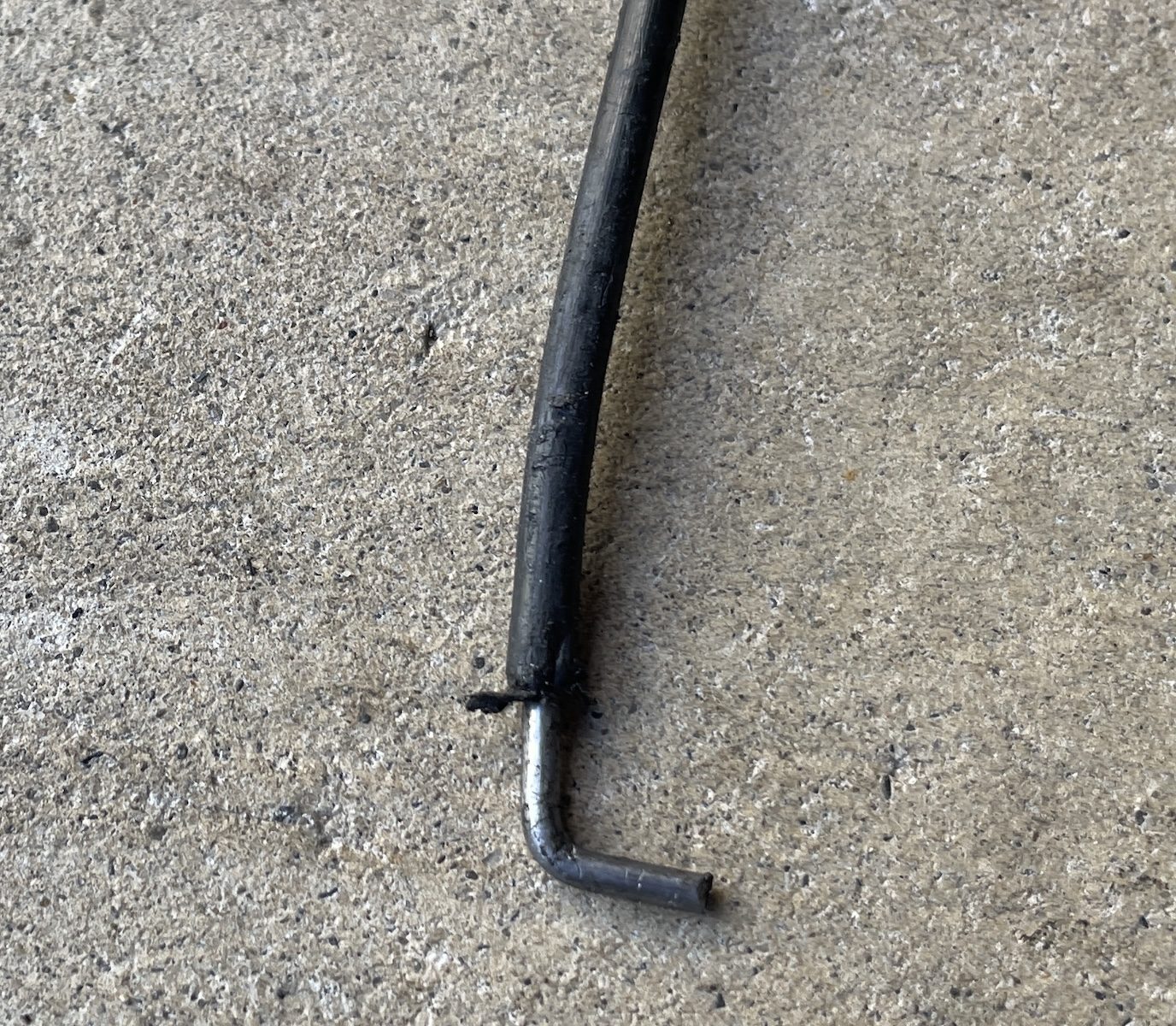
The plan was simple: Take a section of coat hanger wire, remove the plastic coating from one end to make it thinner, grab a set of locking pliers, and bend just the tip to a 90-degree-ish angle. Then, take the piece of wire, jam it in between the side of the boot and the head until it bottoms out, crank it like Soulja Boy to break the boot free, and pull. It took a few attempts, but by the light of my phone flashlight, I managed to successfully extract the broken boot without breaking something else.
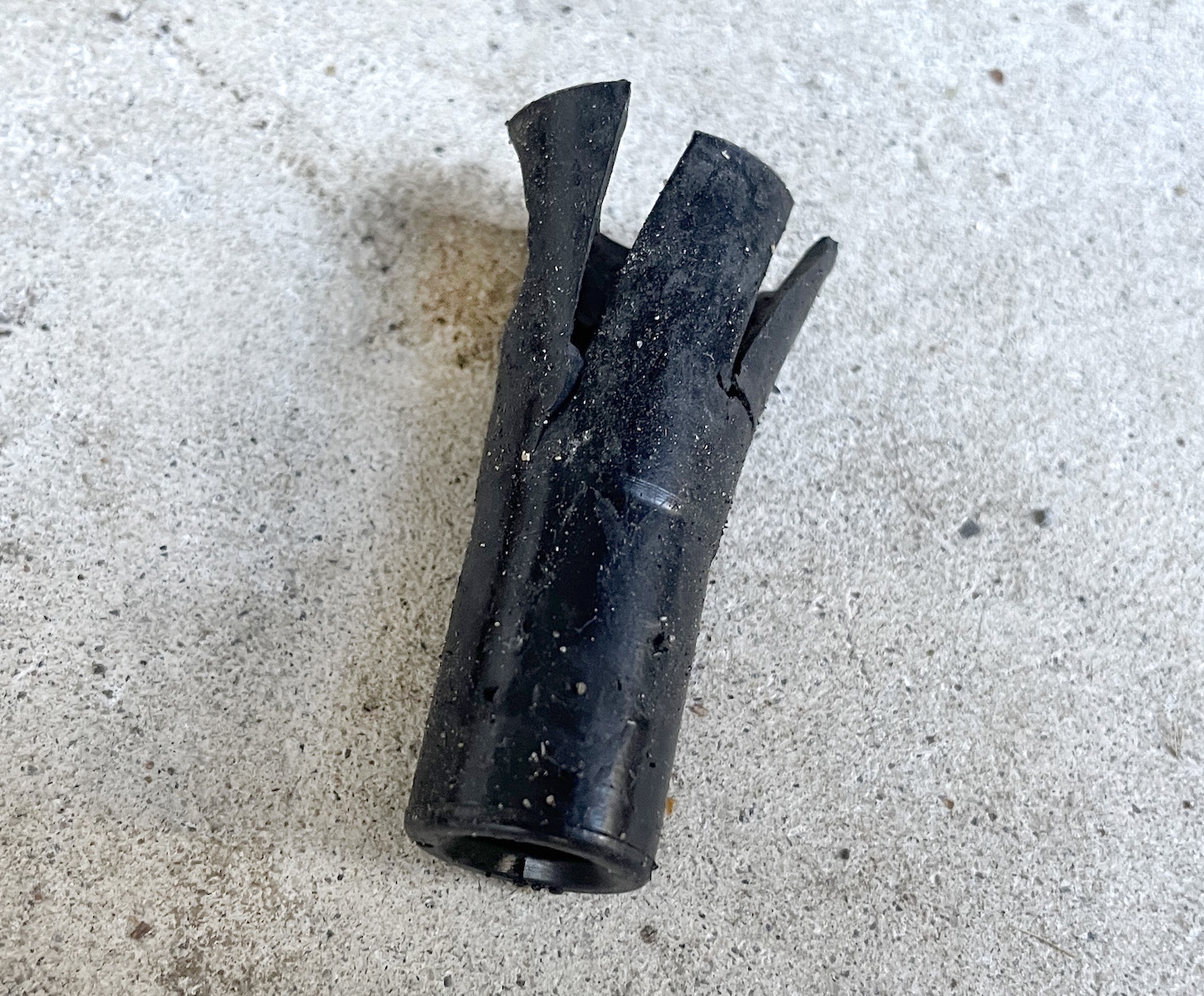
The rest of the procedure was remarkably unremarkable. Old parts out, new parts in, then for the moment of truth. Before putting everything back together, I pressed the start button and the engine whirred into life. Less than half a minute later, after the initial cold start enrichment had run its course, I got my answer: a rock-steady idle. Turns out, new coil packs also fixed a bit of hesitation I was feeling, but I couldn’t have done it without a coat hanger.
Is there a dedicated specialty tool out there designed for this situation? Sure, but a coat hanger did the trick for a price far lower than even a set of 11-inch needle-nose pliers. I’ve seen ten-packs go on sale for less than three dollars. That’s under 30 cents per improvised tool. Work on any car, and it’s probably going to test you. Eventually, you’ll need to be resourceful, and sometimes that means bending a coat hanger to your will.
Top graphic image: Thomas Hundal


The entirety of my XJ’s exhaust hangers were replaced with coat hangers in college. The hole in the muffler involved a sheet of tin and more coat hangers.
They are the miracle tool of broke DIY car owners everywhere.
I had to do something like this for my 2004 Jaguar XJ Vanden Plas. when one of the spark plugs broke off as I was changing it. I ended up using JB Weld (risky, I know) and a sacrificial very long flathead screwdriver to prize it out.
I disagree about the price. Coat hangers are not only free, they breed in closets when you’re not looking.
and the moment you need one urgently they are all plastic
And now you have a backscratcher
One day we are going to turn around and all the wire hangers will be gone. As someone else said I guard the ones I have. Just enough stronger than bailling wire making them great for making into a hook, cleaning out a passage, poking wires through grommets or through a cavity, holding something together ect.
Some improvisations are better than others. That was one of the better ones.
In the early 90s I was much younger, far less confident under the hood and a new-for-the-second-time dad. I had no time, little experience and not a lot of money…but I had saved up for the cruise control to add to our 1987 Hyundai Excel, and I had it installed by an independent garage.
When I got the car back, we tried it out on the way home and it seemed fine. So the next month we loaded the car and babies to take a trip from Tennessee to Minnesota to visit my aging grandparents.
The first time it happened, I thought it was a glitch. After applying full throttle to climb a hill, the throttle stayed wide open until I tapped the brakes and the cruise control released. I didn’t think too much of it, but it happened again after another hill, and then again. And then it didn’t release.
The kids were asleep, and Sweetie wasn’t fully cognizant of the issue: she was reading the map until she noticed the landscape going by really fast.
“What’s going on?”
“Cruise control is stuck. It won’t let go.”
The pathetic little Hyundai was still accelerating. This is a car that prefers speeds somewhere around 60 and starts to sound unhappy around 70. We were already doing 80.
“Shift to neutral?”
“Engine will blow sky-high and we’ll be stuck.” Remember, newish parents. I worked for a charity – the same one I still work for now, in fact. We had had to save for years for this trip. “I turned the cruise control off. Hang on…” I had to concentrate for a moment as we swerved around some traffic. The Hyundai rarely ever passed anything on the highway.
“Turn the engine off, then.”
“One click. If I overshoot, the column locks and I won’t be able to steer.”
She looked into the back seat, tugged on the car seats to assure herself they were indeed well secured. Then she jerked the slack out of her own seat belt, then mine. “Okay. Do it.”
It sounds very dramatic in the aftermath, but in the moment all four of our lives were flashing before my eyes. The horrible Hyundai had crested a hill and briefly cracked 100+ mph on the downhill side, sounding like it was about to shoot valves in all directions.
One click. I never turn the key just one click, I don’t use the ACC position, ever. One click. Steer. Ninety miles per hour, 80. 70. Hurtle through a construction zone with hazards blinking and horn blaring, but there was no one there. Sixty.
I was finally able to pull to the shoulder. The engine was so hot and the throttle still wide open, even with the ignition off it was somehow getting enough fuel through the shutoff to judder and jolt until I put it back in gear and killed it with the clutch.
Now I finally, for the first time, inspected what the garage had done. They had shielded the add-on cable for the cruise control with a length of drinking straw in an effort to prevent it hanging on nearby brackets – and the straw had hung on the nearby brackets instead.
I cut it off, and the cruise control worked perfectly for the rest of the time we owned the car. I never had to think about it for any reason again, except to use it.
So some improvisations are fine: ones you aren’t going to leave in place, and hope they behave like a part designed to be left under the hood.
And some are not.
And now, when I get my car back from service, I inspect.
Dayyyy-um. I hope you returned to the garage to provide some helpful feedback.
Wow! Quite the story! Did they scream when you returned to the garage and jammed the straw into their nostrils?
I have never been a large man and am not good at confrontation. I would be hopelessly outmatched by the shop dog, let alone knuckledragging greasemonkeys. I just chalked up the cost as tuition on a lesson learned.
The shop did close the next year, though, and I took some small comfort from that.
When we were kids we would use a coat hanger to hot wire the old man’s cars
Mostly because we had no real wire to do the job. 75% of the time this occurred when he was out of town, and we did not feel like walking 7 miles uphill both ways to get food in our mountain town. My younger bro got busted by the PD when a wire fell off under hood and the cops saw his idiot 13 yr old ass on the side of the road trying to hook it back up to the coil.
I had already learned the steering column wire harness disconnect (easy method), but was not gonna show my idiot bros how to do it.
The trick was one u shaped piece of hanger, covered with electrical tape, and another thinner piece of hanger for jumping off the starter circuit.
BTW got away with this for years till my idiot brothers totaled out the old man’s 6 month old 1973 Country Squire by wrapping it around two trees on one ice covered corner. Dumb asses.
After that the old man started to write down the odometer mileage every day.
Of course I began to disconnect the odometer as needed.
When my dumb ass bros ratted me out, the old man finally gave me my own keys.
I refused to give those idiot brothers a ride ever again though. And they never figured out how to pop the harness off and do the hot wire inside the car.
One winter we skied about 10 different mountains in Colorado.
Thanks Dad…./s
There is a cost to being stupid, and assholes.
All hail the mighty coat hanger. YMMV.
I have a box labeled “Wire, not electrical” and coat hangers do NOT live there. They have own dedicated hanging place when manipulated into a not-coat hanger shape.
Metal coat hangers are getting harder and harder to find, so I guard what I have jeolously and only open a fresh one when an existing one isn’t the right size or shape.
I get 10 more each week with my work uniforms. I return them to the uniform service each week, assuming it hasn’t been repurposed in the interim…
Every garage should have a supply of these things, tremendously useful. Occasionally, you might even hang an article of clothing with one.
I keep an assortment of random bits around, wire, cardboard, leftover packing and so on to provide the means to bodge.
Sometimes the right tool is the answer which is why I now own a pair of exhaust hanger pliers.
I broke into a friend’s Sunfire with a couple coat hangers once. She locked her keys in the car but the sunroof was popped up just a bit. Easy enough to fish a hanger or two through there and unlock the car. Fortunately that happened at my parents house when we were teenagers, and no one thought we were stealing it.
I have only once twice managed to unlock a car that has had its keys locked inside, but I generally do pretty well going after the keys themselves.
And yes, I have used wire hangers to do it. But I have had very good results using ceiling grid hanger wire, too. Thicker gauge, a bit stiffer.
30 cents is more than BMW spent on many of the engine parts, so this checks out.
Coat hanger is definitely in the Makeshift-tool Hall of Fame.
Obviously we must maximize the production of paperclips, then eliminate these other pesky problems that can’t be solved with paperclips.
I think when random socks disappear, they are reincarnated as wire hangers.
ha, very good. Maybe sewing pins are the larval stage.
Paperclips are also often needed to push that reset switch thru that tiny hole in that electronic thing.
I was replacing what I thought was a bad spark plug on my 1989 Camry and the wire boot tore. I wish I would have thought of using a hangar! I had to have it towed to a shop, they told me they used a very long pair of tweezers to pull the rubber out of the hole.
The Porsche tax on those is legit. I have a pair I picked up at a craft shop that are about 15In long for $10 or so.
You can also get them at a pet store as “reptile feeding tongs” in the $10-$20 price range depending on the length. $55 is extortionate.
I keep a huge pair of medial grade hemostats for this exact reason.
They are also helpful when trying to remove deep spark plugs when you don’t have the correct size to vacuum hose.
“a common household item not normally found anywhere near a garage. ”
I have my overalls, lab coat and warm laying-under-the-car-cursing-in-winter coat all hanging neatly on a wire coat hanger in my garage.
It hangs off the top of a stack of ten wheels and tyres in the corner that I don’t need but am to attached to to sell.
The coat smells too much of transmission oil to keep in the house.
Your lab coat is the best part. Please tell me you sometimes wear it while holding a clipboard and staring meaningfully at your car ala an 80s magazine ad.
I normally wear it for jobs that are clean but lightly hazardous, like building bicycle wheels, using a bench grinder or forgetting someone’s birthday.
When I replaced the coils on my 540i, I bought a set of Chinesium coils from Amazon that were $35 for the whole set of eight. How they can manufacture that part and deliver it to my door in less than 24 hours for $4 each is beyond me.
And they worked!
And yet the CV Joints I ordered today with my Amazon Prime account will be here Dec 3-5.
At least they had them my mechanic told me I needed them but he couldn’t find them.
Not paying the factory workers does wonders in keeping the costs down.
Can confirm that a coat hanger with a bit of duct tape (sticky side out) is also a fantastic way to retrieve, bomb squad style, fallen nuts/bolts/whatever that sit precariously above a much worse location in an engine compartment.
The problem here would be finding a wire hanger. I haven’t seen one since Aunt Joan tossed them all in a fit of rage.
“No Wire Hangers”!!!!
Ever!
Damn, ya beat me to it!
Emphasis on beat.
uniform providers still supply all the coats on wire hangers.
I used a coat hanger the other day to clear out a clog in our vacuum cleaner.
Improvised tools are always the best, aren’t they? You feel like a genius! Like you could take on the world!
And then, in my case, you find the actual tool you needed after the fact.
I love improvised tools. I used a knitting needle with the point cut off and a slot filed in (think reverse screwdriver) as a carburetor adjustment tool on my 86 Grand Prix rather than pay the dealer $35 for one.
Me too. The Haynes manual for my Suzuki has instructions on how to create your own for uncommon repairs so you can avoid having to buy the OEM version.
Haynes really helped me out with a slide hammer made from a bent metal rod and a large socket for pulling the wrist pins on an ’83 subaru engine. A trip to the local hardware store and $5 got it done.
Always good to save a buck!
I was trying to fish some wires thru tiny spaces and decided I could tape the wires to a coat hanger and slip it thru pretty easily. Problem was finding a metal coat hanger. I had exactly one in the back of a closet.
I doubt it’ll work for most modern cars, but a coat hangar was just the ticket when I loked the keys in my ’79 Ford Fairmont wagon (with the fake wood on the sides). I was certainly glad there was a dry cleaners in the shopping plazea next to my apartment complex when I was in college.
My first car (77 Grand Prix) I managed to lock the keys inside while on base. I was kinda frightened how quickly someone opened the door for me.
Be glad they’re a comrade in arms?
Locked my keys in a ’91 Geo Metro delivering pizzas to a college. I was in a no parking zone and campus security said they were towing my car and had 45 minutes. I yanked the weatherstripping trim between the window and door off of the car, and used that as a slim jim to unlock the door and drive out of there.
It’ll work for cars that still have a mechanical handle. You just have to reach the connection between the outside handle and the inside one.
Sheesh, disconnect the battery next time… 🙂
I always keep a few wire hangers in my spare parts pile because you never know when you need one.