

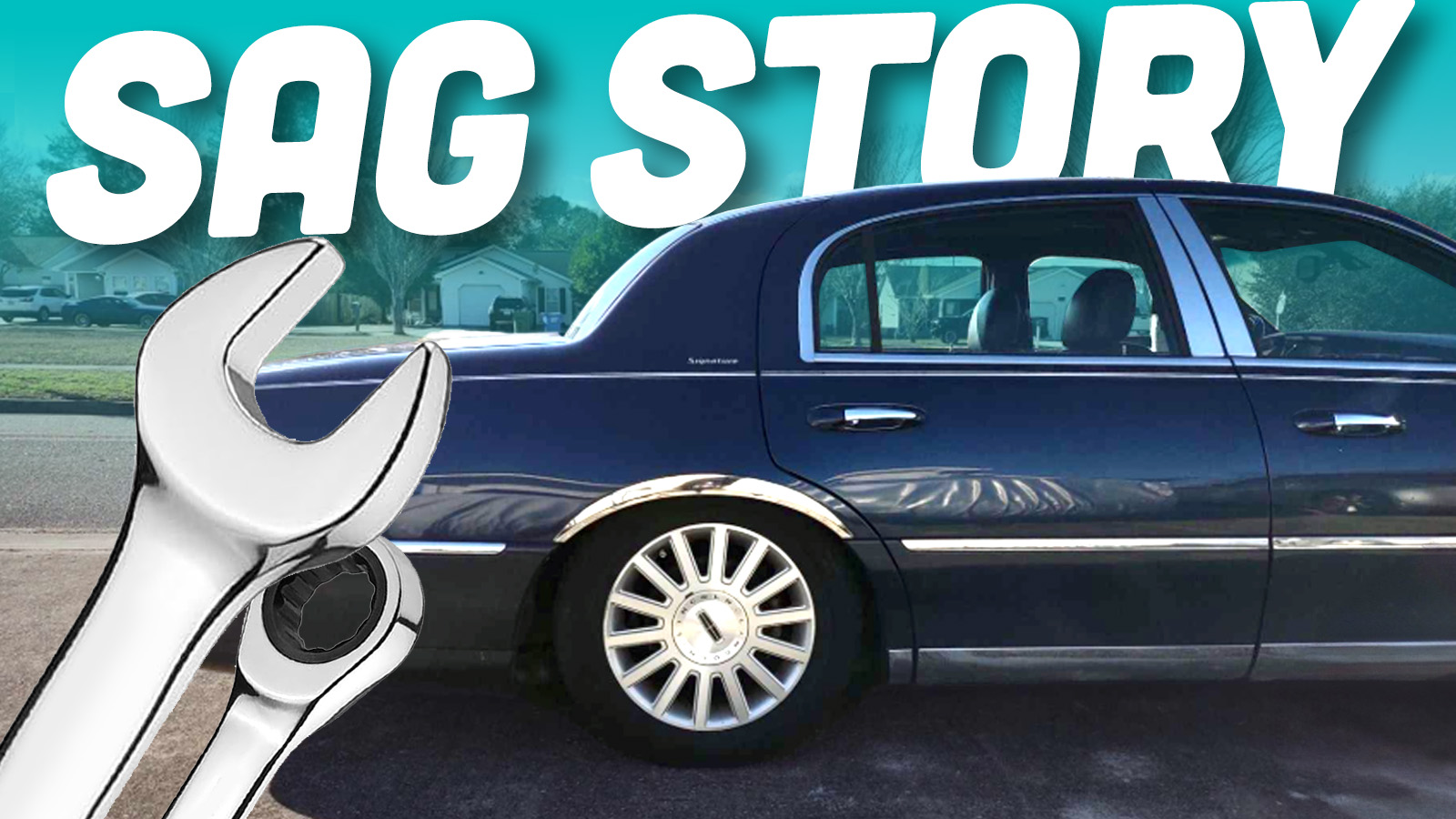
“Ding-dong!” rang the doorbell on a random Thursday evening right around dinnertime, rustling me away from my usual evening spent reading the daily excellent work of my friends and colleagues at The Autopian. Upon opening the door, I was greeted by a neighbor from a few houses down on the other side of the block. Outside of a friendly wave and a smile while I passed him mowing his lawn or otherwise out in his yard, I had never really interacted with him.
Though I wasn’t unhappy to see him, my heart immediately sank nonethless – I have four cars street-parked near his place, and my thoughts immediately went to a worst-case scenario where he was stopping by with bad news about one of them, such as a sideswipe, hit-and-run, etc.


Instead of the expected news that one of my cars had a sad fate befall it, he instead introduced himself as Billy and asked if I was a mechanic working out of my house, as he had consistently seen me working on car after car in my driveway over the years. I greeted him warmly:
“Nice to finally meet you. I actually work at Verizon, but I just really, really love cars and have a few too many, as you can tell!”
That was met by a nervous, uncomfortable forced laughter and a polite smile. It usually is.
Let’s Diagnose!
Billy told me that the beautiful, dark metallic-blue Town Car that I’ve been seeing in his driveway since I moved to this neighborhood nine years ago was now giving him some trouble. He explained he has kids and grand-kids and funds are tight, and was wondering what I’d charge to fix a grinding noise that was coming from his engine bay along with a failed rear air suspension. I told him that I’d have to hear the engine noise in person and that I’d need to research parts cost/availability and the difficulty of the air suspension job (I’m YouTube Certified, yo!) before committing to the job.

After a short walk to Billy’s place, I had a look at the big, beautiful, blue boat. He was right about the failed air suspension: the rear end of the car was laying dangerously close to the ground, and one errant curb on a tight turn or an ambitious speed bump could easily catch a rear bumper cover edge and damage it or rip it off.
Billy popped the hood and fired up the engine so I could hear the grinding noise, and it only took about five seconds to discern the raucous cacophony of dissonance was coming from a failed serpentine belt idler pulley bearing. Billy was in luck; that’s a super easy fix on a Ford “Modular” 4.6 V8 engine like the one in the nose of Billy’s Town Car, and with prime parts accessibility at the counter of every neighborhood parts store in America, it wouldn’t be an expensive fix.
Also, lucky for Mr. Billy, the old theme about American cars being cheap and easy to work on held true for the suspension job as well, as steel suspension springs to replace the failed air bags were widely available and super cheap for this ancient Panther Platform Lincoln. I’m guessing that this is due to the air suspension being a common, widely known fail point. Aftermarket parts providers are in the business of selling parts for broken cars that need ‘em, and nearly all those air-suspended Lincolns will need this repair eventually. Rubber ages and cracks with time, and those rubber bags can only hold compressed air for so long.
I told my good neighbor that I’d commit to doing both repair jobs for a cost of $200 in labor (stupid cheap) if he buys the parts and agrees to keep a vigilant eye on my street-parked cars going forward. He enthusiastically agreed to both conditions with a huge smile and handshake to seal the deal.
Let’s Wrench: Idler Pulley
The first move here was to get that howlin’ idler pulley swapped out since it was at risk of seizing at any moment and taking the belt (and possibly other items) with it as collateral damage. This job couldn’t be any easier, as the engine bay afforded all the space in the world for accessibility, and the idler pulley and belt tensioner were both staring me right in the face.

A quick tension release to remove the serpentine belt from the idler pulley, then left-loose to remove the old pulley and right-tight on the anchor bolt on the replacement pulley was all it took. Pop the belt back on, and that’s it! This is the type of repair that is not hard whatsoever to actually accomplish, but far more difficult to correctly diagnose. Anyone can turn a wrench, but not everyone has the knowledge or experience to know why you’re turning that specific wrench in that specific way on that specific bolt.
Starting the engine to confirm the repair, I was greeted with the sweet, quiet hum that you’ve come to expect from these cars over the decades. Not hearing much of anything sounded great.
Let’s Wrench: Air Suspension Replacement
This next part was going to be a bit more difficult. The $60 worth of steel springs had arrived in the mail a few days earlier, and as any mech knows, just the sight of a coil spring can bring chills as working with springs and all of their inherent potential (and then kinetic) energy is dangerous.
After watching a few videos on this repair – some good, some not-so-good, “Hey guys…” the intro line of every one – I found that this job didn’t require spring compression (luckily), so the risks and difficultly level were greatly reduced.

I got the car up on jack stands (two per side to incorporate redundancy; you can never be too safe when underneath 4,000+ pounds of steel) and was pleasantly surprised with the ease of access and simplicity of design of the airbags! The electrical and pneumatic connectors were simple plugs and twist-offs, and elven hands weren’t required to reach and manipulate them.
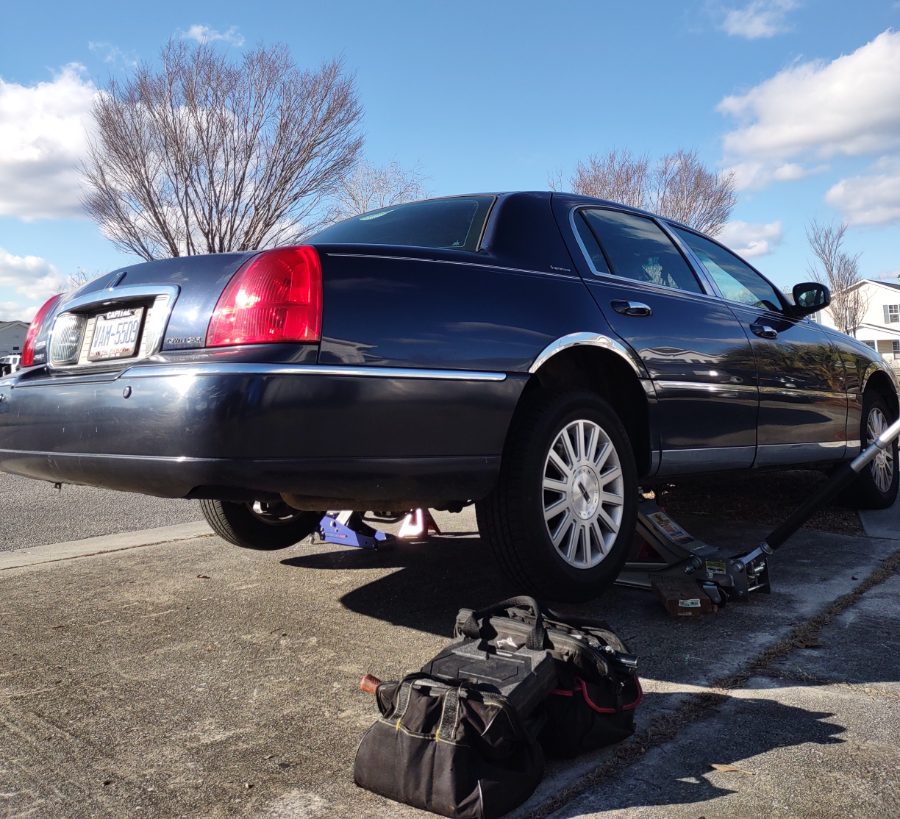
Getting the bags out from their perch over the rear axle required a bit more Jenga skill, as there was limited clearance for removal. Both bags were toast anyway, so I wasn’t against cutting them up for removal if need be. Right as I was about to slice ‘em up, I found that letting the rear axle sag to full droop allowed just enough clearance to get each bag out intact. Score!
With both bags removed, I was now at the halfway point and could pivot to the installation of the steel springs. This was going to be the hardest part of this repair, as the steel springs were much taller than the rubber bags and would not fit (uncompressed) between the rear axle and the body.


This is the type of challenging spot that every wrencher gets to on occasion where:
- The YouTube videos gloss over this specific part of the job
- You have to figure out a solution on your own
- Ingenuity is needed
Inspiration from a cold garage in Utica NY, long ago
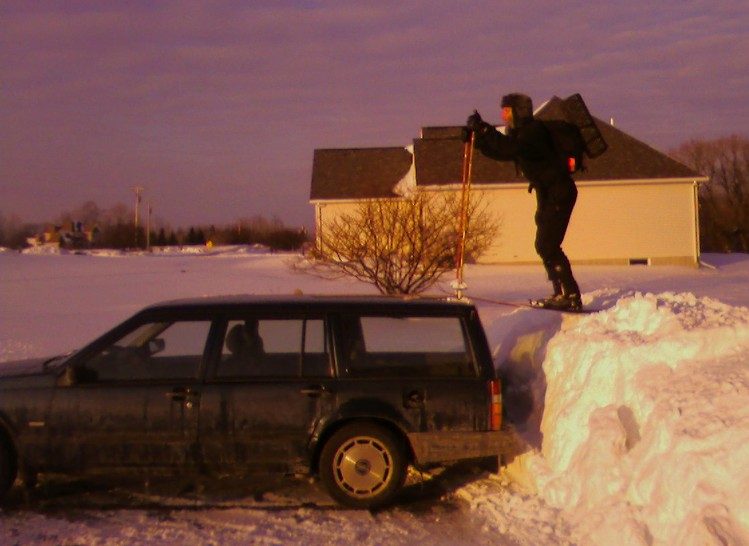
Many years ago, when I was a kid watching my Dad fix the frozen rear hatch latch on his ‘91 Volvo wagon in the garage during a brutally cold winter night in Utica, NY, he told me, “If you just stare at something long enough, you can probably figure it out.” I’ve carried that moment, that phrase and that modus operandi with me ever since, and it’s saved me many times. Thanks for the wisdom, Dad.
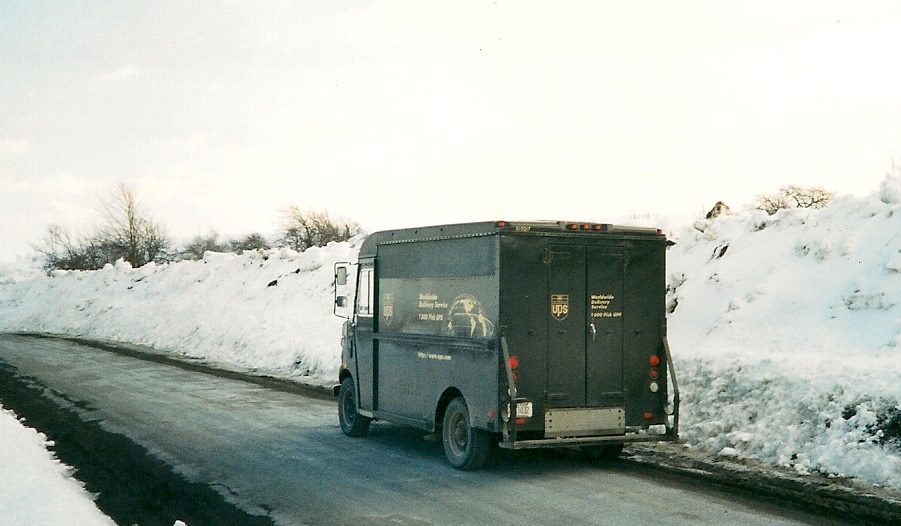
I grew up the son of a UPS truck driver who was constantly telling tales in the kitchen about his epic adventures out on the road from the long, cold 12-hour shifts servicing rural Central NY. Stories about the truck sliding down a steep hill sideways, taking up both lanes of a rural road, in the dark, in negative temperatures, on black ice, and in white-out blizzards lofted him to hero status for his three sons, easily.
Just knowing that he was doing all that to keep a roof over our heads for all those years means so much with added age, time, and perspective.
Back to the Lincoln. After staring at this blue whale of a car on stilts in my driveway for long enough, I determined that there was enough access to install the springs (without compressing them) if I removed the wheels and rear shocks.

The shock removal was simple; after removing just two easy-to-reach bolts, I had each side out in only a couple of minutes – thank goodness for Southern rust-free cars.

Man, those clean, glossy black springs looked amazing sitting over the rear axle! I had, in effect, changed the rear suspension from “Lincoln-style” to a more rudimentary version that befitted the lesser Panthers (Crown Victoria, Grand Marquis, Marauder). It was great to see this after the wrenches stopped spinning:

I took the car off the jack stands and was super happy with the new, re-established ride height! You can see that it was sitting a bit tall in this shot (taken immediately once the jacks were removed), but the suspension will “settle in” after a few miles of driving.

All In An Afternoon’s Work
I drove the car around the block a few times to ensure everything was in its right place and then pulled the car into Billy’s driveway for delivery. He came out of the house grinning ear to ear at how good his car sounded with a new idler pulley and at how great it looked now that it wasn’t draggin’ ass! He handed over two hundos for my trouble and time and thanked me profusely.
Billy confessed to me that if he couldn’t get that car fixed for an affordable price, he was going to scrap it! The car only had 108,000 miles on it, which would’ve been such a huge waste of raw materials, carbon expenditure, and labor for such a glorious, stately machine to be destroyed well before its time. As we all know, those cars routinely reach 300,000+ miles in fleet duty. The steel would be recycled, but the glass, e-waste, seat foam, rubbers, glues, carpeting, plastic interior panels etc. mostly end up in the ground, where they stay for centuries. We have limited resources on this planet, and anything we can do to forestall those things from going into the landfill helps make the world a better place.
Helping others makes the world a better place, too. Fixing broken cars feels good and is something that is near-religious to each of us, as Autopians. Doing something for the planet and for the environment feels good. Getting to know my nice-guy neighbor and earning a little bit of cash to invest in saving the 13 halfway-broken cars that I have here at my Evil Wrenching Lair (underneath the only volcano in Wilmington, NC) feels great.
Using a skill set that you’ve honed over decades to make your neighbors’ world, this neighborhood, and this world just a little bit better, one Lincoln at a time, makes me confident that choosing this path, many years ago, was the right choice.
If there’s any part of your world or of someone else’s world that you think you can make just a little bit better, go for it.
Just stare at it for long enough; you’ll figure it out.
All photos by Stephen Walter Gossin
Top graphic images: GearWrench via Amazon; Stephen Walter Gossin
More SWG content below:

- I Took On A Bad GM Design In A Hail-Mary Attempt To Fix My Friends Broken Suburban But It Was Too Little Too Late
- Sparking Joy And Plugs: How To Repurpose A 31-Year-Old Junk Buick
- What I Learned Restoring A $600 Dodge Ram With A Burned Up Transmission And Ruined Interior
- How I Bought A Broken Version Of My Dream Car For $300, Then Nursed It Back To Glory And Let It Free
- Proof That A $700 Car Saved From The Junkyard Can Make Someone As Happy As A New Lambo Can
- How I Saved My Buddys’ SUV After It Died At The Most Embarrassing Possible Time
- Rescuing A 75-Year-Old Car From An Older Car Enthusiast Reminded Me How Important Every Minute We Get Doing This Truly Is
- How I Rescued A Long-Neglected Citroen 2CV Covered With Bullet Holes
- Kumho Flew Me To The Mojave To See If Their New ‘R/T’ Tires Are As Good As They Claim
- How Learning Saxophone in 1990 Led Me To Rescue A Dead Xterra From A Bouncer’s Driveway


So, what you’re saying is that being nice to people is rewarding and beneficial to the community.
Interesting.
Nice job. Occasionally helping neighbors with car stuff definitely helps to take the heat off you when you’re doing questionable car stuff in the neighborhood.
You are a monster.
You are a saint.
That explains a lot, actually.
I’ve done several fixes to my neighbor’s car that had left it mechanically totalled at shop rates. I don’t see how people in the used car income range who can’t work on cars can afford to drive.
This is nice and wholesome.
Thanks for this article.
Another great story of helping others. SWG, you rock!
Good for both of you.It always feels good to help someone out.
You’re a good man SWG!
Thanks for sharing the story
Great write up SWG. Only nit I’ll pick: I never understand why folks rip out the airbags on panther cars to replace with coils. The bags are cheap, OEM Arnott bags are still available, and it’s like a 1 beer job to replace one. I did both in my Grand Marquis about 8 years ago and haven’t had to touch them since. I could understand if the compressor had failed, or a bunch of lines had cracked, but otherwise I’d just replace the bags.
If it’s that cheap, yeah, I’d just replace the bags, too. It’s not like this thing is still going to be on the road in another 23 years, so if the bags fail again in another 15, who cares.
That’s the thing though – if you replace the bags you might find that the lines or the compressor were about to die too, which would have been more work. Springs are a bit of a downgrade but they’ll definitely make the car drivable again that afternoon.
You should change your name to State Farm for being such a good neighbor!
Great job helping out the neighbor!
Also, nice to see a Town Car staying on the road. I’ve never owned one but they are stuck in my brain as peak sedan, particularly the longer models in black with a hint of chrome. They were the first ones to really make me want a sedan for a DD.
Billy will get many more years of service from that car…thanks for doing good deeds!
You’re a good man Stephen! ٩(^ᴗ^)۶
And you steam a mean ham!
/utica
Oh, not in Utica, no, it’s an Albany expression.
That’s not very evil of your wrenching lair. You may need to soften it to “unruly wrenching lair”
Nice job! Did the new coils not use/need rubber isolators?
The replacement coil kit didn’t come with them and he’s been daily-ing the car for months now since the fix was implemented, so I’m going to go with: not needed!
The car drove with an ultra-soft, isolated suspension feel, so I can vouch that they’re not needed from my seat-of-the-pants experience.
To truly find out I suppose one would have to start peeking underneath other Panthers at the local Pick & Pull to check for spring isolators.
Billy (the owner) is happy as a clam about it, so I’m fairly certain this car will never see isolators even if there are some available for the coil retrofit.
Thanks for reading and for the thought-provoking comment, my dude!
No worries. If your neighbor is happy with it, that’s all that matters. I was just curious because I actually did this exact repair on a friend’s 2010 Towncar a few years ago when it developed the saggy ass. When I went to get the parts, there were coils available and a conversion kit, too. Parts guy brought both boxes out and the only difference I could see was that the conversion kit had isolators for top and bottom while the coils only did not.
As the price difference was only something like $10, I bought the kit and used the included isolators. My guess is that a car without the air bags stock likely has the isolators on the stock coils and you can reuse them, even if you shouldn’t. The ones just seated directly on the metal perch will likely start squeaking after the finish wears off of the coils.
Nevertheless, very nice of you to help your neighbor out. Kudos!
Thanks for being a kind human! The world needs more SWG!
We need more people like you as neighbors !
Something so simple, my neighbor was struggling to jump start his son car after the cold snap we got, I showed up with a jump starter pack (those chunky batteries), 5 seconds later the car was running as usual. Its the small things that make society much better.
Thanks for a feel good, helping the neighbor article today. Much needed, and thoroughly enjoyed
I was a good neighbor this weekend.
We had one of our infrequent snowstorms. Fortunately, it was dry, powdery snow that shoveled easily. I cleared my driveway and a neighbor asked if she could borrow my shovel so her teen son could clear hers.
I said no problem, I’ll bring it over when I’m done.
I did so, but a few hours later, she was back at my house with my now broken shovel. Apparently, shoveling was a punishment for her kid, and he took his frustrations out on my tool. She saw him on her ring camera slamming my shovel into the pavement.
There are no shovels to be had in the tri-state area (according to her), so she has ordered me a new one. Thankfully, we will likely not have another snowfall before it gets here.
And I hope she ordered herself one, too, because next time, the answer will be “No.”
Glad to get another update from the Evil Wrenching Lair! And sounds like time has been spent productively. I wasn’t expecting the cameo from Torch’s 2CV.
My son has a 97 Town Car, and if the rest of the system is working, replacing the bags was reasonably easy and not that expensive. Most of the job seemed to be him cursing as he got them into the right alignment, the rest was a snap. But then you’re into doing that every few years, while the steel replacement is permanent. Six of one, etc. etc.