


I’m a huge fan of games and, thankfully, married to someone who also loves to play. Whether it’s a complicated Euro-style thinker about creating a galactic empire via diplomacy, or simply a card game that involves growing the most beans, I love spending my free time around the dining room table.
Morning Dump readers are used to my long windups to a post, but I’ll try to keep this one a little simpler after yesterday’s extended ice age metaphor. Where I’m going with this is that, for all the different games I’ve played, I still haven’t found a more satisfying and powerful card than the simple Uno Reverse card. Whether you’re 5 or 50, there’s just something about being able to shift the entire direction of a game like that.


Did Ford and GM just play an Uno Reverse on the federal government? I think they just did, by exploiting a loophole in order to continue the tax credit just a little longer. Ford is also somewhat reversing the position of its own lobbying group when it comes to greenhouse gases. Volkswagen, for its part, thought it had dealt with a big Dieselgate settlement, only to have a court in Germany toss up its own reverse card, sending the settlement back to the automaker.
Do you want a wildcard for the potentially most interesting electric car you can’t currently buy in the United States? It’s the Alpine A290 Rallye, which is getting its own racing series next year.
Ford And GM’s Clever Plan To Extend The IRA Tax Credit Through The End Of The Year
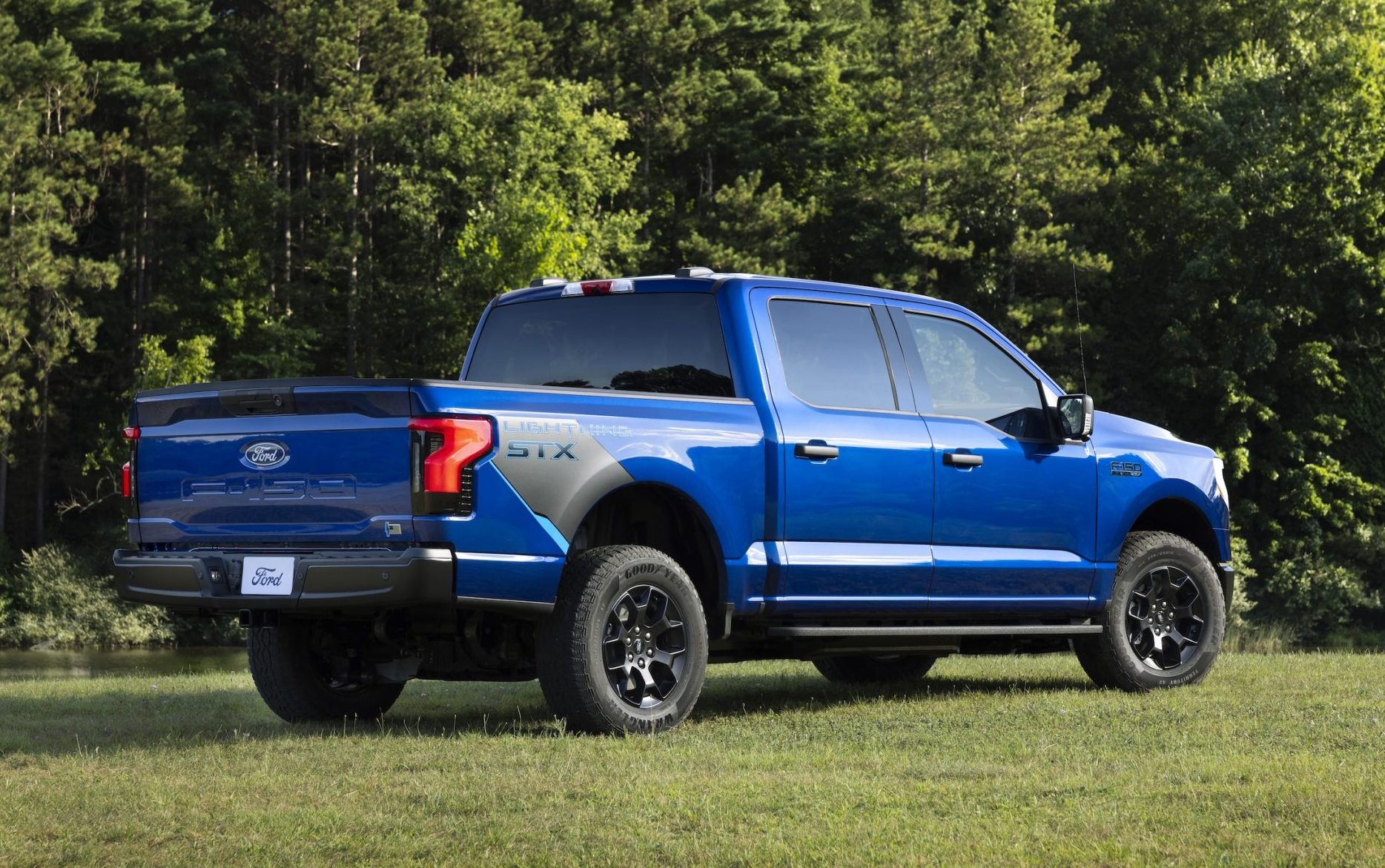
When I found out the Trump administration and Congress were going to kill the IRA electric vehicle tax credit, I was a bit bummed. It was imperfect, of course, but all laws are. My views have shifted a little lately, and now I’m a bit more mixed on the overall effectiveness of the project.
Either way, automakers and consumers were told they’d have this tax credit for this year, but the latest law essentially rescinds the credit and makes it no longer effective after today… with one big caveat. If you’ve started paperwork and put some money down, then you have until the end of the year to complete the transaction.
Because of another quirk in the law, leased EVs have basically none of the regular requirements under the IRA because they’re considered commercial vehicles. It’s not the consumer who owns the car, it’s the company leasing the car. You can probably see where this is going.
Automotive News (and others) found out that both General Motors and Ford are encouraging dealers to take advantage of this loophole:
The automakers are using their financing arms to offer the incentive beyond its Sept. 30 expiration by making down payments on the vehicles before finding customers to lease them. The programs were confirmed in documents obtained by Automotive News and by people with knowledge of the automakers’ plans.
GM dealers need to sign up by Sept. 30 to participate, while Ford gave dealers a Sept. 26 deadline.
GM confirmed its program in a statement saying the automaker “worked with our GM dealers on an extended offer for customers to benefit from the tax credit for leases on select inventory of our broad portfolio of Cadillac, Chevy and GMC EVs.”
I’m guessing the “select inventory” may not include the Celestiq or other super high-dollar vehicles, but I’m sure the company will be happy to be able to collect another $7,500 on a bunch of Lyriqs and Equinox EVs, et cetera. Even if Ford and GM have to put a couple of grand into this program, it’s still financially worth it. Ford reportedly offered $1,000 per vehicle to dealers who are participating.
Assuming automakers like Volkswagen and Tesla didn’t do the same, then there will be a brief window here where GM and Ford leases are still way cheaper than the competition. I’m curious if anyone else did this.
Uno Reverse indeed.
Ford Still Thinks ‘Modest’ Greenhouse Rules Need To Exist To Help Fight China

As previously mentioned, Ford is part of the Alliance for Automotive Innovation (AAI), which is really just the policy and lobbying group for most major automakers and suppliers in the United States. Unsurprisingly and disappointingly, the AAI came out in support of the EPA rescinding its previous finding that greenhouse gases (GHGs) are bad for the environment.
While the AAI was careful not to say that climate change isn’t real, the group seems to be implying that the business case was worse than the potential environmental impact. Curiously, Ford has posted its own response (first noticed by The Detroit News), and it argues for keeping the GHG finding, even if the company wants more ‘modest’ targets.
A lot of its argument comes down to trying to find a stable target, which is important! If the EPA Uno Reverses this decision, then Democrats take back the White House and Uno Reverses it again, it’s going to be tough, as Ford says:
Ours is also a global business. And today, the U.S. automotive industry has only one true competitor—China. The ascendancy of Chinese automakers in the global market is perhaps the most significant business trend in the world, and they are especially strong on plug-in vehicles.
America needs to meet this moment—to find common ground, work like we’re on the same team, and focus on winning global markets. Stable emissions standards are an essential element of a portfolio of policy that America sorely needs to compete.
But we don’t have a single or stable standard today. Instead, over many decades, federal GHG emissions standards have been written, reversed, revised, repealed, rewritten, and litigated ad nauseum, with one administration overcorrecting for its predecessor. We also have a second federal agency, the National Highway Traffic and Safety Administration, writing fuel economy standards that are wholly duplicative of GHG standards and add needless complexity and cost.
With emission standards swinging from extreme to extreme, American manufacturers have been unable to allocate efficiently the capital needed to compete. It’s been messy, and bad for business, especially for domestic auto companies that are most tied to the regulatory seesaw.
Meanwhile, our global competitors grow stronger.
EPA proposes to eliminate all vehicle GHG emissions standards. To be sure, current
standards are not aligned with customer choice and market realities. They need to be eased, and we therefore welcome the EPA’s important efforts in this direction. But pragmatically, eliminating standards altogether is not likely to provide the industry with the long-term stability we need to make historic investments in America and compete globally.
This is super thoughtful, and I think it’s worth reading the whole thing because it’s absolutely correct. While there’s only a passing discussion of this from an environmental standpoint (merely stating that the standard “should align with science and customer choice”), the business case is sound. The bit about China is also absolutely true. Long-term, American automakers are going to eventually get wrecked if they exist only in a regulatory environment that doesn’t encourage them to build better hybrids, EREVs, and even EVs to compete with China, which has a huge head start.
And, you know, we all have to live on this planet.
VW Dieselgate Settlement Partially Struck Down
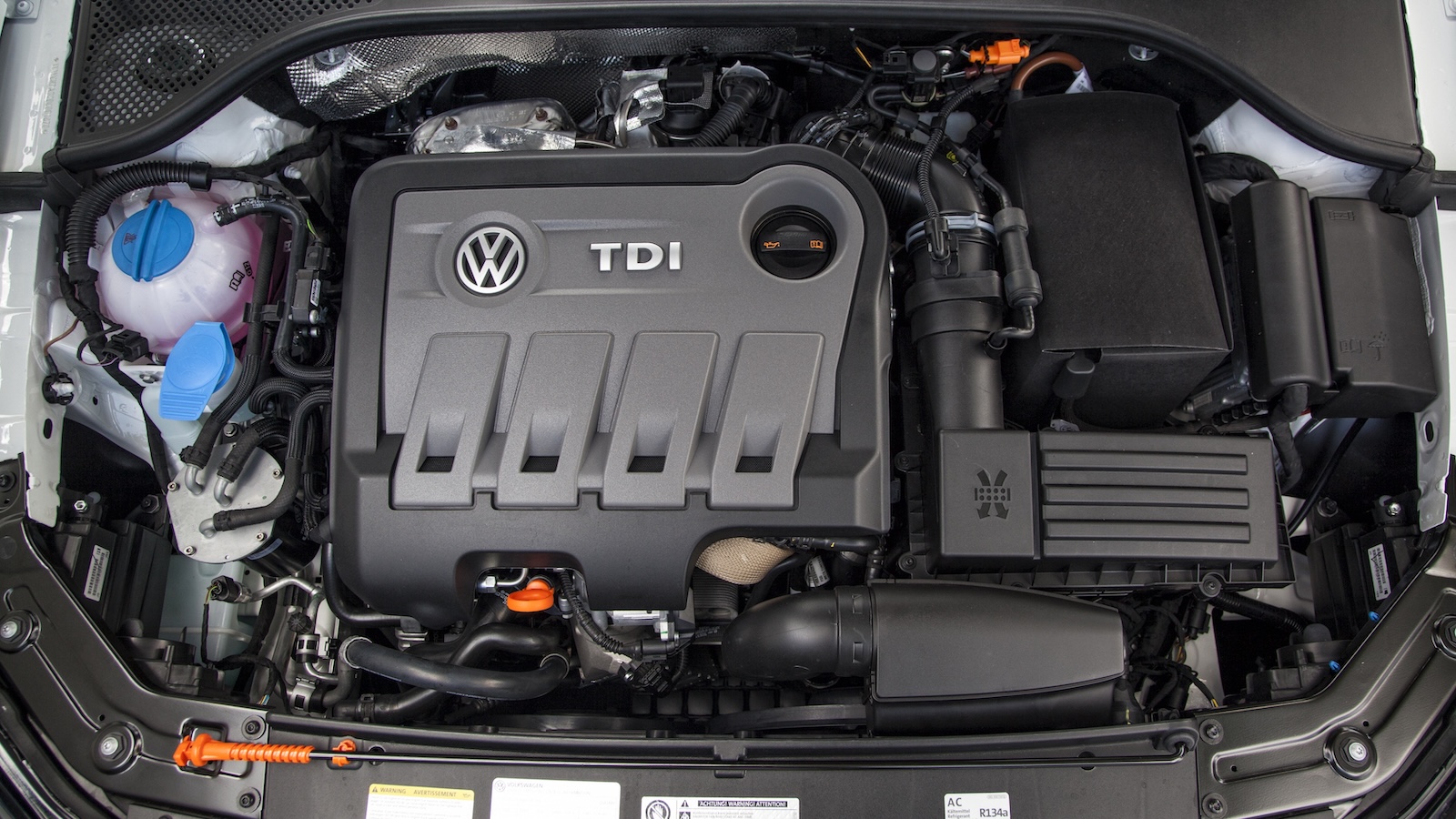
This month marked the 10th anniversary of Dieselgate, and it seems like Dieselgate never ends. A settlement that involved former CEO Martin Winterkorn and a board member was struck down by a court, which said shareholders essentially lacked information when approving a deal.
The approval of the 2021 pact may be void because VW hadn’t allowed shareholders to ask questions about the assets of Winterkorn and ex-board member Rupert Stadler, the Federal Court of Justice in Karlsruhe ruled on Tuesday, sending that part of the case back to a lower court. Under the agreement, Winterkorn had to pay €11.2 million and Stadler agreed to pay €4.1 million.
The judges struck down the approval of the part of the deal that made the Directors’ and Officers’ liability insurance cover €270 million. VW failed to tell shareholders beforehand that the settlement freed most other executives from liability over the affair, the court said. The settlement hinged on the shareholder approval.
The specifics of this are less important than the reminder that these court cases drag on for what feels like forever.
The A290 Rally Trophy Sounds Awesome

Electric cars still have a range issue that makes them not ideal for various forms of racing, but rallying (with its stages) might be one of the few current motorsport disciplines where EVs might work.
French brand Alpine already showed off its incredible A290 Rallye EV race car, and now there are some more details on the A290-specific racing series coming next year:
Building on more than six decades of Renault Group’s experience in one-make cups, the Alpine A290 Rally Trophy will be contested on six rounds of the French Rally Championship. The 16 competitors will compete in a dedicated setting, featuring environmentally friendly charging solutions, technical assistance, an on-site spare parts service, and guaranteed technical and sporting fairness.
In parallel, the Alpine A290 Regional Trophy will be open to crews wishing to compete in eligible rallies and hill climbs, thus facilitating access to competition for all enthusiasts. Similar to the Alpine A290 Rally Trophy, only the five best results will count.
[…]
The Alpine A290 Rally Trophy will offer €19,200 in prize packages at the Rallye National de l’Indre, divided between performance bonuses and spare parts vouchers. Starting next year, this amount will increase to €236,000 while the leading contenders in the Alpine A290 Regional Trophy will compete for a prize fund of €46,000.
If there’s one series I’d love to try my hand at next year, this one has to be near the top… even if I’m a mediocre rally driver (I’ve had training! As Chris Duplessis how stellar I am).
What I’m Listening To While Writing TMD
It’s an emotional week here at TMD, but that doesn’t mean I’m going to be playing emo songs (I leave the screamo to Thomas). I think everyone here knows that “Highway Patrolman” from Nebraska is my favorite Springsteen song off my favorite album. Hits me hard, and I don’t even have a brother. Did you know there was a video for this? Did you know Sean Penn directed it and it stars Viggo Mortensen and David Morse (and Patricia Arquette!)
The Big Question
What’s the best one-make racing series of all time?
Top photo: Ford, GM, Uno


“simply a card game that involves growing the most beans”
Was just curious…is this the game called “Pit”? My whole family/relatives played that a lot growing up and still does sometimes
EVs on rally stages? The type of racing where people stand in the road until they hear the (now SILENT) car about to rip around the corner 50 yards in front of them? I can’t wait for these crash videos.
The Spec Nissan Micra series we had up in Canada. A fully built racecar could be purchased for just under $20k CAD.
Those folks weren’t afraid to trade paint thanks to the (relatively) low cost of entry.
Most underrated series ever.
I prefer “Highway Patrol” by Junior Brown.
The IROC series was great while it lasted.
“What’s the best one-make racing series of all time?”
You have to ask? It’s the Ferrari F355 Challenge, of course!
Matt, your take on the IRA Act is quite narrow. It did (would have done) a lot more for the country in all aspects of transportation, energy independence, manufacturing and jobs, among other things. I view the IRA Act on the same level of FDR’s New Deal projects.
On the matter of GM and Ford’s moves on the EV rebate. It’s a wonderful and resourceful way to circumnavigate the policy madness which is the Trump administration.
One make racing? FIA Formula 2. Spec cars, widely varying talent. Formula 3 is good too, but too many crashes.
Wait until you play with a Uno Flip deck, a Reverse card is gentle in comparison!