

When it comes to music, food, movies, and especially cars, we often want the exact opposite of what our parents find appealing. Growing up, I usually rode around in things like Volkswagens or Volvos that Autopians seem to idolize today, but I wanted no part of at the time. No, as a ten-year-old kid, I looked longingly at those cruising in serene air-conditioned comfort in the backs of conversion vans.
Though appealing in concept, it was made clear to me by my parents and the car magazines that conversion vans were things no self-respecting car enthusiast or budding auto snob should have any interest in, and I don’t doubt that they were badly built and absolute crap to drive. Ah, but nearly half a century later, we have the technology to make even Brussels sprouts appetizing, so a reasonable conversion van could be within our reach. Let’s revisit the conversion van concept with a modern platform.


Ready Van Haven
Some time back, I was walking a Cars and Coffee past the endless rows of Porsches or McLarens in which I had lost interest after about the second one, and so drifted to the back corners in search of truly cool stuff. I was not disappointed: there amongst the VW 412s, Renault 12s, and Alpine A310s sat the ultimate in eighties motoring: a GMC conversion van.
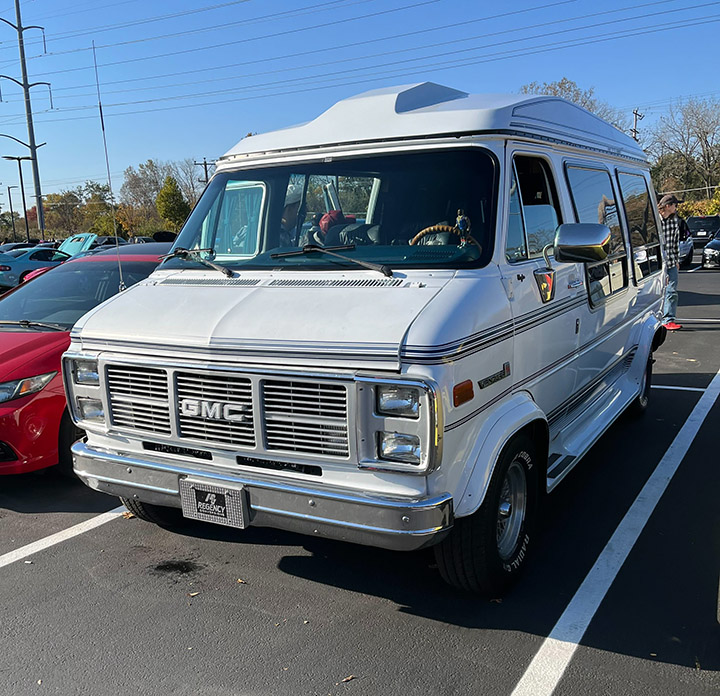
Upon looking inside, I was glad to see that my 12-year-old son had the same reaction as 12-year-old me did upon laying eyes on the interior: “This is hilarious, but it’s also the coolest thing I’ve ever seen.” He would have hopped in with his brother and gladly ridden all the way to Tampa right there.
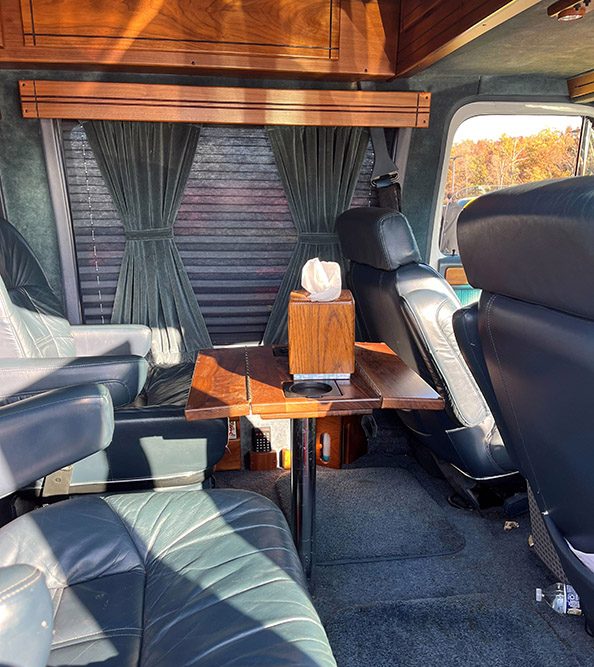
At the same time, he was a bit perplexed. The velour curtains and timber stuck on every surface except for the cut-pile carpet floor seemed more residential than automotive. That fabricated wood tissue box holder just sitting on a table looks like it could kill you if you hit the brakes too hard.
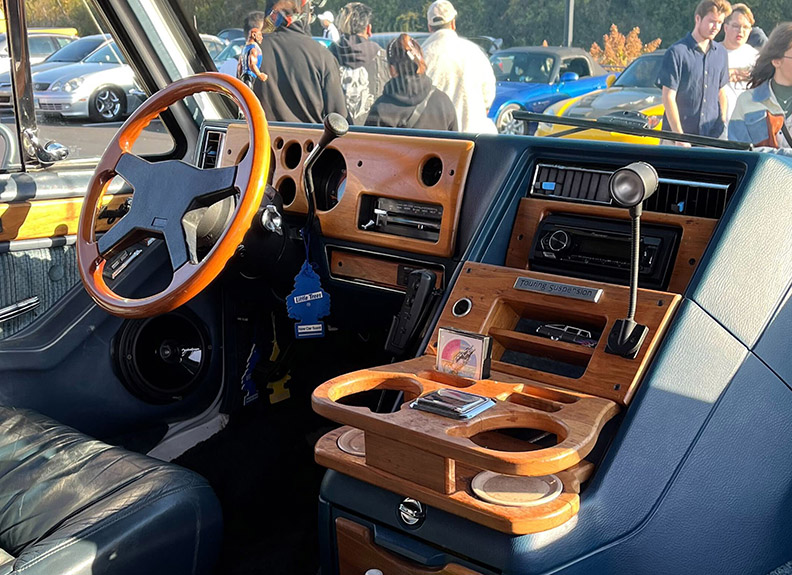
Better secured in the event of a collision would be your drinks, from the looks of the woodshop project going on in/over/around the center console. Nor would your cassette tapes go flying, as long as you only had four or fewer.
How the hell did these things come into being in the first place? It’s a long, crazy story.
The Only Drugs In Conversion Vans Were Benadryl And Dramamine
Fashion tends to get watered down over the years to become acceptable to the masses. What appears on the runways of Milan will go through a bunch of changes but eventually end up in some form on the racks at JCPenney.
In the seventies, the craze of the time was custom vans complete with stripes, lurid graphics, and the requisite bubble window cut into the sides, with interiors set up to be more like a cool bachelor pad than a moving motor vehicle.
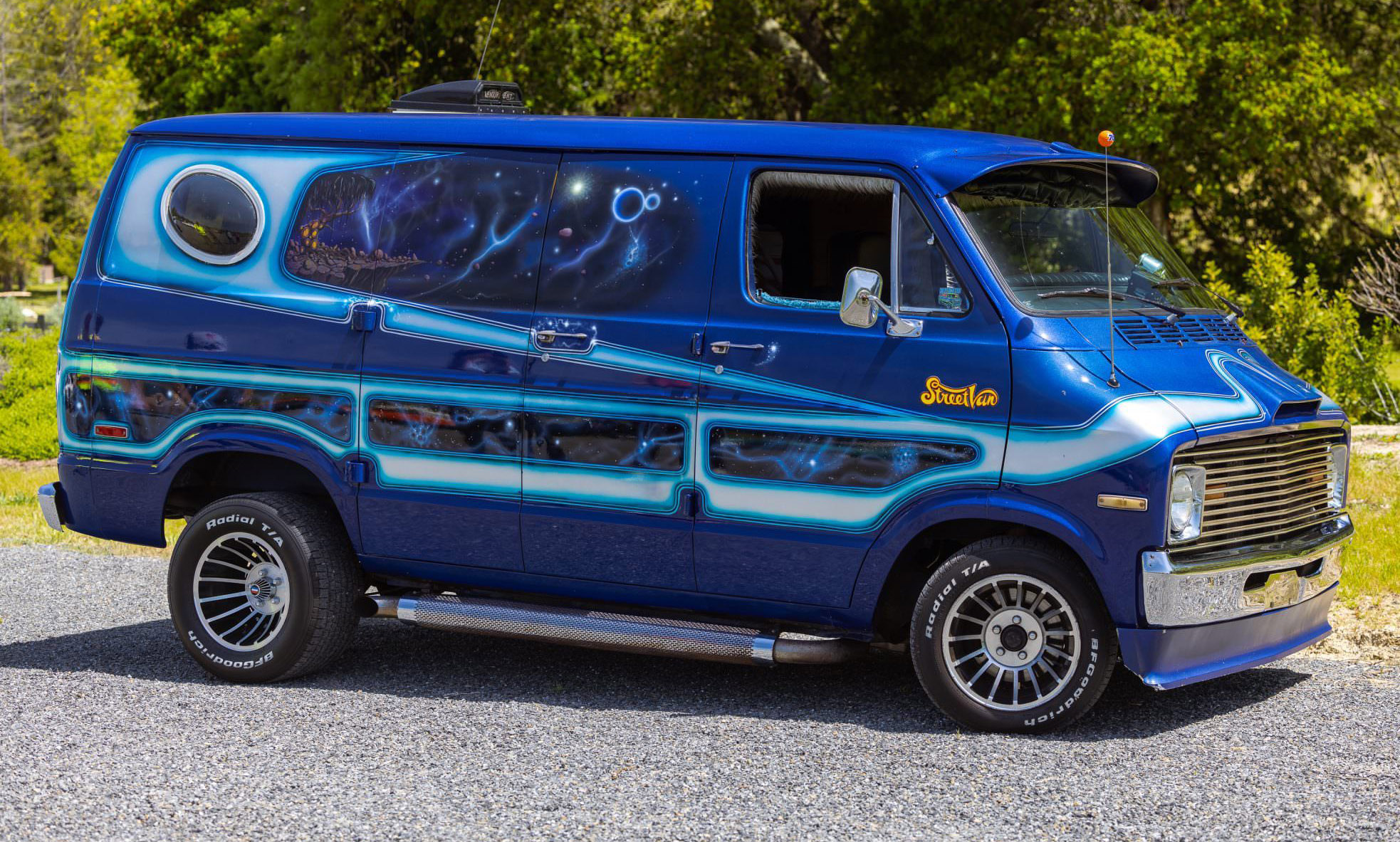
What brought on this trend? Well, being the malaise era with early smog regulations and gas crisis meant the idea of a “fun” car being something fast kind of went out the window. Making a product that was appealing at slow speeds or even standing still seemed to resonate better with buyers.
Also, exactly what these vans did when standing still collided with that other well-known revolution of the seventies that admonished potential visitors to assess whether or not the van was rockin,’ and if it was, better for you not to go knockin’.”

Even OEM manufacturers got into it, with factory-built custom vans that were “adult toys” for disco-era boys and girls.

Naturally, family-oriented folks despised these things for what they represented, but some likely thought that the idea of a spacious vehicle that could also be cool was appealing. It’s just that for them to consider buying one, it needed to be designed to actually let you see out of it and have an interior configured for children and grandparents and not for, you know, smoking weed and other stuff.
The answer was conversion vans; customized vehicles that offered extra seating instead of round beds in back, plus giant glass panels to replace the bubble windows. These were often done by firms that built motorhomes but suffered faltering sales because of the fuel crisis.
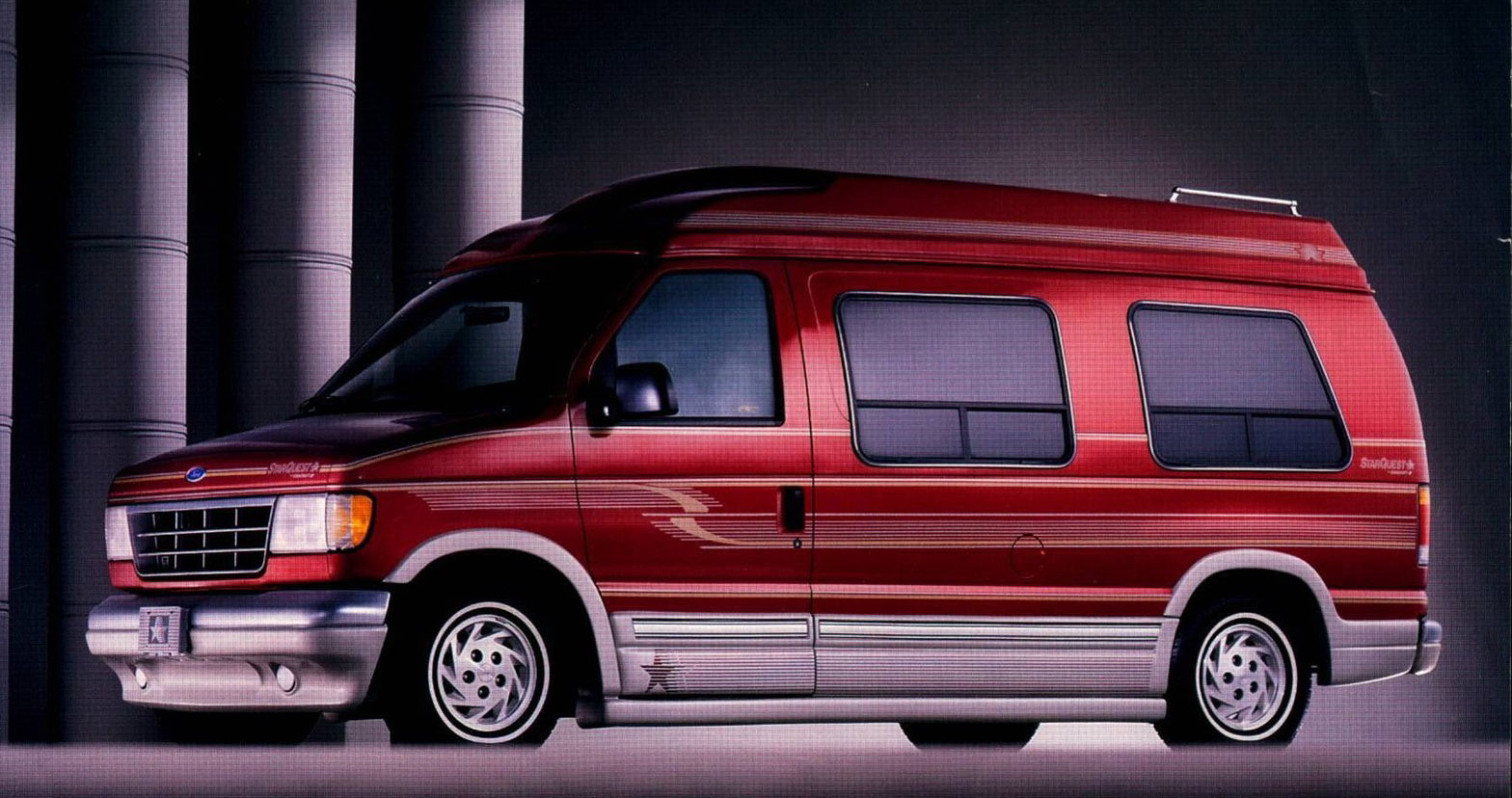
Many of these conversion firms were located in northern Indiana, where many Amish and Mennonites produce such handcrafted goods as durable and beautifully-made cabinets like the one I’m looking at in my office right now. It appears this local culture of craftsmanship ended up permeating the conversion van industry, as they were outfitted with straight-up wood furniture inside.
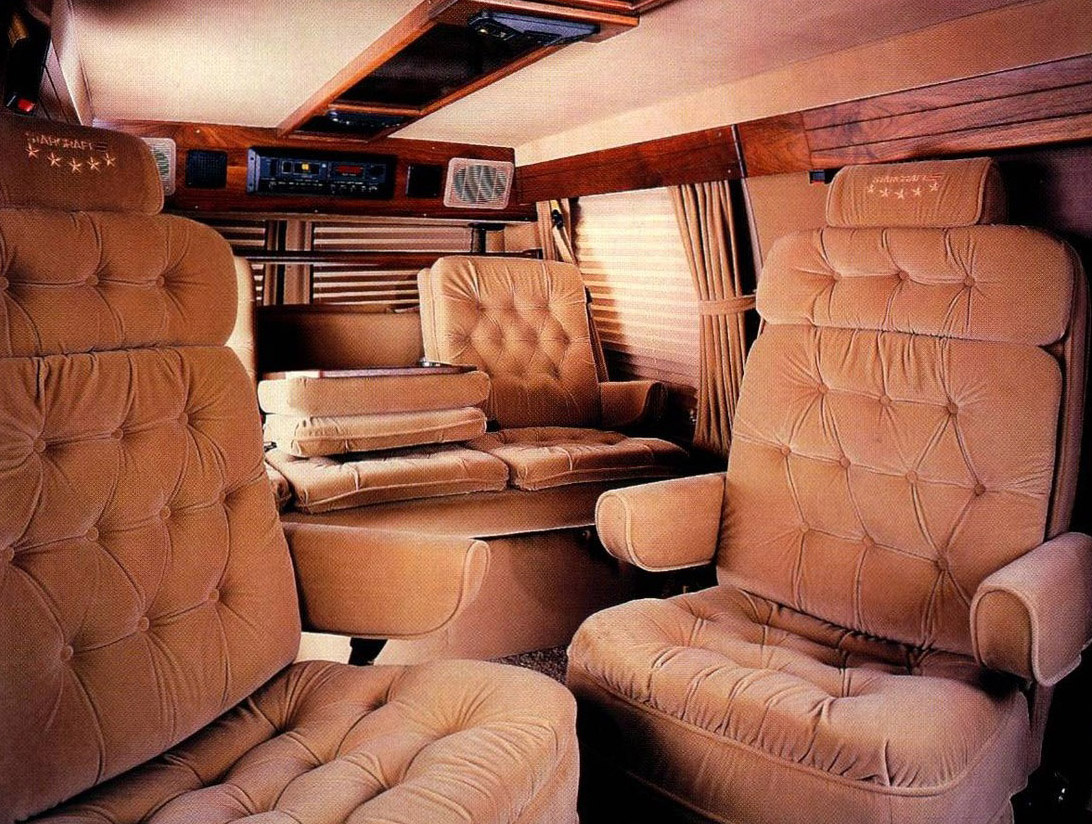
Look at these interiors: actual millwork to complement the carpeted or velour-covered surfaces. Tables, entertainment “cabinets”, and magazine racks that looked like woodworking projects your Uncle Dave shows when he drags you into his home shop. It’s so gloriously stupid, and I love it.
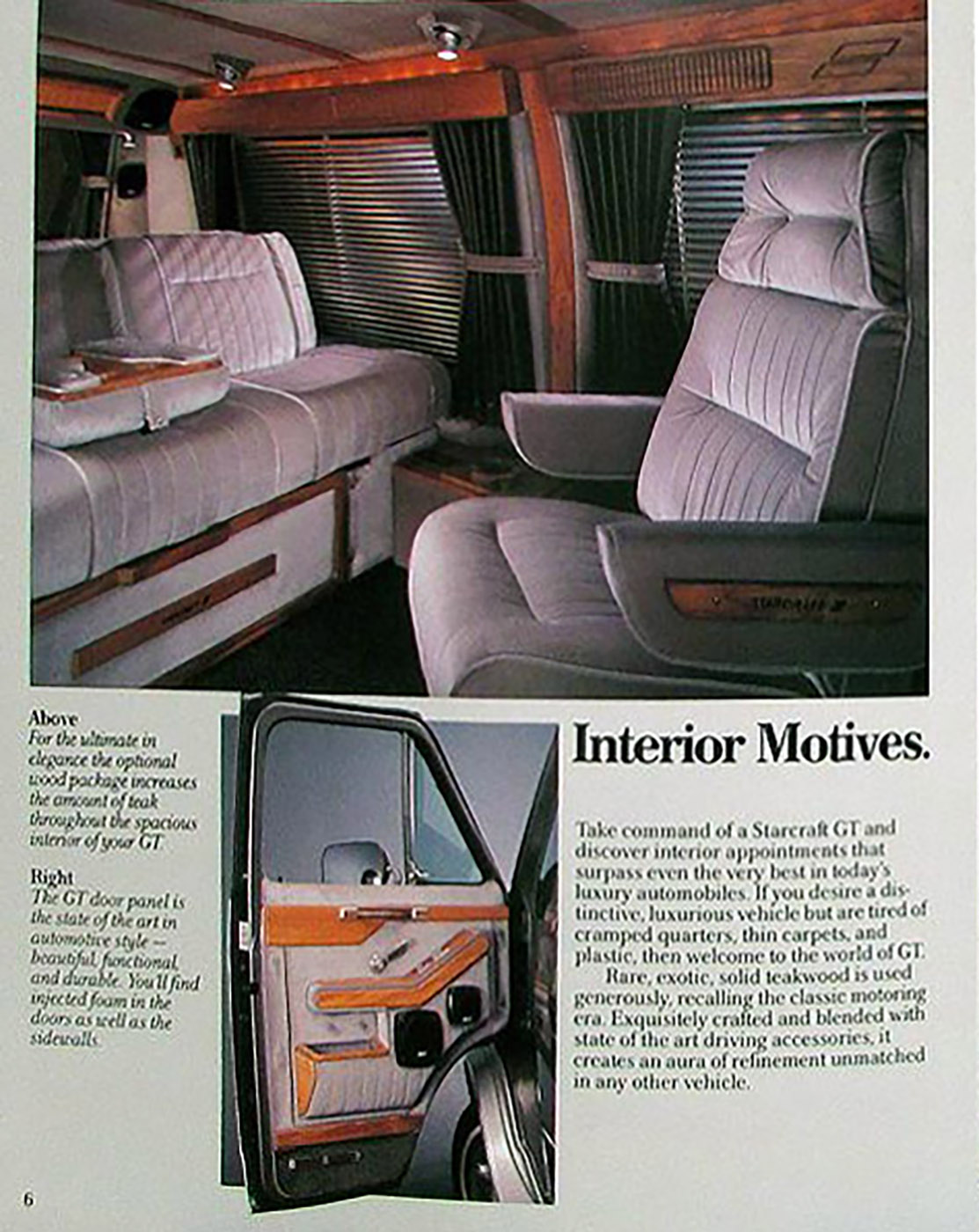
Designers sometimes strive for the feel of a stately home inside of a luxury car, but these conversion companies went a step further and just flat out put stained-wood-and-tambour furniture into a van and bolted it down.
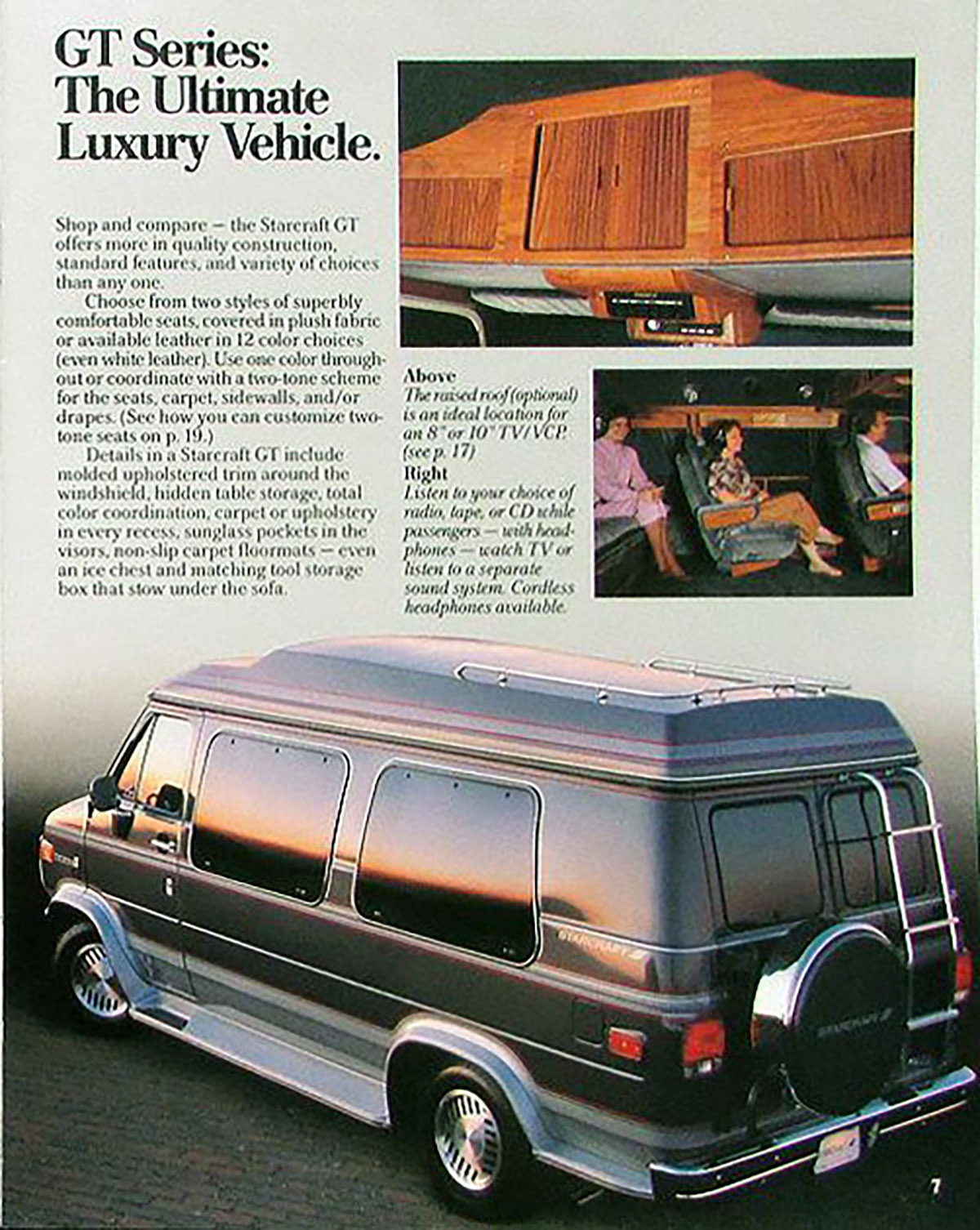
Wow, how about a “refreshments cabinet”? Those rich losers in their Rolls-Royce would need to go to a drive-thru to get a cold drink.
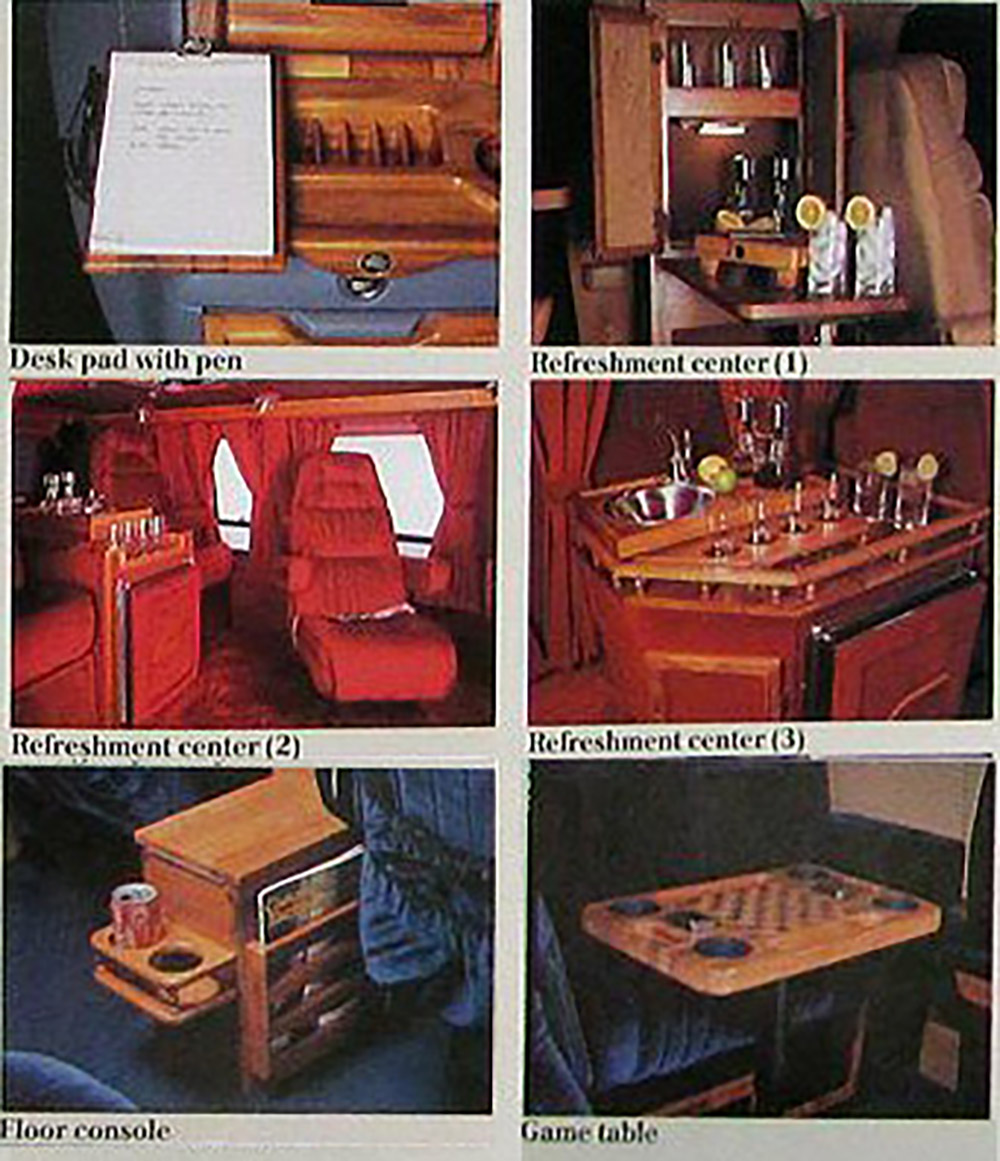
Obviously, these things were literally full-sized Ford, GM or Chrysler cargo vans with all of this stuff just stuck onto the inside with screws and glue. I’ve rented newer Econolines and Chevy Express vans sans all of the conversion pieces; I’m sure all of that foam and sound deadening on a conversion version would make it quieter than my Penske cargo rental, but I doubt that the driving experience would be any less miserable. That aspect, as well as poor fuel economy, is likely what always limited the appeal of these things.
Today, these kinds of vans are not even remotely as popular as back in the days of Alf and “Where’s The Beef” commercials. With the impending end of GM’s current big vans, and things like Sprinters not really creating exact replacements, the days of conversion vans might truly be numbered.
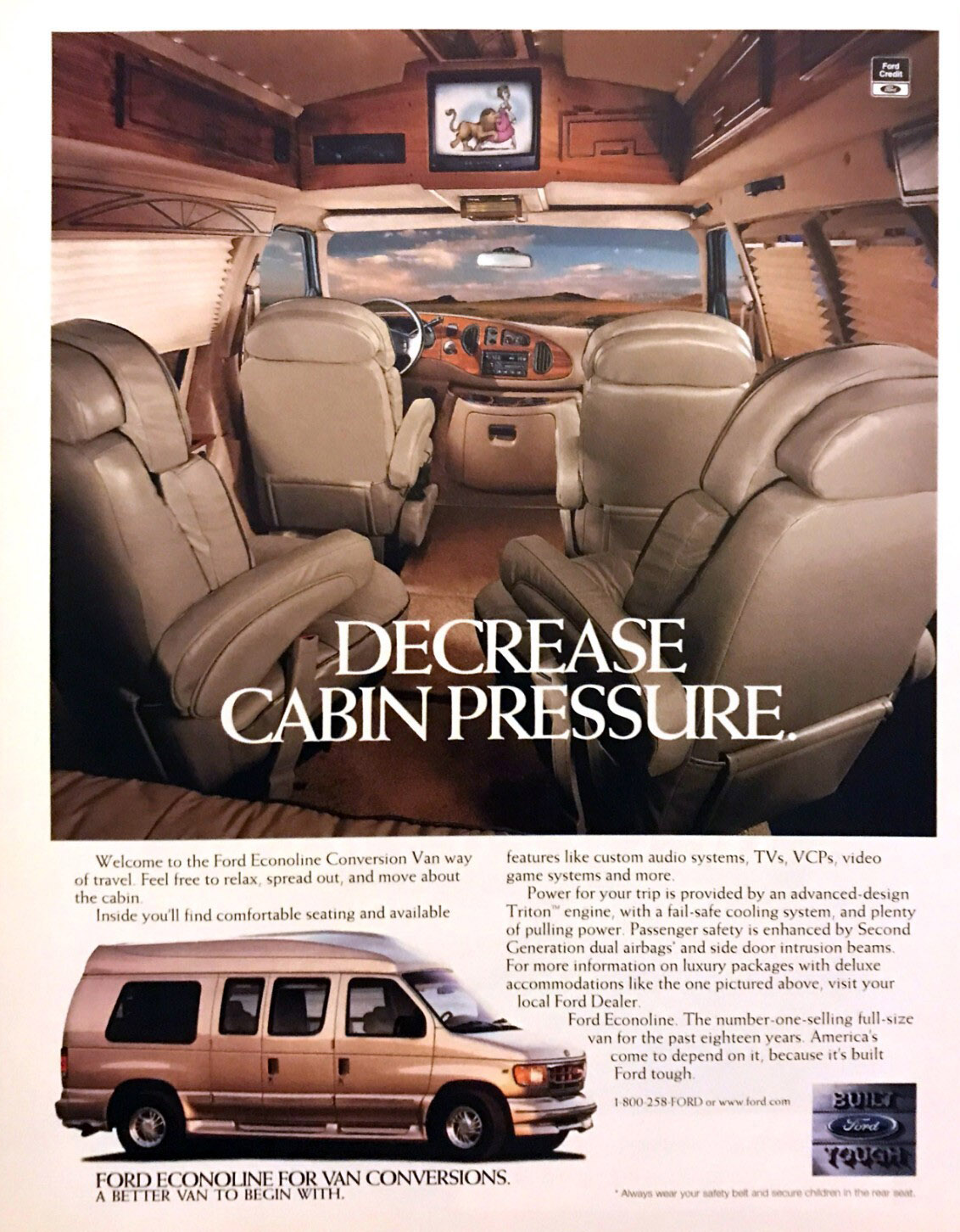
That’s a shame, since I’ve seen some vehicles that might be a great basis for today’s families to take the clan to Dutch Wonderland in.
Are We There Yet?
The Tokyo Auto Show used to be the place to go and see bizarre vehicular concepts, but now many of those concepts are handily eclipsed by products from Chinese manufacturers. One of the latest was a six-wheeled van from X Peng with six wheels.
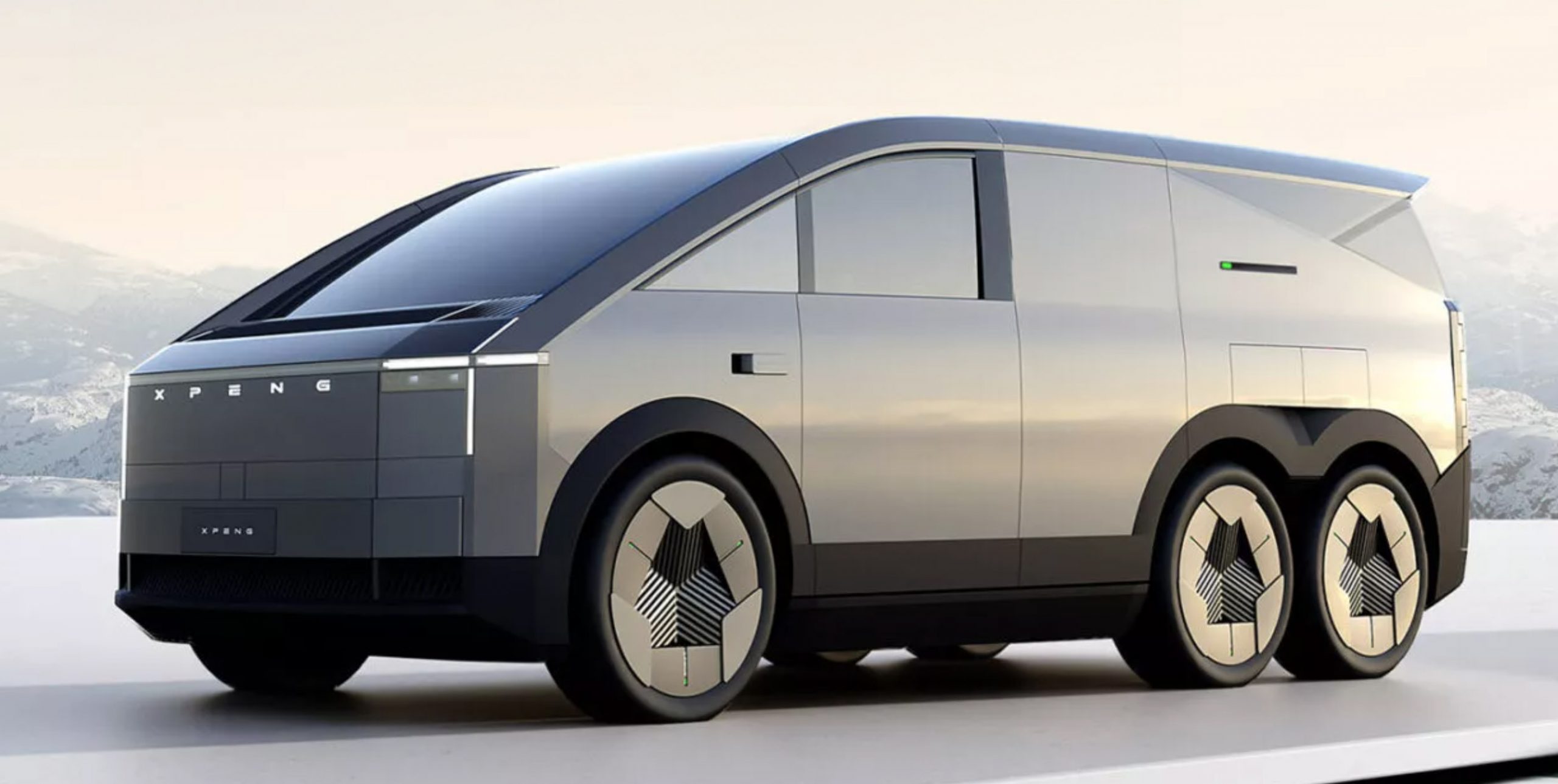
Just when you thought the styling was the strange part, you realize that the back opens up like a clamshell and there’s a strange object in there:
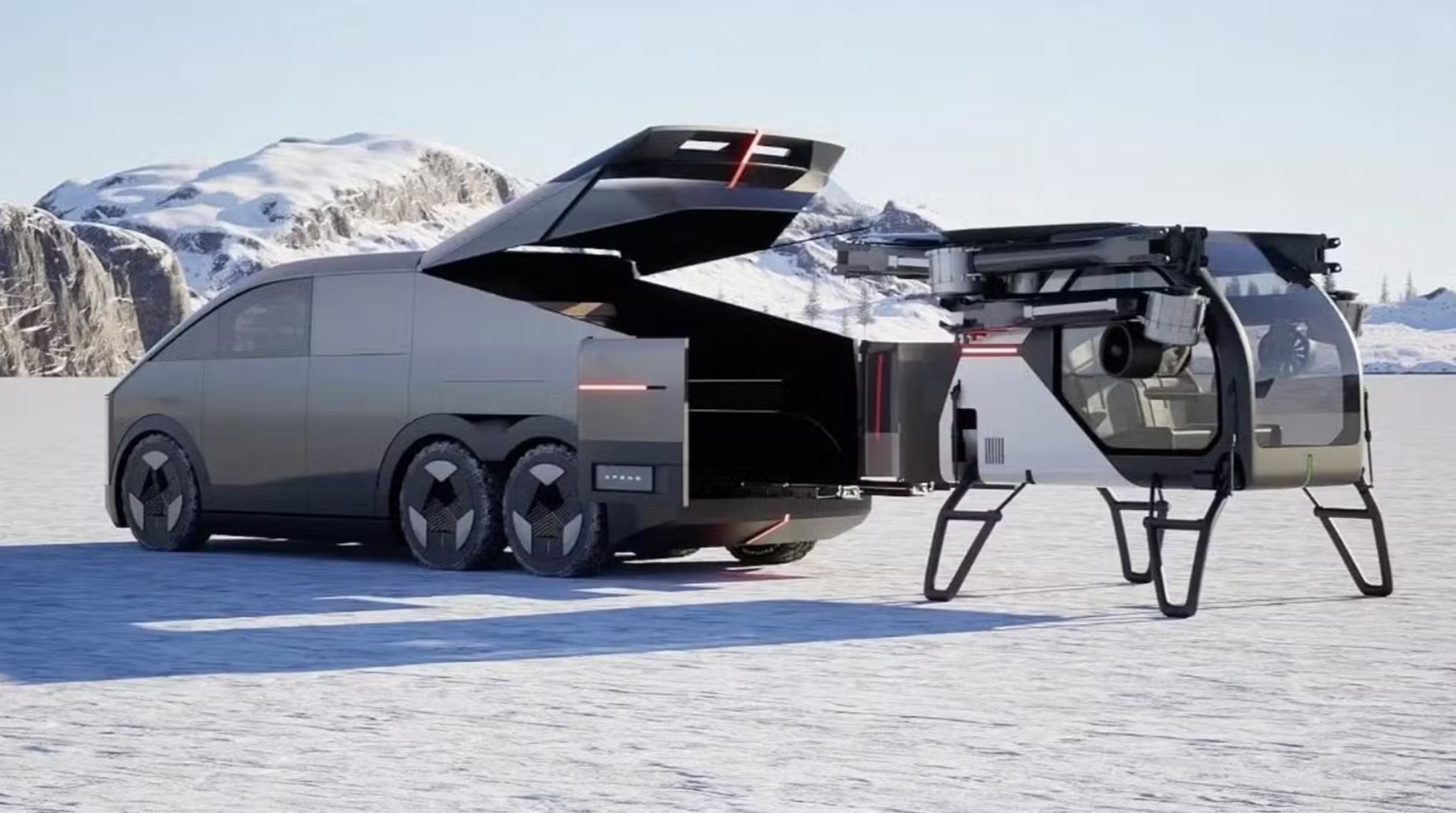
The object? A compact helicopter or drone that can rapidly deploy from anywhere the six-wheeled van can take it:
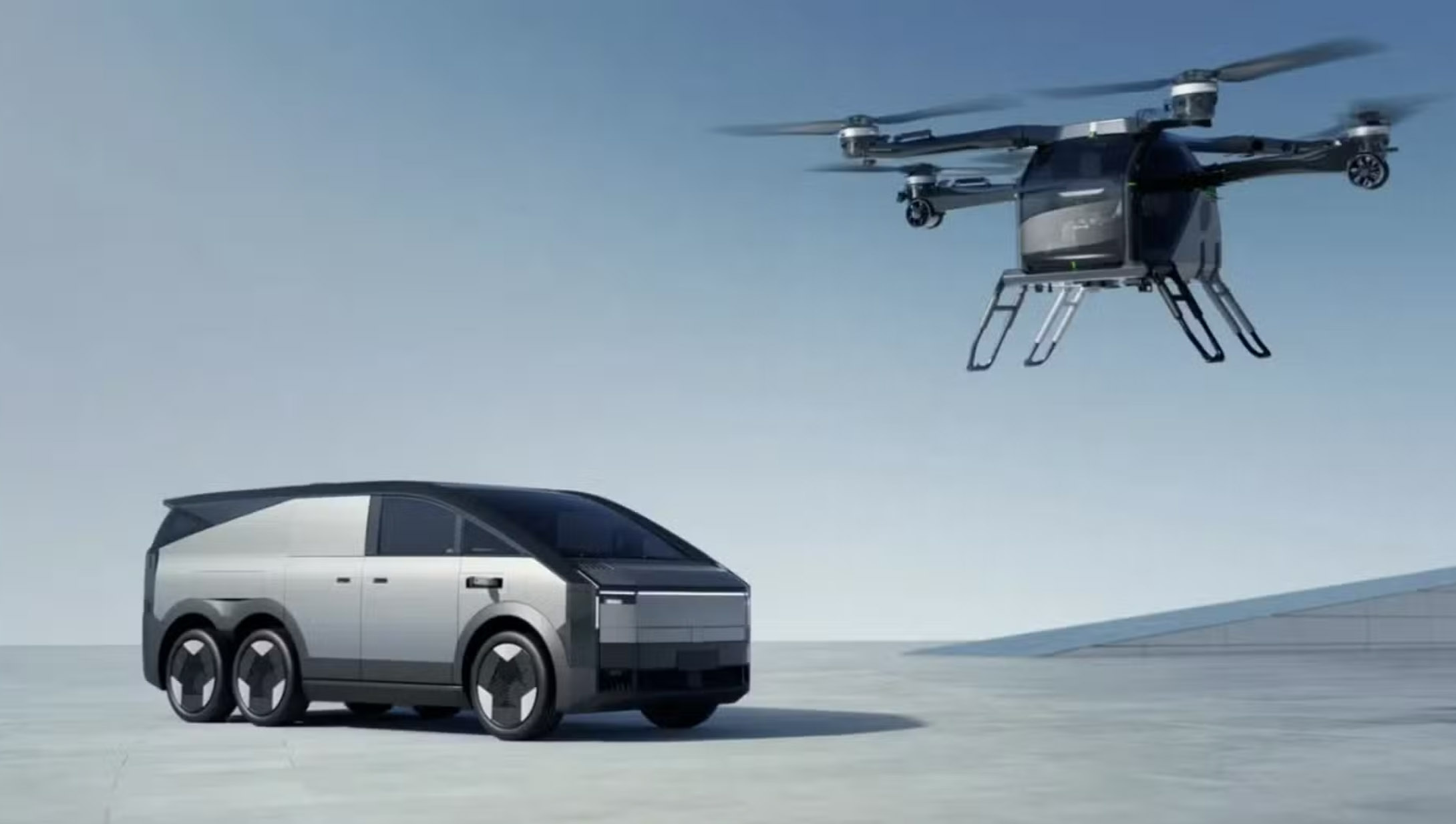
Personally, I find it pretty silly concept-for-the-sake-of-a-concept stuff, and the rear styling with an angled color blocking looks a bit too much like a Cybertruck and SsangYong Rodius combined. From the front, though, there’s a lot to like if we’re trying to find a modern EV interpretation of an old-school full-sized American van.
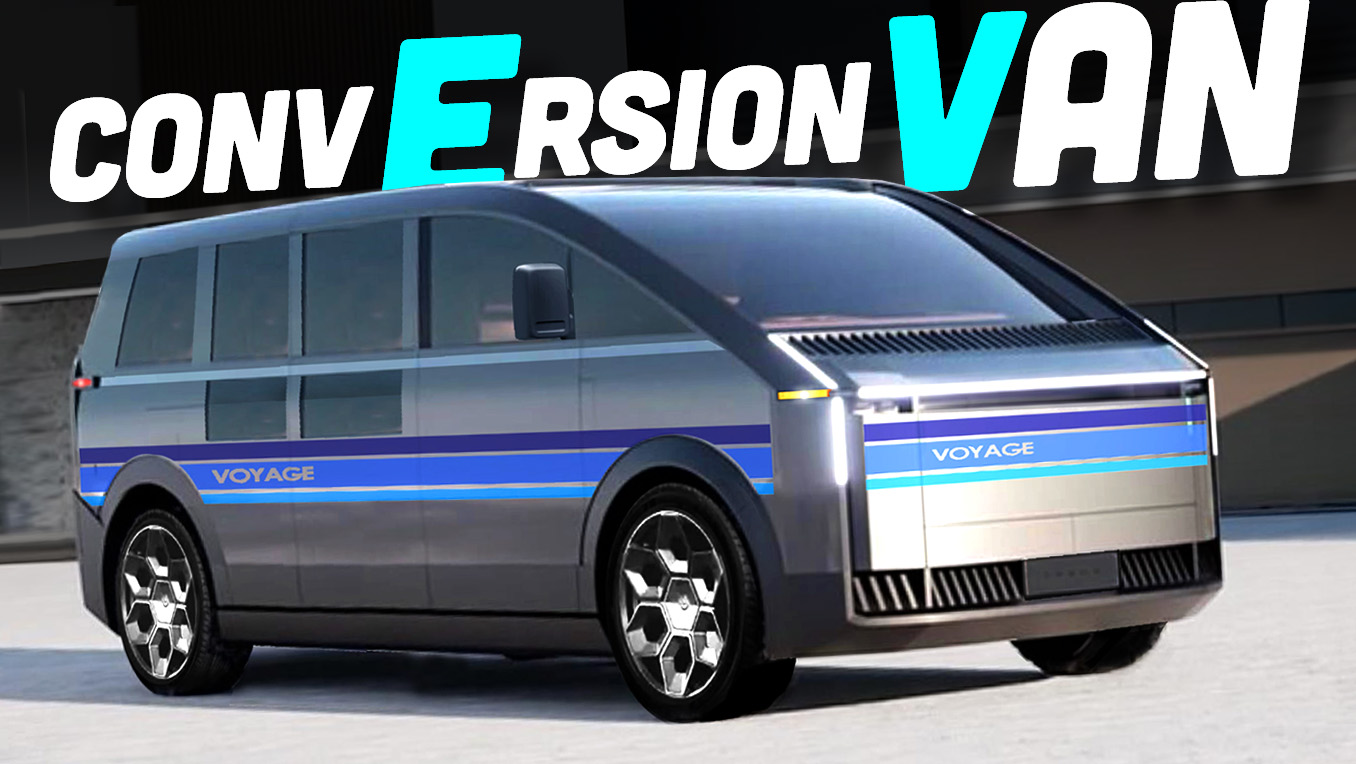
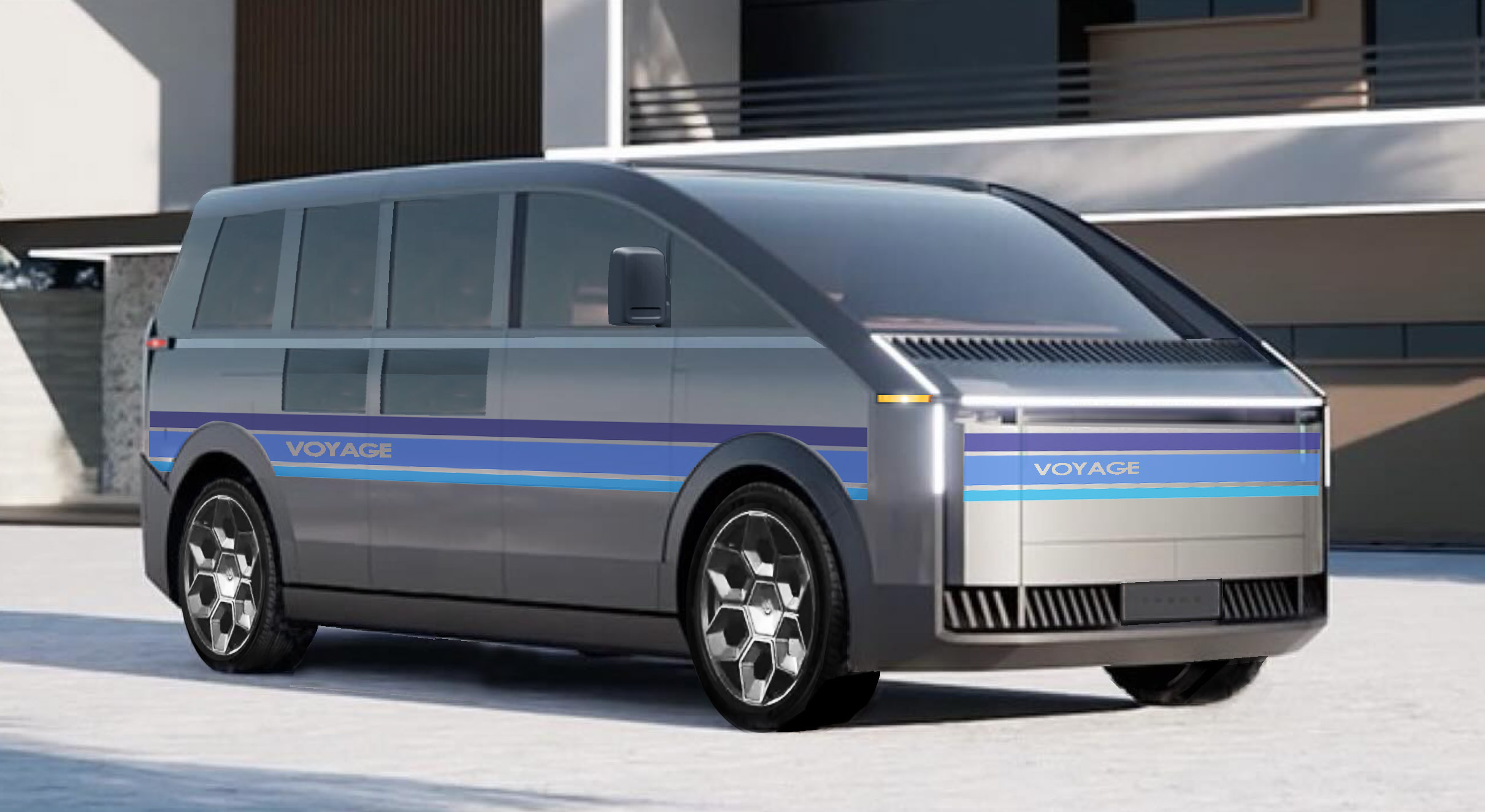
What I’ll call the Autopian E/Van (pronounced “Evan”) might be available as an all-steel-sided cargo variant, but our E/Van Voyage would get additional side glass just like an old Starcraft Econoline would have, and even a roof made almost entirely of glass. You can see that, like its forebearers, this conversion van would not have been a cabover; driver and passenger sit behind the front wheels with the area in front available for a small frunk and, if you choose, a range extending motor to charge the batteries under the floor that deliver all-wheel drive front and rear motors.
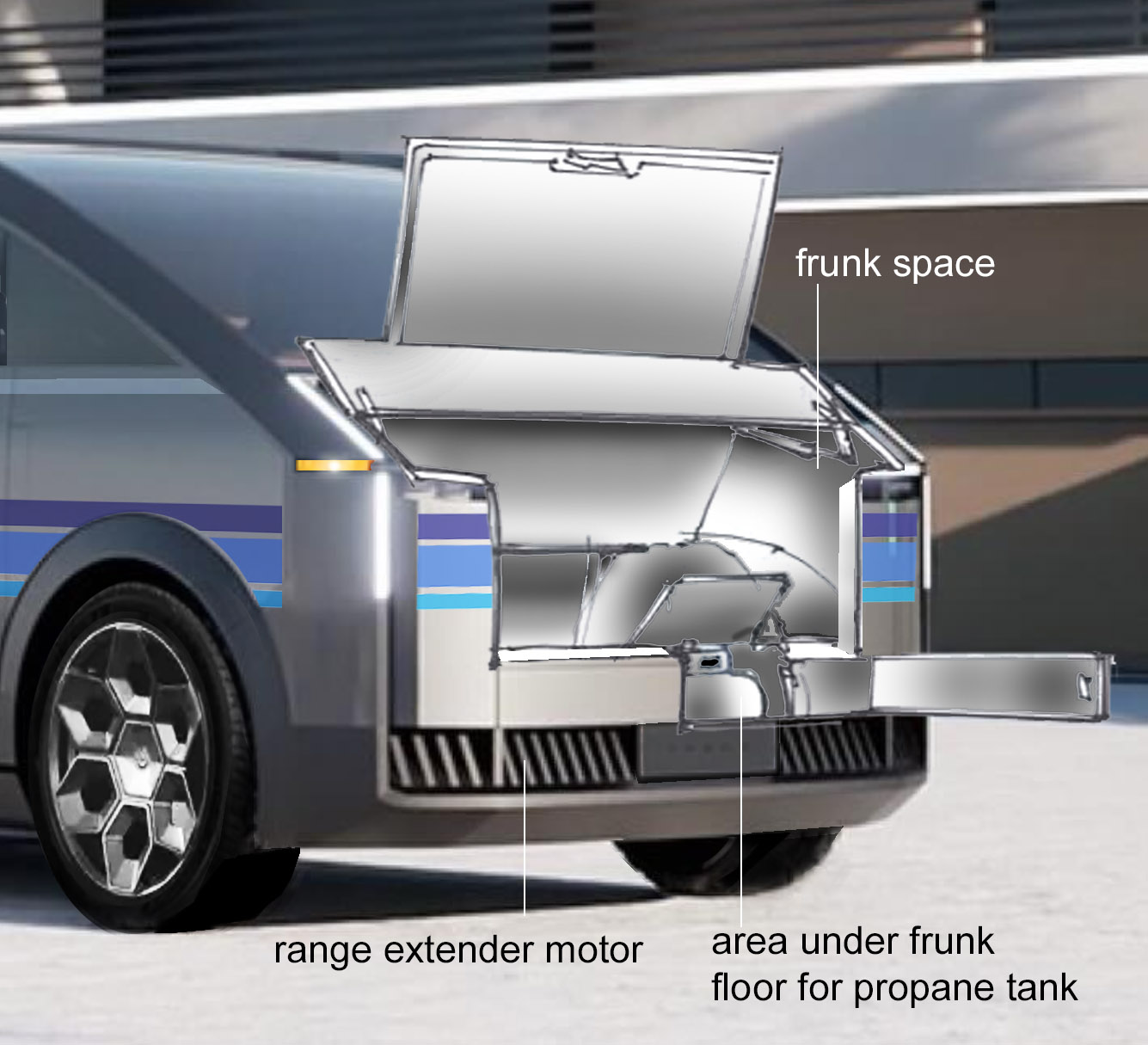
Would there be a fuel tank up front? I think you could have a gas tank, but one of the biggest issues of EREVs for some people is the introduction of a pollution-creating ICE engine to their once-zero-emissions vehicle. A possible solution might be a natural gas- or propane-powered range extender; you can’t easily find propane filling stations, but virtually any gas station will have 20-pound tanks for barbecue grills.
Inside, we’ll offer all of the amenities you’d expect from a conversion van, all updated for the twenty-first century. Comfortable rotating heated, cooled, and massaging chairs with flip-down armrests could also recline and include flip-up footrests. Between the center row would be a console with flip-up tables. A touchscreen on the console would operate the climate control and entertainment options, and also change the opacity of the glass roof and lower window shades. Touch another part of the screen, and a refrigerator would slide forward to allow cold-drink access.
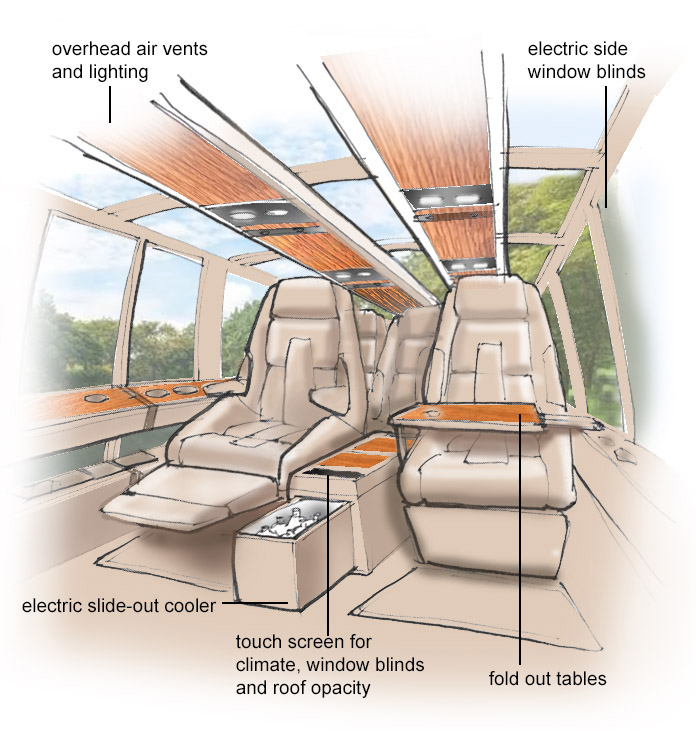
The “beams” running front to back above the seats hold reading lights that also create ambient illumination and hold aircraft-style vents. A rail along the side of the van has cup holders and storage bins, all trimmed out in finely finished real woodgrain (but not the stuck-on kind seen on vans of old). Whatever you liked about the conversion vans from days of yore would be present, but in a higher-tech version that would look a lot less like the basement recreation room where you watched videos for hours after dad finally relented and you were the last family on the street to get cable.
Plus, you’d have a much more advanced vehicle that would almost certainly be quieter and far better to drive than an old Econoline or GMC Vandura. A propane-powered range extender (and maybe even cabin heater) would mean you could test your kid’s bladder capacity and actually make it to Buc-ee’s on one charge while still not polluting the environment much more than a standard EV. Or, could natural gas power be the gasoline-and-diesel-free loophole for electric car makers to justify adding the range extenders many are balking at? Possibly, and gas stations would love to be able to sell more tanks during non-grilling months. The infrastructure is already there, people!
There’s Still Room For A Small Mural At Least
Is there room for a modern-day conversion van in the market? One of the biggest issues might be the lack of vans. We’d first need something like the E/Van to exist to make it happen, a van that is larger than an Odyssey but not gargantuan like a Sprinter. Regardless of the premature end of GM’s Brightdrop, I still think the decades-old Express and Savanna are not long for this world. A modern equivalent could be just the ticket for tradesmen and families alike.
With the disappearance of sedans and stretched limos, it would seem that people’s perception of a “luxury” vehicle is changing, and the time might be right for a relic of the eighties and nineties to make a return appearance.
Top graphic image: XPeng




The whole side is available for a larger scale mural. The tech is available to print scenes with holes for visibility out the windows.
Hat tip to @Potatomafia, here’s a Staria camper
https://www.hyundai.news/eu/articles/press-releases/staria-camper-concept-at-the-cmt-2026-in-stuttgart.html
I was looking for a pic of a Staria and ran across that article too. IMO, that pretty well represents what a modern conversion van is.
For a more compact option, the Citroen ELO concept from the current Brussels show is a good one too. It won’t Bring you Down.
I’m overseas currently, courtesy of Uncle Sam. I see a lot of Hyundai Staria vans here (very far from their home market). They are very Cyberpunk looking.
https://www.hyundai.com/eu/en/models/new-staria-hybrid.thumb.800.480.png?ck=1747997643
Where do I send my deposit?
Having been a Service Director at a CPD dealership during the late 70s through the 90s and owned a 83 Dodge Van Express conversion, I can assure you the quality of the conversions were lacking but the customers expectations were that of people didn’t realize that they purchased a plumber van special.
So, this is what is going to happen with all of the Canoo prototypes.
In my 70’s high school years joey bought an old bread truck. We named it Vagina and of course painted it on the side of the van…. Immediately band from the school parking lot…. When we picked up dates we were told to park down the street…. Drive in’s when they lets in made us park in the very last row…..we bought a cheap sofa and would haul it up on the roof. Best view in the house.
Naked lady with a surprising anatomy playing a fender star guitar, riding a flying unicorn toward a castle with a wizard in a tall tower. I still have the airbrushes.Also this can only happen on the side of an ex council gas works Bedford CF with Wolfrace wheels and a jacled back axle.
Bonus points if it’s a diesel. With shag carpet offcuts from when your nan got the bathroom AND the kitchen recarpeted.
The alure of a conversion van for me was always melting away miles in comfort. This EV use case is second worse to towing. Nothing like turning the drive to disney into a 4 day affair.
Now if we’re back when shag and murals were hot for a second I’m all in. So I guess they need time travel too.
And now that I say it, I’m surprised Musk hasn’t promised time travel yet.
He has, it’s coming in 2027.
Current GM conversion vans run the 6.6 Gas motor as much as anything, thankfully it lacks the DFM system, and surprisingly they claim it can get as much as 18MPG on the freeway. though I feel like that is still optimistic. Diesel 6.6 likely gets over 20 as long as the CP4 pump works and it is not regenning I suppose.
Propane conversion is still a thing, though in limited volume. and the tanks take up a fair amount of space behind the driver usually if the plan is to drive up to a propane station and fill up, I have seen some offroad vehicles with a Propane Carb conversion and it works pretty good even off camber in those rigs, though I have always seen them running propane fork lift tanks as I am sure those have better safety systems than the run of the mill BBQ grill setup. I don’t know that the Propane makes as much of a bang in the motor so I suspect equivalent fuel economy is less.
The GMC full size van was offered for several years with the 2.8 4cyl BabyMax diesel.
Now THAT would be perfect for family conversion van road trips.
If Elon Musk wasn’t such a…er, uh, the way he is, he would make one of these out of his non-selling truck. But then again, I’m not sure any one would buy them either…
Then upholster it top to bottom in brown Fun Fur and call it the Alpha 7
(Alphy for short)
Conversion vans haven’t gone away. Yes, there’s fewer of them—lots of the conversion companies folded during the great recession—but you can still find plenty of new ones. It’s just that six figures is a lot to ask for a market that’s even more niche than it used to be.
I drove a conversion ’97 Econoline-150 for 7 years and I have no idea what you’re talking about with “absolute crap to drive.” They’re certainly not fast (although even then, I’m sure you could get a new Express/Savana one optioned with the 6.6l L8T 401 hp and 464 lb-ft, they claim)… but mine was comfortable as hell.
A lot of newer ones have some of the interior features you’ve already highlighted. If you want to look at examples, you can look up Paul Sherry Conversion Vans (just happens to be the nearest specializing conversion van dealership I’m aware of near me).
Used conversion vans near original condition are getting hard to find for a variety of reasons. I’ve mostly intuited these so I welcome correction, but:
Ultimately, I think even an EREV just might not get the range desired for conversion vans, aka one of the ultimate road/day-trip vehicles. Getting 500 highway miles to a tank was a point of pride for mine, 33-gallon tank be damned.
And in spite of everything, I’m still hoping to acquire another sometime soon, because I cannot properly convey to you the feeling of a heart full of love when you’re driving 6+ of your closest friends in a luxurious space all your own.
Conversion vans rock, and until we get better battery technology, I think electrifying them in the U.S. is a fruitless endeavor. (I’m open to the idea broadly! But as road-tripping vehicles, I think they need a higher standard. But getting 500 miles out of one of them would probably put the Hummer EV battery to shame.)
i’m glad you gave your 2 cents
Friend’s parents bought one when I was a kid and the seats in that thing were amazing. Velour, of course. Drove so much better than our minivan, too, but IIRC, the father said it got something like 10 mpg and they weren’t rolling in money. Pretty dumb purchase in their case, but it was great riding in it.
Wild! Even for my ’97, I could reliably get 17 mpg (measured at the pump) with the cruise set at 67 mph on the highway. Which I’m sure was better than some large SUVs and trucks of the day.
That was probably almost all city. He was also kind of a dummy, so he probably drove poorly, though I can’t remember from 40 years ago.
I found the GM work vans I got saddled with in a past life a bit wandery on the highway, but charming and pleasant otherwise. Presumably leading a more pampered life than that of a fleet vehicle would help a bit.
“With the impending end of GM’s current big vans”
Did I miss something? Has GM finally cancelled the Express and Savanna??
No, but they cancelled the Brightdrop Electric vans.
See my reply
Surprisingly here in metro west Boston I have seen them more than ever in the last two months. BrightDrops that is
Yes, please, and a stripped cargo version with interior bulkheads to mount:
That van pictured above with the fuzzy white interior, is that a polar bear asleep in it?
No that’s just the sound that Grandpa makes when he’s eaten too much Taco Bell and is snoring out of both ends.
Naw dog, that’s your mom
He’s not asleep. He’s got his head in the rear fender putting air in the tire.
Running through some quick energy density calcs, a 20lb propane bottle is roughly the same amount of stored energy as 3.8gal of gasoline. Honestly, just put a 5-10gal gas tank in there and call it a day. Propane burns cleaner, but still has emissions.
Beyond that, conversion vans have never died out, they just seem to have shifted to executive transports in Asia. The Toyota Alphard conversions come to mind.
Also, several minivans in the US now have the recliner seats in the second row, which takes care of most of the old conversion van appeal for me.
That said, I’d love the longest Sprinter they make – with the dually rear axle, set up conversion van style more along the lines of the 80s and 90s ones.
The Transit also has that configuration available. From what I’ve heard about Sprinters maintenance-wise, I’d pick the Transit every time.
Not to mention the Transit has a much lower entry price for similar specs. I’d also pick the Transit.
I prefer the Transit as well but I don’t think they have one as long overall as the longest Sprinter configuration.
Also, you’re not allowed to use tunnels in my area (and probably elsewhere) if you have propane on board.
Really? What about RV trailers and such? I guess my state requires the propane bottles to be shut off.
Propane is heavier than air, and isn’t allowed whether hooked up or just carried and capped. You have to use a bridge crossing, not any of the river tunnels. At least that was the case last time I had to deal with it, which was admittedly a long time ago.
The Ford Transit 350 variant with the tall roof has kind of become the darling of the Van/Camper crowd. I think the price and availability as well as better perceived fuel economy. I don’t see many as conversion vans, though I suppose what qualifies as a conversion Van is up for debate.
Looks like Canoo.
Are they, officially, dead now?
I wish that I lived a different life and had the time and patience to buy the most velour stricken land yacht and shag infested, Frazetta muraled van, and convert each to be an EREV
I want mine to be a 6×6! With a rear track conversion! I’ve wanted a half-track since I was a kid.
Right or wrong, this is all I picture when I see ‘propane in the frunk’: https://www.youtube.com/watch?v=ngtALzDAIcU
This is the one that came to my mind:
Gas tanks explosion in Russia : r/videos
Small Mural?
If it doesn’t have a dude with better hair than Prime Fabio, lightning, a sword, a dragon, a unicorn and a woman that looks like Frank Frazzetta’s wife showing off her hooters, it’s just a van, not a Conversion Van.
I am responding to this whimsy with far more seriousness than I probably should, but not only does a natural gas or propane engine still produce pollution, but a 20 lb cylinder is the energy equivalent of less than 4 gallons of gas. Not very much to motivate a large brick-shaped vehicle.
TBF, an EREV is probably topping out at like 12 gallons or so
Do you think the poster doesn’t realize that burning hydrocarbons is all the same?
Your interior is reminiscent of the upper deck aboard the Budd 80’ Ultradome cars which are in service for Holland America on the Alaskan Railroad.
No, we do NOT have the ability to make Brussels sprouts appetizing!
However, a modern take on a conversion van does look pretty tasty!
If I’m not down by the river, I’ll be at Wal-Mart exchanging my propane tank!
Have you never heard of bacon, balsamic vinegar, and/or parmesan cheese?
He’s obviously never had properly prepared brussles sprouts, but you sure have. 🙂
Was about to say, bacon makes so much in life tolerable.
Truer words have rarely been spoken. Life is just better with more bacon in it.
Cook bacon. Take bacon grease and coat halved brussel sprouts. Roast. Mix with apple bits, crumbled bacon, dijon mustard and maple syrup and baby, you got a stew going.
Throw all that in the trash and eat the bacon! 🙂
That interior rendering is seriously tasty. Unfortunately the obsession with thick pillars for perceived safety would never let it happen, but we need cabins that look like Amtrak Sightseer Lounges goddamnit!
Full-size vans are not subject to the same safety standards and testing of smaller ones.
Source: you can buy a new Chevy Express today that still does not have headrests or side airbags for rear passengers. And by “can buy” I mean there’s no option to add them from the factory, either.
No headrests is very surprising.
Agreed. For as few safety features as these vans have besides the front two airbags and sheer mass, in my conversion van shopping I always make sure the rear bench seats have headrests, because they appear to be a common (but not universal) addition from the conversion process.
Side note, the factory passenger Express looks like one of the worst cupholder-to-occupant ratio vehicles of all time (for vehicles with at least 1 cupholder). The first back row gets one cupholder. The next row gets one. The one or two rows behind that don’t get any.
Wish I was a fly on the wall when that was decided.
Thick pillars aren’t for safety standards, they’re to make consumers feel safer psychologically. We can make fairly thin pillars that are capable of modern safety regs with the advancements in materials that we’ve made, but the cocoon effect of thicker pillars are to convince people that they’re in a safer vehicle.
To be fair, for a given level of strength, big honking thick pillars are LOTS cheaper than properly engineered and built out of much more expensive high-strength steel thin pillars. AND they clinic better. Same with the ubiquitous high beltlines of today.
Fair enough, but I bet the first OEM to make a car with strong, thin pillars could have a hit on their hands. The first thing I hear from many Forester owners about why they love their cars is the low windowline. I think there’s potential demand for a car with an airy DLO again now that we’ve been bombarded with the opposite for nearly a decade.
They all say high beltlines and tiny windows clinic really well (with the bonus of being cheaper). Maybe lesbians really are different. <shrug>
Who is “they”? Wife has a Highlander and sitting in the back seat is like being in a bunker. The front is only a little better.
In contrast, I have fleet of 90s Hondas with low belt lines, thin pillars and big greenhouses, and the poor visibility and poor packaging of the current Highlander grates on me every time I’m in it. (Plus it feels like parking a house at preschool compared to any of my cars)
They is whoever it is that the automakers get to do these clinics. They sure never ask me, because I am absolutely with you on this one. But supposedly, women especially don’t feel “safe” if they can actually see out of vehicles. <shrug>
Don’t forget, anyone who cares enough about cars to be on a forum like this is NOT your average new car buyer, at all.