

When it comes to music, food, movies, and especially cars, we often want the exact opposite of what our parents find appealing. Growing up, I usually rode around in things like Volkswagens or Volvos that Autopians seem to idolize today, but I wanted no part of at the time. No, as a ten-year-old kid, I looked longingly at those cruising in serene air-conditioned comfort in the backs of conversion vans.
Though appealing in concept, it was made clear to me by my parents and the car magazines that conversion vans were things no self-respecting car enthusiast or budding auto snob should have any interest in, and I don’t doubt that they were badly built and absolute crap to drive. Ah, but nearly half a century later, we have the technology to make even Brussels sprouts appetizing, so a reasonable conversion van could be within our reach. Let’s revisit the conversion van concept with a modern platform.


Ready Van Haven
Some time back, I was walking a Cars and Coffee past the endless rows of Porsches or McLarens in which I had lost interest after about the second one, and so drifted to the back corners in search of truly cool stuff. I was not disappointed: there amongst the VW 412s, Renault 12s, and Alpine A310s sat the ultimate in eighties motoring: a GMC conversion van.
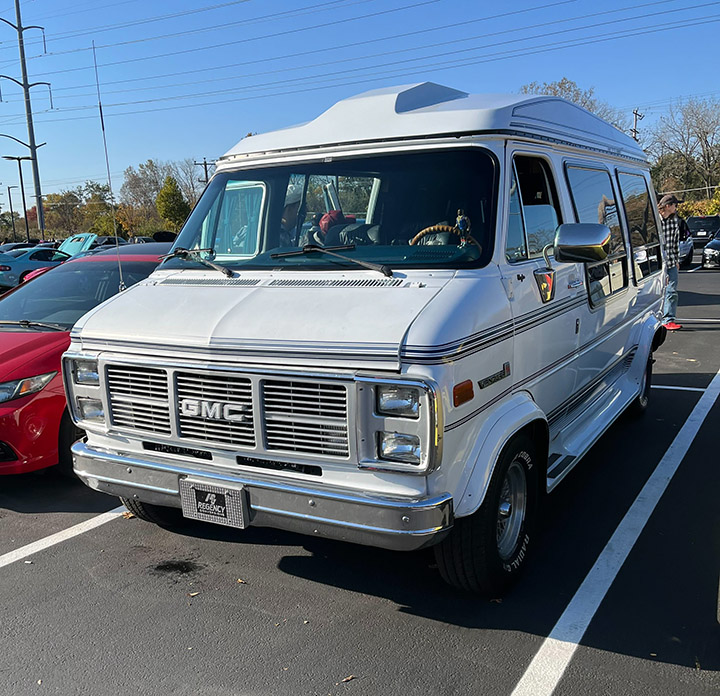
Upon looking inside, I was glad to see that my 12-year-old son had the same reaction as 12-year-old me did upon laying eyes on the interior: “This is hilarious, but it’s also the coolest thing I’ve ever seen.” He would have hopped in with his brother and gladly ridden all the way to Tampa right there.
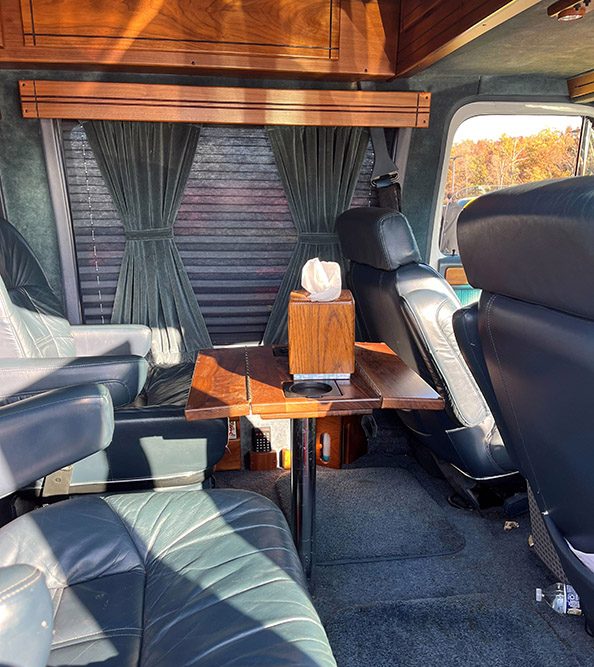
At the same time, he was a bit perplexed. The velour curtains and timber stuck on every surface except for the cut-pile carpet floor seemed more residential than automotive. That fabricated wood tissue box holder just sitting on a table looks like it could kill you if you hit the brakes too hard.
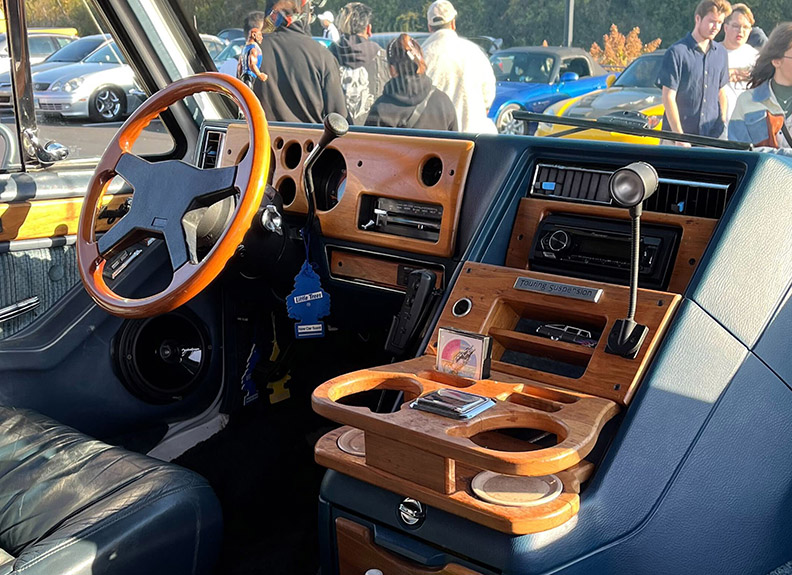
Better secured in the event of a collision would be your drinks, from the looks of the woodshop project going on in/over/around the center console. Nor would your cassette tapes go flying, as long as you only had four or fewer.
How the hell did these things come into being in the first place? It’s a long, crazy story.
The Only Drugs In Conversion Vans Were Benadryl And Dramamine
Fashion tends to get watered down over the years to become acceptable to the masses. What appears on the runways of Milan will go through a bunch of changes but eventually end up in some form on the racks at JCPenney.
In the seventies, the craze of the time was custom vans complete with stripes, lurid graphics, and the requisite bubble window cut into the sides, with interiors set up to be more like a cool bachelor pad than a moving motor vehicle.
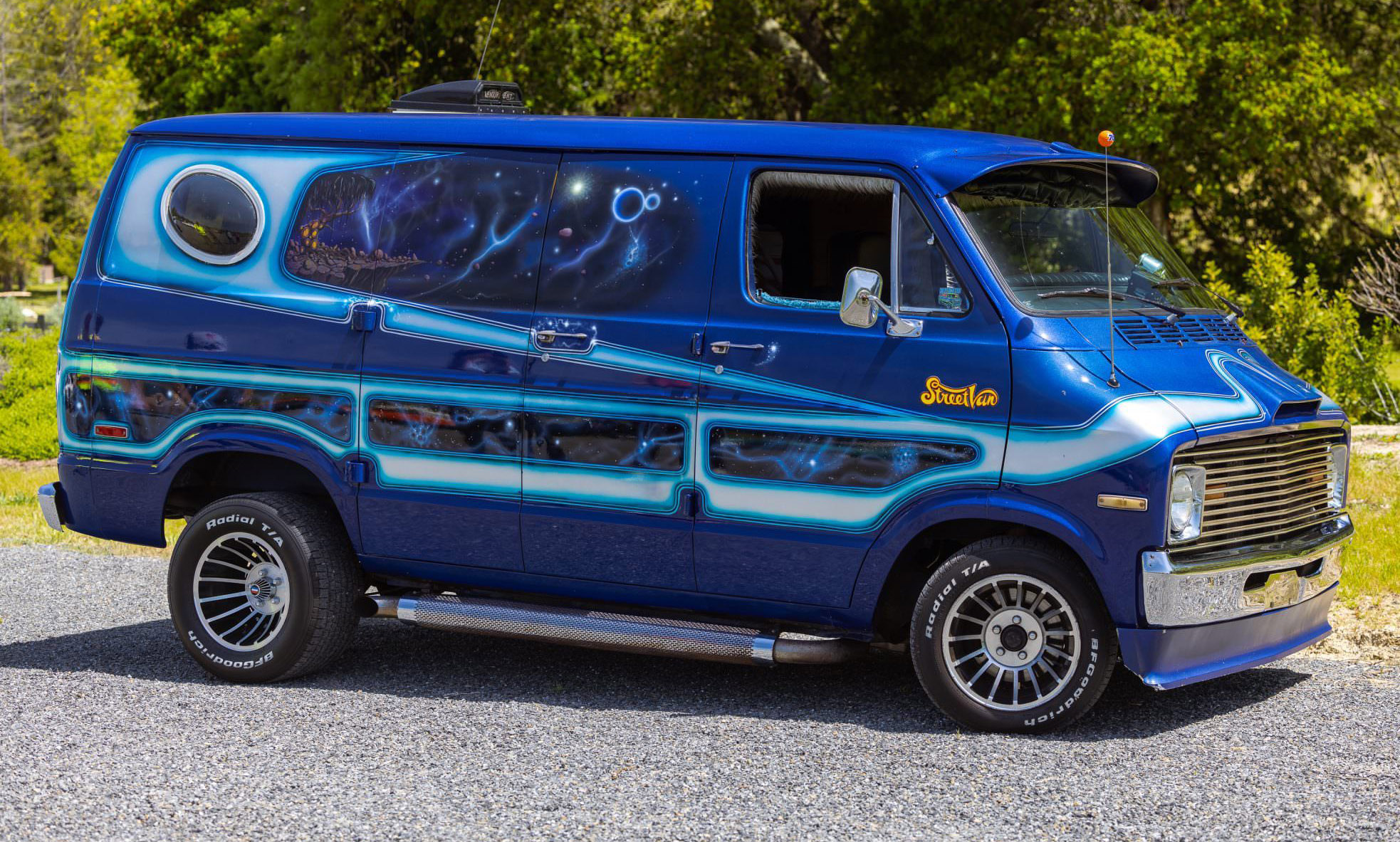
What brought on this trend? Well, being the malaise era with early smog regulations and gas crisis meant the idea of a “fun” car being something fast kind of went out the window. Making a product that was appealing at slow speeds or even standing still seemed to resonate better with buyers.
Also, exactly what these vans did when standing still collided with that other well-known revolution of the seventies that admonished potential visitors to assess whether or not the van was rockin,’ and if it was, better for you not to go knockin’.”

Even OEM manufacturers got into it, with factory-built custom vans that were “adult toys” for disco-era boys and girls.

Naturally, family-oriented folks despised these things for what they represented, but some likely thought that the idea of a spacious vehicle that could also be cool was appealing. It’s just that for them to consider buying one, it needed to be designed to actually let you see out of it and have an interior configured for children and grandparents and not for, you know, smoking weed and other stuff.
The answer was conversion vans; customized vehicles that offered extra seating instead of round beds in back, plus giant glass panels to replace the bubble windows. These were often done by firms that built motorhomes but suffered faltering sales because of the fuel crisis.
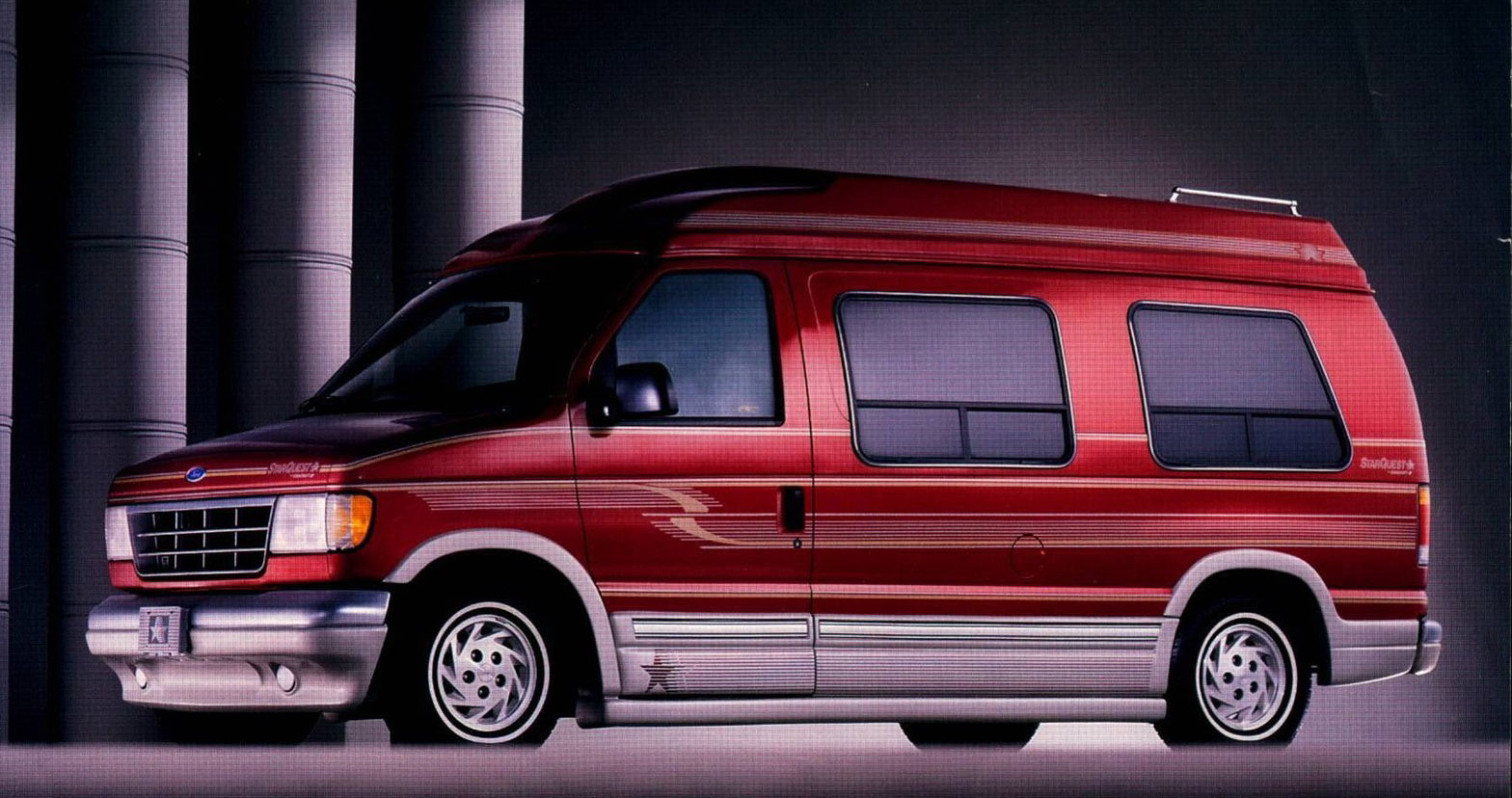
Many of these conversion firms were located in northern Indiana, where many Amish and Mennonites produce such handcrafted goods as durable and beautifully-made cabinets like the one I’m looking at in my office right now. It appears this local culture of craftsmanship ended up permeating the conversion van industry, as they were outfitted with straight-up wood furniture inside.
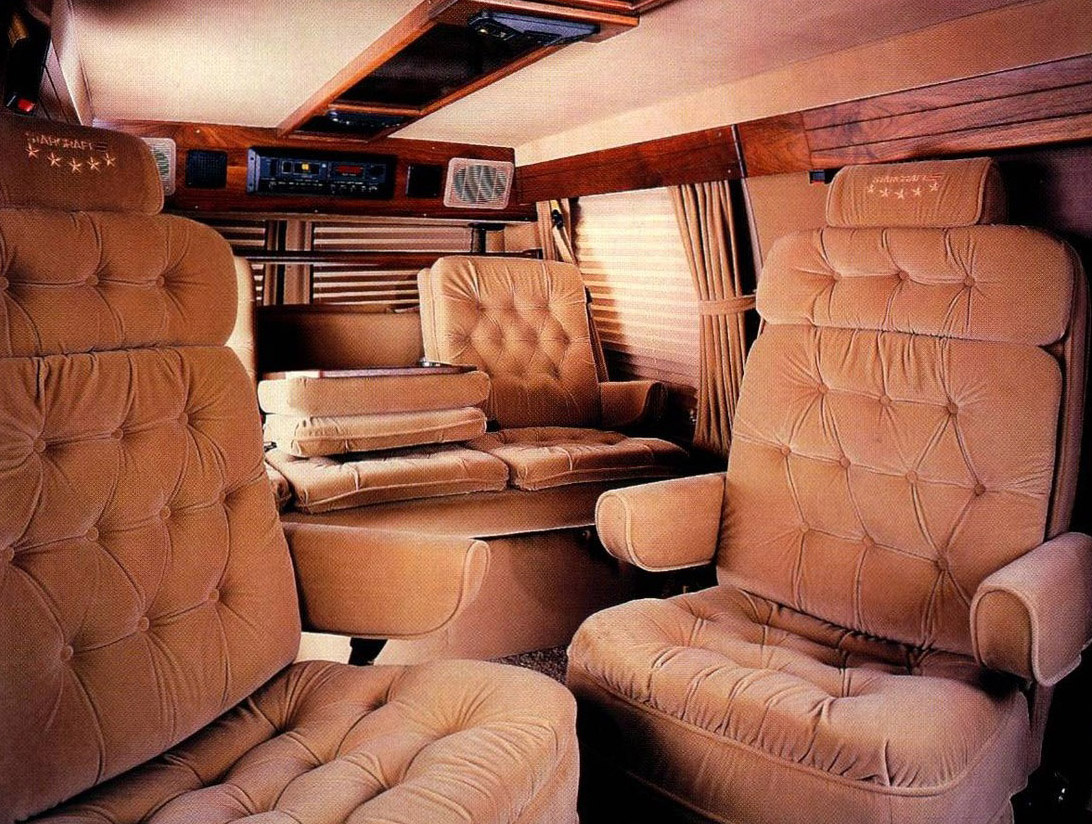
Look at these interiors: actual millwork to complement the carpeted or velour-covered surfaces. Tables, entertainment “cabinets”, and magazine racks that looked like woodworking projects your Uncle Dave shows when he drags you into his home shop. It’s so gloriously stupid, and I love it.
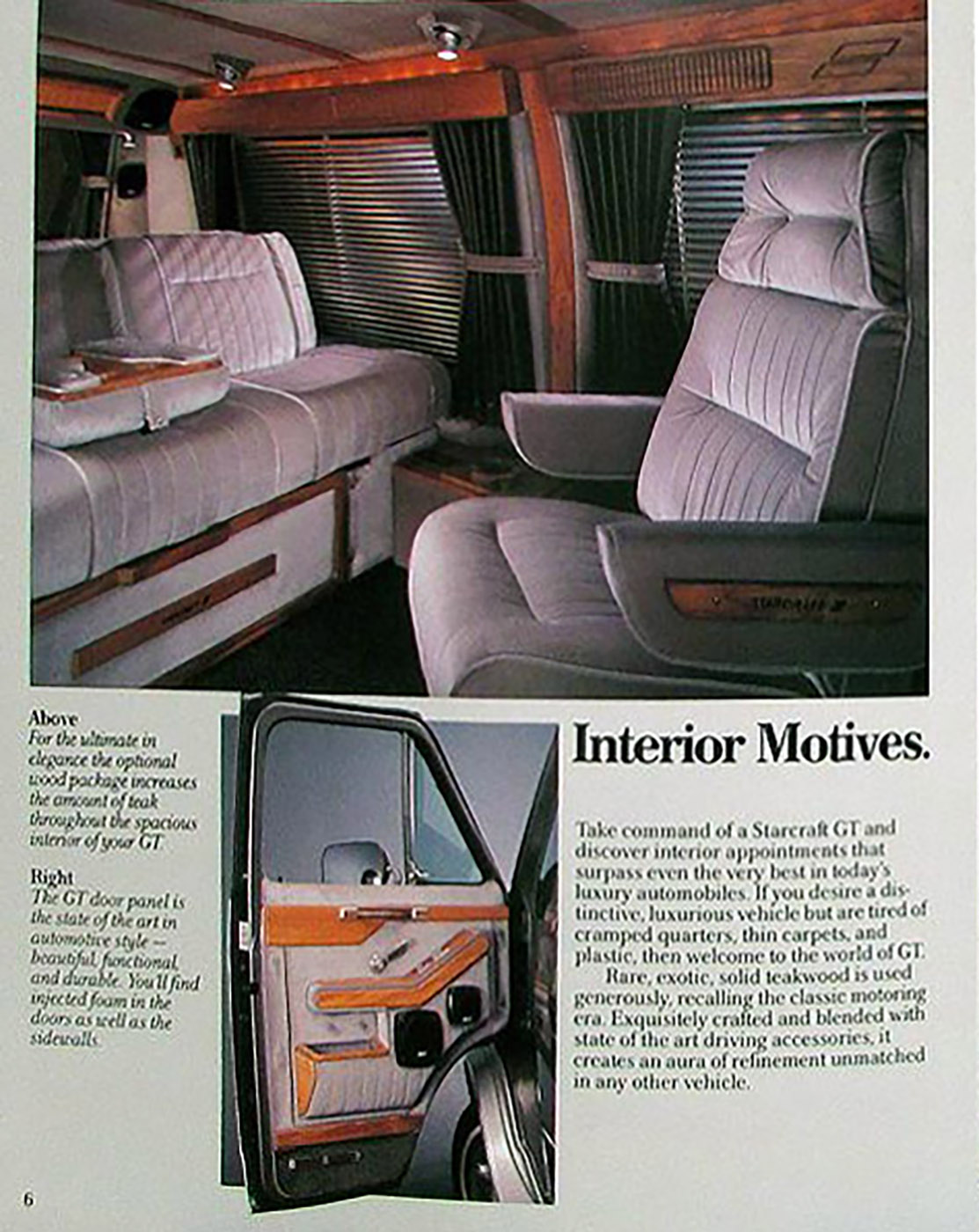
Designers sometimes strive for the feel of a stately home inside of a luxury car, but these conversion companies went a step further and just flat out put stained-wood-and-tambour furniture into a van and bolted it down.
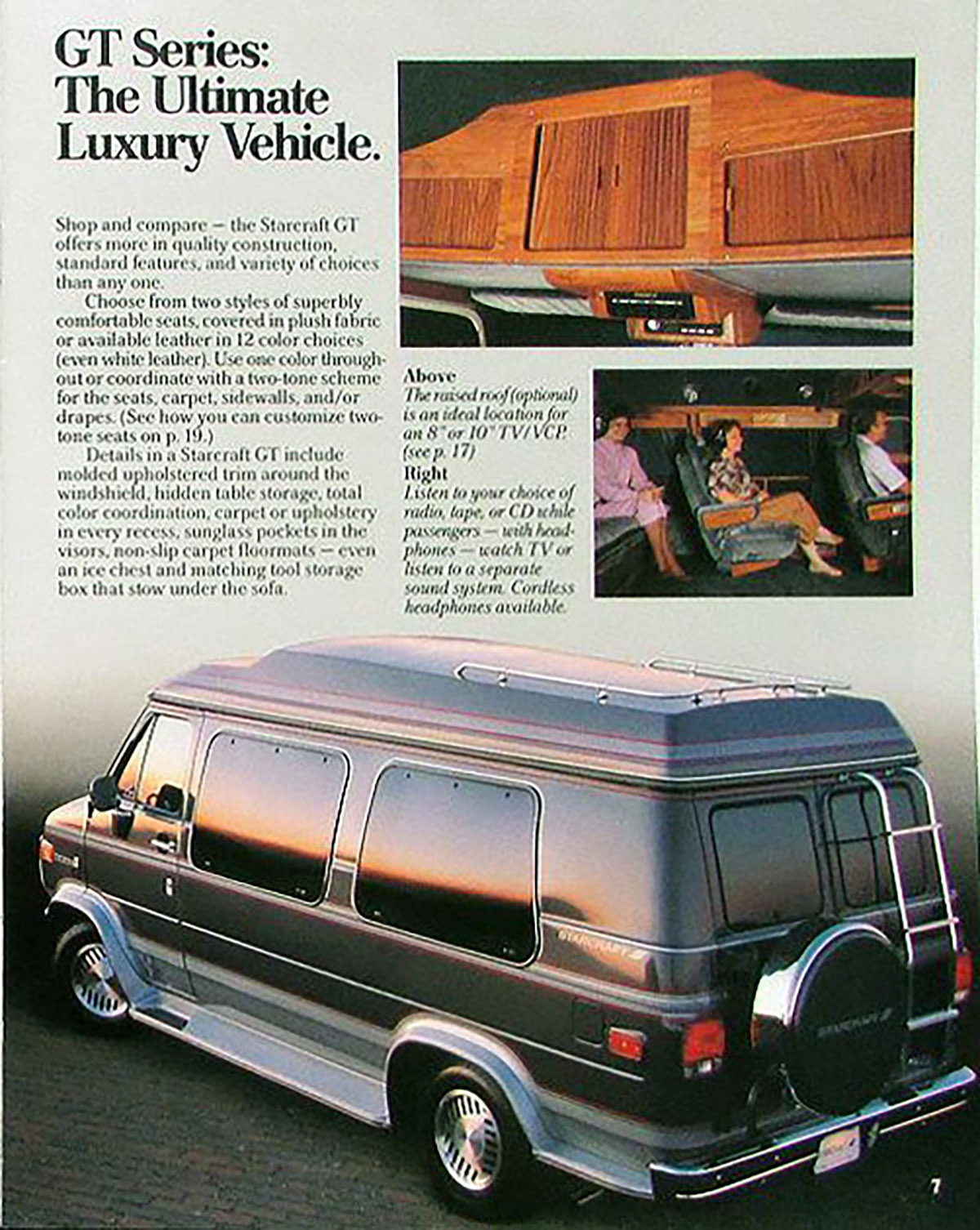
Wow, how about a “refreshments cabinet”? Those rich losers in their Rolls-Royce would need to go to a drive-thru to get a cold drink.
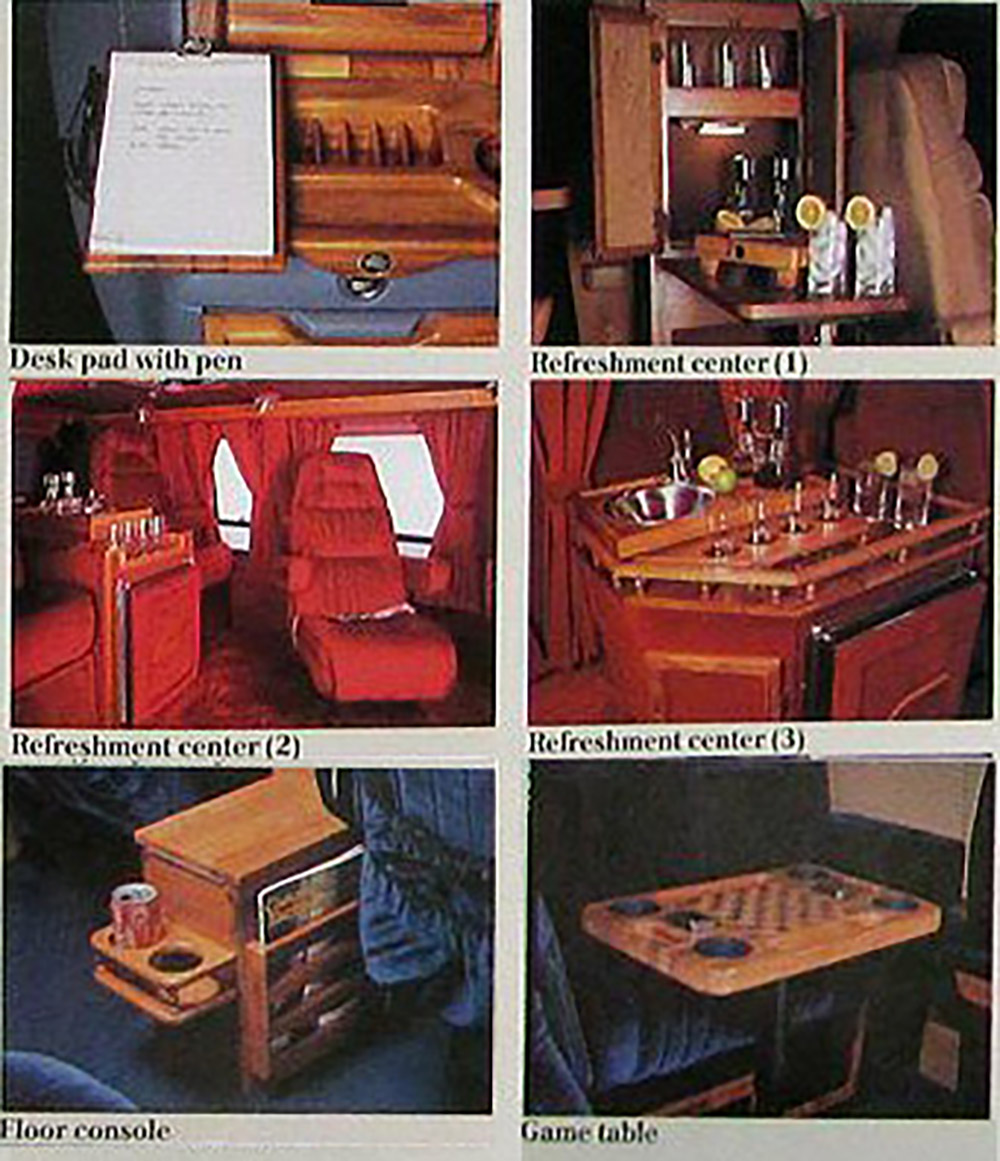
Obviously, these things were literally full-sized Ford, GM or Chrysler cargo vans with all of this stuff just stuck onto the inside with screws and glue. I’ve rented newer Econolines and Chevy Express vans sans all of the conversion pieces; I’m sure all of that foam and sound deadening on a conversion version would make it quieter than my Penske cargo rental, but I doubt that the driving experience would be any less miserable. That aspect, as well as poor fuel economy, is likely what always limited the appeal of these things.
Today, these kinds of vans are not even remotely as popular as back in the days of Alf and “Where’s The Beef” commercials. With the impending end of GM’s current big vans, and things like Sprinters not really creating exact replacements, the days of conversion vans might truly be numbered.
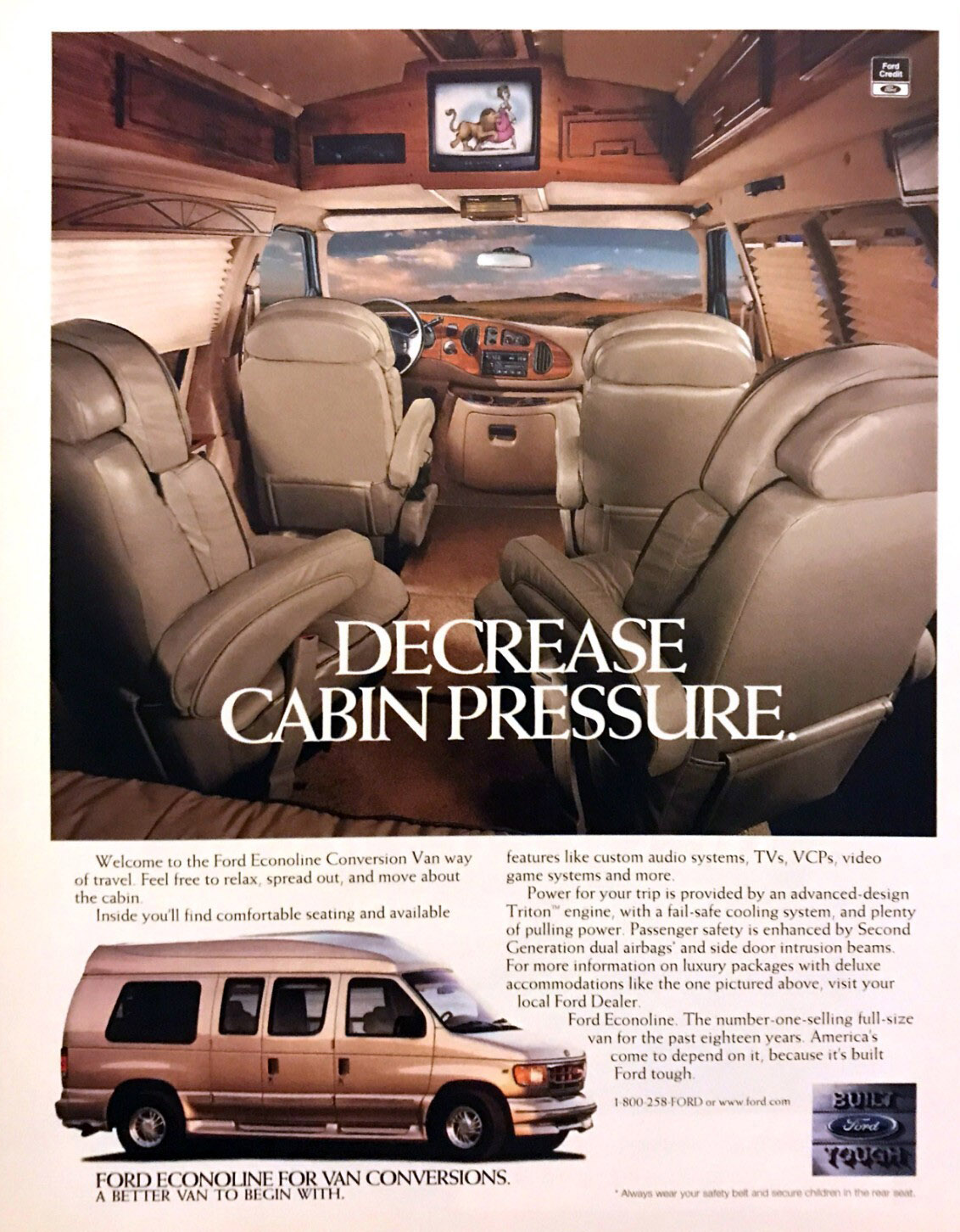
That’s a shame, since I’ve seen some vehicles that might be a great basis for today’s families to take the clan to Dutch Wonderland in.
Are We There Yet?
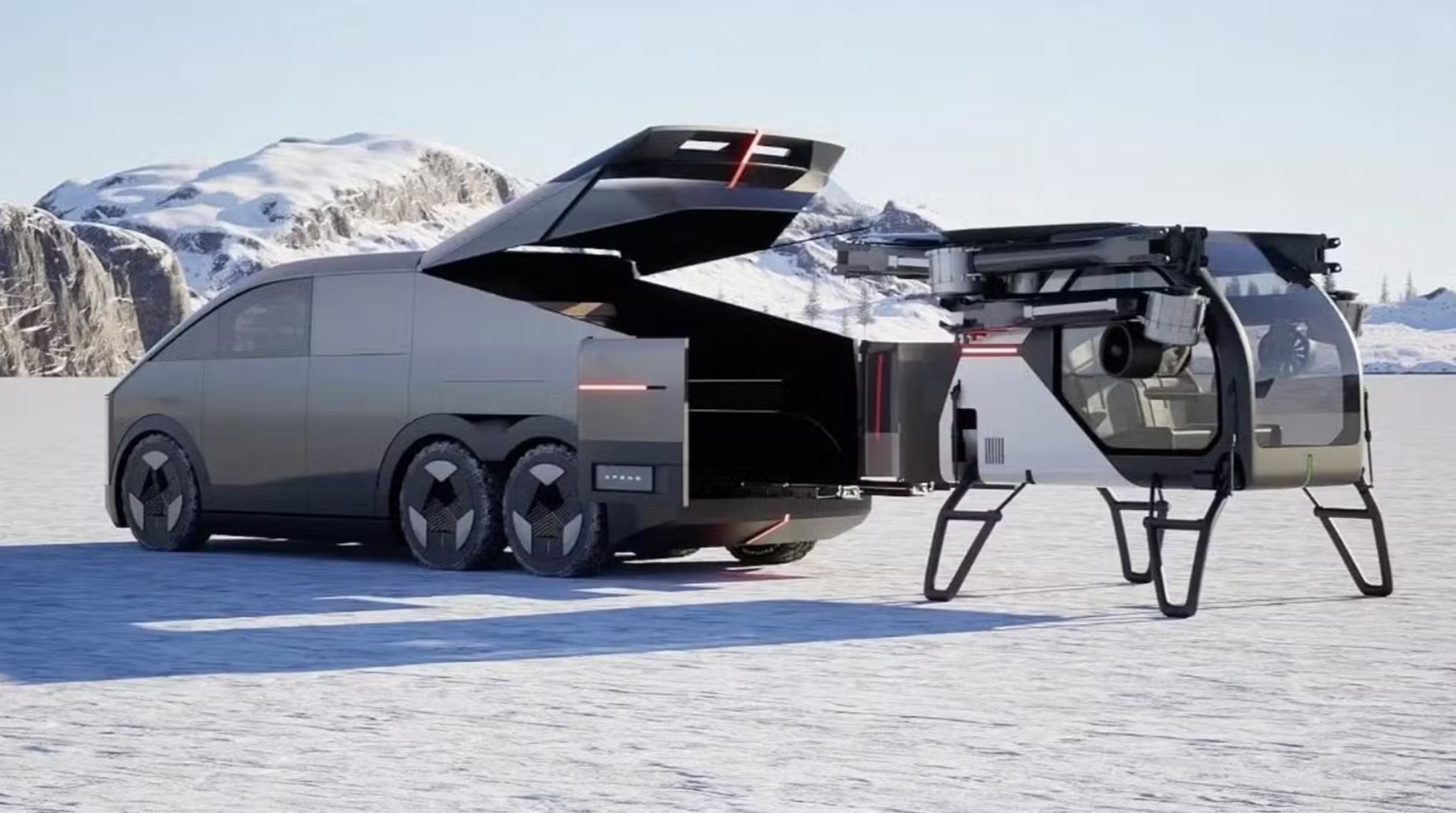
The Tokyo Auto Show used to be the place to go and see bizarre vehicular concepts, but now many of those concepts are handily eclipsed by products from Chinese manufacturers. One of the latest was a six-wheeled van from X Peng with six wheels.
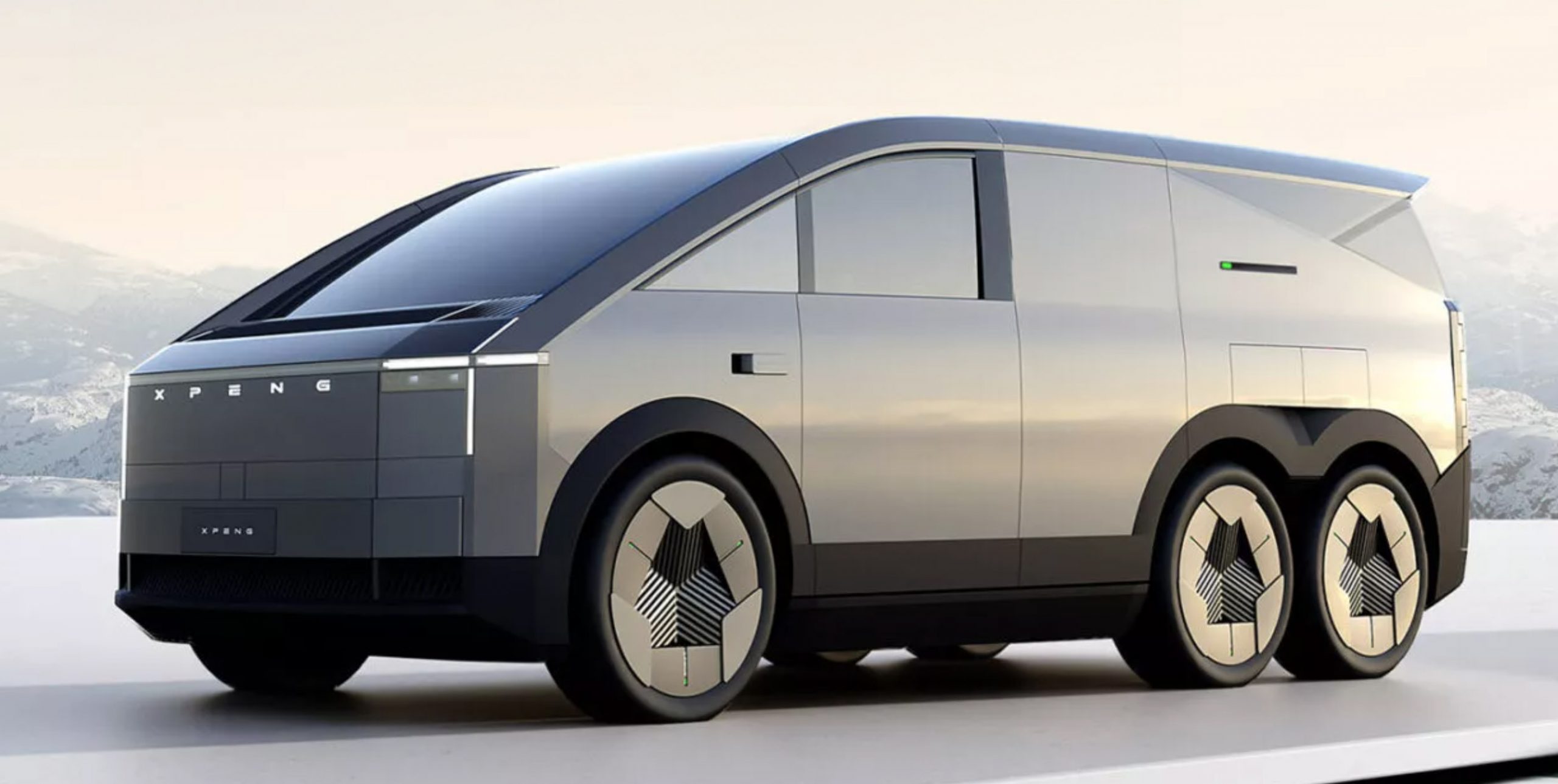
Just when you thought the styling was the strange part, you realize that the back opens up like a clamshell and there’s a strange object in there:
The object? A compact helicopter or drone that can rapidly deploy from anywhere the six-wheeled van can take it:
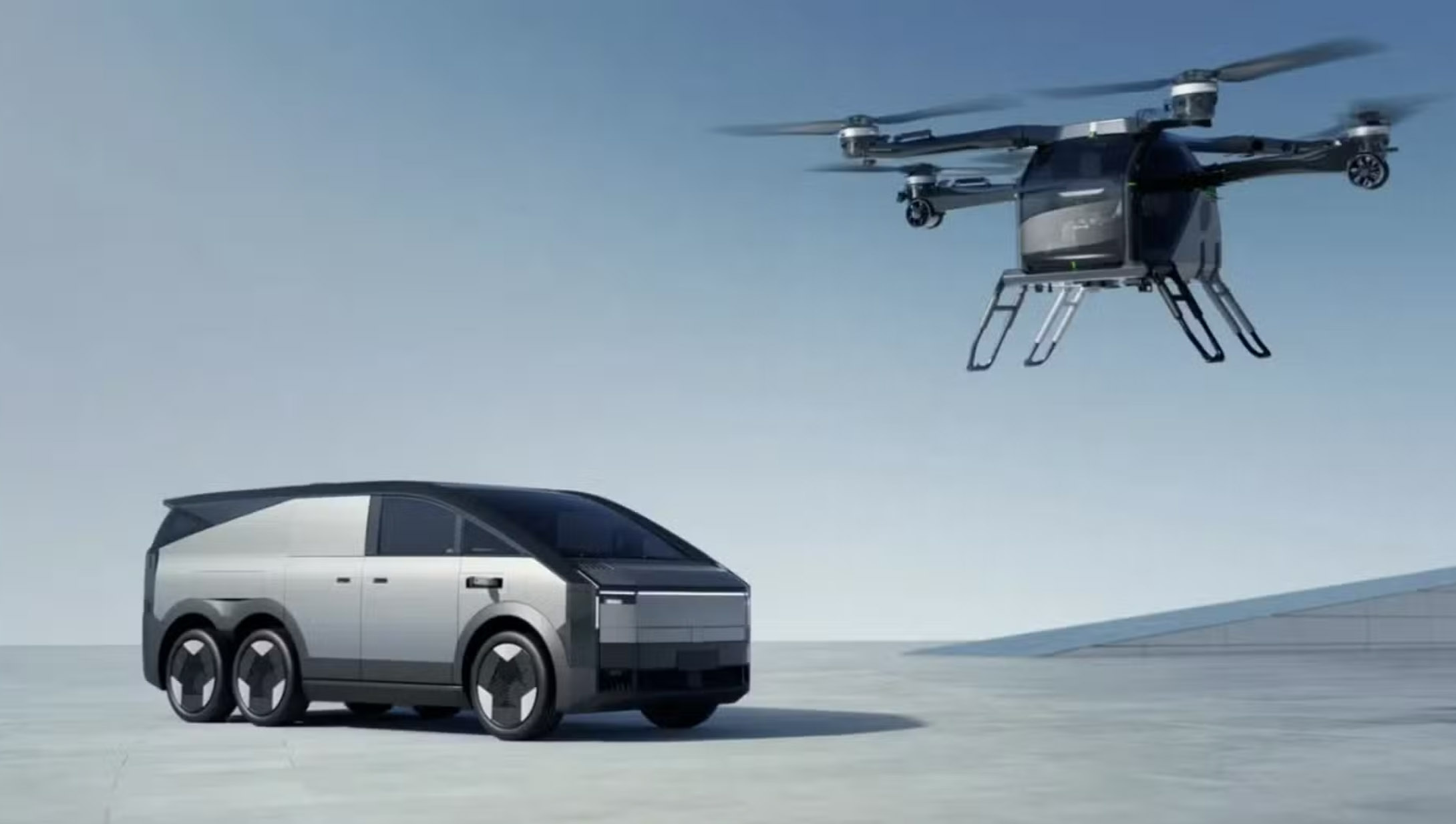
Personally, I find it pretty silly concept-for-the-sake-of-a-concept stuff, and the rear styling with an angled color blocking looks a bit too much like a Cybertruck and SsangYong Rodius combined. From the front, though, there’s a lot to like if we’re trying to find a modern EV interpretation of an old-school full-sized American van.
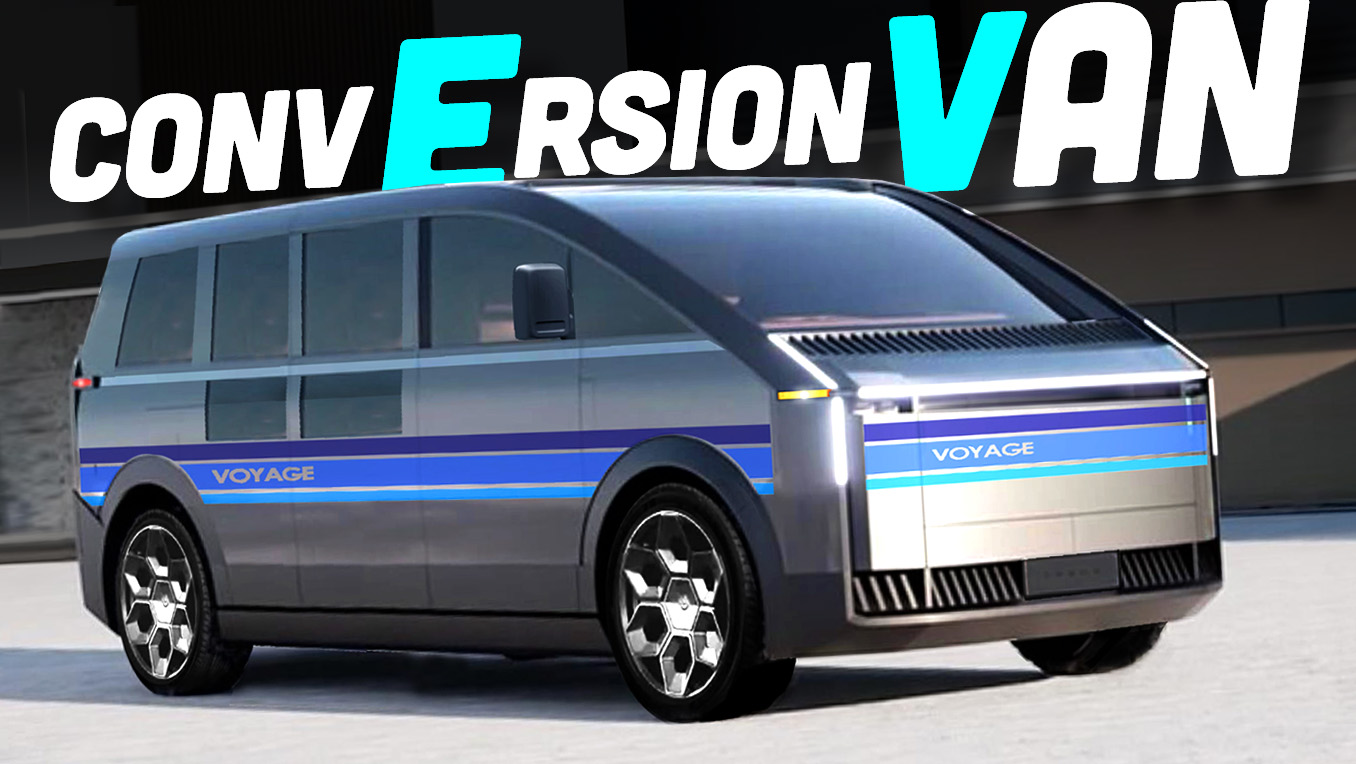
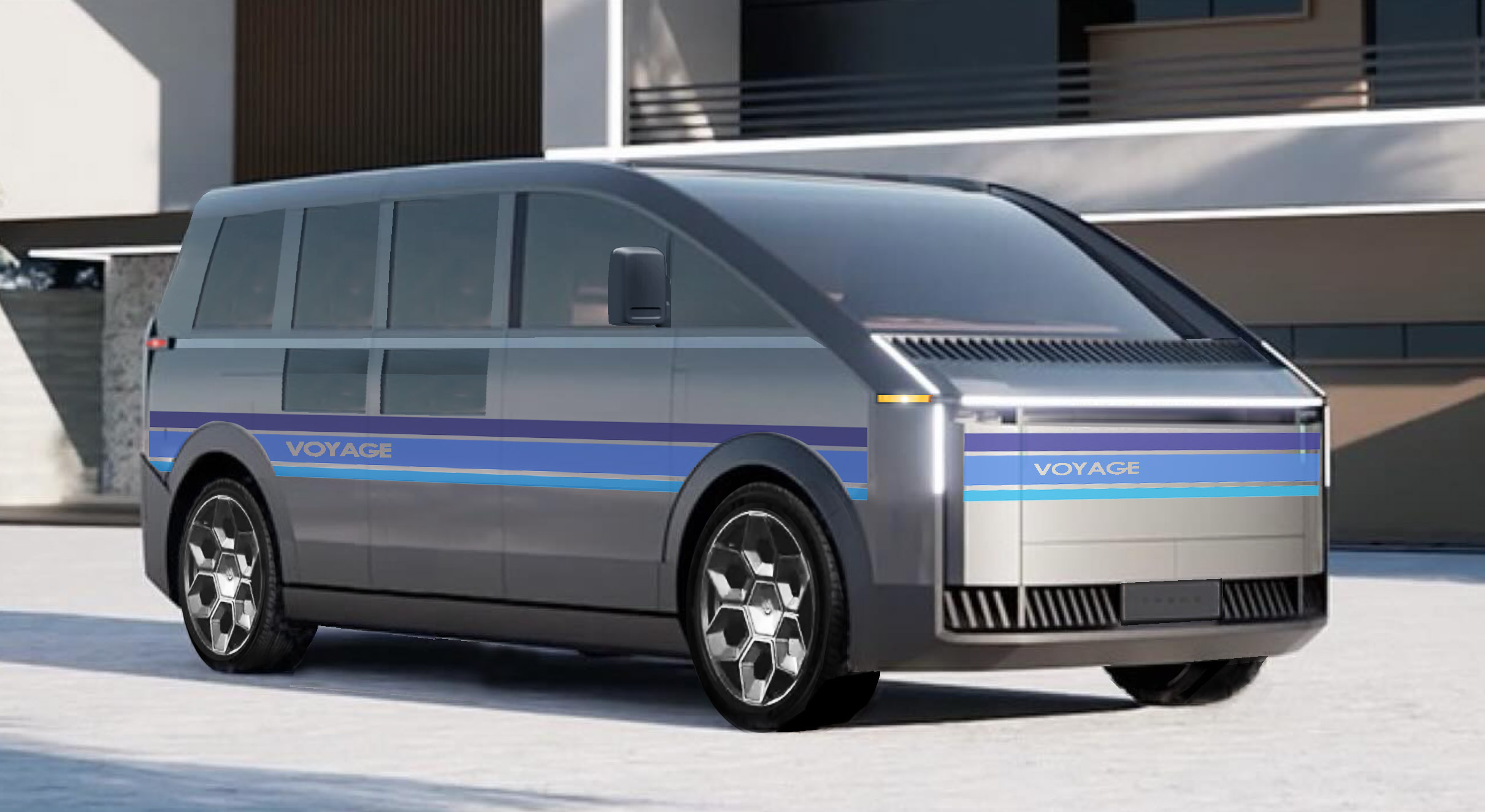
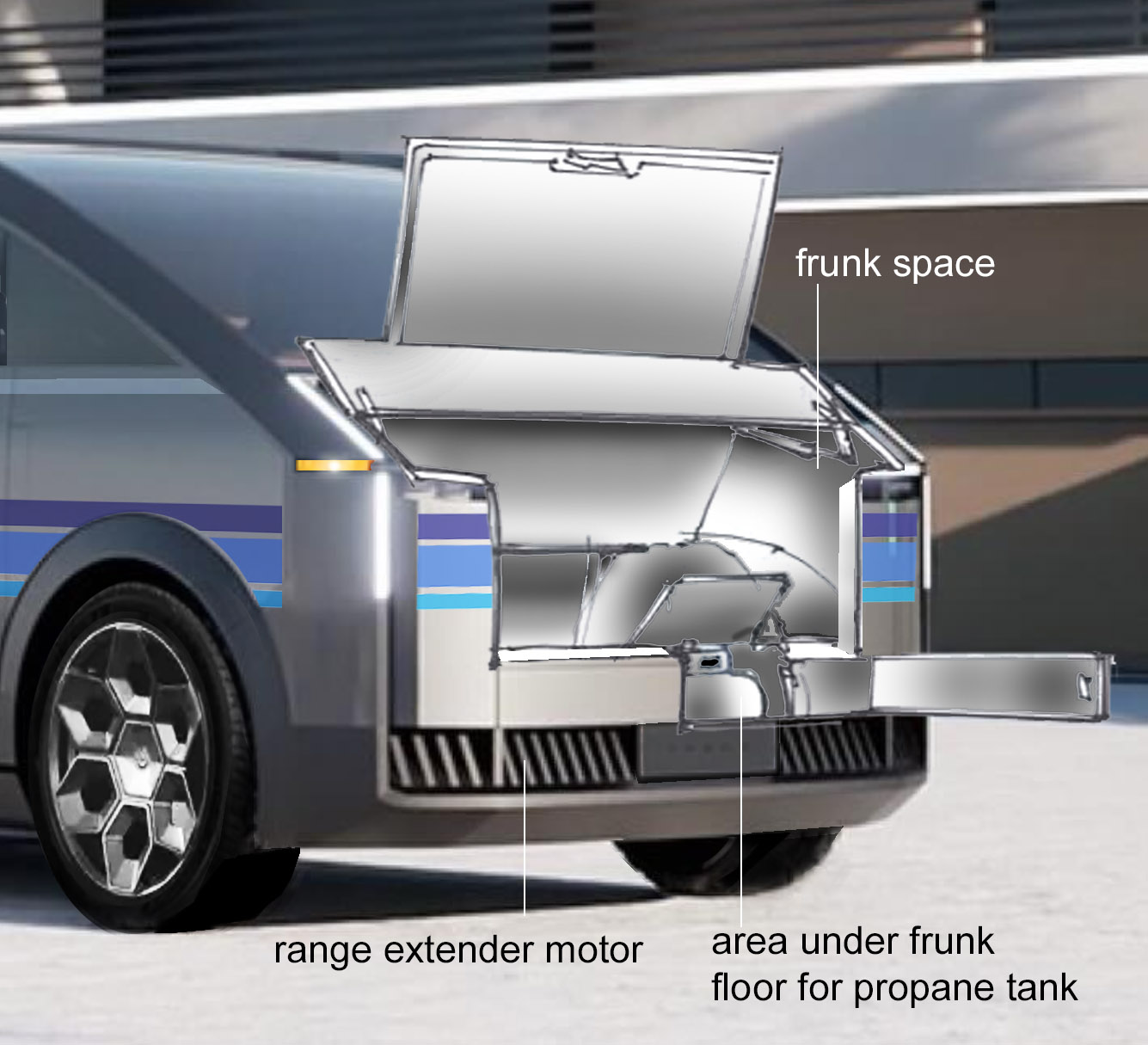
What I’ll call the Autopian E/Van (pronounced “Evan”) might be available as an all-steel-sided cargo variant, but our E/Van Voyage would get additional side glass just like an old Starcraft Econoline would have, and even a roof made almost entirely of glass. You can see that, like its forebearers, this conversion van would not have been a cabover; driver and passenger sit behind the front wheels with the area in front available for a small frunk and, if you choose, a range extending motor to charge the batteries under the floor that deliver all-wheel drive front and rear motors.
Would there be a fuel tank up front? I think you could have a gas tank, but one of the biggest issues of EREVs for some people is the introduction of a pollution-creating ICE engine to their once-zero-emissions vehicle. A possible solution might be a natural gas- or propane-powered range extender; you can’t easily find propane filling stations, but virtually any gas station will have 20-pound tanks for barbecue grills.
Inside, we’ll offer all of the amenities you’d expect from a conversion van, all updated for the twenty-first century. Comfortable rotating heated, cooled, and massaging chairs with flip-down armrests could also recline and include flip-up footrests. Between the center row would be a console with flip-up tables. A touchscreen on the console would operate the climate control and entertainment options, and also change the opacity of the glass roof and lower window shades. Touch another part of the screen, and a refrigerator would slide forward to allow cold-drink access.
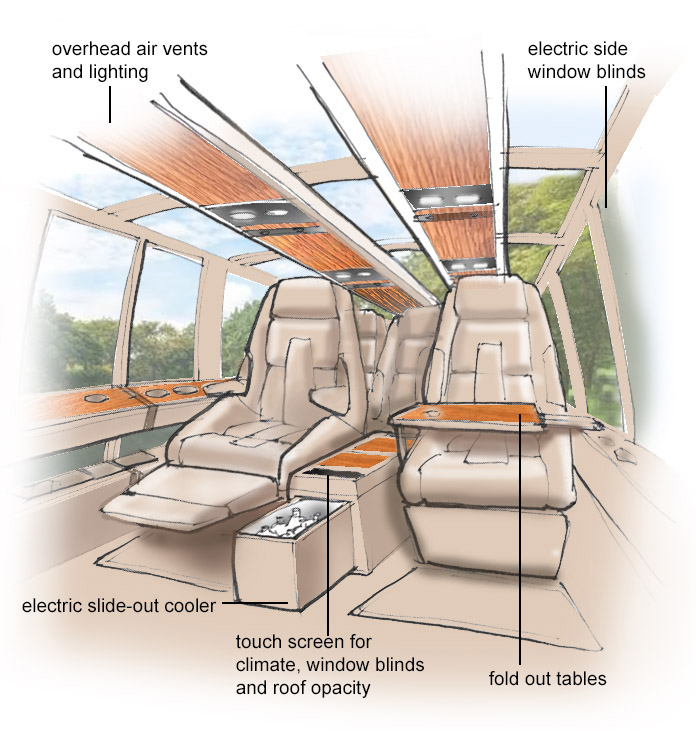
The “beams” running front to back above the seats hold reading lights that also create ambient illumination and hold aircraft-style vents. A rail along the side of the van has cup holders and storage bins, all trimmed out in finely finished real woodgrain (but not the stuck-on kind seen on vans of old). Whatever you liked about the conversion vans from days of yore would be present, but in a higher-tech version that would look a lot less like the basement recreation room where you watched videos for hours after dad finally relented and you were the last family on the street to get cable.
Plus, you’d have a much more advanced vehicle that would almost certainly be quieter and far better to drive than an old Econoline or GMC Vandura. A propane-powered range extender (and maybe even cabin heater) would mean you could test your kid’s bladder capacity and actually make it to Buc-ee’s on one charge while still not polluting the environment much more than a standard EV. Or, could natural gas power be the gasoline-and-diesel-free loophole for electric car makers to justify adding the range extenders many are balking at? Possibly, and gas stations would love to be able to sell more tanks during non-grilling months. The infrastructure is already there, people!
There’s Still Room For A Small Mural At Least
Is there room for a modern-day conversion van in the market? One of the biggest issues might be the lack of vans. We’d first need something like the E/Van to exist to make it happen, a van that is larger than an Odyssey but not gargantuan like a Sprinter. Regardless of the premature end of GM’s Brightdrop, I still think the decades-old Express and Savanna are not long for this world. A modern equivalent could be just the ticket for tradesmen and families alike.
With the disappearance of sedans and stretched limos, it would seem that people’s perception of a “luxury” vehicle is changing, and the time might be right for a relic of the eighties and nineties to make a return appearance.
Top graphic image: XPeng




Bishop, appreciate the concept, and I know you are going for a 21st century interpretation of the conversion van, but this one doesn’t resonate with me. Looks like any one of Silicon Valley’s visions of an autonomous cab.
I want dark wood and way less light – something you’d feel comfortable wearing a smoking jacket and cravat in. A wood stove a la Jeremy Clarkson wouldn’t be a bad idea either. And major bonus points for velour.
I have fond memories of riding in these from my youth and yours has way too much of a Scandinavian vibe for me. Kind of feels like putting 22″ rims on a car from the 60s or 70s – it just doesn’t fit.
Plus all that glass doesn’t leave any room for a mural.
I grew up traveling in conversion vans, and as highway cruisers the driving experience was fabulous. Thanks to their generous weight and big sidewalls, they rode as well as a luxury car of the era on the highway, and the view to the front and sides was excellent. I don’t remember them being all that noisy, even at 70+ MPH. But the mileage was dismal, often in the low teens or even single digit.
My first real highway driving experience was (at age 14) taking shifts driving my dad’s big Chevy conversion van on a trip from Texas, up the Alcan Highway, and into Anchorage to visit relatives.
Where has this been all my life? I’ll take one please! Although the propane tank might need to be nudged back to a safer location (it looks fairly forward). An EREV van is what I have been waiting for for a long time.
The propane range extender would be a hit for camper versions of this van if it could also tie into a heater and gas stove. You’d be using up your extended range fuel, but it’s nice to have the system already in place for conversion and propane refueling isn’t far from most campgrounds.
Nice Cybervan, Elon
Those captains chairs in the 2nd and third row need built-in speakers in the headrest. Gonna be great with the pull-down tv with the 42″ screen and available built-in Turbrografx 16 (what, you thought we did Xbox here?). The Turbografx is a nod to Torch, who I’d like to think still owns the unit he bought in 1989 and still works.
Can I pay extra for an Amiga in mine??
Brussel sprouts have always been appetizing!
Just need to cook ’em right! Pan-fry some chopped bacon until the fat starts to render out, then put halved sprouts cut-side down into the bacon fat and cook till golden. Season with a little black pepper and serve with the now-crispy bacon bits!
you could pan fry your car keys with bacon and it would be delicious
True, but then you would be left with a pan full of halved sprouts and a car that is difficult to start.
Yes, but you’d fart less.
Someone on our allotments has a whole bed of sprouts. I noticed that various creatures have all eaten the nice, frilly leaves off the top of the plants. They haven’t touched the sprouts.
Add a bit of garlic and then finish with a balsamic glaze.
How’s that gonna help start my car? Its not French, dammit.
I roast mine in a light mix of oil and balsamic, salt, pepper
I’m somewhat enamored with the propane tank hot-swap system. Taking the 4 gal. of gasoline per tank figure from the comments, that’s around 18 litres, and my own EREV manages to generate 3.5kWh per litre of gas. That’s 63kWh from one tank of LPG (propane, butane etc.), enough to propel a midsize sedan or crossover at least 150 miles in a worst case scenario (highway speeds in a freezing blizzard). Since EREV engines don’t need transmissions, you can still squeeze in a half-size frunk with some smart packaging, something just big enough for one LPG tank. We already have bi-fuel cars, so I don’t think plumbing or engine tuning would be an issue.
Something like this would be incredibly versatile IMO; you could have incredible range with the gas tank, LPG bottle and the battery all charged up, or use it as an efficient bi-fuel generator when the power goes out. Storing LPG tanks at home seems to be much safer than gasoline too. Build out the EV systems with low voltage, low cost consumer-grade parts (<150V like the Wuling Mini EV, so MOSFETs can be used instead of IGBTs) to allow for easier procurement and repairs, and you’ll end up with an EREV in line with the spirit of something like the Hilux Champ.
3.5kWh per litre of gas? As in 1 litre of gasoline?
That is amazing.
1 litre of gasoline is about 9 kWh of heat after combustion. This means your machine is about 40% efficient fuel to electricity.
Are you sure you are not getting 3.5kWh per gallon?
~40% TE is pretty common, even in production engines and is pushing 50% in upcoming engines.
“The maximum efficiency of the engines in the first- and second-generation Prius models was 37 percent.
The third-generation Prius (2010-present) is rated at a maximum efficiency of 38.5 percent, according to Toyota.
Toyota announced the 40-percent level at the Annual Spring Congress meeting of the Society of Automotive Engineers of Japan, which took place in Yokohama over three days ending today.”
https://autos.yahoo.com/next-toyota-prius-hybrid-40-percent-thermal-effiency-150000710.html?guccounter=1&guce_referrer=aHR0cHM6Ly9kdWNrZHVja2dvLmNvbS8&guce_referrer_sig=AQAAAKyong-vRXTAm0sAhYwN0Pzfdw2ALzYfYuVofRh2mRWET0WoXZktIgzpCDBz49otcrs16NwJC3B1P9kfzKPkpScJQS3N-W7oQBp4XHIRznNDHtoGLu6Ailnb_JcSYKnO3gHu1-pavOdPTKLAOK6yj8v8h6GsE6rTYvpLQj117gf0
“At the heart of the system is a completely redesigned 1.5-liter three-cylinder turbocharged gasoline engine that never directly powers the wheels. Instead, it runs at optimal efficiency to generate electricity for the battery and electric motor. The engine employs Nissan’s proprietary STARC combustion technology—which stands for Strong Tumble & Appropriately stretched Robust ignition Channel—achieving 42% thermal efficiency, an impressive figure for a gasoline engine.”
https://www.karmactive.com/nissan-e-power-hybrid-42-thermal-efficiency-52-mpg-and-745-mile-range-without-plugging-in/
https://mobilitynotes.com/dedicated-hybrid-engines-push-engine-efficiency-beyond-45/
3.5kWh per gallon works out to a TE of just 10% which is awful. Even an old Ford flathead engine could best 15%.
IIRC I remember seeing a lot of Chinese manufacturers proclaiming that they were the kings of thermal efficiency (Dongfeng and Chery with an insane 48%), but they were choosing a specific load and RPM point within the sweet spot rather than overall efficiency across the torque curve. I think that figure’s BS for traditional applications, but it’s starting to make sense for EREVs; you won’t be seeing wide RPM ranges anyway.
Chery says they can crank out 3.7kWh/L with their EREVs, won’t be long before another Chinese firm claims to go beyond 4kWh/L.
Amateurs!
Mercedes claimed 50% in their F1 engines:
https://carbuzz.com/news/mercedes-amg-just-cracked-50-thermal-efficiency-with-new-f1-engine/
Nissan claimed 50% in their e-Power hybrid:
https://www.nissan-global.com/EN/INNOVATION/TECHNOLOGY/ARCHIVE/E_POWER50/
Mazda claimed 56% in their Skyactiv3:
https://www.gminsidenews.com/threads/mazda-skyactiv-3-engine-to-achieve-56-thermal-efficiency.283402/
My 6E Hybrid is a China exclusive trim for now, and it uses a Changan engine rated for 44%. I could see Mazda swapping in the Skyactiv-X down the road, it would be a great match for an EREV; keep cranking out power at the sweet spot within the compression ignition window.
Sure. Even better would be engines that widen that efficiency window to more levels of load with tricks such as hit and miss operation, cylinder deactivation, etc.
Yup for real, 3.5kWh/L. Gasoline has 9.6kWh per litre, so a ballpark efficiency figure would be 36.2% from tank to battery, which is still way better than any carburetted household generator. Granted you still have to feed it back into the traction motor and inverter, so you might only have 90-85% left. Same if your using the EREV to do some glamping or power a home, some energy is lost in the bidirectional on-board charger as it drops down the HV pack voltage to 110 or 220V.
Looking at Reddit the Honda EU2200i does 6.06 kWh/gal, or 1.6kWh/L. So my EREV is 119% more efficient! My engine’s a 1.5L N/A 4 pot (Mazda 6E Hybrid), and it cranks out 10kW in charge mode when parked. The on-board charger’s AC output is only rated for 3.3kW 220V though.
Don’t forget, propane only has ~74% the energy density of gas (gallon for gallon). But still, a 20 lb propane tank feeding an EREV doing 40% or better thermal efficiency would be nothing to sneeze at.
The elephant in the room is you’re gonna need propane tanks designed to be safe in a crash. The standard grill tanks are going to be a non-starter as far as safety regulations go.
Those things are pretty robust. And vehicles already drive around with them attached. It’s not like RVs are known for their crash resistance.
True, I thought about RVs/trailers right after I wrote that but figured they got some sort of exemption that ‘regular’ passenger vehicles probably don’t get.
I remember seeing on Alibaba toroidal LPG tanks designed to fit in the spare wheel well, but then you’re just trading the front crumple zone for the rear lol.
My old prius had a 40 liter net toroidal LPG tank in the spare wheel well.
It would have needed a big crash to impact that space. And even then, the tank would normally go under the batteries and seat.
LPG tanks are not absolutely safe, but they are supposed to be safer than the existing gasoline tank.