

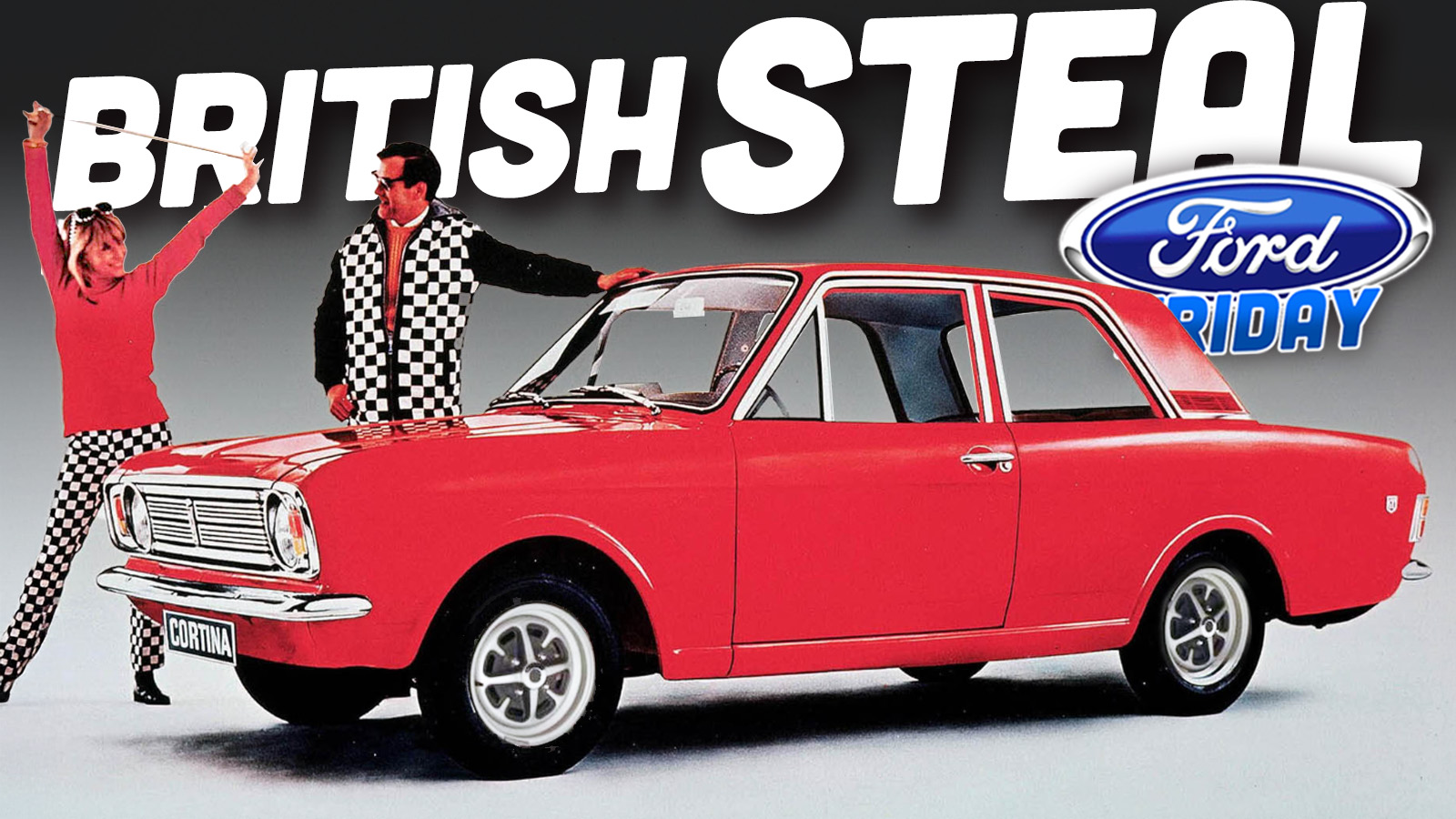
For over half a century, each of the Big Three American car makers have had European branches building products that were either competitive or even dominant in their markets. If you’re a business major, you’d naturally think that Ford, GM, and Chrysler could have easily just imported these things and kept their archrivals at bay on North American soil. Global domination, right? Wrong.
In reality, these under-the-same-umbrella imports were very much a hit-or-miss proposition; often, they were the more miss than hit even when all factors pointed to them being big successes. Ford had such a product in the late sixties that inexplicably bombed, and you’ve probably forgotten that it was ever sold here. Let’s revisit the second-generation Ford Cortina.


Also, The Merkur Name Was Dumb
Ford has had success over the years with products made by their divisions across the pond. The baby-Mustang Ford Capri was sold here in both Mark I and Mark II form, and for several years of its 1970-78 run, it was the second-best-selling imported car in the United States, right behind the VW Beetle.
The Fiesta was a decent seller as well, and I’ve written before about how this sprightly little car was one of the better cars offered at late seventies Ford dealerships (admittedly, a low bar).
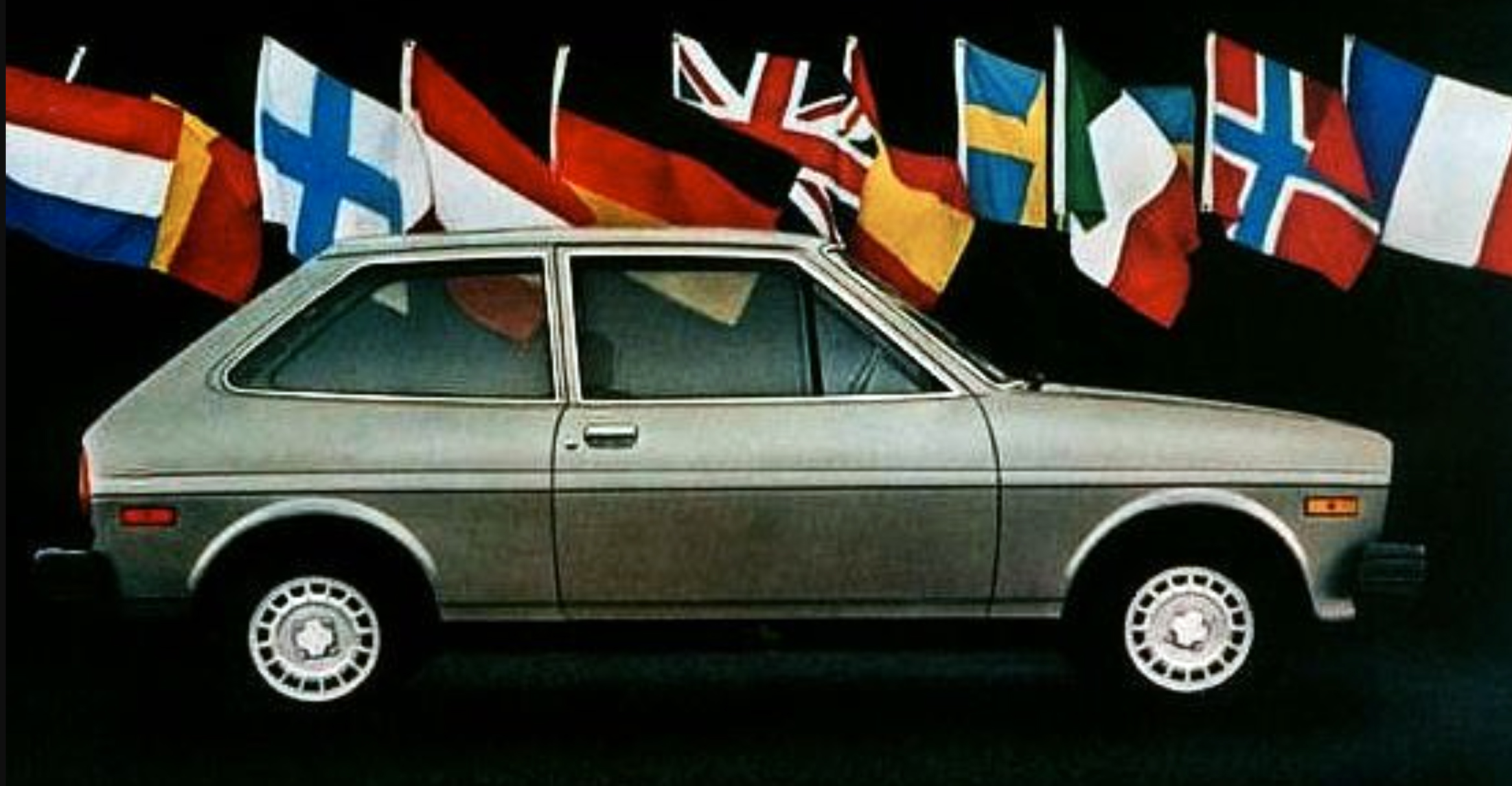
At the same time, Ford’s excellent Scorpio luxury sedan and cool Sierra XR4Ti seemed like they could have been left-field hits with late-eighties yuppies, but instead served mainly to keep the floor tiles secure at Lincoln-Mercury dealerships.

During the years it was built, the Ford Cortina was always near the top of the UK sales charts, if not at number one. A betting man would have put money on this small sedan succeeding in North America against other European rivals that had only a fraction of Ford’s dealer network. Well, it turned out that would have been a very bad bet.
From Dagenham To Detroit
In the years before stringent emissions and safety regulations, it seemed automakers could sell anything and everything with wheels in the North American market. Goggomobils and other strange machines could be hawked from gas station parking lots and the government really didn’t care, since only a few oddballs and cheapskates would buy those kinds of cars anyway. For a company like Ford, the Falcon was a “compact car,” and anything smaller wasn’t worth selling. Despite this, some dealers did offer a new compact from Ford’s European division (which was actually sold as a “mid-sized” car in Old Blighty).
Launched in 1962, the Cortina was actually styled by the person responsible for the Edsel, having been banished overseas after that car’s failure. While BMC (later British Leyland) was pushing the limits of car design with Mini-like front-drive and space-efficient designs on “Hydrolastic” suspensions, Ford went tried-and-true using a very basic design with a front four-cylinder engine driving a rear live axle on leaf springs. Despite being designed to be inexpensive for Ford to produce and consumers to buy, the Cortina was a good-looking, pleasant-driving car by the standards of the time, not a cheap-out.
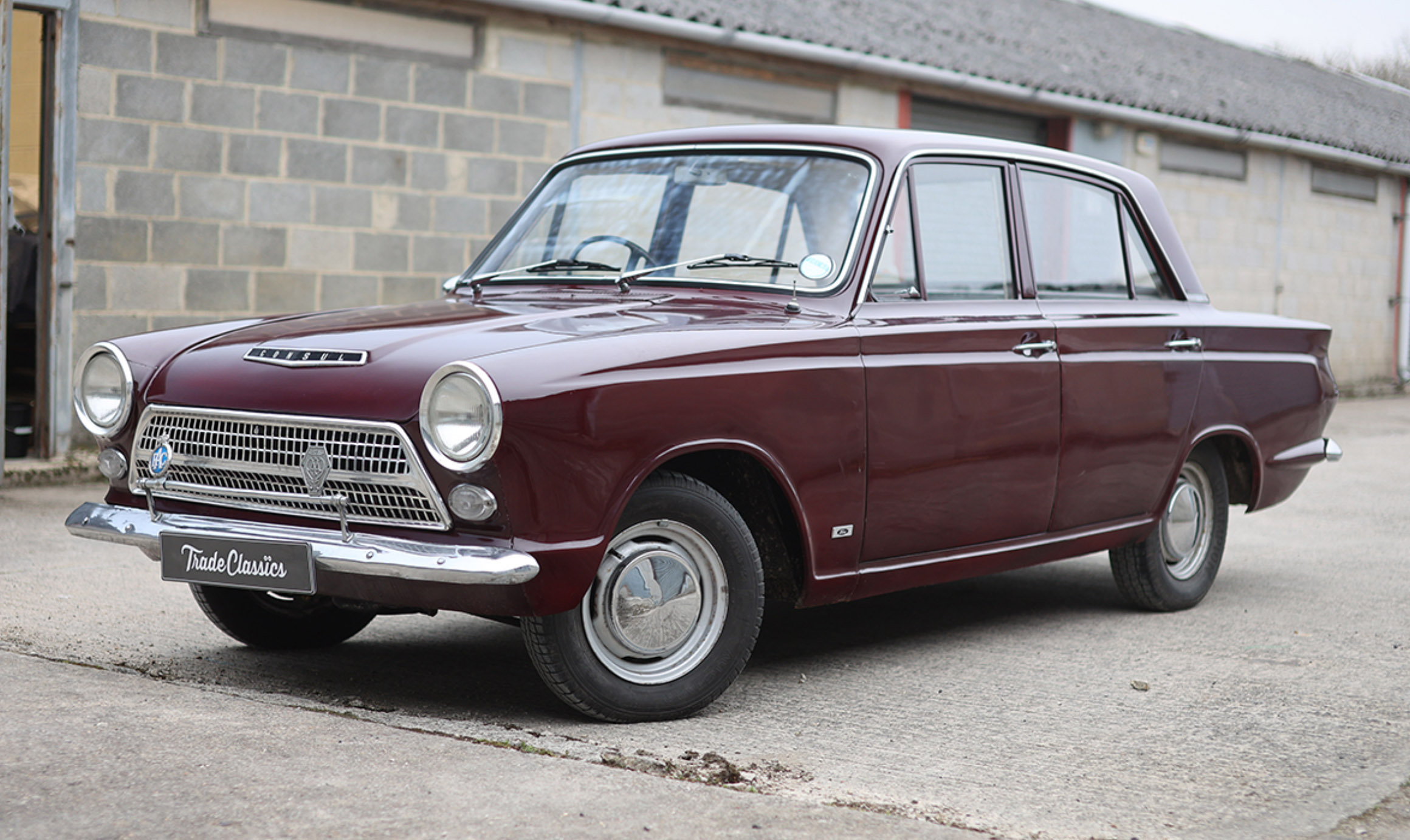

Ford even offered a version of the Cortina with a Lotus-modified twin-cam engine and heavily tweaked coil-spring suspension that got rave reviews and proved successful in racing, most famously driven by F1 great Jimmy Clark in touring car racing.

This first Cortina was sold in North America and actually became Canada’s second-best-selling import, but in the United States, most dealers and buyers didn’t know what to make of it. Introduced for 1964, dealers in the states only moved 4,100 Cortinas that year, eventually increasing to 7,932 sales by 1966.
By the late 1960s, however, American buyers were getting hip to the charms of small, economical European imports a notch or two below what the Big Three were offering as “compacts.” And Ford seemed to have just the car for the market.
Could 165,000 Brits Be Wrong?
For 1967, Ford of England launched the restyled Mark II Cortina, arguably one of the first truly “modern” looking British mainstream products. It would be hard to understate how important this car was for the UK and the excitement surrounding the upper models. Hell, even obnoxious, heartless Jezza almost breaks down crying when talking about it.
This Cortina seemed like the ideal car for American Ford stores to combat the rising import tide. Oddly enough, Ford marketing tried to pitch it as the Ford “Model C” to make it appear to be a revolutionary everyone’s car like the Models T and A from decades past.

Unlike a number of other compacts of the time, you could get a Cortina in anything from a two-door coupe to a four-door sedan and even a wagon with actual rear doors, unlike a Volkswagen Squareback or Opel Kadett.

The first 1967 American-market Cortinas looked virtually identical to the ones sold in the UK, but with the 1968 model year, the new NHTSA safety regulations kicked in requiring the Cortina to get side marker lights. For reasons that I don’t understand but am afraid to ask Jason lest we be here all day, giant domed amber turn signals were tacked onto the grille. They could have at least tried to make them look like fog lights or something. What is it with those things? The outer lights are all amber now, so why the extra Pep Boys-style lights?
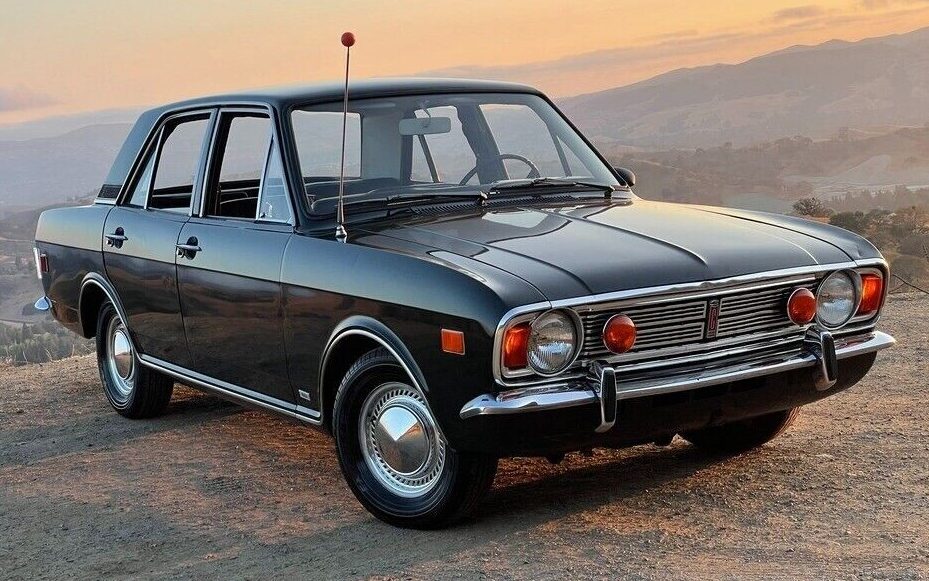
North American cars also got backup lights hanging off the rear bumper, and they all appear to have bumper guards.

By the way, I would very strongly not recommend driving your ’68 Cortina up to the wheel arches in salt water, as I will elaborate on a little later. What a strange brochure cover, implying that the cars were just tossed in the Atlantic and picked up around New Jersey.
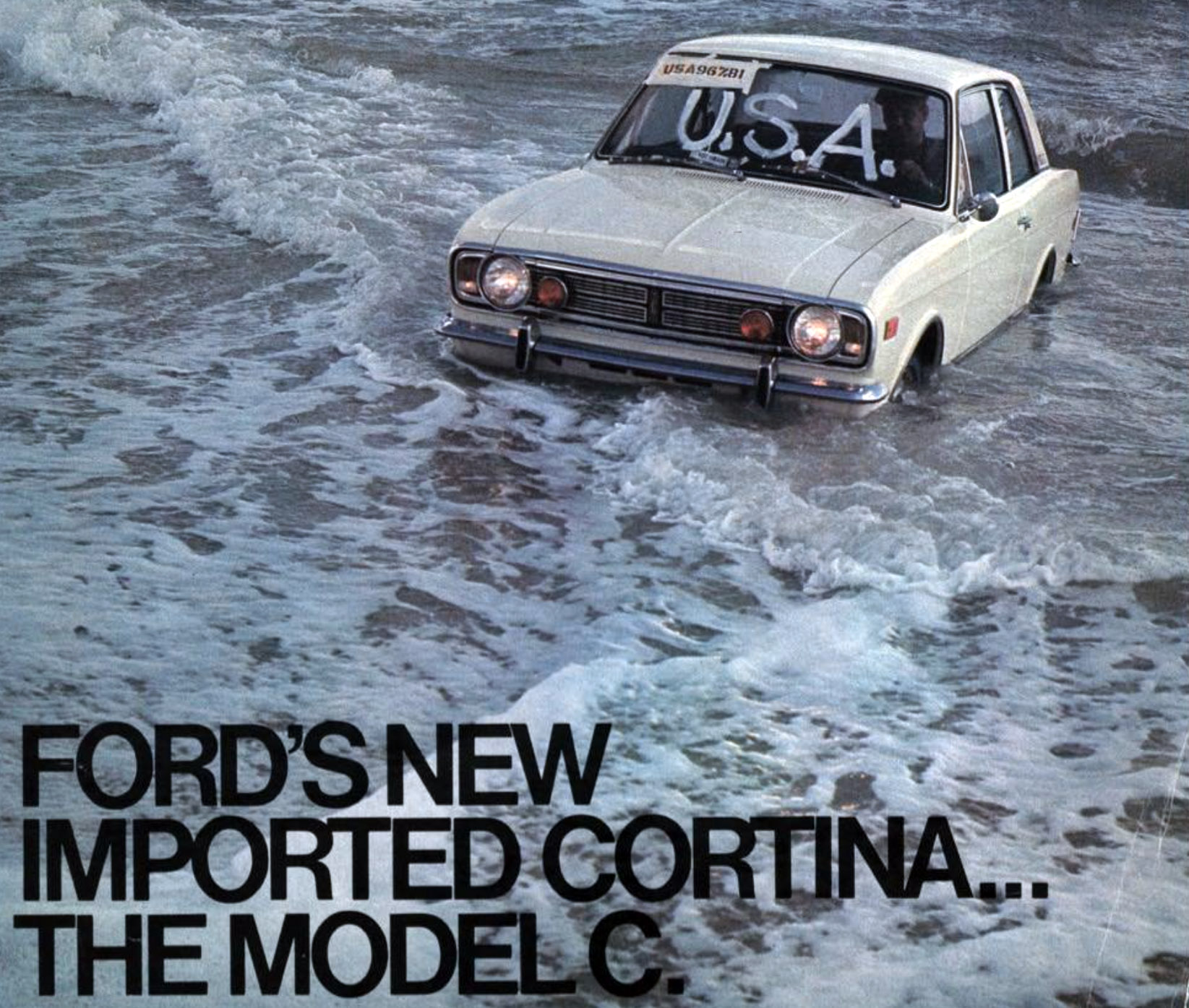
The boxy restyling of the Mark I model was quite contemporary and was more refined than close competitors like the BMW “Neue Klasse” 2002 or the Datsun 510. Now, despite the Cortina bearing a resemblance to the iconic BMW and Datsun, the little Ford couldn’t come close to matching those competitors in terms of refinement. The chassis was a modified version of the first-generation car that was hardly revolutionary when introduced in 1962. That’s not to say it wasn’t amusing to drive.
A 1968 Car and Driver test of the 1600 GT coupe version criticized the noisy engine and harsh ride that “hasn’t been traded for good handling” and “its cornering speeds are not what we would expect of a car with sporting flavor.” The magazine suggested more roll stiffness in the front suspension, and also mentioned that numerous aftermarket suppliers had the kit to make the thing into a “genuine pocket terror.”

Despite this, the GT version of the American Cortina had a two-barrel carb, higher compression ratio, and special exhaust manifold on the “Kent” 1600cc four. The engine’s 89 horsepower in a 2200-pound car created a car that Car and Driver said “feels tough, like a midget super stocker, so we treated it accordingly. It didn’t even flinch- it just kept coming back for more.” Zero to sixty in 12.2 seconds is laughable today, but it would beat any number of cars introduced a decade later in the teeth of the malaise era.
The interior is certainly quite sporting, with every gauge you can think of and even a console featuring a clock.

With the bigger marketing push, the new 1967 car more than doubled the earlier model with sales of 16,193 cars. Impressive, but still a far cry from the 165,000 sold in the UK that year, which made it the UK’s best-selling car. American dealers moved over 20,000 cars in each of the two years, before dropping off a cliff to around half that number for 1969. After a half-hearted 1970 model year, the Cortina disappeared from the United States. At least the 1969 model got rid of those odd extra turn signals in the grille and put them into the sheet metal below the bumper instead.
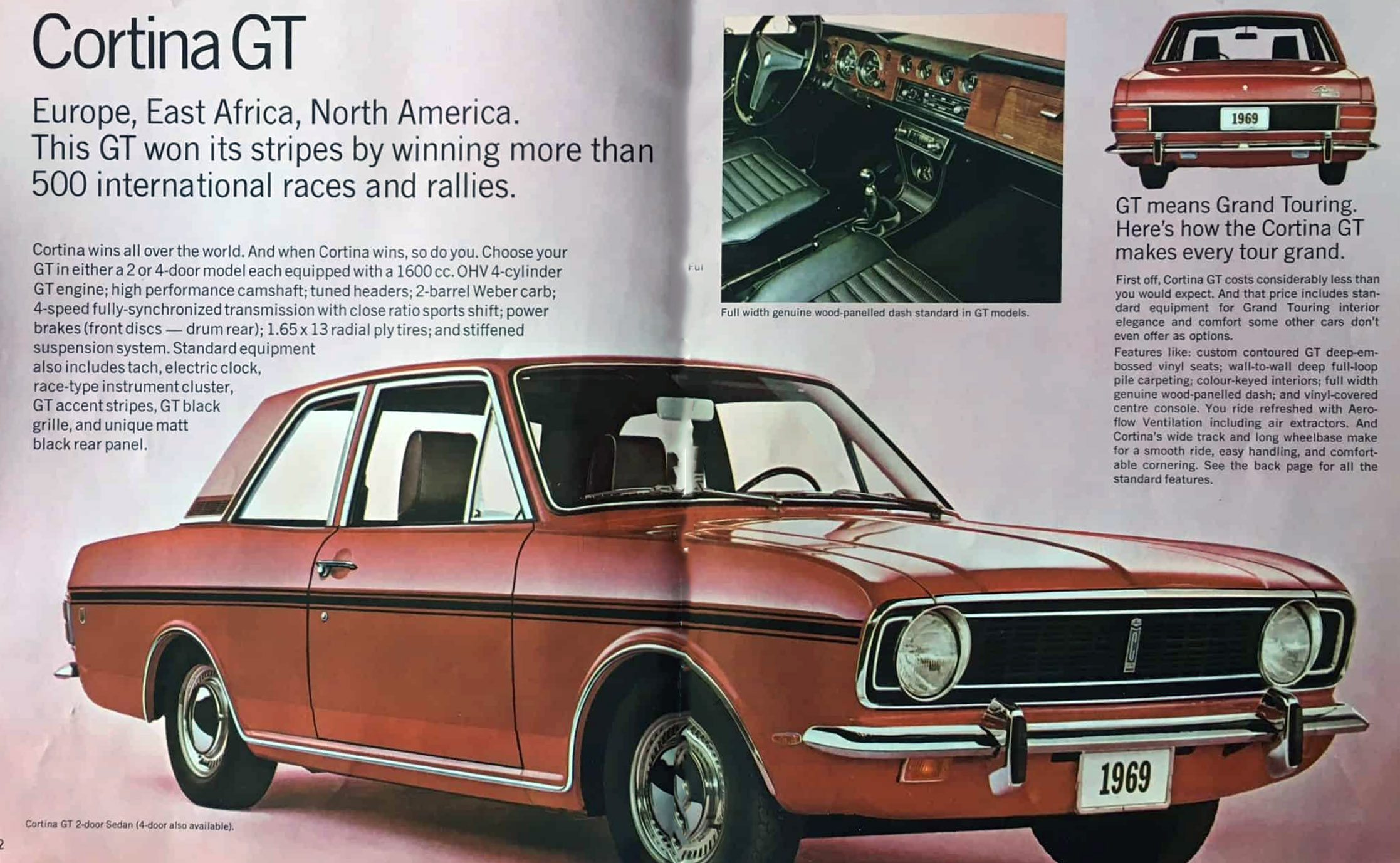
What caused the precipitous drop in sales? Well, I dread giving the pat, stereotypical answer, but sadly British Leyland wasn’t the only car maker perpetrating the stereotype of English cars from this era. The Dagenham-built Cortina suffered from quality issues as well as oil leaks and the dreaded electrical maladies immortalized by countless hackneyed jokes. Oh, and you thought that Datsun 510 and BMW 2002 rusted out in showrooms? They had nothing on the Cortina’s ability to rot its floors, sills, and front-clip sheet metal. It would seem those who bought Cortinas from Ford’s vast dealer network didn’t come back for a second one after their less-than-spectacular experience with their first.
Canada, however, didn’t give up on the small English Ford, and things got very weird.
Remember, They Bought Ladas Up There, Too
For 1971, Ford introduced the rather “Detroitized” Mark III Cortina with “Coke bottle” styling that was reminiscent of a shrunken-down Mercury Montego. Four inches wider than before and with a new all-coil suspension system, a larger two-liter was available as well.
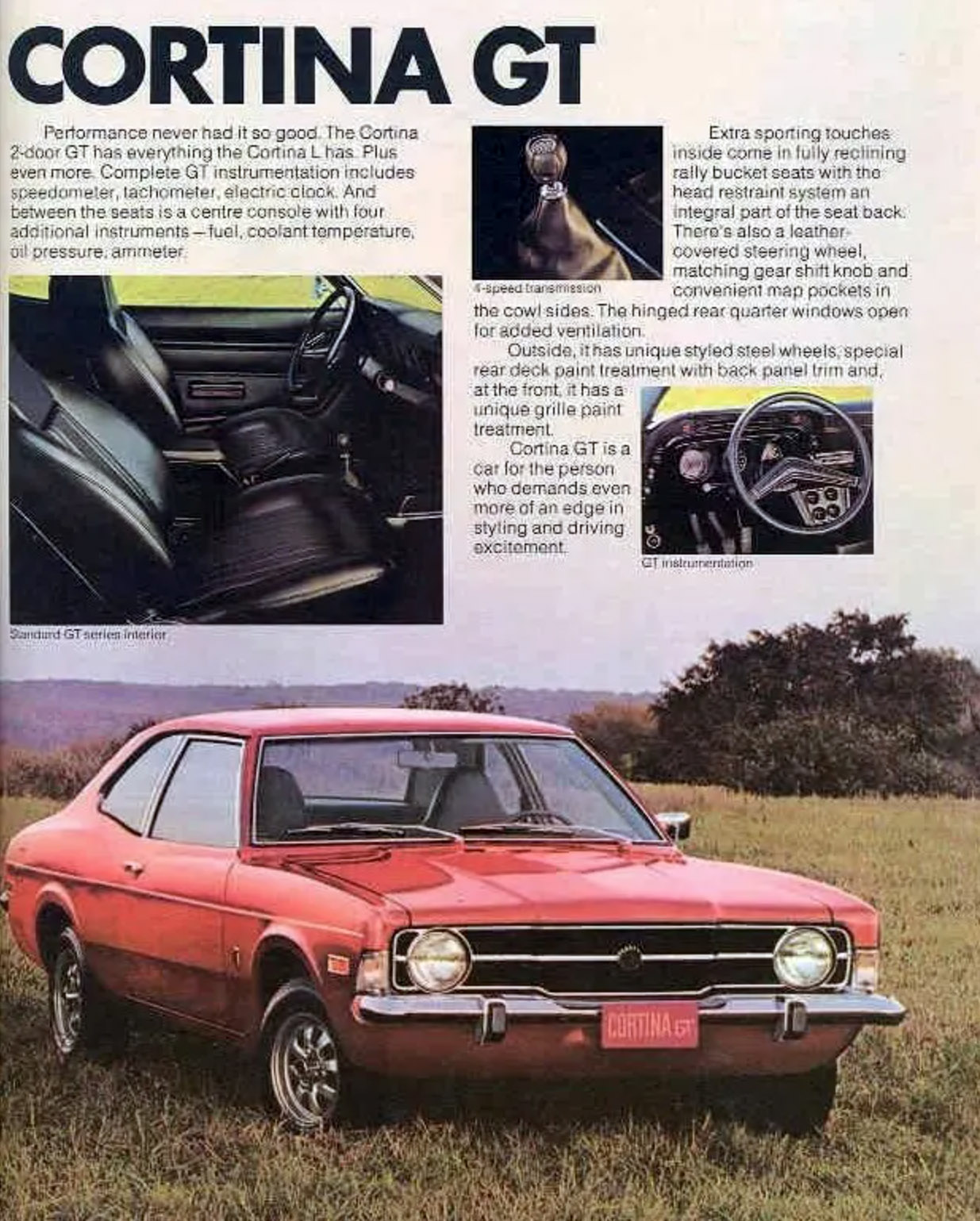
As a bigger and heavier car, you’d think it might have been a great fit for America, and at least Canada decided to give it a shot. Reportedly, around 12,000 were sold in 1972.

One very odd find in my research: this picture circulating from the Ford archives shows the nearly-identical German Taunus version of the Cortina wagon with Canada-spec marker lights and a CAPRI license plate. The car even has the same “Rostyle” wheels as the little mini-Mustang Capri. What in God’s name is this?
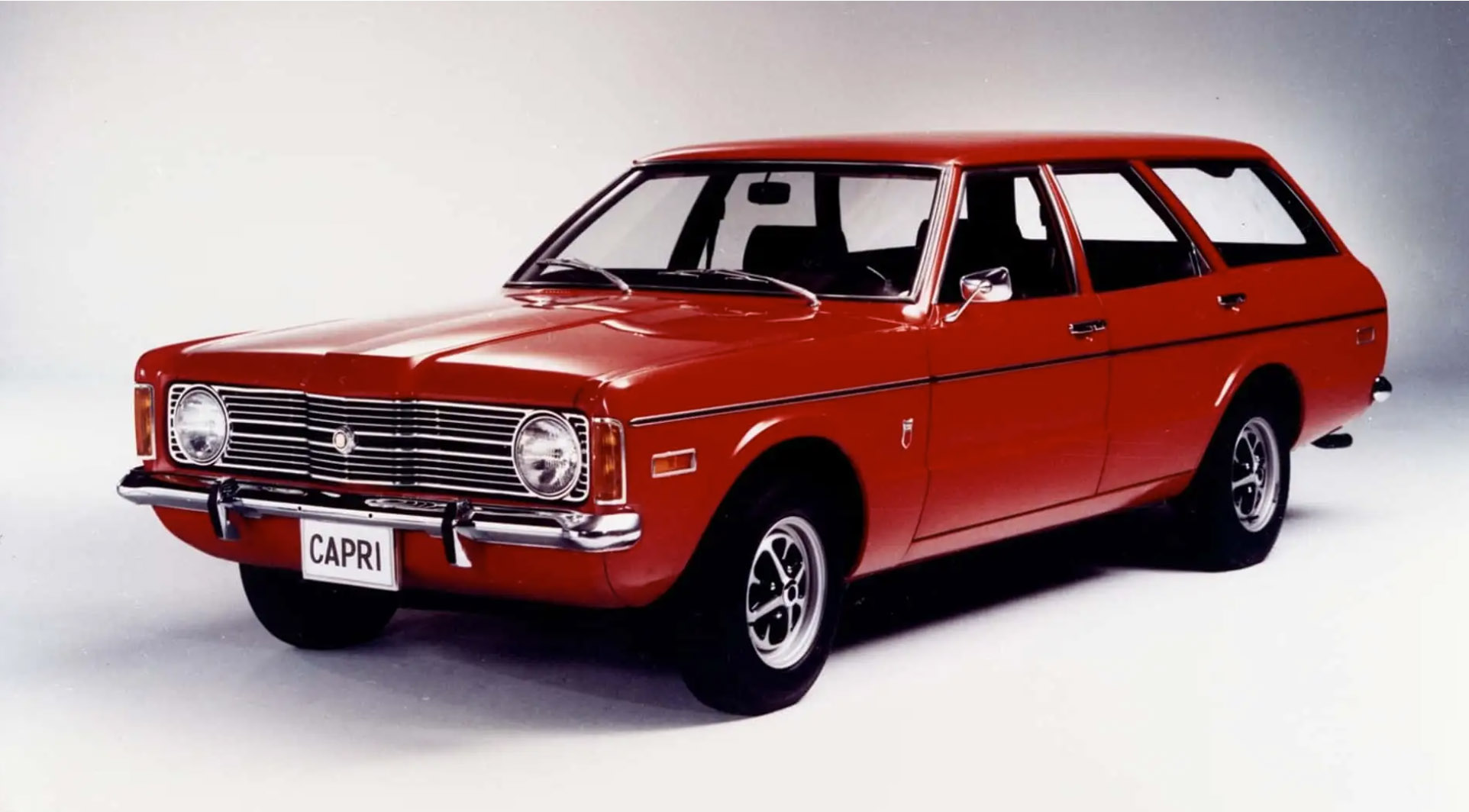
My only guess is that Ford of Canada decided to drop the Cortina but might have still wanted a small wagon to complement the Ford Maverick (that had no wagon version) and decided to import the better-built (sorry) German version to sell alongside the (also German-built) Capri coupe. I see no evidence of this thing existing other than this image, so it might have been a failed proposal. If you have any information, please spill the beans in the comments.

The Mark III Cortina ceased to be imported to Canada after 1973, ending yet another exercise in North American auto giants bringing in what should have been sure-fire hits from their foreign divisions. More proof, if you even need it, that a “World Car” is a hard thing to build.
You’d Rather Be Tailgated In The Cortina Than The Pinto, Right?
Ultimately, what did the Cortina in was not quality and reliability issues, but the same thing that killed the later US-market Fiesta. Just as that little hatchback was made redundant by the launch of the 1981 Escort, the Cortina was pushed aside by the Escort’s predecessor: the much-maligned 1971 Pinto and the Mercury Bobcat twin in Canada.
Please don’t make me say that’s like going from the frying pan into the fire.
Top graphic image: Ford





I’m pretty late to this article, but Ate Up With Motor has a great article on Ford’s Cardinal project (Taunus 12M, etc), which is sort of related to the Cortina inasmuch as Ford of Germany went in one direction with the FWD Taunus and Ford of Britain went in another with the Cortina:
https://ateupwithmotor.com/model-histories/compact-economy-cars/cardinal-taunus-12m-p4-and-p6/view-all/
Also, I don’t think I knew that Canada got the MK III Cortina.
My Mom loved her 79 Fiesta. She still misses it. I found a matchbox version that she keeps on her nightstand. Mom is 84 years old now, BTW, she still talks about that Fiesta! She had Riveras, Tbirds, Caddys and such, but that white Fiesta was her favorite of all cars.
The cars that my friends and I first started driving in, in the mid 90’s, were almost always ex-mum spec hatchbacks. So it’s quite likely your mum’s old fiesta ended up getting absolutely hooned by a teenager.
In my garage, needing lots of work, is the ’68 Cortina on which I learned to drive. My father bought his first Cortina as a 2-year-old used car in 1970 and we had a succession of others as I was growing up. With only certain Ford dealers carrying the English Ford line in the U.S., parts support was almost nonexistent even while new Cortinas were on the lots, so my father was always junkyard scrounging and sometimes buying whole cars for parts. Our favorite was a ’70 GT 2-door that eventually rusted too badly to keep in use. Incidentally, Jason has probably seen my ’68–although we’ve never met, we overlapped by a year at the same high school and this car was sometimes in the student lot my senior year.
You wondered why Ford imported Taunus station wagons. This is a copy and paste of something I wrote elsewhere:
I had an internship in the Body and Assembly plant at Dagenham during the summer of 1981, where I experienced an example of Dagenham’s deeply ingrained quality culture. By this time, preparations to install the production lines for the Sierra had started, and Ford was preparing to build up stocks of the Cortina to bridge over the transition.
Production of all Cortina estate cars, including right-hand-drive versions for the UK market, had long ago been moved to Genk in Belgium. However, the old estate press tools were still in storage at Dagenham, in a warehouse full of idle press tools, giant cast steel blocks stacked in groups. To support production in Genk, Ford decided to revive Cortina estate production at Dagenham, starting with a short run of pressings and the spot-welding together of a trial body. The bare, unpainted body was put into a test jig to see whether Dagenham could make estate bodies to the required tolerances, and I was sent by the office manager to note down the results.
The test jig was a sturdy frame made from welded lengths of square steel pipe. At various places on the frame were small, flat, machined platforms, with short studs in their centres that fitted into matching holes in the body. On each stud was a number of shims, or spacers, like large washers, of a fixed thickness. If the tolerances were perfect, the body would rest on an equal number of shims (five?) on each stud. In the case of the body I was sent to inspect, while some studs had no shims and the body was resting directly on the jig, others had the maximum complement of shims, ten or so, and the body was still floating clear, not resting on anything. In other words, it was twisted completely out of whack and the tolerances were shot.
I dutifully noted down the number of shims on each stud, and how far the body was floating clear where necessary, and took my results back to the office manager, who was leaning back in his chair, deep in conversation with someone else. He put his hand out for my notes, casually glanced at them, then shot bolt upright in a fit of fury directed at me, not at how bad the results were. Dagenham getting the estate job back would increase production, make him look good and the unions happy. It wasn’t the quality of the body that mattered, it was the numbers on my piece of paper, which I was told quietly by one of the other managers I should have falsified if necessary. I had no idea of the politics involved in the quantities of shims.
With the winter olympics currently on, every time the announcers say we’re watching something from the Cortina Sliding Centre, I half expect them to cut to a skid pad rather than the luge track.
Well thank you for this, (the) Bishop. Of course I’ve heard references to the Cortina for decades, but never really knew much/anything about them, despite having seen many of them in all the Brit police dramas I’ve watched over the years. The third-gen one I don’t dig at all, but both the first and second gen ones are quite appealing, what with their simple three-box design, the round headlights, etc… Which is not to say that I wouldn’t much rather own a Datsun 510 or BMW 2002 instead of course. Just being honest. 😉
It also reminds me a bit of the Corvair, which I know is hardly an apples to apples comparison (mince pie to mince pie? spotted dick to spotted dick? insert some stereotypical retro British food item here). I came semi-close to buying a Corvair Monza in Texas last year (got to the point where I was researching plane ticket prices) but thankfully I came to my senses and moved on to some other obsession before pulling the trigger.
I wound up getting a Volvo 240 instead of the Corvair in the end.
The big amber lights on the 68 model were to comply new regulations on minimum turn signal size. Land Rovers did a similar but less obvious change with a larger diameter turn signal in the normal location. The original Defender also had larger lights in the US. The 93 and 94 used truck taillights similar to an Isuzu NPR, and truck marker lights in the front bumper. The 95 and 97 models used a larger diameter version of the UK lights.
The Japanese sourced captive imports seemed to better. The Ford Courier, Chevy LUV and Dodge D50 all sold well despite the chicken tax, and the various flavors of Dodge Colt sold way better than the awful Plymouth Cricket. Of the bunch I’d go for a V6 Capri or a Fiesta over a Cortina
World car.
Like the Golf, Civic, Corolla, BMW3…
Ford had a few that they continued to abandon, Focus, Fiesta, Mondeo… but, yay, trucks?
Maybe automotive journalists were why we couldn’t have small cheap cars. Everytime we get one over the decades they criticize it for being “cheap” or “not having carplay” or “lacks safety features”
The thing is these didn’t benefit from a large dealer network as Ford dealers were not required to stock or sell them. When the English Fords came to the US it was due to the “export or die” proclamation. As such they were a separate organization selling separate franchises. Sure Ford dealers had right of first refusal but the majority passed. That meant you were more likely to find them at a very rare stand alone “English built Ford” dealership https://www.facebook.com/photo/?fbid=10158004074223495&set=gm.2953167735006897 or one of the “Imported Car” dealerships that sold a hodge-podge of brands.
When you look at all the old Ford dealership pictures and advertisements you can find from the era online it is extremely rare to see the English Ford signs or any of the cars on the lots or advertised. For large swaths of the US they were effectively unavailable.
By comparison I think Buick dealers were required to sell Opel.
Yes, but that was because Opel was introduced here for the specific purpose of filling a gap in Buick’s product range. Compact sales surged during the late 1950s recession, so GM gave Buick dealers Opel and Pontiac dealers Vauxhall initially as a temporary stopgap until new compact models could be developed for North America. However, Opel proved a strong seller, so they opted to keep it even after the Special went on sale for 1961.
Good point. I’d add that when they pivoted to the Kadett, it was custom made to compete with the VW Beetle, then the top selling car in Germany and the top import in the US by a wide margin.
My first car was a MKII Cortina 440 – the higher trim level (from memory the first 4 meant it was a 4 door, the rest signified high trim level) and the ‘luxury’ feature was a genuine woodgrain dash. Not veneer, but a 1/2″ thick slab of stained/polished plywood cut to fit around the gauges and switches, and with the glovebox lid being a section of the timber cut out and hinged flush with the dash, with a little wooden handle. I refinished the timber sections, which made the car feel way more ‘special’ when sitting in the driver’s seat than it really was.
In Australia the lights outboard of the headlights were turn signals with a yellow lens, and the bottom third had a clear lens for parker lights. At the rear the reverse light was a round white light (of the sort usually sold aftermarket for trailers) tacked on the left side opposite the fuel filler. Only the automatic transmission cars like mine had one, because the manual gearboxes didn’t have a reverse light switch fitted. I modified mine by swapping the bulb holders for the rear indicators with dual filament bulb holders, so I could use the amber rear indicators as reverse lights, which was legal for cars of that age. When I later manual-swapped the car, I fitted a spare headlight toggle switch to my homemade centre console where you could flick it with one finger while selecting reverse. Flicked to the Park position, it turned on the amber reverse lights, flicked all the way to On it also lit a spotlight mounted on the rear bumper I fitted for reversing at night.
The weird way cars were part of your salary in the UK then might have been part of it because not all cars qualified and there was sort of a corporate order. Producing more of soviet style market data then anyone at the time would care to admit. American Ford turned somewhere after the falcon and didn’t really look back until the maverick. I suppose the mustang had a lot to do with that. But also the counter culture had the European cars especially vw so doubtful they would want a European Ford and the people buying American Ford didn’t want a European car. So you probably attracted a buyer looking for value and economy but once they look at quality they go elsewhere.
I am not familiar with this: “The weird way cars were part of your salary in the UK then…” Are you referring to (typically salesman) jobs where a company car or car allowance was provided, or was there some kind of UK-wide mandated thing where pay had to include a car for all jobs?
The cars were an accepted “tax dodge” for companies as well as employees. Let’s say you’re working for a company like United Healthcare or Microsoft, instead of getting a raise, you get a car instead. It’s a great write off for the company and you don’t have to buy a car for your family.
I believe it there was a big increase in tax at a certain level perhaps a wealth tax so companies would pay right up to the limit but a car wasn’t included in the calculation perhaps some other things too so they essentially got the car of choice with in certain limits as part of their compensation.
Thanks for the explanation- I was completely unaware that such a system existed. Today I learned…
A vastly higher percentage of the UK workforce had company cars as part of their benefits than in the US, here, its restricted really to people who have to do a lot of driving as part of their job (eg, traveling sales), but Britain used to have a much wider range of job positions and industries were a car was an expected part of the compensation package, made up extremely high percentages of the total sales volume of quite a number of different car models, including the Cortina
When I was 14, my buddy’s neighbor was an SCCA Trans Am racer. One weekend, he asked the two of us if we wanted to hitch a ride with his crew chief to watch him race the Greater Des Moines Grand Prix.
We ended up riding down in the back seat of an 86 or 87 XR4Ti (and listened to William Shatner’s ‘Tek Wars’ on audiotape)…I totally fell in love with the car and considered buying one in my early 20s, but realized a rear drive GT was absolutely the wrong choice for someone who was (then) contemplating a move to either Boulder CO or Flagstaff AZ in pursuit of more skiing (and maybe finishing an undergraduate degree).
I still wonder at how those distinctly Euro fords made their way stateside, and wish Ford had more clarity in the effort – it may have significantly altered their direction thru the 90s.
Merkur was indeed a terrible name, like c’mon what the hell were they thinking?!
I get they wanted them to not be Fords but if you were going to use basically the german spelling of Mercury, just use freaking Mercury!
Could have been worse. “All new for ‘85, Ford brings you the sporty and sophisticated Quecksilber XR4Ti!”
They couldn’t use Mercury, because Mercuries were bought by the aging WWII veterans and had that 1970s hangover brougham image, they needed something European sounding to reach yuppie Baby Boomers otherwise contemplating BMWs, Audis, or Saabs. But it was lazy as hell to just straight up translate “Mercury” into German and think nobody would pick up on that
Ford did earlier approach the British government regarding a purchase of Rover Group, which was killed due to political pressure to keep the company under British ownership, and at one point also approached the Quandt family about possibly buying BMW. They eventually got Jaguar, which as a tiny, publicly traded company was an easy acquisition
Jaguar was tiny but expensive. Over $2 billion. Ford then proceeded to lose buckets of money trying to make Jaguar a full line of premium cars that could sell against the Germans, which the Ford brand hadn’t been able to do.
Yeah, but it was totally private without any government ownership stake, and no controlling family interest, so it was available to be snapped up.
Plus, they were already struggling financially and didn’t totally oppose joining a deeper pocketed corporate overlord
Probably the only somewhat decent investment they made in their years-long quest for a premium import brand was when they bought Volvo – that was actually profitable during most of its time under Ford ownership and only really ran into trouble in the late 2000s, which was why Mulally initially debated whether to sell it in favor of focusing on Ford and Lincoln, or keep it and work on turning it around, before eventually deciding to sell. But it wasn’t automatically on the chopping block initially, the way Jaguar Land Rover, Aston-Martin, and the plurality stake in Mazda were.
Cousin’s grandfather had a MkII Cortina sedan in a lovely shade of light blue. Never got to ride in it though.
My dad had a MkI Escort, and I remember he had to add a backup light (just one!). The things we take for granted nowadays.
I liked the Cortina. But then, I had a Renault and an Opel in high school at the same time. My friends had Trans-Ams and Corvettes and the like.