

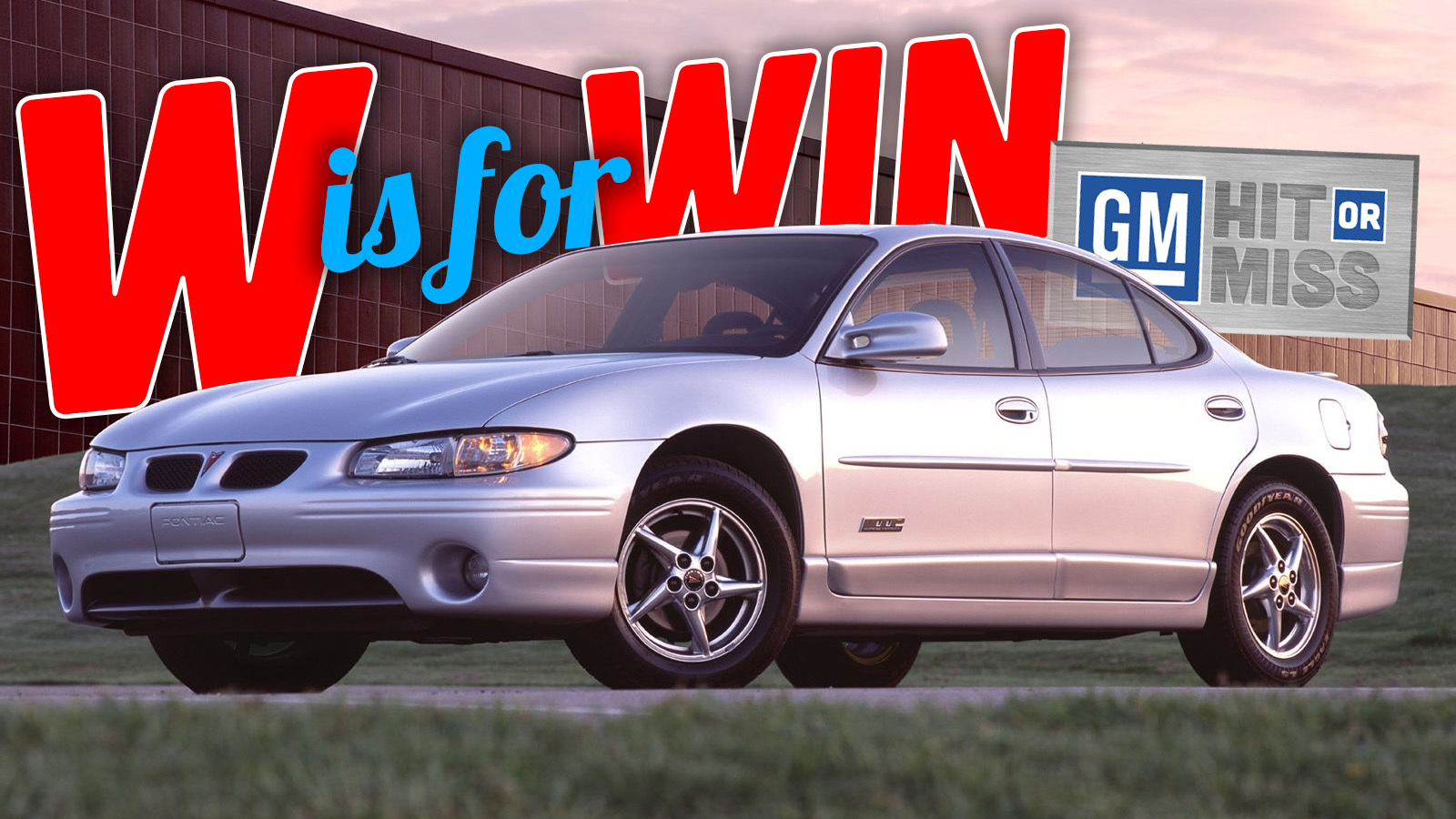
If you put out a general poll of the greatest GM products of the ’90s and early 2000s, right behind the trucks and the Corvette, you’d see a lot of people answering with W-Body cars. Indeed, these midsize-and-up sedans and coupes now enjoy a general reputation for durability and cushiness, and they often made just as good first cars as they do last cars. While a W-Body with a 3800 V6 was an easy button for a reliable, comfortable car, it’s easy to forget that the whole platform was born from an enormous disaster.
Remember: Things were bad for American car companies in the ’80s. Chrysler had to take a bailout at the beginning of the decade, and Ford had to get the Taurus right or everything was over. But those pale in the face of GM’s dysfunction. Rebadging a Cavalier as a Cadillac was one disaster; churning out luxury coupes that looked like Pontiac Grand Ams was another. Each division had its own styling team; the array of engines, catalytic converters, and washer fluid bottle caps was maddening, and between inefficiencies and stepping on its own toes, GM needed to make a big move in an attempt to fight back against Japanese competition.


The plan was a project called GM10, a front-wheel-drive midsized platform for Chevrolet, Pontiac, Oldsmobile, and Buick. The scale of ambition was, in hindsight, laughable. As Fortune reported, GM thought this project could acquire 21 percent of the entire American car market, which just seems ridiculous. However, thanks to constant restructuring under the fast moves of CEO Roger B. Smith, it wouldn’t be until 1987 that the GM10, also known as the W-Body, would launch.

The bungling was truly immense. Production scaled down to four plants from the original seven, and only coupes launched at first, right as America was falling out of love with two-door cars. The initial results on the business side seemed catastrophic. As Fortune put it:
In 1989, GM lost more than $2,000 on every GM-10 car it built. The next year GM managed to sell 537,080 of the cars with all the marketing resources of four divisions behind them, while Ford pushed 410,077 Tauruses and sibling Mercury Sables through just two divisions. Last year Oldsmobile sold 87,540 GM-10 versions of the Cutlass Supreme. In 1979 it had sold 518,160 of the models the GM-10 car replaced. GM-10 exposed critical inefficiencies in GM’s plant system. The cars used less than 50% of the manufacturing capacity in the four plants allotted to them. But GM couldn’t fill those plants with other models because none of the factories were sufficiently flexible to build anything else. Even worse, the assembly process was roughly half as efficient as Ford’s. According to GM’s own calculations, its workers spent about 35 hours assembling each GM-10 car while Ford built a Taurus in 18 hours.
So, what we have here is a car that was slow to build, made in horribly underutilized facilities, and launched to four-figure unit losses. That’s bad. But how were the cars as cars? Well, if we take a look at the first W-Body Pontiac Grand Prix, it turns out it was actually great. This was an advanced car for the late 1980s with sleek styling, independent rear suspension featuring a transverse composite leaf spring, a drag coefficient below 0.29, and an absolutely novel dashboard.

Controls for the lights and wipers were housed in big pods on either side of the gauge cluster. There was an electronic information center inside said cluster, and you could even get controls for power seats with adjustable bolsters and thigh support. The biggest problem? Shipping from launch with a weedy 130-horsepower 2.8-liter V6. Still, as Car And Driver summed the car up:
Despite the power shortage, we expect that many buyers will find the Grand Prix to their liking. Its price remains to be announced, but an SE equipped like our test car will probably carry a sticker of about $17,000. That puts the Grand Prix in the same ballpark with loaded Ford Thunderbirds, Chrysler LeBaron two-doors, and, presumably, the other GM10 models. None of these cars is a pushover, but looks count for so much in this class that the Grand Prix should be an instant showroom success. It should also have little trouble pleasing its drivers. And such an artful combination of form and function should help keep Pontiac on track as GM’s hottest division.
However, over time, a funny thing happened: The W-Body got better. Sedans and convertibles and quad-cam V6s joined the party, while ASC McLaren turbocharged the Grand Prix. These things actually evolved into pretty tantalizing little cars—with one big problem. The Chevrolet Lumina was the value player, the Pontiac Grand Prix was the sporty one, the Oldsmobile Cutlass Supreme was the sleek one, and the Buick Regal was the posh one, but they all looked more or less the same.

Even though the first-series W-Body cars were decent, the market share bleed was biblical. But in 1994, the second-generation Lumina adopted a change in strategy that would alter the trajectory of the W-Body forever. It wasn’t about being the highest-tech thing out there, but instead about using proven technology. As Automotive News put it:
Given their critical importance, the engineering approach to the new vehicles is somewhat surprising. Despite the technical battle going on in the rest of the market, these models are not all new. Significant chunks of the cars like engines, transmissions, body structure and suspension are largely unchanged. The new cars merely pace current competition. They are no leaps forward as were with the first Ford Taurus or the Dodge Intrepid.
Indeed, the big mechanical updates for the second-generation Lumina involved swapping out the transverse rear leaf spring for coil springs, stretching the wheelbase, and ditching the four-bangers. The car launched with a choice of a 3.1-liter or 3.4-liter 60-degree V6, a four-speed automatic, soap bar styling for the ’90s, and a goal of being the cheapest car in its segment. Guess what? Sales figures went through the roof.
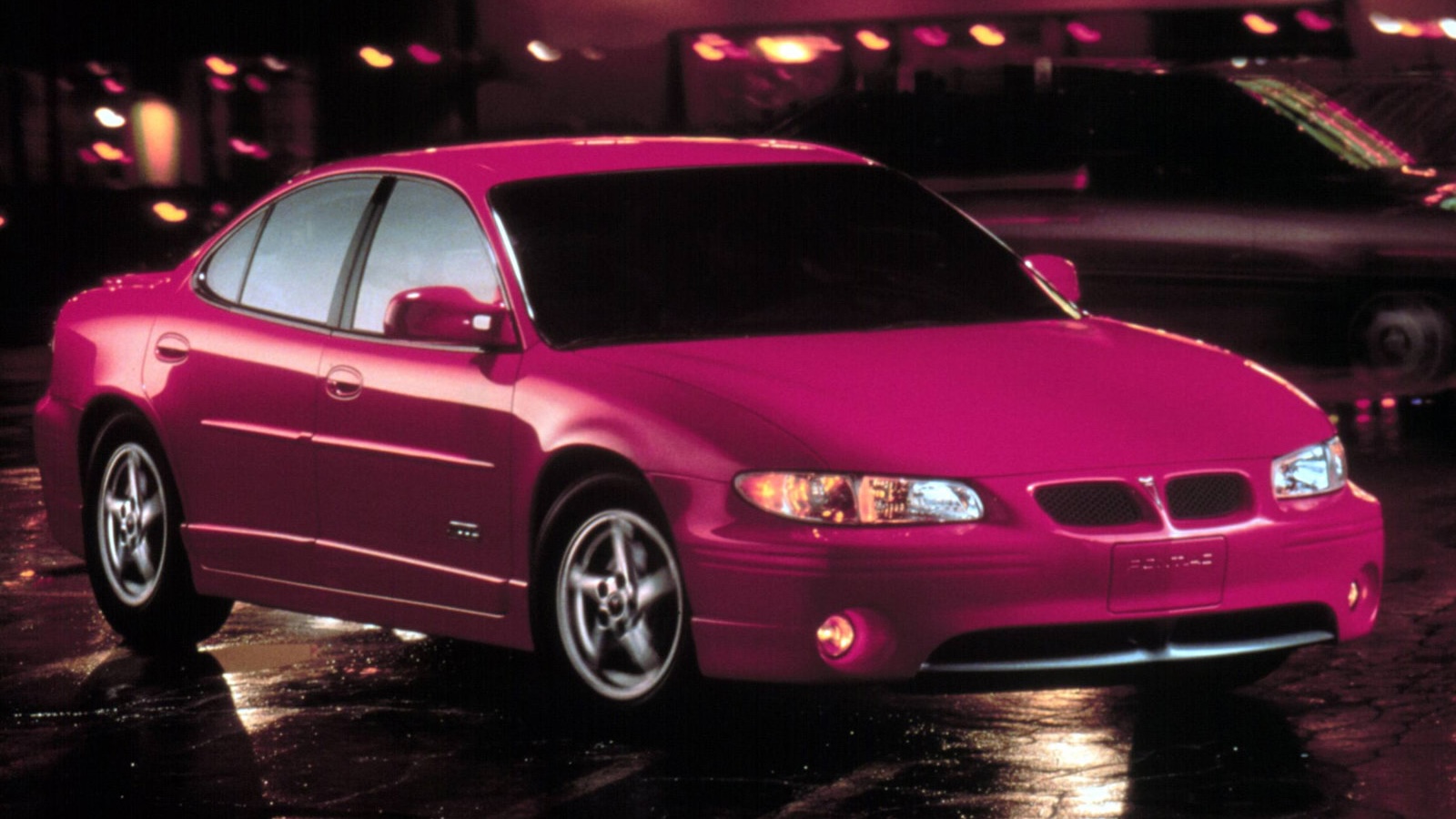
Now GM had a formula it could apply to the even longer, MacPherson Strut rear suspension second-generation W-Body cars. They still used some old bones, but they were more visually different than ever before and used tech that pretty much just worked. The first three second-generation W-Body models to launch would be the radically different-looking Pontiac Grand Prix, Oldsmobile Intrigue, and Buick Century. Wards Auto reports that the spend to get these cars to market was about right.
Industry sources estimate that the total investment for the Grand Prix, Intrigue and Century was a frugal $2.2 billion, or less than a third of what was spent 10 years ago.
How were the cars? Well, the Intrigue was sleek-looking but largely unremarkable aside from the brief and deranged flirtation with a Northstar-derived V6. The Century was about as exciting and flavorful as grits, but it offered Charmin comfort at a reasonable price tag. The 1997 to 2003 Grand Prix was something else. That’s because in the pursuit of using proven, cost-effective technology, GM gave it the 3.8-liter 3800 V6, with or without a blower.
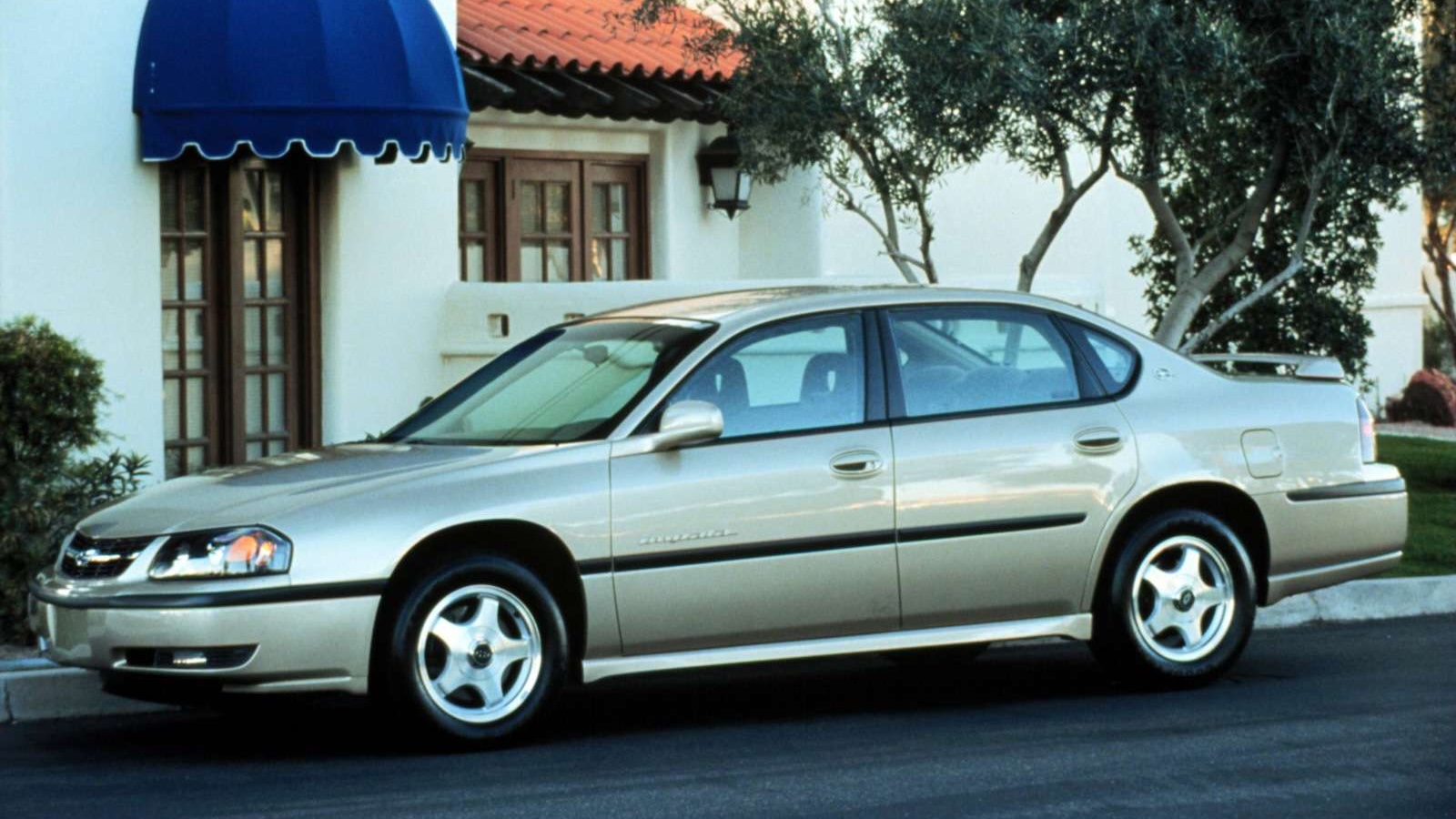
Sure, there were some teething issues with the early Series II motors. A severe valve cover leak could drip onto the exhaust manifold and light the spark plug boots on fire, and the intake manifold gaskets could fail, leaking coolant into the runners and hydrolocking the engine. However, once the manifold gaskets were done, so long as you kept an eye on valve cover gasket leaks, these things would run forever and make healthy power. We’re talking 200 ponies in naturally aspirated form and 240 with a supercharger. Eventually, all larger variants of the second-generation W-Body, plus the fourth-generation Buick Regal and the second-generation Lumina would get the 3800, either as an option or as standard equipment. The result was a pretty solid series of cars at solid price points. The 2000 Chevrolet Impala was another feather in the W-Body’s cap, a great-looking sedan that sold enormous numbers. And the NASCAR-look Monte Carlo wasn’t just a sales success, but also arguably the last large American mainstream coupe.

By 2004, the W-Body architecture was a whopping 17 years old and probably due for replacement. However, instead of immediately stretching the 2004 Malibu’s Epsilon platform, GM re-worked the W-Body yet again with an aluminum engine cradle, larger brakes, and greater flexibility for powertrains. GM’s rationale, according to Automotive News? “‘It really is quite a reliable platform for us,’ said Dave Whittaker, vehicle line executive for the W cars.” In hindsight, this is one of the smartest ideas that GM ever had. Even in the 2000s, the writing was on the wall for the large mainstream sedan market. Crossovers and SUVs were the new wave, so it just didn’t make sense to spend crazy money on a dying segment. With a rotating motley crew of engines, including the 5.3-liter LS4 V8, the W-Body soldiered on until 2016, when the last Chevrolet Impala Limited rolled off the line.
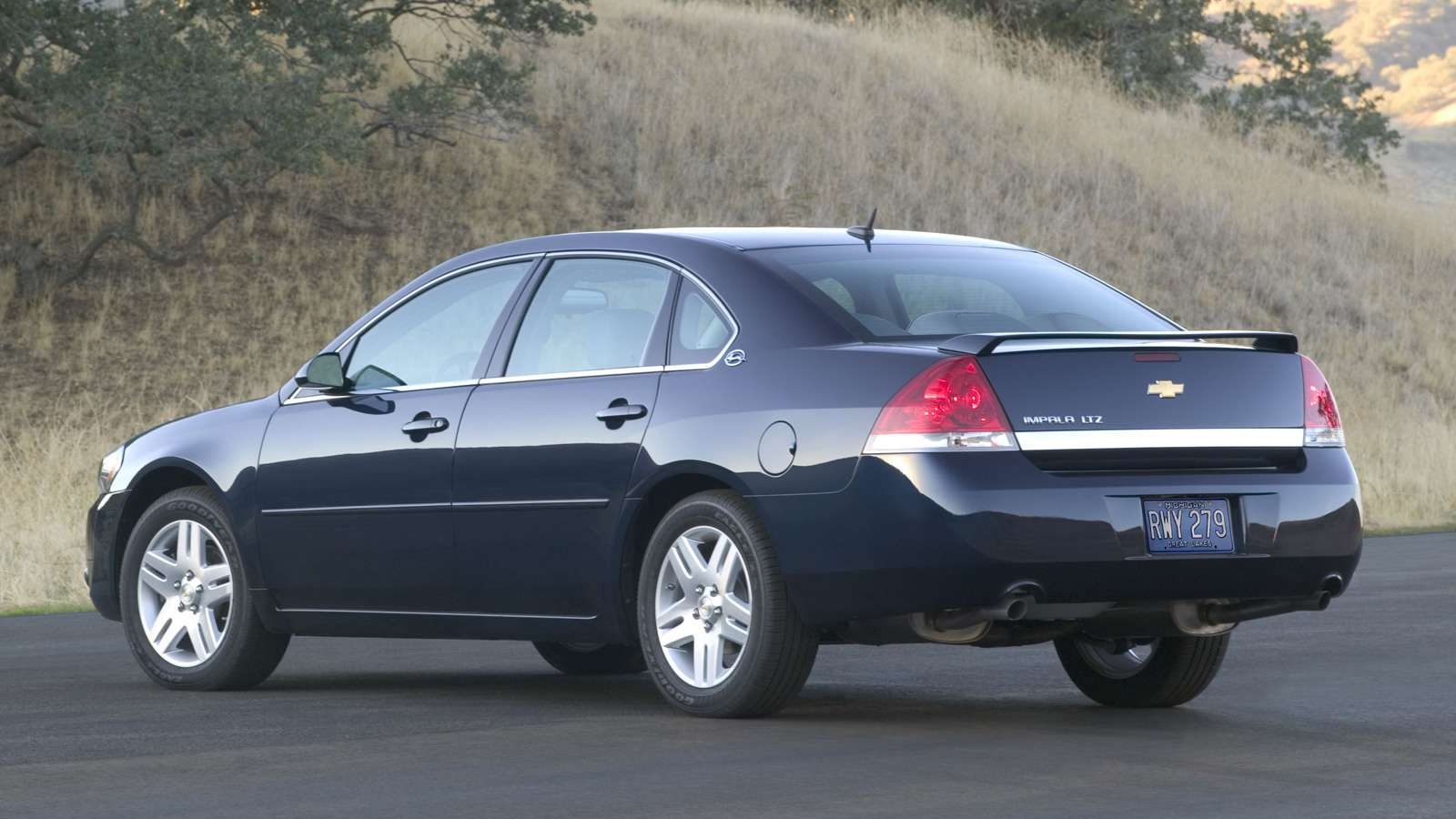
At that point, the W-Body had become an American staple, a byword for comfortable, roomy, predictable cars that largely just did what they needed to do. Memories of the GM10 fiasco had largely evaporated because once you sell more than ten million of something, you’ve done alright. Even though it was originally a failure, history looks upon it as a hit, proving that it’s often not worth writing something off until after it has an opportunity to reinvent itself.
Top graphic image: Pontiac
Support our mission of championing car culture by becoming an Official Autopian Member.




They are either hits (many high mileage 3.8 V6 examples that can easily compete with a Camry or a Corolla on “rare” occasions), or misses (intake gasket/ QC problems/transmission issues).
The early versions were horrible. The 80s ones fell apart quickly.
I still think the Intrigue is/was one of the best looking sedans of my lifetime, Airy greenhouse, sensuous but not overdone curves, modern lighting that doesn’t try too hard at being futuristic. Just flawless IMO.
My first car was a ’97 Grand Prix GTP coupe. My parents bought it off a family friend for $2,000 in 2007, which would be an unreal deal these days.
16 year old me had absolutely no business in that car and it didn’t take long before I got a speeding & wreckless driving ticket. Luckily, my uncle’s good friend is a defense attorney and he got all the points off my license in exchange for some yard work at his house. That was the first and last ticket I’ve ever gotten. Before the ticket though, I did hit 140mph on a desolate highway around 3am.
If I recall correctly, at launch the GP GTP was the fastest sedan in the world.
Growing up in rural eastern Colorado, W-bodies are about the most ubiquitous vehicle in the area, right up there with the full size Big Three trucks but also Subaru’s (Because it does get shitty in the winter out here with some regularity). Probably half the people I know had a W-body at some point in their life. Heck, the mail delivery person that does the rural route to our family farm has a somewhat forlorn ’05 LeSabre as their delivery vehicle.
I myself ended up driving my gran’s White Diamond Tri Coat ’04 Park Avenue (sadly just a base model, not an Ultra) for about 9 months after she passed away in 2021 and my aunt decided she didn’t want it and low key let me use it and kept paying the very cheap insurance in my gran’s name until I finally sold it (which I dragged out for almost a year because I wanted to put miles on that car and not mine). It had some annoying quirks, like a turn signal stalk that had an electrical short that would cause the turn signals to randomly stop working and cause the radio to fritz out, and the fuel gauge never read correctly even after a fuel pump replacement, but the car was over 15 years old and had 130k miles when I took possession, so I couldn’t be too mad. But in typical 3800 Series III form, it was gutsy, and it got 32+ mpg highway regularly. With the 18 gallon tank, it had a range of close to 600 miles! And it was like driving a comfortable sofa down the road. It took one to two business days for the steering inputs to be felt in the wheels, and it wallowed like a conservative in self pity after being cancelled for saying something blatantly horrible, but this car wasn’t meant for the twisties; IMHO, they are about the perfect road trip and backup car. I would literally pick one up cheap as chips specifically for taking on long road trips if I didn’t have a ton of stuff to carry with me.
The only miss with the W body is that GM didn’t make a wagon version, because they insisted that people would want to buy the Dustbuster and then U-body vans. They had the tooling for the Commodore wagon available, they easily could have used that roof stamping and integrated the styling. The Taurus/Sable, Accord, and Camry all had wagon models through the late 90’s, so I always thought it was odd than GM completely abandoned them and went all in on their vans (which were, to be kind, NOT one of GM’s better vehicles)
If they’d made a wagon version of the Bonneville or Impala, I’d still be rocking one to this day.
I’ve been contemplating a Bonneville SSEi for a long time, and at some point, if I can find a Dark Polo Green Metallic, Bronzemist Metallic or Crimson Tintcoat 2000-2005 with tan leather in reasonable shape, I’ll probably snag it and make it my backup vehicle.
The W-Body isn’t perfect, but it’s probably the best vehicle platform GM made in that era by a long shot aside from their trucks.
The early W-bodies had a big problem with the rear calipers rusting up for those of us that lived in states using salt on the roads in the winter. It was never a recall but my dad, who was a service manager at a Buick and Pontiac dealership, would often fix them free of cost as it was clearly a design problem. I think the GM term was “goodwill adjustment”.
mom had a ’98 bonneville with the blue/green color shifting paint. oh, the one wheel peels in that thing…
A W-body with a 3800 is just about as reliable as its going to get for a GM. This was one of the few highlights for the General.
GM has certainly swung back in the other direction over the last couple decades – they really are trying to offer more technology and smaller, more powerful and efficient engines which seem to be maintenance nightmares. We won’t even bring up the modern 6.2L engine which can blow up as early as 500 miles.
“Sparks of brilliance” is what GM has… but mere sparks ain’t enough to sustain a flame.
I think CAFE standards and EPA have destroyed reliability too.
As for the 6.2 L87 issue, I really need to wait 5-10 years to see the true impact. The fixes will take a long while for sure.
Another article about a car I used to own! Well done Autopian!
I had a 2000 Regal Supercharged. I modded it with a smaller pulley, intake, full exhaust, chip tune, lowering springs and sway bars. Loved the car and loved the SC whine especially. Surprised many a Mustang back in the day!
I was part of the regalgs.org web forum and helped organize one of their first regional car meets in the Midwest in 2008 or so.
Even bought my wife a 2002 NA Regal. Great cars, comfortable, easy to work on, and reliable as hell. A set of snow tires and they were unstoppable in winter.
Now I am eagerly anticipating an Autopian article about the Olds Aurora!
I was just getting ready to post that the Aurora really should be addressed in this series. It was a standout effort by GM, easily one of the nicest vehicles they made for a long time, and in usual GM by the second generation effectively ruined.
I still miss mine to this day, very reliable (had the 3.8) They hadsilky smooth driving that even 9 years later my wife comments that our current cars are too stiff compared to the old Buick. They are also Suprisingly good at light off roading!
Let’s do the ‘What’s your pick for the best looking W body?”
1994-96 GTP coupe for me
Dunno about best looking, but the answer to (the best of) anything GM is usually Buick or Oldsmobile, so I’m going with a Regal GS with leather. I just can’t stomach usual 90’s/00’s Pontiac styling.
I like this cut, but I’m a 7th Gen ’97-’03 GTP guy. A housemate in college had one with a pulley and exhaust swap. It was a modern day ‘lead sled’ versus all of the Japanese metal and older Bimmers, but it’s a super coupe and fits it’s mission well.
Those are great as well and are my #3 on the W body list.
My number 2 has to be a 94 Cutlass Supreme convertible- in teal of course
There’s something about the early coupes like the 94 Grand Prix or Cutlass vert that scratches the Radwood nostalgia itch for me.
I really liked the ninth and tenth gen Impalas. And man, Jason Bourne really went to town in an eighth gen he, uh, “borrowed” from the NYPD.
Good call! I always thought that was the coolest of all the Bourne chases. The W body took a beating and kept going.
Frankly GM used the same philosophy as BMW and Mercedes, over build for reliability. Of course the Germans over built for a fine quality automobile while GM over built for a mobile sofa.
The W-body platform was a piece of crap. But it was an interesting piece of crap. It was with the second half of the second generation that they gave up and relegated them to being just above the bottom, but there are still a few amazing aspects about them. One such aspect was that these are the cars that made front wheel drive come to be expected on CUVs. SUVs were truck based and thus had rear wheel drive, but the W-body was used as the engineering basis for the first generation 1990 Pontiac Trans-Sport and Chevrolet Lumina APV which used a modified W platform called the U. In 1996 they updated the U-platform to be in line with the second generation W-bodies that also released that year, and then used aspects of both as the engineering basis for the Pontiac Aztek and Buick Rendevous which came out in 2001.
What’s more is that Pontiac did the majority of the heavy lifting for the W-body, and all other first generation W-bodies are based off of the Pontiac Grand Prix as the template. Thus the 1988 Pontiac Grand Prix is directly responsible for both the 1990 Pontiac Trans-Sport and the 2001 Pontiac Aztek. It is the mother of those big ugly mugs.
Love the 3-peat of GM hit or miss articles!
My first car was a 2000 Monte Carlo with the 3.4. Loved that car! Second was a 2001 Grand Prix coupe with the 3.8, equally awesome for a teenage driver.
Usually, these stories have GM figuring out what’s wrong and fixing the design just before ceasing production too soon. Here, they actually stuck with it, built it forever, and ended up winning in the end.
I had a coworker with a Grand Prix GXP. The thing was a hoot, with torque steer for days from the V8, but it was a difficult vehicle to hate despite the plastic-fantastic interior perhaps a bit too aggressive styling. I more than once considered picking up a LaCrosse Super to enjoy the power but with a bit more reserved styling and higher comfort.
I bought a 2002 Century as a winter beater in 2015 I think. It was very comfortable to drive and decent on fuel. For the price it served me well for the time I owned it.
I mean it was bland and boring as anything to drive but would eat up distance.
The W-body is emblematic of 1980s-2000s General Motors in one platform.
Born in hubris of vision of grand redemption, vaguely disappointing in execution compared to class-leaders, surprising extended mediocrity under indifferent or neglectful maintenance, occasional Achilles’ heel (intake gasket failure) that serves to erode its reputation among anything but the most loyal, and an occasional spicy version (S/C 3800, LS4 V8) that prevents it from being completely forgettable performance-wise.
You could see the parallels of this one platform to GM’s whole lineup during that era.
I bought an ’88 Regal W-body in college, 1996. EVERYTHING except the actual 2.8L MPFI V6 broke or gave me problems. The parking brakes on the rear disks froze and required service avery 6 months or so. The 4T40 trans blew and needed rebuilt. The interior plastics broke/cracked/fell off/faded. Numerous electrical faults and an infuriating side terminal battery. Rear struts needed replaced or the leaf spring pogo’ed badly. To it’s credit the body never rusted, GM was galvanizing in ’88.
Engine service was no joy. Rock the motor forward for rear plug access. Changing the alternator required 2 universal joints and 2 feet of extension bar. The wiper blades were hard to find at the time.
I swore never to buy another GM product…particularly as I was at the time servicing friends Toyota, Honda, Nissan cars.
My dad had what I think was a ’91 Grand Prix with the 3.1l. Coming out of the dreary 80s cars that thing was reasonably quick and still kind of cool by the time we got it (probably 1998 or something like that). He got it cheap from a coworker, and it ran pretty well from what I recall (except for eating brakes). Burgundy on burgundy.
Traded it in after a couple of years for a Bonneville, a ’98 or ’99. Driving it home and the thing ran out of gas up a hill despite showing over 1/4 tank on level ground (went back to the dealer and they said “oh yeah, they do that, you should stay over 1/3 tank”). Pretty much immediate regret on that purchase and didn’t have the Bonneville for long.
The Chevy Impala roaming the streets in Detroit, move out of the way, they coming for your family, dogs, and dignity lol
The ’97 Grand Prix was amazing, a real looker at a time when the only sedans that looked sleek were the LHs. The dark green ones were especially hot.
It really was. The new Impala wasn’t much to look at, but it was hard to argue the Grand Prix wasn’t a stunner. The green was good, as was the red and the dark blue.
These are the current cockroaches of the road. Not quite Sentra or Altima levels, but not far removed.
Beige wallpaper.
It’s there, you don’t notice it until you look directly at it, but you still don’t like it.
My family bought a 98 Grand Prix GTP in 2004 with less than 20k miles for a sweetheart deal. we drove that car for another 13 years before the frame rail rot finally got to the point where we stopped putting money into the car. Overall it was a pretty reliable car and served us very well.
My mom had a 99 grand prix when I was little she loved that car and it was a very reliable car for her no idea the mileage she had on it but it was totaled in an accident but I am sure she would have still be driving it for years if that didn’t happen. Though she did get a 2002 accord coupe to replace it which was also a very reliable car that she had until it had over 200k miles on it and the trans finally went out.
And side note I always like the styling of those late 90s and early 2000s Pontiacs yeah sure a lot of plastic cladding but I thought they looked cool.
“Memories of the GM10 fiasco had largely evaporated because once you sell more than ten million of something, you’ve done alright.”
This is exactly what GM did with the infamous X Cars and the Vega:
Put out a half-baked car, ruin your reputation.
Then fix it, rename it/redecorate it and sell it for another decade or so.
If only there had been a way to get it right the first time….
Yes, because in the 80s, those cars were built very poorly, and this is when cars like the Toyota Corolla made a name for themselves.
Pretty sure Corolla made a name for itself long before then – as it was the best selling car in the world in 1974.
You couldn’t go anywhere without seeing a E30/E50 third generation car in the mid-late 1970s
And where did those buyers come from in the US?
Lots of them came from Vegas and Pintos.
I owned an ’88 W-body and later a ’91 Sable. No comparsion. The Ford had faults, but was overall a better designed and built product. Ford got original the Taurus right, then they got complacent.
Which is the Ford way:
Design it right – sell a lot – then forget about it for 20 years (while collecting the checks) till “nobody wants one anymore”, then discontinue it.
I’m now all in on Toyota, newest is 11 yrs old. TQM works.
’14 Camry Hybrid
’13 Highlander
’07 Corolla
Daughter has an ’08 Prius
Sadly now even modern Toyotas do have more problems. They aren’t what they used to be (eg: Tundra engine failing past the recalled years).
Was the Ford costlier?
Owned both for about the same amount of time, probably put more miles on the Sable actually as it was a commuter out of college. It just was better built, better interior materials. It needed less repair work and maintenance overall – stupid stuff didn’t break. I spent more on the Mercury (I’m thinking about 2500 bucks in 1999/2000 or so. The Buick was about $1200 in 1996
Makes sense then.