

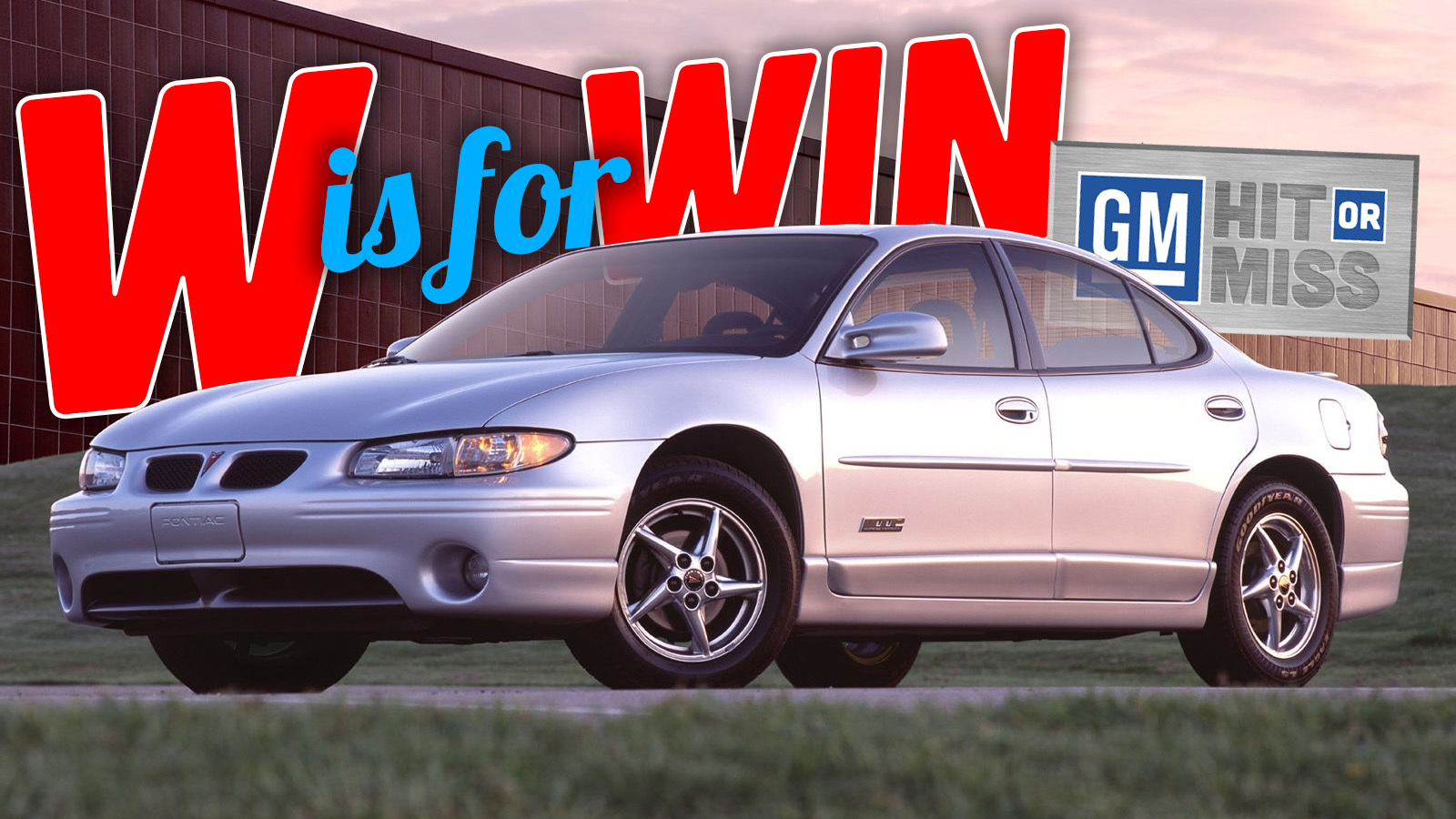
If you put out a general poll of the greatest GM products of the ’90s and early 2000s, right behind the trucks and the Corvette, you’d see a lot of people answering with W-Body cars. Indeed, these midsize-and-up sedans and coupes now enjoy a general reputation for durability and cushiness, and they often made just as good first cars as they do last cars. While a W-Body with a 3800 V6 was an easy button for a reliable, comfortable car, it’s easy to forget that the whole platform was born from an enormous disaster.
Remember: Things were bad for American car companies in the ’80s. Chrysler had to take a bailout at the beginning of the decade, and Ford had to get the Taurus right or everything was over. But those pale in the face of GM’s dysfunction. Rebadging a Cavalier as a Cadillac was one disaster; churning out luxury coupes that looked like Pontiac Grand Ams was another. Each division had its own styling team; the array of engines, catalytic converters, and washer fluid bottle caps was maddening, and between inefficiencies and stepping on its own toes, GM needed to make a big move in an attempt to fight back against Japanese competition.


The plan was a project called GM10, a front-wheel-drive midsized platform for Chevrolet, Pontiac, Oldsmobile, and Buick. The scale of ambition was, in hindsight, laughable. As Fortune reported, GM thought this project could acquire 21 percent of the entire American car market, which just seems ridiculous. However, thanks to constant restructuring under the fast moves of CEO Roger B. Smith, it wouldn’t be until 1987 that the GM10, also known as the W-Body, would launch.

The bungling was truly immense. Production scaled down to four plants from the original seven, and only coupes launched at first, right as America was falling out of love with two-door cars. The initial results on the business side seemed catastrophic. As Fortune put it:
In 1989, GM lost more than $2,000 on every GM-10 car it built. The next year GM managed to sell 537,080 of the cars with all the marketing resources of four divisions behind them, while Ford pushed 410,077 Tauruses and sibling Mercury Sables through just two divisions. Last year Oldsmobile sold 87,540 GM-10 versions of the Cutlass Supreme. In 1979 it had sold 518,160 of the models the GM-10 car replaced. GM-10 exposed critical inefficiencies in GM’s plant system. The cars used less than 50% of the manufacturing capacity in the four plants allotted to them. But GM couldn’t fill those plants with other models because none of the factories were sufficiently flexible to build anything else. Even worse, the assembly process was roughly half as efficient as Ford’s. According to GM’s own calculations, its workers spent about 35 hours assembling each GM-10 car while Ford built a Taurus in 18 hours.
So, what we have here is a car that was slow to build, made in horribly underutilized facilities, and launched to four-figure unit losses. That’s bad. But how were the cars as cars? Well, if we take a look at the first W-Body Pontiac Grand Prix, it turns out it was actually great. This was an advanced car for the late 1980s with sleek styling, independent rear suspension featuring a transverse composite leaf spring, a drag coefficient below 0.29, and an absolutely novel dashboard.

Controls for the lights and wipers were housed in big pods on either side of the gauge cluster. There was an electronic information center inside said cluster, and you could even get controls for power seats with adjustable bolsters and thigh support. The biggest problem? Shipping from launch with a weedy 130-horsepower 2.8-liter V6. Still, as Car And Driver summed the car up:
Despite the power shortage, we expect that many buyers will find the Grand Prix to their liking. Its price remains to be announced, but an SE equipped like our test car will probably carry a sticker of about $17,000. That puts the Grand Prix in the same ballpark with loaded Ford Thunderbirds, Chrysler LeBaron two-doors, and, presumably, the other GM10 models. None of these cars is a pushover, but looks count for so much in this class that the Grand Prix should be an instant showroom success. It should also have little trouble pleasing its drivers. And such an artful combination of form and function should help keep Pontiac on track as GM’s hottest division.
However, over time, a funny thing happened: The W-Body got better. Sedans and convertibles and quad-cam V6s joined the party, while ASC McLaren turbocharged the Grand Prix. These things actually evolved into pretty tantalizing little cars—with one big problem. The Chevrolet Lumina was the value player, the Pontiac Grand Prix was the sporty one, the Oldsmobile Cutlass Supreme was the sleek one, and the Buick Regal was the posh one, but they all looked more or less the same.

Even though the first-series W-Body cars were decent, the market share bleed was biblical. But in 1994, the second-generation Lumina adopted a change in strategy that would alter the trajectory of the W-Body forever. It wasn’t about being the highest-tech thing out there, but instead about using proven technology. As Automotive News put it:
Given their critical importance, the engineering approach to the new vehicles is somewhat surprising. Despite the technical battle going on in the rest of the market, these models are not all new. Significant chunks of the cars like engines, transmissions, body structure and suspension are largely unchanged. The new cars merely pace current competition. They are no leaps forward as were with the first Ford Taurus or the Dodge Intrepid.
Indeed, the big mechanical updates for the second-generation Lumina involved swapping out the transverse rear leaf spring for coil springs, stretching the wheelbase, and ditching the four-bangers. The car launched with a choice of a 3.1-liter or 3.4-liter 60-degree V6, a four-speed automatic, soap bar styling for the ’90s, and a goal of being the cheapest car in its segment. Guess what? Sales figures went through the roof.
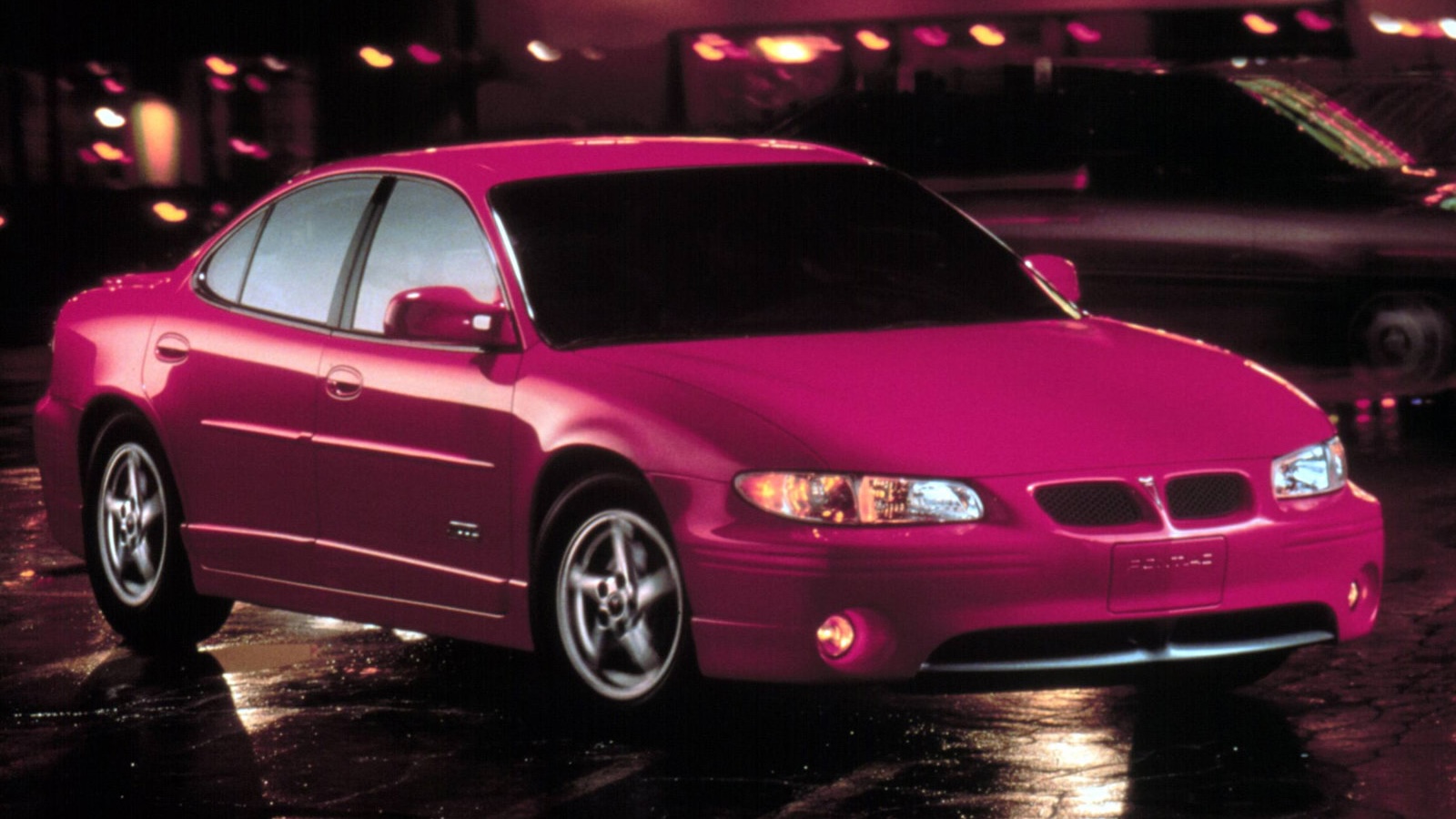
Now GM had a formula it could apply to the even longer, MacPherson Strut rear suspension second-generation W-Body cars. They still used some old bones, but they were more visually different than ever before and used tech that pretty much just worked. The first three second-generation W-Body models to launch would be the radically different-looking Pontiac Grand Prix, Oldsmobile Intrigue, and Buick Century. Wards Auto reports that the spend to get these cars to market was about right.
Industry sources estimate that the total investment for the Grand Prix, Intrigue and Century was a frugal $2.2 billion, or less than a third of what was spent 10 years ago.
How were the cars? Well, the Intrigue was sleek-looking but largely unremarkable aside from the brief and deranged flirtation with a Northstar-derived V6. The Century was about as exciting and flavorful as grits, but it offered Charmin comfort at a reasonable price tag. The 1997 to 2003 Grand Prix was something else. That’s because in the pursuit of using proven, cost-effective technology, GM gave it the 3.8-liter 3800 V6, with or without a blower.
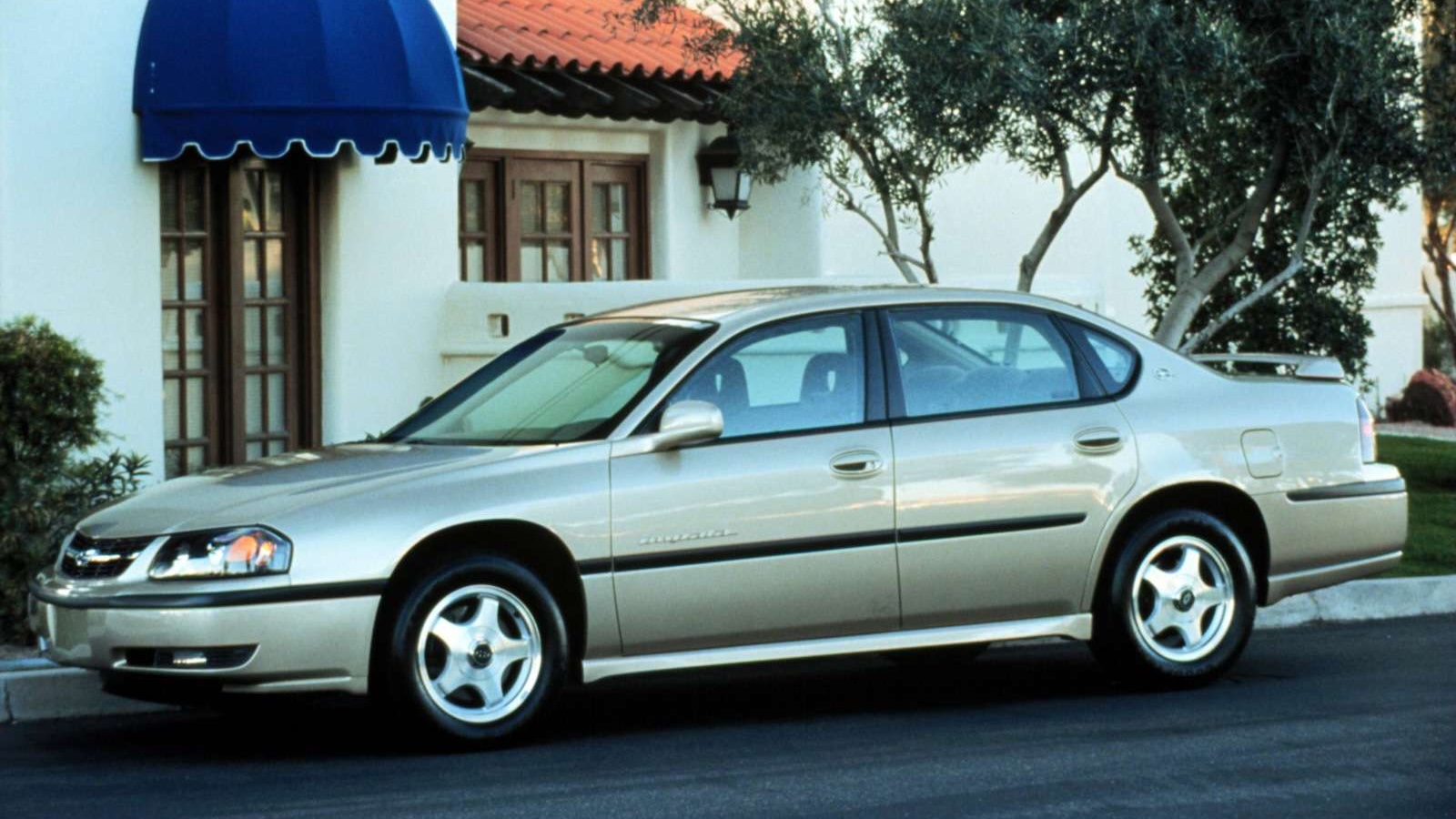
Sure, there were some teething issues with the early Series II motors. A severe valve cover leak could drip onto the exhaust manifold and light the spark plug boots on fire, and the intake manifold gaskets could fail, leaking coolant into the runners and hydrolocking the engine. However, once the manifold gaskets were done, so long as you kept an eye on valve cover gasket leaks, these things would run forever and make healthy power. We’re talking 200 ponies in naturally aspirated form and 240 with a supercharger. Eventually, all larger variants of the second-generation W-Body, plus the fourth-generation Buick Regal and the second-generation Lumina would get the 3800, either as an option or as standard equipment. The result was a pretty solid series of cars at solid price points. The 2000 Chevrolet Impala was another feather in the W-Body’s cap, a great-looking sedan that sold enormous numbers. And the NASCAR-look Monte Carlo wasn’t just a sales success, but also arguably the last large American mainstream coupe.

By 2004, the W-Body architecture was a whopping 17 years old and probably due for replacement. However, instead of immediately stretching the 2004 Malibu’s Epsilon platform, GM re-worked the W-Body yet again with an aluminum engine cradle, larger brakes, and greater flexibility for powertrains. GM’s rationale, according to Automotive News? “‘It really is quite a reliable platform for us,’ said Dave Whittaker, vehicle line executive for the W cars.” In hindsight, this is one of the smartest ideas that GM ever had. Even in the 2000s, the writing was on the wall for the large mainstream sedan market. Crossovers and SUVs were the new wave, so it just didn’t make sense to spend crazy money on a dying segment. With a rotating motley crew of engines, including the 5.3-liter LS4 V8, the W-Body soldiered on until 2016, when the last Chevrolet Impala Limited rolled off the line.
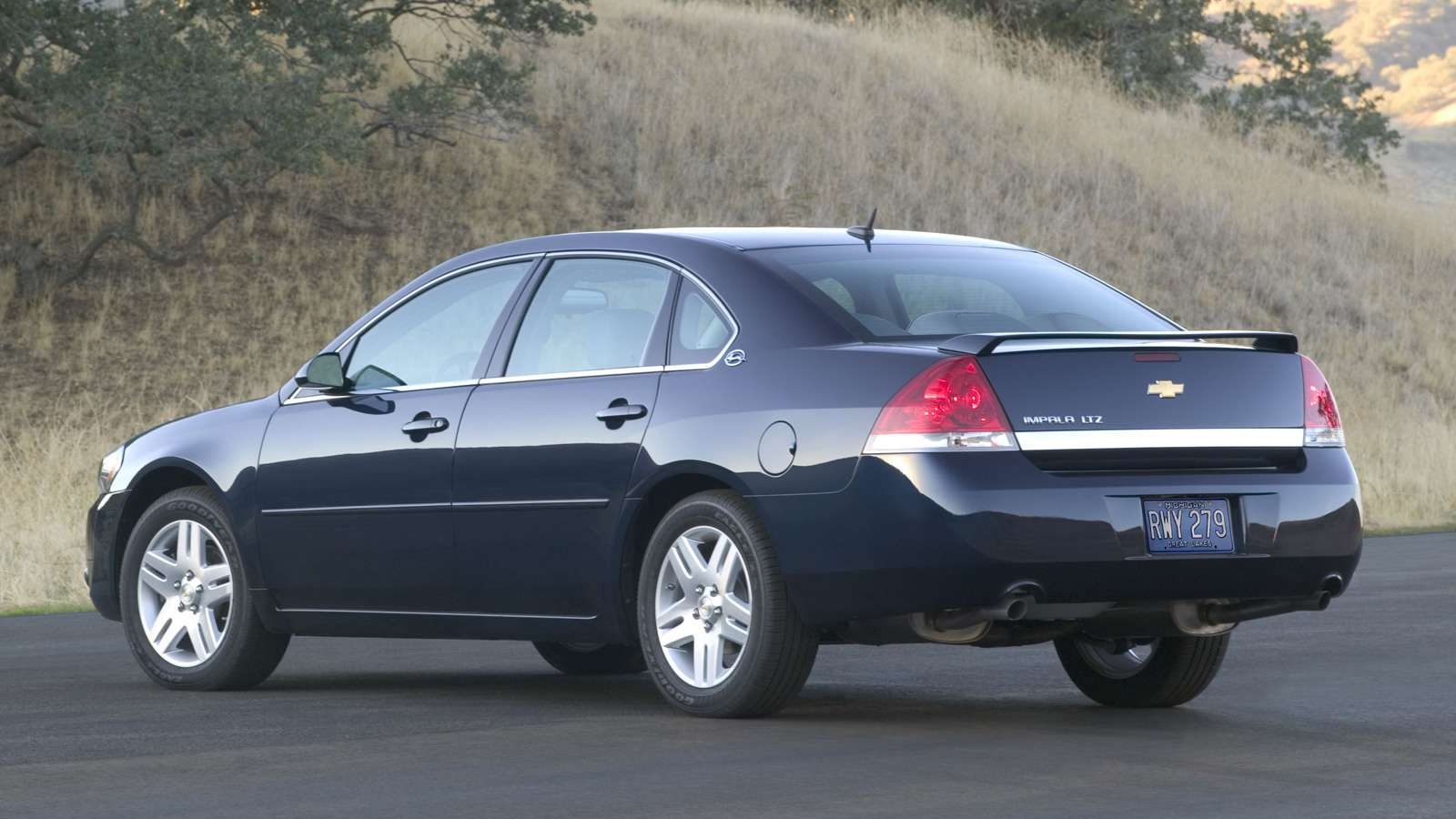
At that point, the W-Body had become an American staple, a byword for comfortable, roomy, predictable cars that largely just did what they needed to do. Memories of the GM10 fiasco had largely evaporated because once you sell more than ten million of something, you’ve done alright. Even though it was originally a failure, history looks upon it as a hit, proving that it’s often not worth writing something off until after it has an opportunity to reinvent itself.
Top graphic image: Pontiac
Support our mission of championing car culture by becoming an Official Autopian Member.




I liked all of these except the Lumina…they were junk. Plus I used to know someone who had one and he was basically the worst person I’ve ever known…so it has that stigma
I rented a bunch of these, back then. I loved the Impalas on long drives.
I had a ~’90 Olds 88 as a company car and its 3800 delivered more than adequate power and pretty decent fuel economy on long trips as well.
I never actually owned a W-body, but I rode in and drove a bunch of them over the years. They were so comfortable, and the 3800/4-speed combo had plenty of power to scoot around time, and knock down 29/30 mpg on the highway all damn day. Years ago I had rented a new 2010 Camry for a 2000 mile drive. The seats on that Camry were a torture device. 500 miles in, I went to the rental location at the Memphis airport and traded it for a W-body Impala. Never was I so happy. The Impala was such a better tool for that job.
Smaller cars are a little tougher over time if you have back issues. Am saying this as someone who has lumbar lordosis.
It had plenty of room, just the seats were I’m pretty sure designed to be a torture device. I was in real pain within 100 miles.
I had a ’99 Corolla for a couple years (and this was just recently as an older and fatter man) that was significantly more comfortable than that ’10 Corolla.
Hmm. That is bad then.
But the older you get, the harder it is.
I remember reading a post about how an person had to get rid of the Toyota Glanza (a rebadged Suzuki Baleno hatchback sold in India) his father was having simply because it was starting to become difficult for his father to get in and get out.
It definitely does get harder as you age. I was only 29 when that Camry tortured me.
I had a 1998 GTP, the supercharged model. I thought it drove and handled quite nicely, until I signed up for BMW’s Drive of a Lifetime program about a month after I purchased it. I got to hussle a garden variety 325 around a time trials course. I had instant buyers remorse. The 325 would run circles around it. It was better balanced, more precise turn in, better brakes, everything about it. Crap GM 4-speed gave out at 60K. Second unit after another 60K. Time to sell it.
We had them all growing up. The first car I bought was a 2000 Pontiac Grand Prix GT Coupe. Before that I drove all of the GM FWD models but really liked the Bonneville SE we had and the Olds Intrigue. They were better drivers than the early ’90s Olds I started out with. We had a full size GMC van that was a beast for a decade, followed by a late ’90s Astro, that was fun driving in upstate NY winters.
That’s right. Haven’t’ really thought about the Grand Prix for years. It was FWD.