

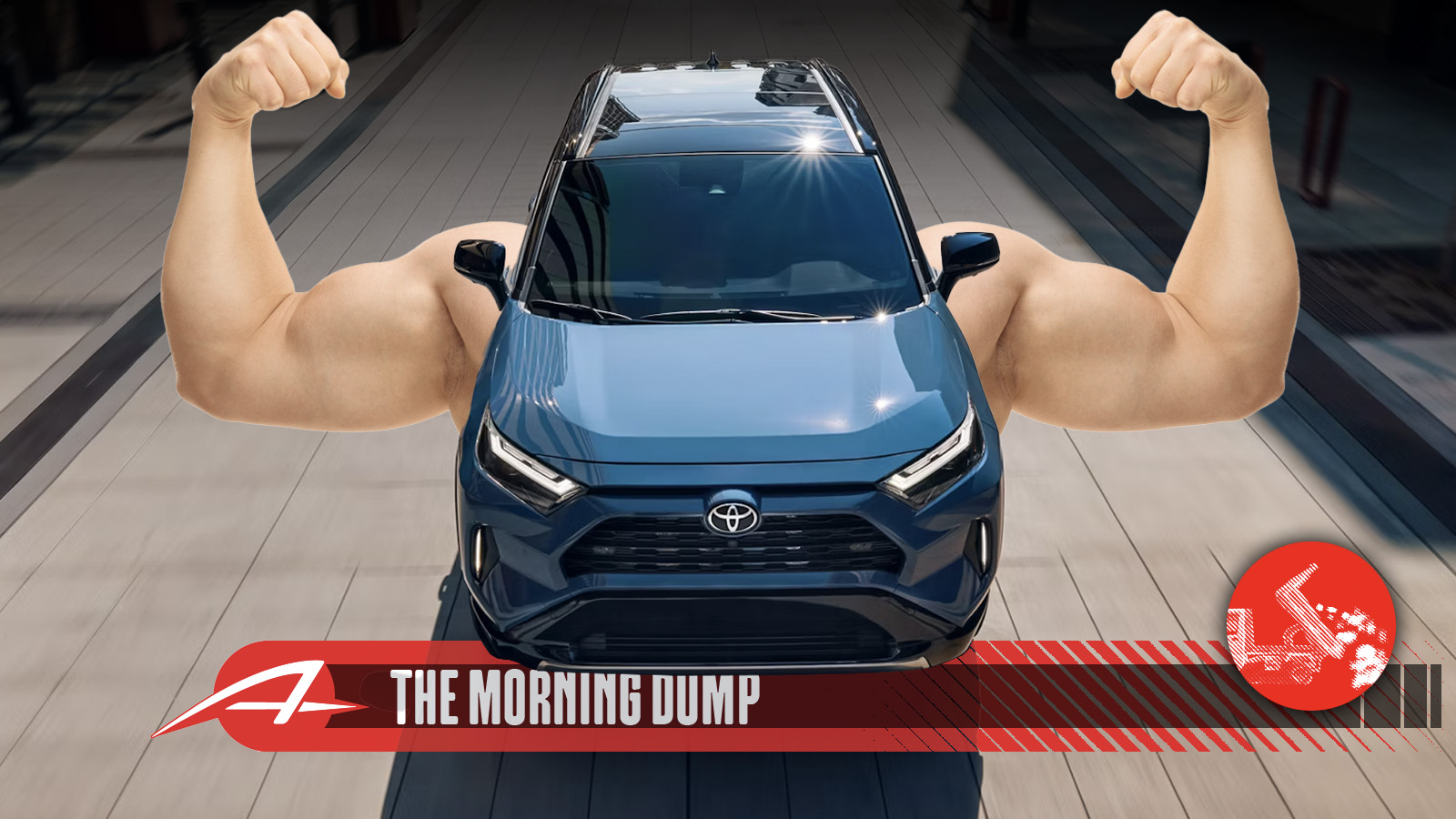
You know what’s great? A regular ol’ hybrid. You know why a hybrid is great? There are virtually no downsides other than a little extra cost, which, depending on what you drove before, you’ll potentially get back in fuel savings. It’s a true win-win-win situation. November car sales are coming in and, as expected, it’s going to be a meh month. However, it’ll also be a month where hybrids likely surge.
So that The Morning Dump isn’t entirely fixated on hybrids this morning, I’ll talk a little bit about Tesla and how one famous investor thinks the brand is overvalued, and I think he makes some good points. Because Tesla news tends to mess with the vibes around here, I’m going to end on something way more positive and important: Škoda!


Hybrids Rule In November Sales So Far

Because so many automakers don’t report sales monthly anymore, I’ll have to read into the data I do have. So far, though, the data strongly suggests the predicted fall in electric vehicle sales and the disproportionate rise in hybrids.
On a long enough time scale, sure, I think electric vehicles will recover from this credit-fueled rise and fall in sales. For the near- and medium-term, I think it’s all hybrids, all the way down.
At Hyundai, sales in the United States were down slightly to a 2% decrease, due in part to a cratering of EV sales. The flipside? Hybrid sales were up 42%
“Hyundai’s November sales highlighted the strength of our SUV lineup, with Tucson, Santa Fe, and the all-new Palisade each posting double-digit growth,” said Randy Parker, president and CEO, Hyundai Motor North America. “Hybrid demand remains strong, and we set a new all-time monthly record for hybrid vehicle sales. Through the first 11 months of the year, we’re on a record pace and fully expect to go ‘5 for 5 in 2025,’ achieving record annual retail sales for the fifth consecutive year.”
Sales were up 7% at Kia, setting a November record.
“As consumer demand shifts, Kia’s diverse product lineup and growing hybrid portfolio has us on the verge of our third consecutive annual sales record,” said Eric Watson, vice president, sales operations, Kia America. “At the recent Los Angeles Auto Show, we unveiled the second-generation Telluride SUV featuring a more upscale design, an enhanced X-Pro model for improved off-road capability, and an all-new hybrid variant. Interest in the all-new Telluride is expanding beyond our current customer base, and we expect this positive momentum to carry into next year.”
And the same is happening at Ford, where EV sales took a Chauncey Billups and dove by nearly 61%, while hybrids rose 13.6%. It’s all happening.
The ‘Big Short’ Guy Says Elon’s ‘Cult’ Company Is ‘Ridiculously Overvalued’

You only have to be right in a really big way once, and then people will, to some degree, listen to you forever. It’s a sweet gig, and definitely something I’m trying to do with this decade of the hybrid nonsense and all the Carlos Tavares stuff. I don’t want to be correct all the time and, frankly, I am not capable of it Just give me one, maybe 1.5 times, and I’ll milk it until I shuffle loose this mortal coil.
Michal Burry became famous for predicting the fall of the Mortgage Backed Securities (MBS) market, and Christian Bale even played him in a movie about it. He has not been correct about everything, or at least, the scale of time hasn’t been long enough for his predictions to always net out in his favor.
He’s got a post over on his Substack about what he sees as irrational exuberance over Tesla. It’s paywalled, but Business Insider got the good bits:
“Tesla’s market capitalization is ridiculously overvalued today and has been for a good long time,” Burry wrote, adding that he expects Musk’s $1 trillion dollar pay package to continue to dilute the company’s shares.
“As an aside, the Elon cult was all-in on electric cars until competition showed up, then all-in on autonomous driving until competition showed up, and now is all-in on robots — until competition shows up,” the legendary investor said.
It’s not an unfair point, but the market is not always about fundamentals, so it’s possible that Musk’s showmanship continues forever and people keep buying it forever, which makes betting against Musk a dangerous game to play.
Czech Out This Sweet Škoda 100
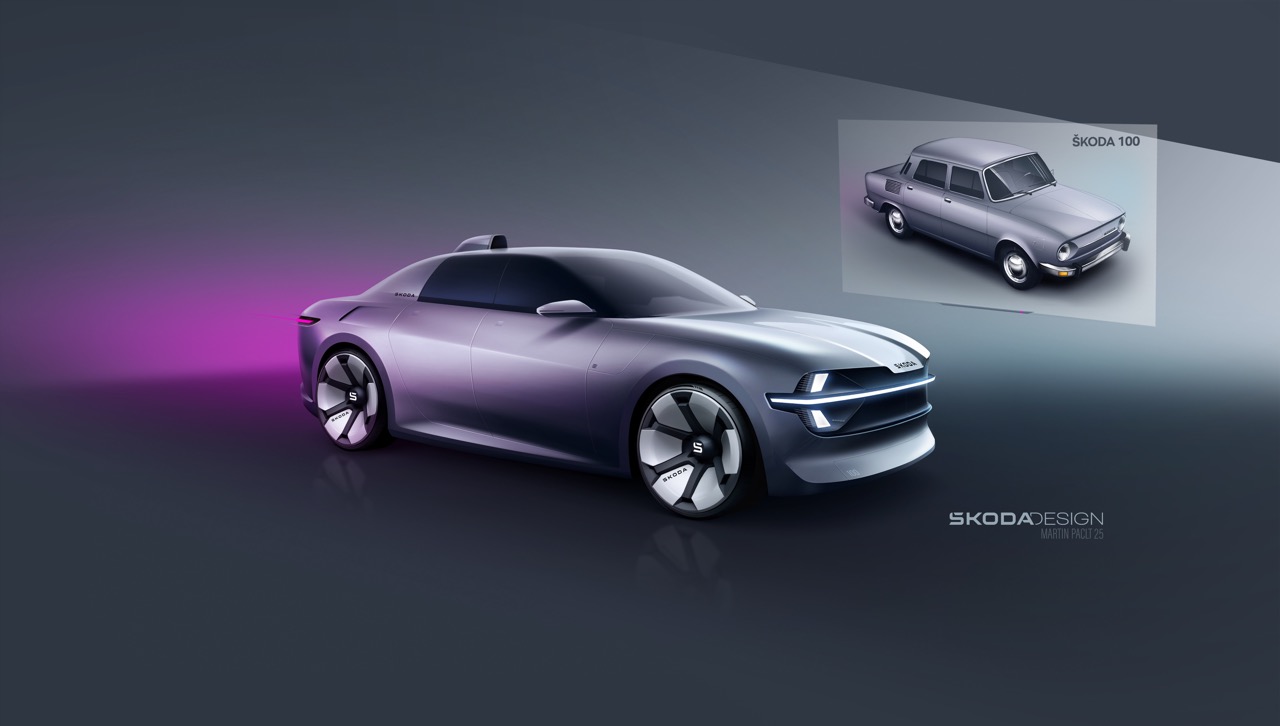
Škoda has a long and rich history of making cars that goes back 100 years, so the brand has been reaching into its archives and teasing us with reimaginings of various historic products. Today, it’s the 100.
The design study was developed by Škoda exterior designer Martin Paclt, and transforms the beloved 1960s original with contemporary proportions, clean surfacing and the brand’s Modern Solid design principles – offering a glimpse of how an icon could look in the 21st century. Admired at the time for its straightforward engineering, reliability and personality, the 100 remains a defining model in Škoda’s story and a long-standing favourite among classic-car fans.
From the beginning of the project, Paclt set out to avoid a retro-themed replica. Instead, the focus was on retaining the core spirit of the original through its overall stance, silhouette and character. The result is a contemporary saloon defined by elegant, uninterrupted surfaces and generous volumes that echo the simplicity of the classic model.
Cool.
What I’m Listening To While Writing TMD
Y’all seen the show Slow Horses? It’s on Apple TV, and it’s great. The theme is “Strange Game” by Mick Jagger, and it’s dark and weird. Perfect for the moment.
The Big Question
Pick the years: The year hybrids outsell ICE cars in the United States, and the year EVs outsell hybrids.
Top photo: Toyota; DepositPhotos.com


Slow Horses is fantastic. The casting is perfect, and the actors seem to relish their roles. Mick Herron, the creator of the book series, is a genius in placing characters who are flawed just enough to be untrustworthy by MI5 but not incompetent enough to be fired, in situations where their bungling somehow doesn’t ruin the day.
Gary Oldman disappears into his role, as usual. Despite his character’s seeming indifference towards his job and contempt of MI5, Jackson Lamb guides his misfits to success. One of the very few shows I look forward to.
Oldman may well be the greatest English-speaking actor of the second half of the 20th century and beyond.
“These are definitely not ratings for an auto enthusiast, these are ratings for that small niche group… that are like 90% of the market [and aren’t] looking for rear-wheel-drive, stickshift sports cars.” s
I have a major problem with the “90%” estimate. Pickup trucks, Jeep Wranglers, Ford Broncos, Four Runners, Miatas, Mustangs, and others definitely make up more than 10% of total sales over-all. I’d gamble 20%.
I’m glad people like their hybrids but never underestimate the amount of enthusiasts out there.
Ah, nice no true Scotmanning the hybrid enthusiasts.
(That’s not a compliment.)
But it doesn’t really land when I don’t know what it means. And, yes, there are enthusiasts who own hybrids. (Maverick and Prius owners come to mind.) Another group proving my point of the 20%.
Thank you for that.
Love the look of the Skoda 100 render. If they built it and brought it to the states, I could see potentially owning one, depending on the powertrain setup.
I’m happy that hybrids are becoming more mainstream, with a majority of some automaker’s lineups being either hybrid only or available as hybrids. My next new vehicle will either be a stick or a hybrid. (Most likely a Civic Si or Civic hybrid) I can’t at home EV charge, so those are out. And after driving some relatives’ hybrids, our ICE vehicles feel archaic. What many people, especially non-car-enthusiasts, don’t realize is that hybrids are not just more fuel efficient, they’re also nicer to drive. They’re smoother, faster, quieter, and oftentimes have better features such as AC that doesn’t run off a belt, and eAWD. Every relative and friend who’s asked for my advice I have pointed towards a hybrid.
A point worth considering is the strong move to turbocharged gasoline only engines, which have been shown time and again as less reliable than the naturally aspirated engines they replace, as are many engines saddled with auto-stop, cylinder deactivation, etc. These data are likely less stark if you compare a Toyota hybrid SUV to its non-turbo V6 counterpart, for example.
This is a really good point. Not a lot to go wrong on a low stress I4, especially when there is no starter motor or accessory belt.
Solid argument here. Thank you for pointing it out.
Unfortunately I don’t think this report actually gives a good indication of long-term reliability but is instead telling you whether your new car is likely to end up at the dealer for bluetooth connectivity issues or squeaky brakes, so I don’t think that overall hybrid reliability is at the point that it surpasses overall non-hybridized reliability.
For example, if you look at the Kia/Hyundai hybrids, they use a turbo 4 with an 8(?) speed auto then add the motors and battery. Like you, I’m skeptical that’s a more reliable drivetrain than their v6 paired to a 6sp auto.
Toyota, on the other hand, is the one automaker I actually believe the hybrid reliability is at least on par with the v6 counterpart, because they eliminate the transmission altogether and allow the NA engine to run more smoothly and under less stress. You basically trade the risk of transmission failure for the risk of battery failure, and the Toyota batteries have improved dramatically over the years. Considering the fuel savings, it’s hard to justify the V6 over the hybrid unless you absolutely need 5000 lb towing in the Highlander.
Just to re-inforce Stellantis and reliability — most of their hybrids have the so-called Pure-tech petrol/gas motor, which drops all its oil and blows up after 30,000 km.
They woefully under engineered a pulley — you really have to struggle to believe it.
Then they repeated with the Blue HDI, which has a chain instead of a timing belt. Except I have seen jewellery chains which look stronger, and the chain also breaks….
Of course Tesla is overvalued. Last I looked, its PE ratio was 285. Compare that to Ford’s PE of 11. Musky won’t live forever, and eventually the price will fall back to earth. Or maybe it won’t; my powers of prognostication are wrong more often than right.
About the Skoda: I love the look of the original. The concept looks to me like someone saw a Charger and sketched it a little “off”. It reminds me of one of the knock-off toy cars where you can tell what it’s supposed to be, but the proportions are a bit wonky.
Hybrids: I definitely baby my Maverick a bit. I like to see the average mpg climb. With over 9,000 miles on it now, I just ticked up to 40.2. I don’t hypermile it or anything, I just pay attention to traffic conditions and anticipate slowdowns and when conditions permit, I don’t hurry to top speed.
Based on another post from this morning, I don’t think Tesla is “all in on tech”. I think FSD and other forms of automation and robotics are Elon’s play toys.
I think the long game, and the real money, is in the charging infrastructure. EV charging is mature technology (pretty much) by now. It’s always the mature technology that pays the bills and provides enough profit for play toys.
Can you imagine if GM owned half the gas stations in the US?
They’re “all in on tech” as far as their stock price goes, though.
The minute they admit that they’ll never actually crack FSD or a $20k robot servant for the masses, their market cap implodes. They could be a reasonably profitable company just doing charging, but not one with a 285x P/E ratio.
Which means anyone holding stock right now can’t settle for a long game where their holdings drop to 1/100 of their current “value.”
They must not be counting PHEVs in that Hybrid reliability data.
They aren’t. The article and Matt both made mention of it
Did you even skim the article?
Is the reliability of hybrids a cause or effect?
Toyota makes the most models of hybrids. It also is known for making reliable cars.
Are hybrids more reliable because most of them are Toyotas? Or is it something intrinsic about being a hybrid?
Inquiring minds, and all that.
Came here to speculate on that very point.
It’s because they are Toyotas. Which is also a bit like Volvo’s safety reputation – somewhat demographic as well as technologic.
Also, assuming this is the typical subscriber-based survey, I would expect the results to be a little biased by the type of people who subscribe to CU.
But I don’t find this AT ALL surprising. The hybrid is older, simpler, and dates from before the latest “touchscreen all the things” madness in larger part. One thing I HATE about CU is historically they have basically rated inability to pair your phone the same as the drivetrain blowing up when figuring out ratings. I don’t think they weight things nearly enough.
The infotainment numbers can absolutely screw the “reliability” stats until they are nearly meaningless.
Early infotainment systems cratered company reliability stats. I remember Ford in particular getting hammered by reported dealer visits because people couldn’t use the first generation Sync system – which was definately terrible by today’s standards but at the time was more of an issue of people never having connected their phone to bluetooth in their lives prior to buying the car.
With a little bit of googling – you can determine that the hybrid technology actually does the reliability bump, not the manufacturer. Key factors include shared design in powertrain (Toyota, Ford, Pacifica hybrid all share the same planetary hybrid CVT design), ZF and Ford share similar RWD longitudinal hybrid design. All of these companies, besides Stellantis have reliability bumps.
Škoda! This should be the official Autopian toast.
By the way, as good as the show Slow Horses is, the books (as is nearly always true) are even better
You’re right. About Skoda; I know nothing about the show. Next time I’m having a drink with friends I’ll try to remember to toast properly.
Inspired by this comment, I asked my wife, who speaks many more languages than I do, just how the S-with-a-hat is pronounced in Czech. She said it’s “sh”. But went on to add:
“It’s a weird name for a car company. Apparently it’s named after the industrialist who founded the company, but in both Polish and Czech it means “damage” or “harm.” The word is used as an exclamation to mean “that’s a shame!”
That said, it seems not to bother Czechs that the name of their flagship car company is an anti-marketing campaign. Maybe appropriately dada for them? I think Autopian could get behind that spirit.”
That’s hilarious! Thanks!
Honestly, until the late 90s, Skodas were not exactly good cars.
Can we get that reliability survey broken down by manufacturer? Or at least tossing out Stellantis from inclusion in the survey?
I know the answer is likely no, but it would be interesting data nonetheless.
I’m wondering if PHEVs are a different category than basic hybrids.
They are broken out, yes. Or at least that’s what the writeup here says, I didn’t follow the link to the story to check.
I didn’t find it clear from the writeup here.
On hybrids being significantly more reliable than PHEVs: The Jeep 4xe was an outlier and should not have been included in the data.
counterpoint: they sold enough of them that it absolutely should be.
Hybrids end up being reliable because they run at lower voltages, don’t have to deal with DCFC, and the vast majority of them (until quite recently) use a relatively simple N/A engine running in Atkinson cycle. There’s been a recent increase in power-biased hybrids with normal (Otto cycle) turbo engines, which I predict will bring down the average reliability ratings in a couple years. I’m thinking of stuff like the Palisade and Telluride and new Jeep Cherokee.
If only Ford would get off their ass and make a car again. Think about a RWD/AWD hybrid big sedan, the Crown Vic still has some name cred, and they would sell like hotcakes for people who want a i4 rival. Or ideally for my fantasy world just bring back the V8 PLCs like the Thunderbird.
They could slap the 3.5L hybrid motor from the F150 in there.
EVs really shouldn’t score this low on reliability. I think the numbers are low because of which models are popular.
Startups are always bound to be problematic, I know Rivian and especially Lucid have a spate of software issues, but I’m not sure exactly what problems Teslas run into. Hyundai/Kia 800V EVs have had major inverter failure problems and poor 12V battery charging reliability, ans they’re one of the most competent in the space. GM’s EVs have historically had major DCFC software faults that even caused a stop-sale early on.
I’d be surprised if there were truly a high rate of major hardware failures in the traction battery, motor, and gearbox.
Tesla had a lot of drivetrain problems early on. Bearing failures, that sort of thing. It basically took them a couple generations to get it right, but in the early days a “generation” was maybe a year thanks to their iterative approach. The bigger manufacturers have started out with fewer issues, but I suspect it may still be years before they totally sort them out.
How did the cars get surveyed? What kind of questions were they asked? What language, even?
As for the big question: When the auto companies start making more hybrids than ICE vehicles. That they don’t seem to have a plan to do this means it is a long way off.
Dang it! Now I need to go talk to my cars. I told them, “No surveys!”
What? Why on earth would the CX-50 hybrid have a below average predicted reliability? It is literally a Rav4 Hybrid powertrain, built in a Toyota plant. Did they just say “first year CX-90 PHEV was unreliable so this will be too”? Makes absolutely zero sense.
Also, BMW and Subaru being at the top, neither are known for peak reliability, but owners are rabidly in love with them regardless, and owner sentiment clearly weighs heavy on CR ratings, which for the average consumer may be enough, but I don’t agree with the average consumer, so I’d rather have that opinion omitted.
This is my beef with CR as well. They lean heavily on the notion of “predicted” reliability, but it’s not clear what goes into that prediction outside of the existing prediction and survey data. Like “we predict Subarus are reliable because they have a history of being predicted to be reliable.”
As for survey data, I think it’s too vulnerable to interpretation. I’ve taken a few CR surveys, and they just ask if your vehicle has had “significant” problems in certain areas. So if you think anything short of a thrown rod in your BMW or bad transmission in your Subaru is insignificant, no problems here!
I’m fairly certain most Subaru owners excuse bad transmissions, since they all come with CVT’s now.
Hybrids? 2034.
BEVs? 2048.
Hybrids are somewhere between 25-30% of light-duty vehicle sales. BEVs are climbing, but that slope won’t steepen for a while still.
The cheaper motors and battery packs get, through sheer brute-force engineering that ultimately further reduces costs — which is happening in industrial contexts, not just automotive engineering — the faster it’ll happen. I feel we’re another 2 “generations” of motors and battery packs before enough cost has been engineered out, and capacities/range has improved (as a side effect) that we’ll hit that point.
Honestly, the bigger obstacle though is who is buying new cars? That age keeps shifting to the right. It’s like median home buyer price in the US is 59 years old now. A genuine doorbuster “cheap” BEV or hybrid could shift the timelines sooner by 2-3 years, but as things currently stand the cost of buying newer, fancier cars is THE obstacle.
I think 2034 is a little far out, but agree with your general sentiment.
In my mind, the biggest shift isn’t consumer views but rather the number of offerings from manufacturers. Toyota and Kia/Hyundai have had a lot of options for level of electrification, but some manufacturers have made you jump straight to a plug-in (partly because they needed compliance vehicles, I would guess). Subaru comes to mind there with the Crosstrek – they really priced the old one like they didn’t want to sell them. Hybrid crossover offerings from a lot of brands are increasing and I think those will quickly gain traction in those model ranges.
Hybrids outselling ICEs: 2034
EVs outselling hybrids: 2045
Hybrids overtaking ICE was boosted massively by Toyota making the RAV4 and Camry hybrid-only, but it’ll be delayed by the elimination of CAFE fines which will make most other brands hesitate to commit to that for their lineups for a few years.
Do PHEVs and EREVs (perhaps with a high minimum range) count as EVs here? Then bring the EV date forward by ~7 years.
Genuinely Hybrids are pretty mature. Costs have come down, performance has come up, and driving them has become the norm.
The Prius has been around for almost 30 years.
I’m shocked by how frequently I need to remind people of this fact. This isn’t exactly “new” technology…
I’m not at all surprised that hybrids are more reliable than pure ICE cars. All the major players replace a traditionally troublesome components (automatic transmissions) with a simple 2 motor system with simple reduction gears. Component count doesn’t really change much either as the motors replace the alternator and starter.
I am a bit surprised that EVs are still having teething problems but like PHEVs that could come down to who is making them. Today Tesla is still selling roughly 50% of the EVs in the USA and they rank just ahead of VW and Jeep for reliability.
Zero issues from my two Chevy EVs. (Spark and Bolt)
That’s the big thing, it’s what goes into them, and who is making them. Most ICE cars nowadays are smaller turbo engines which are more complex, full of sensors for emissions compliance and more high strung. Look at Ford, nearly all cars are turbo now, and they’re all far from reliable, same with Stellantis, largely ICE only. Likewise so many other stinkers like Mercedes, Audi, BMW, and many GM products are ICE only and not known to last super long.
Meanwhile Hybrids are often Atkinson Cycle naturally aspirated engines, far less complex, very unstressed, and overall simple. We all know Toyota and Honda are pumping out hybrids like no tomorrow and they’re all incredibly reliable in comparison.
To your point on EVs, it’s also very true, Tesla does not have a good reliability track record, and many EVs are first or second gen systems that are not fleshed out fully, and are therefore not very reliable. Doubly so because many are from startups like Rivian and Lucid which do not fully have reliability down yet.
These are the sorts of things I don’t like about CR reports, they generalize and take the nuance out of the analysis, which would very easily lead someone into thinking a Grand Cherokee or Wrangler 4Xe is a great reliable vehicle, because it’s Hybrid!
Very true – especially the point about meeting current regulatory requirements with an pure ICE. (Small displacement, DI, turbo, VVT, 6 – 10 speed Auto, with particulate filter) vs hybrid (larger displacement, NA engine with a electric motor fill the torque gap)
The Europeans are ahead of the USA on this trend but they have been using gasoline particulate filters for more than a decade due to stricter PM regulations. (China has been using GPFs for a few years now as well)
Last month EU sales by powertrain:
35% – Hybrid
28% – ICE (Gas)
16% – BEV
9% – PHEV
9% – ICE (Diesel)
3% – Other
As for this, the former will be the year a hybrid powertrain is standard in all full size trucks, and the latter I don’t expect to happen for decades, if ever.
No confusion, but I was giving Jake crap for it as I always do, understanding full well that they don’t.
I would still like to meet that proverbial guy though.
Not surprised. I know, at least with Ford, the Hybrids are the most over-engineered vehicles in their fleet, and the ones they let the bean counters at last. The Full electrics are more at the mercy of suppliers and contracted engineering/cost restraints, and the “Plain” gas powertrains, well…..
Chauncey Billups sounds like a name Torch invented.
The Hingle McCringleberry phenomenon is very real in sports.
He’s got nothin’ on Ozamataz Buckshank.