


Everyone is curious about the $24,950 Slate truck, a completely outside-the-box electric pickup that champions simplicity, affordability, and customization (the truck can be converted from a truck to two styles of SUVs!). On Monday, I had a chance to talk with Slate’s engineering team and also drive the truck. Here’s what I thought.
Monday was one of the coolest days in my automotive journalism career. I not only got another chance to experience the gradual birth of this startup automaker, but I visited its brand new design headquarters in LA, talked with its nerdiest engineers, and even got behind the wheel of one of the most exciting, hotly-anticipated vehicles in the car-world today.


Here’s my video review:
I’ll get into what it was like driving the charming little EV truck in a moment, but first here’s a look at the new design headquarters building in southwest LA:
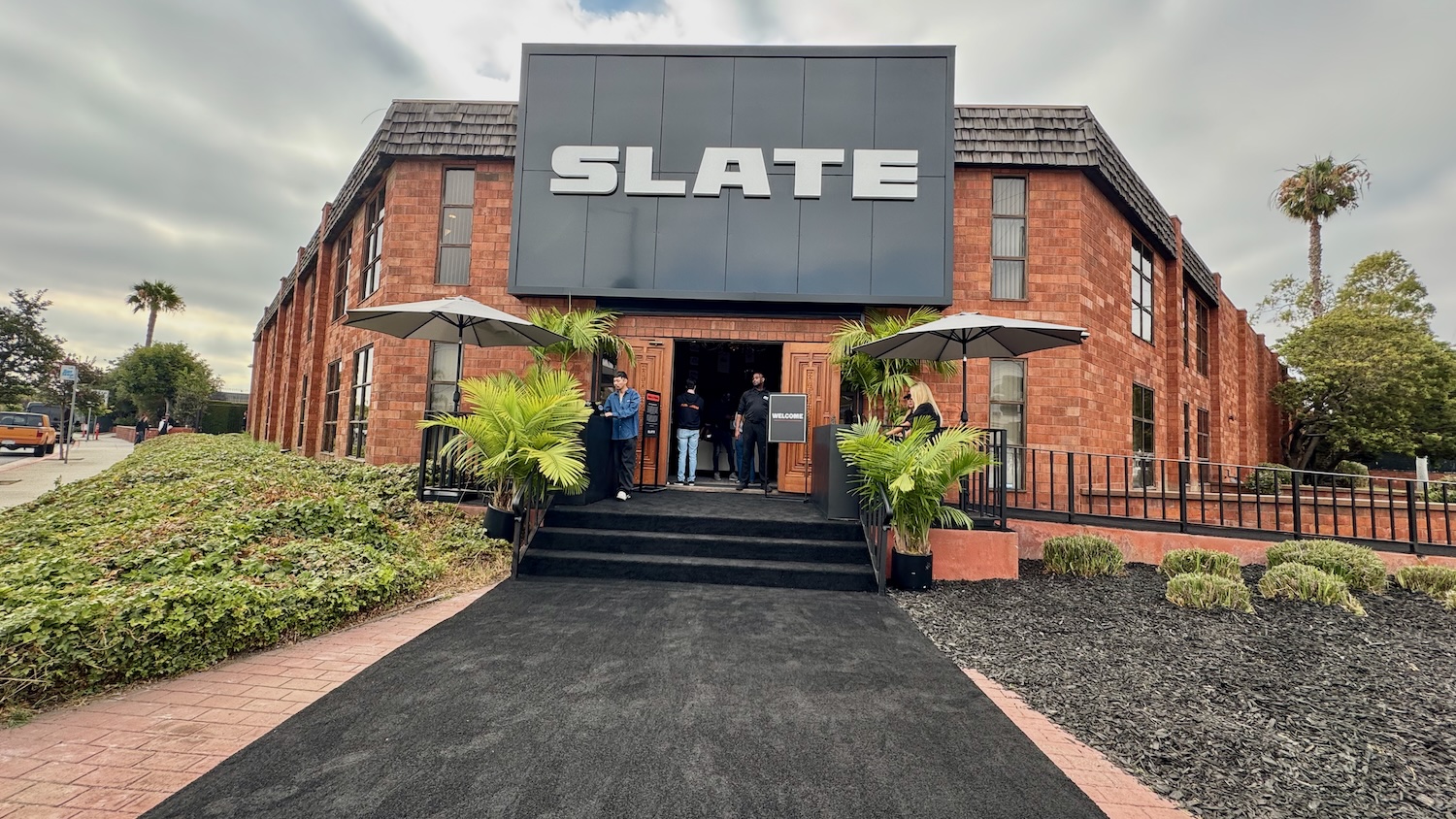
The large warehouse-ish section of the building appears to have recently been a Habitat for Humanity Restore (basically a furniture-Goodwill), though the most impressive part of the facility is its entrance, which gives off vibes you might expect from the entrance of the old American Motors facility or perhaps the old Packard plant:
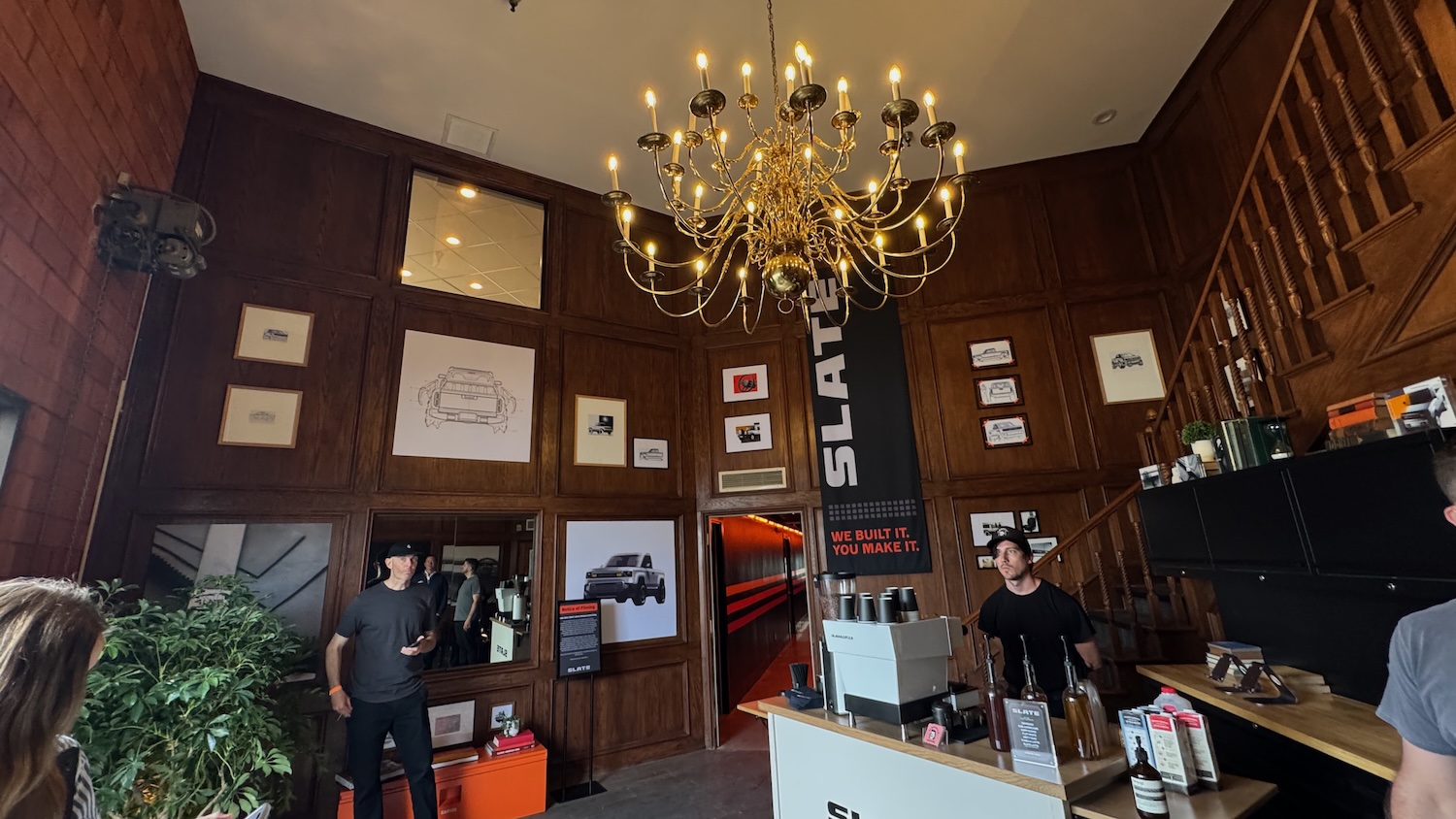
The tunnel between that entrance and the warehouse area is very cool:

Leaving the tunnel I was greeted with a vast open area filled with lots Slate trucks and SUVs, as well as nerdy employees eager to talk about their baby:

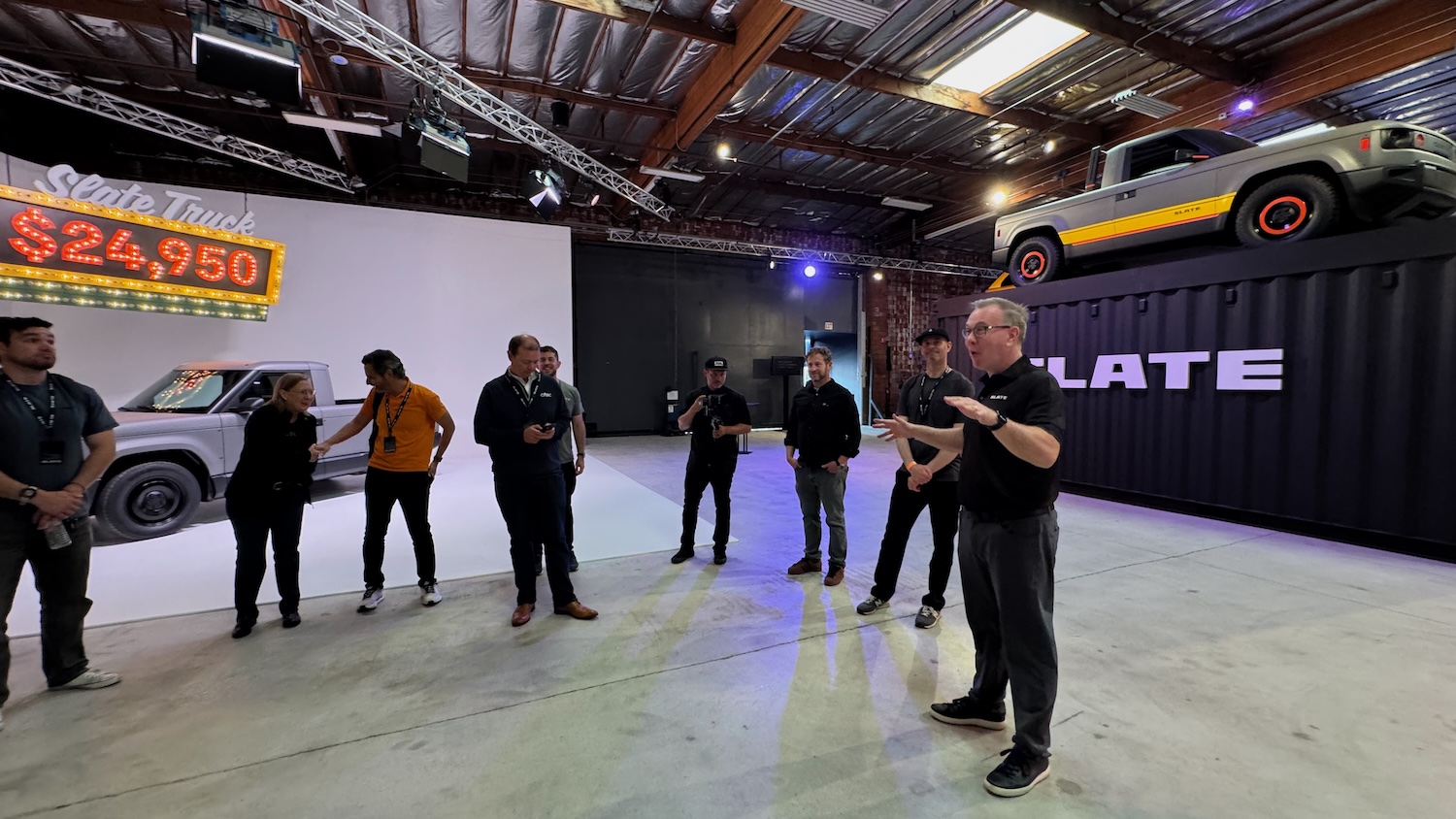
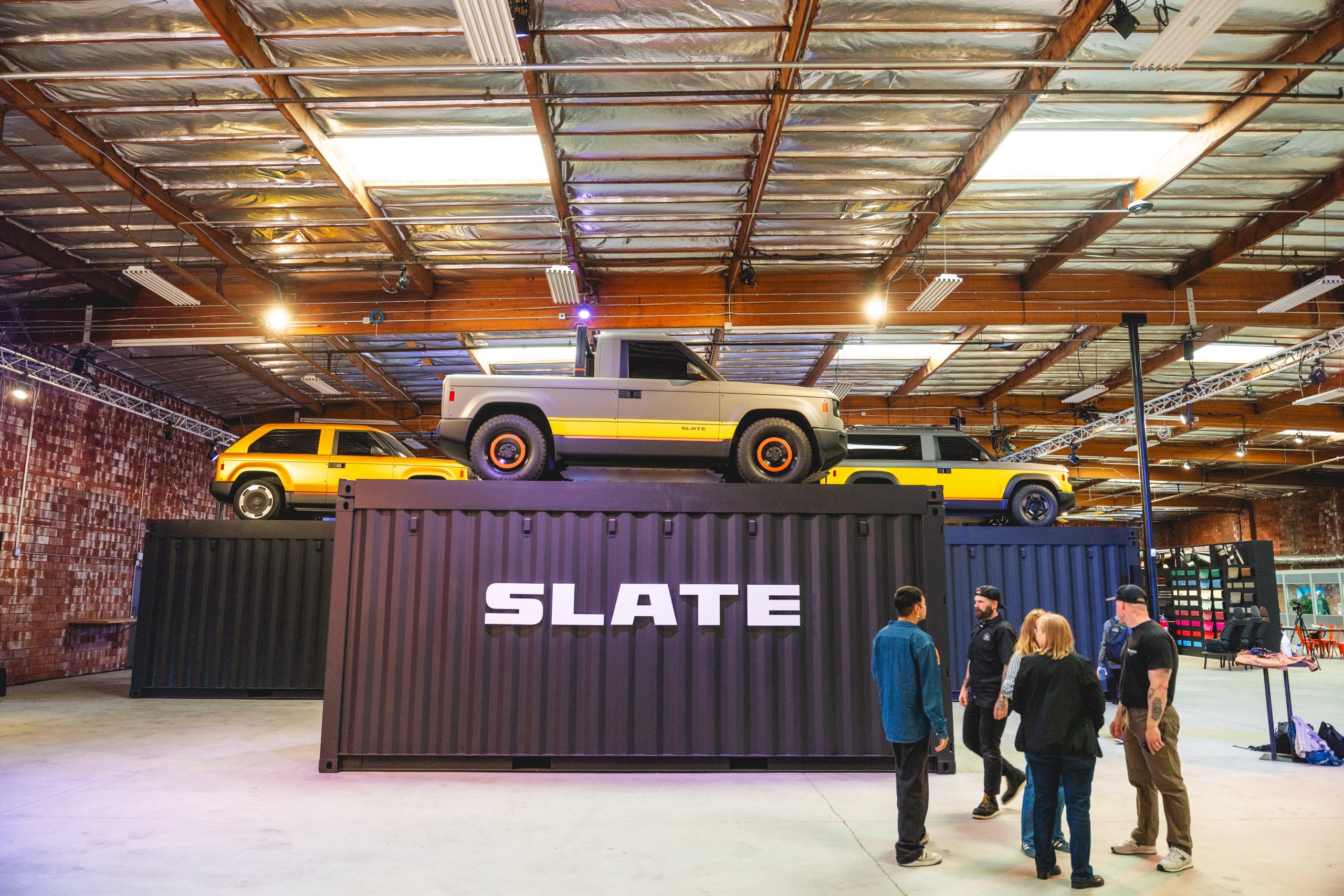

It was in this space that Slate had set up a bunch of modules so journalists could learn about the truck’s engineering and especially its modularity/personalization.
Slate Focuses On Smart Compromises, Not On Cutting-Edge Technology

Slate is a very different company than any other I’ve covered since becoming an auto journalist. The entire team does not try to prove that its vehicle is a state-of-the-art piece of engineering. There’s no discussion about fancy megacastings, there’s no talk about how the team has built some kind of complex coolant valve or heat pump to eke out the last bit of vehicle efficiency (the Slate uses a basic PTC resistance heater for cabin eat), there’s no mention of AI or autonomous driving or exotic materials.
This is a small team of fewer than 200 engineers — many hailing from Chrysler, Nissan, Tesla and other OEMs — who together have been tasked with creating a vehicle with these main attributes: safety, durability, reliability, customizability and affordability.

Whereas most automakers want to show journalists how they came up with the most advanced and most efficient solution, Slate freely tells journalists that it considered a manual steering rack, leaf springs, drum brakes, a body-on-frame architecture, and other bits of what one engineer referred to as “yestertech.” (Drum brakes seemed like an ideal option for this truck, but per Slate, the supply base for drums has dried up).
“We did a decision matrix for everything,” Slate told me. The leaf spring idea, for example, didn’t work because, in order to package the battery, Slate would have had too short of a leaf spring pack, causing the suspension to “build rate too quickly” and ride too stiff, one engineer told me. The same engineer said the truck’s crank windows only just made it into the program. “Nobody manufactures [manual window regulators] in the US, but they do in Brazil,” he said. Choosing this over an electric window, he continued, saved the company $40 per vehicle; that’s a fortune in vehicle-development terms.
This is all very unique; an automaker is proudly saying that, unconstrained from legacy vehicle architectures, it looked into ancient technology instead of simply taking at face value that this old tech doesn’t belong anymore. All in the name of affordability.
A Totally Different Battery Pack With Improved Range

Those window cranks may come from Brazil, but the Slate truck is still expected to be built of 60 percent US/Canada content, with 12 percent from Mexico and the rest from other nations. The Slate truck’s battery pack, for example, has a capacity of 65 kWh gross, 63 kWh usable. Assembled in Illinois, the pack’s LFP cells are from Chinese supplier Gotion. This is a significant change from the 52 kWh NMC pack from South Korean manufacturer SK that Slate initially chose, reportedly in part to qualify for the now-dead federal tax credit.
Slate says it stepped the base battery pack up due to overwhelming demand for the upgraded battery. “[Looking at] online reservations, people were opting up,” President of Vehicles Chris Barman told me. The 52 kWh pack that Slate initially showed at its debut last year promised a 150 mile base range, while a 84.3kWh upgrade was to offer 240 miles on a single charge. Now there’s just that single 65 kWh option whose size — along with some aerodynamic and thermal tweaks to the Slate — has brought expected range up to 205 miles.
A Conventional Body With A Weird Suspension
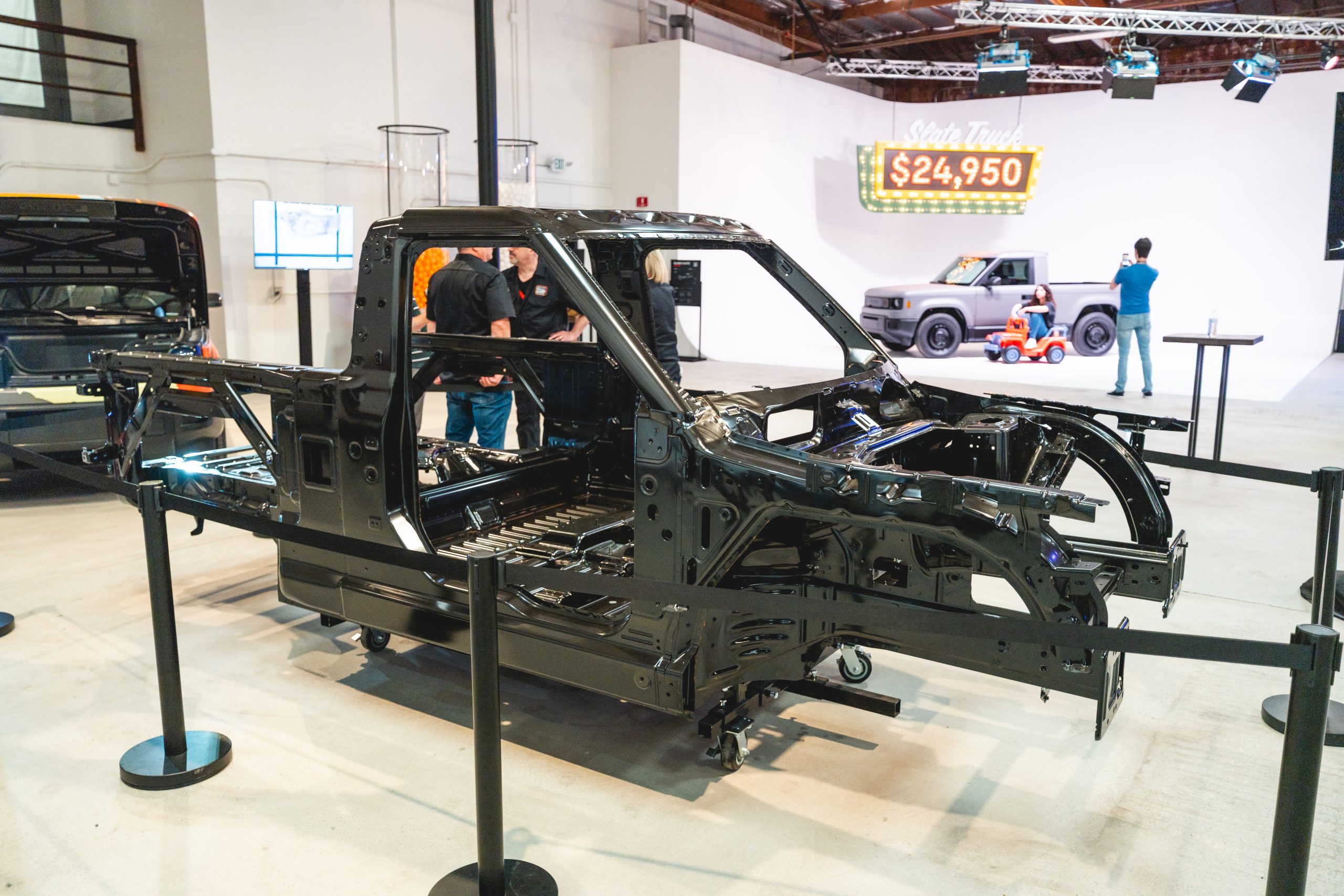
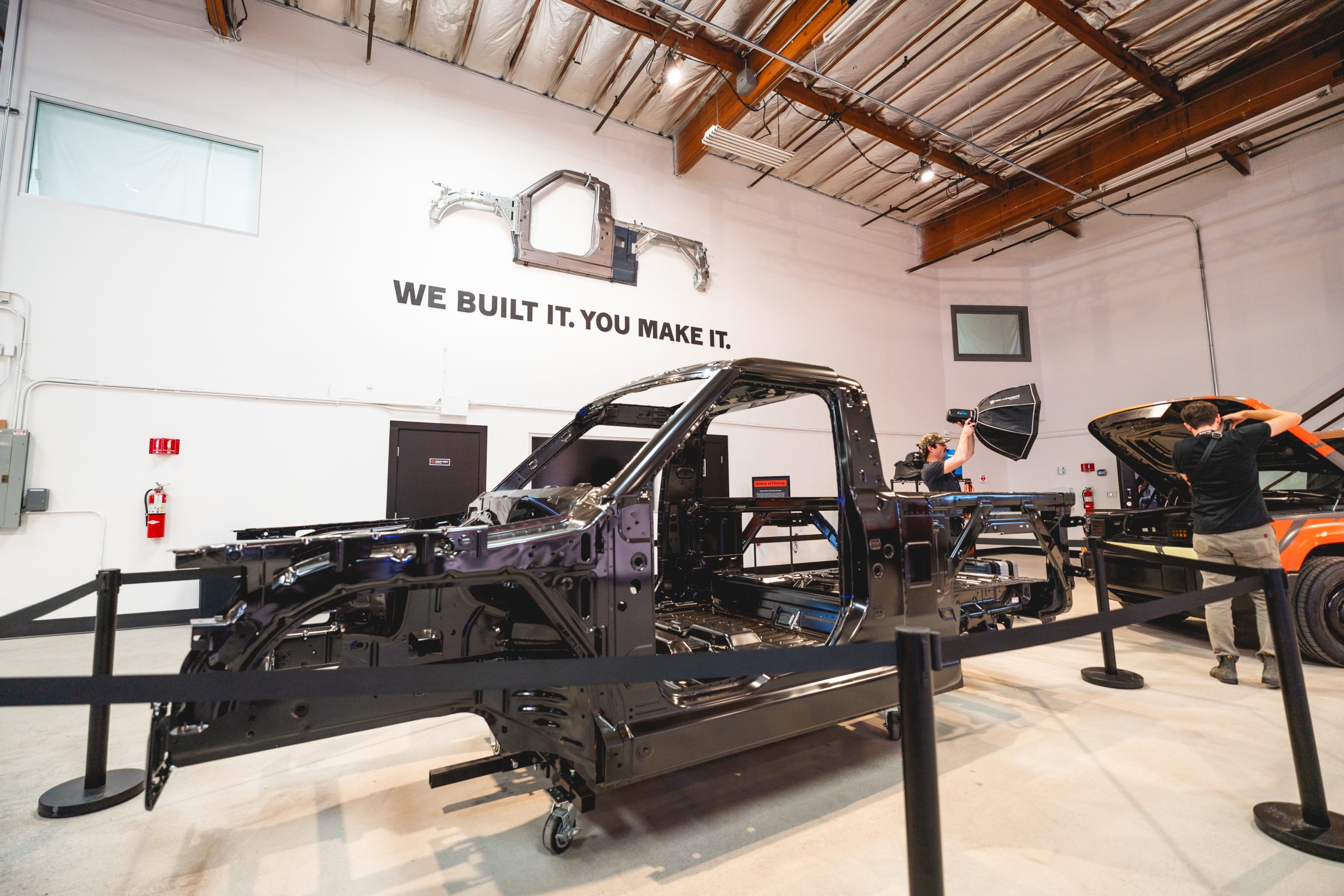
Also on display was the Slate’s Body-In-White. Aside from emphasizing safety (Slate says a 5 STAR NHTSA rating and an IIHS Top Safety Pick were requirements), Slate wasn’t trying to convince anyone that the chassis was anything exotic. It’s all steel, it’s built using conventional methods, and the truth is, even Slate knows it’s not the most efficient design as it’s made up of 250 separate pieces welded together (with some adhesive, as well). “[It takes] a lot of investment to get a casting going,” a Slate engineer told me, saying it was challenging to find a casting company interested in working with a startup. This engineer implied to me that further optimizations could be a possibility in the future.
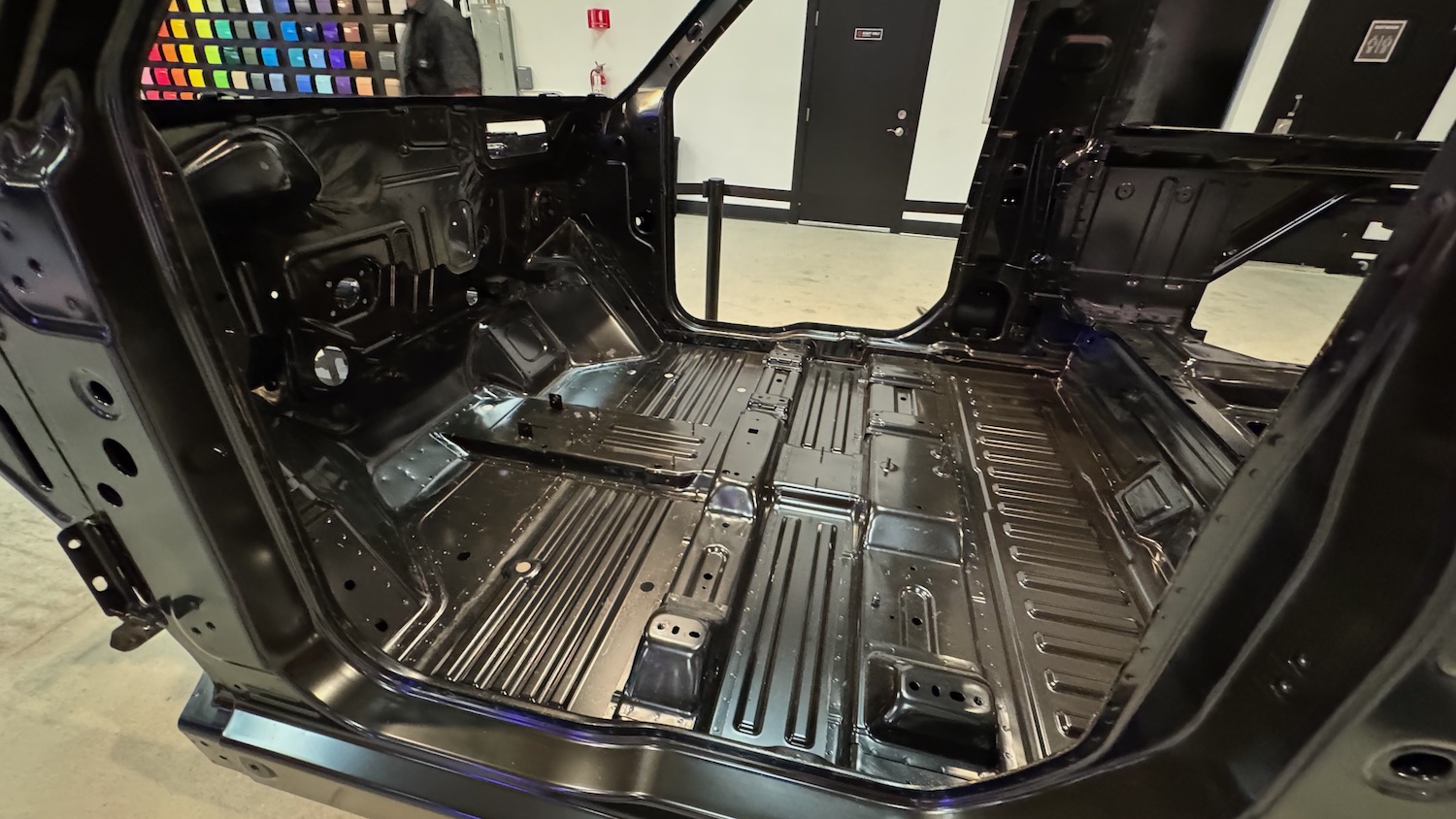
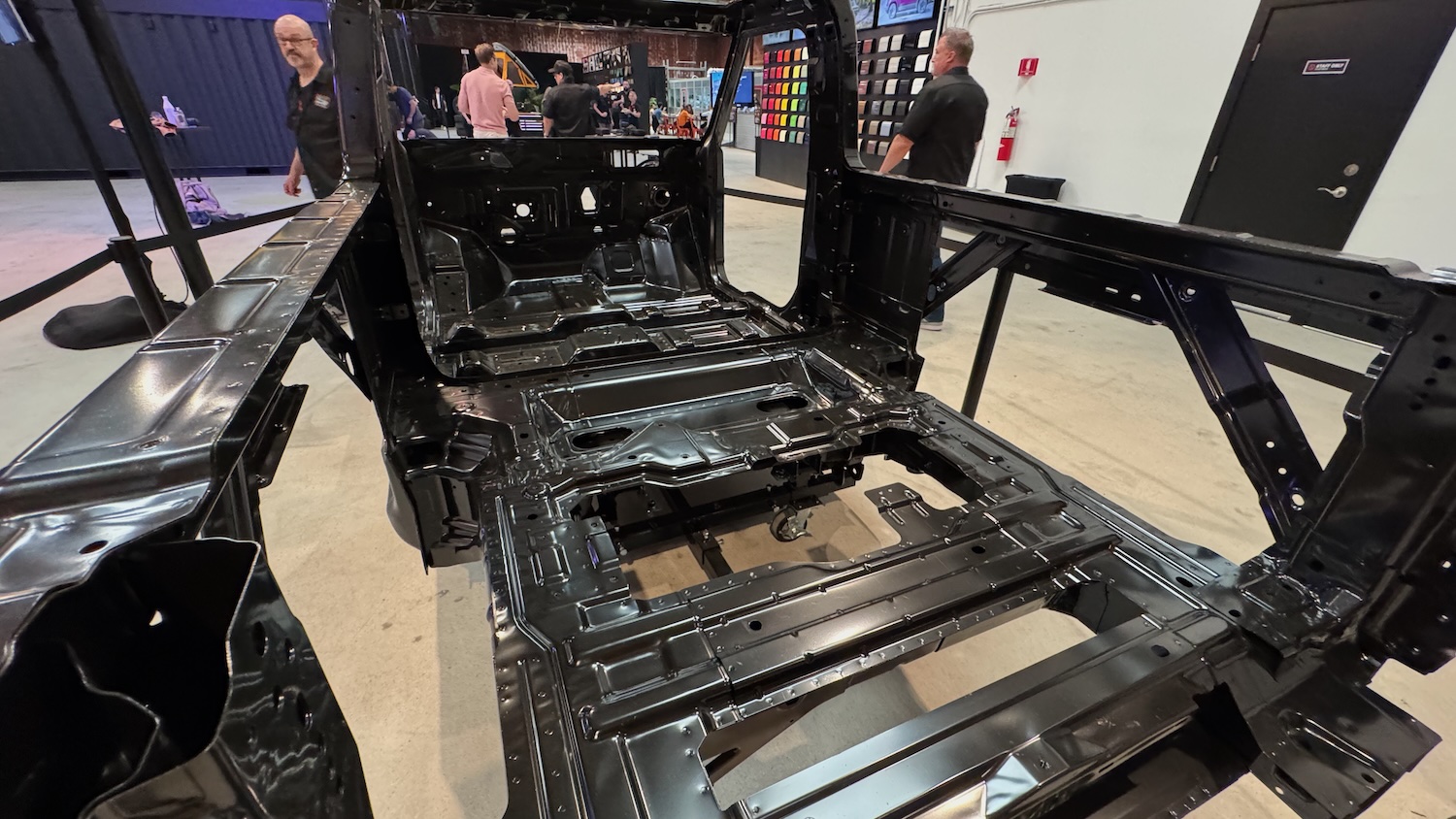
The stampings making up these 250 components come from multiple suppliers and are not made from any particularly surprising materials. There’s cold rolled steel for the outer parts and the floor; this provides a nice surface finish. There’s a dual phase advanced high strength Steel for the front crash structure. There’s hot stamped boron steel for beefing up the door ring that’s subjected to side crash tests, and the rest of the truck is high strength, low alloy steel, as it’s cheap and easy to stamp, giving flexibility to Slate’s stamping suppliers.


A few little things I noticed on the body: At the very rear of the bed are standoff brackets for mounting the back of the outer bedside panel. Those brackets feature floating cage nuts that allow for quite a bit of adjustment so a line worker can get the panel installed just right: 
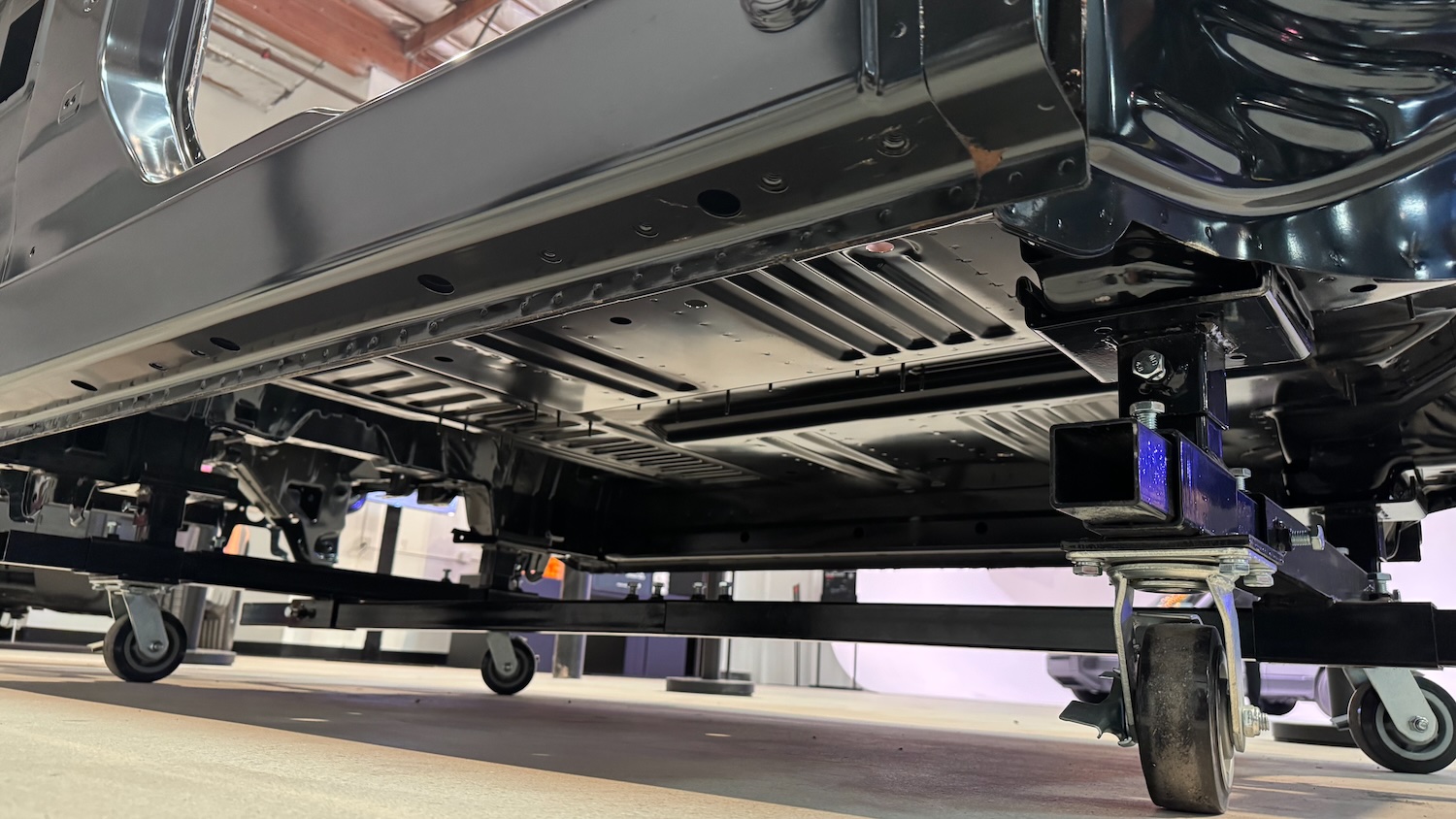
Here’s a look at where the battery pack mounts to the body (Slate says it is not structural, though it acts as a shear plane). It’s a wide battery pack, but it is short because it has to mount behind the front subframe and ahead of the rear drive unit, which isn’t far behind the back of the cab:
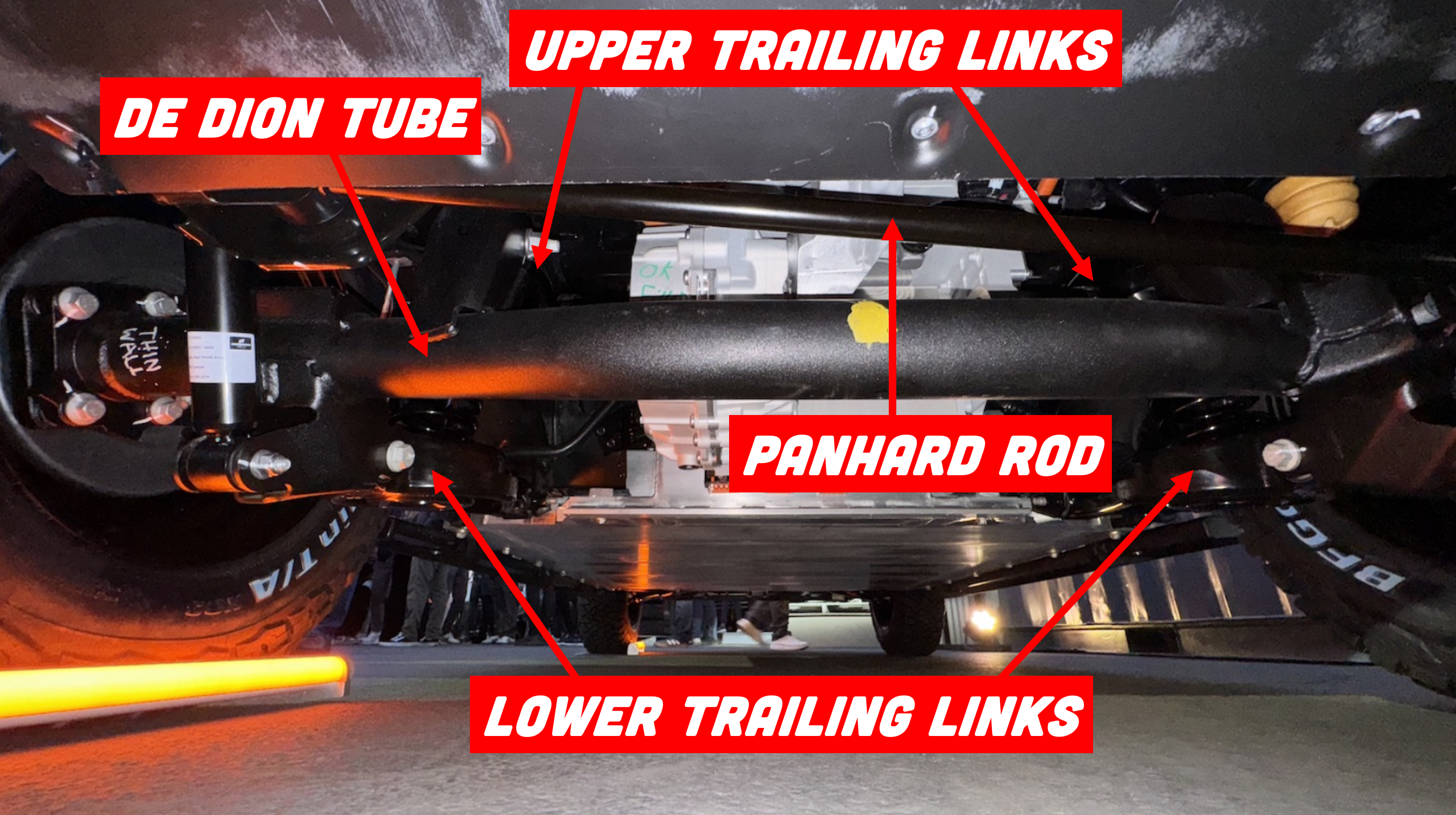
Speaking of the drive unit, I’m fairly sure the second box from the bottom here is pointing to its front mounting brackets:

The other boxes are pointing to the mounts for the five-link DeDion Tube rear suspension. It’s a great setup for an EV, as our in-house suspension engineer Huibert Mees explained in his article. “A De Dion makes perfect sense for a low-cost truck-like EV,” he mentions in that piece. “It’s relatively cheap, easy to make and due to lower un-sprung mass, will work better than a live axle or e-beam.”
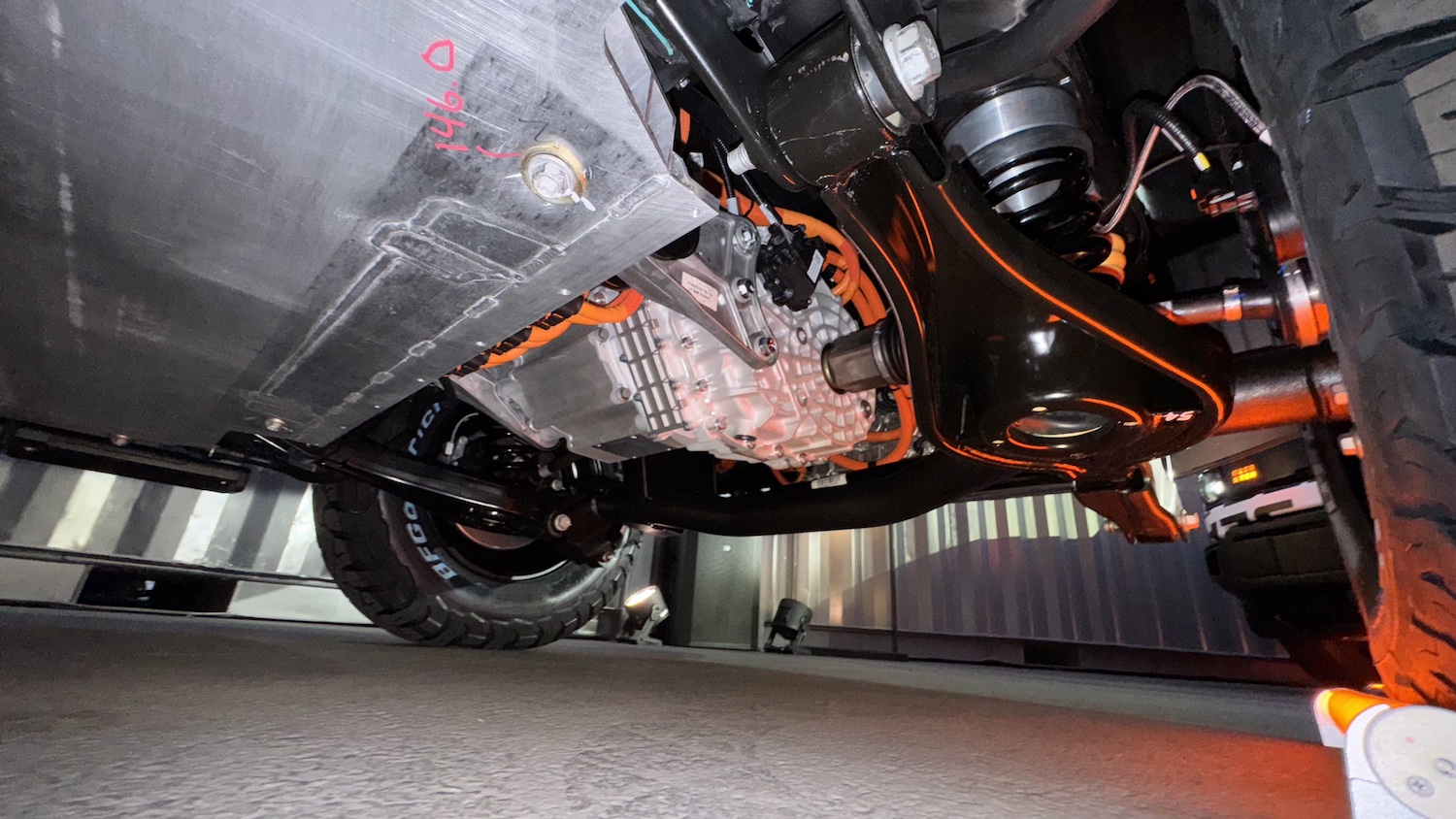
Here’s a peek at the drive unit and its mounts; notice that there is no rear subframe. There’s just the axle and the control arms, while the motor is held there in the center, mounted to the body at the locations shown above. The motor’s halfshafts reach between the control arms to the center of the rear wheel hubs. You’ll also notice an absence of a sway bar; Slate says it didn’t need one due to the combination of a low center of gravity and the DeDion tube’s naturally low roll center:
One question numerous journalists have asked is: Will there be an all-wheel drive option? Slate would not answer, but I slid under the truck to see if I could tell whether the company “package protected” for a front drive unit. And I think the answer is: probably. Check out the shape of the sway bar links: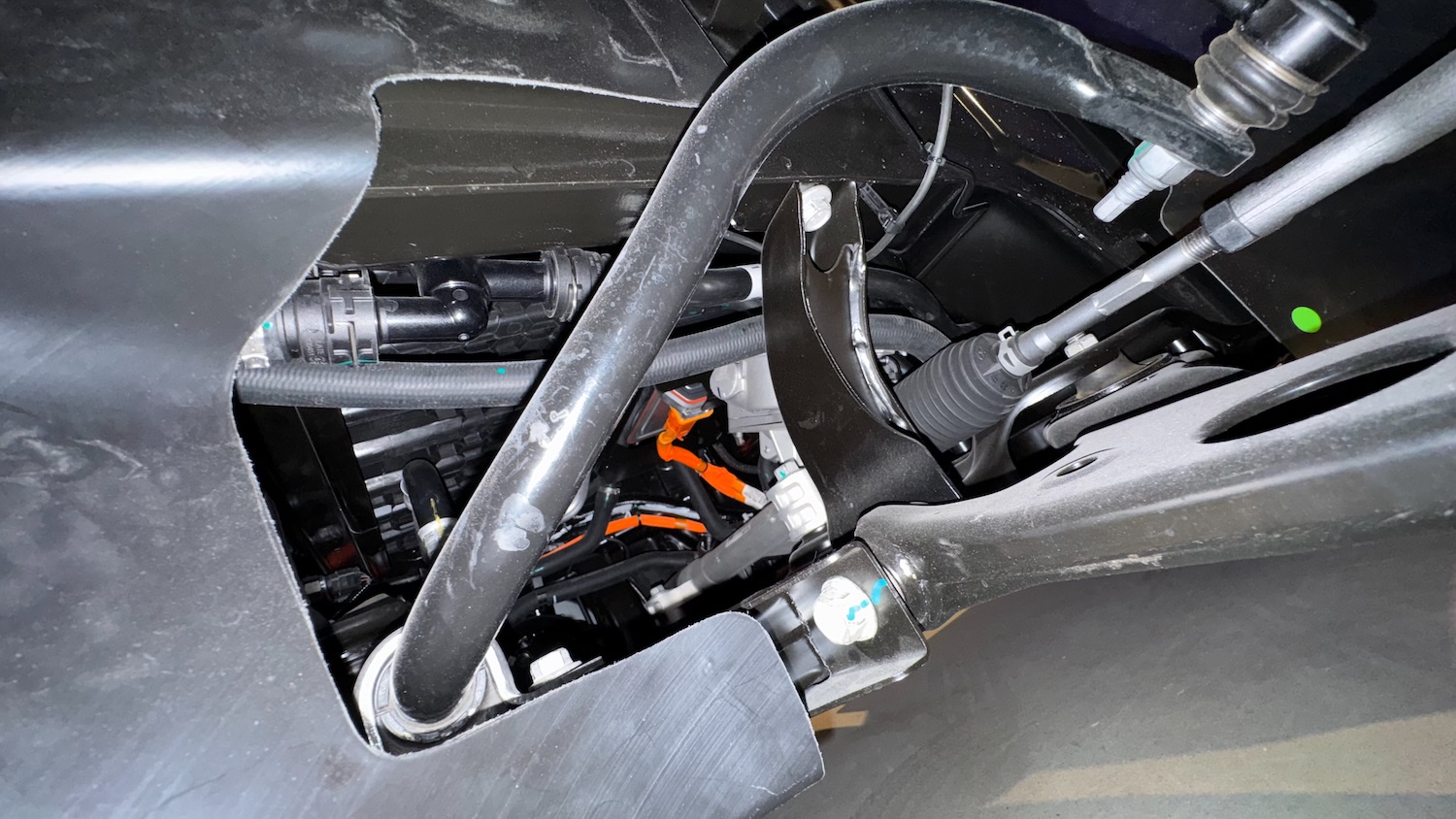
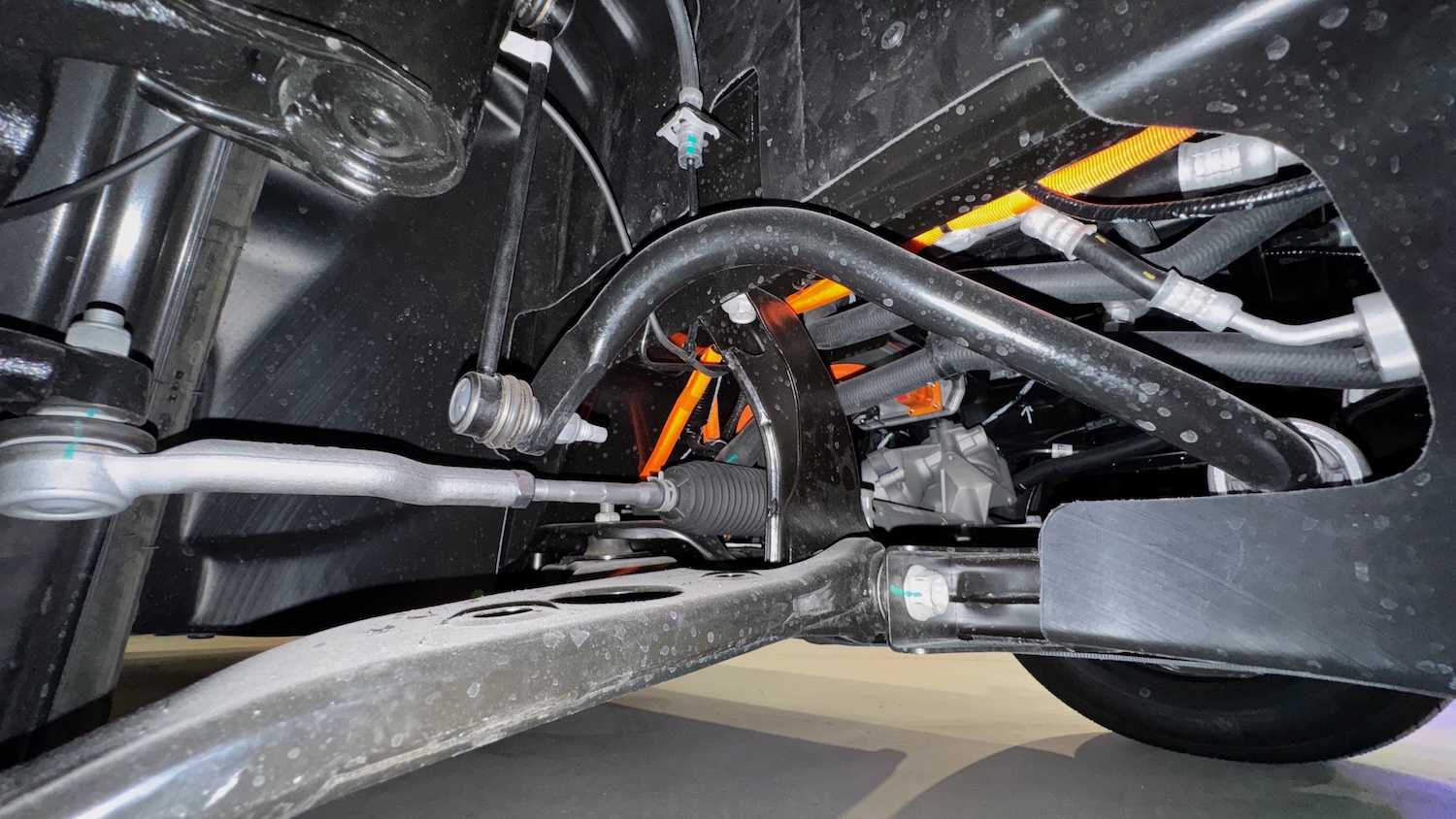
There appears to be a clear path from the center of the front hubs inboard to the front subframe. Have a look at the open space just inboard of the front hub centers — there’s a nice look at the AC compressor, too: 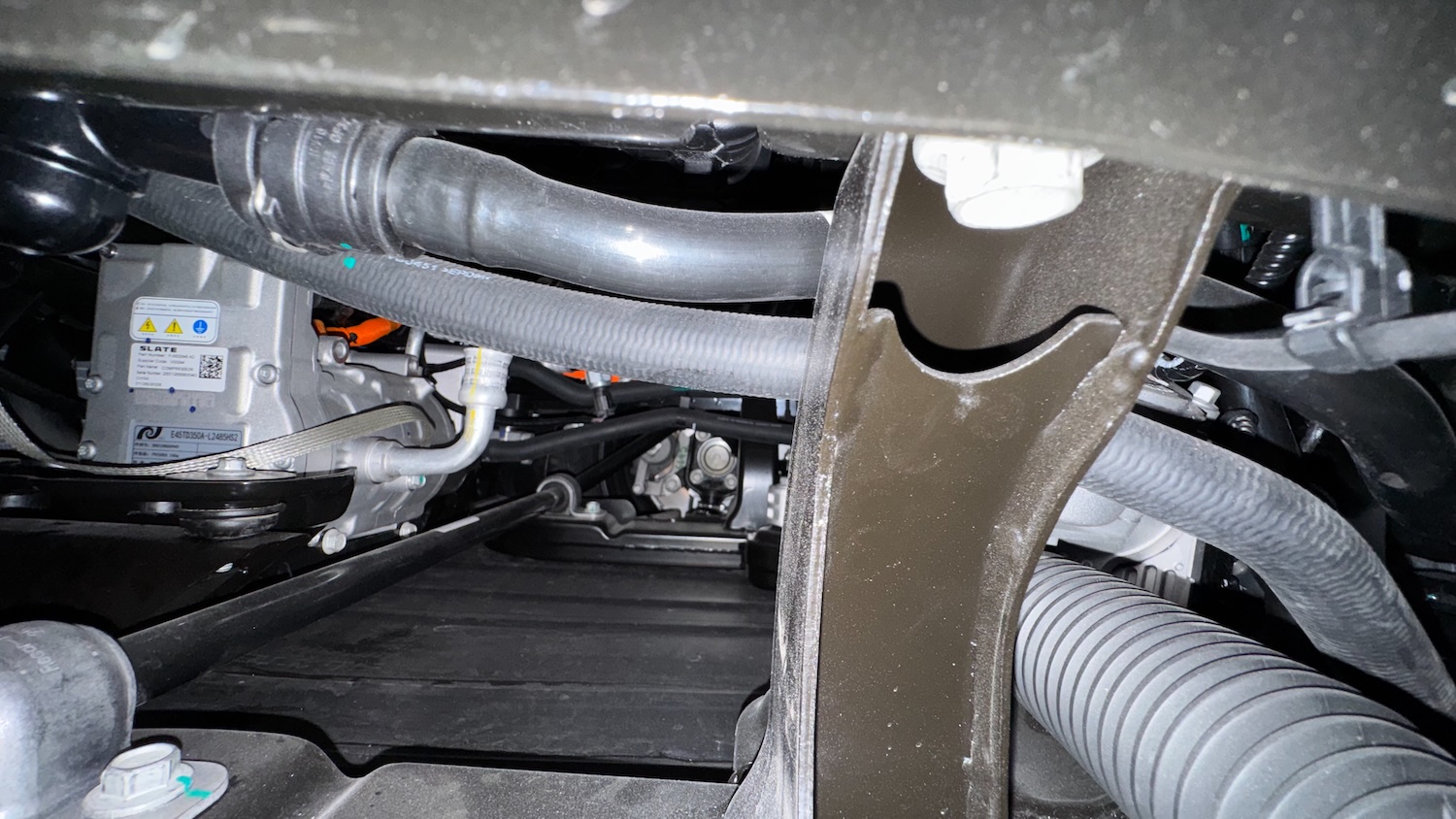
I don’t know that I see an obvious place to mount a drive unit, but I’d say an AWD variant seems possible.

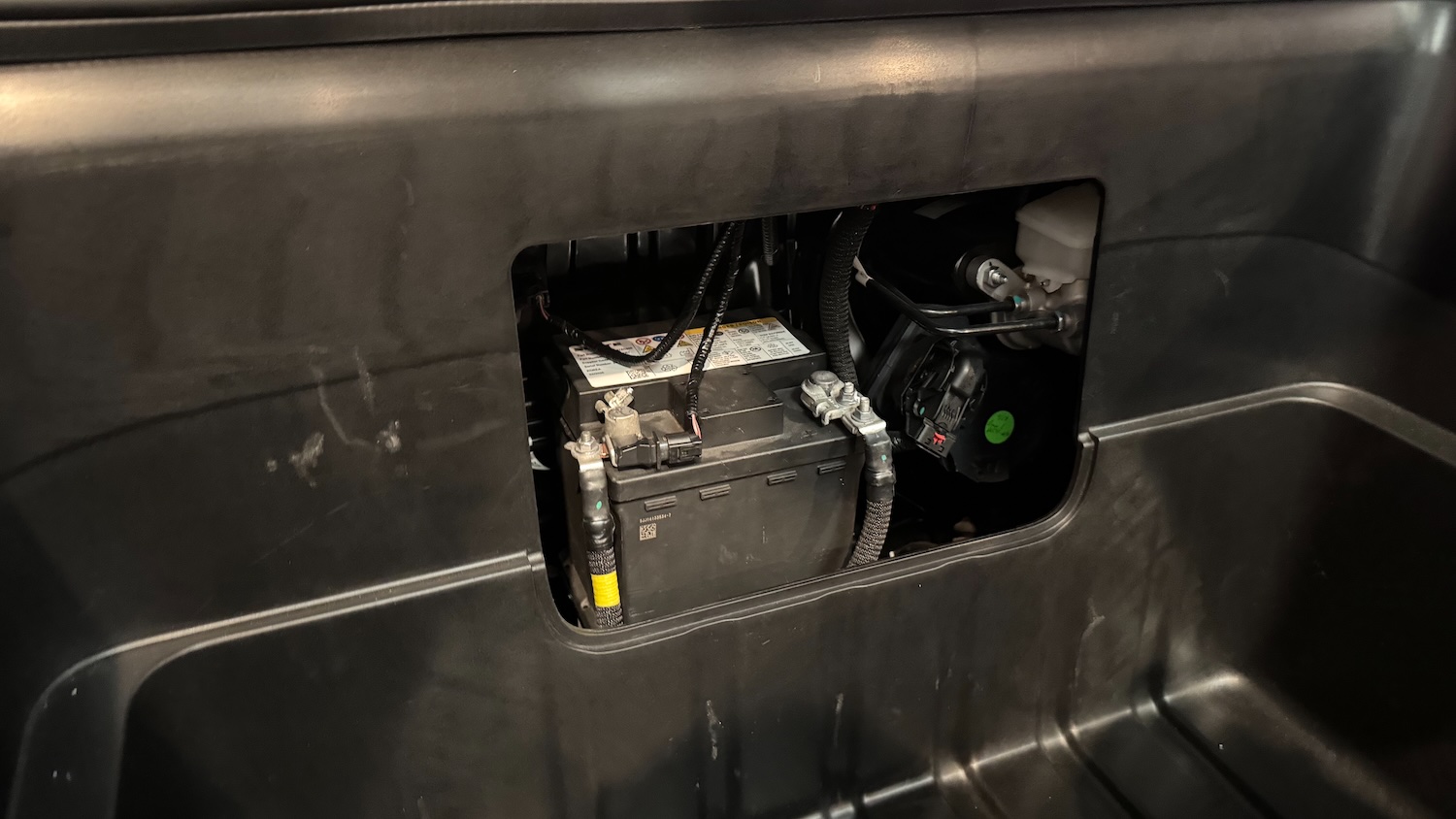
Since we’re in the front, I’ll point out the 12-volt battery tray mounted to the front firewall/bulkhead. It looks like swapping the 12-volt battery is going to be an easy job for Slate owners, as there’s a removable cover in the frunk:
Also up front is the MacPherson strut suspension, which we may as well look at:
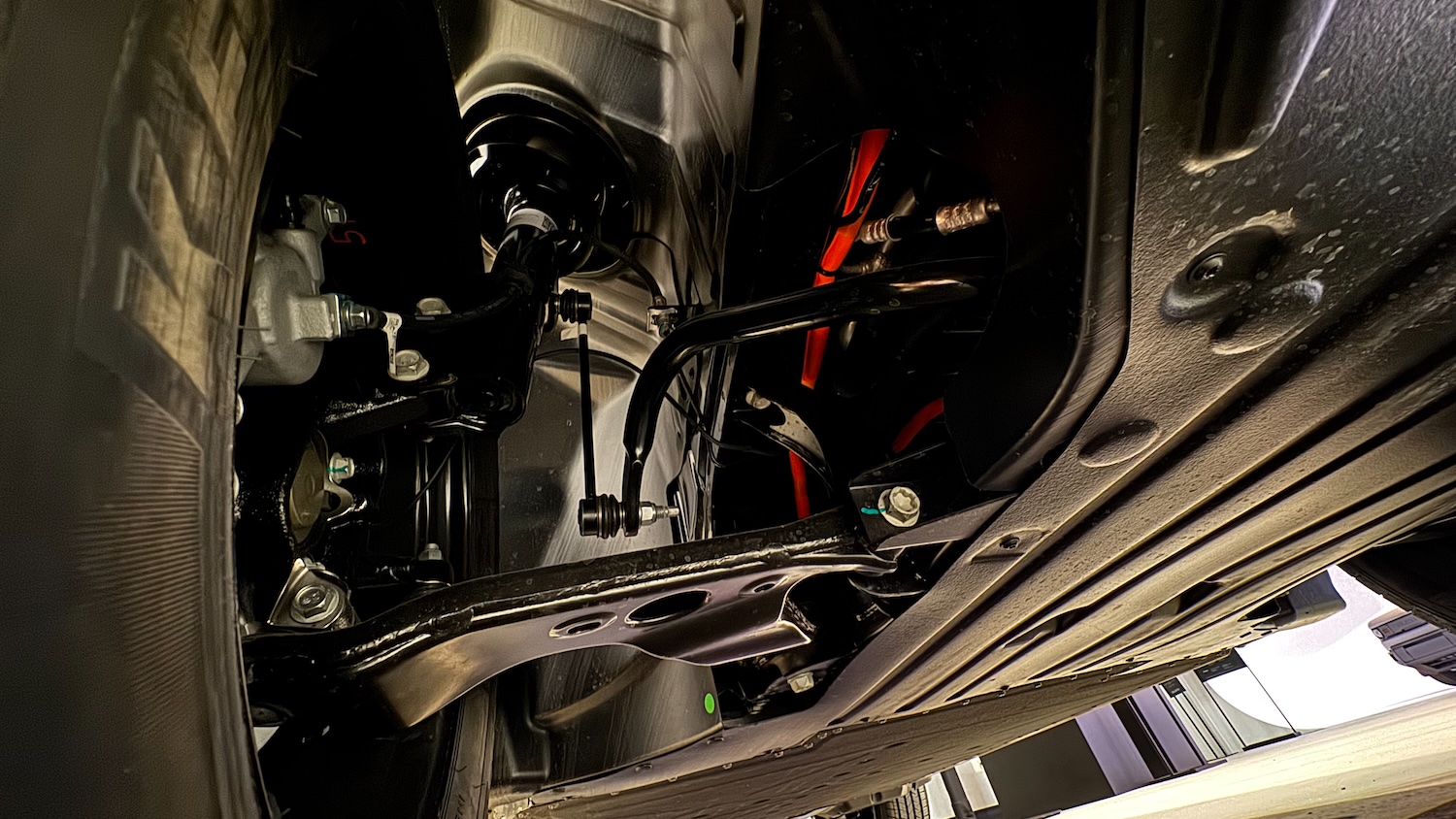
There are parts of that body-in-white that are obviously designed around the IIHS Small Overlap Rigid Barrier test — things like the front rail and that SORB enabler at the bottom rear of the wheel well:
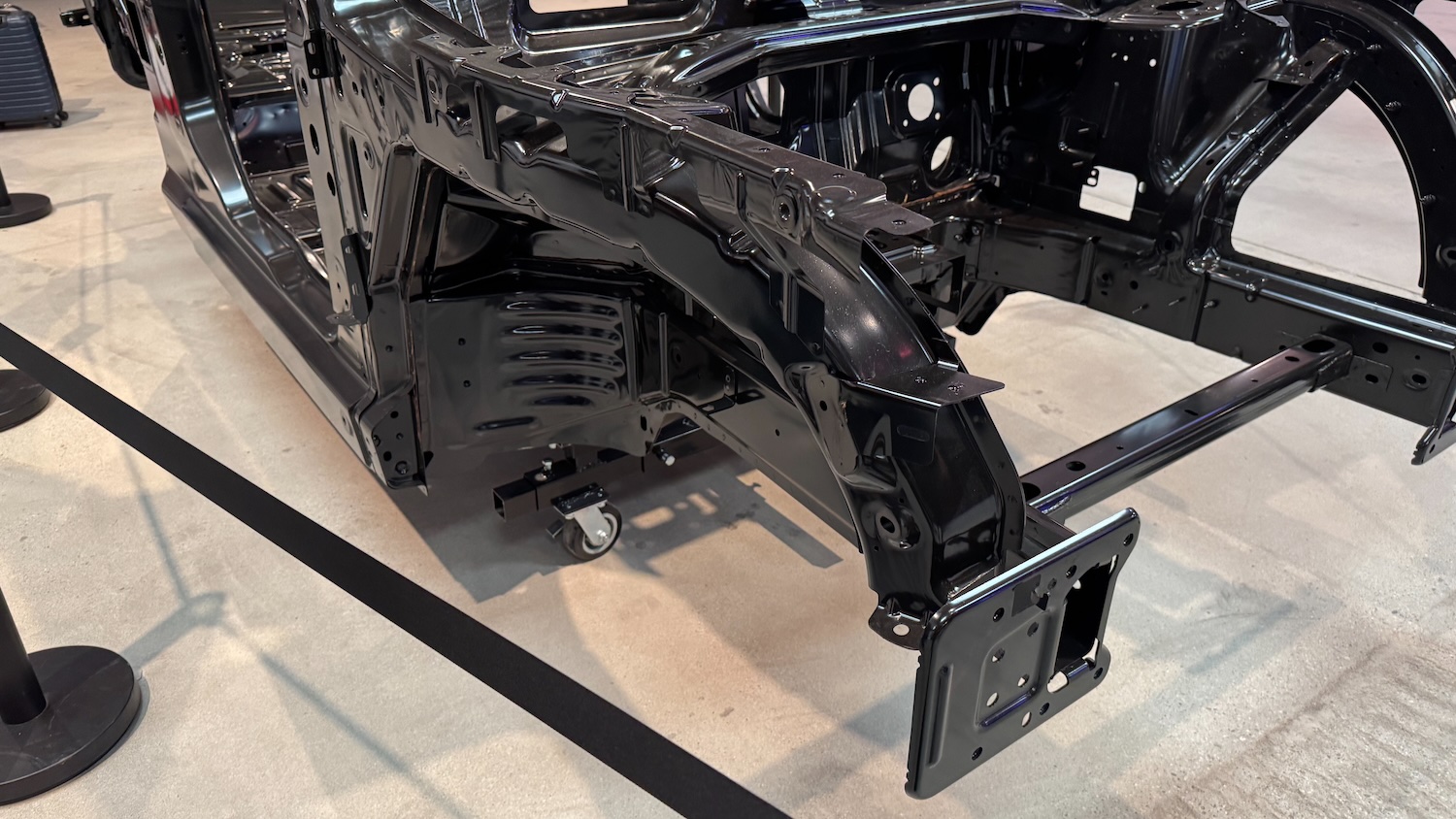
It’s an 860 pound body-in-white, and its construction is not supposed to blow anyone’s mind. It’s supposed to be simple, affordable and fun. And that last point you can’t really test unless you actually drive the thing. So I did just that.
What’s It Like To Drive The Slate Truck

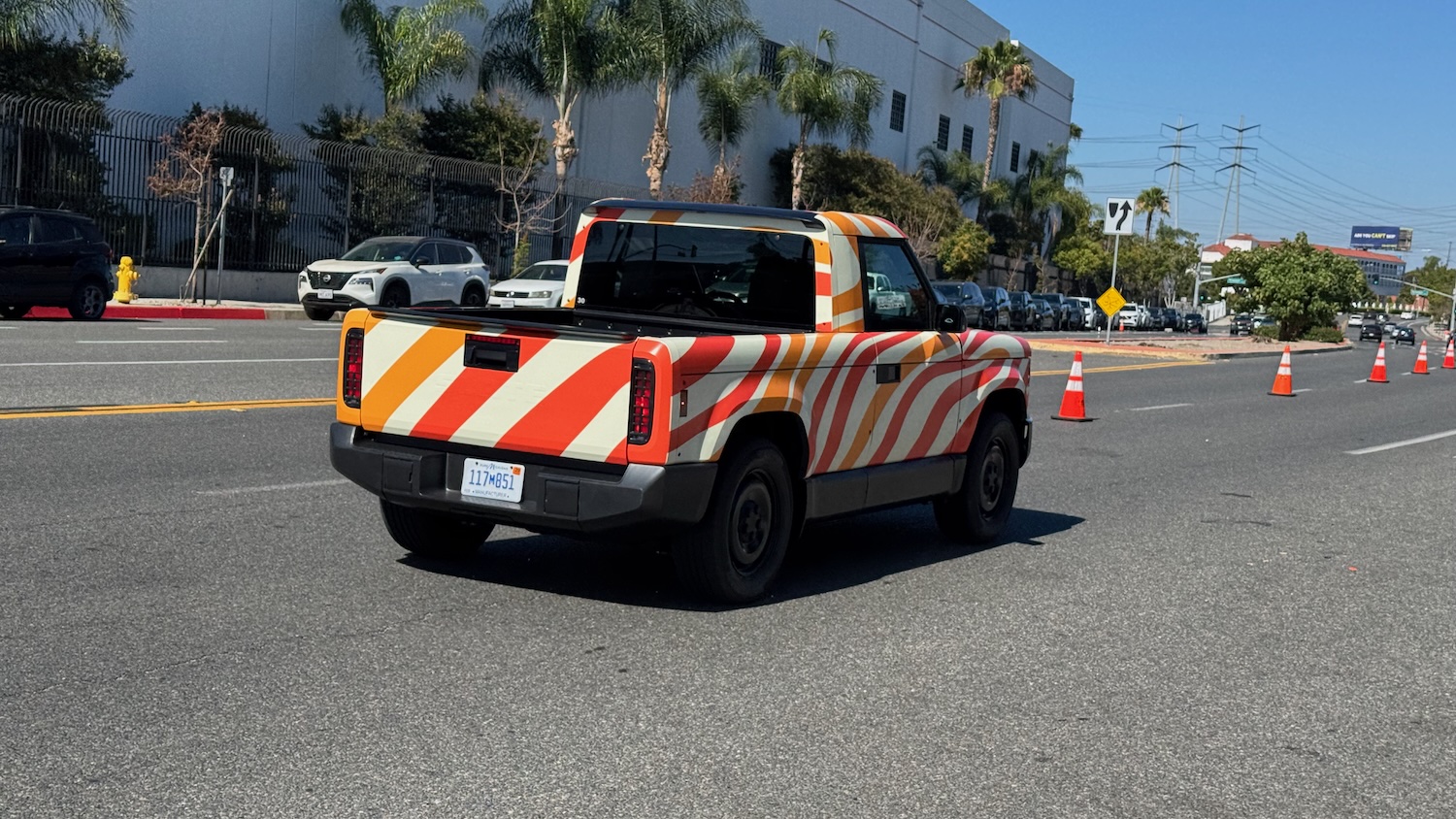
Slate gave me the chance to drive its truck around the company’s new design headquarters in southwest LA. Though the vehicle I drove was built in Slate’s Warsaw, Indiana factory (annual production capacity: 150,000), it was a Design Validation vehicle built using early tooling. This is worth mentioning because, even before entering the vehicle there were some obvious fitment/trim imperfections (for example, the fasteners holding on the front fenders were loose, one display vehicle had a center console that popped off with little more than a light push, some weather stripping was loose, etc). This is not at all unexpected for a development vehicle, especially one so early that it has cloth covering up the whole dash:
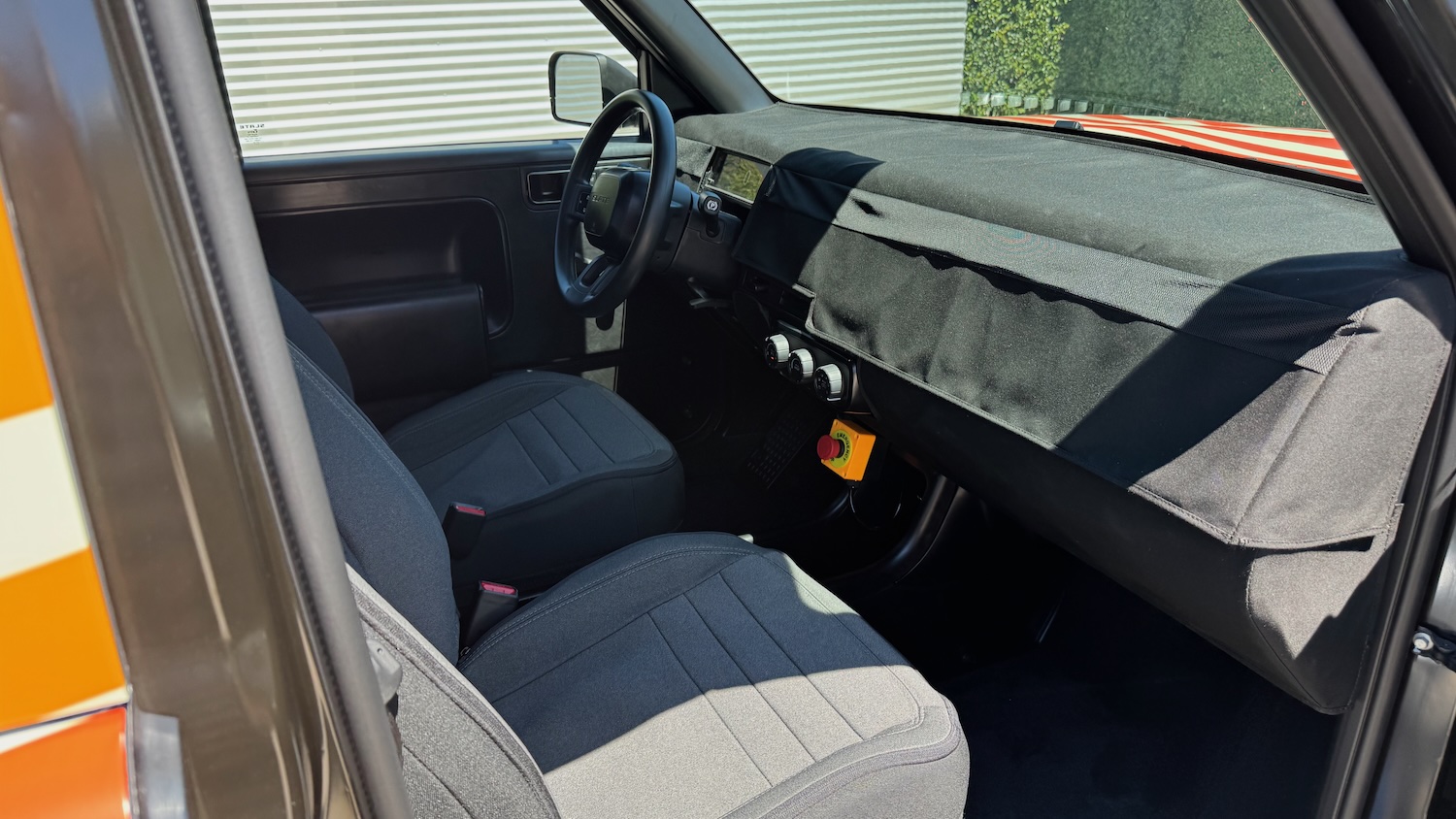
Showing me the loop and introducing me to her team’s pride-and-joy was President of Vehicles, Chris Barman. She encouraged me to hammer down the accelerator pedal and keep up speed through rough patches in the road. So that’s what I did.

After pulling down on the beautifully-executed column shifter that makes the most of the truck’s interior volume by not wasting useful space, I was off, and right away one thing became obvious: An electric car’s power-to-weight ratio just doesn’t mean the same thing as a gas car’s. I say this because my dad used to drive a 2010 Chevrolet Equinox; it weighed just under 4,000 pounds and its 2.4-liter inline-four made 182 horsepower. The base Slate truck weighs 4,048 pounds, and its single rear electric motor produces 181 horsepower. The Slate is not only quicker from 0-60 mph by at least a half a second, but it feels about 5 million times quicker around town, especially between about 30 mph and 60 mph. The Equinox feels like a dog, but the Slate feels legitimately eager to move — maybe not right off the line, as it does take a bit to get going, but certainly once you’ve gotten moving above about 20 MPH. The vehicle’s ~12:1 gearing helps make the most of that motor’s power output in town, which is the environment for which Slate optimized the truck’s performance.
You may wonder why the company didn’t just shove a more powerful electric motor in the truck given that the EV revolution has given the world cheap horsepower (seriously, you can buy a lightly used Tesla with 1000+ horsepower for 50 grand these days). Slate says it just wasn’t worth the expense. A higher power electric motor would take up valuable packaging space and cost more (in part because of the extra copper in the motor, and at a certain power level you’ll add cost beefing up the driveline). Based on my drive around LA, I feel Slate made a smart call, here, though I am curious if I’ll feel the same while hauling the truck’s 1,550 pound max payload or towing at its 2,000 pound limit.

Especially when in a densely populated city, it often takes me a little while to become acquainted with the vehicles I review, as I don’t know how they respond to inputs, I don’t know their dimensions, and I’m not used to their sightlines. I felt at home in the Slate almost right away, and that’s largely because of its compact size (it’s only 6 inches longer than a VW Golf!), its great forward and rearward visibility (though over-shoulder blind spot visibility isn’t amazing due to the thick B-pillar; smart use of the mirror helps here), and its responsiveness. Not to mention the tilting and telescoping steering wheel, the supportive seats, and the roomy cabin (if you’re over 6’2″, it might be worth sitting in the truck and assessing long-distance leg comfort, as there is a wheel hump), which together made the truck quickly feel like an old friend.

Helping aid in that comfort is the truck’s ride and handling. I won’t pretend that I took the thing through tight turns at triple-digit speeds; I’m not trying to get anyone killed, and these are public roads. So while I can only say that the handling seemed totally acceptable for around-town driving, I can say more about the truck’s ride; it seems really solid.

The course I drove the truck on was a true indictment of America’s infrastructure. One road specifically, MLK Jr. St., looked like the aftermath of a severe earthquake, with massive buckles, deep potholes, and cracks everywhere. A white sedan ahead of me had no clue what to do, slowing down and speeding up as it tried avoiding the minefield that was this public road.
The Slate didn’t care. That MacPherson strut front suspension, with its 8.25 inches of travel, and that wacky five-link DeDion tube coil sprung rear axle offering 8.7 inches of wheel travel both handled the course with confidence. The damping felt on point, never soft enough that I worried about bottoming out or feeling like I was in a boat, and never overly stiff to where I worried about my teeth falling out of my skull or about lifting a tire off the ground and potentially losing control. The truck’s standard Kenda tires remained planted on that terrible road, and it was clear to me that the thing is ready to take on all the crumbling asphalt America’s cities can throw at it.
Road noise felt reasonable to me, and I will admit I did break an occasional speed limit to get an idea of how well the truck kept wind noise out. The cab has a very upright profile, and while that helps give the truck its handsome styling, it also risks both efficiency and NVH. The A-pillar red spot on this CFD image illustrates the area I was most concerned about:

During the drive, I did hear some aero noise going about 55 mph. My test was short, and the road was one I hadn’t traveled before, so it’s hard for me to quantify anything, though wind noise does seem like something Slate is working on. After hearing me mention it, Chris Barman chimed in, saying, “You commented earlier on the wind noise. There’s still more refinement that we have to do to make sure that we get the dimensionals tuned in on the roof of the vehicle. So the next one you drive should sound better.”
When I was in the passenger’s seat, I asked about wind noise as well and how Slate balanced the upright profile with NVH. “We know that it is an EV, which means that when [ICE noise] goes away you can hear a lot of other things,” Barman replied. “The team has really been working on a very good balance of a Noise, Vibration and Harshness package…But there will be some noise that the vehicle has. It all comes down to a tradeoff of cost and benefit, and we’re going to work to find what we think is the best balance for our consumer.”

Steering was well assisted, and the 37-foot turning circle is tight. Regenerative braking is strong, slowing my truck down with vigor as soon as my right foot lifted off the accelerator. Strong regen is the only option; Slate does not plan to offer adjustability. I personally am all for it, as one-pedal driving is fun and efficient, though there’s something about Slate’s setup that needed to bake in the oven a bit longer.
When I touched the brake pedal lightly, there were times when the pedal just sucked itself down towards the floor; Slate tells me it’s still working on tuning the regen/friction brake blend, and that consumers should not expect the pedal to move on its own without driver input.

As I pulled the truck back into Slate’s headquarters, I couldn’t help but feel a bit surprised. Especially after seeing the Ford $30,000 EV prototype in the flesh, I had spent a lot of time thinking about the Slate’s vulnerabilities in the marketplace — the fact that it has two doors, the fact that it costs more than significantly better equipped cars, the fact that its range is relatively modest — and I had let this put a damper on a product that, in many ways, I think we should be celebrating.
It’s a simple pickup truck, and it’s reasonably cheap. Is it the cheapest? No. Is it the most practical for families? No. But what the Slate has going for it is this: It is, by far, the most soulful new vehicle an American consumer will be able to buy for $25,000. And it won’t even be close.
It’s All About Customization
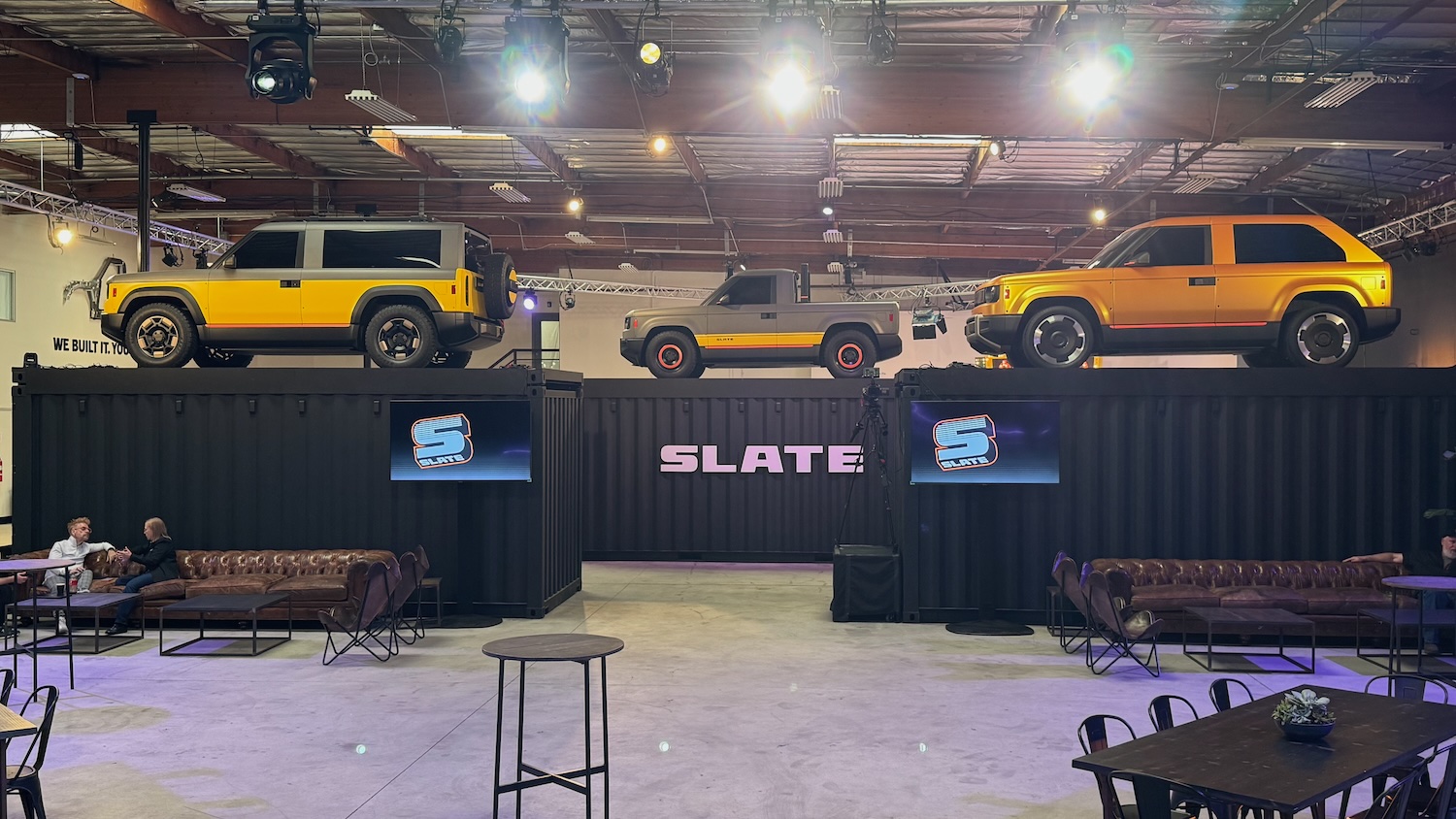
I asked Chris Barman what it is about the Slate that she thinks will compel people to buy this truck over a competitor (I was alluding to the new Ford truck), and her response was quick: “I think the customization.”
It became clear during this media event that Slate knows it cannot succeed by simply marketing its vehicle as an inexpensive EV. The Slate has to be a cool car that just so happens to be an affordable electric vehicle. And though some of the truck’s coolness is a product of its size, its quickness, its ride, and of course its chunky, squared-off design, it’s the customization element that has the potential to really allow the Slate to stand out.
Just look at the three vehicles above. There’s a squared off SUV, a fastback SUV, and a truck, all with unique liveries. And yet, all three of those are built on the same Blank Slate. It’s one vehicle that can transform into three different models, and within each model the number of potential customizations is enormous.
For example, let’s talk about the wraps, which start around $500 for a full-body applications (accents can be had at $100, partial wraps start around $300, and custom graphics can reach up to $2000 — Slate says it’s working to ensure than, even if people don’t want to DIY it, they have an option to have a full wrap done for under $1000 all-in), and are expected to last between three and five years. Slate says it plans to offer over 100 wrap colors at launch, as well as the option to provide owners with infinite choices in the form of a custom color of their own:
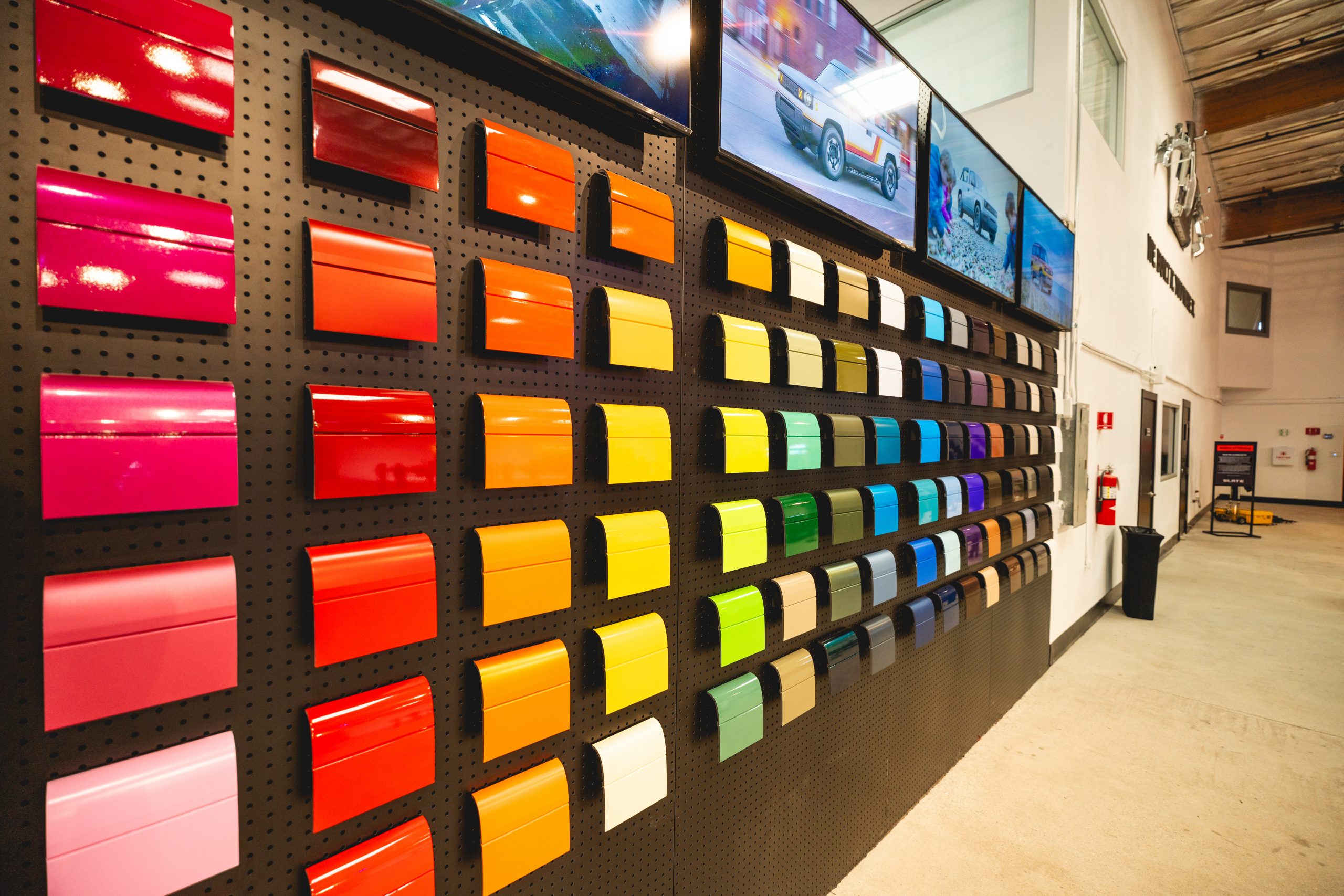
Slate spent lots of time at this event talking about how it designed the vehicle to be wrapped, pointing to something called the “Coach Line,” which they say was specifically added to the vehicle’s side to split up the large panels so that people wouldn’t have to try to manipulate a large piece of vinyl, and could instead use two that meet at the seam molded into the plastic body panel (I’m not convinced this is the only reason for that seam, since this lines up perfectly with the clamshell hood’s edge). Slate also says it had to develop its own adhesive to make laying the wrap on the plastic body panels easy and durable:

Slate says it is creating something called “Slate University” to help people — via video and paper instructions — with DIY’ing not just wraps, but all of the brand’s over-175 accessories. Among those accessories is the SUV top, in standard and fastback form. Those will cost you $5000, so if you’re among the 60 percent of buyers whom Slate expects to opt for the SUV, you’ll be dropping at least $29,950.
The customization options for the Slate are immense. You can, for example, change your whole dashboard color for around $60. And if you want to change your whole interior color it’s around $500.
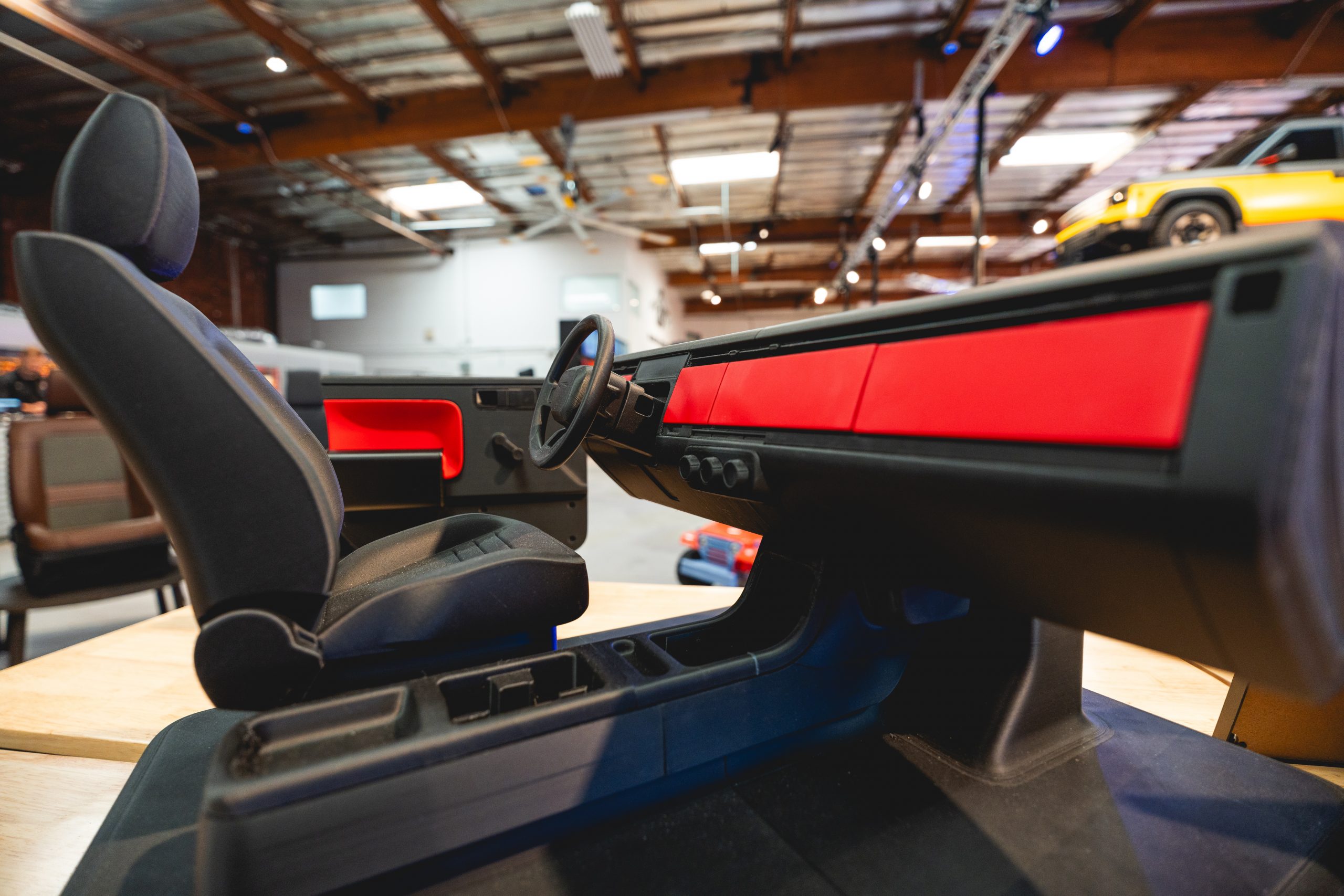
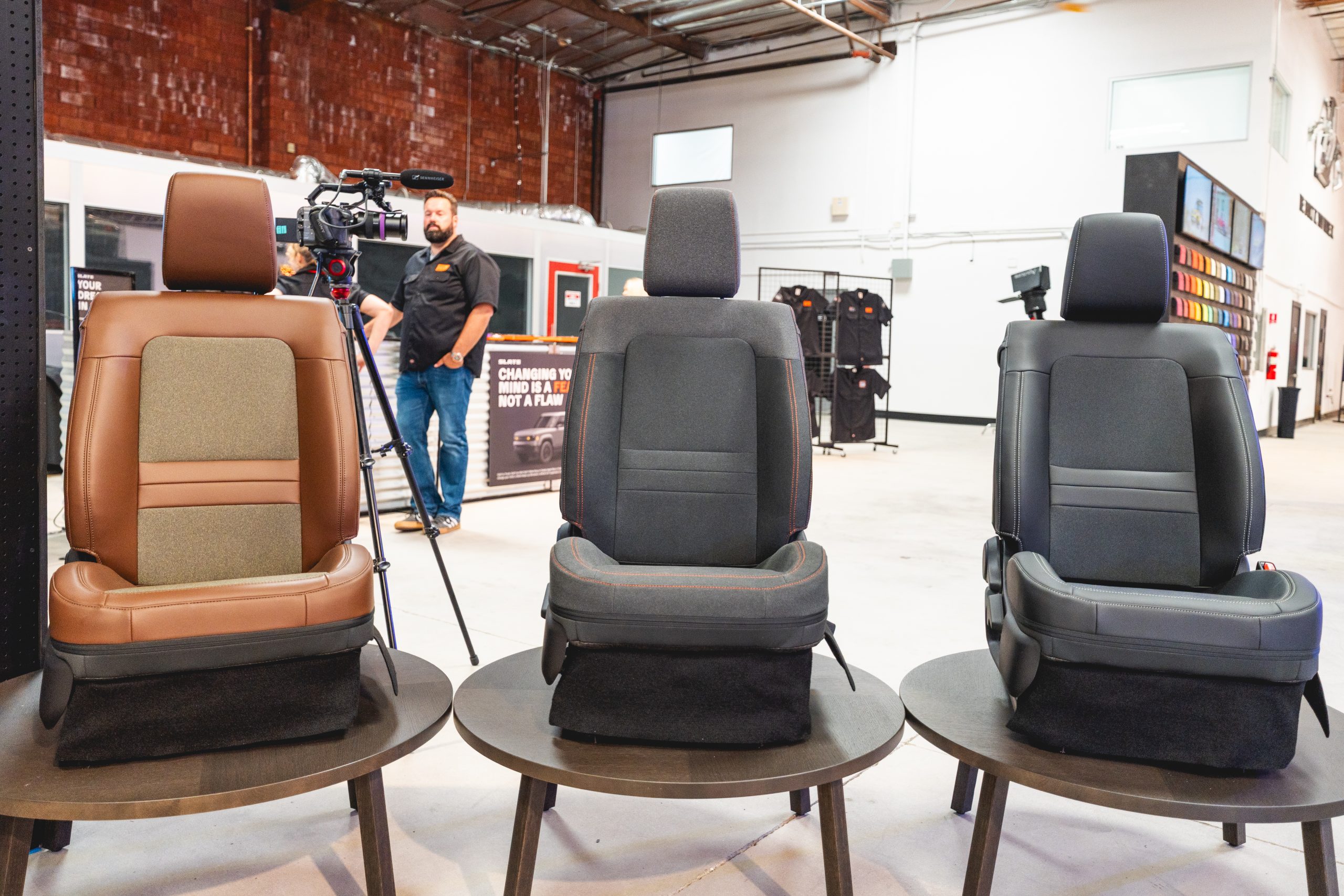
The personalization options for the vehicle’ interior include new seat covers (the stock covers are zip-offs):
The center console and door card colors can also be changed out:

And so can the rear side trim panels when in SUV mode:

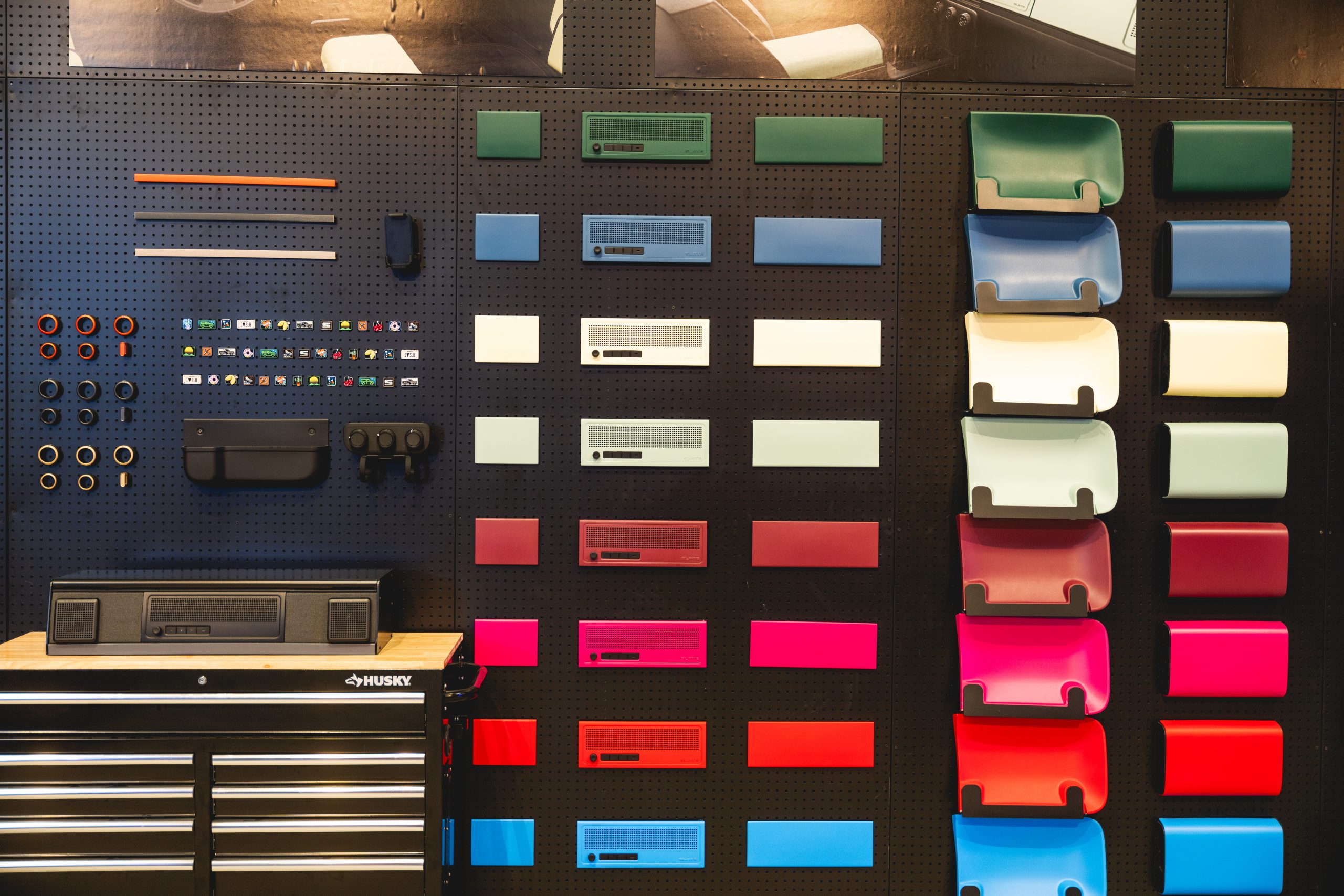
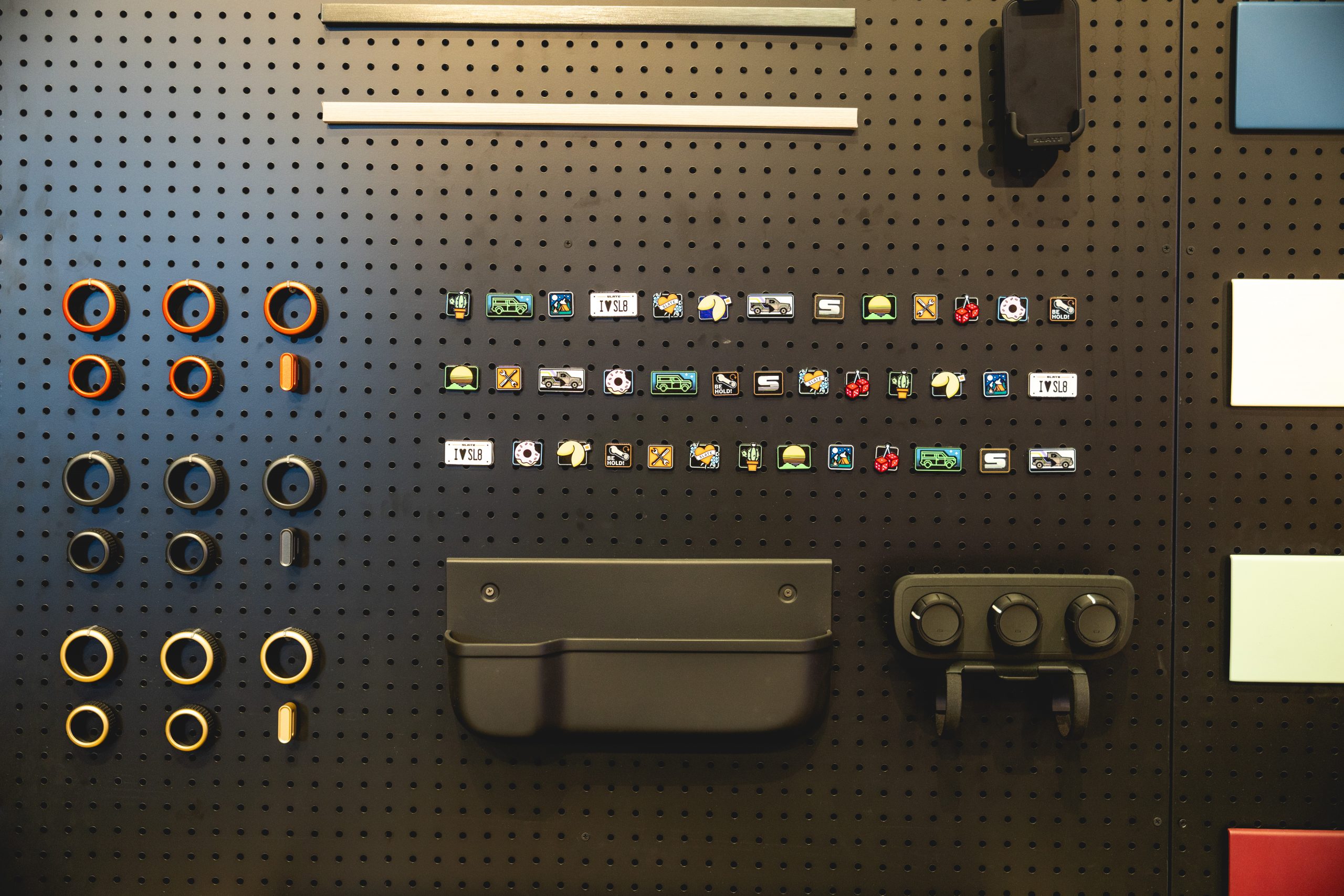
The image below shows colorful round bezels for the window crank and HVAC dials, plus little trinkets for the dash vents, and what appears to be a door pocket.
In the center you can see radio faceplates in different colors, with a demo radio on the bottom left of the photo — the center speaker is $250, the outer speakers are $150 for the pair. On the right side are door panels and on the far right are center console lids, which are the exact same part as the door armrests — a clever bit of parts-sharing.
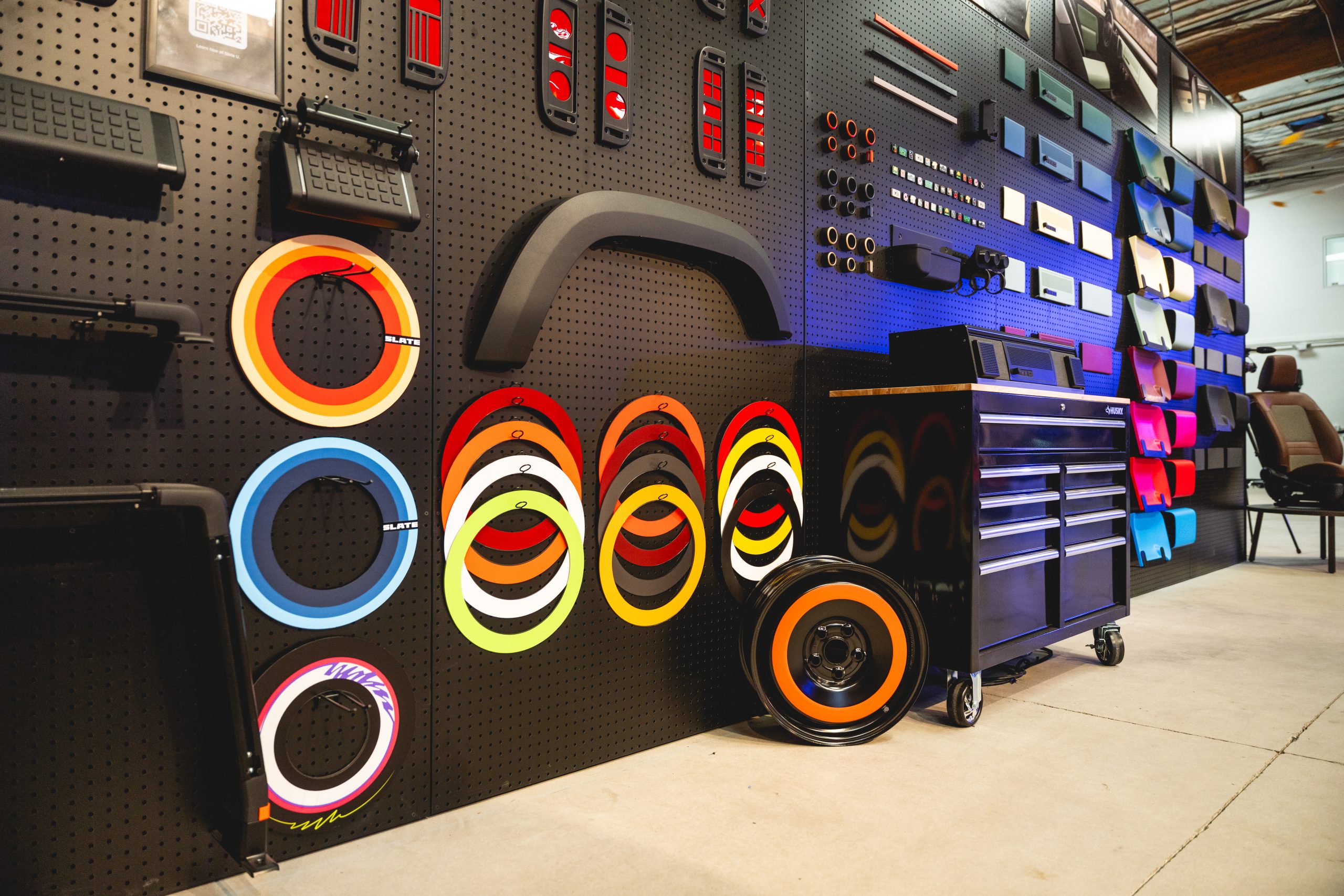
The steel wheels can be “wrapped” with nice, colorful vinyl donuts:
There are multiple grille options and turn signal/taillight bezel options:
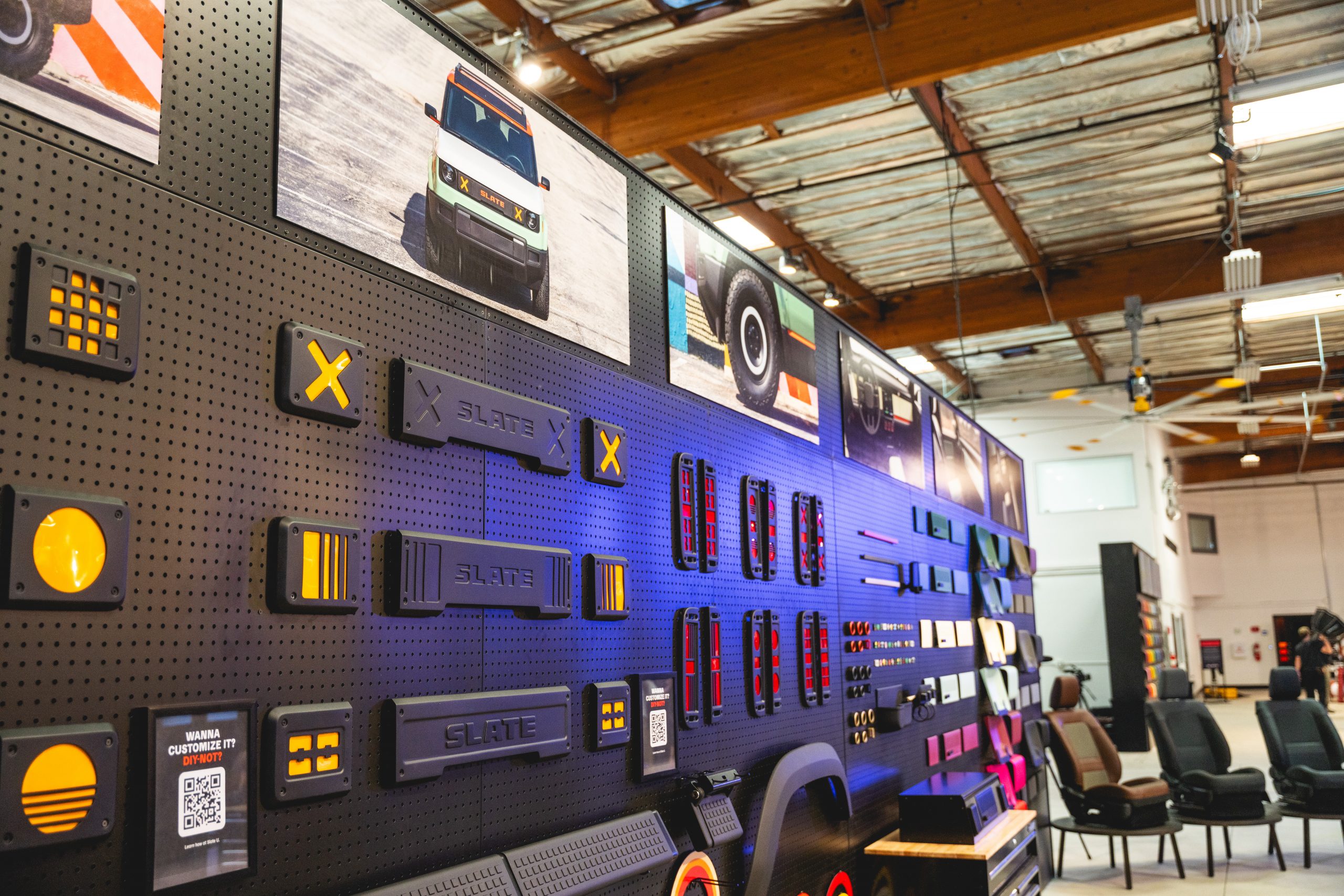
Slate has even worked with Diode Dynamics to offer multiple turn signal patterns — something that seems fairly complex from a regulatory standpoint, though Slate says they were able to self-certify fairly easily:
On top of all this, Slate plans to open-source a lot of its designs to encourage new ideas from others, who can sell their products on something called the Slate Marketplace.
I Don’t Know If It Will Succeed, But I Do Know It’s Cool

It’s a two-door, regular cab pickup truck with crank windows and no radio. On paper, selling this thing could be challenging, but I don’t want to focus on predictions about the Slate’s marketplace success, I just want to tell you what I think about the truck. It is really cool.
It looks fantastic, it’s small on the outside and roomy enough on the inside. The power is perfect (at least when unladen), the suspension seems comfortable, and the customization options are absurd and fun.
It’s not perfect, and believe me, I have done all the value-comparisons one can imagine. Yes, a Chevy Trax costs about the same and has way more amenities. Entry-level Nissans and Hyundai economy cars are in a similar boat. And as far as EVs go, the Bolt offers a lot for only a few grand more. And maybe Ford will have something competitive for not much more. I can go on and on, but there’s one thing that seems almost certain:
At the end of this year when it hits the market, the Slate will be the most soul you can get in a new car — gas or electric — for $25,000. And that has to count for something.


Just wondering what the Autopian staff would think of it if they designed it instead of grey panels they had replaceable panels ala VW multiple colors I can’t think of the name and my posting time is about to run out.
Two questions David
1. You mentioned it doesn’t have sway bars but in the next section you point out the sway bar links, am I missing something?
2. At the time did they mention the availability of the $5,000 crayola colored wraps with additional color coded additions?
Man with Griffin there you had it right in front of you
1. Fro room or bro room?
2. For very little a fold down arm rest In the middle
3. No arm rest split bench seat.
4. All slate is doing isn’t original but old school. Base truck and base rate buy the options you want. Instead of buying 6 options for the one you want.
Can you imagine what that would be like in the marriage world? Mary 6 girls to get the one you want
Towing and winter range is going to be 4 miles.
The finish on the body lasts 3 to 5 years.
180hp is abysmal for lugging around 2 tons.
They say they’re not going to sell in Canada due to our tarrifs, (Many will see this as a nod to MAGA and the Trump administration’s economic policies) but the real reason is because that chasis will last about as long as the wrap in our climate, and the range will be embarrassing in cold weather.
I guess certain considerations were made to be the first to drive and evaluate
I wonder if they could’ve saved more r&d money by digging in various parts bins. I would’ve loved having a vehicle that used parts from 10 different manufacturers.
Check out a Jensen Healey it surpassed that. From a Ford forklift starter to a lotus engine, two transmissions from different suppliers, and a real hoot to drive
David. I am looking at the 19th picture from the top at the “body in white” shot of the passenger side rocker. Was that a patch of rust at the lap weld or is that structural adhesive squeeze out? Or something else?
Did Slate say anything about internal rustproofing of the chassis?
Usually preproduction doesn’t worry about rust proof and other extended use issues
It wasn’t a complaint. I was just curious if that was glue or rust. I replaced rockers and firewall body mounts on two Superduty cabs this winter so I’ve trained myself to focus on how that areas constructed. Fords laminated quietsteel was pretty intolerant of salt and neglect.
I think I read that structural adhesive is used in multiple places on this chassis.
Not trying to attack just an observation I picked up here these prototype vehicles are test vehicle not meant to last
It’s cool but I don’t see how anyone who isn’t specifically interested in the kookiness would choose this over a maverick
Well unless you are paying cash the $5,000 minimum difference is just the beginning. If you are financing it that extra $5k is at least $125 a month more in payments with a good credit rating. Then figure a minimum of 5 years or 60 months of payments and you will pay an additional $7,500 for the basic Maverick and if you can’t afford the extra $125 a month you add another year your interest rate increases but minimum an extra $2,500 more in interest for each year longer on the payment plan.
One of my daily drivers is a 4.0L Jeep Comanche, very similar in size to this Slate truck. I’d be curious as to how similar it feels to drive, both in performance, visibility, and truck like feel.
You have the right person to ask
In regards to the video with the climate controls. Yes that problem was solved years ago, but this 3 dial set up went another direction and made it worse than what has been around for years. The key to the 3 dial system is that it has a bar to grab on to which allows you to know what you are doing w/o looking at the dial. In my trucks I can reach over and based on where that bar is pointing I know where it is currently and where I want it to go. Making it a round knob eliminates that.
I understand the appeal. It’s a niche vehicle for sure, but there are takers, my mother in law being one of them. She’s tiny (4’11”) but likes trucks because she does a lot of gardening. But she doesn’t like the idea of a big truck. She lives in cape cod, and never drives outside of town, so there’s no range anxiety. She hates getting gas, so an EV that she plugs in at home is appealing. And since she barely drives 50 miles a week, she doesn’t want to buy a 50k truck.
She also likes the idea of solar charging because she’s an environmentalist
Anyway she’s in the market for a new vehicle, I showed her this and the maverick and she’s all about the slate. She’s going to put a deposit down.
Perfect.
Why is it 4,000 lbs?
Besides the batteries, that body made from 250 pieces welded together instead of casted probably contribute a lot to it.
And all steel
The battery pack alone probably weighs 1500 lbs.
This makes me a bit more of a believer, but I still think it’s fantasy land to expect 150k units yearly. The market for a vehicle this basic and with these characteristics just isn’t that big, even if it was sold at a much lower price. At $25k, it’s asking for a lot.
Also, this is insane:
“Slate says it stepped the base battery pack up due to overwhelming demand for the upgraded battery”
But it removed the larger battery option?? What an own goal.
You had buyers who told you specifically they’d be willing to pay up for more battery, and you looked at that and said “ok, let’s give you less”. Crazy.
17 million vehicles sold per year if memory serves? So 150,000 is like less than 1% if it hits the right demographic it could see demand surpass the production but even the Miata as great as it is it will lose sales once it states the market. That won’t grow
This has serious potential to be a more practical Datsun 220 for the masses and I’m all for it. If we can convince a few bro-dozer fans to right size their needs, we would end up a slightly better world.
So Daniel Golson over at the old site just published a review (spoiler alert – he didn’t like it) that said that the Slate does not have cruise control and it isn’t even optional.
Is this true?
There were rumors that Comma.ai would be supported, but IDK if anything came of that. No cruise would be a deal breaker for me.
I’ve been rocking a Comma 4 running Sunnypilot for a few weeks now. What a great little device and software! The lane keeping is so much better than Tesla’s autosteer. It doesn’t rigidly stick to the center of the lane. It accepts some very minor corrections, unlike Tesla. The force on the steering wheel needed to override it is a lot less so taking over feels more natural. For Sunnypilot in particular, keeping steering control engaged while my foot controls the speed is a feature I’ve come to like.
Slate needs to support it. It’s a very good ADAS.
Slate is cheap basic not fancy pants grey Poupon
Even cheap cars come with L2 ADAS. Ford’s cheap pickup sure will. After two road trips using Comma 4, I’m sold. It does what it says and doesn’t pretend to be anything else, unlike what some other manufacturers would have people believe. It takes the drudgery out of driving.
I’ve owned my DD since June 2002 never used the cruise would have to read directions to turn it on. And just from relocating it has been driven from Vermont to Pennsylvania to to Connecticut to Texas to Arizona to Pennsylvania to Mississippi to Pennsylvania.
My wife never used cruise until she got her Ioniq with AAC. I’ve always used cruise since I started driving. Different strokes and all that, I guess.
He amended it, apparently.
It is false.
Whew!
I’m rooting for these guys. This seems like a great truck full of shockingly sensible ideas and solutions, and their commitment to old tech where it makes sense won me over. I’ll always be a fan of automakers that are not afraid to market cars with hand-cranked windows.
The connection with Bezos is still offputting though; if I had the money to buy one new, I probably wouldn’t because I can’t get over the idea of transferring any wealth to Bezos. But I still wish Slate succeeds; they have the right ideas about how to make cars, they came up with a really good design, and they don’t seem pressed to “innovate” just for the sake of it. I know it would make Bezos even richer, but I really hope that the Slate pick up truck becomes a global success. I would love to get myself a cheap used one in a few years.
https://techcrunch.com/2026/05/07/jeff-bezos-rep-leaves-slate-autos-board/
Hope this lightens the emotional/ethical burden? ????
Oh anything that represents less involvement from the Bezos camp is absolutely a plus; there’s no way he or the people around him have the faintest idea of what makes sense for this truck. I’m glad they’re smart enough to understand their involvement would be detrimental to the finished product. However, the investment is still coming from Bezos, so I would expect that the returns will also add to the obscene pile of money Bezos hoards. Some rules are sacred to me, and one of them is: my money shall not be directly transferred to Bezo’s wallet. I don’t even have an amazon account, closed mine in the early 2010s if I’m not mistaken, and only transgressed once since, when I received a gift card from work for amazon purchases.
Well the company would have to make money before any of it could flow to Bezos’ pockets. That ain’t happening any time soon, if ever.
Well, that is true; I guess early adopters won’t be contributing as directly to Bezo’s net worth. I can’t afford to be an early adopter, nor is it clear to me if they’ll be exporting them to Europe anyway. But I wish them success, and hope they reach this side of the pond.
From my understanding there are currently no plans to sell them outside of North America. Of course that is subject to change.
I kind of imagined that would be the case, and that’s likely more dependent on their success than EU regulations, I think – it’s not like this is a Cybertruck that wouldn’t fit most parking spots or narrow streets around here. That’s precisely why I’m hoping they become successful enough that they can look into new assembly lines in other regions (this has CKD written all over it). Dreaming is for free 🙂
I think in many ways Europe is a better market for this vehicle. EVs have a significantly higher take rate there. Also it is a car sized footprint which as you say would fit well with the infrastructure making it actually useable in the cities for the average person.
I think so too, but at the same time, it feels like the type of bold proposal that European automakers no longer care to come up with – which personally makes me really sad, but it is what it is. In that sense, the Slate feels more like the kind of thing that had to come out of the American market. The only thing in which it deviates from the American landscape is that their car does not seem like vaporware.
I do think they would to expand past to across the pond eventually, but of course they need to get off the ground first.
I could also see a scenario were lower that expect sales in the US lead to an export push. They claim the plant is built for 150k units per year if they only sell 50k per year, I could see them looking to add exporting sooner rather than later. Of course tariffs and what not may limit how feasible that is.