

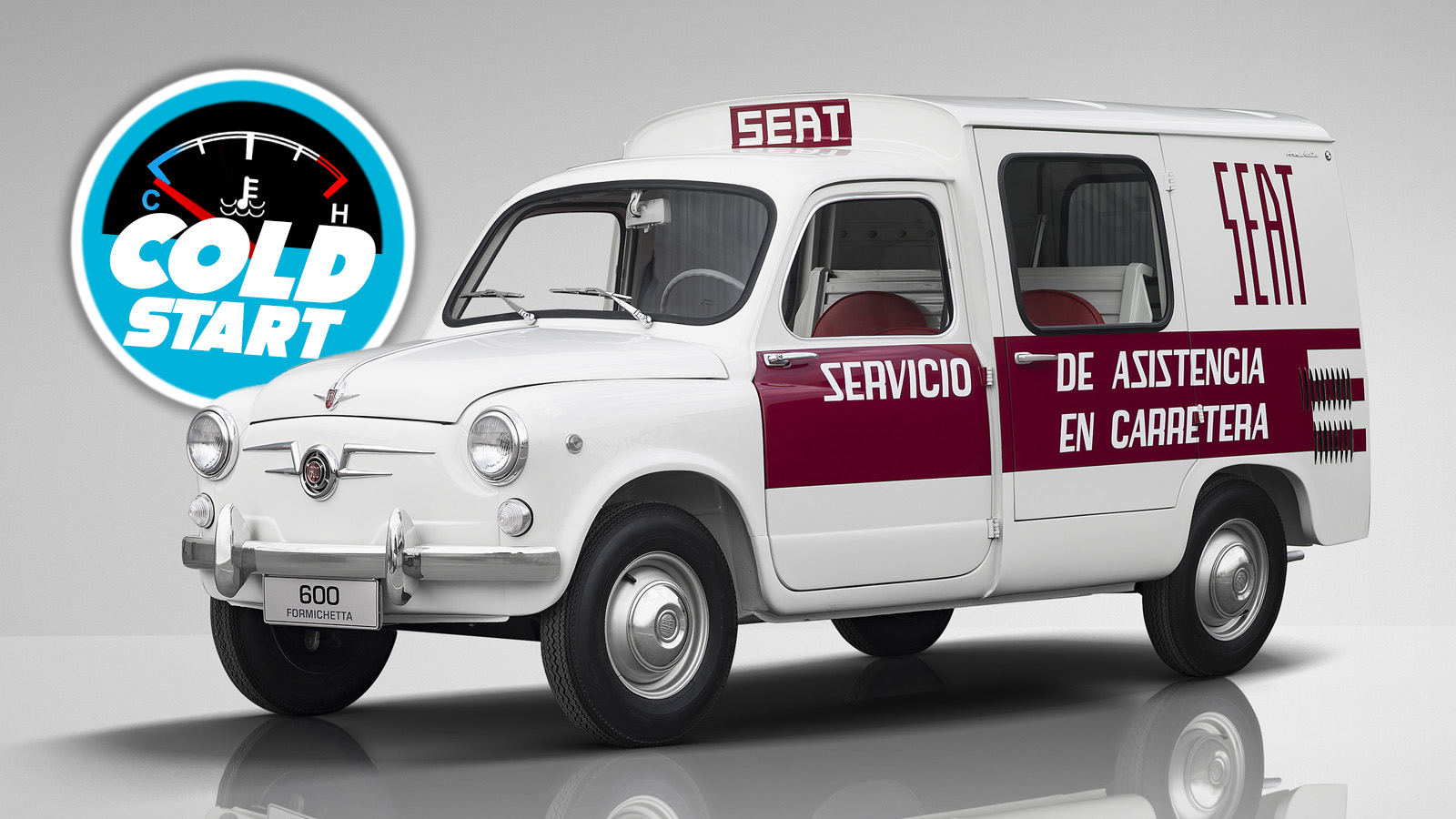
I’ve always liked the Fiat 600 and its variants, like the original Multipla. They were true peoples’ cars in the mold of the Volkswagen Beetle, a little and practical rear-engined family car, just even littler. And Fiat, of course, had an even littler little car in the form of the 500, but this morning I want to talk about the 600. Specifically, a particular variant of the 600, a commercial version known as the Formichetta, which means “little ant.”
This particular variant wasn’t built by Fiat themselves, but by a company that licensed the 600 design and really ran with it, the Spanish carmaker SEAT. SEAT made a four-door version of the 600, called the 800, which I’ve written about here before, because it’s so damn cool.


I mean, look at how well they adapted the little humpbacked 600 into a four door:

And, of course, the minivan variant of the 600, the aforementioned Multipla, was a real triumph of clever packaging:

It’s pretty incredible just how flexible the 600 proved to be, and this version that I’d not seen before, the Formichetta, is another great example of that.
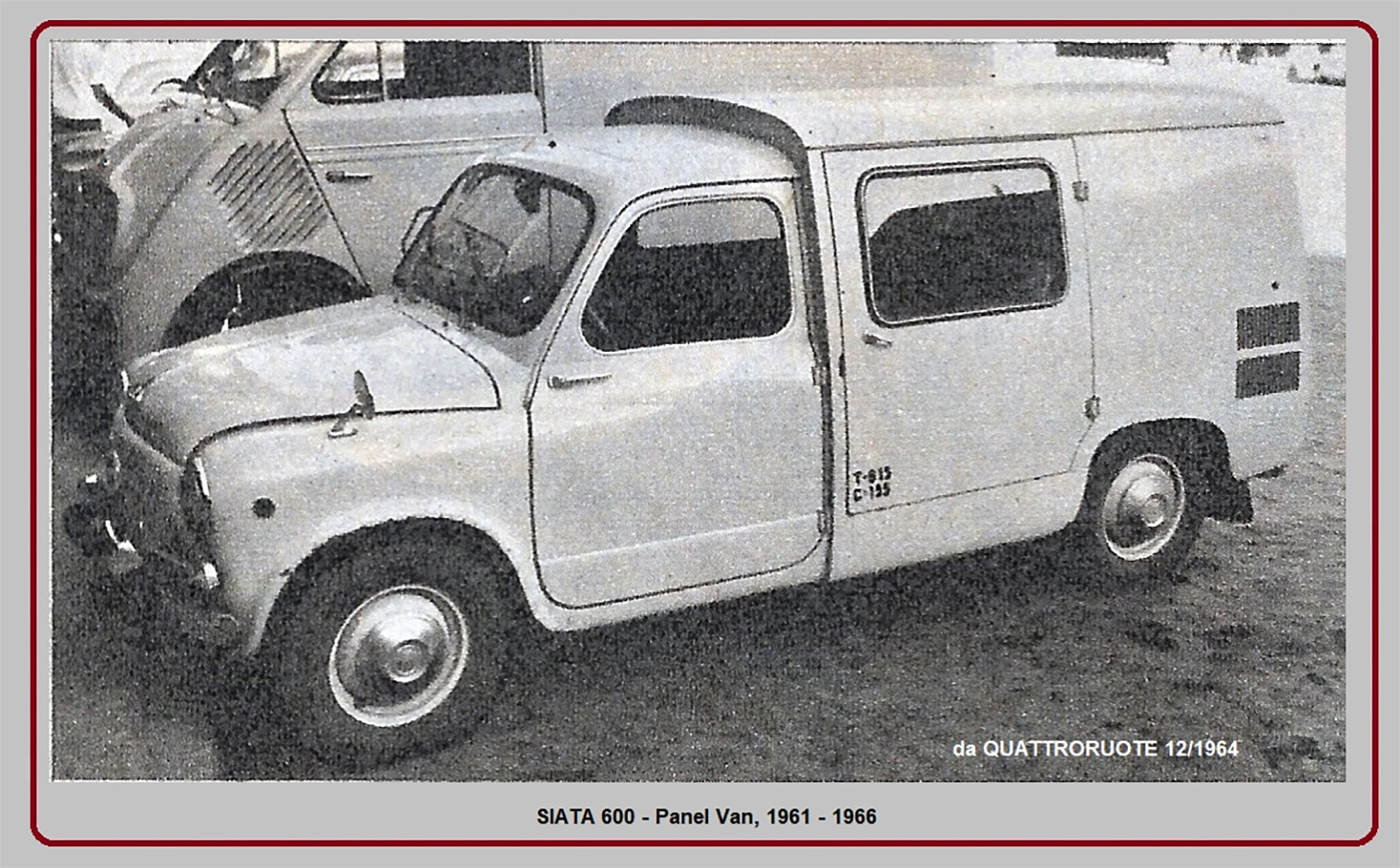
The Formichetta started as a SEAT 600D, then was sent over to Siata Española, the Spanish subsidiary of the Italian company, who added on the cube-like van body that started just aft of the B-pillar. It had a higher roof than the cab area of the 600 and added two extra doors for cargo loading on either side:
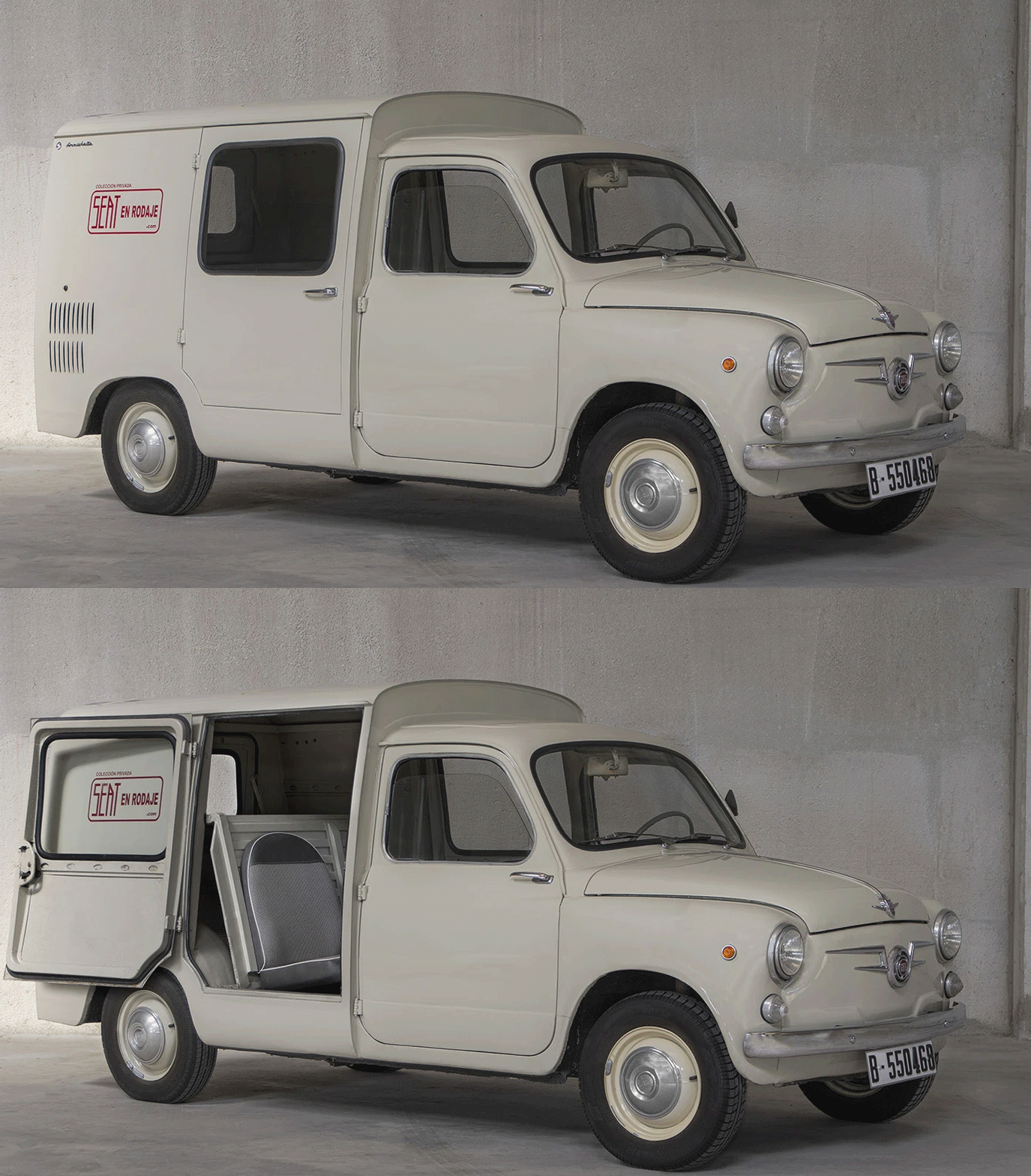
These doors provided quite good access to the cargo area, and folded flat against the body, making loading a lot easier. See those seats on the inside? The Formichetta came in a van and Kombi variants, and the Kombi versions had seats at the rear. Those seats, though, were foldable in a very clever way, allowing for a nice flat loading floor when not needed:
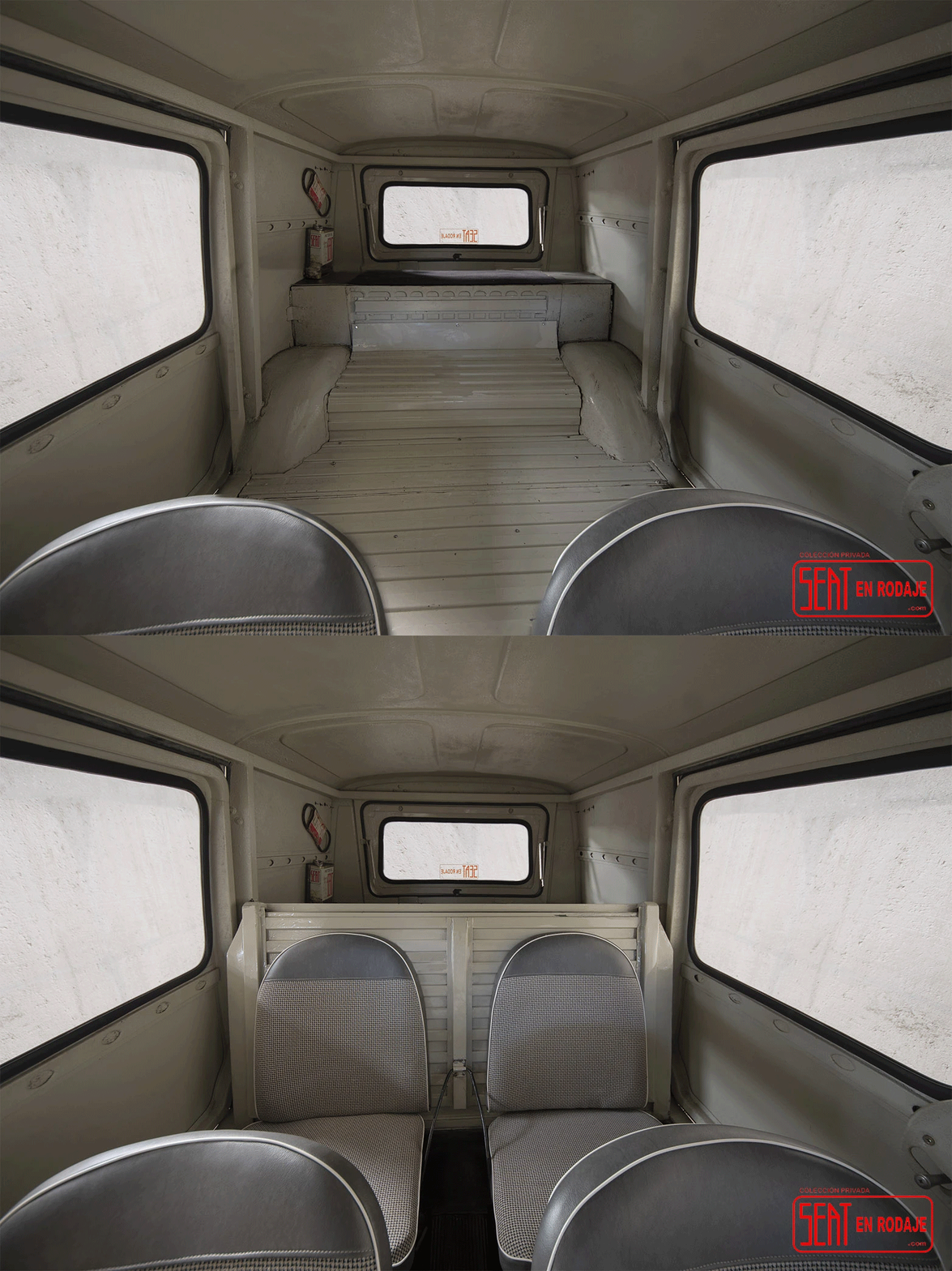
Look at that! That’s a good amount of room for a little vanlet like this!
Of course, as a rear-engined cargo van, there has to be a box over the engine area, much like how the VW Type 2 buses and vans were, making this a van you’d likely load through the sides instead of the rear.
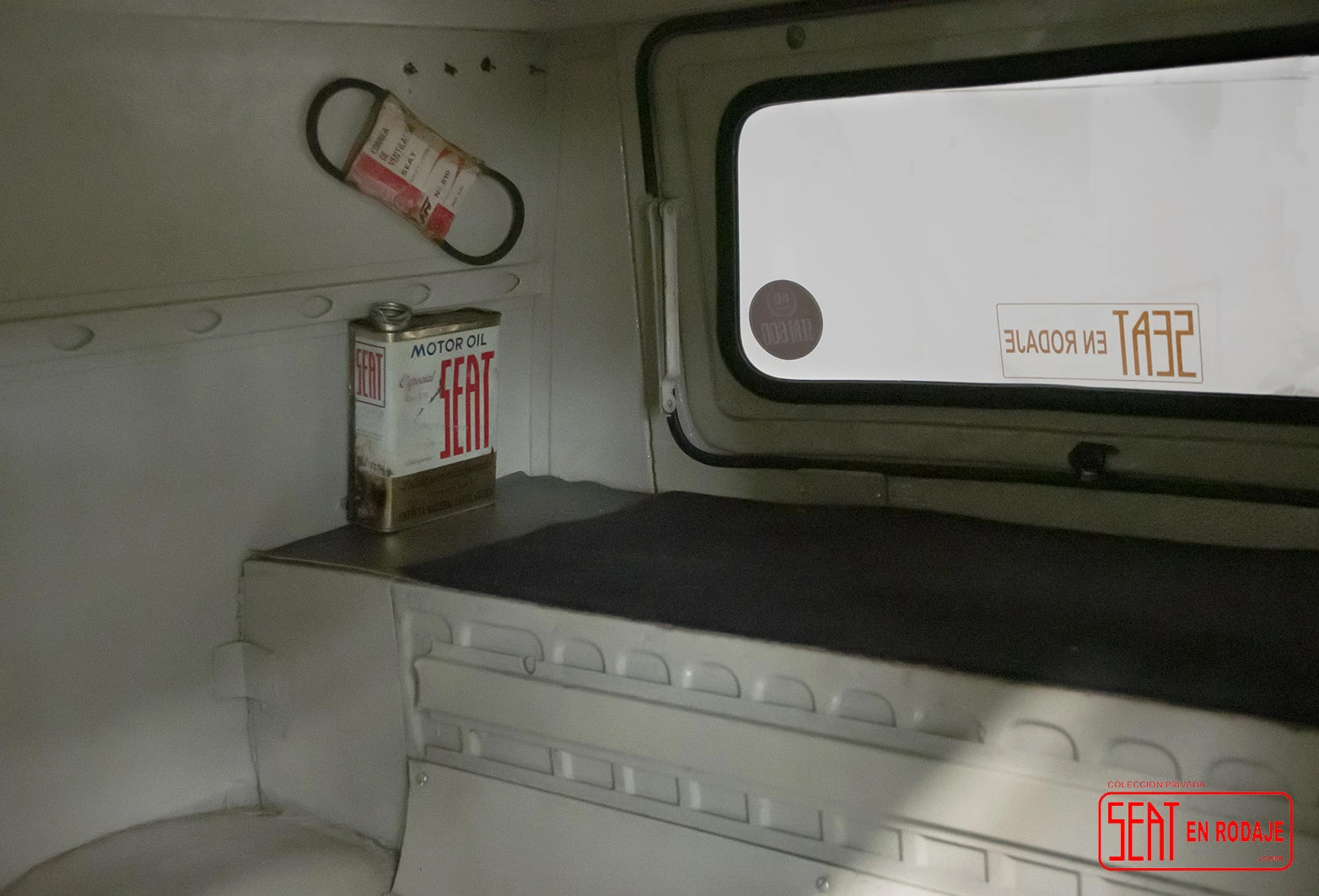
There was still a decent-sized cargo shelf at the rear, though, and there was an opening hatch to get access to this rear storage area, or perhaps to load something really long into the van.
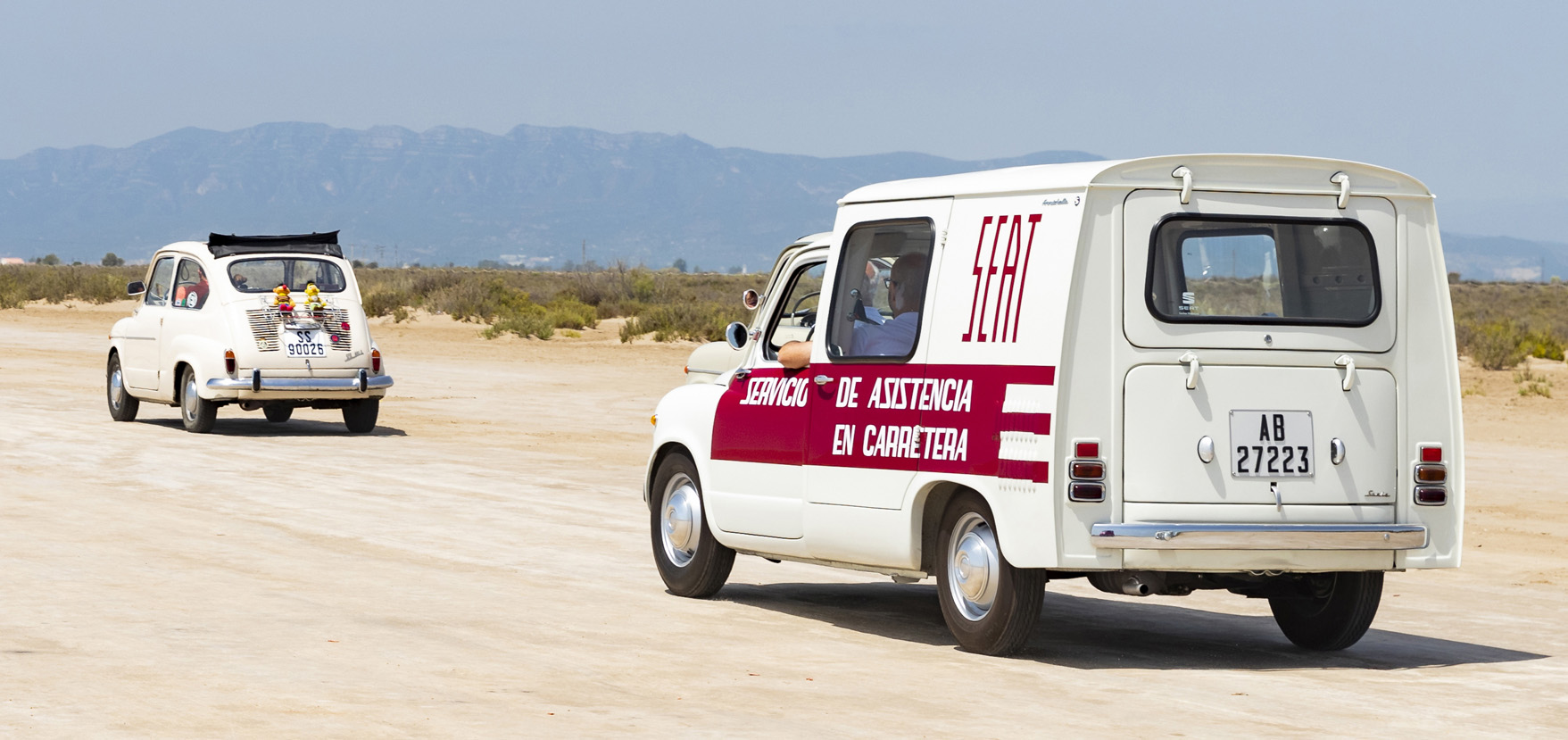
Below the rear cargo door and sporting similar large external hinges was the engine bay door, which gave access to a pretty roomy engine room, housing a 633cc, 18 hp engine until 1963, when a positively ravenous 767cc 25 hp engine replaced it.
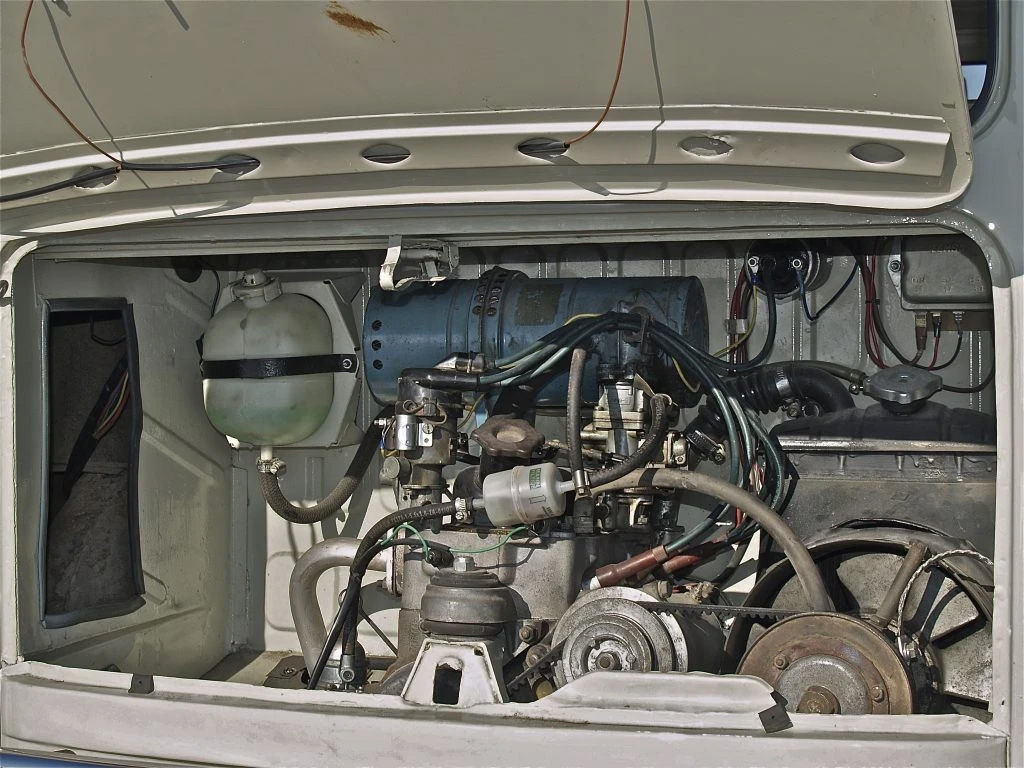
It looks like if SEAT or Siata had re-located the air cleaner and the radiator expansion tank they could have lowered that rear deck floor by a good number of inches, but I guess it wasn’t worth the re-engineering to them. I mean, there was a small but usable trunk up front, too, so maybe they weren’t going to sweat a few inches of cargo height.

These simple, parts-bin taillights are strangely appealing. I really like the chrome surround of the turn indicator with its little brim there.
These are such charming and appealing little vans, with the character of a 600, but a lot more room. Think how cool a daily the four-seat version of this thing would be! It’d be like a fun tiny wagon!




It seems kind of unintionally adorable, in a purely functional way. 🙂
“It looks like if SEAT or Siata had re-located the air cleaner and the radiator expansion tank they could have lowered that rear deck floor by a good number of inches, but I guess it wasn’t worth the re-engineering to them.”
Would this have made it harder to work on the engine by hindering access to the engine?
Other than being down low, it does look like just about the easiest engine in the world to work on. I can imagine sitting on the ground in the driveway replacing the belt and pulling the carb.
This is the ancestor of the Fiat Fiorino, which got a SEAT equivalent. The small van with a back seat was a really popular dual use vehicle in Spain and Italy where the tax laws allowed side windows in vans
Japan seems to have insisted on them.
I didn’t know of a SEAT-branded version of the original Fiorino, I thought they were marketed under the Emelba brand but information online is not very clear. SEAT later made another small hatchback-based panel van of this kind, the Marbella-based Trans/Terra (something Fiat really didn’t bother trying with the Panda, as they were still making the Fiorino, although they did come up with a rather ingenious solution for the Panda Van).
That’s reasonable I just recall something Fiorino shaped all over Spain in the early 80s. I love the Panda Van with the rear door insert. Imagine one of those with 4×4 for servicing ski chalets
We have quite a few Panda 4x4s here in Portugal to which the insert from the van was added later on, often to remedy the effects of getting rear ended, and an original tailgate with the Panda stamping was probably way more expensive than a used insert from a junked van. It’s definitely a popular mod around here and understandably so, because it’s so freaking cool. But they made them from factory too! Most pics I find online are from italian ones, and I don’t think the 4×4 van was sold here in Portugal, only the basic 4×2 made sense in our domestic market.
With the VW Hormiga, that’s two vehicles named for ants. Are there any more out there?
Vespa = wasp
Ape (AH-pay) = bee
These are Piaggio products, of course
Excellent! Forgot about those. Now you mention the Vespa, we can expand the search to all insects
There’s the Reliant Ant, which look like a Piaggio Ape, the Guy Ant and the Scammell Scarab for production vehicles. There was a one vehicle for Full Metal Challenge called the Marabunta, which is the Spanish name for Army Ants
The Relian Ant slaps, thanks for sharing.
My personal favorite small car converted into a van is the Daewoo Lanos panel van that ZAZ made.
Modern 500s are cheap. Fiberglass panels are cheap. Hello, Bishop, are you there?
Wonder if this and the Multipla would have benefited from a flat engine? For the various vans based on the 500, FIAT created a whole new engine, type 120.000 which allowed the awkward shelf to be eliminated, greatly increasing the cargo area.
Imagine sticking a Subaru flat 4 in there. Even a non-turbo 2.0L would be 56 times more powerful than factory
So chassis would fall in the parts.
It’s weird how car-based vans are a whole category of vehicles in Europe and absolutely unknown in the US.
The descendants of these are still the default vehicular choice of tradesmen and small businesses across the continent. Meanwhile in the US the smallest van you can buy has enough space to load a living room’s worth of furniture.
Yes, Cargo minivans have come and gone. The transit connect did not make it. You are correct there should be more of them. I have a friend whose company swapped out his full sized transit van for a ranger with a utility topper/cap. I think our car based country had left room for full sized work vans.
People loved the Transit Connect. I know the earlier ones had some transmission woes (who would have thought using the regular Focus trans in a heavier vehicle meant to haul things would wear it out?) but I think pricing is ultimately what did it in. Probably related to chicken-tax and killing the Focus and a lot of other things, but they were certainly priced like Ford didn’t want to sell them anymore.
Inthe 50s and 60s we had sedan delivery versions of station wagons but they were supplanted by vans. Part of it is,tastes, and part is the lack of tax pressure. In Europe a van is usually taxed at a much lower rate. In the US the only commercial exemption is for large vehicles
Are any of these still in use?
There HAS to be a few still in use. I mean, it seems like it should be a common sense thing to… hold onto your Seat.
Probably not now… But when I was in Madrid for several summers in the 80s, I recall seeing them on the road here and there, alongside similar van-bodied variants of the Citroen 2CV and Renault 4.
At the time, SEAT 600s coexisted on the road with 2CVs, Dyanes, Renault 4s, 5s, early SEAT-branded Pandas, and of course plenty of Ford Fiestas and European Escorts, Taunuses, 70s-80s BMWs of every stripe, and the somewhat esoteric Dodge 3700, which was a Dart variant with a much more Euro-styled dashboard and interior. I really wish I’d just pointed my camera at traffic and snapped away randomly more often, because there were so many interesting cars we now obsess over just going about daily business. Spain in the 80s was a great place to be.
I get a bit of that from watching older European movies now and then, as they are great for car watching.
I saw a lot of cargo trikes in Italy and Greece, also EV’s of about this same footprint.
Possibly the Piaggio Ape, pronounced AH-pay, Italian for “bee”; a worker version of Piaggo’s Vespa (wasp). Geeks of course collect these little beauties.
https://en.wikipedia.org/wiki/Piaggio_Ape
Funny thing. I actually rode in one in Barcelona about 20 years ago. My friend’s son was a DJ and used it to haul his gear around. It didn’t seem all that out of place, there were a lot of small vintage vehicles buzzing around that I didn’t even recognize. I liked that he left the faded graphics of the previous business on the sides; (translated) “Pet Medicine Services”. Patina indeed.