

There’s a strange kind of joy that comes from finding out something you’ve seen many, many times in your life has a specific name, a name you’ve never actually heard spoken, or read, but nevertheless is absolutely what that something is called. It sort of elevates things, once you know they have a proper bit of nomenclature. For example, doesn’t it change your opinion or perception of that slide-y device they use to measure feet at shoe stores once you know it’s actually known as a Brannock Device?
It feels a little more formal now, doesn’t it? Seems a bit more of an event when you get your foot measured by a real Brannock Device, right? And maybe it even sort of justifies how weirdly expensive they seem to be? Well, I just learned about another very familiar object that has a specific name I was not aware of, and I want to share it with you. It’s something you see on trucks.


It’s this:
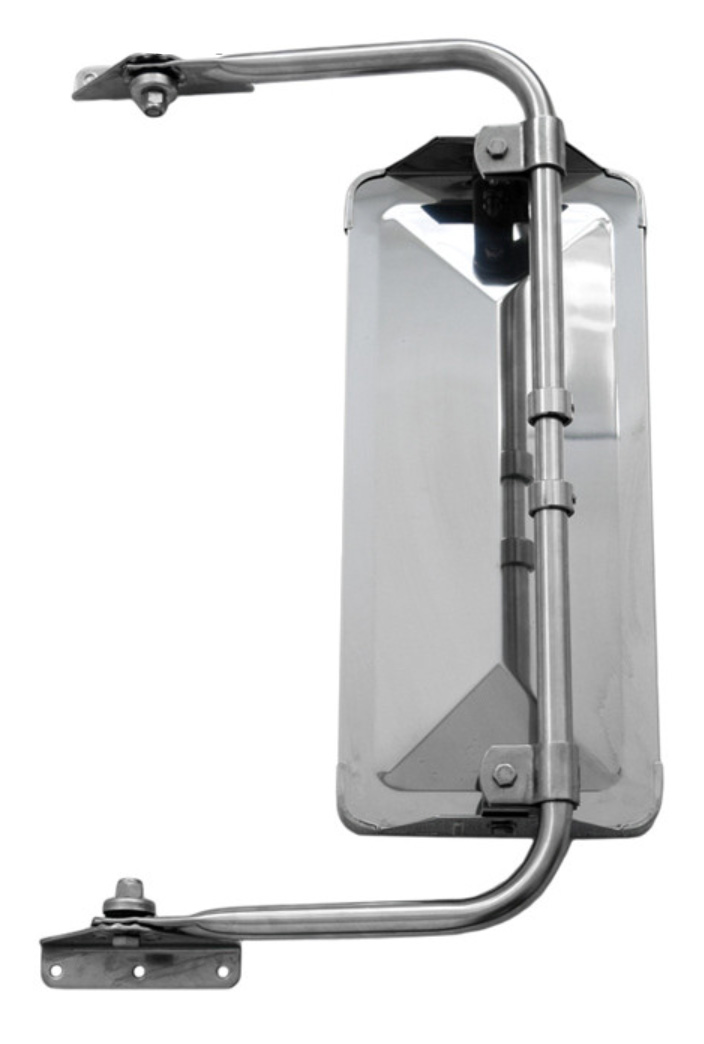
That’s a familiar thing, right? A rearview mirror for a big truck, especially useful if you’re hauling a big trailer. This rearview mirror has a specific name, and it’s a name that’s both fascinating and boring, all at once, specific yet sort of general, and the name goes a long way to explaining its own origin, which makes things easy. Are you ready to know what these kinds of mirrors are called? Well too bad, because I’m going to tell you, anyway! Here goes:
West Coast Mirrors.
Amazing, right? And they’re called that because, as you likely surmised, they originate on the West Coast, specifically the states of Washington, Oregon, California. I was going to be snarky with myself and point out it’s not specific since those are all of the states that make up the West Coast, but then I thought maybe Alaska would count, too.
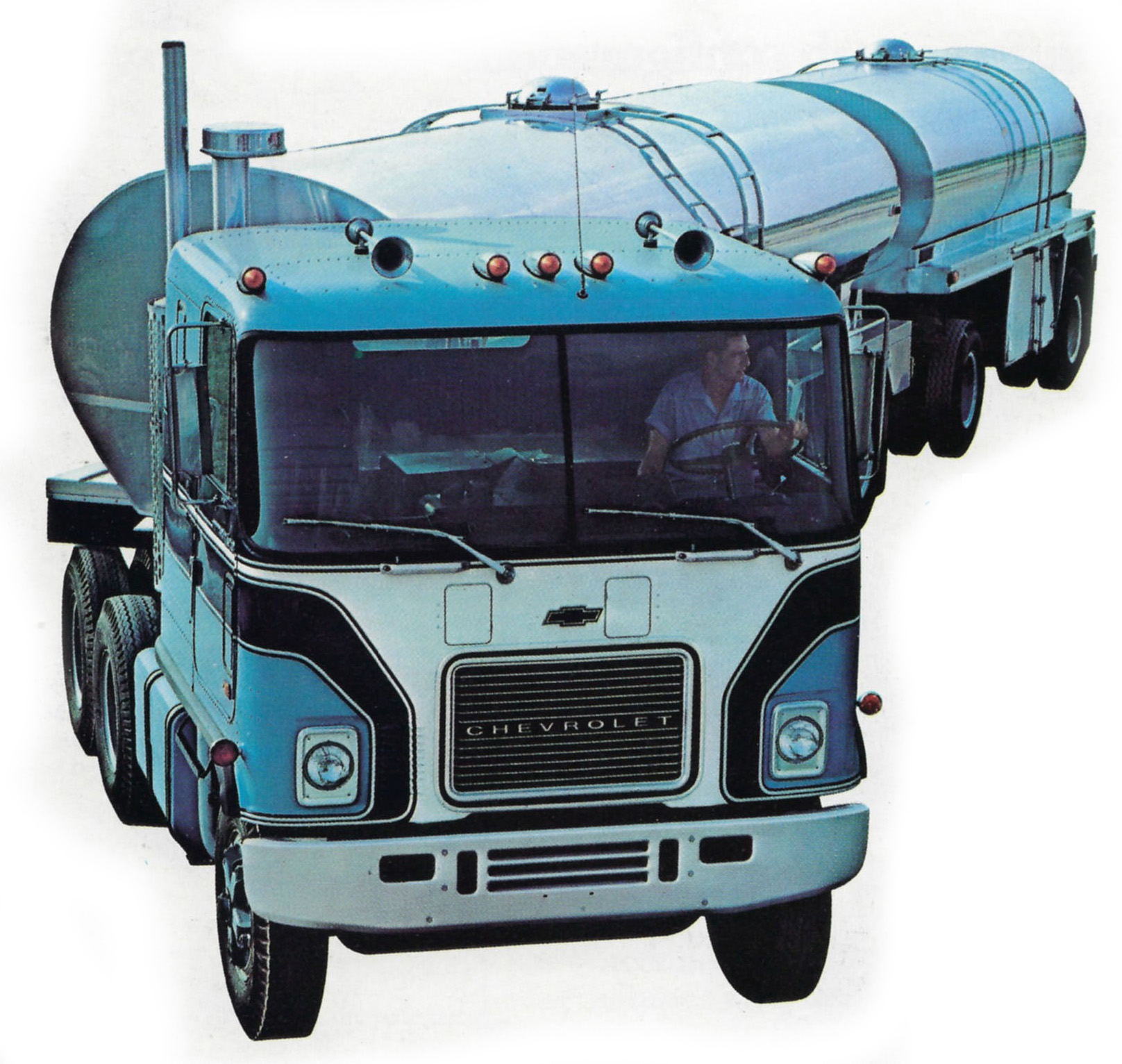
These big mirrors seem to have their origins in West Coast logging trucks, which pulled such huge trailers of logs that larger, rectangular, vertically-oriented mirrors were found to be more effective. They started to catch on more widely in the 1950s and 1960s, replacing the comically small-looking “bicycle mirrors” that were once the norm:
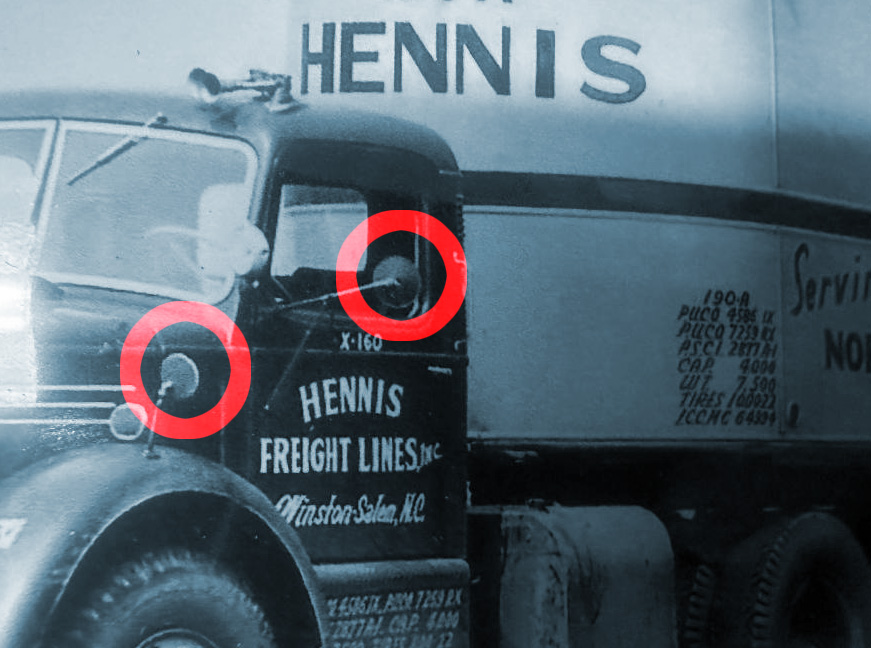
Once truckers started to see how much better rear visibility was with the big West Coast-style mirrors, they never wanted to go back, and West Coast mirrors are pretty damn close to being a standard today.

I was not aware these had that specific name until I saw this blurb in a 1971 Chevy big trucks brochure, and wondered what West Coast mirror referred to. Also, i like how they note a “left door lock.” Oooh, fancy! And mats made of the finest rubber! No mere gutta-percha mats for you! Who were these trucks for, landed gentry?
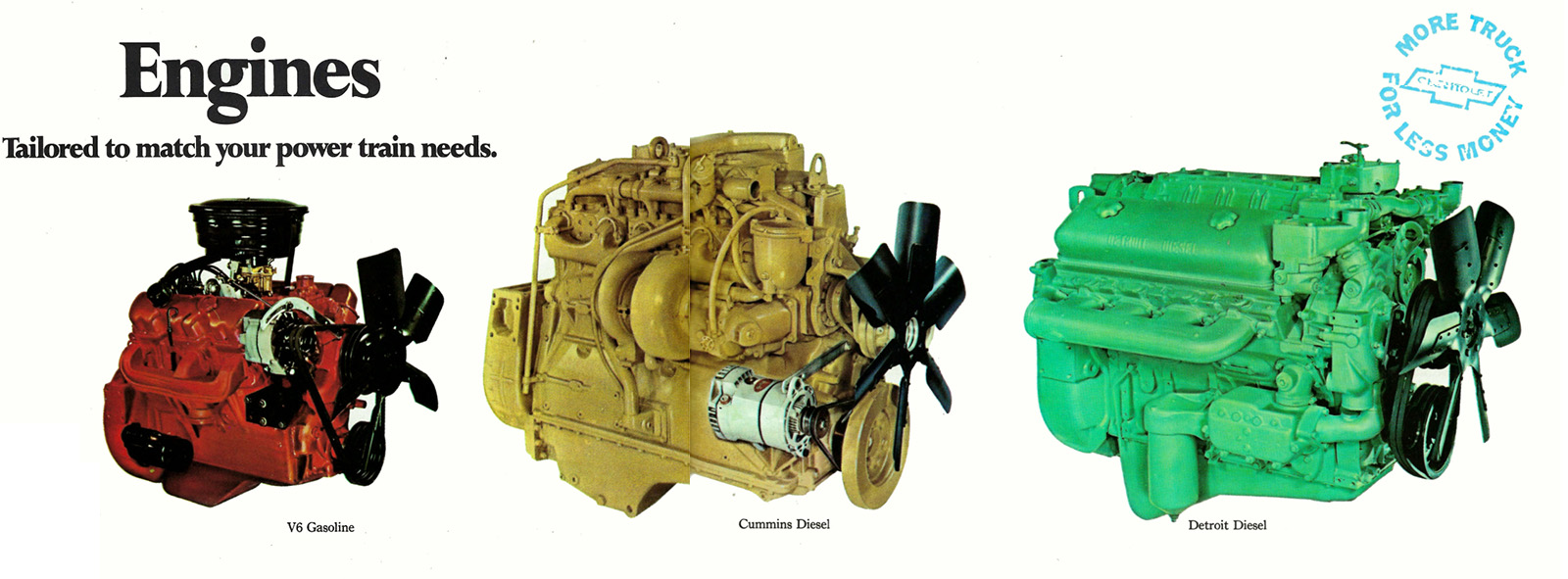 The brochure also showed some engines painted in candy colors, which I love. I wonder if these colors suggest any sorts of standards or tradition, with gas engines having red blocks, Cummins resplendent in saffron yellow, and Detroit Diesel breathtakingly verdant.
Anyway, now you know a great and largely useless fact about truck mirrors! I mean, if you didn’t know before; this ignorance could be quite unique to me.
Oh, and Brannock devices. Be sure to refer to them by name as an essentially guaranteed way to get laid, by the way.


I vacationed in the United Kingdom in 2005 or so. My rental car was a Peugeot 307. The side mirrors weren’t flat, they had a curve at the outer edge to give a wide-angle view. I’ve never seen that on a car before or since. Seems like a great idea.
Saab 9-5s and 9-3s had aspherical side mirrors on the passenger side on US-market cars (due to regulations), but on both sides of the car for the rest of the world.
Aspherical (blindspot) mirrors are the first mod I have done to all 5 of my VW’s. Total game changer in traffic.
Two things:
1) As a former longtime “shoe dog,” I am well acquainted with the Brannock device. But as for “expensive”? They are as close to a “buy it for life” item as it gets. They don’t break, they don’t wear out, and they are virtually impossible to lose. I am sure that I have measured feet with a Brannock as old as I was at the time, or at least, as old as my driver’s license. And yes, before you ask, I did indeed once score four touchdowns for Polk High. And to paraphrase Beetlejuice, it KEEPS GETTIN’ FUNNIER EVERY SINGLE TIME I HEAR IT.
2) Tsk tsk, Torch. After all the flowers you have given the JC Whitney catalog in print, thousands and thousands of words by this point, you never noticed the listings for West Coast mirrors in their storied pages? That’s where I learned what a West Coast mirror was, way back when Reagan was president. For shame! LOL But yeah, I only learned today where the name came from, so only a little bit of shame.
Are there any chapters of “No Ma’am” that are still operating? If so, I may be interested in joining.
I’m considering it. If I can only figure out how to do it and stay married at the same time.
“Oh, and Brannock devices. Be sure to refer to them by name as an essentially guaranteed way to get laid, by the way.”
If Al Bundy is your ideal sure, go for it!
He did score four touchdowns in one game, ya know. That’s pretty hot.
Peggy certainly thought so.
Engine colors specific to brands used to be a thing in cars, too, before the Great Enshittening that was the malaise era, at which point you’d be lucky for the thing to be rattle can black. Chevy orange, Ford blue, Pontiac green… heck, GMC trucks had plaid valve covers for a while!
This tradition still lives in heavy trucks, at least to an extent. The most obvious one being Cummins red – sometimes they’re just referred to as The Red Engine. 😉 Caterpillar engines are yellow (not sold in on-road trucks anymore, but still in off road equipment), Detroit Diesel engines were mostly that green color up until the Series 60 ended (thanks Daimler…). Mack engines were red or gold, then they got bought by Renault and everything got painted this dreadful muddy grey-green color, but now they’re back to being red (darker red than the Cummins).
Engine colors are fun. Bring back engine colors!
Very interesting; I knew a small portion of that from building scale model cars as a kid, and I wondered how widespread it was, and if it was still a thing.
Volvo Red Block is having a good day and looking for a blowjob.
Chrome West Coast mirrors were part of the custom van look in the 70s. Especially if the were adorned with dual CB antennas.
Where do you shop for shoes?
Duh. Canadian Tire. And not just for my brakes.
They were installed on my Corvair Rampside some 40 years ago, not sure if they were dealer installed or not. I kept them when I had it repainted, stainless steel FTW.
My Bricknose F250 had another version I think was dealer installed, with a stainless tube running down to a rivnut in the middle of the door. That setup was so strong that I accidentally hooked a shopping cart with my passenger side mirror when backing out of a parking space, and it bent the shopping cart without sustaining any damage to the mirror frame at all.
Okay, but I’m pretty sure I’ve been seeing them called West Coast mirrors in the various catalogs since at least the 80s.
You gotta look up from your taillights from time to time, Torch. There’s a whole big beautiful world of tiny niches.
I just hope that someday these mirror can make peace with the East Coast Mirrors. Too many mirrors are being lost in drive-bys.
Finally we can move forward and never look back.
In 2009, shortly after the Oshkosh M-ATV was deployed in Iraq & Afghanistan, a terrible problem with it became apparent. Drivers did not have enough outward visibility to keep from driving off cliffs or side-slipping into wadis. An emergency effort was conducted at the US Army Tank Automotive Research, Development, & Engineering Center in Warren, MI to improve the drivers’ ability to see the front tires from the seat. That’s why the M-ATV and JLTV have the wide angle school bus mirrors affixed to the front. Here’s the first prototype with school bus mirrors on it on display at The Pentagon on Nov 2, 2009.
I put a set of West Coast mirrors on my Travelall two years ago (after refurbishing the rusty parts) and it made a world of difference for rearward visibility while driving. Looking through the stock rearview mirror is like trying to look down a rifle scope from 10 feet away, so having two big rectangles on either side is a major improvement.
Your blogs are a fun read, thanks for sharing! That Travelall looks like a fun project!
Thanks man! It’s the only way I can keep track of each of the projects, and helps me stay sane.
my ’71 Ford F100 has the west coast Jr mirrors; one drawback I’ve noticed: my home is Bend OR, which has 30+ roundabouts; as you prepare to enter the circle, the mirror almost perfectly blocks your view of cars coming around from the left.
In the 80’s it was common to see old bigazz 1-ton pickup trucks with west coast mirrors on them. As a little kid, I thought they looked badass. Bonus points if they had the trio of chevrons on the backsides.
I hope this is the first of many deep dives into the history of side mirrors.
Something has awoken deep in Torch’s soul. More mirrors are surely to come.
I can’t wait to learn the names of the mirror bars.
Thank you – SIDE mirrors; Torch called them ‘rearview’ several places..
(set my eye a-twitchin’)
Didn’t he promise us curb feelers next?
All of my devices are Brannock
all your brannock are belong to us
It’s interesting to me that the west coast style of mirror has become basically the standard around the world for heavy vehicles. Usually something that specifically regional doesn’t go much further than the specific continent it’s on, but sometimes something is such a good idea it goes everywhere.
You gave it quite the buildup, but the reveal was a head-slap moment. What I didn’t know was that it originated with actual commercial trucking, although it should have been obvious. I remember West Coast mirrors from ’70s van culture, as they were an obligatory accessory for your rolling airbrushed mural accented with whimsically shaped porthole windows and slathered in shag carpet inside. I was too young to actually be part of that scene, but I lived it vicariously through supermarket magazine racks and scale models and such.
I do, because I live in Syracuse NY where it was invented and is still locally manufactured almost 100 years later.
Ironically, the most useful mirrors on any modern semi are the smaller convex mirrors mounted below the West Coast rectangular mirror.
Once your brain adjusts to the panoramic view of the convex, you end up driving with them pretty much exclusively because they give such an all encompassing view at a glance.
I even back trailers in using them. From my years at the family trucking company, we had to back trailers into the shop, back them in to the parking rows, and back them into the dock for loading/unloading.
I often joke that I have more miles in reverse in a Semi than I do going forward.
I know. Not for semi use, but last F150 had the trailering package which had the dual mirrors. My new one lacks the trailer package so only has the standard single glass mirrors. Man do I miss those things.
Convex is love, convex is life.
My Ram has the towing package with dual mirrors and you can flip them from horizontal to vertical. Some call them moose antlers when you flip them to vertical, and it annoys the hell out of some people when you have them flipped up, even though the truck is only like 1″ wider when you do so (and I’ll note Chevy and Ford mirrors are always vertical.) However, I like having mine horizontal even when towing, I can aim one set side to see traffic better, and one side right on the rear of the trailer so backing it easier. When you have them vertical both mirrors are harder to see things behind you.
Hear hear! The big mirror is for long distance, spot mirror for everything.
“I often joke that I have more miles in reverse in a Semi than I do going forward.”
I love a good euphemism.
Are we not doing phrasing any more?
Can we talk about that masterful illustration?
Whoever the artist for that was had a command of light as good, or better, than Vermeer.
Those engine options seem woefully unbalanced. Imagine being stuck with a 1971 gasoline v6.
These were some BIG honkin v6’s. Up to 478 cubic inches with 371 lb-ft of torque. I’ve seen them in a lot of firetrucks from the era. They also put 2 of the 351 CI sixes together to make a V12!
TIL, thanks!
That GMC engine line was BONKERS.
The V6 was 305 cubic inches
They have an awesome sound, too. A couple of rural Fire Houses around me have old units with the big cube V6s they haul out for parades and such.
Re: engine color – The yellow was one Cummins color (they also did beige) until Cat highway diesels became popular. I’m not sure when Cummins changed to bright red, but that is the color they are now. That amazing teal color is Detroit Diesel’s signature color. Gas engines tended to match the standard factory color for the manufacturer (GM orange or blue, ford blue, etc. etc. )
An all last century Pete painted all engines white
True. Mack was always black as well, at least for their own engines.
Had to Google “Brannock Device”
This explains the wheelbarrow of shrimp incident….
Having a new word enter my brain feels like apricity
what a fantastic word! Thank you for that.
It’s something I’ve particularly enjoyed my entire life, but I only learnt it this week in a conversation about weird words.
My contributions were defenestrate and oubliette.
I try to use shenanigans as much as possible.
I swear to god I’ll pistol whip the next guy who says “shenanigans”!
Hey Farva! What’s that restaurant you like? The one with all the goofy shit on the walls?
And the mozzarella sticks?
Don’t take this the wrong way, but it actually amazes me you’ve been an automobile enthusiast as long as you have and you’ve never heard this term before! Like, were you avoiding it on purpose? 🙂
I tease you Torch because I love ya.
You’d be amazed at things I’m capable of missing
I kind of felt the same way, but I realized that I’ve been around trucks — from pickups on up in size — for a long time, so of course I’d know the term (and its history) since I’ve seen so many catalogs and brochures. It’s like so many other types of institutional knowledge that comes along for the ride with various careers and pursuits — just part of the knowledgebase and terminology. You don’t realize it’s unique to a particular field if you’re in it.
Love this! And try to control your libido Torch, but I actually own a Brannock Device. We’re in the sweet life in the 79 Burb house.
(spit take)