

There’s a strange kind of joy that comes from finding out something you’ve seen many, many times in your life has a specific name, a name you’ve never actually heard spoken, or read, but nevertheless is absolutely what that something is called. It sort of elevates things, once you know they have a proper bit of nomenclature. For example, doesn’t it change your opinion or perception of that slide-y device they use to measure feet at shoe stores once you know it’s actually known as a Brannock Device?
It feels a little more formal now, doesn’t it? Seems a bit more of an event when you get your foot measured by a real Brannock Device, right? And maybe it even sort of justifies how weirdly expensive they seem to be? Well, I just learned about another very familiar object that has a specific name I was not aware of, and I want to share it with you. It’s something you see on trucks.


It’s this:
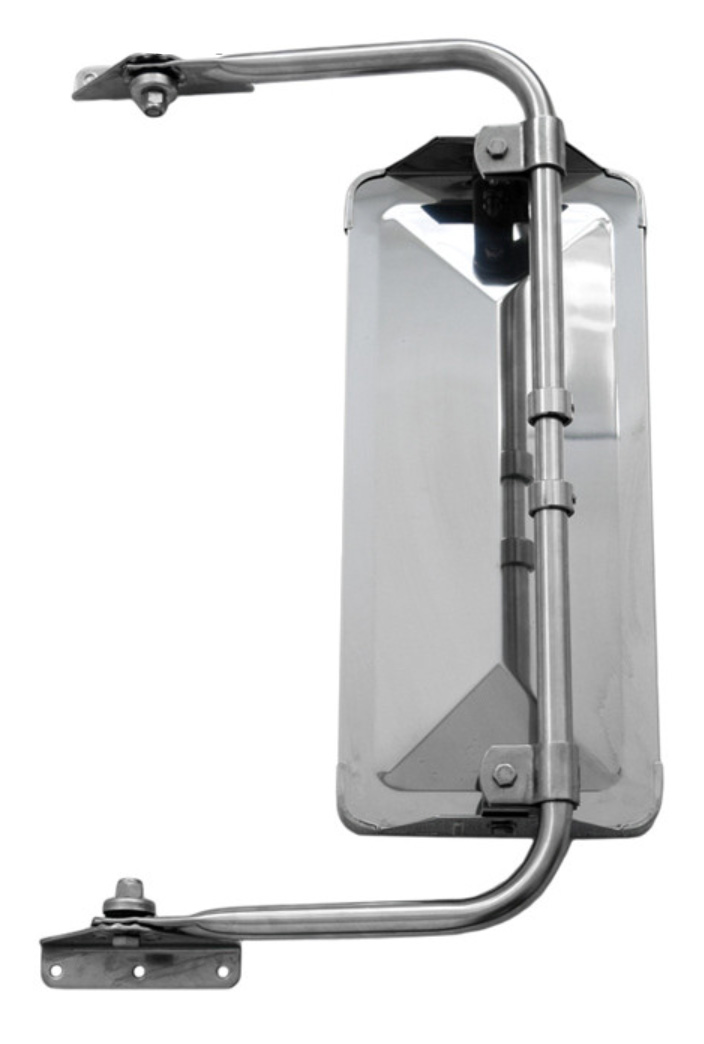
That’s a familiar thing, right? A rearview mirror for a big truck, especially useful if you’re hauling a big trailer. This rearview mirror has a specific name, and it’s a name that’s both fascinating and boring, all at once, specific yet sort of general, and the name goes a long way to explaining its own origin, which makes things easy. Are you ready to know what these kinds of mirrors are called? Well too bad, because I’m going to tell you, anyway! Here goes:
West Coast Mirrors.
Amazing, right? And they’re called that because, as you likely surmised, they originate on the West Coast, specifically the states of Washington, Oregon, California. I was going to be snarky with myself and point out it’s not specific since those are all of the states that make up the West Coast, but then I thought maybe Alaska would count, too.
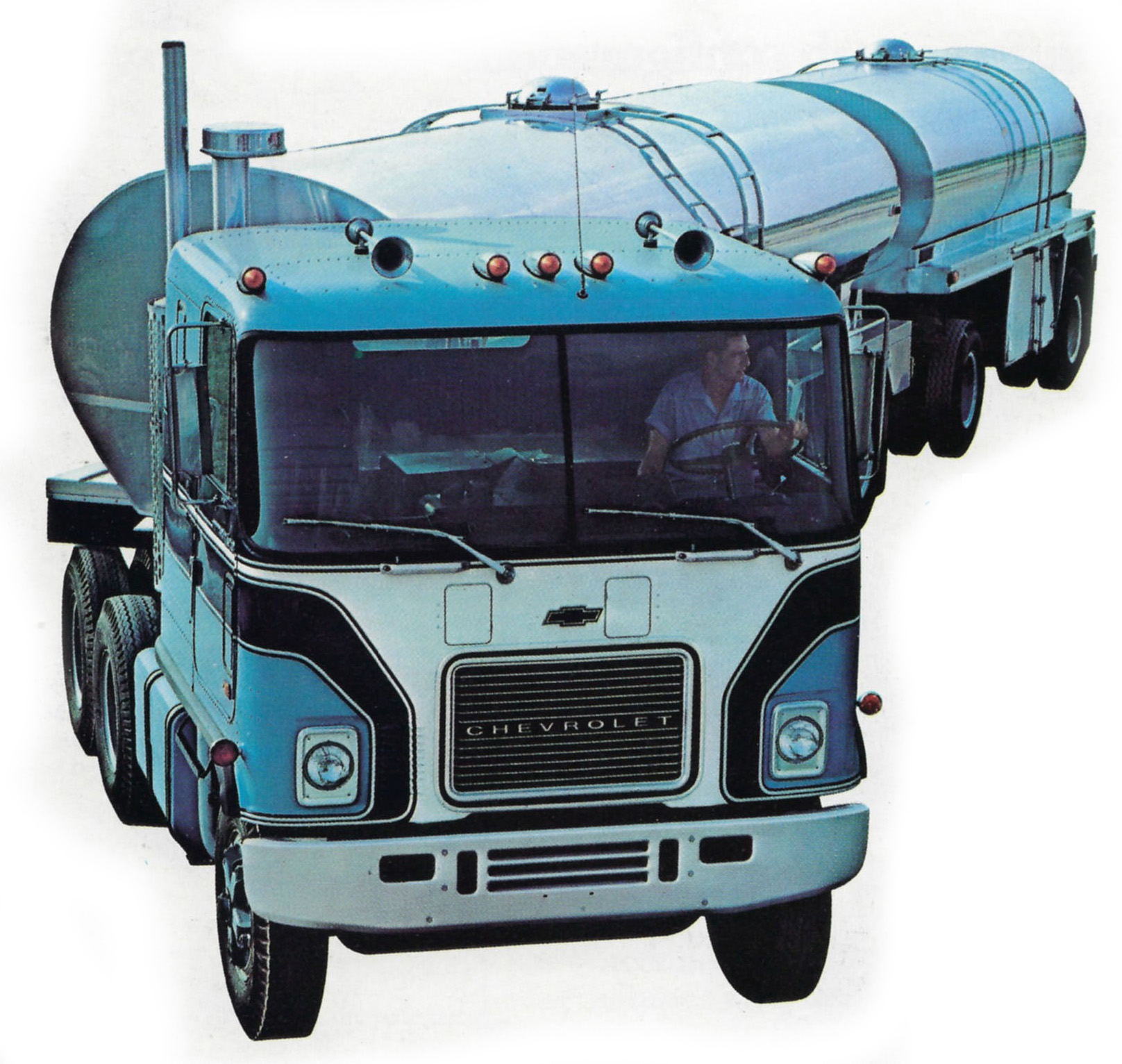
These big mirrors seem to have their origins in West Coast logging trucks, which pulled such huge trailers of logs that larger, rectangular, vertically-oriented mirrors were found to be more effective. They started to catch on more widely in the 1950s and 1960s, replacing the comically small-looking “bicycle mirrors” that were once the norm:
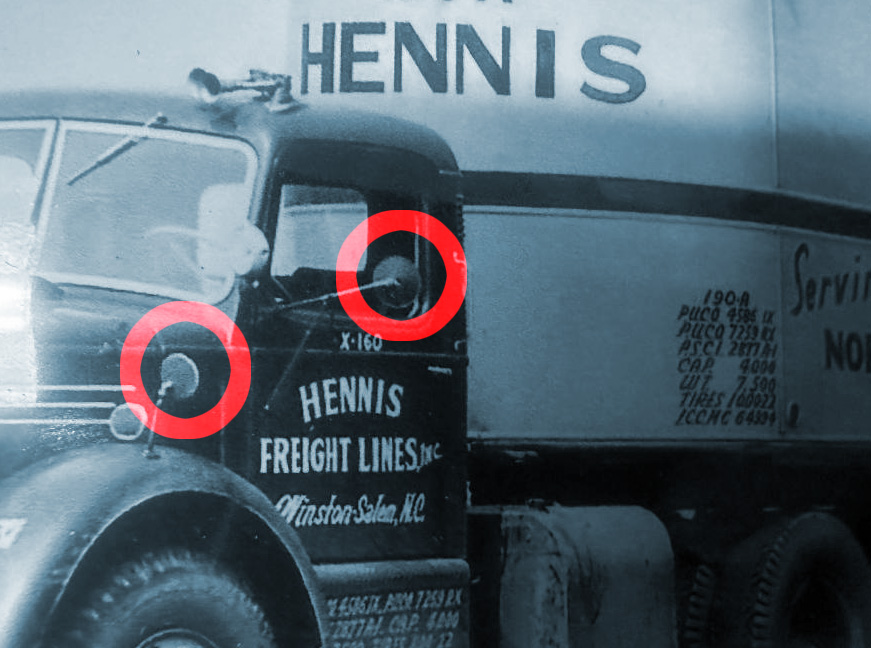
Once truckers started to see how much better rear visibility was with the big West Coast-style mirrors, they never wanted to go back, and West Coast mirrors are pretty damn close to being a standard today.
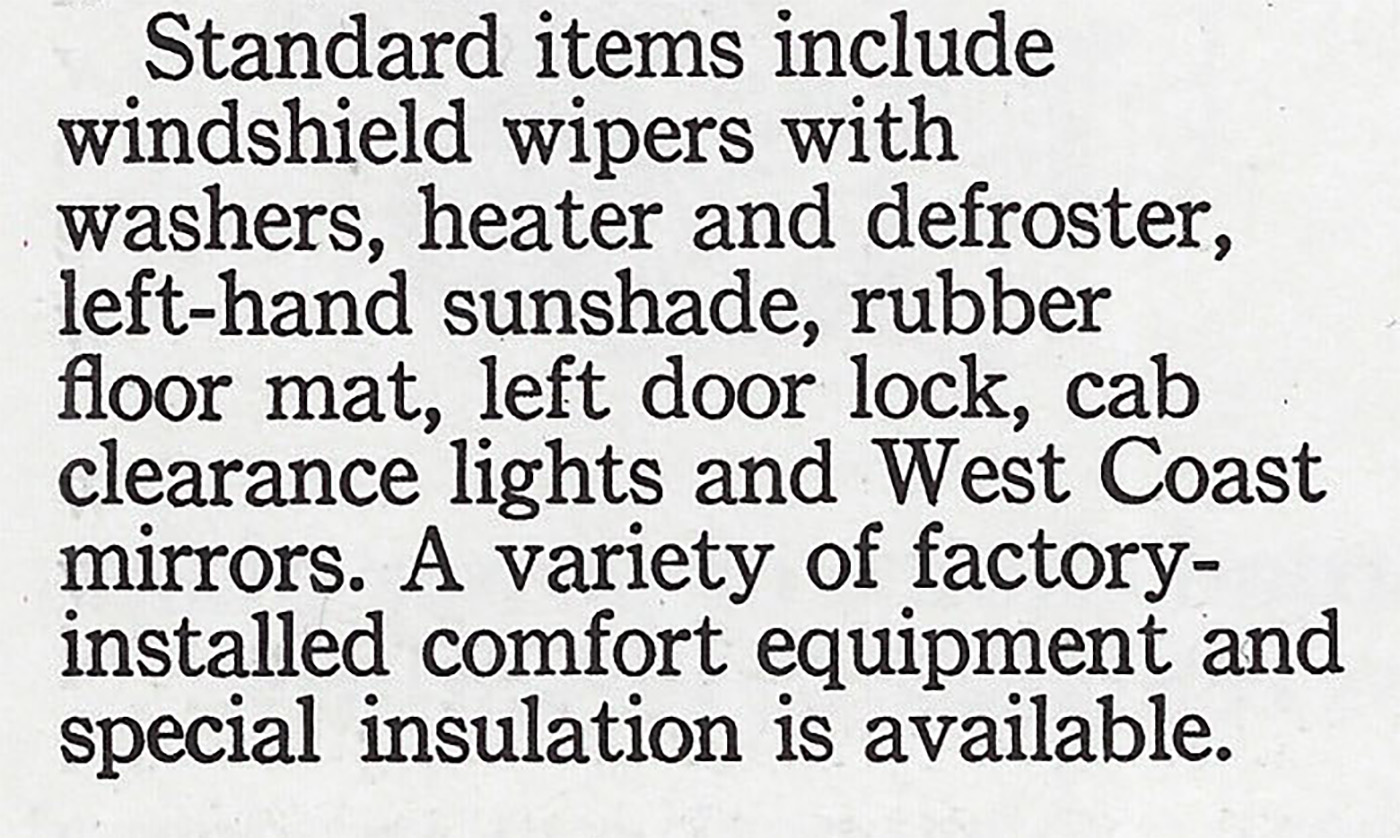
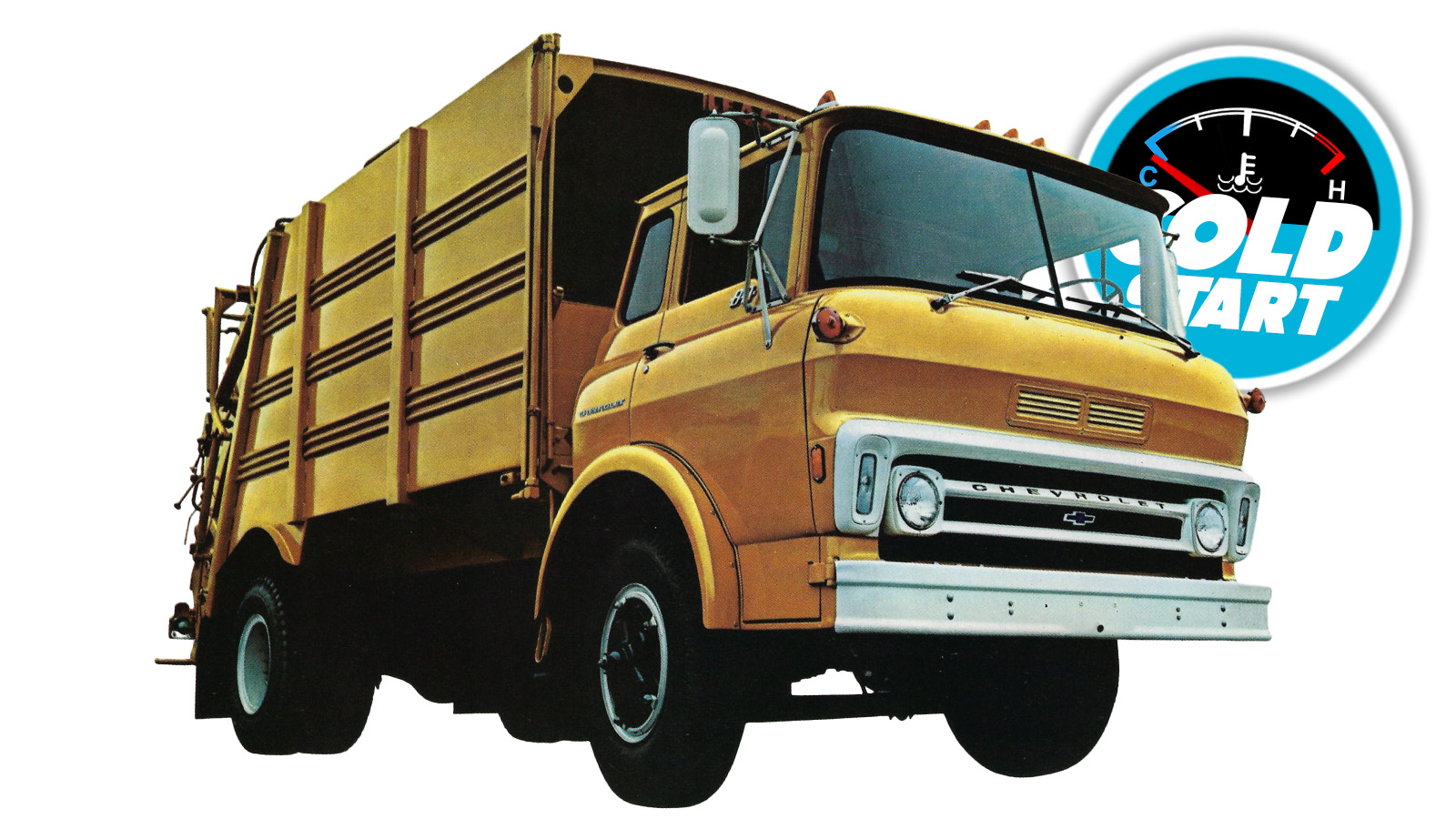
I was not aware these had that specific name until I saw this blurb in a 1971 Chevy big trucks brochure, and wondered what West Coast mirror referred to. Also, i like how they note a “left door lock.” Oooh, fancy! And mats made of the finest rubber! No mere gutta-percha mats for you! Who were these trucks for, landed gentry?
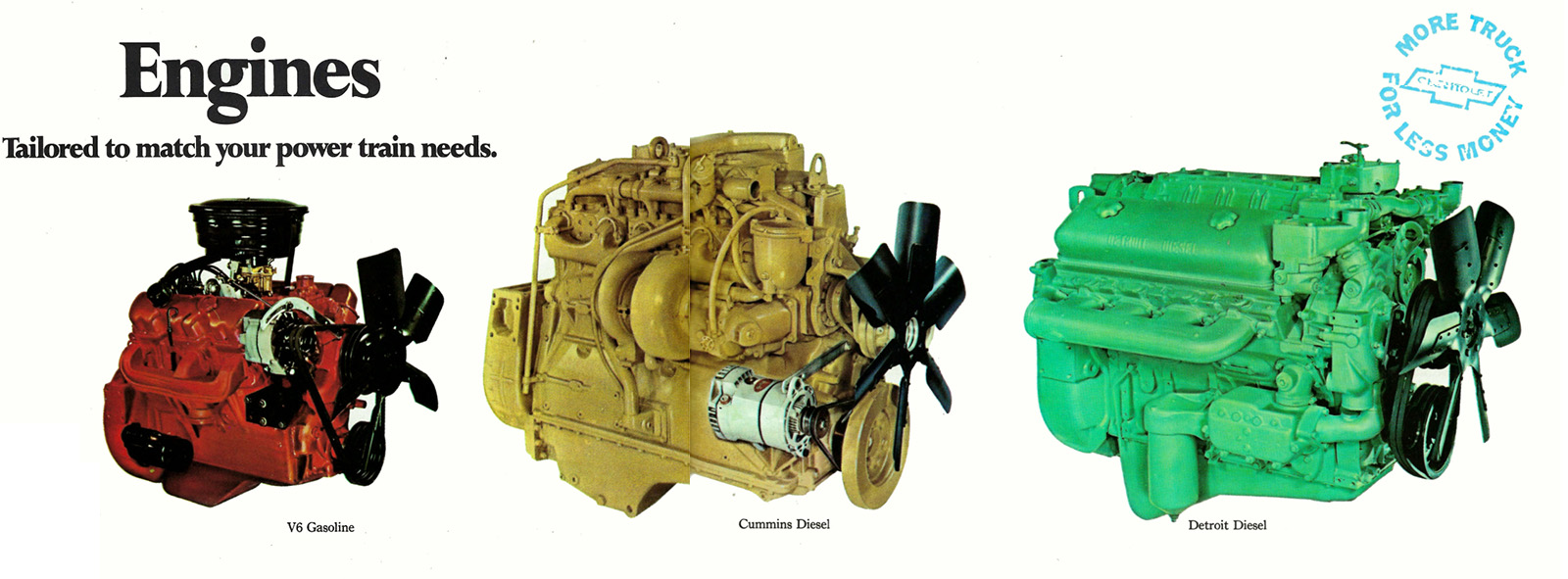 The brochure also showed some engines painted in candy colors, which I love. I wonder if these colors suggest any sorts of standards or tradition, with gas engines having red blocks, Cummins resplendent in saffron yellow, and Detroit Diesel breathtakingly verdant.
Anyway, now you know a great and largely useless fact about truck mirrors! I mean, if you didn’t know before; this ignorance could be quite unique to me.
Oh, and Brannock devices. Be sure to refer to them by name as an essentially guaranteed way to get laid, by the way.


I remember the Brady Bunch snapped a temporary pair on their Mustard Satellite Suburban when they took a trailer out to the Grand Canyon.
Are we just going to ignore the West Coast location of Hawaii?
It’s surprising Torch didn’t know. I learned the term West Coast mirror from 70s Chevy truck catalogs, and of course JC Whitney. Oddly the one ton pickups and vans I drove circa 1990 all had the square below eyeline style rather than West Coast style. That works fine on light trucks. My F150 has car style power mirrors and a set of slip on tow mirrors for bigger trailers. My son has Dodge flip out tow mirrors on his GMT400 Suburban and they look surprisingly good
FWIW I have a base-model Daihatsu HiJet that came with only one door lock cylinder (on the driver’s door) and only 1 sunshade. I never thought of a passenger door lock as a luxury item previously, but after living with a door lock only on the drivers’ side for a few years… now I know better.
That 1971 Chevy sounds super posh.
May your HiJet will run forever! There’s something to be said about simple vehicles with fewer things to break.
Until someone tries to force your door lock and breaks the key cylinder. I speak from experience, but “luckily” in our case, it was the front passenger door lock on a car with two whole locks. Our current minivan, perfectly well-equipped otherwise, only has a key cylinder on the driver’s side, so life is one long worry.
Some scrote did this to my Polo, but fortunately it has a remote blipper thing, and also a keyhole on the boot/trunk hatch. So if the blipper had stopped working, I could have crawled in through the back.
I ended up buying a replacement lock cylinder and key, and then swapping the shims around with the old lock until I had one that (mostly) worked with my original keys.
!! I wouldn’t even have thought that was possible, let alone attempted it.
Project Cactus is a Dodge Ute, which is the base model and sits below Valiant in the hierarchy at the time. It too only has a sunvisor for the driver, with no mounting tab provided to fit one for the passenger!
I always thought they were called west coast because they were so effective that no matter where you are you could see the west coast in them.
The Brannock name was just made up so shoe salesmen could use it to sound sophisticated. Especially when talking to moms that brought their bratty kids in for a pair or when they had to compete with orthodontists for status at cocktail parties.
That’s what I thought too, my dad had told me something to that effect in the mid-90s when we bought a set of doors off a square body Chevy that had them. I filled the holes with bondo, haha.
Hopefully you know about the Mansfield Bar… Sheesh! /s
the cummins in Caterpillar yellow. So odd.
That was my thought exactly! And it’s not like it’s a *similar* yellow, it’s looks to be spot on Cat yellow. A mistake in the brochure? Cummins at the time would have used blue to my knowledge.
Aglet.
Just enough shoe content to be relevant.
Man, even used Brannock Devices on eBay are kind of pricey. You’d think they’d be cheap, that there’d be a near-infinite number floating around from all the closed shoe stores over the decades.
I thought they were just easy to adjust by Johnny 5 before he drove off in a box truck
No disassemble!
Rented a big van for a move, and it had no rear windows and dinky outside mirrors, which meant I needed spotters to help me back out of the driveway. Late into the move I noticed it had a backup camera that displayed on the otherwise-useless interior rearview mirror. Sounds great, but the display was dim and about 1″ x 1.25″ and thus also useless. No accidents, though.
For some reason I knew this. Probably because I grew up on the West Coast. If I recall correctly, my Dad installed a set of West Coast Jr’s on his ’61 Scout. Which trimmed about 5 mph off the top speed, even with the Warn overdrive engaged.
As an aside, the Chevy tilt cab didn’t have a name; it and its’ GMC counterpart were just called the 72″ Steel Tilt, after the bumper to back-of-cab dimension and to disambiguate from the heavy OTR “Crackerbox” and Astro 95 which were aluminum cabs.
It didn’t run quite as long as its’ Ford competitor, having been launched in 1961 and run to the early ’80s (newest brochure I’ve seen is in the ’82 GMC fonts and format) before being replaced by the Isuzu-based models.
And the Chevy version got two whole facelifts! Early ones had four headlights, the topshot is the midyear version and the late one had the same front piece the GMC had all along, with different paint highlights along with the badging changed. And even that had one subtle update, the bowtie changed from blue to yellow/gold for ’73 along with the other Chevy trucks’.
I suspect they meant specifically an exterior keyed lock. It was fairly common practice to have an exterior lock only on the right side (a.k.a. curb side) door with the expectation that the driver was supposed to lock the left door from the inside (typically by simply lifting the latch handle), then slide across the bench seat and exit on the side away from traffic on those occasions when it was necessary to lock the cab.
My former ’37 Plymouth sedan was set up this way, too. The exterior lock is visible below the front door handle on the right side but there never was one on the left side. Both rear doors only had interior locks, too:
https://live.staticflickr.com/7011/6830618645_9c37181365_c.jpg
my first gen ’04 chevy colorado crew cab only has an external keyed lock on the drivers door. all other doors have to be unlocked by remote or from inside. how dumb.
Yes, this has become common since keyless entry became std. I miss the old Ford keypad at times.
All our cars had locks on both sides as a kid, but when I took driver’s ed class in 76-77 we were taught that the law was that when parked at a curb it was illegal to exit through the driver’s door, that you had to slide across. At that point bucket seats weren’t the majority yet, but they were gaining. Ginormous dividing consoles weren’t really happening yet, so you could still get across if you had buckets.
Experience tells me that the current law must be that when parked at the curb, you are required to swing out the driver’s door and exit without a single glance first.
I remember what a revelation it was when I finally had my feet measured by a Brannock device, and bought shoes that fit perfectly. I have wide feet, but “wide” really isn’t a size, and cheap shoes didn’t offer wide sizes when I was growing up. So my parents would just buy the next size up in normal-width shoes, and tell me that they had to be broken in. But as an adult, I discovered that shoes aren’t supposed to hurt for the first week you own them, and my feet have been much happier ever since. Thank you, (presumably) Dr. Brannock!
Not a medical doctor. He was proprietor of the Park-Brannock Shoe Store.
That’s interesting; as far as I’m concerned, he’s an honorary doctor, like Mr. Demento and Mr. Pepper.
Don’t forget Dr. Seuss as well. And Col. Sanders.
Colonel Sanders was an actual Kentucky Colonel. Not military and mostly an honorary bestowed on you from the governor, but still an actual legit title.
I had the opposite situation with slightly narrow feet but my parents sprang for the Stride Rite or Thom McCan atore where they actually measured you. So I got C width dress shoes, and Sears knockoff Converse sneakers. My mother has super narrow feet so I got off lightly.
As a Washingtonian – land of Kenworths and logging trucks – I may have known this since birth.
I am surprised that you didn’t know this. Or that this is not as widely known, I suppose. I have been writing specs for and buying trucks for years, so I’ve known it for ages.
I knew this from years of poring over JC Whitney catalogs as a kid.
These came stock on my ’88 Ranger. It was definitely a little truck with big truck attitude. I was never able to overload it, or get it to go faster than 60 mph.
Fun factoid: West Coast mirrors were for the OTR trucking segment. West Coast Jr. Mirrors were popularized for vans and pickup trucks.