


I’ve been working on cars pretty much daily for 15 years, and yet it never ceases to amaze me how foolish I can be with a wrench. On this WWII Jeep partner-project with eBay (a project that involves me building an entire WWII Jeep from scratch by April), stakes are higher than ever, and there is simply no room for error. And yet, I just made two huge ones.
Building a WWII Jeep from scratch is proving to be a thousand times harder than fixing up an already-existing Jeep (unless I were doing extensive bodywork with a welder and English Wheel, in which case, that would be harder). That may sound counterintuitive, since I’m dealing with brand new parts instead of rusty, crusty old ones that I’d have to remove, clean, and reinstall. But whereas with a restoration I’d be starting with a vehicle I know already functioned at some point — and that therefore had all the correct parts present — building a new car requires me to figure out which parts I need. Every tiny bolt, spring, seal, cotter pin, bushing — I have to know every single component in a WWII Jeep, and this has proven to be a challenge.


I often find myself trying to finish up a certain project, only to realize I’m missing a little part. And while eBay has many of the parts I need (and is often the only place to buy some of these parts), in terms of getting a project completed in an expedient fashion, waiting on shipping can be tough. The key, then, is to make sure I know the WWII Jeep inside and out — I have to know every component needed to make this Jeep function, as well as all of the dependencies, and I have to make sure I have it all here, ready to go. On time.
A good example is my steering system. I have pretty much everything I need: I snagged a new steering shaft from eBay, I got a beautiful New Old Stock steering tube, I ordered a nice old steering box, I have a brand new sector shaft — this thing is ready to be rebuilt: 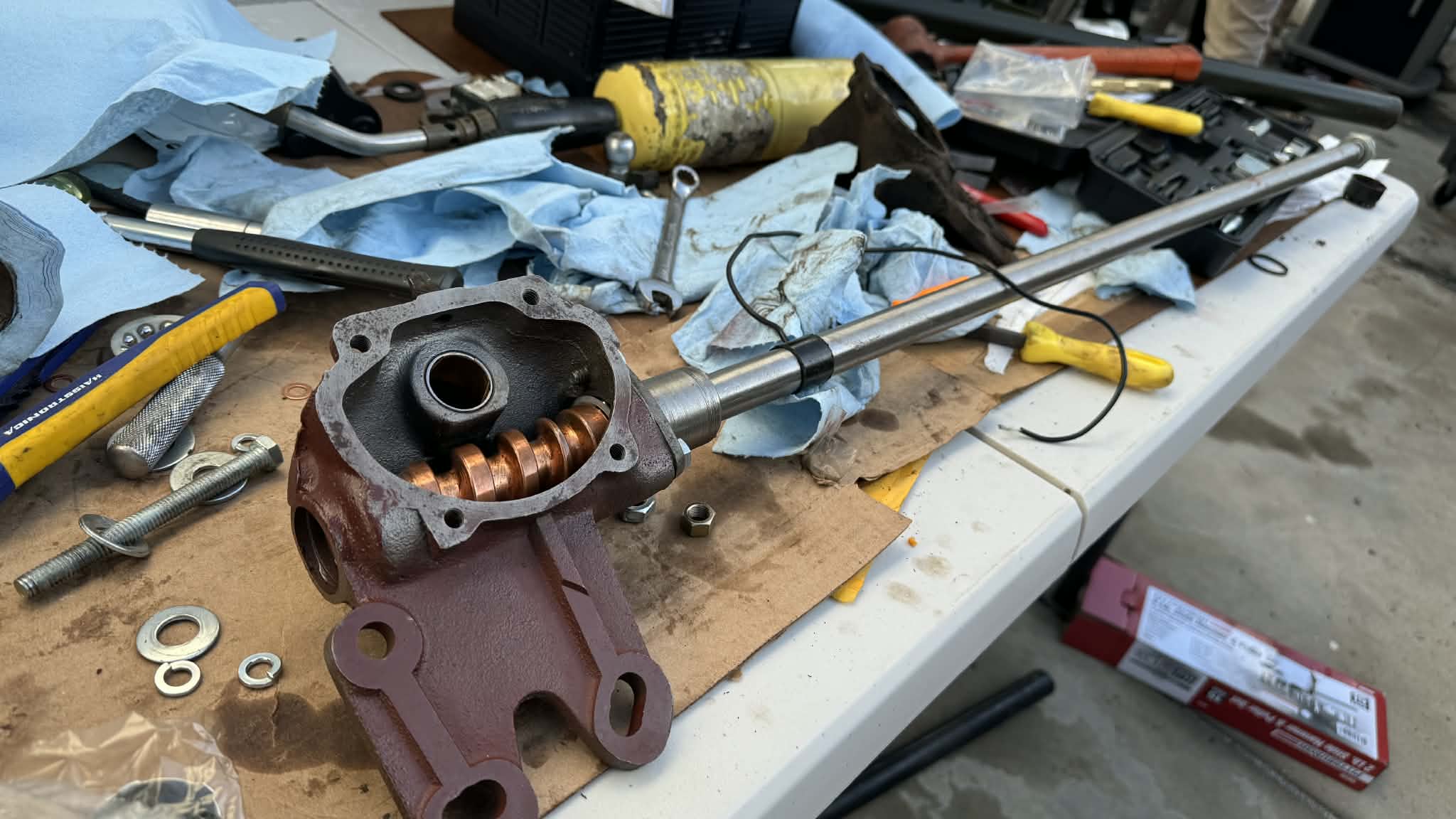
Except I forgot about that horn ring. That’s this little brass bushing that has to be pressed onto the steering shaft so that, when I push the horn button in the middle of the steering wheel, it grounds out a brush that rides along the bushing, thus activating the horn.

Here you can see the full installation process, courtesy of YouTuber Lets Build A Willys Jeep — a channel that has helped me quite a bit so far on this build:
Anyway, it’s a small omission, but one that will cost me two extra days, when I’d really like to install that steering system today.
This is just one example of the challenges I’m facing, but the two that have had a major effect on my morale are the self-inflicted mistakes.
I Cracked A Piston

In an effort to build a brand new WWII Jeep instead of restoring an old one, I purchased a brand new engine; that includes the block, crankshaft, connecting rods, and of course, pistons. This motor is absolutely beautiful, and it’s been coming together nicely.
With my friend Brandon having helped me get the crankshaft into the block, and with the pistons connected to the connecting rods via wristpins, I carefully installed the piston rings onto each piston, and then — after checking rod bearing clearance and piston ring end-gap (see below) and crankshaft end-play (I’ll get into that and more tech in a future article; this story is primarily about my boneheadedness ) — my friend Laurence and I set about dropping those pistons into each bore.


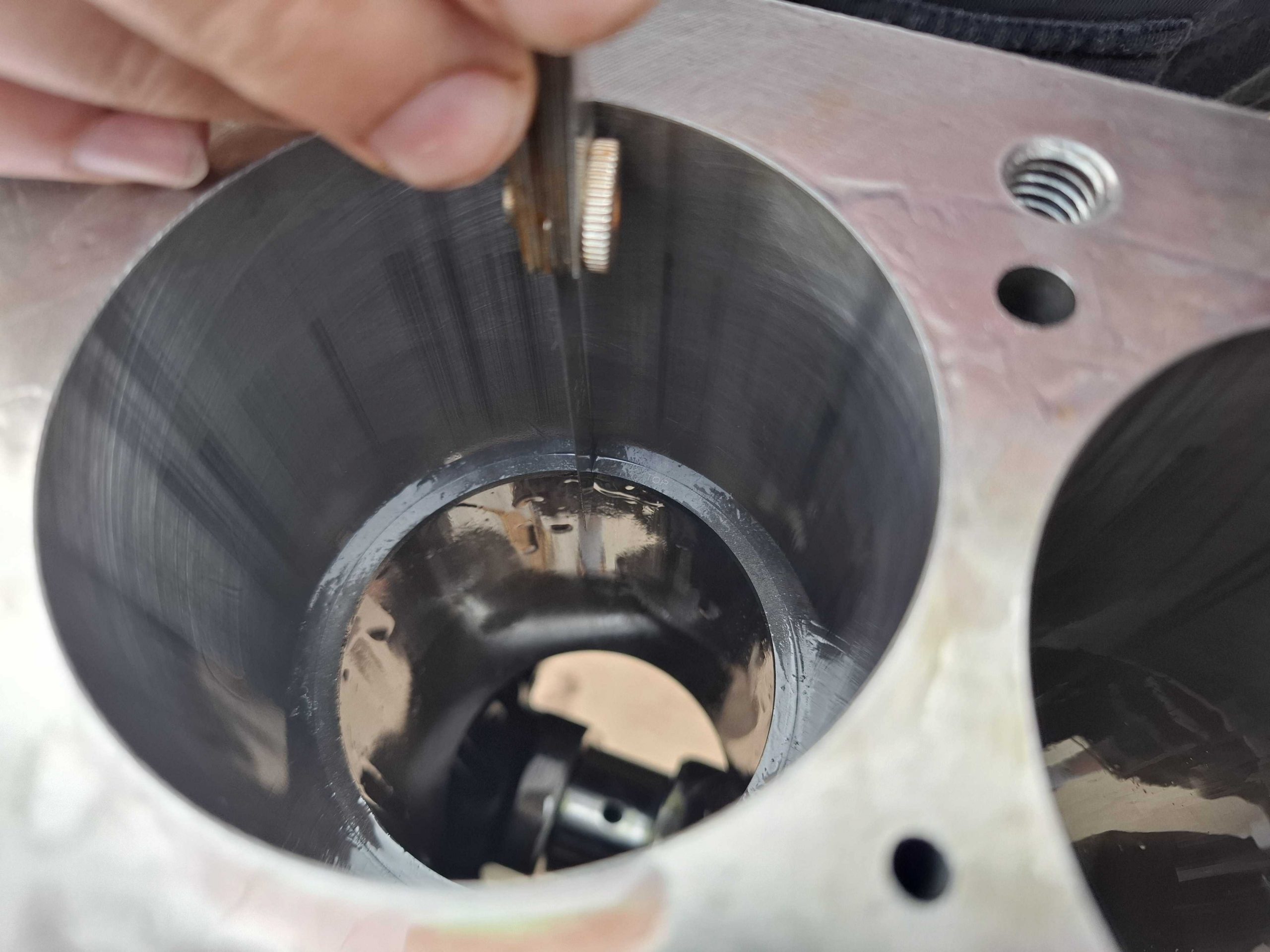
One by one, I compressed each piston’s rings, and then tapped the top of the piston until it slid into the well-oiled engine. Laurence stood watch down below, keeping the connecting rod end cap bolts (which we’d taped for good measure) from damaging the bore or the crankshaft.

I popped in piston one, tightened its rod cap. Then piston 2. Then 3.

All the while, I kept the pistons well lubricated so those rings wouldn’t get caught on the cylinder bores:


And then it was time to drop in Piston 4. Before compressing its rings, I went to clock all of them in the right orientation so that the ring gaps didn’t align (this prevents blowby); that’s when my heart skipped a beat.

Oh no.
It can’t be.
I looked closer.
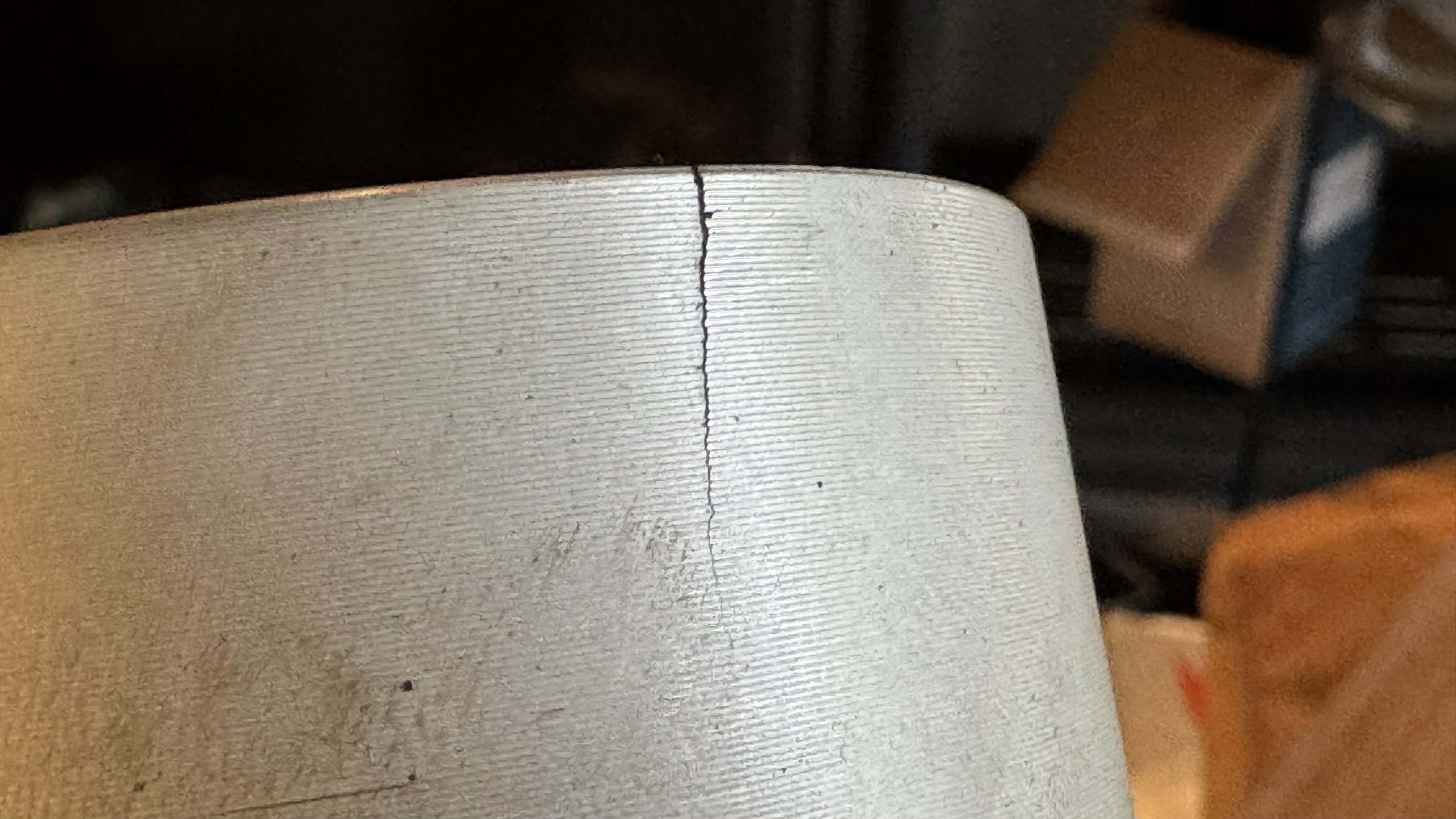
It was. How?! How did this piston get a crack in its skirt?!


I’m explaining what I think happened in the clip below.
View this post on Instagram
The new connecting rods came with rod-cap nuts that had been absolutely TORQUED to the moon, so to get those caps off I had to actually hammer them with a brass hammer. To do this, I threw the connecting rod into a vise. Well, the rod must have slipped in the vise, and the piston must have hit the vise as I hammered at the rod-cap. D’oh!

It could have been worse, because — for some reason or another — I had accidentally ordered a second set of pistons, which were waiting in the wings in a Silv-O-Lite box.
Still, I now had to remove the three pistons whose caps I had already torqued to the crankshaft journals, I had to remove all four old pistons from the rods, and I had to install the new pistons to those rods via their new wrist-pins. And of course I had to install the new rings, and then shove all the pistons back into the block. It was just annoying, and it was all my fault.
Wait, Where Is The Hole On This Timing Cover?
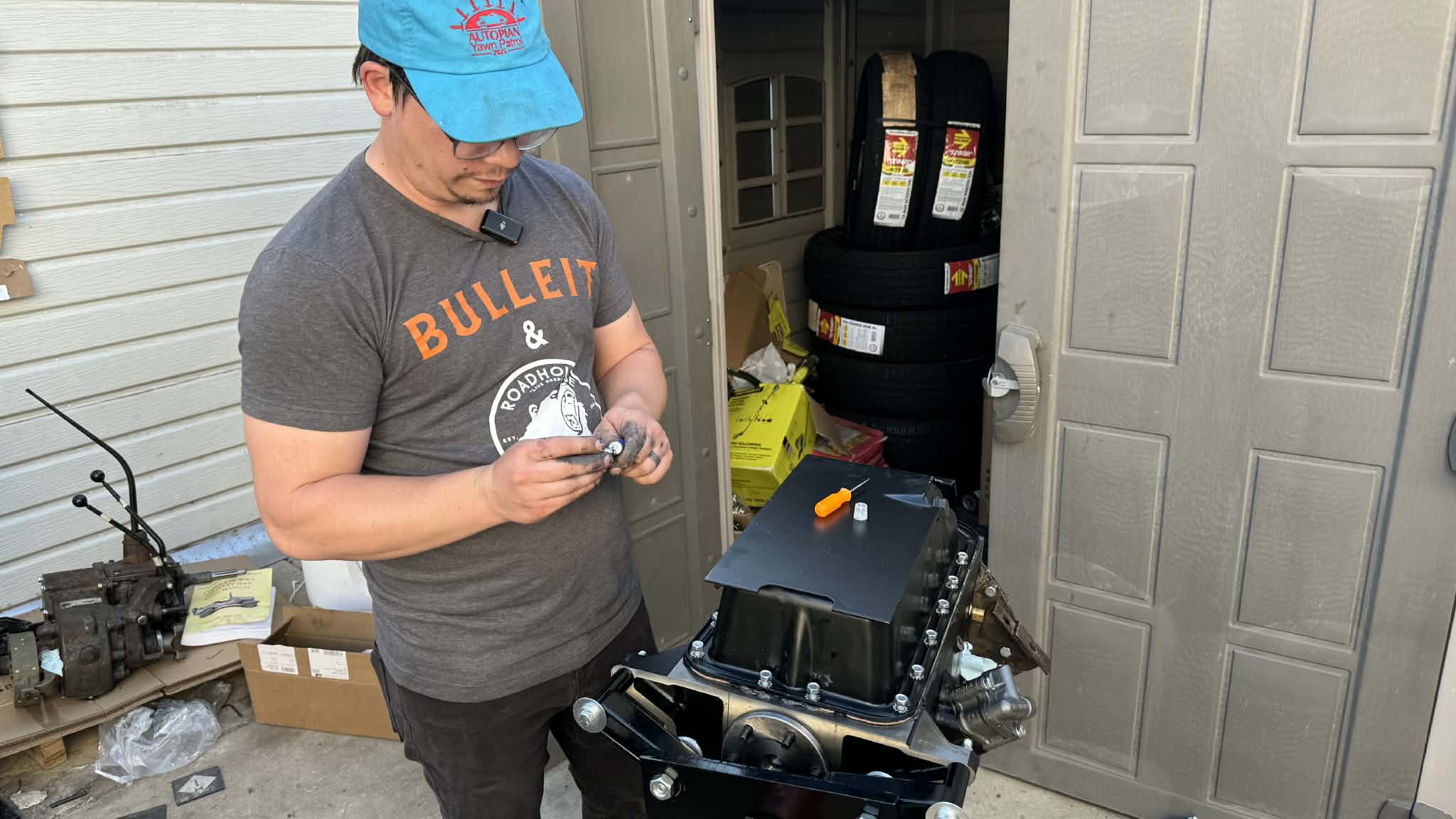
The second mistake is, arguably, even more bone-headed.
You see, just after I had thoroughly RTV’d my oil pan and timing cover down in an attempt to prevent leaks for which these Go-Devil engines are so well known, I went about setting up my oiling system.
One oil line goes from the block to the oil filter, and the other goes from the oil filter down to the timing cover (see red arrow and letter J below):

I hooked up the first line, and then I hooked up one end of the second line. But the other end… had nowhere to go. Where on this timing cover is this hole supposed to thread? Here’s the video showing me beginning to realize my mistake:
I then looked at the engine from my reference Jeep, and immediately realized I had made a grave mistake:

I had snagged the cheapest timing cover I could find on eBay. The listing’s description read: “Not sure the year…. 1940s? From an estate of old car parts. Stored inside. Priced to sell.” Looking at the cover, it looked just like a Willys MB timing cover, so I bought it for $40:


There’s a whole page online about various Willys Jeep timing covers; the resource shows a timing cover just like the one I bought, and notes:
TIMING CHAIN COVER WITH
CAMSHAFT THRUST PLUNGER STUD. THIS COVER HAS NO FITTING FOR THE OIL RETURN HOSE.MA AND EARLY WILLYS CARS WITH
TIMING CHAIN

Apparently I had bought a Willys MA or Willys Americar or some other 1930s-era/early 1940s-era Willys timing cover! I honestly was impressed that something that rare was on eBay, but mostly, I was livid.
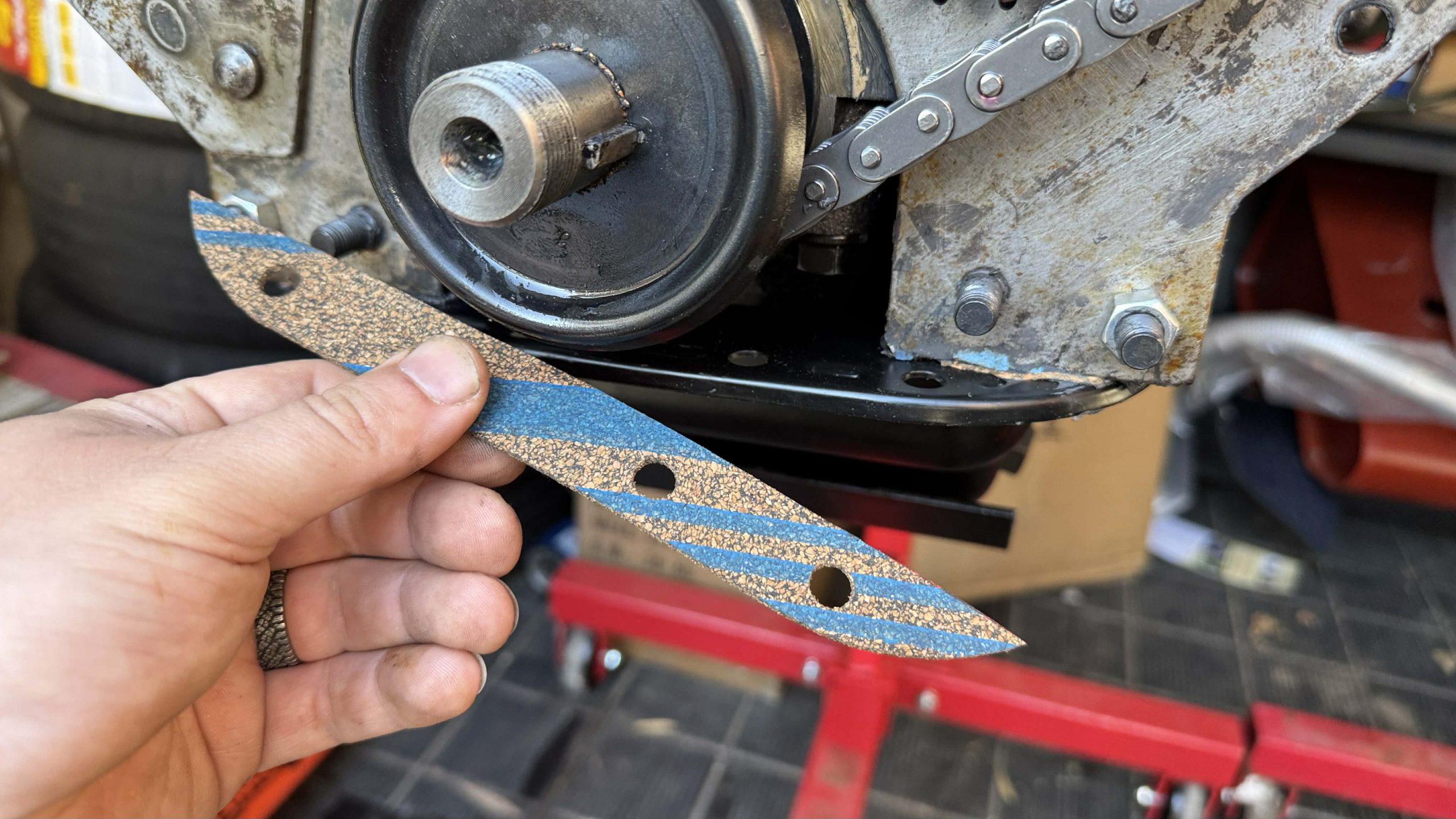
I now had to take my crankshaft pulley off, remove all the bolts holding the cover to the engine front plate/oil pan, take the cover off, cut the section of the oil pan gasket that was part of the timing cover gasket (a new kit comes with a partial gasket to replace the cut-off part of the pan gasket), scrape the ungodly amounts of silicone I had glopped onto that cover to prevent leaks, remove the crusty cover from the reference engine, clean that cover, install a new crankshaft pulley seal (a two-day wait, along with the new timing cover gasket) and reinstall the new cover.
Luckily, I had Laurence, the gasket-scraping king, who removed the old cover (see below) and cleaned the engine’s front plate with ease:
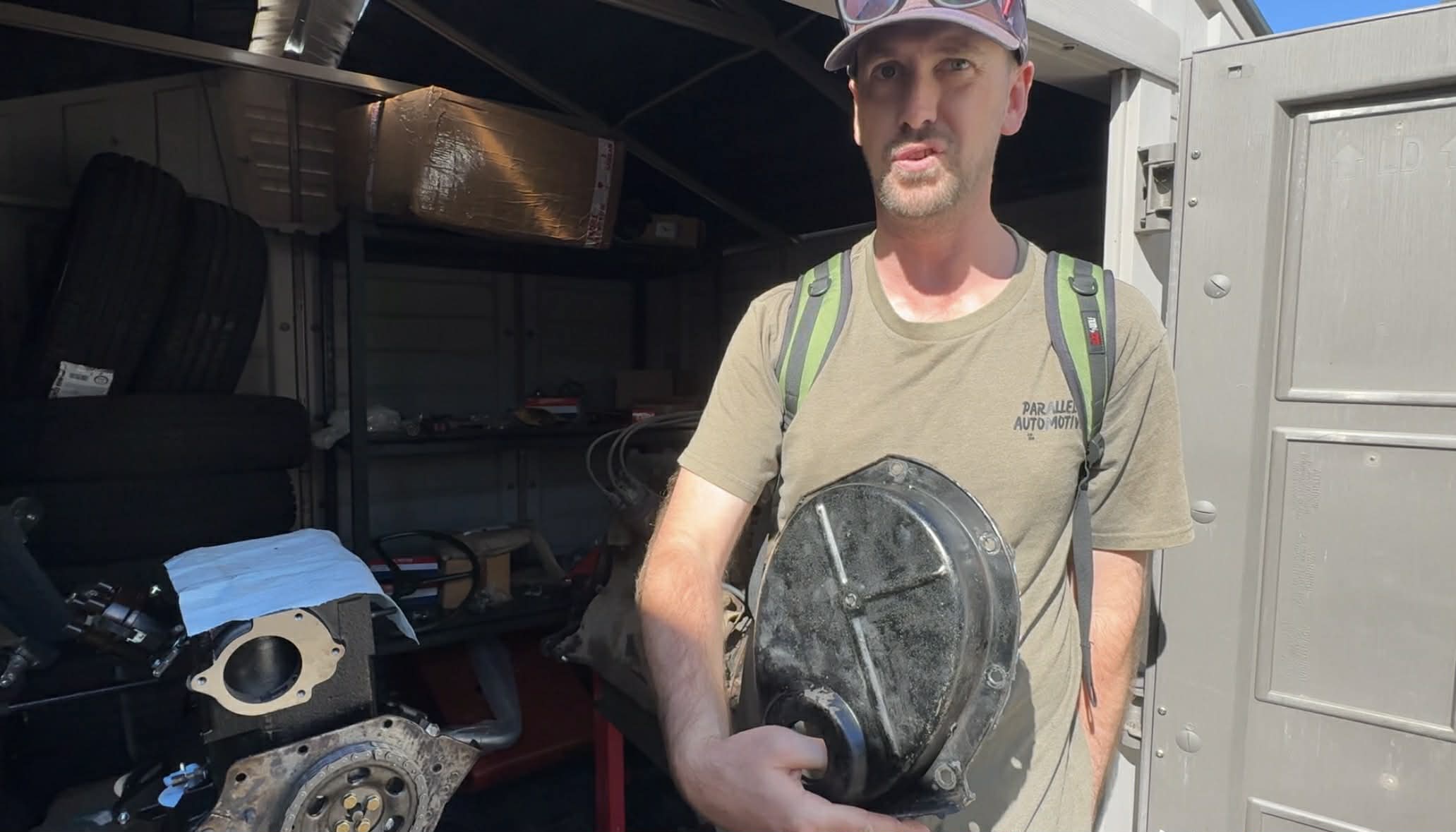
We eventually cleaned up the old cover and installed it. Do I have full faith that it won’t leak? No. Not at all. But I have hope, and that’s what this project is about.
Here is the new cover in place; Laurence did a great job painting it:
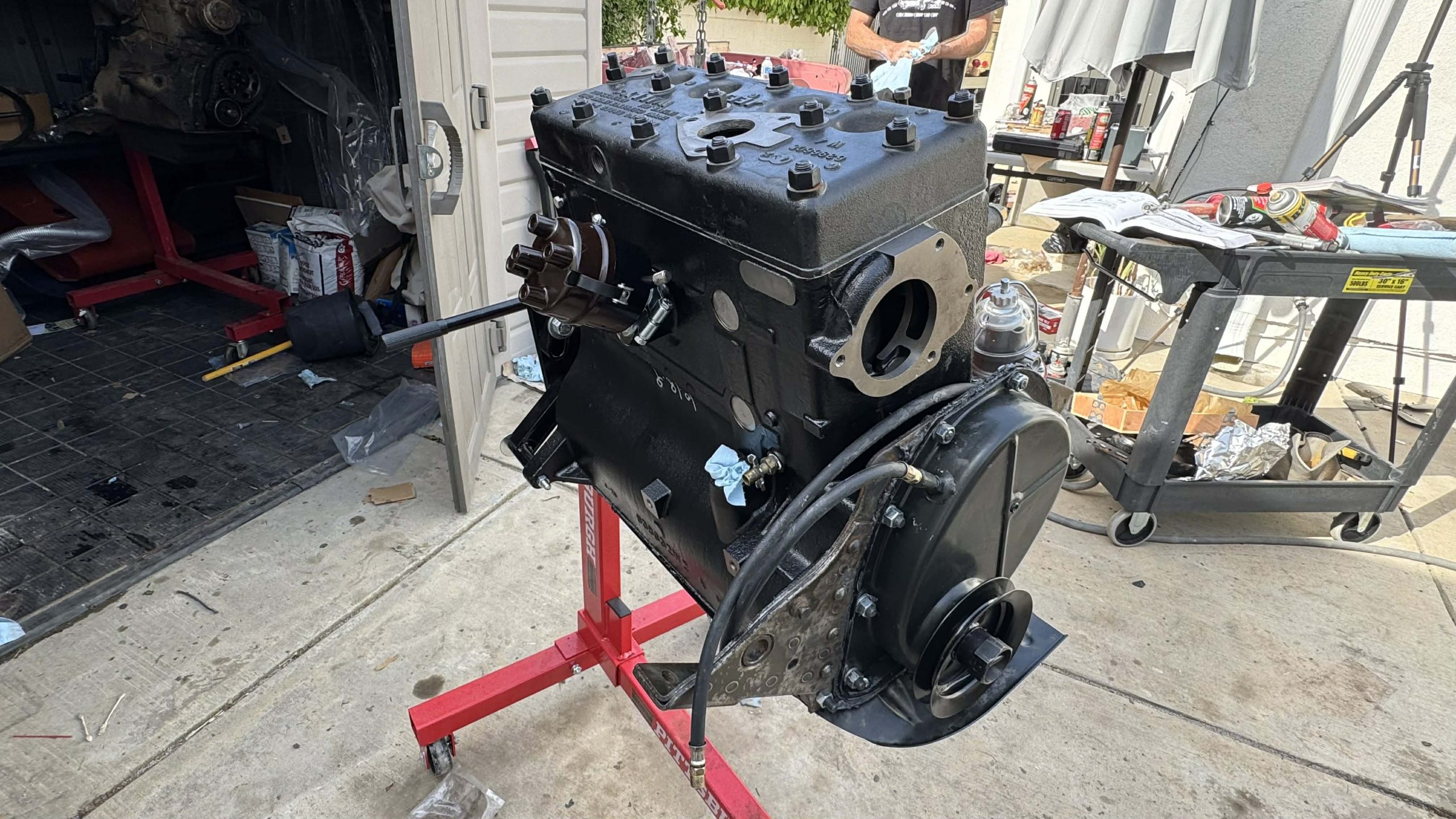
My number one hope is that I don’t keep making boneheaded mistakes like these two. Then again, I’ve been making these silly mistakes since day 1. Maybe it’s time to just embrace them.
[Ed note: David mentioned the idea of building a brand new WWII Jeep to the team at eBay, and they loved the idea so much they said, “How can we help?” Their financial support and David’s Jeep-obsession are the fuel behind this crazy build. – MH]





It’s always interesting to watch someone working outside of their comfort zone, but there doesn’t seem to be many Type 57’s on eBay, so how about a Land Rover instead? David can learn the cursed ways of Rover, and compare it to Willys.
It’s amazing you found an experimental part for a Willys MA…
Stories about these types of mistakes are so valuable cause we all do this stuff, but most people edit these things out of their retellings/youtube videos/instagram etc. This is really helpful for me, and I’m sure many others, as a reminder that we are all human and making mistakes is just part of that experience.
Speak for yourself. I have never once, not once in my life, installed a robot assembly backwards, which put the cable connectors at weird angles but they still worked, so then I spent a full day trying to wrangle the cables from weird positions to make it all work together instead of just seeing that I had the whole thing backwards in the first place. Nope. Never did that before.
Cut yourself some slack. I would bet that piston had a small crack already due to the original cramming in past spec and you just revealed it. Better now than having it leak while driving it. The listing was accurate but not complete. I wonder if you don’t get more money selling it as it is so rare. Sharp shirt how is it so clean?
It’s great that you care so much about precision. A true testament to the millions of these that were slapped together and rushed into service. /s
I put one of the headgaskets on the wrong way on my GFs subaru motor I was rebuilding. Thankfully I avoided damage and noticed my mistake when I saw one of the tabs being stuck. It put a mark in the head but nothing that was an issue.
God bless the small corners of the internet, where you can read up on various Willys Jeep timing covers. Thank the elders for passing this knowledge along to future generations of shade-tree mechanics.
DT Oil rings are uni directional. Is the top side facing “up?”
“I’m explaining what I think happened in the clip below.” Well, once again your insistence on using Instagram leaves me and others without a clue.
“stakes are higher than ever, and there is simply no room for error. And yet, I just made two huge ones.” That’s some end stage Top Gear Jeremy Clarkson drama text, right there.
Maybe I just woke up cranky this morning. I guess I’ll just go and read something else.
He does explain in words in the article too?
What’s the point of the Instagram then? Sorry. It’s just sort of a point of annoyance with me.
Such great content here, but the website’s platform has some irritations.