

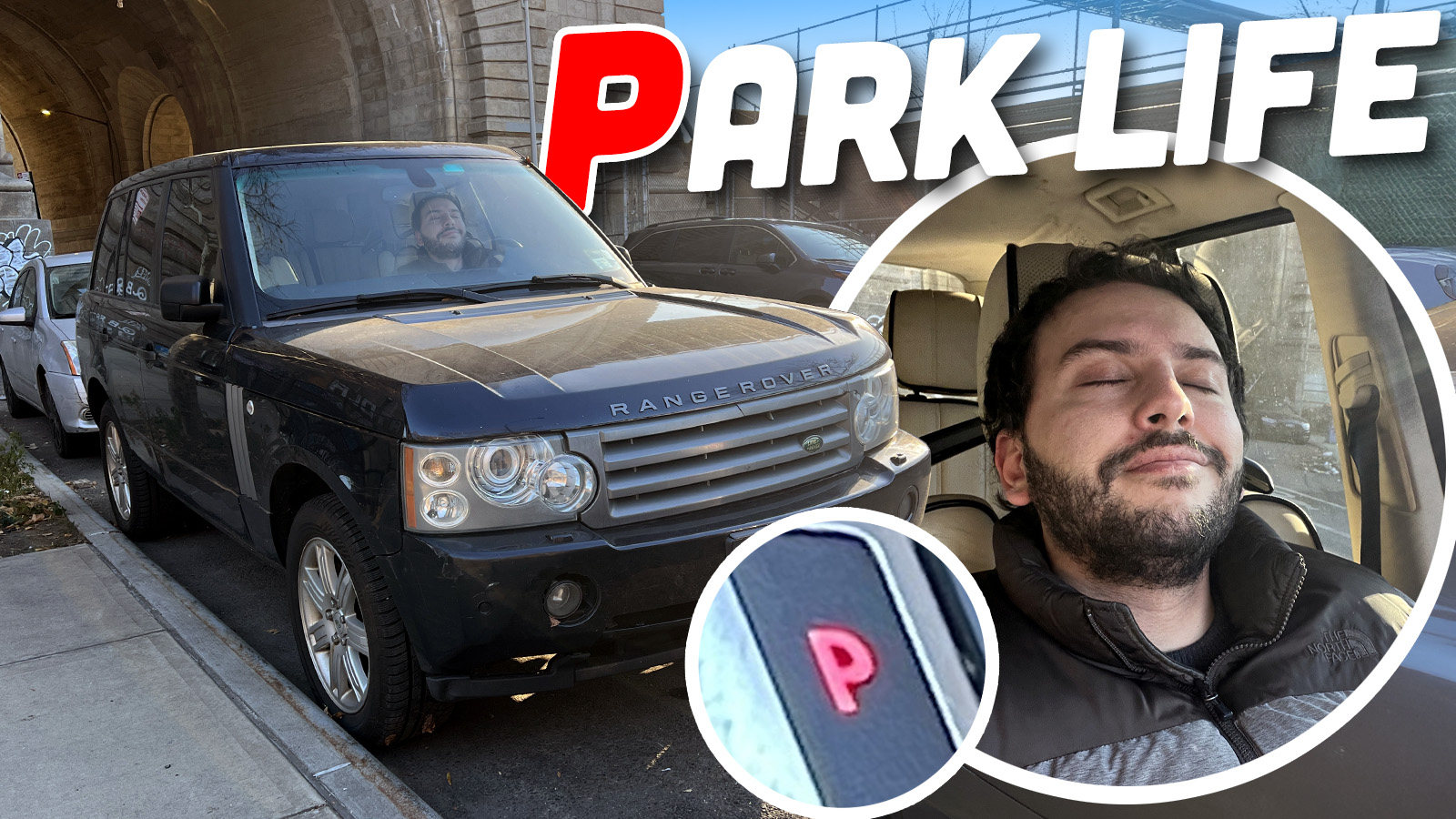
If you’ve spent any time behind the wheel of a car, you’ve probably seen someone place their automatic vehicle into the “Park” position while waiting at a stoplight. While not typical, I’ve witnessed this phenomenon countless times over my years of driving.
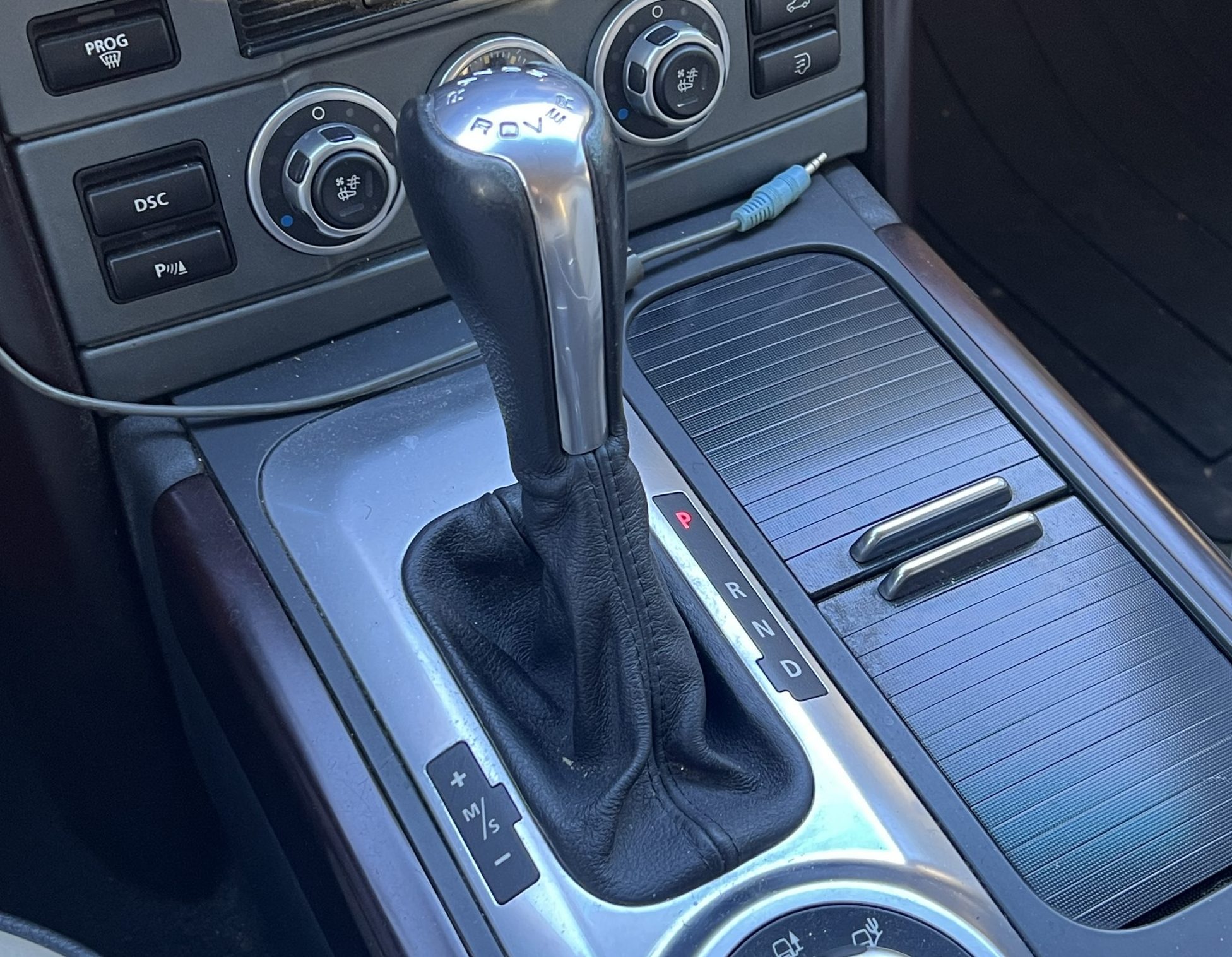
Having pretty much always driven manual cars (save for press vehicle loaners and rentals), I never really understood why people did this. That is, until recently, when I bought my first automatic car, my 2008 Land Rover Range Rover.


Now I get it. I’m not ashamed to admit I place my car in Park at stoplights all the time. Logic suggests this is dumb for several reasons, yet I keep doing it. Let me explain myself.
Yeah, It’s Bad, I Know
While not illegal, putting your car in Park while stationary on an active roadway opens you up to a multitude of safety risks. If you need to quickly move out of the way because a car is barrelling towards you at high speed, you no longer have to simply lift the brake—you have to put your foot on the brake and shift the car into Drive to get moving, wasting precious moments.
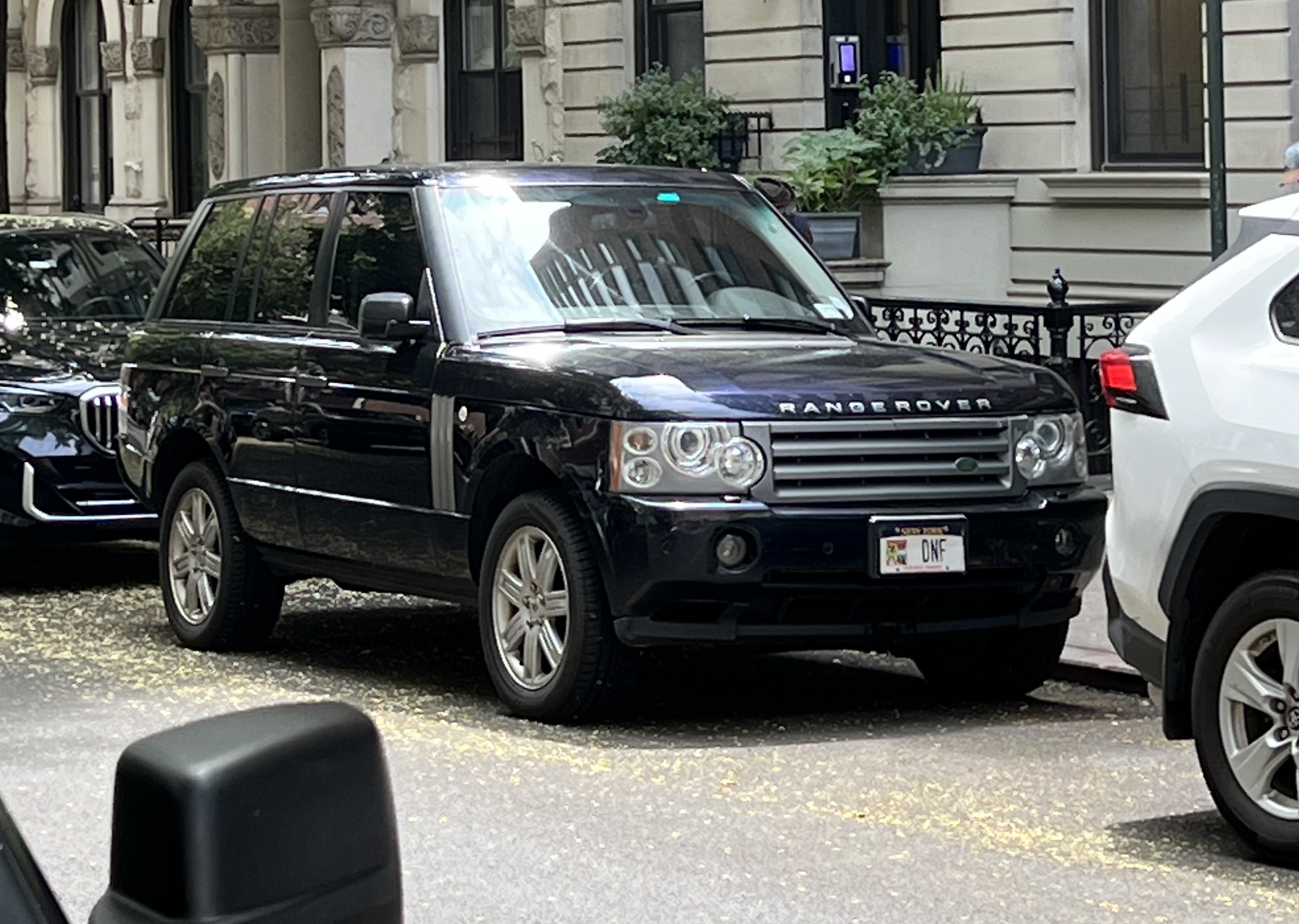
Placing your car in park also signals to other drivers that your foot isn’t on the brake, which, to someone behind you not paying attention, could suggest your car is moving forward, causing them to roll forward and rear-end you. The act of shifting to Park and back to Drive might also briefly command your reverse lights to activate, further confusing other motorists. So, officially, I recommend that no one put their car in Park at a stoplight.
There’s also the possibility that doing this stoplight-parking could put unnecessary wear on some transmission components, like the linkage and shift forks. This wear is incredibly minor, of course—gearboxes are designed to shift, after all. But over the course of thousands of stoplights, it’ll make some difference. At the same time, the beauty of torque converters means you don’t have to worry about putting extra wear on the transmission by holding the brake to keep the car stationary, at least not for a minute at a time. So there’s no strong argument that shifting to Park avoids extra wear on the gearbox, save for very specific circumstances.
So … Why?
On paper, going through the effort of shifting into Park only to have to put your foot back on the brake and shift back to Drive after 45 seconds to maybe a minute of sitting doesn’t even seem worth the trouble. For me, though, those series of movements have become second nature.
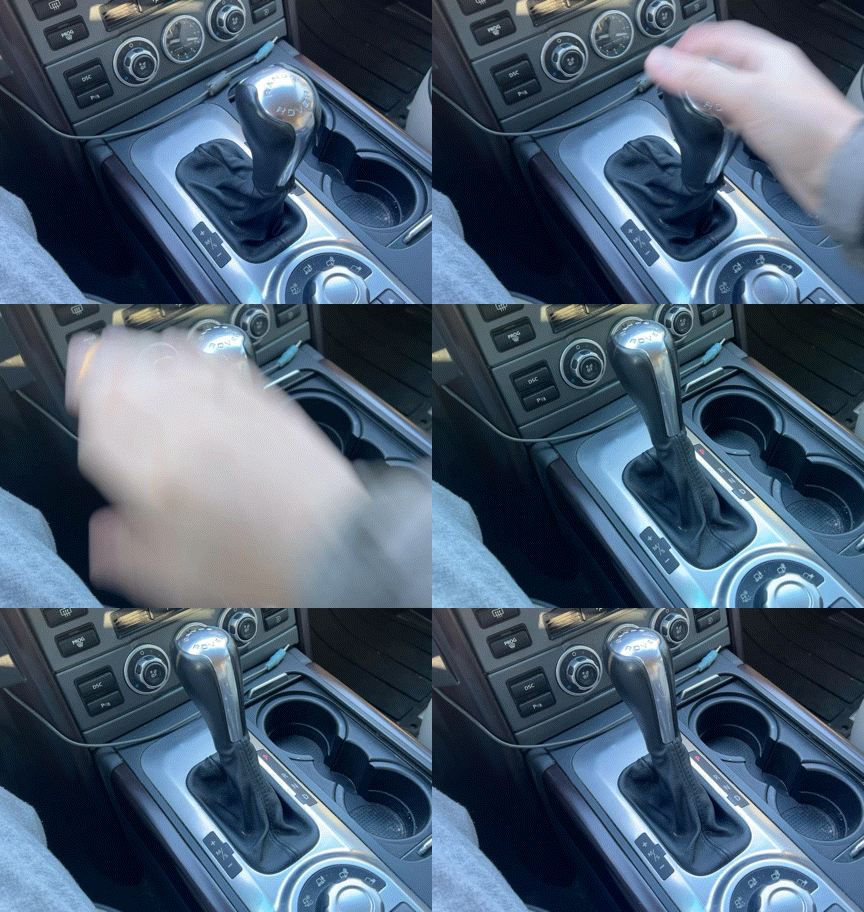
Roll to a stop at a stoplight, flip the transmission into Park, and relax. I’ve got it down to a science, so it only takes me about half a second to get from stopped to fully in park. Then, I’m able to take my foot off the brake and give my legs (and the rest of my body) some time to stretch out and relax. It’s during these moments that I can truly appreciate the Range Rover’s comfy captain’s chairs.
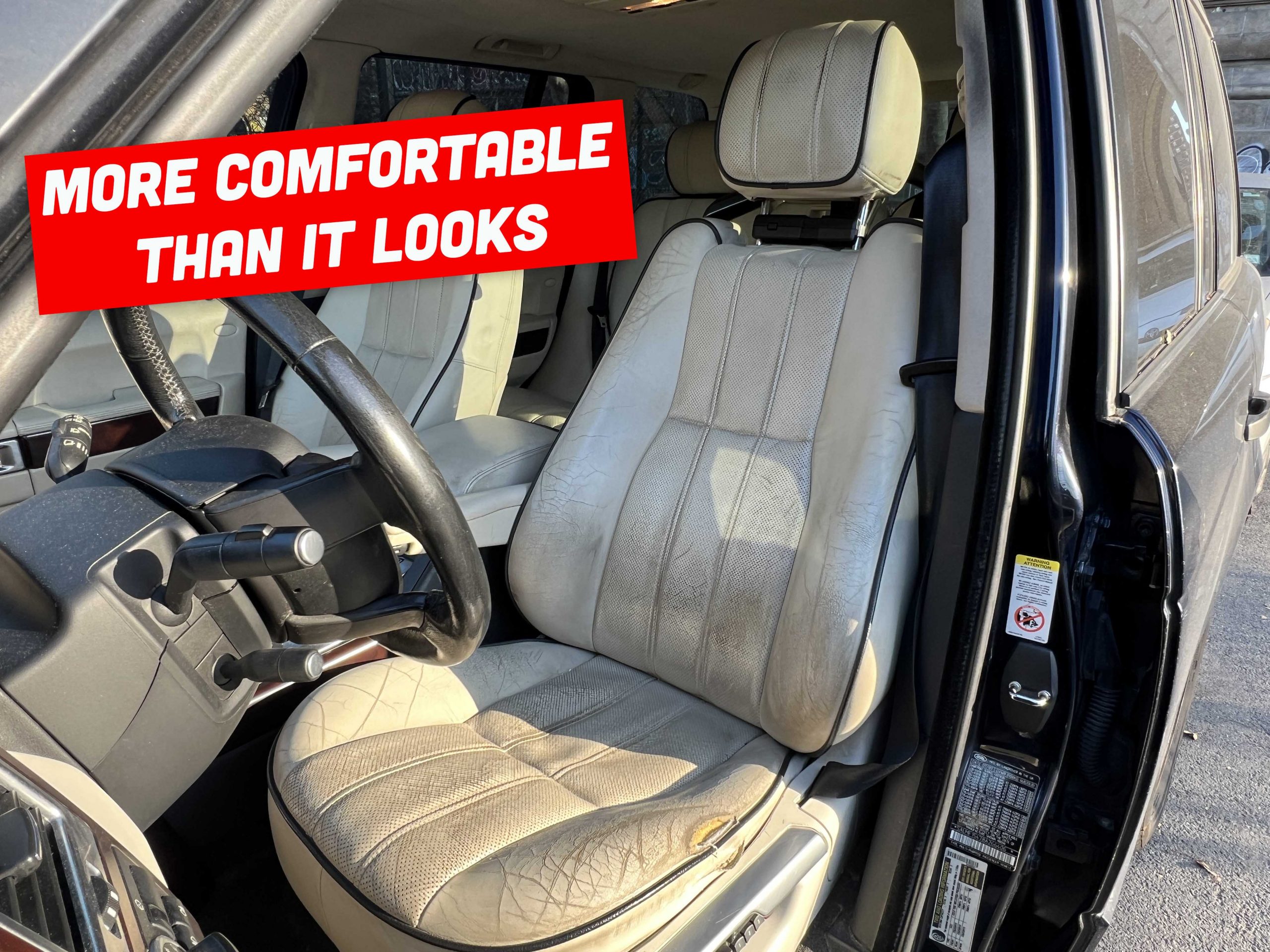
To me, that combined full second of shifting work is worth the tradeoff. When I drive, it’s usually only for longer trips (at least an hour), so having those tiny breaks to briefly disconnect from the car is nice. Doing this in New York City, where I live, is especially easy because I can keep an eye on the countdown clocks for the pedestrian crosswalks to know exactly when the light will turn green. Having these countdowns is what really makes shifting into Park worth it. Without them, it’s more of a guessing game of when the light will turn green, which is more stressful than relaxing.

Of course, I’m always keeping my eyes on my mirrors for emergency vehicles—I usually only pull this move when I’m boxed in by other cars in heavy traffic. The only issue I’ve encountered with this method, so far, is when someone ahead of me decides to ease forward to fill a gap in the line of cars waiting for the red light. In this case, I usually just switch my car back into Drive prematurely, move forward so as not to make everyone behind me angry, and keep my foot on the brake for the remainder of the light cycle.
The Internet Has Mixed (But Mostly Negative) Opinions
When I pitched this story, most of The Autopian staff were pretty surprised, and not one staffer seemed to take my side. Harsh, but fair. I figured I might find someone on the great big internet who feels the same way I do about this topic, but most people seem to take the more rational route.
Friend of The Autopian Kristen Lee wrote in 2016 about how she was baffled by why people put their cars into Park at stoplights, mentioning that most of her colleagues were equally as confused by such a move. The only holdout, interestingly, was our very own David Tracy, who said, at the time, he keeps at least one of his cars in neutral:
“Because the car’s got too much torque and too little brakes,” he explained matter-of-factly. “Requires too much pressure at long stop lights. Very annoying.”
That sounds like a very specific problem, but it turns out going to neutral isn’t a niche solution for some people. This 2014 thread on the topic from the BobIsTheOilGuy.com forum had several people advocating for switching to Neutral and continuing to hold the brakes at stoplights. These folks argue that having the car in Neutral will allow it to roll forward in case of a rear-end impact, reducing overall strain on occupants, which is a fair assumption.
The great minds of Reddit seem to think shifting into Park is a bad idea. Back in 2019, someone on the /r/Driving Subreddit asked whether it would be fine to shift into Park at stoplights, and was met with a whole bunch of “No.”
This Phenomenon Might Soon Disappear Anyway
Thanks to the advent of modern braking tech, this is a solved issue. Lots of new cars have a function called Brake Hold, which is a system that, as you might be able to tell from the name, holds the brakes for you when you come to a stop. This way, you can lift your foot off the brake and relax as much as you want, without having to shift out of Drive. All you have to do to get moving is press the accelerator pedal. The system registers the accelerator input and releases the brakes, freeing you to drive normally.
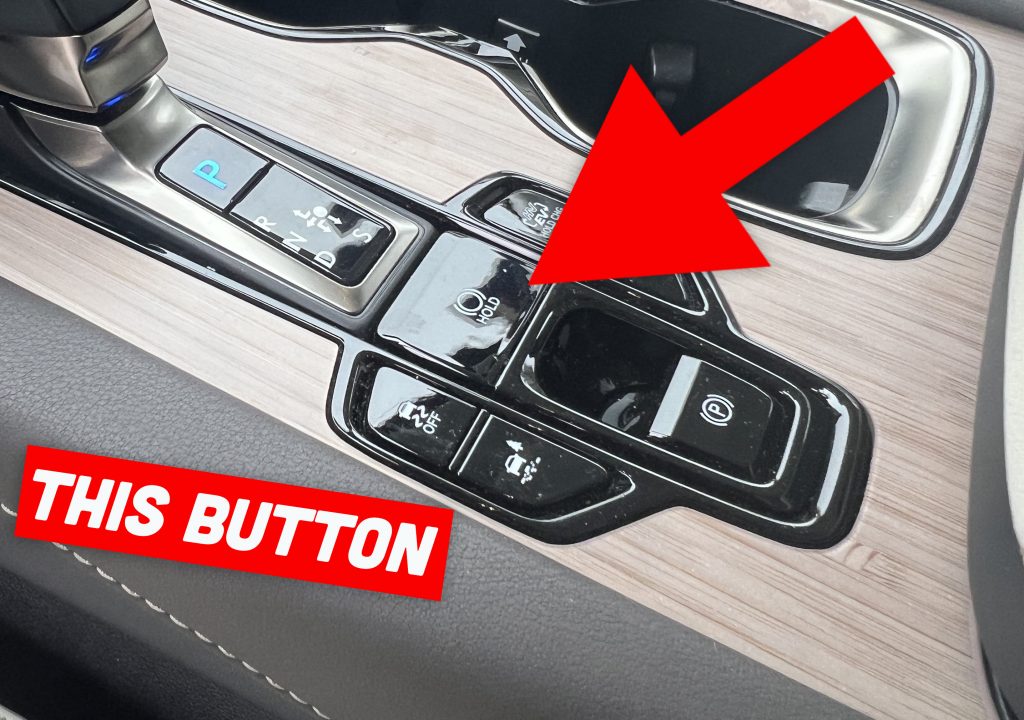
As the average age of cars on the road increases, more cars will have this feature onboard, which means fewer weirdos like me will have to resort to moving their gear selector from Drive to Park and back just for that tiny hit of relief. I’ll be the first to admit I get a little sad when I see a new press car I’m testing doesn’t have a brake hold button. But more and more these days, the brake hold function is standard.
I’m not expecting many people to come to my defense here, as the cons obviously outweigh the pros. But to all who shift into Park at stoplights, I see you. And I understand you.
Top graphic images: Brian Silvestro


Similar to my reaction on those I see looking at their phones at lights, if I’m behind you and see you put it in park, you’re gonna get a faster honk than normal to get your a$$ in gear!(Literally!)
Lights have a fixed amount of time, everybody needs to pay attention and get moving or you’re short changing people at the back of the line, if there’s turn lanes it could be the difference between someone making it for the next change or not, especially at long lights, that’s another 3 minutes of their life they won’t get back.
Congestion is getting worse, slacking while driving does not make it better.
So what you are saying here is that we can disregard anything else you write about cars, got it.
Not to take sides, but just wanted to point out the obvious that for those of us with manual cars, generally at a stoplight on level ground, the car is in neutral and the brake is not depressed, so the brake lights aren’t on in that case either, nor can the car accelerate instantly since it first has to be put into gear.
Aside from the wear and tear issue, this is essentially the same as what Brian describes above.
This is very irresponsible of you.
As someone who grew up among (shitty) manual cars and whose first car was a ’73 beetle that would need heeltoeing to keep a damn idle, I still instinctively avoid putting any unnecessary strain on the engine while idling. I can see that hydraulic oil being squeezed between the plates, trying to move the car forward.
I actually still put my daily in neutral when I see a red light ahead and the relief I feel on the brake pedal compared to when I don’t keeps reinforcing this habit. To note: I do the N, not P thing, and I have no excuse about bad knees or such, just little obsessions.
I only ever did this occasionally with my ’99 Escort wagon – the idle vibration of that CVH engine was brutal. If I knew I was going to be at a long light sometimes I just threw it in
parkneutral and kept my foot on the brake because without the transmission load the vibrating was way less bad.I did that once to keep a very badly limping 80s Nissan alive till I got it home. Full stop in drive would stall it. Going from N to D with a little gas is all it needed to start going again.
Cannot say I ever put an auto car in park at a light unless I was trying to grab something out of the back seat or passenger side like a water bottle or something. Having an EV with one peddle driving and being able to turn off creep/crawl (or what ever else you want to call it) has been really nice at times it reminds me closer to a manual then an auto does since manuals most times I throw into neutral at lights (unless I know it is a short light)
My previous car was a manual that I would put in neutral at long lights or lengthy stops with goes to take pressure off my left knee. Old knees suck.
I have always, and still do put my manual cars in neutral at lights. Gives my leg a rest, and doesn’t really slow me down when I need to take back off. I was told specifically to do so in my 68 bug, as aircooled vw engines apparently don’t like the strain of the clutch being depressed for long periods of time.
It’s not a question of air- or water cooled: if you press the clutch pedal, there’s a fork pushing against a so-called throw out bearing, and the longer you push the clutch pedal, the faster you’ll wear out this bearing. It’s usually not a problem, but if this bearing wears out before your clutch needs changing, your looking at a considerable amount of labor just to replace a 15$ bearing.
Completely agree with you there. I think the reason it is particularly recommended in old VW’s is due to the “flimsiness” of those components.
I had to put my old STi in neutral out of self-preservation. Holding a 6-Puck clutch in at a long light is no joke.
I have never heard someone calling the Beetle’s components flimsy, rather the contrary. It’s also a car that is exceptionally easy to work on, due to its simplicity in general, and also due to the fact that it’s quite easy to drop the engine. I knew a Beetle enthusiast who once swapped a throwout bearing on the parking lot of a parts store, by himself and with only basic tools, except for a hydraulic jack. But it is definitely a bad habit to press the clutch pedal longer than necessary, and that’s true for any car with a clutch pedal.
Maybe “flimsy” was too strong of a word, but as someone who’s been working on air-cooled VWs since I was old enough to hold tools alongside my dad, I can say that I have found many little faults. The parts feel strong and robust because they were designed to be under-stressed: lightweight pieces doing simple jobs on low-power engines. That’s certainly the genius of the design, and it’s why these cars were so easy to maintain and keep on the road. But let’s be honest: that same simplicity comes with a lot of potential failure points. Thin metal, tiny fasteners, components that were never meant to endure modern demands or 50-plus years of fatigue… it adds up.
(I can pull my engine in less than 30 minutes… but that’s because I’ve had to pull the damn thing so many times due to weakly designed components like dog house oil coolers that like to fail and ooze oil everywhere)
I LOVE aircooled Volkswagens more than most people (Like Jason levels of love for these cars) I love the engineering behind these cars, and I respect the philosophy of simplicity, but having wrenched on them my whole life, I can also say there’s no shortage of spots where things can go wrong.
I don’t think it’s a great practice overall, but also I’ve never encountered anyone who was quick about shifting back into drive after parking at a light. It’s obnoxious and the reverse lights let everyone know the dumb reason you’re taking extra moments to get moving after the light changes.
I’m agnostic on this question; neutral is your elusive friend on motorcycles.
Now, who else shuts off the engine in drive-thrus?
Kawasaki’s “Positive Neutral Finder” is something that should be implemented on all motorcycles.
If I’m in a drive thru long enough for shutting off the car to be an option, I’m leaving
If I go through a drive-thru in my truck, I have to turn it off so I can hear the attendant (diesel).
It’s bad audio systems.
The hammering from my mechanical pump over rides everything on those.
But I stopped going anywhere to buy bad food when some lunatic decided people would pay $10 for a $2 burger.
Not even tempting.
I do. And train crossings.
Shut off the engine, no. But I will (in the cars with automatic) sometimes shift into neutral or park when the idiot in front of me ordered a half dozen custom Jumbo Combo Meals and is sitting there forever.
My Hyundai has a DCT and a feature called brake hold (called “auto hold”). It’s my favorite unexpected feature of the vehicle. Come to a stop and wait about a second for it to engage. There’s a handy light on the dashboard that turns from white to green when it’s engaged. And then I know I can take my foot off the pedal and chill until it’s time to go again.
And given mine is a DCT and DCTs HATE when people creep at lights, it helps stop that habit as well. Of course, when the folks in front of you creep, it can allow a rather large gap to open, but I’m getting used to that as well.
I started using auto hold in my Forte GT to stop myself from creeping. It’s legitimately a nice feature that you really appreciate once you get used to it.
I would have just left this awful take to rot, but Blur deserves better than to have “Park Life” associated with this.
Yeah, auto-hold is great.
Dumb idea.
I do, though, turn my (manual) car off at known long lights. I figure anything longer than 20 seconds saves me ounces of gas. OUNCES! I keep an eye out for the changing of the crossing lights, restarting when they turn yellow.
I’ll also turn off my car and coast in neutral, “jumping” my car back on while it’s moving, more ounces saved. Plus it doesn’t restart the audio system process. I lose power steering right away, but I’m strong enough, and I eventually lose power braking, but, again, strong enough to use personal power.
Lastly, I can drive over a mile downhill from my freeway exit to my house with the car off. I eventually get up to 50mph (the speed limit) on the exit’s street, then can slow down to 15 to turn a right angle, then coast a little more to another downward section and another right-angle turn. No traffic 95% of the time, but if there are vehicles behind me, I will jump the car and drive the 25mph speed limit on this section. I can eventually get up to 40mph before getting home, but I’m prudent in my neighborhood. All to save ounces. Might also be a dumb idea. Can I write articles here and get paid for my dumb ideas, too?
Reminded me of the Robin Williams movie “World According to Garp” for some reason.
Well, I don’t do it in the dark. If I do, I keep the lights on.
Sounds like hypermiling.
If you preheat your engine, you’ll save fuel too.
And engine life.
How about that? A practical use for electric power in a car!
If there is already a car behind that saw the brake lights then I guess I don’t see an issue even if it seems like extra steps for little gain. The extra wear is negligible. I don’t put autos in park at normal stop lights but I do a train crossings if I’ll be there a while.
With my manual cars I’ll put it in neutral and take my foot off the brake at a level intersection. I don’t bother with the parking brake – service brakes work fine and my foot is already there.
When I still had my T100, I’d just shift into neutral and set the parking brake. No burning up the clutch and brakes just idling.
Doing the same for a slushbox also works, keeps you from wearing out your clutch packs.
You’re not wearing out your brakes when you’re not moving. A lesson of yore.
Applying pressure to the brake hydraulics for prolonged amounts of time is not good for them. “burning up” was a poor choice of words.
Also, there is no wear to the clutch discs unless there is slip (relative motion) across the clutch while it is engaged. There should not be slip across any engaged clutch packs while the car is idling in drive or reverse. However, shifting D->P and P->D will cause a microscopic wear to the clutch discs.
If you are wearing out your manual clutch while stopped in gear, then you need to have your clutch linkage adjusted.
Thank you for adding this.
There should be no slippage, of either clutch or brakes, while stopped.
The clutch disks aren’t slipping but if the clutch is disengaged, the pilot bearing must rotate due to the difference in speed between the flywheel and transmission input shaft. Theoretically this causes some wear. People say not to do this because it wears the release bearing, but I don’t think that is correct.
Oh, I completely understand how a clutch works, and why people say it wears the pilot bearing / throwout bearing.
But the original post I was replying to stated, “burning up the clutch and brakes just idling”, to which I replied that there is no slippage, therefore no “burning up” of the clutch.
Yes there is a secondary discussion about the effect on the throwout/pilot bearings. So, as I posted elsewhere in this thread; I’ve had two manual cars; one go 210k miles, and one at 204k miles and still going, on the original clutch (clutch wore out before either bearing on the first).
So I’m going to call any concern over the pilot bearing or throwout bearing to be purely academic, or theoretical as you say, and not a practical concern, and not worth the leg/arm effort to go into neutral every time you stop.
As the software slumps, as it has to, reckon techy cars will be rolling down hilly bits into a tree?
This is how you accidentally end up in reverse when you zone out at the light and then realize it’s green.
All my previous cars have been manuals and since I live in a very, very flat land I’ve always popped it into neutral at red lights and let my feet rest. On the rare occasion that I was driving an automatic I would sometimes bump it up into neutral to do the same or lay my foot sideways on the brake pedal so just the weight from resting it held the car in place. My new car is an EV though and with the one-pedal driving this is no longer an issue. I rarely ever touch the brake pedal which is nice, but I do miss speed-shifting a manual from time to time.
As (i) a Brit and (ii) a driver of manual cars, I find all this very odd. Manual car: stop at lights, handbrake (E brake?) on, into neutral, foot off brake. Don’t blind the people behind. Automatic (last one I drove was a Sentra in Vancouver a couple of years ago): stop at lights, handbrake on, into neutral, foot off brake. Don’t blind the people behind. Much the same process. Time to go? Stick it in gear, handbrake off and apply gas. Modern cars with electric handbrakes even release automatically! I don’t see the benefit of park over the handbrake.
I was about to offer up the same advice, especially in a British car. The proper British way is to put the car in neutral and set the handbrake, with your foot off the brakes. The Rover was designed for driving that way.
American cars are definitely not designed for that routine — and American driver training and motor vehicle rules generally stipulate that you keep your foot on the brakes at stoplights. And while most smaller American cars have a handbrake like their global counterparts, larger American vehicles (like SUV’s the size of the Range Rover) often have the parking/emergency brake operated by a pedal on the far left side of the footwell, and releasing it is traditionally either by pressing a little further down to trip the latch and letting it up, or by pulling out yet another handle (which usually makes it snap back up loudly, which is annoying to any passengers…). Americans are explicitly trained and their cars were traditionally designed not to use any kind of handbrake/parking brake except when shutting the car down and parking.
As ever, I come here to learn!
My Grand Marquis won’t even let me engage the parking brake when the car is in anything but park or neutral. Shifting out of park triggers a solenoid that automatically releases the brake. Honestly using the parking brake/hand brake that much sounds incredibly irritating, including in my manual cars.
Shaking my head and giving you a stern look of disapproval. That said, I do use the brake hold function on my Mercedes sometimes, but rarely. When I use it, I feel like I have to hover my foot over the accellerator, just in case.
Sorry, but you lost me at the first sentence. I have not once in nearly a quarter century of driving seen someone do this other than when obviously leaning down to grab something that fell out of reach.
But hey, you got another click and comment out of this piece, so… mission successful?
Pay close attention the next time you’re in heavy city traffic. If you see the reverse lights flash, they’re putting it in park. I notice it with semi-regularity here in northern Illinois.
But those are all Wisconsin people though, right?
I think anyone reading this site understands that reverse lights flash when putting it in Park 🙂
But this isn’t talking about traffic. Putting it in park in traffic is insanely common. Our friend here is talking about doing it at a stop light.
I’ve driven in Chicago, Philly, Indy, Detroit, Columbus, Newark, Orlando, Atlanta… I just flat out have never seen anyone roll up to a stop light, throw it in park, back into drive when the light turns green, then back into park at the next light. Not once.
Or just drive with your left foot if you have to give your right a break.
Disagree with this take. With my EV and one pedal driving it doesn’t matter. With my other ICE car, typically the only times I’m driving it are when it’s towing something. The trailer brakes/lights only go on when the brake pedal is pressed. Not giving up that little bit of warning to other drivers that my tow rig is stopped.
As long as you don’t hit the electronic parking brake, which is guaranteed to seize closed when you try to release it.