

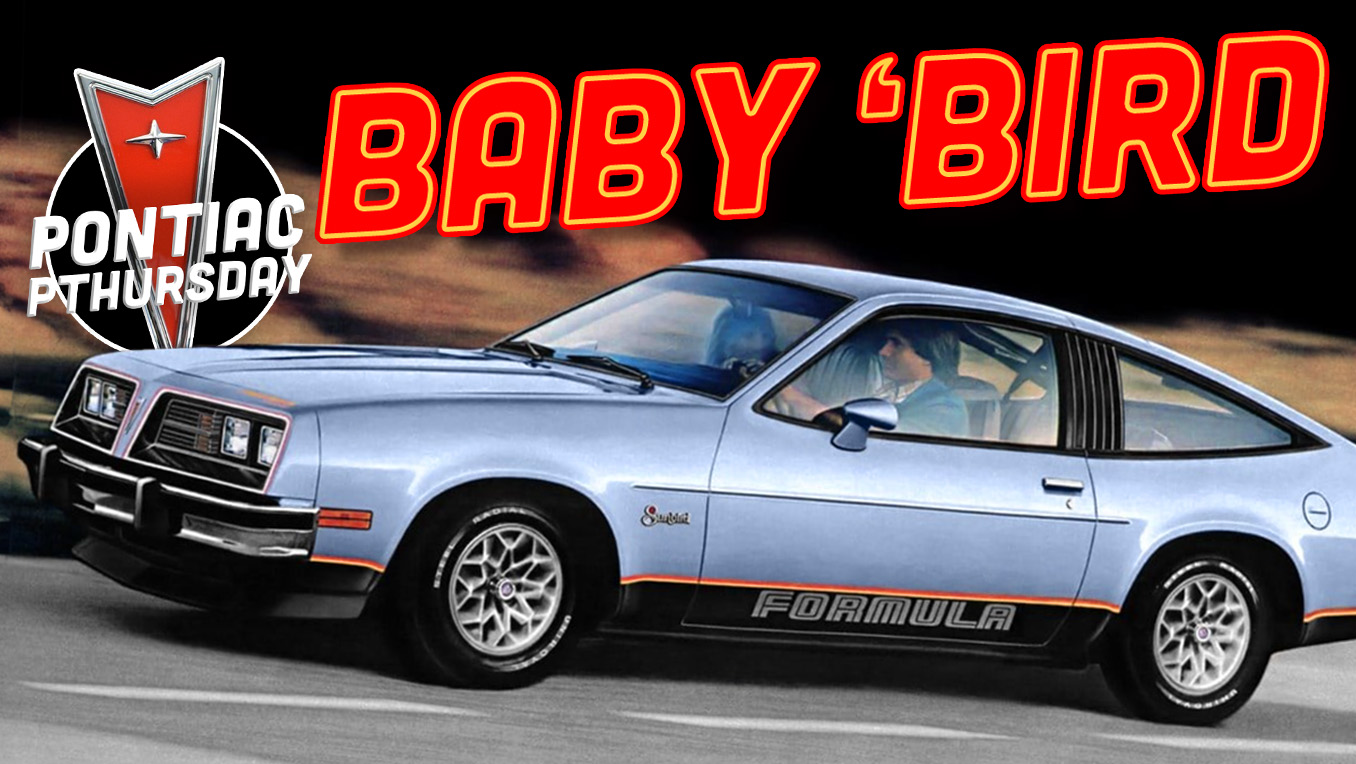
We give Malaise Era General Motors a lot of flak, but virtually nobody here at The Autopian denies the General at its junkiest still made some great-looking cars. Sadly, it’s difficult to disassociate the appearance of some of their products from what we know to be to be the harsh reality of their innate flaws.
One example of this came up on my screen a few days ago in the guise of the Sunbird Formula, and I was shocked at how exciting this late-seventies Pontiac appeared to be. If I weren’t a fiftysomething car nerd, I’d imagine this thing to be a pocket rocket to embarrass Milan’s finest. In reality, Italy and Germany had nothing to worry about – but despite its obvious flaws, that doesn’t mean the star-crossed Sunbird Formula isn’t worth taking a look at today.


Lordstown Lamborghini
Pontiac’s first real subcompact sport coupe had the deck stacked against it from the beginning. Just the fact that it was built on the dreaded H-platform shared with the new-for-1971 Chevy Vega was bad enough. We won’t beat that dead horse yet again, but if you need the CliffsNotes, I can give you the high levels of the low points.
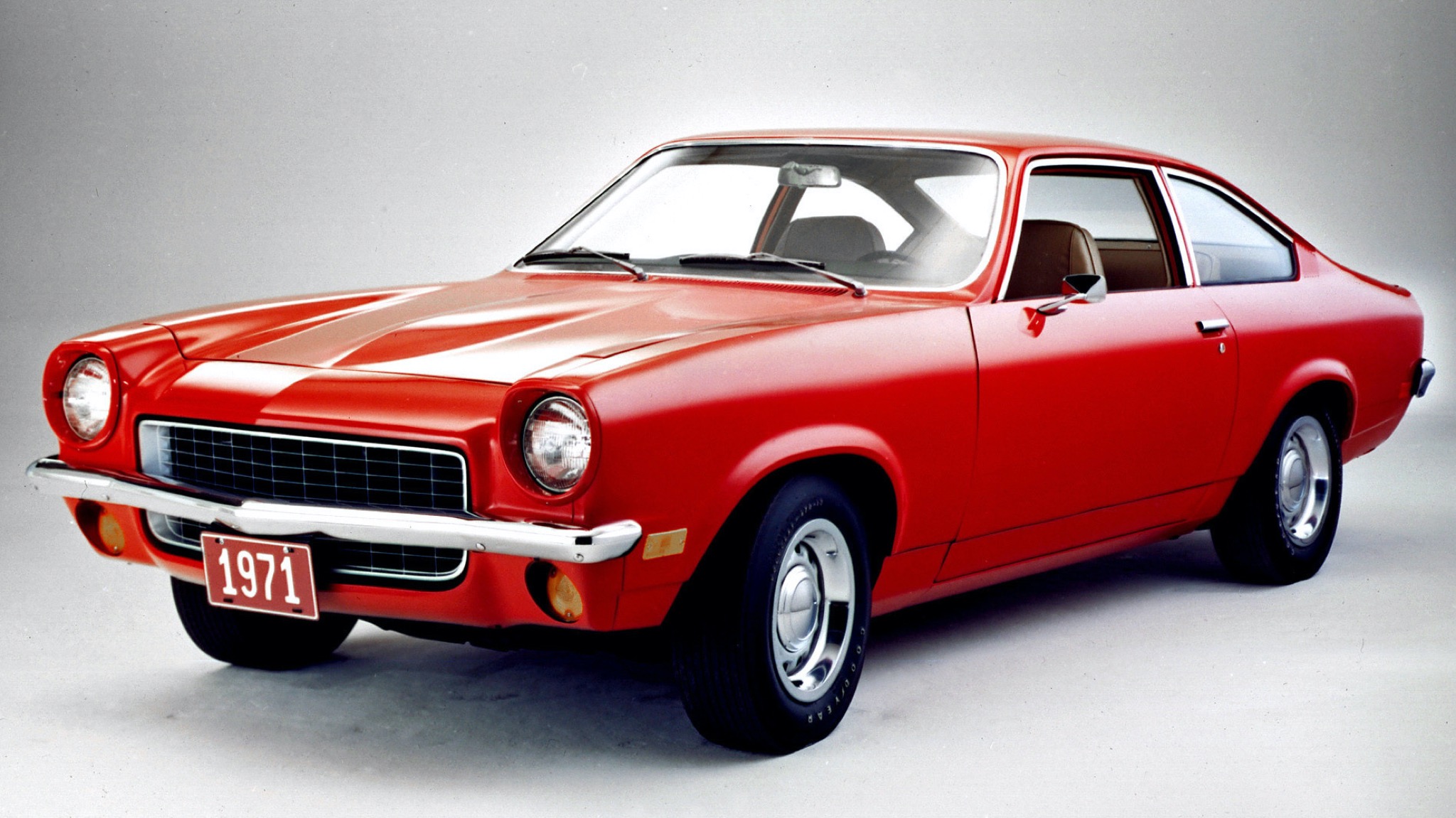
First and foremost, the aluminum engine had linerless cylinders with a coating that didn’t really work, exacerbated by an inadequate cooling system. Also, the rust protection unknowingly left substantial areas of bare sheet metal. Combine that with the labor unrest at the Lordstown assembly plant, and you have a truly horrendous example of malaise garbage, one that was badge-engineered as the Pontiac Astre for 1975.
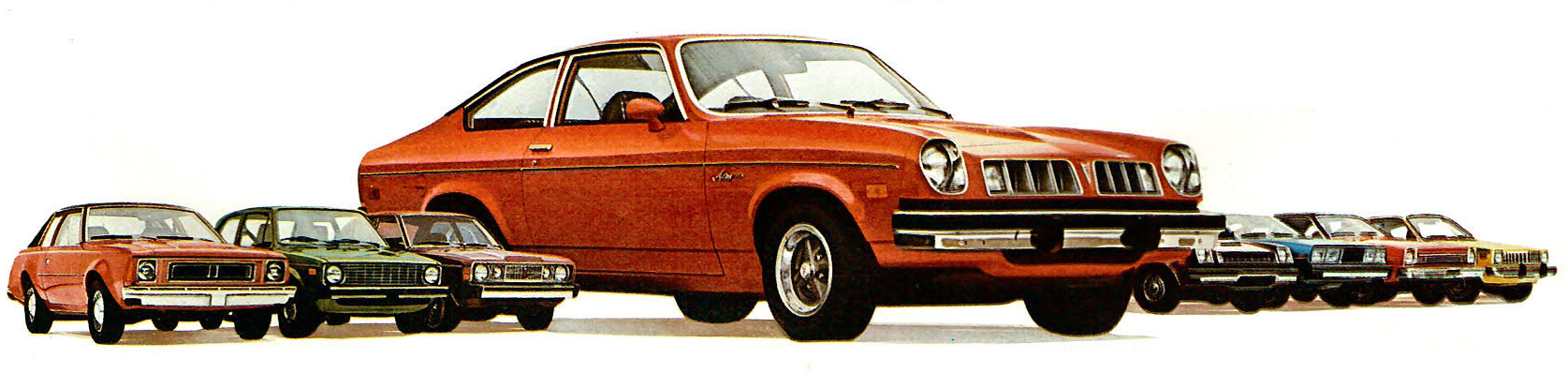
With Ford’s drastic downsizing of the Mustang in 1974, the old pony car was no longer meaningful competition for the Camaro and Firebird, so GM decided that a Vega-based coupe might make a better match for the tiny Mustang II. Say hello to the 1975 Chevy Monza.

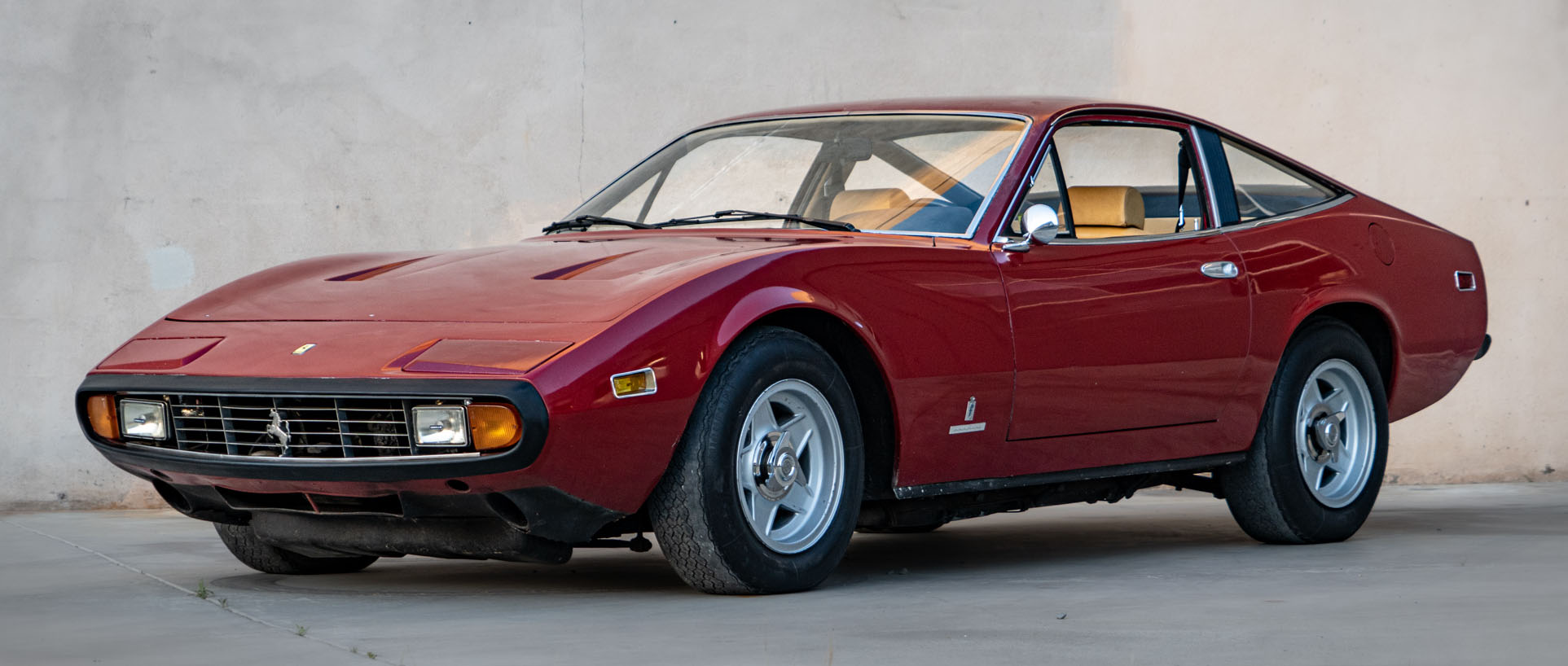
The Monza “2+2” featured a design that critics said resembled (or even ripped off) the Ferrari 365 GTC/4 (below); if nothing else, to my eye it looked far better than the rival Pinto-based Mustang II. I’ve heard fans of the Monza whine that if it had actually come from Italy, the car geeks would be swooning over the styling; I reluctantly agree.
For 1976, Pontiac launched a twin of Chevrolet’s Monza Town Coupe dubbed the Sunbird. A sort of baby personal luxury coupe, the thing looked different enough from the Vega/Astre that a lot of buyers seemed to ignore that it still was powered by that same awful aluminum-block four.

However, that’s not the version of the Monza that we enthusiasts wanted. No, the body style of this Vega-based coupe to have was that Ferrari-style hatchback which John Delorean apparently dubbed “the Italian Vega,” though I think he was referring to the appearance and not the reliability that more closely resembled cars from that nation at the time.
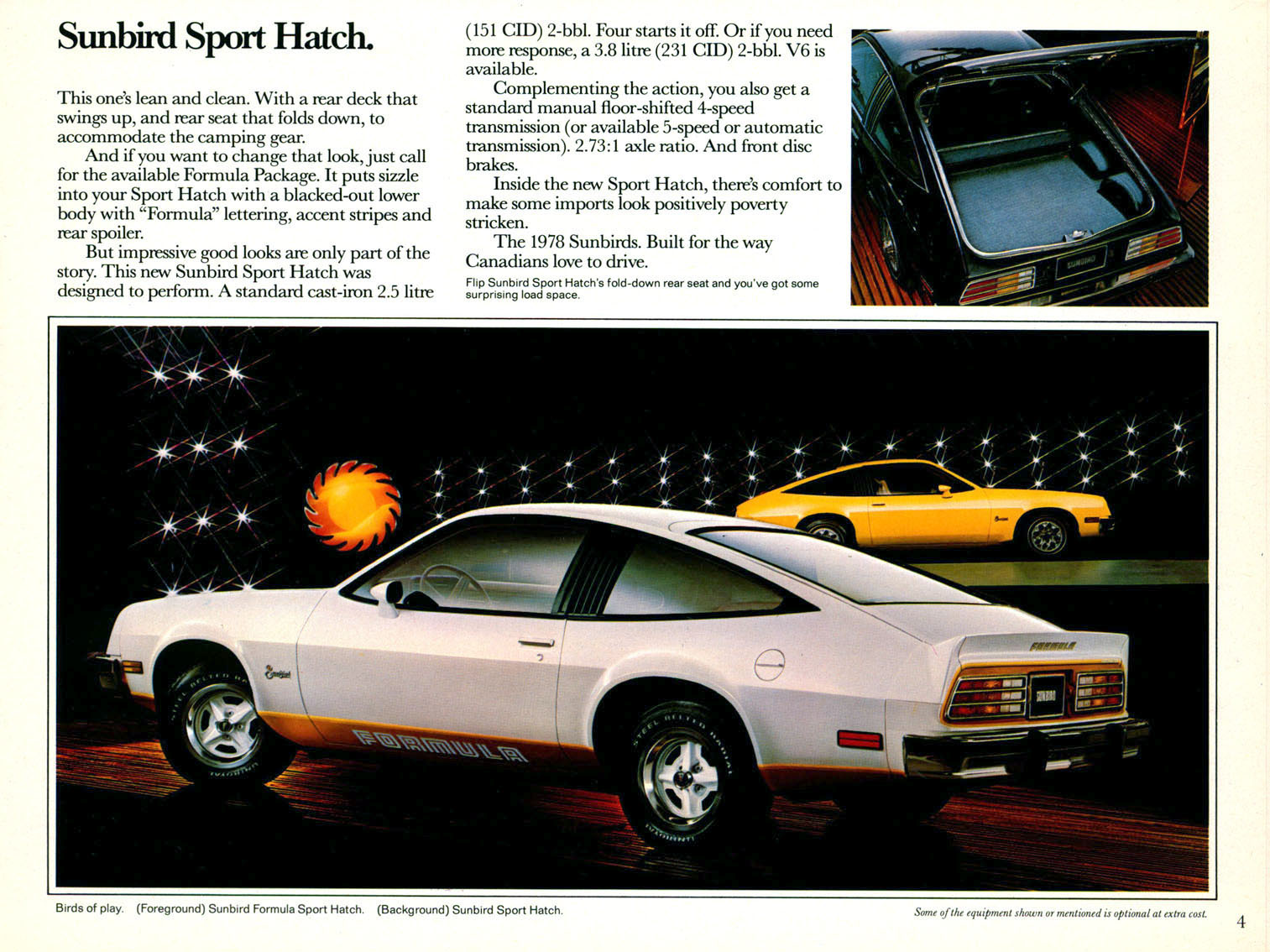
The next year, Pontiac and enthusiasts got their wish with the 1977 fastback-bodied “Sport Hatch” Monza 2+2 clone Sunbird that ditched the now-infamous Vega head-gasket-buster motor for the 2.5-liter Iron Duke that still helps deliver your mail every day of the week.
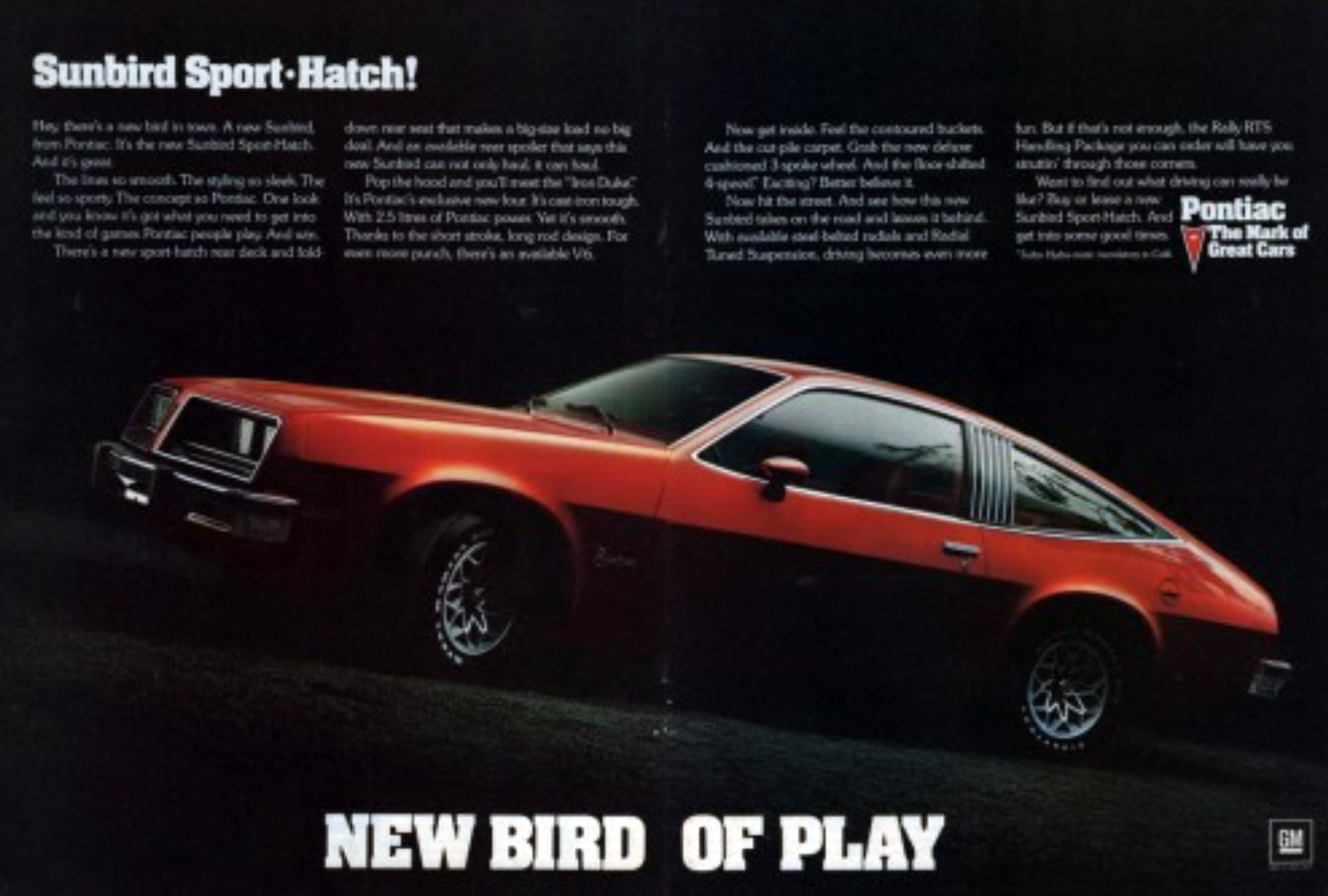
That engine was fine for the base models, but to compete with the Charlie’s Angels Cobra II, more power was needed under the hood. This is where the Sunbird and all of the H-body coupes also got off to a terrible start. You see, in the late sixties and early seventies, the rotary engine was going to be The Answer for the future; a motor that was smaller than the transmission it attached to and could rev to the high heavens as smooth as a dynamo. General Motors not only planned to go all-in with this Wankel powertrain but also intended to offer it to lowly American Motors for powering a curious-looking egg-shaped “compact” they’d been developing.
It’s been written about here before, but I’ll give you the spoiler: it didn’t work. The infamous rotor seal issue couldn’t be solved, and, worse than that, no amount of engineering effort was able to improve fuel economy from “abysmal” to “really bad” – a big deal when people started lining up around the block for gas in 1973. Naturally, the whole rotary program got the axe, but it was too late for the cars earmarked for this small, lightweight motor like the Monza and Sunbird to be drastically changed. That meant the plan for upgraded power in H-coupes was GM’s old and heavy V6 and V8 engines.
Naturally, this is starting to sound like the seventies GM we’re all ironically fond of.
So Many Combinations Of “Bird,” “Fire,” and “Sun”
In the malaise era, it was more important to look good than to feel good; if that’s the case, how did the Sunbird Formula fare? Other GM divisions received sporting versions of the H-body Monza, too; a couple of them have been the subject of Jason’s Glorious Garbage series, like the Buick Road Hawk.
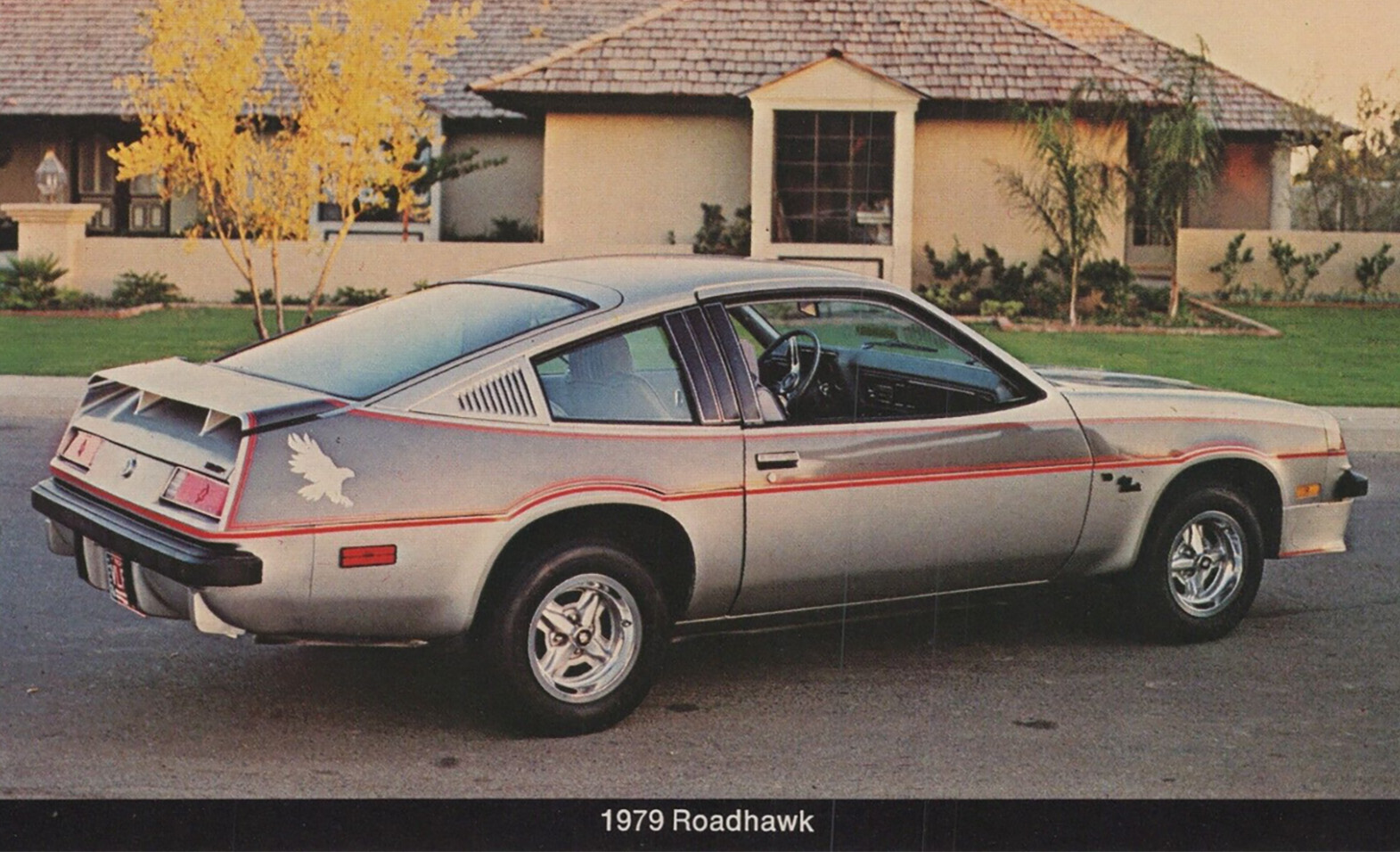
The styling accents were literally glued and riveted in place.

Chevy’s Monza Mirage edition suffered from similar painfully tacked-on customization:

By comparison, the top-of-the-heap Sunbird Formula looked pretty damn good. The family Pontiac split-grille nose added a Firebird-style appearance that looked better than the Monza’s deeply sunken headlamp buckets. The kamm tail and spoiler seemed very well integrated into the styling. Graphics were relatively subdued, and hey, can you ever do better than Pontiac “snowflake” rolling stock? No, you cannot. Well, maybe Pontiac “honeycombs”.
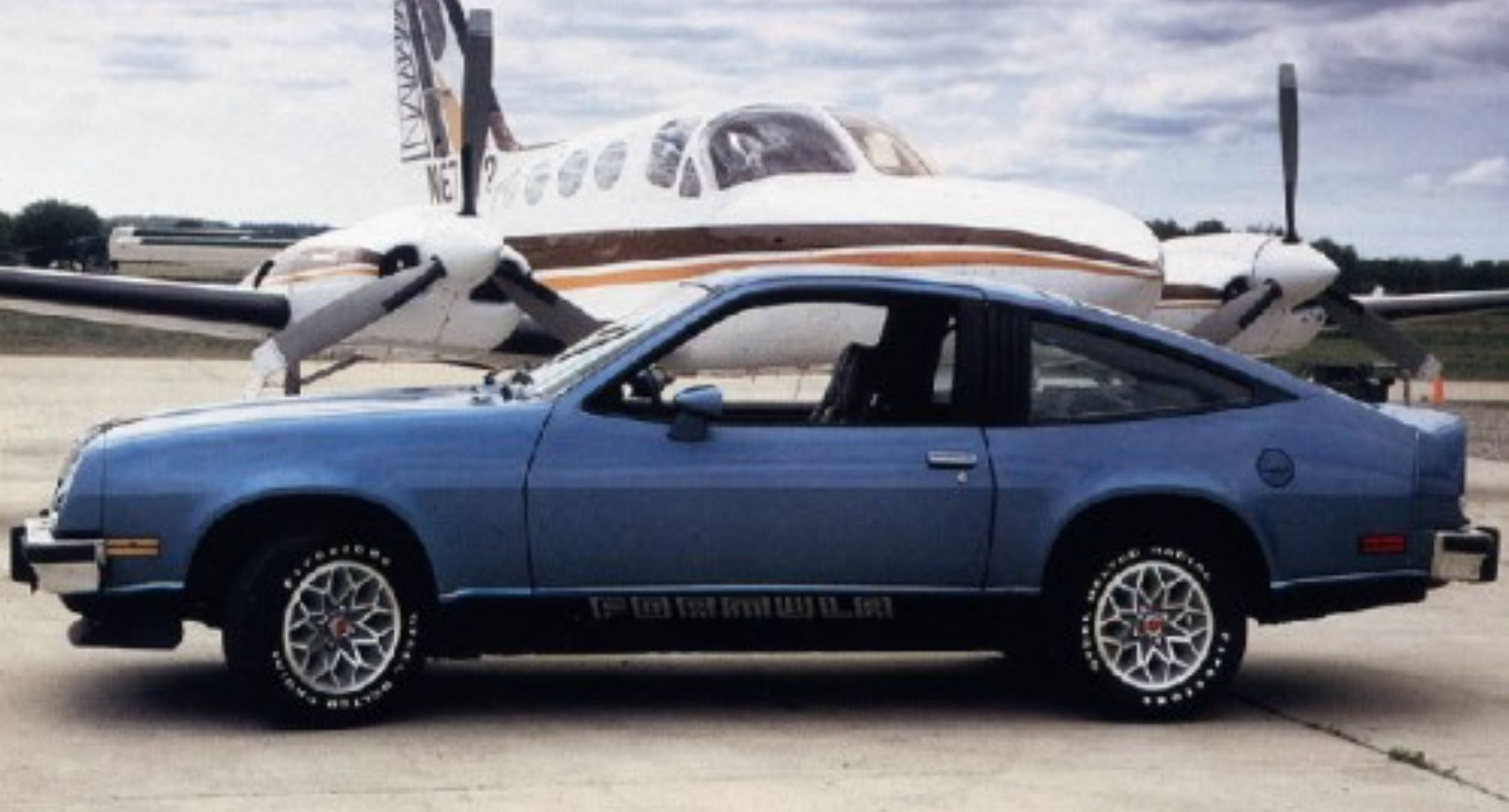
It’s sort of like a baby Trans Am, but with even tidier proportions and more low-key looking. To my eye, it was the best-looking of all the H-coupes by a long shot. There was even a notchback Formula for those who inexplicably didn’t see the charms of the hatchback’s appearance and utility.

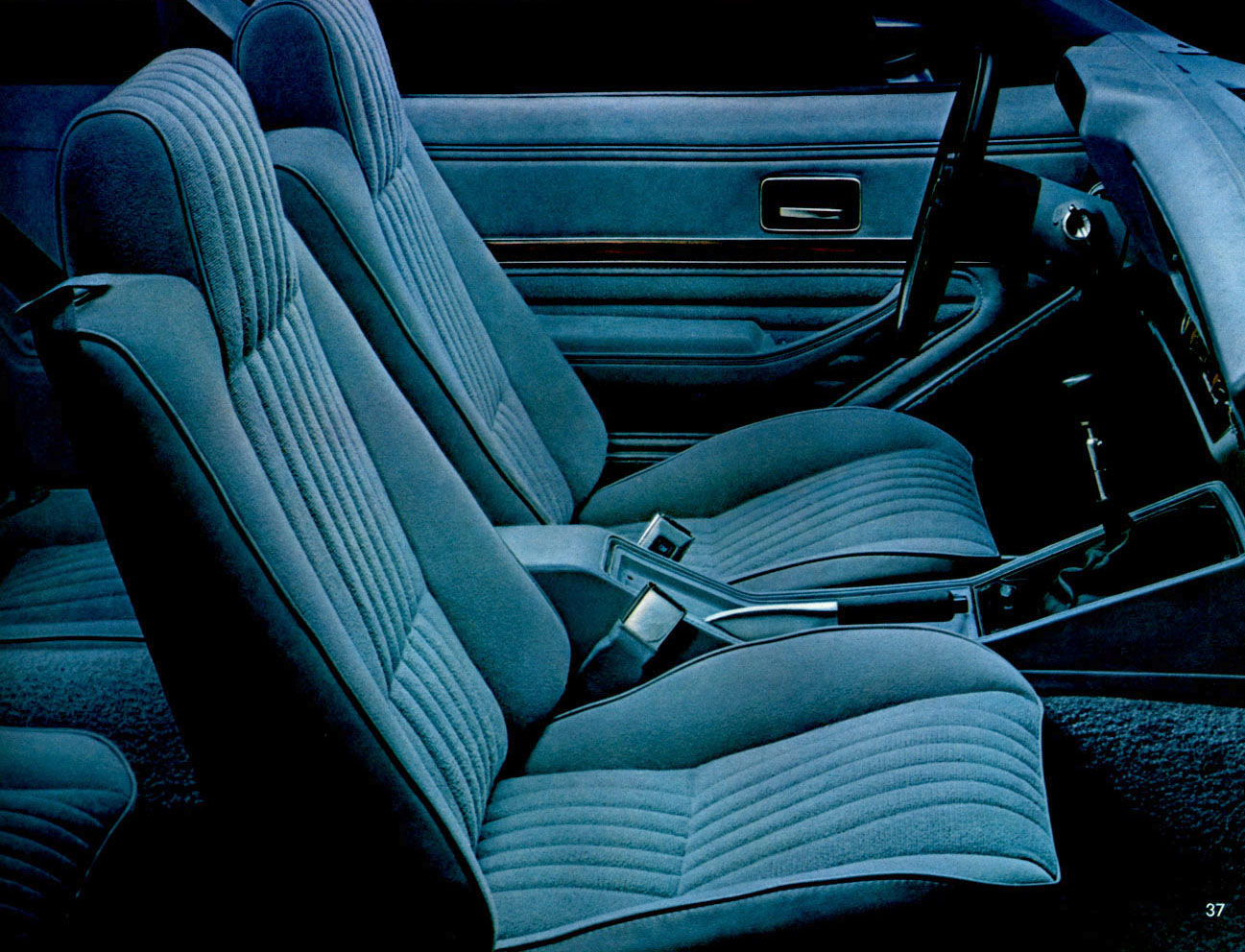
Sunbird interiors weren’t bad for the era, with decent-looking seats that admittedly probably gave up on your back before you needed to stop for your first bathroom break. The rear compartment was no place for adults, and you had the feeling of sitting deep in a pit regardless of which seat you were in, but that was kind of par for the course with seventies rear-drive sports coupes.
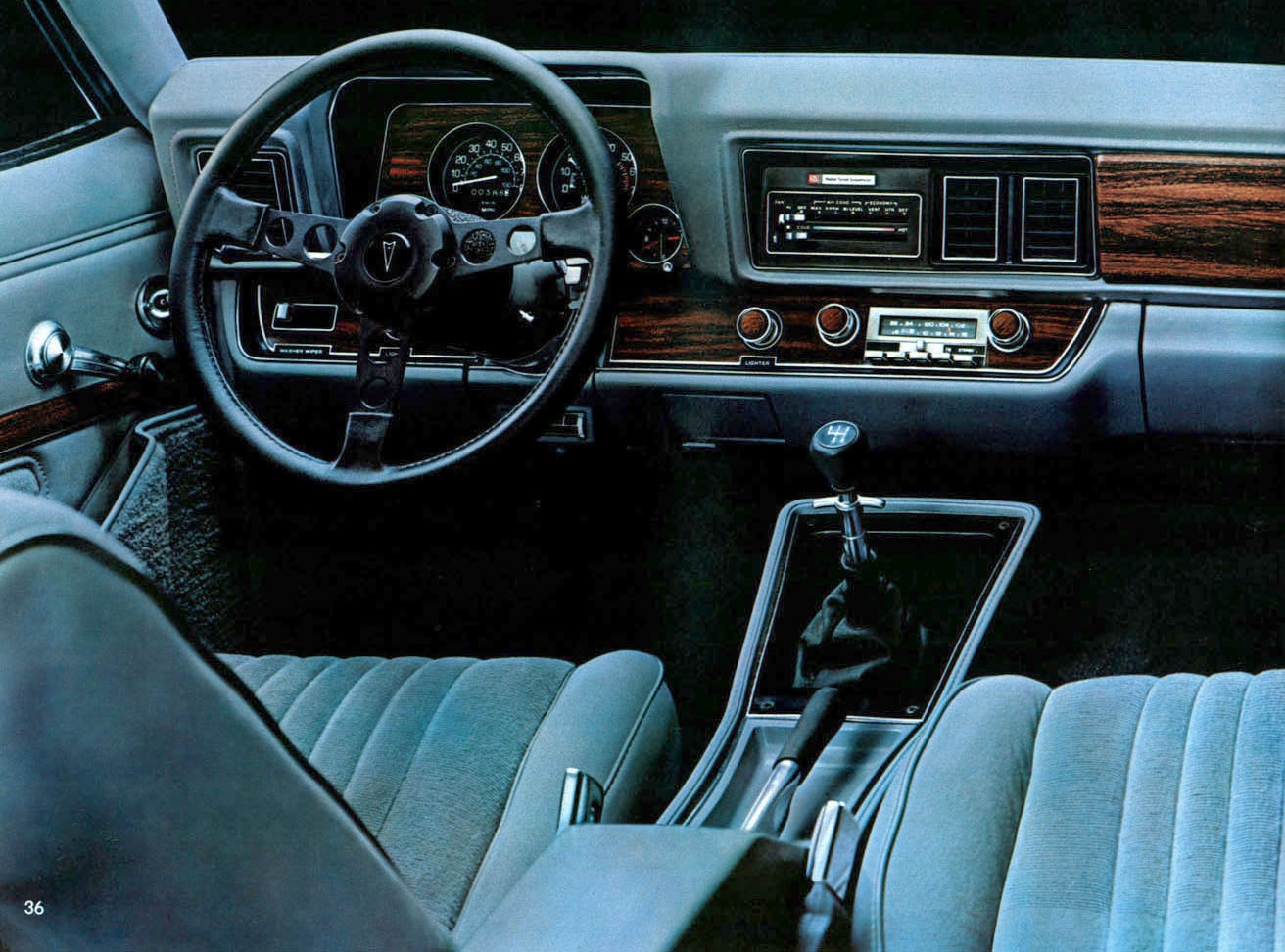
A full set of gauges and the Firebird-style sport wheel certainly were welcome additions, even if the nasty fake wood that even crept onto the radio knobs was not.
How could this thing miss? It had the looks, an available V8, upgraded suspension, and a price that should have made the Toyota Celica and Datsun 200SX go home, right? Remember what I said about star-crossed.
Rather Have A Real ‘Bird And Not Suzanne’s Vega
First of all, you need to temper the expectations aroused by “adding a V8.” Starting in 1978, the Sunbird Formula offered a Chevy 305 as the eight-banger choice, but contemporary figures I could find list it as producing only around 145 horsepower – not much more than the 110 horsepower V6 (California V8s only pumped out 135 horse). For this so-called “power,” you got the added weight over a front suspension that was almost certainly never designed until the eleventh hour to accommodate an iron block of this size. These jumpsuit-clad ladies below appear to be pushing down on the back of the Sunbird to hide the sag of the car’s nose from the Chevy V8.
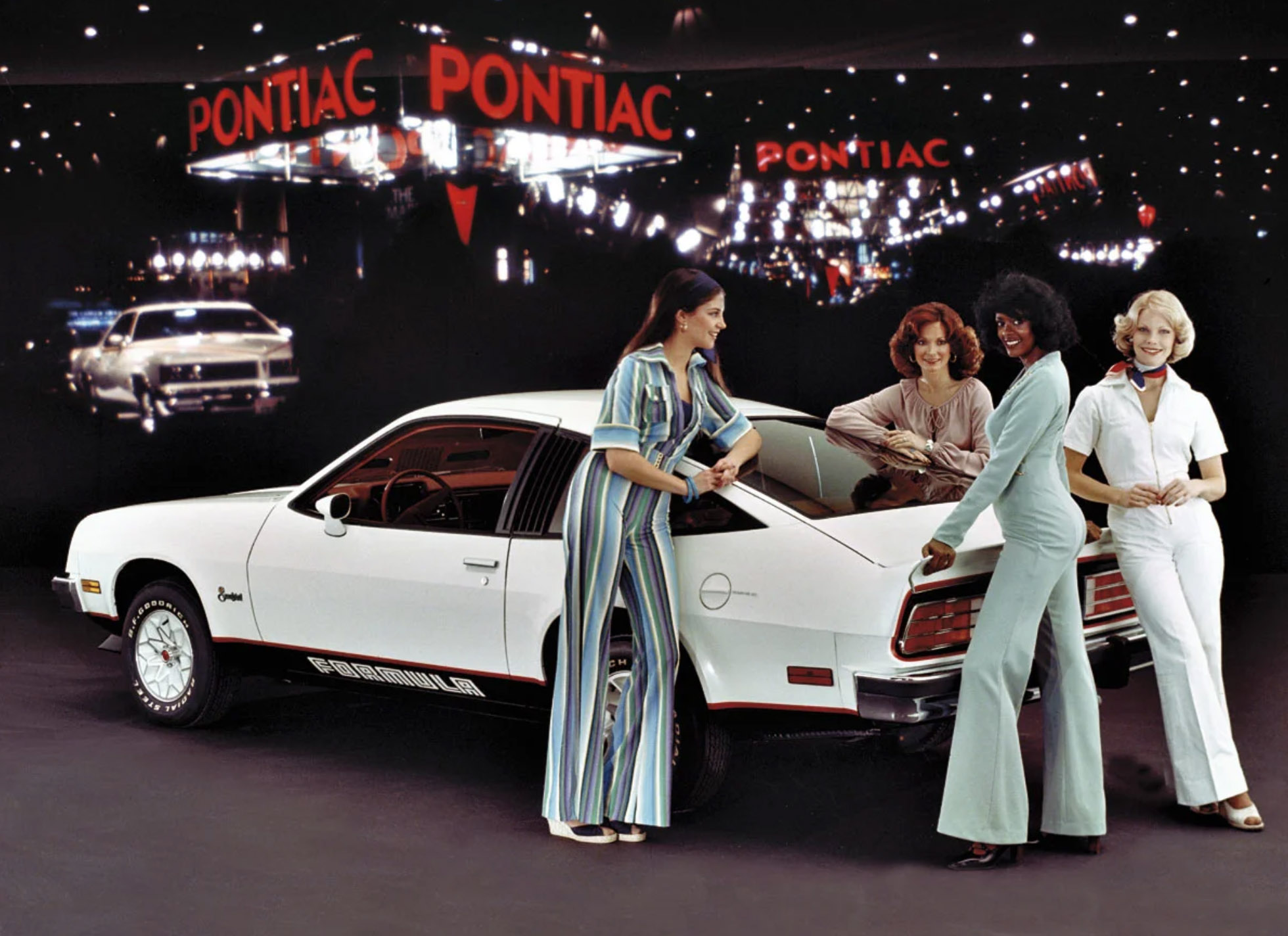
Wait, it gets worse! As Mercedes Streeter wrote, the V8 just barely fit into the Sunbird engine bay, to the point that you couldn’t really access the rearmost spark plugs back in the time when plug replacement was a far more frequent task than today. As she found in a quote from the New York Times:
The plug is very close to the steering column and sometimes the engine has to be lifted as much as one‐half inch in order to remove the plug, a spokesman said. “It would be easier to jack up the horn button and put whole new car under it,” said one disgruntled Chevrolet dealer service manager who did not want to he identified.
One thing The General could and did do was work with the chassis and at least make the Sunbird handle better than the original Vega. That they did, utilizing the torque-arm rear suspension introduced on the 1975 Cosworth-Vega that was essential to handling any kind of power sent to the axle. A beefier front and rear anti-roll bars and further tuning of the Formula’s Radial Tuned Suspension helped handling to the point that it could at least outmaneuver the Mustang II’s Pinto axle on leaf springs.
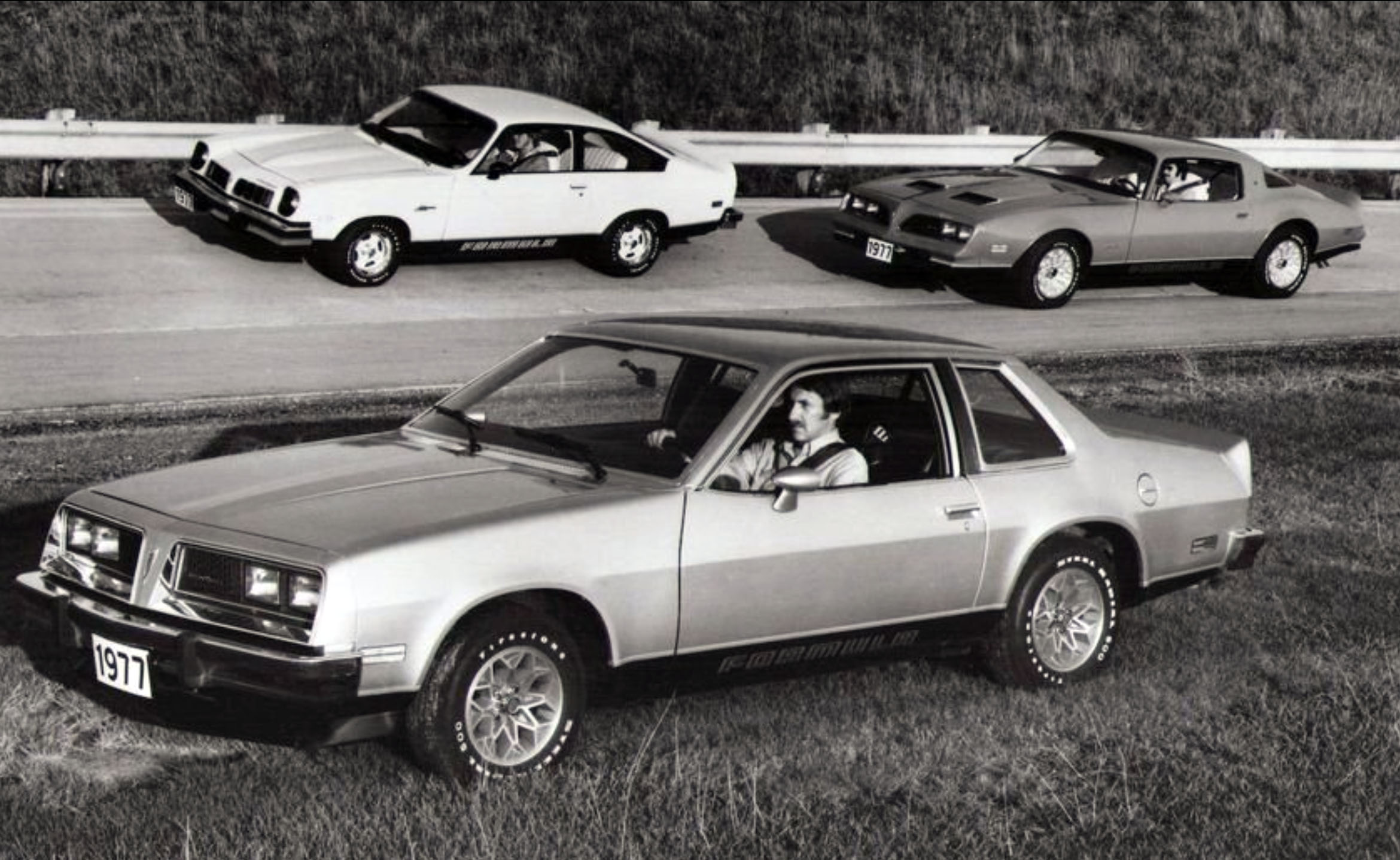
The biggest issue with the Sunbird Formula likely wasn’t the ability to handily beat the Mustang II; the bigger problem might have been its big brother in the picture below. Add the Formula package, the V8, plus a few more options to a Sunbird, and you’d be getting dangerously close to Firebird territory; not a full-on 6.6 Trans Am model, but at least something that didn’t require any excuses and would make your moustache-faced 1978 self look more respectable to the masses.
I do think that the notchback Sunbird Formula also muddied the waters, as well as the fact that Pontiac even offered an Astre Formula at the same time as the Sunbird Sports Hatch for a very brief time. Why?
Sales suffered accordingly. From 1976 to 1980, Pontiac was able to move nearly half a million Sunbirds, but in 1978 the Formula only accounted for about 3,700 of those. I don’t have numbers for how many were V8-equipped or the sales for all of 1979, but I’ve seen accounts that it might have been in the three figures.
Pontiac might have made the best incarnation of the H-coupe, but they didn’t take the idea far enough. Even if they had, it’s likely that such a thing would have been unwanted by pony car and Japanese coupe fans alike.
Waiting For You To Wake It Up
Finding a first-generation Sunbird of any kind today is a nearly impossible task since most have been recycled into appliances and beverage cans several times over. Based on the few non-Formula listings I’ve seen, buying one off the showroom floor as “an investment” would have been a poor choice, since decent examples sell for no more than their price new in pre-1980 dollars at well under $10,000.
Still, that just adds to the appeal for most of us Autopians since you’d feel no guilt by modifying the crap out of one. That Chevy small block? You could double the horsepower of the stock Sunbird in your sleep, while adding modern rubber, shocks, a five-speed ‘box and other aftermarket bits to possibly yield a car with “go” to match the looks. Thankfully, modern spark plugs mean not dropping the engine to change them nearly as often. If you’re tired of seeing Burt Reynolds Trans Am clones or find those things too large for their own good, and you’re a person stuck trying to make a dollar out of fifteen cents like many are today, then a tweaked H-Body might be an amusing left-field classic for you.
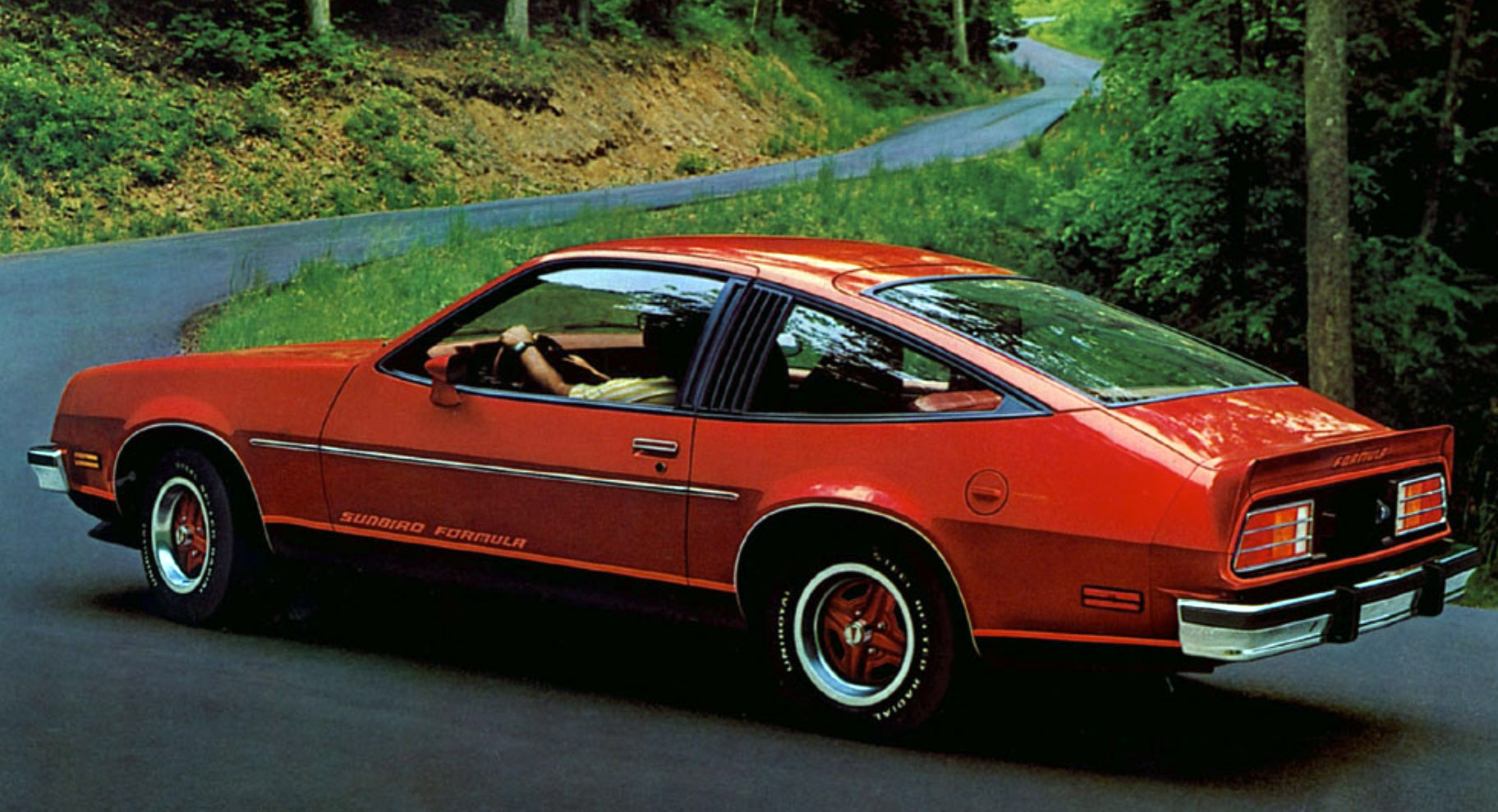
Pontiac dropped the V8 option for 1980 (pictured above), the final year of this H-body Sunbird. Actually, it was an extended model year since their next subcompact wasn’t ready yet. The replacement car was a much more advanced front-wheel drive product that would obviously be more resolved, higher quality, better looking, and faster than the old Monza clone, right?
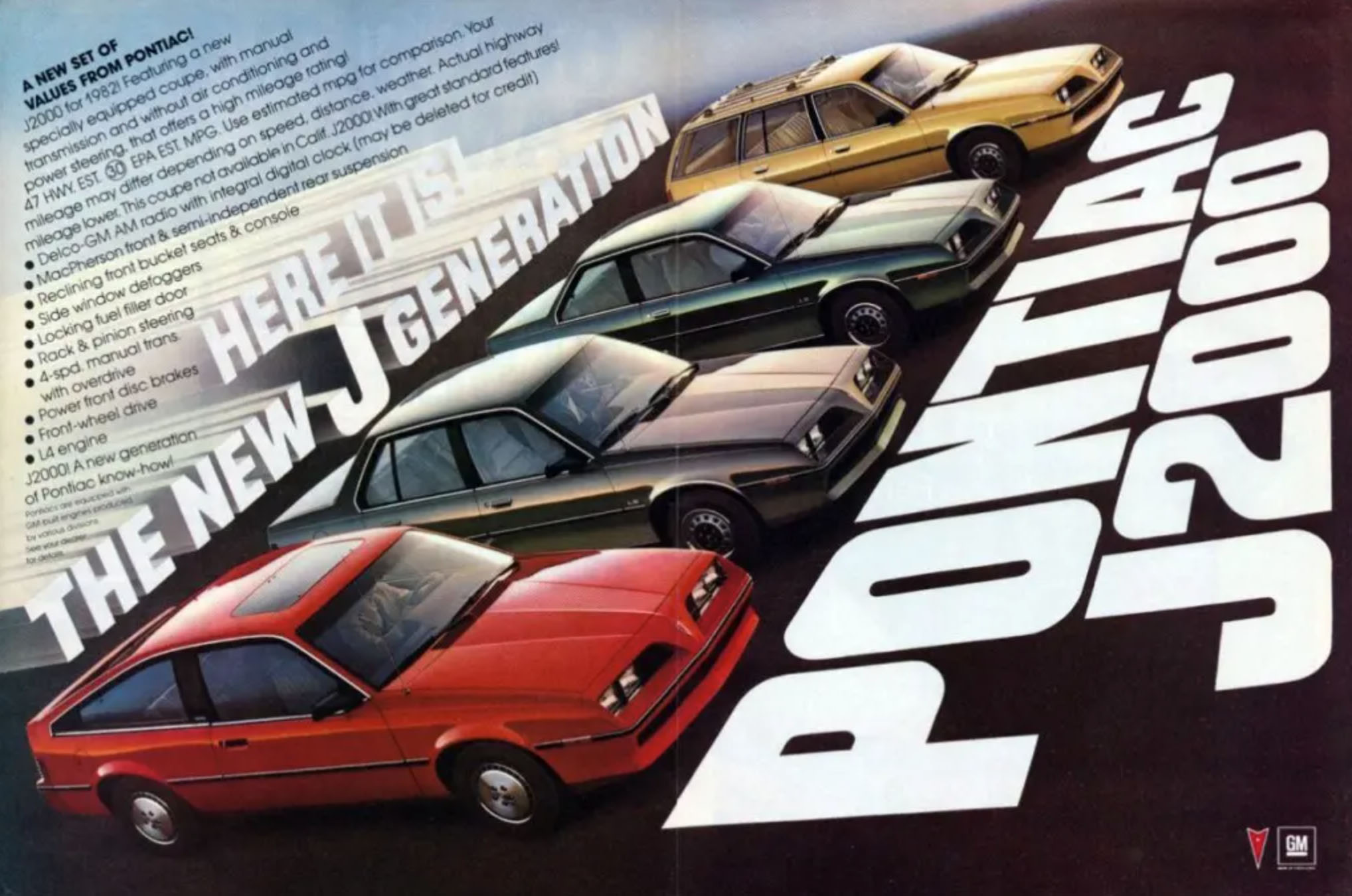
No on all counts! Launched for 1982, the J2000 featured a 1.8-liter four under the hood with 85 horsepower to motivate a car rather heavy for its size due to cost-saving utilization of larger X-body parts. With a three-speed automatic, Road & Track’s hatchback coupe model took an agonizing 16.3 seconds to crawl up to 60MPH.
Ah, the malaise era: a time when no matter how bad you thought that you had it, the Big Three could hit you with something worse.
Pontiac Points: 63/ 100
Verdict: Yet another GM product that made the customer do the testing and finishing, but an easily-added 100 extra horsepower and suspension tweaks might be juice worth the squeeze today – but good luck finding one decent enough to start your project with.


I’m one of those weirdos who vastly prefers notchbacks to fastbacks/hatches. H-bodies, Mustang IIs, pre-’78 C3s, etc. I’ve always wanted a notchback Sunbird with a modern 350. To give you an idea how long, my first take on “modern” was the L98 TPI from 85-91 Corvettes.
“Pontiac honeycomb rolling stock”
Too bad you dont know that the picture is of a Sunbird with SNOWFLAKE wheels.
Beat me to it. Both wheels look fantastic.
I loved Rally lls (and Is from the 60s) and Snowflakes but never liked the Honeycombs.
I knew a kid who lived upstairs that had one. It was a sad story.
I grew up in the rust belt. When looking at the photos here, my mind adds rusted rocker panels under the FORMULA stickers because that is how I remember the H bodies.
Is Ziebart still a big thing in the Midwest?
May I point out that the American car malaise era was 40% manufacturering and 60% environmental horse power sucking tree hugging requirements.
I’m honestly shocked you can even feed yourself, I bet you feel insulted by directions
Well once I figured out if you get the shower hot enough to cook shower spaghetti you will burn yourself so you need to cook it and prepare it prior to getting in the shower it got easier.
And directions? Real men don’t need directions. No matter how many parts are left over.
The platform definitely had potential for those who were willing to throw race car money at it. One of the regulars competing in the Monterey Historics at Laguna Seca is an ex-IMSA GT Monza (red #20) that looks and sounds amazing:
https://www.hemmings.com/stories/a-tale-of-two-chassis/
https://stanceworks.com/2019/10/the-cars-that-beat-porsche-the-imsa-aagt-1975-chevy-dekon-monza-1002/
Oh the memories, good and bad. Didn’t have the Sunbird, but bought a brand new 1975 Monza hatchback 4 speed in orange metallic with the 262 V8. I had driven literal junk for years and this was my first new car. Within a couple of years, had it fitted with mags with wider rubber, installed headers (took forever), and a 4 barrel. It was a beautiful hunk of junk and I loved it. Of course I ran it into the ground (young, stupid), and with the poor execution from production, it was constantly falling apart, literally.
Had a good friend that bought the Sunbird with the V6. This was before I did any mods. We went out on a country road to race and see what was what. The Sunbird was just barely faster or slower, depending on the run. I was disgusted, hence the mods.
Long story short, it ended up in the junkyard to finish slowly disintegrating.
The Monza 2+2 had a design that resembled the Ferrari 365 GTC/4, but GM still couldn’t be bothered to shell out for pop up headlights and instead went with the froggy look because they were cheap asses.
Around 1983-ish my best friends mom had a Sunbird of this era when we were kids. Notchback in that Dresden Blue that looked like metallic baby blue and blue everything interior like they used to do. Even just a couple years old that car was a massive POS.
Gook lookers; and thats where the compliments END ! Beyond rubbish
One of these with an LS swap and a 6-speed would be amazing.
Well, I guess any car with an LS swap and a 6-speed is amazing.
I drove a 1980 monza with the V6 as my second car. Silver with white vinyl seats and grey carpet. It actually looked pretty sharp. It overheated on a long trip once, as the cooling system was still inadequate. Other than that, it was a pretty good car, and had a lot of room inside.
I read this entire article before a J2000 could make it to highway speeds…
I had a late 70s Monza and it was a really good looking car- the view from the drivers seat down the aggressively shaped hood really made you feel like you had something sporty, and the bucket seats made it feel like a cool car. That said, it was just so bad in every other respect.
It’s weird because these things (and the vega on which they were based) should have been ubiquitous but even in Indiana they seemed pretty much disposable- like they never even made it to the used market, just straight to the crusher.
The J2000 used X-body parts? When it was a J-series car, like a Cavalier? That’s news to me. I didn’t think there was any X-series DNA in those; certainly none of the engines crossed over.
Fun fact, the year after it was introduced the J2000 – now known just as the “2000 Sunbird” – was available with a turbocharged engine that cut the 0-60 sprint in half.
The coupe always looked weird to me. I love kammbacks and hatches, hate the coupes. I grew up in vehicles with streamlined butts so it may be that I will never not prefer kamms over notchback bodies.
yes, the J and A bodies used evolutions of the X body, executed much better!
and yes the turbo Sunbirds were a hoot to drive, turbo lag for the days!
i had a ’89 by the 4cyl had almost 100hp and with the 5speed did ok for itself!
I don’t know that the Vega Dipping process for rust control was not figured out by the time this sunbird hit the market, they were not as well noted for rust like the early vega’s, and I happily applaud the design crew that made a compact car in the 70’s that fit an actual v8 in it without major modification. Pinto and Mustang II somehow shoehorned one in, but like all mustangs, the shock towers and inner fenders made them miserable to work on.
Great article! I used to have an 86 Sunbird and actually miss it. It was a good one though: A black coupe liftback w/ blue interior. It even had the foglights in the front and a moon roof. I wanted to eventually put a screaming chicken on the hood so it would look like a mini Trans Am; but ended up selling it
My brother had a Sunbird with the V-8. Very little power. Doors were so heavy that the door pull came right out of the door.
I was born in ’81 and noticed cars from a pretty early age, and I cannot for the life of me remember a Sunbird, Monza, Vega, or any other variant out in the wild as a kid. Theoretically they should have been all over but I’m assuming NW Ohio road salt took them out?
If you started noticing cars by around age nine or ten then yes, they were all gone by then.
’69 here. There were still Sunbird and Monza coupes (“Town Coupes” in case of Monza) around in my rural middle-lowish class high school parking lot. But they would have been the late models with the Iron Duke. A few had Buick 231 V-6’s. I recall a guy in 4-H in another town and a V-8 Monza (Matt, he was kinda hot). Neighbors daughter down the road had a 2.5 Sunbird. In true GM fashion, they had them sorted out right about 79-80 just before replacing them with the J-body, which had its own early issues, but later became the automotive cockroaches that us 80’s 90’s-era teens came to despise.
The last one I remember someone I knew owning was when I was going to school in Detroit in the late eighties, and I recall it was a dying piece of crap then.
I’m not in the rust belt. Neighbors was metallic medium/light blue with white vinyl interior and still lovely circa ’85 ’86.
I remember Monzas and Sunbirds in the early 80s, but by the time I got my DL in 1986 they were quickly disappearing from the road – replaced by Chevettes and J-cars.
wife’s first car was a 79 junkyard special sunbird. at some point the hinges on the doors failed dramatically and the door would fall off when opened. she did the dukes of hazard thing for a bit before her pops pulled a Baretta out of the back lot at the dealer he worked for and replaced about everything inside it under “warranty”
one of the fastest cars in my town was a Vega with a 355 in it. until it destroyed the leaf spring mounts. they ended up swapping the motor over to a Monza and it was never as fast, but also did not twist itself apart. I wonder what happed to those guys.
My uncle had a dragstrip car with a Vega body on it.
’76 in New England and they did not last long on the roads. By the time I got my driver’s license, I don’t think I’d seen any of this platform on the road for quite a few years and they weren’t even prevalent in junk yards, especially where they are the kind of thing kids my age or a little older should have been picking up in droves, like their F, G, and B body contemporaries or even much-derided K-cars (though they were newer, they weren’t an uncommon sight after a longer period of time from their production dates).
I was in high school the year you were born – these things were everywhere in the late 1970s. By the time I was in HS, they were student beaters and although we generally considered them “chick cars”, the ones with the V8s were sought after.
They had the 305 that made only around 120hp but they sounded good.
We used to cut a hole in the fender liner to get to that rear plug. It was no joke to access.
The GM colonnade coupes were actually more highly sought than the H cars, even though they were older. They were the last good GM cars from the 1970s that were affordable (Corvettes and Camaros/Firebirds being out of our price range).
The Monza Mirage or even a regular monza with a wide body kit was rare, but I did see them around in the 80’s. I would actually take one of those over a 79 and up TA. I can swap and or upgrade a SBC pretty easily.
I recall seeing only a handful of Monzas and Pintos in my late ’80s and ’90s teens. G-bodys were still well represented, as well ad Foxes and K cars.
I saw enough of them lol as I was saying above around 1983ish my best friend’s mom had a Sunbird notch. Also at the time my mom had a brown Pinto wagon. I exclusively rode around in trash.
Someone out there somewhere has got to be thinking “You know what this little car needs? A fucking big block. Got any spare 454’s lying around?”
Sure, you’d have to alter the front end a good deal to get it in there, but such a massive engine in such a small car (bonus points if you top it off with a large displacement supercharger) is just the malaise hilarity we need these days.
Yes, but it needs to be a 454 from the mid-’70s so that it’s making all of 275 HP to its name. Now that would be peak Malaise! 🙂
More like 175 hp, really
Even better! lol
Isn’t Stellantis doing this now with the 5.7 Hemi?
I can well imagine the barge-levels of understeer it would exhibit with big block weight up front.
Some LS engines are aluminum block, that would be my modern choice for going fast and preserving chassis dynamics.
Maybe follow the original design brief and put a rotary (Mazda) engine up front
13B-REW? Seems like a perfect application here.
Agreed, though I did once lose a rotor in my ’85 RX7 with a bridgeported 12a. I’ve never had an engine lunch itself until that one, despite being showered with love, premix and the best lubricants. However the LS in our GMC 1500 hums along with zero drama despite 200k miles.
Can attest that the handling with the 3.2 V-6 was already pretty bad.
Or you could put a 350-383 small block in there that won’t kill the handling and slides right in.
A Chevy 350 with a cam and heads would drop right in and make pretty big power.
you would probably be surprised, the engine bays in these were far more spacious than you might imagine. https://photos.classiccars.com/cc-temp/listing/109/9803/12178871-1978-pontiac-sunbird-thumb.jpg
Probably would need to work around the steering shaft and use electric fans, but I bet it would fit.
That one has had a LOT removed, and go look at how those manifolds are designed. Stock, they were tight in there. Mine with AC you couldn’t see the valve covers under all the everything, and any work required AC out first.
Been done back in the day. WAY too heavy for the nose (even the SBC is too heavy, really) and with how much had to be cut away, there’s a reason it’s only been done a couple of times.
That is why LS Swap for the world here. get a 300HP all aluminum LS from one of those V8 colorado’s and boom you have probably the same HP as a big block and none of the weight up front concerns.
Better off with a 78 Challenger or Sapporo
Briefly had an 82 (I think) Sapporo and I low-key regret letting it go. Not terribly fast, but light enough to be semi-spritely, and handled well for the era. An absolute blast in the snow
Meh, they were not very attractive. the fast back Monza especially with a body kit was slightly less ugly. A Vega with wide tires looks a lot like a 71-73 Camaro.
The Vega was such a good looking car, too bad it was let down by literally everything else about it.
Peak Malaise when the NHV benchmark Iron Duke is an engine “upgrade”.
Not the NVH as much as an upgrade that it “actually runs”
Oh I know, the Duke always ran… poorly for longer than most other engines will ever run. I still chuckle at the “Low” Tech 4 ’80s rebranding.
Peak Malaise would’ve been a good punk band name.
I love how these and the Buick road hawks looked. But all I can remember about the Sunbirds is my dad telling me mom used to have one before I was even a thought and it was low on oil so she decided to add oil to it to the point it was blowing oil out everywhere and making a mess of the engine bay haha.
I had the Monza Spyder version of this with the 305 and a Saginaw 4-speed manual.
The 305 wasn’t completely stock. The previous owner claimed to have done some engine work, and it had a Quadrajet on it instead of the 2-Bbl carb it was born with.
It was a fun car. Surprised a lot of Mustangs.
It is a real shame that it took until the next decade for GM to realize the potential of the 3.8L V-6. A powered up one of them is this car would have worked better.
I was just thinking a 3.8 Turbo in one of these would be a cool restomod
I might be remembering wrong, but I think some of the late 2nd-gen F-bodies maybe did get the 3.8 Buick engine. It looks like the ’80 Camaro did, but only in California.
They put it in lots of things but did not make it sing for a long time after.
Exactly, my aunt’s ’80 Grand Prix had it and it was a 110 HP lump
I think a newer one of those would be a great engine swap, even a non-supercharged one—over 200 hp and even more torque with a reasonable amount of weight in front would be pretty sprightly. If you could find one and if it’s really worth bothering.