

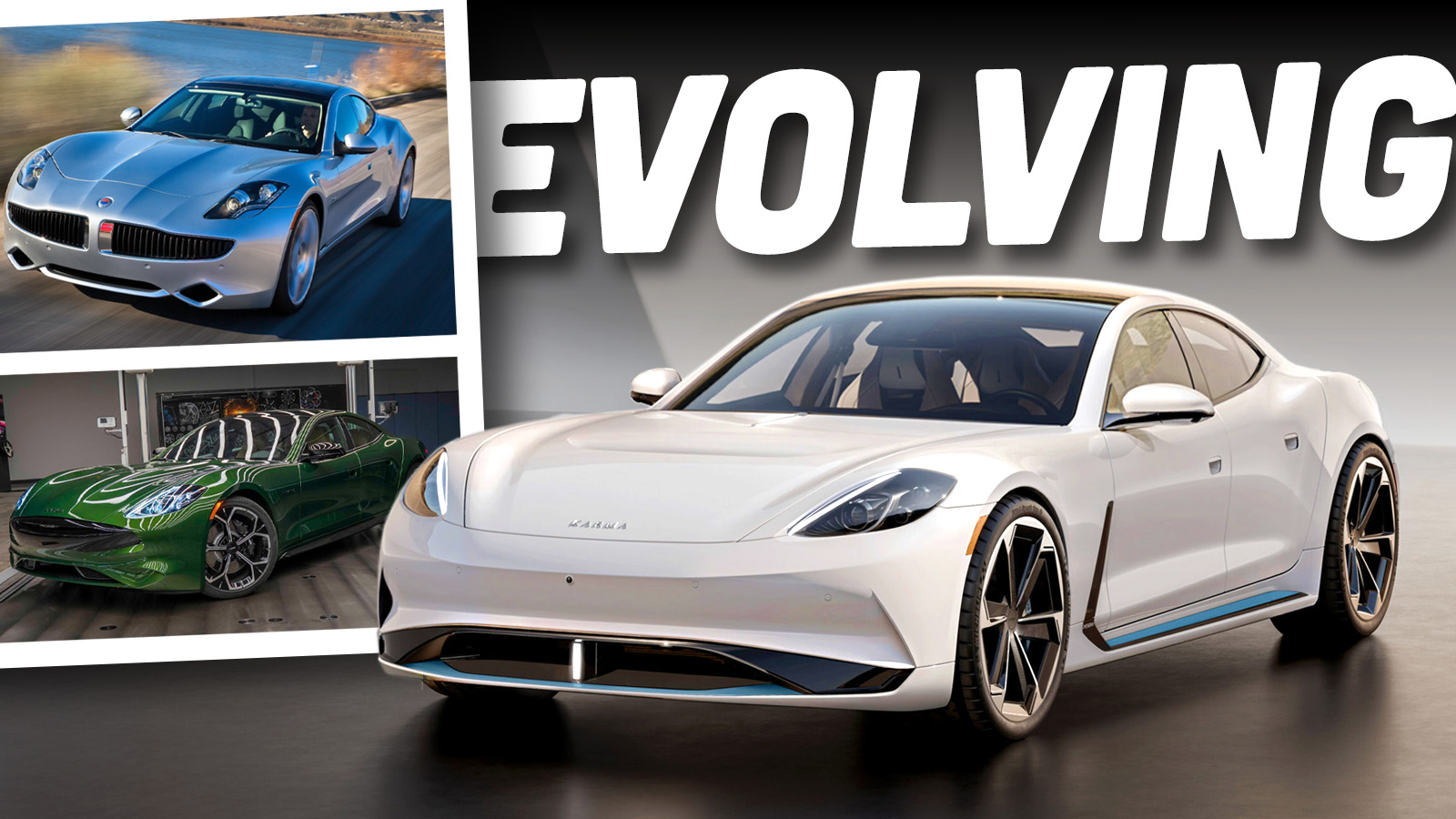
Out of all the new cars on sale right now, perhaps none has a more interesting history than the Fisker Karma. It originally debuted in 2011, a product of designer Henrik Fisker’s startup brand. It took just two years for that company to go bankrupt, before its assets were purchased in 2014 by a Chinese supplier called Wanxiang Group.
Wanxiang launched a new company using the Karma name, Karma Automotive, a year later. Then, in 2016, it began producing Fisker Karmas of its own, renamed as the Karma Revero. In place of the original car’s 2.0-liter General Motors-sourced inline-four, the plug-in hybrid system in the Revero used a turbocharged inline-three from BMW for a combined output of 536 horsepower (versus just 403 horses for the Fisker version).


Spacer
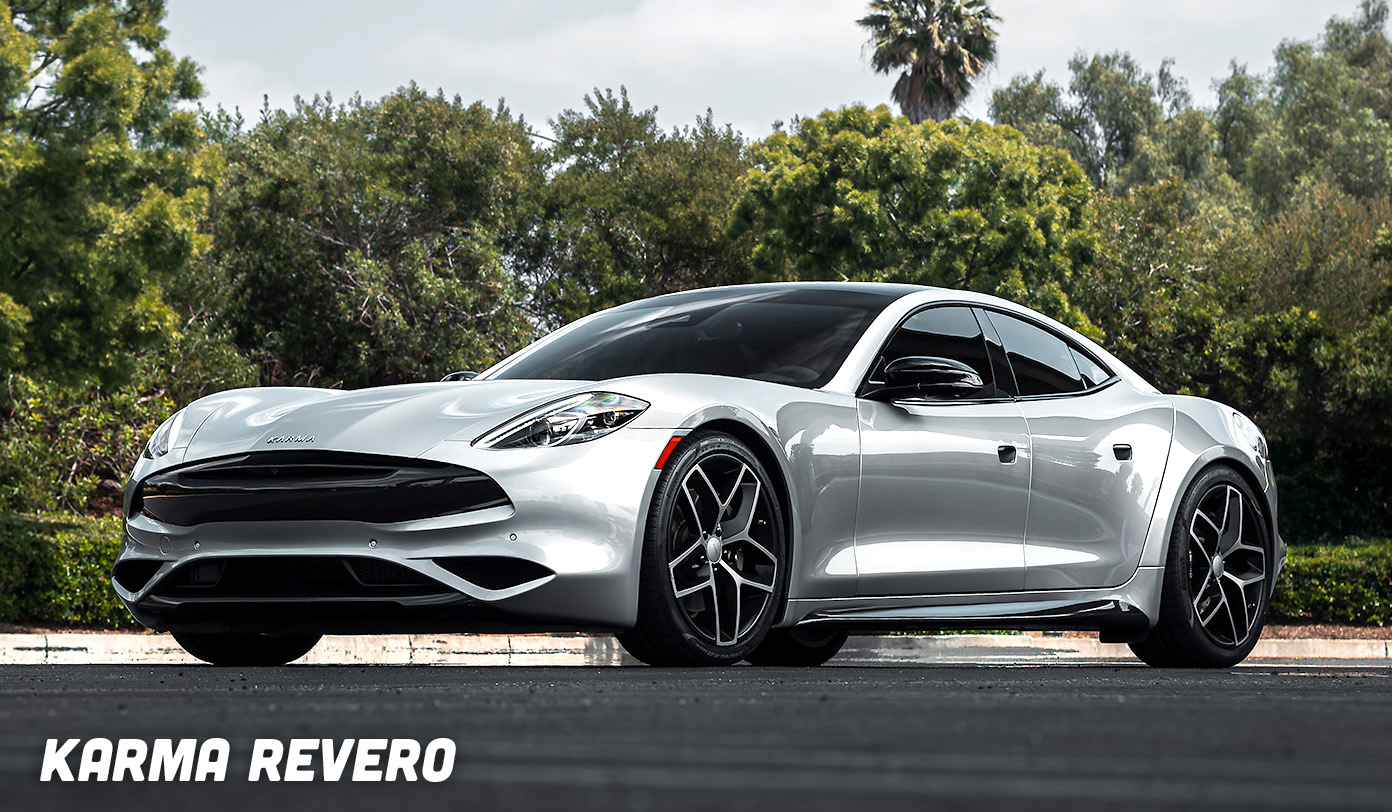
Somehow, Karma has stayed afloat long enough to keep the Revero in production for nearly a decade. The company last week announced it had built the final example, painted in green and dubbed “Aeterna.” But even with the Revero dying, the original Fisker Karma’s bones will live on.
Goodbye Revero, Hello Gyesera
View this post on Instagram
The Revero might be dead, but it’s not really dead. It’s being replaced by a car called the Gyesera, which, as you’ve probably guessed from how the car looks, is basically just a heavily refreshed version of the Revero (which, if you’re keeping track, is a heavily refreshed version of the original Fisker Karma from 2011).
That means come next year, the Karma platform will be 15 years old, which makes it one of the oldest platforms on sale in America today (but still lagging far behind the iconic Chevrolet Express van, which has been on sale virtually unchanged since 1996).
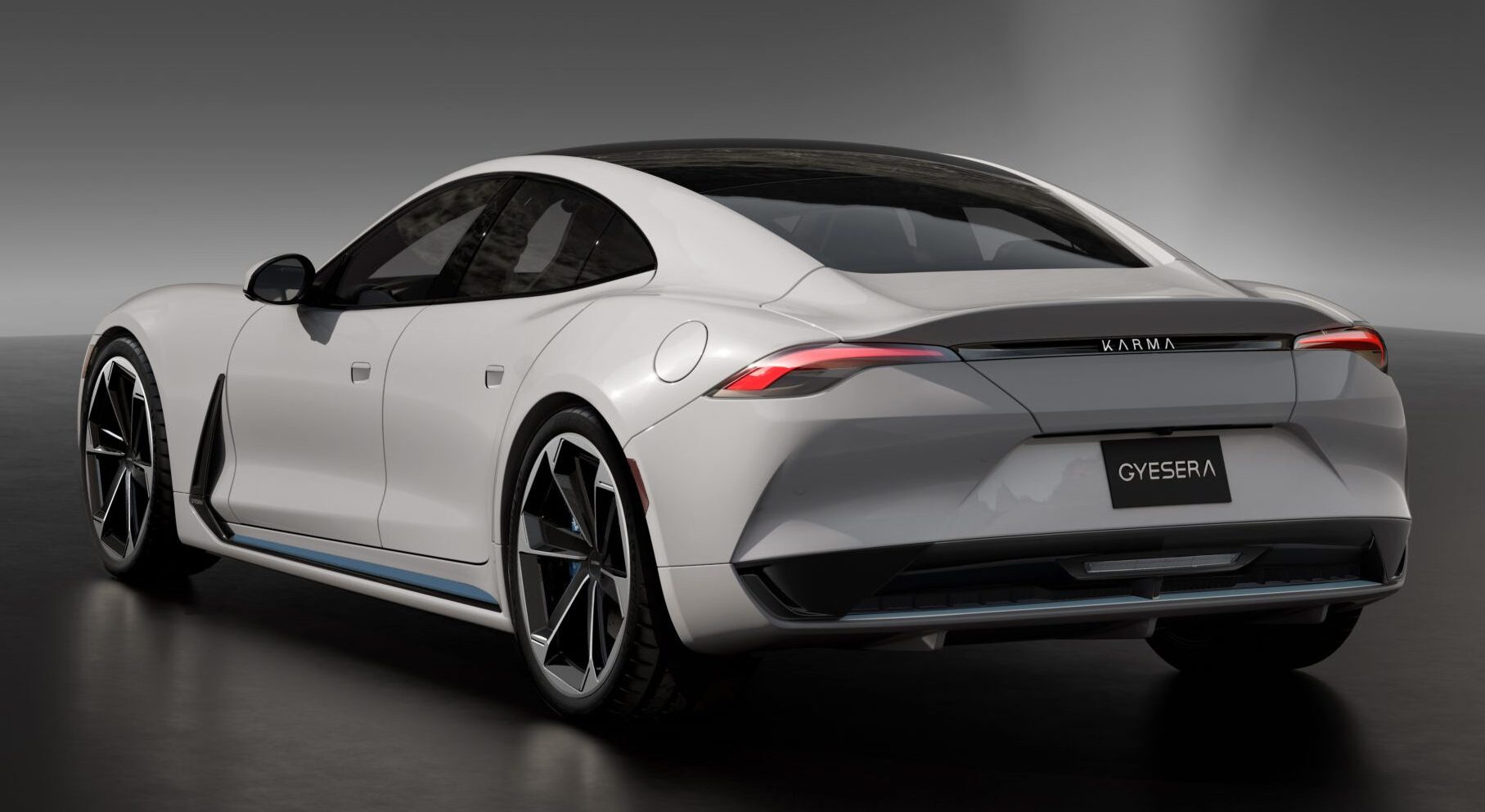
The Gyesera was introduced all the way back in March 2024, but production only started in this quarter (according to Karma, anyway). While it’s not clear how many Reveros were sold over the car’s lifetime, the limited number of used examples listed for sale online right now suggests that number is likely in the hundreds (I’ve reached out to Karma for the data).
So What’s Actually Different Now?
Despite looking nearly identical to the Revero, save for the missing grille, Karma President Marques McCammon told Automotive News last year that virtually all of the body panels are actually new. What’s not new is the aluminum spaceframe underneath, which is a modified version of the one from the Revero.
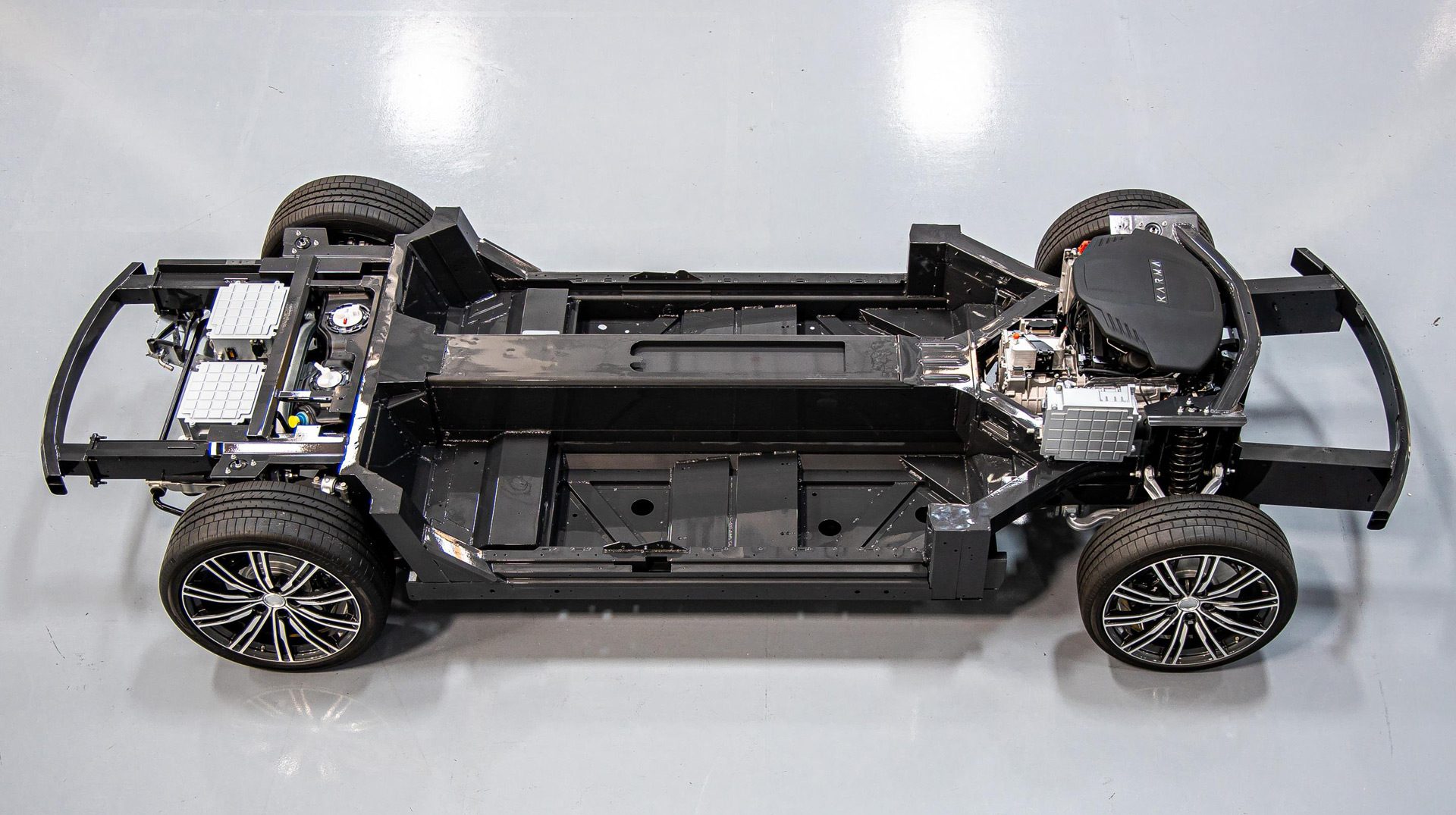
Unlike the Revero, the Gyesera is a fully electric car with no gas-powered range extender. It drops the plug-in drivetrain for a battery that can achieve 250 miles of range. Power is up slightly, to 590 horsepower and 693 pound-feet of torque. McCammon told Autonews that Karma plans to build around 2,000 examples over a four- or five-year period, which equates to around 400 cars a year at minimum.

Whether there’s demand for that many Gyeseras isn’t exactly clear. Demand for electric vehicles in the U.S., where the Gyesera will be built, isn’t exactly so hot right now. The loss of the federal EV tax credit probably doesn’t help things either (not that potential buyers will really mind losing a $7,500 discount from the $175,000 needed to purchase a Gyesera).
Karma Still Has The Plug-In Arena Covered
Even if the Gyesera flops, Karma has another Fisker Karma-based car in the wings: The Invictus. Unlike the Revero, which has a totally new powertrain and a bunch of new body panels, this car uses the same design and the same BMW three-cylinder EREV drivetrain setup.

Essentially a performance version of the Revero, it gets a roof, a hood, and a trunk lid made from carbon fiber, alongside a set of sporty coil-over suspension from Öhlins. There are no performance upgrades to the powertrain; it’s rated at the same 536 horsepower and 546 pound-feet of torque as the normal Revero.
The biggest difference, besides how it gets power to the ground, is its production numbers. Karma plans to build just 30 Invictuses (Invicti?). And since its reveal in November 2024, the company’s been mum on pricing and when production will actually start.
At this point, it feels like the Fisker Karma’s legacy will never die. The original car had a tragically short run before joining the great junkyard in the sky, but Karma’s versions have given it second, third, and fourth lives. I’m personally glad about it, if not just because the cars are so pretty.
Top graphic images: Fisker, Karma Automotive



How does Henrik Fisker keep getting people to invest in his companies despite his track record? Is hypnosis involved? Just curious.
Good karma?
An Ocean of Good Karma…
You win Autopian for today!
I don’t know anything about the guy other than what I’ve read here, but a lot of his investors must have lost quite a bit of money with Henrik, so I dunno how much good karma he could have accumulated.
Maybe he was a Mother Teresa type figure in a past life?
Wouldn’t kick one out of the garage. Just saying. What a looker of a car. I’m glad they’re still around in some fashion and the new owners haven’t messed too much with a good design. Mr. Fisker sure knew how to design them. Too bad he’s terrible at actually running a company.
I am in violent agreement with you, this car has always looked amazing. Despite the checkered history the Karma (and successors) is truly beautiful.
“Wouldn’t kick one out of the garage.”
Well you’d have to have a really REALLY strong leg to get it out of your garage by kicking it.
Just saying…
LOL
Was never quite convinced by the Karma design, it looks to much like a piece of icecream that has melted in the sun.. saggy and baggy and with little athleticism or energy in the design.
There is one (believe it’s the original Fisker) that I see infrequently in my area. Still a striking car, especially in person.
Too weird to live, too rare to die…
The Fisker Karma has to be the Olympic Torch of cars. Rereleasing it is like a startup rite of passage.
Brian, is this comparison of the old Revero-based Invictus more properly supposed to refer to the new body/powertrain Gyesera?
15 years old it might be, but with only minor changes the majority of the design still holds up today. I always thought the Fisker Karma was a handsome design (and that Henrik should just have stuck to designing cars instead of trying to run the company)
Truth be told, the only problem in my mind with the original Karma beside the solar panels negating a sunroof option was the position of the exhaust ports. I mean seriously, Henrik, just what the hell were you thinking putting it in FRONT of the front door where exhaust can rise up into the cabin instead of BEHIND the rear door where it can blow away?
That Justin Bieber had one was a minus, but ultimately not a dealbreaker.
General Colin Powell (RIP) also rocked a Karma, erasing the Bieberesque stain.
“Demand for electric vehicles in the U.S., where the Gyesera will be built, isn’t exactly so hot right now.”
I hate Elon, but remind me what the last sales numbers were for the 3/Y. I begin to suspect the “bought this before Elon went crazy” stickers are a factory option.
Probably down YoY. Possibly 9% overall decline and 12% decline for the Y.
https://www.coxautoinc.com/insights-hub/cox-automotive-forecast-dec-2025-u-s-auto-sales-forecast/
https://electrek.co/2025/12/31/elon-musk-claims-tesla-model-y-is-best-selling-car-world-serious-doubts/
I bet that prediction is based on the (correct) assumption that the last months of the incentives pulled sales forward. Full year sales predicted at +4% despite Elon and IncElCamino sales. The Koreans seem to be selling a lot of BEVs, but that’s likely concentrated where I live.
I think something that doesn’t get talked about nearly enough is how in BEV land a chassis can keep being used until it completely fails crash tests, it seems like we should get used to platforms lasting eternally as the new norm but tophats changing.
That’s kind of true in non-BEV land, too, the only thing ever stopping a manufacturer from selling a car for as long as they wanted to build it and customers wanted to buy it has always been the ability to meet changing safety regulations.
Hell, Checker Motors used the same chassis for some 42 years
<The Morris Minor/Hindustan Ambassador has entered the chat>
Where we’re going, we don’t need ‘crash-test worthiness’
I think the asterisk there, however, is that changing a motor requires retesting for crash and emissions, so it’s still stupid expensive to make big updates. EVs as far as I know don’t have this issue.
“That’s kind of true in non-BEV land, too, “
Yeah… that makes me think of the Chrysler LX cars.
I recall that the main reason for updating/overhauling the Chrysler LX cars wasn’t that they were ‘old’ but that the design had no way to properly accomodate hybrid or electric powertrains and trying to add that tech to the existing design would have resulted in nasty kludge.
I was thinking the same thing. It’s not like auto engineering was in its infancy in 2011. It would be good to know what the deficits are of an “old” platform vs a new one.
Can we talk about that green?
The good color.
I got an ad for a green Maca that looked outstanding today. Voluptuous.
I just learned that Fisker himself created approximately 7 custom-modified Mustangs for one of the owners of this website!
http://galpinrocket.com/
You can’t fault the design, it’s always been a looker.
Is there a term for something that feels like it should be vaporware except it’s real and been around for a decade and a half?
Iceware?
It went from vapor to liquid to solid and now it’s just sticking around forever.
Now it’s just sublime.
I’m actually OK with these things soldiering on, because they still look fantastic. They don’t make cars this voluptuous anymore. I don’t really care if they are impractical, slow, or inefficient relative to their competition. The Revero, and now the Gyesera, would turn my head more than anything the Germans make. And for that alone, I’d seriously consider one if money was no object for me.
The 2018 Reveros are getting dangerously attainable.
So I see… I’d go for the 2020+ with the facelift (the cheshire grin/mustache was a bit much for me), but even then they are getting down around 40k, with very low miles.
In a different life, maybe.
I couldn’t bring myself to actually DO it but it’s low enough to think “huh, I could be that guy…”
Wanxiang must have a reason to keep them running. Some kind of financial instrument or just having a us presence. There must be some other ip they can buy especially if they are claiming they have reworked all the body panels. Though some of the better candidates old Michery uses as his financial instruments.
“Ditch the range extender and make it look like a Tesla. Those are two moves that have DEFINITELY worked in North America this year!”
WOW what an awful decision, truly nobody will be buying these things. Nearly double the price of every competitor in it’s space with an ancient design and chassis that minimizes interior volume. So they’re cramped, shorter than acceptable range, lower than competitors power, and far more generic looking than previous cars on the same chassis. Just like the company that they bought the assets from, Karma automotive is total joke.
250 miles was the last pre-revival Chevy Bolt’s range, I think the new one does better. Even if the shape is more meatball than smash burger, it still costs a lot less.
I mean hell you can get a Model S or Lucid with over 375 miles of range, an EQS sedan with over 350, even Rivian R1T or R1S have more range in base config. Any luxury EV buyer would turn their nose at this so fast, only the cheapest and lowest range EVs in the US can’t even beat 250 miles real world, and I don’t think there is a single EV over 100k in the US that can’t do at least 250 miles. Even the ultra-crazy track focused Taycan Turbo GT gets 269 with the Weissach package with a crazy huge fixed rear wing.
Soooo – you’re saying it’s Bad Karma?
It feels like they ran some market research on their current customer base and found the majority do less than the stated range a large percentage of the time. Hence they decided that 250 miles is enough. The bonus being the smaller battery allows for better handling and performance.
I’m in two minds, firstly, how many people are daily driving these things? Probably close to zero, so the short range doesn’t matter that much – and they’ll all do extremely low miles annually too, so battery degradation is more about time than usage.
I then remind myself that range anxiety is still a thing dragging down BEV uptake even in the mainstream – for certain people where it’ll literally never be a concern.
So, it feels like Karma is making a big bet that their target customers don’t care about range, forgetting/ignoring the psychological, non-rational aspects that have a huge impact on car buying decisions.
Another factor is that they probably don’t have access to the 3cyl hybrid drivetrain for much longer. It wouldn’t surprise me if BMW is discontinuing it and the replacement drivetrain either doesn’t fit, doesn’t exist, or they weren’t able to negotiate favourable terms with BMW to use it.