


This morning I’m tanking my neighborhood’s property values with a crusty Jeep J10 on jack stands. I’m in the process of servicing the rear brakes prior to shipping the vehicle to Michigan, where I plan to sell it. Anyway, this “servicing” involves me not just replacing the brake shoes and hardware, but also repairing the wheel cylinders, which brings me to something that always blows my mind when I think about it: Cars before 1967 were absolute deathtraps. And not just because they weren’t designed for crashes, but because their brake design made crashes seemingly inevitable.
My Jeep J10’s rear brakes haven’t worked in months, and the reason is pretty obvious to anyone who steps on the pedal. The pedal feels soft and spongy instead of hard and firm, and one peek into the brake master cylinder shows: The rear reservoir is almost bone-dry.


Check it out:
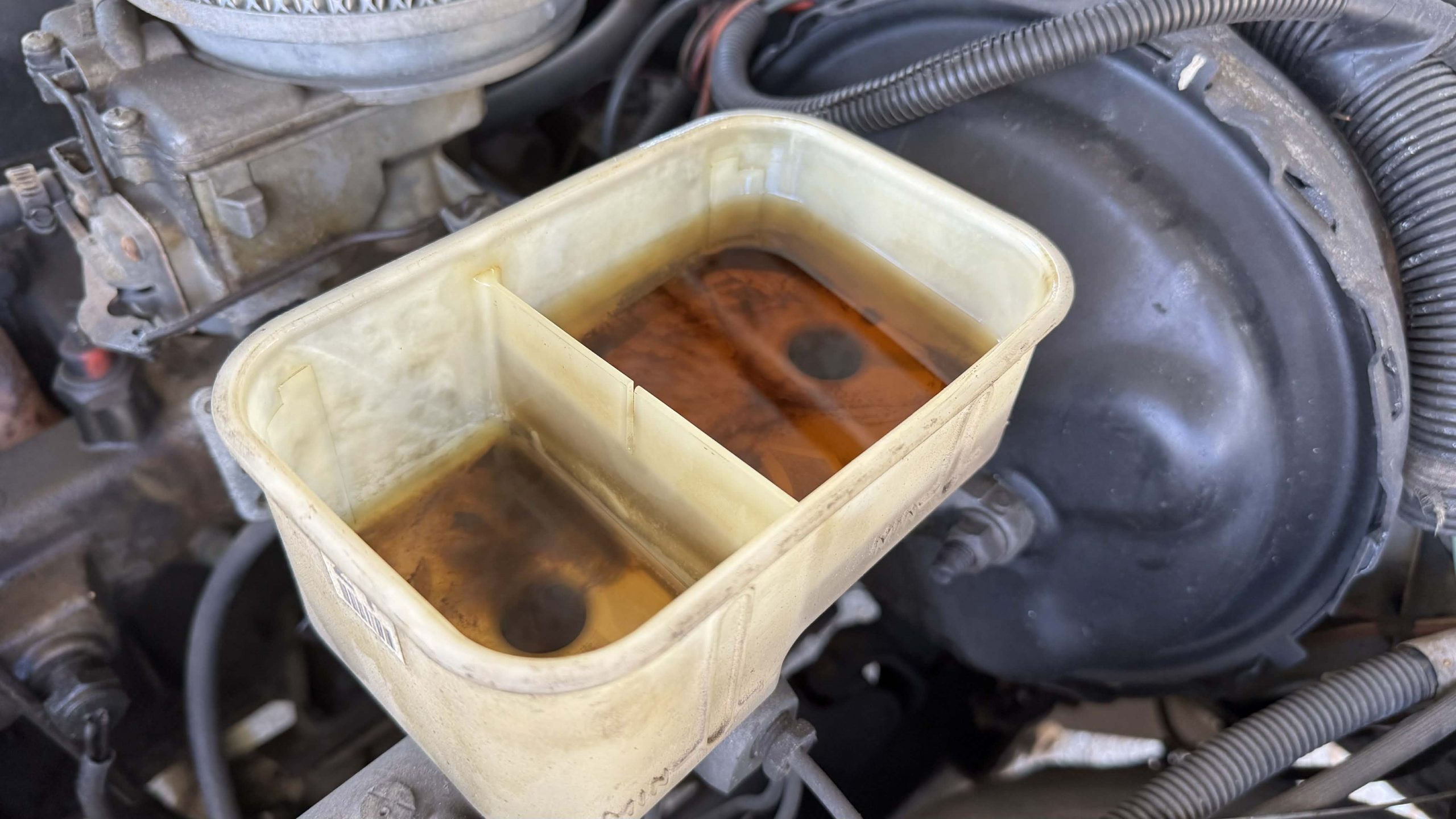
In other words, the fluid that my foot is supposed to push through the brake lines and hoses in order to activate the rear brakes has leaked out onto the roadway. This means I have absolutely no rear brakes.
Drum Brakes
Before I go into what the root cause is, I just want to briefly explain how drum brakes work. Instead of brake fluid coming into a caliper like this…


…and pushing a piston (or multiple pistons) against some brake pads so as to squeeze them against a disc like this…
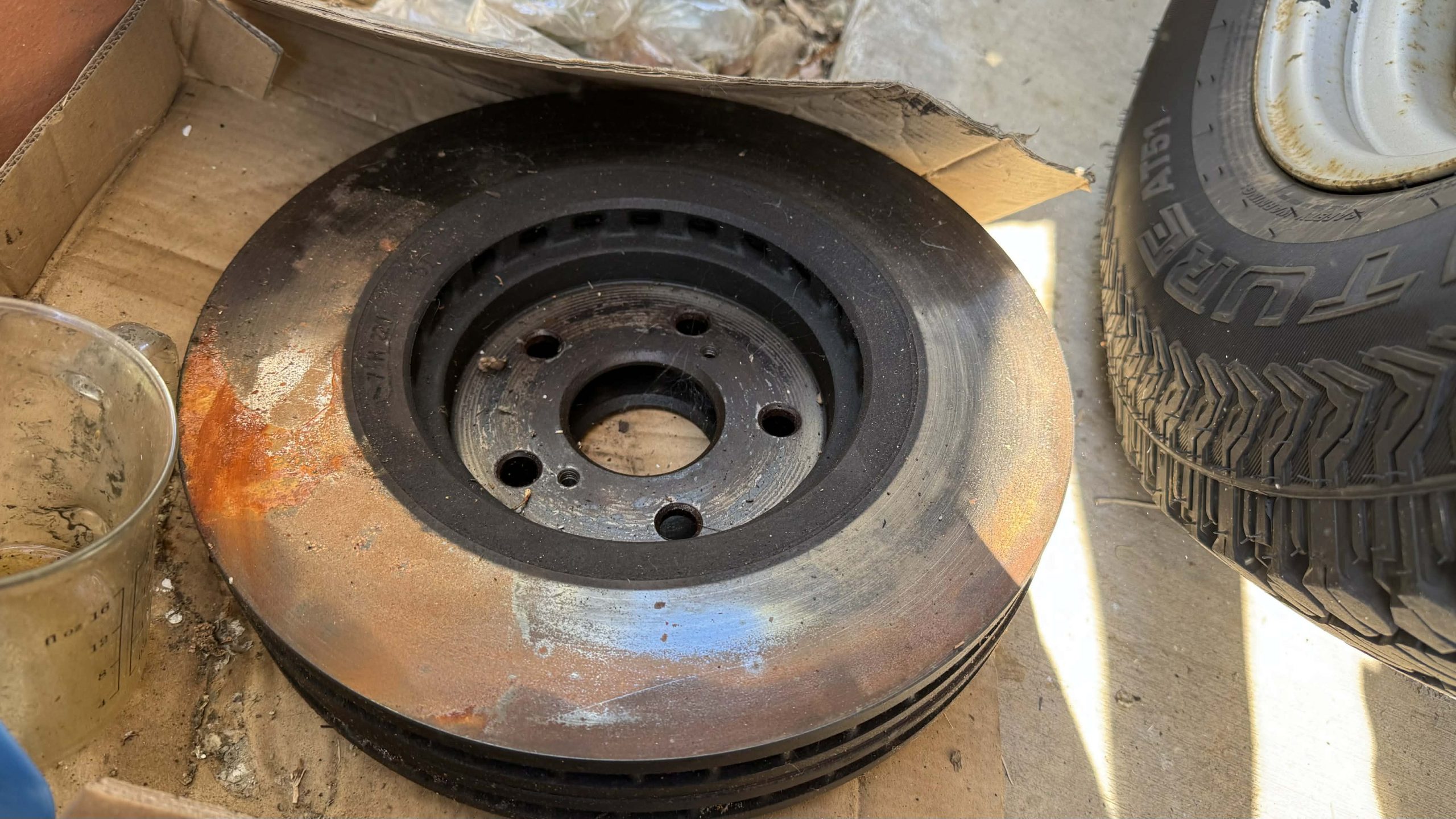
…drum brakes use a small wheel cylinder to “spread” some brake shoes against a spinning metal drum. A wheel cylinder is an extremely simple device containing two pistons — one on each end of, essentially, a smooth pipe (cylinder). Basically, fluid comes in from a brake line through this hole:

It enters the wheel cylinder at the center and pushes two pistons outward.
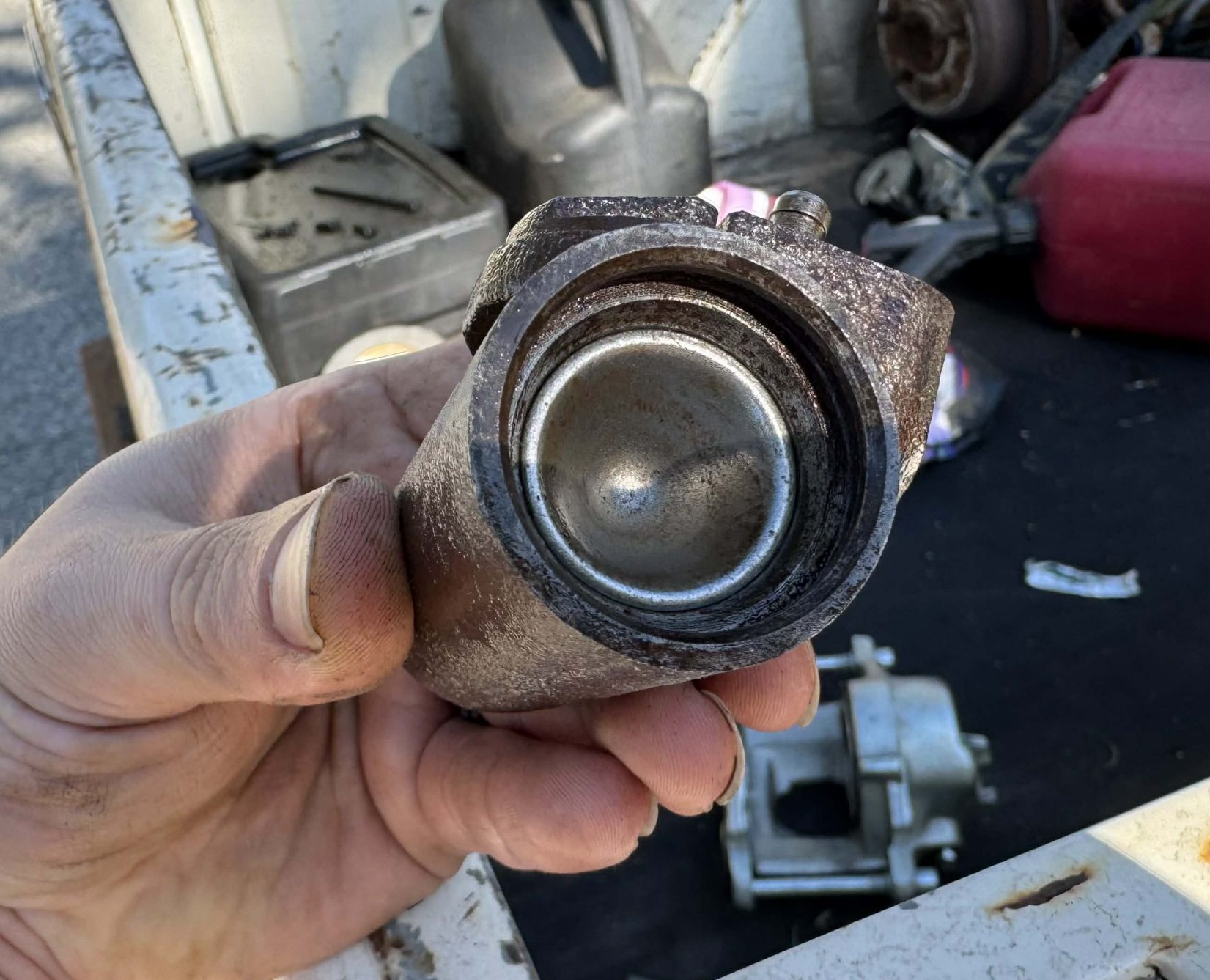
You can see the metal piston above and both of them (which each get a rubber inboard seal, with a spring between the two seals — and each piston gets a rubber outboard dust seal as well) in the image below:

The pistons moving outward spread brake shoes like these (the arrows are pointing to the brake shoe “liners” i.e. friction material)…

…against a drum like this:
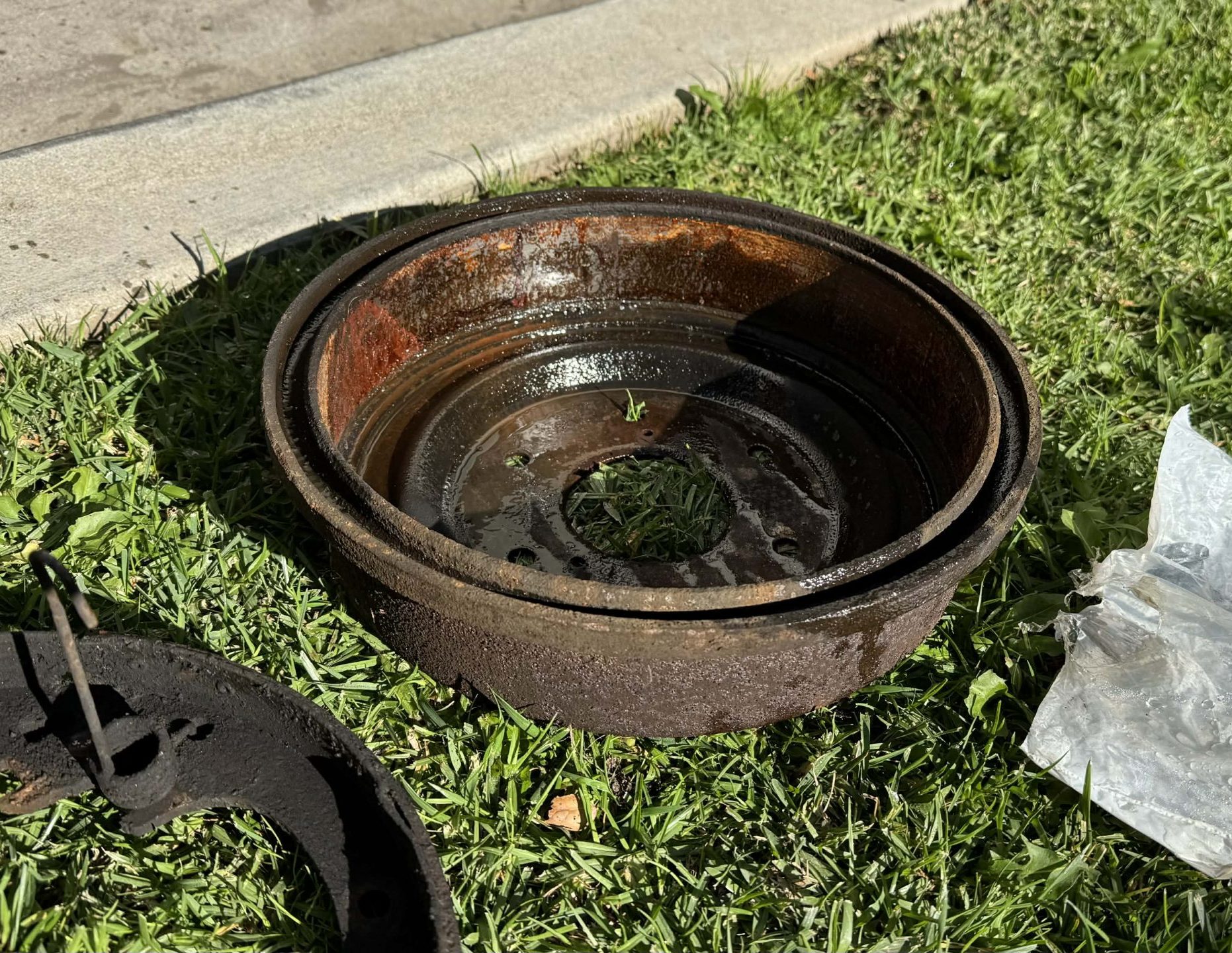
That drum has holes in it for the vehicle’s lug studs to which the wheels are fastened. Therefore, stopping the drum means stopping the wheels from spinning, thus stopping the car.
Drum Brake Systems Are Prone To Failure If Not Maintained
Anyway, with that out of the way, I want to point out what’s causing my Jeep J10’s brakes to fail, as it’s something I’ve experienced numerous times on older vehicles. Vehicles with drum brakes feature what’s called a brake adjuster crew. This is usually located on the bottom of the drum brake assembly, between the bottoms of the brake shoes. Here you can see it clearly:
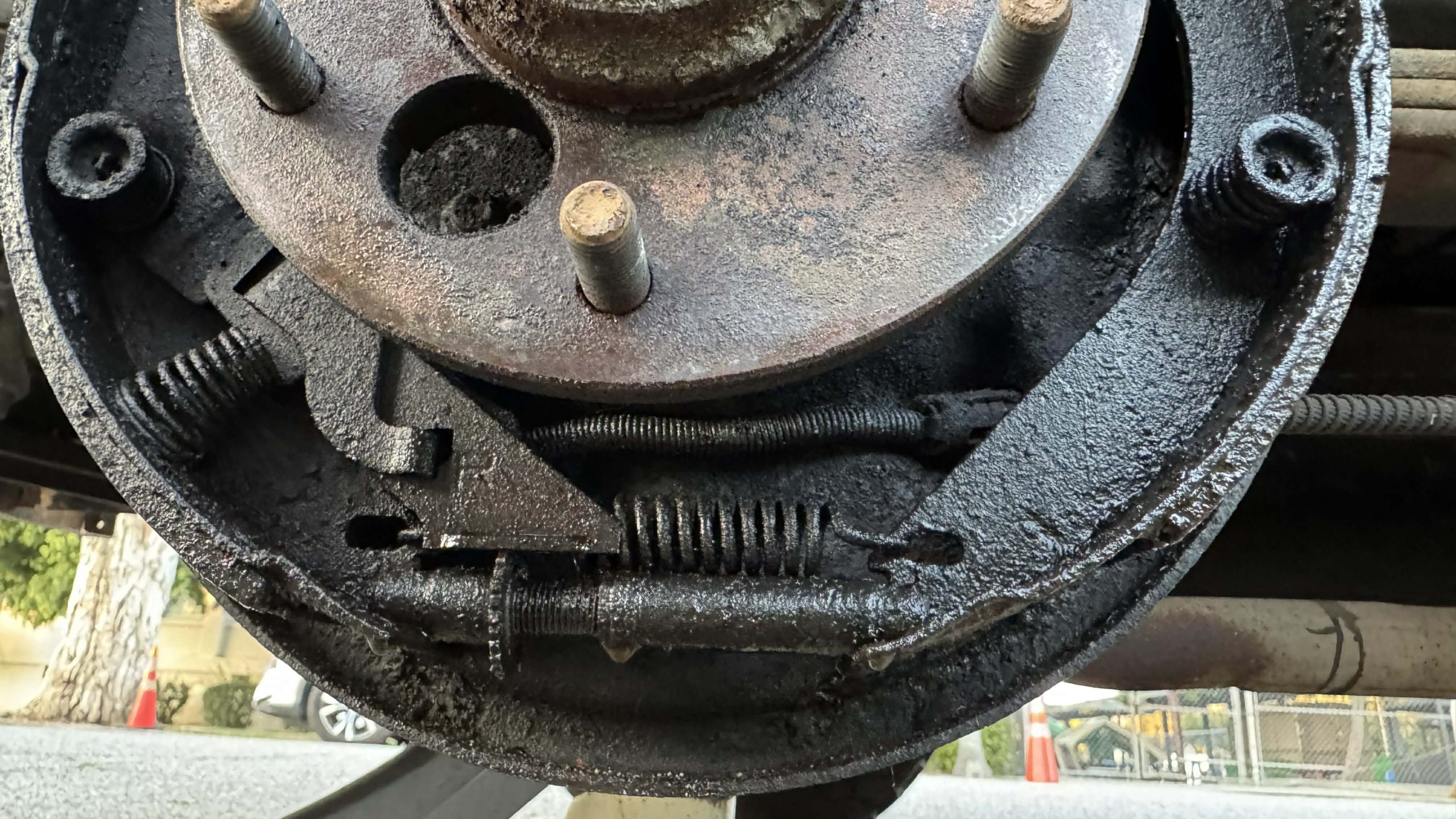
The brake adjuster screw’s job is to compensate for the wear of the brake shoes themselves as their material turns to dust during stops. The shoes become thinner, and the adjusters push the bottoms of the shoes outboard a bit more to compensate so that brake material is right up against the drum when the driver is not on the brake, that way those shoes can make healthy contact with the metal brake drums.
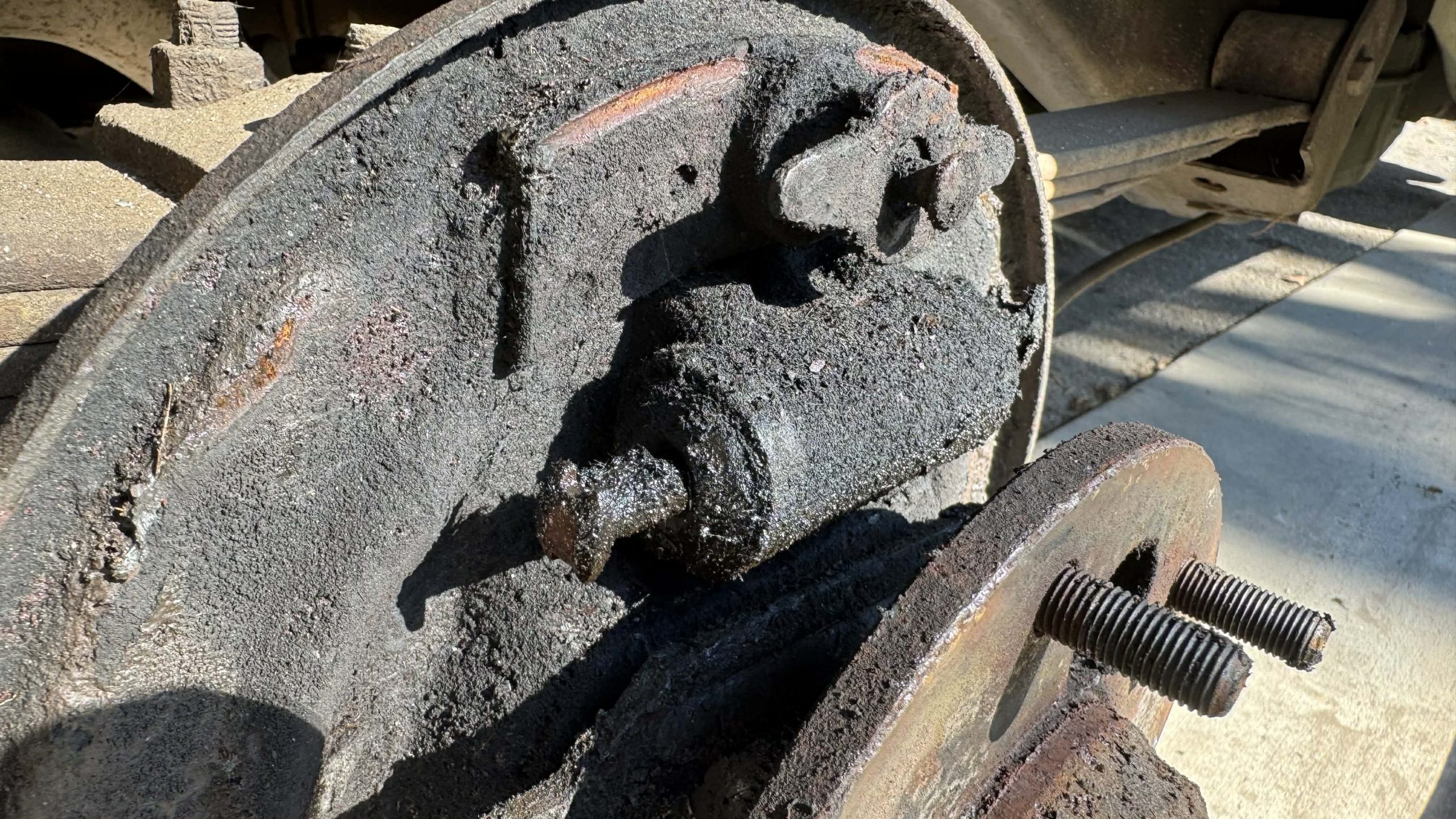
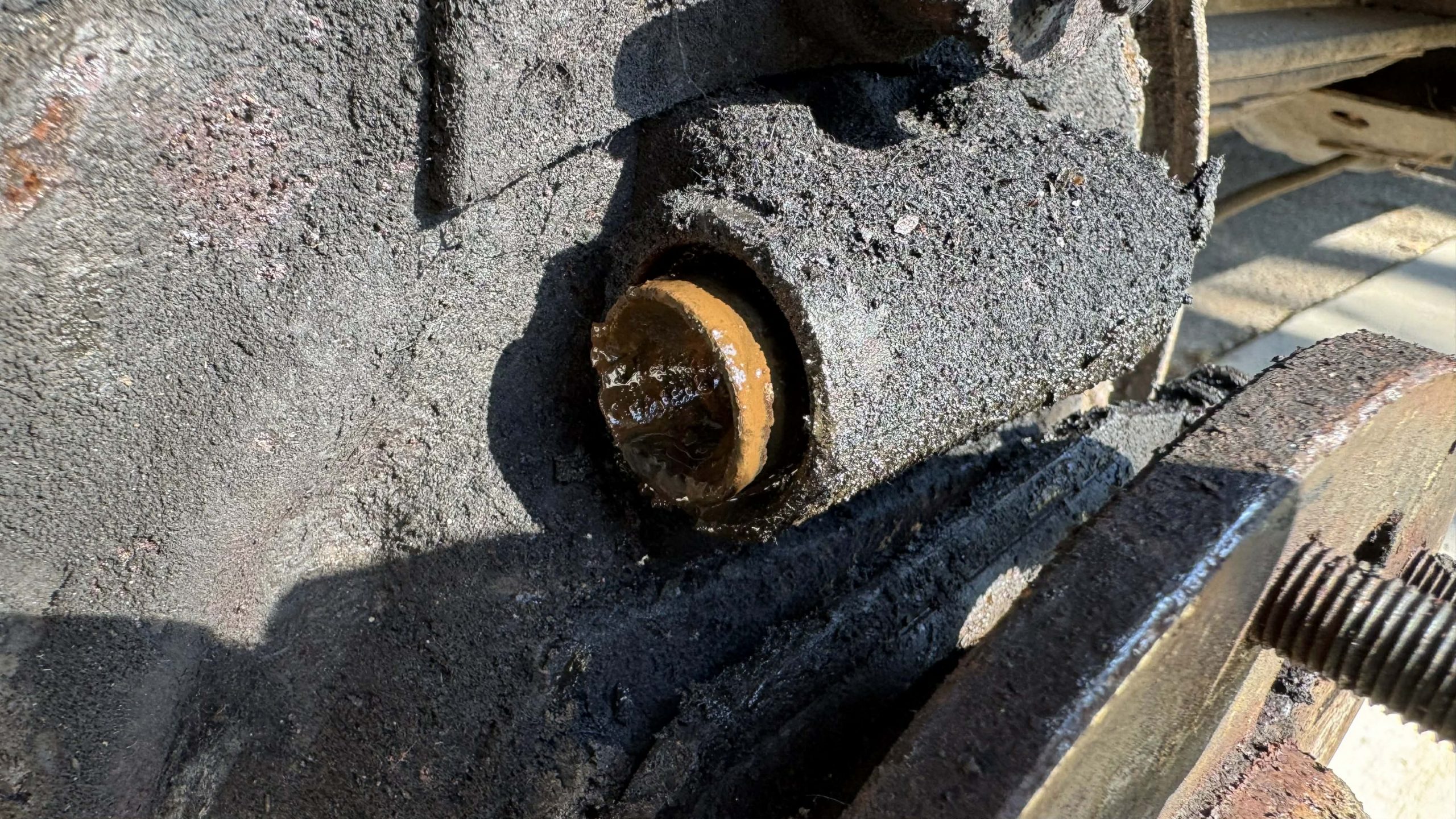
What happens pretty much all the time — and this happens with any threaded screw that isn’t protected from the elements — is that the screw rusts and seizes up. No longer able to rotate due to locked-up threads, the adjuster can no longer compensate for brake shoe wear, and eventually those brake shoes have to move a long distance in order to make contact with the brake drum. Since the adjuster hasn’t compensated and moved the shoes closer to the drum, the wheel cylinders have to do it, and this means those pistons have to move too far the cylinder to the point that they fall out, causing the fluid to escape. This is a major leak in a brake system. That’s almost certainly what happened with my J10:
Pre-1967 Cars Were Unforgiving If You Had A Brake Leak
Luckily, my Jeep J10 was built after 1966 (it’s a 1985), otherwise this rather common wheel cylinder failure would have led to complete brake failure, and I would have crashed into whatever was ahead of me. No, luckily — as shown in the brake master cylinder photo — I had fluid still in my front hydraulic brake system, so my front disc brakes were still working.
But, had this failure happened in a pre-1967 American car, I’d have been completely screwed thanks to a part I like to call “The Widowmaker.” This part is the single reservoir master cylinder:
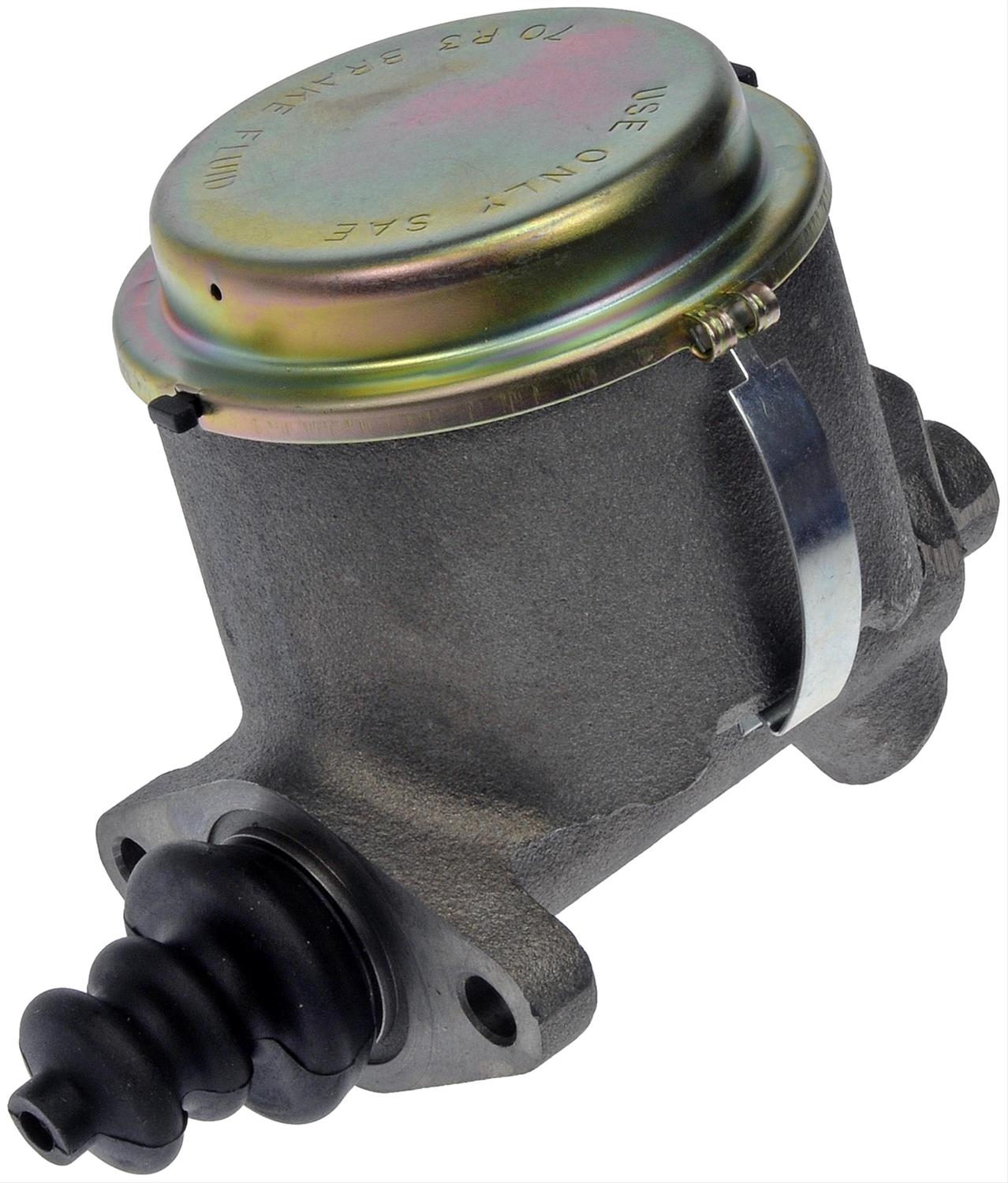
This is a single cylinder/reservoir that connects all four brakes hydraulically. This means that, if a wheel cylinder springs a leak or a brake line rusts out or an old rubber hose gets a pinhole, the brake pressure needed to actuate all four brakes will be lost. One single failure anywhere along this rather large brake system — a master cylinder, a bunch of brake lines, and a bunch of hoses — would lead to no brakes at all (except for maybe your parking brake, if you keep that cable nice and taught, and far too few people do).
There’s a reason why, in 1967, a dual-reservoir master cylinder was federally mandated. This new system means two wheels (for older cars, it coupled the two fronts and the two rears, though modern systems tend to couple each front wheel with the rear wheel on the other side of the car) are hydraulically coupled, so a leak in the system only leads to the loss of two brakes.
Many Old Cars Didn’t Make Brake Fluid Inspection Easy
But prior to 1967, almost every U.S.-sold car featured the Widowmaker, and what’s especially bad is that many of these Widowmakers were not in particularly serviceable locations.

For example, my 1954 Willys CJ-3B’s single-reservoir brake master cylinder was in the engine bay, below the driver’s toe-board, with a tiny access hole that made checking the fluid level (and filling it) extremely difficult.
Old Car Brake Systems Were Deathtraps
I’m amazed that, 59 years ago, every car on the road had a fairly failure-prone braking system that was extremely unforgiving if it did fail, and also not particularly easy to keep an eye on, either.
To be sure, oftentimes brake leaks are gradual, and they lead to a soft pedal that should let the driver know something is up. But sometimes leaks are big, and sometimes drivers might ignore a soft pedal, and if they do that long enough for all the liquid to drain out of the system, they might find themselves with a grille full of the car ahead’s rear bumper.
I know the old-timers are going to say “people just maintained their cars better back then because they had to,” and that probably has to be the case or else our grandparents wouldn’t have survived the 1950s. All I know is: Any car I own that’s pre-1967, I’ll try my best to fit with a dual-reservoir master cylinder, because I want at least a single line of defense beyond my park brake. Because the Widowmaker offered none.
Top graphic images: Ford; Summit Racing; David Tracy




This is actually a well reasoned argument in favor of updating any classic car to both…
1. dual-reservoir master cylinder
And
2. Upgrade from drum brakes to disc brakes
In the past the primary or only reason I’ve heard other enthusiasts claim is for better braking performance. As a safety system though it seems both upgrades is the prudent and safe course of action
Oddly enough, my only significant brake failure was on a ‘modern’ car with boosted disc front end, drum rear and twin circuit brakes (Leyland P76). Except that came down to a previous ‘repairer’ ‘fixing’ the brakes and accidentally fitting right hand side self adjusters to both rear brakes. The self adjusters worked, but the error meant the left rear loosened instead of tightened, until the slave cylinder pistons popped out when I started braking at the end of a freeway. The proportioning valve piston moved far enough in the valve that the front brakes became basically useless as well, and the emergency brake was unable to do anything to help. I ended up having to do some rapid downshifting, locking up the rears on every downshift, and ended up having to yank the steering over and put the car into a sideways slide to stop.
Every drum brake I open up, the adjuster gets a very good clean and antiseize on the threads. And technically my 1962 Valiant is immune to the problem you encountered – it has 4 wheel unboosted single circuit drum brakes, but unlike later Australian Valiants, it just had a plain adjuster in each drum, without the extra bits required to make them self-adjusting. Getting the brakes 100% involves a whole lot of driving along, hitting the brakes, feeling if the car wants to pull left or right and shimmying underneath with a homemade adjuster tool to tweak the adjusters manually.
I enjoy that you complain about drum brakes being prone to failure and then show brakes that have been tragically neglected.
Even with a single-reservoir primary cylinder, you have a mechanically operated emergency brake.
Or, as Mitch Hedberg liked to call it – “The emergency make the car smell funny lever.” 🙂
My first car was a 1961 Olds. The brakes were not good and we did maintain them. Learned a lot about working on cars then. Stuff you couldn’t pay me to do now.
I lost the brakes in my 1966 Land Rover whilst meandering down a dry wash near Moab. I forget exactly what the failure mode was, I think it was a broken flex line.
Series Rovers like mine also have a parking brake that’s a drum attached to the back of the transfer case, and typical British seal technology ensures the brake shoes in said parking brake are always well lubricated with transmission fluid.
Luckily, Series Rovers on a sandy riverbed don’t accumulate a lot of speed. Ended up driving home with a set of vise grips clamping off the bad line. On the interstate…
I almost put my girlfriend’s 67 Mustang convertible into a tree when exiting a highway. My foot went right to the floor and it wasn’t enough. Luckily I had experience, and I pumped it and kept it on the pavement. I almost left skid marks… somewhere.
Honestly, I think that early car brakes idea geniuses originated in train brakes. Early train cars had shoes that simply pushed against the train’s metal wheels. They used to have “Brakemen.” who would in early days rush along the top of boxcars turning the wheels and helping the train brake, or releasing them. It later was much easier when Westinghouse invented the air brake system, which had a safety feature of applying the brakes when it lost air pressure. One of my fraternity bros had one of the last Brakeman positions in the railroads, where his job was to look at the absolutely enormous air pressure gauge in the caboose. He had lots of time to study. His job was eliminated by the automatic pressure monitors on the end of the train. So it was an adaptation of the shoe design that led, likely, to the shoes pressing on a metal drum, since car wheels are thankfully not metal. Why not adapt something that already worked. Trains now also have disk brakes. Thankfully, cars stop quicker than trains.
You need to submit this to the tip line; Mercedes should definitely do an article about this. tips@TheAutopian.com
Electrified locomotives like Caltrain have regenerative braking systems (like most hybrid cars) as well, they can slow down by using their motors as generators and capturing kinetic energy as electricity. Diesel-electrics do this as well, but most take the electricity and dissipate it as heat instead of returning it to the grid or storing it in batteries.
True, it is the actual rail cars that have discs now, not the locomotives.
Can confirm, the one I rode in to work this morning did.
This is a little overboard. Granted a dual reservoir system is better, but people adapted and drove differently. Otherwise we would be extinct. I recall my father dragging the brakes a bit if he couldn’t avoid a big puddle to dry the drums. He never had an accident starting from his first car, a 57 Chevy convertible.
My grandfather told me to always tap the brakes before taking an offramp to make sure they worked. I don’t know what he was driving at the time, but his story was one time he lost his brakes on an offramp and rather than go left or right, he went straight into the woods, bending the steering wheel rim with his forehead.
I’ll chime in on behalf of my non-existent friend whose grandpa also never had any accidents, until he did.
Also, the fatalities per vehicle mile traveled were around 5x what they are today.
I am always weirded out that drum brakes were invented before disc brakes. The more complex system came first.
Right? Drum brakes always seemed so complicated when I had to work on them. All that hardware and springs, what a PITA. More than once, I shot a return spring across the high school autoshop.
And the tiny parking brake drums inside of rear rotor hats are even worse to work on. First time I did brakes on my 4Runner, I was like yeah, I’m never touching that. I made the mistake of messing with it on my ZJ Grand Cherokee, it took a good part of a day to get it back together.
This bugged me for the longest time as well, and after I shot a spring and retaining clip into the trees while doing some MRO on one of the van piles, I decided to ask around and figure out why. What I concluded was it comes down to ease of manufacturing of the parts.
A drum brake is not a very precise assembly. The shoes and backing plates are just stamped steel. Linkages and levers are also stamped or punched sheets, and same for the retaining clips. Even the self-adjuster barrel really only requires one machined component, but it’s only a threaded barrel and can be made on very comparatively primitive screw machines. Everything else on the adjuster barrel is punched, formed, rolled, and so on. Hell, I’ve even see adjuster barrels that were a rolled and welded strip. The only real precision on a drum brake comes from the wheel cylinder which is a simple 1-axis line boring and honing operation with a mounting face machining op which doesn’t even have to be that perpendicular to everything.
That means the drum brake factory can run day and night with progressing stamping machines just turning rolls of steel sheets into parts, for the majority of them. This is an extremely, extremely cheap operation in the grand scheme of things.
Conversely, a brake caliper is a casting that requires precisely aligned finishing operations on multiple axes. Consider a single pot caliper – that piston bore is rough-cast along with everything else. The casting is set up on a machine that grabs points they decide is a datum (where everything else gets measured from). It makes the bore, and everything else has to be squared up with that bore: slider pin holes, the lands for the pads, etc. With a multi-piston caliper, those bores have to line up with each other as well now.
Other machined features include the banjo fitting, bleeder screw threads, and combo parking brake piston parts which are another world of machined products. Not only that, but the casting process itself can only be automated so much. Cores and patterns need to be made, and short of die casting the mold is destroyed each time, so you have constant consumable input costs. Casting is still more of a human intervention process, even with modern automated sand shaking and core stuffing and whatnot.
Removing metal by cutter is always going to be pricier than Hehe Punch Go Smash in the long run. And the tools to do so simply were not available economically, or were in their infancy, when drum brakes as we know it became dominant. The cost of disc brake manufacturing has come down as more carmakers switched to them for performance/safety, so it has benefitted from economy of scale. But drum brakes just are much cheaper to start with and for decades was just Good Enough.
I always heard it was because drum brakes required less power assistance for the same initial stopping power since it has much greater swept area, and the rotation of the drum will actually pull one of the shoes into more firm contact (the front one, assuming the fixed pivot is on the bottom and the vehicle is moving forwards), giving a bit more assist and thus requiring less leg strength.
Even after 1967, some brakes were still pretty unsafe. I’ll never forget the first time I drove my 68 Bug to work. I bought it over the winter and went through it with my dad so it ran and drove well enough while we gathered restoration parts. Around the neighborhood it felt fine, but my first real drive on 55-mph roads was terrifying.
I approached a yellow light, hit the brakes… and the car barely slowed. Pedal to the floor, panic setting in, and I had no choice but to blow the light and hope for the best. To make it worse, the horn didn’t even work. Turns out a wheel cylinder had blown and most of the brake fluid was gone.
Lesson learned. It’s since been converted to four-wheel discs and now stops shockingly well, like better than a modern car.
Hell, my ’98 Chevy C1500 was undriveable after it lost most of its fluid thanks to a leak in the rear line. Luckily it disappeared while parked so it was nothing more than a surprise when I attempted to drive it to work one morning. The “BRAKE” MIL was a good sign something was wrong, and the only safe distance to move it was from across the street and into my garage.
So… it maintained pressure to the fronts and warned you that it was low on fluid? That seems pretty safe to me!
Hah! Now that’s a positive way to look at it! I did top it off and limp it home afterall.
“Maintained pressure” is a strong phase.
When my Yaris lost a rear line, I figured it out in the driveway and was able to limp it very carefully about a mile to the shop at <20 mph in second gear.
No thanks to the “BRAKE” lamp, though. When the ABS system in this car – I don’t know how common this is, thankfully – senses a fault, it doesn’t just illuminate its own MIL, it lights the “BRAKE” MIL up too. In my case, it wasn’t consistently getting a signal from a wheel speed sensor, and I was prepared not to have ABS on any given journey at that time, but the lamp intended to warn me of an emergency (or my parking brake being on) was unable to do so. Consider, for comparison, the idea of a car from 2007 with a check engine light that couldn’t go from illuminated to flashing in the event of a major problem.
Widowmaker? While dad is at work, mom and the kids are tooling around in a #4500 station wagon that does 60 to zero in about four city blocks while mom smokes a menthol and fusses with her hair in the rear view under the guise of “watching the kids”.
If you want to go off on how dangerous older vehicles were, the past is a target-rich environment. I would start with narrow two lane roads / lousy tires and road holding / piss-poor lighting / equally piss-poor primary driving instruction.
it never occurred to me that drivers’ ed might have been worse than it is now…
At best, you were required to grasp the concept of changing a tire. At worst, much classroom time was wasted in watching shock films warning you to not speed, not drink while driving and don’t make out while driving.
During all this, the driving instructor (also the high school principal) was leering at all the girls, hoping to get a glimpse of boob.