

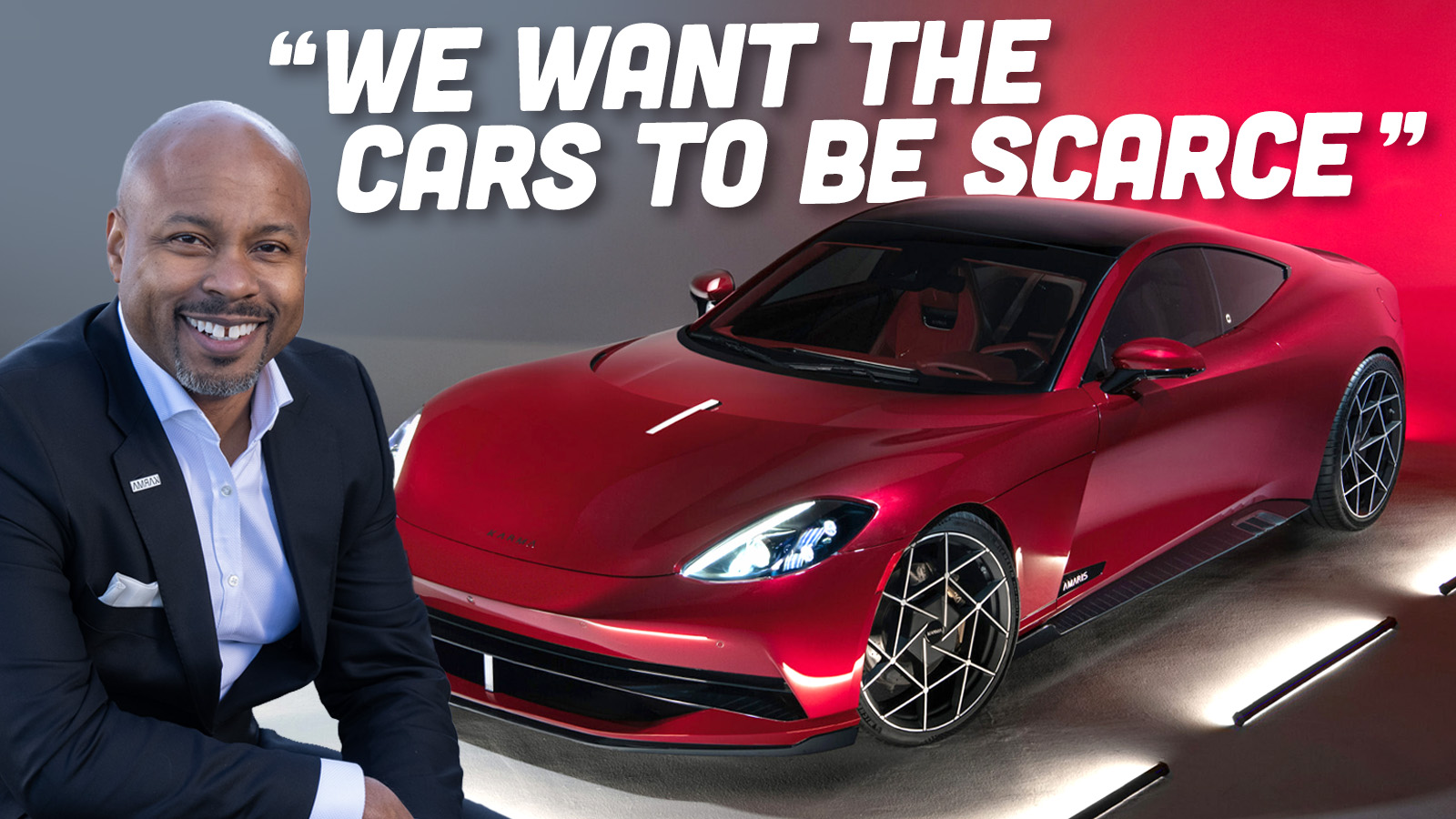
In a world where giant conglomerates occupy more and more of the car industry and niche, low-production manufacturers go the way of the Dodo, Karma Automotive has endured. The California-based carmaker has survived for over a decade as a private entity, without the support network or financial backing of a multi-billion-dollar conglomerate in the shadows.
Born from the ashes of the bankrupt Fisker, Karma Automotive was founded after Wanxiang Group, a Chinese automotive supplier, paid $149.2 million in 2014 to purchase the remainder of the company’s assets, minus the Fisker name (Henrik Fisker, the company’s founder, kept that for himself and later founded another car company, which also went bankrupt).


Karma has been building versions of Fisker’s original four-door (confusingly named the Karma) in extremely small numbers since 2017. Whether it’s the Revero, the GS-6, the Invictus, or the company’s latest sedan, the Gyesera, you’ll see the same silhouette in every Karma-branded vehicle built up until now.
That’s set to change soon, though. Karma has three truly new vehicles in the pipeline—the Amaris hybrid, the Kaveya EV, and the Ivara SUV—that will take the brand into the next decade, at least according to its CEO, Marques McCammon. But you shouldn’t expect to start seeing Karmas everywhere.
Staying Small Is Actually The Key
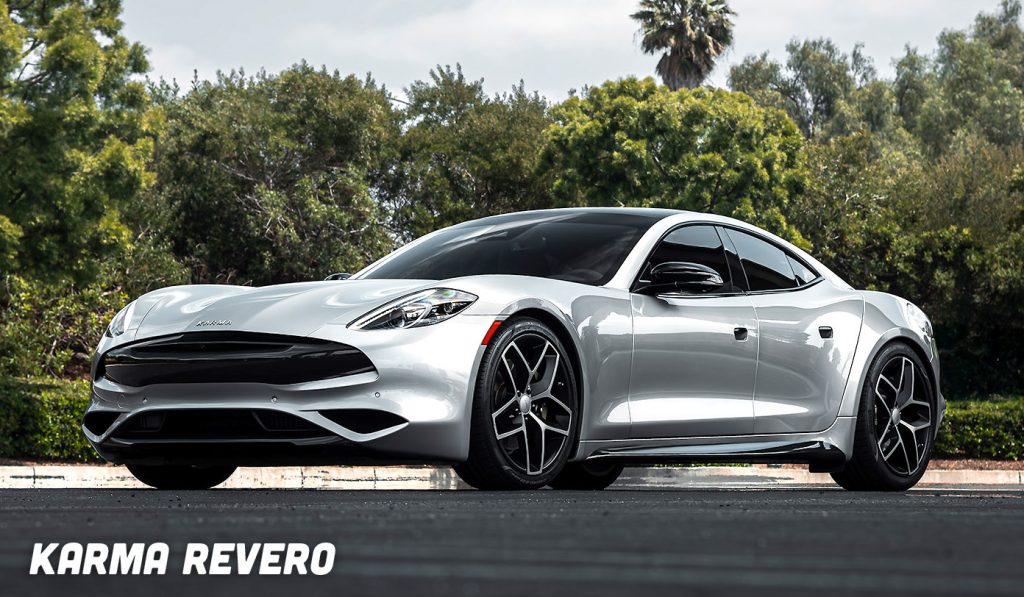
It’s no secret that Karma sells very few vehicles. Unless you live in a major metropolitan area in states like California, Florida, or Texas (Karma’s biggest markets), you’ve likely never even seen one on the road. That exclusivity is key to the company’s success, McCammon told me at CES in Las Vegas. It also makes the cars far more fascinating to the general public.
“[Customers] love the way the car makes them feel,” he told me. “The way people look at them, that compliments that they get, the way that it [gets] attention.”
Karma is smart enough to know it can never win on volume compared to the Bentleys and Aston Martins of the segment, so instead, it’s going in the opposite direction. The company is leaning into the exclusivity to make Karma vehicles more desirable, more unique products.
“We want the cars to be scarce, and we want them to be exclusive, so that every time that you own a Karma, you can say, ‘I have number X of this model year, there was only this many built in this color.’ That’s part of the experience,” he told me.
“This year we built 146 cars,” McCammon continued. “Our clients will know, if you bought Bodega Blue, how many Bodega Blue [cars] were built in this year with this wheel configuration, and a collection or a label. That’s part of the experience.”
Is selling 146 cars a year sustainable? I’ll let McCammon answer that one:
“It’s not if it’s a single model business,” he told me. “There’s absolutely no math on the planet unless we’re doing 100, 200 cars a year at a million dollars a piece. So, what we’ve done since I joined the company is we’ve laid out our game plan for how the models will come. And effectively, when you stack those models on top of each other, it’s very sustainable and frankly quite profitable.”
Karma Automotive is not a publicly traded company, so there’s no way to independently verify how profitable or not the automaker has been in the past.

Unlike all of the models released by Karma so far, which have been evolutions of that original Revero, the company’s three new models will be purely Karma products. Sure, the Amaris plug-in hybrid might share a bit of the Gyesera’s Fisker bones, but it’s at least a true two-door coupe, not a four-door. The Kaveya, an electric coupe first shown in 2023, has its own design, an aluminum space frame, carbon-Kevlar bodywork, and working eyelids. The Ivara SUV, meanwhile, is its own distinct machine.
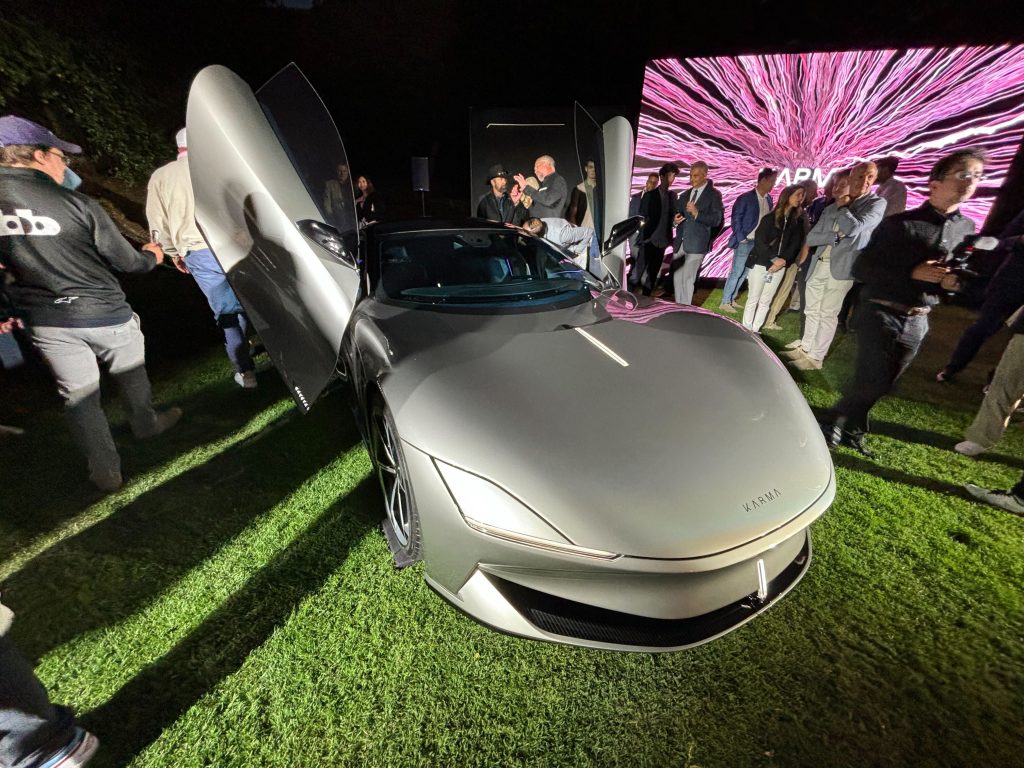
Even with all these new cars on the way, Karma’s yearly output won’t increase much (again, going back to exclusivity). McCammon says the company’s Moreno Valley, California factory, which usually houses just 70 employees, won’t see a huge jump in capacity (though it can handle another two shifts if the company decides it needs to). All of the company’s cars are limited by a set production number to keep exclusivity high.
At This Level, It’s Not Just About Selling The Cars
According to McCammon, Karma is acutely aware of the types of customers it attracts, and it knows how those customers want to be treated.
“[The segment has] become more cachet, and so the notion of exclusivity and scarcity, it’s really tied to how the consumer demographic is changing,” he told me. “We have more people at the higher end of the economic strata now. And people like it when they have achieved a level of success, they want to have things that reflect their successes.”

To that end, McCammon says a Karma is usually someone’s 3rd or 4th vehicle, and on average, owners put about 4,000 miles a year on their cars. Though there’s at least one outlier:
“We have one guy in Europe who’s put 280,000 miles on his car,” he told me.
This type of buyer expects more than the basic service you’ll get at your local Toyota dealer. Karma knows this, which is why it’s made servicing an absolute priority for the brand.
“One of the things I’m very, very proud of is our service team is extremely responsive,” McCammon says. “I’ve met customers all over the country. They know my head of service by name. They know his team by name, and I’ve not had one person say that they were not responsive and attentive.”

In that same vein, McCammon himself makes sure he takes the time to interact with his customer base as often as possible to hear out any praises or grievances they’d like to air.
“I asked the team to give me at least three events a year where I could sit down with our owners, intimately,” McCammon says. “We’ll do a dinner and they’ll tell me what they like about the car, what they don’t like. And then if we can do more beyond that, we have our marketing team that does field activations.
“Karma’s not a car company, we’re an experience company. And my job is to make sure that the experience that we create, from the first time you see it, to walking up to it, to getting in the seat, to driving it, is as fantastic as possible.”
Whether Karma can actually execute on its goals to expand beyond its one-vehicle lineup has yet to be seen, but I’m rooting for them. The footprint for niche automakers in 2026 is incredibly small, so for Karma to have survived this long is a miracle on its own. Here’s to another decade, and beyond.
Top graphic images: Karma Automotive


They are based out of one of the many warehouses between Moreno Valley and Perris California. It’s like a ghost town anytime I pass this place, anytime of day. I’d be blown away if they turned into a real car company with real cars. I useto see the occasional Karma on my commute, but that’s been years. Those 70 employees must be pro car poolers because I’ve never even seen 10 cars parked there.
This company doesn’t pay suppliers. It’s like a Chinese spy operation disguised as a car company.
I didn’t know that the guy who played T.C. on Magnum PI quit acting to become CEO of a car company
It’s been like 7 years since I worked with karma as a supplier. It’s got to be a money laundering operation or something at this point.
everything about working with them was completely insane.
Go on…
The owner of the pot emporium at the end of my road had a Karma, first time we passed each other on way to work I thought it was a Maserati (from the front). Later, in the spring when I was riding my bike through the parking lot there it was, looking like a what a four door Corvette (pre mid engine) would have looked like had it been done. Stunning, sensuous, a moment of beautiful sex caught in sculpture.
Karma Kameleon was right there you guys.
and then
So are they planning to sell their 200 cars per year in the 7 figures? Because if not, he just admitted this is not a sustainable business model and they have no plans to make it one.
This smells like a money-laundering scheme, which given their clientele might be happening on both ends of the transaction.
Weird how the satellite photo of this factory shows a small warehouse and no cars parked in the parking lot or trucks on the loading dock, unlike all the distribution centers surrounding it. Maybe all 70 employees just went to lunch at the same time?
Also the closest dealer has one 2025 Karma Revero EREV for sale for $123K “Customer Incentives Available”.
“We want our cars to be scarce.” Well, it worked for the Dodge Hornet.
AKA the Toenail