

In a world where giant conglomerates occupy more and more of the car industry and niche, low-production manufacturers go the way of the Dodo, Karma Automotive has endured. The California-based carmaker has survived for over a decade as a private entity, without the support network or financial backing of a multi-billion-dollar conglomerate in the shadows.
Born from the ashes of the bankrupt Fisker, Karma Automotive was founded after Wanxiang Group, a Chinese automotive supplier, paid $149.2 million in 2014 to purchase the remainder of the company’s assets, minus the Fisker name (Henrik Fisker, the company’s founder, kept that for himself and later founded another car company, which also went bankrupt).


Karma has been building versions of Fisker’s original four-door (confusingly named the Karma) in extremely small numbers since 2017. Whether it’s the Revero, the GS-6, the Invictus, or the company’s latest sedan, the Gyesera, you’ll see the same silhouette in every Karma-branded vehicle built up until now.
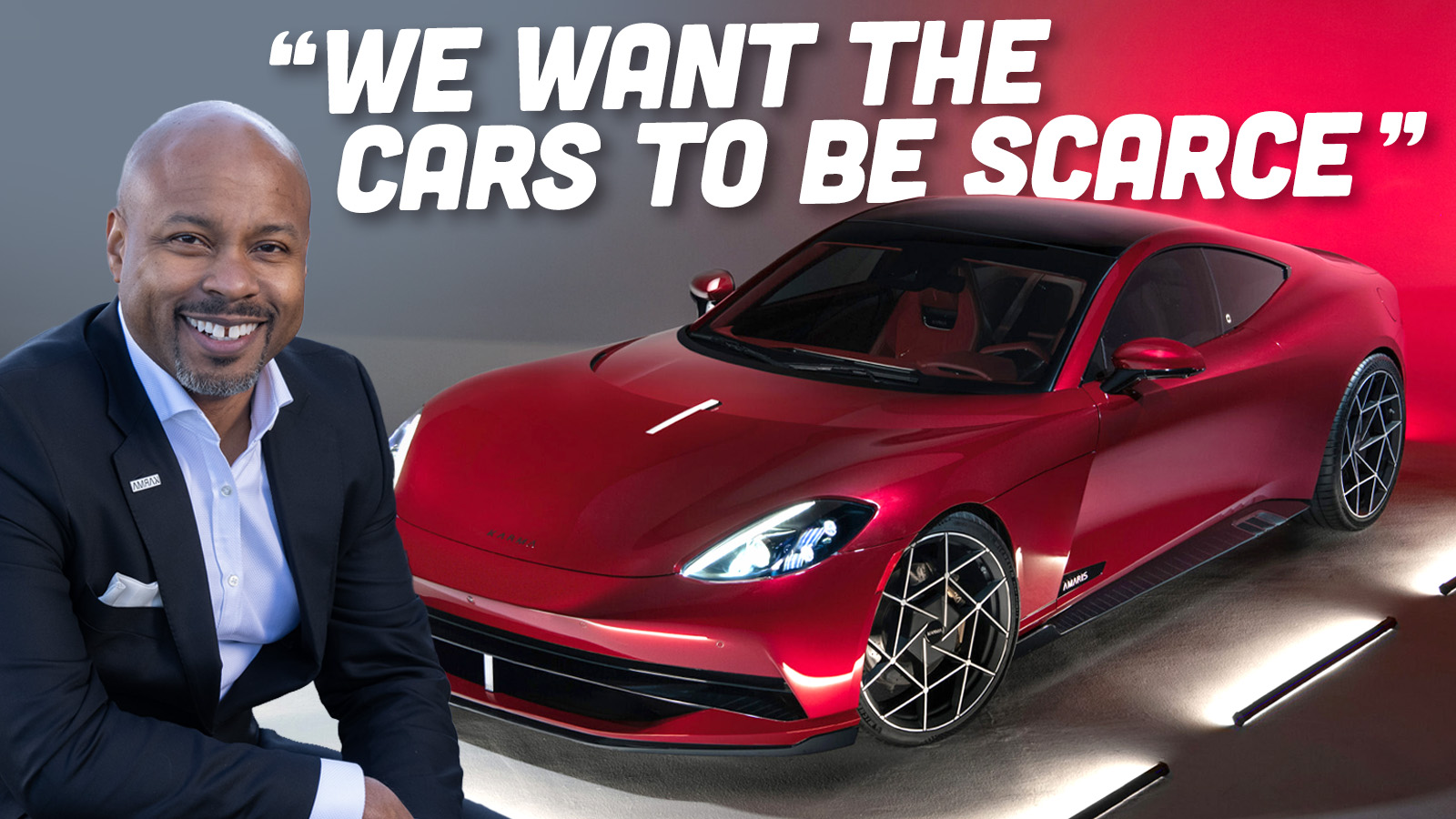
That’s set to change soon, though. Karma has three truly new vehicles in the pipeline—the Amaris hybrid, the Kaveya EV, and the Ivara SUV—that will take the brand into the next decade, at least according to its CEO, Marques McCammon. But you shouldn’t expect to start seeing Karmas everywhere.
Staying Small Is Actually The Key
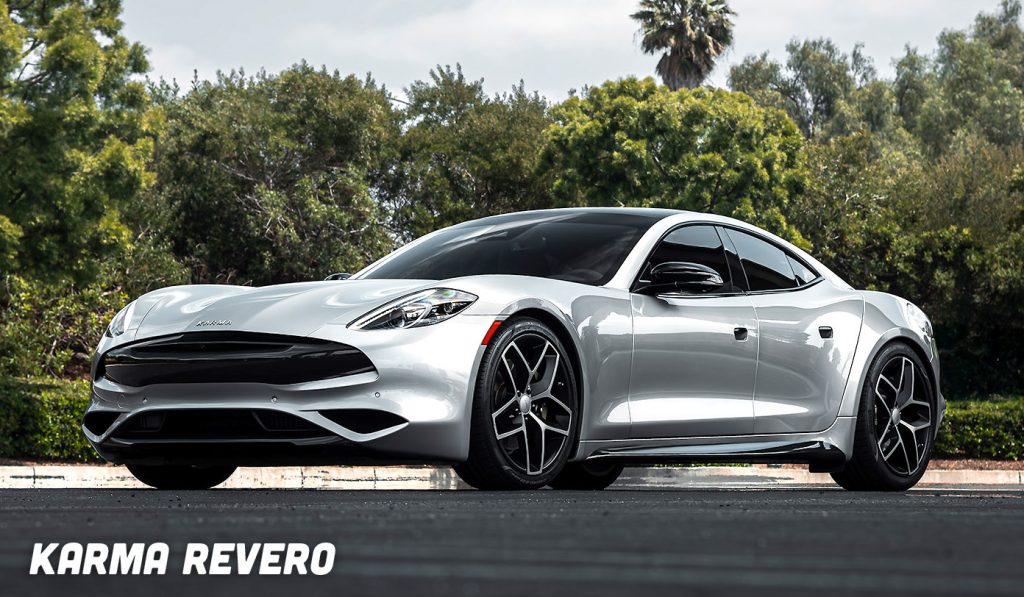
It’s no secret that Karma sells very few vehicles. Unless you live in a major metropolitan area in states like California, Florida, or Texas (Karma’s biggest markets), you’ve likely never even seen one on the road. That exclusivity is key to the company’s success, McCammon told me at CES in Las Vegas. It also makes the cars far more fascinating to the general public.
“[Customers] love the way the car makes them feel,” he told me. “The way people look at them, that compliments that they get, the way that it [gets] attention.”
Karma is smart enough to know it can never win on volume compared to the Bentleys and Aston Martins of the segment, so instead, it’s going in the opposite direction. The company is leaning into the exclusivity to make Karma vehicles more desirable, more unique products.
“We want the cars to be scarce, and we want them to be exclusive, so that every time that you own a Karma, you can say, ‘I have number X of this model year, there was only this many built in this color.’ That’s part of the experience,” he told me.
“This year we built 146 cars,” McCammon continued. “Our clients will know, if you bought Bodega Blue, how many Bodega Blue [cars] were built in this year with this wheel configuration, and a collection or a label. That’s part of the experience.”
Is selling 146 cars a year sustainable? I’ll let McCammon answer that one:
“It’s not if it’s a single model business,” he told me. “There’s absolutely no math on the planet unless we’re doing 100, 200 cars a year at a million dollars a piece. So, what we’ve done since I joined the company is we’ve laid out our game plan for how the models will come. And effectively, when you stack those models on top of each other, it’s very sustainable and frankly quite profitable.”
Karma Automotive is not a publicly traded company, so there’s no way to independently verify how profitable or not the automaker has been in the past.

Unlike all of the models released by Karma so far, which have been evolutions of that original Revero, the company’s three new models will be purely Karma products. Sure, the Amaris plug-in hybrid might share a bit of the Gyesera’s Fisker bones, but it’s at least a true two-door coupe, not a four-door. The Kaveya, an electric coupe first shown in 2023, has its own design, an aluminum space frame, carbon-Kevlar bodywork, and working eyelids. The Ivara SUV, meanwhile, is its own distinct machine.
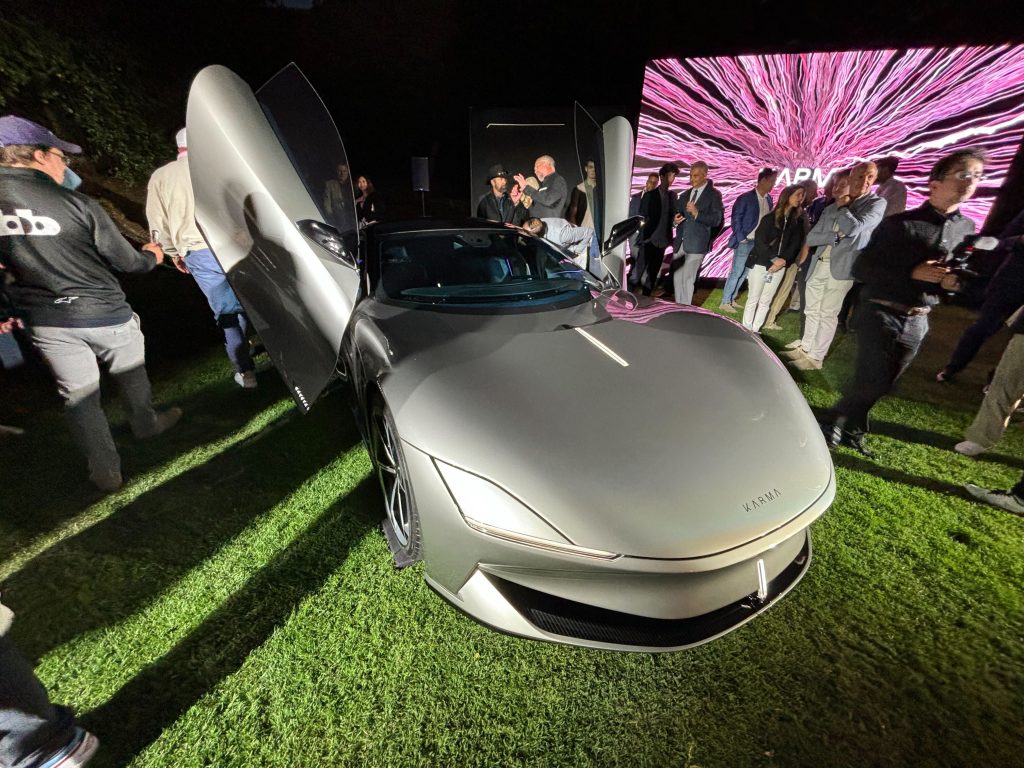
Even with all these new cars on the way, Karma’s yearly output won’t increase much (again, going back to exclusivity). McCammon says the company’s Moreno Valley, California factory, which usually houses just 70 employees, won’t see a huge jump in capacity (though it can handle another two shifts if the company decides it needs to). All of the company’s cars are limited by a set production number to keep exclusivity high.
At This Level, It’s Not Just About Selling The Cars
According to McCammon, Karma is acutely aware of the types of customers it attracts, and it knows how those customers want to be treated.
“[The segment has] become more cachet, and so the notion of exclusivity and scarcity, it’s really tied to how the consumer demographic is changing,” he told me. “We have more people at the higher end of the economic strata now. And people like it when they have achieved a level of success, they want to have things that reflect their successes.”

To that end, McCammon says a Karma is usually someone’s 3rd or 4th vehicle, and on average, owners put about 4,000 miles a year on their cars. Though there’s at least one outlier:
“We have one guy in Europe who’s put 280,000 miles on his car,” he told me.
This type of buyer expects more than the basic service you’ll get at your local Toyota dealer. Karma knows this, which is why it’s made servicing an absolute priority for the brand.
“One of the things I’m very, very proud of is our service team is extremely responsive,” McCammon says. “I’ve met customers all over the country. They know my head of service by name. They know his team by name, and I’ve not had one person say that they were not responsive and attentive.”

In that same vein, McCammon himself makes sure he takes the time to interact with his customer base as often as possible to hear out any praises or grievances they’d like to air.
“I asked the team to give me at least three events a year where I could sit down with our owners, intimately,” McCammon says. “We’ll do a dinner and they’ll tell me what they like about the car, what they don’t like. And then if we can do more beyond that, we have our marketing team that does field activations.
“Karma’s not a car company, we’re an experience company. And my job is to make sure that the experience that we create, from the first time you see it, to walking up to it, to getting in the seat, to driving it, is as fantastic as possible.”
Whether Karma can actually execute on its goals to expand beyond its one-vehicle lineup has yet to be seen, but I’m rooting for them. The footprint for niche automakers in 2026 is incredibly small, so for Karma to have survived this long is a miracle on its own. Here’s to another decade, and beyond.
Top graphic images: Karma Automotive


I was wondering where this “factory” was in MoVal (AKA the Karma Innovation and Customization Center) and from the satellite photo there were no cars parked there. Huge parking lot, big loading dock (it is in area that is all huge distribution centers and weed dispensaries), pretty much empty of cars and trucks. This does not appear to be a thriving manufacturing concern.
I’ve never seen more than a few cars parked there and I drive past it often.
if you bought this car after reading this, it is your own fault.
this is just terrible.
the CEO has said everything you do not want to hear.
I’m glad to hear that Rowan Atkison hasn’t mellowed.
Free fire with every purchase isnt the reason? Kinda surprised a couple hundred people want to burn to death but here we are.
This BS infuriates me.
Well sounds like they sold you a pretty strong experience? And this one was free!
Kidding of course, but it does sound like most experiences with these cars are generally infuriating.
same with BMW: ” we are mobility company”…. GTFO
I keep picturing the Chameleon Brothers from Rocko’s Modern Life- “VERY exclusive”
Oh right forgot these exist again
My Elio is very exclusive
My Elio is so exclusive, commoners like you are not even allowed to look at it.
Confusingly, I’m not allowed to see it either, so there’s that to contend with…
Schrodingers car !
That implies that there’s a nonzero chance of the Elio actually existing, which…
Is the funniest joke I’ve heard this year! Well done!
There is a dude in my parking garage with a Karma and everytime I see I just wonder how on earth they convinced him to buy it. It costs so much and is so bad, I’m always stunned.
I mean, as long as you can sell a car for more that it costs to make in parts and labor, regardless if you’re pumping out 20,000 a year or only 20 a year, you can be profitable.
However, if you were only making $100 in profit per car or something, it probably would not be sustainable long term for a business plan.
But, as long as you sell higher than it cost to make, it’s “profitable”.
All I read were the desperate words of a smarmy snake oil salesman. Anyone else getting “luxury condos” salesman vibes from ol’ Marques?
Your vibes are perceptive. When he was employed at the same Detroit OEM I was, my perception was the same.
Vaguely reminds me of Avanti, cast-off model from a defunct automaker kept in production as a sort of reanimated zombie with three digit production figures. They even named the new company after the model name
“I’ve met customers all over the country. They know my head of service by name. They know his team by name”
Maybe it’s just me,but I want the kind of car I don’t want to have in the shop so much I know the head of service by name, IJS.
“Our cars are both unreliable and not selling well. We’re doing great!”
Again, I appreciate this guy’s optimism. He’s definitely a glass-half-full guy, even after he drops the glass and it breaks.
Breaking the glass just means there’s less of it to half-
assfill.” that every time that you own a Karma, you can say, ‘I have number X of this model year, there was only this many built in this color.’ That’s part of the experience”
Karma: The car for the insufferable.
Corvette owners who strike it rich (but not Ferrari rich) need something to move up to, no?
I’m creating a notification for Marketplace and craigslist. Make: Karma. Keywords: I KNOW WHAT I GOT
Is that genuinely the strategy?
Really?
Because this sounds a lot like a distraction. And we’ve seen a lot of performative distractions lately, we should be able to see through such a weak attempt.
More spinning than Anakin Skywalker and that neat trick he pulled over Naboo.
LOL. If I was an investor, I would be pushing hard to fire this guy. I wonder what the qualification requirements were coming into this job. Delusional thinking? Bad at math?
The stuff coming out of his mouth is great if he was head of marketing or customer relations, but for my CEO, I’d be very worried.
The living embodiment of fake it ’til you make it.
His qualifiactions are he was willing to do it and happens to really like CEO pay.
Bank that CEO pay and never worry about getting hired again. Though of course “presided over a colossal disaster” just raises your standing in the world of corporate executives.
It’s owned by the Chinese. They are good at math.
okay well their CEO isn’t.
“We want the cars to be scarce, and we want them to be exclusive, so that every time that you own a Karma, you can say, ‘I have number X of this model year, there was only this many built in this color.’ That’s part of the experience,”
Seems easier just to buy a Corvette, then you can say you have 1 of only 139 yellow convertibles, with orange seats but on a Tuesday.
Look, I love that oddball, small-volume automakers exist (another brand for me to have NAPA add, after all!). But the math ain’t mathing here, as they say. You’re selling 150 cars a year at less than $200,000 each, but somehow are developing not one but two new, bespoke vehicle platforms in the next few years? Do I need to remind that engineering a new vehicle platform in the modern world is widely quoted as costing a billion dollars?
Are the owners writing out monthly subscription checks for that exclusivity, or am I missing something?
You’re missing that they’re owned by Wanxiang, and most of the reason to set this sort of cash on fire is to have some sort of backdoor to enter the US market.
I have no real idea, but I’d bet these platforms are going to be used for Chinese brands as well.
Yeah I really didn’t understand this part that Brian wrote:
“The California-based carmaker has survived for over a decade as a private entity, without the support network or financial backing of a multi-billion-dollar conglomerate in the shadows.”
Um, what’s that now?
Yeah I think that may be in error. They’re definitely owned by a Chinese conglomerate.
But who isn’t?
Maybe the parent company is developing a high end line, like BYD, and throwing their Karma brand a bone by sharing it.
Oh, thanks for the reminder. I was just thinking, “they could get by OK selling CKD kits shipped from China.”
So the Chinese found a back door into the American market. BYD should have thought of this.
BYD could probably buy Elio Motors for $100 and a ham sandwich.
$75 and a triangular ham sandwich.
Elio asks for Boar’s Head, BYD counters with Great Value, and they agree to Hillshire as a compromise.
Where can I find this triangular ham?
More important ; which type of pig results in triangular ham?
Eh, Geely has already done this with Volvo/Polestar and Jia Yueting is still trying to do this with Faraday Future.
I appreciate the optimism of a CEO who says “We’re not failing we are just exclusive.”
I probably wouldn’t hire him, though.
“We are not failing we are just exclusive” sounds a lot like the new US motto.
Besides, what does E Pluribus Unum even mean, I thought we kicked Latin out over 1,000 years ago! Let me check with Noem on that. We might need to deploy some trebuchets.
I’m sure my kid’s used that after a math midterm. Respect. CEO material.
They’ve just become more selective in their appeal, like Spinal Tap.
“how many Bodega Blue [cars] were built in this year with this wheel configuration, and a collection or a label” – said many Corvette owners (former Corvette owner myself)
Jaguar is like “Why didn’t we think of that?!”
I’ve seen a total of one model, the OG Fisker Karma, and it was sitting in the parking lot of a little credit union almost 10 years ago (before EVs were everywhere) — it had been repoed from its very eccentric owner who had just “forgotten” to make payments despite being insanely wealthy. He DGAF, he told them to just keep it.
The funny thing was that it sat for months in the parking lot — the insurance companies struggled with how to cover it, where to sell it, how to even value it. Most small banks/CUs are not in the business of joining obscure FB pages just so they can sell one random car for half of what is still owed.
Jag *has* thought of it, but one upped them. They now sell zero cars per year.
I’ve spent a lot of time in CA lately and lived in Texas for six years and have never seen a Karma in the wild. Like NC Miata NA said below, this does not seem like a promising business model. What do these things cost to make and buy?
That said, the Amaris and Ivara are attractively styled.
I have only seen one,and it was years ago, at an indoor display in Aventura Mall in FL. And I agree, the Amaris and Ivara are pretty nice looking, given what’s currently available on the market. That said, if you don’t livein California,Texas or Florida, what are your options if something needs to be done on it-do they have to ship the car to one of those states, or do they send a tech up with spare parts in the hopes of fixing it on site, or..?
I’ve seen one, an OG Karma abaout ten years ago, street parked in Long Island city on a fairly nasty industrial block. It was painted either dinghy yellowish silver, or was silver and just dirty.
The proportions were pretty good, but the mustache front end was just as ridiculous in person as it had looked in pictures. A shame, it ruined the car.
A rolling Movember, even.
When I lived in Texas, it was in Beaumont, about 80 miles east of Houston and I always thought it was pretty brave of anyone to drive a Rolls, Jaguar, Land/Range Rover or even a McClaren around there, given that the nearest dealership was an expensive flatbed trip out west to get worked on. Sure, a competent local mechanic could take care of routine maintenance. But when something bad broke. Well…
Maintenance on exclusive cars is not that hard. It’s just nuts and bolts. The problem is the parts. But you just order them. And the software needed to make any modifications. Think Mercedes’ Star Diagnosis System. If that is -needed- to service or repair the car then yeah you’re SOL far away from an authorized garage.
I’ve seen quite a few Fisker Karmas (including one on a flatbed, these jokes write themselves), and at least one Karma Revero that I can recall. They’re around, but you’re more likely to see a VinFast.
I haven’t seen a VinFast, but I was kind of interested in them.
I’ve seen a VinFast in Raleigh; I was a little surprised, since the new manufacturing site isn’t exactly on track for completion, but apparently there’s at least one dealer in the area.
I saw a couple of original Karmas when they were being produced, but I can’t recall seeing one since around that time. Cheshire cat smile aside, they’re striking in person, the kind of thing even Normals notice.
Normals. Ha!
I’m no business major but I’m pretty sure the strategy of product scarcity for exclusivity while having little to no brand awareness is just called “impending failure”.
I am a business major and you are correct. Unless, there is sufficient brand awareness with your target clientele and you are producing in a made to order fashion. In that case, there is a break even point that I imagine is quite above the 146 cars mentioned. Even using the same “core” with different interior and body panels will encounter quite a bit of overhead costs.